Fall Camping Guide: Complete Autumn Gear Checklist for Crisp Weekends (2026)
Fall camping gear checklist 2026: cold-weather sleeping bags, camp stoves for cold nights, layers for 40°F mornings, and where to camp in October.
There's a window every year — usually late September through mid-November — when the campgrounds empty out, the mosquitoes disappear, and the hiking trails turn gold. Fall camping is the best season nobody talks about, and most campers miss it entirely because they don't know what changes when the overnight temperature drops below 50°F. The season's first big test is Labor Day weekend, when the first cool nights arrive and every campground fills up — our Labor Day weekend camping checklist covers the trip audit and gear check that get you out the door on time.
I've camped through dozens of autumn weekends: 40°F mornings with frost on the tent, afternoon highs that feel like summer, and nights that go from comfortable to shivering faster than you'd expect. The difference between a miserable cold night and a cozy one isn't luck — it's gear. Here's exactly what you need (and what you can leave at home) for a crisp fall camping weekend.
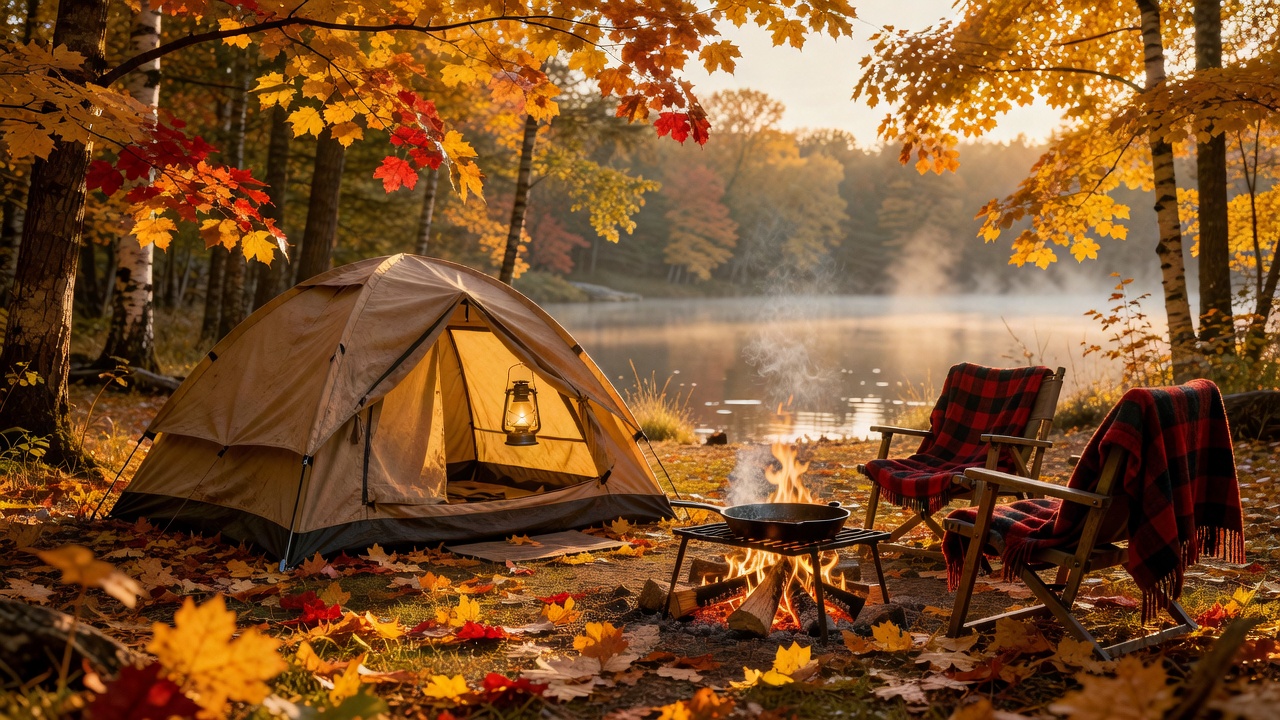
🍂 Fall Camping Weekend Planner (2026) — pick your weekend and jump straight to the guide:
- September family camping → Camping in September Guide
- Fall foliage timing & best color spots → Fall Foliage & Leaf Peeping Guide
- Where to camp in October (closures, 30°F nights) → Where to Camp in October
- Columbus Day long weekend → Columbus Day Camping Checklist
- Pumpkin patch weekend → Pumpkin Patch Camping Weekend
- Apple picking weekend → Apple Picking + Camping Weekend
- Halloween at the campsite → Halloween Camping With Kids
- Thanksgiving campout → Thanksgiving Camping Guide
- Long dark evenings & stargazing → Stargazing From a Campsite
- Cool-weather camp setup, meals & layers → Fall Family Camping Guide
- Warm fall camp meals & recipes → Fall Camping Food Guide
- Autumn trail days → Fall Hiking Gear Checklist
New to cold-weather camping? Start with the complete fall camping gear checklist.
If the forecast is already trending colder than the kit, the Oklahoma camping guide shows how the shoulder-season setup gets rebuilt when the nights drop into the 40s and the wind is the real variable.
Quick Answer: What Actually Changes for Fall Camping
Fall is not summer with a jacket. These are the swaps that matter most.
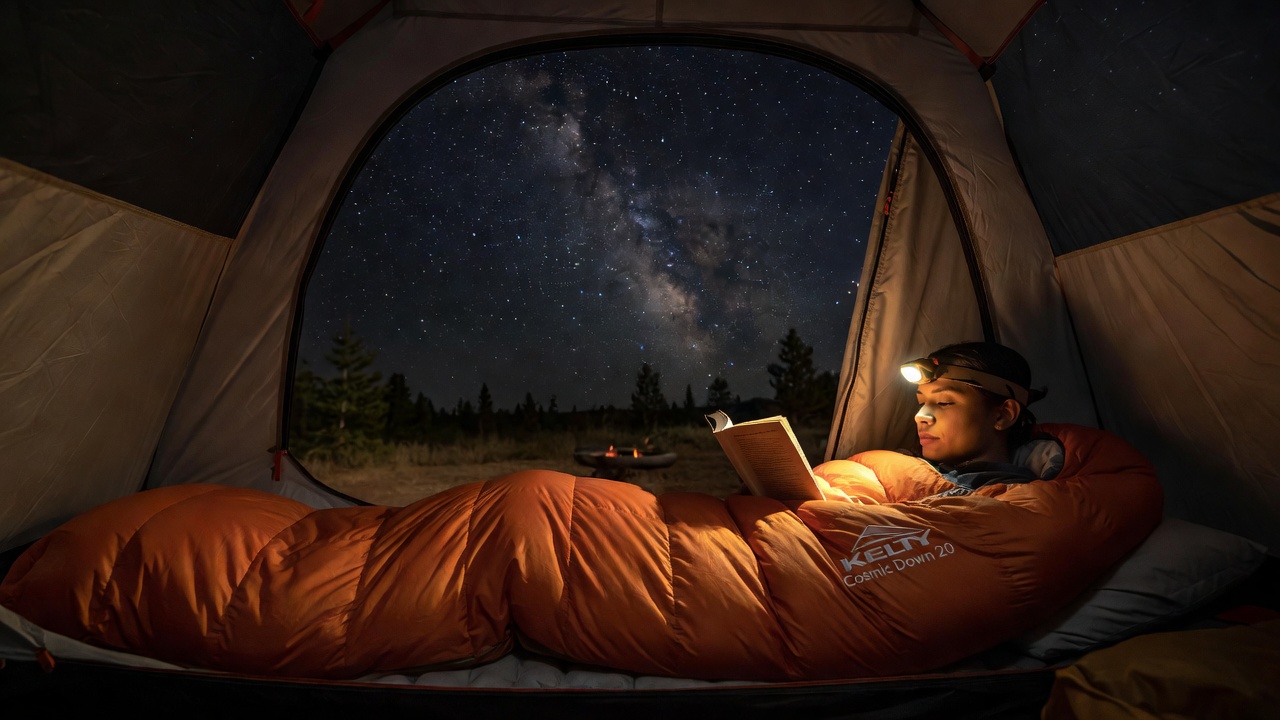
- Sleeping bag: Kelty Cosmic Down 20 — $169.00 for cold sleepers, or the roomy TETON Celsius XXL 0°F at $89.99.
- Kids stay warm: Morrison Big Mo 40, ages 2-4 — $79.95, and Little Mo 40, 6-18 months — $69.95. Kid-sized bags beat an adult bag folded around a child.
- Power for dark evenings: Jackery Explorer 300 — $199.00, or the lighter EcoFlow River 2 at $169.00.
- Warm feet at night: Danish Endurance merino socks — $39.95. The cheapest night-warmth upgrade there is.
- Warmth without idling the engine: Sealy 12V heated blanket — $31.99.
Where you go matters as much as when. The Rockies' high country peaks in late September while the mid-Atlantic and Smoky Mountains hold color into early November, so the same gear list covers a 30F night and a 45F one. Our Camping in Colorado guide covers the aspen window by elevation band if you're planning around the color itself.
Fall Camping Essentials: The Short List
If you have ten minutes and a shopping list, this is the fall camping essentials list we hand to friends — ordered by how much each item actually changes whether you sleep warm. Everything below is covered in detail further down the guide.
The Fall Camping Essentials List, Ranked by Impact
- A bag rated 10–15°F below the forecast low. Nothing else buys you as much comfort per dollar. A 40°F night needs a 25°F bag, not a 40°F one.
- An insulated pad with a real R-value. This is the fall camping need almost everyone skips: cold ground pulls heat out of you faster than cold air does. Our insulated sleeping pad picks break down the R-value math — the Klymit Insulated Static V ($94.99, R-4.4) is the value pick that keeps a 3-season bag viable well into November.
- A stove and fuel matched to the overnight low. Butane quits near 40°F; propane keeps going to -40°F. Check the forecast, then check the canister.
- A dry base layer you only wear to bed. Cotton is the enemy. Merino or synthetic, kept separate from what you wore around the fire.
- A hat, warm socks, and gloves that live in the tent, not the car. The cheapest warmth on the trip and the easiest to forget at the bottom of a bin.
- Layers sized for a 25°F afternoon-to-night swing. Shorts at 3 p.m., fleece and shell by 8 p.m.
- A lantern plus a headlamp per person. Sunset arrives an hour or more earlier every few weeks in fall — you will be cooking and eating in the dark.
- A cooler that still works when it is cold outside. Fall food safety is about the cold chain, not just ice retention, and a wheeled cooler saves a haul across a muddy site.
Fall Camping Needs Most People Forget
- A way to dry wet layers overnight. Rain gear that stays soaked is rain gear that stays in the car. A line under the rain fly does more for morale than another gadget.
- Warm drinks for the last hour before bed. A thermos or a per-person insulated bottle turns a cold evening around; hot chocolate is a legitimate piece of gear.
- A backup plan for heat, not just cold. On a night with a fire ban, an indoor-safe propane heater or a rated-for-tent heater is the difference between a late campfire and a cold tent — our tent heater safety guide covers what is actually safe inside a tent.
- Camp shoes and a dry pair of socks. Cold feet at 6 a.m. come from wet shoes at 6 p.m.
Fall Camping Tips From Nights That Went Wrong
- Read the overnight low, not the daytime high. The high is what you pack for; the low is what you will lie in.
- Test the sleeping system at home first. Five minutes in the backyard beats discovering in a 31°F tent that your bag's rating was optimistic.
- Keep spare batteries and a charged power bank warm, inside the sleeping bag, not in a cold cooler of a car.
- Add 20 minutes to your bedtime routine. A warm body and a warm drink get you to sleep faster than any single piece of gear for the first cold weekend of the season.
Fall Camping Gear, Supplies, and Accessories: Same List, Different Words
If you landed here searching fall camping supplies, autumn camping gear, or best fall camping gear, you're after the same list under a different name, so here is the plain-English version. Fall camping gear is summer gear plus three upgrades: a colder sleeping system, a cold-tolerant stove, and real light for a 6:30 p.m. sunset. Everything else you already own.
The naming gets looser than that. Fall camping accessories and fall outdoor gear usually mean the small stuff — the headlamp, the gloves, the thermos, the hatchet — the items that sit at the bottom of the bin until the first 35°F night. And an autumn camping essentials list is the same eight items in the same order as the fall camping essentials list above; autumn camping and fall camping are the same season, just named differently depending on where you're reading.
- Fall camping supplies worth buying before your first cold trip: an insulated pad, a bag rated for the forecast low, a propane-capable stove, a headlamp per person, and a thermos.
- Best fall camping gear is not the most expensive gear. The Klymit Static V at $64.95 is the light, packable value pick, and the Therm-a-Rest Z Lite SOL at $54.95 is the closed-cell foam pad that cannot puncture, doubles as a camp seat, and is the one pad here you can hand to a kid without worry.
- Fall outdoor gear you'll use on every autumn trip, cold or not: the Fiskars X7 hatchet at $29.99 makes short work of damp firewood, and the Rumpl Original Puffy blanket at $139 covers the 8-10 p.m. hour around the fire when a sleeping bag is too much and a jacket is not enough.
- A fall camping gear list you can actually pack from is the checklist further down this page. Print that one; ignore the marketing.
Why Fall Camping Is the Best Season
Let me make the case before the gear list. Fall camping gives you everything summer camping promises and delivers:
- No crowds — the peak-season families have packed up. Prime campsites are available mid-week and often on weekends at less popular parks.
- No bugs — mosquitoes die off after the first hard frosts. Ticks are still active in early fall, so a quick tick check routine still matters, but the swarms are gone.
- Better hiking — cool mornings mean you can hike midday without heat exhaustion. The hot weather problems that plague summer hikes simply don't apply.
- Campfires you actually want — a fire feels good when it's 45°F out. In July it's just smoke. Damp fall air makes fire-building harder, though, so it's worth reading up on the best firewood for camping before your first cold-weather trip.
- Golden light — the low autumn sun makes every campsite look like a postcard. Your photos will be better than any summer trip.
- Seasonal activities — fall adds a whole second reason to camp: the harvest and foliage seasons. An apple picking + camping weekend — orchard in the morning, campfire apple crisp at night — is the classic September family trip, and our leaf peeping guide tracks peak foliage weekends so you can time a camping trip to the colors.
The catch: fall weather is a seesaw. A 70°F afternoon can become a 38°F night. You're packing for both, and that's the whole game.
The #1 Rule: It's All About the Sleeping System
If you take one section from this article seriously, make it this one. When the temperature drops below 50°F, your summer sleeping setup will fail you. I've spent shivering nights in a 50°F-rated bag at 40°F — it's miserable, it ruins the next day, and it's entirely preventable.
Cold-Weather Sleeping Bags
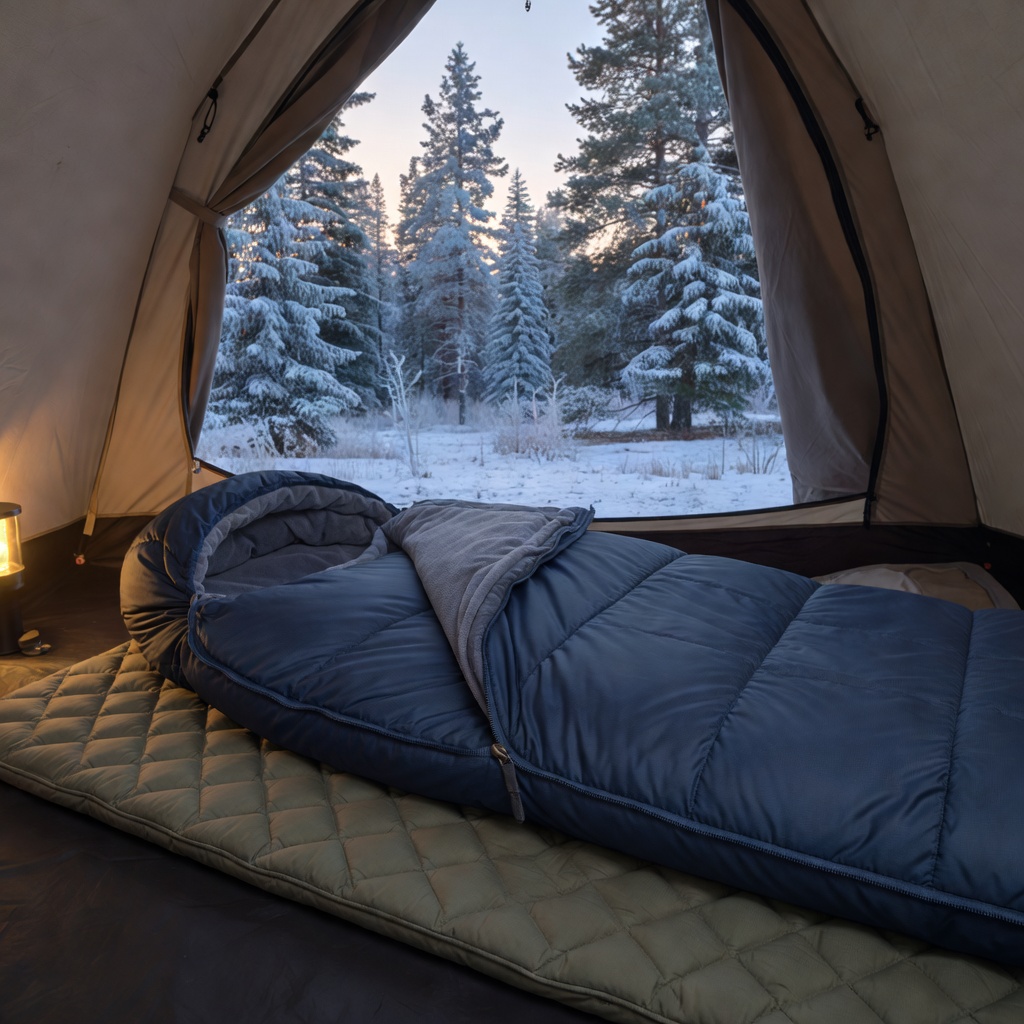
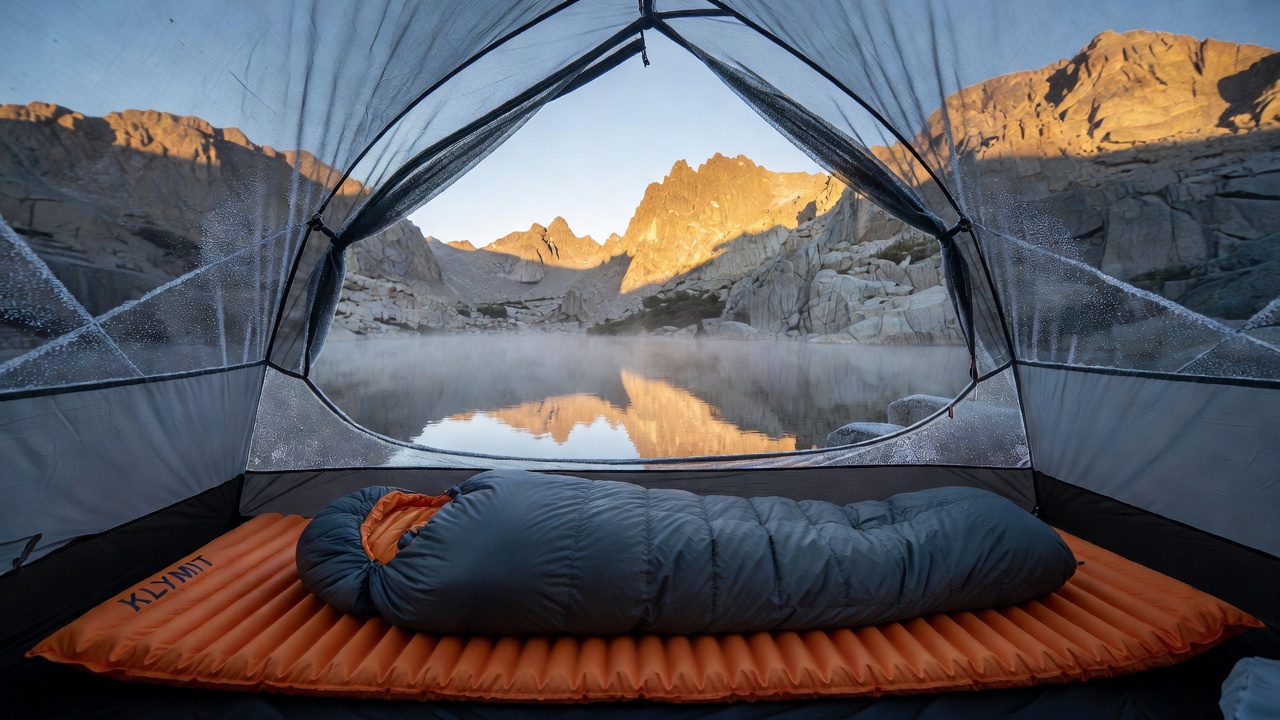
The most important purchase for fall camping is a bag rated for the actual overnight low, not the daytime high. As a rule of thumb: buy a bag rated 10-15°F below the coldest temperature you expect. If the forecast says 40°F, you want a 20°F or 25°F bag.
Our top pick for fall is the Kelty Cosmic Down 20° at $169 — a 550-fill down bag that's warm, packs small, and has been a reliable choice for years. Down gives you the best warmth-to-weight ratio, and for car camping the extra price is worth every penny on cold nights.
On a budget, the TETON Sports Celsius XXL 0° at $89.99 is a monster: a 0°-rated bag that's oversized and roomy, with a fleece lining that feels like a blanket. It's bulky, but for car camping you don't care — you care about waking up warm. The 0° rating gives you a huge margin of safety even on the coldest fall nights.
For kids, don't just hand them a grown-up bag. Kids lose heat faster and their smaller bodies don't fill adult bags (leaving cold pockets). The Morrison Outdoors Little Mo 40° ($69.95) fits babies 6-18 months, and the Morrison Outdoors Big Mo 40° ($79.95) fits ages 2-4 — both sized to actually keep little bodies warm. See our full sleeping bag comparison for more options across age groups.
Pro tip for fall: a bag's rating assumes you're wearing a base layer and using a sleeping pad. At 40°F, add a warm layer and a hat before you get in — it makes a 10°F difference in perceived warmth.
For the campsite, not the bag: when you're sitting around the fire ring or in the tent after the kids are down, a heated throw keeps you warm without cranking a propane heater. The Sealy 12-Volt Heated Car Blanket ($31.99) plugs into a car outlet or a portable power station (like the Jackery Explorer 300 or EcoFlow River 2), heats up in minutes across three levels, and auto-offs after 4 hours — a cozy, safe fall-camping upgrade. If you're deciding between a heated throw, a packable puffy, or a waterproof ground blanket for the whole family, our best camping blankets guide breaks down which one fits which trip.
Layer Up Under the Bag
Sleeping bags work by trapping your body heat. In fall, give them more heat to trap:
- Wear a thermal base layer (wool or synthetic — never cotton) to bed
- Add thick wool socks — cold feet are the #1 sleep killer. A thermal merino pair like the DANISH ENDURANCE hiking socks is the single cheapest way to add real warmth to a sleeping bag
- A beanie or buff on your head retains heat you lose overnight
- Don't overdress — if you sweat inside the bag, the moisture makes you colder later. One warm layer + socks + hat is the sweet spot.
Camp Stoves That Work in the Cold
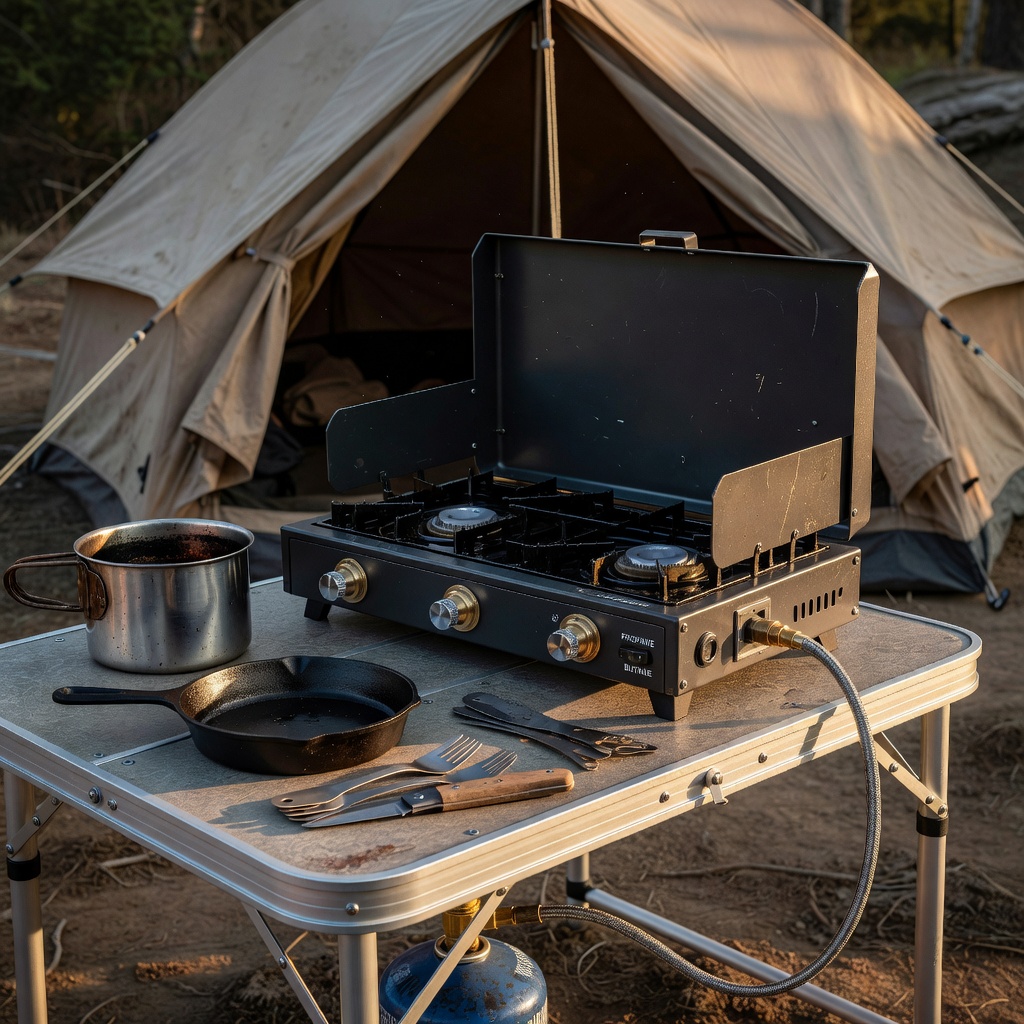
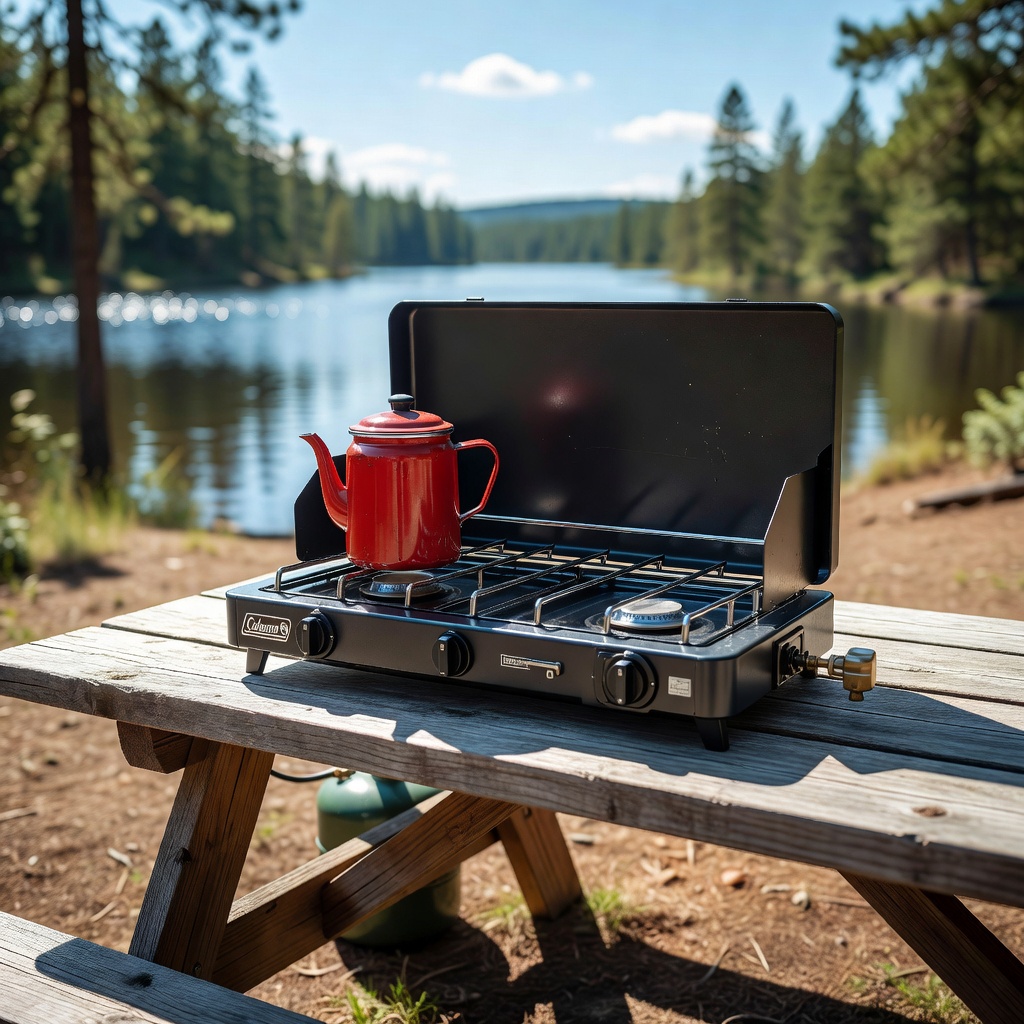
Here's a fact most campers learn the hard way: propane and butane stoves lose performance in cold weather. Butane stops vaporizing below ~40°F, which means your stove sputters or dies right when you need hot coffee most. This is covered in depth in our camp stove fuel guide, but here's the short version for fall:
- Standard butane — dies below ~40°F. Fine for Indian summer, risky for late fall.
- Propane — works down to around -40°F. The fall-camping winner.
- Isobutane blends — work to ~15°F, great for backpacking.
For car camping in fall, the Coleman Classic 1-Burner Butane Stove at $29.99 is a bargain for mild nights, but for serious cold-weather reliability, go with the Gas One GS-3400P Dual Fuel at $34.99 — it runs on both propane and butane, so you can pick the fuel that matches the forecast.
If you're cooking for a family or tailgating crew, the Coleman Triton+ 2-Burner Propane Stove at $149.99 is the fall workhorse: 22,000 total BTUs, push-button ignition that lights instantly on cold mornings, and wind guards that keep the flame steady when the breeze picks up. Two burners mean coffee and breakfast at the same time instead of one-then-the-other.
Backpackers and hikers should grab the MSR PocketRocket 2 at $49.95 — an ultralight classic that works with isobutane canisters down to freezing temps. And for the ultimate fall campfire experience, the BioLite CampStove 2+ at $199.95 burns twigs and sticks you find at camp (free fuel, works in any temperature) while charging your phone from the fire's heat — genuinely magical on a crisp evening.
Wind is a fall problem too: cold mornings are often windy mornings. A windbreak or a sheltered cooking spot makes the difference between 15-minute and 30-minute coffee.
Layers for the Fall Temperature Swing
Fall weather doesn't do "steady." You'll peel off layers at 2 PM and pile them back on at 7 PM. The system that works: base layer + mid layer + shell, all packed, all accessible.
The single most useful garment in my fall camping kit is the Outdoor Research Men's Helium Rain Jacket at $159 — it's a 10-ounce shell that packs to the size of a fist, blocks wind and rain, and lives in the top of my pack all season. Rain in fall is cold rain; a good shell is non-negotiable. See our rainy day hiking guide for the full wet-weather system.
For a whole family, though, the shell question is a different one: one jacket per person, sized for kids who grow a season at a time, with a budget tier that doesn't sting when you're buying four of them. Our best rain jackets for family camping and hiking covers the adult, kids and toddler picks from $23 up — plus the kids' sizing mistakes that leave a child soaked anyway.
Beyond the shell, build your layering around:
- Base layer: wool or synthetic long-sleeve. Keeps you warm when wet.
- Mid layer: fleece or light puffy for the 45°F evenings.
- Warm hat + gloves: non-negotiable below 50°F. You lose most of your heat from your head and hands.
A campsite layering kit is not quite a trail layering kit — sitting by a fire and climbing a ridge in the same 45°F afternoon call for different clothes. Our what to wear fall hiking guide works through the moving-in-cold version, item by item.
- Extra socks: wet socks at 40°F is a trip-ender. Pack three pairs minimum.
Cold hands and a cold head end more fall trips early than anything else on this list. For the hat, the Smartwool Thermal Merino Reversible Beanie at $35 is the one I reach for: the Merino 250 double-layer knit stays warm even when you sweat in it, and it doesn't smell like a wet dog by Sunday morning. Gloves depend on the job — the Carhartt Waterproof Insulated Knit Cuff Glove at $32.99 keeps hands dry through wet firewood and tent stakes, while the TRENDOUX 3M Thinsulate Touchscreen Gloves at $19.99 are the light pair for 20-40°F mornings when you still want to check your phone. For the mid layer, a brushed Legendary Whitetails flannel at $42.99 is nearly as warm as fleece over a tee, breathes around a fire, and passes as a normal shirt when you stop for dinner on the drive home.
Fall Camping Clothes: What to Wear, by Temperature
"Fall camping clothes" is the hardest packing question of the season, because the answer changes twice a day. Here's the fall camping clothing list I actually pack, sorted by the temperature you meet it at. If you're specifically searching what to wear fall camping, start at the 45-60°F row and add one layer below it — that single adjustment covers the whole trip from the afternoon high to the 2 a.m. low.
- Daytime, 60-75°F: the same hiking clothes you wore all summer — a synthetic tee, your hiking shoes, and a light layer in the pack for shaded sections and ridge wind.
- Late afternoon, 45-60°F: add the mid layer. A Columbia Steens Mountain 20 full-zip fleece at $34.99 is the best value in this guide — the layer that goes on when the sun drops behind the ridge and comes off the second you start moving again. If you run cold, the Columbia Midweight Stretch Omni-Heat base layer top at $49.99 goes underneath and adds real warmth for very little weight.
- Evening at camp, 35-50°F: the fleece stays on and the shell goes over it. The women's Columbia Benton Springs full-zip fleece at $39.99 does the same job. If $159 for the Helium shell is more than you want to spend, the Columbia Watertight II rain jacket at $60 is the budget wind-and-rain block that still packs into its own pocket.
- In the sleeping bag, below 45°F: a merino or synthetic base layer you wear to bed and nothing else, plus wool socks and a hat. No cotton, and nothing you wore around the fire.
- Hands and head, 30-50°F: the Ocoopa rechargeable hand warmers at $39.99 earn their place on the one night a season everybody underestimates.
The same answer as a scannable reference:
| Conditions | Base | Mid | Shell | Extras |
|---|---|---|---|---|
| 60-75°F daytime hiking | Synthetic tee | Light layer in pack | Rain shell in pack | Sun hat |
| 45-60°F late afternoon | Synthetic tee | Fleece | Shell if windy | Beanie for the ridge |
| 35-50°F evening at camp | Thermal base layer | Fleece | Rain/wind shell | Gloves, warm socks, hat |
| Below 45°F in the bag | Merino/synthetic set worn to bed | — | — | Wool socks, beanie |
The rule that keeps this clothing list short: one base layer, one mid layer, one shell, and a second set of socks. Everything else is a duplicate of something you already packed.
If your fall trips have already turned into snow-and-ice days, the layer order changes: our winter hiking guide covers the four-layer winter version and the boots-and-traction half of it.
Lighting: The Days Get Short
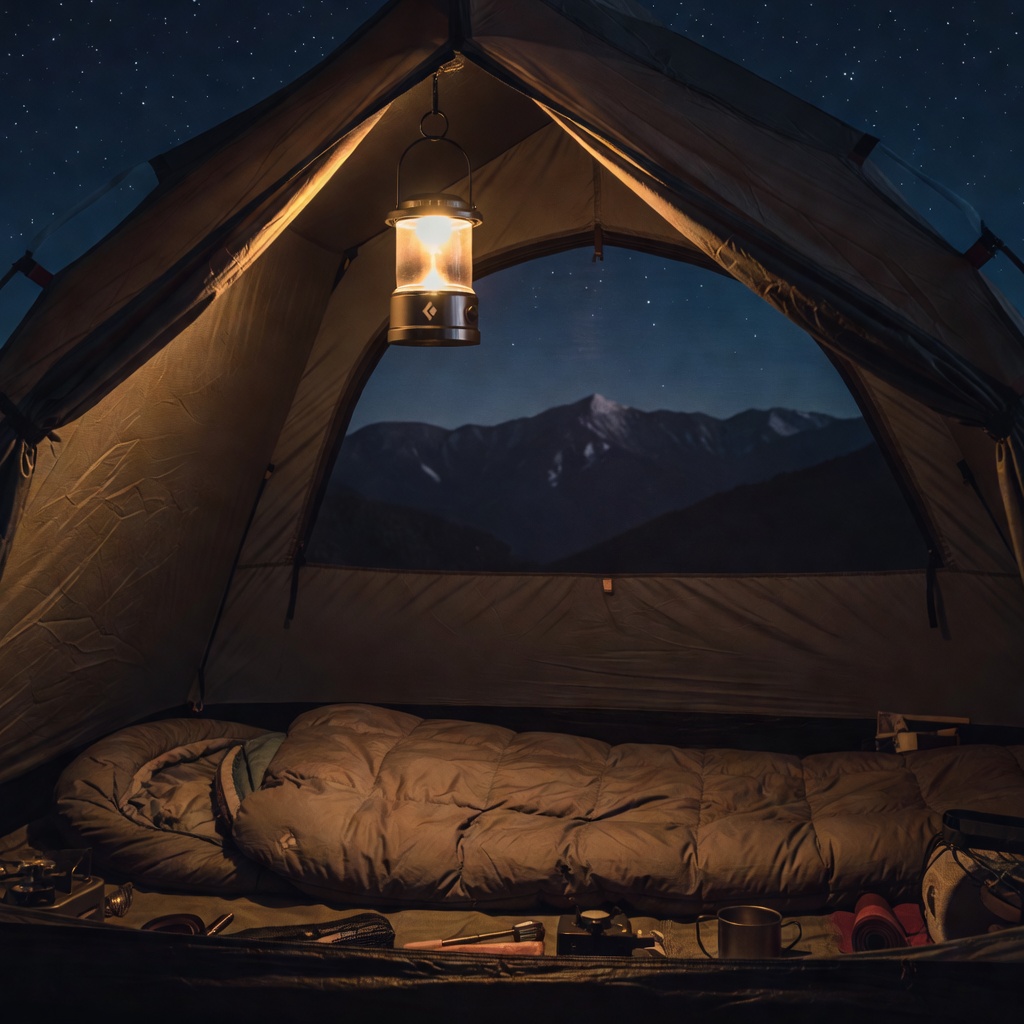
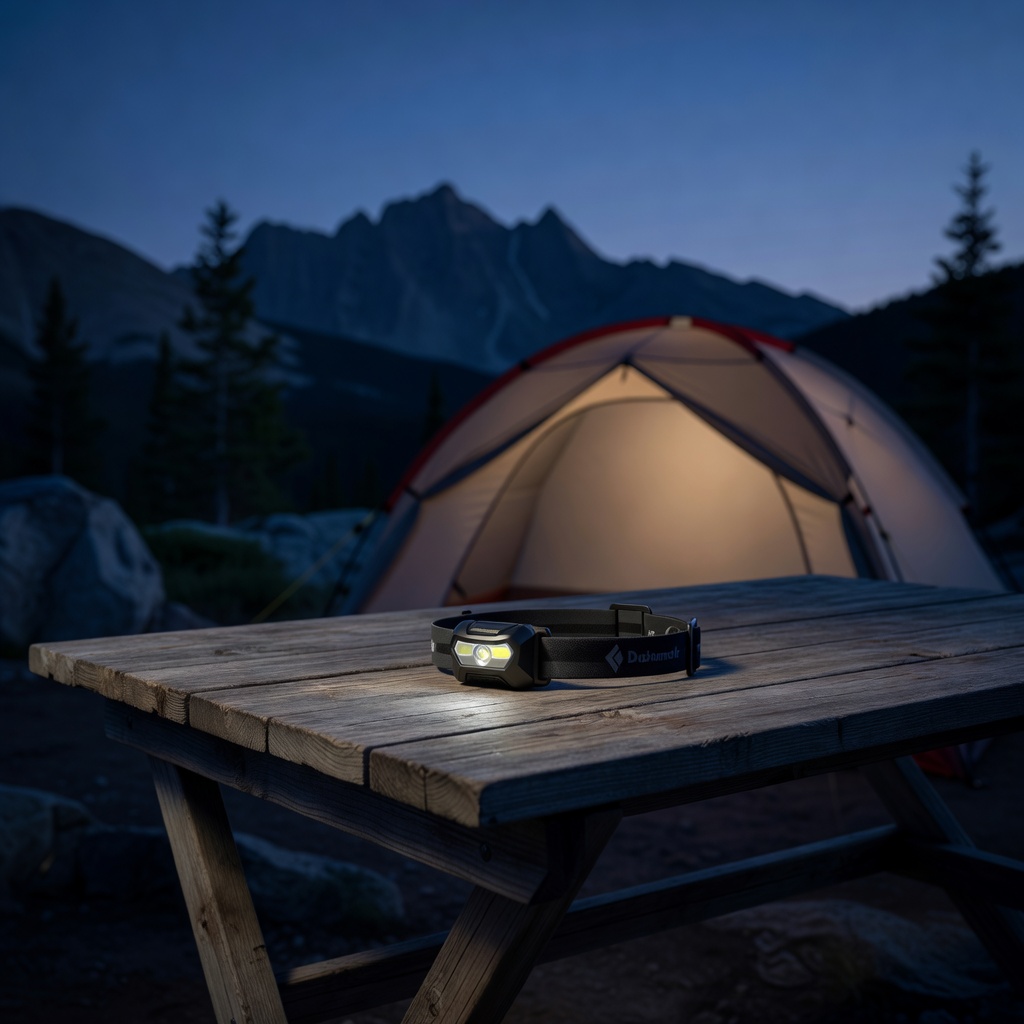
One of the most surprising things about fall camping is how early it gets dark. By late October, you're cooking dinner in the dark at 6:30 PM. Lighting stops being optional and becomes core gear.
The Goal Zero Lighthouse Micro at $29.95 is my favorite campsite lantern: 120 lumens, USB-rechargeable, weatherproof, and it doubles as a phone power bank. The Black Diamond Moji Lantern at $24.95 is the budget pick — 200 lumens, dimmable, and it runs on AAA batteries (which work fine in cold, unlike rechargeables that drain faster).
For hands-free light, the Black Diamond Spot 400 at $39.95 has been a staple for years: 400 lumens, waterproof, and dual-fuel (AAA or rechargeable). The Petzl ACTIK CORE at $79.95 adds a red light mode that preserves night vision — great for late-night bathroom trips without blinding your campmates. Full comparison in our camp lighting guide.
Fall lighting rule: bring one lantern for the table, one headlamp per person, and spare batteries. Rechargeable batteries lose capacity in the cold — keep spares in an inside pocket where your body heat keeps them warm.
Hot Drinks and Fall Camp Cooking
Fall camping is comfort-food season. The morning coffee ritual hits different when there's frost on the tent and you're holding a warm mug with both hands.
The AeroPress at $39.95 is the fastest camp coffee on earth — 90 seconds from grounds to cup, easy cleanup, and it makes genuinely good coffee. For a fancier ritual, the Snow Peak Titanium French Press at $65 is ultralight, unbreakable, and brews a full pot for the whole campsite. See our camp coffee makers guide for the full lineup.
For hot drinks and soups all day, an insulated bottle is a fall essential. The CIVAGO 32 oz Insulated Bottle at $19.99 keeps drinks hot or cold for hours and comes with three lids (straw, spout, and handle) — I use it for coffee in the morning and soup at lunch. The RAYMYLO 64 oz Thermos at $19.19 is the bigger option: triple-wall vacuum insulation that keeps water hot for 48 hours, perfect for a family's worth of hot chocolate after a cold hike. When you want to actually pour a round rather than sip, the THERMOS Stainless King 40 oz Beverage Bottle at $39.99 is the drink flask I reach for: five cups of coffee stays genuinely hot for hours, and the insulated cup lid means no separate mugs at a 38°F trailhead. For actual hot food rather than drinks, the THERMOS Stainless King Food Jar at $30.50 keeps chili or stew hot for up to 14 hours and includes a built-in insulated bowl — pack it for a 40°F trailhead lunch and leave the stove in the car.
Dinner in fall should be one-pot comfort food. The Lodge Cast Iron Skillet 6.5" at $9.38 is the perfect campfire companion — pre-seasoned, nearly indestructible, and it goes straight from fire to table. Chili, stew, campfire nachos, or breakfast hash: one skillet does it all. See our campfire cooking recipes for fall-friendly meals. And don't skip dessert while the coals are still hot — our 12 easy campfire dessert recipes include Dutch oven cobblers and pie iron cakes that finish cooking in the time it takes everyone to gather at the fire.
Coolers Still Matter in Fall
Yes, even in cold weather you need a cooler — for the stuff that shouldn't freeze, and because a good cooler saves you from ice runs on day two.
The wheeled pick I'd hand a fall family is the YETI Tundra Haul — rotomolded, so it holds ice across a long weekend of cool-weather cooking, and the never-flat wheels roll a loaded cooler from the car to the site without a second pair of hands.
The Coleman 316 Series Wheeled Cooler 62QT at $84.99 is our workhorse pick: wheels make the walk from car to campsite easy, and the 62-quart capacity handles a long weekend of food for a family of four. The Stanley All Day Julienne Soft Cooler at $100 is the day-trip companion — soft-sided, packable, and perfect for picnic lunches on fall hikes. Compare more options in our cooler ice retention test.
Fall cooler tip: at 40°F nights, keep perishables outside the tent in the cooler — the cold air is free refrigeration. But move anything you don't want frozen (eggs, produce) closer to the tent wall or wrap it in a towel.
The Fall Camping Packing Checklist
📄 Download the free one-page printable PDF — print it, pack from it, and don't trust the forecast for the nights.
Here's the complete list, organized the way you'll actually pack it. Packing for a bigger crew? Our family-of-5 camping packing list breaks down the exact quantities for tent space, sleeping bags, and meals so nobody gets left with a cold night or a hungry morning:
Whether you call it a fall camping packing list, a fall camping supplies list, or you're simply searching what to bring fall camping and what to bring on a fall camping trip, the items below are identical. The one thing every version gets wrong is quantity — three pairs of socks and two pairs of gloves, not one.
Sleeping (the priority)
- Cold-rated sleeping bag (20°F or lower for fall)
- Insulated sleeping pad
- Kids' bags sized to fit them
- Warm base layer, wool socks, beanie
Cooking
- Stove + fuel matched to the forecast (propane or dual-fuel for cold)
- Cast iron skillet for one-pot meals
- French press or AeroPress + ground coffee
- Insulated bottle for hot drinks all day
Lighting
- Lantern for the table (Goal Zero or Moji)
- Headlamp per person (Spot 400 or ACTIK CORE)
- Spare batteries, kept warm
Layers
- Rain/wind shell (Helium jacket)
- Fleece or puffy mid layer
- Warm hat + gloves
- 3+ pairs of socks
Extras
- Wheeled cooler with a good ice strategy
- Extra blanket for the hammock or chairs
- First aid kit (see our camping first aid checklist)
- Hot chocolate mix — non-negotiable
It is not quite the last window, though — Veterans Day, November 11, 2026 is the final fee-free national park day of the year, and the gear list shifts again for it.
Labor Day to Halloween: Fall's Big Camping Windows
Labor Day (September 7 this year) is the biggest camping weekend of late summer — and for a lot of families it's the last long weekend before school and work lock the calendar down until Thanksgiving. Campgrounds fill up weeks ahead, the first cool nights sneak in, and it's the perfect dress rehearsal for the full fall season. Our Labor Day weekend camping checklist walks through the complete trip audit — but here's the 5-point version:
The 5-point Labor Day trip audit:
- Book this week. Most state parks and national forest campgrounds fill 2-3 weeks out for the holiday. If your first choice is full, look for first-come sites or adjacent private campgrounds.
- Test your sleeping system early. Labor Day weekend is often the first sub-50°F night of the year. Check your bag's rating against the forecast low before you leave — a 50°F summer bag at 40°F makes for a miserable first night.
- Plan for the 80°F-afternoon / 45°F-night swing. Daytime shorts, evening fleece, plus a warm hat and gloves for the fire after dark.
- Pack the cooler for a long weekend. A Coleman 316 Series Wheeled Cooler 62QT at $84.99 handles three days of food for a family of four without an ice run — the wheels earn their keep on the walk from the car.
- Bring the bug plan. Late-summer mosquitoes are still active at dusk; permethrin-treated clothes and a good repellent keep the campfire pleasant.
Run the full checklist the night before you leave and you'll be on the road by Friday afternoon instead of Saturday morning — that extra half-day is half your trip.
Most holiday weekends end up in a state park rather than a national one, and the booking mechanics are genuinely different — our state park camping guide covers reservation windows, what the fees actually total, and the first-come-first-served tactics that save a last-minute trip.
Missed Labor Day? If you can take a Thursday, Constitution Day (September 17) is a national-park fee-free day — our Constitution Day family camping guide covers the Thursday-to-Sunday strategy and which parks are actually worth the drive. Otherwise, Columbus Day weekend (October 10-12) is fall's second long weekend — and peak foliage across much of the country. Our Columbus Day weekend camping checklist runs the same trip audit for cooler nights, leaf-viewing days, and campgrounds that book out 2-3 weeks ahead.
And October isn't the end of the season — it's the best part of it in a lot of the country. Our where to camp in October guide covers which campgrounds are actually still open, how cold the nights get by region, and how to plan around foliage crowds and hunting season. If you're chasing Northeast color, the two states that fill first each have their own playbook — our Vermont camping guide and New Hampshire camping guide cover park closing dates, booking windows, and where to base for the best drives. Maine completes that trio, and it is the easiest of the three to book late — its state park reservations closed on September 12 and campsites went first-come/first-served on September 14. Our Maine camping guide has the closing dates, the Acadia and Baxter State Park rules, and the 35°F-night gear list.
Late October and Halloween Weekend: The Last Big Windows Before the Freeze
Columbus Day weekend (October 10-12) is the next long weekend on the calendar, and once it passes the season hands you two more trips most families actually take: a late-October color-and-frost weekend, and Halloween weekend itself. After that, the next real target is Thanksgiving — and by then the useful camping map has shrunk to the desert Southwest, the Southeast, and the Texas hill country.
If you are still choosing between fall camping spots, the tiebreaker in late October is not scenery, it is elevation. The lower you drop, the later your window stays open, which is why the same weekend can be freezing in the Rockies and perfect in southern Utah or the Ozarks. Our where to camp in October guide runs the open-campground picture region by region, including which parks shut their water before they shut their gates.
For the Rockies, fall camping Colorado is really a September-to-early-October story — aspen turn first at the highest elevations, so fall camping in Colorado by late October usually means dropping to the foothills or the desert edge. The Camping in Colorado guide covers the aspen window by elevation band, RMNP timed entry, and the cold-night gear that makes 9,000 ft comfortable.
If Halloween weekend is your trip, the planning is different from a normal fall weekend: it is one of the busiest camping weekends of the season, the kids need to be warm and busy after dark, and decorations plus a costume pile eat floor space fast. Our Halloween camping with kids guide covers the site-booking order, the lighting setup, and the campsite dinner that works at 40°F.
And if you are already thinking about fall camping meals rather than campsites, the cold-weather version of camp cooking is its own subject. For fall camping food ideas that survive a cooler that is no longer fighting summer heat — hot one-pot dinners, foil packets, and a make-ahead plan — the fall camping food and meals guide is the companion piece to this checklist. Two pieces of gear that specifically earn their place in a late-October camp: a packable puffy blanket for the fire ring once the sun drops, and rechargeable hand warmers for the walk to the restroom at 11 p.m.
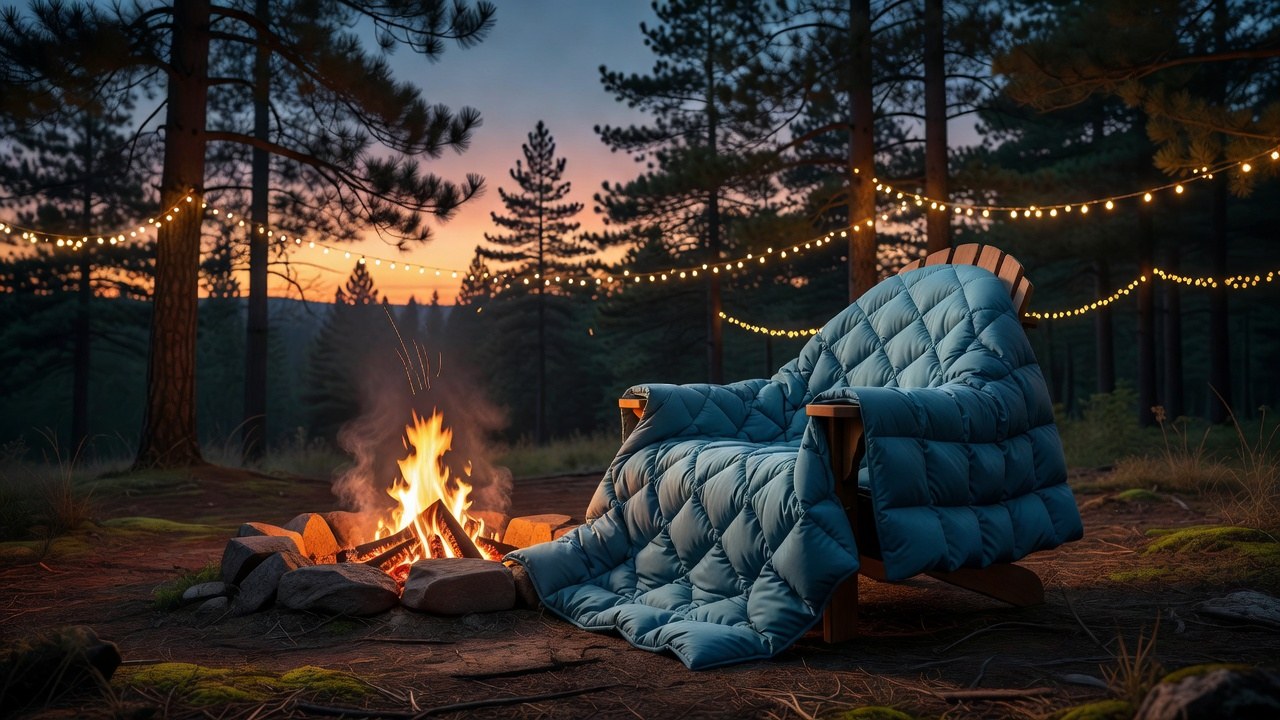
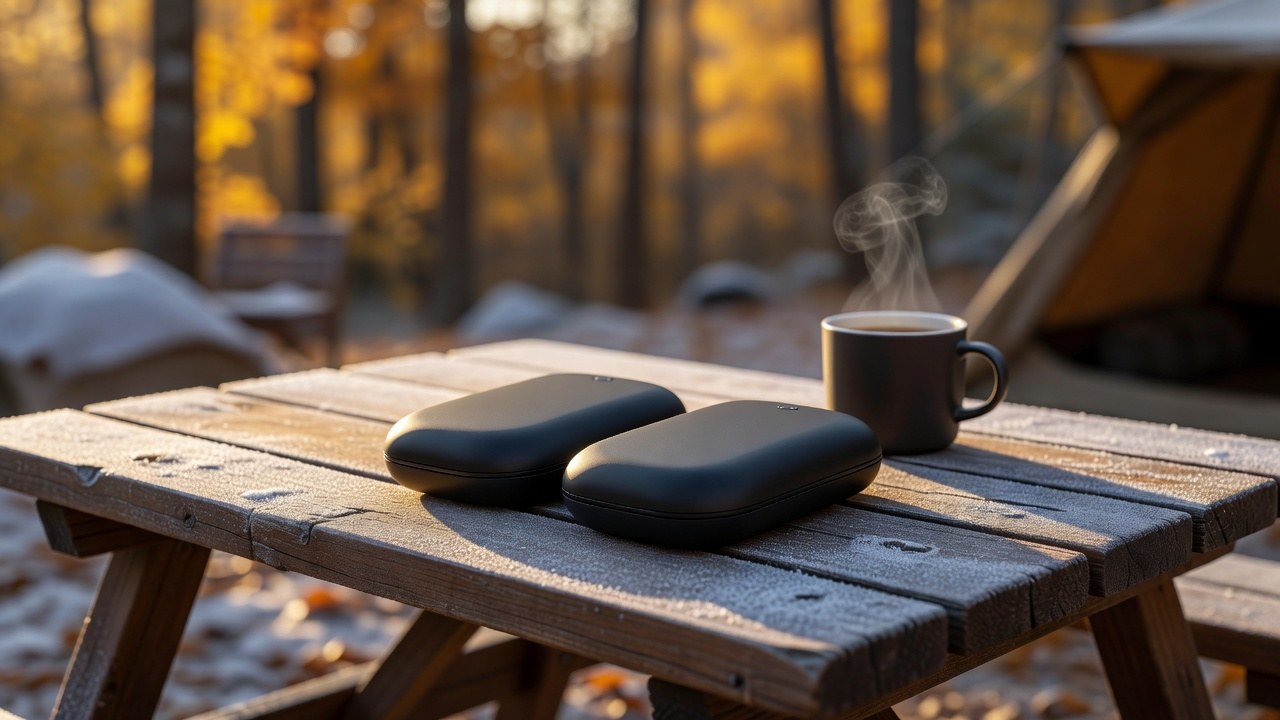
Then, when the late-October window closes, the season hands off to the holiday trip: our Thanksgiving camping guide covers the Dutch-oven turkey method, stove-only and campfire-only backup plans, and which campgrounds a three-generation family can actually book in late November.
Common Fall Camping Mistakes (Learn From Mine)
1. Trusting the daytime forecast. The high says 68°F, so you pack like summer. Then the low is 39°F and you're wearing every shirt you brought to bed. Always plan for the overnight low — it's the number that matters.
2. Using a summer bag rated for 50°F+. The most common fall mistake, period. A 50°F bag at 40°F means a sleepless, shivering night. Buy cold-rated or add a quilt/blanket layer on top.
3. Butane stove dies at 40°F. The stove worked fine in July, so you assume it always will. Butane stops vaporizing in cold. Bring propane or a dual-fuel stove.
4. Underpacking light. In summer you can get by with a phone flashlight. In fall, sunset at 6 PM means 4+ hours of darkness at camp. One lantern + one headlamp per person, minimum.
5. Forgetting the wind. Fall mornings are windy. Your stove flame gets knocked around and your campsite feels 10°F colder. Set up in a sheltered spot and use a windbreak.
6. Cotton everything. Cotton socks, cotton shirts, cotton hoodies — they soak up sweat and stay wet, and at 40°F wet cotton is dangerous cold. Wool and synthetic only.
Should You Go Fall Camping With Kids or Dogs?
Absolutely — with the right prep. Fall is actually a better season for kids and dogs than summer: no heat exhaustion, no bug spray battles, and campfires are genuinely fun (not just smoky). Our family camping checklist and dog camping guide cover the full family system — and for the complete weekend plan, from cool-weather sleep systems to hot camp meals and a sample two-night itinerary, see our fall family camping guide.
Budget note before the gear list: if the shelter decision is still open and price is the constraint, the best camping tents under $100 explains what a cheap tent gives up on a cold, damp fall night — and which ones still keep you dry.
The specific fall additions for kids: properly sized warm sleeping bags (see the Morrison bags above), extra layers (kids can't regulate temperature as well as adults), and warm breakfasts. When frost starts showing up on the tent in the morning, insulated boots make the difference between a kid who plays in the leaves and a kid who refuses to leave the tent — the Columbia Youth Bugaboot Celsius at $64.99 pairs 400g of insulation with Columbia's Omni-Heat reflective lining and a grippy outsole, so little feet stay warm and dry on cold camp mornings and frosty trailheads. For dogs: a warm place to sleep (they get cold at night too — consider a blanket or pad in the tent), paw protection on frosty mornings, and extra food (they burn more calories keeping warm). See hiking with your dog in fall for the seasonal details.
Camping in New York this fall? The state runs four separate campground systems, and our Camping in New York guide explains which one to book, when each region peaks, and the 50-mile firewood rule.
Final note for dog owners: September through December is hunting season on most public land, and a brown dog moving through brown cover reads as a deer to a hunter scanning for shapes. If your fall trips include public trails, our blaze orange guide for dogs covers which states require orange, what gear actually fits, and how to time the hike.
Two ways to end the season on your own terms: keep sleeping out past the first freeze with a hot tent and stove jack setup, or put the rig away properly with the RV winterization checklist before the first hard freeze finds the water lines.
Final Verdict
Fall camping is the season that rewards preparation. Pack for the cold night, not the warm afternoon; bring a propane-capable stove; light yourself properly; and dress in layers. Do those four things and you'll have the best camping weekends of the year — empty trails, golden light, campfire evenings, and zero bugs.
For more seasonal prep, see our winter camping beginner's guide for when the snow starts. Ready to pack for it? Our winter camping gear checklist breaks down the cold-weather kit item by item — sleeping bags, stove fuel, layers, the works. And if the snow means upgrading your shelter, our best 4-season tents guide covers snow-rated tents at three price points. Our tent size guide helps if you're still deciding which tent fits your family. If you're a day-tripper rather than an overnighter, our fall hiking gear checklist covers the waterproof shoes, merino layers, and headlamp that keep autumn trail days comfortable. And when the campgrounds break out the pumpkins, our Halloween camping with kids guide covers the spooky-but-not-scary family weekend — glow-stick games, campfire treats, and keeping everyone warm on those crisp October nights. Once the turkey takes over the calendar, our Thanksgiving camping guide walks you through cooking the whole feast at the campsite — Dutch oven turkey, camp stove sides, and a cold-weather packing checklist for the family. And if you're already gift shopping for the camper in your family, our best camping gifts guide covers 26 vetted picks including the best camping gifts under $50. Happy fall camping 🍂 Prefer to build the gift yourself? Our DIY camping gift basket guide lays out five baskets from $50 to $150, item by item.
Planning the whole season rather than a single weekend? The Camping in Oregon guide walks through which Oregon systems close first, which stay open through winter, and where October camping is still genuinely dry.
Camping those weeks in the middle of the country? The camping in Ohio guide covers which campgrounds stay open into November and what water service quietly disappears.
If you are filling the gaps on this list rather than borrowing them, our 2026 camping gear deals guide breaks down which categories discount in the fall clearance window, which wait for Black Friday, and which never go on sale at all.
If your trip is drifting west instead of east, the Missouri camping guide covers the Ozarks float season, the trout parks and one booking number for 41 state parks.
<!-- AFFILIATE_DISCLOSURE -->This article contains affiliate links. As an Amazon Associate, TrailMapz earns from qualifying purchases — at no extra cost to you. We only recommend gear we'd actually take camping.
Prefer one consolidated list? Our Best Camping & Outdoor Gear guide collects the full autumn shortlist.
Virginia is where autumn arrives late but wet — the camping in Virginia guide covers Blue Ridge nights in the 30s and the layering setup that handles Appalachian damp cold.
If your fall trip is heading into the Appalachians rather than the Rockies, the Tennessee camping guide covers the damp-cold gear case at 3,000 feet, where 38°F feels like 30°F in Colorado.
When fall ends, Arizona's camping season begins — our Arizona camping guide covers the desert parks that peak from November through March. Texas runs its fall window late and then inverts its whole camping season; the Texas guide covers October through April region by region.
New Mexico is a good test case for all of the above — see Camping in New Mexico 2026 for its six-month state park window, the 14-day BLM dispersed limit, the day-of-only backcountry permit at Carlsbad, and the state trust land exception.
Alabama's north half peaks later than most of the country, which extends the fall camping window — see Camping in Alabama.
For a worked example of how a state system can invert every rule you know, Camping in Louisiana covers the 30-day dispersed limit and the no-campground national parks.
Autumn is the best season for a quick trip, and our 2-day camping trip packing list carries the evening-layer and overnight-temperature notes that matter most in September and October.
Nights near or below freezing change what you need from a bag: the sleeping bag temperature ratings guide walks through each rating step and which bag-plus-pad pairing actually holds heat at 25F.
Fall Camping Near Me: Where to Go in Your Region This Autumn
Whether you type fall camping near me or autumn camping near me, you're really asking a timing question, because the colour moves south and downhill at roughly the speed you'd drive. Here's the region-by-region answer, paired with the state guide that carries the booking rules.
New England (late September to mid-October): the earliest window in the country outside the Rockies. If you're searching fall camping in New England, the short answer is Vermont's Green Mountains, New Hampshire's White Mountains, and Maine's western lakes — colour runs roughly the last week of September into the second week of October, and the campgrounds that stay open latest are the ones worth booking. Our Camping in Maine guide covers Maine's first-come-first-served window, and the Camping in New York guide covers the Adirondacks and Catskills plus the 50-mile firewood rule that applies across the Northeast.
The Rockies (late September to early October): high country peaks first and the window is short. When people ask for Colorado fall camping tips, the useful answer is timing the aspen — the Camping in Colorado guide covers the aspen window by elevation band, RMNP timed entry, and cold-night gear for 9,000 ft.
Mid-Atlantic and Appalachians (mid-October to early November): the longest fall window in the East, and the one that most rewards a late-season trip. Damp cold is the gear story here — the Camping in Virginia guide and the Camping in Tennessee guide both cover nights in the 30s at elevation.
Texas and the South (late October into December): the season inverts — fall camping in Texas is really the start of the camping season. The Texas guide covers October through April region by region, while the Alabama and Louisiana guides cover the Gulf states' late peak.
Upper Midwest (late September to mid-October): fall camping in Michigan and fall camping in Wisconsin both mean one thing — book early. The lakeshore state park campgrounds sell out for colour weekends weeks ahead, and the season ends abruptly at the first hard freeze. If your search was the shortened fall camping Wisconsin or fall camping Michigan, the answer is identical and so is the deadline: reserve the colour weekend six to eight weeks out, because these parks don't hold sites for a forecast.
A lakeshore site is the one place where the fall kit genuinely changes shape, because you are packing for wind off the water and a colder-than-forecast night on the same trip. The lakeside camping checklist covers that water-side setup separately from the standard fall list.
Desert Southwest (November onward): Arizona and New Mexico flip seasons entirely, and their camping window is November through March. See the Arizona and New Mexico guides.
If you just want a campground close to home, go through your state park system's reservation site rather than a national park. Fall is the one season where the close-to-home campground genuinely competes with the famous one — the famous one is either booked solid or already closed.
One autumn item is easy to overlook: what you sleep on. A thin insulated pad on top of your cot is what keeps a 35F night from ending the trip early - the camp bed comparison has the R-value table for fall temperatures.
Before you book a late-fall weekend, check the campground — not the park. We list the real 2026 closing dates for Yosemite, Yellowstone, the Smokies and Olympic, plus the sites that never close, in our guide to when do campgrounds close for the season.
If the trip heads into canyon country instead, the Camping in Utah guide pairs the same gear decisions with 30°F desert nights and the campgrounds that stay open into November.
If your fall weekend is pointed at the mid-Atlantic rather than the Rockies, the state-by-state rules change faster than the weather — camping in Pennsylvania covers the permit rules, the 11-month booking window, and the foliage timing in one place.
If your fall weekend is in the Southeast, our North Carolina camping guide covers the elevation-driven temperature swing that makes layering the whole game on an October trip there.
If rain is in the forecast, the repair order matters more than the products: our how to waterproof a tent guide covers drying, seam sealing and re-proofing in sequence.
Cabins remove the shelter problem but not the packing problem — our cabin camping with kids guide has the bedding, kitchen, and lighting checklist that fits a car.
Where you take the fall kit changes what goes in it: camping in Minnesota in October means lakeshore wind off Superior, nights at or below freezing, and a state park system that closes campgrounds in waves, so the ground-insulation and cold-rated-bag items stop being optional.
When the season turns, the gear swaps: our cold-weather dog camping guide covers what changes for freezing nights, from bedding to paw protection.
Fall Camping, State by State: The Booking Deadline Table
Region tells you the season; the state tells you the deadline, the fee and the closing date. If your search was fall camping in <state> or the shorter fall camping <state>, use the row below to jump straight to the guide that carries that state's rules.
| What you searched | Region | State guide |
|---|---|---|
| fall camping alabama / fall camping in alabama | Texas and the South | Camping in Alabama |
| fall camping arizona / fall camping in arizona | Desert Southwest | Camping in Arizona |
| fall camping california / fall camping in california | West Coast | Camping in California |
| fall camping florida / fall camping in florida | Texas and the South | Camping in Florida |
| fall camping georgia / fall camping in georgia | Texas and the South | Camping in Georgia |
| fall camping louisiana / fall camping in louisiana | Texas and the South | Camping in Louisiana |
| fall camping maine / fall camping in maine | New England | Camping in Maine |
| fall camping minnesota / fall camping in minnesota | Upper Midwest | Camping in Minnesota |
| fall camping new hampshire / fall camping in new hampshire | New England | Camping in New Hampshire |
| fall camping new mexico / fall camping in new mexico | Desert Southwest | Camping in New Mexico |
| fall camping new york / fall camping in new york | Northeast | Camping in New York |
| fall camping ohio / fall camping in ohio | Upper Midwest | Camping in Ohio |
| fall camping pennsylvania / fall camping in pennsylvania | Mid-Atlantic and Appalachians | Camping in Pennsylvania |
| fall camping tennessee / fall camping in tennessee | Mid-Atlantic and Appalachians | Camping in Tennessee |
| fall camping texas / fall camping in texas | Texas and the South | Camping in Texas |
| fall camping utah / fall camping in utah | Canyon Country | Camping in Utah |
| fall camping vermont / fall camping in vermont | New England | Camping in Vermont |
| fall camping virginia / fall camping in virginia | Mid-Atlantic and Appalachians | Camping in Virginia |
| fall camping washington / fall camping in washington | West Coast | Camping in Washington |
| fall camping west virginia / fall camping in west virginia | Mid-Atlantic and Appalachians | Camping in West Virginia |
Seven states do not have their own guide yet, so those searches are answered by region instead: fall camping arkansas, fall camping connecticut, fall camping kentucky, fall camping massachusetts, fall camping missouri, fall camping oklahoma and fall camping south carolina. Use the region table above for the timing and the state park system for the booking window.
Fall Camping Ideas, Outfits, Food and Games
The rest of the fall camping searches split into a few intents, and this page or a linked guide answers each one directly.
- fall camping ideas, fall camping places and fall camping events - the region table above is the shortlist, and the dated weekend pages are the closest thing to an events calendar we keep: Columbus Day weekend, Halloween and Thanksgiving camping.
- fall camping hacks - the packing checklist below is the short version and the mistakes section right after it is the long one; the 2-day trip packing list is the overnight version of the same list.
- fall camping outfits, fall camping jacket and fall camping pants - the by-temperature clothing table above is the answer, and the fall hiking clothes guide is the layer-by-layer version for the trail rather than the camp.
- fall camping drinks, fall camping desserts, fall camping cocktails and fall camping lunch ideas - start with the hot drinks and camp cooking section above, then the fall camping food guide for full menus.
- fall camping games and fall camping decorations - the Halloween camping guide carries the pumpkin and decorating ideas, and the family camping with kids guide has the campfire games that work all autumn.
- fall camping with baby - the camping with a baby or toddler guide covers the age-by-age sleep setup and the first-trip plan.
- fall camping new england, fall camping east coast, fall camping pnw, fall camping bay area, fall camping northern california, fall camping southern california, fall camping lake tahoe, fall camping southern utah, fall camping lake george, fall camping door county and fall camping washington state are regional variants of the same question, so they map to a row in the table above: Door County runs on the Upper Midwest window, southern Utah on the canyon country window, and the Pacific Northwest, the Bay Area and Lake Tahoe on the West Coast window.
Want the full shortlist instead of one pick per category? We keep every fall-relevant option ranked by rating: camping shelters, tents and sleep systems, camping clothing and layering, camping cooking gear and camping safety and tool gear.
If your window is the same one, our Camping in Kentucky guide maps mid-to-late October in the Red River Gorge, from the $5 overnight pass to which campgrounds stay open in November.
When the north closes down, the camping guide to Arkansas covers what is still open.
Fall Camping FAQ
If you are timing a trip rather than choosing a state, camping in Wisconsin runs through which loops close when and why the third week of October is the southern half's peak.
If your weekend planning runs into the same cold-night problem, our West Virginia camping guide works through the October fire rules and which campgrounds stay open past the holiday.
What sleeping bag rating do I need for fall camping?
Buy a bag rated 10–15°F below the coldest overnight low you expect. If the forecast says 40°F, bring a 20°F or 25°F bag — our fall pick is the Kelty Cosmic Down 20° ($169), a 550-fill down bag that packs small and has stayed reliable for years. On a budget, the TETON Sports Celsius XXL 0° ($89.99) is bulky but gives you a huge safety margin on the coldest nights.
Why does my camp stove stop working when it gets cold?
It's fuel chemistry, not a broken stove. Butane stops vaporizing below roughly 40°F, so the flame sputters or dies exactly when you want hot coffee. Propane keeps working down to about -40°F, and isobutane blends to around 15°F. For fall car camping, a dual-fuel stove like the Gas One GS-3400P ($34.99) lets you match the fuel to the forecast instead of guessing.
What should I wear to sleep in a tent in fall?
A wool or synthetic thermal base layer — never cotton — plus thick wool socks and a beanie. But don't overdress: sweating inside the bag makes you colder hours later when the moisture chills. One warm layer, socks, and a hat is the sweet spot, and it's worth roughly 10°F of perceived warmth.
Is fall actually better for camping than summer?
Usually, yes. Fewer crowds, no mosquitoes, more stable weather, and campgrounds that were booked solid in July open up again. The tradeoff is a colder, longer night — which is exactly why the sleeping system is the one part of your kit worth spending on.
What should be on my fall camping packing list?
A 20-30°F sleeping bag, an insulated sleeping pad, a propane-capable stove with fuel, one lantern plus a headlamp per person, one base layer / one mid layer / one shell, three pairs of wool socks, a hat, gloves, and a thermos for hot drinks. The printable checklist above is the packable version — print it and work down the page.
Is there a fall activities checklist for a camping weekend?
For a family fall weekend the activity checklist is shorter than the gear checklist: a leaf-peeping hike, apple picking or a farm stand, a campfire with apple crisp or a Dutch oven cobbler, and one activity for the dark hour (cards, glow sticks, or a lantern-lit walk). Our apple picking + camping weekend guide builds the whole Saturday around it.
How do I compare prices on fall camping supplies?
Compare the two specs that actually change a fall trip, not the marketing copy: the temperature rating on the bag and the R-value on the pad. A $60 pad with a real R-value beats a $120 pad without one, and a 40°F bag at any price will not get you through a 35°F night. Buy the sleeping system first, the stove second, and everything else from what is left in the budget.
One calendar note worth acting on: National Public Lands Day (September 26) has passed, and it was never a systemwide National Park Service fee-free day in 2026. The next free-entrance dates are Tuesday, October 27 (Theodore Roosevelt's birthday) and Wednesday, November 11 (Veterans Day) — the last one of the year. Our 2026 fee-free calendar and family camping guide has both dates plus a plan for turning a midweek free gate into a long weekend.
For the shoulder-season picture — who closes on Oct 31, who stays open all winter, and where the rates actually drop on Nov 1 — see the Washington state camping guide.
When the overnight low drops below freezing and kids are on the trip, use the cold-weather list in winter camping with kids.
For a worked example of how state and federal campground systems differ on the very same piece of land, see the Maryland camping guide — two parks, one barrier island, two booking portals, two season-end dates.