Camp Stove Windscreen Guide: Stop Losing Fuel to the Wind (2026)
Wind can cut your camp stove's efficiency in half. This 2026 windscreen guide covers which screens work and how to pair one with the right fuel.
You picked the right stove. You bought the right fuel. You set up at camp, struck the igniter, and… the flame keeps guttering sideways, your water takes forever to boil, and you burn through a whole canister on one pot of coffee.
Wind is the silent killer of camp cooking. It does not show up on any spec sheet, but it is the single biggest variable between a stove that performs like the box promised and one that leaves you eating cold ramen at dusk.
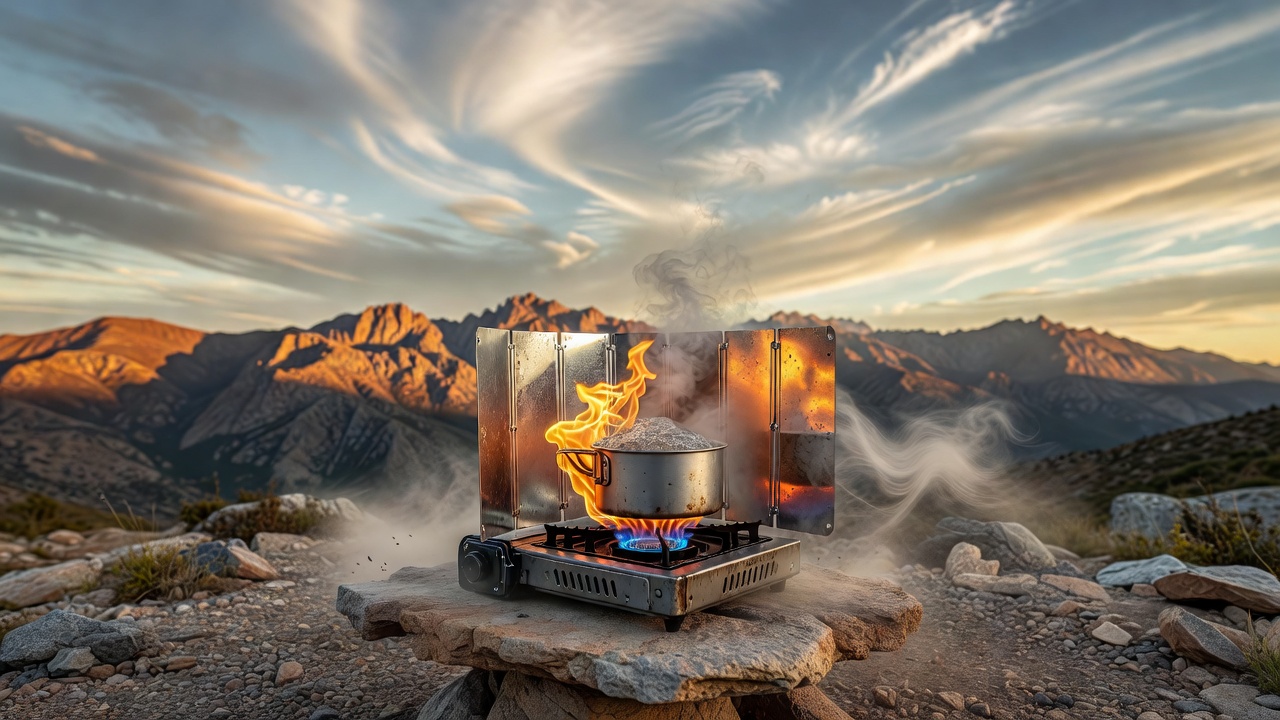
The good news: a windscreen fixes most of it, and the right one costs less than a single wasted fuel canister.
If you have not settled on a fuel yet, start with our complete camp stove fuel guide (propane, butane, isobutane) — it walks through which fuel matches which trip. This guide assumes you have a stove and fuel picked, and focuses on the part almost every camper underestimates: keeping the wind off your flame.
Quick Answer: The Right Windscreen by Fuel Type
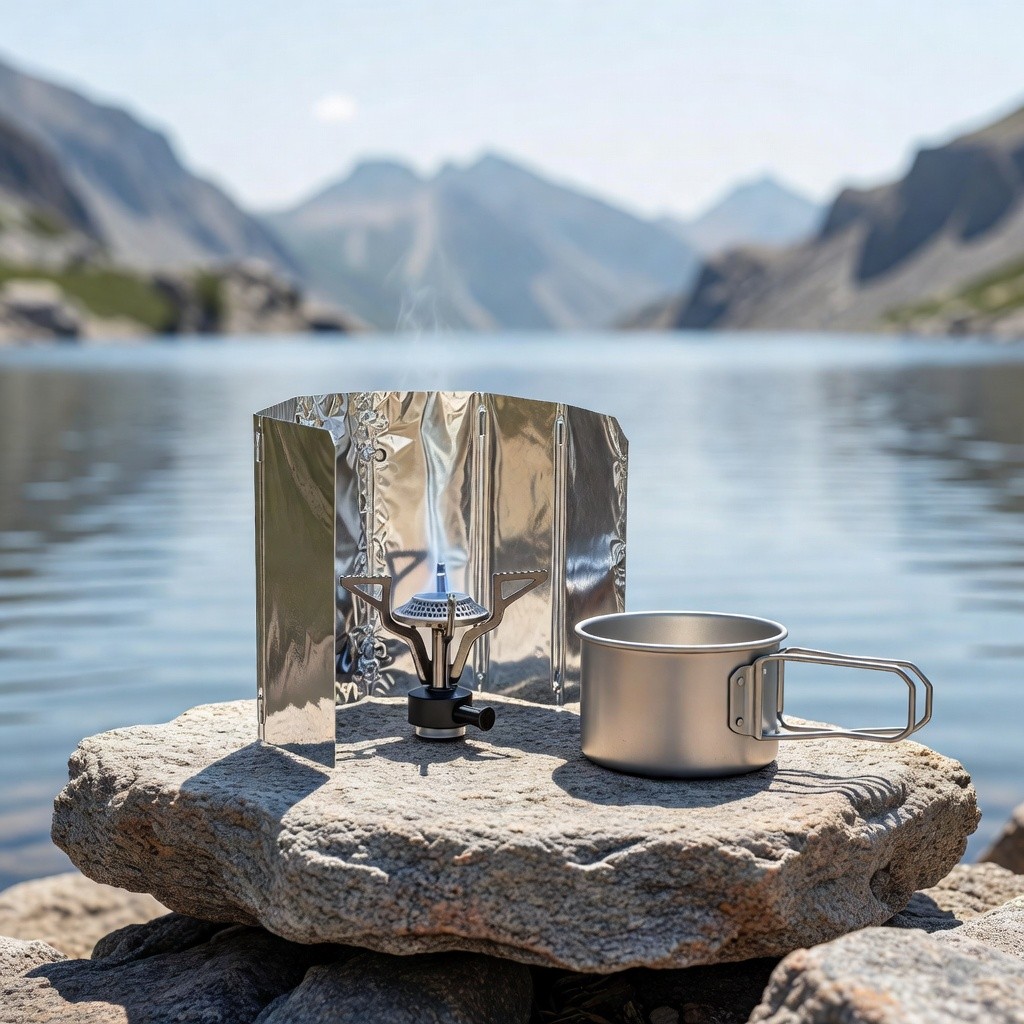
- Liquid fuel stove: MSR Heat Reflector and Windscreen ($16.97) — a full wrap is correct on this fuel type.
- Propane: Gas One GS-3400P ($34.99) or the Coleman Bottle Top single burner ($21.99) — full wrap of foil.
- Butane: Coleman Classic 1-Burner ($29.99) — three-quarter wrap, and never fully enclose the canister.
- Canister / backpacking: MSR PocketRocket 2 ($49.95) — three-quarter wrap only; a full wrap overheats the canister.
- The rule: full wrap for propane and liquid fuel, 3/4 wrap for canister stoves. A windscreen is the cheapest performance upgrade you can buy for any stove — it saves fuel, boils faster, and makes dinner stop being a fight with the weather.
Why Wind Wrecks Your Stove (The 30-Second Physics)
A camp stove does not just "make heat." It transfers heat from a flame into your pot. Wind disrupts that transfer in three ways at once:
- It blows the flame off the burner. Instead of licking up against your pot, the flame gets pushed sideways, heating the air next to your stove instead of your dinner.
- It strips away the hot air cushion. Even when the flame stays put, wind constantly replaces the warm air around the pot with cold air, so heat leaks away before it ever reaches the food.
- It cools the fuel itself. On canister stoves, wind speeding past the canister makes the fuel vaporize more slowly — which means a weaker flame, which means even more wind exposure. It is a vicious cycle.
The practical result: a gentle 10 mph breeze can stretch a 4-minute boil into 10 minutes, and you will use close to double the fuel to get there. On a weekend trip that is annoying. On a multi-day backpacking trip it is the difference between carrying one fuel canister and carrying three.
This is also why cold-weather cooking is uniquely punishing — wind and cold compound each other. Our cold-weather camp stove guide goes deep on winter and high-altitude fuel behavior; the short version is that a windscreen matters even more when the mercury drops.
The Three Ways to Beat Wind at Camp
You have three levers, and the best setups use two of them together.
1. A Dedicated Windscreen (The Cheap, Universal Fix)
A windscreen is a folding panel of metal or foil that wraps around your stove to block the breeze. It is the single highest-return accessory you can carry — usually under $20, weighs a few ounces, and pays for itself in saved fuel within a couple of trips.
The classic is a folding aluminum windscreen: a row of hinged panels you arrange in a partial circle around the stove, secured with built-in ground pegs. For backpacking, a lighter titanium or foil option packs nearly flat. For car camping, a taller steel panel does a better job sheltering a two-burner setup.
A well-regarded option for backpackers is the MSR Heat Reflector and Windscreen — designed to pair with MSR liquid-fuel stoves and the WindPro canister stove, it combines a solid heat reflector that bounces heat back toward the pot with a wraparound windscreen. If you already run an MSR PocketRocket 2, a separate folding windscreen (any of the common 8–10 plate aluminum designs) is the budget companion that makes a bare canister stove behave like a windproof one.
2. A Stove With Built-In Wind Protection
Some stoves fight wind from the inside out instead of needing an add-on. Canister stoves with a shrouded burner head, integrated pot systems, and remote-canister designs all reduce wind sensitivity by design. The trade-off is usually weight, price, or both.
Wood-burning stoves are an interesting special case: they are inherently wind-sensitive (an open flame fed by a tiny fan), but a good one is engineered to keep the fire hot enough that wind actually improves draft rather than killing it. The BioLite CampStove 2 is a good example — its internal fan maintains combustion efficiency, and as a bonus it converts heat to USB power so you can charge a phone or headlamp off your cook fire. It is not a wind replacement, but it is far less fragile to gusts than a bare canister stove.
3. Natural Windbreaks (Free, But Unreliable)
The zero-gear option is site selection: cook behind a boulder, a fallen log, your vehicle, or a dense thicket of trees. Used wisely, natural windbreaks are excellent and cost nothing. Used carelessly — tucked against a low branch or under a tarp edge — they become a fire hazard. Always keep at least a few feet of clearance from anything flammable, and never cook inside a tent or vestibule with a flame stove.
Natural windbreaks are a great primary strategy, but they are no substitute for a windscreen when the wind shifts or you are cooking on an exposed ridge, beach, or alpine plateau.
How to Choose a Camp Stove Windscreen
Not every windscreen fits every stove. Here is the decision framework.
Match the windscreen to the fuel type (safety first)
This is the one rule you cannot afford to get wrong:
- Propane and liquid-fuel stoves — Windscreens are safe and recommended. The fuel bottle or tank sits away from the heat, and wrapping the burner is exactly how these stoves are designed to be used. The Coleman Bottle-Top Propane Camp Stove is a classic single-burner propane setup that benefits hugely from a wraparound screen on a breezy day.
- Butane canister stoves — Windscreens are safe only if they do not trap heat around the canister. A butane canister sits directly under the burner, so a full-wrap windscreen that encloses the whole stove can overheat the canister — dangerous. Use a partial screen on the windward side only, leaving the canister side open to cool air. The Coleman Classic 1-Burner Butane Stove is exactly the kind of upright butane stove where this matters most.
- Isobutane backpacking canisters — Same rule as butane: shield the flame, never the canister. A windscreen on the windward side is great; a full wrap that bakes the canister is a risk. The MSR PocketRocket 2 is the canonical example — pair it with a 3/4 wrap windscreen, never a full circle, and touch the canister occasionally; if it is too hot to hold, back the screen off. If the flame is already weak or yellow before the wind starts, the cause is upstream of your windscreen — our camp stove troubleshooting guide walks through fuel, canister seating, and clogged burners.
Height and coverage
A windscreen only helps the part of the flame it actually shields. For a small canister stove, a screen 7–9 inches tall is usually enough to cover the flame and the bottom third of your pot. For a two-burner car-camping stove, you want a taller, wider screen — the Gas One GS-3400P Dual Fuel is a versatile dual-fuel stove where a good wraparound screen turns a gusty picnic table into a calm kitchen.
Material tradeoffs
- Aluminum alloy — The default. Cheap, light, folds compact, reflects heat well. Dents if abused but lasts for years. Best all-around choice.
- Titanium — Lighter and pricier, beloved by ultralight backpackers. Reflects heat well and survives abuse, but you pay a premium for the weight savings.
- Steel — Heavier and sturdier, best for car camping and two-burner setups where you want something that will not blow over. Overkill for backpacking.
Plates and adjustability
Folding windscreens come in 8, 10, or 12 hinged plates. More plates means you can wrap a wider circle to fit a bigger stove or a pot with a wide base. The ability to remove panels to size the screen to the stove is the feature that separates a good windscreen from a fixed one — you can shrink a 10-plate down to a 6-plate for a tiny canister stove, or extend all of them around a Dutch oven.
Pairing Wind Protection With Your Fuel Choice
The whole point of carrying a windscreen is that it lets a less expensive, more versatile stove compete with a pricier windproof one. A few proven pairings:
- Backpacking with isobutane — MSR PocketRocket 2 + a 3/4-wrap aluminum windscreen. The stove is ultralight and the windscreen makes it usable on ridgelines. This is the cheapest way to get windproof-ish performance under 4 ounces total.
- Car camping with propane — Coleman Bottle-Top Propane + a full wrap steel or aluminum screen. Propane stoves are forgiving and a full windscreen is safe, so you can cook a full meal in a stiff breeze.
- Dual-fuel road trips — Gas One GS-3400P + a 10-plate folding screen. The stove runs propane or butane, and a good screen means you do not care which one the gas station had in stock.
- Winter and high altitude — liquid fuel or a windproof canister system + a solid heat reflector. Cold already saps canister pressure; without wind protection you may not get a usable flame at all. See the cold-weather stove guide for the full winter setup.
The Forgotten Accessory: Cook On Windy Days, Eat After Dark
A windscreen solves the cooking problem, but wind often comes with shortening daylight. If you are boiling water at dusk on an exposed bench, a windscreen keeps the flame alive and a good headlamp keeps your hands free. The Black Diamond Spot 400 Headlamp is a waterproof, 400-lumen light that handles windy, splashy cook duty without complaint — pair it with the stove setup and you stop fumbling with a phone flashlight every time the wind picks up.
How to Use a Windscreen Without Starting a Fire
A windscreen concentrates heat, and concentrated heat does things you do not want if you are careless:
- Keep the screen off flammable surfaces. A hot aluminum panel on dry grass, a wooden picnic table edge, or a synthetic tarp can scorch or melt. Set the stove on a flat rock or a dedicated stove board.
- Never fully enclose a canister stove. The canister needs airflow to stay cool. A 3/4 wrap is the safe maximum for any upright canister stove, propane, butane, or isobutane.
- Watch the pot handle. A windscreen reflects heat outward too, and a plastic or rubberized pot handle can soften if it sits in the reflected heat. Rotate the handle away from the screen.
- Pack it out cool. Aluminum and titanium hold enough heat to melt a stuff sack. Let the screen air-cool for a minute before folding it up.
DIY Wind Protection When You Forget Yours
You will forget your windscreen at least once. Field fixes, best to worst:
- Your own body — kneel or sit upwind of the stove. Crude, but it buys you a calm pocket for a quick boil.
- A backpack or sleeping pad — stand a foam pad on its side a foot upwind. Foam pads are surprisingly effective and do not scorch as fast as you'd think.
- A cook pot lid — for a tiny canister stove, resting the pot's lid upright in the wind, propped with a rock, shields the flame just enough to get dinner going.
- Aluminum foil from your food bag — if you packed foil for wrapping food, fold it into a three-panel screen and peg it with sticks. It is single-use but it works.
- Site selection — move behind a rock, log, or vehicle. Sometimes the best windscreen is the one nature already built.
None of these are as good as carrying a $15 folding screen, which is the actual lesson: just carry the screen.
Common Windscreen Mistakes (Learn From Mine)
- Full-wrapping a canister stove. I melted a butane canister's label into a sticky puddle once before I understood the canister-cooling rule. The screen was fine; the canister was not. 3/4 wrap, always, for upright canister stoves.
- Buying a screen that is too short. A 5-inch screen looks fine in the store and protects nothing on a real stove. Look for 8 inches minimum for canister stoves, taller for two-burner setups.
- Forgetting the ground pegs. A folding screen without its pegs is a kite. If your screen did not come with pegs, use tent stakes or sharpened sticks — the screen is useless flat on the ground.
- Over-trusting a "windproof" stove. Built-in wind protection helps, but no stove is immune to a real gust. Even integrated systems benefit from positioning behind a natural break in heavy wind.
- Cooking in the vestibule to escape wind. This is how people start tent fires and suffer carbon monoxide poisoning. Always cook outside, screen or not.
Flat-top cooking is the most wind-sensitive setup of all, because a big exposed plate radiates heat — the camp stove griddle guide covers keeping a griddle hot when the wind picks up.
Windscreen Words: Windscreen, Wind Guard, Windbreak, Wind Shield
Search for this accessory and you get four different names for one object, plus a few variants that sound like separate products but are not. Here is the decoder I wish someone had handed me before I accidentally bought three of the same panel.
A wind guard for camp stove is the small hinged plate that clips or stands beside a burner. So is a camp stove wind guard, a camp stove wind break, a camp stove wind cover, and a camp stove wind barrier. The one word that carries real information is camp stove wind deflector: an angled panel that lifts gusts up and over the pot instead of letting them press flat against the flame. Cheap folding camp stove wind guards are usually just a flat plate, which is why they work in a steady breeze and fail in a gusty one.
If you searched a full-wrap version rather than a single plate, you were searching a camp stove windscreen — or a camp wind screen, a camp stove wind protection, a camp stove wind protector, a wind protection for camp stove, a wind protector for camp stove, a windscreen for stove, or a windshield for camp stove. Different shops, same object: a panel that wraps two or three sides of the burner and leaves one side open for your hand.
Buying phrases are where people get lost. A camp stove with windscreen or a camp stove with windshield means the panel is in the box with the stove, and the same is true of a camping stove with windscreen, a camping stove with windshield, a camping stove with wind shield, a camping stove with wind guard, and a camping stove with wind protection — all five say the same thing in slightly different words. None of them tells you whether that included panel weighs two ounces or two pounds; the listing photo and the material line do.
The last two are separate, and neither is an accessory you can order: a camping stove wind protection claim and a camping stove wind resistant claim describe performance, not a product. A stove can be wind resistant and still need a fresh-air gap at the burner, and a panel described as wind resistant is not the same as a stove described the same way. When in doubt, ask which one is in the box.
Windscreen Forms: Folding Plates, Concertina Panels, and Foil You Already Own
There are four physical forms, and which one you want depends on how you cook, not on how much you spent.
Folding aluminum plates. A folding camp stove windshield is the classic: three or four hinged panels, roughly 4 to 6 inches tall, that fold to the size of a phone. Search for a folding windscreen for camping stove and you are looking at that same family. A steel folding camp stove windscreen is heavier and holds its shape in a hard wind, which matters on a tabletop two-burner and does not matter at all on a canister stove you carry.
Concertina panels. A concertina camping stove wind shield folds like an accordion and lets you set a curve around the burner. The curve is the point: a curved wall sends the gust around the pot instead of letting it slam a flat face.
Foil, the free version. An aluminum foil windscreen costs nothing if the foil is already in your cook kit, and it is the fastest field fix there is. The same idea is written as an aluminum foil windshield, a camping stove foil windshield, or a camping stove windshield diy build. Foil works because it blocks moving air without blocking radiant heat, but it will not survive a hot gust of wind: it crinkles, touches the flame, and then it is finished. It is a one-dinner solution, not a season-long one.
Homemade panels. A homemade camping stove windshield can be a cut-down roasting pan, a folded baking sheet, or a strip of roof flashing with the edges taped. If you want to build one deliberately, the searches people actually use are diy camp stove windscreen, diy camp stove windshield, diy camp stove wind shield, diy windscreen for camp stove, and diy windshield for camping stove. The versions written as diy camping stove wind guard, diy canister stove windscreen, diy backpacking stove windscreen, diy windscreen for backpacking stove, diy alcohol stove windscreen, and backpacking stove windscreen diy are all the same three rules: stand it on the windward side, keep it below the pot rim, and leave a gap at the burner so the flame keeps its air.
Backpacking and Ultralight Windscreens: Where the Grams Go
On a backpacking stove the windscreen is a weight trade, and the trade is worth understanding before you pay for titanium.
Start with the basic versions. A backpacking stove windscreen, a backpacking stove wind guard, a backpacking stove wind shield, and a backpacking stove windshield range from a few grams of folded foil to a 60-gram hinged plate. The heavier ones are stiffer and easier to set in one hand while your other hand holds a pot.
Where people shop, they use superlatives. The phrases best backpacking stove windscreen and best windscreen for backpacking stove usually mean the same shortlist: a wide, stiff, three-panel screen that also works as a pot stand shield. At the foil end of that list are an ultralight backpacking stove windscreen and an ultralight camp stove windscreen — screens that fold to a card and flex in the wind. Sitting between the two is a lightweight backpacking stove windscreen: thin aluminum, a few more grams, and it survives being stuffed into a pack.
The stove-search versions matter more than people expect. best backpacking stove for windy conditions and best camping stove for windy conditions are not really about the panel: they are about whether the burner itself is designed to keep a flame in moving air. A remote-canister stove with a wide burner head, or an integrated system with a shielded burner, handles wind far better than a bare top-mounted canister stove — even with a good screen in front of it. A hiking stove windscreen helps a light stove the way a windbreak helps a campfire: it buys you output you were losing, not output the stove never had.
Windscreens for Canister, Butane, and Propane Stoves: The Safety Line
This is the section to read twice, because the wrong screen on a canister stove is a real hazard, not a performance problem.
The rule is simple. A windscreen must not enclose the fuel canister. Warm canister bodies raise internal pressure, and a canister that gets hot inside a closed shield can vent or rupture. That means a canister stove wind shield should sit between the wind and the burner with the canister outside the wall, and a full-wrap canister stove windscreen should be a no on a top-mounted stove unless the manufacturer sells it that way.
The safer builds are the ones that keep the canister cool and remote. A remote canister stove windscreen wraps the burner only, because the fuel is already on a hose away from the heat. A windscreen for canister stove bought off the shelf should be checked for exactly that: does the wall sit under the burner head, or does it also shade the canister? If you are folding your own, diy canister stove windscreen and canister stove windscreen diy both come down to the same sketch — two short panels around the burner, nothing behind the fuel.
Butane and propane change the arithmetic again. A butane stove wind guard is cheap and common because butane tabletop stoves have a wide burner and lose heat fast in a breeze; a butane camp stove wind shield is the same panel. A butane stove windshield and a windshield for butane stove are usually sold as a folding three-panel set that clips to the stove body, and a windbreak for butane stove is that panel in a different catalogue. Whatever the name, the panel goes on the windward side, the canister stays out of the wrap, and the burner keeps a clear path for air underneath.
Two-Burner Stoves, Camp Chef Cookers, and the Big-Stove Wind Problem
Big stoves have a different wind problem: the more surface you are heating, the more you feel every gust, and a 4-inch canister screen will not cover a 16-inch griddle.
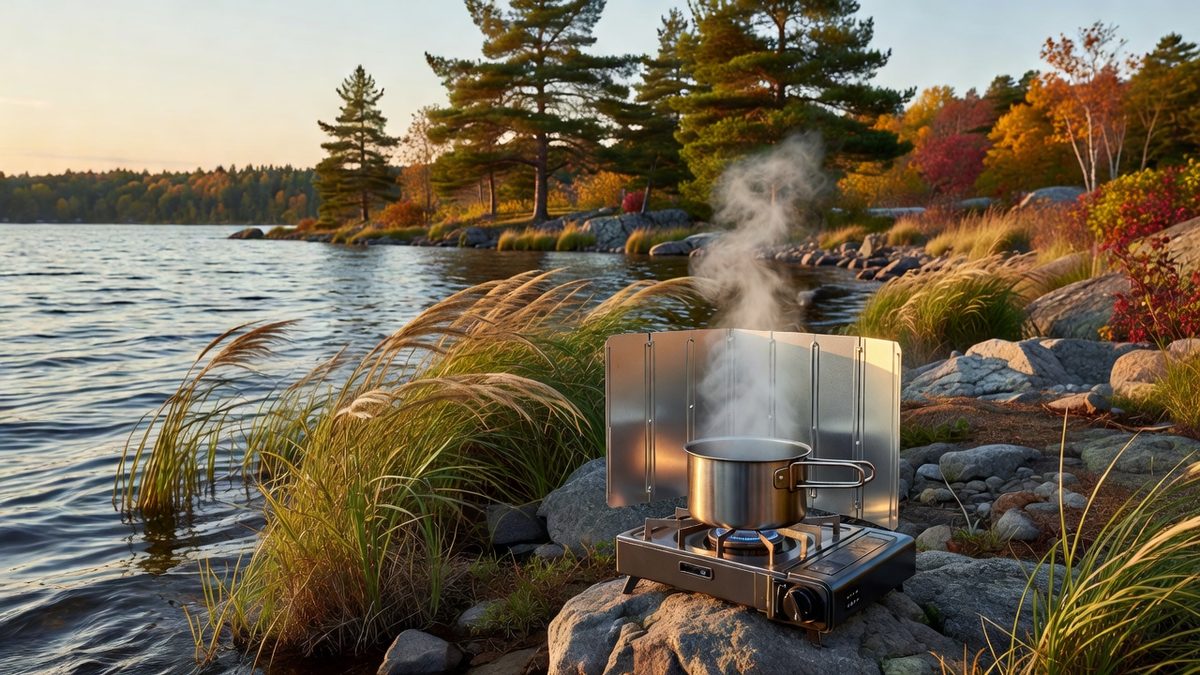
For Camp Chef owners the search vocabulary is unusually rich. A camp chef wind guard, a camp chef wind blocker, a camp chef wind deflector, and a camp chef windscreen all describe a folding wall for the burner box. Model-specific versions sell as a camp chef explorer wind guard or a camp chef explorer windscreen for the two-burner Explorer, and as a camp chef 2 burner stove wind guard for the shorter two-burner bodies. Buy the one that matches your burner spacing, because a wall that sits too close to the grate blocks the pot.
Everything else in this market uses the same words with a different logo. A camp cooker wind guard and a camp cooker windshield are the generic versions. The phrase two burner camp stove with wind guard describes a stove that ships with the wall attached or in the box — and that is worth paying a little extra for, because a screen designed for the exact burner spacing beats a universal panel every time.
One practical note on big stoves: with two burners you only need to shield the burner you are actually using. A single wall on the windward side of one burner beats a wrap around both, which traps heat where you are not cooking and makes it harder to reach the second pot.
Coleman Stoves and Windscreens: 425, Two-Burner, and the Baffle Question
Coleman is the brand people search by name, so here is the map. A coleman stove windscreen and a coleman camp stove windscreen mean a folding wall for a two-burner suitcase stove. A coleman camp stove wind block is the same idea in different words, a coleman stove wind guard is usually the smaller clip-on plate, and a coleman stove wind shield is that plate sold under the other spelling.
There is one Coleman-specific phrase that trips people up: a coleman stove wind baffle support. On the classic two-burner suitcase stoves, the fold-out legs and the burner box are one assembly, and the baffle is the metal lip that sits between the burners to stop one flame from stealing air from the other. A "support" in that phrase is a bracket, not a guard — if you are searching it, you are probably looking for a part rather than a screen, and the honest answer is that Coleman's parts pages and third-party part sellers are where that search ends.
Two more. A coleman 500 stove windscreen is the classic white-gas single-burner question — those stoves came with a folding foil screen and replacements are mostly homemade today. And coleman windproof stove describes Coleman's own claim on the more modern two-burner bodies, which mostly means a deeper burner well and a higher lip rather than a separate panel.
Stoves That Fight Wind by Design: MSR, Jetboil, and Soto Naming Decoded
Some stoves sell wind resistance as a feature, and the naming gets confusing fast. Here is what each family name refers to, without quoting specs I cannot verify from a listing.
The msr windburner stove is a radiant-burner system: a shielded head and a heat-exchanger pot that work as a unit, which is why a separate panel is unnecessary and often unhelpful. Variants you will see are the msr windburner duo for two-person cooksets, and the accessory vocabulary for the same platform shows up as msr windburner pan, msr windburner pot, and msr windburner skillet. The comparison people run most is msr windburner vs jetboil, which is a case of two integrated systems with different burner designs rather than a screen question.
Jetboil's side of that comparison uses its own words. A jetboil windshield is rare as an add-on because the burners are already shielded; the genuinely useful add-ons are a jetboil windscreen accessory, a jetboil windguard accessory, and a jetboil wind guard that clip into the pot support. Search jetboil windburner and you are almost certainly looking for the MSR system above with the wrong logo attached.
Then there is the Soto and PocketRocket family, where the word "wind" appears in product names rather than as an accessory. A soto windmaster stove is a bare burner with a wind-resistant head; soto windmaster triflex refers to the three-arm pot support configuration, and soto windmaster vs amicus is a comparison between the wind-focused model and Soto's lighter everyday burner. On the MSR side the equivalents are msr pocket rocket wind guard, msr pocket rocket windshield, msr pocket rocket 2 windscreen, msr pocket rocket deluxe windscreen, and msr pocketrocket windscreen — all describing a separate clip-on screen for a top-mounted canister stove, with msr pocket rocket windclip being the clip that holds it. Comparisons worth reading in that group are soto windmaster vs msr pocket rocket and soto windmaster vs pocket rocket deluxe, because the question is really pot support stability in wind, not panel size.
One caution on the whole family. If your search was soto windmaster weight, treat any number you read in a blog post as a starting point only. Integrated systems and bare burners change weights between generations and between bundled and bare versions, so the manufacturer's current listing is the only figure worth trusting before you pay a premium for grams.
"Windproof" on a Stove Label: What It Really Promises
The word gets used loosely, so here is a working definition: a windproof stove keeps a usable flame in moving air without an add-on panel. Everything else is wind resistant, which means it survives a breeze and loses output in a real wind.
Where the phrasing is strongest: best windproof camping stove, best windproof camp stove, and best windproof stove are all shortlists of integrated, shielded systems, and best windproof backpacking stove narrows that to packable stoves. A windproof propane stove or a windproof outdoor stove usually means a larger burner with a deep well and a tall lip.
Where the phrasing gets thin: windproof portable camping stove, mini windproof camping stove, and windproof camping stove gas are often budget multi-fuel burners with a shallow shield that only works in a light breeze. And camping windproof on its own is worth ignoring — it is a marketing adjective with no measurement behind it.
Two shopping forms come up constantly. Windproof camping stove price is the real question for most people: a shielded integrated system costs several times a bare burner, and the difference buys you wind resistance plus a pot, not a better flame. And a windproof grill label on a tabletop model is a claim about the burner well, not a promise that you can cook in a gale. Read the panel photo, not the adjective.
Camp Stoves That Ship With a Windscreen
A bundled panel is usually the better buy, because it was shaped for that burner and it will not rattle loose. The phrases to look for are camp stove with windscreen, camp stove with windshield, and two burner camp stove with wind guard for the larger suitcase bodies.
It is worth knowing what you are actually getting. A bundled screen on a canister stove is typically a short two-panel plate that sits under the burner head. A bundled screen on a two-burner stove is a folding wall that stands between the burners and the wind. Neither is a full wrap, and neither is meant to be — a full wrap on a stove with a canister is the setup that overheats fuel.
If your stove arrived without a screen, you are back to the aftermarket: a folding plate, a concertina panel, or foil. Which brings the price question back into focus. A screen is one of the cheapest pieces of camping gear you can buy, and it is also one of the few that changes how much fuel you burn on a windy trip. If you camp in shoulder season, it pays for itself in a weekend or two.
Windscreen Weight, Height, and Prices: How to Check a Spec Claim
Three spec claims come up in almost every search, and all three are worth checking at the source rather than trusting a summary.
Height. A useful panel reaches the lower third of your pot. Taller than that and it starts to block the flames you want, plus it catches more wind on its own. Shorter than that and the gust simply goes over the top of the wall and down onto the burner.
Weight. A camping stove windshield lightweight claim is meaningless without a material. Foil is grams, thin aluminum is tens of grams, steel is hundreds. If you are choosing between a windproof camping stove price at the low end and an integrated system at the high end, weigh the whole kit — stove, screen, pot, and fuel — not the panel alone.
Price. Panels run from a couple of dollars for foil to real money for a brand-matched folding wall. The good news is that this is one purchase where the cheap version works, as long as it is the right shape and the right distance from the burner.
When the Wind Wins: Cooking and Camping Limits
A windscreen buys you a range of conditions, not all of them. Knowing where the line is saves fuel, tempers, and the occasional burn.
The narrow version of that question is how to protect camping stove from wind: shield the burner, keep the canister out of the wrap, leave the air gap, and use a pot with a lid because a lid cuts the heat loss that wind causes. That set of moves is most of what a screen can do for you.
Knowing how to cook in the wind adds judgement to hardware. Boil rather than fry, because a boil tolerates a guttering flame and a fry does not. Cook behind a natural wall if there is one. And accept a longer cook time instead of cranking the valve, which wastes fuel and does not fix the flame.
The wider question is how to camp in the wind, and the honest answer is that the stove is the least of it: a tent in a hard crosswind is a bigger problem than a guttering burner, and a windscreen will not fix a poorly pitched shelter. As a rough guide, how windy is too windy for camping really asks about sustained wind rather than gusts, and what is too windy for camping for most families is the point where you cannot pitch, cook, or sleep comfortably — not the point where a specific mile-per-hour number appears. When the forecast looks like that, moving the trip a day is a better use of energy than fighting the site.
If you want the one-sentence version: shield what you can, keep the fuel cool, and treat the wind as a scheduling problem when it stops being a gear problem.
Camp Stove Windscreen FAQ
Does a windscreen actually save fuel, or does it just feel faster?
It saves fuel. Wind doesn't only slow the flame — it strips heat off the pot and the burner head, so the stove has to burn longer to reach the same boil. A screen that blocks moving air around the burner and the lower half of the pot gets you back to something close to a still-day boil, which means less fuel burned per meal and fewer canisters over a season. A clean burner helps too — sooted ports and a blocked air tube waste fuel the same way wind does, and our camp stove cleaning guide covers both.
Can I use a windscreen with a propane or butane canister stove?
Only if the screen doesn't trap heat around the canister itself. A canister is a pressure vessel: box it in with the burner and it heats up, pressure rises, and you've created a problem. Clip-on screens that shield the burner and pot while leaving the canister open to moving air are fine — foil wrapped around an entire tabletop stove on a hot day is not.
How tall should a camp stove windscreen be?
Tall enough to cover the burner and the lower half of your pot, and no taller. Above that you're trapping heat, blocking your view of the flame, and getting in the way of your own controls. Size the screen to the pot you actually cook with most, not the tallest pot you own.
What's the best DIY windscreen if I forget mine?
Almost anything flat, rigid and non-flammable. A folded aluminum foil shield anchored with rocks on the windward side, a spare metal plate propped on its edge, or your pack, cooler and a log arranged as a windbreak a couple of feet back from the stove. Never use cardboard, plastic or coated material anywhere near a live flame.
Do I still need a windscreen if my stove already has a built-in wind guard?
Usually yes, just a thinner one. Integrated guards on car-camping stoves handle a breeze, not real wind. An extra screen on the windward side adds the coverage the built-in guard leaves open, and that's often the difference between a boil and a very slow dinner on an exposed site.
Is it safe to leave a lit stove with a windscreen unattended?
No — not even for a minute. A windscreen puts an extra non-flammable surface right next to the flame, and it also hides the flame from view so you can't see a flare-up starting. Stay with the stove while it's lit, and shut the fuel off before you walk away.
For the destination side of the same kit, the Camping in New Mexico guide covers the parks, fees, permit systems and land-ownership rules these items are for.
Alabama's coastal sites are exposed enough that wind protection is a real cooking concern in winter — see Camping in Alabama for the site-by-site picture.
Camping anywhere with this kind of humidity and bug pressure changes the kit list — Camping in Louisiana walks through what actually fails in Louisiana conditions.
If the trip heads into canyon country instead, the Camping in Utah guide pairs the same gear decisions with 30°F desert nights and the campgrounds that stay open into November.
How do I stop the wind from blowing my camp stove out?
Put a panel on the windward side of the burner, keep it below the pot rim, and leave a gap at the burner base so the flame keeps getting air. If your stove has a top-mounted canister, the panel must not wrap around the fuel — that is the one version of this fix that can overheat the canister. A lid on the pot matters as much as the screen, because wind steals heat from the pot surface itself, not just from the flame.
Can I make a windscreen from aluminum foil?
Yes, and it is the fastest field fix available. Fold a double layer of foil into a wall about as tall as the lower third of your pot and stand it on the windward side, leaving an air gap at the burner. Foil crinkles, it scorches, and it will not survive a hard gust, so treat it as a one-dinner solution rather than a replacement for a folding panel. If the foil is all you have, weight the base with a couple of rocks and expect to rebuild it once the wind shifts.
Are folding windscreens better than a wind guard?
A folding windscreen usually wraps two or three sides and blocks more wind; a single wind guard blocks one direction and is easier to position with one hand. In a steady breeze the folding screen wins. In gusty, shifting wind neither is perfect, and the curved concertina type handles direction changes better than a flat plate. Match the form to the site, not to the price.
Do I need a windscreen for a two-burner stove?
Usually yes, one wall on the windward side of the burner you are actually using. A universal panel is better than nothing, but a wall shaped for your burner spacing is better still, because a panel that sits too close to the grate blocks the pot and one that sits too far away lets the gust curl over the top. Shield one burner rather than wrapping both, so you can still reach the second pot.
What is the most wind-resistant camp stove?
Integrated radiant-burner systems with a shielded head and a matched heat-exchanger pot keep a flame in worse conditions than any bare burner with a screen in front of it. Among bare burners, a remote-canister stove with a wide head and a separate clip-on screen is the strongest practical combination, since the fuel sits away from the heat and the screen can wrap the burner freely. Wind resistance is a burner design plus a screen decision, not a single product.
How windy is too windy to cook outside?
For most family trips the limit is not a number, it is whether you can keep a flame under a pot and keep the canister cool while you do it. A steady breeze is a screen problem. A day where the pot will not sit still, the panel keeps blowing over, and gusts are arriving from changing directions is a scheduling problem — cook in a sheltered spot, use a stove with a shielded burner, or plan that meal somewhere else.
The Bottom Line
Wind is the most underestimated variable in camp cooking, and a windscreen is the cheapest performance upgrade you can buy for any stove. Match the screen to the fuel — full wrap for propane and liquid fuel, 3/4 wrap for canister stoves — carry it every trip, and your fuel will last longer, your water will boil faster, and your dinners will stop being a fight against the weather.
Once your wind protection is sorted, the next question is whether you are even carrying the right fuel for the trip — and that is exactly what our camp stove fuel comparison guide is built to answer. For the broader kitchen setup — stove, screen, cookware, and a surface to cook on — the camp kitchen setup guide walks through the full kit. And if you are shopping for the stove itself, the best camp stoves for car camping roundup covers the models that play nicest with a good windscreen.
Cook outside. Block the wind. Eat well.
Related: Camp Stove Propane Hose, Regulator & Tank Adapter Guide — which hose, adapter, and regulator you actually need to run a stove off a 20 lb bulk tank, what each fitting costs, and the 60-second leak test.
Related: Camp Stove Simmer & Heat Control Guide — why cheap burners scorch, the 60-second simmer test to run before you buy, and the cast-iron fix for a stove with no low setting.
Related: Camp Stove BTU Guide: How Many BTU Do You Really Need? — BTU by group size, boil times at 8,000 vs 11,000 BTU per burner, and the fuel-burn math behind why a big flame is not always the better stove.
Wind that pushes the flame off the burner changes the fuel-air mix, and one visible symptom is a yellow flame — see the camp stove flame color guide for the rest of the causes.
<!-- AFFILIATE_DISCLOSURE -->