Best Camp Stove for Cold Weather & High Altitude: Winter Stove Guide (2026)
Butane quits at 31°F and isobutane fades above 8,000 ft. Compare propane, white gas, and canister stoves for cold-weather camping in 2026.
I remember the first time a stove betrayed me in the cold. It was a late-October trip in the Sierra Nevada — elevation around 9,000 feet, temperature dropping fast, a butane canister stove in my pack. I twisted the canister on, clicked the igniter, and got a sad little flicker that died before it could heat a cup of water. Dinner that night was cold ramen eaten in a mummy bag.
If you've ever shivered over a stove that won't light, this guide is for you. Not all camp stove fuels perform the same in cold weather or at altitude, and picking the wrong one turns a cozy winter trip into a miserable one. I'll walk through which fuels actually work below freezing and above the tree line, the specific stoves I trust for cold-weather and high-altitude trips, and how to set up your stove so it lights on the first try when the mercury drops.
For the full breakdown of how propane, butane, and isobutane compare across all conditions — not just winter — our complete camp stove fuel guide covers cost per meal, fuel compatibility, and the one fuel mistake almost every beginner makes. This article is the cold-weather deep dive that pairs with it. If your question is narrower — isobutane or propane for this trip, and what the two actually cost to run — start with isobutane vs propane camp stove and come back here for the winter numbers.
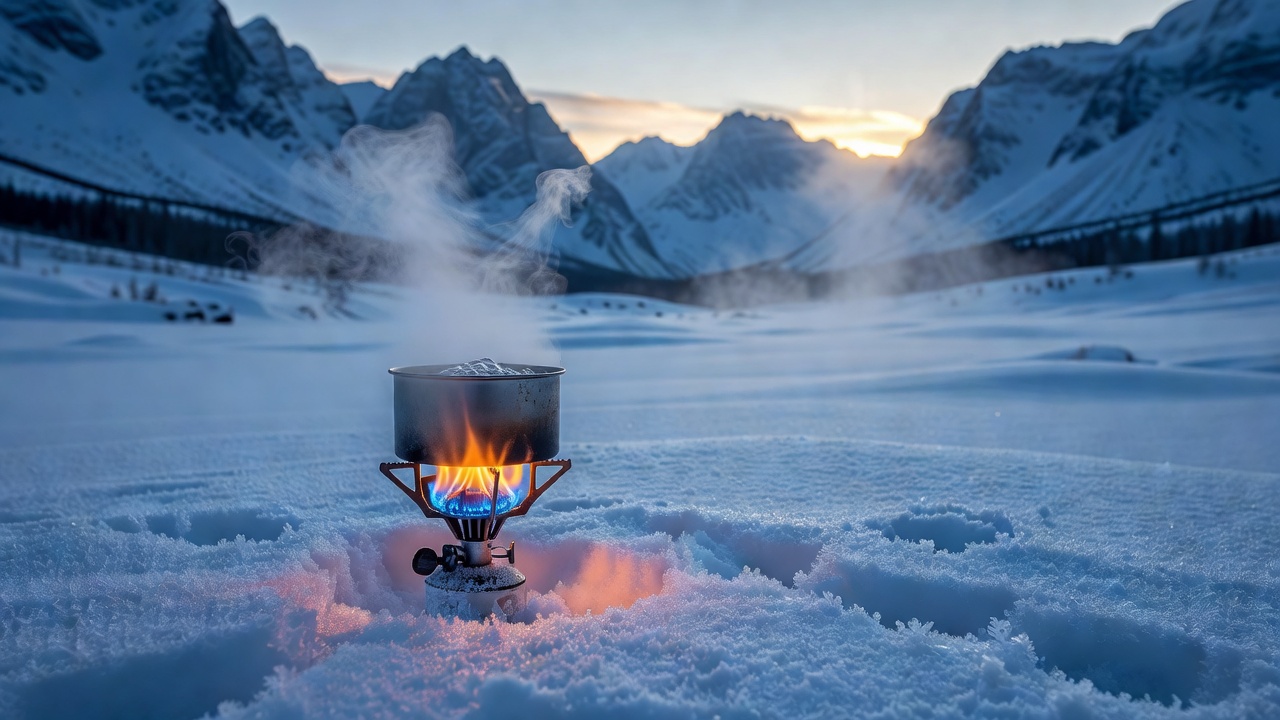
Quick Answer: What Camp Stove Works in Cold Weather and at Altitude?
Propane or liquid fuel. Butane stops vaporizing at ~31°F, isobutane at ~11°F, propane at −44°F. So below freezing — or above 8,000 ft in the cold — butane is out and isobutane needs pre-warming; a pump-pressurized white-gas stove is the only thing that reliably works in single digits at 10,000+ ft.
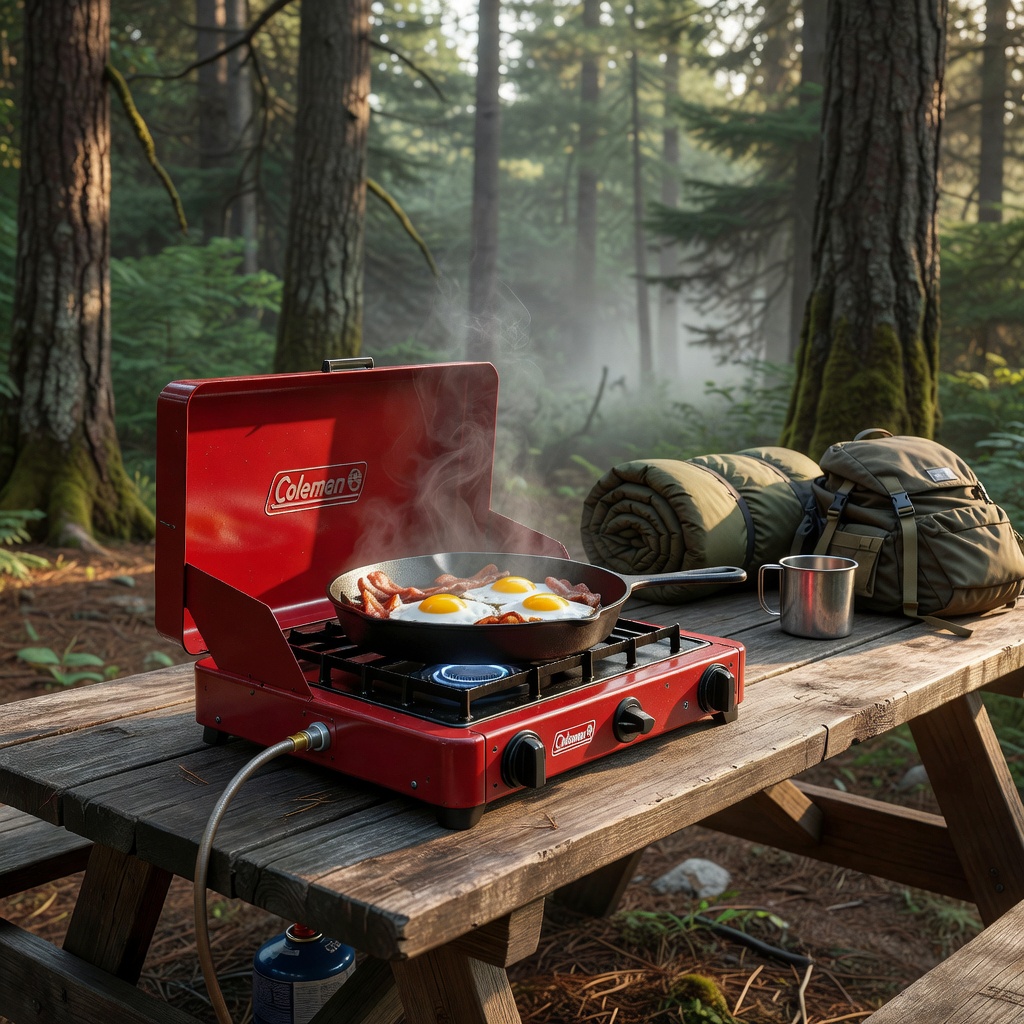
- Below freezing, propane wins on simplicity. The Coleman Bottle Top Propane Stove is $21.99 (4.5★, 12,600+ reviews), puts out 10,000 BTU, and has no fragile parts to fail in the cold.
- Canister stoves still work down to about 20°F with technique. Sleep with the canister in your bag and start on a 110 g MSR IsoPro canister ($8.95, 4.8★); the MSR PocketRocket 2 it feeds is $49.95 (4.8★, 3,800+ reviews) and weighs just 2.6 oz.
- For real winter, go liquid fuel. The MSR WhisperLite Universal ($149.95, 4.7★) burns white gas, kerosene, or canisters and pressurizes by pumping instead of depending on vapor pressure.
- Wind protection is not optional. At 9,000 ft a canister cools fast in wind, and a dead piezo igniter ends dinner — a stormproof match kit ($12.99, 4.7★, 6,300+ reviews) is cheap insurance.
- Or carry no fuel at all. The BioLite CampStove 2+ ($199.95, 4.3★) burns twigs you gather on site and charges a phone — fuel that cannot freeze.
Why Cold Weather and Altitude Break Some Stoves
Camp stove fuels are liquefied gases — they sit inside the canister as a liquid and boil off into a gas as you use them. The boiling point of that fuel determines the lowest temperature at which the canister can produce enough vapor pressure to feed your stove.
Here's the problem: butane's boiling point is about 31°F (−0.5°C), and isobutane's is roughly 11°F (−12°C). Propane's boiling point is −44°F (−42°C), which is why it works in almost any winter condition a camper will face. When the canister temperature drops below the fuel's boiling point, the liquid stops vaporizing, the pressure inside the canister falls, and your flame sputters out — or never lights at all.
Altitude makes it worse. As you climb, atmospheric pressure drops, which lowers the effective boiling point of the fuel slightly — but more importantly, cold air at altitude combined with wind chill cools the canister faster, and a canister that's already marginal at sea level becomes useless at 8,000 or 10,000 feet. The same butane stove that works fine on a 50°F evening in the valley will leave you eating cold food on a 28°F morning at altitude.
The bottom line for cold-weather camping: if temperatures will dip below freezing, or you'll be above 8,000 feet in cold weather, you need either a propane stove, an isobutane stove with a cold-weather canister and proper pre-warming, or a liquid-fuel (white gas) stove that pressurizes by pumping rather than relying on canister vapor pressure.
The Three Fuel Types for Cold Weather, Ranked
1. Propane — The Cold-Weather Workhorse
Propane is the most reliable fuel for winter and high-altitude car camping. Its −44°F boiling point means it produces vapor pressure in almost any temperature a camper will realistically encounter. The green 16.4 oz Coleman propane cylinders screw onto a huge variety of stoves, and they burn hot and consistent.
The tradeoff: propane cylinders are heavier and bulkier than butane cans, and the threaded-canister propane backpacking stoves are less common than isobutane options. For car camping, basecamp, or any winter trip where weight isn't critical, propane is the safe default.
My pick: The Coleman Bottle Top Propane Camp Stove — $21.99, 4.5 stars, 12,600+ reviews. It screws directly onto a standard green propane cylinder, puts out 10,000 BTUs, and has no fragile parts to fail in the cold. The one caveat: no built-in igniter, so pack a long lighter or matches in a dry bag. For under $25, it's the most reliable cold-weather car camping stove you can buy. Running one all winter? The Coleman 16.4 oz propane cylinder 12-pack — $64.99, 4.8 stars, 10,500+ reviews — works out to about $5.40 a canister, the cheapest way to keep a season's worth of fuel on hand.
2. Isobutane — Good With a Catch
Isobutane (often blended with propane in canisters labeled "isobutane/propane blend") is the standard backpacking fuel. Its lower boiling point (~11°F) means it works in colder conditions than straight butane, and the propane in the blend boils off first, giving you a strong start even when the canister is cold.
The catch: at temperatures below about 20°F, or on long cold mornings at altitude, an isobutane canister still loses pressure over time as the fuel inside cools. Two techniques keep isobutane viable in the cold:
- Pre-warm the canister — keep it in your jacket pocket or sleeping bag overnight so it starts the morning warm. Never warm a canister with an open flame or direct high heat; body heat or a water bath of warm (not hot) water is safe.
- Use a canister stove with a pressure regulator or inverted-canister (liquid feed) mode — some modern stoves let you screw the canister on upside down so liquid fuel feeds the burner instead of vapor, which the stove then vaporizes at the burner head. This works far better in the cold.
My pick: The MSR PocketRocket 2 — $49.95, 4.8 stars, 3,800 reviews. At 2.6 ounces, it's the ultralight backpacker's standard threaded-canister stove. It's not a regulated stove, so for serious sub-freezing backpacking you'd want to pre-warm the canister, but for cold-but-not-arctic shoulder-season trips at altitude, it's hard to beat the weight-to-reliability ratio. MSR's WindBurner and Reactor lines (integrated, windproof, pressure-regulated) are the upgrade if you regularly cook below 20°F.
3. Butane — Avoid for Cold Weather
Straight butane (the 8 oz aerosol-style cans used by many budget camp stoves) has a boiling point around 31°F. Below that, the fuel stops vaporizing and the stove won't light or sustain a flame. Butane is cheap, compact, and fine for summer car camping — but it's the wrong choice for any trip where temperatures might drop below freezing or where you'll be at altitude in cold weather. Want to see how the two most popular budget butane stoves stack up against each other before you buy? Our Coleman vs Gas One butane stove comparison breaks down build quality, heat output, and which one is worth the extra money for summer trips.
If you already own a butane stove and want flexibility, the Gas One GS-3400P Dual Fuel Stove — $34.99, 4.5 stars, 14,200 reviews — is the clever workaround. It runs on butane or propane, so you can run cheap butane cans in the summer and switch to a green propane cylinder the moment a cold front rolls in. It's the one budget stove that survives a surprise forecast change, which is why it's my recommendation for campers who want a single stove for all four seasons.
4. Liquid Fuel (White Gas) — The Mountaineer's Choice
For true winter mountaineering, expedition cooking, or any trip where you'll be boiling snow for water at 10,000+ feet in single-digit temperatures, nothing beats a liquid-fuel (white gas) stove like the MSR WhisperLite or XGK. You pressurize the fuel bottle with a pump, so vapor pressure in the canister is irrelevant — the stove will run in any temperature you can physically survive.
Liquid-fuel stoves require more setup, priming, and maintenance than canister stoves, and white gas is harder to find at random gas stations than green propane cylinders. They're overkill for car camping but essential for serious winter backcountry use. Most winter backpackers who go above the tree line regularly own both an isobutane stove for milder trips and a liquid-fuel stove for the real cold.
My pick: The MSR WhisperLite Universal — $149.95, 4.7 stars, 1,200+ reviews — burns isobutane canisters for everyday trips and switches to white gas when the mercury tanks, so you buy one stove instead of two. It's heavier and fussier to prime than a canister stove, but when you're boiling snow at 10,000 feet in single-digit temps, the pump-fed bottle doesn't care how cold it gets — that's the whole point.
Cold-Weather Camp Stove Fuel Chart: What Works at What Temperature
| Fuel | Boils at | Comfortable down to | What happens as it gets colder | Best for |
|---|---|---|---|---|
| Propane (1 lb cylinder or 20 lb tank) | -44°F (-42°C) | About -10°F with a full cylinder | Vapor pressure falls with temperature, so output sags long before the fuel is gone | Winter car camping, family basecamps |
| Isobutane / isobutane-propane canister blend | About 11°F (-12°C) | About 15-20°F with a full canister | Runs fine, then goes weak, then quits mid-dinner | Three-season backpacking |
| n-Butane canister | 31°F (-0.5°C) | About 40°F | Stops vaporizing at the freezing point of water | Summer only |
| White gas / liquid fuel | n/a - it burns as pressurized liquid, not vapor | Below -20°F | Essentially nothing changes; you prime it and it runs | Deep winter, mountaineering, high altitude |
That table is the whole reason this page exists. Butane and isobutane are temperature-limited fuels. Propane is a pressure-limited fuel. White gas is neither. A butane canister at 28°F isn't slow, it's empty - there is simply no gas above the liquid. A propane cylinder at 5°F still has plenty of fuel in it; it just can't push it out fast enough to run a big burner at full blast.
Two rules fall straight out of it:
- Camping above freezing but below 40°F? Propane or white gas. Leave the butane stove at home.
- Camping below 20°F, or above 8,000 ft? White gas, or a propane stove fed from a bulk tank. This is the line where a lot of family trips get saved by a $10 adapter instead of a $200 stove.
The Best Cold-Weather Camp Stoves: My Picks
Let me consolidate the recommendations by trip type so you can pick by your actual winter plans rather than by fuel-label confusion.
Best Budget Cold-Weather Car Camping Stove
The Coleman Bottle Top Propane Stove at $21.99 is the cheapest reliable cold-weather option. Screw it on a green propane cylinder, light it with a long lighter, and it'll boil water at 20°F without complaint. It's a single burner with a modest pot support, so it's best for solo campers or couples who cook one pot at a time. If you want the same cold-weather reliability with a slightly more refined build and push-button ignition, the Coleman Classic 1-Burner Butane Stove — $29.99, 4.5 stars — is the upgrade, but remember: it's butane, so it's a shoulder-season stove, not a deep-winter one. Looking for more budget-friendly options for ordinary weekend car camping? Our best budget camp stoves for car camping roundup covers the full range — from canister-top burners to dual-fuel workhorses — so you can match a stove to your trip style without overpaying.
Best Dual-Season All-Rounder
The Gas One GS-3400P Dual Fuel at $34.99 is the one stove I'd hand to a camper who says "I camp year-round and I don't want to think about fuel." Run butane in July, switch to propane in November. It's not the lightest or the most refined, but for under $40 it removes the fuel-type decision entirely, which is exactly the kind of mistake-proof gear that prevents cold-ramen dinners.
Best Cold-Weather Backpacking Stove
The MSR PocketRocket 2 at $49.95 is my pick for shoulder-season and cold-but-not-arctic backpacking. Pair it with a quality isobutane/propane blend canister like the MSR IsoPro — $8.95, 4.8 stars, 4,800+ reviews — pre-warm the canister in your jacket, and it'll handle mornings in the 20s at altitude. For genuinely sub-freezing winter backpacking where you're melting snow for water, step up to a windproof integrated system like the Jetboil Flash — $119.95, 4.7 stars, 20,000+ reviews — or take the MSR WhisperLite Universal from the liquid-fuel section above when you're going truly arctic.
Want the full weight-versus-boil-time picture before you buy? Our best backpacking stove guide ranks five stoves from a $13 budget burner to premium winter systems, with side-by-side weights, boil times, and wind-resistance notes for each.
Best No-Fuel, All-Condition Stove
The BioLite CampStove 2+ — $199.95, 4.3 stars — burns twigs and sticks, so fuel availability isn't a function of temperature or altitude. If you can gather dry wood, you can cook. It's heavier than a canister stove and needs dry fuel to burn clean, but for winter trips where carrying fuel canisters is impractical (long expeditions, fly-in trips), it's a legitimate cold-weather option — and it charges your devices via USB while it burns.
Does Propane Work in Cold Weather? (Yes - You Just Lose Output)
Short answer: propane keeps working in cold weather. Propane boils at -44°F, so unlike butane it never stops vaporizing in weather anyone is actually camping in. What changes is how fast the gas comes out of the cylinder - and once you understand why, keeping a propane stove alive in the cold becomes a tank-management problem, not a stove problem.
A propane cylinder holds liquid propane with vapor sitting on top. The pressure of that vapor is what pushes gas up to your burner, and that pressure is set by temperature, not by how much fuel is left:
| Cylinder temperature | Approximate vapor pressure | How the stove feels |
|---|---|---|
| 70°F | ~110 psi | Rated BTU, fast boil |
| 50°F | ~78 psi | Slightly slower |
| 32°F | ~54 psi | Noticeably slower, still strong |
| 20°F | ~44 psi | Plan on one burner at a time |
| 0°F | ~25 psi | Weak - most 2-burner stoves struggle |
| -20°F | ~17 psi | Barely enough for one small burner |
Those are the standard published vapor-pressure figures every propane supplier uses. They explain the most common cold-weather complaint there is: a stove rated at 10,000 BTU that behaves like a candle on a 15°F morning. BTU ratings are measured at room temperature with a full cylinder.
Two things make the drop-off much worse:
- A nearly empty cylinder. Gas comes off the liquid surface, so a shallow pool of liquid means far less wetted area to vaporize from - and boiling chills the liquid further. A full cylinder in the cold beats a quarter-full one every time. Fill up before a cold snap, not after.
- A 1 lb cylinder instead of a bulk tank. A 1 lb cylinder has almost no thermal mass and a small liquid surface; cold air wins. A 20 lb tank holds roughly 4.7 gallons, has far more wetted surface, and recovers between meals. For a cold-weather basecamp this is the single best upgrade you can make - and it costs $10, not $200. Run the stove off a bulk tank with a GASPRO 20 lb to 1 lb propane adapter ($9.98, 4.6 stars), and if you want to top up your own 1 lb cylinders legally, use a DOT-compliant refillable cylinder like the Flame King refillable 1 lb propane cylinder with refill kit ($59.99) and a Gas One 1 lb to 20 lb refill adapter with 4-ft hose ($14.99).
One honest safety note on refills: refilling the disposable 1 lb cylinders you buy at the hardware store is not legal in the US and not safe - those are DOT 39 non-refillable cylinders, and the prohibition covers transporting them refilled. Use a refillable cylinder designed for it, or a bulk tank and adapter.
How to Keep a Propane Tank Warm Without Doing Anything Stupid
- Start full. Pressure is temperature-driven, but wetted surface is fill-driven, and a full cylinder wins both arguments.
- Keep cylinders in the warm cab of the car overnight, not strapped to the bumper in the wind.
- Set the tank on closed-cell foam or a folded blanket instead of bare ground or snow - that is contact heat loss you can stop for free.
- Warm a stubborn cylinder against your body - inside your jacket, or in the bottom of a sleeping bag, while you set up the rest of camp.
- Hand warmers work on regulators and hoses, not on the tank body. A pair of HotHands air-activated warmers ($29.99 for 40 pairs, 4.6 stars) taped around a sluggish regulator is the field fix that actually helps.
- Never put a flame, a torch, a heater, or boiling water on a cylinder. Never bring a cylinder into a tent, a car cabin, or an RV living space for warmth. Propane cylinders live outdoors and upright.
Regulator Frost, Hissing, and Leaks in Cold Weather
- Frost or ice on a regulator or pigtail hose is a flow problem, not a fuel problem. As propane expands out of the regulator it cools itself (the Joule-Thomson effect), and at high draw in cold air the regulator can frost and throttle down. Fix: run one burner at a time, keep the regulator out of the wind, and don't let it sit in a puddle.
- A hiss in cold weather is not normal. It's usually the burner or the venturi, but it can be a stiff O-ring or a cracked seal that no longer seats at low temperature. Do a soapy-water test on every connection - bubbles mean a leak - and replace a cracked 1 lb cylinder O-ring instead of tightening it.
- Rubber seals and hoses get stiff and shrink in the cold. A hose that sealed fine in July can seep in January. Inspect the pigtail and the cylinder O-ring before a winter trip the same way you inspect your sleeping pad.
- Storage: upright, outdoors or in a ventilated shed, away from ignition sources and living space. Never in a tent. Never in a hot car in summer, and never stored full in a space you sleep in.
RV Propane in Winter: The 2 a.m. Furnace Story
RV furnaces quit in cold snaps for the same reason a camp stove gets weak: a nearly empty tank loses wetted surface and pressure at the same time. Keep RV tanks above one quarter full all winter, top them up before a hard freeze, and get the regulator out of the wind on the tongue. If the propane system does go down in the middle of the night and you don't want to run out in your slippers, a Sealy 12-volt heated car blanket ($31.99, 4.2 stars) running off the house battery keeps people warm while you deal with the tank in daylight. If you are searching for how to keep camper warm without propane, the short answer is electric heat on shore power plus a heated blanket on battery - not a cooking appliance. Frost on the outside of a tank is normal condensation. Propane tank venting in cold weather isn't a cold-weather failure at all: venting is a pressure-relief event driven by heat or overfilling, and cold reduces pressure - it doesn't create relief-valve venting.
How to Keep Any Stove Lighting in the Cold
The right fuel is half the battle. These field techniques make the difference between a stove that lights on the first click and one that strands you:
- Pre-warm canister stoves overnight. Put the canister in the footbox of your sleeping bag or in your jacket. A warm canister has full vapor pressure at first light. Never use an open flame to warm a canister — it's dangerous and can rupture the can.
- Wind is the cold-weather killer. Wind strips heat from your pot and from the canister simultaneously. Use a windscreen (for canister stoves, a low windscreen that doesn't trap heat around the canister is safe) or cook in the lee of a rock or your vehicle. Integrated stoves like the MSR WindBurner handle this with a built-in windproof burner. For the full breakdown of which windscreens are safe with which fuel types — plus a $15 folding screen that can nearly halve your fuel use on a breezy ridge — see our camp stove windscreen and wind protection guide.
- Use a lid and a wide pot. In cold weather, more of your heat escapes to the air. A lid traps steam, and a wider pot base catches more flame. You'll boil water faster and burn less fuel.
- Carry a backup ignition source. Built-in piezo igniters get finicky in the cold and can fail. Always have a long lighter or stormproof matches in a dry bag — the UCO Stormproof Match Kit ($12.99, 4.7 stars, 6,300+ reviews) packs 25 windproof matches in a floating waterproof case, and the SUPRUS arc lighter ($9.99, 4.4 stars, 10,000+ reviews) has no fuel to freeze and no flame to blow out. The Coleman Bottle Top stove has no igniter at all — pack one of these.
- For liquid-fuel stoves, prime patiently. A cold liquid-fuel stove needs a proper prime (a small amount of fuel burning to warm the generator tube) before it'll run clean. Rushing the prime produces a yellow, sooty flare. Follow the stove's priming instructions exactly.
- Keep a small piece of closed-cell foam under the canister. Setting a cold canister directly on snow or frozen ground chills it further. A small foam pad insulates the canister from the cold surface and keeps vapor pressure up while you cook.
Camp Stoves at High Altitude: What Actually Changes
Short answer: altitude doesn't thin your fuel - it lowers the boiling point of your water and shrinks the pressure difference your stove has to work with. Both effects quietly add cooking time, and cooking time is fuel.
Water boils at a lower temperature the higher you go, because there's less atmosphere pushing down on the pot:
| Elevation | Water boils at | What it means at the stove |
|---|---|---|
| Sea level | 212°F | Normal cook times |
| 3,000 ft (Ozarks, Appalachians) | ~206°F | Barely noticeable |
| 5,000 ft (Denver, Flagstaff) | ~203°F | Rice and pasta need a few extra minutes |
| 8,000 ft (Rockies, Sierra passes) | ~197°F | Beans, rice, potatoes take much longer |
| 10,000 ft (high alpine, above treeline) | ~194°F | Dry pasta and hard-boiled eggs are a project |
That's why cooking eggs at high altitude is the classic first surprise: a hard-boiled egg that takes 10 minutes at sea level can take 15 or more at 10,000 ft, and fried eggs scorch before they set because the pan runs hotter than the water does. Cook on lower flame, longer, and accept that "boiling" is not 212°F anymore.
The fuel math: because water tops out at a lower temperature, food needs more time at that lower temperature - so you burn more fuel for the same meal. Budget roughly a third more fuel above 8,000 ft than you would at home, and more again if it's also below freezing. Two habits pay for themselves immediately:
- Put a lid on everything. At altitude, a lid is the single biggest fuel saver there is - it's the difference between heating the water and heating the sky.
- Pre-warm your canister by sleeping with it or carrying it against your body. Canisters don't stop at altitude because of altitude - they stop because altitude usually arrives with cold.
On the stove side, the pressure difference matters too: at 8,000 ft the air is about 10.9 psi versus 14.7 psi at sea level, roughly a quarter less. An unregulated canister stove loses output as ambient pressure drops, which is exactly why mountaineers switch to liquid fuel. Above about 8,000 ft in the cold, the honest answer is the MSR WhisperLite Universal you already saw in the fuel section - it runs on white gas and doesn't care about ambient pressure or temperature. If you're sticking with canisters, expect to warm them and to use more of them.
One more altitude detail worth knowing: above roughly 10,000 ft, many stoves run slightly rich, because the air ports are sized for thicker air. A yellow-tipped flame at altitude isn't a dirty burner - it's lean oxygen. Turn the fuel valve down, keep the pot off the flame tips, and wipe the soot off the pot bottom (soot on the bottom of a pot is wasted fuel). Wind makes all of this worse, which is why a windscreen is worth more at altitude than any fuel upgrade.
Cold Weather Camp Stove: The Same Question in Different Words
Half of cold-weather stove shopping is the same question typed eight different ways. Here is the whole page routed by phrasing, so you can stop at the row that matches yours.
| What people search | The honest answer | Start here |
|---|---|---|
| cold weather camping stove · camping stove cold weather · camping stove winter · cold weather camp stove | Propane or white gas. Butane and most isobutane canisters quit below freezing, no matter what the label says. | Fuel chart above |
| best cold weather camping stove · best camping stove for winter · best stove for cold weather camping | Two-burner propane for a family basecamp, liquid fuel for backpacking. There is no single winner, only the right fuel for your trip. | Picks above |
| best stove for winter camping | If you're car camping below 20°F, a cheap propane stove on a 20 lb tank beats every expensive canister stove. That's the whole trick. | Propane section above |
| cold weather camp stove fuel · winter camping stove fuel | Propane to about -10°F with a full cylinder, isobutane blends to roughly 15-20°F, white gas below that. | Fuel chart above |
| cold weather backpacking stove · best cold weather backpacking stove · backpacking stove for cold weather · backpacking winter stove | Liquid fuel, or an isobutane canister that lives inside your jacket. For a cold-weather backpacking setup, the WhisperLite Universal is the low-drama answer. | Liquid Fuel section |
| gas stove cold weather · propane stove cold weather · propane stove not working in cold weather | It isn't broken - it's pressure-limited. A full tank, warm storage, and one burner at a time fix most of it. | Does Propane Work in Cold Weather? |
| butane stove cold weather · butane stove in the cold · butane stove not working in cold | Butane stops vaporizing at 31°F. That stove isn't slow, it's empty - the fuel is sitting there as a liquid. Switch fuels. | Butane section above |
| camp stove high altitude · best camp stove for high altitude · high altitude camping stove | Above about 8,000 ft in the cold, use liquid fuel. Water also boils ~15°F lower up there, so budget about a third more fuel. | High Altitude section |
| Propane question in the wild | Short answer |
|---|---|
| propane tank cold weather · propane tank problems in cold weather · propane tank freezing weather | Nothing freezes at camping temperatures. Vapor pressure drops from ~110 psi at 70°F to ~25 psi at 0°F, so the stove gets weak. |
| how to keep propane warm · how to keep propane tank warm · how to keep propane tank warm in winter | Keep the cylinder full, store it in the warm cab overnight, set it on closed-cell foam instead of snow, and warm a stubborn one against your body. |
| how to keep propane regulator warm | Hand warmers taped around the regulator body, one burner at a time, and get the regulator out of the wind where it frosts. |
| how to keep RV propane tanks warm in winter | Keep the tank above one quarter full, top it up before a cold snap, shield the regulator from wind, and heat the people with a 12-volt blanket instead of trying to heat the tank. |
| propane tank regulator for cold weather | The regulator isn't the problem, it's the pressure behind it - but a frosted regulator will throttle you further, so keep it out of wind and puddles. |
| propane tank hissing cold weather | Not normal. Soapy-water every connection; a hiss is usually the burner, but a shrunk O-ring can be the cause and that one is a leak. |
| propane tank leaking in cold weather | Seals get stiff and shrink in the cold. Inspect the pigtail and the 1 lb cylinder O-ring, and replace rather than tighten. |
| propane tank storage cold weather · propane tank cover for cold weather | Upright, outdoors or in a ventilated shed, away from living space and ignition sources. A cover keeps rain and snow off; it does nothing to keep the tank warm. |
| grill propane tank cold weather | Same physics as a stove. A grill won't hit rated BTU in the cold, and a 20 lb tank holds output far better than a 1 lb cylinder. |
Freezing Lines, Frosted Regulators and Heaters: The Last Cold-Weather Questions
The rest of the winter questions people bring here are about the hardware around the fuel, not the fuel itself.
| What people search | The short answer |
|---|---|
| propane regulator cold weather · propane regulator freezing in cold weather · can a propane regulator freeze in cold weather · propane regulator problems cold weather | A regulator does not freeze from the fuel — it frosts from the pressure drop and the moisture in the air, and a frosted body throttles you further. Keep it out of the wind and out of puddles. |
| keep propane regulator from freezing · how to keep propane regulator from freezing outside · how to keep propane regulator from freezing in winter | Shield it from wind, keep it off the ground, run one burner at a time, and let the tank stay as warm as the camp allows. A hand warmer taped to the body during a deep-cold cook is a reasonable field trick. |
| best propane regulator for cold weather · propane regulator cover for cold weather | A regulator sized for the flow your appliance needs, mounted so it is not the lowest, most wind-exposed point in the system. A cover keeps rain and snow off it; it does nothing for temperature. |
| how to keep propane tank from freezing while running · how to keep propane tanks from freezing in the winter · how to keep propane bottles from freezing | Start full, store the cylinder in the warm cab overnight, set it on closed-cell foam instead of snow, and draw from one burner at a time. Nothing is freezing — you are protecting vapor pressure. |
| propane heater in cold weather · propane heater not working in cold weather | A radiant propane heater works in the cold but derates on a cold tank like any propane appliance, and its oxygen-depletion sensor can trip in a sealed space. Ventilate, start with a full cylinder, and never treat it as a tent-cook stove. |
What to Cook On in Cold Weather
A stove that works in the cold deserves cookware that does too. Thin aluminum pots warp and scorch under high-BTU propane stoves; cheap nonstick coatings flake after a few high-heat winter cooks. The Lodge Seasoned Cast Iron Skillet — $9.38, 4.6 stars, 144,000+ reviews — is the indestructible cold-weather cookware choice. Cast iron holds heat beautifully, tolerates the full output of a 10,000 BTU propane stove, and works over a campfire if your stove fails. At under $10, it's the highest-value piece of cookware in any winter camp kitchen.
The tradeoff with cast iron is weight — it's a car-camping-only piece of gear. For winter backpacking, a hard-anodized aluminum pot (like the MSR Titan or Alpine Stowaway) is the lighter choice, though you sacrifice the thermal mass that makes cast iron so satisfying in the cold.
Camp Stove or Tent Heater? What Actually Keeps You Warm
Short answer: a camp stove is a cooking appliance, not a heat source, and it should never be used to warm a tent, a car, or an RV. Every propane and butane appliance produces some carbon monoxide, and a stove with a pot on it produces more because the flame is partially blocked. A stove that turns a 20°F tent into a 40°F tent for ten minutes can also turn it into a hospital trip. If you take one rule from this page: cook outside, sleep warm inside.
The honest ranking of what actually keeps a family warm on a cold trip, best first:
- What you sleep on and in. Ground insulation beats heaters by a mile. A cold-weather bag on a properly insulated pad is the difference between comfortable and miserable, and nothing else on this list comes close. If your winter kit has one weak link, it's usually the pad - see the winter camping gear checklist for how R-values stack up.
- What you wear, including what you wear while cooking. Cold hands at the stove are how meals get burned; that's what the hand warmers above are really for.
- An actual heater, rated for indoor use, used in a ventilated space with a CO alarm. The Mr. Heater Buddy portable propane radiant heater ($74.00, 4.7 stars) is the car-camping standard - 4,000 to 9,000 BTU, an oxygen-depletion sensor that shuts it off, and a tip-over switch. Indoor-safe still means ventilated: crack a vent, and pair it with a Kidde battery-powered carbon monoxide detector ($23.97, 4.7 stars) that travels with the tent, the RV, and the house.
- A wood stove in a hot tent, if you're going to do this seriously. A stove-jack tent like the Naturehike Massif 4-season hot tent with stove jack ($269.00, 4.3 stars) gives real, dry heat you can sit around - but it's a different craft: seasoned wood, a spark arrestor, a CO alarm, and never banking the stove with the damper shut while you sleep.
Two more honest notes:
- Best heater for winter camping depends entirely on how you're camping. Big family tent with a car at the site: a radiant Buddy heater plus a CO alarm. Hot tent: wood stove. Backpacking: none - your sleeping bag is the heater, and carrying a propane heater uphill is how people end up cold and tired.
- If you want warmth outside the tent, a portable propane fire bowl such as the Outland Living 19-inch propane fire pit ($142.64, 4.8 stars) gives you a real campfire experience during fire bans and burn restrictions. It's still an outdoor-only appliance, and it's still not a tent heater.
If winter warmth is your actual problem rather than cold-weather cooking, start with how to stay warm camping in the cold - it covers the sleeping system and layering side in depth. This page stays on the stove side of that line.
Heater and Hot-Tent Questions, Answered Plainly
| What people search | The honest answer |
|---|---|
| best heater for winter camping · best tent heater for winter camping · best portable heater for winter camping · cold weather camping heater · camping winter heater | A radiant propane heater rated for indoor use, in a ventilated space, with a CO alarm. That's the car-camping answer for a family tent. |
| best heater for winter car camping | The same buddy-style radiant heater, used with a vent cracked and a CO detector on the shelf - and never relied on inside a sealed vehicle overnight. |
| best tent stove for winter camping · best hot tent stove for winter camping · best wood stove for winter camping | A wood-burning tent stove in a tent with a proper stove jack: real dry heat, and real ventilation and spark-arrestor discipline with it. |
| cold weather camping tent with stove · winter camping stove tent | You need a tent with a stove jack - a stove chimney through a regular tent wall is a fire and CO problem, not a hack. |
| best diesel heater for winter camping | A diesel air heater is a van, RV, or garage tool with an exhaust that has to go outside. It is not a family tent solution. |
| can you use a camp stove in the house | No. A camp stove indoors is a carbon monoxide source and an outdoor appliance by design, whether it's propane, butane, or white gas. |
Common Cold-Weather Stove Mistakes (Learn From Mine)
I've made every one of these mistakes so you don't have to:
- Bringing a butane stove to a freezing-temperature trip. It won't light. I learned this at 9,000 feet. If there's any chance of freezing temps, bring propane or a pre-warmed isobutane setup.
- Leaving the canister outside overnight. A canister that spent the night at 20°F has no pressure in the morning. I once spent 20 minutes clicking a dead igniter before I figured out the canister was simply too cold. Pre-warm it in your bag.
- Forgetting a backup lighter. Piezo igniters fail in the cold. My PocketRocket 2's igniter died on a 15°F morning — thank god I had a lighter in my hip belt. Always carry a backup.
- Cooking without a windscreen in a breeze. Even a light wind doubles your boil time and halves your fuel. On a cold, windy ridge, I watched a full canister struggle to boil two cups of water. A $5 foil windscreen would have saved half the fuel.
- Using a damaged canister or hose. Cold rubber O-rings get brittle and leak. Inspect propane hoses and canister threads before every winter trip — a small leak in a heated tent is a fire risk, and a leak outdoors in the cold means no hot food.
- Boiling snow without adding liquid water first. If you're melting snow for water, always put a cup of liquid water in the pot first. Dry snow scorches the pot bottom and wastes fuel before it starts melting. This is a liquid-fuel stove tip, but it saves your pots and your fuel.
Cold-Weather Stove Checklist
Before any winter or high-altitude trip, run through this:
- Fuel type matches the forecast temperature (propane or pre-warmed isobutane for below freezing; butane only above 40°F)
- Backup ignition (long lighter + stormproof matches in a dry bag)
- Windscreen or wind-protected cooking spot identified
- Canister pre-warming plan (jacket pocket or sleeping bag overnight)
- Closed-cell foam pad for the canister to sit on
- Lid for your pot (traps heat, speeds boils)
- Fuel reserve calculated for cold-weather burn rates — expect 30–50% more fuel consumption below freezing
- Stove and canister inspected for damage, especially rubber O-rings and hose connections
Cold Weather Camp Stoves: The Actual Search Terms, Answered
The questions below are the ones this page gets in the search box, typed the way people actually type them. Each row is a real query form, and each answer is the short version of the long section above it - so you can stop at the row that matches your stove, your fuel, and your forecast.
Butane and isobutane: exactly how cold is too cold
| What you searched | The short answer |
|---|---|
| butane cold weather · butane cold temperatures · cold weather butane · butane stove winter · how cold is butane gas · how cold is too cold for butane · how cold can butane be stored · isobutane freezing · isobutane freezing point · isobutane stove cold weather · is propane or butane better for cold weather | Butane stops vaporizing at about 31 F and isobutane at about 11 F. Below those numbers the canister is not slow, it is empty - there is simply no gas above the liquid. A canister labeled isobutane is a blend with propane in it, which is why it starts strong and fades as the blend burns off. |
Does propane still work when it is freezing
| What you searched | The short answer |
|---|---|
| does propane work in winter · does propane work in freezing temps · does cold weather affect propane gas · propane cold temperatures · propane stove in cold · propane stove in winter · propane camp stove freezing · propane tank freezing temperature · propane tank freezing temperatures · propane tank freezing cold · propane tank freezing while in use | Yes, propane boils at -44 F, so it never stops vaporizing in camping weather. What falls is vapor pressure: about 110 psi at 70 F, roughly 54 psi at 32 F, about 25 psi at 0 F. Same full cylinder, weaker flame - which is why a 10,000 BTU stove behaves like a candle on a 15 F morning. |
Keeping a tank, regulator and lines from freezing up
| What you searched | The short answer |
|---|---|
| how to keep propane tank from freezing in the winter · how to keep propane tanks warm in winter · how to keep propane from freezing up · how to keep rv propane tanks from freezing · how do i keep my propane tank from freezing up · how do i keep my propane tank regulator from freezing | Nothing actually freezes; the fix is keeping vapor pressure and wetted surface up. Start full, store the cylinder in the warm cab overnight instead of on the ground, set it on closed-cell foam rather than snow, run one burner at a time, and get the regulator out of the wind where it frosts. |
Fuel freezing points and the best cold weather fuel
| What you searched | The short answer |
|---|---|
| fuel freezing points · car fuel freezing point · best fuel for extreme cold · best fuel for cold weather camping · best fuel for winter camping · best camp fuel for cold weather · cold weather camp fuel · cold weather camping fuel · best canister fuel for cold weather · best fuel for high altitude · best stove fuel for high altitude | Propane boils at -44 F, isobutane blends around 11 F, straight butane around 31 F, and white gas has no vapor-pressure limit at all. Below 20 F, or above 8,000 ft in the cold, liquid fuel or a propane stove fed from a bulk tank is the answer. |
Choosing a stove that still lights in winter
| What you searched | The short answer |
|---|---|
| best cold weather camp stove · best cold weather stove · camping stove for cold weather · camping stove in winter · cold weather camping stoves · best camp stove for winter · best winter camp stove · best winter camping stove · winter camping stoves · winter camping gas stove · winter camping cooking stove · winter camping with stove · best stove for winter backpacking · backpacking stove for winter · backpacking stove winter · best backpacking stove for cold weather · winter backpacking stove | Car camping below 20 F: a cheap propane stove on a 20 lb tank beats every expensive canister stove. Backpacking: white gas, or an isobutane canister that slept in your jacket. Family basecamp: two propane burners plus a bulk-tank adapter cost less than one fancy canister stove and cook for six. |
Canister and brand stoves: Jetboil, MSR and the rest
| What you searched | The short answer |
|---|---|
| canister stove cold weather · canister stoves in cold weather · canister stove winter · canister stove in winter · best canister stove for cold weather · jetboil in cold weather · jetboil cold weather fuel · jetboil cold weather performance · jetboil flash cold weather · msr cold weather fuel · msr windburner in cold weather · freezing stove | Every canister stove is running the same fuel, so the brand changes the burner and the wind shielding, not the temperature limit. A windproof integrated system buys you time in a breeze; a pre-warmed canister and a foam pad under it buy you temperature. Below about 20 F, plan on liquid feed or white gas. |
High altitude: what actually changes at the stove
| What you searched | The short answer |
|---|---|
| best stove for high altitude · high altitude cooking stove · high altitude gas stove · high altitude stove fuel · gas canister altitude · canister stoves at high altitude · propane stove at high altitude | Altitude does not thin your fuel - it lowers the boiling point of your water and cuts ambient pressure by about a quarter at 8,000 ft. Water boils near 197 F at 8,000 ft and 194 F at 10,000 ft, so food needs longer and you burn roughly a third more fuel. |
Cooking in the cold, snow and around camp
| What you searched | The short answer |
|---|---|
| snow camp stove · snow camping stove · cold weather camping cooking · winter camping without a stove · camp stove for warmth · how to camp in cold weather · camping at freezing temperatures · winter camping without fire | A stove is a cooking appliance, not a heat source: cook outside, sleep warm inside. Melt snow with a cup of liquid water already in the pot, keep the pot lidded, and put a foam pad under the canister so frozen ground does not chill your pressure away. |
Cold weather changes the burn rate, so run your own numbers through the propane calculator before you pack fuel for a cold trip.
Cold-Weather Stove FAQ
What temperature is too cold for a butane camp stove?
Straight butane stops vaporizing below about 31°F (−0.5°C) — below that, the canister loses pressure and the stove won't light or sustain a flame. Treat butane as a 40°F-and-above fuel and switch to propane (good to −44°F) or pre-warmed isobutane when frost is possible.
Do propane stoves work in freezing temperatures?
Yes — propane's boiling point is −44°F (−42°C), so a green Coleman cylinder keeps producing vapor pressure in conditions no camper will realistically outlast. That's why a screw-on propane stove like the Coleman Bottle Top is the safest winter car-camping pick: no canister warming ritual, no sputtering flame, just fuel that works.
Is a white gas stove better than propane for winter camping?
For deep-winter backcountry trips where you're melting snow at altitude, yes — a liquid-fuel stove like the MSR WhisperLite pressurizes its fuel bottle with a pump, so performance has nothing to do with outside temperature. For car camping and basecamp, propane is simpler, cheaper, and easier to find fuel for. Many serious winter backpackers own both.
Why won't my camp stove light when it's cold?
Usually one of three things: the canister is too cold to build vapor pressure (pre-warm it in your jacket or sleeping bag — never over a flame), the piezo igniter has failed in the cold (carry stormproof matches or an arc lighter as backup), or frost is blocking the valve. A closed-cell foam pad under the canister also stops ground chill from killing your pressure mid-cook.
How do I keep my propane tank from freezing in cold weather?
Propane doesn't freeze at any temperature you'll camp in - it boils at -44°F. What drops is vapor pressure, from about 110 psi at 70°F to roughly 25 psi at 0°F, which makes the stove feel weak. Keep the cylinder full, store it in the warm car overnight instead of on the ground, set it on foam rather than snow, and warm a stubborn cylinder against your body. Never use a flame, boiling water, or a heater on a propane cylinder.
Do camp stoves work at high altitude?
Yes, with two caveats. Water boils at a lower temperature up high - about 197°F at 8,000 ft and 194°F at 10,000 ft instead of 212°F - so food needs longer, which burns more fuel; budget about a third more. And ambient pressure is roughly a quarter lower at 8,000 ft, so unregulated canister stoves lose output. Use liquid fuel (white gas) above about 8,000 ft in the cold, or keep canisters warm inside your jacket.
Can I use a camp stove to heat my tent in cold weather?
No. A camp stove is a cooking appliance and produces carbon monoxide, more so with a pot sitting on the burner. Never run one inside a tent, car, or RV for heat. If you need heat, use a heater rated for indoor use in a ventilated space with a carbon monoxide detector, or a proper hot-tent wood stove with a stove jack - and cook outside regardless.
What is the best stove for winter camping?
For car camping in real cold, a propane stove fed from a 20 lb tank: full-size burners, cheap fuel, and pressure that holds up far better than a 1 lb cylinder. For backpacking, a white gas stove like the MSR WhisperLite Universal. For a family basecamp, a two-burner propane stove plus a bulk tank adapter costs less than one fancy canister stove and cooks for six people.
Can you use a camp stove in the house?
No, and this one matters. A camp stove is an outdoor appliance: burning propane, butane, or white gas indoors produces carbon monoxide, and a stove with a pot on it produces more. If you're cooking inside, use a kitchen range. If you're heating inside, use a heater rated for indoor use with a carbon monoxide detector nearby.
How do I keep an RV propane tank warm in winter?
Keep it above one quarter full, fill it before a cold snap, and shield the regulator from wind - a nearly empty tank on an exposed tongue is the classic 2 a.m. furnace failure. If you want to know how to keep RV propane tanks warm in winter without wrestling the tank, heat the people instead: a 12-volt heated blanket on the house battery is cheaper than a tank warmer and it actually helps someone sleep.
Does butane freeze in winter?
Butane does not freeze solid at camping temperatures - it just stops boiling. Its boiling point is about 31 F, so below freezing the liquid sits in the can, produces no vapor, and the stove will not light no matter how much fuel is left. Straight butane is a 40 F-and-up fuel; switch to propane or a pre-warmed isobutane canister when frost is in the forecast.
How cold can you use butane?
Treat butane as usable down to about 40 F and marginal by 35 F. The published boiling point is roughly 31 F, and vapor pressure is already falling fast as you approach it, so a stove that runs fine at 50 F will sputter or die at 33 F. If there is any chance of frost, bring propane instead.
What temperature is too cold for butane?
Below about 31 F the fuel stops vaporizing, which is the hard floor - not a slow-down, a stop. In practice the usable limit is closer to 40 F once you account for wind and the cooling effect of the gas leaving the can.
Does propane work in the cold?
Yes. Propane boils at -44 F, far below anything a camper will camp in, so the cylinder always produces gas. What drops is the pressure pushing it out: about 54 psi at 32 F against 110 psi at 70 F. Expect a noticeably weaker burner, and run one burner at a time when it gets into the twenties.
How to keep propane lines from freezing?
Hoses and lines do not freeze, but they lose flow when a frosted regulator throttles them - as propane expands through the regulator it cools itself, and cold air makes that worse. Run one burner at a time, keep the regulator out of the wind and out of puddles, and tuck a hand warmer around the regulator body rather than the tank.
When to Read This Guide vs. The Full Fuel Guide
For the mechanics that apply everywhere, camping in Wisconsin covers how one state's single reservation system, fee ladder and ground-condition fire rule actually work in practice.
This article is the cold-weather and high-altitude deep dive. If you're planning a trip and the temperature might drop below freezing, or you'll be above 8,000 feet in cold weather, start here. If you're choosing a stove for summer car camping, a backpacking trip in mild weather, or you just want to understand the cost-per-meal differences between propane, butane, and isobutane, read the complete camp stove fuel guide — it covers every condition, not just winter. And because cold air makes fuel burn faster (expect 30–50% more consumption below freezing), budgeting the right number of canisters matters more in winter — our how long a propane canister lasts guide shows real burn times for 8 oz butane cans, isobutane cylinders, and 1-lb propane bottles so you pack enough for the whole trip.
For the broader winter camping picture beyond stoves — shelter, sleep system, clothing layers, and safety — our winter camping beginners guide walks through the full cold-weather kit. A great stove is one piece of that puzzle; don't bring a reliable flame into an unprepared shelter.
And if snow camping is on the calendar, pair that stove with a shelter rated for the load: the best 4-season tents guide breaks down which winter tents actually hold up in wind and snow. For the complete cold-weather packing list — sleep system, boots, layering, and stove fuel all in one place — our winter camping gear checklist is the printable rundown to run before you leave the house.
For the shelter half of that equation we would shortlist two tents: the MSR Access 2 ($799.95) for true snow-load and wind, and the NEMO Kunai ($599.95) if you want the same trip to work in August.
And if you're still deciding how many burners to pack — a single canister-top stove for solo cold trips versus a two-burner for family winter weekends where coffee and breakfast need to happen at the same time — the single-burner vs. 2-burner camp stove guide walks through the trade-offs with real meal scenarios.
Related: Camp Stove BTU Guide: How Many BTU Do You Really Need? — BTU by group size, boil times at 8,000 vs 11,000 BTU per burner, and the fuel-burn math behind why a big flame is not always the better stove.
Cold fuel and thin air both push a stove rich, which is why a weak yellow flame is the classic altitude symptom — the camp stove flame color guide covers the full diagnosis.
<!-- AFFILIATE_DISCLOSURE -->Our camping in Washington state guide documents the three booking systems, the state's own winter-schedule table of per-park closing dates, and the burn-ban levels that decide whether you can have a fire.