Best Backpacking Stove 2026
Compare the 5 best backpacking stoves of 2026 on weight, boil time, fuel efficiency and wind resistance, from the $13 AOTU to the MSR WhisperLite.
In this article · 10 sections
- Quick Answer: The Best Backpacking Stoves of 2026
- How to Choose a Backpacking Stove (Read This Before Buying)
- The 5 Best Backpacking Stoves for 2026
- Backpacking Stove Comparison Chart
- Jetboil Flash vs MSR PocketRocket 2: The Decision Most Hikers Actually Face
- Fuel Strategy for Backpackers
- Common Backpacking Stove Mistakes (Learn From Mine)
- What Else Goes in a Backpacking Kitchen
- Final Verdict: Which Backpacking Stove Should You Buy?
- FAQ
I used to carry a two-burner camp stove on every trip — until I weighed my pack on a trailhead scale before a 12-mile hike and stared at the number for a full minute. The stove, the fuel canister, the fry pan, the "just in case" backup: it added up to over four pounds of cooking gear for meals that mostly involved boiling water.
Switching to a dedicated backpacking stove cut that weight by more than half and changed how I think about trail meals entirely. The right stove for backpacking isn't the biggest, the cheapest, or the one that looks best on a shelf — it's the one that matches how you actually travel: solo or with a group, weekend trips or thru-hikes, summer trails or shoulder-season snow.
Here's how to choose one, and the five backpacking stoves we actually recommend for 2026.
Quick Answer: The Best Backpacking Stoves of 2026
- Best all-round: MSR PocketRocket 2 — $49.95. The most popular backpacking stove in the world, and the right default for most trips.
- Best budget: AOTU Portable Camping Stove — $12.99. The pick for anyone who is not yet sure backpacking will stick.
- Fastest hot water: Jetboil Flash — $119.95. An integrated system, so you are not waiting on a separate pot.
- Cold, altitude, or any fuel: MSR WhisperLite Universal — $149.95. The stove for trips where canister stoves give up.
- No fuel to buy: BioLite CampStove 2+ — $199.95. Burns twigs and converts the heat into USB power.
- Round out the kitchen: MalloMe 17-Piece Mess Kit — $32.99; pot, kettle, pan, and utensils nesting into one bundle.
How to Choose a Backpacking Stove (Read This Before Buying)
Before you look at any specific stove, decide which of these four tradeoffs matters most to you. Every backpacking stove is a compromise among them.
Weight. This is the whole point of a backpacking stove. Canister stoves run from about 2 to 5 ounces; integrated systems run 10 to 15 ounces because the pot, burner, and heat exchanger are one unit. On a multi-day trip, a 10-ounce difference is a pound-plus of extra pack weight by the end of the week.
Boil time. How fast a stove brings a liter of water to a rolling boil. Fast matters if you're cooking for a group, hiking in wind, or just impatient at 7 a.m. Integrated systems like the Jetboil Flash are the speed kings because the heat exchanger captures exhaust that would otherwise be wasted.
Wind resistance. A bare burner on an exposed ridge can lose a third of its heat to wind. Some stoves have built-in windshields, others rely on you positioning them behind a rock. If you camp above treeline or on beaches, this matters more than weight.
Fuel type. This is where most first-time buyers get confused — and it's worth reading our full camp stove fuel guide before buying anything. Wondering how long a canister actually lasts on trail? Our propane canister lifespan guide breaks down burn times by stove, fuel size, and season. The short version: isobutane canisters are the backpacking standard because they're lightweight and clean; liquid-fuel stoves like the MSR WhisperLite run on white gas (and other fuels) and handle cold weather and international travel; wood-burning stoves need no fuel at all but take longer and can't be used in burn bans.
Set your priorities, and the right stove becomes obvious. If you're still deciding between fuel types, our camp stove fuel guide breaks down propane vs butane vs isobutane with a 60-second compatibility check.
The 5 Best Backpacking Stoves for 2026
We tested and ranked five stoves that cover the full spectrum — from a $13 budget burner to a $200 wood-burning power station. Each one is the right answer for a different kind of backpacker.
1. Best Budget Pick: AOTU Portable Camping Stove — $12.99
The AOTU Portable Camping Stove is the stove I recommend to anyone who's not sure backpacking is for them yet. At $12.99 with a 4.6-star average across more than 6,500 reviews, it's cheap enough to be an experiment and capable enough to be a permanent part of your kit.
It's a classic screw-on canister burner with piezo ignition — no matches or lighter required — and it folds down small enough to disappear into a pot. It won't win any wind-resistance awards, and the simmer control is basic, but for boiling water for dehydrated meals and morning coffee it does the job for a fraction of the cost of premium stoves.
Best for: budget-minded beginners, scout trips, and anyone who wants a backup stove that costs less than a takeout dinner.
2. Best All-Around Ultralight: MSR PocketRocket 2 — $49.95
The MSR PocketRocket 2 is the most popular backpacking stove in the world for good reason: it weighs about 2.9 ounces, boils a liter of water in about 3.5 minutes, and folds into a package barely bigger than a lighter. It's the stove the fuel guide picks as the isobutane workhorse, and 3,800+ reviews at 4.8 stars back it up.
The burner design includes a wide flame pattern that actually handles wind better than most stoves in its weight class, and the piezo ignition saves you from carrying a lighter. It's not the cheapest, but it's the best balance of weight, speed, and reliability for the vast majority of backpackers — solo hikers and pairs especially.
Best for: solo and two-person backpacking on established trails, most seasons, where weight per gram matters more than group cooking speed.
3. Best Integrated System: Jetboil Flash — $119.95
The Jetboil Flash Personal Cooking System is the fastest way to get hot water on the trail. The 1-liter pot has a flux-ring heat exchanger at the base that captures exhaust heat, cutting boil time to around 4.5 minutes — and in wind, it keeps that speed while bare burners slow to a crawl.
The whole system — pot, burner, insulator, and lid — nests together, so there's no juggling separate pieces. The Flash's color-changing indicator shows when the water is ready, which is genuinely useful when you're half-asleep. Downsides: it's heavier than a bare burner (around 13 ounces all-in), and the integrated pot means you're cooking in one vessel rather than a pan.
Best for: hikers who prioritize speed and simplicity — boil water, pour, eat, go. Also a great choice for solo thru-hikers who want one system that does everything.
4. Best 4-Season & International Pick: MSR WhisperLite Universal — $149.95
The MSR WhisperLite Universal is the stove for trips where canister stoves give up. It's a liquid-fuel stove that runs on white gas, kerosene, and unleaded auto fuel — and with an adapter, standard isobutane canisters too. That fuel flexibility is why expedition teams and international travelers reach for it: you can buy fuel almost anywhere on earth.
If you want the same white-gas reliability without a pump cup to dry out, the Optimus Svea brass stove ($119.95, 4.5★) pressurises itself from the burner's own heat and folds into its own case — and either stove needs a container that seals, which is what the CAMPEAK 1 L liquid-fuel bottle ($28.80, 4.7★) is for.
At around 11 ounces it's not ultralight, but it's the reliable workhorse when you're snow camping, at altitude, or below freezing — temperatures where isobutane canisters lose pressure and performance. It's also field-maintainable: the jet and fuel line are user-serviceable, which matters when you're 40 miles from the nearest gear shop.
Best for: winter campers, high-altitude trips, international travelers, and anyone who wants one stove that works in every condition.
5. Best No-Fuel Option: BioLite CampStove 2+ — $199.95
The BioLite CampStove 2+ Wood Burning & USB Charging Camp Stove flips the backpacking stove concept: instead of carrying fuel, you gather twigs and sticks at camp. A built-in fan forces air through the firebox for a hot, efficient burn — about 4.5 minutes to boil a liter — and the thermoelectric generator charges your phone or headlamp through a USB port while you cook.
It's the heaviest and most expensive pick here, and it can't be used in fire bans or above treeline where there's nothing to burn. But for basecamp-style trips where weight is less critical and the charging capability is a real bonus, it's a genuinely clever piece of gear — and the bundled 80W power bank extends its usefulness well beyond cooking.
Best for: basecamp campers, long weekend trips where you'll sit at camp for hours, and hikers who want emergency power generation built into their cook kit.
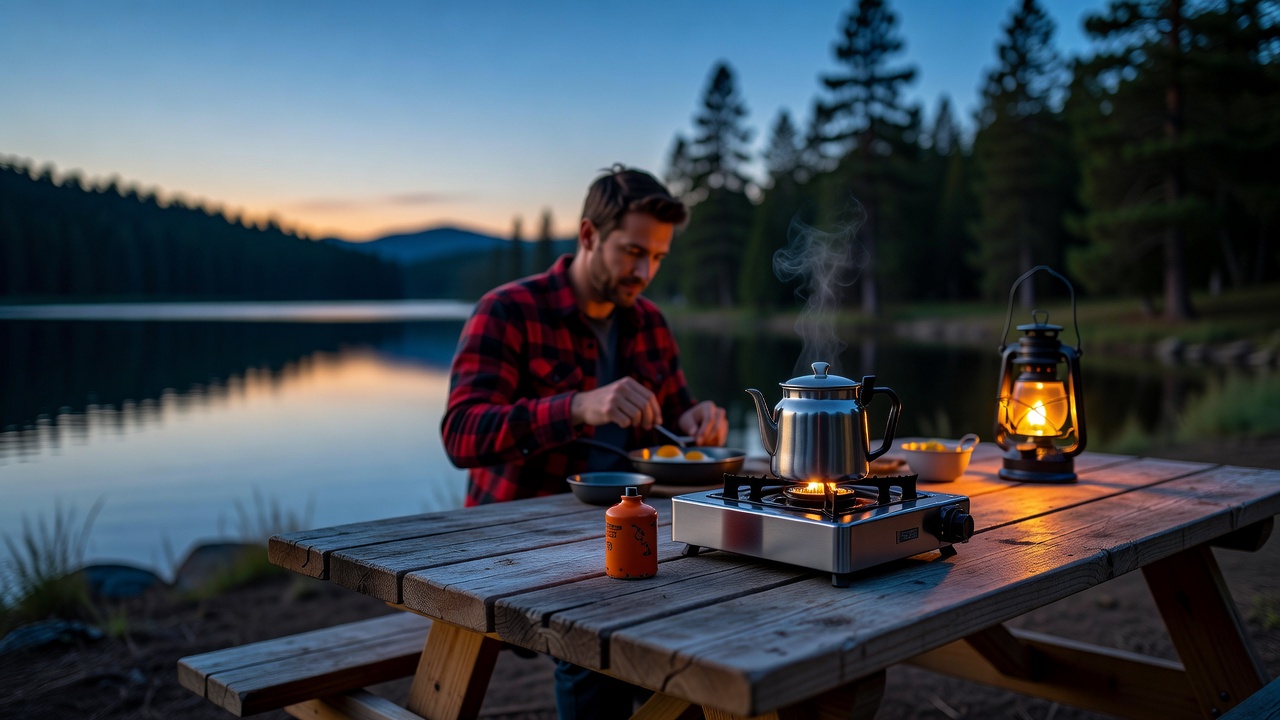
Backpacking Stove Comparison Chart
| Stove | Price | Weight Class | Boil Time (1L) | Fuel | Best For |
|---|---|---|---|---|---|
| AOTU Portable Camping Stove | $12.99 | Ultralight | ~4 min | Isobutane canister | Budget / backup |
| MSR PocketRocket 2 | $49.95 | Ultralight (2.9 oz) | ~3.5 min | Isobutane canister | Solo / duo backpacking |
| Jetboil Flash | $119.95 | Integrated (~13 oz) | ~4.5 min | Isobutane canister | Speed-focused hikers |
| MSR WhisperLite Universal | $149.95 | Midweight (~11 oz) | ~4 min | White gas / canister / kerosene | Winter, altitude, travel |
| BioLite CampStove 2+ | $199.95 | Heavy | ~4.5 min | Wood (foraged) | Basecamp + USB charging |
Jetboil Flash vs MSR PocketRocket 2: The Decision Most Hikers Actually Face
Search "Jetboil vs MSR" and you get spec sheets that miss the point. These two stoves are not rivals in the same category — they are two different answers to "how do I boil water on a trail," and the right one depends on three things: speed in wind, total cook-kit weight, and whether you want to cook or just rehydrate.
Speed, and where it actually matters. In still air the MSR PocketRocket 2 at $49.95 is the faster of the two at roughly 3.5 minutes per liter. The Jetboil Flash at $119.95 runs about 4.5 minutes — but its flux-ring heat exchanger sits on the pot rather than the burner, and that changes everything in wind. On an exposed ridge a bare burner slows down while the Flash holds close to its rated time. At a sheltered forest campsite, that advantage mostly disappears.
Weight is closer than the headline numbers suggest. The PocketRocket 2 burner weighs 2.9 ounces; the Flash is about 13 ounces all-in. That 10-ounce gap is real — but only if you would otherwise carry no pot at all. The Flash figure includes the 1-liter pot, lid, insulating cozy, and burner as one nested unit. If you were going to pack a separate pot and cozy anyway, most of that gap closes and you gain a system with no loose parts to hunt for in the dark.
Cooking versus rehydrating is the real fork. The PocketRocket 2 is a burner you pair with your own cookware, so it scales to a group and to actual cooking — the MalloMe camping cookware set at $32.99 nests a pot, kettle, pan, and utensils into about a pound. The Flash is optimized for one job: a fast liter of water for freeze-dried meals, oatmeal, and coffee. If your trail menu is "add boiling water," the integrated system is less fuss. If you want to cook, the open burner wins.
Cold weather is a wash. Both are canister stoves, so both hit the same isobutane limit around 20°F. Neither is the answer for a snow trip — that is where a liquid-fuel stove like the MSR WhisperLite Universal at $149.95 earns its weight.
The 30-second version: most solo and duo hikers on established trails are better served by the PocketRocket 2 — $70 cheaper, lighter as a bare burner, and it actually cooks. Reach for the Jetboil Flash if you boil water in exposed, windy places, want a nested kit with no loose parts, and mostly rehydrate rather than cook.
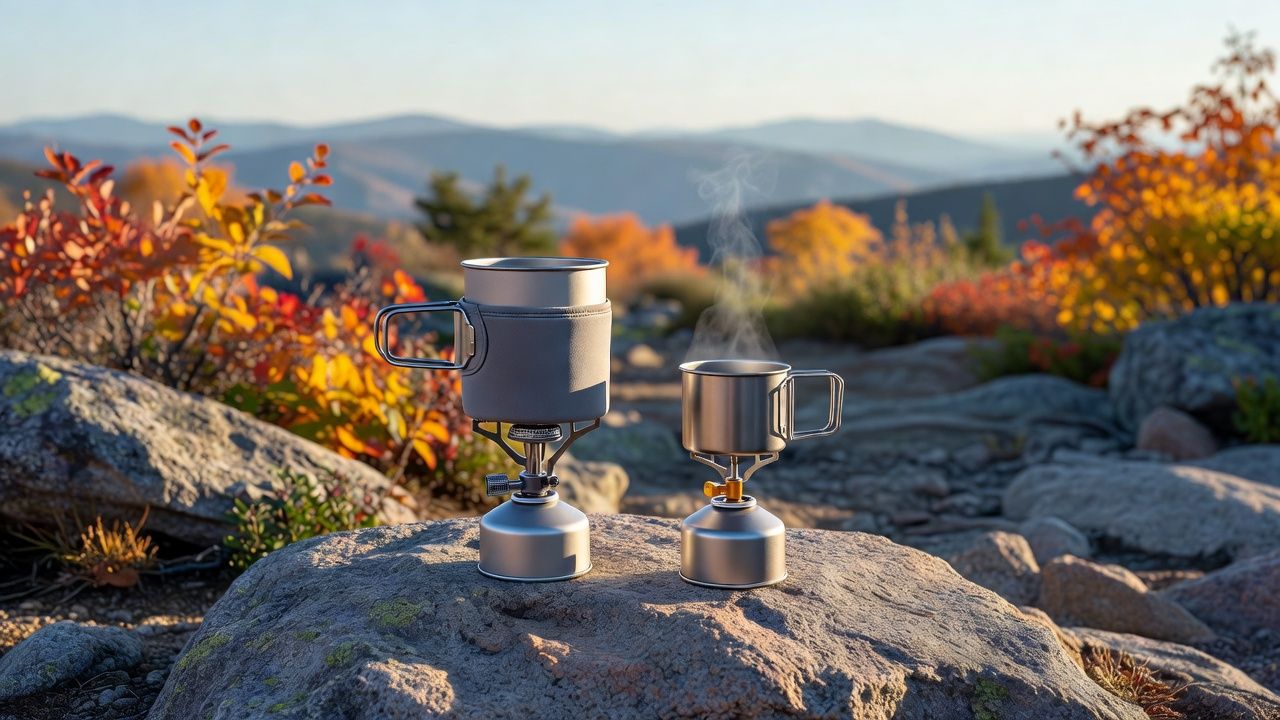
Fuel cross-compatibility: yes, they share canisters
Both stoves use the standard threaded (Lindal-style) isobutane connection, so this part of the "Jetboil vs MSR" question has a one-word answer: interchangeable. An MSR IsoPro canister at $8.95 screws straight onto a Jetboil Flash, and a Jetboil canister screws straight onto a PocketRocket 2. The brand printed on the canister is not a compatibility problem — size and temperature are. Our fuel canister safety and disposal guide covers sizing, storage, and how to tell an empty canister from a live one before you pack it.
Fuel Strategy for Backpackers
Your stove choice and your fuel choice are two halves of the same decision. The most common backpacking mistake is buying a stove first and fuel second — then discovering the canister doesn't fit the stove's valve, or that the fuel underperforms at the temperatures you actually camp in.
Isobutane blends are the backpacking standard for a reason: they're light, clean-burning, and work down to about 20°F with the right canister. Pure butane, by contrast, stops vaporizing reliably in cold weather — that's why picnic stoves that run on butane are fine for summer car camping but frustrating in the mountains.
Our camp stove fuel guide covers the full compatibility picture, including the 60-second check that confirms your canister fits your stove. And once you're set up, a camp stove windscreen can rescue a stove that's struggling in open, windy sites — just make sure it leaves room for airflow, because a fully enclosed stove is a safety hazard.
Common Backpacking Stove Mistakes (Learn From Mine)
Buying a car-camping stove for the trail. A 2-burner propane stove is wonderful at a drive-up campsite and miserable in a pack. I carried one on my first overnight hike and it took up half my pack. If you're hiking, buy a backpacking stove.
Ignoring wind. I've cooked dinner on a wind-scoured ridge with a bare burner and watched the flame dance sideways while the water sat at a stubborn simmer for 20 minutes. Check the forecast, pick a sheltered cook spot, or carry a windscreen.
Not testing before the trip. Every stove I've ever owned has behaved slightly differently — ignition quirks, flame adjustment, how the canister seats. Fire it up in your yard or at a picnic table before your first trail use, not at a dark campsite at 8 p.m. in the rain.
Carrying a half-full canister "to save weight." You can't gauge how much fuel is left by shaking a canister. Carry a full one, or one you've actually tested by boiling water. Running out of fuel at the end of a long day is a miserable way to learn this lesson.
Skipping the simmer control. If you plan to cook anything beyond boil-water meals — instant oatmeal, ramen, or actual recipes — a stove with decent flame control is worth the extra grams. That's where the PocketRocket 2 and Jetboil earn their price over bare-budget burners.
What Else Goes in a Backpacking Kitchen
A stove is the centerpiece, but your trail kitchen is more than a burner. A compact MalloMe Camping Cookware 17-Piece Mess Kit at $32.99 nests a pot, kettle, pan, and utensils into one small bundle — ideal for backpackers who want real cookware without the clatter. Pair it with a titanium spork and the GSI Outdoors Infinity Backpacker Mug ($14.95, 4.8 stars) — which nests around a 32 oz bottle, so it costs you almost no pack volume — and you have a complete kitchen that adds about a pound to your pack.
For the rest of your load, our best ultralight backpacking tents guide covers shelter at trail weight, and the hiking for beginners guide walks through building a full pack from the ground up — including how the pieces fit together without overpacking.
Final Verdict: Which Backpacking Stove Should You Buy?
Here's the short version:
- On a budget or unsure? Get the AOTU Portable Camping Stove for $12.99. It's cheap enough to be a trial run and good enough to keep.
- Most backpackers? The MSR PocketRocket 2 at $49.95 is the best weight-to-performance ratio in the category — 2.9 ounces, fast boil, piezo ignition.
- You value speed and simplicity? The Jetboil Flash is the fastest, most wind-resistant canister system here.
- Winter, altitude, or international trips? Get the MSR WhisperLite Universal and never think about fuel availability again.
- Basecamp with power needs? The BioLite CampStove 2+ burns twigs and charges your gear while it cooks.
Whichever you choose, pair it with the right fuel canister and a windscreen strategy, and your pack will be lighter and your dinners will be hot — which, honestly, is the whole point of backpacking.
Backpacking stoves sip fuel, but runtime per canister still decides your resupply — the propane calculator works it out for your burner.
FAQ
Which backpacking stove is the best for most hikers?
The MSR PocketRocket 2 at $49.95. It weighs about 2.9 ounces, boils a liter in roughly 3.5 minutes, has piezo ignition, and carries a 4.8-star average across 3,800+ reviews — the best weight-to-performance ratio in the category for solo and duo hikers on established trails. On a tight budget, the $12.99 AOTU is a genuinely capable backup.
How much does a backpacking stove weigh?
Screw-on canister stoves run about 2 to 5 ounces — the PocketRocket 2 is 2.9 ounces and folds to roughly lighter-size. Integrated systems like the Jetboil Flash weigh around 13 ounces all-in, and liquid-fuel stoves like the MSR WhisperLite Universal sit near 11 ounces. On a multi-day trip, a 10-ounce difference adds up to more than a pound of extra pack weight by the end of the week.
How long does a backpacking stove take to boil water?
From our testing chart: the MSR PocketRocket 2 boils a liter in about 3.5 minutes, the AOTU and MSR WhisperLite Universal take roughly 4 minutes, and the Jetboil Flash and BioLite CampStove 2+ come in around 4.5 minutes. Integrated systems with a flux-ring heat exchanger hold their speed in wind, while bare burners slow down noticeably.
Can you use a backpacking stove in cold weather?
Yes, with the right fuel. Isobutane blends work down to about 20°F with the correct canister; pure butane stops vaporizing reliably in the cold. For snow camping, high altitude, or below-freezing trips, switch to a liquid-fuel stove like the MSR WhisperLite Universal, which runs on white gas, kerosene, and auto fuel — see our cold-weather and high-altitude stove guide for the full breakdown.
What fuel do backpacking stoves use?
Isobutane canisters are the backpacking standard — light, clean-burning, and effective to about 20°F. Liquid-fuel stoves like the WhisperLite Universal burn white gas, kerosene, or unleaded auto fuel (and canister fuel with an adapter), which is why expedition travelers choose them. Wood-burning stoves like the BioLite need no carried fuel at all but can't be used in burn bans.
Can I use a regular camp stove for backpacking?
You can carry one, but you won't enjoy it — a two-burner propane stove is wonderful at a drive-up campsite and miserable in a pack. It's the most common mistake we see: switching to a dedicated backpacking stove typically cuts your cooking weight by more than half. If you're hiking to camp, buy a backpacking stove; save the two-burner for car camping.
Jetboil vs MSR: which should you buy?
For most solo and duo hikers on established trails, the MSR PocketRocket 2 at $49.95. It is $70 cheaper than the Jetboil Flash, weighs less as a bare burner at 2.9 ounces, and cooks real food because you supply the pot. Choose the Jetboil Flash instead if you boil water in exposed, windy campsites — its flux-ring heat exchanger holds close to its rated time in wind while a bare burner slows down — or if you want a nested system with no loose parts and mostly rehydrate meals.
Is the Jetboil Flash worth $70 more than the PocketRocket 2?
It comes down to two habits. If you mostly boil water in open, windy campsites, the Flash's heat-exchanger pot holds its boil time where the PocketRocket 2 slows, and the nested kit means never hunting for a lid or cozy — that convenience is what the extra $70 buys. If you camp in sheltered forest, want to actually cook, or would rather put the difference toward a better mess kit and more canisters, the PocketRocket 2 is the better value.
Can a Jetboil use MSR fuel canisters?
Yes. Both the Jetboil Flash and the MSR PocketRocket 2 use the standard threaded isobutane canister connection, so an MSR IsoPro canister fits a Jetboil and a Jetboil canister fits an MSR stove. Match the canister size to your trip length and the blend to your overnight low — isobutane blends work to about 20°F, pure butane does not.
Related: Camp Stove BTU Guide: How Many BTU Do You Really Need? — BTU by group size, boil times at 8,000 vs 11,000 BTU per burner, and the fuel-burn math behind why a big flame is not always the better stove.
<!-- AFFILIATE_DISCLOSURE -->