Camp Stove Fuel Canisters: Recycling, Refill & Safe Disposal Guide (2026)
Can you recycle or refill a camp stove fuel canister? What's legal, what's safe, and where to take empty 1 lb propane cylinders — checked size by size.
The first time I emptied a butane canister, I stood there holding it like a puzzle. It was the end of a long family camping trip, the stove was packed, and the little silver cylinder had maybe a gram of gas rattling inside. Trash can? Recycling bin? Puncture it like the internet says? I threw it in the trash and never thought about it again — until a ranger friend explained why that's not always the right answer.
Fuel canisters are the one piece of camp kitchen gear nobody teaches you how to finish. We obsess over stoves, windscreens, and meal plans, but when the flame sputters out, most of us just toss the canister and move on. This guide covers what you actually need to know: which canister type is in your stove, how to store and transport them safely, the correct disposal method for each kind, and the cold-weather gotchas that ruin trips.
Before we dig in, the deeper fuel picture — why butane, isobutane, and propane behave so differently — is covered in our camp stove fuel guide: propane vs butane vs isobutane, which is the fuel guide I wish I'd had on my first stove. And if you're mid-decision between the two fuels most campers actually choose between, isobutane vs propane settles it with boiling points, cost per boil, and the connector check that tells you which one your stove takes.
Quick Answer: Can You Recycle or Refill Camp Stove Fuel Canisters?
Short version: disposal depends on the canister type. Empty butane canisters go in the trash whole — never puncture them with household tools. Empty isobutane canisters get crushed with a purpose-built tool and recycled as steel. One-pound green propane cylinders go to household hazardous waste or a propane exchange, and PHMSA says never refill DOT-39 cylinders.
- Which canister is in your stove? The fuel's boiling point decides everything: butane ~31°F (−0.5°C), isobutane ~11°F (−12°C), propane −44°F (−42°C). That is why a butane stove quits on a 28°F morning while a Coleman Bottle Top propane stove ($21.99, 4.5★, 12,600+ reviews, 10,000 BTU) keeps running.
- Butane empties — trash, not puncture. A 12-pack of Gas One butane canisters costs $29.99 (4.8★, 9,300+ reviews). Once the flame stops and there is no hiss, bag the spent can and put it in the regular trash — some municipalities classify it as household hazardous waste, so check your local rules.
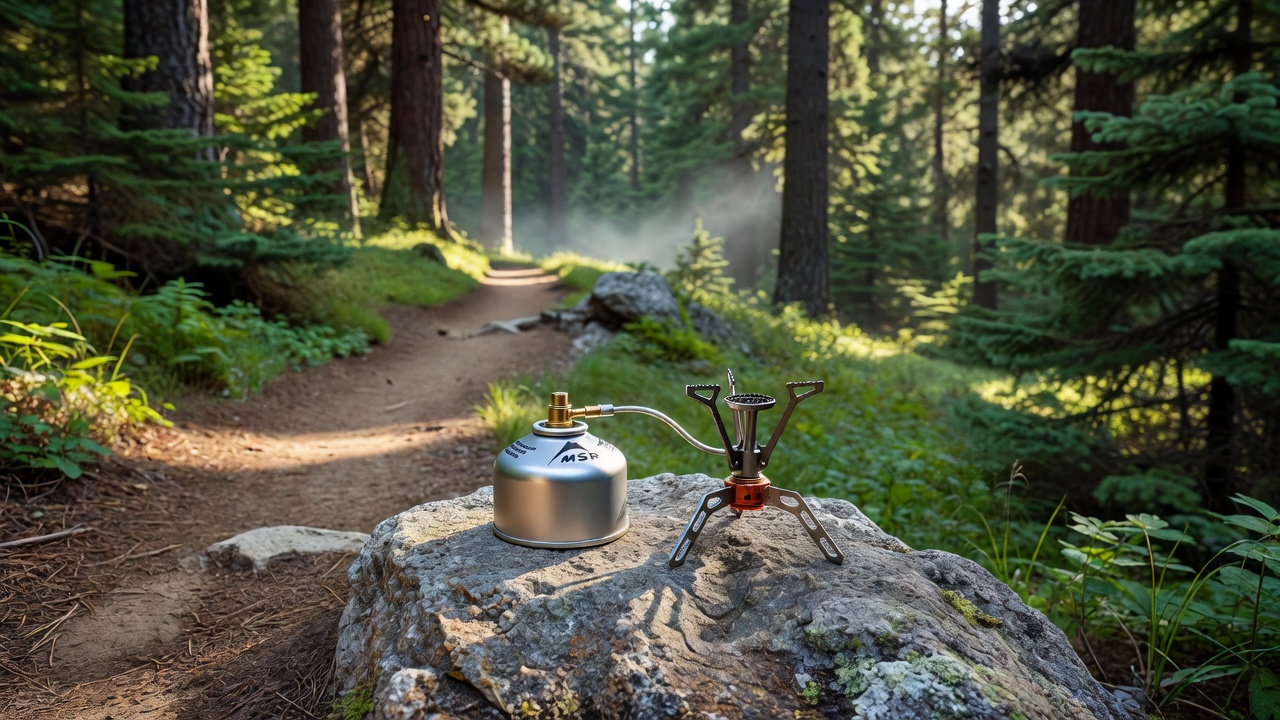
- Isobutane empties — recycle the steel. Use a canister-crushing tool (the Jetboil CrunchIt is the standard), then take the flattened steel to a participating REI or municipal metal-recycling program. A 110 g MSR IsoPro canister is $8.95 (4.8★, 4,800+ reviews), and it feeds the MSR PocketRocket 2 ($49.95, 4.8★).
- 1 lb propane — never refill. A 12-pack of 16.4 oz Coleman cylinders is $64.99 (4.8★, 10,500+ reviews). PHMSA and the National Park Service both warn against consumer refills of DOT-39 cylinders; take empties to HHW or a propane exchanger instead.
- The empties test: no flame, no hiss, no weight = done. A canister that still holds fuel is hazardous waste — and a fire hazard inside a garbage truck.
First, Which Canister Is in Your Stove?
Three canister families cover 99% of camping stoves. They're not interchangeable, and the disposal rules differ — so check the label before you do anything.
Butane canisters are the squat, yellow/blue cylinders that click into stoves like the Coleman Classic 1-Burner Butane Stove. They're cheap, common in picnic gear, and vaporize poorly below roughly 32°F — that's why butane stoves struggle in winter. If you're weighing the Coleman Classic against a dual-fuel option, our Coleman Classic vs Gas One GS-3400P comparison breaks down the weather trade-offs in plain English.
Isobutane blend canisters (usually labeled "isobutane/propane mix") are the tall, threaded cylinders used by backpacking stoves like the MSR PocketRocket 2. The propane mixed in keeps them working far colder — down to about 0°F for the good blends.
Propane comes in either the green 1-pound disposable cylinders (screw onto stoves like the Coleman Bottle-Top Propane Stove) or refillable 20-pound tanks for RV and home setups. Dual-fuel stoves like the Gas One GS-3400P can burn either.
If you're still deciding which fuel to standardize on for your trips, the decision framework in the car camping stove buying guide will save you money — buying the wrong canister format locks you into it.
If you're buying a fuel system this fall rather than reusing one, the Black Friday camping gear guide separates the categories that genuinely discount — stoves, sleep systems, lights — from the ones that never do.
Camp Stove Fuel Canister Sizes: 100 g, 110 g, 220 g, 450 g, and 1 lb
"Camp stove fuel canister sizes" is confusing because the same physical can sizes get labeled by net weight, by ounces, or by a brand name — and isobutane canister sizes are usually printed as a gram figure with no ounces anywhere on the label. The same shelf answers camping fuel canister sizes and camp stove fuel canister sizes alike — the grams are the grams. Here is the whole shelf in one table:
| Canister | What the label says | Net fuel | Fits | Realistically enough for |
|---|---|---|---|---|
| Small threaded canister | 100 g / 110 g | 3.5-3.9 oz | Any EN 417 threaded stove (MSR, Jetboil, Soto) | One person, 2-3 days of boiling |
| Medium threaded canister | 220 g / 230 g | 7.8-8.1 oz | Same threaded stoves | Two people, 3-5 days |
| Large threaded canister | 450 g | ~16 oz | Same threaded stoves | Two to four people, 4-6 days |
| Butane click-in cartridge | 8 oz / 220 g | 8 oz | Butane-only stoves only — never threaded | 2-3 dinners on a single burner |
| 1 lb propane cylinder | 16.4 oz / 465 g | 16.4 oz | Bottle-top propane stoves, lanterns, torch heads | 3-6 hours of full-flame cooking |
What actually matters when you buy:
- The 450 g is the money size for a family. It costs a few dollars more than a 220 g and holds roughly twice the fuel, which is the cheapest fuel-per-gram on the shelf. If your stove takes threaded canisters and you are not counting every ounce in a pack, buy big.
- Isobutane canister weight is worth knowing before a backpacking trip. A 110 g canister runs about 7 oz gross, and a 450 g lands around 1 lb 12 oz — the steel is a real part of what you carry, so two 220 g canisters usually weigh more than one 450 g.
- A butane canister for camp stove use is a different format, not a different size. Click-in cartridges do not screw into threaded stoves, and threaded canisters do not drop into a butane collar. That is why "which size?" is really "which format does my stove take?" A 4-pack of Gas One butane canisters ($12.03, 4.7★) is the cheap way to find out whether a butane stove suits your trips before committing to a 12-pack.
- Small propane canisters are only one size. The "small" camping propane canister is the 16.4 oz (1 lb) green cylinder — there is no 8 oz propane cartridge in the camping aisle, which is why torch and lantern cylinders route through the same disposal rules as a stove cylinder. The 12-pack of Coleman 16.4 oz cylinders is the standard bulk buy.
- Match canister count to meals, not to days. A 450 g canister is a week of dinners for four people and about three days of aggressive coffee-plus-breakfast-plus-dinner boiling. The burn-time math by size, stove and season is in the canister lifespan guide, and if you are buying fuel for a group rather than a solo pack, the how much propane for camping guide works out canister counts by headcount and number of hot meals.
Canister Safety 101: Storage and Transport
The rules here are simple, and breaking them is how people end up with a hissing stove at midnight.
Propane canister safety is really three habits — upright, cool, and valve-protected — and the propane tank safety tips that follow are the same three habits at a bigger scale.
Store canisters upright and cool. Heat is the enemy — a canister left in a closed car on a 95°F day can bulge, and the pressure relief valve (that little disc on top) exists for a reason. Keep them below 120°F, out of direct sun, and never near flames or pilot lights. A cooler full of ice is overkill; a shaded spot in the car is fine.
Transport them safely. The #1 cause of canister damage isn't fire — it's a loose canister bouncing around in a gear bin and denting its valve. The valve is the weak point. Carry canisters in a padded bag or wedged upright, and check the valve seal before screwing one onto a stove. If a canister is dented, rusted, or the valve looks bent, don't use it — and don't "test" it by attaching it to a stove.
Never store spare canisters with the stove attached. That's a recipe for a slow leak flooding your gear box. Disconnect the canister after every trip, cap it, and store fuel separately from cooking gear. It also keeps your stove from reeking of gas next spring. The other half of putting a stove away properly is drying the burner and clearing the air tube — our camp stove cleaning guide has that routine.
Cold weather is a fuel problem, not a stove problem. If you're winter camping, the cold-weather stove guide is required reading — but the short version: butane stops vaporizing around freezing, so switch to an isobutane blend or propane, and keep the canister warm (inside your jacket, never near the flame) while cooking. If you went looking for propane tanks freezing weather, the tank is almost never the culprit — propane boils at −44°F, so the failures people blame on frozen propane are a regulator or hose problem.
How to Dispose of Empty Camping Fuel Canisters (The Correct Way)
This is the section I couldn't find when I needed it, so here's the honest, complete answer.
Step 1 — Use the fuel completely. A "disposable" canister that still has gas in it is hazardous waste; one that's truly empty is (in most places) ordinary trash or recyclable metal. When the flame sputters and dies, turn the valve off, wait a minute, and try lighting it again — if nothing catches, it's empty. For butane canisters on Gas One's 12-pack of butane fuel canisters, the rule of thumb is: no flame, no hiss, no weight = done.
Step 2 — For butane canisters: throw them out (don't puncture). This contradicts the old internet advice, so let's be clear. Puncturing a butane canister with a screwdriver or can opener is dangerous — they can retain enough pressure to pop, and the escaping gas is flammable. Modern butane canisters are designed to be disposed of whole once empty. Wrap them in a bag and put them in the regular trash (check your local rules — some municipalities treat them as household hazardous waste).
Step 3 — For isobutane canisters: recycle if you can, trash if you can't. Empty isobutane cylinders are safe to dispose of once fully depleted. The best option is a canister-crushing tool (like the Jetboil CrunchIt), which pierces the canister safely and flattens it so the steel can be recycled. Several REI stores and outdoor retailers accept empty canisters for recycling — call ahead. If neither is available, dispose of the empty canister in regular trash. Never throw a canister that still has fuel into a fire — that's how campfires turn into rockets.
Step 4 — For 1-pound propane cylinders: check your area. The green cylinders are refillable nowadays at many hardware stores and propane exchanges (which is the most eco-friendly option). Empty-but-once-full cylinders should go to household hazardous waste collection or a propane retailer that accepts them. Never incinerate them.
Step 5 — What about the "puncture and recycle" method you see on YouTube? Those videos are usually about empty, vented isobutane canisters with a purpose-built tool, not butane picnic canisters punctured with a screwdriver. If you don't own the proper tool and the canister isn't verified empty, don't try it. The upside of recycling one canister's worth of steel isn't worth the risk of a pressurized pop in your hands.
Those five steps are the whole answer whether you typed how to dispose of camp stove canisters, the fuller how to dispose of camping propane canisters, or the very specific how to dispose of empty camping propane canisters. A long version like how to properly dispose of empty small camping propane tanks is the same question with more words attached: empty it all the way, then route it by cylinder type. The extra words do not change the destination, and no amount of them makes a partially full canister acceptable in a bin.
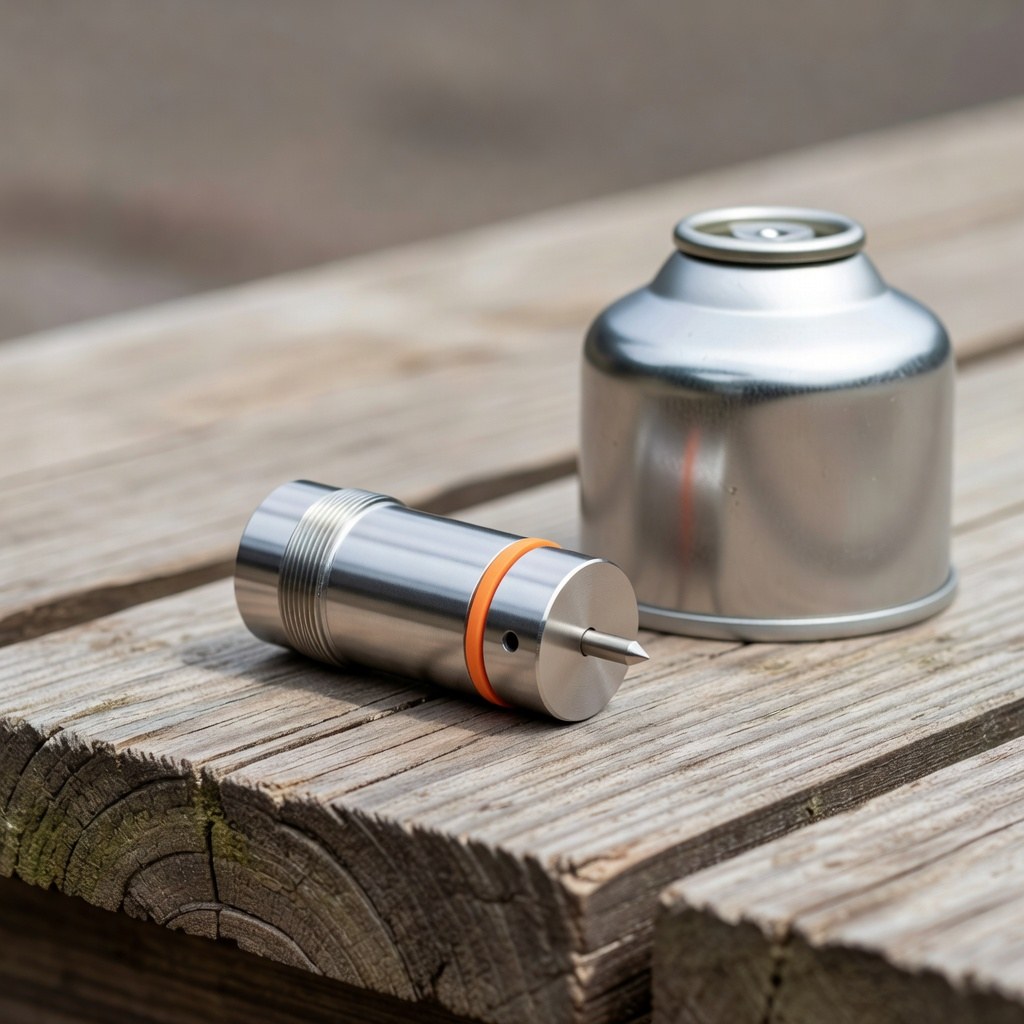
The one tool that makes Step 3 real. The recycling route only works with a purpose-built crusher, and the Jetboil CrunchIt Fuel Canister Recycling Tool ($12.95, 4.6★, 450+ ratings) is the standard one. It threads onto a threaded isobutane canister, bleeds whatever is left through a hole in its collar — you will hear a short hiss, which means it is working — and then you press down to punch the steel so a recycler can see the can is dead. It is one ounce of stainless steel with a bottle opener and the tiny jet-orifice wrench that clears a clogged Jetboil burner built into the same handle, so it earns a place in the stove kit even in months when you are not recycling anything. Use it only on canisters you have verified are empty, and only on the threaded isobutane type — never on a butane picnic cartridge or a green 1 lb propane cylinder.
Where to Take Empty Canisters: Finding Your Local Rule in 5 Minutes
Disposal rules genuinely change at the state, county, and city level, so nobody can hand you a single national answer. What I can give you is the exact path that gets a yes-or-no for your own address in about five minutes — because "it depends" is only useful if you know who to ask.
Path 1 — Curbside recycling (check it, but rarely the answer). Almost no municipal program wants camp fuel canisters in the blue bin. The reason is practical, not bureaucratic: sorters cannot tell an empty canister from a live one, and one pressurized cylinder in a compactor ruins everyone's morning. The exception is that fully depleted steel canisters are accepted as scrap metal at many county transfer stations and metal drop-offs. Phone phrasing matters here — asking "do you take empty camp stove canisters?" often gets a reflexive no, while "do you accept empty steel canisters as scrap metal?" gets a real answer.
Path 2 — Household hazardous waste (the most common correct answer). Most counties run a permanent HHW facility or a monthly collection event, and camping fuel canisters are exactly the kind of item those programs exist for — they take them empty, partially full, or unidentifiable. This is also the only safe destination for a canister with a damaged valve or any fuel you can still smell. Two things to bring: the canister itself, and the answer to "is there any fuel left?" (if there is, say so — that changes how they handle it, and nobody is going to fine you for being honest).
Path 3 — Retailer and brand take-back. Outdoor retailers have gotten better about this. Several REI stores collect empty canisters for recycling, and where that's not available, the cheap fix is a purpose-built venting tool: Jetboil's CrunchIt! pierces the canister at a controlled point, vents the residual pressure, and flattens the steel so a standard metal recycler will take it. It costs about as much as three canisters of fuel and lasts forever. For 1-lb propane, hardware stores and propane retailers are the better bet than curbside — many run refill or exchange programs, which beats disposal entirely because the cylinder gets reused instead of shredded.
The five-minute script that gets a straight answer
- Search
household hazardous wasteplus your county name — not your state. Solid waste is almost always county-run. - Search
<your city> scrap metal drop-offto see whether a local metal yard takes empty canisters. - Try a recycling locator directory (Earth911 and similar) filtered by your ZIP and "propane" or "gas cylinder" — coverage is patchy, but it beats guessing.
- Call and ask two questions: "Do you accept empty camp stove fuel canisters?" and "Do you take them if they're not fully vented?"
- If the answer is a hard no everywhere and you're in the US, assume HHW and hold them in a cool, ventilated spot (capped, upright, away from the house) until the next collection event. A coffee can of dead canisters in the garage for two months is a much smaller problem than a fire in the truck.
What never changes, regardless of where you live: don't burn canisters, don't put a canister you can still hear hissing into any bin, and don't hand a leftover canister to a recycling facility without telling them it may hold fuel. Every dangerous canister story starts with someone deciding the rules were probably fine.
Propane Tank Disposal Near Me: The Searches That Actually Work
"Near me" answers are only as good as the phrase you type, and the right phrase changes with the cylinder:
- Green 1 lb cylinder →
1 lb propane tank recycling near me, thencamping propane tank recycling near me. Expect household hazardous waste results, not curbside. - Small or mini cylinder (14-16 oz) →
small propane tank recycling near me, filtered with your county name so national directory pages do not bury the local facility. - 20 lb grill tank →
propane tank recycling near meandpropane tank recycling center near me. Check the exchange counter first — it is usually closer than any recycler and takes the tank in any condition. - Coleman or other brand cylinders → the brand name does not change the rule;
coleman propane tank recycling near mewill just surface the same county programs. - Butane canisters →
butane canister disposal near me; if nothing local appears, this is an HHW question rather than a recycling one. - Free options →
where to dispose of propane tanks near me freeandfree propane tank recycling near memostly return county collection-event pages, which is the one free route that is legal everywhere.
Butane, Isobutane, and Gas Canister Disposal: The Short Version
For camp stove fuel canisters specifically, there are only three outcomes and one rule:
- Butane canisters (click-in cartridges): dispose of them whole once empty. Do not puncture them with household tools — the old screwdriver advice assumes a canister that is definitely vented, and you cannot verify that with your eyes.
- Isobutane canisters (EN 417 threaded): vent and flatten with a purpose-built tool, then recycle the steel at a metal yard; several outdoor retailers also collect empties. Trash is the fallback, not the goal.
- Any canister, any type: if there is any chance fuel remains, it is household hazardous waste. Partially full is the dangerous category, and it is the one thing a collection facility will always take.
- The butane and isobutane wordings.
butane cylinder disposalandbutane tank disposalare the same click-in cartridge question with different nouns attached, andisobutane canister disposalis the threaded canister version.isobutane recyclingis what to type once the canister is vented and you want the steel back in circulation. - How to dispose of camp stove fuel is therefore a two-step answer: empty it completely, then route it by type. The full burn-time math for deciding how much fuel to buy in the first place is in the canister lifespan guide.
Camp Stove Fuel Canister Recycling: What Actually Happens to a Canister
Camp stove fuel canister recycling is a genuinely awkward topic because there is no national take-back program in the US. The canister itself is mostly steel — a highly recyclable material — but it arrives as a pressurized gas container, and that single fact is what makes most collection systems refuse it:
- Curbside recycling does not want it. A canister you can still hear hissing is a hazard to a sorting facility, and many programs reject any gas cylinder outright regardless of how empty it is.
- A scrap metal yard is often the real answer. Steel is steel, and yards that accept pressure cylinders will take a fully vented canister as recovered metal. Call first and ask the specific question — some will take a punctured canister, others won't — because puncture rules are set locally, not nationally.
- Household hazardous waste (HHW) is the fallback that always accepts them. It's slower, it's event-based in most counties, and it's the path that never requires you to guess about a rule.
- Refillable cylinders sidestep the whole problem. A certified refillable 1 lb cylinder that you refill from a 20 lb tank is a reusable container, not disposable waste — the refill adapter guide covers how to do it safely, and the canister page above covers how to do it legally.
how to recycle camp stove canisters— the same question phrased around the container instead of the fuel. Empty and vented is the precondition either way: a flattened backpacking canister can go to a metal yard or a retailer take-back, while a click-in butane cartridge goes out whole.
The practical takeaway: treat an empty canister as recovered metal first, hazardous waste second, and trash never. Whether your specific county lets you put a vented canister in a metal bin is a local question worth one phone call — the recycling and refill adapter guide covers the fittings, and the honest answer for the next camping season is that fewer canisters is better than any disposal method.
How to Throw Away Propane Tanks (1 lb, Small, Green, Mini, and Old)
The right answer changes with cylinder size, and mixing them up is where most people get this wrong.
-
1 lb green disposable cylinders (the ones on a bottle-top stove): not a curbside recycling item, and in a growing number of counties not a trash item either. Fully depleted, they belong with household hazardous waste or an empty-tank exchange counter. Burn one all the way down — no hiss, no flame, noticeably light — and disposal shrinks to a single phone call.
-
Small and mini cylinders (14-16 oz, lanterns and torches): same category as the green 1 lb cylinder. Treat it as a pressure container, not as metal you drop in the blue bin.
-
20 lb refillable grill tanks: never trash. A tank exchange (Home Depot, Lowe's, and the Blue Rhino-style racks) is the easiest legitimate path — the operator requalifies and refurbishes an acceptable tank, and the steel is recycled when one fails inspection. A propane retailer will also valve an old tank for you, and a certified tank can be requalified instead of retired, which is cheaper than buying a replacement.
-
Butane and isobutane canisters: short version below — butane goes out whole, isobutane gets vented with a purpose-built tool and recycled as steel.
-
how to throw away green propane tanks— the green 1 lb cylinder in your hand is the same pressure container as ever: empty it completely, then run it to household hazardous waste or an exchange counter rather than the blue bin. -
how to throw away 1lb propane tankandhow to throw away small propane tanks— one 14–16 oz cylinder under two more namings. Neither is curbside metal, and neither is "just trash" in most counties. -
how to throw away empty propane tanksandhow to throw away old propane tanks— empty and old describe the same precondition rather than two procedures: no hiss, no flame, noticeably light. -
where to get rid of propane tanks— the route follows the size, not the wording: an exchange counter for a 20 lb refillable, an HHW day for a disposable, a scrap yard for a vented steel cylinder. Add your county name and you get a real answer instead of a policy no. -
camp stove propane tank disposal— the camp-stove-sized version of the same question. A bottle-top stove cylinder is a disposable, so it routes to HHW or an exchange cage, never the recycling bin.
The wording you search with matters more than the size in your hand, so here is how the naming variants map onto those four groups:
- Green disposable cylinder →
small green propane tank disposalandhow to dispose of empty small green propane tanksboth lead to household hazardous waste or an exchange counter, never the blue bin. - 14 to 16 ounce torch and lantern cylinders →
how to dispose of empty small propane tanks,how to dispose of old small propane tanks, andhow to dispose of used small propane tanksare one question asked three ways. Old, used, and empty all describe a cylinder with no fuel left. - The smaller wordings →
little propane tank disposal,mini propane tank disposal, andportable propane tank disposalreturn the same county pages. The word portable is the tell that the searcher holds a torch or lantern cylinder rather than a grill tank. - Brand names change nothing →
coleman small propane tank disposalandsmall camping propane tank disposalsurface what the generic query already surfaces. - Cylinders that sat in the garage for years →
what to do with old propane canistersandwhat to do with 1 lb propane tankhave the same two answers. Exchange a cylinder with a sound valve, and take one you are unsure about to HHW. - Unqualified searches →
empty propane tank disposalandhow to dispose of propane canistersreturn national directory pages that accept nothing, which is whyempty propane tank disposal near meandsmall propane tank disposal near mewith your county name attached get a usable answer.how to dispose of old propane canistersis the same routing question with the same local answer.
One rule covers every size: if you can still hear it, it is not trash.
Quick routing table (use the search phrase in the last column with your county name — it is the wording that gets a real answer rather than a reflex no):
| Cylinder type | Safe to move once… | Where it goes | Search phrase that works |
|---|---|---|---|
| 1 lb green propane cylinder | No hiss, no flame, noticeably light | HHW or an exchange counter; trash in some counties | how to dispose of empty propane canisters |
| Small / mini 14-16 oz cylinder | Same test as above | Same as the 1 lb cylinder — never curbside | empty small propane tank disposal |
| 20 lb refillable grill tank | Always (it is a refillable container) | Exchange counter, propane retailer, or scrap yard if retired | where to dispose of old propane tanks |
| Butane click-in cartridge | Flame dies and it feels light | Out whole (no puncturing); trash or HHW by local rule | butane cartridge disposal |
| Isobutane threaded canister | Verified empty, vented with a proper tool | Scrap metal, retailer take-back, HHW as fallback | isobutane canister recycling |
| Any cylinder, fuel status unknown | — | Household hazardous waste, every time | household hazardous waste + your county |
The pattern in that table is the whole topic in miniature: the container is ordinary steel, but the pressure inside it is what decides the route.
Are Propane Tanks Recyclable? (Yes — Just Not in the Blue Bin)
Short answer: the steel in a propane cylinder is highly recyclable, and your curbside program almost certainly still will not take it. Two practical facts explain the whole mess — sorters cannot tell an empty cylinder from a live one, and a cylinder arrives as a pressure container, which most municipal programs exclude by policy no matter how empty it is.
Where they do get recycled:
- Tank exchange counters (Home Depot, Lowe's, and similar). The tank you hand over is inspected: if it passes it is refurbished and refilled, and if it fails it goes for steel recycling. That is the real answer to "can you recycle propane tanks at Home Depot" — through the exchange program, not the recycling bin.
- Scrap metal yards and county transfer stations. A fully vented cylinder is recovered steel. Ask using the words "empty propane cylinder as scrap metal" — that phrasing gets a yes where "do you take propane tanks?" gets a reflex no.
- Household hazardous waste. The path that accepts everything, including the cylinder you are not sure about.
The same question, five phrasings. how to recycle propane canisters, can you recycle camping propane tanks, can propane canisters be recycled, and are camping gas canisters recyclable all resolve to the exchange counter, the scrap yard, or HHW. camping fuel canister recycling is the version that surfaces retailer take-back programs instead of municipal pages.
The empty, old, and small versions of the question. are empty propane tanks recyclable, are old propane tanks recyclable, are small propane tanks recyclable, and are small propane canisters recyclable all land on the same steel-versus-pressure answer: the material is genuinely recyclable, the container still is not curbside. can you recycle empty propane canisters and can you recycle small propane canisters are that question turned around — the emptiness that makes a canister safe to hand over is not what makes it acceptable to a sorting facility, so the destination stays the exchange counter, the scrap yard, or HHW.
Can you recycle propane tanks for money? Technically — scrap steel pays by weight, and a 1 lb cylinder weighs about two pounds, so the payout is measured in cents. The money in this topic sits on the other side of the transaction: a refillable 1 lb cylinder like the Flame King refillable cylinder plus a $9.98 refill adapter turns a $5.42 disposable into roughly $1 of fuel per fill. The 1 lb refilling guide covers the safe technique for the refillable ones.
Disposal by Name: Canister, Bottle, Cylinder, or Tank?
Half the frustration here is vocabulary, not rules. The same steel container is called a canister on one government page, a bottle on another, a cylinder at the hardware store, and a tank in every forum thread. Search with the wrong word, get a "we don't take those," and it is easy to conclude nobody does — when in reality "propane canister recycling" and "propane bottle recycling" are the exact same question. A camp stove cartridge, a camp stove bottle, camp stove canister gas — three more labels, one object, one answer.
Propane Canister Recycling, Propane Bottle Recycling, Propane Cylinder Recycling
Run the search three ways with your county name, because local solid-waste pages are not indexed consistently:
propane canister recycling near me— what county household-hazardous-waste pages call 1 lb disposable cylinders and camp cartridges. This is the phrase that surfaces collection events.propane bottle recycling near me— usually returns 20 lb barbecue-tank results plus the exchange racks (Blue Rhino, AmeriGas, hardware stores). Useful when the cylinder is a grill tank, and a dead end for a camp canister.propane cylinder recycling near me— the wording scrap metal yards, transfer stations and propane retailers use. Pair it with the sentence that gets a yes: "I have an empty propane cylinder for scrap metal."propane canister recycling tool— this search is a device, not a destination. A tool does not recycle anything; it makes a canister acceptable to someone who does. The Jetboil CrunchIt flattens backpacking canisters so a metal recycler will take the steel, and yards that handle larger cylinders often want the valve removed with a purpose-built valve-removal tool before they will accept one as plain steel.- The one search that always works:
household hazardous wasteplus your county name. It sidesteps the vocabulary problem entirely, because HHW is the route that accepts every version of this container regardless of what you call it.
How Do I Dispose of Propane Bottles, Cylinders, and Torch Tanks?
"Dispose of propane" is the phrase most people type, and the honest answer is a short checklist rather than a single rule:
- Confirm it is actually empty. No hiss when the valve opens, no flame, and noticeably light in your hand. Anything else is hazardous waste — not trash, not a recycling bin.
- Match the container to its route. A 20 lb bottle or tank goes to an exchange counter or a propane retailer. A 1 lb camp cylinder goes to household hazardous waste or an exchange, depending on your county. Butane cartridges go out whole. Isobutane canisters get vented with a proper tool and recycled as steel.
- Torch tanks and lantern cylinders get one extra step: take the burner off. If you searched dispose of propane torch tanks and landed here, this is the paragraph you need: A 1 lb propane torch tank or lantern cylinder is the same DOT-39 disposable as a stove cylinder, so the disposal route is identical — but a torch head left screwed on keeps the valve depressed, and a bumped knob in a gear bin is a slow leak you will not notice until you open the truck. Remove the head, cap the cylinder, then dispose by type.
- Where "dispose of propane tank at Home Depot" comes from. Those stores take tanks through the exchange counter, not a recycling bin — and they take standard 20 lb exchange tanks. They do not take torch cylinders or butane cartridges. Handing a torch cylinder to an exchange clerk and expecting it to disappear is how people end up with a leaking cylinder in a truck bed for a month.
- Unknown status, or anything you can hear = household hazardous waste, every time. For small propane canister disposal (the 14-16 oz torch and lantern cylinders) the rule is the same as for the 1 lb green cylinder: empty it fully, then route it as HHW, an exchange, or — in some counties — the trash. Camping propane canister disposal is not a special case; size does not change the hazard. And if you are searching dispose of propane tank near me or dispose of propane bottles near me, add your county name to the query — the bare near-me results are mostly national directory pages that accept nothing, while the county version surfaces the actual collection site and its hours.
Canister Storage Between Trips
Storing propane canisters between trips is more about habit than hardware. Between seasons, keep your fuel simple:
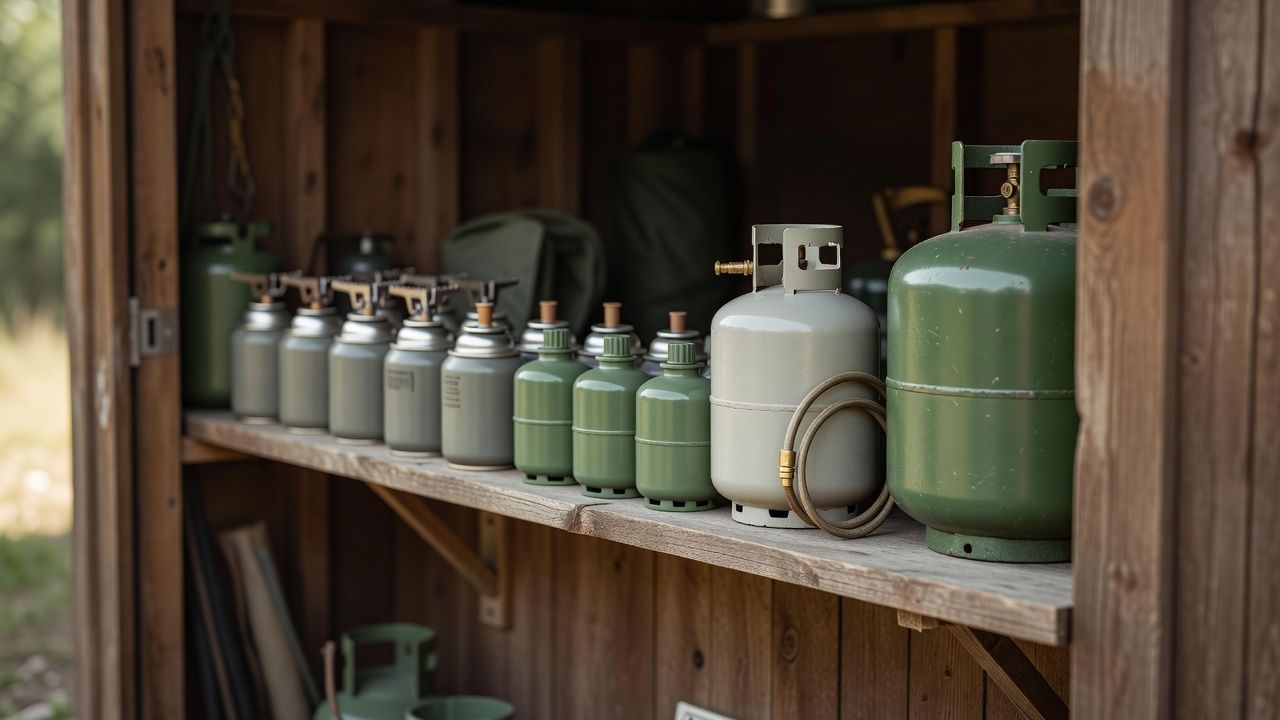
- Store canisters upright, capped, and cool — a shelf in a garage or shed, never in direct sun and never next to a water heater or furnace.
- Check the seal every few months. If you smell gas, the canister is leaking — move it outside and use it up on the next trip or dispose of it as above.
- Rotate your stock. Fuel degrades slowly but the valve seals don't last forever. Use the oldest canisters first.
- Don't stockpile for the apocalypse. A 12-pack of butane is plenty for a season of weekend trips; canisters bought this year and forgotten for three years are canisters you'll be nervous to use.
Propane Tank Storage at Home: Where It's Safe (and Where It Isn't)
"Propane tank storage at home" is where most people quietly get it wrong, because the convenient spot is usually the wrong one. If you looked up propane tank storage requirements or propane tank storage temperature, the short version is: upright, valve capped, ventilated, and under about 120°F. Here is what that means in practice:
- Outside or in a ventilated space, upright, valve capped. Storing a propane tank outside — a shaded porch, a shed that breathes, a garage shelf near a door — is the default for a reason. Propane is heavier than air, so a slow valve leak in a sealed room pools at floor level instead of drifting out.
- Not indoors, and never in a sleeping area. No bedroom, no tent sleeping space, no basement corner next to the water heater or furnace. A pilot light is an ignition source, and you will not smell a slow leak before it finds one.
- Not in a hot trunk or a sealed shed in July. Storage temperature is a pressure question: keep cylinders under about 120°F and out of direct sun. A closed vehicle on a 95°F day passes that quickly, and pressure relief valves exist precisely because heat does this.
- How much you can store depends on your local fire code. Codes care far more about 20 lb tanks than about a handful of 1 lb cylinders, and the limits differ between a garage, a shed, and a basement. If you are keeping more than a couple of tanks on the property, one call to your local fire department settles it in two minutes.
- Rotate the stock. Fuel itself keeps for years, but valve seals age. Use the oldest canisters first, and if you ever smell gas on a shelf, that canister goes outside and gets used up or disposed of — not put back in the tote.
Habits that work in practice: a milk crate keeps 1 lb cylinders from rolling, a strap or bracket keeps a 20 lb tank from tipping, and caps on every canister keep grit out of the valve seat. Detach the stove before storage and keep the fuel away from the gear you cook with.
Two storage searches come up over and over, and they have opposite answers. where to store 1lb propane tanks and where to store 1 pound propane tanks are the same query with different spelling, and the answer is the ventilated shelf described above. can 1 lb propane tanks be stored inside is the one to be careful with, because a basement corner or a closet is not a storage spot even when a garage shelf near a door is. empty propane tank in hot car is the other common one: an empty cylinder is still a pressure container with a valve, so a closed vehicle on a warm day is the wrong place for it, empty or not. Planning by season rather than by trip, 1 lb propane tank shelf life runs to years for the fuel and months for the valve seal, and how long can you store camping gas canisters is limited by the same seal rather than by the gas. Searching 1 lb propane storage or propane tank storage outside will surface plenty of shed racks and crates, and none of them change the four rules above.
If you run a propane appliance where anyone sleeps, a CO alarm is the part the hardware cannot replace. A tank stored outdoors is the safe half of the system; the heater, grill, or lantern burning inside a tent, camper, or van is the half that produces carbon monoxide, and every one of those appliances has a failure mode you cannot smell. A travel-rated Kidde AA-battery carbon monoxide detector ($23.97, 4.7★, 2,000+ reviews) needs no outlet and no wiring, so it works in a tent, a camper, a van, or a cabin — one unit covers the tent and the house. Its 85 dB alarm is loud enough to wake a sleeping family, and the LED status lights let you confirm it is armed before you zip in for the night. Keep it in the gear bin with the heater, not in a drawer at home.
Common Canister Mistakes Every Beginner Makes (Learn From Mine)
- Leaving the canister on the stove between meals. I've done this, and so has everyone. It takes one bumped knob to start a slow leak. Detach and cap the canister after cooking — it's a 10-second habit.
- "Testing" a suspicious canister indoors. If a canister looks damaged, don't screw it onto a stove to "see if it holds." A leak test with a soapy water spray (bubbles = leak) on the valve outdoors is the only safe check.
- Tossing pressurized canisters in the trash. A canister with fuel in it is a fire hazard in a garbage truck. Empty it properly first, or take it to hazardous waste.
- Using butane in freezing weather and blaming the stove. Your stove is fine — the fuel is the problem. Swap to an isobutane blend or propane and suddenly winter cooking works.
- Puncturing canisters with random tools. The scariest advice on the internet, repeated daily. Buy the proper crushing tool or dispose whole. Your fingers are worth more than a few ounces of steel.
- Storing fuel next to the campfire. Obvious in hindsight, but gear bins end up everywhere. Keep fuel on the opposite side of the site from the fire, and away from kids' reach.
Gear That Makes Stove Setup Safer and Easier
A few pieces of gear make the whole fuel experience less fiddly:

The right canisters for the stove you own. If you run a butane stove, grab the Gas One 12-pack of butane fuel canisters — at roughly $2.50 per canister, it's the cheapest way to buy fuel, and the 12-pack means you'll stop rationing meals to "save fuel." It's the canister I keep in the review roundup because it's the fuel purchase that actually saves money.
A no-canister option for lazy evenings. The BioLite CampStove 2+ burns twigs instead of canisters — zero fuel to store, transport, or dispose, and it charges your phone while it boils water. It's slower than gas, but for a weekend at a site with plenty of deadfall, it eliminates the entire canister question. If wind is the real enemy of your stove, the windscreen guide shows how much fuel a $15 screen saves you.
A flameless lighter. Fumbling with matches near a fresh canister connection is how eyebrows get singed. The SUPRUS arc lighter is windproof, USB-rechargeable, and has no flame to blow out mid-ignition — one charge lasts a whole trip.
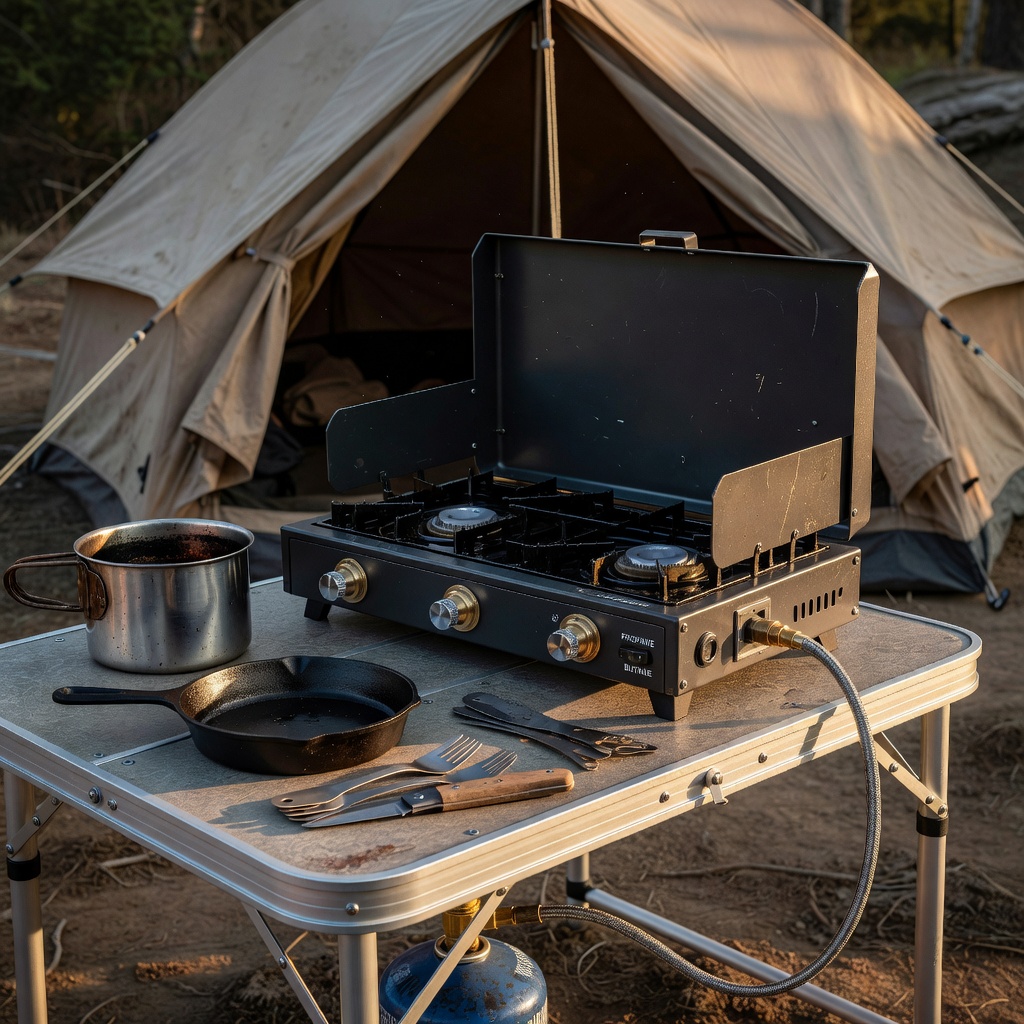
A stove that matches your fuel plan. If you're still on a one-burner that only takes one fuel type, the Gas One GS-3400P runs both propane and butane, which means you can buy whatever's in stock at the store instead of whatever matches your stove. Flexibility is a fuel-safety feature — it's how you avoid being stranded with a stove and no compatible canister.
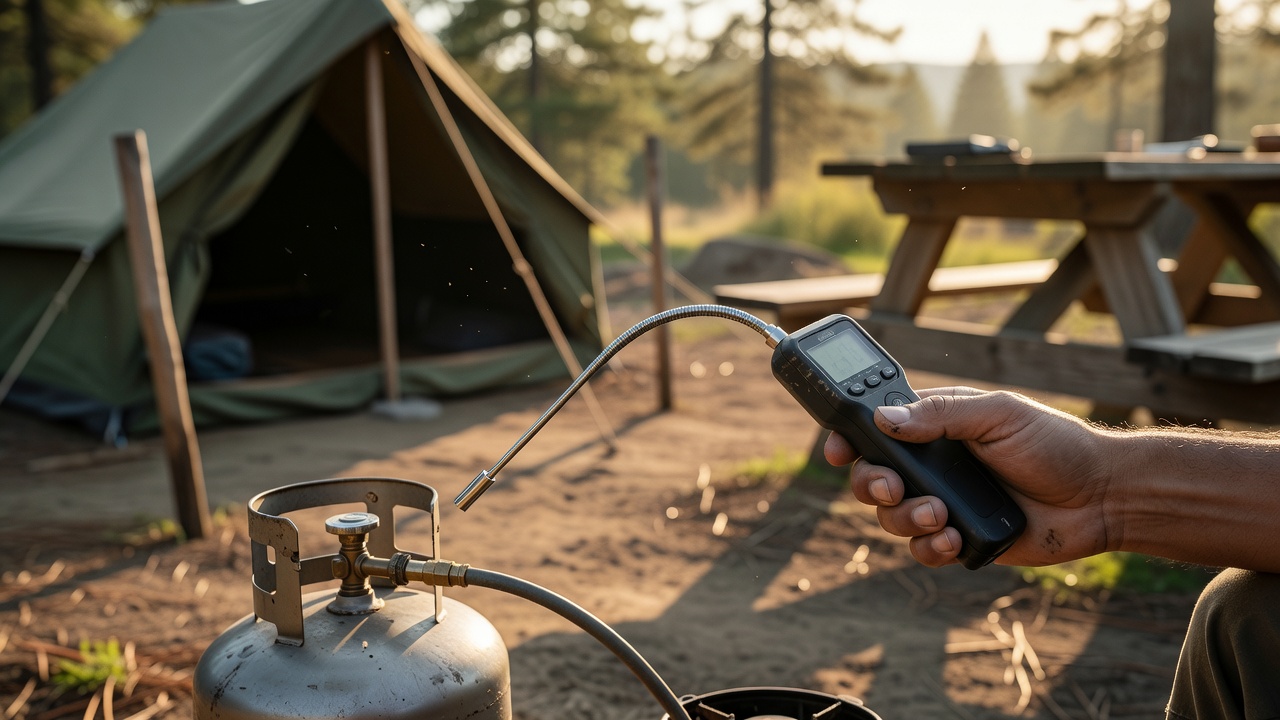
A leak detector — the instrument version of the soapy-water test. Every "leaking canister" question on this page ends the same way: vent it outdoors and call someone. The cheap way to never reach that point is to test the connection before you light anything. The TECHAMOR Y201 Pro gas leak detector ($25.99, 4.4★, 5,858 reviews) is a handheld sniffer with a 12-inch bendable gooseneck that reaches tank-to-regulator fittings and the back of a stove without you disassembling anything. Warm it up 30 seconds, dial the sensitivity until it pulses, then walk the probe along every joint — it detects propane, methane, butane, LPG and natural gas, and the audible alarm tells you which fitting is passing gas. Soap bubbles still work, but they lie on a windy day and they miss a slow seep.
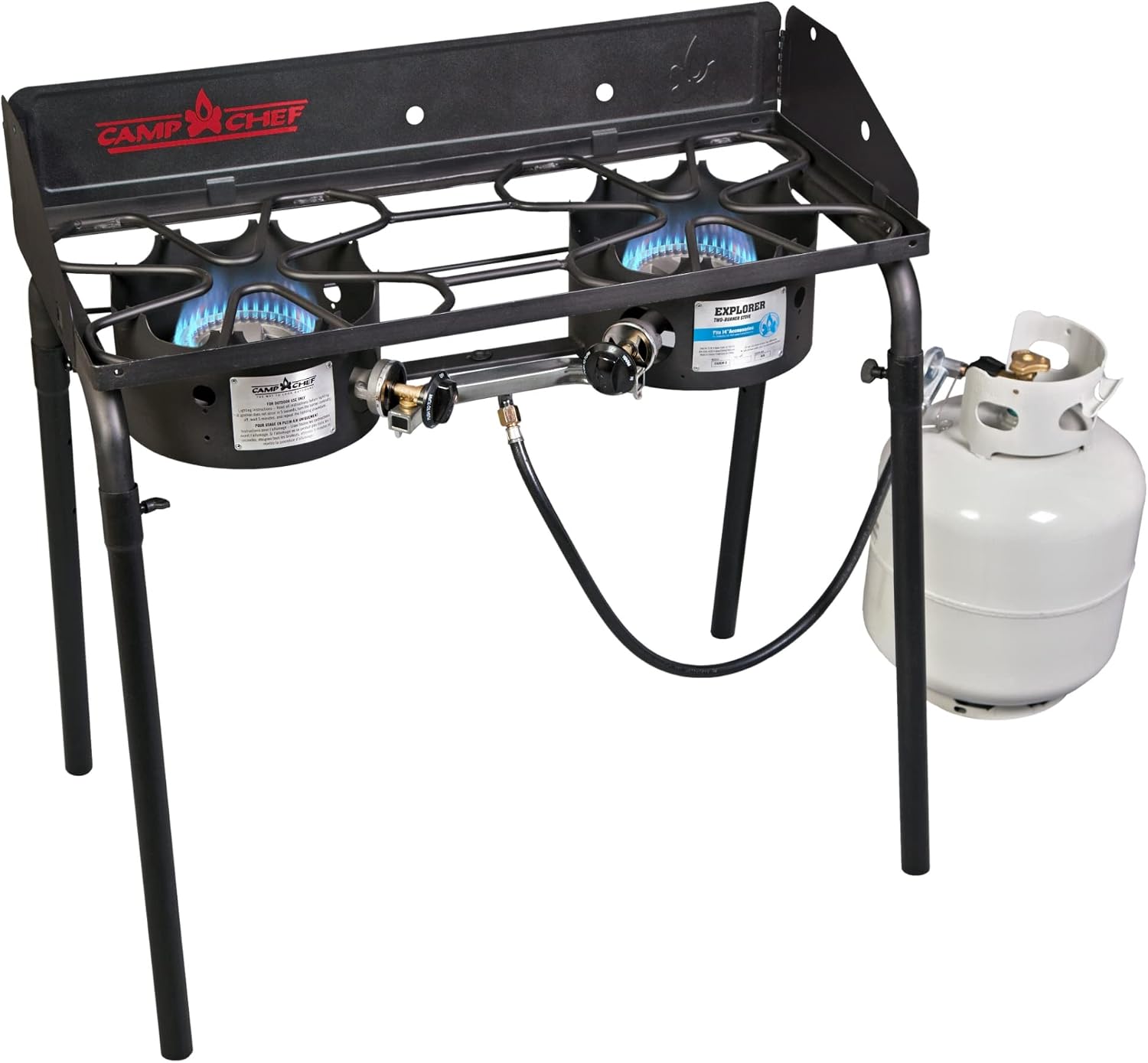
A two-burner that runs on a bulk tank. If you've taken this page's advice and moved to refilling from a 20 lb tank, the payoff is not cooking on a 1 lb bottle anymore. The Camp Chef Explorer two-burner stove ($127.99, 4.7★, 9,400 reviews) puts 60,000 BTUs across a 14 x 32-inch surface and runs straight off a standard bulk propane tank — no cylinder swapping, and enough output that breakfast for a family of five is one round instead of three.
Can You Refill Camp Stove Canisters? Refill, Fuel Transfer & What's Legal
This is the question that sends people down the worst rabbit holes on the internet — and the answer is different for each canister type, so here's the straight version.
The searches that lead here split in two, and the split matters. camping fuel canister refill and refilling camp stove canisters both ask whether a canister can be reused, and the answer sits on the label: a DOT-39 green 1 lb cylinder is non-refillable, while a DOT-rated refillable cylinder and a screw-on backpacking canister are built to be filled again. Non-refillable means what it says, and a refill of one is the illegal version of a money-saving idea.
Can you transfer fuel between camp stove canisters?
You've probably seen adapter kits and videos showing how to gravity-feed isobutane from one threaded canister into another, or from a big canister into a small one to save money. The math looks tempting: one large canister split into two small ones is cheaper than buying both.
Here's what the videos skip. Threaded backpacking canisters have valves engineered for a stove connection, not for repeated fill-and-bleed cycles. Every transfer is you, a kitchen table, and pressurized flammable liquid. And a canister that gets overfilled has nowhere for expanding liquid to go when the sun hits it — its relief valve vents, and it vents beside your hands and your food.
If you want cheaper fuel per gram, buy the larger canister size and carry that. It's the same savings with none of the ritual.
Refilling 1-pound propane cylinders
Here the answer is unambiguous, and it isn't a gray area: don't.
The green 1-pound cylinders are DOT-39 containers, which are classified as strictly non-refillable. The U.S. Department of Transportation's hazardous materials agency, PHMSA, tells the public outright to never refill DOT-39 cylinders, and the National Park Service repeats the same warning to campers. Once refilled, transporting one is treated as illegal — and the failure mode is the reason. A consumer refill can't purge the air sitting in the cylinder and can't reliably stop at the safe fill level. Overfill one, and you've built something that waits for a hot car to finish the job.
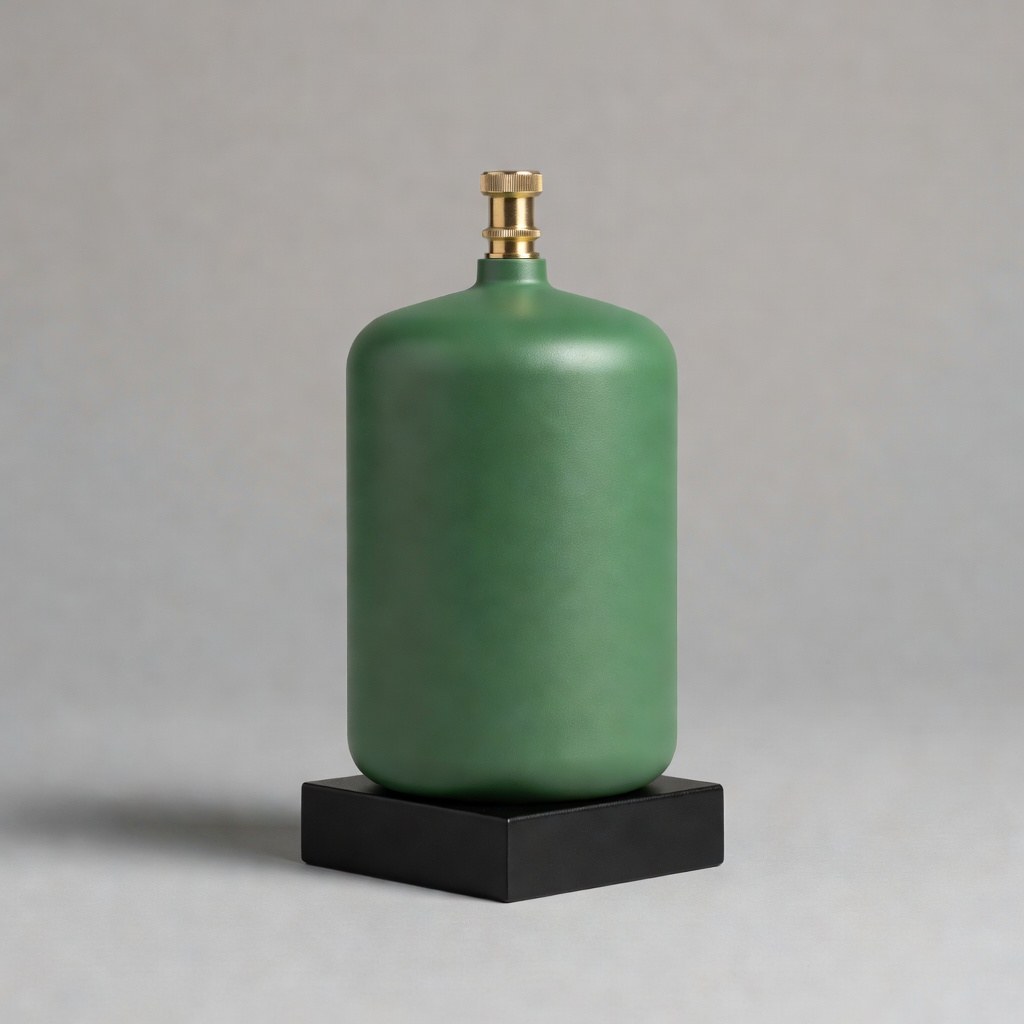
If what you actually want is refillability, buy cylinders rated for it — the Flame King-style refillable 1-pounders — and fill them from a 20-pound tank with the proper adapter. Our how to refill 1 lb propane bottles guide covers the three legitimate routes (refill adapter, DOT-rated refillable cylinder, or a converter fitting that skips small bottles entirely), including the tare-weight math and the 80% fill limit. If you just want fuel on hand, the honest answer is a fresh sealed canister: a 12-pack of Coleman 1-pound propane cylinders costs less than the adapter kit and none of it is a science experiment.
Starting a 1 lb propane setup from scratch, or replacing a green cylinder with something genuinely refillable? Our 1 lb propane tank and camp stove buyer's guide walks through which stoves run on the green cylinder, the refillable replacements that are actually DOT-rated for refilling, and the adapter that fills them from a 20 lb tank.
Refillable 1 lb Propane Tank Kits and Adapters: What to Buy, What to Skip
If "refill 1 lb propane tank" is what you searched, two things have to be true at the same time: the cylinder must be rated refillable, and the fitting has to let you fill it from a 20 lb tank. Miss either one and you have an illegal setup, not a money-saving one.
- A refillable 1 lb propane tank kit is the cylinder plus the fill fitting. The Flame King refillable 1 lb cylinder with refill kit ($59.99, 4.6★) is the DOT-rated container most campers mean when they say "refillable 1 lb propane canisters" — it is built to be filled repeatedly and has the CGA600 connection a 20 lb tank needs.
- If your 20 lb tank sits a few feet away, add hose reach. The Gas One refill adapter with a 4-ft hose ($14.99, 4.5★) is the adapter version of the same idea — it fills a refillable cylinder without you holding the tank at arm's length over a picnic table.
- A "refill 1 lb propane tank adapter" is a fitting, not a permission slip. The adapter alone does not legalize a green disposable cylinder. A brass 20 lb to 1 lb adapter ($9.98, 4.6★) is the single most misunderstood fitting in camping: it converts a 20 lb tank's connection to a 1 lb appliance thread, which is great for running a bottle-top stove or lantern off a bulk tank — and it does not make a DOT-39 disposable cylinder refillable. If the cylinder does not say refillable on it, no adapter changes that.
- "Isobutane canister refill" and "isobutane canister refill adapter" — the searches worth walking away from. Gravity-transfer adapters for threaded backpacking canisters exist, and the math looks good until you consider the hardware: those valves are engineered for a stove connection, not for repeated fill-and-bleed cycles. An overfilled canister has nowhere for expanding liquid to go when the sun hits it, so it vents through its relief valve — beside your hands. If you want cheaper fuel per gram, buy the 450 g canister instead (see the size table above), or move to a liquid-fuel stove and remove canisters from the equation.
- Small propane canister refill follows the same rule. Only refill a container rated for it, with a fitting designed for it, and stop at the tare-weight math — not at "it feels full." The safe procedure, including the 80% fill limit, is in our how to refill 1 lb propane bottles guide.
how to fill a 1 lb propane tank from a 20 lb tankis the legitimate version of that search: a DOT-rated refillable cylinder, a fill adapter that threads onto the 20 lb tank's valve, and a scale so you stop at the tare weight plus 80%. Filling a green DOT-39 disposable is the version that ends in a fine — the cylinder is not built to hold a consumer refill.
Three ways to genuinely cut canister waste
1. Change the fuel system, not the brand. A liquid-fuel stove like the MSR Whisperlite Universal runs off a refillable fuel bottle you fill yourself — no canister to dispose of, ever, and it burns white gas, kerosene, or canisters depending on what's available near where you're camping. It's the single biggest reduction in canister waste a camper can make.

2. Send your empties through a real recycling path. Fully depleted isobutane cylinders plus a canister-crushing tool plus a retailer that accepts empties is the only combination that turns a canister back into steel. Keep a fresh isobutane canister on the shelf for the trips where you need one and recycle the spent one on the way home.
3. Burn wood when the trip allows it. The BioLite CampStove 2+ covers the evenings where deadfall is plentiful — no fuel to store, carry, or dispose of at all.
The stream people forget: the lantern. If your 1 lb empties come from a propane lantern rather than a stove, the cheapest fix is to stop buying the fuel. A USB-rechargeable Goal Zero Lighthouse Micro Flash lantern ($29.95, 4.4★, 1,800+ reviews) runs 120 dimmable lumens off the same power bank your phone already uses, hangs from a tent loop on its built-in carabiner, and is IPX6-rated for wet weekends. Roughly the price of five 1 lb cylinders at the $5–$8 you pay at the register — and after that there is no lantern cylinder to dispose of at all.
How to Dispose of Camp Stove Fuel Canisters, Cylinders, and Cartridges
The word on the label changes nothing. Whether the thing in your hand is a butane cartridge, an iso-butane stove canister, or a one-pound propane bottle, the disposal path is decided by three facts: how much fuel is left, what the local household hazardous waste (HHW) rule is, and whether the cylinder is refillable. Everything below is organized by the way people actually search for it, because the correct answer is identical for all of these phrasings:
- camping fuel canister disposal — the umbrella term; treat it as "check the valve, then check the HHW rule."
- camping gas cartridge disposal — same path as a stove canister; a punctured cartridge is not automatically acceptable.
- camping gas canister recycling — recycling accepts steel, not pressurized fuel.
- camping gas bottle disposal — a "bottle" in camping gear usually means a 1 lb or 450 g canister.
- camping propane cylinder disposal — cylinders over 1 lb are almost always refillable; refill beats recycle.
- camping propane recycle — often no local route; the exchange counter is the practical answer.
- camping propane recycling — same as above, and the reason this page exists.
- camping propane tank recycle — for 20 lb tanks, do not recycle — refill or exchange.
- propane canister recycle — cans under 1 lb are usually trash-after-empty, not curbside recycling.
- propane cylinder recycle — the steel body is recyclable, the valve is why your hauler says no.
- propane tanks recycle or trash — the honest answer: 1 lb bottles usually trash when empty, 20 lb tanks never.
- how do i dispose of propane canisters — verify empty, then HHW or a metal recycler.
- how do you dispose of propane canisters — identical path whether the canister held butane or propane.
- how do you dispose of propane tanks — match the size to the route: 1 lb vs 20 lb vs 100 lb.
- how to dispose of a propane canister — the short version, size by size, is in this section.
- how to dispose of a propane tank — the long version for a 20 lb grill tank is "refill or exchange it."
- how to dispose of propane bottles — empty = trash in most counties; never put a full bottle in a bin.
- how to dispose of propane cylinders — follow the label; most carry DOT non-refillable wording.
- how to dispose of propane camping canisters — the camping-specific twist is what you do at the campsite.
- how to dispose of propane camping gas — camping gas is butane or a butane blend; same disposal rules.
- how to dispose of propane gas bottles — check for the "single use / non-refillable" line on the collar.
- how to dispose of propane gas canisters — a gas canister with pressure left is a transport problem, not a trash problem.
- how to dispose of propane gas cans — "cans" means the small screw-top bottles you see at trailheads.
- how to dispose of propane gas cylinders — cylinders are refillable; find the nearest refill counter.
- how to dispose of propane gas tanks — 20 lb and up: refill, exchange, or a licensed propane supplier.
- how to dispose of isobutane canisters — iso-butane stove cans are steel with a Lindal valve; empty ones are metal scrap.
- how to dispose of butane propane canisters — blends dispose exactly like straight propane or butane.
- how to dispose of propane camping bottles — camping propane bottles are the 1 lb green/blue class.
- how to dispose of camping propane containers — "containers" of fuel are HHW until proven empty.
- how to dispose of camp stove propane tanks — the 1 lb tank your stove screws onto, one at a time.
- how to dispose of propane fuel canisters — the fuel-canister wording used by backpacking stove makers.
- how to dispose of propane fuel cylinder — one canister, one check: does it hiss when you press the valve?
- disposal of gas canister camping — searchable phrasing, same answer as camping gas cartridge disposal.
- disposal of empty propane tank — this is the easy case and the one most counties publish rules for.
- camping stove gas canister storage — storage is the other half of disposal; cool, upright, outdoors, capped.
- portable propane tanks disposal — "portable" usually means a 1 lb or 5 lb tank; the 5 lb class is refillable.
- propane camping gas cylinder disposal — a cylinder sold for camping gas is a refill candidate, not waste.
If you take one rule from this section: an empty canister is a metal container, a partly full canister is hazardous waste, and a refillable cylinder is neither.
How to Handle Any Canister Size: 1 lb, 1 Liter, 2 lb, 14 oz, 16 oz, 20 lb, 100 lb
Sizes decide everything, because the size sets whether the cylinder is legally refillable and whether a hauler will touch it. Work down this list to the number stamped on your cylinder:
- how to dispose of 1lb propane canisters — the classic camp stove canister; refill with a certified adapter or recycle the steel.
- how to dispose of 1 lb propane canisters — the identical object written with a space.
- how to dispose of a 1lb propane tank — a single 1 lb tank: use it up, then recycle or bin per county rule.
- how to dispose of 1 lb propane cylinders — the standard Coleman/Flame King cylinder your stove threads onto.
- how to dispose of 1lb propane cylinders free — many HHW drop-off days are free to residents; call first.
- how to dispose of 1lb propane tanks — the most common search on this page, and the shortest job.
- how to properly dispose of 1lb propane tanks — "properly" means never puncturing a canister with pressure in it.
- how to dispose of 1 pound propane canisters — identical to 1 lb; the stamp reads 1LB or 16 oz.
- how to dispose of 1 pound propane tanks — same object, same route, same warning.
- how to dispose of one pound propane canisters — spelled out, still a 16 oz cylinder.
- how to dispose of 1 liter propane tanks — a metric-marked tank; the size class does not change the rule.
- how to dispose of 2 lb propane tanks — the 2 lb class is usually refillable — refill before you recycle.
- how to dispose of 14 oz propane tanks — a 14 oz cylinder is a 1 lb class bottle in metric clothing.
- how to dispose of 16 oz propane canisters — 16 oz is 1 lb; see above.
- how to dispose of 20 lb propane tanks — the standard grill tank; it is designed to be refilled forever.
- how to dispose of 20 pound propane tanks — same 20 lb tank, spelled out; never scrap a working one.
- how to dispose of 100 lb propane tank — a 100 lb cylinder is a supplier pickup or a professional requalification, not trash.
- how to dispose of a large propane tank — anything above 20 lb: call a propane supplier about recertification.
- how to dispose of large propane tanks — plural, same answer — one call to the supplier.
- how to dispose of old large propane tanks — an obsolete large tank still has scrap steel value; a supplier or scrapper will take it.
- how to dispose of a mini propane tank — mini tanks (1 lb and under) are consumables; the mini fuel bottle is the same steel.
- how to dispose of propane tanks mini — the mini class empties fastest and is the least valuable to recycle.
- how to dispose of propane tanks small — "small" and "mini" both mean disposable 1 lb class.
- how to dispose of a small propane tank — if it does not have a refill valve port, it is single-use by design.
- how to dispose of a small propane canister — canister vs tank makes no difference at this size.
- how to dispose of small propane cylinder — one cylinder, one decision tree: empty, then recycle-or-bin.
- how to dispose of small propane canisters — the honest short answer: use it up, then follow county rule.
- how to dispose of small propane bottles — bottles at this size are steel; a scrap yard may pay per pound.
- how to dispose of small portable propane tanks — portability is the point of these; disposability is still local.
- how to dispose of portable propane bottles — torch bottles and camp bottles share the mountain-valve family.
- how to dispose of portable propane tanks — anything you carry by hand is 1 lb class.
- where to dispose of 1 gallon propane tanks — a 1 gallon (about 4 lb) tank is refillable; refill it.
- where to dispose of 14 oz propane tanks — check the HHW calendar for small-cylinder amnesty days.
- where to dispose of 16 oz propane tanks — the same 1 lb channel as every other 16 oz bottle.
Empty, Full, Expired, Rusted, Leaking, or Damaged: Disposal by Canister Condition
The single most common mistake on this page's subject is treating every canister as if it were empty. Condition changes the route. Trash rules apply to empty cylinders; everything else is a hazardous-waste or refill question.
Truly empty: the bin, the scrap yard, or the HHW day
- can you throw away empty propane tanks — yes in most US counties, provided the valve is open and the tank is verifiably empty.
- can you throw away propane bottles — a bottle with no pressure left is scrap steel, not hazardous waste.
- can you throw away propane canisters — canisters under 1 lb are the class most haulers accept once empty.
- can you throw empty propane tanks in the garbage — exactly what most municipal pages say, with "verify empty" as the condition.
- empty propane canister disposal — the easy case; the hard part is proving it is empty.
- empty propane bottle disposal — same verdict, different noun.
- empty propane cylinder disposal — cylinders with a refill valve should be refilled, not binned.
- empty camping gas canister disposal — the camping-gas canister empties much faster than a 1 lb propane bottle.
- empty propane tank drop off — many transfer stations have a dedicated cage for these; call before you drive.
- empty propane tank recycling — steel recycling accepts empty cylinders at scrap yards that handle pressurized containers.
- empty propane tank recycle rust — surface rust does not disqualify an empty cylinder from metal recycling.
- what do propane tanks recycle into rust — light rust is cosmetic; a cylinder that is rusty and has pressure left is the real problem.
Expired, outdated, or simply old
- do disposable propane tanks expire — the fuel does not expire, but the DOT-39 non-refillable cylinder has a service life and should not be refilled repeatedly.
- do coleman propane bottles expire — same answer as every other 1 lb bottle; the steel body cannot be requalified.
- how to dispose of an expired propane tank — an expired DOT cylinder cannot be legally refilled, so it goes to HHW or scrap.
- how to dispose of expired propane tanks — plural, same route — and never back onto a refill rack.
- how to dispose of outdated propane tanks — "outdated" and "expired" are the same requalification date problem.
- how to dispose of an old propane tank — old and sound: refill it. Old and expired: HHW or scrap steel.
- how to dispose of old propane tanks — the most-searched phrasing for the expired-cylinder case.
- how can i dispose of old propane tanks — the same three options: refill counter, HHW event, or metal scrapper.
- how to dispose of old propane gas tanks — "gas tank" is a synonym here; the requalification date still rules.
- how to dispose of old propane bottles — a 1 lb bottle has no requalification path at all — recycle the steel.
- how to dispose of old propane cylinders — refillable cylinders get requalified rather than thrown away.
- how to dispose of old large propane tanks — large cylinders can often be requalified and sold, which beats scraping them.
- how to dispose of old propane grill tanks — a grill tank that fails requalification is a supplier pickup.
- how to dispose of old bbq propane tanks — the same tank, spelled "bbq" — one call to the propane supplier.
- how to dispose of old camping propane tanks — camping tanks are usually 1 lb bottles; treat them as consumables.
- how to dispose of old coleman propane tanks — Coleman 1 lb bottles: empty, then recycle or bin.
- how to dispose of unwanted propane tanks — "unwanted" is the judgment-free version: refill, HHW, or scrap.
- how to dispose of unused propane tanks — an unused full tank is a hazardous material, never a bin item.
- how to dispose of propane tank at home — the phrase usually means "I want this gone from my garage" — HHW event or supplier pickup.
Rusted, damaged, leaking, broken, or faulty
- how to dispose of rusted propane tanks — deep pitting on the body or a corroded valve collar means no refill, so HHW.
- how to dispose of old rusty propane tanks — age plus rust is the disqualifying combination; do not sand and reuse.
- how to dispose of a leaking propane tank — take it outside immediately, do not transport it in an enclosed vehicle, and call the supplier or fire department non-emergency line.
- how to dispose of leaking propane tank — the same instruction without the article; never put a leaking tank in a car trunk.
- propane canister leaking — a 1 lb cylinder gets the identical treatment: outside immediately, never an enclosed vehicle, then your supplier or the non-emergency fire line. A leaking canister is the one case where disposal is a phone call, not a recycling question.
- how to dispose of leaky propane tank — "leaky" and "leaking" mean the same thing: vent outdoors, then get expert pickup.
- how to dispose of a leaking propane tank — a leaking cylinder is the one case where disposal is an emergency-service question, not a recycling question.
- how to dispose of damaged propane tank — a dented or valve-damaged tank cannot be requalified and is not safe to refill.
- how to dispose of broken propane tank — a broken valve is the classic case for professional evacuation.
- how to dispose of faulty propane tank — a tank that fails a leak test goes to HHW, not to the exchange cage.
- how to dispose of bad propane tank — "bad" almost always means a leak or a failed valve; handle it as hazardous waste.
Still full, partly full, or half full — the hard case
- how to dispose of filled propane tank — a full tank is not waste; use it, exchange it, or sell it.
- how to dispose of full propane canisters — nothing about a 1 lb bottle improves with disposal — burn it off in the stove first.
- how to dispose of half full propane tank — the standard advice is to use the fuel, then dispose of the empty cylinder.
- how to dispose of partially full propane tanks — same as half full: the goal is an empty cylinder, not a dumped one.
- how to dispose of propane tank with propane in it — use it or take it to a supplier; venting raw propane is illegal in many states.
- how to dispose of propane tanks that are full — full tanks are a resale or exchange item, and most suppliers accept them.
- how to empty a propane tank for disposal — you can only do this by running the fuel through an appliance — never by opening the valve to the air.
Single-use, disposable, and non-refillable by design
- how to dispose of disposable propane tanks — DOT-39 single-use bottles: use to empty, then recycle the steel or bin per county rule.
- how to dispose of empty disposable propane tanks — the empty stage is the point at which recycling becomes possible.
- how to dispose of single use propane tanks — the label is a legal restriction on refilling, not on recycling the can.
- how to dispose of single use propane cylinders — same bottle, same steel value, same "do not refill" rule.
- how to dispose of non refillable propane tanks — the collar stamp literally says non-refillable; refilling one is both unsafe and unlawful.
The generic "empty" phrasing, in case yours is different
- how to dispose of an empty propane canister — check the valve, then apply your county's small-cylinder rule.
- how to dispose of an empty propane tank — the same question this page opened with, answered by size and county.
- how to dispose of empty propane bottles — bottles empty = metal recycling is your best environmental option.
- how to dispose of empty propane cylinders — a cylinder with no pressure has no legal reason to be refused by a scrap yard.
- how to dispose of empty propane camping canisters — the camping canister empties are the volumes your county cares about.
- how to dispose of empty 1lb propane canisters — one pound, empty, steel — the most-recyclable item in this whole page.
- how to dispose of empty propane tanks small — small and empty is the combination that makes the bin legal in most places.
- how to dispose of propane tank empty — the word order people use when they are in a hurry; same answer, same checks.
- how to dispose of propane tanks small — the small-tank class is where local rules differ most — one call settles it.
Where to Take It: Drop-Off Points, Recycling, and Refill Counters
"Where" is really three different questions hiding behind one word. Separate them before you drive anywhere: where do I take an empty small cylinder, where do I recycle the steel, and where do I get a refillable cylinder refilled. The phrasings below are grouped the same way.
The five "where do I dispose" phrasings, all one answer
- where can i dispose of propane tanks — household hazardous waste (HHW) for anything with fuel or pressure, scrap yard for truly empty cylinders.
- where can we dispose of propane tanks — the same two destinations; plural tanks usually means a scheduled HHW day or a supplier pickup.
- where can you dispose of propane tanks — if you only remember one destination, remember the county HHW facility.
- where do i dispose of propane tanks — call the county solid waste office; they publish the small-cylinder rule annually.
- where do you dispose of propane tanks — for refillable tanks the answer is "at a refill counter", not "at a disposal site".
- where to dispose of a propane tank — the article-level version of the same question, same answer.
- where to dispose propane gas tank — word-order variant; still HHW, scrap, or a refill counter.
- where to properly dispose of propane tanks — "properly" means the fuel is used up and the valve is open before transport.
- where to get rid of an empty propane tank — an empty cylinder is the easy one: metal recycler, transfer station, or bin if allowed.
Where to dispose of it, by canister size
- where to dispose of 1 lb propane cylinders — the most common small cylinder; HHW days and scrap yards both take them empty.
- where to dispose of 1 lb propane tanks — same object as above, spelled your way — one pound, one route.
- where to dispose of 1 pound propane tanks — spelled out, still 1 lb; do not drive to a refill counter expecting a refill.
- where to dispose of 1lb propane tanks — no space, same rule; check the county page before the trip.
- where to dispose of 1 gallon propane tanks — a 1 gallon tank is refillable, so "where to dispose" becomes "where to refill".
- where to dispose of 100 lb propane tank — a 100 lb cylinder goes back to a propane supplier, who can requalify or evacuate it.
- where to dispose of 14 oz propane tanks — small metric cylinders follow the same small-cylinder rule as 1 lb.
- where to dispose of 16 oz propane tanks — 16 oz is the 1 lb class; your county page will list it as "small propane cylinders".
- where to dispose of 20 lb propane tanks — nowhere — a 20 lb tank should be refilled or exchanged, not disposed of.
- where to dispose of a large propane tank — one call to a propane supplier covers requalification, pickup, and evacuation.
- where to dispose of large propane tanks — plural large tanks are a commercial pickup, not a residential drop-off.
- where to dispose of a small propane tank — the small class is where local rules differ; the county page is authoritative.
- where to dispose of propane tanks small — word-order variant of the same question, answered on the same county page.
- where to dispose of small empty propane tanks — empty plus small is the combination most transfer stations accept.
- where to dispose of empty small propane tanks — the same item, the same cage at the transfer station.
Where to dispose of it, by condition
- where to dispose of an empty propane tank — transfer station or scrap yard, with the valve open.
- where to dispose of empty propane tanks — plural phrasing, same destination; some counties run a spring amnesty day.
- where to dispose of empty 1 lb propane tanks — the small-cylinder channel, usually a metal cage at the facility.
- where to dispose of empty 1lb propane tanks — same as above without the space; ask for the "small cylinder" bin.
- where to dispose of empty propane cylinders — if the cylinder is refillable, the refill counter is a better answer than the dump.
- where to dispose of empty propane containers — the neutral noun; the rule keys on size and valve, not wording.
- where to dispose of empty camping propane tanks — camping tanks are consumables; use them to empty on the last trip of the season.
- where to dispose of empty mini propane tanks — mini cylinders empty fast and are the cheapest class to recycle as steel.
- where to dispose of empty coleman propane tanks — Coleman 1 lb bottles: HHW day, scrap yard, or your county's small-cylinder rule.
- where to dispose of expired propane tanks — an expired DOT cylinder cannot be refilled, so HHW or a scrap dealer.
- where to dispose of outdated propane tanks — "outdated" means past the requalification date — the same HHW/scrap path.
- where to dispose of leaking propane tank — do not transport it yourself; call the non-emergency fire line or the supplier for pickup.
- where to dispose of rusted propane tanks — heavy rust means no requalification; a scrap yard takes the steel once it is empty.
- where to dispose of unused propane tanks — an unused tank still holds fuel, so it is hazardous waste, not household trash.
- where to dispose of unwanted propane tanks — refill counter, exchange cage, HHW event, or a buyer on a classifieds site.
- where to dispose of an old propane tank — try requalification first; old but sound tanks are still valuable.
- where to dispose of old propane gas tanks — the supplier who filled it last is usually the fastest route to a decision.
- where to dispose of old empty propane tanks — empty and old is scrap steel; call the yard about pressurized-container policy.
- where to dispose of old small propane tanks — small and old means recycle the steel; there is no requalification path.
- where to dispose of old mini propane tanks — mini and old is the bin-or-scrap decision again, county by county.
- where to dispose of old bbq propane tanks — a bbq tank is a 20 lb exchange tank; swap it at any exchange cage.
- where to dispose of old camping propane tanks — the camping class is disposable steel; use it up and recycle it.
- where to dispose of old coleman propane tanks — Coleman bottles are stamped non-refillable; HHW or scrap.
- where to dispose of old grill propane tanks — exchange or refill; an exchange cage takes tanks that fail inspection.
- where to dispose of a full propane tank — a full tank is a product, not waste — use it, exchange it, or sell it.
- where to dispose of full propane tanks — plural full tanks are a genuine logistics problem; call a supplier for pickup.
- where to dispose of mini propane tanks — mini cylinders, empty: the small-cylinder rule plus a scrap yard.
- where to dispose of little propane tanks — "little" is the colloquial 1 lb class, and it disposes like every other 1 lb bottle.
- where to dispose of little green propane tanks — the green 1 lb bottle: empty it, then recycle the steel.
- where to dispose of portable propane tanks — portable tanks under 5 lb follow the small-cylinder rule.
- where to dispose of propane gas canisters — canisters with a Lindal valve are the backpacking class; empty ones are steel.
- where to dispose of propane gas tanks — tanks with a refill port go to a refill counter, not a disposal site.
- where to dispose of disposable propane cylinders — single-use cylinders are recyclable steel once they are truly empty.
- where to dispose of disposable propane tanks — the same single-use class, the same recycle-when-empty rule.
- where to dispose of single use propane tanks — the label restricts refilling, not the recycling of the empty can.
- where to dispose of small camping propane tanks — camping propane tanks are small, disposable, and recyclable as steel.
- where to dispose of small coleman propane tanks — the Coleman-brand version of the small camping tank question.
- where to dispose of small green propane tanks — green bottles are 1 lb propane — the county's small-cylinder rule applies.
- where to dispose of bbq propane tank — take it to the store where you bought the exchange — that cage takes it back.
- where to dispose of camp stove propane tanks — the tanks that screw onto your stove — small class, county rule.
- where to dispose of camping propane tanks — the highest-volume item in this whole question — plan the empty before the trip.
- where to dispose of coleman propane tanks — brand does not change the route; size and valve state do.
- where to dispose of grill propane tanks — grill tanks are refillable and should be exchanged or refilled.
- where to dispose of bernzomatic propane tanks — torch cylinders are single-use in most cases; check the collar wording first.
- where to dispose of blue propane tanks — the blue 1 lb bottle is propane — same small-cylinder route as the green one.
- where to dispose of green propane bottles — the classic 1 lb green bottle, empty and recycable as steel.
- where to dispose of green propane tanks — same tank, "tank" noun — the county rule is written for this exact object.
Where to recycle, and where to recycle for money
- how to recycle camping propane tanks — empty the tank, then take the steel to a yard that accepts pressurized containers.
- how to recycle old propane tanks — a yard that handles DOT cylinders will take them once the valve is open and the tank is empty.
- how to recycle propane cylinders — the steel body is high-value scrap; the valve is why some yards refuse.
- how to recycle propane tanks small — small cylinders go into the mixed-metal pile after the valve is relieved.
- how to recycle isobutane canister — iso-butane stove canisters are steel with a small valve — a metal recycler takes them empty.
- can you recycle green propane tanks — yes — as steel, once empty — never in curbside single-stream bins.
- where to recycle bbq propane tanks — a scrap yard or the exchange cage; bbq tanks are refillable, so recycling is a last resort.
- where to recycle disposable propane tanks — metal recyclers, and sometimes a dedicated cage at the transfer station.
- where to recycle green propane tanks — the 1 lb green bottle is among the most commonly recycled small cylinders.
- where to recycle large propane tanks — large cylinders are worth enough as scrap that a yard will often collect them.
- where to recycle little propane tanks — "little" tanks are the volume play; scrapyards pay per pound, not per cylinder.
- where to recycle propane camping tanks — camping tanks are steel, so the recycler's rule is the same as any other canister.
- where to recycle propane tanks small — the same small-cylinder route as everything else in this section.
- where to recycle propane tanks for money — scrap yards pay by weight for depressureized steel; a 1 lb bottle is worth cents, a 20 lb tank real money.
Small, Mini, Little, Green, and Blue: The Consumable Bottle Family
Every one of these words describes the same object: a 1 lb (16 oz) disposable propane bottle, or a 100–450 g backpacking canister. The color is a brand choice, the adjective is a habit, and the disposal path never changes.
- how to dispose of little propane bottles — the small disposable class; empty it, then steel recycling or the county rule.
- how to dispose of little propane tanks — "little" = 1 lb; no requalification, no refill without a certified adapter.
- how to dispose of little coleman propane tanks — the Coleman-brand 1 lb bottle, same steel, same empty-first rule.
- how to dispose of little green propane tanks — the classic green 1 lb bottle — the object most county pages are written about.
- how to dispose of mini propane bottles — mini and little are the same size class; do not puncture a bottle that still has pressure.
- how to dispose of mini propane canisters — the canister version — check the valve, then follow the small-cylinder rule.
- how to dispose of small propane canisters — the umbrella phrasing for the whole consumable family.
- how to dispose of small propane bottles — bottles at this size are single-use steel; recycling beats landfilling.
- how to dispose of small propane gas canisters — "gas canister" is the same object after it has been used.
- how to dispose of small propane gas tanks — "gas tank" wording still means a 1 lb bottle at this size.
- how to dispose of small propane camping tanks — camping small tanks are the volume item in most household collections.
- how to dispose of small propane tanks for camping — the camp-specific phrasing; same answer as every other 1 lb bottle.
- how to dispose of small propane tanks for grills — a small grill tank is a tabletop grill bottle — same small class.
- how to dispose of small portable propane tanks — portable = carried by hand = 1 lb class = county small-cylinder rule.
- how to dispose of small empty propane canisters — empty plus small is the case where a bin really may be legal.
- how to dispose of small camping propane canisters — camping canisters empty out on the last trip; plan the drop-off in advance.
- how to dispose of small coleman propane canisters — the Coleman canister — non-refillable by stamp, recyclable as steel.
- how to dispose of small bernzomatic propane tanks — torch bottles are single-use; do not refill them at home.
- how to dispose of small blue propane tanks — the blue 1 lb bottle is propane — the color is branding, not a disposal class.
- how to dispose of small green propane canisters — the green canister is the same 1 lb bottle in a different sleeve.
- how to dispose of small weber propane tanks — Weber's small bottles are propane; recycle them empty like any other.
- how to dispose of the small propane tanks — the definite-article version of the same question — same route.
- how to dispose of the green propane tanks — if yours are the green 1 lb bottles, the count matters more than the color.
- how to dispose of green propane tanks — the single most recognized form of this question — empty, then steel recycling.
- how to dispose of green propane canisters — the canister noun for the same green bottle — same answer.
- how to dispose of blue propane tanks — blue and green bottles are both 1 lb propane; neither goes in curbside recycling.
- how to dispose of handheld propane tank — a handheld torch or camp tank is 1 lb class; the valve state decides the route.
- how to dispose of all purpose propane tanks — "all purpose" is a marketing phrase, not a disposal category.
Brand Notes: Coleman, Bernzomatic, Weber, and the Exchange Cages
Brands matter less than people expect, with one real exception: exchange-cage brands (Blue Rhino, AmeriGas and similar) accept their own tanks back and are the easiest route out of a 20 lb tank you no longer want.
- how to dispose of coleman propane bottles — Coleman's 1 lb bottles are stamped single-use; recycle the steel, or return them to a Coleman refill/exchange program.
- how to dispose of coleman propane canisters — the same bottle by another noun — non-refillable, recyclable, and small.
- how to dispose of a coleman propane canister — a single Coleman canister: use it to empty, then recycle or bin per county rule.
- how to dispose of empty coleman propane canisters — empty Coleman canisters are the most recyclable thing in your gear bin.
- how to dispose of coleman propane tanks — colloquial, but people mean the 1 lb bottle; for a large Coleman tank, use a supplier.
- are coleman propane canisters recyclable — yes, as steel, once empty: a spent Coleman canister is recovered metal at a yard that accepts pressure cylinders, or a take-back at a retailer that collects empties.
- can you recycle coleman propane canisters — the same answer with the question turned around: not curbside, not landfill either. Empty it, keep the valve intact, and route it to the exchange cage or HHW.
- coleman propane tank empty — good — an empty Coleman tank is the precondition for every recycling route below.
- coleman propane tank recycle — the steel is recyclable; the valve is why your curbside hauler says no.
- coleman propane tank stove — the appliance does not change the cylinder's disposal class — only its size and valve do.
- how to dispose of bernzomatic propane cylinders — Bernzomatic torch cylinders are single-use; do not vent or puncture them.
- how to dispose of bernzomatic propane tanks — the same cylinder: empty it through the torch, then metal-recycle.
- how to dispose of empty bernzomatic propane tanks — empty torch cylinders are steel scrap — a yard or HHW day takes them.
- how to dispose of small bernzomatic propane tanks — small torch bottles are the same single-use class as camp bottles.
- how to dispose of small weber propane tanks — Weber tabletop bottles are 1 lb propane — recycle when empty.
- where to recycle propane tanks for money — exchange-cage brands accept their own tanks for free, which beats the scrap value.
Refill vs Disposal: When the Right Answer Is a Refill Counter Instead
Some of these searches are really refill questions wearing a disposal costume. If the cylinder has a refill valve, disposal is the wrong frame entirely.
- can you refill small propane canisters — only with a certified adapter and only on cylinders rated for it; most 1 lb bottles are not.
- how to refill disposable propane bottles — the honest answer: manufacturers say no, and several states restrict it — a refill is not a right, it is a risk decision.
- disposable propane refill — the practice exists, but the wording on the collar — "single use, non-refillable" — has legal weight.
- coleman propane bottle refill — possible with a bulk-tank adapter on some bottles; the safe replacement is a refillable cylinder.
- propane tank refill how much — a 20 lb refill typically costs a fraction of a new tank and far less per gallon than 1 lb bottles.
- where to take propane tank to refill — most U-Haul locations, Tractor Supply stores, hardware chains, and standalone propane suppliers.
Camping, BBQ, and Grill Canisters: Where the Volume Actually Comes From
Most households do not have a propane problem until they have three or four of them. Camping and grilling are the two activities that generate small cylinders faster than anything else, so this is the section that covers the phrasings those households actually type.
- how to dispose of a camping propane tank — the camping class is a 1 lb or 450 g cylinder; empty it, then follow the small-cylinder rule.
- how to dispose of camping propane bottles — camping bottles are the same 1 lb class as a torch bottle, just sold with a stove.
- how to dispose of camping propane cylinders — the "cylinder" wording does not change the route — size and valve state do.
- how to dispose of propane tanks camping — word-order variant; the answer is the county small-cylinder rule plus a scrap yard.
- how to dispose of propane tanks for camping — the "for camping" phrasing means someone has a season's worth to clear out.
- how to dispose of bbq propane tank — a bbq tank is a 20 lb refillable — exchange or refill it, do not bin it.
- how to dispose of propane tanks for grills — the grill phrasing is the refillable class; disposal is the wrong frame.
- how to dispose of propane grill tanks — grill tanks get requalified, exchanged, or refilled — never landfilled.
- bbq propane tank recycling — the exchange cage at the store where you bought it is the fastest "recycling" route.
- how to get rid of propane camping tanks — same three doors: refill counter, HHW day, or metal recycler.
- what to do with old camping propane tanks — use the fuel, then recycle the steel; camping tanks have no requalification path.
- camping stove gas canister disposal — the stove does not matter; the canister's valve and emptiness do.
- where to dispose of one pound propane tanks — one pound, spelled out: the small-cylinder channel, county by county.
Two more streams: heat, and the fire itself. Camping and grilling get the blame, but the biggest 1 lb cylinder consumers in cold-weather camping are heaters. A Mr. Heater Buddy ($74.00, 4.7★, 25,000+ reviews) runs on a 1 lb cylinder or on a 20 lb tank with the optional hose, puts out 4,000 or 9,000 BTU, and carries the oxygen-depletion and tip-over shutoffs that make it the portable heater people actually run inside a tent. Two small parts decide whether that heater keeps making empties: the $17.99 Buddy hose assembly converts it to a bulk-tank appliance — the hose pays for itself in one or two trips against $6 cylinders — and the $15.97 fuel filter screws inline between hose and heater, which is what Mr. Heater specifies for any hose setup (it is not used on the Little Buddy, which runs on 1 lb cylinders only). The filter earns its keep on refilled and bulk cylinders, where the oil residue they carry is what eventually clogs the orifice and leaves you with a heater that will not light.
Fire pits are the second stream, and the cleanest one. A propane fire pit ($142.64, 4.8★) runs off a 20 lb tank through the hose and regulator it ships with, so it adds no small cylinders at all — and because it burns propane rather than wood, it is welcome in the burn-ban areas that close wood fires. If what you want is the family campfire without the ash pile, the smoke, or a disposal question, that is the trade.
If your own volume comes from a two-burner instead of a bottle-top, the same converter logic applies. The Coleman Triton+ ($149.99, 4.7★) puts 22,000 BTU through two burners, which is a lot of fuel to ask of a 1 lb cylinder on a weekend — run it off a bulk tank with the adapter in the table above and the empties stop accumulating in the first place.
The grill is the appliance that makes the empties — so buy one that can drink from a bulk tank. Five of the phrasings above belong to people with a grill and a growing stack of green cylinders, and the honest fix is not a better disposal route but a grill that runs off the 20 lb tank you already refill. The Coleman RoadTrip 225 tabletop propane grill ($199.99, 4.5★, 1,079+ reviews) puts two independently controlled burners and matchless ignition on a picnic-table footprint, with swap-top grates that accept a griddle or a stove plate — but its one real habit is fuel: a single 1 lb cylinder buys only about an hour of full-burn cooking, which is exactly why the grill is the appliance that fills the bin fastest. Run it on the adapter and hose from the table above and that stream stops at the source. If storage is the constraint rather than burner count, the Coleman Tabletop 2-in-1 grill/stove ($166.01, 4.4★, 2,982+ reviews) folds nearly flat and runs on either a 1 lb cylinder or a 20 lb tank through a standard adapter — grill grate on one side, a standard burner on the other, so breakfast and the coffee pot share one appliance instead of two.
The 5-Minute Procedure: Doing It Properly and Safely
The searches below all mean "tell me the correct sequence". Here it is, in order, for any cylinder under 20 lb that you believe is empty.
- Confirm it is actually empty. Take it outside, away from anything that can ignite, and press the appliance valve or burner valve until nothing hisses. Never test for emptiness indoors.
- Keep the valve open for transport. A cylinder that cannot build pressure is a cylinder a hauler can legally accept.
- Do not puncture, crush, or drill it yourself. A canister that still holds fuel becomes a projectile; several states treat deliberate venting as an illegal release.
- Match the destination to the size and state — empty small cylinder: bin or steel recycling where allowed; refillable: refill counter; anything with fuel or a leak: HHW or a supplier.
- Call ahead once with the size and the fuel. That single call settles flaring, capping rules, and whether they accept propane at all.
- how to dispose of propane tanks properly — the sequence above, in that order, every time.
- how to safely dispose of propane tanks — safety means outdoors, valve open, no puncture, and no transport of a leaking cylinder in a closed vehicle.
- how to properly dispose of propane bottles — "properly" for a 1 lb bottle means empty first, then confirm the county rule.
- how to properly dispose of propane canisters — the canister version of the same sequence — with the added check for a Lindal valve.
- how to get rid of empty propane canisters — an empty canister is the easy case: metal recycling first, landfill last.
- what to do with empty propane canister — one canister, empty: recycle the steel, or follow the posted county rule.
- what to do with empty propane tanks — plural: gather them, take one trip, and use a single call to confirm the facility's rules.
- empty 1 lb propane tank disposal — the single most common object on this page, and the simplest to dispose of correctly.
- empty 1lb propane tank disposal — same object, no space in the name, same answer.
Refill, Recycle, or Dispose? The 1 lb Propane Decision Table
Most readers arrive here holding one small green bottle and typing one of a dozen searches — and until now the answers were spread across four articles in this cluster. Here is the whole decision at a glance: the fitting, the weight and the price for each version of the question.
| What you typed | What you are actually asking | The answer, with numbers |
|---|---|---|
1lb propane tank refill / 1 lb propane tank refill | Can I refill the green bottle instead of binning it? | A 1 lb cylinder holds 16.4 oz. A new bottle costs $5–$8 for that propane; a refill from a $15 adapter costs about a dollar of propane. On a store-bought DOT-39 throwaway the fill sits in a regulatory grey area (49 CFR 173.306 frames it as single-trip) — on a rated cylinder it is unambiguously legal: how to refill 1 lb propane bottles safely. |
1lb propane tank refill adapter / 1 lb propane tank refill adapter / propane tank refill adapter | Which brass fitting do I actually need? | QCC1/Type 1 on the big-tank end, CGA600 on the 1 lb end. $10–$15 for the solid brass block, about $15 for the 4-ft hose version — hand-tighten only, never with a wrench. |
propane tank refill adapter hose | Why pay more for the hose? | Because the hose is what lets the small bottle sit on a kitchen scale while it fills — the difference between "roughly full" and correctly full, and the version worth buying first. |
1 lb propane tank refill weight | How full is full? | The tare weight is stamped on the collar (1.4–1.6 lb on most bottles). Target tare + 0.8 lb, not tare + 1 lb — that 20% headspace is the entire safety margin, and overfilling is the failure that does not announce itself until a hot car. |
1 lb propane tank refill kit / 1 lb propane tank refill valve | What does the legitimate version cost? | A DOT-rated refillable 1 lb cylinder with its refill valve and kit runs about $60 one time, and it retires the disposable habit instead of feeding it. Same CGA600 thread as the throwaway, so the stove does not know the difference. |
1lb propane tank to 20lb adapter / 20 lb propane tank adapter to 1 lb / 20lb propane adapter to 1lb / 1lb propane tank adapter | Can my bottle-top stove just run off the big tank? | Yes — and this is the option that skips refilling altogether. A converter fitting under $10 turns a 1 lb appliance into a 20 lb one; the big tank holds roughly 20× the fuel and costs $15–$25 to refill. It pays for itself in under three bottles: 1 lb vs 20 lb, the cost per trip. |
1lb propane tank regulator | Do I need a regulator to refill? | No. Refill adapters carry no regulator, because they feed no appliance — a regulator belongs on the appliance side of a hose (griddles, some RV stoves). That chain, tank to burner, is walked through in the propane hose, regulator and tank adapter guide. |
1lb propane tank disposal | The bottle is empty — now what? | Verified empty first: no hiss, no flame, noticeably light. Then household hazardous waste or metal scrap at a county facility, not curbside — sorters cannot tell an empty cylinder from a live one, and one pressurized bottle in a compactor ruins everyone's morning. |
camp stove gas canister / backpacking stove fuel canister | Is "gas canister" the same object? | Two different families. A backpacking fuel canister is the threaded EN 417 type (100 g to 450 g) and its recycle route is the crushing tool; a 1 lb propane bottle is the CGA600 class and its route is the exchange cage or an HHW day. The word you type decides which half of this page applies. |
Weighing a refill against a fresh canister? The propane calculator turns your canister size and burner rating into hours and cost per trip.
Camp Stove Fuel Canister FAQ
Can you recycle empty camping fuel canisters?
Empty, fully-depleted isobutane canisters can be recycled where a program exists (many REI stores and some municipal programs accept them). Butane canisters are typically disposed of whole in the trash, and 1-pound propane cylinders should go to hazardous waste or a propane exchange. Check local rules — they vary by state and county.
Should I puncture empty fuel canisters before throwing them away?
Only with a purpose-built canister-crushing tool, on a canister verified empty, for isobutane types designed for it. Do not puncture butane canisters with household tools.
Can I refill disposable fuel canisters?
Refilling disposable canisters is unsafe and not recommended — the valves aren't designed for repeated use. For propane, buy refillable 1-pound cylinders or a 20-pound tank instead. For backpacking fuel, use fresh canisters and recycle the empties.
Are empty fuel canisters hazardous waste?
An empty, fully-depleted canister is generally not classified as hazardous waste — but a partially-full canister is, because the remaining pressurized flammable gas is what makes disposal dangerous. That's why the rule is: use the fuel completely first, then dispose. If you're unsure whether a canister is empty, treat it as hazardous waste and take it to an HHW drop-off rather than the trash.
Is it safe to fly with camping fuel canisters?
No. Fuel canisters are prohibited in both carry-on and checked luggage on commercial flights. Ship fuel ahead to your destination or buy it locally.
How do I know when a canister is truly empty?
No flame when the valve is fully open, no hiss, and it feels noticeably lighter than a full one. When in doubt, assume it still has fuel and treat it accordingly. If you're also wondering how many meals that canister was actually good for before it ran dry — and how to avoid running out mid-trip — our how long a camp fuel canister lasts guide breaks down burn times by canister size, stove type, and season.
Can you transfer fuel between camp stove canisters?
Adapters exist for gravity-transferring isobutane between threaded canisters, but those valves are designed for a stove connection, not repeated fill cycles. An overfilled canister has nowhere for expanding liquid to go in the heat, so it vents through its relief valve. Buy the next size up instead of splitting smaller canisters.
Is it legal to refill 1 lb propane cylinders?
No. The green 1-pound cylinders are DOT-39 containers, which are classified as strictly non-refillable. PHMSA and the National Park Service both tell the public never to refill them, and transporting a refilled one is treated as illegal. Buy cylinders rated refillable, or buy fresh sealed ones.
Where can I recycle camp stove canisters near me?
Start with your county's household hazardous waste program, not a state website — solid waste is almost always run at the county level. A second option is a local scrap-metal yard or county transfer station, which will often take fully depleted steel canisters even when curbside recycling refuses them; ask using the words "empty steel canister as scrap metal." Outdoor retailers help in some areas (several REI stores collect empties), and a venting tool like the Jetboil CrunchIt! makes a canister acceptable to a standard metal recycler. Recycling locator directories are worth a ZIP-code search, though their fuel-cylinder coverage is patchy.
Should empty propane cylinders go in the trash?
Sometimes, but it's shrinking — and it depends entirely on where you live. Many places still allow a fully depleted 1-pound cylinder in regular trash, while a growing number of counties and states require household hazardous waste collection or a retailer return instead. A cylinder with any fuel left is never trash. The safe test is the same as for backpacking canisters: no hiss, no flame, noticeably light. When you are unsure, treat it as HHW — the downside of one extra trip to a collection site is nothing next to a pressurized cylinder in a garbage truck.
How do I throw away a 1 lb propane tank?
Empty it completely first — no hiss, no flame, noticeably light. Then pick a route by what your county allows: a household hazardous waste drop-off or collection event, an empty-tank exchange counter at a hardware or propane retailer, or (in some counties) regular trash for a fully depleted cylinder. What you cannot do almost anywhere is put it in curbside recycling, because sorting facilities cannot verify whether a cylinder still holds fuel.
Are propane tanks recyclable at Home Depot or Lowe's?
Yes, through the tank-exchange program rather than a recycling bin. You hand an empty tank to the exchange counter and take a full one in its place; the operator inspects it, requalifies and refurbishes the good ones, and recycles the steel on tanks that fail inspection. That is why an old or rusty tank is still worth taking to the exchange instead of leaving it in the garage.
Can I recycle butane canisters?
Usually not as recyclable metal, because butane cartridges are designed to be disposed of whole rather than vented. Empty them fully and put them out per your local rule (trash in many places, household hazardous waste in a growing number). Isobutane canisters are the type that can be safely vented with a purpose-built tool — like the Jetboil CrunchIt! — and then recycled as steel.
How do I dispose of propane cylinders near me?
Start with your county's household hazardous waste program rather than a state or national directory, because solid waste is administered locally. Search it three ways with your county name — propane cylinder recycling near me, propane canister recycling near me, and propane bottle recycling near me — since local pages use all three words. A scrap metal yard or county transfer station will often take a fully vented cylinder if you ask for "empty propane cylinder as scrap metal," and a 20 lb tank can go to any exchange counter. If you can still hear fuel in it, it is hazardous waste, not a recycling question.
Do I need a propane canister recycling tool?
Not for disposal — a tool is what makes a canister acceptable to someone else's process. The Jetboil CrunchIt flattens backpacking canisters so a metal recycler will accept the steel, and yards handling larger cylinders often want the valve removed with a purpose-built valve-removal tool before they will take a tank as plain metal. No tool makes a curbside program accept a pressurized cylinder, and none of them make it safe to puncture a butane cartridge or a green 1 lb propane cylinder that might still hold fuel. Use the tools only on canisters you have verified are empty.
What size camp stove fuel canister should I buy?
For threaded backpacking stoves, the 450 g canister has the best fuel-per-gram and suits two to four people; 110 g is the solo-trip size. For butane stoves, the format is fixed at the 8 oz click-in cartridge and the size question disappears — buy the 12-pack if it is your everyday stove. For 1 lb propane, 16.4 oz is the only camping size, and it powers bottle-top stoves, lanterns and torch heads. The full reference table with net weights and meal estimates is above.
How much propane can I store at home?
Keep cylinders outdoors or in a ventilated space, upright with the valve capped, under about 120°F, out of direct sun, out of sleeping areas, and away from pilot lights and furnaces. Propane is heavier than air, so a leaking valve in a sealed room pools gas at floor level. How many tanks you may legally keep — especially 20 lb tanks in a garage, shed or basement — is set by local fire code, so confirm with your fire department if you stock more than a couple.
Can I put a small propane canister in the trash?
Sometimes, and it depends entirely on where you live. Many counties still allow a fully depleted 1 lb propane cylinder in regular trash; a growing number require household hazardous waste collection or a retailer return instead. The test is the same everywhere: no hiss, no flame, noticeably light in your hand. A cylinder with any fuel left is never trash, and no size of propane cylinder belongs in curbside recycling — sorting facilities cannot verify whether it is empty.
Should empty 1 lb propane bottles go in the trash or the recycling bin?
Neither is automatic, which is why this question has no universal answer. A 1 lb bottle is high-grade steel, so a scrap yard or a metal recycler will take it once it is verified empty and the valve is open. Most curbside recycling programs refuse pressurized cylinders regardless of how empty they are, because the valve is a hazard in a sorting facility. In practice: empty and undamaged, a 1 lb bottle goes to metal recycling or, where the county explicitly allows it, into household trash. Call your county solid waste office once, ask about "small propane cylinders," and you will have the definitive local answer for years.
How do I get rid of a 20 lb propane tank that still has fuel in it?
A 20 lb tank with fuel in it is not waste — it is a product. Take it to any exchange cage (the store where you bought the swap) and hand it in, or take it to a refill counter and top it off. If the tank has failed inspection or has a damaged valve, most exchange programs will still accept it and route it for requalification or evacuation, which is why the exchange cage is the single easiest disposal route for a big tank. Only if the tank is genuinely obsolete does it become a supplier pickup. Never vent a 20 lb tank to the atmosphere yourself: releasing propane is regulated in many states and is dangerous near any ignition source.
What do I do with a rusted or expired propane cylinder?
Two separate problems hide here. Rust is cosmetic on the outside of the body and disqualifying at the valve collar or in the weld seams. An expiry date means the cylinder has passed its requalification window — a DOT cylinder must be requalified or, on refillable cylinders, retired. Do not sand, repaint, or "test" a rusted tank yourself and put it back on a refill rack; a cylinder that fails a visual inspection cannot legally be refilled. For a small disposable bottle, rust simply means recycle it as steel. For anything bigger, a propane supplier can advise on requalification, and the county HHW facility handles the rest.
Do I have to remove the valve or puncture an empty canister before disposing of it?
No — and you should not. Puncturing a camp stove fuel canister is a widespread piece of folklore, and it is dangerous: a canister that still holds any fuel can vent liquid propane at you, and every puncture tool on the market assumes a canister you have already proven empty. Removing the valve on a refillable cylinder also destroys the seal that makes it legally refillable, turning a valuable cylinder into scrap. What you should do instead is leave the appliance valve open after the canister is spent, cap the threaded port if a cap came with it, and dispose of the cylinder through a route that accepts it as-is.
Where can I take camping propane cylinders if my county has no household hazardous waste day?
Three fallbacks cover almost every county in the United States. First, a scrap yard or metal recycler — the steel body is genuinely valuable once the cylinder is empty, though some yards refuse anything with a valve, so ask first. Second, a propane supplier or an exchange cage — they handle cylinders professionally and often take back obsolete ones. Third, a retailer that runs a seasonal cylinder take-back program, which several hardware chains operate in the spring. If all three say no, a paid hazardous-waste collection service is the last resort, and it is still cheaper than an illegal dump.
Is it legal to refill a disposable 1 lb propane bottle?
In most US states, the answer is that the manufacturers say no and several jurisdictions restrict the practice, while others are silent. The physical reality is what should decide it for you: a DOT-39 single-use bottle is not built with a valve rated for repeated filling, the steel is thin enough that a refilled bottle can be over-pressurized on a hot day, and a failure happens next to a stove you are cooking on. A bulk-tank adapter that snaps onto a 20 lb tank will move gas into a 1 lb bottle, but the resulting bottle carries no refill warranty and no requalification path. If you want to refill, buy a cylinder rated for it.
How should I store camp stove fuel canisters between trips?
Store them upright, in a cool, ventilated place away from the house — a garage or shed shelf, not a living space or a hot car. Keep them below roughly 120°F, away from direct sun and from any appliance pilot light or water heater, and keep the threaded cap on so the valve cannot be bumped. Never store propane or iso-butane in a basement, a closed vehicle, or anywhere gas can pool at floor level, because propane is heavier than air and accumulates low. In an apartment, keep only the smallest practical quantity and check your lease, since many buildings restrict cylinders above 1 lb.
Dispose Right, Camp Happy
Fuel canisters are the quiet workhorse of the camp kitchen: boring, reliable, and easy to ignore — until one leaks, or you're standing at a dumpster wondering if you're about to do something dumb. The whole system gets easier once you know the rules: keep them cool and upright, detach them from the stove, use them completely, and dispose of them the right way for their type.
The fuel guide that started this conversation — propane vs butane vs isobutane, explained — has the full comparison table and trip-by-trip fuel recommendations. And if you're planning your first stove purchase, start with the best camp stoves for car camping so you buy a fuel system you'll actually enjoy using for years, not a cheap stove locked to one expensive canister.
Happy cooking — and keep the valve pointed away from your face.
Related: Camp Stove Propane Hose, Regulator & Tank Adapter Guide — which hose, adapter, and regulator you actually need to run a stove off a 20 lb bulk tank, what each fitting costs, and the 60-second leak test.
Canister handling covers the tank end of the system; for the stove end, our camp stove propane leak guide covers testing the hose, regulator, and burner valve.
If you are still choosing the stove that will drink those canisters, the best backpacking stove guide ranks five of them on weight, boil time, and fuel efficiency — including which are isobutane-only and which will run on anything.
If the canister is fresh and the stove still refuses to cooperate, work through the camp stove troubleshooting guide before you buy more fuel — a weak flame is far more often a dirty burner, a cold cylinder, or a partially opened valve than an empty bottle. And if it lights but burns yellow or orange, that is a combustion problem rather than a fuel-supply one, covered cause by cause in the camp stove flame color guide.
Related: Camp Stove BTU Guide: How Many BTU Do You Really Need? — burner output by group size and the fuel-burn math that tells you how many canisters a long weekend actually costs.
<!-- AFFILIATE_DISCLOSURE -->