How Long Does a 1 lb Propane Tank Last? Real Times
How long does a 1 lb propane tank last? Boil times, meals per canister and run-time math for 10,000 BTU and dual-fuel stoves, plus butane and isobutane.
In this article · 15 sections
- Quick Answer: How Long Does a 1 lb Propane Tank Last?
- The Run-Time Question Nobody Answers Directly
- The Math: BTU Content of a 16.4 oz Propane Cylinder
- Boil-Time Math: How Many Pots of Water Per Canister
- Meals per Canister: The Real-World Number
- Butane and Isobutane: How They Compare
- The Wind Factor: Why Your Canister "Disappears" Faster
- The 20 lb Tank Math: When to Stop Buying 1 lb Cylinders
- How Long Does a Propane Tank Last? Every Name for the Same Cylinder
- How Long Does a 1 lb Tank Last on Your Appliance? Griddles, Grills, and Heaters
- How to Make a Canister Last Longer (Field Tips)
- Canister Run-Time Quick Reference
- Common Fuel-Estimation Mistakes (Learn From Mine)
- FAQ: Propane Canister Run Time
- The Bottom Line
You're standing in the camping aisle staring at a 16.4 oz green propane cylinder, and the question hits: will this get us through the weekend, or do I need to grab a second one? It's one of the most common camp cooking questions, and most answers online are vague ("it depends") — which doesn't help you decide.
This guide is part of our propane and camp stove set. If you are starting from scratch, begin with the camp stove fuel guide: propane vs butane vs isobutane to identify which fuel your stove actually takes and the safe 1 lb refill method if you want to cut fuel costs. From there, the planning pages are how much propane a trip actually burns and 1 lb bottles versus a 20 lb tank on cost per trip. For the fuel decision itself see isobutane vs propane; if the burner is already misbehaving, start with how to clean a camp stove.
Quick Answer: How Long Does a 1 lb Propane Tank Last?
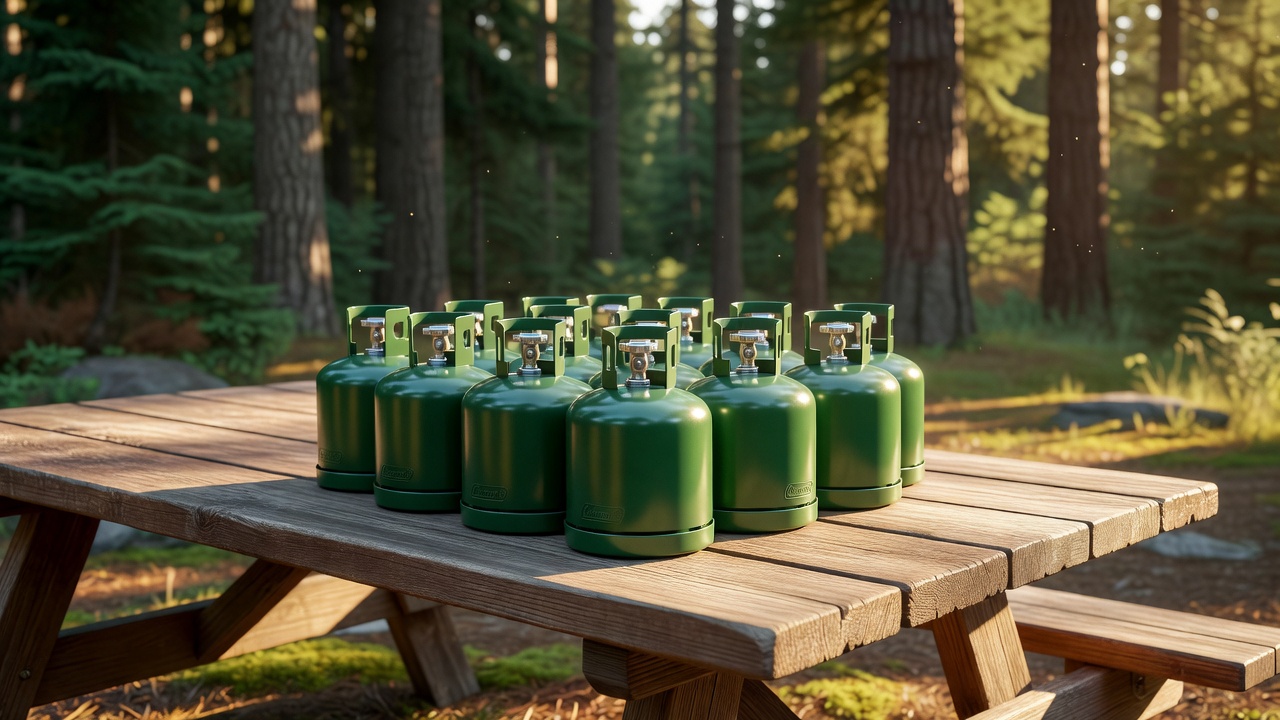
A standard 16.4 oz (1 lb) propane tank gives you roughly 2 hours of full-blast cooking, 15-20 pots of boiled water, or 6-8 real camp meals on a typical single-burner stove. If that's all you needed, grab a spare and go. If you want to know exactly how that number is calculated — and how butane and isobutane compare — keep reading.
The Run-Time Question Nobody Answers Directly
If you've read our complete camp stove fuel guide, you already know the differences between propane, butane, and isobutane at the chemical level. What that guide doesn't answer — because nobody does — is the practical question: how many meals can you cook before the canister runs dry?
That number matters for three reasons:
- Packing — one canister per person per weekend is the lazy default; knowing your actual burn time means you pack lighter.
- Cost — a 12-pack of Coleman 16.4 oz propane cylinders costs about $65; if you only need three cylinders per season of weekend trips, that's 10 years of fuel in your garage.
- Safety — overestimating how long fuel lasts is how people end up refilling canisters or cooking indoors. Neither is safe.
Let's do the math properly.
The Math: BTU Content of a 16.4 oz Propane Cylinder
Propane has roughly 21,500 BTU per pound of fuel. A standard 1 lb (16.4 oz net weight) camping cylinder contains about 21,500-22,000 BTU of total energy. (The cylinder itself weighs about 2.5 lb full — that's the empty steel plus the fuel — which is why it feels heavier than 16 oz.)
Now compare that to your stove's burn rate:
| Stove Type | Typical Output | Full-Blast Run Time per 1 lb Cylinder |
|---|---|---|
| Single-burner bottle-top stove (e.g., Coleman Bottle Top, 10,000 BTU) | 10,000 BTU/hr | ~2.1 hours |
| Dual-fuel compact stove (e.g., Gas One GS-3400P) | ~8,000-10,000 BTU/hr | ~2-2.5 hours |
| Small backpacking-style stove | ~5,000-8,000 BTU/hr | ~3-4 hours |
| Two-burner stove, one burner on high | ~10,000-12,000 BTU/hr | ~1.8-2 hours |
The formula is simple: canister BTU ÷ stove BTU/hr = hours of full-blast run time. For a 10,000 BTU stove: 21,500 ÷ 10,000 ≈ 2.15 hours.
Of course, nobody cooks at full blast the whole time. Simmering a pot of oatmeal uses maybe a third of that output. That's where the "meals per canister" estimate comes from.
Boil-Time Math: How Many Pots of Water Per Canister
Boiling water is the single most common camp cooking task — coffee, oatmeal, pasta, freeze-dried dinners, and cleaning water all start there.
The benchmark: on a typical single-burner stove at high output, boiling 1 quart (4 cups) of water takes about 5-8 minutes (faster at sea level, slower at altitude — a known cold-weather stove consideration covered in our cold-weather and high-altitude stove guide).
Let's call it 6 minutes average at roughly 8,000-9,000 BTU effective output. That's about 0.9-1.0 hours of burn time per 10 boils.
Per 16.4 oz cylinder: roughly 15-20 quarts of boiled water.
That's the number that matters for backpacking and freeze-dried meal trips. Two people eating Mountain House dinners (each needs ~2 cups of water) plus morning coffee (2 cups each) burns about 8 cups — under half a canister for a two-night trip.
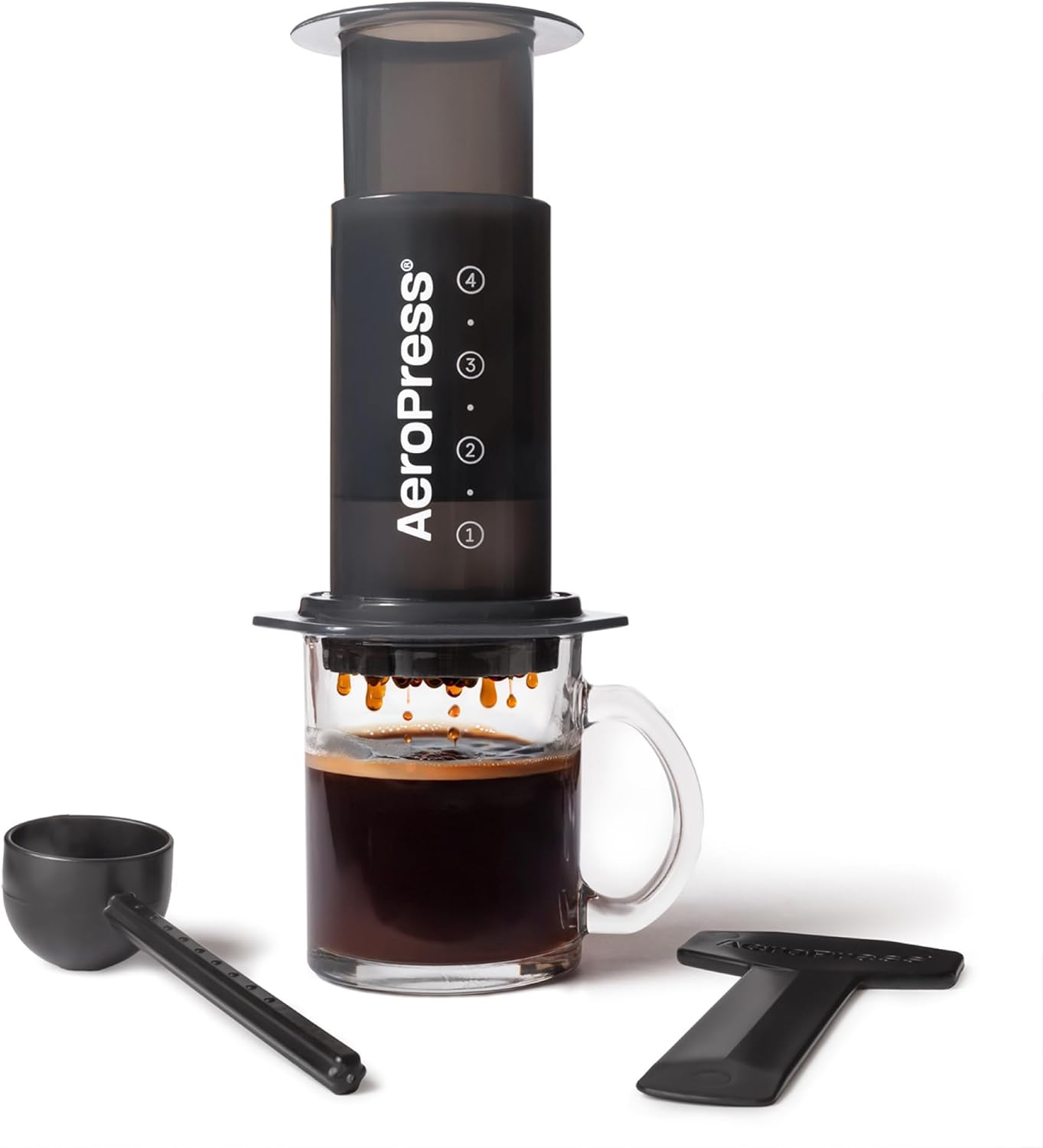
That boiled water has to turn into something, and coffee is usually the first thing the stove does in the morning — so the brewer you pack changes the burn-time math more than most people expect. The AeroPress Original Coffee Press ($39.95, 4.7★) adds zero extra burner minutes: you boil water once, then brew off the heat in about a minute, which is exactly the "coffee-and-oatmeal weekend" case where a canister barely gets dented (it is a one-cup brewer, so each person brews their own cup). If you would rather the pot do the work while you eat, the GSI Outdoors 8-Cup Enamelware Percolator ($34.95, 4.2★) perks 8 cups in a single 4-6 minute burn with no paper filters or glass carafe to pack; and for backpacking trips where both the ounces and the burner minutes count, the Snow Peak Titanium French Press ($65.00, 4.5★) is a 6.3-ounce titanium pot that heats its own water and presses three cups in the same vessel — no second kettle.
Meals per Canister: The Real-World Number
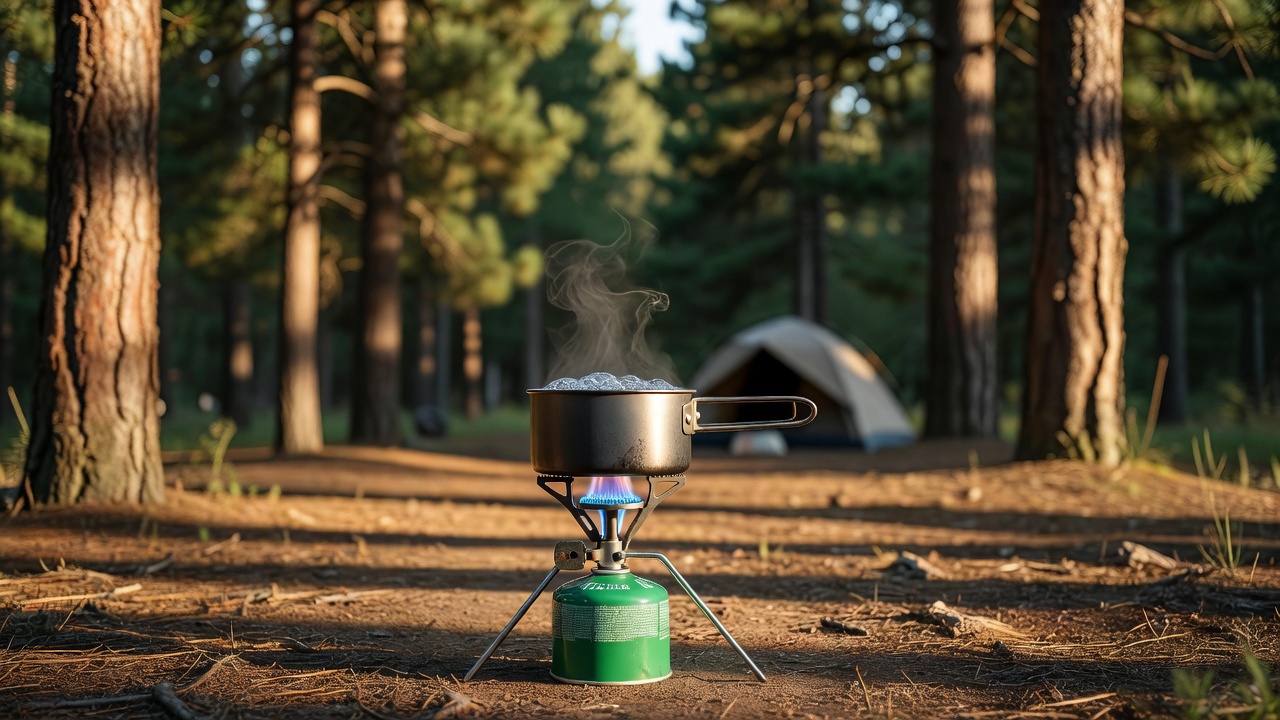
Here's how a typical weekend plays out on one 16.4 oz cylinder with a Coleman Classic 1-Burner Butane Camp Stove or similar single-burner unit:
- Breakfast (2 people): coffee (boil 4 cups, ~6 min) + eggs and toast in a skillet (10 min at medium) ≈ 16 minutes of burn
- Lunch (2 people): soup or quesadillas ≈ 10-12 minutes
- Dinner (2 people): boil pasta water (8 min) + simmer sauce (10 min) ≈ 18 minutes
That's roughly 45 minutes of actual burn per day for a couple. Over a 2-day weekend: ~90 minutes ≈ 1 canister. One canister comfortably feeds two people for a weekend with a small buffer for wind or a second coffee.
For a family of four, the Lodge cast iron skillet becomes the workhorse, and cook times stretch — plan 1.5-2 canisters for a 2-day family trip, or switch to a two-burner stove with a 20 lb tank for car camping.
Butane and Isobutane: How They Compare
Propane isn't the only option, and the run-time math shifts with the fuel:
- Butane (220g / 7.8 oz cartridge): holds roughly 9,000-9,600 BTU. On a Gas One GS-3400P running butane at ~7,000 BTU/hr, that's about 1.3 hours of full-blast cooking per cartridge. The GasOne 4-pack butane canisters are the standard buy for this class.
- Isobutane (110g threaded canister): ~4,900-5,200 BTU per canister. On an MSR PocketRocket 2 at ~8,000 BTU/hr, that's only ~40 minutes of full blast — but the PocketRocket is so efficient at boiling that you'll still get 8-10 boils per 110g canister, which is why the MSR IsoPro 110g canister is the standard one-per-day-per-hiker carry.
Practical takeaway: propane gives you the most cooking per dollar and per ounce of fuel; butane is the fair-weather picnic fuel; isobutane is the backpacker's choice where weight per meal matters most. For the deeper chemical comparison, the fuel guide has you covered. Butane is the other side of that comparison, and its run time works differently because an 8 oz cartridge holds half the fuel weight of a 1 lb cylinder. We ran the same arithmetic for butane in our Coleman vs Gas One butane stove comparison, including how fast a cartridge disappears in wind and what to pack for a weekend.
The Wind Factor: Why Your Canister "Disappears" Faster
Here's the number that surprises everyone: cooking in wind can burn 30-50% more fuel for the same meal. The stove works harder, the flame licks around the pot instead of underneath it, and your 2-hour canister becomes a 75-minute canister.
The fix is cheap: a windscreen setup — either a commercial folding screen or a DIY foil barrier — plus cooking with a lid on every pot. That single habit extends a canister by more than any stove upgrade will. (Always follow the manufacturer's wind-screen guidance: some stoves require clearance for the regulator.)
If you're planning a trip rather than reverse-engineering a canister, it's easier to work the other way: count your burner-hours first, then buy to match. Our how much propane you need for a camping trip guide has the per-day math and a full tank-size comparison table.
The 20 lb Tank Math: When to Stop Buying 1 lb Cylinders
If you camp more than 4-5 weekends a year with a two-burner stove, the economics flip hard:
- 16.4 oz cylinder: ~22,000 BTU for ~$6-7 → ~$300 per million BTU
- 20 lb refillable tank: ~430,000 BTU for ~$20 refill → ~$47 per million BTU
That's a 6x price difference. A two-burner stove hooked to a 20 lb tank (with the proper hose adapter) pays for itself in a season. The 1 lb cylinders are unbeatable for portability — they just aren't a budget play.
If you want that whole decision in one place — which stoves thread onto the green cylinder, how much fuel to buy, and the three legitimate ways to stop buying disposables — it's in our 1 lb propane tank and camp stove buyer's guide.
Once you move up to the bulk tank, the runtime question changes shape: it now depends on whatever appliance you hang off the QCC1 valve rather than on the cylinder. We broke that out appliance by appliance — camp stove, grill, griddle, Buddy heater, RV furnace, fire pit and generator, with the cold-weather derating that catches people out — in how long a 20 lb propane tank lasts.
How Long Does a Propane Tank Last? Every Name for the Same Cylinder
Most run-time answers pick one phrasing and leave you wondering whether your tank is the one being described. Here's the honest version: nearly every "small tank" phrasing people use — green, 16 oz, 16.4 oz, mini, little, small, camping size, 1 lb — describes the exact same disposable cylinder. That's why the answer barely moves between them.
So when someone asks how long should a propane tank last, the truthful answer is "it depends on two things: the size of the tank, and the burn rate of what's screwed onto it." If you want it in hours: how many hours does a propane tank last? Anywhere from about 2 hours (a 1 lb cylinder on a stove) to 40+ hours (a 20 lb tank). Here's the breakdown by name.
The one number worth memorizing: 1 lb of propane ≈ 21,600 BTU. A 16.4 oz (1 lb) cylinder holds roughly 22,000 BTU, which is about 2 hours on a 10,000 BTU burner.
The "Small" Cylinders Are All One Cylinder
- How long does a green propane tank last? About 2 hours of full-blast cooking. "Green" is simply the colour of the standard cylinder — and yes, a green Coleman propane tank is the same 16.4 oz cylinder as every other brand's, so the run time doesn't change.
- How long does a 16 oz propane tank last? The same ~2 hours. "16 oz" is the rounded label for 16.4 oz of contents, so a 16 oz propane cylinder run time is identical to the 1 lb figure — including the 16 oz Coleman propane tank.
- How long does a Coleman propane tank last? Also ~2 hours of full blast. A Coleman propane tank is the standard 16.4 oz green cylinder, and Coleman's own bottle-top and two-burner propane burners sit in the 10,000-12,000 BTU/hr band, so the brand name changes the label, not the burn time.
- How long can a 1 lb propane tank last if you stretch it? Longer than the headline number. With a lid on the pot, a windscreen around the burner, and the flame shut off between tasks, most families get 2.5-3 hours of usable cooking out of a cylinder that would otherwise give about 2.
- How long does a 1lb propane tank last? Still ~2 hours. "1 lb" is the fuel weight; 16.4 oz is the total contents. The math is unbothered by the naming, so how long a 1 lb propane cylinder lasts, how long will a 1 lb propane tank burn, and what 1 lb propane tank burn time actually looks like in the field are all the same answer: about 15-20 pots of boiled water or 6-8 real camp meals.
- How long does a small propane tank last — or a mini, little, or camping size one? Same ~2 hours. A mini propane tank, a little propane tank, a little green propane tank, a small green propane tank, a small camping propane tank, a camping size propane tank, a small propane bottle, and a small propane cylinder are nine names for one product. If it's green and about the size of a coffee can, it's a 1 lb cylinder.
- How long does a camping propane tank last if it's bigger than the green one? Then the answer changes: a portable propane tank tells you nothing until you know its weight. A 1 lb cylinder is ~2 hours; a 5 lb refillable is ~10 hours; a 20 lb tank is ~40+ hours. Weigh the tank or read the stamp.
The 20 lb and "5 Gallon" Tank: Where the Math Actually Changes
- How long does a 20 lb propane tank last? A full 20 lb tank holds roughly 430,000 BTU. On a 10,000 BTU stove that's about 43 hours of full-blast burn — a full season of weekend car camping. On a 9,000 BTU tent heater it's about 45 hours; on a small grill, closer to 35.
- How long will a 5 gallon propane tank last while camping? Here's the catch: the "5 gallon" tank at the hardware store is the 20 lb BBQ tank — it holds about 4.6 gallons of propane. So the answer is the same ~40+ hours. If you were picturing a smaller tank, you're thinking of the 1 lb cylinder above.
- How long does a propane tank last unused? Propane itself doesn't spoil — an unused cylinder keeps its fuel for 5+ years stored dry and out of direct sun (the canister safety and disposal guide covers the storage checks). What fails on a stored tank is the valve and the rubber seals, not the gas.
- How long does a propane tank last before refill? For a 20 lb tank at camping burn rates, budget about one refill per season — roughly 43 hours of cooking flame on a 10,000 BTU stove. Add a 9,000 BTU Buddy heater to the trip and that tightens to every 2-3 weekends, because heat output empties a tank far faster than cooking does. A 1 lb disposable cylinder has no refill cycle at all: it is a one-weekend item by design.
- How long does a propane tank last for cooking? Cooking is the light load. A 1 lb cylinder covers a weekend of meals for two (about 2 hours of flame), and a 20 lb tank covers a full season (about 43 hours). It is heating — tent heaters, RV furnaces, fire pits — that turns a tank into a consumable, which is why the refill math above is driven by heat, not by meals.
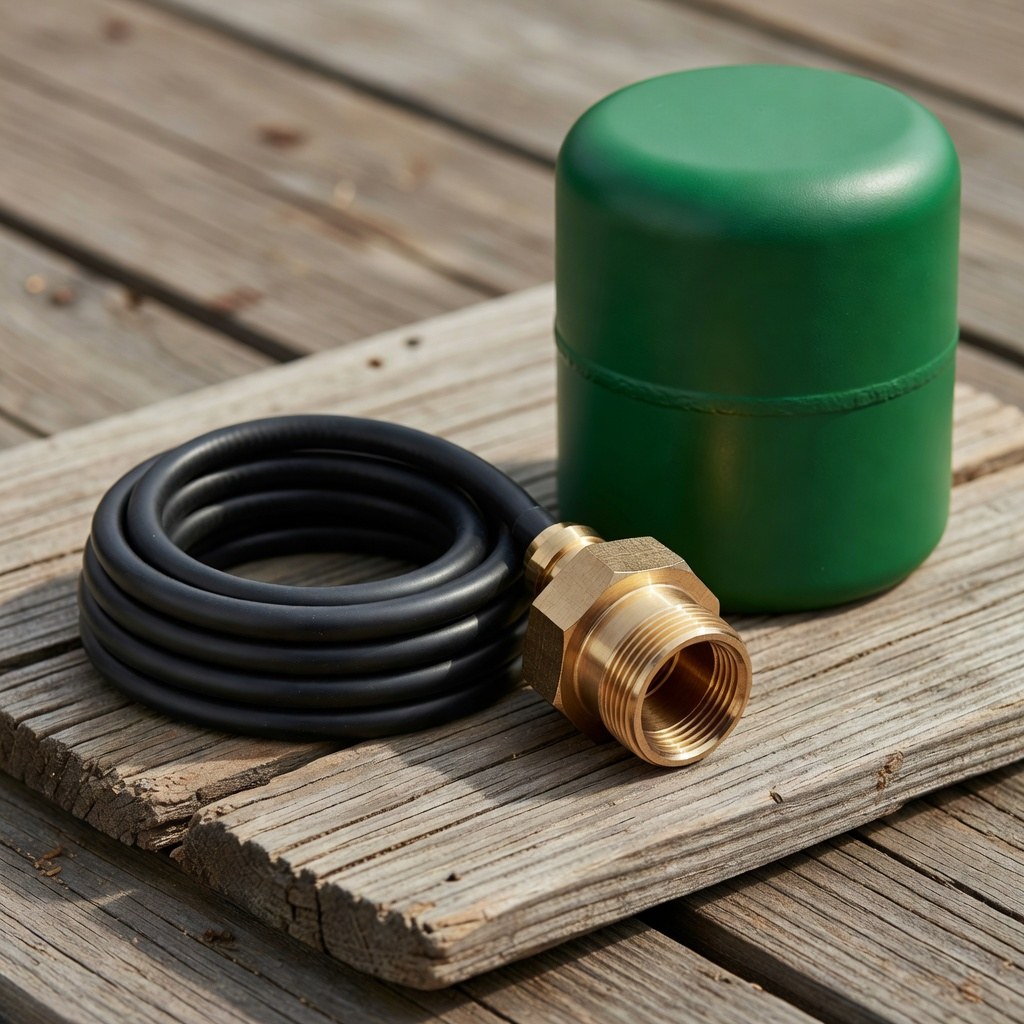
If you're moving from disposables to a bulk tank, two cheap pieces of hardware do the work: a Gas One refill adapter lets you top up 1 lb cylinders from a 20 lb tank, and a Flame King refillable 1 lb cylinder replaces the disposable version entirely. The refilling guide walks through doing it safely.
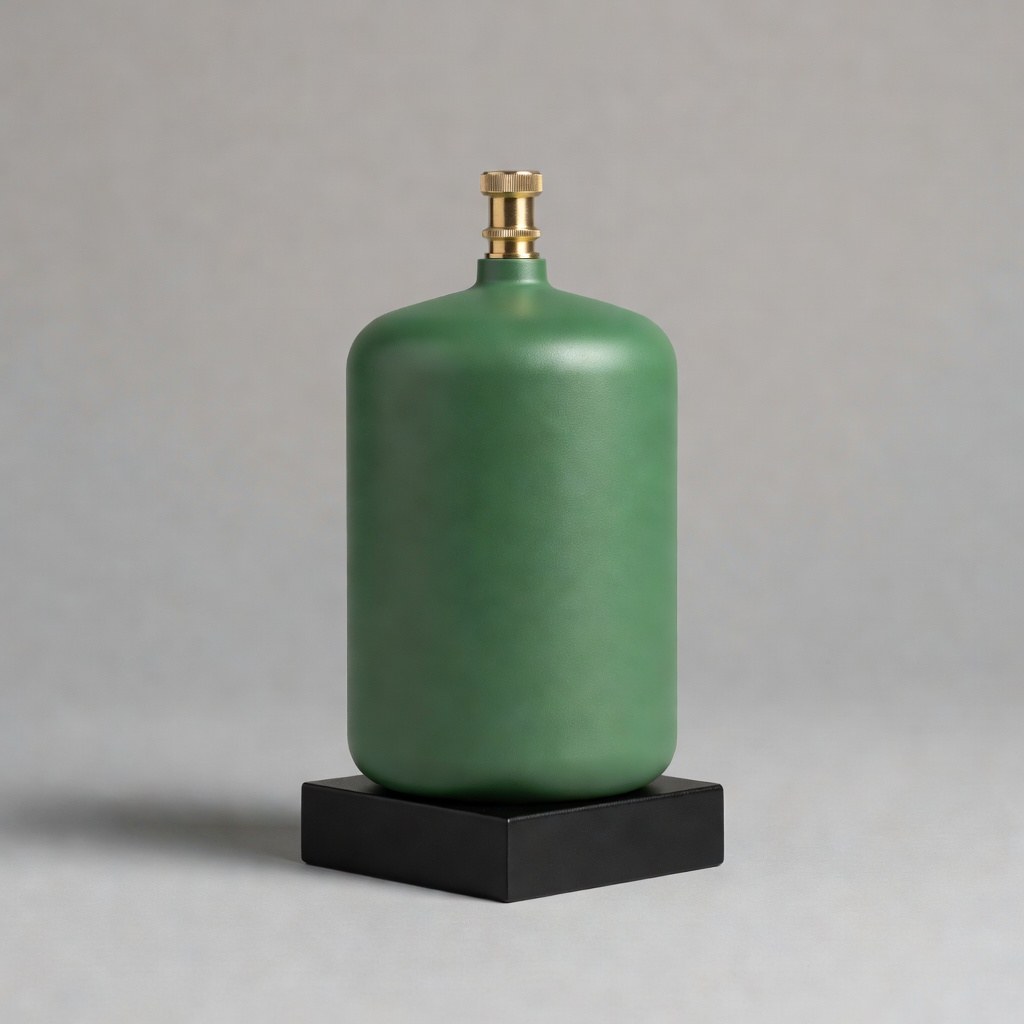
One number on this page deserves an asterisk: the 5+ year shelf-life figure is how long most people should trust a stored cylinder's hardware, not how long the propane itself lasts. The fuel does not degrade at all. What dates a refillable tank is the requalification stamp on the collar, and DOT rules count 12 years from the manufacture date before a tank has to be requalified. If your question is specifically about a tank that has been sitting unused, our how long propane lasts unused and in storage guide walks through the stamp, the storage rules, and what actually fails on an old cylinder.
How Long Does a 1 lb Tank Last on Your Appliance? Griddles, Grills, and Heaters
Every run-time question is really two numbers: fuel in the tank, divided by the appliance's burn rate. A 1 lb cylinder is ~22,000 BTU, so how long a 1lb propane tank lasts depends entirely on what's sitting on top of it — and the spread is enormous.
- How long does a 1lb propane tank last on a camp stove? About 2-2.25 hours at full blast. The classic Coleman bottle-top propane stove burns 10,000 BTU/hr, which is the 2-hour figure this whole guide is built on.
- How long does a 1lb propane tank last on a Coleman stove? Same ~2 hours — Coleman's bottle-top and two-burner propane burners are all in the 10,000-12,000 BTU/hr range, so the naming doesn't change the math.
- How long does a 1lb propane tank last on a grill? Roughly 1.5-2 hours on a portable tabletop grill (~11,000-15,000 BTU/hr). The Coleman RoadTrip 225 sits at the top of that band, so budget closer to 1.5 hours with the lid up and wind blowing.
- How long does a 1lb propane tank last on a Blackstone? Shorter than people expect. A 17-inch tabletop griddle is ~12,000 BTU/hr, so about 1.75 hours; a Blackstone 22-inch runs closer to 24,000 BTU/hr and gives you only ~45-55 minutes on a green cylinder — which is why the 22-inch griddle crowd almost always graduates to a bulk tank.
- How long does a 1lb propane tank last in a Buddy Heater? About 2-2.5 hours on high. The Mr. Heater Buddy runs 4,000-9,000 BTU/hr: on the 4,000 BTU low setting a 1 lb cylinder stretches to roughly 5 hours; on 9,000 BTU high, expect about 2.4. The Little Buddy (3,800 BTU) is the fuel miser at ~5.5 hours per cylinder, while the Big Buddy at 18,000 BTU drains one in roughly 70-75 minutes.
- How long does a 1lb propane tank last on a buddy heater overnight? Not long enough — that's the real story. Even a Little Buddy only covers 5-6 hours, so a cold-weather overnight needs either two spares or the Buddy heater hose assembly running to a 20 lb tank. Our tent heater safety guide covers the ventilation rules before you run one indoors.
- How long does a 1lb propane tank last on a weed torch? Under an hour. High-output torches burn 30,000+ BTU/hr, so a green cylinder disappears in 35-50 minutes of continuous flame — this is the one job where the 1 lb cylinder is the wrong tool.
- How long does a 1 lb propane tank last on a gas grill? Shorter than the tabletop numbers above. A full-size gas grill draws 30,000-40,000 BTU/hr, so a green cylinder is good for roughly 35-45 minutes of grilling — one round of burgers. Grilling is the clearest case for the 20 lb tank and hose setup, because a 20 lb tank on the same grill runs about 12-14 hours.
- How long does a propane tank last on a fire pit? About 25-30 minutes on a 1 lb cylinder and 8-10 hours on a 20 lb tank, assuming a propane fire pit or fire table burning 40,000-60,000 BTU/hr at full output. Drop it to a low flame and the tank stretches considerably further, but fire pits are far thirstier than any camp stove — if s'mores night is a nightly ritual, a 20 lb tank is the only version that survives a weekend.
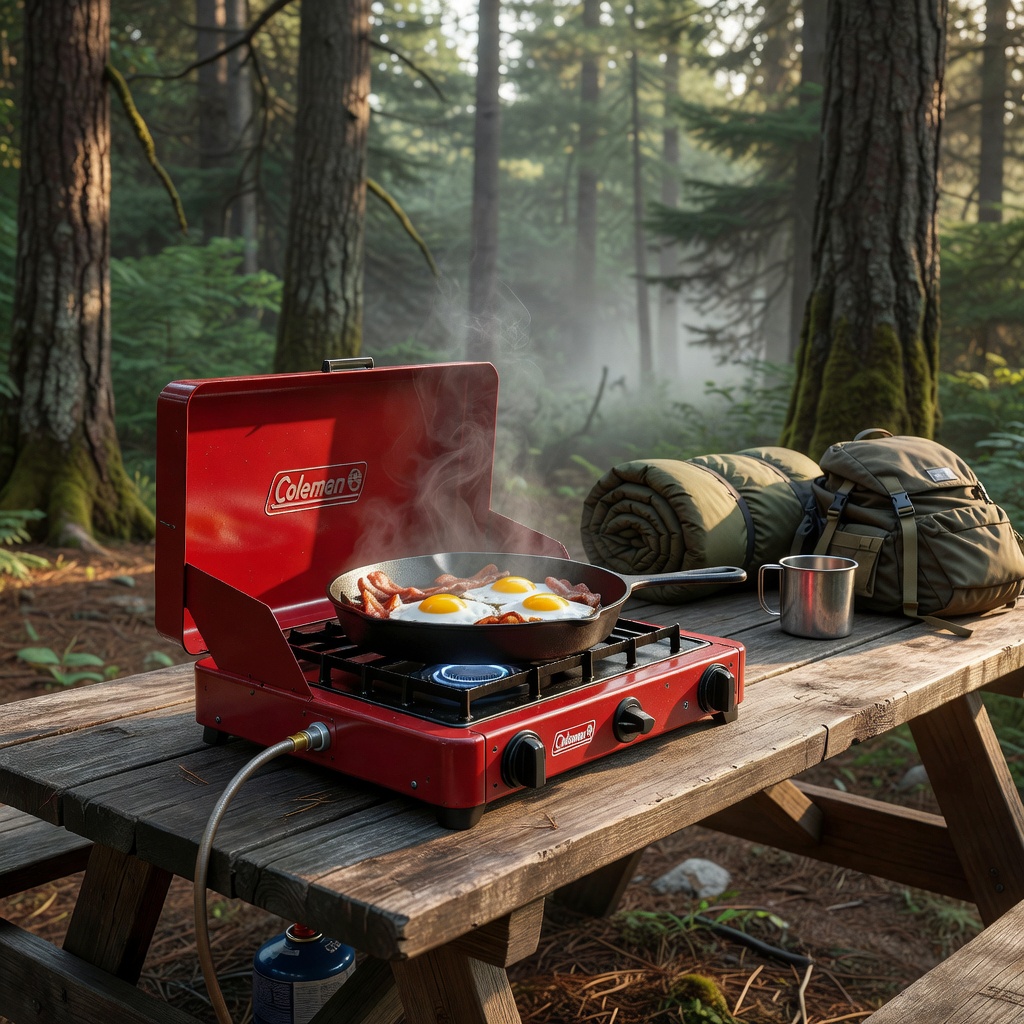
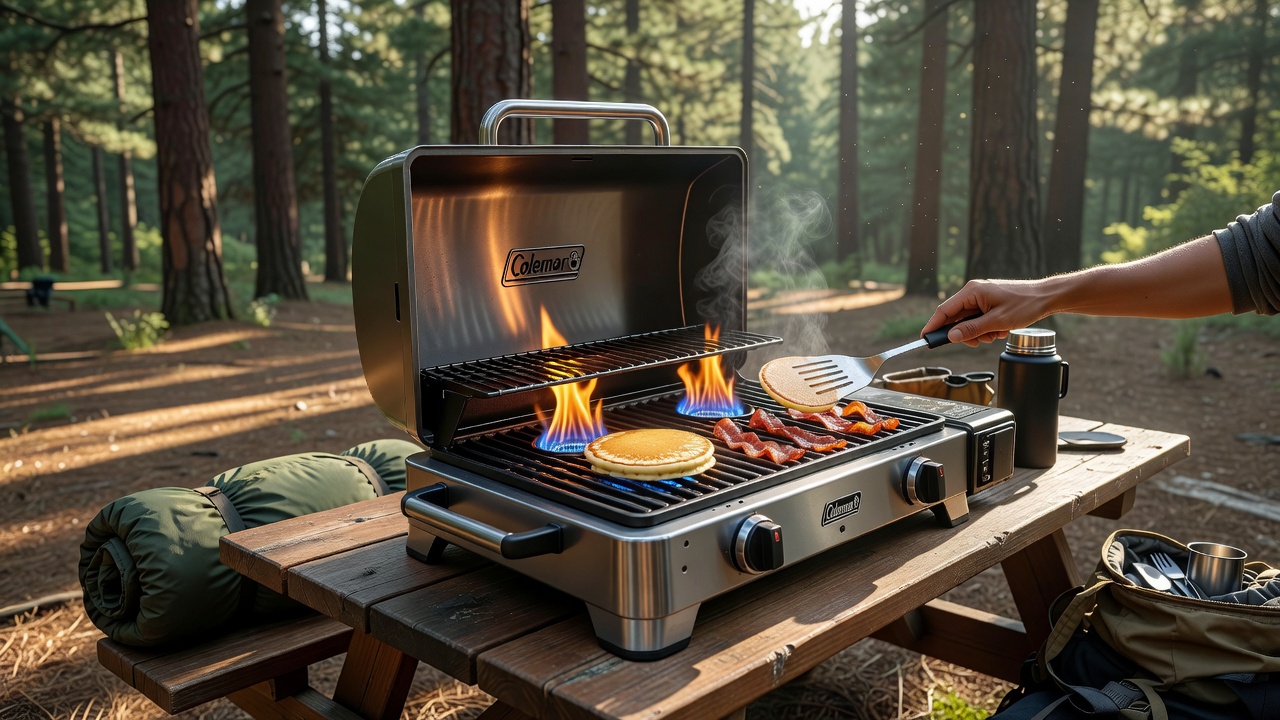
The pattern is simple and worth internalizing: double the BTU rating and you halve the run time. A 20 lb tank (430,000 BTU) on the same Blackstone 22-inch gives you roughly 18 hours instead of 50 minutes.
Every Way People Ask This: "16 oz," "Green," "Little," and "Small" Cylinders
If you searched for a different name for the same cylinder, this table is the fastest answer. Read the "Same cylinder?" column first — most of these questions are not really about size, they are about naming.
| Phrasing people search | Same 16.4 oz cylinder? | Honest run time |
|---|---|---|
| how long does a 1 lb propane tank last | Yes — 1 lb is the fuel weight | ~2.2 hours full blast on a 10,000 BTU stove |
| how long does a 16 oz propane tank last | Yes — rounded label for 16.4 oz | Same ~2.2 hours |
| how long does a 16.4 oz propane cylinder last | Yes — the exact label | Same ~2.2 hours |
| how long does a green propane tank last | Yes — green is just the colour | Same ~2.2 hours |
| how long does a little green propane tank last | Yes | Same ~2.2 hours (a "little" tank is not a smaller tank) |
| how long does a small green propane bottle last | Yes | Same ~2.2 hours |
| how long does a mini propane tank last | Yes if it is coffee-can sized | Same ~2.2 hours |
| how long does a small propane tank last | Yes — unless it is a 5 lb refillable | ~2.2 hours (1 lb) / ~11 hours (5 lb) |
| how many hours does a 16 oz propane tank last | Yes | ~2.2 hours at full blast, up to ~5.5 hours on a low-output heater |
| how long does one 16 oz propane tank last | Yes | Same as the 1 lb figure |
| how long does a 16 oz propane tank last on a camp stove | Yes | ~2-2.25 hours |
| how long does a 16 oz propane tank last on a grill | Yes | ~1.5-2 hours on a tabletop propane grill |
| how long does a 16 oz propane tank last on a Blackstone | Yes | ~1.75 hours on a 17-inch griddle, 45-55 minutes on a 22-inch |
| how long does a 16 oz propane tank last in a Buddy heater | Yes | ~2.4 hours on 9,000 BTU high, ~5 hours on 4,000 BTU low |
| how long does a green propane tank last on a buddy heater | Yes | Same: ~2.4-5.5 hours depending on the setting |
| how long does a small propane tank last on a 22 inch blackstone | Yes | 45-55 minutes — the griddle, not the tank, is the problem |
| how long does a Coleman propane cylinder last | Yes — brand does not change the math | Same ~2.2 hours |
| how long does a small camping propane tank last | Yes | Same ~2.2 hours |
| how long does a portable propane tank last | Depends — check the stamp | 1 lb ~2.2 hours, 5 lb ~11 hours, 20 lb ~43 hours |
| how long does a small propane tank last on a grill | Yes, if it is green | ~1.5-2 hours on a tabletop propane grill | | how long does a small propane tank last on a buddy heater | Yes, if it is green | ~2.4 hours on 9,000 BTU high, ~5 hours on 4,000 BTU low | | how many hours does a small propane tank last | Yes, if it is green | ~2.2 hours on a camp stove, up to ~5.5 hours on a low-output heater | | how long does a 1lb propane tank last on blackstone | Yes | ~1.75 hours on a 17-inch griddle, 45-55 minutes on a 22-inch | | how long does a rv propane tank last | No — an RV carries bulk cylinders | Depends on the stamped capacity; the RV math is two sections down | | how long does a 500 gallon propane tank last | No — that is a home tank | About 63 days of continuous 30,000 BTU output | | how long does a small propane bottle last | Yes — "bottle" is just another word for the 1 lb cylinder | ~2.2 hours full blast | | how long does a small propane can last | Yes | ~2.2 hours full blast | | how long does a small propane canister last | Yes | ~2.2 hours full blast | | how long do small propane canisters last | Yes, if each one is the green 1 lb size | ~2.2 hours each — which is why campers buy the 12-pack | | how long does a small green propane tank last | Yes | ~2.2 hours full blast | | how long do small green propane tanks last | Yes | ~2.2 hours each, ~26 hours across a 12-pack | | how long does a small propane gas tank last | Yes, if it is green | ~2.2 hours full blast | | how long does a green propane bottle last | Yes | ~2.2 hours full blast, ~5.5 hours on a low-output heater | | how long does a propane tank last camping | Yes, if it is the 1 lb cylinder | ~2.2 hours on a camp stove — or ~43 hours if you brought a 20 lb tank | | how long does a propane tank last for camping | Same answer, different word order | ~2.2 hours (1 lb) / ~43 hours (20 lb) | | how long do camping propane tanks last | Yes, if they are the green 1 lb size | ~2.2 hours each | | how long does a 1 lb propane bottle last | Yes | ~2.2 hours full blast | | how long does one propane canister last | Yes | ~2.2 hours on a 10,000 BTU stove, ~1 hour on a 20,000 BTU dual-burner | | how long does a propane tank take to empty | Depends how you empty it | Burned at full blast: 2 hours. Left open: hours to days of venting — that is a disposal job, not a cooking one, so run it through the canister safety and disposal guide | | how long does a propane canister last camping | Yes — "camping" changes the question, not the cylinder | ~2.2 hours of flame per 1 lb cylinder, which is 1-5 nights depending on how many burners you run (see the nights section below) |
The one-line rule that answers all of the above: if it is green and about the size of a coffee can, it holds about 22,000 BTU — so the only variable left is what you screw it onto.
How Much Propane Does a Camp Stove Use? (Ounces Per Hour)
"How long does it last" is really a burn-rate question, so here is the burn rate itself. One pound of propane holds roughly 22,000 BTU, which means you can convert any appliance's BTU rating straight into fuel consumed per hour: ounces per hour ≈ (BTU per hour ÷ 22,000) × 16.4.
| Appliance (typical draw) | Propane per hour | Run time on one 1 lb / 16.4 oz cylinder |
|---|---|---|
| Propane lantern (~3,000 BTU/hr) | ~2.2 oz | ~7 hours on high |
| Single burner on simmer (~5,000 BTU/hr) | ~3.7 oz | ~4.5 hours |
| Standard single burner, full (~10,000 BTU/hr) | ~7.5 oz | ~2.2 hours |
| High-output single burner (~12,000 BTU/hr) | ~8.9 oz | ~1.8 hours |
| Two-burner stove, both burners full (~20,000 BTU/hr) | ~15 oz | ~1.1 hours |
| Full-size gas grill (~30,000-40,000 BTU/hr) | ~22-30 oz | 30-45 minutes |
So to answer how much propane does a camp stove use in the units that actually matter: a 10,000 BTU/hr stove burns about half a pound of propane an hour, and a two-burner stove running both burners wide open burns about a pound an hour. If you want the same figure for a different burner, the propane calculator does the conversion from whatever BTU rating is stamped on your stove.
How much propane does a Coleman stove use? The same formula, because Coleman's numbers are on the box: the Coleman Classic 2-burner is rated 20,000 BTU total, so both burners on full is the ~15 oz/hr row above and a green cylinder is gone in about an hour. Coleman-branded cylinders are 16.4 oz, identical to every other 1 lb cylinder — how long does Coleman propane last is therefore exactly ~2.2 hours at full blast on a single burner, how long do Coleman propane tanks last does not change with the logo on the can, and how long does Coleman propane camping gas last follows the same math whether the label says "camping gas" or "propane". Where Coleman does differ is how long does a Coleman propane lantern burn: a lantern draws far less than a stove, so a single 1 lb cylinder runs a Coleman propane lantern for roughly 7 hours on high — which is why lantern fuel always seems to outlast stove fuel.
Campingaz canisters run slightly different numbers because they are butane-based and sold by weight. A Campingaz CV470 Plus holds 450 g (~15.9 oz) — very close to a 1 lb cylinder, so how long does a Campingaz canister last is about 2 hours on a 10,000 BTU stove. The refillable Campingaz 907 is a different animal entirely: 2.75 kg (about 6 lb) of butane is roughly 119,000 BTU, which is 11-12 hours of full-blast cooking — or a whole season of weekend coffee and one-pot dinners on a simmer setting.
Nights, Not Hours: How Many Nights Will a 1 lb Tank Last?
Hours are the wrong unit for a camping trip, so here is the trip version. A family dinner on a 10,000 BTU burner is usually 25-35 burn-minutes, which is about 3.5-4 oz of propane per night.
- Dinner only: about 4-5 nights per 1 lb cylinder.
- Dinner plus breakfast coffee and a lunch boil: about 2 nights.
- Two-burner dinners with a side dish: 1 night — the second burner is what kills the cylinder, not the meal count.
That is the honest answer to how many nights will a 1 lb propane tank last and how many nights does a propane canister last: it is a burner-count question in disguise. Two people cooking one pot per night get most of a week; four people cooking two pots a night buy cylinders by the case. Cold weather does not change the fuel math, but it does change your habits — see the cold-weather and high-altitude stove guide for why you burn more fuel per meal below freezing.
How Many Hours on a Bigger Tank? 20 lb, 30 lb, 100 lb, and RV Tanks
BTU content is the multiplier here, and it scales almost perfectly linearly with fuel weight. Here is the same math applied to every tank size that shows up in a camper's garage:
Propane canister sizes, smallest to largest: the 1 lb / 16.4 oz disposable, a 5 lb refillable, the 20 lb BBQ tank everyone calls "5 gallon", a 30 lb travel-trailer cylinder, and 100 lb base-camp bottles. Backpackers use 4-8 oz isobutane canisters instead, which take a threaded Lindal valve rather than the 1 lb throwaway connector — a different fuel system entirely.
| Tank | Propane (approx.) | Run time on 10,000 BTU | Run time on 30,000 BTU | Typical job |
|---|---|---|---|---|
| 1 lb / 16.4 oz disposable | 22,000 BTU | ~2.2 hours | ~45 minutes | Weekend stove |
| 5 lb refillable | 108,000 BTU | ~11 hours | ~3.6 hours | Long weekend, small group |
| 20 lb BBQ / "5 gallon" | 430,000 BTU | ~43 hours | ~14 hours | A full season of car camping |
| 30 lb travel-trailer cylinder | 645,000 BTU | ~64 hours | ~21 hours | Trailer weekends |
| 100 lb cylinder | 2,160,000 BTU | ~216 hours | ~72 hours | Cabin, hunt camp, base camp |
- How long will a 20 lb propane tank last at 30,000 BTU? About 14 hours of continuous burn (430,000 ÷ 30,000). That is a big griddle, a weed torch, or a high-output burner — not a normal camp stove.
- How long will a 20 lb propane tank last for heating? A 9,000 BTU Buddy heater gets roughly 48 hours out of it; a 30,000 BTU RV furnace gets about 14 hours of continuous heat. Heating, not cooking, is what empties a 20 lb tank.
- How long will a 100 lb propane tank last? Roughly 216 hours on a 10,000 BTU burner, or 72 hours at 30,000 BTU. At camping burn rates that is measured in months, which is why 100 lb cylinders live at cabins and hunt camps rather than in truck beds.
- How long does an RV propane tank last? Same weight-based math, and you rarely have to guess: RV cylinders are stamped with their capacity. A travel trailer carrying two 20 lb cylinders is holding roughly 860,000 BTU — about 86 hours of 10,000 BTU cooking, but only 21-43 hours of continuous furnace use (RV furnaces run 20,000-40,000 BTU/hr). Cooking is a rounding error on an RV trip; the furnace decides when you refill.
- How long does a propane tank last in a camper? Same stamped-capacity math as any RV: two 20 lb cylinders hold roughly 860,000 BTU, which is about 86 hours of cooking but only 21-43 hours of continuous furnace heat. A camper used mostly for cooking gets a full season out of one cylinder; run the furnace on a cold weekend and you can watch a tank go in a single trip.
- A note on 500-gallon tanks: that question belongs to home propane, not camping. For scale, 500 gallons is about 45.75 million BTU — roughly 63 days of continuous 30,000 BTU output. Nothing on a campsite is in that league, so if you arrived here from a home-heating search, this guide will not help you budget it.
Propane Canister Expiration — and What Actually Happens in a Fire
Two safety questions come up so often they deserve a direct answer rather than a warning label.
Do propane canisters expire? A disposable 16.4 oz cylinder has no expiration date printed on it, and the propane inside does not degrade — it will still burn years later if it was stored dry and out of direct sun. What does age is the hardware: the valve, the seals, and the rubber in the connection. That is why an old cylinder can hiss or refuse to seal to a stove even though it is "full." Refillable cylinders are different: DOT rules require requalification 12 years after the manufacture date stamped on the collar, and a cylinder that has been requalified is marked accordingly. Check the stamp on any refillable before you pay to fill it, and retire a disposable if the valve is bent, rusted, or visibly leaking.
Can a propane canister explode in a fire? Cylinders are built with a pressure-relief device, so a heated canister usually vents propane as a directed flame rather than bursting — the failure mode is a jet of fire, not shrapnel. That protection is not a licence to leave one in a hot car or a closed tent: well before the relief device opens, pressure climbs with every degree, and a canister that vents inside an enclosed space is how fires start. If a canister has been through a fire, do not use it, do not try to "bleed" it, and keep clear while it cools. Our canister safety, recycling and disposal guide walks through storage temperatures, leak checks, and how to retire a cylinder properly.
How to Make a Canister Last Longer (Field Tips)
These are the habits that stretch every cylinder:
- Boil with a lid — covered pots boil 25-30% faster.
- Shut off between tasks — don't leave the flame on while you chop veggies.
- Cook assembly-line — boil pasta water, then use the same hot water for coffee.
- Pre-boil at home — for remote campsites, pre-cooked rice or pre-boiled potatoes reheat in 5 minutes instead of cooking for 20.
- Check the flame — a yellow, lazy flame means the burner is clogged or the canister is nearly empty (propane's telltale sign near depletion).
- Use a mess kit with nesting pots — a kettle for water plus one pot for meals covers 90% of cooking with minimal fuel.
Canister Run-Time Quick Reference
- 1 quart boiled water ≈ 6 min ≈ 1/15th of a 1 lb propane cylinder
- Full-blast run time, 10,000 BTU stove ≈ 2 hours per cylinder
- Weekend meals, 2 people ≈ 1 cylinder
- Weekend meals, 4 people ≈ 1.5-2 cylinders
- Backpacking day ≈ 1 × 110g isobutane canister
- Shelf life (unused) ≈ 5+ years for propane (see the fuel canister safety guide for storage checks)
Common Fuel-Estimation Mistakes (Learn From Mine)
I've made every one of these, and each one cost me either a cold breakfast or a trunk full of half-used cylinders:
-
Counting "meals" as canisters. A two-burner breakfast with bacon AND pancakes AND coffee burns nearly an hour of flame — that's half a cylinder for one meal. Plan by burn minutes, not by meal count. The table above is your shortcut.
-
Ignoring altitude. Water boils at a lower temperature up high, so it sounds done sooner — but food takes longer to cook, so you actually burn more fuel per meal. Our cold-weather and high-altitude stove guide explains why a 10,000 BTU stove behaves differently at 8,000 feet, and why butane stoves struggle below freezing.
-
Trusting the "empty" shake test. A 1 lb cylinder has significant liquid propane left even when it feels light — the canister itself weighs ~14 oz empty. Instead of shaking, watch the flame: when it turns yellow and lazy near the end of a boil, you're down to the vapor phase.
-
Bringing one canister "because we're only making coffee." Then it rains, dinner moves to the stove, and you're rationing flame. The fuel canister safety and disposal guide covers why a spare canister is a safety item, not just convenience.
-
Forgetting the wind tax. As covered above, wind can add 30-50% to your burn. If you're cooking exposed, add half a canister to your estimate — or better, carry a windscreen.
-
Buying 1 lb cylinders for a season of car camping. At $300 per million BTU versus ~$47 for a 20 lb refill, a hose adapter plus tank pays off fast if you camp regularly. For occasional weekenders, the convenience of the Coleman 12-pack of 16.4 oz cylinders is a fine trade.
Want the exact figure for your own stove and canister? The propane calculator returns hours and cost per trip from your burner's BTU rating.
Run-time math is the same on a grill, with one caveat about lid-down cooking — see the propane grill for camping page.
FAQ: Propane Canister Run Time
How long does a 1 lb propane canister last?
A standard 16.4 oz (1 lb) green propane cylinder lasts about 2 hours of full-blast cooking on a typical 10,000 BTU single-burner stove — which works out to roughly 15-20 pots of boiled water or 6-8 real camp meals.
How many meals can you cook with one 16.4 oz canister?
Plan on 6-8 camp meals for two people per cylinder. A two-burner breakfast with bacon, pancakes, AND coffee burns nearly an hour of flame — half a cylinder for one meal — so estimate by burn minutes, not by meal count.
How many pots of boiling water does a 1 lb propane canister produce?
About 15-20 pots. Boiling 1 quart of water takes roughly 6 minutes on a 10,000 BTU stove — about 1/15th of a cylinder per pot, which is why weekend coffee-and-oatmeal trips barely dent one canister.
How long can you store an unused propane canister?
An unused, sealed 1 lb cylinder keeps its fuel for 5+ years when stored dry, out of direct sun, and away from temperature swings. Before your first use each season, check for rust, dents, or a leaking valve — the fuel canister safety and disposal guide covers the full storage and leak check. A dirty burner makes a full canister feel empty, so pair that check with a burner and jet cleaning before you conclude the fuel is the problem.
A leaking valve is also the quiet reason a canister feels short-lived: fuel that escapes between trips is fuel you paid for and never cooked with, and it never shows up in a burn-time table. Before you retire a cylinder on suspicion, confirm it — a TECHAMOR Y201 Pro combustible gas sniffer ($25.99, 4.4★ from 5,858 owners) alarms on propane wherever the probe is held, so ten seconds run along the valve and the stove connection separates a valve that is genuinely passing gas from one that is merely old. Retire the cylinder if the valve is bent or rusted; keep it, and clean the burner instead, if the sniffer stays quiet.
How can you tell how much propane is left in a canister?
The shake test lies: an empty 1 lb cylinder still weighs about 14 oz, so a canister that "feels light" can hold plenty of liquid propane. Weigh it against the stamped empty (tare) weight, or watch the flame — when it turns yellow and lazy near the end of a boil, you're down to the vapor phase.
On a refillable 20 lb tank you can skip both the scale and the guesswork: a DOZYANT propane tank gauge ($15.99, 4.4★) threads onto the QCC1 valve and reads the fuel level as the tank sits — the one measurement a 1 lb throwaway cylinder can never give you.
Do 1 lb canisters cost more than refilling a 20 lb tank?
Yes — significantly. 1 lb cylinders run about $300 per million BTU versus roughly $47 for a 20 lb refill, so a hose adapter pays for itself fast if you camp regularly. Occasional weekenders are better off grabbing a Coleman 12-pack of 16.4 oz cylinders for convenience.
How many hours does a 1 lb propane tank last?
Between 2 and 5.5 hours, depending on the appliance — not the tank. The cylinder is the same ~22,000 BTU whether you call it a 1 lb, 16 oz, 16.4 oz, green, mini, or small propane tank, so the variable is always the burn rate: about 2 hours on a 10,000 BTU camp stove, ~5 hours on a 3,800 BTU Little Buddy heater, and only 45-55 minutes on a 24,000 BTU Blackstone 22-inch griddle.
How long does a propane tank last for a camping stove?
A 1 lb (16.4 oz) cylinder lasts about 2 hours of full-blast cooking on a 10,000 BTU single-burner stove — 15-20 pots of boiled water, or 6-8 meals for two people. Step up to a 20 lb bulk tank on the same stove and you get roughly 43 hours, which is why anyone cooking for a group switches to a hose and regulator setup.
How long does a propane tank last for a grill?
On a portable tabletop grill (11,000-15,000 BTU/hr), a 1 lb cylinder gives you 1.5-2 hours — enough for one solid dinner, so pack two for a weekend. A 20 lb tank on the same grill runs about 35 hours. If you're grilling for four or more with the lid up, assume the shorter end of both ranges.
How many hours does a 16 oz propane tank last?
About 2.2 hours at full blast on a typical 10,000 BTU camp stove. The number only moves when the burner does: on a 3,800 BTU Little Buddy heater a 16 oz cylinder stretches to roughly 5.5 hours, and on a 24,000 BTU 22-inch griddle it is gone in 45-55 minutes.
How long does a 16 oz propane tank last on a Blackstone griddle?
A 17-inch tabletop griddle draws about 12,000 BTU/hr, so a 16 oz cylinder gives you roughly 1.75 hours. A 22-inch Blackstone runs closer to 24,000 BTU/hr and will empty the same cylinder in 45-55 minutes — the reason most 22-inch griddle owners switch to a 20 lb tank with an adapter hose.
Do propane canisters expire?
Disposable 16.4 oz cylinders carry no expiration date and the propane inside does not spoil — stored dry and out of the sun, an unused cylinder still burns years later. The parts that fail are the valve and seals. Refillable DOT cylinders must be requalified 12 years after their manufacture date, which is stamped on the collar.
How long will a 20 lb propane tank last at 30,000 BTU?
About 14 hours of continuous burn (roughly 430,000 BTU of fuel divided by 30,000 BTU/hr). On a normal 10,000 BTU camp stove the same tank lasts about 43 hours, and on a 9,000 BTU Buddy heater closer to 48 hours.
How long does a propane tank last before I need to refill it?
A 20 lb tank gives a weekend-cooking family roughly 43 hours of flame on a 10,000 BTU stove — about one refill per season. Add a 9,000 BTU Buddy heater and the same tank is gone in about 48 hours of heat-only use, so the refill cycle tightens to every 2-3 weekends. A 1 lb disposable cylinder has no refill cycle at all: at roughly 2 hours of full-blast cooking, it is a one-weekend item.
What sizes do propane canisters come in?
Camping propane canister sizes run from the 1 lb / 16.4 oz disposable (about 22,000 BTU, ~2 hours of full blast) through a 5 lb refillable (~11 hours), the 20 lb BBQ tank (~43 hours), a 30 lb travel-trailer cylinder (~64 hours), and 100 lb base-camp bottles (~216 hours). Backpackers use 4-8 oz isobutane canisters instead, which take a threaded Lindal valve rather than the 1 lb throwaway connector.
How long does a propane tank last on a fire pit?
About 25-30 minutes on a 1 lb cylinder and 8-10 hours on a 20 lb tank, assuming a fire pit or fire table burning 40,000-60,000 BTU/hr at full output. Turn it down to a low flame and the tank stretches much further — but a fire pit is far thirstier than a camp stove, which is why most families who use one regularly move straight to a bulk tank.
How long does a small Coleman propane cylinder last?
About 2.2 hours at full blast on a single burner. "Small Coleman propane cylinder" means the 16.4 oz disposable that Coleman sells in 2-packs and 12-packs — the same 22,000 BTU of fuel as any other 1 lb cylinder, so how long does a small Coleman propane last has one answer regardless of whose name is on the can. The 12-pack (roughly 26 hours of full-blast cooking) is the version most weekenders buy, and it is what makes the cost-per-trip comparison against a 20 lb tank worth running for your own camping frequency.
How long does a Coleman propane lantern burn on one cylinder?
Roughly 7 hours on high and up to 14 hours on low, because a lantern draws around 3,000 BTU/hr instead of the 10,000 a stove burner pulls. Same cylinder, less than a third of the fuel rate — which is why campers who run a lantern all weekend still finish the stove cylinder first.
How long does a Campingaz canister last?
A Campingaz CV470 Plus (450 g) is within a whisker of a 1 lb cylinder, so plan on about 2 hours of full-blast cooking from it. A refillable Campingaz 907 (2.75 kg / ~6 lb of butane) holds roughly 119,000 BTU, which is 11-12 hours at full output and considerably longer on a simmer — in practice a 907 is a season-long canister for one-pot dinners and coffee. Both are butane-based, so they lose pressure in the cold faster than propane; the fuel guide's butane and isobutane section covers when that matters.
How many nights will one 1 lb propane cylinder cover for a family of four?
One night if you are cooking two pots on two burners, or four to five nights of single-pot dinners. A night of two-burner cooking burns about half a cylinder; a single pot of chili plus coffee in the morning burns about 4 oz. Pack by burner-nights, not by meal count, and add a spare for wind and altitude — the fuel canister safety and disposal guide explains why the spare is a safety item rather than a luxury.
The Bottom Line
One 16.4 oz propane canister is a 2-hour, 15-20-boil, 6-8-meal fuel source. Pack one per person per weekend, add a spare for wind and altitude, and you'll never run dry — or over-pack again. For the alternative fuels and the full chemistry, the camp stove fuel guide is the companion read, and our camp cooking meal-planning guide will turn that fuel into actual dinners.
Related: Camp Stove Propane Hose, Regulator & Tank Adapter Guide — which hose, adapter, and regulator you actually need to run a stove off a 20 lb bulk tank, what each fitting costs, and the 60-second leak test.
Related: Camp Stove Simmer & Heat Control Guide — why cheap burners scorch, the 60-second simmer test to run before you buy, and the cast-iron fix for a stove with no low setting.
Related: Camp Stove BTU Guide: How Many BTU Do You Really Need? — BTU by group size, boil times at 8,000 vs 11,000 BTU per burner, and the fuel-burn math behind why a big flame is not always the better stove.
A canister that empties faster than the math says is sometimes leaking rather than burning — check the joints with our propane leak test guide before you assume your stove is just thirsty.
A canister that is nearly empty runs a weak, distorted flame that often reads yellow — the camp stove flame color guide explains that symptom and the other four causes.
Burn time also depends on which stove is sitting on top of the canister: an integrated system like the Jetboil Flash extracts more usable heat per gram of fuel than a bare burner. Our best backpacking stove guide compares the fuel-hungry and fuel-sipping options side by side. And if the burn math above has you wondering whether a bulk tank is cheaper than the green bottles, the 1 lb vs 20 lb propane cost-per-trip breakdown answers that with the per-pound and per-trip numbers.
<!-- AFFILIATE_DISCLOSURE -->Our camping in Washington state guide documents the three booking systems, the state's own winter-schedule table of per-park closing dates, and the burn-ban levels that decide whether you can have a fire.