Mr. Heater Won't Stay Lit? Buddy Heater Troubleshooting Guide (2026)
Buddy heater lights then quits? The 8 real reasons — air in the line, a dirty ODS, altitude above 7,000 ft, cold propane, and a missing fuel filter.
There's a specific kind of frustration that only shows up on a 28°F night: you press the igniter, the pilot catches, the ceramic plate glows warm for about forty seconds — and then the whole thing clicks off. You press it again. Same forty seconds. It's 9 p.m., everyone else is already in their sleeping bags, and the tent is not getting warmer.
Here's the good news: a Buddy heater that lights and then quits is usually doing one of two things — either it's working exactly as designed and something about your setup is tripping a safety sensor, or one small, replaceable part needs attention. Almost nothing on this list requires a new heater.
Quick Answer: Why Your Buddy Heater Won't Stay Lit
- Air in the propane line (the #1 cause): after a cylinder change, purge the line by holding the knob in PILOT for 30–60 seconds before igniting — then keep holding it 30–60 seconds after it lights.
- Cold propane, not a broken heater: a 1 lb canister can't boil off enough vapor below freezing. Fix it with a bulk tank, a hose, or by warming the canister. Any Buddy heater will run off a 20 lb tank with the 10-foot hose assembly ($17.99).
- Bulk tank with no fuel filter: Mr. Heater specifically recommends the F273699 fuel filter ($15.97) on any remote cylinder — tank oils can clog the fuel path and make the heater inoperable.
- You're camped above ~7,000 ft: the ODS (oxygen depletion sensor) reads thin air as a low-oxygen room and shuts the fuel off on purpose. No repair fixes this.
- The part that actually fails: a dirty or dead thermocouple/ODS, a clogged pilot orifice, or a tilted unit on the tip-over switch.
The rest of this guide walks each one in order — cheapest check first, so you don't tear down a heater that only needed the line purged.
How a Buddy Heater Decides to Stay Lit
Understanding the safety loop makes every fix below obvious, and it takes ninety seconds.
A Mr. Heater Buddy — the classic MH9BX Portable Buddy ($74.00, 4,000–9,000 BTU, rated for spaces up to about 225 sq ft) — has no compressor, no thermostat, and no electronics. It's a radiant ceramic-plate heater with three mechanical safety devices stacked on top of each other:
- The thermocouple/pilot loop. A tiny pilot flame heats a thermocouple, which generates a small current that holds the gas valve open. No pilot flame heating that probe = no gas. This is why you have to hold the knob.
- The ODS (oxygen depletion sensor). It monitors the air near the pilot. If oxygen drops (a sealed tent, a stuffy cabin) — or if you're high enough that the air is simply thin — it cuts the gas.
- The tip-over switch. Tilt the unit past a small angle and the valve closes instantly.
Every "it won't stay lit" symptom is one of those three doing its job, plus one of four mundane causes: air, cold fuel, a blocked fuel path, or a dirty probe. Work down that list. Do not start by ordering parts.
Symptom → Likely Cause → First Fix
| Symptom | Most likely cause | First thing to try |
|---|---|---|
| Lights, dies in 20–60 seconds | Air in the line, or pilot knob released too early | Purge 30–60 s; hold knob 30–60 s after ignition |
| Lights fine, dies after 5–15 minutes | Cold canister losing vapor pressure | Warm the cylinder or switch to a 20 lb tank + hose |
| Pilot won't light at all | Clogged pilot orifice or dirty thermocouple | Clean the pilot; check the fuel path |
| Runs on a 1 lb canister, dies on a bulk tank | Missing fuel filter / wrong hose | Add the F273699 filter to the hose |
| Died above ~7,000 ft | ODS altitude cutoff (by design) | Move lower, or accept it and layer up |
| Fires, then quits when you move it | Tip-over switch | Level surface, flat feet, no tilt |
If you only want one piece of gear out of this article, it's the propane fuel filter. It solves a lot of mysterious mid-winter heater deaths.
Fix 1 — Purge the Line (This Is Usually It)
Every time you disconnect a propane cylinder, air gets into the hose and the internal line. Air has no BTU in it, so the pilot flame at the ODS can be too small or too unstable to hold the valve open — and the heater shuts down a few seconds after it lights. This is the single most common Buddy heater complaint, and it isn't a defect at all.
The procedure:
- Connect the cylinder and check that the connection is snug (hand-tight plus a quarter turn; never force it).
- Turn the heater's knob to PILOT and push it down. Hold it there for 30 to 60 seconds — you are deliberately bleeding air out and letting propane fill the line.
- Still holding the knob, press the igniter two or three times.
- Once the pilot catches, keep holding the knob for another 30 to 60 seconds so the thermocouple actually heats up.
- Release. The pilot should stay lit. Then turn the knob to LOW and let the plate come up to temperature.
If you re-bleed and it still won't hold, move on — but a surprising share of "broken" Buddy heaters have never once had their line purged properly.
Cold-weather note that trips people up: the same minutes-long hold is harder to complete when it's 25°F outside, because your finger wants to let go. Bring the heater inside the vehicle or a garage long enough to light it and let it stabilize, then carry it (lit, level) to where you need it — or light it, let the plate glow, and shut it off before the move.
Fix 2 — A 1 lb Canister Can't Keep Up in the Cold
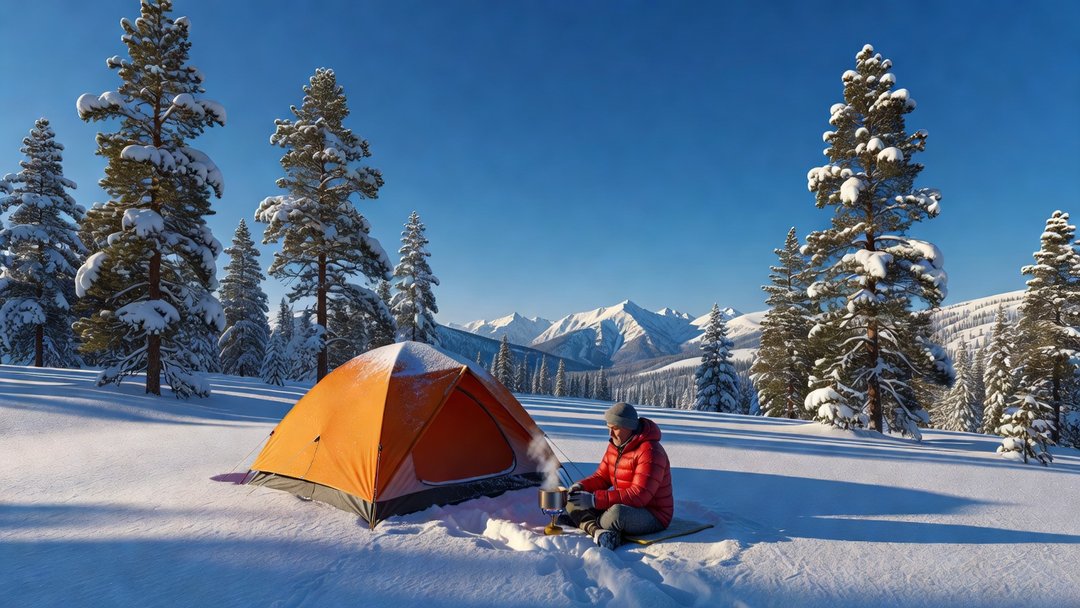
Here's the physics that catches everyone: propane has to boil from liquid to vapor inside the cylinder before it can burn. As the temperature drops, the vapor pressure inside the tank collapses — and the appliance starves. Propane's boiling point is about -44°F, so at 20°F you're fine in principle, but a 1 lb disposable canister has very little liquid surface area and very thin walls. Cold-weather draw pulls heat out of the canister faster than the air can put it back, so the canister ices over, pressure falls, and the ODS pilot drops out.
The tells: the heater dies after 5–15 minutes rather than 30 seconds, the cylinder feels frosty or forms white ice on the outside, and it runs fine on a warm afternoon but not at night.
Three fixes, in order of how much work they are:
- Switch to a 20 lb tank plus a hose. This is the real answer for cold weather. A bigger tank has far more liquid surface area and a much deeper thermal mass, so it keeps producing vapor. The Mr. Heater 10-foot hose assembly ($17.99) is the part that makes it work, and you'll want it for any tank above the 1 lb size.
- Warm the canister. Keep spares inside the sleeping bag or the vehicle cab, and swap to a warm one when output falls off. Never use a flame, a torch, or boiling water to warm a propane cylinder — warm air or a warm-water bath below 110°F is the limit.
- Refill your own 1 lb bottles. Refillables keep the same small-canister convenience while costing far less per trip. The Flame King refillable 1 lb cylinder with refill kit ($59.99) is the DOT-compliant kit the site uses, and this refill adapter ($14.99) connects a 20 lb donor tank to a 1 lb bottle.
If you also run a Coleman bottle-top stove or a lantern off the same 16.4 oz cylinders, the 12-pack of Coleman propane cylinders ($64.99) is the cheapest way to stay stocked — but remember that cold is still cold: cylinders left in the truck bed overnight will misbehave at breakfast.
Fix 3 — The Bulk-Tank Fuel Filter Rule
This one is straight out of the manufacturer's own manual, and it's the fix that most people skip:
Mr. Heater strongly recommends using disposable fuel filter F273699 to trap any oil substances when connected to a remote cylinder that can make heater inoperable.
"Remote cylinder" means any bulk tank — a 20 lb barbecue tank, a 30 lb, a 100 lb. Those tanks carry trace oils and heavy hydrocarbons from the fill process. Run a hose straight from tank to heater with no filter and those oils migrate into the small passages and the pilot orifice. Symptoms start subtly: the heater lights fine on a 1 lb canister, then gets progressively harder to keep lit on the bulk tank, and eventually won't stay lit at all.
The fix is a $16 part and about thirty seconds of installation — the Mr. Heater F273699 universal propane fuel filter ($15.97) goes inline between the hose and the heater. Two rules:
- Filter goes on the hose end, at the heater — not at the tank.
- The filter is directional. There's an arrow; it points toward the heater. Get that backwards and you've built a clog.
While you're at it, check the hose itself. A hose rated for a Coleman RoadTrip-style grill with a regulator built for high pressure will behave differently on a Buddy heater, which runs on low pressure with its own regulator. Use the Buddy-series hose and the filter.
Fix 4 — Above ~7,000 Feet the ODS Shuts You Off on Purpose
If you camp in the Rockies, the Sierra, or the high desert, this section is probably the whole answer to your problem.
Mr. Heater's Buddy line uses an oxygen depletion sensor that must be certified to shut off below a certain oxygen concentration. At altitude, the air simply has less oxygen per breath — and the ODS cannot tell "thin mountain air" apart from "a sealed room with a CO2 buildup." So it does its safety job and closes the valve. Mr. Heater's own guidance puts the practical ceiling at roughly 7,000 feet (2,134 m): below that, heaters work; above it, they may be harder to light and harder to keep lit.
Things that genuinely help:
- Get the heater warmer before lighting it. A cold ODS pilot is fussier; start it at a lower elevation or in a warm vehicle when you can.
- Give it more oxygen. Crack a vent, keep a flap open, don't run it in a fully sealed tent. This helps at altitude and it's non-negotiable for safety anyway.
- Accept the design limit. There is no legitimate hack that disables an ODS. Bypassing the safety cut-off is the single most dangerous thing you can do to a propane heater, and it's how people die in tents.
- Plan a different heat strategy above the line. At 8,000–10,000 ft, that means a good pad and sleeping bag, a hot-water bottle in the bag, and hand warmers — not a radiant propane heater.
Honest guidance for high-altitude family camping: treat the Buddy heater as a low-elevation and shoulder-season tool, and treat your sleep system as the only thing you truly rely on up high. If that's your trip, our how to stay warm camping guide covers the layering and sleep-system side.
Fix 5 — Clean the Pilot and the Orifice
If the pilot won't light at all, or lights but flickers and dies even after a proper purge, you may be looking at a physically blocked pilot.
What you need: a can of compressed air (electronics cleaner in a can, no solvent sprays), a soft brush or a pipe cleaner, and isopropyl alcohol. Never poke a wire, pin, or drill bit into the orifice — the hole is calibrated, and enlarging it wrecks the safety loop.
The safe sequence:
- Let the heater cool completely and disconnect the cylinder. Work outdoors.
- Compressed air through the pilot opening and the burner ports to blow out dust, spider webs, and insect nests. Spiders love propane appliances; a web in the pilot tube is a classic autumn problem.
- If the pilot area is greasy, clean with isopropyl alcohol on a swab and let it dry fully.
- Reassemble, reconnect, and purge the line per Fix 1.
- If it still won't behave, the thermocouple or ODS assembly itself is the suspect — that's a manufacturer part swap, not a field repair.
A quick weekly air-blast during heater season prevents most of this class of failure. It's the cheapest maintenance you'll ever do.
Fix 6 — Level Ground and the Tip-Over Switch
The tip-over switch is a tilt sensor on the valve. If the heater isn't sitting flat, the switch reads "fell over" and shuts the gas off — sometimes immediately, sometimes after a vibration nudges it. The tell is a heater that dies exactly when someone moves, when a dog bumps the table, or when it's on soft, uneven ground.
What to do:
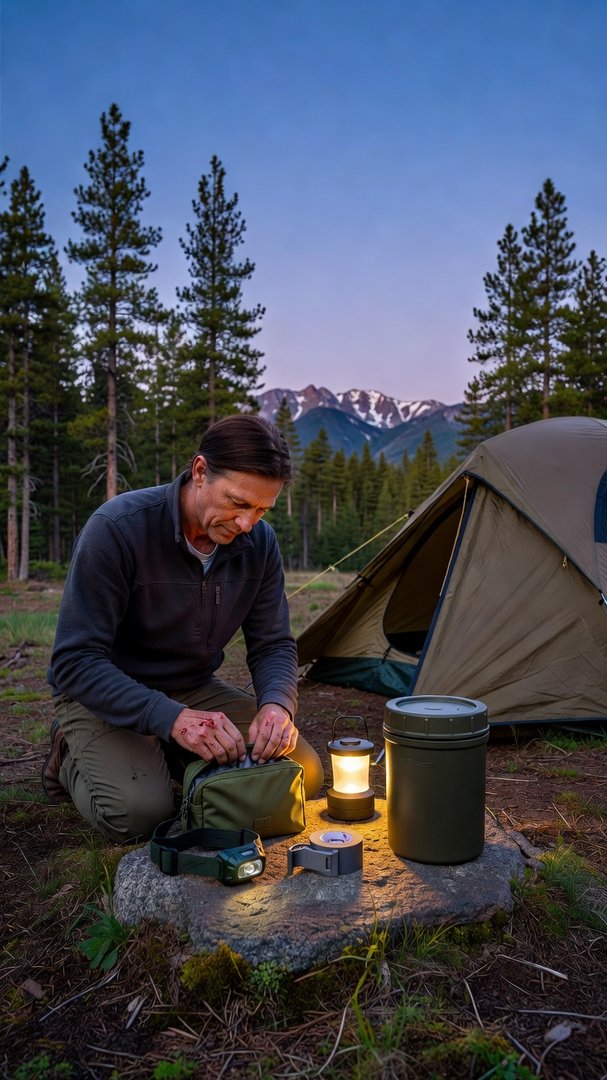
- Set it on a flat, hard, stable surface. On snow or soft ground, put down a board, a flat rock, or a heat-safe pad — never directly on a sleeping pad or anything that can melt.
- Keep all three or four feet in contact with the surface. A stacked-stone "shelf" is not it.
- Give it clearance. Radiant heaters need airflow and ought to face the space you're heating, not press against a tent wall. Follow the manual's clearances; those numbers are about fire, not comfort.
- Don't move a lit heater unless you have to, and set it down level if you do.
Fix 7 — Leaks, Wrong Hoses, and Old Seals
A weak or intermittent flame can also be a fuel-delivery problem outside the heater: a worn hose, a cracked O-ring at the cylinder connection, a cross-threaded fitting, or a hose meant for an appliance with a different regulator requirement.
Two tools make this a two-minute check instead of a guessing game:
- A portable combustible gas leak detector ($25.99) traces propane at fittings and hoses. Far better than the soapy-water approach in the cold, and it also tells you whether the leak is real before you panic.
- A propane tank gauge ($15.99) rules out the embarrassing one: the tank really is nearly empty. Low fuel lowers pressure, and low pressure looks exactly like a failing ODS.
Also worth checking: if you refill your own 1 lb bottles, the connection between the refill adapter and the bottle is a place where a little dirt or a tired seal shows up as an unstable flame. The 20 lb to 1 lb adapter ($9.98) and the Gas One refill adapter ($14.99) both need a clean, snug connection and a full bottle to behave.
Safety, plainly: propane is heavier than air. It pools low and travels. Never check for leaks with a flame; never store a cylinder in a sealed vehicle in the sun; and never run a "no ODS" heater in a tent.
When It's Not the Heater — It's the Air
Some shutoffs aren't fixable, and the right response is to stop trying to fix them. If your heater shuts off in a closed tent or cabin, the ODS is reporting a real condition: combustion is consuming oxygen and producing carbon monoxide. That's the safety system saving your family, not a defect to defeat.
Camping-specific rules the whole family should know:
- Ventilation is mandatory. Keep a tent vent or flap open whenever a propane heater runs, even in a hard freeze.
- Never bedtime-heat on propane in a sealed tent. Bringing the tent up to temperature and shutting the heater off before sleep is the standard pattern for tent camping.
- Carry a CO alarm. A portable battery carbon monoxide detector ($23.97) lives in the gear bin, not the garage. This is the one item on this page you should own even if you never light a heater again.
- Watch altitude + alcohol + a closed tent together. Those three stack badly.
- Know the symptoms — headache, nausea, sleepiness that feels wrong — and get everyone into fresh air immediately.
If you're building a cold-weather setup from scratch, our tent heater safety guide covers placement, ventilation and child/dog safety in detail, and the cold-weather and high-altitude stove guide explains the fuel side of the same physics.
Quick Fix Checklist for the Next Cold Trip
Keep this list in the gear bin and you'll never troubleshoot in the dark again:
- Fuel filter (F273699) — non-negotiable on any bulk tank.
- 10 ft hose with the correct regulator for your Buddy model.
- A 20 lb tank for nights below freezing — plus the 20 lb to 1 lb adapter if you also run small cylinders.
- Two spare 1 lb cylinders, kept warm in the cab or a sleeping bag.
- A tank gauge, so "low fuel" never masquerades as a broken heater.
- A leak detector, for the two minutes of doubt before a trip.
- A CO detector, because the whole family is sleeping next to a combustion appliance.
- Compressed air, for the annual pilot and burner-port blast.
Add a Little Buddy 3,800 BTU ($69.99) as the small-space/golf-cart/late-season deer-camp unit, and a Big Buddy 18,000 BTU ($146.48) when you need to bring a garage-sized space or a big tent up to temperature in a hurry. Both run on the same propane rules — and both will quit on you in the cold for exactly the three reasons above: air in the line, a starved canister, or a missing filter.
Mr. Heater Buddy Troubleshooting FAQ
Why does my Buddy heater light and then go out after a few seconds?
Air in the propane line, or the pilot knob released before the thermocouple warmed up. Hold the knob in PILOT for 30–60 seconds to purge, light it, then keep holding 30–60 seconds after the pilot catches. This single procedure fixes most "won't stay lit" heaters.
Why does my Mr. Heater shut off in the cold?
A 1 lb canister can't produce vapor fast enough below freezing, so pressure drops and the ODS pilot flame starves. Switch to a 20 lb tank with a hose and fuel filter, or keep canisters warm and swap them as they frost. The heater is working; the fuel is the problem.
Can I use a Buddy heater above 7,000 feet?
It may light but then shut off, because the ODS reads thin mountain air as a low-oxygen room. Mr. Heater's practical guidance puts the ceiling around 7,000 feet. Don't disable the sensor — plan a sleep-system-based heat strategy for high-elevation trips instead.
Do I really need the fuel filter on a 20 lb tank?
Yes. Mr. Heater recommends the F273699 disposable filter on any remote cylinder to trap oils that can clog the fuel path and make the heater inoperable. It's a cheap part that prevents a very annoying failure mode. Install it at the heater end, arrow pointing toward the heater.
Is it safe to run a Buddy heater in a tent?
Only with ventilation and never while you sleep. These heaters are rated indoor-safe with an ODS, but any propane appliance consumes oxygen and produces carbon monoxide. Keep a vent open, use the heater to take the chill off, shut it down before you sleep, and run a CO detector.
How often should I clean a Buddy heater?
Blow out the pilot and burner ports with compressed air at the start of every heating season, and again if the heater has sat in a shed or garage. Spiders and dust in the pilot tube are a leading cause of autumn ignition problems.
<!-- AFFILIATE_DISCLOSURE -->