Tent Condensation: Why Your Tent Is Wet Inside in the Morning (2026 Guide)
Why your tent is wet inside every fall morning, how to stop it in cold weather, and the gear that actually fixes it — from family car camping.
You wake up at 6:40 a.m., reach for the wall of the tent to pull yourself up, and your hand comes away soaked. The sleeping bags are damp at the foot end. There's a bead of water hanging off the ceiling, perfectly positioned to land on your forehead. Nothing is leaking — the sky was clear all night. This is tent condensation, and it is the single most common complaint in fall and winter camping.
Here's the good news: condensation in a tent is predictable physics, not bad luck. Once you understand the two temperatures involved, you can cut it by 80% with changes that take under five minutes before you go to sleep.
Quick Answer: Why Is Your Tent Wet Inside?
Warm, moist air from your breathing and skin rises, hits the cold rainfly, and drops below its dew point — so the water in the air turns back into liquid on the coldest surface in the tent. It is not rain coming in. Four people in a family tent can put a couple of litres of water vapour into the air overnight.
The three fixes that matter most, in order:
- Airflow first, not waterproofing. Open the low vent and the high vent so air moves in at the floor and out at the roof. This one change fixes most condensation.
- Pitch for drainage of air, not water. Breezy, higher, exposed ground beats a calm hollow every time. Still air is what lets humidity build.
- Stop adding water. No boiling water inside, no cooking inside, no unvented heater, no drying wet clothes inside the tent.
If you only do one thing: leave the top of the door unzipped two or three inches and open both vents, even when it's 35°F outside.
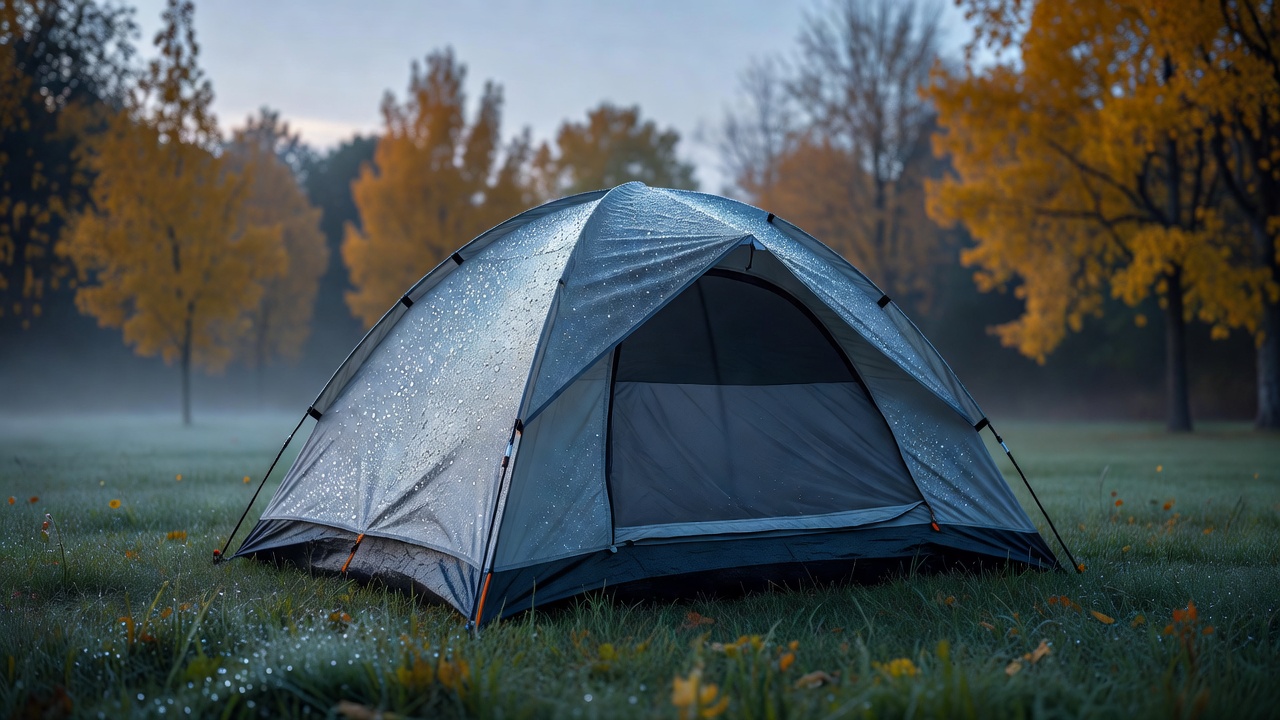
What Tent Condensation Actually Is (and Why Fall Makes It Worse)
Every person in a tent is a humidifier. Through breathing and insensible perspiration, an adult releases roughly a pint (about 0.5 litres) of water overnight. Two adults and two kids in a six-person tent can put 2 litres of water into a sealed volume of air that holds maybe 150 cubic feet.
Warm air holds more moisture than cold air. When that wet air touches the inside of the rainfly — which on a clear autumn night can be 10–20°F colder than the air inside the tent, because the fly radiates its heat straight to a clear sky — it cools below saturation. The moisture has to go somewhere, so it becomes droplets. Your breath went up as vapour and came back down as rain, an inch from your face.
That is why the worst mornings are clear, still and cold: a clear night radiates heat away fastest, and still air means nothing carries the humidity out. A windy, cloudy, warmer night produces almost no condensation.
This also explains why tent condensation inside the fly is worse at the head and foot ends, and worse on the roof than on the walls. Those are the coldest surfaces, and they're directly above the two moisture sources — your lungs and your sleeping bag.
Two phrasing notes that save a lot of searching: people ask why does my tent get condensation on some trips and not others (the answer is almost always weather and ventilation, never the tent brand), and they look for a tent condensation solution in a bottle. There isn't one — every real tent condensation prevention method is about moving air, insulating the cold surface, or removing a water source.
Condensation vs. a Leaking Tent: How to Tell in 30 Seconds
People describe this half a dozen different ways — condensation in tent walls, condensation tent roof, water on the inside of the fly, a tent wet inside by morning — but "is it a leak?" comes up first, so here's the fast test.
It's condensation if:
- The droplets are fine, even and spread across the inside surface of the fly or inner roof.
- The wettest spots are above head height and at the head/foot ends.
- The outside of the fly is beaded with dew too, and the ground under the tent is damp from dew.
- It's worst on still, clear nights and absent on windy ones.
It's a leak if:
- Water arrives in streaks or runs, or pools in one specific spot.
- You find it along a seam, a zipper, a pole sleeve, or a corner — not spread evenly.
- It appears when rain hits (search "condensation in tent when raining" and you'll find both causes mixed together).
- The inside of the fly is wet while the outside looks dry — that's usually a fly that has stopped beading and is wetting out, which we cover below.
One wipe test settles it: run a dry bandana across the inside of the fly. If it comes away with a fine film of water and the fabric outside is also beaded, it's condensation. If you can find a seam that's dripping when the rest is dry, you have a leak to repair.
Droplets on the ceiling that let go once the sun touches the tent are the other classic pattern. If you have seen condensation dripping in tent doorways at 7 a.m. and nowhere else, that's the fly warming up and releasing what was already sitting on it — not water coming through the fabric.
The 8 Fixes That Actually Stop Condensation in a Tent
These are the eight fixes in the order that matters. If you searched how to stop condensation in a tent and skipped straight here, work down the list — the first two solve most tents.
1. Open the low vent and the high vent. Convection is the whole game: cool air enters low, warms, picks up your moisture, and exits high. Tents with only a roof vent still work if you crack the door at the bottom.
2. Leave the inner mesh closed but the fly's door open a hand's width. You keep the bugs out and let the vapour out at the top, where it collects.
3. Pitch for moving air. Skip that gorgeous sheltered hollow and the spot 10 feet from the lake. Cold air pools in hollows, and any water body adds humidity to the air you're breathing all night. If you want to stop condensation car camping as easily as possible, take the slightly breezier site.
4. Peg the fly out properly. Most tents have a gap designed between the inner tent and the fly. If you pitch the fly tight against the inner wall, you create a cold surface touching your living space and it will soak through. Guy out the fly so it stands off.
5. Don't cook, boil or heat inside. A single pot of pasta water adds as much vapour as a person does in a night. A propane heater adds water vapour as a combustion by-product plus a carbon monoxide risk — if you're camping cold, read the tent heater safety guide before you plug anything in.
6. Don't dry wet clothes inside the tent. That jacket is a litre of water going into the air you sleep in. Use a waterproof dry bag for wet kit and hang it outside under the fly.
7. Choose your sleeping surface so it doesn't soak through. Your body pushes vapour down as well as up. An insulated pad with a vapour barrier between you and the ground stops the underside of your bag from turning into a wet sponge.
8. Give the vapour an escape route you control. On still nights with a completely sealed tent, a small battery fan moving air across the ceiling is the difference between a dry morning and a wet one. See the air-movement section below.
Taken together, these are the only reliable ways to stop condensation in tent walls that are already sweating: you either move the saturated air off the cold surface, or you stop adding water to it. There is no third option, and no coating that will prevent condensation in a tent fabric that is colder than the dew point of the air inside it.
And the fix that does not work: there is no tent condensation spray, and no coating, that stops it. You cannot waterproof the inside of moisture that is already in the air. Sealing the tent tighter always makes it worse.
The Gear That Fixes Tent Condensation
Tents with ventilation that works
The single best long-term answer is a tent designed to breathe. Double-wall designs with mesh inners and vents at two heights are far better than single-wall or fully sealed designs.
- Coleman Sundome Camping Tent with Rainfly ($153.49) — the classic family starter tent, with large mesh windows and a rainfly that can be staked out for airflow. If you're getting condensation in tent windows and roof panels on a first tent, this design gives you the vents to fight it.
- UNP 4-Person Cabin Tent with Top Rainfly ($115.99) — a cabin shape with more usable headroom and a top fly, so the wet surface is further from your sleeping bag.
- CAMPROS CP 8-Person Camping Tent with Room Divider and Rainfly ($159.98) — for bigger families, more interior volume means more air for the same amount of human moisture.
- Amazon Basics 3-Season Dome Tent with Rainfly, 4-Person ($41.99) — the budget dome that proved fine on warm trips; on cold nights you'll need the vents cracked and a fan.
- Naturehike Cloud-Up 2 Person Backpacking Tent ($143.10) — a double-wall two-person tent with a proper fly gap, which is why backpackers complain about condensation less than car campers do.
- NEMO Kunai 3–4 Season Backpacking Tent ($749.95) — a genuinely vented 4-season tent, for trips where condensation in tent cold weather is a safety issue, not just a comfort one.
Air movement: the most underrated fix
A FRIZCOL 3-in-1 Camping Fan ($29.98) hung from the ceiling loop moves the saturated air layer off the fly before it can condense. This is the answer to the question "can a tent condensation fan really fix it?" — yes, for overnight humidity in a sealed tent, and it's the cheapest fix on this page. More cooling-specific fan setups: camping fan guide.
Pads and bags that keep vapour away from you
If your bag is wet at the foot end, the problem is often below you, not above.
- Klymit Insulated Static V Sleeping Pad ($94.99) and the Gear Doctors Oxylus Insulated Self-Inflating Pad ($49.99) both put closed-cell or insulated foam between your body and the ground, so the vapour you push downward doesn't condense into your bag's underside.
- TETON Sports Celsius 0° Sleeping Bag ($59.99) — a synthetic bag is the right call for damp conditions: unlike down, it keeps a meaningful amount of its warmth when it gets wet. If you're weighing liners and ratings, our sleeping bag temperature ratings guide breaks down what the numbers mean in real tents.
Liners, absorbers and mats
- A Litume Fleece Sleeping Bag Liner ($57.98) or a REDCAMP Fleece Liner with Hood ($24.99) acts as a tent condensation absorber for your body: the fleece takes the moisture your bag would otherwise hold, and you wash it instead of the bag.
- Cotton or fleece also works as a tent condensation sponge on the walls — leave one dry towel in the tent and wipe the fly down at first light, before the droplets soak through the inner.
- A tent condensation mat solves the same problem in reverse on cot and hammock setups: vapour from below condenses on the cold underside of your pad. If you sleep elevated, add a mat or a vapour barrier under the pad. The mechanics are the same ones covered in our cot vs air mattress vs sleeping pad comparison.
Re-waterproofing the fly (fixing the "leak" that isn't one)
A fly that has stopped beading lets water wick through the fabric and mist the inside — and it looks exactly like a leak. Nikwax Tent & Gear SolarProof ($19.95) restores the durable water repellency on the fly and adds UV protection. Re-proof a 3–5 year old fly before you assume the tent has failed; it's also the cheapest step in tent care and maintenance.
How to Dry Out a Wet Tent in the Morning
You will not beat condensation every night, so plan for the wet morning:
- Wipe the fly down at first light, inside and out, with a microfibre towel. The droplets are easiest to remove before the sun softens them into the fabric.
- Open the tent up and let it air while you make coffee — five minutes of direct sun does more than an hour of folded-in-the-stuff-sack.
- Pack the wet fly separately in a dry bag or a plastic liner, never against your sleeping bags.
- Dry properly at home, in the shade. UV degrades nylon over years, and a fly packed damp grows mildew that permanently kills the coating.
Cold-Weather and Car Camping Specifics
Anyone who has fought tent condensation winter after winter knows the drill, but the same rules apply to a 40°F October night: the colder and clearer the night, the bigger the temperature gap between your breath and the fly.
Here's how to reduce condensation in tent walls once the temperature drops below 45°F:
- Vent more, not less. The instinct to seal the tent when it's cold is the single biggest cause of soakings.
- Breathe away from the bag. Sleeping with your head buried in a mummy bag puts your exhaled vapour straight into the insulation.
- Use the same gear hierarchy as any cold trip. Our winter camping gear checklist and the 4-season tent guide cover the layering and shelter side of this.
- Treat a wet bag as a hazard, not an annoyance. Below about 50°F, a soaked sleeping bag loses most of its insulating value, and the risk shifts from discomfort to hypothermia. That's the point where you stop treating condensation as a packing-list nuisance.
If the question you actually typed was how to prevent condensation in a tent during winter, the short version is to run the same vent order you'd use in July — low vent in, high vent out, and the top of the door cracked a hand's width — then accept a small draft. Sealing up is exactly what turns a 20°F night into a wet bag, and the coldest nights are the ones where the gap between your breath and the fly is largest.
A few more practical tent condensation tips from real trips: pitch your tent on the highest flat spot in your site rather than the flattest, and if you're camping with kids, put the smallest sleeper at the highest point of the floor so puddles don't collect under them. Families needing more weather-protected space may prefer a tent with a screen porch, where you can sit out the morning fog without adding more humidity inside the sleep area.
Common Mistakes
- Pitching under a tree canopy for shelter. Leaves cut the radiational cooling less than people expect, and you lose the breeze that dries the fly.
- Sealing every vent on a cold night. This is how condensation in tent overnight problems get created in the first place.
- Blaming the tent. The same tent pitched on a windy ridge stays dry and in a sheltered hollow soaks the bags — geometry and airflow beat brand every time.
- Storing the tent damp. The next trip starts with a musty fly, and the coating has begun to fail.
- Ignoring the fly's ageing. A 5-year-old fly that wets out is a two-dollar fix, not a new tent.
Why the Inside of Your Tent Gets Wet: The Short Answers
Nothing is leaking. The water on your walls spent the night inside the air, and you put it there. A sleeping adult exhales roughly a litre of water vapour in eight hours; a family of four plus a damp dog can push several litres into a space the size of a small wardrobe. When that warm, humid air touches a fly or an inner wall that has dropped below the dew point, the vapour turns straight back into liquid water. That is the entire mechanism, and it is the reason why is the inside of my tent wet in the morning is the most common cold-weather camping question there is.
The bullet list below is the short version. Each line is the question people actually type, with the honest answer next to it.
- why is my tent wet on the inside — the inner wall or the underside of the fly is the coldest surface in the tent, so your breath condenses there first. The wet patch is almost always above your head and along the foot end.
- why is my tent getting wet inside — one of four sources: your breath, wet clothing and wet hair left inside, a stove or kettle boiled inside the tent, or ground moisture wicking up through the floor.
- why is my tent so wet inside — volume, not a defect. More people, a dog, and a closed-up tent multiplies the vapour load. Four sleepers in a 4-person tent will always be wetter than two in an 8-person tent.
- why is my tent wet inside — see above, but check the small things too: a soaked rain jacket in the corner, a wet towel over the gear loft, and a bag of wet swimwear all evaporate into the same closed air.
- why is my tent damp inside — sometimes you never see droplets. Everything simply feels clammy. That is the same condensation spread thin over a large wall surface, and it is a warning sign that you are one cold night away from wet sleeping bags.
- why is my tent dripping inside — droplets form on the fly, run down the inside of the fabric to a seam or a low point, and then fall. Wiping the inside of the fly before you sit up stops most of it landing on your sleeping bag.
- why is my tent floor wet — usually ground moisture, not condensation. Warm, damp soil under a cool floor condenses underneath you, which is exactly what a footprint is for.
- tent leaking or condensation — the test is touch and location: condensation is a film of water on the inside face of the wall, evenly spread, and it does not grow while it is dry outside. A leak tracks from a seam, a zip, a stitch line, or a damaged panel, and it gets worse the harder it rains.
- tent condensation vs leaking — do it at first light, dry outside and wet inside. If the outer fly is also wet, that is dew or rain and it proves nothing; if the outer fly is bone dry and the inner face is soaked, you have condensation and not a damaged tent.
- is my tent leaking or is it condensation — check the highest wet point. Condensation starts high and runs down. A leak starts where the water gets in, usually a seam, a guy-out, or a zip, and it will be in the same place every time.
- is condensation in a tent normal — yes, in a sealed tent with people in it, on a cold night, it is closer to guaranteed than possible. Expecting a dry tent with every vent closed in October is the mistake, not the condensation.
- do all tents get condensation — every tent that holds warm, moist air against a cold surface does. Better-ventilated tents move the moisture out before it lands, but no fabric is immune to physics.
- why does condensation happen in a tent — warm, moist air on one side of a thin sheet of fabric and a cold night on the other. The fabric is the coldest thing your breath meets, so it is where the vapour gives up and turns to water.
- how does condensation form in a tent — in three steps: you add moisture to the air, the air cools until it reaches its dew point, and the water drops out on the nearest cold surface. Vents and airflow interrupt step three.
- why do you get condensation in a tent — because a sleeping bag, a camp stove, wet clothes and four people all release water vapour, and a closed tent is a sealed container. Add a still, clear night and the whole thing drops out at once.
- condensation on inside of tent and condensation inside the tent — same defect, two ways of describing it. The practical fix is always the same: reduce the vapour you create, and give the vapour somewhere to go.
- condensation inside of tent — the classic pattern is a wet ceiling, dry sleeping bag, and a wet foot end. That last one tells you the moisture is running downhill inside the wall.
- condensation inside camping tent — the inside of the fly is the usual culprit, not the inner tent. If the inner is wet, the moisture is winning the race out of the tent.
- tent interior condensation — treat it as a ventilation problem you can measure: pitch the same tent twice, once with the ceiling vent open and once sealed, and compare the walls in the morning.
- tent has condensation — if it happens every trip regardless of weather, your pattern is wrong. If it happens only on clear, still, cold nights, it is dew point and you can plan for it.
- tent gets wet inside — the tell is a tent that feels as wet at the foot end as it does at the head. Water only runs downhill, so a wet foot end is almost always condensation.
- tent walls wet inside — thin, single-layer walls condense fastest because there is no air gap between you and the outside surface. Touching a wet wall and pressing it inwards is how a lot of sleeping bags get soaked.
- tent wet on inside — the one place people miss is the underside of the fly where it meets the inner mesh. That gap is where the worst drips form.
- condensation dripping inside tent — dripping is condensation that has pooled along a seam tape or a horizontal guy line and then released. Run a fingertip along the seam before you sleep and it will drip later instead of on you.
- tent dripping condensation — a tent that drips after sunrise is usually not leaking. The sun warms the fly and the droplets shift; what drips at 7 a.m. is the night's condensation releasing.
- what to do if your tent gets wet — blot the walls, do not shake them, get the wet layers into the vestibule, and wipe the sleeping bag shell before it soaks through. Then fix ventilation before the next night.
- what to do when tent is wet — dry the people and the bags first, the fabric second. A damp sleeping bag loses its loft and stops being a warm place to sleep; a damp wall is cosmetic by comparison.
- tent is wet in the morning — if this is your pattern, change one habit per trip. Start with leaving the roof vent open and the door-base gap on the sheltered side cracked open by a hand's width.
How to Stop Condensation in a Tent Overnight: The Before-Bed Routine
The five minutes before you zip up matter more than any piece of gear. Everything below takes under five minutes and cuts condensation dramatically, because it attacks both halves of the problem at once: it removes vapour sources, and it gives the warm wet air an escape route.
- how to stop condensation in a tent overnight — open the high vent, crack the door-base, get wet gear out of the sleeping space, and keep the fly gap clear. Do those four things and the walls stay dry on most nights.
- how to stop condensation in tent overnight — the single biggest change is not closing the tent up tight for warmth. Cold and dry is comfortable; warm and wet ruins the trip.
- how to stop tent condensation overnight — a floating floor, a ground sheet, and a footprint stop ground moisture adding to the load. Moisture in from the ground is the half of the problem people never count.
- how to stop a tent getting condensation overnight — take off wet layers before you get in the bag, not after. Wet shell layers in a sleeping bag release water vapour all night long, right where you are warmest.
- how to prevent condensation in tent overnight — never boil a kettle or run a stove inside a closed tent. Forty grams of propane puts roughly a litre of extra water into the air, and you will find all of it on the walls by morning.
- how to stop condensation in a tent at night — a mid-size USB fan aimed at the ceiling moves air across the shell and is the most effective single device you can bring. See the ventilation section below.
- how to stop condensation in tent at night — the last person in leaves a gap, not a seal. A hand-width opening at the low, sheltered side of the door creates the intake that the roof vent needs.
- how to keep inside of tent dry overnight — pack wet boots, wet socks and wet dog towels into the vestibule or the car, never into the sleeping area. Every damp item indoors is a moisture source, all night.
- how to stop condensation in tent — the order is: reduce vapour, increase airflow, separate yourself from the shell. A tent where the sleeping bags touch the walls will always feel wetter than one where they do not.
- how to stop condensation in the tent — do not put damp clothing on the gear loft to dry overnight. It condenses on the roof and then drips on whoever is sleeping under it.
- how to stop condensation inside tent — if there is a breathable inner with a solid fly, they have to be pitched with a gap between them. Flies that touch the inner defeat the entire design.
- how to stop condensation inside a tent — a wipedown costs thirty seconds. A microfibre cloth run around the inside of the fly before you sleep removes the water that has already formed and will otherwise drip.
- how to stop condensation inside your tent — leave the very top of a double-wall tent's door unzipped if it has a vent flap. That tiny opening high up is the exhaust chimney for everything you exhale.
- how to stop a tent condensation — mask the vapour at the source on the coldest nights. A light buff or a partially pulled-up mummy bag hood keeps your breath from hitting the wall where it is coldest.
- how to stop inside of tent getting wet — do not cook, do not dry laundry, do not run a heater that burns fuel. Every flame inside a tent is also a water source.
- how to keep inside of tent dry — pitch so the fly is taut and does not sag against the inner. A slack fly touches the mesh, and the contact point is where the moisture transfers.
- how to keep tent dry from condensation — on a still, clear, cold night, expect it and plan for it: vent open, bags clear of the walls, and a towel ready for the morning wipe.
- how to keep tent from condensation — pack a small dedicated wall-wipe towel and a mesh hanging line for wet shell layers inside the vestibule. Gear discipline is worth more than any coating.
- how to keep a tent from condensation — if you have the option, sleep one person fewer in the tent, or at least give the youngest sleeper the middle. Fewer bodies in the same volume is less vapour.
Cold Weather, Winter and Fall: Why the Wet Tent Shows Up Now
Condensation is a shoulder-season problem. The air outside is cold enough to drop your breath below its dew point, but the weather is still mild enough that you are sealing the tent up for warmth. As the nights get colder the fly gets colder, and the same habits that were harmless in July become a wet sleeping bag in October.
- how to stop condensation in tent cold weather — the colder the outside air, the less moisture it can hold before it gives up. On a cold night the inside of your fly can be twenty degrees warmer than the air outside, which is exactly the recipe.
- how to stop condensation in a tent in winter — reduce the vapour load first: fewer people per tent, no cooking inside, no wet gear inside, and breath away from the wall. Then ventilate hard on both the high and low ends.
- how to stop condensation in tent in winter — accept that some frost inside the fly is normal. Frost on the inner face is condensation that froze before it dripped, and it becomes a drip the moment the sun hits the tent.
- cold weather camping condensation — the same reason your car windscreen ices on the inside: warm, humid air inside a thin shell, cold on the outside. A car, a tent, and a bedroom window are the same three ingredients.
- condensation in tent winter camping — winter is the worst case because you keep the tent almost fully sealed. Everything you exhale stays in, and it is all still there in the morning.
- tent condensation winter camping — do not wipe the inner wall with a bare hand in freezing conditions. Grip a cloth; touching a frozen wall transfers water straight to your skin and warms the fabric enough to start a drip.
- tent condensation in winter — the fly's inside face may carry a sheet of frost, which is actually useful: frost drips less. Wipe it away before it thaws, not after.
- condensation winter camping — a breathable single-wall tent built for winter handles vapour better than a cheap double-wall pitched badly. Fabric matters, but airflow matters more.
- winter camping condensation — never seal the high vent "because it is minus six". The vent is exactly what stops the tent being minus six and wet inside.
- camper condensation in winter and winter car camping condensation — the same rule applies in a rooftop or van setup: crack a window on both sides, keep the heater's exhaust out of the cabin, and never sleep with every window closed.
- how to keep tent dry in winter — a small fan on a power bank, run for the first hour before you sleep and the first hour after, is worth more than any anti-condensation coating.
- how to dry a tent in winter — you usually cannot dry a tent fully outdoors in winter. Set it up in a garage or a spare room with a fan and a dehumidifier, or accept an indoor airing and dry it properly on the first dry day.
Condensation by Tent Type: Single-Wall, Double-Wall, Canvas, Bell, Bivy
Not all tents fail the same way. If you are deciding what to buy — or working out why the tent you already own is the wettest one on the site — the construction is the variable that matters most.
- how to prevent condensation in a single wall tent — a single wall has no air gap to buffer the moisture, so your breath reaches the cold fabric directly. You stop it by maximising vents and by sleeping with your bag clear of the walls.
- single wall vs double wall tent — a double wall with a mesh inner and a separate fly gives the vapour an air gap to pass through and keeps your bag away from the cold surface. That is the whole reason the design exists.
- double wall tent condensation — even a double wall condenses if the fly is sagging against the inner or the vents are shut. The design buys you margin; badly pitched it buys you nothing.
- double wall condensation — the classic double-wall failure is a fly that touches the inner at the foot or the shoulder. Re-tension the fly, add a guy line, and the wet patch moves outward where it belongs.
- condensation single wall tent — with single-wall tents, plan for a wipe. They are lighter and they vent harder; the trade is that you are sleeping closer to the dew point.
- how to stop condensation in a hot tent — a hot tent with a wood stove has a peculiar problem: the fire drives vapour out through the chimney, but a propane heater inside adds water instead of removing it. Burn wood, vent high.
- how to prevent condensation in a hot tent — leave the stove's own air intake and the roof jack vent free, keep wet wood outside the sleeping area, and never run a fuel heater with the tent sealed.
- condensation in hot tent — if the fog inside your hot tent forms the moment the fire dies, that is the stove driving moisture out of the air and then the air cooling. It is normal, and a vent plus a liner tames it.
- how to stop condensation in canvas tent — canvas breathes better than coated nylon, so the fix is the opposite of most tents: stop closing it up completely. Leave the top vents and the door flap cracked and canvas behaves.
- canvas tent wet on inside — canvas wets out from the inside when the warm humid air cannot escape through a closed roof vent. Open the apex and the problem usually shrinks to a damp patch near the door.
- bell tent condensation — a bell tent is a single-wall canvas or poly-cotton cone with a huge internal volume and very few vents. Without the top aperture open, the whole canopy becomes a cold condensing surface.
- tipi tent condensation — same shape, same physics, and most tipis only perform when the crown opening is actually used. If you keep the crown flap closed for warmth, expect a wet canopy.
- bivy tent condensation — bivies have minimal air volume, so your own breath is the dominant moisture source. A mesh face panel and a hooped foot end make the difference between damp and soaked.
- tarp tent condensation — tarps and tarp-tents do best in a breeze and worst in a still hollow. Pitch where air moves, and keep the sleeping bag off the tarp's cold top surface.
- hammock camping condensation — a hammock under a tarp traps you between two surfaces with very little airflow. An underquilt with a breathable shell and a gap between the quilt and the tarp is the standard fix.
- cowboy camping condensation and condensation cowboy camping — sleeping out under the stars is dew, not condensation. Your bag's shell is the coldest surface and the night air wets it from outside, so a light tarp or bag cover beats any venting trick.
- tent fly condensation — the fly is the tent's cold layer by design, so it will be the wettest surface you own. That is fine; the point is to keep the moisture on the fly and not on the inner.
- condensation inside rain fly — an inner face of a fly that is soaked while the inner tent is dry is actually the system working. Re-tension the fly and the water runs to the ground instead of dripping inside.
- tent footprint condensation — a footprint that extends past the tent edge can collect water and channel it under the floor. Keep it slightly smaller than the tent's base.
- how to stop condensation in a small tent — small volume plus more than one person equals a humid box. Fewer people, more vent, and one fan covers it.
- best single wall tent for condensation — the ones that solve it are the ones with usable high-level vents and a breathable fabric, not the ones with the thickest coating. Look for a vent you can actually operate from inside.
- best tent for condensation — prioritise a double-wall design with two cross-flow vents and a fly that does not touch the inner. Those three features matter more than any fabric specification.
- condensation free tent — there is no such thing in a sealed tent with people in it, and any brand claiming otherwise is selling you optimism rather than a membrane.
- tent without condensation — a mesh-only summer tent comes closest because the walls are not a cold surface at all. That is also why it is a terrible October tent.
- tent no condensation — the honest version of that claim is a tent that ventilates well enough that condensation stays on the fly and never reaches you.
Sleeping Bags and Pads: The Condensation Nobody Checks
Most people check the tent walls and never check what is under them. But two of the three coldest surfaces in your sleep system are a mattress sitting on cold ground and the inside of a sleeping bag's shell. Both condense, and both are much more uncomfortable than a damp wall.
- how to protect sleeping bag from condensation — keep the bag's shell off the tent wall, keep the foot end off the inner, and put your damp base layer in a dry bag rather than in the bag with you.
- how to prevent condensation in sleeping bag — give the vapour somewhere to go. A bag with a breathable shell and a liner you can turn over in the morning dries far faster than a coated bag that traps the moisture in its loft.
- how to keep condensation off sleeping bag — do not breathe into the bag. A face-covering buff or a hood left open at the nose keeps the two biggest moisture sources — your breath and your skin — away from the cold shell.
- how to stop sleeping bag condensation — a vapour barrier liner is the deliberate version of this: it puts the water on the liner, where it cannot soak your down. It works, and it feels clammy, which is the trade.
- sleeping bag condensation — the wet patch is usually near the head and along the top of the bag, matching where your breath travels. That distribution is the proof it is not a leak.
- sleeping bag wet from condensation — a wet synthetic bag still insulates a bit; a wet down bag loses most of its loft. On a cold trip, treat a damp down bag as an emergency and dry it the moment the sun is up.
- sleeping bag feels damp — the first sign is a bag that feels cold and clammy rather than warm. That is the shell holding a film of water, not a failing bag.
- sleeping bag cover condensation — a waterproof bivy cover over a bag traps moisture under the cover. If you use one, it needs to be a breathable shell or it will soak the bag from the inside.
- down sleeping bag condensation — down is the material that suffers most, because it absorbs water into the fill rather than shedding it. With a down bag, ventilation discipline is not optional.
- condensation in sleeping bag — the moisture came from you; the bag is just where it landed. Fixing the tent's airflow is what fixes the bag.
- condensation between sleeping bag and pad — a cold air mattress underneath a warm body is a perfect condensing surface. An insulated pad with a decent R-value moves the dew point out of your sleep system entirely.
- sleeping pad condensation — an uninsulated air pad is the worst offender, because moving air inside the pad circulates the cold right under you. Insulated pads and closed-cell foam under you both help.
- condensation under camping mattress — a breathable mat or a thin closed-cell layer under the mattress separates the warm mattress from the cold floor and stops the water forming under you.
- anti condensation camping mat and camping anti condensation mat — these mesh or breathable underlays do exactly one job: keep the mattress off the cold, damp surface below it. On a cold trip they are cheap insurance.
- tent anti condensation mat — the same product under a different name. If your mattress feels damp underneath itself in the morning but the top is dry, you are the exact buyer for one.
- tent moisture proof mat — a moisture-proof mat below the mattress is the other half of the same job: it keeps ground moisture from coming up while the breathable layer above keeps your body's vapour from condensing down.
- camping condensation mat and condensation camping mat — the camping version is usually a breathable mesh bonded to a thin waterproof base. It is light, and it does what a footprint cannot do under a mattress.
- sleeping bag moisture barrier and tent moisture barrier — a barrier used properly does not stop water, it decides where the water goes. Put the vapour barrier where you can dry it, and never inside the bag's insulation.
How to Dry a Wet Tent (and How Long It Actually Takes)
A wet tent that goes into a stuff sack stays a wet tent, and that is how tents die — mildew eats the coating, the fabric loses its water repellency, and next season it leaks. Drying it takes far less time than most people think, provided there is any moving air at all.
- how long does it take to dry out a tent — a synthetic tent in direct sun with a breeze is usually dry in one to two hours. A soaked fly alone can be dry in under an hour if you hang it unfolded rather than bunched.
- how long does it take to air dry a tent — in still, humid indoor air, eight hours or overnight. In front of a fan, two to three hours. Airflow matters more than heat.
- how long does it take to dry a tent — the honest answer depends on three things: how wet it is, how much air moves over it, and whether the sun reaches it. Two hours in a breeze beats a full day in a damp garage corner.
- how long to dry a tent — smaller than you would guess, and this is an argument for drying it right away rather than storing it wet until "later in the week".
- how long to air dry tent — overnight is plenty if it is indoors with a fan and nowhere near a wall. If it is in a stuff sack, it will never dry at all.
- how long to dry out tent — a canvas tent is the outlier. Damp canvas can take a full day or more, and it must not be folded while even slightly damp or it will mildew along the folds.
- how to dry out a tent after camping — the moment you get home, set it up or hang it. Never leave it in the car boot "for one night" — a sealed bag in a warm car is a mildew incubator.
- how to dry a tent after camping — take both parts out separately. The fly, the inner, the footprint, the stakes and the guy lines all need air, not just the inner tent.
- how to dry a camping tent — interior first, exterior second. Wipe the inside water out, then hang the tent so the outer face gets air and sun, because the outer face is what spends the most time wet.
- how to dry a wet tent — hang it rather than lay it flat. Water runs to the lowest point and drips off; a tent laid flat on the ground traps a film of water under it.
- how to dry a wet tent at home — a shower rail, a washing line in a garage, or two chairs and a broom handle in the garden. Any of those beats draping it over a fence and forgetting it.
- how to dry a tent at home — invert it first if the fly is soaked: drying it inside-out lets the water leave the fabric instead of being pushed back through the coating.
- how to dry a tent indoors — a room with a fan and a dehumidifier is faster than a conservatory in winter drizzle. Keep the tent out of contact with cold walls, which will re-condense moisture onto it.
- how to dry out a tent indoors — spread the panels. Bunching fabric in a heap creates a pocket of trapped humid air and the middle of that pocket stays wet for a day.
- best way to dry a tent indoors — a fan pointing along the fabric, a dehumidifier running, and the tent re-positioned once halfway through. Rotating it is what stops one fold staying damp.
- how to dry a tent in an apartment — a shower rail plus a fan, with a window cracked. A small tent dries overnight; a large one wants a second night or a laundrette's dryer-room.
- how to dry tent in apartment — check the bathroom before you put the tent away, not after. If the rail itself is damp, you are simply moving water from one surface to another.
- how to dry a tent with no garden — indoors, in a bathroom, with the extractor fan on. Ten minutes of repositioning halfway through is the difference between dry and nearly dry.
- how to dry out a large tent — a family tent cannot be dried whole. Hang the fly across two lines, then the inner, then the footprint. If you have space, dry the fly on the tent and take the inner out separately.
- how to dry a large tent — same rule, different geometry: more fabric means more folded surfaces, so unzip every door and window and open the whole thing out flat before you hang it.
- best way to dry a large tent — set it back up on a dry, sunny, breezy day for an hour, then turn the fly over and give the inside the same hour. That is the fastest honest route.
- how to dry a tent quickly — sun plus airflow, and the tent fully open. There is no shortcut that beats laying the fabric out in the wind.
- how to dry a tent fast — a microfibre towel run over the wet face first removes a surprising amount of water before the air has to do anything at all.
- how to dry out a tent quickly — blot, then hang, then rotate. Blotting is the step people skip and it roughly halves the drying time on a heavily condensed fly.
- how to properly dry a tent — dry, then check the seams and the zip, then store it loosely. A tent stored compressed for months in a wet state is the most common way a good tent fails early.
- how to dry your tent — never use a tumble dryer and never use direct high heat. Coated fabrics and seam tape do not survive either, and the damage shows up next season as a leak.
- how to dry a tent — a tent is dry when the seams no longer feel cool or damp to the back of your hand, not when the visible surface looks dry.
- how to dry a tent out — finger-test the seam tape, the zip tape, and the corner where the pole sleeve meets the floor. Those three stay wet the longest.
- how to dry a tent for camping — if you are packing for the next trip, dry it fully and then re-tension it as you pack so the poles and the fabric are not crushed together.
- how to dry out tent for camping — a short airing on the day before you leave is enough to catch anything you missed last time. It costs ten minutes and saves the trip.
- how to dry tent after use — build it into the unpacking routine: tent up, everything out, dry overnight, pack the next morning. The habit is the whole system.
- how to dry out a bell tent — canvas needs airflow through the whole cone and a day of dry weather. Never fold a bell tent damp: the creases are where mildew starts, and canvas is far less forgiving than nylon.
- how to clean and dry a tent — plain water and a soft cloth, never a pressure washer or detergent on a coated fabric. Clean it wet, dry it properly, and re-proof only when water stops beading.
- how to wash and dry a tent — mild soap, a bath or a large tub, then a full air-dry with the tent set up. Never machine-wash a tent, and never dry it over a radiator.
- how to dry tent after washing — rinse until the water runs clear, then dry it fully erected so the fabric dries in the shape it will be used in.
- how to dry a tent before packing — put the fly on top of the load, not at the bottom. Anything still slightly damp should be the first thing unpacked at the other end.
- how to air dry a tent — the goal is air moving through the fabric, so openness beats heat, and shade with a breeze beats a hot, still car park.
- best way to dry a wet tent — blot it, hang it inverted so water leaves the way it came in, rotate it once, and give it airflow. That sequence is faster than any single trick.
- best way to dry a tent — set it up, open everything, and let the sun and wind do the work while you unpack the rest of the gear.
- best way to dry a tent out — dry it in the morning, when the air is warming and the sun is rising. Drying in the evening leaves it cooler and damper than you started.
- best way to dry your tent — treat drying as part of the trip rather than a chore afterwards. A tent packed wet is a tent you will be replacing sooner than you expect.
- how to dry inside of tent — wipe the walls in the morning, before the sun turns last night's condensation into drips. That single habit keeps the inner tent and the sleeping bags dry.
- how to dry the inside of a tent — a microfibre cloth and two minutes. Wring it into a bucket or outside, never onto the floor of the tent.
- how to dry condensation in tent — blot, ventilate, then leave the tent open for an hour before you pack. If you must pack in the rain, dry the inner separately the moment you can.
- how to dry the bottom of a tent — lift the floor and wipe under it, because the underside is where ground moisture sits. A damp floor underside into a stuff sack is exactly the mildew case.
- how to dry bottom of tent — if the footprint is wet, dry it separately and store it away from the tent body. A wet footprint in a packed tent wets the whole load.
- how to hang a tent to dry — hang it by the highest point and let the panels fall open, with the doors and vents open so air passes through instead of around it.
- how to set up a dry tent — pitch it dry, or pitch it and dry it before you sleep in it. Arriving at night in the rain and going straight to bed means starting the trip with a wet interior.
- how to dry clothes in a tent — do not. Hang them in the vestibule with the outer door cracked, and only in dry weather. Damp laundry inside the tent is a moisture source you have invited in.
- how to dry clothes in tent — if you must, hang them low and to one side, away from the sleeping area, and accept that the wall above them will be wet in the morning.
Ventilation, Vents and Fans: What Actually Moves the Moisture Out
Every fix on this page reduces to one idea: get the warm, wet air out before it reaches a cold surface. Vents and airflow are the mechanism, so it is worth understanding which opening does what, and why the cheapest accessory in your kit — a small fan — keeps showing up.
- how to ventilate a tent — use two openings at different heights. A high vent near the apex is the exhaust; a low opening at the door base is the intake. One opening alone just moves air around inside.
- how to vent a tent — leave the high vent fully open and crack the low vent on the sheltered side, so the chimney effect works without rain blowing in.
- tent ventilation camping — the biggest mistake is treating the tent as a sealed box for warmth. A ventilated tent is drier and, with a decent sleeping bag, warmer in practice.
- camping tent ventilation system — some tents have a vent you can open and close from inside, and some have a mesh panel with a zip over it. Learn which both of yours are before the first cold night.
- tent ventilation system — the working system is always the same shape: intake low on the sheltered side, exhaust high on the leeward side, and a sleeping area that is clear of the walls.
- tent ventilation setup — set up with the door facing away from the wind and the high vent open, then adjust the door gap rather than closing the vent when you get cold.
- tent vents open or closed — open, on almost every night. Closing them is how a tent becomes a greenhouse full of last night's breath.
- tent roof vent — the most valuable vent on the tent, because warm moist air rises. If your tent has one, use it every single night, in every season.
- tent roof fan — a fan mounted at the roof vent turns a passive opening into active extraction. It is the highest-value small accessory in this whole article.
- tent duct vent — useful where you want to run a heated hose or a dryer duct without opening the door, and also useful as a controlled high exhaust. Keep the flap clear of the inner.
- tent zipper vent — zip-based vents along a door panel are easy to forget. Partially unzipping the top of the door is the free version of a high vent.
- tent screen fan — a mesh-safe fan clipped to a gear loop moves air without cutting a hole in anything. Point it across the ceiling rather than at your face.
- tent extractor fan — the small PC-fan style units that fit a vent sleeve are the only true extractors in this niche. They work because they push the wet air out instead of stirring it.
- tent extraction fan — the same idea with a bigger blade. Even a low-power extraction fan will keep the inner face of a fly remarkably dry on a still night.
- tent mounted fan — a clip-on or magnetic mount keeps the fan off the floor and aimed along the shell, which is where you want the airflow.
- tent electric fan — a USB or battery fan on a power bank is the standard answer, and it runs all night for a fraction of a phone battery.
- tent humidity control — a passive moisture absorber is a small help in a sealed tent and a token gesture in a well-ventilated one. Fix the airflow before you buy chemicals.
- tent humidity — inside a sealed tent, humidity can sit near saturation all night. That is why the water appears the moment the wall temperature drops.
- tent humidity camping — the number that matters is not the outdoor humidity but the difference between your tent's inside temperature and the fly's surface. Venting shrinks that difference.
- camping humidity and camping moisture — a humid day plus a cold night is the worst combination, because the air you pull into the tent already carries the water that will condense.
- tent moisture — treat it as a load you are managing. Every source — breath, skin, wet gear, cooking, ground water — adds to a budget you clear with airflow.
- moisture inside tent — if the inner walls are beaded and the fly gap is closed, re-tension the fly first. Contact between fly and inner transfers moisture faster than any vent can remove it.
- tent damp inside — a tent that is uniformly clammy has condensation spread over a large surface. A tent with one wet patch has a contact point or a leak.
- how to keep moisture out of tent — stop it coming in from below with a footprint, stop it coming in with you by leaving wet layers in the car, and stop generating it with cooking or drying laundry.
- prevent moisture in tent and how to prevent moisture in a tent — reduce the vapour you add, and give the vapour a route out at the top. Those two levers do most of the work.
- how to reduce moisture in a tent — one occupant fewer, one vent more, and no wet gear inside. On a family trip, that combination is the whole solution.
- how to stop moisture in a tent and keep moisture out of tent — the same answer, and it is always cheaper than the dehumidifier you were about to buy.
- how to reduce condensation in a tent — open the high vent, open the low vent, keep the bag off the wall, and get the wet kit out of the sleeping space. Four changes, five minutes.
- how to reduce condensation in your tent — then measure it: wipe the inside of the fly in the morning and see how wet the cloth is. That is your score for the night, and it will tell you whether the change worked.
- how to keep condensation down in a tent — ventilation first, moisture sources second, and never trade airflow for warmth. Cold and dry is a warm night's sleep; warm and wet is not.
- how to manage condensation in a tent — decide in advance where the water will go. On a good setup it lands on the fly and runs outside; on a bad one it lands on your sleeping bag.
- how to combat condensation in a tent — combine a fan, a high vent and a low vent on the same night. Any one alone is a compromise; all three together change the tent completely.
- how to deal with condensation in a tent — deal with it before you sleep and again in the morning: ventilate before bed, wipe the walls after you wake, dry the tent when you get home.
- how to help condensation in a tent — the cheapest intervention is a microfibre cloth, the next cheapest is a hand-width door gap, and the most effective is a fan.
- how to fix condensation in a tent — there is no repair, because it is not broken. Adjust the ventilation and the sleep pattern and the tent dries itself out.
- how to get rid of condensation in a tent — you cannot remove it, you can only stop it forming on the surfaces you care about. Fly wet, inner dry, sleeping bag dry is the realistic target.
- how do you prevent condensation in a tent — think in litres. Estimate how much water your party exhales, then make sure the tent vents can move that much air. It is a ventilation sizing problem.
- how do you stop condensation in a tent — and if you only take one thing from this page, take the door gap plus the open roof vent. That pair handles most nights on its own.
- can you stop condensation in tents — yes, to the point where a well-ventilated family tent stays dry enough that you never think about it again. You cannot beat physics; you can beat the wet sleeping bag.
- preventing condensation in a tent — build the habits into your pitch routine rather than trying to remember them at bedtime. Vent open, wet kit out, bags clear of the walls.
- best way to keep condensation out of tent — airflow across the coldest surface you own, which is the inside of the fly. Point a fan along it and you have solved the majority of the problem.
- best way to stop condensation in a tent — high and low vents open, wet gear in the vestibule, no cooking inside, and a fan running for the first hour. That combination is unbeatable for the effort involved.
- how to prevent condensation in camping tent — and remember the ground: a footprint plus a breathable mat under the mattress removes a moisture source that no amount of venting will fix.
- condensation camping tent and camping tent condensation — the same problem, the same answer, every season. The difference in October is only that the fly gets colder and the dew point comes to meet you.
- how to prevent condensation in your tent — start with the vent you already own. Most family tents ship with a roof vent and most owners never once open it.
- how to prevent condensation in the tent — then check the inner. A breathable inner with a mesh upper panel moves vapour in a way a solid nylon inner simply cannot.
- how to prevent condensation inside tent — and keep the fly's tension. A taut fly has a gap; a slack fly touches the inner and hands the water straight over.
- how to prevent condensation in my tent — if it still happens, you are probably adding vapour you have not noticed: a kettle, a wet dog, a wet swim towel, or four people in a three-person tent.
- will a fan stop condensation in a tent — it will not stop it, but it moves the water off your sleeping bag and onto the fly, which is the outcome you actually want.
- tent with best ventilation — the one you own, used properly. Features help, but a cheap tent with both vents open beats an expensive one sealed shut.
- airtight tent ventilation small — if your tent has almost no venting, you can add it: a magnetic vent sleeve, a small extraction fan, or simply sleeping with the door's top zip open and a mesh liner in place.
- camping condensation — a normal part of camping in the shoulder seasons, and one you can manage with habits rather than purchases.
- condensation when camping — assume it will happen on any clear, still, cold night, and prepare the towel and the vent before you sleep rather than after.
- condensation while camping — treat the morning wipe as part of packing up, not as a sign of a bad tent. Every camper in the same field is doing the same thing at 7 a.m.
- camping prevent condensation — reduce the vapour, then move the air. That order is the whole method.
- anti condensation camping — the products in this space are genuinely useful, but only after ventilation is sorted. Buying a mat will not save a sealed tent.
- tent anti condensation — the same rule. Ventilation first, underlay second, absorber last.
- tent sweating — the old word for condensation, and a good one: the tent is not leaking, it is sweating. Cool the vapour down against a wall and this is what you get.
Tent Condensation FAQ
Why is my tent wet inside when I wake up?
Because the moisture in the air you exhaled condensed on the coldest surface in the tent — the rainfly — during the night. Your tent is rarely leaking; a fine, even film of droplets spread across the roof and the head/foot ends, worst on clear still nights, is condensation. If you're asking why is my tent wet in the morning on some trips and not others, compare the weather: clear and still means condensation, windy and cloudy means a dry tent.
How much water does one person put into a tent overnight?
Roughly half a litre per adult per night through breathing and insensible perspiration, and more if you cooked, boiled water or dried clothes inside. That's why a family of four can find a genuinely wet tent in the morning: two litres of water, a sealed fly and a clear sky.
Can a tent condensation fan really stop it?
It's the most effective single fix for a sealed tent on a still night. Moving the saturated air layer off the ceiling stops it from reaching the dew point there. It won't help a tent that's full of wet gear, and it won't help if you're boiling water inside.
How do I stop condensation in a tent when it's raining?
You have to choose between venting and staying dry, so vent up high: crack the top of the fly door and use the roof vent, keeping the low mesh closed against splash. Accept that a rainy night produces some condensation; wipe the fly at first light and dry the tent properly at home.
Does a tent condensation liner or mat really work?
Yes, for the surfaces they cover. A liner protects a sleeping bag from your body's vapour, and a mat or vapour barrier protects the underside of the pad from ground moisture and from condensation on cold elevated surfaces. Neither is a substitute for ventilation, and neither fixes a fly that has stopped beading.
Why do tents get wet inside even when it doesn't rain?
Because the water was never outside. The moisture is generated inside by the people in the tent, and it needs somewhere to go. Cold nights, still air, sealed vents and a low-pitched site send it back down as droplets — and once you address airflow and vapour sources, condensation in a tent during winter stops being the default outcome.
For the Pacific Northwest version of this packing list — rain management first, insulation second — see our Camping in Oregon guide.
<!-- AFFILIATE_DISCLOSURE -->Desert and Sierra nights are exactly where this bites — our guide to camping in California covers the campground elevations that make an October condensation problem worse — camping in California.
A fly that wets out instead of beading is the first sign a tent needs re-proofing; the tent waterproofing and repair guide shows the four-step fix.
Why is my tent wet inside when it never rained?
Because why is my tent wet inside has nothing to do with rain. The water was in the air you breathed out, and it condensed on the coldest surface in the tent — the inside face of the fly — when the temperature dropped after midnight. You can prove it in thirty seconds: step outside at first light and check the outside of the fly. If the outer face is dry while the inner face is soaked, no water got in from above and you have condensation, not a leak. If the outer face is also wet, that is dew or rain and it tells you nothing either way.
How do you stop condensation in a tent overnight?
In practice, how to stop condensation in a tent overnight comes down to four moves before you zip up. Open the high vent. Crack the door base on the sheltered side by a hand's width so the roof vent has an intake. Move every wet item — boots, socks, dog towels, damp shell layers — into the vestibule or the car. And keep the sleeping bags off the walls, because a bag touching the fly is a bag that will be wet by morning. None of that takes more than five minutes, and it removes both halves of the problem: the vapour you add and the vapour you trap.
Is my tent leaking or is it condensation?
Start by asking tent leaking or condensation and then do the location test. Condensation is an even film of water spread across the inner face of the wall or the fly, and it starts high, where the air is warmest and the fabric is coldest. A leak starts where water gets in — a seam, a zip flap, a guy-out point, a stitch line — and it appears in the same place every single time you camp in rain. If the inside of the fly is wet above your head but the foot end is dry, that is condensation. If water is tracking along a seam line and pooling at one corner, you have a tent that needs re-proofing rather than re-pitching.
Will a fan stop condensation in a tent?
Will a fan stop condensation in a tent completely? No, but it changes where the water ends up, which is what actually matters. Point a small USB or battery fan along the ceiling and it keeps the saturated air layer moving, so the vapour never sits still long enough to reach its dew point on one spot. It is the single most effective device you can bring, and it runs all night on a power bank. Pair it with the roof vent open and a hand-width door gap, and you have a genuine active ventilation system in a tent that shipped with almost none.
How long does it take to dry out a tent?
Less time than most people assume. How long does it take to dry out a tent in practice? A synthetic tent, set up or hung with the doors open in direct sun and a light breeze, is usually dry in one to two hours; a soaked fly on its own can be dry in under an hour if you hang it open rather than bunched up. Still, humid indoor air takes eight hours or overnight, and a fan in front of it cuts that to two or three. Canvas is the exception and takes a full day or more — which is why how to dry out a bell tent is a whole separate discipline, and why you never fold damp canvas.
Do all tents get condensation?
Do all tents get condensation? Every tent that holds warm, moist air against a cold surface does, and asking is condensation in a tent normal is really asking whether you have the wrong tent — and usually you do not. What changes from tent to tent is how much you notice it. A well-ventilated double-wall tent pushes most of the water onto the fly, where it runs outside and never touches you. A sealed single-wall tent puts the same water where your sleeping bag is. Condensation when camping is normal. A soaked sleeping bag is not, and that one is fixable with airflow.
How do you stop condensation in a canvas or hot tent?
How to stop condensation in canvas tent starts with the opposite instinct to nylon: do not close it up. Canvas and poly-cotton breathe, but they can only shed vapour if there is a route out through the apex, so leave the top vents and the door flap working. With a hot tent the stakes are higher, because a wood stove drives enormous volumes of water vapour out of the air as it heats — how to stop condensation in a hot tent means keeping the stove's air intake and the roof jack vent clear, burning dry wood, and never running a fuel heater in a sealed tent. A propane heater adds water; a wood stove with a chimney takes it out.
What is the fastest way to dry a tent indoors?
How to dry a tent indoors is a question about moving air, not about heat. Hang it loose on a shower rail or across two chairs, open every door and vent, and put a fan where it blows along the fabric rather than into it. A dehumidifier in the same room helps, and rotating the tent once halfway through stops one fold staying damp while the rest dries. Never use a tumble dryer or a radiator — coated fabrics and seam tape will not survive it, and the failure shows up next season as a leak. If you are wondering how to dry a tent in an apartment, the bathroom plus the extractor fan plus a fan propped on a chair will do it overnight, and it beats how to dry a tent with no garden by a wide margin — because there is no garden to wait for.
Bottom Line
Tent condensation is a ventilation problem wearing a waterproofing costume. Unless you find a specific dripping seam, the fix is not a coating, a spray or a new tent — it's airflow in at the floor, out at the roof, a breezier pitch, and fewer kettles boiled inside. Do that and your fly will be beaded with dew on the outside in the morning, which is exactly where the water is supposed to be.
The other half of the fix is gear that doesn't soak through from below. If you're rebuilding a fall sleep system, start with the tent size guide to get interior volume right, then check the camping sleeping bags guide for a bag that survives a damp night, and browse the full shelter shortlist for tents and pads in one place.