2 Person vs 4 Person vs 6 Person Tent Size Guide (2026): Real Family Camping Space Explained
Tent size chart and real floor dimensions by capacity, plus which tent fits a queen, king, full or twin mattress and what a 4P, 6P or 8P really holds.
The first time I went camping, I bought a "4-person" tent for four friends. We spent two nights sleeping shoulder-to-shoulder like sardines, gear piled in the dirt outside, nobody able to sit up without elbowing someone in the face. If you're asking what size camping tent do I need, you've already made the smartest move: stopping to think before clicking "buy." (New to the outdoors entirely? Start with our complete hiking for beginners guide — it covers trail selection, what to wear, and the gear that actually matters.)
Here's the uncomfortable truth: a "4-person" tent does not sleep four people comfortably. It sleeps four bodies lying flat, side by side, with zero room for gear, movement, or dignity. Consider this your complete family camping tent size guide — I'll walk you through exactly how much space you get at each tent size, who each size is actually built for, and which specific tents we recommend after making these mistakes so you don't have to.
Once you've locked in your tent size, our printable family camping gear checklist covers everything else that has to leave the house with you — sleeping bags, camp kitchen, clothing, and the safety kit — as one check-off list you can print before the trip.
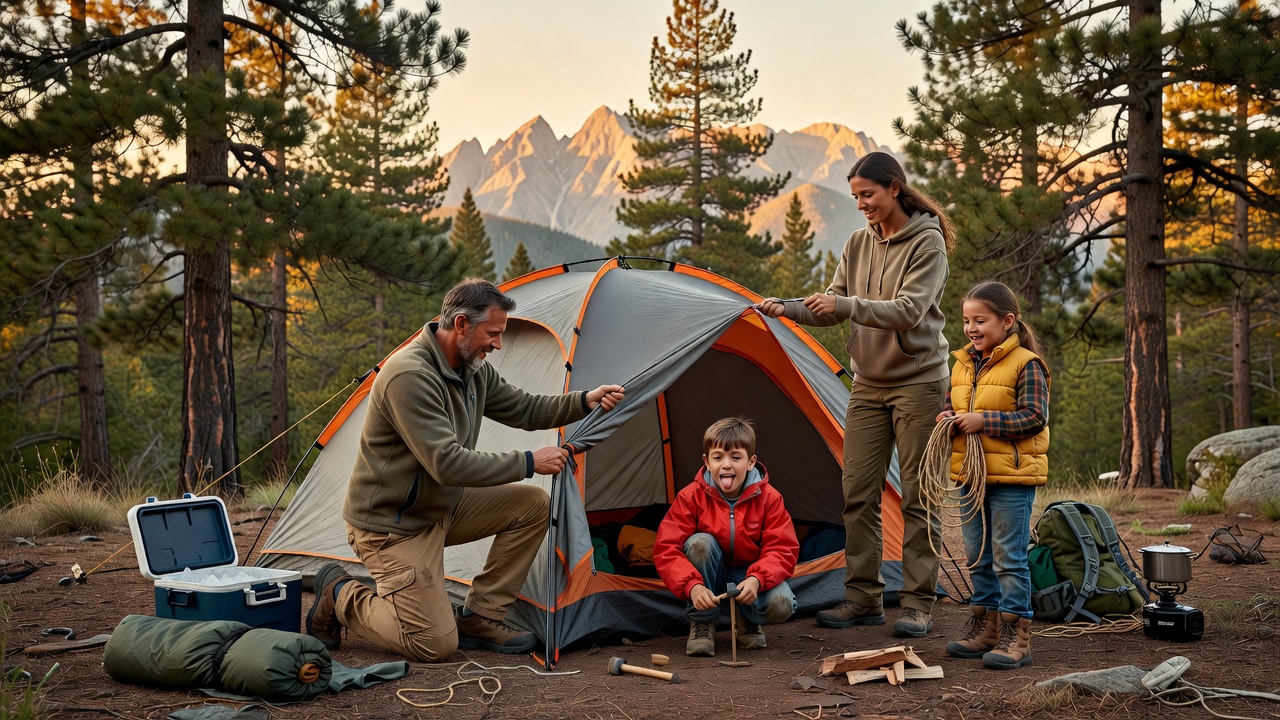
Quick Answer: What Size Tent Do You Actually Need?
Short version: size up by two. Manufacturers rate capacity by how many 20 × 72 inch sleeping pads fit on the floor side by side — bodies only, no gear, no room to sit up. A "4-person" tent comfortably sleeps two people.
- Couple → 4P. Two adults on a queen mattress (60 × 80 in, 33 sq ft) fill a 4P tent. Buy 6P if you want to walk around the mattress instead of climbing over it.
- Family of four → 6P. 90–120 sq ft with 72–84 inches of peak height: standing room, a gear corner, and space for chairs on a rainy day. The CORE 6P Instant Cabin is $169.99 and sets up in about 60 seconds (4.5★ / 5,200+ reviews).
- Family of four plus a dog → 8P. A 50 lb Lab sprawled across the floor is effectively a third person. The CAMPROS CP 8P at $159.98 adds a room divider, so you get an actual bedroom (4.4★ / 5,700+ reviews).
- Two adults on the move → 2P. Roughly 28–35 sq ft and 36–48 inches of peak height — sitting room only. The Kelty Late Start 2P is $159.95 with an 85 × 54 inch floor (31.9 sq ft), a 43-inch peak, and a 4 lb 11 oz packed weight (4.7★ / 1,200+ reviews).
- Peak height decides livability more than capacity does. Under 48 inches you are crawling, 48–60 inches you can sit up and crouch, over 60 inches you can stand. Two tents both labeled "4-person" can differ by two feet of headroom.
- Check your campsite's pad limit before buying big. Many parks cap at roughly 120 × 120 inches — a 6P at 120 × 108 inches fits, an 8P at 168 × 120 inches does not.
The rule to shop by: compare actual floor length × width and peak height, not the number on the box. Then go one size bigger than feels reasonable — nobody has ever regretted extra floor space in the rain.
What Tent Capacity Numbers Actually Mean
Tent manufacturers rate capacity by the number of standard sleeping pads (20 × 72 inches) that fit on the floor side by side — and nothing else. No gear. No wiggle room. No sitting up.
- Industry standard: Floor area divided by a sleeping pad — that's it. Shoulders, gear, and the desire to sit upright aren't factored in.
- No gear allowance: The rating assumes you'll store everything outside, including boots, bags, and clothing.
- Peak height varies wildly: A 4P dome tent might have 48 inches of headroom; a 4P cabin tent might have 72 inches. The capacity number tells you nothing about this.
The rule experienced campers follow: size up by two. Couple? Get a 4P. Family of four? Get a 6P. Want luxury? Size up by four. And if you camp with a dog? A 50-pound Lab sprawled across the tent floor is effectively a third person — size up accordingly. For the exact two-adults, two-kids, and dog setup, use our family-of-four-plus-dog tent-size breakdown before choosing between a roomy 6P and an 8P. Our complete camping with dogs guide covers tent sizing, paw-friendly flooring, and the full gear checklist for four-legged campers. Once you've locked in the tent size, our family-of-five camping packing list walks through every item a crew that size actually needs — shelter, kitchen, clothing, and the stuff you always forget.
One more factor that changes your effective tent capacity: what you put on the floor. A queen air mattress eats 60 × 80 inches (33 sq ft) — nearly a third of a 4P tent's floor — while two sleeping pads leave room to walk around. Our sleeping pad vs air mattress camping guide walks through the space trade-offs so you don't size your tent around the wrong bedding. And don't overlook the humble camp pillow — a bad night's sleep on a rolled-up jacket ruins even the best tent. Our camp pillows comparison guide covers compressible, inflatable, and hybrid options at every budget. Sleeping off the ground entirely? Our camp cot vs air mattress vs sleeping pad comparison weighs pack size, comfort, and cost for each setup before you commit floor space to one.
Tent Size Chart: Quick Reference (2P to 10P)
Bookmark this tent size chart before you shop — it condenses everything below into one scannable table. Dimensions are typical ranges for each capacity class; always confirm the exact floor size on the specific tent's spec sheet, because peak height and floor shape vary a lot more than the capacity number suggests.
| Rated Capacity | Typical Floor Size | Typical Peak Height | Who It Really Fits | TrailMapz Pick |
|---|---|---|---|---|
| 1P | ~20–25 sq ft (84 × 28–32 in) | 36–42 in | One adult + small pack; ultralight solo campers | Solo backpacking tent |
| 2P | 28–35 sq ft (Kelty: 85 × 54 in) | 40–48 in | Two adults — or one adult + dog + gear | Kelty Late Start 2P |
| 3P | 40–50 sq ft | 44–52 in | Two adults + a kid, or two adults + lots of gear | — |
| 4P | 50–70 sq ft | 48–72 in | Couple on a queen mattress; family of three | Coleman Skydome 4P |
| 6P | 90–120 sq ft | 72–84 in | Family of four + gear; cot campers | CORE 6P Instant Cabin |
| 8P | 120–150 sq ft | 78–86 in | Large family, two families, or a group trip | CAMPROS CP 8P |
| 9–10P | 150+ sq ft | 80–86 in | Multi-family basecamp; glamping setups | CORE 9P Instant Cabin |
How to read this chart: take the number of people who will actually sleep in the tent, add one for gear, and add one more if a dog is coming. That total is the rated capacity you should buy. A "4-person" tent with a queen air mattress on the floor fits two adults and nothing else.
Can You Stand Up in a Tent? Height, Standing Room, and the Number to Check
Peak height is the spec almost nobody reads before buying, and it decides whether a rainy afternoon inside feels like a cabin or a coffin. "Can you stand up in a tent?" is really two numbers: how tall the tent is at its highest point, and how much of that height survives once the walls start sloping inward.
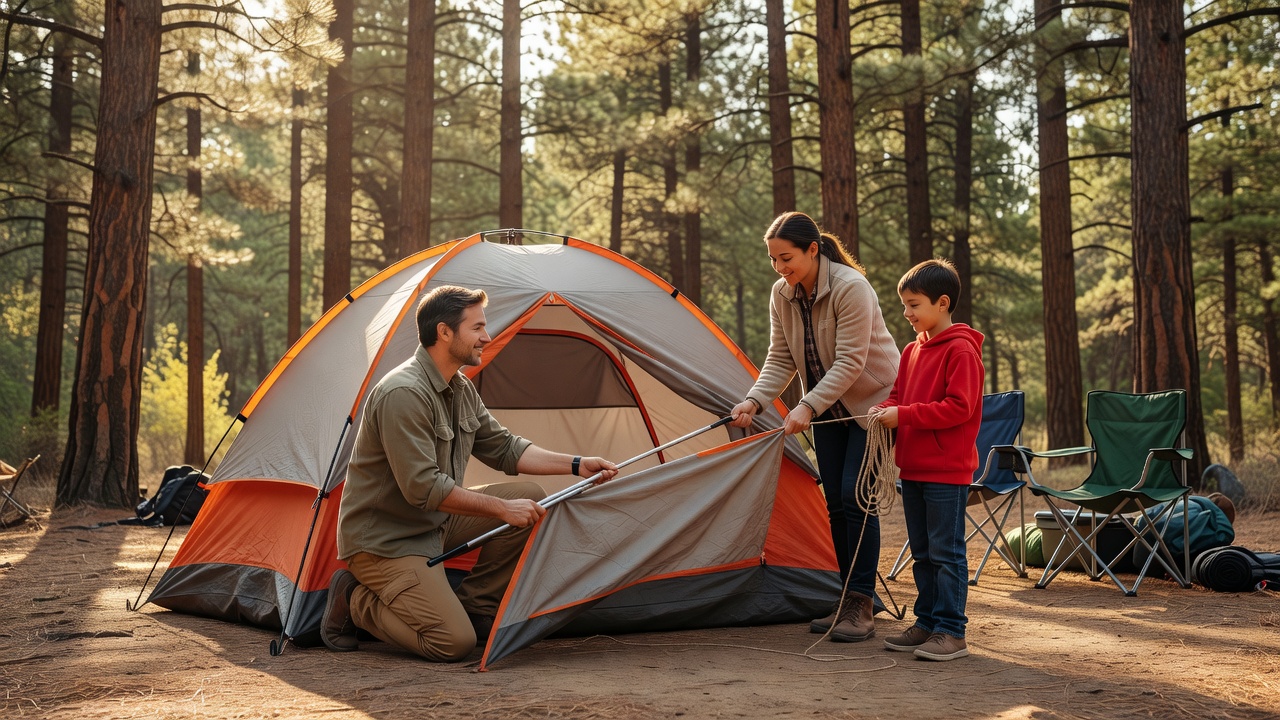
Standard Tent Height by Capacity
- 1P and 2P (36–48 in peak): sit-up height only. You can kneel, change clothes, and read upright, but nobody stands in a backpacking tent.
- 3P (44–52 in): still a sit-up tent. A 6-foot adult will be stooped.
- 4P (48–72 in): the widest range on the market, and the split is the whole story. How tall is a 4 person tent depends almost entirely on style — a 4P dome peaks around 48–60 in, while a 4P cabin runs 72 in and up. That cabin number matters, because a 4P cabin is the smallest tent you can stand up in.
- 6P (72–84 in): full standing room for most adults. A 72-inch peak clears a 6-foot camper with an inch to spare, which is exactly why families of four are told to buy 6P.
- 8P and up (78–86 in): standing room with margin, plus enough headroom to hang a lantern out of everyone's way.
Why the Peak Height Number Overstates Your Room
A quoted peak height is measured at the single highest point, usually the center of the ceiling. Two feet to either side, the wall of a dome tent has already sloped down — a 60-inch dome can be under 36 inches at the edges of the floor, which is why "standing height" and "usable standing height" are two different numbers. Three practical rules:
- Straight-wall styles (cabin, blackout cabin, instant cabin) hold near-full height out to the edges. Dome and tunnel styles shed rain and wind better but lose the most headroom at the walls.
- Pop-up tents are no different: a pop-up tent standing height figure is just its center height again, and the 60-second setup does not change the headroom. Measure the tallest person in your family, compare that to the center height, then subtract 12 inches if the tent has sloped walls.
- Headroom is what you actually feel. A 4P dome and a 4P cabin can share the same 70 sq ft floor and feel like different products on day three of rain.
Shopping for tents with standing height rather than floor area? Set a hard floor of 72 inches of center height and ignore anything that publishes less.
Which Tents You Can Actually Stand Up In
- CORE 6 Person Instant Cabin Tent ($169.99) — cabin walls and a tall center, the cheapest reliable way into real standing room for a family of four.
- CORE 9 Person Instant Cabin Tent ($299.99) — standing room with margin, plus space for chairs and a table on a washout day.
- UNP 4-Person Cabin Tent ($115.99) — the smallest class you can genuinely stand up in without moving to a 6P footprint.
- Coleman 6-Person Dark Room Dome Camping Tent ($149.99) — a dome, so treat its center height as the lower end of the 6P range and check the spec sheet when headroom matters more to you than packed size.
6-Person Tent Dimensions: Length, Width, and Height
"6 person tent dimensions" is the most common way people actually search this question, and the spec sheet answers it with three or four numbers that are easy to misread. Here is what each one means in plain English:
- 6 person tent length — the long wall, measured from the door wall to the back wall. Most 6P tents land between 10 and 12 feet (120–144 in).
- 6 person tent width — the short wall, typically 9 to 10 feet (108–120 in).
- Floor area — length times width, quoted in square feet. The 6P class runs 90–120 sq ft, which is the number to compare when two tents both say "6 person."
- 6 person tent height — center height again, 72–84 in for the class (see the section above for why the edges are shorter).
A Real 6 Person Tent Size in Feet and Inches
Our own 6P blackout cabin, the EVER ADVANCED 6 Person Camping Tent ($169.99), publishes a 120 × 108 inch floor: 10 ft × 9 ft, 90 sq ft, with a 72-inch center height. That is a useful benchmark because it sits at the bottom of the 6P area range and the bottom of the height range — two queen air mattresses fit with room left for duffels, and a 6-foot adult stands up in it. Tents at the top of the class exist, but past ~150 sq ft you are really buying an 8P footprint wearing a 6P label, and you pay for it in packed volume.
Checking any 6P spec sheet: floor dimensions in inches (divide by 12 for feet), floor area in square feet, center height, and the floor shape — a rectangular floor is honest, while a tapered or hexagonal floor loses real sleeping width at the ends.
Tent Dimensions in Meters (for Anyone Shopping Metric Specs)
US listings quote inches and square feet, but plenty of manufacturers publish the metric specs first. One 6P floor of 120 × 108 in is 3.05 × 2.74 m, and 90 sq ft is 8.4 m². A 4P at 90 × 84 in is 2.29 × 2.13 m. When a listing mixes units, convert the metric spec back to inches before comparing — a "2 m" floor width sounds enormous until you notice it is 79 inches, which is a 6P-ish width, not a 4P one.
The cheapest way to try a 6P footprint before committing to a heavy cabin is the UNP 6 Person 4 Season Dome Tent ($39.99), and if you are choosing between the blackout and cabin models, our 6 person tent reviews roundup compares the ones we have actually camped in.
Once the size is settled, the next question is where: our North Carolina camping guide covers a state where site size varies a lot between mountain loops and beach campgrounds.
Tent Sizes in Feet and Inches: How Big Is Each Tent Class?
Capacity numbers describe people, not geometry, so "how big is a 4 person tent" needs an inch answer rather than a person answer. Everything below converts the class ratings in the chart above into the numbers people actually type into a search box. For the full capacity-by-capacity breakdown, the tent size chart section is the fastest read.
- 2 person tent size — a 2P floor runs 84–90 in long and 48–56 in wide, which is 28–35 sq ft. The Kelty Late Start 2P publishes 85 × 54 in (31.9 sq ft) with a 43-inch peak.
- two person tent size and size of a 2 person tent — the same 7-foot-long, 4-foot-6-wide pocket most 2P domes share, sized for two 25-inch pads wall to wall.
- what size is a 2 person tent — if you want one sentence: big enough for two adults on pads, not big enough for two adults plus duffels.
- 2 person size tent — this wording usually means the 2P class floor area, 28–35 sq ft, or the same footprint as a twin mattress.
- 2 person tent size in feet — 7 ft × 4 ft 6 in on the Kelty, with larger 2P tunnels reaching 7 ft 6 in × 4 ft 8 in.
- 2 person tent measurements — length 84–90 in, width 48–56 in, peak height 36–44 in, packed length around 20–24 in.
- 2 person tent average size and average 2 person tent size — 31–32 sq ft once you average the class; the outlier ultralight 2P tents drop to 26–27 sq ft.
- average size of 2 person tent — measured across the class, about 7.1 ft by 4.4 ft, or 31 sq ft, with a 41-inch center height.
- normal 2 person tent size, typical 2 person tent size, standard 2 person tent size, and standard size of 2 person tent — treat 85 × 54 in with a 43-inch peak as the reference 2P, then compare the specific spec sheet rather than the marketing photo.
- standard 2 man tent size — "2 man" is the older British spelling of the same class: 84–90 × 48–56 in, sitting room only.
- 2 person camping tent size — car-camping 2P models are the roomy end of the class at 33–35 sq ft and 44–46 in at the center; backpacking 2P tents trade that space for weight.
- 2 person dome tent size — a two-pole dome geometry is what produces the 85 × 54 in floor; dome walls slope inward, so usable width at the floor edges is smaller than the quoted width.
- 2 person tent floor size — the floor is the number to compare: 28–35 sq ft, or roughly 2.6–3.3 m². Floor shape matters too, since tapered floors lose real width at the ends.
- 2 person tent mattress size and 2 person tent air mattress size — a 2P floor fits one 54 × 75 in full-size air mattress and nothing else; two 25-inch pads are the better fit.
- 2 3 person tent size — a 2–3P hybrid usually publishes 2P geometry with a 3P label, so read the square footage: 33–40 sq ft means the smaller of the two.
- size of 3 person tent — a 3P sits at 40–50 sq ft with a 44–52 in peak, which is two adults plus a small kid on pads, still a sit-up tent.
- how wide is a 2 person tent — 48–56 in at the floor, and the number that decides whether two 25-inch pads touch wall to wall (they do, in a 54-inch floor).
- how big is a one person tent — 20–25 sq ft, roughly 84 × 28–32 in, which is one adult plus a pack; a 1P is a bed, not a room.
- how big is a 4 person tent in feet — 50–70 sq ft, or about 7.5–8 ft long by 7 ft wide, with a 48–72 in peak.
- how big is a 4 person tent dimensions — the honest four-number answer: length ~90 in, width ~84 in, area 50–70 sq ft, center height 48–60 in for a dome and 72 in and up for a cabin.
- how big is a four person tent — the same class spelled out in words; a "four person" rating assumes four bare sleeping pads side by side with no gear and no floor space between them.
- how big is a normal 4 person tent — the middle of the class is about 8 ft × 7 ft = 56 sq ft, which is one queen air mattress plus two duffels.
- how big is a 4 person dome tent — a dome 4P peaks at 48–60 in, which is why the same square footage in a cabin 4P can be stood up in.
- how big is a 4 6 person tent — when a listing spans 4–6 people, expect the 6P footprint (90–120 sq ft) or an oversized 4P around 70 sq ft; check the floor area.
- how tall is a 4 person tent — 48–72 in depending on style, and the split is the whole story: a 4P cabin clears 72 in, a 4P dome does not.
- what size is a 4 person tent and tent size 4 person — one capacity class up from the 2P: double the floor area of a 2P, enough for a queen mattress plus standing room in cabin styles.
- average size of 4 person tent — 56–60 sq ft across the class, comfortably above the 2P's 31 sq ft.
- how much is a 4 person tent — budget 3-season domes start around $40 (Golabs Pop Up 2–4P class), mid-range name-brand domes run $110–$160, and 4P cabins with standing room start near $115.
- tent size dimensions, tent size measurements, and tent sizes in inches — every class converts the same way: the rating describes people, the spec sheet describes inches, and only the spec sheet tells you whether your mattress fits.
- average tent size — across everything sold as a camping tent, the median family tent lands near 50–60 sq ft with a 60-inch center height — which is a 4P footprint with 6P-ish headroom.
Whatever the label says, the two numbers that decide the purchase are floor area in square feet and center height in inches. Everything else on the spec sheet is decoration.
What Size Tent Fits a Queen, King, Full, or Twin Mattress?
Mattress fit is the sizing question that turns a "4-person" label into a useless number. Here are the four mattress sizes worth planning around, in the inches a tent floor actually quotes: twin 38 × 75 in, full (double) 54 × 75 in, queen 60 × 80 in, king 76 × 80 in. Multiply out and the footprints are what matter: a twin eats 20 sq ft, a full 28 sq ft, a queen 33 sq ft, and a king 42 sq ft of floor before you put a single bag down.
- what size tent fits a queen mattress — a queen is 60 × 80 in, so it needs a floor at least 60 in wide and 80 in long: that is a 4P at minimum (50–70 sq ft), and a comfortable one is a 6P.
- what size tent fits a queen size mattress and what size tent for queen mattress — treat 4P as "the mattress fits, the people don't move" and 6P as the honest answer for two adults plus gear.
- what size tent fits a queen air mattress — the same 60 × 80 in as a regular queen; the difference is height, not floor area, so an 18-inch air mattress simply eats more of the tent's vertical room.
- what size tent can fit a queen mattress and what size tent can fit a queen air mattress — 4P floors in the 50–70 sq ft band and up. Below that, at 28–35 sq ft, a queen does not fit at all.
- what size tent for a queen size air mattress — a 6P, if you want to walk around it rather than climb over it. Our Coleman Skydome 4P is the 4P that comes closest, because near-vertical walls preserve usable floor at the edges.
- what size tent to fit queen air mattress, what size tent will fit a queen air mattress, and what size tent will fit a queen mattress — all three wordings land on the same arithmetic: 60 in of mattress inside a floor whose usable width is usually 2–4 in narrower than the spec sheet claims.
- what size tent do i need for a queen air mattress — size up one class from the chart's recommendation. The chart says a couple needs a 4P; a couple on a queen needs a 6P.
- what size tent holds a queen air mattress and tent queen size mattress — the 4P class holds it, the 6P class holds it plus duffels, and the 2P class holds it nowhere.
- what size tent fits a king mattress and what size tent fits a king size mattress — a king is 76 × 80 in (42 sq ft), wider than most 4P floors are long, so this is a 6P question minimum and an 8P question if anyone else is sleeping in the tent.
- what size tent fits a king air mattress and what size tent will fit a king air mattress — same 76 × 80 in footprint; a king placed lengthwise needs 80 in of the floor's long axis, which every 6P has, but 76 in of width, which is most of a 6P's 108–120 in short wall.
- what size tent will fit a king size mattress — realistically an 8P (120–150 sq ft) or a 6P used by one couple only, with the mattress rotated to run along the long wall.
- what size tent fits a full mattress and what size tent fits a full size mattress — a full/double is 54 × 75 in (28 sq ft), exactly the width of a 2P floor's widest models and comfortably inside a 4P.
- what size tent fits a full air mattress — a full air mattress in a 4P leaves 2–3 ft of strip along one side for gear, which is the classic two-adults-plus-duffel family-car-camping setup.
- can a 2 person tent fit a full size mattress — lengthwise yes (75 in inside an 84–90 in floor), widthwise no: a 54-in mattress fills a 54-inch 2P floor wall to wall, so the tent has nothing left for clothes. Two pads are the right answer in a 2P; the Night Cat 2P is the budget way to try that setup.
- what size tent fits a twin mattress — a twin (38 × 75 in, 20 sq ft) fits a 2P with room down one side, and two twins fit a 4P side by side with a walkable strip between them.
- how many air mattresses fit in a 6 person tent and how many air mattresses can fit in a 6 person tent — two queens, if you rotate both to run along the 120-inch wall: that occupies exactly 120 × 80 in, which is why our EVER ADVANCED 6 Person Cabin (120 × 108 in) is the 6P benchmark for two mattresses and leaves a 28-inch strip for duffels.
- how many mattresses fit in a 6 person tent — three twins laid crosswise, or two queens rotated, or one king plus a twin. Past two queen mattresses you are shopping an 8P: the CAMPROS CP 8P and CORE 9P Instant Cabin are the classes that stop feeling crowded.
- what size tent fits two queen mattresses — 67 sq ft of mattress plus circulation room, so call it 100 sq ft and up: a top-of-class 6P with a 120-inch wall, or any 8P.
One rule covers all four mattress sizes: measure the mattress, add 12 inches on each side you need to walk, and buy the class whose floor clears that total. If you are still deciding between pads and air mattresses, our sleeping pad vs air mattress comparison works through the space math before you commit floor to either one.
How Many People Actually Fit? Capacity by Group Size
The rating counts bare sleeping pads laid edge to edge. Real groups bring bags, coolers, a dog, and a kid who wants to change clothes standing up — so the working rule stays the same: count the sleepers, add one for gear, add one more for a dog or an air mattress.
- how many people can fit in a 6 person tent — four adults with gear, or five on pads with bags stashed outside. A 6P floor is 90–120 sq ft; five adult pads plus duffels land at 100–120 sq ft, which is the very top of the class.
- tent size per person — budget 20–25 sq ft for a solo sleeper on a pad, 25–30 sq ft per adult once you add a bag and a change of clothes, and half an adult slot for a small kid on a 20-inch kids' pad (see our kids sleeping bags guide).
- tent size capacity — the class rating is the maximum bodies on bare pads, never the comfortable number. The comfortable number is one class up, and that gap is the single most common first-tent mistake.
- tent size needed — work backwards from the floor: list who sleeps, add a pad width each (25 in for adults), total the inches, then pick the class whose floor is at least 12 in wider than that total.
- tent size recommendation — solo: 1P for backpacking, 2P for car camping. Couple: 4P. Couple plus dog: 6P. Family of four: 6P. Family of five or six: 8P if anyone sleeps on a mattress.
- tent size for two people — a 2P is correct only if you carry it; the moment it rides in a car, a 4P doubles your floor for the same money and lets you stand up in cabin styles.
- tent size for 4 people — a 6P, not a 4P. Four adults in a 4P means four pads wall to wall with every bag outside, which is exactly the setup nobody enjoys on night two.
- tent size for family of 3 — a 3P works (40–50 sq ft) if the child is small, and a 4P is the version you will not regret; the UNP 4-Person Cabin Tent is the cheapest standing-room 4P we track.
- tent size for family of 5 and what size tent for a family of 5 — a 6P at minimum, an 8P if any of the kids are teenagers, anyone sleeps on an air mattress, or a dog comes in. Five pads plus gear run 100–120 sq ft.
- what size tent for family of 6 — an 8P (120–150 sq ft). A 6P for six people is a stack of bodies with the gear outside, and the CAMPROS CP 8P with its room divider is the class built for that head count.
- best size tent for a family of 4 — a 6P cabin: four real sleepers, standing room, and space to move on a rainy day. Compare the CORE 6P Instant Cabin with our family tent buying guide before you pick a model.
- what size tent for one person — a 2P is the comfortable solo car-camping answer and a 1P (20–25 sq ft) is the carry-it answer; solo campers who want their pack inside should not go below 2P.
- what size tent is best for 2 people and what size tent should i get for 2 people — a 4P if it drives to the site, a 2P if it rides on your back, and a 3P only if you want the middle ground for two pads plus daypacks.
- what size tent is best for 3 people — a 4P. The 3P's 40–50 sq ft is two adults plus a child on pads, not three adults with gear.
- what size tent for me and my dog — add a full person. A 50-lb Lab sprawled on the floor takes the same slot as a third sleeper, so two adults plus a dog is a 6P, and our tents for camping with dogs guide covers the floor and door features that matter (plus the dog-camping checklist).
- what size tent will fit a cot — a cot is 25–30 in wide and 75 in long, taller and bulkier than a pad, so plan a 6P for two adults on cots. The chart above flags cot campers as the real upper use of the 6P class.
- what size tent should i buy, what size tent to buy, and what size tent to get — run the two-step version: comfortable capacity = sleepers + 1, then compare floor area (not the label) against the chart. The tent size calculator does the arithmetic if you would rather not.
- what size tent for car camping — a 6P. Weight is free when the car carries the tent, and 90–120 sq ft turns a weekend into something that feels like a room, especially with a cabin or blackout model.
- what size tent camping and maximum tent size for camping — the ceiling at most developed campgrounds is the tent pad, not the class rating, and pads run 10 × 10 ft to 12 × 12 ft on standard sites; check the individual site's published pad size before buying a 10P cabin you cannot pitch. If the trip is a drive-up weekend, our car camping vs backpacking breakdown covers how the site type changes the whole gear list.
Pack Size and Carry Weight: Sizing a Tent You Carry
Floor area is only half of tent size. The other half is the bundle you strap to a pack, and it is quoted as packed size (length × diameter of the stuff sack, or a packed volume in litres) plus trail weight — never as the capacity number.
- 2 person tent pack size — manufacturers quote it as two numbers (a length and a diameter) or as a packed volume; for a backpacking 2P, expect a long, thin bundle roughly the length of your forearm and strap-able to the outside of a 40–50 L pack. The Kelty Late Start 2P packs to a 4 lb 11 oz bundle, which is the budget end of the carry-it class.
- 2 person tent small pack size and smallest pack size 2 person tent — if pack size is the deciding spec, you are shopping a sub-3-pound tent, not a dome: the Big Agnes Copper Spur HV UL2 comes in at 2 lb 11 oz trail weight with a 40-inch peak, and that is what the extra spend buys.
- stuff sack size for 2 person tent — the sack is sized to the tent, so buy the sack with the tent rather than replacing it; if you re-pack into a compression bag, the packed length of a 2P bundle is what has to clear your pack's interior.
- 2 person backpacking tent size — the same 28–35 sq ft floor as any 2P, but with a shorter, narrower profile: lower peak height (36–44 in) and thinner walls to shed wind.
- 2 person tent lightweight backpacking — the lightweight version of a 2P trades floor width and peak height, not sleepers: two people still fit, they just do it sitting down. Our ultralight backpacking tent guide ranks the class by carried weight.
- 2 person tent lightweight waterproof — waterproofing is a rating (a hydrostatic head in millimetres), not a size, so it does not change the floor plan: the same 2P geometry can be a 1,500 mm budget fly or a 3,000 mm four-season fly. If your tent has started leaking at the seams, that is a resealing job, not a size problem.
- what size backpacking tent for 2 people and what size tent for backpacking — a 2P for two adults who both carry a share, a 1P for a solo hiker, and never a 4P: an 11-pound dome that never leaves the car is not a backpacking tent no matter what the label says. Packs matter as much as tents here, so pair the choice with how to choose a hiking backpack and our packing list for a two-day trip.
The practical test before buying any carry-it tent: put the packed weight next to the packed size. Under 4 lb with a sub-30 sq ft floor is a fair-weather two-person tent; over 6 lb with a 50-plus sq ft floor is a car-camping tent wearing backpacking branding, and the size chart above already told you which class it really is.
Footprints, Tarps, Poles, and Stakes: The Other Tent Sizes
Every one of these is a size question hiding behind a different noun, and each one has a mechanical answer once you know the floor dimensions of the tent you already own.
- what size footprint for a tent — a footprint (groundsheet) should match the floor, not exceed it: same length and width as the published floor, because a footprint that sticks out past the tent edge funnels rain between the layers. The 2P reference floor of 85 × 54 in is a good anchor for that class.
- what size should tent footprint be and what size tent footprint do i need — floor dimensions exactly, or 2–4 in smaller if your tent has a tapered floor. Never bigger: the classic beginner mistake is a 10 × 10 tarp under an 8 × 7 tent.
- msr 2 person tent footprint size — MSR cuts a model-specific footprint for each line (Access, Hubba Hubba, Elixir), so the size you need is your model's published floor, not the "2 person" class: check the spec on the MSR Access 2 page before ordering a footprint.
- tarp size for 2 person tent and what size tarp for 2 person tent — for a rain fly extension or a porch, a 8 × 10 ft tarp is the standard match for a 2P and gives 12–24 in of overhang on the long sides; a 10 × 10 adds a covered sitting area but more wind load.
- 2 person tent tarp size — for a simple groundsheet substitute, a 5 × 7 ft tarp is the sheet size that fits inside an 85 × 54 in floor, and anything larger has to be folded under, which defeats the purpose.
- what size tent poles do i need — measure the pole you are replacing, not the tent: the assembled length of the pole set (typically measured down the full arc, not the straight tent height) and the segment diameter. Pole sets are model-specific, and the tent care and repair guide covers splinting a broken pole in the field.
- what size tent stakes do i need — as a rule of thumb, 6–9 in aluminum stakes for packed mineral soil, 9–12 in for sand or soft duff, and the widest V- or Y-shank profile you can carry for loose ground. Buy at least two spares; stakes are the part of a tent that gets lost, not broken.
If you are replacing accessories rather than sizing a new tent, our tent leak and waterproofing repair guide walks through seam sealing, poles, and the repair kit that belongs in every tent bag.
Named Size Lookups: Coleman, Kelty, Big Agnes, and MSR
Searching a brand plus "size" is really a request for one model's spec sheet, and the trap is that brand naming systems hide the answer. Here is how to read each line without having to trust a retailer's summary.
- coleman 2 person tent size — Coleman sells several 2P domes under different line names (Sundome, Skydome, Dark Room), and the line name changes the features, not the class: every Coleman 2P lands in this page's 2P band of 28–35 sq ft, so compare the published floor rather than the marketing name.
- coleman sundome 2 person tent size — the Sundome is Coleman's budget dome line, and its 2P floor sits at the roomy end of the 2P band (roughly 30–35 sq ft) — two pads wall to wall, no gear space. Treat it as a fair-weather car-camping 2P, confirm the current spec sheet, and compare it against our best camping tents under $100 guide, which lists it alongside the other budget shelters.
- kelty 2 person tent size — for the Kelty Late Start 2P, the published numbers are an 85 × 54 in floor (31.9 sq ft), a 43-inch peak height, and a 4 lb 11 oz packed weight. That is the working definition of a real 2P: two 25-inch pads side by side, sitting room only.
- big agnes 2 person tent size — Big Agnes publishes a floor plan per model, and the premium end of its 2P range (like the Copper Spur HV UL2, 2 lb 11 oz trail weight with a 40-inch peak) buys you vertical walls and shoulder room inside the same 2P class, not a bigger footprint.
The rule that applies to all four: pull the floor dimensions from the manufacturer's own spec sheet, multiply length by width for square feet, and compare that number against the chart at the top of this page. The capacity label is a marketing decision; the floor area is arithmetic, and only one of them tells you whether your mattress fits.
Sizing Vocabulary: Standard, Average, Normal, Medium, and Small
Half of tent-shopping confusion is vocabulary, not geometry. These are the words people use for the same four numbers — floor length, floor width, floor area, and peak height — and what each one actually means when you are standing in a store aisle.
- standard tent size — there is no standard, but there is a reference: a 4P dome at roughly 8 × 7 ft (56 sq ft) with a 60-inch peak is the median tent sold in North America, and any "standard" claim is being measured against that.
- normal tent size and tent size normal — the same 56 sq ft reference. When a listing says "normal", it means "what a family of three or four buys on a budget", which in this chart is the 4P row.
- tent size standard — the class whose spec sheet most tents converge on: 2P at 85 × 54 in, 4P at 90 × 84 in, 6P at 120 × 108 in. Those three floors are worth remembering because they are the shapes most models copy.
- medium tent size — in practice, a 4P. Medium is the class between the carry-it tent and the family cabin, and it is the size that fits a couple on a queen mattress with nowhere to stand up.
- tent size small — 1P and 2P territory: 20–35 sq ft with 36–48 in of peak height, sized for sleeping and changing clothes sitting down.
- different tent sizes — the ladder runs 1P, 2P, 3P, 4P, 6P, 8P, then 9–10P, and the jumps that matter are 2P→4P (double the floor) and 6P→8P (room for a second family or two mattresses).
- tent size diagram and camping tent sizes chart — the table near the top of this page is the diagram: capacity class, floor size, peak height, and who each class really fits, in one scannable block.
- tent size estimator — you can estimate in your head with one multiplication: rated capacity minus one equals the number of real sleepers, and 25 inches times the sleeper count plus 12 inches of clearance is your minimum floor width.
- how to measure tent size — measure inside the floor from seam to seam rather than the quoted dimensions, because quoted length is usually taken at the base and quoted width often ignores the taper at the foot end.
- tent sizes camping and tent size camping — what campers mean by "tent sizes" is almost always the 2P, 4P and 6P rows: those three cover the overwhelming majority of family weekend purchases, and the one you want is decided by head count, not by brand.
- what size tent can you stand up in — a 4P cabin or anything 6P and up with a 72-inch-or-taller center height. Under that, you are kneeling: a 4P dome peaks at 48–60 in, and a 2P never gets above 48 in at the center.
Once you have the four numbers in hand — length, width, area, height — the capacity label stops mattering. Buy the floor that fits your sleepers and the center height that fits your tallest camper, and the tent will feel right on night three, which is the night that actually counts.
Tent Size FAQ
What size tent do I need for a family of 4?
A family of four (two adults, two kids) should buy a 6-person tent. The kids can share one half of the floor, the adults get the other half, and the remaining space absorbs duffels, a camp table, and a lantern. Once the floor plan is settled, make sure the kids' sleep setup keeps up — our best kids sleeping bags guide covers age-specific sizing and temperature ratings so they actually stay warm all night. Once the tent lights are out, a kid-safe headlamp like the Black Diamond Wiz Kid (40 lumens, USB-C rechargeable) means nobody has to fumble for a phone flashlight on a 2 AM bathroom run. Four people in a 4P tent means four bodies on the floor with gear outside — the exact sardine situation we warn about above. Our CORE 6P Instant Cabin is the family pick for a reason.
Does a 4-person tent fit a queen air mattress?
Yes — barely. A queen mattress measures 60 × 80 inches (33 sq ft), which eats roughly a third of a 4P tent's floor and leaves almost no walk space around it. If you sleep on a queen mattress, buy a 6P tent for the mattress plus gear, or choose a 4P with near-vertical walls like the Coleman Skydome 4P to maximize usable floor area.
What size tent do I need for 2 adults and a dog?
Treat a medium or large dog as a third person: 4P minimum, 6P if the dog sleeps sprawled out or you bring gear inside. A 50-pound Lab stretched across the floor takes up a full sleeping pad's worth of space. Our family-of-four-plus-dog tent-size breakdown goes through the exact floor plans. Once you know the size, our best tents for camping with dogs rounds up the models with tough floors, dog-proof zippers, and easy-clean fabrics that survive a wet, muddy trip.
Is a 6-person tent too big for two people?
Not if you want space to stand up and move around. A 6P tent with 72–84 inches of peak height gives two adults a bedroom, a gear corner, and room for chairs on a rainy day. It's the "glamping" size — heavier and bulkier to pack than a 4P, but for car camping the comfort trade-off is usually worth it.
Once the tent is sorted, the rest of the luxury upgrade is gear, not canvas — our glamping gear guide covers the hammock, mood lighting, chairs, and coffee setup that turn a roomy 6P into a proper weekend retreat.
What size tent do I need for 2 adults and 2 kids?
A 6-person tent is the safe answer for two adults and two kids, especially once you add a dog, cots, or cold-weather gear. For a tight budget or a shorter weekend trip, a roomy 4P with vertical walls like the Coleman Skydome 4P can work if everyone sleeps on pads and gear stays in the car.
Should I size up when buying a tent?
Yes — the "size up by two" rule exists for a reason. Manufacturers rate capacity by bare sleeping pads laid side by side, with no room for gear, movement, or sitting up. Couple → buy a 4P. Family of four → buy a 6P. If you camp with a dog or use air mattresses, size up by an extra person on top of that.
What size tent do I need for a family of 5 (or 6)?
A family of five needs a 6-person tent minimum and an 8-person tent if any of the kids are teenagers, you sleep on air mattresses, or a dog comes inside. The math is straightforward: five pads plus gear eat roughly 100–120 sq ft, which is the very top of the 6P range and the bottom of 8P. So what size tent for a family of 5 really comes down to whether anyone is sleeping on a mattress instead of a pad — that single choice is worth a full capacity class.
For a family of six, skip 6P entirely and go 8P. Six pads laid side by side consume a 6P floor wall-to-wall with no aisle left for duffels or a middle-of-the-night bathroom path. The CAMPROS CP 8-Person ($159.98) is the best 8-person tent for a family on a tight budget — and its room divider earns its keep with five or six bodies in one space, giving the kids a side of their own.
Once you're at 8P, the rest of the kit has to scale with it. Our family camping gear checklist covers the sleep systems, lighting, and kitchen gear that actually hold up for a group that size.
How much does a 4-person tent cost?
So how much does a 4 person tent cost in 2026? Real prices from our current catalog:
- Budget 4P ($40–$90): pop-up and simple dome tents like the Londtren 4-Person Pop Up ($84.99). Fine for fair-weather weekends — expect thinner fabrics, fewer guy-out points, and a shorter useful life.
- Mainstream 4P ($115–$155): the sweet spot. The Coleman Skydome 4P ($122.99) is the benchmark at this price — pre-attached poles, a 5-minute pitch, and LED lighting built in. The UNP 4-Person Cabin ($115.99) trades brand-name support for a taller cabin shape and more standing room.
- Premium 4P with backpacking construction ($400+): carbon-pole, sub-3-pound tents built to be carried, not driven.
For comparison, a 2-person tent runs $54–$160 (Night Cat at the low end, the Kelty Late Start 2P at $159.95), a 6P generally lands $150–$170, an 8P around $160, and a 9–10P multi-family cabin about $300. Backpacking 2P tents jump to $480–$550 because you're paying for weight savings, not floor area.
What size tent for car camping?
Car camping removes the weight constraint entirely, so the only penalties for going bigger are packed volume and setup time — size up one class from whatever you'd backpack with. The practical answers: a couple wants a 4P (or a 6P if standing height and rainy-day chairs matter), a family of four wants a 6P, and a family of five or six wants an 8P.
The upgrade most people actually feel isn't floor area, it's height: a 6P typically gives 72–84 inches of peak versus 48–72 inches on a 4P, which is the difference between changing clothes standing up and doing it lying down. A CORE 6P Instant Cabin at $169.99 is the standard recommendation here.
Still not sure what size tent do I need for camping? Put your own numbers — campers, kids, dogs, sleep system — into our tent size calculator; it returns the floor area and capacity class in one step instead of making you do the arithmetic.
How big is a 4 person tent?
The average size of a 4 person tent is 50–70 sq ft, or roughly 7.5 to 8 ft long by 7 ft wide, with a peak height anywhere from 48 to 72 inches. (How big is a 4 man tent is the same question — tent ratings count people, not gender.) In practice that is one queen air mattress plus two duffels, or two adults on pads with a kid in the middle. How much is a 4 person tent? Budget 3-season domes start around $40, name-brand mid-range domes run $110–$160, and 4P cabins with standing room start near $115.
Is a 2 person tent big enough?
For two adults on pads, yes — a 2 person tent size of 28–35 sq ft is standard and the floor is usually 50–54 inches wide, which two 25-inch pads fill wall to wall. What it is not big enough for is two adults plus a dog, two adults plus duffels, or anyone who wants to sit up and read through a rainy afternoon. If any of those apply, the answer to "what size tent for two adults" is boring: jump to a 4P. Our pick for two is the Kelty Late Start 2P ($159.95) — a relatively tall dome that two people can comfortably live in for a weekend.
How big is a 4 person tent in feet?
Roughly 7.5 to 8 feet long by 7 feet wide (90 × 84 inches), which is 50–70 square feet, with a peak height anywhere from 48 inches on a dome to 72 inches and up on a cabin. In practice that floor holds one queen air mattress plus two duffels, or two adults on pads with a small kid in the middle. If you want a number to shop with, use 56 square feet as the middle of the class — that is the floor that fits two adults and gear without anyone climbing over anyone else.
What size tent fits a king mattress?
A king mattress is 76 × 80 inches, or 42 square feet of floor before you count bodies. That width rules out every 4P dome, so treat a king as a 6P question at minimum (90–120 sq ft) and an 8P question if anyone else is sleeping in the tent. The practical trick is orientation: the 80-inch length fits every 6P's long wall, but the 76-inch width only fits the models with a 108–120 inch short wall, so measure the width number first when a king is in play.
How many air mattresses fit in a 6 person tent?
Two queen air mattresses, if you rotate both to run along the 120-inch wall — that occupies exactly 120 × 80 inches, which is why the EVER ADVANCED 6 Person Cabin with its 120 × 108 inch floor is the 6P benchmark for two mattresses, leaving a 28-inch strip for duffels. Three twins will also fit laid crosswise, and a king plus a twin works in the wider models. Past two queens you are shopping an 8P.
What is the standard size of a 2 person tent?
85 × 54 inches, or about 31.9 square feet, with a 43-inch peak — that is the Kelty Late Start 2P spec, and it doubles as the working reference for the whole class because almost every 2P dome lands within a few inches of it. The class range is 28–35 square feet with a 36–48 inch peak, which is two 25-inch pads side by side wall to wall and sitting room only. It is not a tent for two adults plus a dog, and it is not a tent for a queen mattress.
What size tent will fit a cot?
Plan on a 6P. A camping cot runs 25–30 inches wide and 75 inches long and stands 15–18 inches off the ground, so it eats a wider, taller slot than a sleeping pad and the two cots will not sit side by side in a 4P. A 6P at 90–120 square feet with a 72-inch-or-taller center height leaves room to actually stand up and dress, which is the whole reason people switch to cots in the first place. If you are weighing cots against air mattresses, our cot vs air mattress vs sleeping pad comparison covers the space each one costs.
What size tent should I get for backpacking?
A 2P for two people who are both carrying part of the load, a 1P for a solo hiker, and never anything in the 4P class — an 11-pound dome that stays in the car is not a backpacking tent no matter how the label reads. The carry-it constraint is weight and packed size, not floor area, so the class to shop is a sub-3-pound shelter: the Big Agnes Copper Spur HV UL2 is the two-person benchmark at 2 lb 11 oz trail weight, and our ultralight backpacking tent guide ranks the lighter options against it.
2-Person Tents: Who They're Actually For
A 2P tent runs about 84–90 inches long by 48–56 inches wide with 36–44 inches of peak height — sitting room only. Floor space is roughly 28–33 sq ft, about the size of a twin mattress.
What fits: One person with gear, or two minimalist backpackers comfortable with close quarters. The vestibule holds two pairs of boots and a daypack — nothing more.
Best for: Solo backpackers who want gear inside, ultralight backpacking couples, motorcycle campers where packed size matters, and minimalist car campers who only sleep in their tent.
Our Pick: Kelty Late Start 2P
The Kelty Late Start 2-Person Backpacking Tent ($159.95) is our favorite 2P tent for the money. Color-coded Quick-Corner pole pockets mean you can pitch it in the dark without a headlamp — genuinely fast setup that saves your sanity after a long day on the trail. The 85 × 54-inch floor (31.9 sq ft) gives enough room for two standard sleeping pads side by side, and the 43-inch peak height lets you sit up and play cards on a rainy afternoon.
Specs: 85 × 54 inches (31.9 sq ft) · 43" peak · 4 lbs 11 oz · Single door with vestibule · 4.7 stars (1,200+ reviews)
For solo trips, remove the second pad and you have a spacious one-person palace with room for all your gear inside. For more backpacking tent options, see our ultralight backpacking tent guide. If you mostly camp in warm weather and want an even lighter sleep system, our hammock camping guide for beginners walks through tree straps, tarp coverage, underquilts, and when sleeping suspended beats carrying a tent. Picking the right pack to carry it all matters just as much — here's how to choose a hiking backpack that won't wreck your shoulders. If you're new to going solo entirely, our solo camping for beginners guide walks through campsite selection, safety, and the mental side of camping alone — it's the guide I wish I'd had before my first solo trip.
Premium 2P alternative: if you want to cut roughly two pounds of pack weight, the Big Agnes Copper Spur HV UL2 ($549.95) is the freestanding benchmark in the sub-3-pound two-person class — 2 lb 11 oz trail weight, a 40-inch peak you can actually sit up in, and pre-bent DAC Featherlite poles that push the walls outward where shoulder room matters. It is more than three times the price of the Kelty, so it only earns its keep if you are carrying this tent on real backpacking trips rather than driving it to a campsite.
4-Person Tents: The Sweet Spot for Most Campers
A 4P tent is the most versatile category. Floor dimensions typically run 96–108 inches long by 84–96 inches wide (56–64 sq ft), with peak heights of 54–72 inches depending on style.
What fits: Two adults with gear inside, or three adults packed snugly. A family of three works beautifully. Two backpacks, boots, and extras stay inside without sacrificing sleeping space.
Best for: Couples wanting genuine comfort, small families, two friends sharing, car campers who want space without going enormous, and extended trips where you'll spend time inside.
Our Budget Pick: Golabs Pop Up 2-4P Tent
The Golabs Pop Up Camping Tent ($30.66) is the tent you grab when budget is your top concern and setup speed matters. Pre-attached poles mean you unfold and lock — under a minute to pitch. The 4-side mesh doors provide excellent ventilation on hot nights, and at this price, it's hard to find a more functional shelter for fair-weather car camping or festivals. If ventilation is part of your decision, our tent fan guide covers how much airflow a 4-person versus 6-person tent actually needs.
Specs: Fits 2-4 people · 1-minute setup · Pre-attached poles · 4 mesh doors · Budget-friendly
Want more options at this price point? Our full best camping tents under $100 guide rounds up seven budget shelters — Coleman Sundome, Night Cat, UNP, Forceatt, and more — with real waterproof ratings and who each tent actually fits, so you can compare budget family and backpacking options side by side before you buy.
Our Upgrade Pick: Coleman Skydome 4P with LED
The Coleman Skydome 4-Person Tent ($164.99) upgrades every aspect of the camping experience. The near-vertical walls (Skydome design) give you more usable interior space than a traditional dome. Built-in LED lighting with three brightness levels means no more fumbling for a headlamp at midnight. Setup takes under 5 minutes with pre-attached poles and color-coded clips.
Specs: 4-person · 5-minute setup · Built-in LED lights · 4.5 stars (850+ reviews) · 12 lbs
For families shopping across price ranges, check our best family tents under $200 buying guide.
6-Person Tents: Family Camping and Car Camping
A 6P tent is where camping approaches glamping. Floor dimensions run 120–144 inches long by 108–120 inches wide (90–120 sq ft), with peak heights of 72–84 inches — full standing room.
What fits: A family of four with room to spare, two adults with cots and chairs, or four adults who know each other well. Many 6P tents include a hanging room divider creating two 3P spaces — ideal for parents and kids. Multiple duffels, a camp table, and a lantern still leave open floor. That spare space also swallows a portable camping toilet and sanitation setup — worth planning for on multi-night family trips when the nearest restroom is a quarter-mile hike away.
Best for: Families with kids, week-long basecamp setups, rainy-destination trips where you'll be stuck inside, cot campers, and groups of friends.
Our Pick: CORE 6P Instant Cabin Tent
The CORE 6 Person Instant Cabin Tent ($169.99) is a strong family-car-camping option when a quick pitch and usable interior space matter more than shaving ounces. Pre-attached telescoping poles make setup genuinely beginner-friendly, while the cabin layout, mesh ceiling, ground vent, gear loft, and wall pockets help keep a busy family tent from turning into one pile of wet jackets and headlamps. Its six-person rating is realistic for a family of four with gear—not six full-size adults—and the large packed size makes it a drive-up campsite choice rather than a backpacking tent.
One size trade-off that rarely gets mentioned: interior air volume. The same four sleepers put the same litres of moisture into a 2P and an 8P, but the 8P has far more air to absorb it — so the humidity problem behind tent condensation is usually much milder in a bigger tent. Ventilation is still what decides it.
If you're shopping specifically for darker mornings rather than just more floor space, our dedicated best 6 person family tents with blackout fabric guide compares blackout and dark-room picks side by side.
Why it fits this group: A six-person cabin layout is most comfortable for two adults, two kids, and their indoor gear—not six adults. Keep bulky duffels in the car or vestibule to preserve a clear sleep zone.
For tips on making camping with kids stress-free, see our family camping with kids guide. Shopping for the best family tent? Our best family camping tents buying guide ranks top 4P-8P picks with side-by-side specs and real campsite testing. Still torn between sizes? Our 4P vs 6P tent comparison guide walks through real-world setups — floor plans, gear layouts, and which size your specific group actually needs.
2 Person vs 4 Person Tent: The One Sizing Call Most Buyers Get Wrong
If you are deciding between a 2 person and 4 person tent, the short answer is: buy the 4 person tent if it rides in a car, and the 2 person tent if you carry it on your back. A 4P gives you roughly double the floor (50–70 sq ft versus 28–35 sq ft), enough height that most models let you sit up straight and some let you stand, and room for two adults on an air mattress instead of two pads touching wall to wall. A 2P earns its place only when weight and packed size matter more than living space — and for backpackers that is a real constraint, not a compromise.
Everything below is the arithmetic behind that call: how many pads actually fit, what an air mattress does to the answer, and the cases where the smaller tent is still the right tent for two adults.
People arrive at this page spelling the same question a dozen different ways — 2 person tent vs 4 person tent, 4 person tent vs 2 person tent, 4 person vs 2 person tent, or 2 or 4 person tent — and then the wider one-step comparisons: 2 person tent vs 3 person tent, 3 person tent vs 4 person tent, 4 person tent vs 6 person tent, 6 person vs 8 person tent, 6 person tent for family of 4, 6 or 8 person tent for family of 4, or just what size tent for family of three. It is one decision with one set of numbers, so this section answers all of those wordings together instead of making you hunt for your exact phrasing.
| 2 Person Tent | 4 Person Tent | |
|---|---|---|
| Typical floor size | 28–35 sq ft (Kelty Late Start 2P: 85 × 54 in) | 50–70 sq ft (Amazon Basics 4P dome: 108 × 84 in ≈ 63 sq ft) |
| Typical peak height | 40–48 in — sit-up height only | 48–72 in; a 4P cabin is the smallest tent you can stand up in |
| 25-inch pads side by side | 2 — 50 in of a 48–56 in floor, wall to wall | 3 — 75 in of an 84–96 in floor (a 4th pad needs 100 in and does not fit) |
| Queen air mattress (60 × 80 in) | Does not fit — the mattress is wider than the floor | Fits, with 2–3 ft left along one side |
| Typical packed weight | 4–6 lb (an ultralight 2P can go under 3) | 9–16 lb |
| Where it wins | Backpacking, motorcycle camping, one adult plus gear inside | Car camping, two adults plus a dog, a family of three |
| Typical price band | $40–$160 (premium ultralight 2P runs far higher) | $40–$170 for a budget dome or entry-level cabin |
Pad math: why a "4 person" tent holds three people on pads
Capacity ratings count people; floors count inches. A standard camping pad is 25 inches wide, and that number — not the tent's name — decides how many adults sleep comfortably.
- 2P: a 48–56 inch floor takes two 25-inch pads and nothing else. That is exactly why two adults in a 2P sleep shoulder to shoulder with their gear in the vestibule or the car.
- 4P: an 84–96 inch floor takes three pads with room to spare between them. Four pads need 100 inches, which is wider than nearly every 4-person floor on the market — so a 4 person tent is a genuine three-adult space, or two adults plus a kid and a bag between them.
- Kids change the math in your favor. A child on a 20-inch kids' pad or a small air mattress takes about two-thirds of an adult slot, which is why two adults plus two small kids works in a 6P rather than the 8P the capacity chart implies.
When a 4 person tent is the right tent for two people
- You drive to the campsite. Weight stops mattering the moment the tent goes in a trunk, and the 4P wins on every other axis — floor, height, and the ability to leave gear inside instead of in the car.
- You want to sit up, change clothes, or wait out rain inside. A 4P cabin with a 72-inch peak is the cheapest way into real standing room. Nothing in the 2P class gets close.
- You sleep on an air mattress. A queen mattress is 60 inches wide and simply does not fit a 2P floor. If you are not sleeping on pads, you have already answered the 2 vs 4 person tent question.
- The dog is coming. A 60-pound dog occupies about one adult's worth of floor. Give the dog its own shelter when it needs to nap out of the sun — a pop up dog tent ($69.99) keeps a wet, sandy dog out of your sleeping space — or size up the tent and accept the sand. Our tents for camping with dogs guide covers both paths.
- You expect to grow into it. The same Coleman Sundome is sold in 2-, 3-, 4-, and 6-person configurations, so a 4P is the size that still works when a couple turns into a couple with a toddler.
When the 2 person tent is still the better buy
- The tent goes in a pack. This is the whole argument. A 2P like the Night Cat 2-Person Backpacking Tent ($53.99) is light enough to carry on a hike, pitches in about a minute, and splits between two packs — an 11-pound 4P dome never leaves the car.
- It is one person plus gear. A solo camper gets a palace in a 2P: everything inside, nothing wet.
- Packed size is a hard limit. Motorcycle camping, bike touring, and fly-in trips impose a volume ceiling that a 4P cannot meet regardless of budget.
- Winter or four-season trips. Cold-weather 2P shelters like the MSR Access 2 ($727.95) and the NEMO Kunai ($749.95) are engineered to stand up to wind and snow loads with a two-person floor — they are the 2P decision made on weather, not space. A hot tent with a stove jack, like the Naturehike Massif ($299.00), is the 4P answer for the same months.
3 person vs 4 person tent: is the middle size worth it?
A 3P runs 40–50 sq ft with a 44–52 inch peak — still a sit-up tent, still lighter and cheaper than a 4P, and the size that fits two adults plus a small kid on pads. Where it loses is flexibility: the 3P's floor is not wide enough for a queen mattress or three adult pads, so the two extra square feet you "save" by not buying a 4P are exactly the square feet that make the tent work for a third sleeper or an air mattress. If you are asking what size tent for a family of three, the honest answer is a 4P for gear room or a 3P to save money — a 2 person tent for a family is a packing mistake, not a style choice.
6 person vs 8 person tent: when the jump up is real
- A 6 person tent for a family of four is the standard recommendation, and the chart backs it: 90–120 sq ft with 72–84 inches of peak height gives each kid a defined sleep zone plus floor for duffels and a lantern.
- A 6 or 8 person tent for a family of four only makes sense if you need cot height, a room divider, or space for four actual adults. An 8P runs 120–150 sq ft — enough for two families sharing a site.
- Skip straight to 8P if you camp with another family, use cots, or want a divided layout with a separate kid zone. Our CAMPROS CP 8P overview covers the divider-and-rainfly setup that makes an 8P live like two rooms.
- 4 person tent vs 6 person tent is the more common jump for families of three who are tired of moving gear outside. That decision gets its own walkthrough with floor plans and gear layouts in our 4P vs 6P tent comparison.
There is no backpacking tent for a family of four
Worth saying plainly, because the question gets searched constantly: a best backpacking tent for family of 4 does not exist in a form anyone actually carries. A genuine 4-person floor is 50–70 sq ft, and a shelter that size weighs more than most families want on their backs — and there is no backpacking tent for a family of five at all. Backpacking families split into two 2P tents (two Night Cat 2P shelters cost less than one 4P cabin) or one 3P plus one 2P, with the kids carrying the poles. If your trips start and end at a vehicle, ignore this section and buy the bigger tent.
2 Person vs 4 Person Tent FAQ
What's the difference between a 2 person and 4 person tent?
Floor area roughly doubles: 28–35 sq ft for a 2P against 50–70 sq ft for a 4P, with peak height climbing from 40–48 inches (sit-up only) to 48–72 inches (a 4P cabin can be stood up in). In sleeping terms, a 2P holds two 25-inch pads wall to wall and a 4P holds three with space between them. Weight follows the floor: 4–6 lb against 9–16 lb.
Is a 4 person tent too big for 2 people?
No — it is the most common configuration for couples who car camp. The costs are packed size, weight, and a slightly cooler interior on cold nights, because you are heating more air. If you drive to the site, those costs are invisible and the extra floor and headroom are the whole point. If you carry the tent, the 2P is the right answer.
Do I need a 4 person tent for 2 adults and a dog?
Plan on it. A medium-to-large dog takes about one adult's worth of floor, which turns a comfortable two-adult 2P into wall-to-wall pads with no place for the dog to lie down. Two options work: size up to a 4P, or keep the 2P and give the dog its own shelter, like the Plusvivo pop up dog tent. Just do not count on a 2P holding two adults and a dog overnight.
How many people fit in a 4 person tent?
Three adults on pads, two adults on a queen air mattress, or two adults plus two small kids on pads. Four adults fit only if they are all on narrow pads, have no gear inside, and know each other very well.
Tent Sizing Rules of Thumb
When comparing spec sheets, here's how we translate numbers into real comfort:
-
Floor dimensions matter more than the capacity rating. Always compare actual length and width. A 4P tent at 96 × 84 inches is meaningfully larger than one at 84 × 72 inches — both say "4-person" on the box.
-
Peak height determines livability. Under 48 inches: crawling. 48–60 inches: sitting and crouching. Over 60 inches: standing or near-standing. Cabin tents maximize usable peak height.
-
Vestibule space separates a clean tent from a dirt-floor tent. At least one generously sized vestibule stores muddy boots, wet gear, or a dog outside your sleeping area but under cover. Two is better. Camping with a dog changes your tent math — they need floor space and a dry place to sleep just like a person. Our complete camping with dogs guide walks through tent selection, sleeping setups, and the gear that makes dog camping smooth instead of stressful.
-
Wall slope determines usable floor space. Dome tents lose perimeter space to sloped walls where you can't sit up. Cabin tents with near-vertical walls feel 20–30% larger with the same floor dimensions.
-
Weight only matters if you're carrying it. Car camping? Ignore weight — buy the biggest tent your campsite fits. Backpacking? Target 2–3 lbs per person for tent weight.
-
Don't overlook what you sleep on — or in. A tent is only as comfortable as the pad beneath you and the bag wrapped around you. A good sleeping pad adds warmth and cushion; a good sleeping bag keeps you warm when the temperature drops. Our best camping sleeping pads comfort guide covers ultralight backpacking pads, plush car-camping options, and everything between. Need the complete sleep system? Our best camping sleeping bags 2026 guide picks the top bags for every temperature rating and budget — from 3-season mummy bags to oversized double bags for couples. Pair the right pad with the right pillow and you'll sleep better in a tent than you do at home — our best camp pillows comparison guide breaks down inflatable, memory foam, and compressible options for every type of sleeper.
-
Gear takes up one person's worth of space. Want backpacks, boots, and a cooler inside? Add one to your effective person count. A family of three with gear needs a 6P tent.
-
Lighting changes how a tent feels. A 4P dome feels cramped in the dark — shadows eat corners and the ceiling disappears. A well-placed lantern opens up the visual space. Our camp lighting guide covers lanterns and headlamps that make any tent feel bigger after sunset.
How Tent Style Affects Space
Two tents with identical floor dimensions can feel radically different depending on shape:
Dome Tents
- Structure: Flexible poles crossing at center, bending into a dome
- Interior: Good headroom only at the peak; sloped sides reduce usable space outward
- Wind performance: Excellent — rounded profile sheds wind from any direction
- Best for: All-around use, especially windy conditions and backpacking
Cabin Tents
- Structure: Near-vertical walls on a frame of multiple poles or instant-pitch hub
- Interior: Cathedral-like — full standing room across most of the floor
- Wind performance: Weaker — vertical walls catch wind; avoid exposed ridgelines
- Best for: Car camping, families, basecamps, anyone who wants to stand inside
Screen-porch cabins are the fastest-growing sub-style: a cabin tent plus a screened vestibule that turns the dusk bug retreat into real living space. If you're weighing one against a plain cabin, our screen porch family tent guide compares three real setups with 2026 prices.
Backpacking / Tunnel Tents
- Structure: Series of hoops creating a tunnel, pitched fly-first or all-in-one
- Interior: Long and narrow with consistent headroom along the center spine
- Wind performance: Excellent end-into-wind; aerodynamic profile handles gusts well
- Best for: Backpacking couples needing livable space at minimal weight
Tent Accessories That Make Any Size Tent Better
Getting the size right is only half the battle. The gear you bring inside and around your tent determines whether you actually sleep well and stay comfortable. Here are the accessories I never camp without — they pair with any tent size on this list. (And if you're still figuring out the pitch itself — staking order, color-coded poles, guy lines — our step-by-step tent setup tutorial for beginners walks through the whole thing, including the five mistakes that wreck first trips.)
Sleep System: Pads, Bags, and Pillows
A spacious tent with a terrible sleep setup is still a bad night. The floor of a tent is cold, hard ground — your pad and bag are your mattress and insulation.
- Sleeping pads add both cushion and warmth. Ultralight backpackers love the packable inflatable options; car campers can go plush. The key spec is the R-value (insulation rating) — anything under R-2.0 is summer-only. See our best camping sleeping pads comfort guide for picks at every budget and weight class.
- Sleeping bags come in mummy, rectangular, and double-wide shapes. Camping with young kids? The Morrison Outdoors Big Mo 40 Kids Sleeping Bag ($79.95) is purpose-built for ages 2-4 — warm to 40°F, machine-washable, and the right size so little ones don't get lost in an adult bag. For adults car-camping in a 6P tent where pack size doesn't matter, look for an oversized rectangular bag rated 10-15°F below your coldest expected night. For 3-season backpacking, a compressible down or synthetic bag in the 20-30°F range keeps you warm without weighing down your pack.
- Camp pillows are the most underrated comfort upgrade. A rolled-up hoodie works in a pinch, but a real pillow changes everything. The TREKOLOGY ALUFT 2.0 Ultralight Inflatable Pillow ($16.99) packs to fist-size and inflates in a few breaths — ideal for backpacking. Want more luxury? The Sea to Summit Aeros Premium ($49.95) has a brushed fabric top that feels like a real pillowcase.
Lighting: Lanterns and Headlamps
A dark tent feels smaller and more claustrophobic. Good lighting opens up the space and makes evening activities — reading, playing cards, finding the bathroom at 2 AM — actually manageable.
- A headlamp keeps your hands free for tent setup, cooking, and midnight bathroom runs. The Petzl Actik Core Headlamp ($79.95) is the benchmark — 650 lumens, USB-rechargeable battery, and a red night-vision mode that won't blind your tent-mates. Our camp lighting guide covers full lantern recommendations too.
- A hanging lantern turns the inside of a 4P or 6P tent into a cozy room. The Coleman Skydome 4P (above) has built-in LEDs, but for any other tent, a compact LED lantern from your gear kit fills the same role.
Comfort: Camp Chairs and Relaxation
After the tent is up and dinner is done, you'll want somewhere to sit that isn't the ground. Camp chairs seem like a luxury until you've spent a rainy afternoon hunched on a sleeping pad. Our full camping chairs comparison guide breaks down ultralight backpacking stools, padded quad chairs, and oversized rockers by weight, packed size, and support — so you can match the chair to your tent size and how far you have to carry it.
- A good camp chair supports your back and keeps you off cold, damp ground. The Coleman Cooler Quad Camping Chair ($39.99) has a built-in soft cooler in the armrest — hold four drinks cold while you relax by the fire. Need something bigger? The KingCamp Oversized Padded Quad Chair ($115.11) is wider and more heavily padded for larger campers. For heavy-duty support up to 500 lbs, the SUNNYFEEL XXL Oversized Chair ($99.98) is built like a tank.
Gear Protection: Repair Tape
Tents rip. Sleeping pads puncture. Rain jackets tear on branches. The cheapest insurance policy in your pack is a strip of repair tape.
- Tenacious Tape by Gear Aid patches tent fabric, sleeping pad pinholes, and ripped tent doors in seconds — no sewing needed, and it holds through rain and washing. The Gear Aid Tenacious Tape ($14.39 for a two-roll pack) is a 3-inch by 20-inch strip that weighs nothing and has saved more camping trips than I can count. Toss it in your tent's stuff sack and forget about it until you need it.
Curious whether tent or RV is right for you? Read our RV vs Tent camping comparison. If you're leaning toward the RV route, our complete RV camping for beginners guide covers everything from rental tips to campground hookups — no prior RV experience needed. Still deciding between backpacking and car camping? Our backpacking vs car camping comparison breaks down the gear, cost, and experience differences between the two styles — knowing which one you are changes which tent size you need.
One state where all four public-land camping systems behave completely differently is Oregon; the Camping in Oregon guide walks the state park portal, the state forests, the national forests and BLM separately.
For the Ohio-specific version of this math — site classes, hookups and group-site capacity — see the camping in Ohio guide.
<!-- AFFILIATE_DISCLOSURE -->Quick Decision Guide: What Size Camping Tent Do I Need?
Start at the top and follow the path that matches your situation. If you would rather just punch in your group size and let the math do the work, our camping tent size calculator returns the floor area and capacity class you need in about ten seconds — including the kid, dog and air-mattress adjustments that most size charts ignore. If your tent budget is tight, our budget camping gear under $50 guide rounds up the best value shelters, stoves, and accessories — you don't need to spend a fortune to sleep comfortably off the ground.
-
Solo camper who backpacks?
- Yes → 2P tent. One person with gear fills a 2P perfectly. The Kelty Late Start 2P ($159.95) is our top pick.
- Car camping solo → 2P or compact 4P for a one-person palace.
-
A couple?
- Backpacking → 2P tent. Cozy, but worth the trail-weight savings.
- Car camping → 4P tent. The Coleman Skydome 4P ($164.99) gives room for a double pad, chairs, and gear.
- Want luxury → 6P tent. No shame in glamping as a duo.
-
Family of 3 (two adults + one child)?
- Young child (under 5) → 4P tent works. Kids that age fit a small pad.
- Older child → 6P tent. You won't outgrow it as they get bigger.
-
Family of 4 (two adults + two kids)?
What Size Tent for 2 Adults, 2 Kids, and a Dog?
Choose a 6P tent as the practical minimum, then move to an 8P if the dog sleeps inside, you use a queen air mattress, or rain could keep everyone indoors. A marketed six-person capacity is usually six narrow sleeping pads with no duffels, changing space, or midnight path to the door. For a weekend with two adults, two kids, and a dog, a cabin-style 6P gives each person a defined sleep zone; an 8P buys the dry gear space that keeps a family campsite calm when the weather turns. See the full 2-adults, 2-kids, and dog tent-size walkthrough for floor-layout examples and the trade-offs between 6P and 8P.
- Start at 6P. The CORE 6 Person Instant Cabin Tent ($169.99) gives a family a quick setup, cabin-style usable space, and storage that keeps the floor clearer. Add a dog, a queen mattress, or rainy-day indoor time and move up to an 8P rather than trying to make a compact tent do everything. Teenagers? Consider 8P or two tents.
- Still weighing 4P vs 6P? Our 4P vs 6P tent comparison guide walks through floor dimensions, sleeping configurations, and weather performance side by side — with real tent picks at every size.
-
Group of friends (3–4 adults)?
- Car camping → 6P tent (social) or two 2P/4P tents (privacy).
- Backpacking → Split into pairs with 2P tents each.
-
Using cots instead of pads?
- Yes → Size up aggressively. Two cots consume ~33 sq ft before walking space. 6P minimum for two cot campers; 8P is better.
-
Campsite pad size limited?
- Yes → Measure first. Many parks max at ~120 × 120 inches. A 6P at 120 × 108 inches fits; an 8P at 168 × 120 inches won't.
-
Camping where it rains a lot?
- Yes → Size up. Rain means hours inside. Double your comfortable-person capacity and pick a cabin tent with stand-up height.
-
Camping at the beach?
- Yes → Sand and wind change the tent math. Spiral stakes are non-negotiable, a full rainfly blocks wind-driven sand, and dark fabric keeps the tent from turning into a solar oven by sunrise. Check our beach camping gear checklist for the complete sand-to-sun packing guide — tents, coolers, dog life jackets, and the things you'll wish you brought.
-
Summer festivals only?
- The Golabs Pop Up Tent ($30.66) is perfect — toss it in the air and you have shelter in under a minute while everyone else is still untangling poles.
Camping with your dog? They need floor space too — a 4P tent for a couple + dog is the practical minimum. Our complete camping with dogs guide covers tent-sizing for dogs, trail etiquette, and the gear checklist. If your trail companion has questionable recall, a voice training collar turns a stressful chase into a quick correction. For winter-specific tent advice, see our winter camping beginners guide. And if you're camping in snow country, our best 4-season tents for winter camping breaks down the tents actually built to handle snow loads and sub-zero nights. Once the shelter is sorted, our winter camping gear checklist covers the rest of the cold-weather kit — 0°F sleep systems, insulated pads, boots, and lighting — so you don't discover the gap at 10°F.
Camping with three generations — grandparents, parents, and kids — changes the tent math yet again. Grandparents usually want cots or low camp beds instead of sleeping pads, and those eat floor space fast, so the "size up by two" rule often becomes "size up by four or bring a second tent." Our multigenerational camping guide walks through the 3-generation tent, sleep, chair, and lighting setup that keeps the oldest and youngest campers equally comfortable on the same trip.
See the full ranked line-up — tents, sleeping bags, pads, and camp chairs — in our Best Shelter Gear guide.
New Mexico is a good test case for all of the above — see Camping in New Mexico 2026 for its six-month state park window, the 14-day BLM dispersed limit, the day-of-only backcountry permit at Carlsbad, and the state trust land exception.
Alabama's coastal sites are usually paved and generously spaced while its forest sites are not — Camping in Alabama covers the site-type differences.
For a worked example of how a state system can invert every rule you know, Camping in Louisiana covers the 30-day dispersed limit and the no-campground national parks.
Tent Care, Longevity, and Winter Storage: Making the Tent You Sized Last
Sizing gets you the right tent. Care is what decides whether it lasts three seasons or twelve. The two questions that follow almost every tent purchase — how long does a tent last, and how to clean a tent without stripping the coating off it — have concrete answers, and both change with fabric and capacity.
How long does a tent last? (by fabric, not by brand)
A three-season polyester or nylon dome in weekend use runs 8 to 12 years before the waterproof coating gives out. The fabric rarely tears first: the polyurethane coating on the inside of the fly and floor flakes, or goes tacky, and that is what ends a tent's useful life. Not the brand, not the price — the coating.
- how long does a nylon tent last — 8 to 12 seasons of weekend camping, provided it is dried before storage. The exception is UV: a nylon tent left pitched in direct sun all summer can lose its coating in two or three seasons, because one summer of sun does more damage than a decade of packed-away weekends.
- how long does a canvas tent last — canvas is the long game, 15 to 20 years, and it can be re-proofed rather than replaced. Canvas fails through moisture, not age. Stored damp, it grows mildew inside a single season.
- how long does a camping tent last when it is an ultralight backpacking shelter — less. Silnylon and silpoly use 15–30D fabrics, trading lifespan for weight: expect 5 to 8 years of real use, with floor abrasion and guy-out points wearing first. Premium 2P shelters are built to be repairable rather than immortal, which is why the repair path matters more at that tier.
- how long should a tent last versus how long can a tent last — normal weekend use with dry storage is the 8-to-12-year figure. The best case on the same tent — shade, a footprint, an annual seam check — is 15 years and still waterproof.
- how long does a tent last in storage — this number is where people are wrong in both directions. Dry and stored loose, a tent can sit 20 years and pitch fine. Packed damp after a rainy Sunday, it can be ruined in one winter.
- how long can a tent last outside — if the tent lives pitched, the answer collapses to 2 to 3 years even under a canopy, because UV, wind flex and constant moisture attack all three failure points at once. If it has to stay outdoors, shade it with a tarp and still bring it inside for winter.
By capacity, the weakest link is a different part each time:
| Capacity / type | Typical weekend lifespan | First thing to fail | Prevent it by |
|---|---|---|---|
| 2P backpacking (silnylon) | 5–8 years | Floor abrasion, guy points | Footprint, sandy-site care |
| 2P–4P dome / pop-up | 8–12 years | PU coating on the fly | Drying before storage |
| 6P cabin / blackout | 6–10 years | Pole hubs, door zipper | Never forcing the zipper |
| 8P–10P cabin | 6–10 years | Zipper, pole shock cord | Pitching with two people |
How to clean a tent (after camping, after rain, and when it smells)
Never machine wash, never detergent, never bleach, never a dryer. Warm water, a soft brush, mild soap — that is how to clean a tent properly, and anything more aggressive shortens its life.
- how to clean a tent after camping — shake out sand and pine needles, wipe the floor with a damp cloth, then air-dry fully before it goes back in the bag.
- how to clean a tent after rain — the 24-hour rule. If it comes home wet, pitch it in the yard (or hang it over a shower rail) the same day. Mildew starts at roughly 48 hours of damp, so the drying matters more than the washing.
- how to clean a tent that smells and how to clean a tent that smells musty — that smell is mildew, not dirt. Wash with a dilute white-vinegar solution, then dry in sun. Sunlight is the actual fix, not the soap.
- how to clean a tent zipper — brush the grit out with an old toothbrush, rinse, dry, then run a paraffin or silicone zipper lubricant along the coil. Sand kills zippers faster than fabric ever fails, and a dead zipper retires an otherwise perfect tent.
- how to clean a tent rainfly — same method as the body, but re-apply DWR afterward, because washing strips the durable water repellent that makes rain bead and roll off.
- how to clean a tent footprint — hose it, dry it, and check for holes. A torn footprint is usually why your floor is leaking, not the floor itself.
Tent mold and mildew: how to clean a tent with mold
How to clean a tent with mold — and the same method for how to clean a tent with mildew — depends entirely on how far it went:
- Light spotting. Mix one part white vinegar to five parts water, wipe with a soft cloth, then dry in direct sun. Repeat as needed and let the sun finish the job.
- Widespread black staining. The mildew has eaten into the coating. Washing will stop the smell, but plan to replace the tent: the waterproofing is compromised even after it looks clean.
- Coating tacky or flaking off. Cleaning will not restore it. This tent is finished, and re-proofing a delaminated fly is money spent on a tent that will still leak.
On the products side: most tent mold remover sprays and tent mold and mildew remover bottles sold for tents are repackaged general cleaners with aggressive surfactants, and several strip coatings. White vinegar — the tent mold vinegar method above — plus sunlight is what tent manufacturers actually recommend. Never use bleach. Bleach destroys the PU coating and the seam tape, turning a mildew problem into a waterproofing problem you cannot undo.
Resealing and waterproofing tent seams
Can you reseal tent seams? Yes — and on a tent past its fifth season you probably should, because seams are taped with a sealant that ages faster than the fabric around it. If you are searching can you reseal tent seams the night before a trip: yes, with a tube of seam sealer and about twenty minutes.
- resealing tent seams and reseal tent fly seams — clean the seam, then apply a urethane seam sealer or tape to the inside face. The fly's ridgeline, the pull-out loops, and the pole-sleeve stress points go first.
- how to repair tent seams and how to fix leaking tent seams — for pinholes and small tears, GEAR AID Tenacious Tape ($14.39) patches onto both faces of the fabric and holds through repeated packing. It is the one repair item every tent owner should keep in the bag.
- waterproofing tent seams beyond the stitch line — re-proof the whole fly every few years with a spray-on proofer such as Nikwax Tent & Gear SolarProof ($19.95), which adds UV protection to the fabric at the same time.
- reseal tent bottom — the floor takes more abrasion than the fly, so floor wear is usually a footprint problem first. Add a footprint instead of repeatedly sealing a floor you keep grinding into grit.
- reseal tent — the whole annual job takes about 20 minutes: inspect the seams, spot-seal, re-proof the fly, dry it completely, store it loose.
How to store camping gear (and how to keep it dry)
Storage is where tents die. The best way to store camping gear is dry, loose, off the floor, out of UV, and in breathable containers — never a sealed tote full of damp nylon, which is a greenhouse for mildew.
- how to store camping gear at home — loose in a cotton pillowcase or mesh sack on a shelf. Never leave a tent or bag compressed in its original stuff sack for months; the coating creases where it is folded.
- how to store camping gear in garage — the most popular option and the riskiest: garages swing through temperature and humidity all year. Elevate everything onto shelving rather than the concrete floor.
- how to store camping gear in shed — the same rules, plus pest control. A shed is where mice find sleeping bags, so hard-sided bins earn their cost there.
- how to store camping gear in small apartment — under-bed bins and vertical hanging storage. The constraint is space, not care, so the drying step still happens first.
- how to store camping gear in car — only for a single season, and only while it stays dry. A car bakes in the sun and bakes the coating with it.
- how to store camping gear outdoor — avoid it. If it is unavoidable, elevate, ventilate, and tarp it so air still moves around the fabric.
- how to keep camping gear dry — silica gel packs in each bin, and never store a sleeping bag damp, even briefly.
- how to keep camping gear organized — one bin per system (kitchen, shelter, sleep), labeled, so packing stays fast and your inventory stays honest.
If you are putting gear away for the season, our winter camping gear checklist covers what stays in rotation, how to stay warm camping covers the shoulder-season setup, and RV winterization covers the camper side if the tent is going into storage behind one.
When to replace a tent instead of repairing it
Repair while the failure is local; replace when the coating has failed across the fabric. The honest signals are a floor that feels tacky or peels onto your hand, widespread black mildew that returns after cleaning, two leaks after a full reseal, or poles that have cracked twice in one season.
Replace at the same tier you bought in:
- Budget 2P–3P: Golabs 2-3 Person Tent ($30.66)
- Budget 4P: Amazon Basics 3-Season Dome ($41.99), or Londtren 4P pop-up ($84.99) for one-pull setup
- Mid 2P backpacking: Night Cat 2P ($53.99) or Naturehike Cloud-Up 2 ($143.10)
- Family 6P: UNP 6 Person 4 Season ($39.99) or EVER ADVANCED 6P blackout ($169.99)
- Large group 8P–9P: CAMPROS 8P ($159.98) or CORE 9P ($299.99)
- Four-season and premium: MSR Access 2 ($727.95) or NEMO Kunai ($749.95) when the tent has to hold up to snow loading
For current picks across those tiers, best family camping tents and best ultralight backpacking tents compare them in detail.
Tent Care and Longevity FAQ
How long does a camping tent last?
Eight to twelve years of weekend use for a three-season dome, five to eight years for an ultralight backpacking tent, and 15 to 20 years for canvas that stays dry.
How long can a tent last outside?
Two to three years if it stays pitched. UV and constant moisture age the coating far faster than weekend use ever does.
Can you reseal tent seams yourself?
Yes. Clean the seam, apply a urethane seam sealer or repair tape to the inside face, and re-proof the fly every few years with a spray-on proofer.
How do I clean a tent with mold?
One part white vinegar to five parts water, a soft cloth, then direct sun to dry. Widespread black staining means the coating is gone, so replace rather than re-proof — and never use bleach.
How should I store a tent for the winter?
Clean it, dry it completely, then store it loose rather than compressed, off a concrete floor and out of sunlight. A tent packed away damp in October is a mildew tent by March.
For a state-level worked example of how BLM, Park Service, state park, and national forest systems layer on top of each other in one trip, see the Camping in Utah guide.
Once you've picked the size, the next question is where you're allowed to pitch it — camping in Pennsylvania covers Pennsylvania's state park sites, designated roadside sites, and the walk-in state forest areas.
Store the tent loose and dry after every trip — damp storage is how mildew starts, and our tent mold and leaking repair guide covers the cleanup if it already has.
The Bottom Line
For the mechanics that apply everywhere, camping in Wisconsin covers how one state's single reservation system, fee ladder and ground-condition fire rule actually work in practice.
One system worth comparing against this one: our West Virginia camping guide, where the state park rules are identical at every park but the national park campgrounds are free and first-come.
For the system-vs-system version of this question in the Southeast, camping in Georgia walks through five separate booking systems in one state — state parks, Cumberland Island, Corps lakes, the national forest, and the WMAs that are not a camping system at all.
Tent sizing is the most common mistake first-time campers make — and the easiest to fix. The capacity number is a sleeping-pad count, not a comfort rating. Size up by at least two people from your actual group size.
If you'd rather compare two concrete models than two capacity numbers, our side-by-side compare tool puts any two tent pages in one table — floor size, price, rating, pros and cons.
A 2P tent is for one person with gear or two minimalist backpackers. A 4P tent is for couples and small families who car camp. A 6P tent is for families of four, groups of friends, and anyone who wants to stand up, store gear inside, and not hate their shelter after six hours of rain. If you're still in the earlier planning stage — choosing the right campground, setting a realistic gear budget, and figuring out what kind of weekend makes sense for your crew — start with our camping trip planning guide before you start buying gear. Once you've sorted your shelter, sort your kitchen — start with our camp kitchen setup guide for first-timers. When it's time to cook, our campfire cooking gear & recipe guide covers the essential tools and techniques for open-flame cooking — foil-packet meals, cast iron mastery, and the camp-chef tricks that turn a meal into an event. Then check our budget camp stoves guide for the gear that won't blow your trip budget. Don't forget water — our camping water filtration & hydration guide covers filters, purifiers, and how much water to pack per person. Ready for the full grill + griddle experience? Our best camp stove for car camping picks the top all-in-one cook stations under $150. Planning a trip this season? Our summer camping checklist covers everything from tent stakes to sunscreen — pack once, forget nothing. Headed out for Labor Day weekend? Our Labor Day weekend camping checklist builds on that with a holiday-specific packing list — meal plans, crowd-aware campsite picks, and the gear that makes a long weekend feel effortless. Once the leaves start turning, the same tent carries your fall weekends: the pumpkin patch camping guide covers family-friendly orchard-and-campfire weekends, the Halloween camping with kids guide rounds out the season with costume-night campout ideas for the whole crew, and our leaf peeping guide matches shelter size to the classic October leaf-season campgrounds. After your trip, our camping gear maintenance & care guide keeps your investment in top shape — tent pole repair, waterproofing refresh, zipper fixes, and seasonal storage tips for every piece of gear. For the complete TrailMapz reference library — every guide from trip planning and tent sizing to cooking, filtration, and winter skills — bookmark our Camping Knowledge Library. It's all 24 guides in one place.
Buy the right size once, and your tent becomes the reliable home base that makes every trip better — not the cramped box you can't wait to escape. Happy camping from the TrailMapz team.
TrailMapz is reader-supported. When you buy through links on our site, we may earn an affiliate commission at no additional cost to you. All prices and ratings are accurate as of June 2026.
Working out whether a specific weekend is free to enter? Public Lands Day and the 2026 fee-free calendar answers the weekend-by-weekend version of that question, including the new residency rule.
Our camping in Washington state guide documents the three booking systems, the state's own winter-schedule table of per-park closing dates, and the burn-ban levels that decide whether you can have a fire.