Camping Cot vs Air Mattress vs Sleeping Pad (2026): Which Camp Bed Actually Works?
Cot, air mattress, or sleeping pad? Compare height, warmth, pack size, and leaks — plus 4 cots, the best air mattress, and the pads worth buying for family camping in 2026.
There is a specific sound that ends family camping trips early: the slow hiss of an air mattress deflating at 2 AM, followed by your hip meeting cold ground through a quarter inch of vinyl.
I have slept on all three major camp bed systems — folding cots, air mattresses, and backpacking pads — and I have made almost every mistake available. I have inflated an air mattress on frozen ground and watched it shrink. I have bought a cheap cot that bowed under me like a hammock. I have packed a "lightweight" pad that was in fact a pool float.
So here is the honest comparison: what actually matters when you are choosing between a camping cot, an air mattress, and a sleeping pad — and which one to buy for the kind of trip you actually take.
The 30-Second Answer
- Car camping with kids, one or two nights: a folding cot — nothing else gets you off cold, lumpy ground this fast, and there is nothing to leak.
- Multi-night family basecamp where comfort is king: a raised air mattress with a built-in pump, if you accept the leak risk and the pump noise.
- Backpacking, bikepacking, or hike-in campsites: a sleeping pad — no cot is carrying itself six miles.
- Camping with a dog: a cot for you, and an elevated dog cot for the dog, so nobody is fighting over the same square foot of tent floor.
Everything below is the reasoning, the price tiers, and the specific models worth your money in 2026.
Cot vs Air Mattress vs Sleeping Pad: The Real Differences
People compare these three on price. The differences that actually wreck your night are somewhere else.
Height off the ground. A cot and a raised air mattress both put you 15–18 inches up, which matters more than you think: cold air pools at floor level, so being off the ground is warmer, and getting up in the dark without crawling is just better. A sleeping pad keeps you at ground level. In late-season camping — the September and October trips where the ground is already cold at night — that gap is the difference between a decent sleep and a miserable one.
Leak risk. An air mattress is a single punctured seam away from being a tarp. A cot has no air in it at all: the failure mode is a bent leg, not a flat bed. This is the single biggest argument for cots with kids and dogs in the tent.
Pressure loss in cold. Air contracts when it cools. Inflate an air mattress in a warm tent at 7 PM and it will be noticeably soft by 3 AM at 40°F. Cots and pads do not have this problem at all.
Pack size and weight. A folding steel cot typically weighs around 20 pounds and folds into a trunk-sized bundle. A raised queen air mattress is bulkier but softer. A sleeping pad rolls to the size of a water bottle. This is the only category where pads win outright.
Tent floor space. A wide cot eats floor space in a dome tent. If you are fitting two adults plus gear into a smaller tent, check our tent size guide before you buy anything wide.
| System | Height | Leak risk | Weight | Best for |
|---|---|---|---|---|
| Folding cot | 15–18 in | None (no air) | ~20 lb | Car camping, kids, guests |
| Raised air mattress | 15–18 in | High | ~15–25 lb | Multi-night comfort campers |
| Sleeping pad | Near ground | Low | 1–3 lb | Backpacking, hike-in sites |
Best Camping Cots for Family Camping (2026)
Coleman Trailhead II Large Folding Cot — the budget benchmark
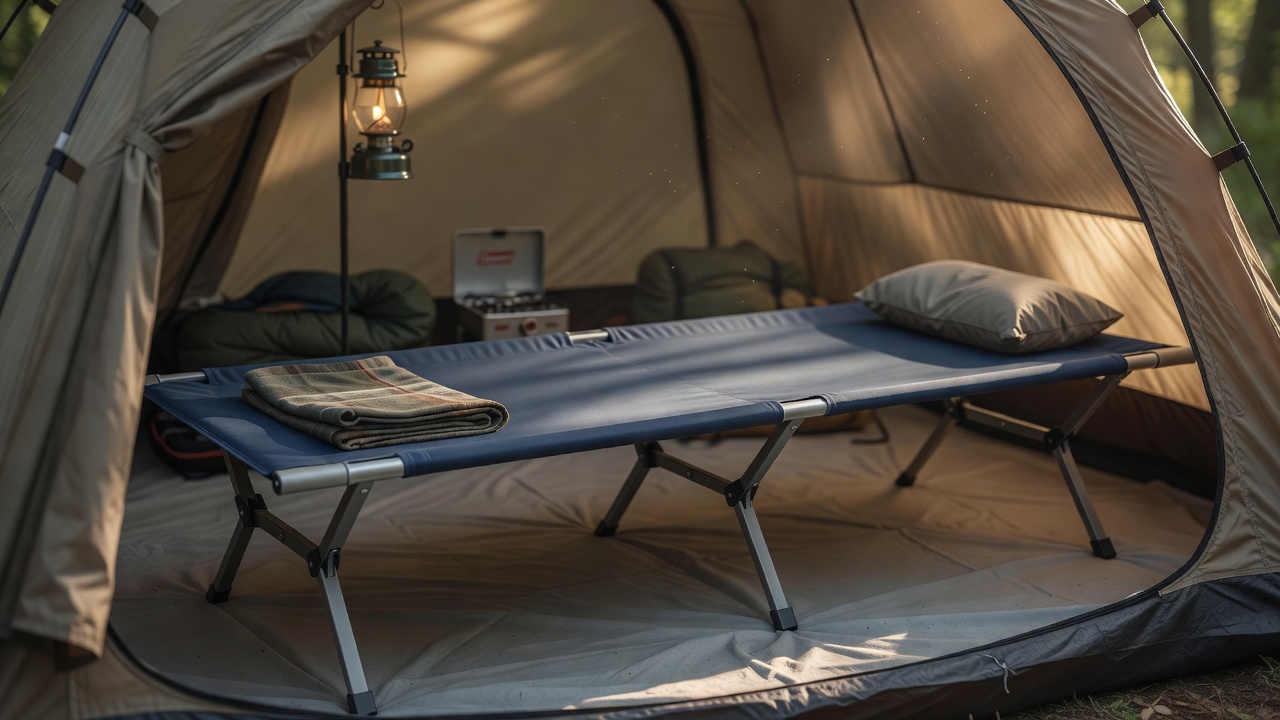
The Coleman Trailhead II ($54.99) is the cot I recommend to anyone buying their first one. It carries roughly 25,000 Amazon reviews at 4.4 stars, supports adults up to about 6'2" and 300 lbs on a heavy-duty steel frame, and sets up in about two minutes with zero tools — the legs unfold and lock. It is a car-camping piece (just over 20 lbs), not a backpacking one, and it folds flat into the included carry bag.
For a weekend tent, a festival, or the guest bed that gets borrowed every holiday, it is the dependable default.
Coleman ComfortSmart Big & Tall Cot with Mattress Pad — the value pick
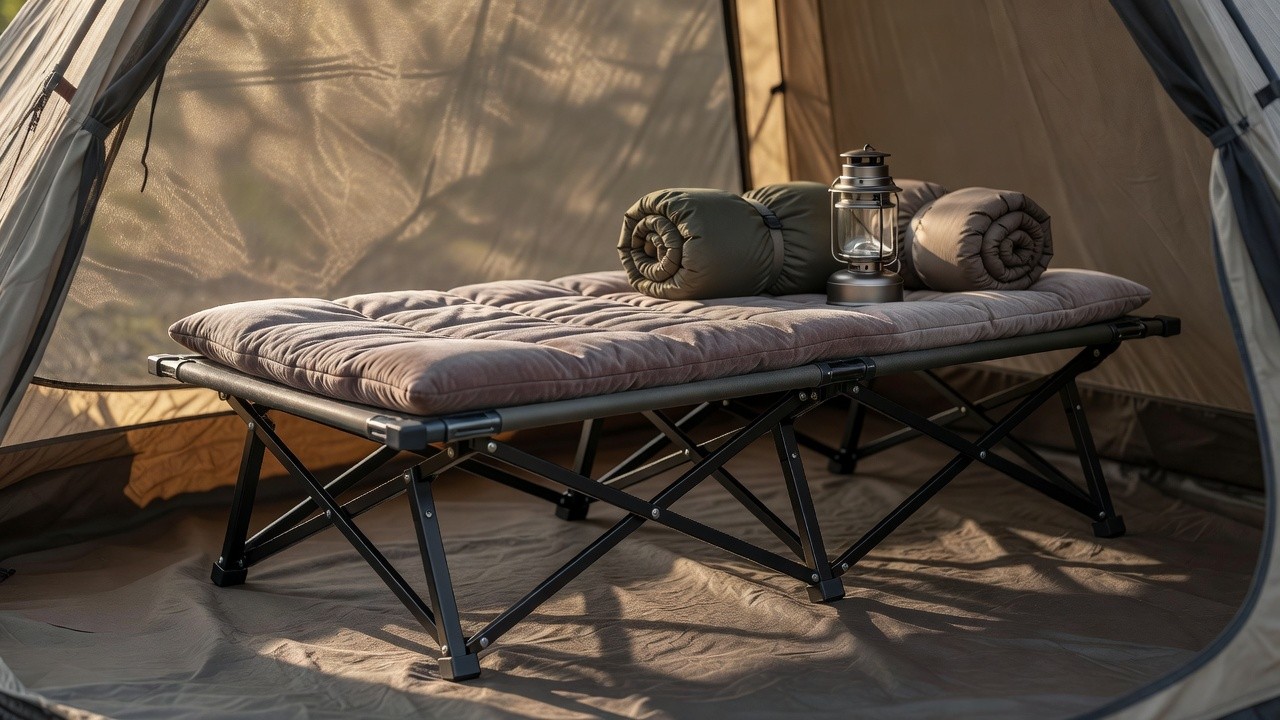
If you know you want padding, the Coleman ComfortSmart Big & Tall ($99.96) solves it in one purchase: a folding steel cot with an integrated plush mattress pad, so there is no separate pad to inflate, deflate, or forget in the garage. With about 8,700 reviews at 4.2 stars, it is the most proven cot-plus-pad combination in its price band.
The honest caveat: it is not a real mattress. Side sleepers may still want a thin topper. But it eliminates the 2 AM deflation problem completely, because there is no air in it.
Coleman Pack-Away Big 'n Tall with Side Table — the premium pick
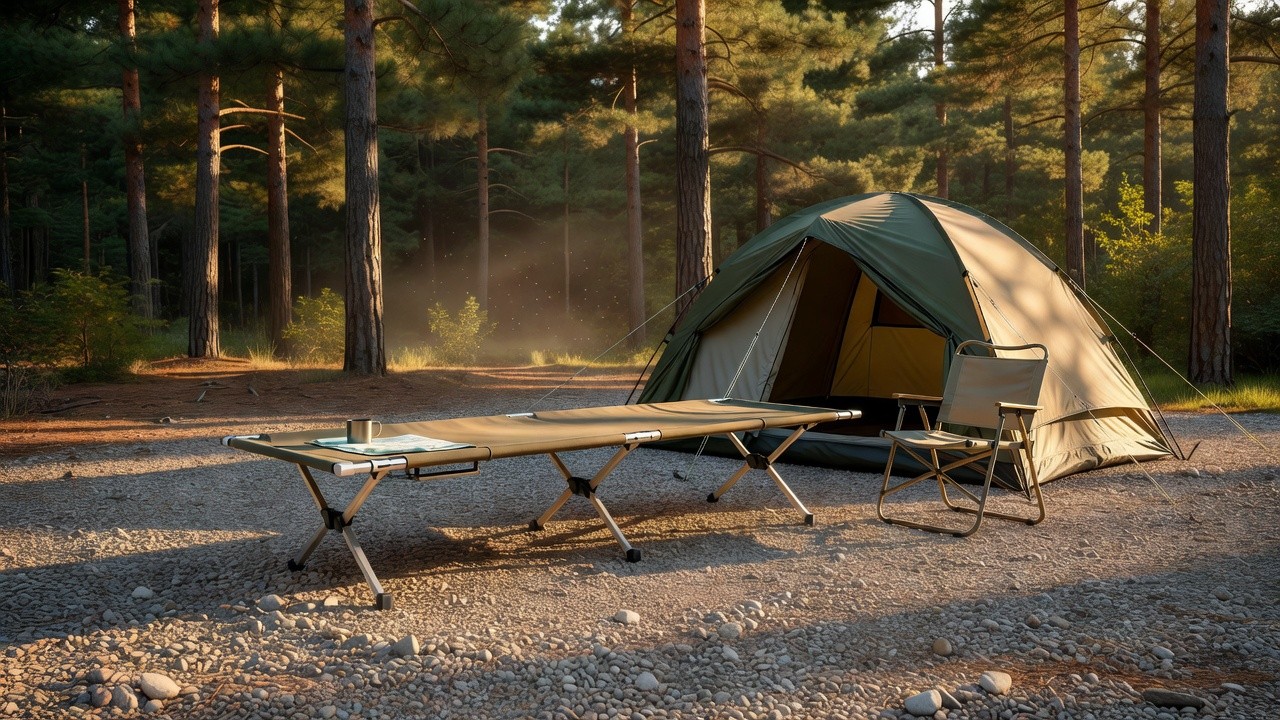
The Coleman Pack-Away Big 'n Tall ($110.99) is the cot you buy when you are done sleeping badly. It is rated for adults up to 6 ft 6 in or 300 lbs, and the removable side table clips on so your glasses, phone, water bottle, and lantern have somewhere to live instead of rolling across the tent floor.
Around 5,000 reviewers rate it 4.1 stars. It is the most expensive folding cot in our lineup, and the side table is the kind of feature you notice every single night — which is why these get borrowed for guest rooms as often as they get packed for trips.
MARCHWAY Ultralight Folding Cot — the packable one

The MARCHWAY Ultralight Folding Cot ($66.99) is the only cot here that makes sense outside a car. It folds far smaller and lighter than a traditional steel cot, which makes it realistic for a hike-in basecamp, a motorcycle trip, or a festival weekend where you are carrying everything. It has the highest rating of any cot we stock — 4.5 stars across about 3,100 reviews.
Two things to know: it is low-profile and has no built-in pad, so budget for a sleeping pad on top of it, and it is narrower than the Big & Tall models.
Don't forget the dog
If your dog sleeps in the tent, an elevated dog cot keeps them off the floor and off your sleeping bag: the CANINE CANYON Folding Raised Dog Cot ($49.99) does the same job for a fraction of the price. For more on gear that survives a dog in a tent, see our dog tent guide.
Where Air Mattresses Still Win
Air mattresses are not the villain here — they are just misused and mis-bought.
The SoundAsleep Dream Series Raised Queen Air Mattress ($149.95) has a built-in pump, which is the feature that matters: no separate pump to lose or power. For a couple on a multi-night car-camping trip, a queen air mattress gives you a genuinely mattress-like sleep surface with room to sprawl, and nothing in the cot world matches that footprint for two people.
Buy one if:
- You sleep two adults and want maximum sleeping surface per dollar.
- You are at a site where you can top it up before bed.
- You have a repair patch kit and a floor mat under it (protection from gravel and dog claws is the whole game).
Skip it if: you camp in shoulder-season cold, if kids or dogs share the tent, or if the phrase "a little soft" at 3 AM makes you angry. In those cases a cot is simply the lower-risk purchase.
Sleeping Pads: The Backpacker's Answer
A sleeping pad is the only system that fits in a backpack, and for hike-in trips it is not a compromise — it is the tool.
Two camps, and I have owned both:
Closed-cell foam. The Therm-a-Rest Z Lite Sol ($54.95) is the pad you cannot destroy. No valve to fail, no puncture to patch, works in any temperature. It is also the least comfortable and does not pack small. For a kid's first backpacking trip or an emergency kit, this is the answer.
Inflatable insulated pads. The Gear Doctors Oxylus ($49.99, 4.3 R-value insulation) is the budget entry point. Above that, the Klymit Static V ($64.95) is the classic lightweight starter pad, the NEMO Tensor All-Season ($199.95) and Sea to Summit Ether Light XT ($219.95) are the weight-obsessed options, and the Therm-a-Rest NeoAir XLite NXT ($209.95) is the pad ultralight backpackers keep buying.
One pad deserves its own note for car campers: the Exped MegaMat 10 ($239.95) is a four-inch-thick pad that feels closer to a home mattress than a camping pad. It is heavy and expensive — and if you car camp and care about sleep quality, it beats an air mattress on both warmth and durability. If you want a deeper comparison of pads versus mattresses specifically, our sleeping pad vs air mattress guide goes line by line.
Which Should You Buy? Match the Bed to the Trip
Weekend car camping with kids. Cots for the adults, cots for the kids (a Coleman Kids Quad Chair around the fire is a separate budget line), and a closed-cell foam pad for the dog or the spare tent. Cots win because nothing deflates and nothing punctures.
Couples' basecamp, two or three nights. A raised queen air mattress if you accept the top-up ritual, or two Pack-Away cots if you want zero maintenance. Both sleep two adults comfortably.
First backpacking trip. A sleeping pad, minimum 3 inches thick and insulated, plus a real pillow. Our full breakdown of comfortable sleeping pads covers thickness versus weight.
Hike-in basecamp. The MARCHWAY cot if being off the ground matters more than every gram, otherwise the Klymit or Gear Doctors pad.
Guests, sleepovers, and holidays. Cots. They store flat, they never leak, and no one has to find a pump.
The Comfort Upgrades That Matter More Than the Bed
Once the bed is sorted, three cheap upgrades change how a night feels:
- A real camping pillow. The NEMO Fillo Elite ($59.95) and Sea to Summit Aeros Premium ($49.95) are the premium picks, and the Trekology ALUFT 2.0 ($16.99) is the value one that lives in my pack. Folded fleece under your head is not a pillow. See our camp pillow comparison for inflatable vs compressible vs memory foam.
- Insulation under and over you. A cot on cold ground is still cold from below. The Rumpl Original Puffy Blanket ($139.00) over a sleeping bag adds a layer without the bulk, and a 12-volt heated blanket ($31.99) is a real option if you have a power station at camp.
- A lamp you can reach. Half the "bad night" complaints are really "I could not find anything in the dark." A small lantern on a cot side table beats a headlamp buried in a duffel.
Common Camp Bed Mistakes (Learn From Mine)
- Inflating an air mattress in the afternoon heat. It will be soft by 2 AM. Inflate it after dinner, or top it up right before bed.
- Skipping a ground mat under an air mattress. Gravel, pine cones, and dog claws kill mattresses. A cheap tarp underneath is the cheapest insurance in camping.
- Buying a cot that is too short. If anyone in your family is over six feet, buy the Big & Tall model the first time. My first cot ended at my ankles.
- Putting a cot in a small dome tent. A wide cot can consume most of a 4-person tent's floor. Check floor dimensions against bed dimensions before you buy both.
- Treating a sleeping pad like a mattress. A three-inch pad feels great on grass and terrible if you skip the insulation layer in cold weather. Match the pad's warmth to the season, not just its thickness.
- Forgetting that kids share beds. Two kids on one queen air mattress is a wrestling match. Two narrow cots is peace.
Camp Bed FAQ
Is a cot or air mattress better for camping?
It depends on how you sleep and how you pack. Cots win on durability, firmness, and getting you off the ground — they never leak, and they are easier to get up from, which matters for older campers. Air mattresses win on pack size and a softer, more mattress-like feel, especially for couples. Sleeping pads win for backpacking and for anyone who prioritizes warmth-to-weight over comfort.
Do air mattresses lose air when camping?
Yes — even a flawless air mattress will feel softer by morning, because the air inside contracts as the temperature drops overnight. A mattress filled at 70°F in the afternoon can feel noticeably deflated at 40°F at 2 AM. The fixes are simple: top it off right before bed, put a closed-cell foam pad or a blanket underneath for insulation, and choose a mattress with a durable valve and a real warranty.
Are camping cots comfortable for side sleepers?
Cots are firm by design, which some side sleepers love and others find too hard on the hips and shoulders. The usual fix is a thin sleeping pad or self-inflating pad on top of the cot — that combination gives you the cot's height and durability with pressure relief where you actually need it. If you sleep hot or move a lot, a wider cot helps more than a softer one.
What is the warmest option: cot, air mattress, or sleeping pad?
Warmth comes from what is under you, not what is on top of you. A closed-cell or insulated pad is the warmest per inch because it does not circulate air, which is why backpackers rely on them. Regular air mattresses are the coldest, since the air inside moves and pulls heat away from your body. Cots sit in the middle — they lift you off the cold ground, but you still want insulation between you and the fabric.
What do you put under a sleeping bag on a cot?
Put a foam or self-inflating pad on the cot, then your sleeping bag on top — the pad is your insulation layer, and it also stops the bag from sliding around. A fitted sheet or a blanket tucked around the pad adds comfort and keeps the setup from feeling like a bare cot. Camping in real cold, add a closed-cell pad under the inflatable one for a two-layer system.
The Bottom Line
For the family weekend trip that this site is built around, a folding cot is the best default: nothing to inflate, nothing to leak, and you sleep off the cold ground. Spend $54.99 on the Trailhead II if you want the proven budget pick, $99.96 on the ComfortSmart if you want the pad included, or $110.99 on the Pack-Away if you want the wide deck and the side table.
Choose the air mattress when comfort for two adults matters most and you accept the maintenance. Choose a sleeping pad when you are carrying your bed on your back.
Whatever you pick, buy it before the trip, sleep on it in the yard once, and find out at home — not at 2 AM in the woods — whether it works for you.
<!-- AFFILIATE_DISCLOSURE -->TrailMapz earns a small commission from qualifying purchases made through links on this page, at no extra cost to you. Prices and ratings are current as of September 2026 and may change.