Sleeping Bag Temperature Ratings Explained (2026)
A 20°F bag is not comfortable at 20°F. What comfort, limit and extreme ratings really measure, the pad math that matters and a temperature chart.

In this article · 14 sections
- Quick Answer: Sleeping Bag Temperature Ratings, Decoded
- The Four Numbers on Every Sleeping Bag Tag (EN 13537 / ISO 23537)
- Why Your Bag Feels Colder Than Its Rating: The Sleep System Math
- Sleeping Bag Temperature Chart: What to Bring by Nighttime Low
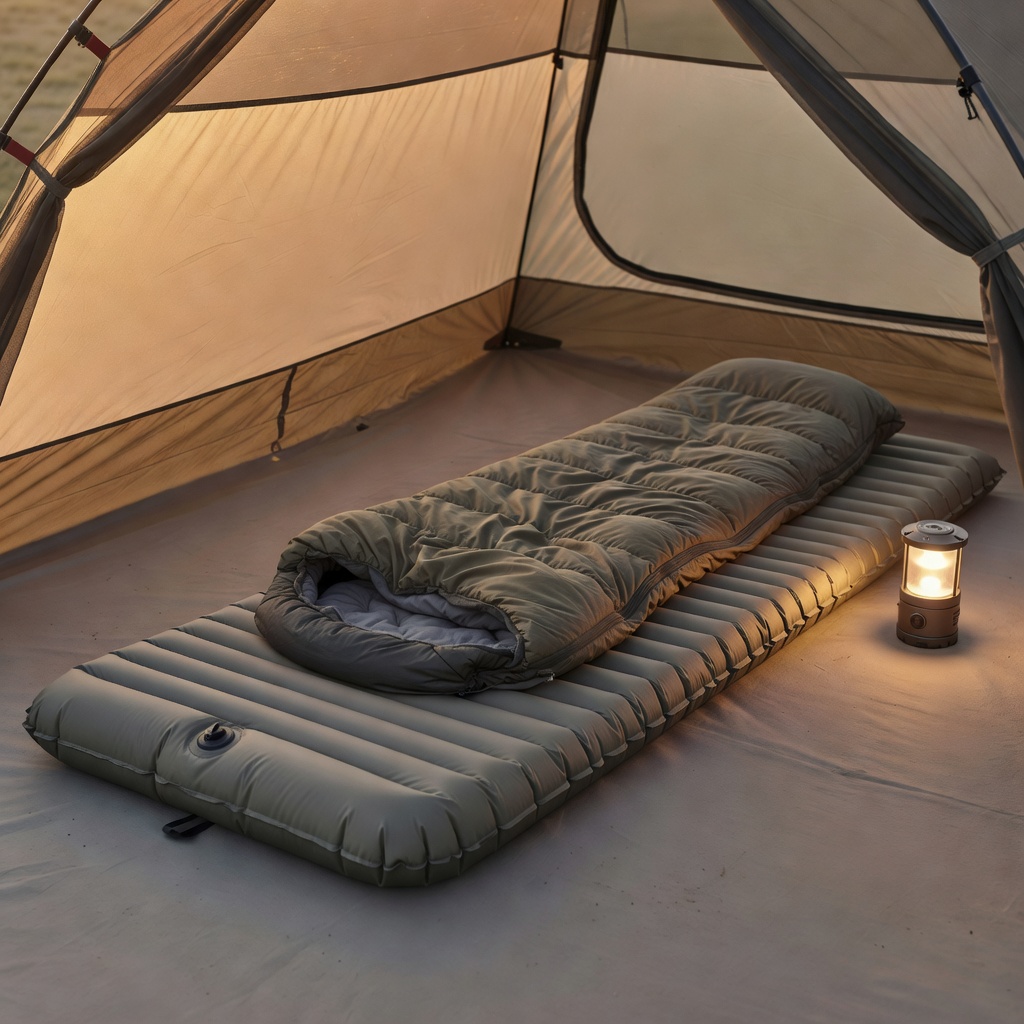
- The Pad Is Half Your Warmth (And Air Mattresses Are The Trap)
- Down vs Synthetic at the Same Rating
- Liners, Blankets, and Layers: The +20°F Cheat
- Kids and Babies: Ratings That Don't Exist
- How to Test Your Setup Before a Cold Trip
- Common Temperature Rating Mistakes (I've Made All of Them)
- Sleeping Bag Temperature Ratings, Search by Search: Every Way People Ask This
- Buying by Temperature: What to Get, What to Add, What to Fix
- Sleeping Bag Temperature FAQ
- The Bottom Line
If the forecast is already trending colder than the kit, the Oklahoma camping guide shows how the shoulder-season setup gets rebuilt when the nights drop into the 40s and the wind is the real variable.
Quick Answer: Sleeping Bag Temperature Ratings, Decoded
If you read nothing else, read this:
- The number on the bag is usually the lower limit, not the comfort rating. A bag tagged "20°F" is designed so a standard man — 25 years old, 154 lb — stays in thermal equilibrium at 20°F while curled up. He is not comfortable. Comfort is a warmer number, usually 10–15°F higher.
- The rating assumes a pad you probably don't own. The lab test uses a thin closed-cell foam mat and a single base layer. Put a great bag on a bare air mattress and its rating is fiction.
- Your sleep system has two halves: bag and pad. Cold ground steals heat far faster than cold air. A 20°F bag on a summer pad sleeps like a 40°F bag on a 4.4 R-value pad.
- Match the bag to the nighttime low, not the daytime forecast, and subtract a margin for wind, humidity and the fact that you slept badly.
- If you want one number: a 30°F bag plus a good insulated pad covers most late-spring-to-late-fall family camping in the US. Add a fleece liner and you push it below freezing.
The rest of this page is the honest version of those five bullets — what the tag means, why the number lies by 10–20°F, and how to build a setup that actually holds heat at 25°F.
The Four Numbers on Every Sleeping Bag Tag (EN 13537 / ISO 23537)
Since 2002, most sleeping bags sold internationally carry a rating calculated under EN 13537 — updated and reissued as ISO 23537 in 2016. The test puts a heated mannequin wearing one base layer on a standard mat inside the bag and measures heat loss over time.
That produces four numbers. Almost no US product page shows all four — they show the one that sells best.
| Tag number | Who it's measured on | What it means | Should you use it? |
|---|---|---|---|
| Upper limit | Standard man, uncurled | Warmest temp where you won't overheat | Only for summer buying |
| Comfort | Standard woman, relaxed | Temperature she stays comfortable at | Yes — this is "real" comfort for most people |
| Lower limit | Standard man, curled | He stays in thermal equilibrium (not warm, not freezing) | This is the number on most US bags |
| Extreme | Standard woman | Survival margin before hypothermia risk | Never. It's a danger number, not a use number |
The test mannequins are defined sizes: the "standard man" is 25 years old, 5'8", 154 lb; the "standard woman" is 25, 5'3", 132 lb. Two consequences follow immediately.
First, "comfort" is the honest number and it's measured on a smaller person. If you're a man over about 180 lb, your comfort temperature sits closer to the comfort figure too, because you're carrying more mass under the same shell. If you're a woman shopping a men's bag, mentally subtract 10–15°F from the comfort figure or buy a women's-specific bag, which moves insulation under the torso instead of over it.
Second, extreme ratings exist because someone died. A bag with a 20°F limit and a -10°F extreme isn't "usable to -10°F." It means at -10°F the lab model would be risking hypothermia. Treat extreme as a warning label.
Why Your Bag Feels Colder Than Its Rating: The Sleep System Math
Three things routinely eat 10–20°F off a bag's rating:
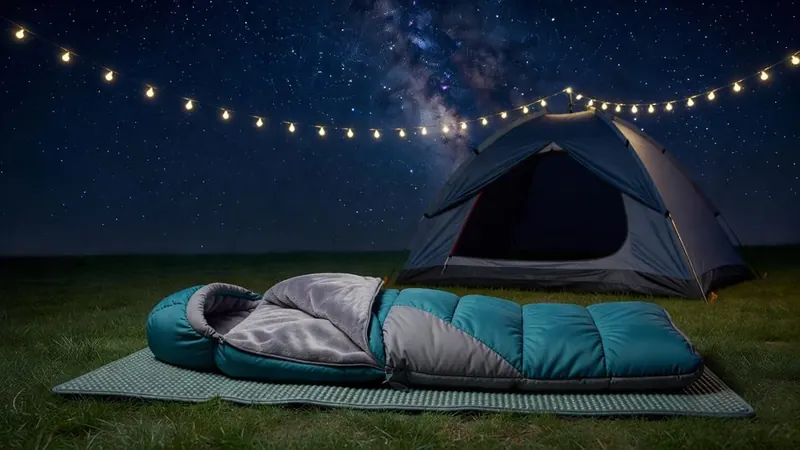
The mat you're on. A bag's bottom insulation is crushed flat under your body weight — that's why bags have no real loft underneath. The pad you put down does the work that the bag's bottom can't. Lab testing hides this behind a standard foam mat, which is a slightly better insulator than an uninsulated air mattress and a much better one than bare ground.
Your body's heat output drops at night. You fall asleep warm from dinner and movement, then core temperature dips in the small hours — typically the coldest stretch of the night is 3–5 a.m., well after you've stopped generating heat. Ratings are steady-state lab values; you are not steady-state.
Moisture and wind. Perspiration that can't escape condenses in the insulation and kills loft. Wind pulls heat through a shell. A bag rated fine in a dry 30°F yard test can feel thin in a damp 30°F valley.
The practical takeaway: treat the printed rating as the temperature at which the bag stops protecting you, and plan to sleep 10–20°F above it. Our best camping sleeping bags guide applies exactly this margin to each pick.
Sleeping Bag Temperature Chart: What to Bring by Nighttime Low
This is the table I actually use when packing. Read the left column as the nighttime low you expect, not the afternoon forecast. The 45–60°F row is the one most fall trips actually live in, and our camping in 50 degree weather guide works that row end to end.
| Nighttime low | Bag rating to bring | Pad R-value | Notes |
|---|---|---|---|
| 60–75°F | 40°F bag, unzipped | R 1–2 | A blanket often beats a bag |
| 45–60°F | 40°F bag, or 30°F with a liner | R 2–3 | Classic summer-to-early-fall |
| 35–45°F | 30°F bag | R 3.5–4.5 | Add a hat; this is peak fall camping |
| 25–35°F | 20°F bag | R 4.5–5 | Dry base layer, no cotton |
| 10–25°F | 0°F bag | R 5–6 | Double up pads, ventilate the tent |
| Below 10°F | 0°F or lower + liner | R 6+ | Two pads stacked; expect condensation |
Two rules to carry with you:
- Each step down in bag rating buys you roughly 10°F of margin. That's the entire point of the 40/30/20/0 ladder — it's not marketing, it's a scale.
- The pad column is not optional. Going a full step wrong on the pad costs you about the same as going a full step wrong on the bag, and pads are cheaper.
Late-Fall and Cold-Weather Picks From Our Catalog
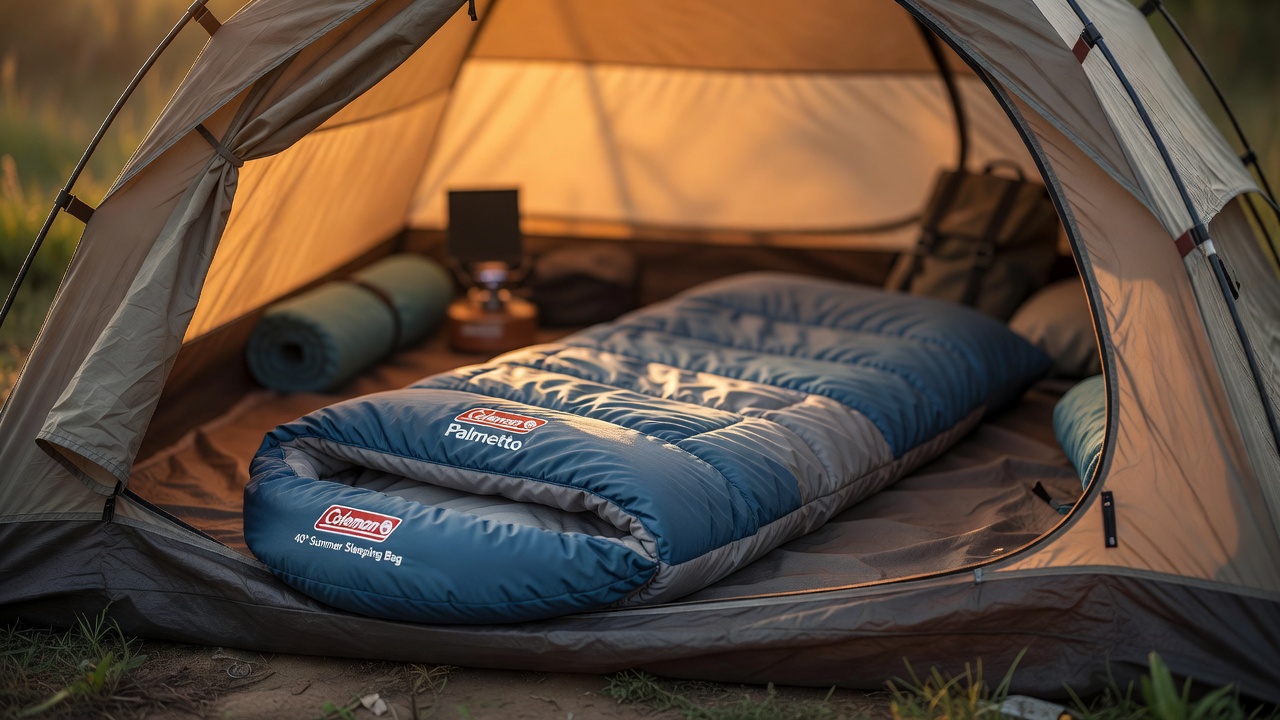
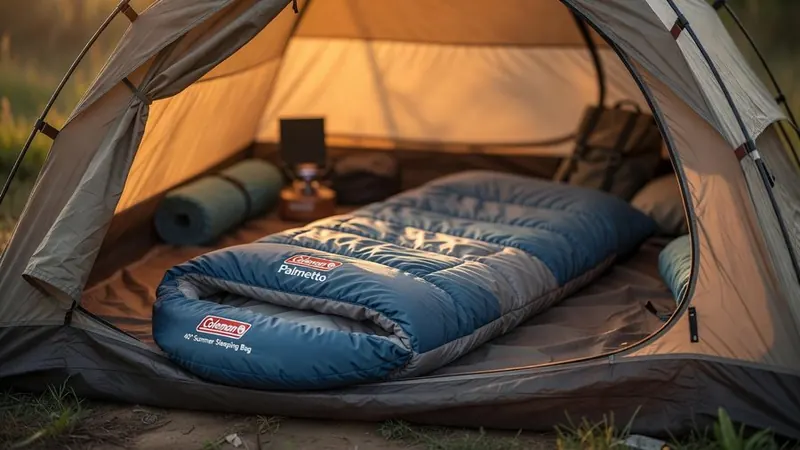
Coleman Palmetto 40°F — Coleman Palmetto 40 Degree Cool-Weather Sleeping Bag at $44.99 (4.4★, 9,500+ ratings). The summer and warm-September bag. Rectangular, roomy, and cheap enough to own as the "it's still 55°F at night" option.
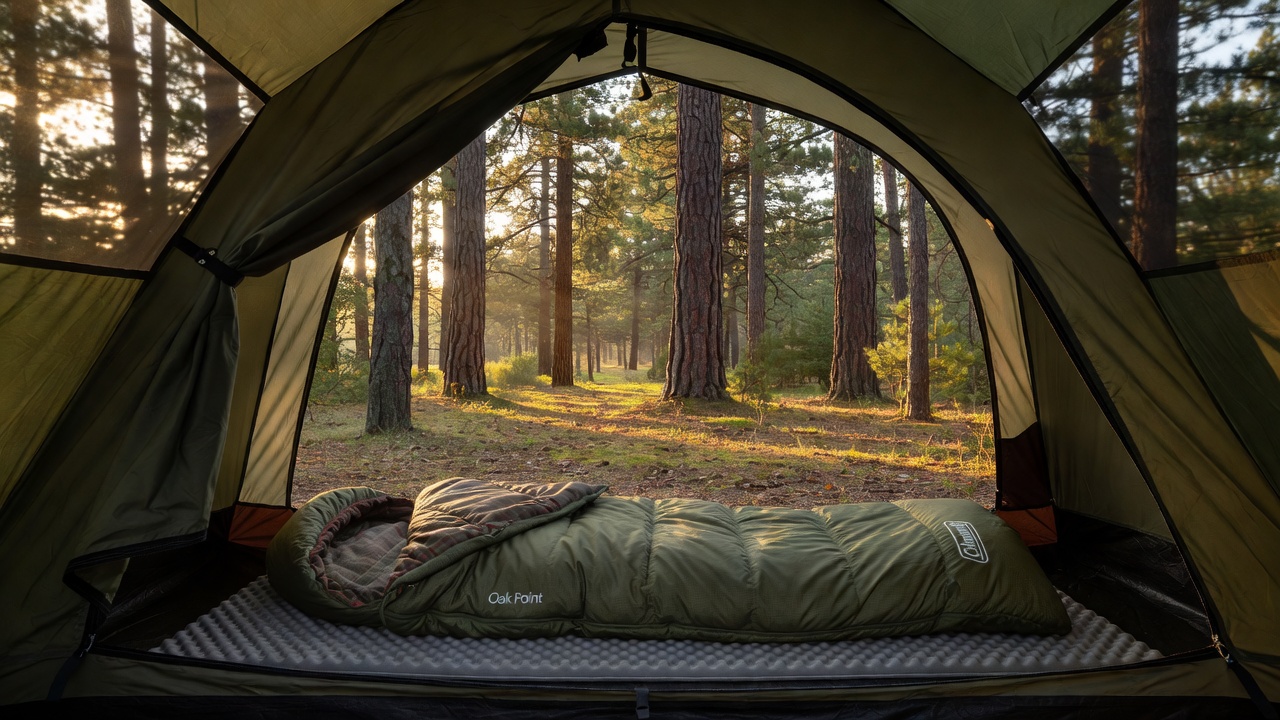
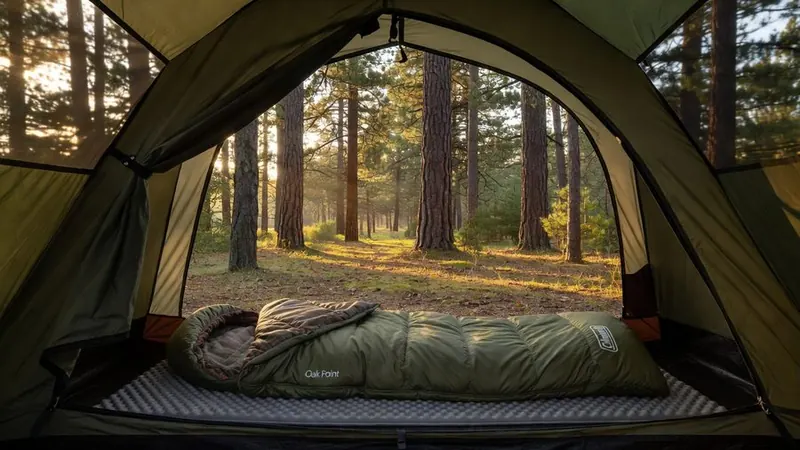
Coleman Oak Point 30°F — Coleman Oak Point Big & Tall 30°F Sleeping Bag at $74.99 (4.6★). The big-and-tall cut matters more than the rating if you're over 6 ft.
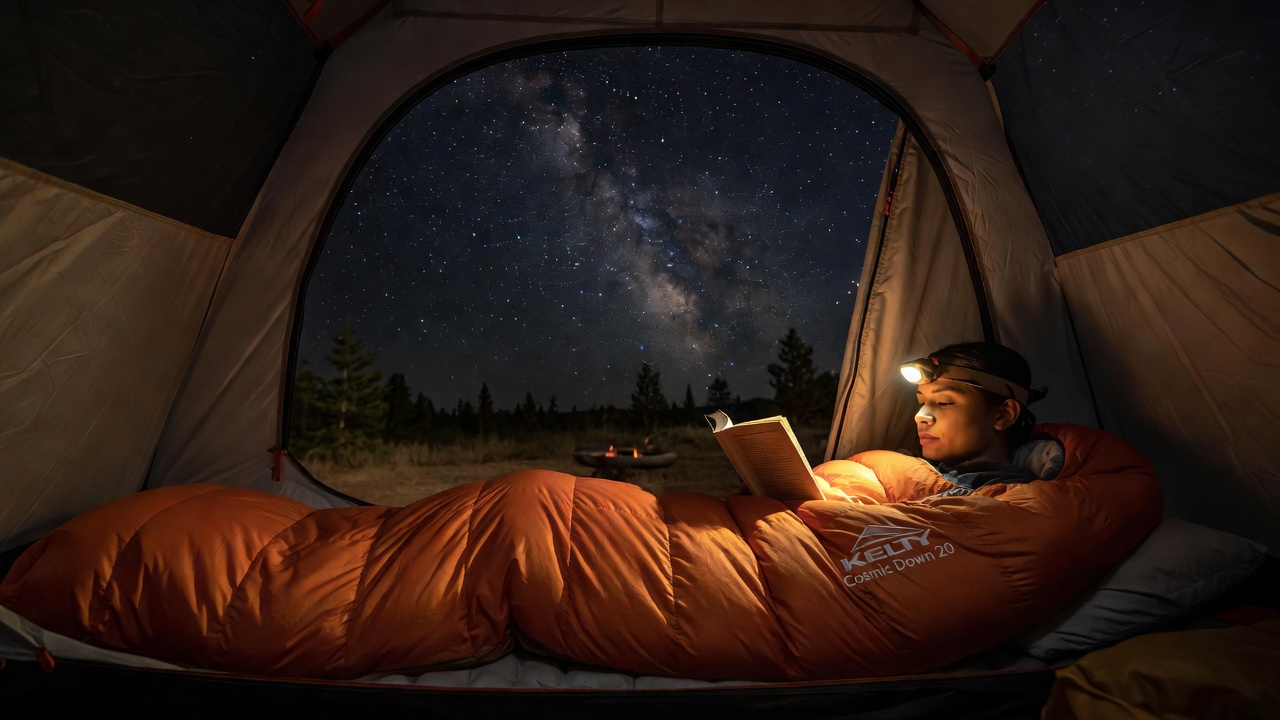
Kelty Cosmic Down 20° — Kelty Cosmic Down 20 Degree 550 Down Sleeping Bag at $169.00 (4.5★). 550-fill down, the lightweight option for the 25–35°F band. Down wins on warmth-per-pound but must stay dry.
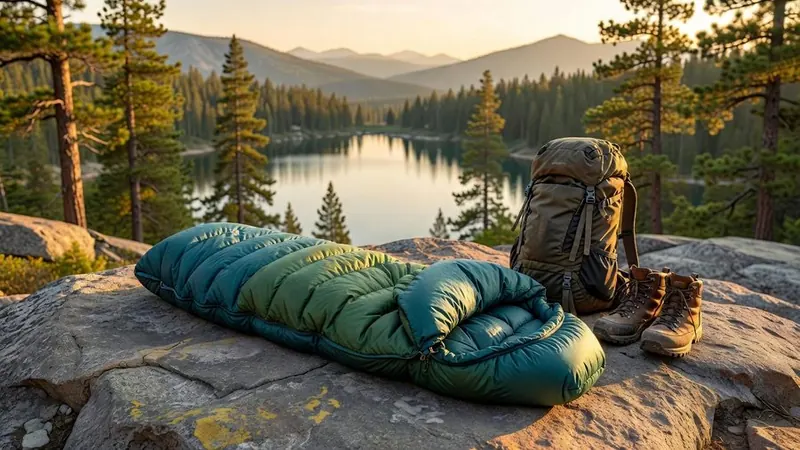
TETON Sports Celsius 0°F — TETON Sports Celsius Regular 0 Degree Sleeping Bag at $59.99 (4.5★, 18,000+ ratings). The budget winter bag, and the single best value in the catalog for deep-fall camping. If you're taller, the XXL version at $89.99 is the same bag with room.
The Pad Is Half Your Warmth (And Air Mattresses Are The Trap)
Here's the mistake that ruins more fall camping trips than any other: bringing a comfortable air mattress and assuming it's warm.
Air mattresses are built for comfort, not insulation. A big single-chamber air mattress has essentially no insulating value — the air inside it moves, and moving air transfers heat. You can feel perfectly cushioned and still lose heat straight into the ground all night.
The fix is an R-value rating, and it's the same scale as home insulation:
- R 1–2 — closed-cell foam, summer only. Therm-a-Rest Z Lite Sol at $54.95 is the classic R 2.0 accordion foam pad, and it can't puncture.
- R ~1.3–3.2 — uninsulated and lightly insulated inflatables. Klymit Static V at $64.95 and Sea to Summit Ether Light XT Insulated at $219.95 (R 3.2).
- R ~4.3–4.5 — the three-season sweet spot. Gear Doctors Oxylus at $49.99 (R 4.3) and Klymit Insulated Static V at $94.99 (R 4.4) are the two value picks; Therm-a-Rest NeoAir XLite NXT at $209.95 (R 4.5) is the ultralight version.
- R 5+ — winter territory. NEMO Tensor All-Season at $199.95 is the cold-weather pick in our catalog, and Exped MegaMat 10 at $239.95 is the most comfortable pad we carry.
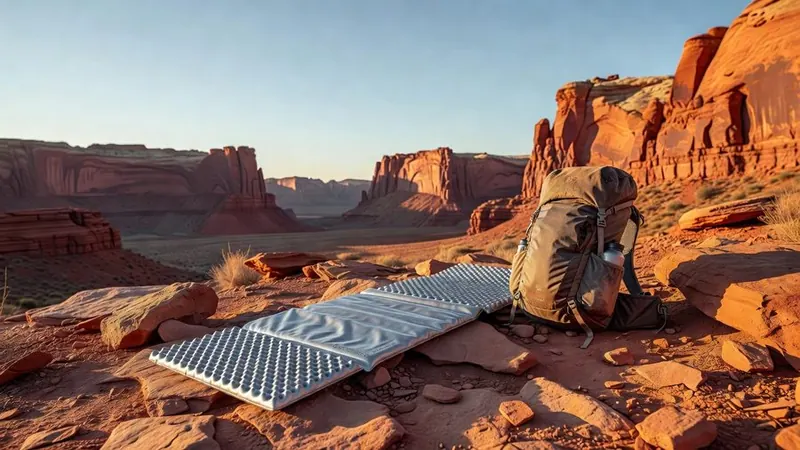
The stack trick: an R-value 2 closed-cell foam pad under an insulated inflatable pad adds their insulation AND protects the inflatable from punctures. Two cheap pads beat one expensive one in cold weather. Our cot vs air mattress vs sleeping pad comparison covers which platform suits which camper.
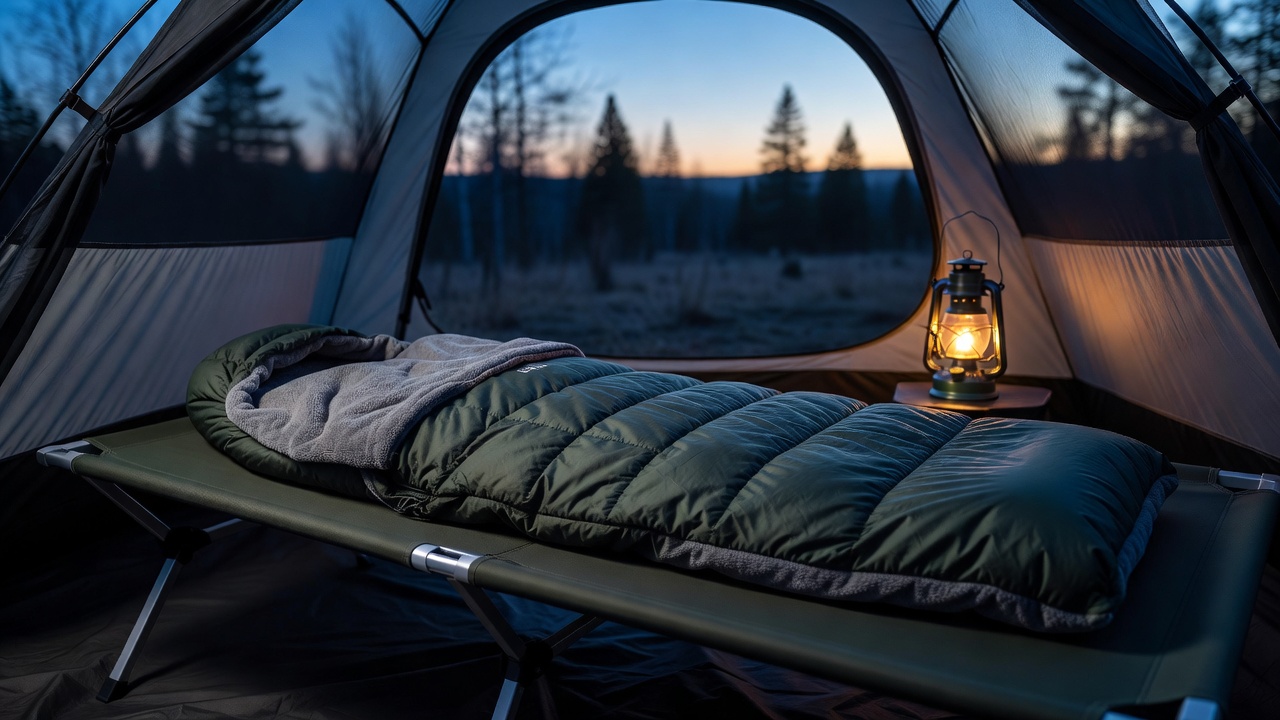
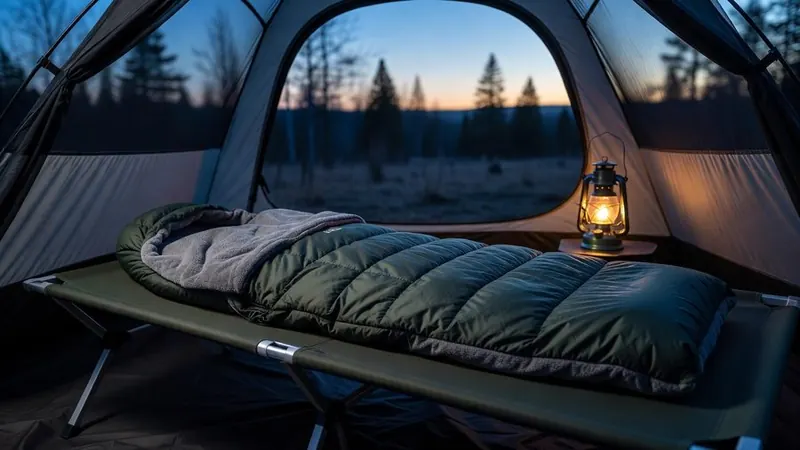
If you're sleeping on a cot — Coleman ComfortSmart at $99.96, Coleman Pack-Away at $110.99, or MARCHWAY Ultralight at $66.99 — remember a cot lifts you off the ground but still needs a pad. Cots stop ground conduction; they don't add insulation by themselves.
Down vs Synthetic at the Same Rating
At the same temperature rating, down and synthetic are not equivalent — but the difference is about weight and moisture, not warmth numbers.
- Down packs smaller and lighter per degree of warmth. It also lasts longer if cared for, and it fails badly when wet: wet down loses loft and stops insulating. Choose it if you're carrying the bag and can keep it dry — that's why the Kelty Cosmic Down 20° is our backpacking pick.
- Synthetic is heavier for the same rating but keeps some warmth when damp, dries faster, and costs less. For car camping — where you're never carrying it and the tent can get humid — synthetic is the smarter buy.
If your trips are weekend car camping in a family tent, the extra 2 lb of a synthetic bag buys you nothing but misery-free mornings. Buy synthetic, spend the saved money on the pad.
One note on packed size, since the tag never prints it: the rating tells you how warm the bag is, not how big it is in the trunk. Down compresses roughly a third smaller than synthetic at the same rating, and either bag shrinks a lot in a proper compression sack — the Frelaxy 4-strap compression sack at $16.99 takes a lofted 0°F bag from beach-ball to bread-loaf size, which is the difference between a winter bag that fits beside the cooler and one that eats the whole trunk. Just don't store the bag compressed between trips: long-term compression is what quietly kills loft, and lost loft reads as "my bag got colder," not "my storage habit failed."
Liners, Blankets, and Layers: The +20°F Cheat
You do not have to buy a colder bag to sleep warmer. Three cheap upgrades stack:
A liner inside the bag. Fleece liners are the highest-value item here because they add warmth AND keep your bag clean. Litume Fleece Sleeping Bag Liner at $57.98 is billed by the maker as adding up to 27°F — treat that as a best case in ideal conditions and a more realistic 10–20°F. The REDCAMP Fleece Liner with Hood at $24.99 is the budget version (the hood matters — you lose a lot of heat off your head). BROWINT Silk Liner at $70.99 adds less warmth but packs tiny and is the cleanest-feeling option in hot weather.
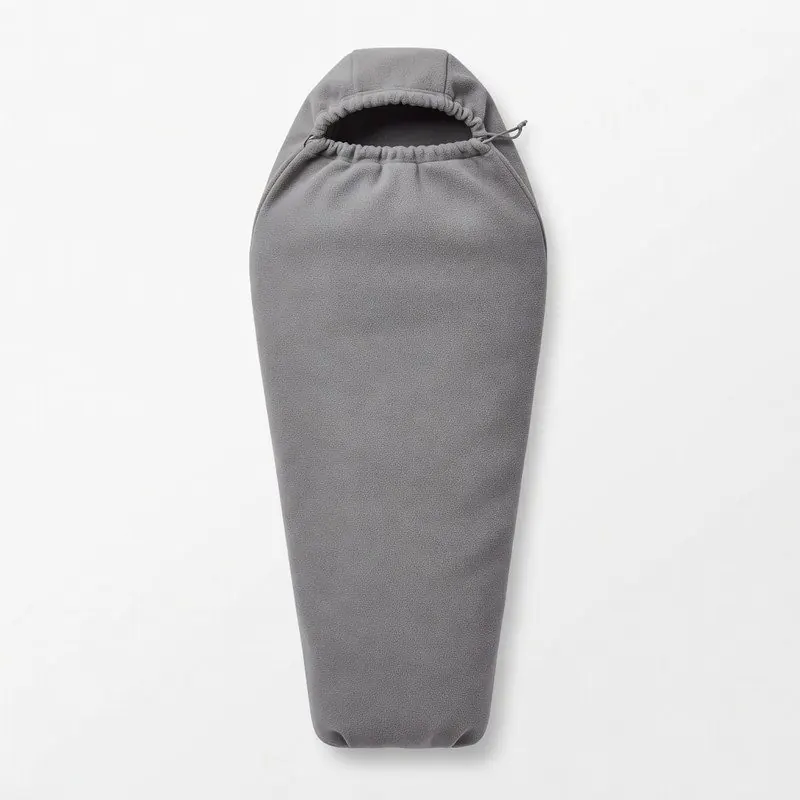
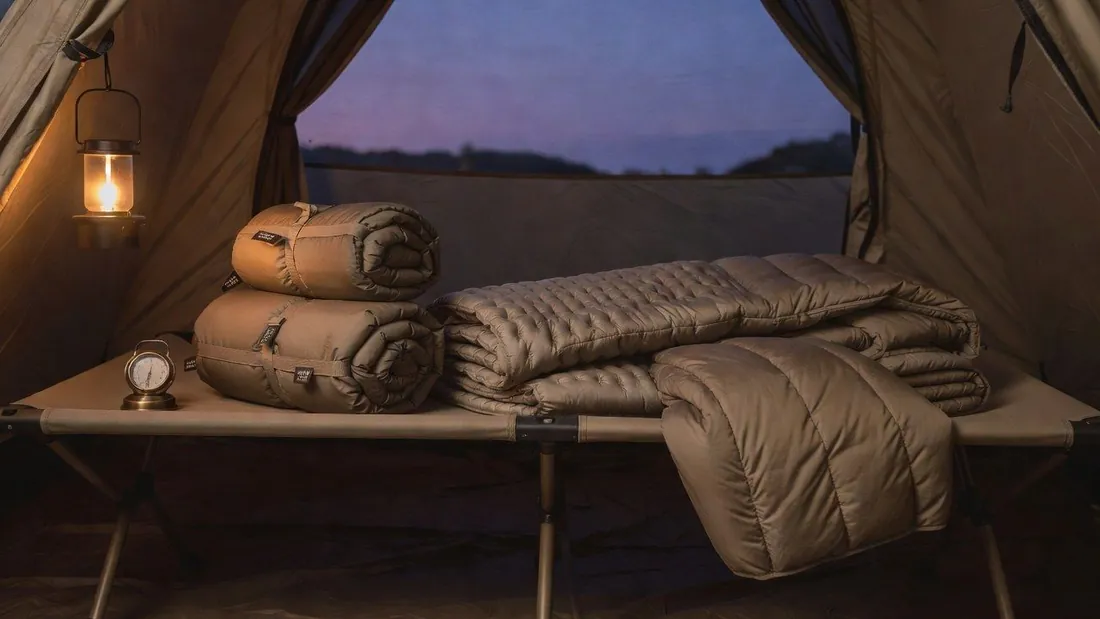
A puffy blanket over the bag. A quilt or blanket draped over the outside traps another layer of air. Rumpl Original Puffy Blanket at $139.00 is designed for exactly this; our camping blankets guide breaks down which ones earn their pack space.
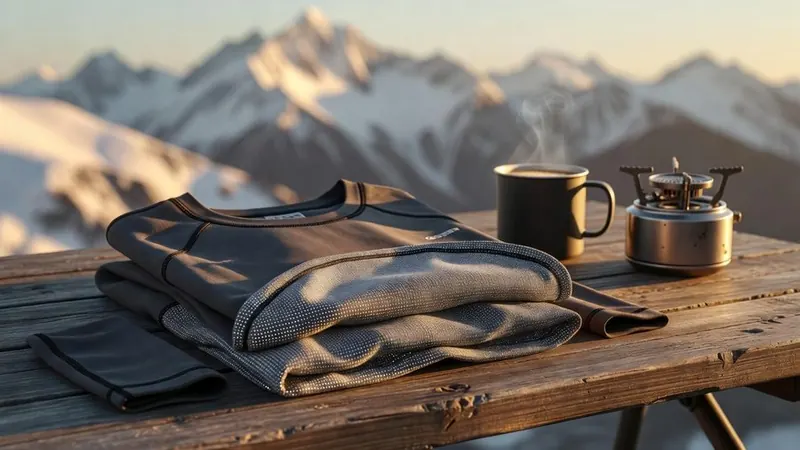
The right clothes. A dry, thin synthetic base layer adds real warmth. Cotton does the opposite — it holds sweat against your skin and chills you. Wear a hat, dry socks, and keep one clean dry set for sleeping only.
Also worth knowing: a hot water bottle or a warm, sealed drink in a bottle inside the bag is a genuine heat source for the first hour, which is when most people decide whether the night is going to be miserable.
The clothes layer is the cheapest purchase on this page. A dry, thin base layer costs less than any bag upgrade in the catalog. The Columbia Men's Midweight Omni-Heat Base Layer Top at $49.99 (4.6★, 9,800+ ratings) is the synthetic, thermal-reflective version of that layer — one dedicated set that never leaves the tent, which is what the "keep one clean dry set for sleeping only" rule above is asking for. The Smartwool Women's Intraknit Thermal Max Merino Base Layer Bottom at $139.00 (4.6★) is the merino half of the same idea: it keeps insulating when it gets damp, where cotton stops. And the hat that paragraph insists on is a purchase, not an afterthought — a Smartwool Thermal Merino Reversible Beanie at $35.00 (4.7★, 1,800+ ratings) covers the head that bleeds heat faster than anything else outside the bag, and a matching merino neck gaiter at $32.00 (4.6★) closes the collar gap a mummy bag leaves open.
Kids and Babies: Ratings That Don't Exist
Here's the part nearly every temperature-rating guide skips: there is no EN/ISO rating standard for children's sleeping bags. Any "temperature rating" on a kids' bag is the manufacturer's own estimate, tested on nobody.
That changes how you buy:
- Buy by size and by fit, not by number. A bag that's too long for a small child has a huge dead-air cavity they can't heat. The Kelty Woobie 30° at $39.95 and the TETON Celsius Jr 20°F at $49.99 are cut for kids specifically.
- For babies and toddlers, prioritize the sleep-sack design over any rating. The Morrison Outdoors Little Mo 40° (6–18 months) at $69.95 and Big Mo 40° (ages 2–4) at $79.95 are built so the child can't slide down inside the bag — which is the actual hazard with loose bedding for small kids, not cold.
- Assume your child will be colder than you. Small bodies have more surface area per unit of mass and they don't regulate temperature the same way. Take the next step down the rating ladder, and add a liner or a second layer.
- Dress them dry and check them at the 3 a.m. cold point. The single useful habit is a mid-night check of hands and the back of the neck.
Our kids sleeping bags buying guide goes deeper on fit and safety.
How to Test Your Setup Before a Cold Trip
You don't need a freezer. You need one night in the backyard.
- Set the system up exactly as you'd pack it — bag, pad, liner, clothes, on the same surface (tent floor, not a bed).
- Check the overnight low on the actual night, and log it against the chart above.
- Rate yourself honestly in the morning: warm all night / warm until 3 a.m. / cold all night. Two of three "cold until 3 a.m." results on the same setup means you need a pad upgrade before a bag upgrade.
- Watch condensation. If the bag's outer shell is damp in the morning, you need more ventilation in the tent, not more insulation in the bag.
Backyard testing catches the air-mattress trap, the padless trap, and the "I run cold" trap for the price of one night — and it's far cheaper than discovering the problem three hours from a trailhead.
Common Temperature Rating Mistakes (I've Made All of Them)
Trusting the number on the tag as the comfort temperature. It's usually the lower limit, measured on a mannequin. I've slept cold in a "20°F" bag at 35°F and learned why.
Bringing an air mattress to a 35°F night. Perfectly comfortable, perfectly freezing. Air mattresses are not insulation; the R-value is the number that matters.
Buying a colder bag when the pad was the problem. A 0°F bag on a summer pad is still cold because the ground is the biggest heat sink in the equation. Fix the pad first — it's cheaper.
Wearing too many clothes. Sweating in the bag wets the insulation from the inside and you wake up colder than if you'd slept in one dry layer.
Ignoring the head. An uninsulated head loses heat all night. A hat is the cheapest warmth upgrade that exists.
Packing for the daytime forecast. A 65°F October day routinely ends at 35°F. Pack for the low, not the high — that's the whole premise of our November camping guide and it's why the winter camping beginners guide starts with the sleep system.
Real-world test conditions: a Minnesota October campsite runs at or below freezing at night, which is exactly where the gap between a bag's comfort and limit ratings becomes the only number that matters.
Sleeping Bag Temperature Ratings, Search by Search: Every Way People Ask This
Every question below is a version of the same thing: what does the number on the tag actually buy me? If you searched sleeping bag temperature ratings explained, how are sleeping bags rated, sleeping bag temperature rating chart, what does a 20 degree sleeping bag mean, is a 30 degree sleeping bag warm enough, or sleeping bag ratings explained en13537, the answer is in the tables on this page — each one written against the nighttime low you will actually sleep in, not the daytime forecast.
“What Does a 20 Degree Sleeping Bag Mean?” — The Degree-by-Degree Answers
| What people search | The answer |
|---|---|
| what does a 20 degree sleeping bag mean | That tag is the lower limit, so a 20°F bag is a comfortable night for most sleepers at roughly 30–35°F. It is measured on a 154 lb test subject curled up on a standard foam mat — not on you, and not on an air mattress. |
| what does a 50 degree sleeping bag mean | That tag is the lower limit, so a 50°F bag is a comfortable night for most sleepers at roughly 60–65°F. It is measured on a 154 lb test subject curled up on a standard foam mat — not on you, and not on an air mattress. |
| what does 20 degree sleeping bag mean | That tag is the lower limit, so a 20°F bag is a comfortable night for most sleepers at roughly 30–35°F. It is measured on a 154 lb test subject curled up on a standard foam mat — not on you, and not on an air mattress. |
| what does 30 degree sleeping bag mean | That tag is the lower limit, so a 30°F bag is a comfortable night for most sleepers at roughly 40–45°F. It is measured on a 154 lb test subject curled up on a standard foam mat — not on you, and not on an air mattress. |
| what does 40 degree sleeping bag mean | That tag is the lower limit, so a 40°F bag is a comfortable night for most sleepers at roughly 50–55°F. It is measured on a 154 lb test subject curled up on a standard foam mat — not on you, and not on an air mattress. |
| backpacking sleeping bag 20 degree | That tag is the lower limit, so a 20°F bag is a comfortable night for most sleepers at roughly 30–35°F. It is measured on a 154 lb test subject curled up on a standard foam mat — not on you, and not on an air mattress. |
| lightweight sleeping bag 0 degree | That tag is the lower limit, so a 0°F bag is a comfortable night for most sleepers at roughly 10–15°F. It is measured on a 154 lb test subject curled up on a standard foam mat — not on you, and not on an air mattress. |
| negative 20 degree sleeping bag | That tag is the lower limit, so a 20°F bag is a comfortable night for most sleepers at roughly 30–35°F. It is measured on a 154 lb test subject curled up on a standard foam mat — not on you, and not on an air mattress. |
| what is a 0 degree sleeping bag | That tag is the lower limit, so a 0°F bag is a comfortable night for most sleepers at roughly 10–15°F. It is measured on a 154 lb test subject curled up on a standard foam mat — not on you, and not on an air mattress. |
| 20 degree sleeping bag meaning | That tag is the lower limit, so a 20°F bag is a comfortable night for most sleepers at roughly 30–35°F. It is measured on a 154 lb test subject curled up on a standard foam mat — not on you, and not on an air mattress. |
| 30 degree sleeping bag meaning | That tag is the lower limit, so a 30°F bag is a comfortable night for most sleepers at roughly 40–45°F. It is measured on a 154 lb test subject curled up on a standard foam mat — not on you, and not on an air mattress. |
| 40 degree sleeping bag meaning | That tag is the lower limit, so a 40°F bag is a comfortable night for most sleepers at roughly 50–55°F. It is measured on a 154 lb test subject curled up on a standard foam mat — not on you, and not on an air mattress. |
| minus 20 degree sleeping bag | That tag is the lower limit, so a 20°F bag is a comfortable night for most sleepers at roughly 30–35°F. It is measured on a 154 lb test subject curled up on a standard foam mat — not on you, and not on an air mattress. |
| negative degree sleeping bag | That is the formal EN 13537 / ISO 23537 lower limit for the bag — the point where the test subject stops holding heat balance. Below it the bag is still a bag, but it is no longer insulation you should rely on. |
| kids sleeping bag 30 degree | That tag is the lower limit, so a 30°F bag is a comfortable night for most sleepers at roughly 40–45°F. It is measured on a 154 lb test subject curled up on a standard foam mat — not on you, and not on an air mattress. |
| zero degrees sleeping bag | That tag is the lower limit, so a 0°F bag is a comfortable night for most sleepers at roughly 10–15°F. It is measured on a 154 lb test subject curled up on a standard foam mat — not on you, and not on an air mattress. |
| sleeping bag 0 degrees | That tag is the lower limit, so a 0°F bag is a comfortable night for most sleepers at roughly 10–15°F. It is measured on a 154 lb test subject curled up on a standard foam mat — not on you, and not on an air mattress. |
| sleeping bag 10 degree | That tag is the lower limit, so a 10°F bag is a comfortable night for most sleepers at roughly 20–25°F. It is measured on a 154 lb test subject curled up on a standard foam mat — not on you, and not on an air mattress. |
| sleeping bag 15 degree | That tag is the lower limit, so a 15°F bag is a comfortable night for most sleepers at roughly 25–30°F. It is measured on a 154 lb test subject curled up on a standard foam mat — not on you, and not on an air mattress. |
| sleeping bag 50 degree | That tag is the lower limit, so a 50°F bag is a comfortable night for most sleepers at roughly 60–65°F. It is measured on a 154 lb test subject curled up on a standard foam mat — not on you, and not on an air mattress. |
| sleeping bag 5 degree | That tag is the lower limit, so a 5°F bag is a comfortable night for most sleepers at roughly 15–20°F. It is measured on a 154 lb test subject curled up on a standard foam mat — not on you, and not on an air mattress. |
“Is a 30 Degree Sleeping Bag Warm Enough?” — How Warm Each Rating Actually Runs
| What people search | The answer |
|---|---|
| what temperature is a 30 degree sleeping bag good for | Most people are comfortable at roughly 40–45°F in a 30°F bag. At the printed number itself you are at the edge of the lab definition — add a fleece liner or step one rating warmer if the forecast is at or below it. |
| 20 degree sleeping bag in 50 degree weather | Most people are comfortable at roughly 30–35°F in a 20°F bag. At the printed number itself you are at the edge of the lab definition — add a fleece liner or step one rating warmer if the forecast is at or below it. |
| 40 degree sleeping bag in 30 degree weather | Most people are comfortable at roughly 50–55°F in a 40°F bag. At the printed number itself you are at the edge of the lab definition — add a fleece liner or step one rating warmer if the forecast is at or below it. |
| grade sleeping bag for 56 degree weather | Most people are comfortable at roughly 65–71°F in a 56°F bag. At the printed number itself you are at the edge of the lab definition — add a fleece liner or step one rating warmer if the forecast is at or below it. |
| is a 30 degree sleeping bag warm enough | Most people are comfortable at roughly 40–45°F in a 30°F bag. At the printed number itself you are at the edge of the lab definition — add a fleece liner or step one rating warmer if the forecast is at or below it. |
| is a 40 degree sleeping bag warm enough | Most people are comfortable at roughly 50–55°F in a 40°F bag. At the printed number itself you are at the edge of the lab definition — add a fleece liner or step one rating warmer if the forecast is at or below it. |
| 15 degree sleeping bag comfort rating | Most people are comfortable at roughly 25–30°F in a 15°F bag. At the printed number itself you are at the edge of the lab definition — add a fleece liner or step one rating warmer if the forecast is at or below it. |
| 20 degree sleeping bag comfort rating | Most people are comfortable at roughly 30–35°F in a 20°F bag. At the printed number itself you are at the edge of the lab definition — add a fleece liner or step one rating warmer if the forecast is at or below it. |
| sleeping bag comfort rating explained | It means the bag was lab-tested to hold a standard mannequin in heat balance at that temperature, wearing one base layer on a standard foam mat. Real comfort usually lands 10–15°F above the printed number — more if you sleep cold. |
| how warm is a 20 degree sleeping bag | Most people are comfortable at roughly 30–35°F in a 20°F bag. At the printed number itself you are at the edge of the lab definition — add a fleece liner or step one rating warmer if the forecast is at or below it. |
| how warm is a 30 degree sleeping bag | Most people are comfortable at roughly 40–45°F in a 30°F bag. At the printed number itself you are at the edge of the lab definition — add a fleece liner or step one rating warmer if the forecast is at or below it. |
| sleeping bags for 20 degree weather | Most people are comfortable at roughly 30–35°F in a 20°F bag. At the printed number itself you are at the edge of the lab definition — add a fleece liner or step one rating warmer if the forecast is at or below it. |
| sleeping bag for 40 degree weather | Most people are comfortable at roughly 50–55°F in a 40°F bag. At the printed number itself you are at the edge of the lab definition — add a fleece liner or step one rating warmer if the forecast is at or below it. |
| sleeping bag comfort rating -10 | Most people are comfortable at roughly -1–5°F in a -10°F bag. At the printed number itself you are at the edge of the lab definition — add a fleece liner or step one rating warmer if the forecast is at or below it. |
| sleeping bag comfort rating -5 | Most people are comfortable at roughly 4–10°F in a -5°F bag. At the printed number itself you are at the edge of the lab definition — add a fleece liner or step one rating warmer if the forecast is at or below it. |
| are sleeping bags comfortable | That is the formal EN 13537 / ISO 23537 lower limit for the bag — the point where the test subject stops holding heat balance. Below it the bag is still a bag, but it is no longer insulation you should rely on. |
How Are Sleeping Bags Rated? The Rating-System and EN 13537 Forms
| What people search | The answer |
|---|---|
| sleeping bag temperature ratings for winter | Bags are rated under EN 13537, reissued as ISO 23537 in 2016: a heated mannequin in one base layer on a standard mat, measured to four numbers (upper limit, comfort, lower limit, extreme). Only the comfort number is a realistic target for most sleepers. |
| sleeping bag primaloft temperature rating | The rating system produces four temperatures, and US product pages usually print the one that sells best — the lower limit. Ask for the comfort figure; if a brand only publishes one number, assume it is the limit and add 10–15°F. |
| sleeping bag temperature rating explained | Formally there are four numbers: upper limit (won’t overheat), comfort (standard woman, relaxed), lower limit (standard man, curled), extreme (survival margin). Comfort is the honest one and it is measured on a smaller person than most buyers. |
| sleeping bag temperature ratings meaning | The rating system produces four temperatures, and US product pages usually print the one that sells best — the lower limit. Ask for the comfort figure; if a brand only publishes one number, assume it is the limit and add 10–15°F. |
| mallome sleeping bag temperature rating | Formally there are four numbers: upper limit (won’t overheat), comfort (standard woman, relaxed), lower limit (standard man, curled), extreme (survival margin). Comfort is the honest one and it is measured on a smaller person than most buyers. |
| sleeping bag temperature rating celsius | The rating is a steady-state lab figure, and you are not steady-state. Core temperature dips in the small hours, moisture kills loft, wind pulls heat through the shell — which is why the same tag feels different in a dry yard and a damp valley. |
| sleeping bag temperature rating meaning | Bags are rated under EN 13537, reissued as ISO 23537 in 2016: a heated mannequin in one base layer on a standard mat, measured to four numbers (upper limit, comfort, lower limit, extreme). Only the comfort number is a realistic target for most sleepers. |
| sleeping bag ratings explained en13537 | The rating system produces four temperatures, and US product pages usually print the one that sells best — the lower limit. Ask for the comfort figure; if a brand only publishes one number, assume it is the limit and add 10–15°F. |
| sleeping bag temperature ratings guide | Formally there are four numbers: upper limit (won’t overheat), comfort (standard woman, relaxed), lower limit (standard man, curled), extreme (survival margin). Comfort is the honest one and it is measured on a smaller person than most buyers. |
| sleeping bag temperature rating chart | The rating system produces four temperatures, and US product pages usually print the one that sells best — the lower limit. Ask for the comfort figure; if a brand only publishes one number, assume it is the limit and add 10–15°F. |
| sleeping bag temperature rating guide | Formally there are four numbers: upper limit (won’t overheat), comfort (standard woman, relaxed), lower limit (standard man, curled), extreme (survival margin). Comfort is the honest one and it is measured on a smaller person than most buyers. |
| sleeping bag temperatures explained | The rating is a steady-state lab figure, and you are not steady-state. Core temperature dips in the small hours, moisture kills loft, wind pulls heat through the shell — which is why the same tag feels different in a dry yard and a damp valley. |
| temperature rating on sleeping bags | Formally there are four numbers: upper limit (won’t overheat), comfort (standard woman, relaxed), lower limit (standard man, curled), extreme (survival margin). Comfort is the honest one and it is measured on a smaller person than most buyers. |
| sleeping bag gsm ratings explained | Bags are rated under EN 13537, reissued as ISO 23537 in 2016: a heated mannequin in one base layer on a standard mat, measured to four numbers (upper limit, comfort, lower limit, extreme). Only the comfort number is a realistic target for most sleepers. |
| light summer sleeping bag ratings | The rating is a steady-state lab figure, and you are not steady-state. Core temperature dips in the small hours, moisture kills loft, wind pulls heat through the shell — which is why the same tag feels different in a dry yard and a damp valley. |
| sleeping bag ratings temperatures | Formally there are four numbers: upper limit (won’t overheat), comfort (standard woman, relaxed), lower limit (standard man, curled), extreme (survival margin). Comfort is the honest one and it is measured on a smaller person than most buyers. |
| how do sleeping bag ratings work | The rating is a steady-state lab figure, and you are not steady-state. Core temperature dips in the small hours, moisture kills loft, wind pulls heat through the shell — which is why the same tag feels different in a dry yard and a damp valley. |
Sleeping Bag Temperature Rating Chart, Meaning and Guide: The Longer Forms
| What people search | The answer |
|---|---|
| temperature rating sleeping bag | Formally there are four numbers: upper limit (won’t overheat), comfort (standard woman, relaxed), lower limit (standard man, curled), extreme (survival margin). Comfort is the honest one and it is measured on a smaller person than most buyers. |
| sleeping bag degrees explained | The rating system produces four temperatures, and US product pages usually print the one that sells best — the lower limit. Ask for the comfort figure; if a brand only publishes one number, assume it is the limit and add 10–15°F. |
| sleeping bag temp rating guide | Formally there are four numbers: upper limit (won’t overheat), comfort (standard woman, relaxed), lower limit (standard man, curled), extreme (survival margin). Comfort is the honest one and it is measured on a smaller person than most buyers. |
| sleeping bag temperature guide | The rating is a steady-state lab figure, and you are not steady-state. Core temperature dips in the small hours, moisture kills loft, wind pulls heat through the shell — which is why the same tag feels different in a dry yard and a damp valley. |
| sleeping bag degrees meaning | Bags are rated under EN 13537, reissued as ISO 23537 in 2016: a heated mannequin in one base layer on a standard mat, measured to four numbers (upper limit, comfort, lower limit, extreme). Only the comfort number is a realistic target for most sleepers. |
| sleeping bag ratings meaning | The rating system produces four temperatures, and US product pages usually print the one that sells best — the lower limit. Ask for the comfort figure; if a brand only publishes one number, assume it is the limit and add 10–15°F. |
| sleeping bag sizes explained | Formally there are four numbers: upper limit (won’t overheat), comfort (standard woman, relaxed), lower limit (standard man, curled), extreme (survival margin). Comfort is the honest one and it is measured on a smaller person than most buyers. |
| highest rated sleeping bags | Formally there are four numbers: upper limit (won’t overheat), comfort (standard woman, relaxed), lower limit (standard man, curled), extreme (survival margin). Comfort is the honest one and it is measured on a smaller person than most buyers. |
| how are sleeping bags rated | The rating is a steady-state lab figure, and you are not steady-state. Core temperature dips in the small hours, moisture kills loft, wind pulls heat through the shell — which is why the same tag feels different in a dry yard and a damp valley. |
| sleeping bag degree ratings | The rating system produces four temperatures, and US product pages usually print the one that sells best — the lower limit. Ask for the comfort figure; if a brand only publishes one number, assume it is the limit and add 10–15°F. |
| sleeping bag season ratings | Formally there are four numbers: upper limit (won’t overheat), comfort (standard woman, relaxed), lower limit (standard man, curled), extreme (survival margin). Comfort is the honest one and it is measured on a smaller person than most buyers. |
| sleeping bag warmth ratings | The rating is a steady-state lab figure, and you are not steady-state. Core temperature dips in the small hours, moisture kills loft, wind pulls heat through the shell — which is why the same tag feels different in a dry yard and a damp valley. |
| sleeping bag rating system | Formally there are four numbers: upper limit (won’t overheat), comfort (standard woman, relaxed), lower limit (standard man, curled), extreme (survival margin). Comfort is the honest one and it is measured on a smaller person than most buyers. |
| woman sleeping bag ratings | The rating is a steady-state lab figure, and you are not steady-state. Core temperature dips in the small hours, moisture kills loft, wind pulls heat through the shell — which is why the same tag feels different in a dry yard and a damp valley. |
| sleeping bag temp ratings | Bags are rated under EN 13537, reissued as ISO 23537 in 2016: a heated mannequin in one base layer on a standard mat, measured to four numbers (upper limit, comfort, lower limit, extreme). Only the comfort number is a realistic target for most sleepers. |
| sleeping bag en rating | Formally there are four numbers: upper limit (won’t overheat), comfort (standard woman, relaxed), lower limit (standard man, curled), extreme (survival margin). Comfort is the honest one and it is measured on a smaller person than most buyers. |
Sleeping Bag Temperature Ratings for Winter, and the Season-Rating Forms
| What people search | The answer |
|---|---|
| 2 season sleeping bag temperature range | Winter is where the limit/comfort gap costs you. Below about 20°F, step to a 0°F or -20°F bag, an R 5+ pad, and a real four-season shelter — a mesh summer tent drops condensation straight onto the bag. |
| 3 season sleeping bag temperature range | Treat “all-season” as marketing until you see the comfort figure. A bag that claims three-season use with a 30°F limit is a comfortable summer bag and a cold-weather gamble — pair it with a liner and a high-R pad before you trust it in December. |
| what temperature sleeping bag do i need | Winter is where the limit/comfort gap costs you. Below about 20°F, step to a 0°F or -20°F bag, an R 5+ pad, and a real four-season shelter — a mesh summer tent drops condensation straight onto the bag. |
| lowest temperature rated sleeping bag | For winter, read the comfort number and then add a pad: an R 5+ pad under the bag is worth more than an extra 10°F of fill. A 0°F bag on an R 5 pad covers most lower-48 winter nights; anything colder is expedition territory. |
| winter rated all season sleeping bag | Treat “all-season” as marketing until you see the comfort figure. A bag that claims three-season use with a 30°F limit is a comfortable summer bag and a cold-weather gamble — pair it with a liner and a high-R pad before you trust it in December. |
| sleeping bag for cold temperatures | Winter is where the limit/comfort gap costs you. Below about 20°F, step to a 0°F or -20°F bag, an R 5+ pad, and a real four-season shelter — a mesh summer tent drops condensation straight onto the bag. |
| what sleeping bag rating do i need | For winter, read the comfort number and then add a pad: an R 5+ pad under the bag is worth more than an extra 10°F of fill. A 0°F bag on an R 5 pad covers most lower-48 winter nights; anything colder is expedition territory. |
| warmest sleeping bags for adults | For winter, read the comfort number and then add a pad: an R 5+ pad under the bag is worth more than an extra 10°F of fill. A 0°F bag on an R 5 pad covers most lower-48 winter nights; anything colder is expedition territory. |
| what is the warmest sleeping bag | Winter is where the limit/comfort gap costs you. Below about 20°F, step to a 0°F or -20°F bag, an R 5+ pad, and a real four-season shelter — a mesh summer tent drops condensation straight onto the bag. |
| sleeping bags for warm weather | Winter is where the limit/comfort gap costs you. Below about 20°F, step to a 0°F or -20°F bag, an R 5+ pad, and a real four-season shelter — a mesh summer tent drops condensation straight onto the bag. |
| low temp sleeping bag | Treat “all-season” as marketing until you see the comfort figure. A bag that claims three-season use with a 30°F limit is a comfortable summer bag and a cold-weather gamble — pair it with a liner and a high-R pad before you trust it in December. |
0, 15 and 20 Degree Bags by Use: Lightweight, Backpacking and Budget Forms
| What people search | The answer |
|---|---|
| 0 degree sleeping bag with compression sack | For this use, buy the comfort figure you need and then let weight decide the model. A 20°F bag that fits you and sits on an R 4+ pad beats an ultralight 20°F bag on a bare air mattress every night. |
| sleeping bags for camping in cold weather | This is a rating question before it is a shopping question. Work out the nighttime low you actually camp in, add the 10–15°F margin, then shop models at that rating with the pad you own. |
| 15 degree sleeping bag for backpacking | Same rating math, different trade-off: the lighter the bag at a given temperature, the more you pay and the more carefully you have to manage the pad under it. Weight never changes the temperature on the tag. |
| 0 degree sleeping bag for backpacking | This is a rating question before it is a shopping question. Work out the nighttime low you actually camp in, add the 10–15°F margin, then shop models at that rating with the pad you own. |
| down sleeping bag 0 degree comparison | Rating first, then size and weight. A bag that is too long for the sleeper can’t be warmed by them, and a bag rated for the wrong season can’t be fixed by packing more layers — see our sleeping bag buying guide for the model-level picks. |
| sleeping bags rated for 20 below zero | This is a rating question before it is a shopping question. Work out the nighttime low you actually camp in, add the 10–15°F margin, then shop models at that rating with the pad you own. |
| summer sleeping bag temperature range | Same rating math, different trade-off: the lighter the bag at a given temperature, the more you pay and the more carefully you have to manage the pad under it. Weight never changes the temperature on the tag. |
| sleeping bags for adults 40 degrees | For this use, buy the comfort figure you need and then let weight decide the model. A 20°F bag that fits you and sits on an R 4+ pad beats an ultralight 20°F bag on a bare air mattress every night. |
| 15 degree sleeping bag lightweight | This is a rating question before it is a shopping question. Work out the nighttime low you actually camp in, add the 10–15°F margin, then shop models at that rating with the pad you own. |
| 20 degree sleeping bag backpacking | Same rating math, different trade-off: the lighter the bag at a given temperature, the more you pay and the more carefully you have to manage the pad under it. Weight never changes the temperature on the tag. |
| 20 degree sleeping bag lightweight | For this use, buy the comfort figure you need and then let weight decide the model. A 20°F bag that fits you and sits on an R 4+ pad beats an ultralight 20°F bag on a bare air mattress every night. |
| 30 degree sleeping bag backpacking | Rating first, then size and weight. A bag that is too long for the sleeper can’t be warmed by them, and a bag rated for the wrong season can’t be fixed by packing more layers — see our sleeping bag buying guide for the model-level picks. |
| 30 degree sleeping bag lightweight | This is a rating question before it is a shopping question. Work out the nighttime low you actually camp in, add the 10–15°F margin, then shop models at that rating with the pad you own. |
| 30 degree sleeping bags for adults | Same rating math, different trade-off: the lighter the bag at a given temperature, the more you pay and the more carefully you have to manage the pad under it. Weight never changes the temperature on the tag. |
| 40 degree sleeping bag backpacking | For this use, buy the comfort figure you need and then let weight decide the model. A 20°F bag that fits you and sits on an R 4+ pad beats an ultralight 20°F bag on a bare air mattress every night. |
| 40 degree sleeping bag lightweight | Rating first, then size and weight. A bag that is too long for the sleeper can’t be warmed by them, and a bag rated for the wrong season can’t be fixed by packing more layers — see our sleeping bag buying guide for the model-level picks. |
| lightweight 20 degree sleeping bag | Same rating math, different trade-off: the lighter the bag at a given temperature, the more you pay and the more carefully you have to manage the pad under it. Weight never changes the temperature on the tag. |
| lightweight 40 degree sleeping bag | For this use, buy the comfort figure you need and then let weight decide the model. A 20°F bag that fits you and sits on an R 4+ pad beats an ultralight 20°F bag on a bare air mattress every night. |
| 15 degree sleeping bag ultralight | Rating first, then size and weight. A bag that is too long for the sleeper can’t be warmed by them, and a bag rated for the wrong season can’t be fixed by packing more layers — see our sleeping bag buying guide for the model-level picks. |
| 20 degree sleeping bag comparison | This is a rating question before it is a shopping question. Work out the nighttime low you actually camp in, add the 10–15°F margin, then shop models at that rating with the pad you own. |
30 and 40 Degree Bags by Use, and the Kids, Women and Adult Forms
| What people search | The answer |
|---|---|
| 20 degree sleeping bag ultralight | Same rating math, different trade-off: the lighter the bag at a given temperature, the more you pay and the more carefully you have to manage the pad under it. Weight never changes the temperature on the tag. |
| 30 degree sleeping bag ultralight | For this use, buy the comfort figure you need and then let weight decide the model. A 20°F bag that fits you and sits on an R 4+ pad beats an ultralight 20°F bag on a bare air mattress every night. |
| 40 degree sleeping bag ultralight | Rating first, then size and weight. A bag that is too long for the sleeper can’t be warmed by them, and a bag rated for the wrong season can’t be fixed by packing more layers — see our sleeping bag buying guide for the model-level picks. |
| sleeping bag 0 degree lightweight | For this use, buy the comfort figure you need and then let weight decide the model. A 20°F bag that fits you and sits on an R 4+ pad beats an ultralight 20°F bag on a bare air mattress every night. |
| ultralight 20 degree sleeping bag | This is a rating question before it is a shopping question. Work out the nighttime low you actually camp in, add the 10–15°F margin, then shop models at that rating with the pad you own. |
| 0 degree sleeping bags clearance | Same rating math, different trade-off: the lighter the bag at a given temperature, the more you pay and the more carefully you have to manage the pad under it. Weight never changes the temperature on the tag. |
| 15 degree sleeping bag in summer | For this use, buy the comfort figure you need and then let weight decide the model. A 20°F bag that fits you and sits on an R 4+ pad beats an ultralight 20°F bag on a bare air mattress every night. |
| 15 degree synthetic sleeping bag | Rating first, then size and weight. A bag that is too long for the sleeper can’t be warmed by them, and a bag rated for the wrong season can’t be fixed by packing more layers — see our sleeping bag buying guide for the model-level picks. |
| 0 degree sleeping bag synthetic | Rating first, then size and weight. A bag that is too long for the sleeper can’t be warmed by them, and a bag rated for the wrong season can’t be fixed by packing more layers — see our sleeping bag buying guide for the model-level picks. |
| lightest 20 degree sleeping bag | This is a rating question before it is a shopping question. Work out the nighttime low you actually camp in, add the 10–15°F margin, then shop models at that rating with the pad you own. |
| 0 degree sleeping bag for kids | Same rating math, different trade-off: the lighter the bag at a given temperature, the more you pay and the more carefully you have to manage the pad under it. Weight never changes the temperature on the tag. |
| sleeping bags minus 10 degrees | For this use, buy the comfort figure you need and then let weight decide the model. A 20°F bag that fits you and sits on an R 4+ pad beats an ultralight 20°F bag on a bare air mattress every night. |
| 0 degree sleeping bag weight | This is a rating question before it is a shopping question. Work out the nighttime low you actually camp in, add the 10–15°F margin, then shop models at that rating with the pad you own. |
| 40 degree down sleeping bags | Same rating math, different trade-off: the lighter the bag at a given temperature, the more you pay and the more carefully you have to manage the pad under it. Weight never changes the temperature on the tag. |
| budget 0 degree sleeping bag | For this use, buy the comfort figure you need and then let weight decide the model. A 20°F bag that fits you and sits on an R 4+ pad beats an ultralight 20°F bag on a bare air mattress every night. |
| teton 20 degree sleeping bag | This is a rating question before it is a shopping question. Work out the nighttime low you actually camp in, add the 10–15°F margin, then shop models at that rating with the pad you own. |
| core 30 degree sleeping bag | Same rating math, different trade-off: the lighter the bag at a given temperature, the more you pay and the more carefully you have to manage the pad under it. Weight never changes the temperature on the tag. |
| edge 30 degree sleeping bag | For this use, buy the comfort figure you need and then let weight decide the model. A 20°F bag that fits you and sits on an R 4+ pad beats an ultralight 20°F bag on a bare air mattress every night. |
| 0 degree sleeping bag down | Same rating math, different trade-off: the lighter the bag at a given temperature, the more you pay and the more carefully you have to manage the pad under it. Weight never changes the temperature on the tag. |
| good 0 degree sleeping bag | For this use, buy the comfort figure you need and then let weight decide the model. A 20°F bag that fits you and sits on an R 4+ pad beats an ultralight 20°F bag on a bare air mattress every night. |
Buying by Temperature: What to Get, What to Add, What to Fix
Everything above explains how the numbers work. This section is the decision layer — the exact wording people type into a search box, answered against the ladder on this page. Six short tables: which bag for your low, the rating words that get mixed up, the 30°F band, staying warm once you're inside the bag, what a liner actually adds, and the deep-cold buys.
"What Temp Sleeping Bag Do I Need?" — The Decision Forms
| What people search | The answer |
|---|---|
| what temperature sleeping bag should i get | Work it out in three steps. (1) The coldest nighttime low you actually camp at, not the daytime forecast. (2) Buy a bag whose limit is about 10°F below that low if you sleep warm, or at that low if you sleep cold. (3) Put an R 3.5–4.5 pad under it. Everything else on this page is detail on those three steps. |
| what temperature sleeping bag to get | If you only want to own one bag, get a 20°F limit bag plus a fleece liner. That combination covers roughly 60°F down to 20°F, which is every night of a normal US camping season — the Kelty Cosmic Down 20° at $169.00 is the down version and the TETON Sports Celsius 0° at $59.99 is what you buy when you want winter margin instead. |
| what degree sleeping bag do i need | Match the degree number to the low minus 10°F: 40°F low → 30°F bag, 30°F low → 20°F bag, 20°F low → 0°F bag, 10°F low → 0°F bag plus a liner. The 40/30/20/0 ladder is a scale, and each step buys about 10°F. |
| what rating sleeping bag do i need | Use the comfort figure if you sleep cold, you're shopping for a child, or you're a woman buying a men's bag — that's the number measured on the standard woman. Use the limit figure if you run warm. Since most US bags print the limit, a cold sleeper should buy one step colder than the tag suggests. |
| what temperature do you need a sleeping bag | Below about 60°F at night a bag stops being optional, and below about 45°F a bag without an insulated pad stops working — that's the first row where the pad column in the chart above becomes the deciding factor rather than a suggestion. |
| what temp sleeping bag for 3 season | Three-season in practice means a 20–30°F limit bag (comfort 30–40°F) on an R 3.5–4.5 pad. That covers roughly April to October across most of the US. Below that you're in 0°F territory, and above it a 40°F bag is lighter and cheaper. |
| what temperature sleeping bag for summer | A 40–50°F limit bag. Summer bags are cheap and that's fine — above 65°F at night you'll sleep with it unzipped anyway, so buy on price and packability rather than on insulation. The Coleman Palmetto 40°F at $44.99 is the warm-September-through-June bag in this catalog. |
| camping sleeping bag temperature guide | The chart above is the guide: 60–75°F → 40°F bag; 45–60°F → 40°F, or 30°F with a liner; 35–45°F → 30°F bag; 25–35°F → 20°F bag; 10–25°F → 0°F bag; below 10°F → 0°F or lower plus a liner. Read the left column as the nighttime low, and the middle column as the bag's limit rating. |
| sleeping bag camping temperature | The two numbers that matter are the overnight low at your campsite and the bag's limit rating. Everything else — brand, fill power, shell fabric — changes weight, durability and price, never the temperature on the tag. |
| summer camping sleeping bag temperature | 45–60°F is the band most summer camping actually lives in, and that's a 40°F bag on an R 2–3 pad. Mountain and high-desert summer sites are the exception: they routinely drop to 35°F, which is the 30°F-bag row. |
| how cold of a sleeping bag do i need | As cold as the coldest night of your actual trip, not as cold as the internet says. Take that low, subtract 10°F, and buy the limit rating you land on. A 20°F bag is the one-bag answer for most US family camping; a 0°F bag is what you buy when you intend to camp in real winter. |
"Sleeping Bag Limit Temperature" and the Rating Words People Mix Up
| What people search | The answer |
|---|---|
| sleeping bag limit temperature | The lower limit is the temperature at which the test's standard man — 25 years old, 5'8", 154 lb, curled up, one base layer, on a standard foam mat — stays in thermal equilibrium without shivering. It is the number printed on most US bags, and it is not a comfort figure. |
| sleeping bag limit temperature meaning | "Limit" means the cold edge of usefulness: at that temperature you will sleep, and you will sleep badly. Comfort sits 10–15°F above it, and the extreme rating sits 20–30°F below it as a survival figure. |
| sleeping bag comfort rating 0 | Read the unit before you read the number. A 0°C comfort rating is 32°F — a solid three-season bag. A 0°F comfort rating is a deep-winter bag whose limit is usually near −15°F, and it will be heavy and expensive. Same three characters on the tag, two completely different bags. |
| sleeping bag comfort rating 5 degrees | 5°C comfort is 41°F — a shoulder-season to early-winter bag, comfortable to about 40°F. If a listing really says 5°F comfort, that's an expedition bag with a limit well below zero, and it is not a family-camping purchase. |
| sleeping bag comfort rating 0 degrees | 0°F comfort is expedition territory: expect a multi-pound bag with a limit near −15 to −20°F and a price to match. You almost certainly don't need it — the 10–25°F nights in the chart above are a 0°F limit bag's job, which is a different and much cheaper product. |
| sleeping bag degree temperature | The degree figure on the tag is a temperature in °F on US bags and °C on most European ones, and it refers to the limit unless the listing says comfort. A "-5°" European mummy is a 23°F bag, not a −5°F bag. |
| sleeping bag degrees comfort | Degrees plus "comfort" on the same tag usually signals a °C rating: "0° comfort / −6° limit" is a European three-season bag, which is 32°F comfort and 21°F limit in the units US shoppers expect. |
| sleeping bag degree meaning | The degree number is the lower limit — the point where a standard mannequin stays in thermal equilibrium, not the point where you'll be warm. That's why a "20°F" bag feels thin at 35°F and why this whole page keeps insisting on a 10–20°F margin. |
"Best Sleeping Bag for 30 Degree Weather" — The Band-Specific Forms
| What people search | The answer |
|---|---|
| best sleeping bag for 30 degree weather | The honest answer for a 30°F low is a 20°F limit bag, not a 30°F bag — a limit-30 bag's comfort figure is around 40–45°F, which means a cold 3 a.m. for most adults. The Kelty Cosmic Down 20° at $169.00 is the down pick; the TETON Sports Celsius 0° at $59.99 is the cheap way to buy margin. |
| what rating sleeping bag for 30 degree weather | A 20°F limit. The 30°F tag on a bag means "survives 30°F in the lab," which is not the same sentence as "sleeps warm at 30°F," and the difference is exactly one step on the ladder. |
| what temp sleeping bag for 30 degree weather | 20°F limit, plus a fleece liner if you sleep cold. The REDCAMP Fleece Liner with Hood at $24.99 is about one full step down the ladder for the price of a tank of fuel. |
| what kind of sleeping bag for 30 degree weather | A three-season bag with a limit near 20°F: synthetic if your tent gets humid or the bag lives in a car, down if you're carrying it. Roomy rectangular for car camping, mummy if you want the warmth-per-pound. Coleman Oak Point 30°F at $74.99 is the roomy 30°F-tag option for taller sleepers. |
| sleeping bag for 30 degree weather | Any bag with a 20–30°F limit plus a real pad under it. Without the pad, a 20°F bag on a 30°F night is still a cold night — the ground takes heat faster than the air does, which is why the pad column sits beside the bag column in every table here. |
| best budget sleeping bag for 30 degree weather | The Coleman Palmetto 40°F at $44.99 plus a $24.99 fleece liner gets you to the same place as a $100 three-season bag for about $70, and you can split the two between summer and fall trips. Below freezing, the TETON Celsius 0° at $59.99 is the deepest-value winter bag in the catalog. |
| sleeping bag 20 degrees | A 20°F bag is comfortable for most sleepers down to roughly 30–35°F — precisely the 25–35°F row of the chart above, which is peak late-fall family camping. Pair it with an R 4.5–5 pad (Klymit Insulated Static V at $94.99) and you have the standard cold-weather weekend kit. |
"How to Stay Warm in a Sleeping Bag" — The In-Bag Mechanics
| What people search | The answer |
|---|---|
| how to stay warm in a sleeping bag | Fix it in this order, cheapest first: (1) dry synthetic base layer and a hat, nothing cotton; (2) a pad with a real R-value — this is the biggest single lever; (3) a fleece liner; (4) a hot water bottle at your feet; (5) vent the tent so your own moisture doesn't condense into the bag. Buying a colder bag before step 2 is the most common wasted $200 in camping. |
| how to stay warm in a cold sleeping bag | You can't add loft in the dark, but you can add heat: 20 jumping jacks before you climb in, a hot water bottle at your feet, dry socks, hood cinched, and a beanie. Then fix the actual problem — pad, damp insulation, or a rating that was never honest — in daylight. |
| sleeping bag too cold | Diagnose in order: the pad (R-value), then what you wore (cotton is an ice pack), then lost loft (damp or unwashed down), and only then the bag's rating. A bag that suddenly feels cold after two good seasons is usually a storage or washing problem, not a rating problem — our how to wash a sleeping bag guide covers the loft-recovery side. |
| how to keep feet warm in a sleeping bag | Loose, dry wool socks — tight socks restrict circulation and make cold feet worse. Keep the footbox dry, put the hot bottle at the feet rather than the chest, and never sleep in the socks you hiked in. A cold-footed night is usually a pad problem wearing a sock disguise. |
| how to keep toes warm in sleeping bag | Same rule as feet: dry loose socks, dry footbox, heat at the bottom of the bag. If your toes are cold while your torso is warm, the insulation under your legs is the weak point — stack a closed-cell pad under the inflatable one. |
| how to keep your face warm in a sleeping bag | Cinch the hood to your chin, close the collar gap with a merino gaiter, and wear a beanie — but breathe outside the bag. Moisture you exhale into the insulation comes back as a cold, damp shell at 4 a.m., which is the most common self-inflicted cold night there is. |
| how to stay warm camping without a sleeping bag | Build from the ground up: insulated pad (R 4+), then wool or fleece blankets under and over you, then dry layers and a hat. No bare ground, no cotton, no bare air mattress. Two blankets used as a bottom-and-top sandwich beat three piled on top, because most of your heat leaves downward. |
| how to stay warm without a sleeping bag | Insulation under you matters more than insulation over you — that's true in a tent, in a car, and on a cabin bunk. Put the dense blanket down first, the fluffy one on top, and wear a hat. Add a hot water bottle and you have a two-hour head start on the coldest part of the night. |
| how to stay warm in a tent without a sleeping bag | Pad, blankets, hat — and shrink the space you're trying to heat: a smaller tent, the vestibule closed, a hot bottle in the bag. A heater is optional and never a substitute for insulation under your body; our winter camping gear checklist puts the pad before the heater for exactly this reason. |
"Sleeping Bag Liner Temperature Rating" — What a Liner Really Adds
| What people search | The answer |
|---|---|
| sleeping bag liner temperature rating | There is no EN/ISO test for liners, so every number is the manufacturer's own claim. Plan on a realistic 10–20°F from a fleece liner in a dry tent, and treat the top of any published range as a best case rather than a lab result. |
| sleeping bag liner temperature | A fleece liner is the cheapest real step down the ladder: the Litume Fleece Mummy Liner at $57.98 is billed as adding up to 27°F, and the REDCAMP Fleece Liner with Hood at $24.99 is the budget version where the hood does a surprising share of the work. |
| silk liner sleeping bag temperature | Silk adds the least warmth — call it 5–10°F — and the most comfort per ounce: it packs to nothing, feels clean, and is the right liner for warm-weather travel and hut or hostel sleeping. The BROWINT Silk Liner at $70.99 is the catalog example. |
| silk sleeping bag liner temperature rating | Manufacturer claims for silk land around 9–10°F; expect less in a humid tent and less again once the silk is damp. Buy silk for weight, cleanliness and hot-weather comfort, fleece for actual cold. |
| sea to summit sleeping bag liner temperature rating | Sea to Summit publishes a claim per liner model — Reactor, Reactor Plus, Thermolite — on the liner's own spec page, and those are manufacturer figures, not EN results, exactly like every other liner claim on the market. We don't carry the brand; if you want the warmth gain without the import, a fleece liner does the same job for less. |
| sleeping bag liner for cold weather | Fleece, with a hood, and use it inside the bag rather than as a bag substitute. Below about 35°F a fleece liner is worth more than a $150 step up in bag rating, and it keeps your sleeping bag clean as a side effect. |
| sleeping bag liner for cold temperatures | Fleece over silk every time below 35°F: silk's warmth contribution is marginal once the air is cold, while fleece traps a layer of still air against your base layer. Stack a fleece liner plus a dry base layer and a hat and you've built about one step of the rating ladder out of clothing. |
| how to use a sleeping bag liner | Inside the bag, never instead of it. Line up the liner's footbox with the bag's, use a mummy liner in a mummy bag and a rectangular one in a rectangular bag, and wash the liner instead of the bag — which is the single best way to keep the bag's loft alive for a decade. |
| can you sleep in a sleeping bag liner | Yes in warm weather: a silk liner alone is a hostel sheet substitute and a 70°F-plus summer option. Below about 60°F it's an add-on, not a bag, and below 45°F it only works when it's inside a real bag on a real pad. |
"Sleeping Bag Extreme Cold," Military Systems and the Baby Form
| What people search | The answer |
|---|---|
| sleeping bag extreme cold | A 0°F limit or colder, an R 5+ pad or two pads stacked, a fleece liner, a hat, a dry base layer, and a ventilated tent. At those temperatures condensation removes more warmth than the air temperature does, so the venting step is not optional. |
| sleeping bag extreme cold weather | Same system, bought in the same order: pad first, then bag, then liner. In this catalog the budget answer is the TETON Sports Celsius 0°F at $59.99 (or the XXL at $89.99 if you're over 6 ft) on the NEMO Tensor All-Season at $199.95. |
| best sleeping bag extreme cold | Bag ratings below 0°F are a specialist purchase, and most family campers never need one: the 10–25°F band is a 0°F-limit bag's job. If you're genuinely going colder, the bag becomes the third most important item — after the R 6+ insulation under you and the dry layers on you. |
| sleeping bag for really cold weather | "Really cold" needs three things at once: a 0°F-or-lower limit, an R 6+ stack under the bag, and dry clothing you only sleep in. Skip any one of the three and the other two stop mattering — which is why a $300 bag on a $30 air mattress is a cold night with a receipt. |
| us sleeping bag extreme cold | That phrase usually points at the US military ECWS modular sleep system: a patrol bag, an intermediate cold-weather bag, and a bivy cover, rated as a system rather than as separate bags. The cold-weather number only holds with the bags nested and the bivy on — a surplus set missing its bivy is not a deep-winter bag, whatever the label says. |
| sleeping bag temperature ratings baby | There is no EN/ISO rating for infant or toddler bags, so every baby "rating" is a manufacturer estimate. The Morrison Outdoors Little Mo 40° (6–18 months) at $69.95 and Big Mo 40° (ages 2–4) at $79.95 are sleep-sack designs rated 40°F, which is right for three-season camping; below that, layer them and check hands and the back of the neck at 3 a.m. Our kids sleeping bags guide has the fit and safety detail. |
If you are staring at the bag on your shelf instead of shopping, our sleeping bag warmth calculator runs this whole page's math on your numbers: enter the forecast low, the bag's rating, your pad's R-value and any liner or blanket, and it returns your warmth margin in degrees plus the cheapest fix if the system comes up short.
Sleeping Bag Temperature FAQ
What does the temperature rating on a sleeping bag actually mean?
It's the temperature at which the bag still provides insulation under a standardised lab test, using a heated mannequin, a single base layer and a standard foam mat. On most US bags the featured number is the lower limit — the temperature at which a standard man, curled up, stays in thermal equilibrium. It is not the comfort temperature.
Is a 20°F sleeping bag good at 20°F?
For most people, no. The lower limit is a "not freezing" threshold for a specific 154 lb, 5'8" test subject in a curled position. Add real-world factors — an uninsulated pad, a damp tent, an adult who runs cold — and most people want the comfort rating, typically 10–15°F warmer.
What's the difference between comfort, limit and extreme ratings?
Comfort is measured on a standard woman in a relaxed position and is the realistic comfort number. Limit is measured on a standard man curled up. Extreme is the temperature at which the lab model risks hypothermia — a survival threshold, never a target.
Do I really need an insulated sleeping pad?
Yes — for anything below about 55°F at night. A bag has almost no insulation under your body because your weight crushes it flat. The pad does that job. Roughly, R 1–2 is summer, R 3–4 covers three-season camping, and R 5+ is what you want for nights at or below freezing.
Are air mattresses warm enough for cold-weather camping?
Usually not. A large single-chamber air mattress is comfortable but has minimal insulating value because the air inside circulates and transfers heat away. If you use one in cold weather, put an R 2+ closed-cell foam pad on top of it.
Do sleeping bag liners really add 25°F?
Manufacturer claims reach 25–27°F, but that's a best case in near-ideal conditions. In practice, expect a fleece liner to add roughly 10–20°F of usable comfort, and a silk liner mostly to add cleanliness and a few degrees. Liners are still one of the best value upgrades available.
What temperature bag should I buy for fall family camping?
For most US fall camping — nighttime lows in the 30s and 40s — a 30°F bag on an R 4+ pad is the sweet spot, with a fleece liner for the colder trips. If you're consistently camping below freezing, step to a 20°F or 0°F bag and a pad rated R 5 or higher.
One thing a temperature rating cannot fix is the shelter around the bag. A mesh summer tent drops condensation straight onto a 20°F bag, so shoulder-season and winter trips usually pair that bag with a 3-4 season tent like the NEMO Kunai ($599.95) rather than a lightweight dome.
Why is my child always cold in their sleeping bag?
Children's bags have no standardised rating, and small children have more surface area per pound and less fat to insulate with. Buy by fit — a bag that's too long can't be heated by a small body — use a sleep-sack style bag for babies and toddlers, and assume they need one step more warmth than you do.
What does a 15 degree sleeping bag mean in Celsius?
Roughly −9°C at the tag, and about −4 to +1°C for the temperature most sleepers are actually comfortable at. The conversion is a straight (F − 32) × 5/9, but the margin you add for comfort does not change with the unit — add 10–15°F, or about 5–8°C, either way.
How are sleeping bags rated in the first place?
Under EN 13537, reissued as ISO 23537 in 2016. A heated mannequin wearing one base layer lies on a standard foam mat inside the bag, and the lab measures heat loss until it can calculate four temperatures: upper limit, comfort, lower limit and extreme. The number printed on a US product page is usually the lower limit, because it is the most impressive one.
What sleeping bag rating do I need for my trip?
Start from the nighttime low where you are going, not the daytime high, then add 10–15°F of margin and pick the bag whose comfort figure lands at or below that number. A 30°F bag plus an R 4+ pad covers most late-spring-to-late-fall US family camping; below freezing, step to 20°F or 0°F and an R 5 pad.
Is the warmest sleeping bag the best one to buy?
No — the warmest bag you can afford is usually the wrong bag for three seasons of the year. A −20°F expedition bag at a 55°F summer low is a sauna you cannot vent, and it costs and weighs several times what a 30°F bag does. Buy the rating that matches your coldest realistic night, then spend the upgrade on the pad.
<!-- AFFILIATE_DISCLOSURE -->Cold-weather camping plans live or die on whether the gate is still open, so it is worth knowing the actual dates before you pick a destination. Our when do campgrounds close for the season roundup covers every published 2026 closing date and the year-round fallbacks.
The Bottom Line
The number on a sleeping bag tag is a lab measurement, not a promise. It's usually the lower limit, measured on a 154 lb mannequin, on a pad you don't own. Once you know that, the buying decision gets simple:
- Read the comfort rating if it's published; otherwise assume the printed number is 10–15°F optimistic.
- Spend on the pad before you spend on the bag. R 4+ for three-season camping, R 5+ for freezing nights.
- Use the ladder. 40°F for warm nights, 30°F for fall, 20°F for late fall, 0°F for winter — and a liner to bridge the gaps.
- Test it in the backyard once before you test it at a trailhead.
Get those four right and a $60 bag on a $50 pad will keep you warmer than a $200 bag on nothing. And if you're building out the rest of a cold-weather kit, start with our fall camping gear checklist and stay-warm camping guide.