Best Camping Blankets 2026: 4 Picks for Warm, Cozy Campsites
The best camping blankets of 2026 — Rumpl's packable puffy, waterproof picnic blankets for families, 12V heated blankets for RV trips, and hammock underquilts compared on real warmth, packed size, and price.
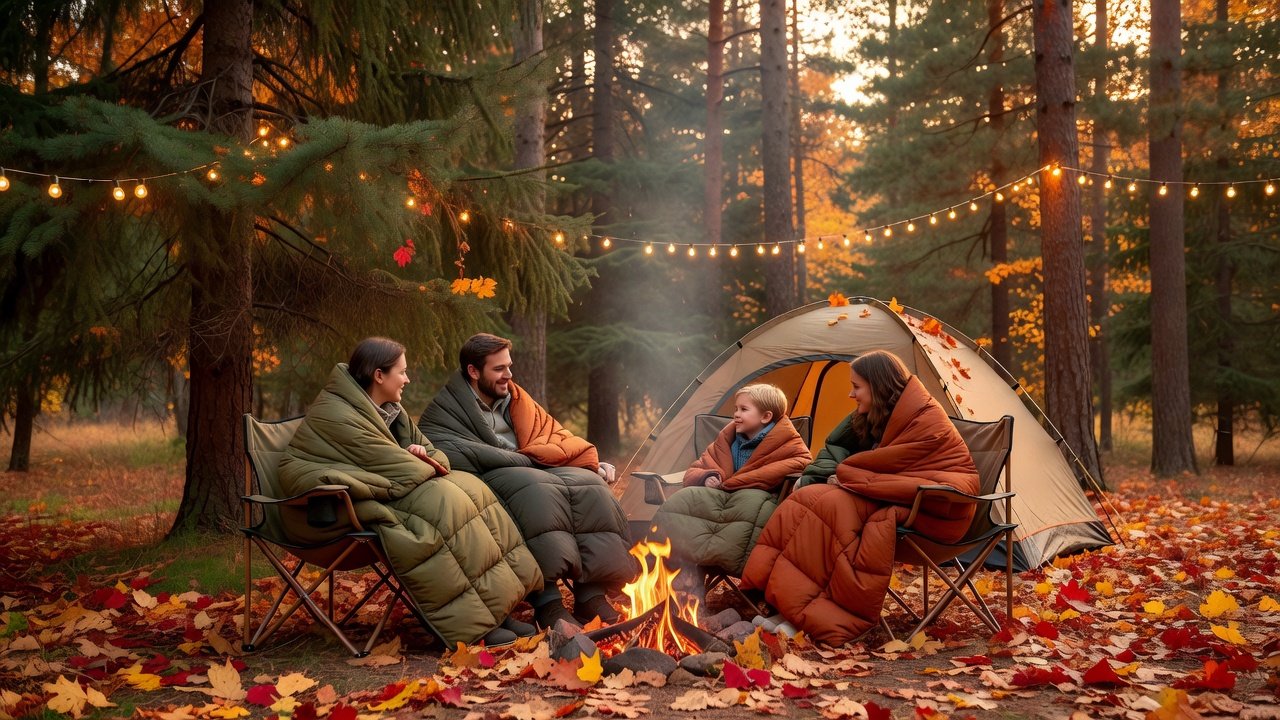
There's a moment on every fall camping trip when the temperature drops, the fire burns down, and everyone looks at each other with the same thought: we should have brought a blanket.
Not a sleeping bag. Not a jacket. A blanket — something you can wrap around two kids at once, throw over your legs in a camp chair, or drape across the picnic table while breakfast gets cold. It's the single most-underrated piece of comfort gear in family camping, and it's the one thing people forget most often.
After a few seasons of shivering through exactly this scenario, I stopped treating blankets as an afterthought. Here's what I've learned about picking one, and the four that actually earn their space in the car.
What Makes a Camping Blanket Different From the Bed Blanket on Your Couch
Your couch blanket is soft, heavy, and about as packable as a bag of bricks. That's fine at home. At a campsite it fails three ways:
- It holds moisture. Cotton and fleece soak up morning dew and stay damp for the whole trip. Camp blankets use synthetic fills and ripstop shells that shed water and dry fast.
- It's bulky. A queen-size fleece throw eats half a duffel bag. A packable puffy blanket compresses to about the size of a loaf of bread.
- It traps dirt and burrs. Camp blankets have a durable face fabric that survives being dragged across granite, pine needles, and a muddy picnic table.
The other thing a real camp blanket does — and this matters more than any spec sheet — is work in more than one place. The same blanket goes on the ground for a picnic, over your lap at the fire, under a sleeping pad as an extra warmth layer, and around your shoulders during the 6am coffee run.
If your trip is a luxury-leaning one, our glamping gear guide covers the broader comfort setup these blankets slot into.
The 4 Kinds of Camping Blanket (Pick Yours in 30 Seconds)
Most "best camping blanket" lists throw ten variations of the same puffy throw at you. In practice there are only four categories that behave differently, and your trip type tells you which one you want.
| Type | Best for | Warmth | Packed size | Price range |
|---|---|---|---|---|
| Packable puffy | Camp chair, backpack, all-round | High | Very small | $60–$150 |
| Waterproof ground | Families, picnics, beach | Low–mid | Medium | $20–$45 |
| 12V heated | RV, car, tailgating | Very high (powered) | Medium | $25–$50 |
| Hammock underquilt | Hammock camping | High | Small–medium | $40–$120 |
1. Packable Puffy Blanket — The One That Does Everything
Rumpl Original Puffy Blanket — $139.00, 4.7 stars, 4,000+ reviews
This is the benchmark in the category, and honestly the one I reach for on almost every trip. It uses recycled synthetic insulation inside a 30-denier ripstop shell, which gives you the warmth of a mid-weight throw at a fraction of the packed size. It rolls into a bundled shape roughly the size of a two-liter bottle and shrugs off light rain and spilled coffee alike.
What sold me was the durability. Rumpl built this to survive being sat on, dragged, and stuffed. Mine has picked up pine sap, campfire ash, and one memorable hot chocolate incident, and it still looks new after a wash.
The price is the only real knock — $139 is a lot for a blanket, and it's the kind of purchase you justify once and then stop thinking about. If you want one blanket that covers camp chair, backpack, road trip, and stadium, this is it.
Who it's for: Anyone who wants one blanket to cover every trip. Backpackers who want warmth without the bulk of a sleeping bag. Cold-weather fall and winter campers who want something for the fire.
2. Waterproof Ground Blanket — The Family Workhorse
scuddles Extra Large Picnic Blanket — $24.99, 4.5 stars, 20,000+ reviews
This is the opposite end of the spectrum, and it deserves its own spot in the car. At 60" x 80" it fits three or four adults, or two adults plus kids and a dog — which makes it the blanket that actually gets used at the picnic table, on the beach, and laid out at the tent door for sandy shoes.
The waterproof backing is the whole point: damp grass, wet sand, and morning dew stay on the ground where they belong instead of soaking through to whoever's sitting on it. It folds into a compact bundle with a handle, so it lives in the trunk without complaint.
It is not a warmth blanket. Nobody is wrapping up in this by the fire on a 40°F night. That's not what it's for.
Who it's for: Families with kids and dogs. Beach and lakeside trips. Anyone who wants a clean, dry surface to sit on without hauling a tarp.
3. 12V Heated Blanket — The RV and Cold-Weather Cheat Code
Sealy 12-Volt Heated Car Blanket — $31.99, 4.2 stars, 5,400+ reviews
A powered blanket sounds like overkill until you spend a November night in an RV without a hookup, or you're tailgating in the low 40s and the fire isn't winning. This one plugs into a 12-volt socket, gives you three heat levels, and shuts itself off after four hours so you don't wake up to a dead battery.
The two USB ports on it are a quietly great feature — it doubles as a charging station, which matters when three phones are competing for one 12V outlet.
Two honest caveats: it needs a power source, so it's useless for tent camping without a big power station, and the reviews are more mixed than the puffy blankets at 4.2 stars — some buyers find the heat uneven across the fabric. For RV and car use, though, nothing else on this list competes.
Who it's for: RV campers on cold-weather trips. Tailgaters. Car campers with a portable power station on board.
4. Hammock Underquilt — For Sleeping, Not Sitting
OneTigris Hideout Hammock Underquilt — $39.98, 4.4 stars, 2,800+ reviews
If you sleep in a hammock, this isn't a blanket in the throw sense — it's insulation that hangs under you, which is where hammock campers lose all their heat. A pad inside a hammock shifts around all night; an underquilt stays put.
The Hideout is a full-length, four-season design covering back, hips, and feet. At this price it's the cheapest way to extend hammock camping into real shoulder-season temperatures, and it's the piece that turned my hammock from a summer novelty into a three-season option.
It is not a lounging blanket. It clips to a hammock, and that's the job. Our hammock camping guide walks through the full suspension-and-insulation kit if you're building one out.
Who it's for: Hammock campers who sleep cold or camp past Labor Day. Anyone who's tried a sleeping pad in a hammock and hated it.
How to Choose: The 5 Specs That Actually Matter
Ignore the marketing copy on the box. These five things determine whether a blanket works for you.
1. Packed size, not flat size. A blanket that's wonderfully warm but takes up the entire back seat won't come on the trip. For backpacking and day hikes, look for something that compresses to bottle size. For car camping, this stops mattering.
2. Fill and shell fabric. Synthetic fills (like the recycled insulation in the Rumpl) handle damp cold far better than down — and they're washable. A ripstop nylon or polyester shell resists snags from branches and camp chairs. For a ground blanket, you want a waterproof backing rather than a warm fill.
3. Warmth-to-weight ratio. A blanket rated for 40°F comfort that packs to two liters beats a heavier blanket that packs to ten, every single time. If a manufacturer won't tell you the packed weight, that's a signal.
4. Care and washability. You will get campfire smoke, sap, dirt, and food on this thing. Machine-washable synthetic fills survive it; dry-clean-only wool does not. Check before you buy, not after.
5. How many jobs it does. The best blanket is the one that goes on the ground at lunch, over your legs at the fire, and under your sleeping pad at midnight. Versatility beats a single-purpose spec sheet.
The Comfort Layer: What Goes With Your Blanket
A blanket alone doesn't make a camp comfortable. These are the pieces that turn a cold campsite into one people don't want to leave.
Coleman Trailhead II Large Folding Cot — $54.99, 4.4 stars, 24,900+ reviews. Gets you and your bedding off the ground, which makes a blanket far more effective and eliminates the cold creeping up from below. Holds up to about 300 lbs and fits adults up to 6'2".
TETON Sports Celsius XXL 0-Degree Sleeping Bag — $89.99, 4.5 stars, 3,200+ reviews. The roomy rectangular cut makes it a genuinely good shoulder-season and winter car-camping bag. If you sleep cold, this plus a puffy blanket is a serious combination.
TREKOLOGY ALUFT 2.0 Camping Pillow — $16.99, 4.3 stars, 11,200+ reviews. At under three ounces it disappears into a pack, and it's the cheapest upgrade to a night's sleep at camp.
NEMO Fillo Elite Luxury Camping Pillow — $59.95, 4.6 stars, 5,400+ reviews. The premium option, under three ounces with a real luxury feel. Our camping pillow comparison pits it against the budget picks.
For cold-weather trips specifically, the layers matter as much as the blanket — our winter camping gear checklist covers the full system.
Camping Blanket Mistakes I've Made
Bringing a bed blanket and being shocked it got soaked. Fleece wicks morning dew and then holds it. One damp night and it never fully dried for the rest of the trip. Synthetic camp blankets exist for exactly this reason.
Buying one blanket for a family of five. One blanket becomes a diplomatic crisis at 9pm. If you're camping with kids, either get a genuinely oversized ground blanket for shared sitting, or bring one per person. Our fall family camping guide leans toward the per-person approach.
Forgetting a blanket for the car ride. This is the most common one. The drive home after a cold-weather weekend is when everyone's tired and the heater takes ten minutes to work. A blanket in the back seat is free comfort.
Skipping a blanket for a baby or toddler. Little kids lose heat far faster than adults and can't always tell you they're cold. If you're camping with a baby, our camping with baby and toddler guide covers the sleep-and-warmth setup in detail.
Treating the ground blanket as a warmth blanket. They're different tools. The waterproof picnic blanket keeps you dry; the puffy blanket keeps you warm. Most well-packed cars need one of each.
Best Seasons for a Camping Blanket
Late Spring (May–June): Evening temperatures still drop fast after sunset in most of the US. A puffy blanket over the lap at the fire is the difference between staying up and going to bed at 8pm.
Summer (July–August): Warmth matters less — but the waterproof ground blanket earns its keep for picnics, beaches, and lakeside lunches. A light puffy is still worth packing for mountain campsites that cool off overnight.
Early Fall (September–October): Peak blanket season. This is when a puffy blanket goes from optional to essential, and when heated blankets start looking reasonable. If you buy one blanket a year, buy it now.
Winter (November–March): You need blankets plus a real sleep system. A heated 12V blanket for the RV, an underquilt for the hammock, and a puffy for everything else.
Camping Blanket FAQ
Are camping blankets worth it, or should I just bring a sleeping bag?
They serve different jobs. A sleeping bag is for sleeping; a blanket is for sitting, lounging, and layering. Most campers eventually own both, and the blanket gets used more often on mild trips.
Can I use a regular blanket camping?
You can, but it will get damp from dew and ground moisture, and it'll take up far more space. Synthetic camp blankets handle both problems.
What size camping blanket should I get?
For personal use, look for something around 50" x 70" or larger. For family sitting at a picnic table, a 60" x 80" ground blanket seats three to four people comfortably.
Are heated camping blankets safe?
12V heated blankets are designed for vehicle use with auto-off timers — the Sealy model shuts off after four hours. Don't run one from a small power bank you haven't checked the capacity on.
How do I clean a camping blanket?
Most synthetic puffy blankets are machine washable on cold and air-dry. Always check the care tag first — the shell fabric is what fails if you wash it wrong.
Do I need a blanket if I'm camping in an RV?
Especially. RVs cool down quickly once the heat is off, and a blanket is far more efficient than running the furnace all night.
The Verdict
If you want one blanket and you want it to be good, get the Rumpl Original Puffy. It costs more, and it'll be the blanket you still own in five years.
If you're camping with kids and dogs and want the thing you'll actually use every trip, get the scuddles Extra Large Picnic Blanket — $25 that solves damp ground, sandy feet, and crowded picnic tables in one shot.
If you're in an RV or you camp into November, the Sealy 12V heated blanket is the one that makes cold-weather trips comfortable instead of survivable.
And if you sleep in a hammock, the OneTigris underquilt isn't optional.
The campsite gets cold whether you planned for it or not. Just bring the blanket.
<!-- AFFILIATE_DISCLOSURE -->