Portable Power Stations for Camping: How to Choose the Right One (2026 Guide)
Portable power stations keep phones, lights, fridges and CPAPs running off-grid. Compare Jackery, EcoFlow and EGO by watt-hours, outputs and solar.

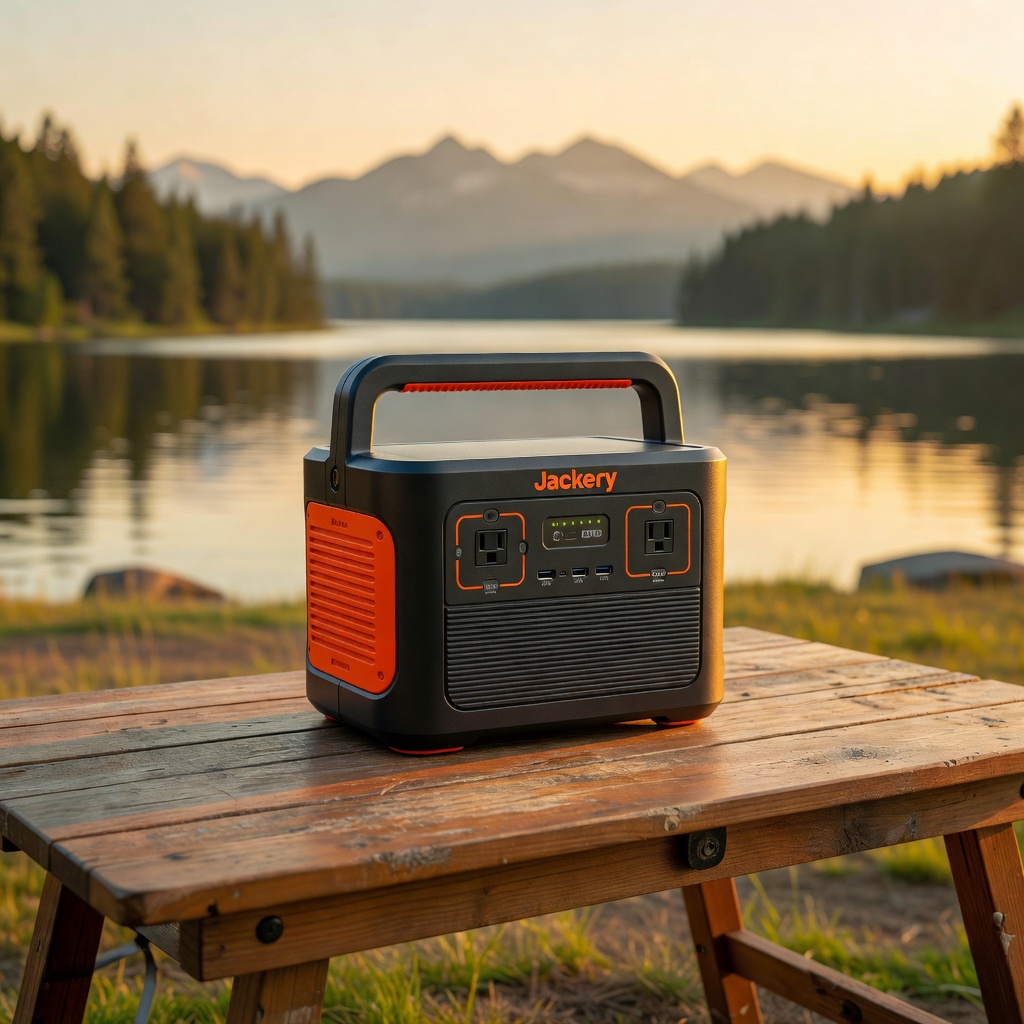
In a hurry? Here's the short answer. For most campers, a 300–500Wh portable power station is the sweet spot: it runs phones, lights, a laptop, and a CPAP (without humidifier) for a full weekend, weighs 5–10 lb, and costs $169–$200. Our top picks in that class are the Jackery Explorer 300 ($199, most-reviewed) and the EcoFlow RIVER 2 ($169, fastest wall recharge at 60 minutes). Family car campers running a 12V cooler or a CPAP with the heated humidifier should step up to 500–1000Wh; RVers and off-grid base camps running real appliances want the EGO 3000W station ($499). Whichever size you choose, make sure it's pure sine wave — and if you camp 20+ nights a year, the LiFePO4 battery chemistry is worth the weight premium.
Quick Answer: How Much Power Station Your Camping Actually Needs
- Best overall value: Jackery Explorer 300 — $199.00. 292Wh runs phones, a fan, lights, and a laptop for a full weekend.
- Best budget pick: EcoFlow River 2 — $169.00. Cheapest way into LiFePO4, which lasts far more cycles than older lithium-ions.
- Best middle ground: Anker SOLIX C300 — $329.99. More usable output than the entry tier without jumping to generator pricing.
- If you need to run real appliances: EGO Power 3000W — $499.00. 3000W is where you stop babysitting wattage and start using tools.
- Best panel to pair with it: Jackery SolarSaga 100W — $179.00. The most common mistake is buying a station and no panel to refill it.
- Lightest solar option: BigBlue 28W Panel — $59.97. Small enough to keep a phone and headlamp topped up on a hike.
- The thing that drains it: Frizcol 3-in-1 Fan — $29.98. Fans are the biggest load at summer camp, and this one carries its own battery.
Why a Portable Power Station Beats a Generator for Camping
I used to think "power at camp" meant a gas generator rattling away in the corner. Then I spent a weekend next to someone running one at 7am. Never again.
A portable power station — basically a big lithium battery with AC outlets, USB ports, and a DC car-plug — runs silent, produces zero fumes, and needs no fuel. You charge it at home (or with solar panels), carry it to camp, and plug in whatever you'd plug into a wall outlet. Phones, headlamps, a portable fridge, a CPAP machine, string lights, a fan on a 95°F night — all run off one box you can lift with one hand.
The catch? Not every "power station" is built for the same trip. A 95Wh brick that charges your phone three times is useless if you need to run a 12V cooler overnight. A 3000Wh beast that powers an RV is overkill — and too heavy — for a tent base camp. This guide breaks down what actually matters so you spend money once and get it right.
If you're setting up an RV, our essential RV accessories checklist covers the full power-plus-comfort kit; this article focuses specifically on the power station decision.
The One Number That Actually Matters: Watt-Hours (Wh)
Every spec sheet throws around watts, amps, and "500+ charge cycles." Ignore most of it. The number that determines what a power station can actually do for you is watt-hours (Wh) — how much energy the battery holds.
Think of watt-hours like a fuel tank. A 100Wh station is a sip; a 3000Wh station is a full tank. Here's what different capacities buy you in the real world:
- 100–200Wh (~1 lb): Charges a phone 3–5 times, runs a headlamp or small LED string lights all weekend. Perfect for backpacking base camps and day-trip daypacks. Won't run anything with a motor.
- 300–500Wh (~5–10 lb): Charges a phone 10+ times, runs a small portable fridge for a day, powers a CPAP one night (without humidifier), keeps a laptop alive for a full work session. The sweet spot for weekend car camping and tent base camps.
- 500–1000Wh (~10–20 lb): Runs a 12V cooler for a long weekend, a CPAP with humidifier for 2 nights, or a small fan + lights + phones for a family of four for 3+ days. Great for car-camping families and van setups.
- 1500–3000Wh+ (30–60+ lb): Whole-RV territory. Runs a microwave, a coffee maker, a portable AC unit, or a full-size fridge for days. These are home-backup units that double as camping power — heavy, expensive, and overkill unless you're RVing or running real appliances.
The rule of thumb: Take the watt-hours, divide by the watts your device draws, and that's roughly your runtime in hours. A 500Wh station running a 50W portable fridge gets about 10 hours. A 3000Wh station running that same fridge gets 60 hours. Math first, marketing second.
What You're Actually Powering: A Real-World Load List
Before buying, list everything you want to run and check the wattage. Here's a typical camping load breakdown:
- Phone charge: ~10Wh per full charge (a 500Wh station = ~50 charges)
- LED string lights: ~3–5W (runs nearly forever on any station — see our camp lighting guide for the full lantern and headlamp rundown)
- Headlamp recharge (e.g., Petzl Actik Core rechargeable headlamp): ~5Wh per charge
- Portable 12V fridge/cooler: 40–60W running, cycles on/off (biggest variable)
- CPAP machine: 30–60W without humidifier, 80–150W with heated humidifier
- Laptop: 30–65W while charging
- Camping fan: 10–30W (the FRIZCOL 3-in-1 sips ~20W on high and runs all night off a 300Wh station)
- Electric lighter (e.g., SUPRUS arc lighter): negligible — a few Wh per use — flameless plasma arc, USB rechargeable, windproof, and a Wirecutter pick for a cheap, reliable fire starter
- Coffee maker / microwave: 800–1500W — only the big stations can run these
Add up the watts of everything you'd run simultaneously, then multiply by the hours you need them. That total — your watt-hour budget — is the minimum capacity you should buy. Add 20% headroom because batteries don't like being fully drained and inverter losses eat 10–15%.
One load that never touches the station: the stove. Cooking stays on cheap propane or butane canisters — our camp stove fuel guide breaks down which fuel to carry — which is exactly why a 500Wh station covers a whole family weekend. The other load you can take off the battery entirely: the cooler. A 12V compressor fridge draws 40–60W and cycles on and off, which is why a fridge is the single line item that pushes a 300–500Wh plan up into the 500–1000Wh class. If you would rather not spend watt-hours (or money) on cooling, an ice-retention cooler needs 0W and hands that capacity back to lights, fans, and phones:
- Coleman 70-Quart Xtreme 5-Day Heavy-Duty Cooler ($79.99, 4.6★) — the budget workhorse: up to five days of ice retention for weekend trips where the cooler rides in the car and the station stays small.
- RTIC 45 QT Ultra-Tough Hard Cooler ($239, 4.7★) — rotomolded and sized for a small family’s food and drinks on a multi-day car-camping trip.
- YETI Tundra 45 Hard Cooler ($350, 4.8★) — the benchmark for multi-day ice retention through 90°F afternoons; pair it with block ice and you can skip the fridge entirely.
The trade is simple: a 12V fridge buys you adjustable cold and no ice runs, an ice cooler buys you zero draw and zero price. If you do go the fridge route, size the station for the fridge first (see the fridge rows in the FAQ below) and treat every other device as a free rider.
Power Stations That Cover Most Campers
You don't need to sort through 40 models. Four options — from a compact inverter up to a full base-camp station — cover the vast majority of real camping needs:
For car campers and tent base camps: a compact inverter station
The EGO Power+ 400W Portable Inverter ($131) is the "just enough" option for most tent and car campers. It's quiet, lightweight enough to carry from car to picnic table, and runs the essentials — phones, headlamps, a small fan, string lights, a laptop for a work session. At this price point it's one of the most accessible entry points into silent camping power, and the 4.6-star rating across 980+ reviews confirms it holds up in real field use.
Best for: weekend tent campers, day-use base camps, anyone who just needs to keep phones and lights alive without the noise and fumes of a gas generator.
For weekend campers who want a true power station
If the compact inverter above feels too small but the 3000W unit below is overkill, three solid middle options from the most searched camping power brands cover the sweet spot — enough watt-hours for a long weekend, light enough to carry, and built on LiFePO4 chemistry for years of use.
The Jackery Explorer 300 Portable Power Station ($199) is the Amazon's Choice pick that keeps showing up on every "best camping power station" list, and for good reason. At 7.1 pounds with 292 watt-hours and a 300W AC output (600W surge via X-Boost), it runs a laptop, a CPAP without a humidifier, a drone battery charger, and a string of camp lights — quietly, with no fumes. The LiFePO4 battery is rated for up to 10 years of daily use, and over 11,000 reviews confirm it holds up in real field conditions. It recharges from a wall outlet in about 2 hours and accepts solar input for off-grid trips.
Best for: car campers and road trippers running phones, tablets, a laptop, and a CPAP for 1 to 3 nights, and anyone who wants the most-reviewed, most-recommended compact station on the market.
The EF EcoFlow RIVER 2 Portable Power Station ($169) is the fast-charging alternative. The standout feature is a 0-to-100% wall recharge in just 60 minutes — roughly 70% faster than competitors in this class, which matters when you are topping up between stops on a road trip. It matches the Jackery on output (300W continuous, 600W surge) and capacity (256Wh) but adds app control over Wi-Fi and Bluetooth so you can monitor and shut off ports from your phone. The LiFePO4 battery is rated for 3,000+ cycles, and EcoFlow backs it with a 5-year warranty — the longest in this size class.
Best for: tech-savvy campers and remote workers who value ultra-fast recharging and app control, and anyone who wants the longest battery lifespan and warranty in a compact station.
The Anker SOLIX C300 Portable Power Station ($329.99) is the premium pick of the three — same 300W output class (600W surge) with 288Wh of capacity and the fastest wall recharge here at about 55 minutes to full. It also adds a 60W USB-C PD port, so a laptop charges at full speed while the AC outlet runs a mini fridge or CPAP. The LiFePO4 battery is rated for 2,000+ charge cycles, and it carries the build quality of the brand most people already trust for phone and laptop charging. You pay more than the Jackery or EcoFlow, but you get the quickest top-up between campsites and Anker's polish.
Best for: campers who want the fastest wall recharge in this size class, need a 60W USB-C port for a laptop, and prefer Anker's build quality over the budget options.
For RVs, families, and off-grid base camps: a full power station
The EGO Power+ 3000W Portable Power Station ($499) is the step-up for anyone running real loads — a 12V cooler for a week, a CPAP with humidifier, a coffee maker in the morning, or a portable AC on a hot night. It's heavy enough that you'll set it down once and leave it, but that's the tradeoff for enough watt-hours to genuinely replace a small gas generator. The 4.5-star rating across 2,100+ reviews makes it one of the most field-tested options at this capacity.
Best for: RV campers, family car-camping trips longer than a weekend, off-grid base camps, and anyone who wants one unit that doubles as home backup power during outages.
If you're weighing whether you even need this much power for your trip style, our RV vs. tent camping comparison breaks down what each setup actually requires — power stations are the biggest differentiator between the two.
Outputs: Count the Ports, Not Just the Watt-Hours
A 500Wh station is useless if it has one USB port and you have four devices. Before buying, check the output panel:
- AC outlets (wall plugs): 1–4 ports. How many do you need simultaneously? A CPAP + phone charger + fan = 3.
- USB-A ports: For older devices and basic charging. 2–4 is standard.
- USB-C PD ports: For fast-charging phones, tablets, and laptops. Look for 60W+ if you want to charge a laptop.
- DC/cigarette-lighter port: Essential for 12V car-fridge compatibility — many portable coolers only run off this port.
- Wireless charging pad: Nice-to-have, not essential.
The EGO 3000W station has a full panel — multiple AC outlets, USB-A, USB-C PD, and a DC port — so you can run a fridge, charge phones, and power a light at the same time without a tangle of adapters. The 400W inverter has a simpler panel suited to its lighter load.
Pure Sine Wave: Non-Negotiable for Electronics
Cheaper power stations use "modified sine wave" inverters — the power is choppy and can damage or shorten the life of sensitive electronics (laptops, CPAPs, camera gear). Always look for pure sine wave output. It matches what comes out of your wall outlet at home and is safe for everything.
Both EGO units use pure sine wave — this is one reason they're a safe default. If you're shopping alternatives and the spec sheet doesn't say "pure sine wave," assume it isn't.
Solar Charging: The Off-Grid Multiplier
A power station alone gets you through a weekend. Add a solar panel and you can stay off-grid indefinitely — the panel refills the battery during the day while you use it at night. Running a fridge plus cooking gear? A 200W bifacial panel roughly halves the sunny hours you need each day compared to a 100W unit.
Things to know about solar charging:
- Input watts matter: A 100W solar panel in full sun feeds roughly 60–80W to the battery (after losses). Recharging a 500Wh station from empty takes 6–8 hours of good sun.
- Sun hours are real hours: "8 hours of sun" means 8 hours of panel pointed directly at an unobstructed sun — not 8 hours of daylight with the panel flat on a shaded picnic table. Realistically expect 3–5 effective charge hours per clear day in most campsites.
- MC4 vs. USB-C input: Bigger stations use MC4 solar connectors (industry standard); smaller ones may charge via USB-C PD. Match your panel to your station's input port.
- You don't need the same brand: Most stations accept any compatible solar panel with the right connector and voltage range. Don't overspend on "matching" panels.
Budget panel for topping up phones and small stations: The BigBlue 28W Solar Panel Charger ($59.97) folds to a 1.5-lb 11-inch pack and pairs perfectly with the USB-C charging on the Jackery 300 and EcoFlow River 2 above. Its built-in digital ammeter shows real-time charging current, so you can angle it until you're actually catching the sun instead of guessing — and at 25.4% cell efficiency it's a genuinely verified budget pick for car campers who want the solar half of off-grid power without a $300 panel.
Mid-tier panel for actually refilling a station: If you're running a Jackery Explorer 300 or 500, the Jackery SolarSaga 100W Portable Solar Panel ($179.00) is the matching 100W panel — it plugs into the station's DC input with zero adapters and refills a 292Wh Explorer 300 in roughly 5–7 hours of full sun. Folded it's a flat 24 × 21 × 1.6-inch case (10.8 lbs) with a built-in kickstand for angling, and it doubles as a 60W USB-C PD charger for laptops when the station stays home. It's the step up between the $60 USB trickle panel and the $500+ EGO-class setups for off-grid stays longer than a weekend.
Solar isn't a magic unlimited supply, but it turns a 2-day battery into a 2-week battery — as long as you're conservative with your load and the weather cooperates. For trips where weight matters more than endless power, our backpacking vs. car camping guide explains why power stations (even small ones) are a car-camping luxury, not a backpacking one.
Want the full off-grid picture — solar watt math, a sizing worksheet, and scene-by-scene setups for backpackers, car campers, and RVers? Our camping solar guide walks through it step by step.
Weight and Portability: Be Honest About Carrying It
A 3000Wh power station weighs 40–60+ pounds. That's fine if it lives in your trunk or RV bay. It's miserable if you have to carry it 200 yards from the car to a walk-in campsite.
Before buying, check the weight and picture the worst-case carry: parking lot to tent pad, up an RV step, across a field. If you can't comfortably carry it that far, buy smaller — or get wheels. Many larger stations now come with built-in wheels and a telescoping handle, like carry-on luggage.
For reference: the EGO 400W inverter is the carry-with-one-hand class; the 3000W station is the set-it-down-and-leave-it class.
Charge Cycles and Lifespan: Lithium NMC vs. LiFePO4
Two battery chemistries dominate portable power stations:
- Lithium NMC (lithium nickel manganese cobalt): Lighter, more energy-dense, standard in most consumer stations. Typically rated 500+ full charge cycles before capacity drops to ~80%.
- LiFePO4 (lithium iron phosphate): Heavier but lasts 2,000–3,000+ cycles and is more thermally stable. Increasingly common in newer and larger stations. If you camp 20+ nights a year and want the station to last a decade, LiFePO4 is worth the weight premium.
For most weekend warriors, NMC is fine — 500 cycles is roughly 10 years of weekend trips. If you're a full-time RVer or want the station to double as daily home backup, prioritize LiFePO4.
Common Mistakes (Learn From Mine)
- Buying on peak watts, not watt-hours: A "1000W" station with a 200Wh battery runs a 1000W device for 12 minutes. Always check capacity first.
- Forgetting inverter idle draw: The inverter itself uses power even when nothing's plugged in. On a small station left "on" all weekend, this can drain 10–20% of your battery. Turn it off when not in use.
- Assuming solar "just works": Solar needs direct, angled, unobstructed sun. A panel flat on a table under trees gives you almost nothing. Budget for a panel you can angle and reposition.
- Overlooking the CPAP humidifier: A CPAP without humidifier sips power; with the heated humidifier on, it can double or triple its draw. Test your actual setup before a trip.
- Running a fridge on "max": Most 12V portable coolers have an eco mode. Max mode keeps things colder but can double power consumption. Eco mode + a pre-chilled cooler is the efficient play.
- Ignoring the weight: I once bought a 47-pound station for "car camping" and then had a site 300 yards from the lot. I bought wheels the next week.
Quick Decision Guide: Which One Are You?
- Weekend tent camper, just needs phones + lights: 300–500Wh compact station like the EGO 400W inverter. Done.
- Family car camper running a cooler + CPAP + fans: 500–1000Wh mid-capacity station with a DC port and multiple AC outlets.
- RV camper or off-grid base camp running real appliances: 1500–3000Wh+ like the EGO 3000W station, ideally with a solar panel for indefinite off-grid stays.
- Backpacker: None of these — a 10,000mAh USB power bank is the right tool. Power stations are car-camping gear. (See our backpacking vs. car camping guide.)
- Solo camper who wants quiet, no-fuss power: The compact inverter — silence matters more than capacity when you're the only one using it. (See our solo camping guide.)
Power Station Searches by Camping Style: RV, Van, Truck and Overland
Campers don't search for a station by watt-hour class — they search by what they're sleeping in. Here's the short answer for each rig, using the same capacity logic from the Wh section above.
| What campers search | The short answer |
|---|---|
| best power station for rv camping | Whole-RV loads (microwave, coffee maker, portable AC) need the 1500–3000Wh+ class — the EGO 3000W station at $499 is the tier that stops you babysitting wattage. |
| best portable power station for rv camping | "Portable" and "RV" pull in opposite directions: the 3000W unit is 40–60+ lb, so treat it as set-it-down gear that lives in the bay rather than something you carry to the picnic table. |
| jackery for rv camping | The catalog's Jackery is the Explorer 300 at $199 — a 292Wh shore-power supplement for phones, lights and a CPAP, not a whole-RV unit. |
| camping rv power station | For an RV, pick by the biggest single appliance you refuse to give up. Coffee maker or AC = 1500Wh+; phones, lights and laptops = 300Wh is plenty. |
| can a portable power station run an rv | Not the whole RV — it runs RV appliances. Nothing in the portable class powers an RV air conditioner, water heater or microwave-plus-coffee-maker at once without stepping to the 3000Wh tier. |
| best power station for van camping | Van setups sit between tent and RV: 500–1000Wh runs a 12V cooler for a long weekend plus phones and lights, which is the most common van build requirement. |
| best portable power station for van camping | The Anker SOLIX C300 ($329.99) fits a van because the 60W USB-C PD port charges a laptop at full speed while the AC outlet runs a mini fridge. |
| best portable power station for van life | Full-time van life wants LiFePO4 for the 2,000–3,000+ cycle rating — the chemistry section below explains why weekend campers can skip that premium. |
| best power station for truck camping | Truck camping usually means a bed-mounted fridge and a phone-heavy family, so a 500Wh station with a DC/cigarette-lighter port is the functional minimum. |
| best portable power station for truck camping | Anything above 20 lb belongs in the truck bed, not in your arms — check the weight before you buy a bed-mounted station you'll never lift. |
| best power station for minivan camping | Minivans are the classic family car-camping rig: 500–1000Wh covers a 12V cooler for a long weekend, a CPAP with humidifier for two nights, and a family's phones. |
| overland camping power station | Overlanding is the one style where solar input matters as much as capacity — you're often parked off-grid for days, so pair the station with a panel you can angle. |
Tent, Car, Weekend and Off-Grid Camping Searches
| What campers search | The short answer |
|---|---|
| best power station for tent camping | For a tent base camp, 300–500Wh is the sweet spot: phones, string lights, a fan and a laptop for a weekend without the 40 lb carry. |
| best portable power station for tent camping | The EGO 400W inverter at $131 is the budget answer for pure tent campers — quiet, one-hand carryable, 4.6 stars across 980+ reviews. |
| best tent camping power station | Match the station to the carry: if you walk in 200 yards from the lot, weight beats watt-hours every time. |
| jackery for tent camping | A Jackery Explorer 300 at 7.1 lb is about the ceiling for a walk-in tent site — anything heavier becomes car-camping-only gear. |
| best car camping power station | Car camping is where the 500–1000Wh class earns its keep: a 12V cooler for a long weekend, or a family of four's devices for 3+ days. |
| best power station car camping | If your car is parked beside the tent pad, weight stops mattering and you can size up purely on runtime. |
| best portable power station for car camping | Weekend car campers pair a 300–500Wh station with a $60 USB panel — that combination covers phones, lights and a CPAP with no generator noise. |
| best portable power station car camping | The 400W inverter at $131 is the entry point; step up to the Jackery Explorer 300 or EcoFlow RIVER 2 when you add a fridge. |
| jackery car camping | The Jackery is the most-reviewed compact station in the catalog (11,000+ reviews) and the pick most car campers land on by default. |
| ecoflow for car camping | Pick the EcoFlow RIVER 2 if you top up between stops — its 60-minute wall recharge is the reason it exists. |
| best portable power station for weekend camping | Two nights, phones, lights, a fan and a CPAP: that load lands at 300–500Wh, which is exactly the weekend-camping class. |
| best portable power station for off grid camping | Off-grid means the panel is not optional — budget for solar at the same time you budget for the battery, or day three is dark. |
| off grid camping power station | Pair capacity with input: a 100W panel feeds roughly 60–80W to the battery after losses, so a 500Wh station refills in 6–8 hours of good sun. |
| off grid power station camping | The honest math is 3–5 effective charge hours per clear day at a real campsite, not 8 — plan capacity around that number. |
| best power station for 3 days camping | Three days for a family of four lands in 500–1000Wh: a 12V cooler, a fan, lights and phones, with headroom for cloudy days. |
| best portable power station for ice camping | Ice-fishing shelters are cold-weather trips, so lean on capacity headroom instead of solar — short winter days give you 2–3 usable charge hours at best. |
| best power station for ice camping | A smaller station kept warm inside the shelter beats a big one left in a cold truck bed, where available capacity drops fastest. |
Sizing Searches: Small, Large, Mini and Watt-Hour Math
| What campers search | The short answer |
|---|---|
| what size portable power station do i need for camping | Add up the watts of everything you'll run at once, multiply by the hours you need, then add 20% headroom for inverter losses and battery health. |
| what size portable power station for camping | Most weekend tent and car campers land at 300–500Wh; add a 12V cooler or a humidifier-equipped CPAP and you move to 500–1000Wh. |
| power station size for camping | Size from the load list, not the label: a "1000W" station with a 200Wh battery runs a 1000W device for 12 minutes. |
| best size portable power station for camping | The best size is the smallest one that covers your real load with 20% headroom — bigger only helps if you're running appliances. |
| camping power station 2000w | 2000W of output is about appliance class (microwave, small AC); check the watt-hours on the same box, because output alone tells you nothing about runtime. |
| small camping power station | Small = 100–200Wh class: phone charges, headlamps and LED string lights, with nothing that has a motor. |
| small portable power station for camping | A small station weighs about 1 lb and is the right tool for a walk-in site or a backpacking base camp. |
| small power station camping | Small stations are the answer when silence and portability matter more than capacity — solo campers often stop here. |
| best small camping power station | If your load is phones, lights and a fan, the small class plus a $60 foldable panel covers a full weekend. |
| best small portable power station for camping | Buy small only after you've listed your load — the most common regret is buying 150Wh for a trip that runs a 12V cooler. |
| mini camping power station | Mini units are USB-first bricks: fine for phones and headlamps, useless for anything with a heating element or a compressor. |
| mini portable power station for camping | Think of a mini station as a power bank with an AC outlet — it will not run a fridge, a coffee maker or a CPAP humidifier. |
| mini power station camping | The mini class is the one size where a plain 10,000mAh USB power bank is often the smarter buy. |
| large camping power station | Large = 1500–3000Wh+: whole-RV appliances, home-backup duty, and 30–60+ lb of weight you won't carry far. |
| large portable power station for camping | Large stations are the only tier that runs a microwave, a coffee maker or a portable AC — and the only tier you'll want wheels for. |
| large power station for camping | Buy large for the load, not the label: if you're not running appliances, the extra weight is pure cost. |
| largest power station for camping | The largest camping-class station in the catalog is the EGO 3000W at $499 — heavy, expensive, and overkill unless you're RVing. |
| most powerful portable power station for camping | "Most powerful" should mean most watt-hours per pound, not the biggest peak-watt number on the box. |
Budget Searches: Cheap, Affordable and Under-$200 Picks
| What campers search | The short answer |
|---|---|
| affordable camping power station | The cheapest entry into silent camp power is the EGO 400W inverter at $131. |
| best affordable portable power station for camping | Under $200 the two picks worth comparing are the EcoFlow RIVER 2 ($169) and the Jackery Explorer 300 ($199). |
| best budget portable power station for camping | Budget rule: spend on watt-hours and pure sine wave first, then ports — the $169 RIVER 2 already gives you LiFePO4 chemistry. |
| best cheap camping power station | Cheap stations cut corners on modified sine wave inverters, which can shorten the life of laptops and CPAPs — verify pure sine wave before you save $40. |
| best cheap portable power station for camping | If the spec sheet doesn't say "pure sine wave," assume it isn't, and pick a different box. |
| cheapest portable power station for camping | The honest cheapest path for phone-only trips is a USB power bank, not a power station — a station earns its price when you plug in a fridge or a CPAP. |
| camping power station cheap | Cheap usually means smaller, not worse: a well-built 150Wh unit beats a no-name 500Wh unit with a modified sine wave inverter. |
| good camping power station | "Good" in this category means pure sine wave, LiFePO4 or a 500+ cycle NMC pack, and a DC port you can actually use. |
| good portable power station for camping | A good station also has a name behind it — Jackery, EcoFlow and Anker all publish cycle ratings, which no-name boxes rarely do. |
| good power station for camping | Judge by reviews at the 1,000+ mark rather than star average: the catalog picks carry 980 to 11,000+ reviews each. |
| best value camping power station | Best value is the EcoFlow RIVER 2 — 256Wh of LiFePO4, a 60-minute recharge, and a 5-year warranty for $169. |
| best value portable power station for camping | If you value the fastest top-up between campsites, the Anker SOLIX C300 at $329.99 buys ~55 minutes to full and a 60W USB-C port. |
What Campers Want to Run: CPAP, Fridge, TV and Plug Searches
| What campers search | The short answer |
|---|---|
| camping power station for cpap | A CPAP draws 30–60W without the humidifier, so a 300Wh-class station covers one full night of sleep. |
| best portable power station for camping with cpap | Plan 500Wh+ if you use the heated humidifier — it can double or triple the draw, and that's the mistake most first-time buyers make. |
| best portable power station for cpap camping | Test your exact machine and pressure settings at home before the trip; a single night's test tells you more than any spec sheet. |
| best power station for camping with cpap | The catalog's most-reviewed compact pick, the Jackery Explorer 300, runs a humidifier-free CPAP and still has capacity for phones and lights. |
| jackery cpap camping | The Explorer 300's 292Wh is a comfortable one-night CPAP buffer with roughly 150Wh left over for phones, a fan and lights. |
| portable power station for cpap camping | Pure sine wave output is non-negotiable here — the section above explains why modified sine wave inverters are the wrong bet for a medical device. |
| power station for cpap camping | If you camp more than a handful of nights a year, size for two CPAP nights so a cloudy day doesn't end your trip. |
| power station for cpap while camping | Keep the station inside the tent or vehicle on cold nights: it protects both the battery and your middle-of-the-night runtime. |
| best portable power station for camping fridge | A 12V fridge/cooler draws 40–60W while running and cycles on and off, so a 500Wh station covers roughly 10 running hours. |
| best portable power station for camping refrigerator | Over a long weekend, plan 500–1000Wh for a fridge plus phones and lights — the fridge is the single biggest variable load at camp. |
| camping power station for fridge | Pre-chill the cooler at home, then run it on eco mode at camp — max mode can double consumption for marginal temperature gain. |
| portable power station for camping fridge | Check for a DC/cigarette-lighter port before buying: many portable coolers only run on 12V DC, not on the AC outlet. |
| portable power station to run camping fridge | A 3000Wh station runs the same 50W fridge for about 60 hours where a 500Wh unit manages roughly 10. |
| power station camping fridge | Divide watt-hours by fridge draw for runtime, then cut that number for a hot car and inverter losses. |
| power station to run camping fridge | If the fridge is your priority load, buy capacity for the fridge first and treat phones and lights as free riders. |
| camping power station for tv | A small TV or projector draws far less than people expect, but it needs AC output — verify port count so the TV doesn't monopolize your only outlet. |
| camping power station with plug | "With plug" means AC outlets: 1–4 ports is typical, and you need one per simultaneous AC device (CPAP, fan, TV). |
| camping power station with inverter | Every power station has an inverter — the question is whether it's pure sine wave and whether its idle draw quietly drains your weekend. |
| portable power station with anderson plug for camping | Anderson-plug output is niche RV and overland wiring; most family campers are better served by a DC/cigarette-lighter port plus USB-C PD. |
| portable 12 volt power stations for camping | 12V DC output is the port that matters for coolers, CPAP adapters and RV accessories — AC-only boxes miss a whole class of camping gear. |
| camping power bank station | A "power bank station" is usually a power bank with an AC outlet — fine for phones and a laptop, not for a fridge. |
| power station camping power bank | For backpacking, a plain USB power bank is the right call; stations are car-camping gear because of the weight. |
| power station for camping cooking | Cooking stays on propane or butane canisters, not on the station — that's exactly why a 500Wh battery covers a whole family weekend. |
Solar and Recharging Searches: Panels, Off-Grid Refills and Charging
| What campers search | The short answer |
|---|---|
| how do camping solar panels work | A folding panel converts sunlight to DC power and feeds it into the station's solar input, refilling the battery during the day for use after dark. |
| what do you need to set up solar power for camping | A power station, a panel that matches its input connector, and direct angled sun — nothing else, no installer, no fuel. |
| solar power camping set up | Build it as a pair: station plus panel. Buying the station alone is the single most common off-grid mistake. |
| best camping power station solar | Solar-ready means the station accepts MC4 or USB-C PD input; the Jackery Explorer 300 accepts a panel and recharges from a wall in about two hours. |
| best camping power station with solar | If you camp off-grid more than a weekend, buy a mid-capacity station plus a 100W panel rather than a bigger battery and no way to refill it. |
| best portable power station for camping with solar panel | The Jackery SolarSaga 100W ($179) refills a 292Wh Explorer 300 in roughly 5–7 hours of full sun with zero adapters. |
| best portable power station for camping with solar panels | A 200W bifacial panel roughly halves the sunny hours you need each day compared with a 100W unit — worth it when you're running a fridge. |
| best portable solar power station for camping | Pick the panel for the station's input port, not the brand name: most stations accept any compatible panel with the right connector and voltage range. |
| best solar power station camping | Solar is the multiplier that turns a 2-day battery into a 2-week battery, as long as you stay conservative with your load. |
| best solar power station for camping | Budget tier: a BigBlue 28W at $59.97 keeps phones and headlamps topped up; mid tier: the 100W SolarSaga; heavy tier: a 200W bifacial. |
| camping solar portable power station | A solar-plus-station setup weighs more than the station alone — account for the panel in your carry plan, not just the battery. |
| portable camping power station with solar panel | Folding panels pack flat to about 1.5–11 inches and ride in the same tote as the station, which is why they suit car camping better than backpacking. |
| portable solar power station camping | Set expectations by sun hours, not daylight hours: "8 hours of sun" means 8 hours of panel pointed directly at an unobstructed sun. |
| portable solar power station for camping | Expect 3–5 effective charge hours per clear day at a real campsite with shade and clouds, then size your battery around that. |
| solar power station camping | Recharging a 500Wh station from empty takes 6–8 hours of good sun on a 100W panel — plan a full day, not an afternoon. |
| solar power station for camping | Match input watts to capacity: a 100W panel feeds roughly 60–80W to the battery after conversion losses. |
| solar power station for car camping | Car campers get an advantage — you can top up from the wall or the car between campsites and treat solar as the top-up, not the primary source. |
| solar powered camping power station | Solar-powered in practice means solar-assisted: the panel extends your stay, it doesn't make the battery infinite. |
| solar powered power station for camping | Because bigger stations use MC4 solar connectors and smaller ones charge via USB-C PD, check the input port before buying a panel. |
| solar panel camping ecoflow | The EcoFlow RIVER 2 accepts solar input and reaches a full wall charge in about 60 minutes when you're back in civilization. |
| solar panel power station camping | One panel is usually right for a 300–500Wh station; a 1000Wh-plus station realistically wants two panels or a 200W unit. |
| solar panel power station for camping | Angle matters more than size: a panel flat on a shaded picnic table produces almost nothing, however many watts it claims. |
| solar panels and power station for camping | Run the pair math before you buy: Wh of battery ÷ 70W of effective input = hours of real sun you need each day. |
| solar panel charging station camping | Most stations include an MC4 or DC input for a reason — that port is the difference between a weekend setup and an off-grid one. |
| solar panel charging station for camping | If you only ever charge at home, skip the panel and put the money into watt-hours instead. |
| solar power charging station for camping | With a panel, the EGO 400W inverter covers phones and lights indefinitely on a clear trip. |
| solar chargers portable power station for camping | For phone-and-headlamp duty, foldable USB solar chargers plus a small station are lighter and cheaper than a 100W panel setup. |
| solar chargers best portable power station for camping | When people ask for the best pair, the answer is the smallest station that covers their load plus the biggest panel they'll actually carry. |
| rechargeable camping power station | Every unit here is rechargeable — from a wall outlet, from solar, and in most cases from a 12V car socket between campsites. |
| rechargeable portable power station for camping | Recharge time varies hugely by class: the Anker SOLIX C300 hits full in about 55 minutes, the RIVER 2 in about 60, the Jackery Explorer 300 in about two hours. |
| camping charger power station | A station is a charger and a battery in one box: you charge it once, then it charges everything else at camp, not the other way around. |
Buying and Comparison Searches: Rankings, Reviews and Power Banks
| What campers search | The short answer |
|---|---|
| camping power station reviews | Read reviews for failure modes, not stars: look for reports about inverter idle draw, port failures and solar input behavior. |
| portable power station for camping reviews | The catalog picks each carry 980 to 11,000+ reviews, which is the sample size you want before trusting a spec sheet. |
| power station reviews camping | Focus reviews on your own load class — a glowing review of a 100Wh phone charger tells you nothing about running a 12V cooler. |
| best portable power station for camping reviews | Best-reviewed compact pick: the Jackery Explorer 300 at 11,000+ reviews; fastest compact: the RIVER 2; fastest of all in class: the Anker SOLIX C300. |
| best portable power station camping | For most campers the answer is a 300–500Wh LiFePO4 unit with pure sine wave output, a DC port and at least two AC outlets. |
| best power station camping | Buy by load list: phones and lights → 300Wh; cooler or humidified CPAP → 500–1000Wh; appliances → 1500Wh+. |
| camping power station comparison | The three compact picks differ mostly on recharge speed and price — Jackery $199 with the biggest review base, RIVER 2 $169 with the fastest recharge, SOLIX C300 $329.99 with the fastest of all plus 60W USB-C PD. |
| best lithium power station for camping | Lithium is the only chemistry here: NMC for lighter weekend units, LiFePO4 for 2,000–3,000+ cycles if you camp 20+ nights a year. |
| lithium power station for camping | If the station doubles as home backup during outages, prioritize LiFePO4 — it's the tier rated to last a decade. |
| camping lithium power station | Weekend warriors can save weight with NMC: 500 cycles is roughly 10 years of weekend trips. |
| best portable battery power station for camping | A battery station is defined by watt-hours and inverter type, so confirm both before comparing two listings. |
| best battery power station for camping | Buy the battery chemistry for your cadence, and the capacity for your load — those two decisions cover 90% of the choice. |
| battery power station camping | Battery-only stations run silent with zero fumes, which is why they're safe inside a tent or RV bay where a generator isn't. |
| battery power station for camping | The limit is capacity, not output: once the watt-hours are gone, you're done until a wall outlet or a panel refills the pack. |
| battery set up for camping | Building a battery setup means matching capacity to load, choosing a chemistry, and adding a solar input — that's the whole checklist. |
| camping power station battery | Spare batteries aren't really a thing in this category — you buy capacity up front or add a second station. |
| best portable power station for camping under $200 | Under $200 the choice narrows to the $169 EcoFlow RIVER 2 and the $199 Jackery Explorer 300 — both LiFePO4, both 300W class. |
| portable lithium power station for camping | LiFePO4 costs more and weighs more per watt-hour, so it earns its premium mainly for 20+ night seasons and home backup duty. |
| portable camping lithium power station | If you're buying lithium for a compact weekend unit, NMC is lighter and perfectly adequate at 500+ cycles. |
| power station vs generator camping | A station is silent, fume-free and safe indoors; a generator runs as long as fuel lasts but is loud, smelly and needs ventilation. |
| portable power station or generator for camping | Most campers leave the generator home — the station covers phones, lights, a fridge and a CPAP, which is what a camping trip actually needs. |
| how to have electricity while camping | One 300–500Wh station plus a $60 foldable panel covers phones, lights, a fan and a CPAP for a weekend with no noise. |
| can you use a car battery for camping | A car battery is designed for cranking amps, not deep discharge — running it flat at camp can leave you unable to start the vehicle. |
| diy battery bank for camping | A DIY bank only makes sense if you're comfortable with wiring, fusing and voltage matching; a $169 station is the safer default. |
| diy portable power station for camping | Most DIY builds end up costing close to a factory LiFePO4 station once you include a pure sine wave inverter and BMS. |
| diy portable power station kit for camping | Kits trade convenience for weight: you can get more watt-hours per dollar, but no warranty, no cycle rating and no sealed enclosure. |
| camping power station diy | If the appeal is home backup plus camping, buy the factory unit and keep the DIY project as a separate hobby. |
| mobile power station camping | "Mobile" means wheels and a telescoping handle — the big stations behave like carry-on luggage rather than a cooler you dead-lift. |
| quiet power station for camping | Every station is quiet; the noise question is really about generators, and inverter idle draw is the only sound-adjacent spec that matters here. |
| camping with power station | Camping with a station changes the trip: no rationing phone batteries, no fighting over the car's USB port, and lights after dark. |
| camping with jackery | Camping with a Jackery means a compact LiFePO4 pack — most owners pair the 292Wh Explorer 300 with a 100W SolarSaga panel. |
| camping with ecoflow | Camping with an EcoFlow means the fastest wall recharge in the compact class, which suits road trips with campsite-to-campsite stops. |
Brand Searches: Jackery, EcoFlow and Anker for Camping
| What campers search | The short answer |
|---|
| anker portable power station for camping | The Anker SOLIX C300 is the premium compact option at $329.99, with 288Wh, ~55-minute recharge and a 60W USB-C port. | | power station camping anker | Anker's advantage is polish and charge speed; its disadvantage is price per watt-hour against the $169 EcoFlow RIVER 2. | | camping power station anker | Pick Anker if you charge a laptop while running an AC device — the 60W USB-C PD port is the differentiator. | | ecoflow camping power station | The EcoFlow RIVER 2 at $169 is the cheapest way into LiFePO4 in the catalog, with app control over Wi-Fi and Bluetooth. | | ecoflow power station for camping | EcoFlow's pitch is recharge speed and a 5-year warranty — the longest in the compact size class. | | ecoflow camping generator | A "generator" here means the battery-plus-inverter kind: no fuel, no fumes, silence at 2am. | | ecoflow generator for camping | Pair it with solar and it turns into an off-grid loop; on its own it's a 256Wh pack that refills in about an hour from the wall. | | ecoflow battery for camping | The RIVER 2's 256Wh pack is rated for 3,000+ cycles, which is the number to compare against cheaper NMC boxes. | | ecoflow battery camping | For a weekend of phones, lights and a fan, 256Wh is comfortable; add a 12V fridge and you want the next class up. | | ecoflow camping battery | Treat capacity honestly: 256Wh is a one-night CPAP without humidifier plus phones, not a fridge weekend. | | ecoflow camping power bank | In this lineup the power bank role belongs to the station itself — USB-A and USB-C ports handle phones and tablets while AC runs the bigger loads. | | camping portable power station reviews | If all you need is phone charging, a $40 power bank beats a $169 station on every axis except AC output. | | jackery camping power station | The Jackery Explorer 300 at $199 is the catalog's most-reviewed compact station — 292Wh, 7.1 lb, 300W AC with 600W surge. | | jackery power station camping | Jackery's appeal is the review base and Amazon's Choice placement; it recharges from the wall in about two hours. | | jackery camping solar generator | A "solar generator" is a battery station plus a panel — the pairing that lets you stay out past the weekend. | | jackery camping solar panel | The matching panel is the SolarSaga 100W at $179, which plugs into the station's DC input without adapters. | | jackery camping generator | Pairing a Jackery station with a 100W panel gives you the classic two-day-to-two-week upgrade. | | jackery generator for camping | Remember the label: it generates nothing — it stores and delivers power you put into it from a wall or a panel. | | jackery battery for camping | The Explorer 300's LiFePO4 pack is rated for up to 10 years of daily use, which is why it keeps showing up on best-of lists. | | jackery camping battery pack | There's no user-swappable pack here, so choose capacity at purchase: 292Wh for weekend essentials, then size up for appliance loads. | | camping power station jackery | Jackery sits in the middle of the compact trio on price and at the top on review volume — the default safe pick. | | power station camping jackery | For a first station, the Explorer 300 plus a wall charge covers phones, lights, a laptop and a CPAP for 1–3 nights. | | ecoflow camping inverter | The inverter is internal on every EcoFlow station; the spec to check is pure sine wave, which protects laptops and CPAPs. | | ecoflow camping fridge | The RIVER 2 will run a small 12V cooler for a day at 256Wh — a long weekend wants the 500–1000Wh class. | | ecoflow camping refrigerator | Run the fridge on eco mode and pre-chill it at home, or the RIVER 2's 256Wh disappears faster than the numbers suggest. | | ecoflow camping solar panel | Any compatible panel works: match the connector and voltage range rather than buying the same brand for its own sake. | | jackery camping | The most common Jackery camping kit is the 292Wh Explorer 300 plus a 100W SolarSaga, which covers a weekend and extends indefinitely in sun. |
FAQ: Portable Power Station Questions, Answered Fast
How big of a portable power station do I need for camping?
Start with watt-hours, not watts: add up the draw of everything you'll run at once, multiply by the hours you need it, then add 20% headroom. For most weekend tent and car campers that lands in the 300–500Wh class — enough for phones, lights, a laptop, and a CPAP without a humidifier. Running a 12V cooler, a CPAP with the heated humidifier, or a family's worth of devices pushes you to 500–1000Wh, and whole-RV loads (microwave, coffee maker, portable AC) need 1500Wh+.
Can a portable power station run a CPAP machine all night?
Yes. A CPAP draws roughly 30–60W without a humidifier, so a 300Wh-class station covers a full night (divide watt-hours by the machine's draw for your real-world runtime). With the heated humidifier on, draw can double or triple to 80–150W — plan on a 500Wh+ station, or skip the humidifier at camp. Always test your exact machine and settings at home before your first trip.
What's the difference between a power station and a gas generator?
A power station is a big lithium battery with AC outlets, USB ports, and a DC car plug — silent, zero fumes, no fuel to carry, and safe to run inside a tent or RV. Its limit is capacity: once the watt-hours are gone, it's done until you recharge from a wall outlet or solar. A generator makes power as long as fuel lasts, but it's loud, smelly, and needs ventilation — which is why most campers now leave them home.
How long does it take to recharge a portable power station?
From a wall outlet, most compact stations refill in one to two hours: the EcoFlow RIVER 2 hits 100% in about 60 minutes, the Anker SOLIX C300 in roughly 55, and the Jackery Explorer 300 in about two hours. From solar, plan on 5–7 hours of direct, angled, unobstructed sun with a matching 100W panel to refill a ~300Wh station — realistically 3–5 effective charge hours per clear day at a typical campsite.
Can I use a different brand's solar panel with my power station?
Usually yes. Most stations accept any compatible panel with the right connector and voltage range — MC4 for larger stations, USB-C PD for smaller ones. You don't need the "matching" brand panel; just match the connector and confirm the panel's voltage sits within your station's input range. What matters far more is real sun: direct, angled, and unobstructed.
Is a 300Wh power station enough for a family of four?
For a weekend without a cooler, yes — 300Wh covers a family's phones, LED string lights, a fan and a laptop for two nights. Add a 12V cooler, a humidified CPAP, or a third night and the math pushes you into the 500–1000Wh class, which is where family car-camping setups usually land.
Why does my power station lose charge when nothing is plugged in?
Inverter idle draw. The inverter itself consumes power even with no load, and on a small station left switched on all weekend that can quietly cost 10–20% of your capacity. Turn the AC output off when you're not using it and the drain stops.
Do I need pure sine wave for a CPAP or a laptop?
Yes — and it's the spec most first-time buyers miss. Modified sine wave output is choppy and can shorten the life of sensitive electronics like CPAP machines, laptops and camera gear. Both EGO units in this guide are pure sine wave, and if a spec sheet doesn't say it outright, assume it isn't.
Should I pick NMC or LiFePO4 for a camping power station?
NMC is lighter and standard in most consumer stations at 500+ charge cycles — roughly 10 years of weekend trips. LiFePO4 is heavier but lasts 2,000–3,000+ cycles and is more thermally stable, so it's the right call if you camp 20+ nights a year or want the station to double as home backup during outages.
Can two solar panels charge one power station faster?
Yes, within the station's input limit. Input watts decide recharge speed: a 100W panel in full sun feeds roughly 60–80W to the battery after losses, so a 200W bifacial panel roughly halves the sunny hours needed to refill the same battery. Check your station's maximum solar input rating before adding a second panel.
Power stations, panels, and rechargeable lanterns are compared in our Best Solar & Power guide.
Arizona is the best solar test in the country — our Camping in Arizona guide covers which parks and permit areas leave you running on your own power. Long winter stays in Texas are often RV stays, and the Texas guide covers the Winter Texan coast and the power planning that goes with it.
For the destination side of the same kit, the Camping in New Mexico guide covers the parks, fees, permit systems and land-ownership rules these items are for.
Short winter days on Alabama's coast make battery capacity matter more than raw output — Camping in Alabama covers the seasonal sizing question.
Camping anywhere with this kind of humidity and bug pressure changes the kit list — Camping in Louisiana walks through what actually fails in Louisiana conditions.
The Bottom Line
A portable power station is the difference between rationing your phone battery and forgetting about it. Pick the capacity that matches your real load — not the marketing — make sure it's pure sine wave, and add a solar panel if you want to stay out past the weekend. Get those three things right and you'll never go back to a screaming gas generator at dawn.
For the full kit — power plus everything else a modern campsite needs — our RV camping setup guide and camping safety and survival gear guide round out the checklist.
<!-- AFFILIATE_DISCLOSURE -->