Backpacking vs Car Camping: Which Is Right?
Can't decide between backpacking and car camping? Compare gear, cost, difficulty, and the best tents for each style so you pick right the first time.
In this article · 9 sections
The backpacking vs car camping question lands on my group chat at least twice a month. Someone wants to "get outdoors more" and doesn't know where to start. I get it. Both put you under the stars and away from a screen, but after that they split hard. Backpacking strips your kit to what you can carry. Car camping lets you back the SUV right up to camp and unload half your garage.
I've done both for years and I've screwed up in both directions. Hauled a cast iron skillet up a mountain once. Froze through a March night because I packed for a car trip like a backcountry shakedown. Here's what I learned so you don't repeat my mistakes.
Quick Answer: Backpacking or Car Camping?
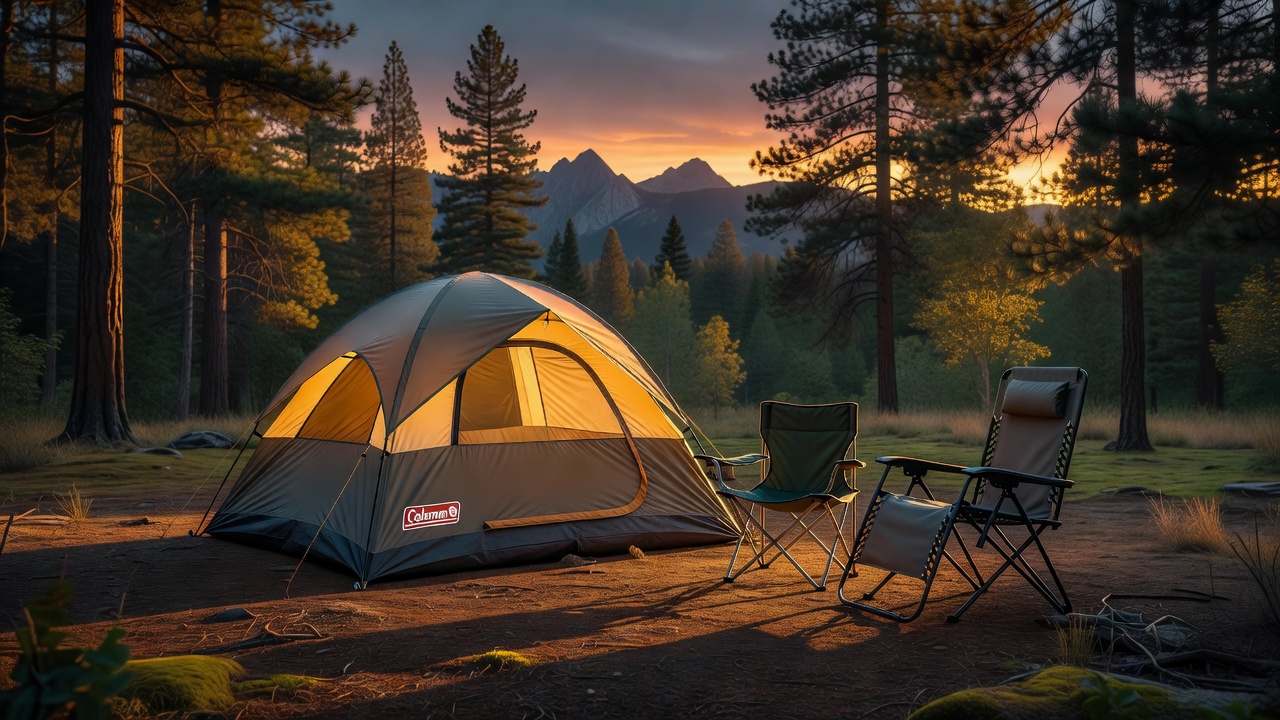
- Car camping wins for most families: Coleman Skydome 4-Person Tent — $122.99. You park next to the site, so weight stops mattering and comfort wins.
- Backpacking wins when the trail is the point: BECOJADDE 15L Foldable Daypack — $25.19. A 15L pack physically forces you to carry only what you need.
- Need real room for six: EVER ADVANCED 6-Person Blackout Tent — $169.99. Blackout fabric keeps kids asleep past sunrise.
- Basecamp with no shade: CROWN SHADES 10x10 Pop Up Canopy — $139.99. One-push setup puts 100 sq ft over the picnic table.
- Worth it either way: Cascade Mountain Tech Carbon Fiber Trekking Poles — $49.95. Saves your knees on descents, and doubles as shelter poles.
What Is Backpacking?
Backpacking means you carry shelter, sleep system, food, water, clothing, and emergency gear in one pack and hike miles into the backcountry. Nothing is waiting for you at the trailhead. Your legs set the daily distance.
A typical trip: park at the trailhead, shoulder 20 to 45 pounds, hike 3 to 15 miles into wilderness. Set up a tent that fits in a football sized stuff sack. Filter water from a stream. Cook a dehydrated meal on a canister stove the size of a soda can. Wake up sore and happy.
The draw is solitude. Alpine lakes, remote ridgelines, forest hollows that take real work to reach. Every ounce matters, which is how people tumble into the ultralight rabbit hole. I've been down it. I'm still down it.
What Is Car Camping?
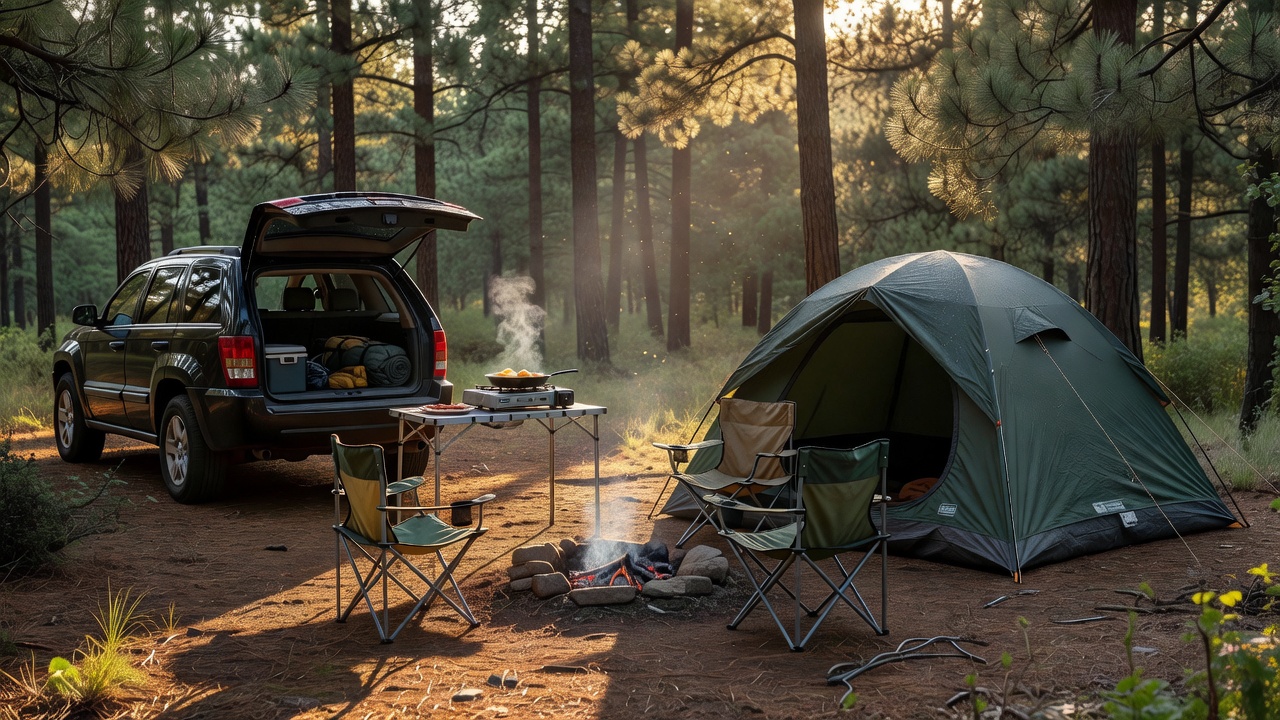
Car camping means you drive to a designated campsite, park, and set up right there. No hiking required. Weight and bulk don't matter because you carry gear maybe forty feet.
A typical trip: load a cooler with real food, throw a big tent and camp chairs in the trunk, drive to a state park or national forest campground. Hike or fish during the day. Come back to base camp for steak grilled over coals. If it rains, you retreat to a tent tall enough to stand in and wait it out.
This is how most people first sleep outside. Someone else handles the logistics while you roast marshmallows. It's the default for families, groups, anyone who wants a social, comfortable experience.
Gear: Weight, Space, and Cost
This is where the two styles diverge most. Backpacking gear asks: how light can this be? Car camping gear asks: how comfortable?
What's in Each Pack
If you're headed into the backcountry, every item earns its spot by being light and doing double duty. For car camping, the only limit is what fits in your vehicle.
Backpacking Load (typical 3-season overnighter, 25 to 35 pounds total):
The Camping Tent for 2 Person, 4 Person, 6 Person is still one of the cheapest ways to get a weatherproof shelter into the backcountry when packed size matters more than luxury.
- Down or synthetic sleeping bag rated 20 to 30°F, compressed to about the size of a volleyball.
- Inflatable sleeping pad under a pound. Insulation and comfort in one.
- Ultralight canister stove plus a small titanium pot. I use an MSR PocketRocket.
- Water filter (Sawyer Squeeze or Katadyn BeFree) so you don't carry gallons.
- Dehydrated meals weighing a few ounces each. Boil water, done.
- A compact daypack like the BECOJADDE 15L Small Hiking Backpack for side trips, summit pushes, or fast water runs from camp.
- Rain shell, puffy jacket, one change of clothes, headlamp, first aid kit, map and compass. Emergency comm device if you're going deep.
Car Camping Load (whatever fits in the trunk, often 100+ pounds):
- Family tent that sleeps 4 to 6. Nobody counts ounces. The Coleman Skydome Tent with LED Lights is the easy-start option for couples or a small family, while the EVER ADVANCED 6 Person Camping Tent gives you near-vertical walls, blackout fabric, and enough room for cots or duffels.
- Oversized sleeping bags, or blankets and pillows from home.
- Thick air mattress, memory foam pad, or a folding cot.
- Two burner propane stove, cast iron skillet, coffee percolator, full cook set.
- A 50 quart cooler loaded with fresh food. Eggs, bacon, steaks, vegetables, cold beer.
- Camp chairs, folding table, pop up canopy for shade or rain.
- Lanterns, string lights, Bluetooth speaker, board games, a full axe for splitting firewood.
- The CORE 6 Person Instant Cabin Tent gets you to a usable base camp in about a minute if you want to skip the pole wrestling.
Cost works both ways. Backpacking gear costs more per pound because of ultralight materials and technical design. But car campers often spend more total. They buy more stuff. The camp kitchen alone can hit a few hundred dollars once you tally everything.
Tents for Each Style
Your tent is the biggest single purchase either way. Get the wrong type and you'll be miserable.
Backpacking tents: Prioritize packed size and weight. A freestanding two person tent at 3 to 5 pounds is the sweet spot for most solo backpackers who want some elbow room. Look for DAC aluminum poles (lighter and tougher than fiberglass), a rainfly that reaches the ground, and a bathtub floor with a high denier count. Single wall designs save weight but add condensation. Worth it for alpine trips. Annoying in humid eastern forests.
- Car camping tents: Go big. You want a tent you can stand up in with near vertical walls that give you actual usable floor space. Multiple doors so you're not climbing over people at 2 a.m. Large vestibules for muddy boots. E port access if you're at a powered site. Fiberglass poles are fine here. Mesh ceilings are great for stargazing. The Coleman Skydome Tent with LED Lights is the current all-around car-camping value pick: faster setup than the old classics, more usable wall shape, and built-in lighting that's actually handy once everyone is digging through duffels after dark.
Difficulty and Physical Demands
Backpacking is hard. Even a five mile hike with 30 pounds taxes most people, especially with elevation. You need baseline fitness and the mental stamina to keep moving when you're tired and still miles from camp. Your balance shifts under the pack. Joints take more load. Minor terrain becomes a negotiation with your center of gravity.
Car camping asks almost nothing of you physically beyond the drive and tent setup. Any fitness level works. That's why it's better for families with young kids, older adults, or anyone coming back from an injury. Planning a trip around a senior camper? Our camping for seniors guide covers the comfort, mobility, and safety gear that keeps the whole group happy.
Common beginner mistakes:
- Backpackers overestimate mileage. Eight flat miles on pavement is a walk. Eight miles on rocky trail with a pack will wreck someone who hasn't trained. Blisters from bad footwear end trips.
- Car campers ignore weather. Skipping a ground tarp and guylines means waking up in a puddle.
Best Destinations
The kind of trip you want should pick the style for you.
Backpacking
- National Park backcountry. Yosemite beyond the Valley, Glacier's remote passes, Great Smoky Mountains shelters along the AT corridor.
- National Forest dispersed camping. Free, unmarked, incredible if you can read a topo map.
- Long trails. Sections of the PCT, AT, or Colorado Trail with reliable water and campsites.
- High alpine basins. Waking above treeline to a sunrise over peaks most people only see in photos.
Car Camping
- State parks. Developed campgrounds with bathrooms, fire pits, easy trail and lake access.
- National park front country campgrounds. Reserve early for Watchman in Zion or Mather at the Grand Canyon.
- Beach camping. Drive onto sand, camp steps from the surf with pop up shade and a full cooler.
- Group trips and festivals. Mixed experience levels do best at car accessible sites.
For more gear details, see our Best Camping & Outdoor Gear for 2026 guide. If backpacking is your direction, the Best Hiking Gear for 2026 covers trail tested picks and the Best Mobility Gear for 2026 roundup spans multi day packs to ultralight day bags.
Cost: What You'll Spend
Outdoor marketing wants you to believe you need three grand before you can sleep outside. You don't. Here's what real budgets look like.
Backpacking Starter Kit (budget route): $450 to $700
- Tent: Camping Tent for 2 Person, 4 Person, 6 Person. Budget-friendly shelter for new backpackers who need weather coverage before they need premium materials.
- Backpack: Used Osprey or Gregory at an REI garage sale, or a budget 50 to 60L pack for $100 to $150 new.
- Sleep system: Kelty Cosmic down bag (
$169) plus a Therm-a-Rest Z Lite foam pad ($45). - Stove and pot: $50 to $70.
- Water filter: $30 to $40.
- Clothing: Start with what you own. Add a rain shell and merino base layer (~$150 combined) as first upgrades.
Car Camping Starter Kit (budget route): $300 to $500
- Tent: Coleman Skydome Tent with LED Lights at $122.99 for couples or small families. Need more room? The EVER ADVANCED 6 Person Camping Tent at $169.99 adds blackout fabric and real standing height. For speed: the CORE 6 Person Instant Cabin Tent at $169.99 is the fast-setup answer.
- Sleeping pads: Closed cell foam or an Intex air mattress ($30 to $60).
- Kitchen: Coleman two burner stove (~$50) plus a thrifted cast iron skillet.
- Cooler: Used Coleman or Igloo ($20 to $40).
Where the Money Goes Later
Backpackers upgrade one item at a time. Lighter tent. Warmer bag. Carbon trekking poles. Each upgrade drops ounces and adds cost. An ultralight kit can push past $2,500.
Car campers expand sideways. Better cooler. Screen tent. Portable power station. Nicer chairs. The spending grows comfort instead of chasing minimalism.
Backpacking vs Car Camping FAQ
Which is better for a first camping trip?
Car camping, almost every time. You can bring real food, a cooler, a chair, and a thick sleeping pad; if it rains you can sit in the car; and if you forget something, the store is usually a short drive away. Backpacking rewards the same gear knowledge, but it punishes every mistake with weight on your back and miles from the trailhead. Learn to camp first, then learn to carry it.
How much does each style cost to start?
On a budget route, a car camping starter kit runs $300 to $500 (tent, pads, stove, used cooler) while a backpacking starter kit runs $450 to $700 (pack, sleep system, stove and pot, filter). Backpacking costs more because every ounce you remove costs money — ultralight materials are simply more expensive than car-camping-grade gear.
Can I do both on the same trip?
Yes, and it's the best of both worlds: set up a base camp at a drive-up site, then hike or even overnight out of it with a light pack. A simple 15L daypack such as the BECOJADDE ($25.99) carries a day's water, layers, and snacks, and it lets you test backpacking weight before committing to a full backpacking kit.
Do I need a different tent for each style?
Practically, yes. Car camping favors space and comfort — a 4- to 6-person tent like the Coleman Skydome ($122.99) or an EVER ADVANCED 6-person cabin gives you headroom and room for cots or air mattresses. Backpacking favors a 2- to 3-pound, 2-person tent you can carry for miles. You can car camp in a backpacking tent if it's all you own, but you can't reasonably backpack with a 6-person cabin tent.
Which one is more expensive over the long run?
Backpacking, generally. Car camping gear is heavy, simple, and widely available used — a $20 thrifted cooler and a $50 two-burner stove are perfectly fine, and they last years. Backpacking gear is engineered to shave ounces, so packs, tents, and sleep systems cost more per item, and upgrading one piece at a time is the normal, endless path.
How much does a backpacking pack actually weigh?
A common rule of thumb is to keep your loaded pack under roughly 20 percent of your body weight; many beginners find themselves closer to 30 pounds on their first overnight, with about half of that being base gear (pack, shelter, sleep system) and the rest food, water, and fuel. Car camping has no real weight limit, which is exactly why it's the easier starting point — you can bring a cast iron skillet and a real pillow instead of counting grams.
If you land on car camping, the 2-day camping trip packing list is the one-night version of the kit.
Which One Should You Pick?
I've done both routes enough times to know it comes down to what kind of trip you want. Not what sounds good when you tell people about it at a party.
Pick backpacking if:
- Solitude and silence matter. You want to feel like you earned your campsite.
- You enjoy physical challenge and have the fitness (or will train).
- The destination is the whole point. A specific alpine lake. A remote waterfall.
- You can handle being dirty, sore, cold, and wet. Sometimes all at once.
- Minimalism appeals to you. Carrying your life on your back for a few days clears your head.
- You're solo and comfortable handling whatever the backcountry throws at you.
Pick car camping if:
- You're going with a group, especially if experience and fitness levels vary.
- Kids are coming. They can explore without mileage pressure.
- Comfort is the priority. Good food, a real bed, the ability to change plans on a whim.
- You need a home base for day adventures. Climbing, paddling, fishing, mountain biking, photography with a lot of specialty gear. If mountain biking is part of the plan, our best hitch bike rack 2026 guide explains which racks protect carbon frames, carry e-bikes safely, and still let you open the rear hatch at camp.
- You're new to camping and want to build skills before adding pack weight.
- The weather looks unpredictable and you want a vehicle nearby as backup.
Can you do both? Plenty of us keep two gear closets. One ultralight setup for backcountry trips. One car camping kit for weekends with friends. Start with whatever fits your life right now. Don't be surprised if you end up collecting gear for both.
If mountain biking is part of your car-camping routine, a good rack saves more frustration than another gear bin ever will. Our best hitch bike rack 2026 guide compares platform and hanging racks for different budgets, and the Thule Epos 2 hitch bike rack review digs into what premium wheel-only clamping is actually worth if you're carrying carbon bikes or heavier e-bikes.
<!-- AFFILIATE_DISCLOSURE -->Disclosure: TrailMapz participates in the Amazon Services LLC Associates Program. As an Amazon Associate, we earn from qualifying purchases made through links on our site. This does not affect the price you pay and helps support our work in creating detailed outdoor gear comparisons and guides.