Best Hitch Bike Rack 2026: Thule vs Kuat vs Yakima
Best hitch bike rack 2026: Thule Epos vs Kuat vs Yakima vs Allen for 2 bikes — receiver size, class ratings, e-bike weight limits, RV mounting.
In this article · 32 sections
- Quick Answer: Which Hitch Bike Rack to Buy for Two Bikes
- The Quick Answer: Which Rack for What
- Platform vs Hanging Bike Racks: The Decision That Matters Most
- The Picks: Best Hitch Bike Racks for 2 Bikes (2026)
- How Many Bikes Can a Hitch Rack Carry? (1, 2, 3, or 4)
- Hitch Size Explained: 1.25" vs 2" Receiver
- Bike Racks for SUVs: Hitch, Trunk, or Roof?
- Bike Racks for RVs, Campers, and Campervans
- What About E-Bikes? Weight Capacity Is Everything
- What Is a Bike Rack's Weight Limit? Per-Bike vs Total Ratings
- Essential Bike Rack Accessories That Save Headaches
- Build a Better Bike-Trip Base Camp
- How to Install a Hitch Bike Rack (Step by Step)
- Common Bike Rack Mistakes (Learned the Hard Way)
- How to Choose: A 60-Second Decision Guide
- Receiver Size and Hitch Class: What Fits What, and What Only Looks Like It Fits
- Matching the Rack to Your Vehicle: SUV, Jeep, Truck, Minivan, and EV Notes
- How Many Bikes: 1, 2, 3, or 4
- E-Bikes and Fat Tire Bikes: Why Weight Changes Every Rack Decision
- Platform, Hanging, or Vertical: The Three Rack Styles Compared
- Tilt, Swing-Away, and Getting Into the Back of the Car
- Anti-Rattle Clamps and Locking Hitch Pins
- Thule, Kuat, and Yakima: What the Model Names Actually Mean
- Installing, Loading, and Strapping Down Without Drama
- Rust, Storage, and the Long-Term Care Nobody Talks About
- What a Good Hitch Rack Actually Costs
- Racks for Campers, RVs, and Travel Trailers
- Do You Need a Hitch to Carry Bikes? The Question Nobody Answers Straight
- Hitch Rack vs Roof Rack vs Trunk Rack: Which One Belongs on Your Car
- Which Hitch Rack Fits Your Vehicle: SUV, Truck, Sedan, Jeep, and RV
- Hitch Bike Rack FAQ
- Bottom Line
There's a particular kind of dread that hits about 40 minutes into a road trip with bikes: the ratcheting strap you "definitely tightened" is now flapping against the rear window, your carbon frame is swaying into the brake lever of the bike next to it, and you're doing mental math on whether that clunk you just heard was a $2,500 wheelset saying goodbye. I've been there. The bike rack is the single piece of gear that stands between your bikes and the highway, and it's the one thing you really don't want to cheap out on — or overthink.
This guide walks through the best hitch bike racks for carrying two bikes in 2026, from the premium platform racks that cradle each bike by the wheels to the budget hanging arms that get the job done for a third of the price. Whether you're hauling two road bikes to a century ride, two mountain bikes to the trailhead, or two kids' bikes on a family camping trip, the right rack depends on your bikes, your hitch, and how often you actually use it.
Quick Answer: Which Hitch Bike Rack to Buy for Two Bikes
- Best overall: Thule Epos 2 — $749.95. Tool-free mounting and a rack you never have to fight with.
- Best for most families: Kuat Sherpa 2.0 — $449.00. Light, stable, and easy to load, at a price that still makes sense.
- Best value: Yakima RidgeBack 2 — $279.00. A name-brand rack with a tilt-away for hatch access, well under the premium tier.
- Best on a budget: Allen Sports 522RR — $114.00. Heavier and less refined, but it holds two bikes just fine.
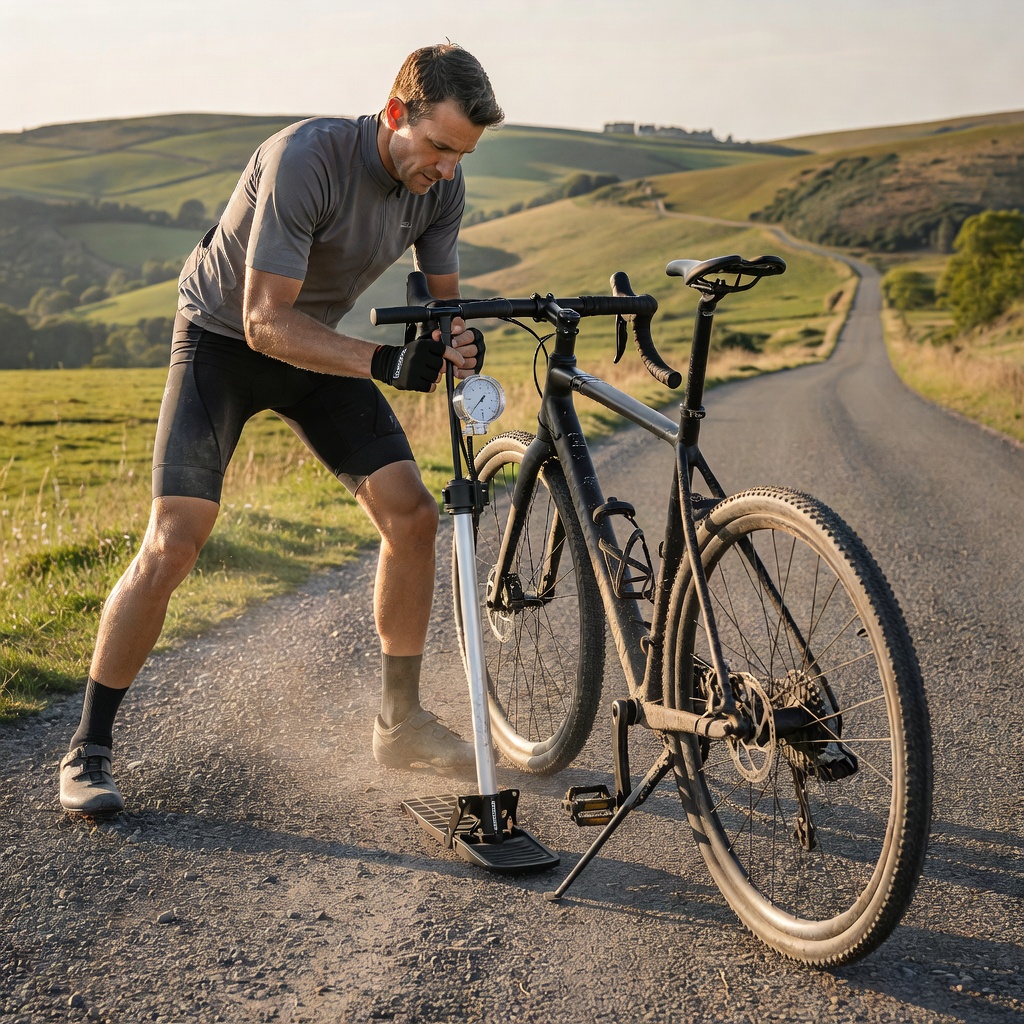
- Top off tires at the trailhead: Topeak Mini Morph Pump — $29.93. Better than hunting for a gas station air hose before you ride.
- Fix a flat on the road: Crankbrothers M20 Tool — $39.99. The multi-tool that also plugs a tubeless tire.
The Quick Answer: Which Rack for What
- Best overall / easiest on your bikes: Thule Epos 2 Premium Hitch Bike Rack ($749.95) — platform-style, tool-free, tilt-away, holds bikes by the wheels so it never touches the frame.
- Best lightweight premium platform: Kuat Sherpa 2.0 — aluminum, 40 lbs per tray, fits 1.25" hitch.
- Best versatile hanging rack: Yakima RidgeBack 2 — tilt-away, fits both 1.25" and 2" receivers, great value mid-tier.
- Best budget: Allen Sports Deluxe — under $200, gets two bikes from A to B without drama.
Platform vs Hanging Bike Racks: The Decision That Matters Most
Before you look at a single brand, you need to understand the two fundamentally different rack designs, because this one choice shapes everything else — price, frame protection, weight capacity, and how easy it is to load.
Platform racks hold each bike by its wheels in dedicated trays or cradles, usually clamping only the wheel or tire. The bike frame never gets touched. This matters enormously if you ride a carbon frame (frame clamps can crush or stress carbon tubing), a bike with an unusual frame shape (step-through, full-suspension mountain bikes, e-bikes), or a bike with hydraulic lines you don't want pinched. Platform racks are heavier, more expensive, and more secure — the bikes sit lower and more stable, and loading is a one-person job. The Thule Epos 2 is the platform design done right.
Hanging racks suspend bikes by the top tube from padded arms. They're lighter, cheaper, and often carry more bikes for the footprint. The tradeoff: bikes can swing and contact each other (frame damage risk), you may need a frame adapter bar for step-through or women's frames, and loading two bikes without them banging together takes some fussing with straps. For two standard bikes on occasional trips, a hanging rack like the Yakima RidgeBack is genuinely a great value. For anything carbon, e-bike, or loaded with accessories, go platform.
My rule of thumb: If the combined value of your two bikes is under $1,500 and they're standard diamond frames, a hanging rack is fine. If you're hauling anything worth more than the rack itself — carbon road bikes, e-bikes, full-suspension mountain bikes — spend the money on a platform rack. You'll never regret it.
Hauling an e-bike? The rules change once a bike weighs 50 lb or more. Our e-bike hitch rack guide covers per-bike weight ratings, hitch class limits, fender and ramp fit, and how to load a heavy bike without wrecking your back — the section this page only has room to summarise.
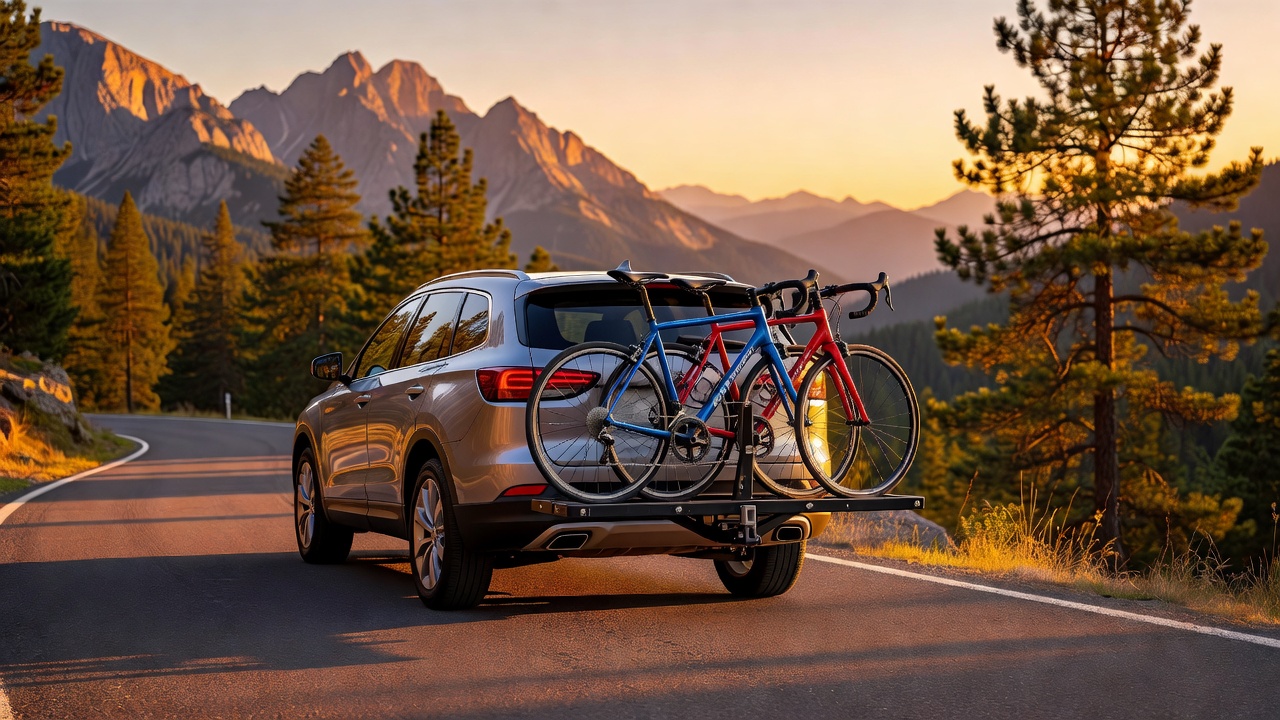
The Picks: Best Hitch Bike Racks for 2 Bikes (2026)
Best Overall — Thule Epos 2 Premium Hitch Bike Rack
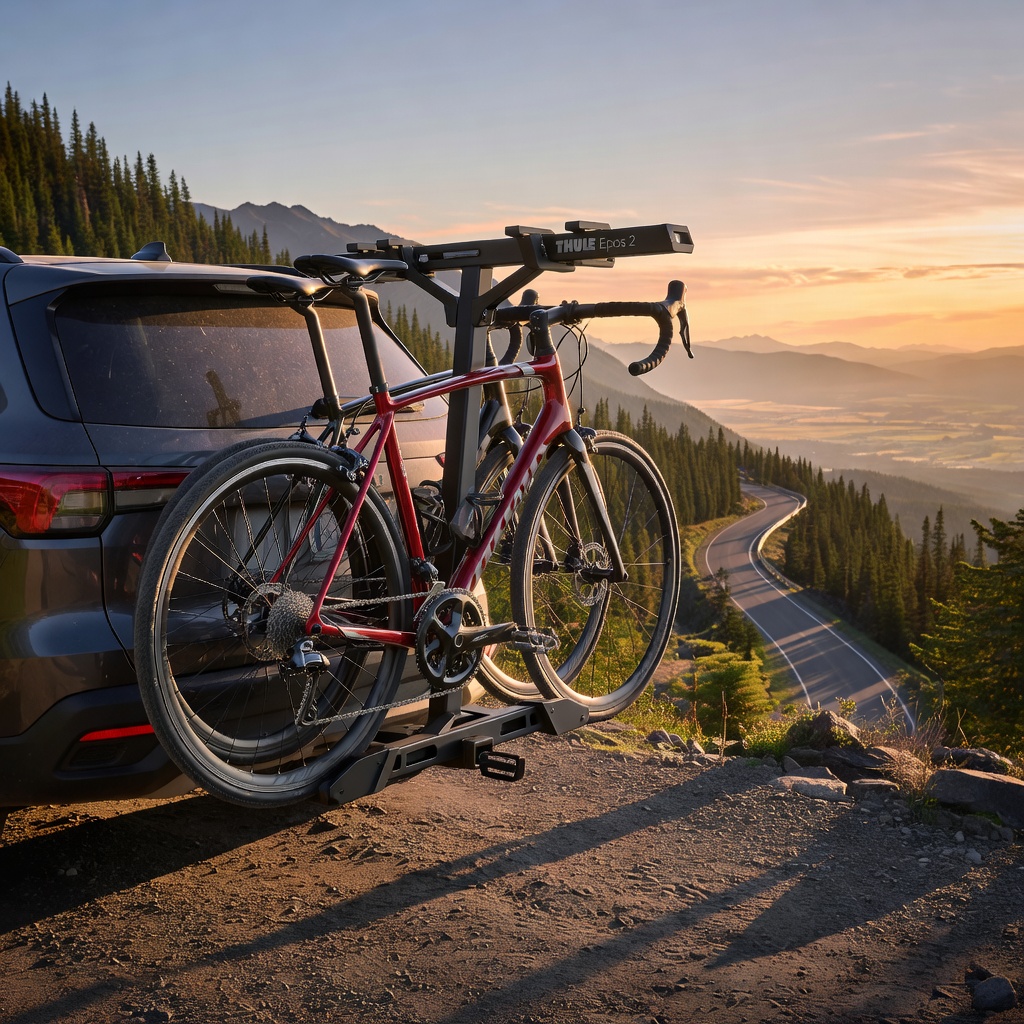
Price: $749.95 — the premium pick for cyclists who want zero-contact frame protection and tool-free convenience.
Specs:
- Capacity: 2 bikes, up to 59.5 lbs each (handles e-bikes)
- Design: Platform, ratcheting wheel hooks (no frame contact)
- Hitch: Fits both 1.25" and 2" receivers
- Standout feature: Tool-free tilt-away — access the trunk or tailgate without unloading bikes
- Rating: 4.7 stars (480+ reviews)
This is the rack I'd buy if I could only own one. The wheel-hook design means you never clamp the frame — you loop a hook over the front wheel, ratchet it down, and the bike is held entirely by its tires. That's ideal for carbon frames, e-bikes, and any bike with a non-standard tube shape. The tilt-away mechanism is tool-free: pull a lever, the whole rack pivots down and away from the vehicle, and you can open your hatch or tailgate fully. On a road trip where you're accessing the trunk at every stop, this feature alone is worth the premium over a fixed hanging rack.
The tradeoff, beyond price, is weight — platform racks are heavy (this one is around 35-40 lbs before bikes), so mounting and removing it solo takes some care. But once it's on the hitch and the anti-wobble bolt is cinched down, it's rock-solid. At highway speeds the bikes don't move, don't rattle, and don't touch each other. Read our full Thule Epos 2 review for the deep dive.
Read our full Thule Epos 2 review →
Want the full hands-on breakdown — real-world fit on carbon and e-bikes, highway stability notes, and how the tool-free tilt holds up after a season of road trips? Our dedicated Thule Epos 2 hitch bike rack review goes deep on what it's actually like to live with this rack every day. Still weighing the brands against each other? Our Kuat vs Thule vs Yakima comparison settles the head-to-heads model by model.
Best Lightweight Premium Platform — Kuat Sherpa 2.0
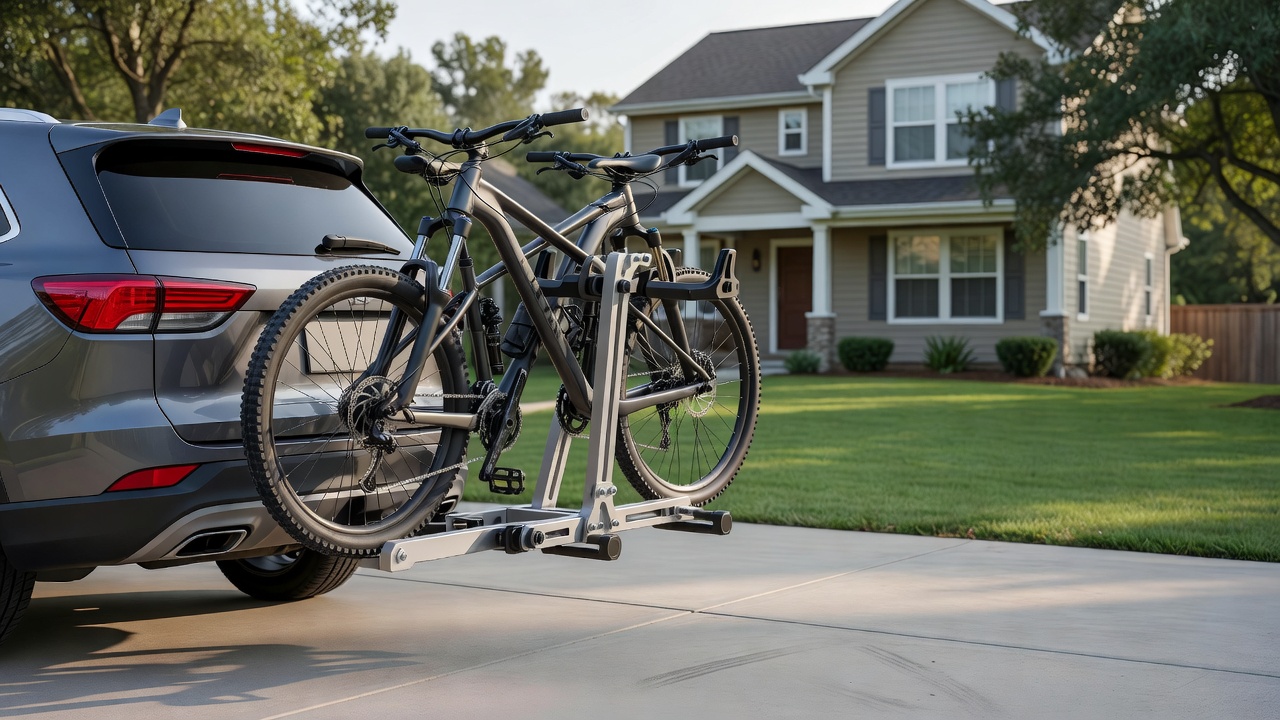
Price: ~$449 — Kuat Sherpa 2.0 2-Bike Hitch Rack — the aluminum alternative for weight-conscious cyclists who still want platform protection.
Specs:
- Capacity: 2 bikes, up to 40 lbs each (not for heavy e-bikes)
- Design: Platform, aluminum construction (lighter than steel competitors)
- Hitch: 1.25" receiver
- Standout feature: Lightweight aluminum + integrated cable lock + foldable tire cradles
The Kuat Sherpa 2.0 is the rack for riders who want the frame-friendly platform design but balk at the weight of steel racks. Built from aluminum, it's noticeably lighter to mount and remove, which matters if you're taking the rack on and off between trips rather than leaving it on all season. The trade-off versus the Thule Epos: lower per-bike weight capacity (40 lbs vs 59.5 lbs), so it's not the choice for e-bikes. For two standard road, gravel, or mountain bikes, it's a gorgeous, well-engineered rack. The integrated cable lock and foldable cradles are thoughtful details that justify the premium over budget options.
Best Versatile Hanging Rack — Yakima RidgeBack 2
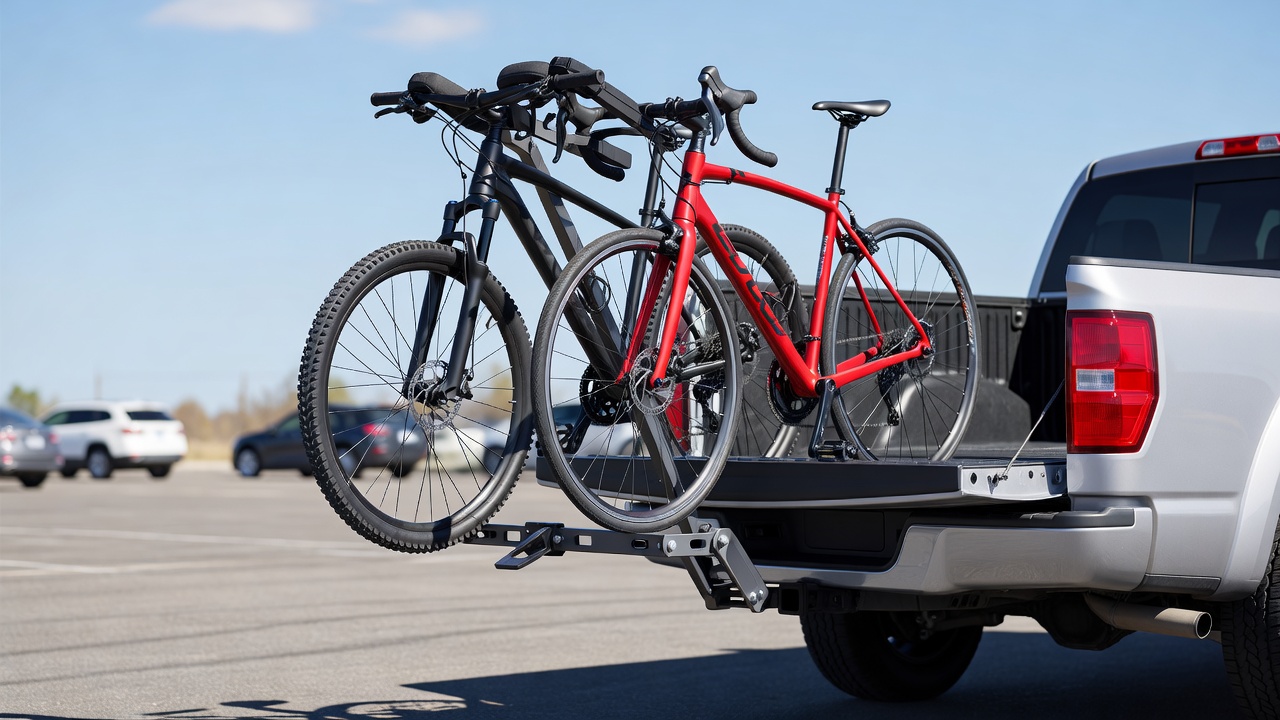
Price: ~$279 — Yakima RidgeBack 2-Bike Tilt-Away Hitch Rack — the sweet spot of value, tilt-away convenience, and dual-hitch fit.
Specs:
- Capacity: 2 bikes (expandable to 4-bike version)
- Design: Hanging, padded arms
- Hitch: Fits BOTH 1.25" and 2" receivers (huge plus if you own multiple vehicles)
- Standout feature: Tilt-away feature at this price point + ZipStrips for quick bike removal
The Yakima RidgeBack is the rack I recommend to people who ask "what's good but not crazy expensive?" It's a hanging rack, so bikes dangle from the top tube — meaning carbon frames and step-through designs will want a frame adapter bar. But for standard bikes, the RidgeBack does nearly everything the premium racks do at half the price: it tilts away for trunk access, it fits both common hitch sizes (so you can move it between a sedan with a 1.25" hitch and a truck with a 2" hitch), and Yakima's ZipStrips make securing and releasing bikes quick. The arms fold flat when not in use, so it's not a giant lever sticking off the back of your car all week.
Best Budget — Allen Sports Deluxe Hitch Rack
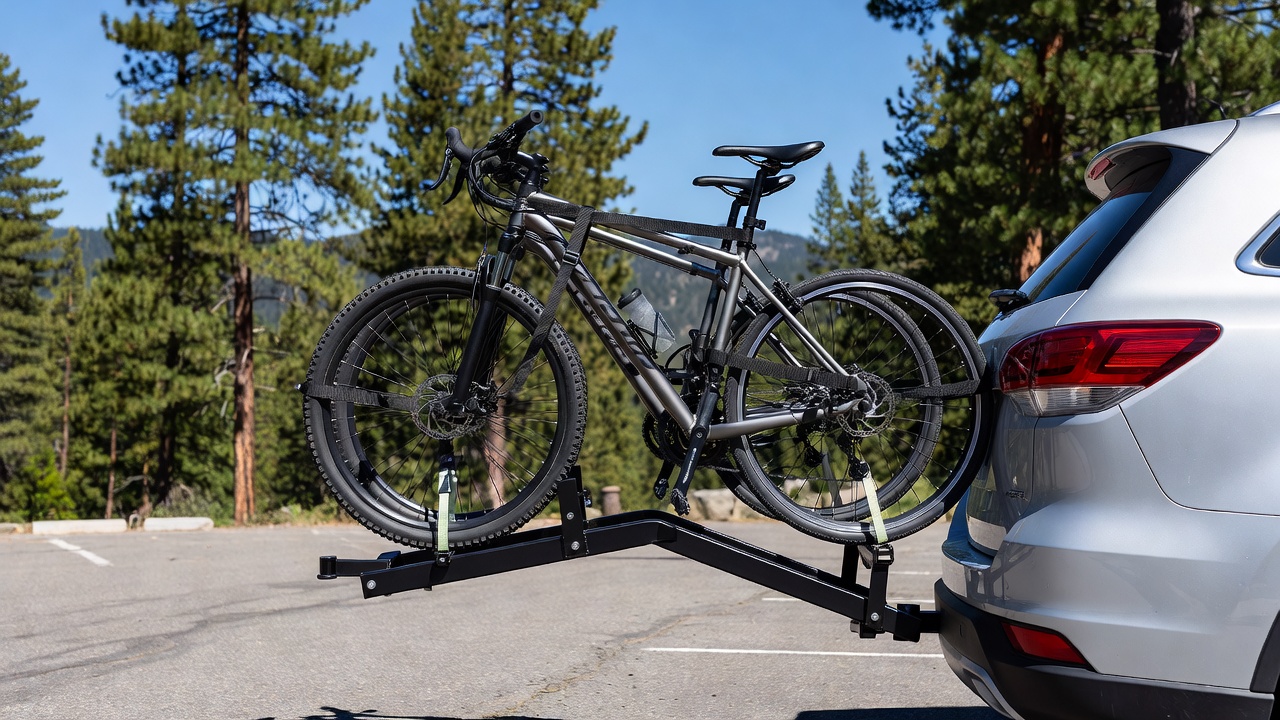
Price: Under $200 — the no-frills option that gets two bikes down the road reliably.
Specs:
- Capacity: 2-bike (and 4-bike versions available)
- Design: Hanging, padded carry arms
- Hitch: 2" receiver
- Standout feature: Price — the most rack for the least money
Allen Sports is the brand that proves you don't need to spend $700 to carry two bikes. The Allen Sports Deluxe 2-Bike Hitch Mount Rack ($114) is a straightforward hanging rack with padded arms and a tie-down system. It won't tilt away, it's heavier on the budget hardware, and you'll want to double-check your straps more often. But for occasional trips, college students, or anyone whose bikes are functional rather than precious, the Allen gets the job done — it fits both 1.25-inch and 2-inch receivers, installs in minutes with no tools, and carries two bikes up to 35 pounds each. Pair it with a couple of bungee cords to keep bikes from swinging into each other, and you're road-trip ready for a fraction of the cost.
How Many Bikes Can a Hitch Rack Carry? (1, 2, 3, or 4)
Every rack in this guide is built for two bikes, and that is not an accident: two is the size where rack design, price, and weight ratings all line up best. But "the best hitch bike rack for 2 bikes" is only one of four capacities people actually shop for, and the answer changes a lot at three and four. Here is the honest breakdown.
- 1 bike. The lightest, cheapest, and least common class. Most brands price their 2-bike rack within a few dollars of the 1-bike version, so unless you are strictly solo forever, the second tray is nearly free insurance. If you truly only ever carry one bike, a 1-bike platform rack is the easiest rack to mount, load, and store.
- 2 bikes (a trailer hitch bike rack for 2 bikes). The sweet spot, and what this guide is built around. A 2-bike rack usually fits a 1.25-inch receiver, weighs less than a four-bike version, and still carries any adult mountain, gravel, or road bike. A hitch mount bike rack for 2 bikes is also the only size where hanging and platform designs compete head to head on price: the Thule Epos 2 and Kuat Sherpa 2.0 are both 2-bike platform racks, while the Yakima RidgeBack 2 and Allen Sports Deluxe are 2-bike hanging racks.
- 3 bikes. Almost always done one of two ways: add a third tray or arm to a 2-bike platform rack, or buy a dedicated 3-bike hanging rack. Two adults plus one kid is the classic three-bike family, and a hanging rack is usually the cheapest honest route to three.
- 4 bikes. This is where the vehicle, not the rack, becomes the limiting factor. Most 4-bike racks are sold as 2-inch (Class III) only, because four bikes plus the rack's own weight can push a 1.25-inch Class I or II receiver past its tongue-weight rating. Two adults and two kids heading out for a family camping weekend is a legitimate four-bike load, so plan for a 2-inch hitch and a rack that is explicitly rated for four rather than stacking two racks on one small receiver.
Capacity listings are worded loosely online, so treat the labels as a size class rather than a promise: hitch bike rack 1 bike, hitch bike rack 2 bikes, hitch bike rack 3 bikes, and hitch bike rack 4 bikes all describe the same product family at different capacities, and a hitch bike rack for 3 bikes or 4 bikes usually means the higher-capacity hardware in that range. The per-bike weight rating further down this page is what actually decides whether a rack fits your bikes, and a hitch bike rack for ebikes or 2 e bikes always needs the top of that range.
The number that decides it: count the bikes, add up their real weights (not the shipping weight you see on a product page), then check your hitch class against the total. If you are between sizes, a 2-bike rack for the adults plus a second rack for the kids' bikes is often cheaper and safer than one overworked four-bike rack. And if you are shopping the whole category, the Kuat vs Thule vs Yakima comparison settles the brand head-to-heads model by model.
Hitch Size Explained: 1.25" vs 2" Receiver
This trips up first-time buyers more than anything else. Your vehicle's hitch receiver has an opening that's either 1.25 inches or 2 inches across — and the rack's shank (the metal bar that slides into the receiver) must match. Buy the wrong size and the rack literally won't fit.
- 1.25" receivers are common on sedans, hatchbacks, and smaller crossovers. They're rated for lighter tongue weight, so they pair with lighter racks and fewer bikes. The Kuat Sherpa 2.0 is a 1.25"-native rack.
- 2" receivers are standard on SUVs, trucks, and larger vehicles, and they handle more weight — which is why most 4-bike racks and e-bike-capable platform racks are 2" only.
- Dual-fit racks (like the Yakima RidgeBack and Thule Epos) ship with adapters or fit both sizes directly. If you own two vehicles with different hitch sizes, or you're not sure what you have, a dual-fit rack removes the guesswork.
How to check your hitch: Measure the inside opening of the square receiver tube on your vehicle. Most hitches also have the size stamped or on a sticker. When in doubt, measure — a 2" rack in a 1.25" receiver is going nowhere, and a 1.25" rack in a 2" receiver needs an adapter sleeve that adds wobble.
The naming is where most people get lost, so here is the decoder. A 2 inch receiver hitch bike rack, a 2 inch hitch mount bike rack, a 2 inch receiver bike rack and a 2 inch hitch bike carrier are all one product class — the rack's shank is 2 inches square because your receiver is. Nothing about the bikes changes with the wording: a 2 inch hitch platform bike rack and a 2 inch hitch 4 bike rack are the same design at different capacities, a 2 inch hitch 3 bike rack is usually a dual-tray platform with a third tray added, and a 2 inch hitch bicycle rack is just the older phrasing for all of them. The best 2 inch hitch bike rack is the one whose per-bike rating clears your heaviest bike, and a 2 trailer hitch bike rack or 2 inch trailer hitch bike rack on a spec sheet refers to that same 2-inch receiver rather than a different standard. The 1.25-inch side has its own wording too, and an e-bike on a 1.25 hitch bike rack is the case where the receiver, not the rack, decides the answer.
Then there is bike rack hitch vs trunk, which is less a product question than a vehicle question: the hitch wins on load height, stability and paint, the trunk strap wins on price and on cars that genuinely cannot take a receiver. Which is why the receiver rule above matters more than any product name on this page.
Bike Racks for SUVs: Hitch, Trunk, or Roof?
An SUV is the easiest vehicle on this list to put a bike rack on, and also the one where people waste the most money on the wrong answer. Here is how the three options actually compare on a truck-based or crossover SUV.
- Bike rack for SUV hitch (the right answer for most people). Most SUVs and crossovers ship with, or can easily take, a 2-inch (Class III) receiver, which is the strongest and most stable platform you can put a rack on. A hitch bike rack for an SUV sits low, loads at waist height, does not touch your paint, and can tilt away so you can still open the tailgate. This is why every rack in this guide is a hitch rack.
- Bike rack for SUV without hitch: a trunk rack. A bike rack for SUV trunk mounting straps to the rear hatch and carries up to two bikes, usually around 35 lbs each. It is cheap and it works, but it comes with real limits: it cannot be used on a hatch with a large spoiler or on glass-only tailgates, the straps can mark paint, it blocks the rear camera and often the license plate, and it must come off before you can open the hatch. Fine for a spare vehicle on occasional short trips; a poor daily driver.
- Bike rack for SUV roof. A bike rack for SUV roof mounting carries two to three bikes and leaves the rear completely free, but you lift each bike overhead (awkward with a 50 lb e-bike), they add wind noise and drag at highway speed, and they are the classic cause of garage and drive-through damage. If you are tall enough and do not park in a garage, it is a legitimate option.
- Bike rack for SUV 2 bikes vs 4 bikes. A bike rack for SUV 2 bikes duty fits any SUV with a receiver. A bike rack for SUV 4 bikes duty almost always means a 2-inch receiver and a rack rated for four, because four bikes plus rack weight is exactly the scenario where a lighter receiver runs out of tongue capacity.
- Watch the spare tire. If your SUV carries a rear-mounted spare (common on Jeeps and some older 4x4s), check clearance before you buy, especially with the rack tilted. This is the single most common SUV fit failure.
If you do not have a hitch yet, having one installed is usually the cheapest upgrade that fixes bike hauling for good, and it makes the rack decision simple: buy a 2-inch dual-fit rack like the Thule Epos 2 or the Yakima RidgeBack 2 and you are covered whether you later move to a truck, a minivan, or a smaller car.
Car vs SUV: what actually changes
- Hitch class and receiver size. Sedans and hatchbacks are commonly 1.25-inch (Class I or II); SUVs and trucks are commonly 2-inch (Class III). Larger receiver, higher tongue rating, more bikes.
- Load height. SUV receivers sit higher, so you lift bikes a few inches further. On a platform rack this barely matters; on a roof rack it is the whole job.
- Rear access. SUVs have a big tailgate you will open constantly on a trip, which is exactly the case for a tilt-away rack. A fixed rack on an SUV tailgate is a daily annoyance, not a one-time compromise.
Hitch Bike Rack Fit Notes: Car, Truck, SUV, and EV
The rack that fits your bikes is only half the decision — the other half is what you drive. These are the vehicle questions that decide it most often.
-
Hitch bike rack for SUV. This is the easiest case on receiver size and the hardest on access: most SUVs and crossovers can take a 2-inch Class III receiver, which clears every rack on this page, but the tailgate you open all weekend is what makes tilt-away hardware close to mandatory rather than a nicety.
-
Hitch bike rack for car. Sedans and small hatchbacks usually run a 1.25-inch receiver with a Class I tongue rating of roughly 200 lbs, and that rating is the real ceiling. A 35-40 lb platform rack plus two 25 lb bikes lands near 100 lbs and is comfortable. Two e-bikes plus rack hardware can approach the entire allowance. On a car, either stay with lighter bikes or pick a lighter rack: a 1.25-inch-native platform rack like the Kuat Sherpa 2.0 at 40 lbs per tray, or a hanging rack like the Allen Sports Deluxe if budget matters more than frame protection.
-
Hitch bike rack for truck. Trucks are the easy answer on receiver size — most ship with a 2-inch Class III hitch that takes any rack here — and the awkward one on access. The receiver sits high, so bikes load at chest height, and the tailgate is the thing you open twenty times a weekend, which is why tilt-away or swing-away hardware earns its price on a truck. If you run a tonneau cover or a camper shell, check that the rack clears it when tilted.
-
Best hitch bike rack for Tesla Model Y. Start with the receiver, not the rack: some Model Ys were ordered with the tow package and some were not, and the two can take different racks. If yours has the 2-inch receiver, the Thule Epos 2 is the pick because tool-free tilt and wheel-contact clamping keep the load quiet — in an EV, rattle is the complaint you notice first, because there is no engine noise to mask it. If your receiver is 1.25-inch, buy 1.25-inch native and skip the adapter sleeve.
-
Best hitch bike rack for Subaru Outback. Many Outbacks run the OEM 1.25-inch accessory hitch, so the same rule applies: a rack that is 1.25-inch native fits without a sleeve, and it is the sleeve that introduces wobble. The Kuat Sherpa 2.0 is the natural match. If you want e-bike capacity or four bikes later, an aftermarket 2-inch receiver is the upgrade that unlocks it.
-
Best hitch bike rack for Jeep Wrangler. Check the rear-mounted spare before anything else — it is the single most common fit failure on a Wrangler, and the same answer covers a hitch bike rack for Bronco or any 4x4 with a tailgate spare. You need enough shank length and enough tilt clearance that the rack folds without touching the tire; if the gap is tight, a hitch extender buys room at the cost of a little stability.
-
Bike rack for SUV with spare tire. Same problem, same fix: measure from the receiver pin hole back to the tire, add the rack's folded depth, and only then pick a model. Racks that fold flat against the bumper are usually the ones that clear.
-
Bike rack for SUV hatchback. If that is how you searched it, you probably drive a car-based crossover rather than a truck-based SUV — which means a lighter receiver and more benefit from a lighter rack. Check the hatch spoiler too, because it is what disqualifies trunk racks on most crossovers.
-
Bike rack for SUV installation. The step-by-step install section below covers the rack side, but the hitch itself is what people underestimate. Most bolt-on receivers reuse factory holes, and having a shop fit one usually costs less than the next rack upgrade up the range.
-
Best bike rack for suv hitch shopping. The four ways people phrase this — best bike rack for suv hitch, bike carrier for suv hitch, bike rack for suv hitch mount, bike rack for suv trailer hitch — all point at one answer: a 2-inch receiver plus a platform rack. The bike count changes the rack, not the class, so a 2 bike rack for suv hitch is any dual-tray platform, a 3 bike rack for suv hitch needs a third tray or a hanging rack, and a 4 bike rack for suv hitch means a 2-inch receiver with a four-bike rating. If you are searching bike rack for suv no hitch or bicycle rack for suv without hitch, you are in the trunk-rack or roof-rack branch above, and a bike rack for vehicle hitch is simply the version where the receiver does the carrying.
Our shortlist of the best hitch bike racks 2026 comes out of one rule: the per-bike rating has to clear your heaviest bike, and the total has to clear your hitch's tongue rating. Threads titled "best hitch bike rack reddit" circle the same three or four names every season, and they land in the same place for the same reason — weight capacity first, convenience second, price third.
Bike Racks for RVs, Campers, and Campervans
Everything above assumes the hitch sits a foot behind your rear bumper. On a camper it does not: a motorhome receiver can sit seven or eight feet behind the rear axle, a travel trailer bumper is not a hitch at all, and the rack that is perfect on your Outback can be prohibited by its own instructions the moment a trailer is involved. So on an RV, "what fits" and "what is approved" are two different questions — and the approved answer is usually the smaller one.
-
A bike rack for rv trailer hitch is a receiver question first. On a Class C motorhome or a van-based coach the receiver is real and the rack rule is identical to a truck's: match the shank to the receiver, then respect the receiver's own tongue rating rather than the rack's marketing number. The best bike rack for rv hitch duty is usually a 2-inch platform rack with a swing-away or tilt function, because you will be opening the rear doors at every campsite.
-
The rear overhang rule almost nobody reads. Thule's hitch-rack instructions cut the carrier's maximum load to 60% of its rated capacity — a 40% load reduction — on cargo vans, passenger vans and van conversions "regardless of rear overhang length", and apply the same limit to motorized RVs whose rear overhang exceeds 230 cm (7.5 ft), measured from the centre of the rear axle to the rearmost point of the vehicle. If you have been pricing a bike rack for campervan use, that derating is the number to plan around, not the sticker rating.
-
A bike rack for camper bumper is the ask that gets people into trouble. Travel trailer and fifth wheel bumpers are usually thin-wall tubing built for the spare tire and low-speed impact, not for a load that hangs behind the axles and bounces all day. Thule's instructions say it outright: the carrier is "not compatible with travel trailers/caravans, 5th wheels, or any bumper-mounted hitch receiver." If your plan was a bike rack hitch camper setup bolted to the bumper, get a frame-mounted receiver instead — or move the bikes to the tongue.
-
Ladder mounts. A bike rack for camper ladder mount is possible, but the ladder's own rating is the hard ceiling and it is usually well under the weight of a rack plus two bikes, let alone four. Check the ladder's label; if there is no rating, there is no answer.
-
Tongue mounts. On a travel trailer the A-frame tongue is the structurally sane spot for two bikes, which is why a bike rack for camper tongue mount is where most trailer owners end up: the load enters the frame close to the axles, the lever arm is short, and nothing swings into your tailgate. The trade-offs are real — watch tongue weight, the jack and the coupler's turning clearance — but it still beats the bumper.
-
Four bikes on a camper trailer. A bike rack for camper trailer duty with four bikes is the worst case for stability, because all of that weight sits behind the axles and unloads the tongue. It belongs on a frame-welded, rated receiver, and the rig should be re-weighed afterwards: the best 4 bike hitch rack for rv duty is the one your trailer's frame and rating actually approve, and a 4 bike hitch rack for rv search that skips that check is how bumpers fail.
-
Bike rack hitch extension and bike rack hitch adapter. Every extension lengthens the lever arm and reduces the vertical load the receiver can safely carry, which is the wrong direction on a camper. If you need a bike rack hitch extension to clear a spare tire or a battery box, buy the shortest one that works, and never stack an extension, an adapter and a four-bike load.
-
Bike rack for campervan, including barn doors. A full-size van conversion carries the same 60% derating as any van, and if your rear doors open outwards, a swing-away or a tilting platform rack is mandatory rather than a nicety — you cannot open the doors with a loaded fixed rack in the way. A bike rack for campervan barn doors setup is answered by the swing-away, and a bike rack for campervan ladder mount carries the same warning as the trailer version above.
-
Bike rack for camper shell, and the no-hitch case. If your "camper" is really a pickup with a shell, everything in the truck section still applies — including a bike rack for camper shell clearance check before you tilt a loaded rack under a tonneau or a shell. A bike rack for camper without hitch is not really a product category: if the tow vehicle has no receiver, the two-bike answer is still a trunk rack, and a trunk rack must never be strapped to a trailer, because there is no structure back there to hold it.
-
The trailer question. The honest answer to can you put a bike rack on a trailer comes down to approval rather than measurement: yes on a frame-mounted receiver or a rated tongue mount, with a rack whose own instructions permit it, and no on a bumper, a ladder, or anything a previous owner improvised. The load path is only as strong as its weakest approved part, and "it fits" is not approval.
Rear loads change how a trailer tows, not just what it carries. Weight behind the axles unloads the tongue, so a loaded four-bike rack can turn a stable trailer into one that wanders at highway speed. Re-weigh the tongue after your first loaded trip, and if the number drops below the manufacturer's range, fix the weight distribution before you fix the rack.
What About E-Bikes? Weight Capacity Is Everything
Electric bikes changed the hitch rack market, and for good reason: a typical e-bike weighs 50-65 lbs, nearly double a standard road or mountain bike. Many older and budget racks are rated for 35 lbs per bike — load an e-bike on those and you're over capacity, risking rack failure and a very bad day on the highway.
If you're hauling e-bikes:
- The Thule Epos 2 is rated to 59.5 lbs per bike — it handles most e-bikes, including heavier commuter models.
- The Kuat Sherpa 2.0 tops out at 40 lbs — fine for lighter e-bikes but not full-size ones.
- Hanging racks generally can't safely carry two e-bikes; the combined weight and awkward frame shapes make them unstable.
Look for racks explicitly marketed as "e-bike compatible" and always check the per-bike weight rating against your actual bikes. It's the single most important spec if you ride electric.
Best Hitch Bike Rack for E-Bikes: Matching the Rack to the Bike
Once the per-bike math is done, the rest of the "best rack for X" questions collapse into a handful of answers. If you searched best hitch bike rack for electric bikes rather than ebikes, you are looking at exactly the same shortlist — the spelling changes, the weight rating does not.
-
Best hitch bike rack for ebikes. A rack rated at 60 lbs per tray is the honest minimum for a full-size e-bike, which puts the Thule Epos 2 at the top of the list and rules out most 35 lb racks before you read a single review.
-
Best hitch bike rack for 2 ebikes. Two commuter e-bikes at 55-60 lbs each is 110-120 lbs of bikes before the rack's own 35-40 lbs, which means a 2-inch receiver and a platform rack rated near 60 lbs per tray. Two heavy e-bikes on a hanging rack is not a recommendation we would make at any price.
-
Best hitch bike rack for heavy ebikes. Fat-tire and cargo e-bikes routinely clear 65-80 lbs. No mainstream hitch rack carries two of those honestly, so the workaround is one heavy e-bike on a 60 lb tray with a normal bike alongside — or a lighter second bike for the rider who does not need the assist.
-
Hitch bike rack for fat tire ebike. Tray width is the second constraint after weight: a 4-5 inch tire needs a wheel tray that actually accepts it, and some platform racks stop at 3 inches. Check the tire-width spec, not just the weight rating.
-
Best hitch bike rack for mountain bikes. Wheel-contact platform racks are the usual pick. Modern MTBs have long wheelbases and tapered frames that hang awkwardly from a top-tube arm, so the Thule Epos 2 carries them without clamping the frame at all; hanging racks like the Yakima RidgeBack 2 still work, but they need padded arms and a straight top tube.
-
Best hitch bike rack for road bikes. Weight is not the issue here — contact is. Carbon frames and thin tubes are the reason wheel-contact clamping exists, so a platform rack protects paint and carbon better than any arm that presses against the frame.
-
Best hitch bike rack for kids bikes. Small 20-24 inch wheels sit low in a wheel tray and are usually fine, but the trays have to be narrow enough to grip them, and hanging arms often cannot reach a kid's frame through a sloping top tube. For two adult bikes plus two kids' bikes, a budget hanging rack with careful placement is the pragmatic answer, and the Allen Sports Deluxe at $114 is the least expensive honest option.
-
Best hitch bike rack for 3 bikes. Either a 2-bike platform rack with a third-tray add-on, or a dedicated 3-bike hanging rack. Hanging is almost always the cheaper route to three, and the third tray is the better route if any of the three bikes is an e-bike.
-
Best hitch bike rack for 4 bikes. A 2-inch Class III receiver and a rack explicitly rated for four. Two adults and two kids heading out for a family camping weekend is a legitimate four-bike load, and our Kuat vs Thule vs Yakima comparison works through the brand differences once the capacity is settled.
What Is a Bike Rack's Weight Limit? Per-Bike vs Total Ratings
This is the spec people skip and then regret, because a bike rack weight limit is not one number. A bike rack weight rating is actually two numbers, and neither one is interchangeable between designs.
- Per-bike (or per-tray) rating. The most any single bike can weigh on that rack. This is the number that disqualifies a rack for e-bikes.
- Total load rating. The most the rack will carry in total, including rack hardware and adapters. Two bikes that are individually under the per-bike rating can still exceed a lighter rack's total rating.
Compare your two numbers against your two heaviest bikes before you buy:
| Rack | Design | Per-bike rating | Bikes |
|---|---|---|---|
| Thule Epos 2 | Platform, wheel-contact | 59.5 lbs per bike | 2 |
| Kuat Sherpa 2.0 | Platform, aluminum | 40 lbs per bike | 2 |
| Yakima RidgeBack 2 | Hanging | Check the shank label for your model | 2 |
| Allen Sports Deluxe 522RR | Hanging | 35 lbs per bike | 2 |
Then do the hitch math. A receiver rack puts its own weight plus the bikes onto your hitch's tongue rating, not onto the vehicle's towing rating. Class I hitches are typically rated around 200 lbs of tongue weight, Class II around 350 lbs, and Class III around 500 lbs; a platform rack itself can weigh 35 to 50 lbs, so four bikes plus rack hardware can consume most of a Class I or II allowance before you have loaded anything.
Real examples: two 45 lb e-bikes are 90 lbs of bikes, which rules out the 35 lb and 40 lb racks immediately and puts you on a rack with a 59.5 lb per-bike rating. Two 25 lb kids' bikes plus two 30 lb adult bikes is 110 lbs of bikes, fine for most 2-inch vehicles but a total-load question, not a per-bike one.
If you own a rack we do not cover here, do not guess from a chart: the per-bike and total ratings are stamped on the shank or printed in the manual for every major brand, including Saris, 1UP, RockyMounts, and Fiamma. The shank sticker is the authority; the marketing photos are not.
One more rule: never exceed a rating "just this once" for a short drive. Ratings exist for highway potholes and panic braking, which is exactly when an overloaded rack fails.
Essential Bike Rack Accessories That Save Headaches
A rack alone doesn't make your bikes road-trip-proof. These accessories close the gaps:
- Crankbrothers M20 Multi-Tool ($39.99) — keep one in the car. A loose bolt or misaligned derailleur discovered at the trailhead is a 2-minute fix with this, or a ride-ruining problem without it. The M20 packs 20 tools plus an integrated tire plug kit into a compact sleeve.
- Topeak Mini Morph Bike Pump ($29.93) — a flat tire 30 miles from home is the most common bike-trip mishap. The Mini Morph is a mini-pump that actually works, with a fold-out foot pad and T-handle so you're not pumping with burning forearms.
- Giro Jag Men's Road Cycling Gloves ($30.00) — if you're driving hours to a ride, you want gloves that are actually comfortable. The Giro Jag is the affordable glove that punches above its price with EVA padding and a breathable back.
- Cygolite Hotrod 110 / 50 light combo ($36.95) — a rack that hides your vehicle's tail lights is a legal problem; a bike nobody can see at dusk is a safety one. This USB front-and-rear pair is visible in daylight, charges off any USB port, and mounts with no tools — the easiest fix for rides that start at dawn or roll in after sunset.
- Giro Scamp MIPS II youth helmet ($52.80) — if the rack is carrying a kids' bike, the helmet is what turns the trip into an actual ride. Giro's smallest shell covers roughly ages 4-10 with MIPS rotational-impact protection and a dial fit that adjusts as they grow.
- A cable lock or U-lock — most premium racks include an integrated cable, but if yours doesn't, add one. Bikes on a rack at a gas station or trailhead are a target.
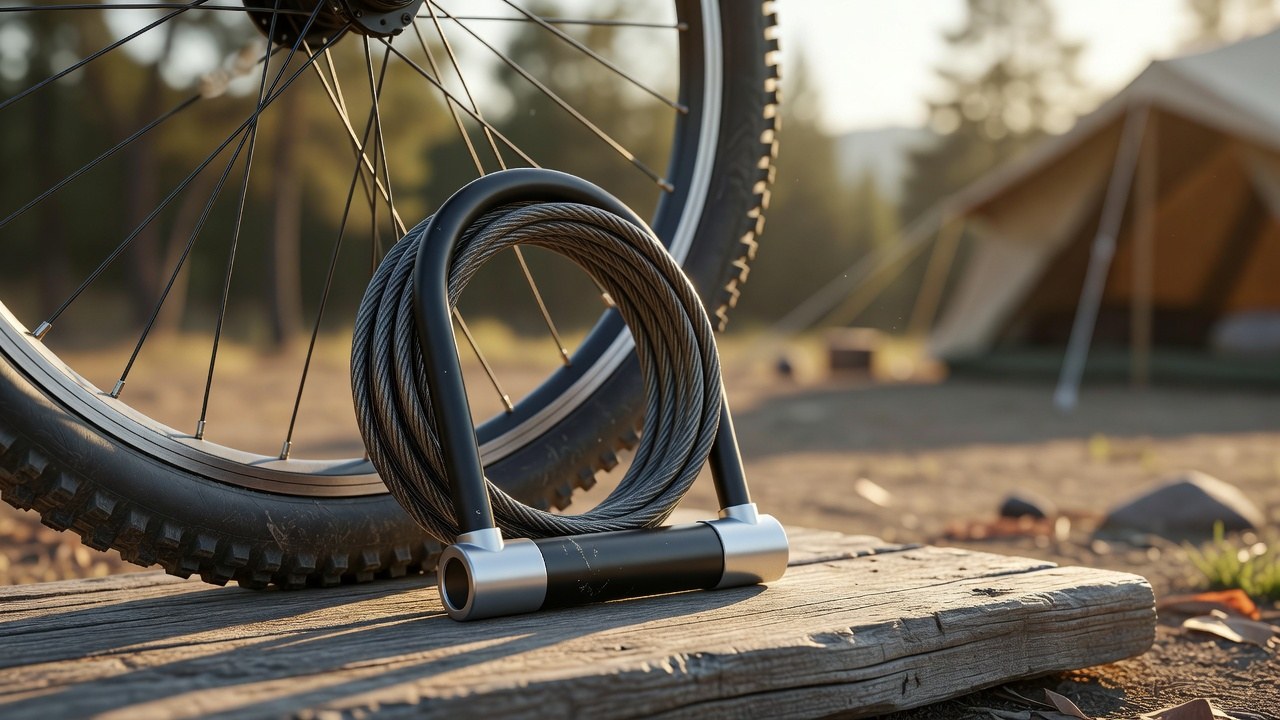
- Kryptonite Kryptolok U-Lock with 4-foot cable ($66.58) — the pattern to copy if your rack ships without one: a 12.7 mm hardened shackle through the frame and rack post, with the included 4-foot cable looping both wheels. Kryptonite rates it 6/10, which is the honest level for a trailhead or campground stop — a $40 cable alone is a two-second cut.
Build a Better Bike-Trip Base Camp
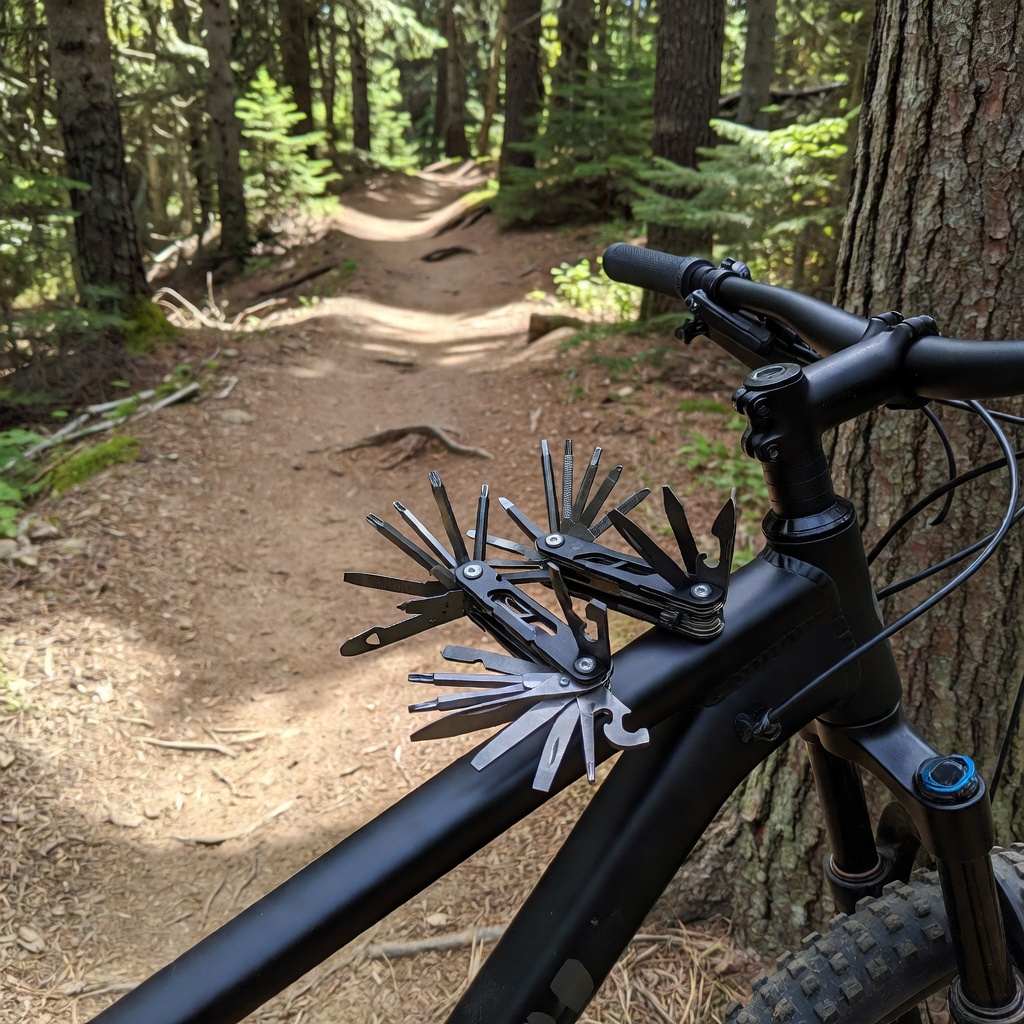
The rack is only one part of the weekend system. On a simple trailhead day, you mostly need a pump, a multitool, water, and enough food to keep the post-ride mood from crashing. On a bike-camping or family road-trip weekend, though, the rack changes how you pack the entire back of the vehicle.
Start with the stuff you need before the bikes even come off the rack. Our day hike essentials gear checklist is a practical reminder of what should stay in the cab or an easy-grab duffel instead of getting buried under helmets and shoes. Then think about rear-hatch access: if you need to get into the cargo area for lunch, layers, or a stove at every stop, a tilt-away rack becomes more than a nice-to-have.
Food and cold storage matter more than most riders expect on a full-day outing. The wrong cooler forces you to unload half the trunk every time someone wants a drink. Our best camping coolers guide breaks down which shapes and capacities actually work when your hitch rack is already occupying the rear of the vehicle. And if your bike weekends regularly turn into campground overnights, our family camping gear checklist helps you pack the shelter, sleep, kitchen, and kid gear that usually gets forgotten when the bikes take over the cargo plan. For the small, ride-saving layer that stays with the bikes, use this bike camping gear essentials checklist for gloves, a pump, tire repair, and a multi-tool. And if your weekends turn into multi-day tours, our bike touring repair kit checklist covers the four tools that handle 90% of roadside breakdowns, plus what to pack by trip length so a loose bolt or pinch flat never ends the ride.
Three small upgrades that make bike-trip logistics easier
- A cooler you can drag across gravel instead of deadlifting out of the trunk. The Coleman 316 Series Wheeled Cooler 62QT is the kind of upgrade you appreciate after a long ride when everybody wants cold drinks now, not after you've unpacked half the car. The wheels matter more than the ice-retention bragging rights because trailhead parking lots, campground loops, and motel side entrances are rarely smooth or close.
- A simple stove for coffee and recovery food without a full camp kitchen. The Coleman Classic 1-Burner Butane Camp Stove is perfect for riders who want hot coffee, oatmeal, or a quick skillet breakfast before the bikes come off the rack. It packs cleaner than a bulky two-burner setup and makes a roadside or campground breakfast feel realistic instead of aspirational.
- A headlamp for predawn loading and post-ride strap checks. The Petzl ACTIK CORE rechargeable headlamp earns its keep when you're loading bikes at 5:30 a.m., checking a hitch pin after sunset, or digging through the cargo area without turning your phone into a flashlight substitute. It is one of those pieces of gear you barely notice until the first time you really need it.
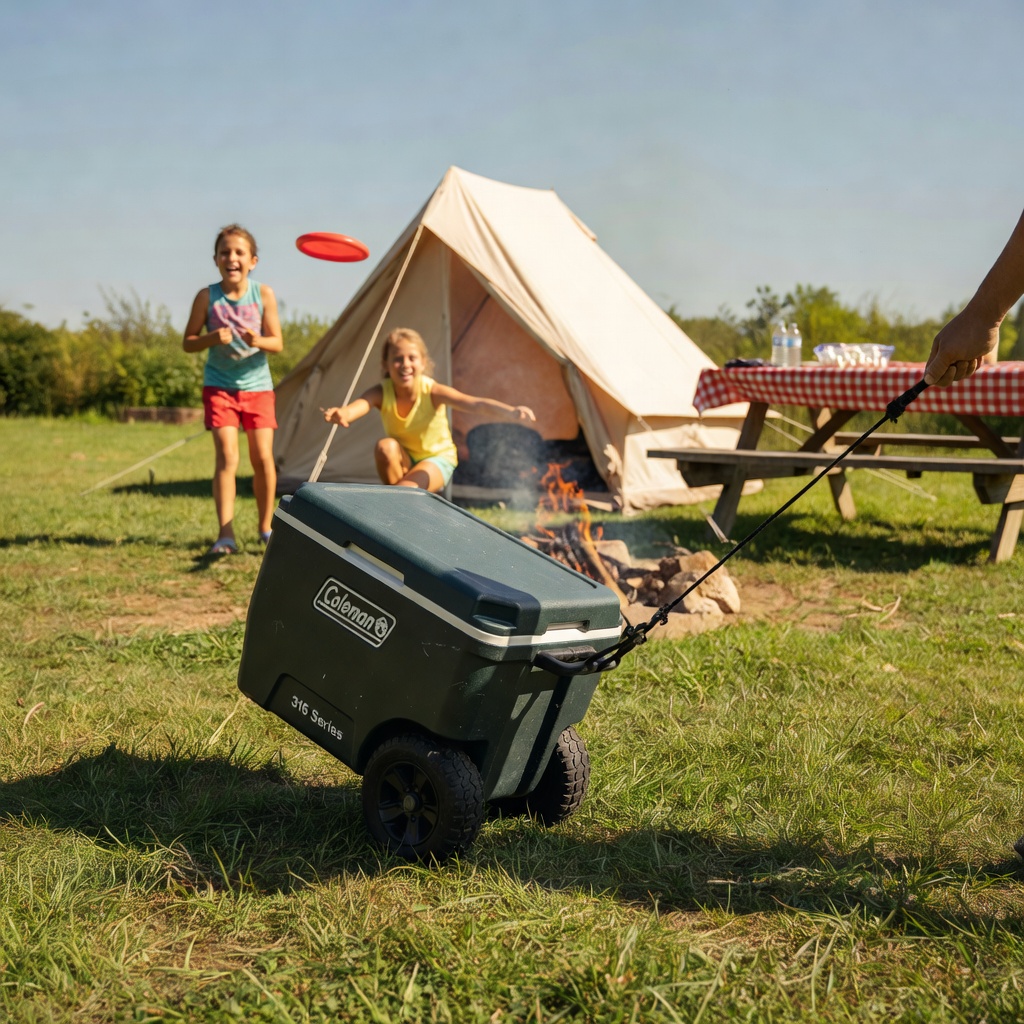
If the trip includes kids, camp chairs, and sleeping gear, do a full packing pass with our family camping gear checklist before departure. It's the easiest way to catch the bulky items that make hatch clearance and tilt-away access worth paying for. And if your weekend setup is more road-trip or RV-basecamp than tent-and-picnic-table camping, the RV camping for beginners setup guide covers the campsite logistics that change how often you'll need to swing the rack out of the way.
How to Install a Hitch Bike Rack (Step by Step)
A hitch bike rack install is a 10-minute job with no special tools, and getting two details right is the difference between a rock-solid rack and one that walks in the receiver. The procedure is identical whether you are installing a Thule hitch bike rack, a Yakima hitch bike rack, or an Allen hitch bike rack, and whether it is going on a car or an SUV: the receiver, not the brand, sets the steps.
- Check the receiver size and clean it. Measure the inside opening (1.25-inch or 2-inch) and look for the size stamp on the tube. Brush dirt and rust out of the receiver so the shank seats fully.
- Insert the shank all the way in. It should slide in until the pin hole lines up. If it stops short, there is debris or a receiver lip in the way, not a "close enough" fit.
- Fit the adapter sleeve if you need one. Converting a 2-inch rack down to a 1.25-inch receiver requires a sleeve, and a sleeve adds a little play. Prefer a rack that matches your receiver natively when you have the choice.
- Install the hitch pin and clip. Push the pin through the receiver and shank and lock the retaining clip, or use a locking hitch pin if you leave the rack on the vehicle.
- Tighten the anti-wobble or anti-rattle bolt. This is the step people skip. The bolt cinches the shank against the inside of the receiver and removes nearly all the play. Tighten it firmly with the supplied wrench or tool.
- Wiggle-test, then re-check after 20 minutes of driving. Grab the rack body and try to rock it side to side; movement means the anti-wobble bolt is not tight enough. Stop and re-torque the pin and bolt after the first 20 minutes on the road, then check the straps again at your first stop.
Installing a receiver hitch itself is a different job: many popular SUVs and crossovers accept a bolt-on aftermarket hitch that uses factory holes and no drilling, while others need some trimming or a lift. If you are comfortable with hand tools and jack stands, a bolt-on hitch is a real DIY job; if not, a shop install is a couple hours of labor, and it is money well spent because the hitch is what everything else attaches to.
How to Put Bikes on a Hitch Bike Rack
- Load the innermost bike first. On a platform rack, put the bike closest to the vehicle in tray one, then work outward. Loading outside-in means fighting every bike you have already strapped.
- Set wheels in the trays, then tighten. Ratchet the wheel hooks or straps down until the tire is firmly seated but not crushed. The bike should not rock when you push the saddle sideways.
- Secure the wheels, not just the frame. Even on a hanging rack, a strap around each wheel keeps bikes from swaying into one another on a downhill. Two bikes that touch for 200 miles will rub paint.
- On a hanging rack, start with the heaviest bike closest to the vehicle and use a frame adapter bar for step-through, women's, or full-suspension frames that have no straight top tube. Yakima's ZipStrips make this a two-second job.
- Finish with a walk-around. Push the rack and both bikes; if anything moves more than a fraction of an inch, tighten before you pull out.
Locking a Hitch Bike Rack and Your Bikes
Choosing a hitch bike rack with lock hardware built in is worth the few extra dollars, because a rack at a trailhead is easy to walk off with.
- Locking hitch pin. Stops the entire rack from being pulled out of the receiver. This is the cheapest and most important lock.
- Integrated cable or arm locks. The Kuat Sherpa 2.0 includes an integrated cable lock, and the Thule Epos 2 uses lockable wheel hooks, so the bikes cannot be lifted off the trays without unlocking.
- One lock, two uses. Use the same keyed-alike lock set for the hitch pin and the bike cable so you are not juggling keys at every stop. A cable lock through both wheels and one frame is enough to make your bikes the least attractive target in the lot.
The gap most rack owners hit is a rack with no integrated cable — the Allen Sports 522RR and the Yakima RidgeBack 2 both ship without one, and even the Kuat Sherpa 2.0's built-in cable only secures bikes to the rack, not to anything else. A standalone Kryptonite Kryptolok U-Lock with 4-foot cable closes both jobs: the 12.7 mm shackle goes through a frame and the rack post while the 4-foot cable loops both wheels, and the FlexFrame bracket means it rides on the bike instead of staying home in a drawer.
How to Install a Bike Rack Without a Hitch
Trunk-mount and roof racks are the two ways to carry bikes without a receiver. Both work, and both have the limits described above: trunk racks cap out near two bikes and fight modern hatch geometry, and roof racks demand overhead lifting. If you ride more than a few weekends a season, adding a hitch is usually the cheapest total fix, because it also unlocks the platform racks that are easiest to load and kindest to your frames.
Common Bike Rack Mistakes (Learned the Hard Way)
Forgetting the anti-wobble bolt. Every good rack has one — a bolt that cinches the rack tight in the receiver so it doesn't rattle and lever. People install the pin but skip the bolt, then wonder why their rack bounces and their hitch hole wallows out over time. Always tighten the anti-wobble bolt.
Not measuring clearance to the spare tire. If your vehicle has a rear-mounted spare tire (common on Jeeps and some SUVs), a rack may not clear it when tilted or loaded. Check the clearance before you buy, or you'll be returning a rack.
Ignoring rear wiper and license plate access. Some racks block the rear wiper or cover the license plate — the latter can get you a ticket. Tilt-away racks solve the wiper issue; for the plate, some racks offset it or you can add a plate relocation bracket.
Loading bikes frame-down on carbon without checking clamp torque. Hanging racks clamp the frame. On a carbon bike, an over-tightened clamp can crack a tube, and an under-tightened one lets the bike swing. If you ride carbon, this is reason #1 to go platform.
Leaving the rack on year-round and never checking it. Salt, rain, and vibration loosen hardware and corrode moving parts. Twice a season, pull the rack off, inspect the hitch bolt, lube the pivot points, and check the straps. Ten minutes of maintenance prevents the "rack fell off on the highway" story nobody wants to tell.
How to Choose: A 60-Second Decision Guide
- You ride carbon bikes or e-bikes: Get a platform rack. Thule Epos 2 if budget allows, Kuat Sherpa 2.0 for a lighter/cheaper alternative.
- You have standard bikes and want value: Yakima RidgeBack 2 — tilt-away, dual-hitch, great mid-tier.
- You're on a tight budget or ride rarely: Allen Sports Deluxe — reliable, simple, under $200.
- You're not sure of your hitch size: Pick a dual-fit rack (Yakima or Thule) so you're covered either way.
- You access your trunk constantly on trips: Insist on a tilt-away feature. It's the difference between unloading bikes to grab a cooler and just pulling a lever.
Receiver Size and Hitch Class: What Fits What, and What Only Looks Like It Fits
Most of the confusion in this category comes down to one number stamped on your receiver. A bike rack for 1 1/4-inch receiver is a different animal from the 2-inch hardware, and the difference is not cosmetic — it is leverage. The two common hitch sizes for bike rack shopping paths are 1 1/4 inch and 2 inch, and the bigger bore simply resists more twisting force with two bikes cantilevered off the back of the car.
Start with the bore. A bike rack for 2 inch receiver hitch gives you the widest choice of platform racks, and a bike rack for 2 inch trailer hitch is the same shopping search under a different name. If you want the shortest path to a safe setup, build a best bike rack for 2 inch hitch shortlist first, then check the weight rating second. A bike rack for car 2 inch hitch setup is also the only one that scales to four bikes — a 4 bike rack for 2 inch hitch platform genuinely exists, while a 3 bike rack for 2 inch hitch rack is the practical limit for most family vehicles. Even brand-specific searches land here: a thule bike rack 2 inch hitch model is the same rack as the two-bike version, just with a different mounting shank.
The class rating is the second number nobody reads. A class 2 trailer hitch bike rack is limited by the hitch, not by the rack you bolted to it, so a class 2 hitch rack carries two bikes comfortably and nothing more. A class 2 bike rack on a 350-pound-rated receiver will not survive four bikes no matter how good the welds are. Understanding class 2 vs class 3 hitch for bike rack limits is the difference between a legal load and a scary one. Own a class 3 hitch rack and you have real headroom: a class 3 trailer hitch bike rack and a class 3 hitch rack rated to 500 pounds of tongue weight can carry a heavy platform plus two e-bikes.
If you already own a smaller receiver, adapters exist — but they cost you capacity. A bike rack 2 inch hitch adapter lets a smaller rack ride in a 2-inch receiver; it does not upgrade the rack's rating or the hitch's. Plenty of shoppers go the other direction and search a bike rack for 2 receiver hitch hoping the rack alone decides the load — it does not. That is why an electric bike rack for 2 inch hitch is nearly always sold in the 2-inch size, and why an e bike rack for 2 inch receiver search should be filtered hard to the heavy-duty models. The same trap shows up in a 3 bike hitch rack 1.25 receiver pairing, which is the most overloaded combination you can legally bolt together. A bike rack 1.25 inch receiver model is fine for two bikes and nothing heavier, and a bike rack for 1.25 hitch is best matched to kids' bikes, road bikes, and short local trips rather than a loaded family road trip.
Matching the Rack to Your Vehicle: SUV, Jeep, Truck, Minivan, and EV Notes
Vehicle shopping searches tell you exactly what people get wrong. A hitch mount bike rack for suv fits the same way it fits anything else — the variable is not the badge on the tailgate, it is the receiver, the spare tire, and the departure angle. If you want the short version of this section, a best hitch bike rack for suv pick is any platform rack whose shank matches your bore and whose arms clear the hatch.
Capacity is where vehicles actually differ. A hitch mount 2 bike rack for suv is the default family setup; a hitch mount 3 bike rack for suv starts pushing the receiver rating on a compact crossover; a hitch mount 4 bike rack for suv belongs on a body-on-frame vehicle with a 2-inch receiver and a class 3 rating. A trailer hitch bike rack for suv with a swing-away arm is the one feature worth paying extra for, because it lets you open the tailgate without unloading. Compare that to a 3 bike hitch rack for truck, where the tailgate drops down and the rack usually needs to tilt instead of swing.
Jeep owners have a specific problem, and the autocomplete data shows it: a hitch bike rack for jeep wrangler with spare tire has to clear a tailgate-mounted spare, which rules out most hanging racks and shortens the usable shank on platform racks. A hitch mount 2 bike rack for jeep wrangler is the common answer, while a 2 bike hitch rack for jeep wrangler with a swing-away arm is the version people keep. A best hitch bike rack for jeep wrangler jl search adds the rear-camera and license-plate questions, and a hitch bike rack for jeep grand cherokee is a much easier fit because there is no spare in the way. A 4 bike hitch rack for jeep wrangler exists, but you are close to the tongue-weight limit before you add bikes. Simpler searches — hitch mount bike rack for jeep wrangler, trailer hitch bike rack for jeep, hitch bike rack for wrangler, hitch mount bike rack for wrangler — are all asking the same question, and the answer is the same: measure from the receiver pin hole to the spare tire before you buy.
Two more patterns worth pulling out. A bike rack for jeep no hitch query and a best no hitch bike rack for suv query are the same shopper: someone whose vehicle has no receiver at all, which is a hitch-installation problem rather than a rack problem. And a bike rack for subaru forester without hitch search is the same story on a car that has a low hitch rating to begin with. On the EV side, a platform hitch bike rack tesla is chosen almost entirely for the swing-away arm, because the tailgate and the charging port both live in the same real estate as the rack; a tesla hanging hitch bike rack loses that reach and usually the rear camera too. Whatever you drive, put the rack on the car and open every door before you leave the driveway.
Capacity-by-vehicle searches are the ones that actually get typed into a phone in a parking lot, so they are worth answering directly. A hitch mount best bike rack for suv pick is any tray rack with a swing-away arm and a 2-inch shank. A best 2 bike hitch rack for suv comparison is really a comparison of arm reach and hatch clearance, and a best 4 bike hitch rack for suv shortlist should be limited to body-on-frame vehicles with a class 3 receiver.
How Many Bikes: 1, 2, 3, or 4
Capacity is the axis where the honest answer is "one less than you think". A hitch bike rack 3 bikes platform weighs more, extends farther, and puts more leverage on the receiver than the two-bike version of the same rack — the rack's own weight counts against your capacity. A hitch bike rack 4 bikes is a body-on-frame proposition, and a hitch bike rack 1 bike is a legitimate choice for solo riders who would rather carry a lighter tray than pay for arms they never use.
The two-bike class is where almost every buyer lands. A 2 bike hitch rack for car setup covers most households, and a 2 bike hitch rack with lock adds the one feature that matters if you ever stop for lunch with the rack loaded. A 2 bike hitch rack swing away is the upgrade that saves your back at the trailhead, while a 2 bike hitch rack with ramp is aimed at heavier bikes you would rather roll than lift. Read enough 2 bike hitch rack reviews and the theme is always the same: pivot points, rattle, and how the arms hold a frame at highway speed.
Brand-specific two-bike searches dominate the volume. A 2 bike hitch rack thule or a 2 bike hitch rack yakima is usually a shopper who has already picked a brand and is choosing a model. A 2 bike hitch rack for ebikes is a different load class entirely and needs a 2-inch receiver in most cases, and the shorthand queries 2 bike hitch rack 1 1 4 and 2 bike best rack for 1 1 4 inch hitch are both searches for the smaller-bore version of the same rack. There is a reason the compatibility notes matter here: class 3 bike hitch receivers are what the heavier two-bike racks are actually designed around.
Three-bike setups are the awkward middle. A 3 bike hitch rack heavy duty model is genuinely heavy once it is loaded, a 3 bike hitch rack for ebike combination should be checked against the total rating rather than the per-bike number, and a 3 bike hitch rack platform is far more stable than the three-arm hanging equivalent. A 3 bike hitch rack for car is usually fine on a crossover with a 2-inch receiver and ambitious on anything with a 1 1/4-inch bore. Brand-specific three-bike searches round out the set: a 3 bike hitch rack thule and a 3 bike hitch rack kuat are both solid racks, but the add-on arms used to convert a two-bike rack to three are where people get into trouble with total weight.
E-Bikes and Fat Tire Bikes: Why Weight Changes Every Rack Decision
Nothing reorders this category faster than battery weight. A hitch bike rack for ebike has to carry a bike that can weigh as much as three road bikes, which means the per-bike number on the box matters more than the brand. An e bike rack for 2 inch receiver search is the market telling you the truth: e-bike racks live in the 2-inch world, and a best e bike rack for 1 1 4 inch hitch is a much shorter list because the smaller receiver simply cannot take the moment of inertia.
Start with the totals. A hitch bike rack for 2 electric bikes is a 2-inch, class-3 conversation, and a hitch bike rack for 2 e bikes is the same search with the abbreviation. A best trailer hitch bike rack for e bikes shortlist should be read as "which of these holds two 60-pound bikes plus 50 pounds of rack". If you want the once-and-done question answered — what is the best bike rack for electric bikes — the answer is a wheel-support platform rack with a ramp, on a 2-inch receiver, with a rating at least 2.5 times the bike weight.
Two features separate the purpose-built racks from the repurposed ones. A hitch mount bike rack for electric bikes with ramp saves your back every single trip, and an e bike hitch rack with ramp is effectively the same product; the ramp is the feature people say they would never give up. The weight class itself is often the filter — an e bike hitch rack 200 lbs means two 70-pound bikes plus margin, and an ebike rack 2 hitch is the shorthand for the whole category. Read a hitch mount best bike rack for electric bikes roundup and you will see the same three warnings: remove the battery when you can, check the torque on the shank, and never trust a hanging rack with a loaded e-bike.
Fat tire bikes bring their own geometry problem, because a 4-inch tire does not fit a standard wheel tray. A best hitch bike rack for fat tire bikes is a rack with wide cradles and longer wheel straps, and a best bike rack for fat tire bikes search is usually a fat bike rider discovering that their old rack's trays are simply too narrow. A kuat bike rack for fat tire bikes is a common answer because the trays are adjustable, while a rear bike rack for fat tire bikes and a car bike rack for fat tire bikes are looser searches for the same requirement. If you are cross-shopping, a bike carrier for fat tire bikes and a bike rack for fat tire electric bikes are essentially the same product, and one platform handles both — the elevate outdoor hitch platform rack for e bikes and fat tire bikes naming convention exists precisely because those two buyers are the same buyer.
Ratings are where the research pays off, because a swagman bike rack weight limit and any other brand's number are measured differently — some quote the rack's payload, some quote per-bike weight, and some quote the hitch's tongue limit. A malone tray style bike rack for trailers is aimed at a different installation entirely, which is why trailer-mounted racks quote their own capacity separately from any hitch rating.
Two more searches belong in this section because they are the ones that go wrong after purchase. A hitch bike rack for fat tire electric bikes is the intersection of both problems above — wide trays and a heavy rating — and if you search a bike rack for fat tire electric bikes you should be filtering for both at once rather than one at a time. Fenders are the second trap: a best hitch bike rack for electric bikes with fenders needs trays that grip the wheel low enough that the fender never contacts the arm, and many otherwise-excellent e-bike racks will scuff a rear fender on the first trip. If your e-bike has full fenders and a torque sensor near the dropout, check the tray clearance in the product photos before you buy anything.
Platform, Hanging, or Vertical: The Three Rack Styles Compared
Every rack in this guide is one of three shapes, and the shape decides almost everything about how it feels to use. A platform trailer hitch bike rack cradles each bike by the wheels, which means the frame is never in contact with the rack and paint stays intact. A platform hitch mount bike rack costs more than a hanging rack and is worth it for anyone hauling carbon or e-bikes. Searching for the best platform hitch bike rack is really searching for the rack with the fewest rattle complaints.
Brand-specific platform searches are the bulk of the volume: a thule platform hitch bike rack, a yakima platform hitch bike rack, and a saris platform hitch bike rack are all wheel-support designs with different locking and tilt mechanisms. A yakima stagetwo platform hitch bike rack and a thule t2 platform hitch bike rack are the two names that come up most often when people compare tray racks directly. If weight is your constraint, a lightest platform hitch bike rack search is a real category — you can save ten pounds or more, but usually by giving up the ramp and the integrated lock. And if you are lifting heavy bikes, a step up platform hitch bike rack with a ramp is the practical answer, while a platform style hitch bike rack with fixed trays is the cheaper one.
Hanging racks are the other half of the market, and they are not automatically worse. A trailer hitch hanging bike rack holds bikes by the top tube and costs far less, which makes it the right answer for two kids' bikes on a low hitch rating. A vertical hanging hitch bike rack is the van-life favorite because it carries four or five bikes in less length than a two-bike platform rack. A yakima hitch hanging bike rack and a hanging hitch mount bike rack are the mainstream versions, and a hanging style hitch bike rack with padded arms is the budget tier of that same design — one frame hook per bike, a strap per wheel, and a much lower price. Specific models are worth knowing by name: a thule camber 4 hanging bike hitch rack, a thule apex xt hanging hitch bike rack, and a thule parkway hanging bike hitch rack all carry the same trade-off, which is frame contact in exchange for price and compactness. The classic comparison — hitch bike rack hanging vs platform — resolves in favor of a platform for anything expensive, and in favor of hanging for anything cheap, light, and short-haul. A bike rack hitch vs trunk comparison is a different question again, and the answer there is almost always the hitch version, because a trunk rack sits on paint and cannot carry a hitch-rated load.
Tilt, Swing-Away, and Getting Into the Back of the Car
The feature that separates a rack you tolerate from a rack you like is what happens when you need to open the tailgate. A tilt down hitch bike rack leans the loaded rack away from the vehicle so the hatch clears the arms; a thule tilt down bike rack does the same thing with hydraulic assist and one hand. Search shorthand for the whole family includes a tilting bike rack hitch and a tilting bike rack tow bar phrasing, and the mechanism is identical: a pivot at the shank plus a latch you can release with the bikes loaded.
Swing-away arms solve the problem sideways instead of downward, which matters when you are parked in a tight site. A swinging bike rack hitch rotates the whole assembly out of the way, and a swinging bike rack for car version is the same idea on a lighter rack. A swing away bike rack hitch is the standard term, and the swing away bike rack attachment and swing away bike rack extension variants are how you add the feature to a rack you already own — the swing away bike rack adapter is a bolt-on that converts a fixed platform rack into a swinging one. Brand-specific versions exist too: a swing away bike rack thule and a swing away bike rack yakima are factory options rather than add-ons on several models.
One piece of advice that applies to all of them: practice the motion in the driveway with bikes loaded on a flat surface before you rely on it at a campsite on a slope. A tilt or swing mechanism that binds on flat ground will be worse on an incline, and the failure mode is a loaded rack swinging into the vehicle. If you camp with a family and want the honest summary of this section — pay for the tilt, and if you can find a rack that does both, best hitch bike rack for family searches almost always resolve to the model with the swing-away arm.
Anti-Rattle Clamps and Locking Hitch Pins
Every hitch rack review eventually gets to the same complaint, and it is almost never the rack's build quality — it is slop in the receiver. A locking bike rack hitch pin is the minimum fix, because the pin's job is to hold the shank tight rather than to stop a determined thief. A threaded locking hitch pin for bike rack applies clamping force through the threads, which eliminates more movement than a plain pin with a clip. If you want the best version of that idea, a best locking hitch pin for bike rack comparison generally favors threaded or expanding pins over clip-style ones. A hollywood bike rack locking hitch pin, a locking hitch pin for kuat bike rack, and a yakima bike rack locking hitch pin are all the same accessory in different diameters, so match the pin to your receiver class rather than to your rack brand.
Understand what the accessory actually does before you rely on it. What is a locking hitch pin and how does a locking hitch pin work are the right questions — the answer is that a lock cylinder replaces the hairpin clip so nobody can walk off with the rack itself. That is the whole function. It does not secure the bikes, which is why a locking bike rack for car with integrated cable loops or a separate cable lock is a different purchase. Related accessory searches worth knowing: a locking bike rack pin is the plain-pin version, a locking bike rack box and a locking bike rack bag are storage and travel cases for the rack hardware, and none of them substitute for an actual bike lock.
Rattle is the other half of this section, and clamps fix it. An anti rattle hitch stabilizer or an anti rattle hitch tightener pulls the shank against the receiver wall and removes the clunk you hear over expansion joints. The mechanism comes in several shapes: an anti rattle hitch clamp install typically uses a bracket and bolt under the receiver, an anti rattle hitch bracket or an anti rattle hitch collar wraps the shank, and an anti rattle hitch shims, anti rattle hitch bolt, or anti rattle hitch pin approach takes up the gap instead. An anti rattle hitch extension lets you push the rack farther from the bumper and still stay tight. Whichever you pick, an anti rattle hitch lock is worth considering if the rack stays on the vehicle year round, and the pairing of a stabilizer with a locking pin is the single best two-accessory purchase for a new rack.
Thule, Kuat, and Yakima: What the Model Names Actually Mean
The three brands that dominate this category each split into a few families, and knowing the naming convention saves you from paying extra for a feature you already have. A hitch bike rack thule is the generic starting search; the useful version is learning which family you are in.
Thule's platform line runs under the T2 badge, and the suffixes are worth decoding. A thule t2 pro bike rack is the base tray design, a thule t2 pro x bike rack is the version with the removable tray and the ratcheting wheel straps, and a thule t2 pro xt bike rack is the iteration before the XTR with the updated arms and lock. The top of the range is the XTR family: a thule t2 pro xtr bike rack, a thule t2 pro xtr hitch rack, and a thule t2 pro xtr 2-bike hitch rack naming convention all point at the same rack, with the two-bike version being the one most people buy. If you are choosing between them, a thule t2 pro xt vs xtr comparison comes down to arm design and the integrated lock rather than capacity, and a thule t2 pro xtr review is worth reading for the ramp and lock details. Expansion is handled by arms rather than a second rack: a thule t2 pro xtr add on and a thule t2 pro xt add-on each convert a two-bike rack into a three-bike setup, and the total weight still has to survive your receiver rating.
Then there is the Epos, which is the current flagship and the reason this guide exists. A thule epos bike rack is a wheel-support platform rack built around an aluminum frame with a ratcheting wheel strap system, and a thule epos review usually leads with how little the rack moves at highway speed. A thule epos 3-bike hitch rack is the configured three-bike version, and the accessories are where the family gets confusing: a thule epos light kit adds integrated lighting and a plate holder, a thule epos with lights is the same rack ordered with that kit fitted, and a thule epos ramp is the loading aid for heavier bikes. Buying the parts separately is usually more expensive than ordering the configured rack, which is the argument for deciding on lights and the ramp up front.
Kuat's lineup is smaller and easier to follow. A kuat nv 2.0 bike rack is the flagship platform rack, and a kuat nv 2.0 hitch bike rack, a kuat nv 2.0 2-bike hitch rack, and a kuat nv 2.0 review all describe the same product from different angles. Mechanical details are where the searches get specific: a kuat nv 2.0 trail doc is the trail-side repair attachment, a kuat nv 2.0 add on or a kuat nv 2.0 extension adds capacity for a third or fourth bike, and a kuat nv 2.0 assembly instructions search is a reminder that this rack ships partially disassembled and is easier to build on a bench than on a driveway. If you are comparing within the brand, a kuat nv 2.0 vs sherpa 2.0 decision comes down to weight, price, and how much you care about the swing-away arm. The Sherpa is the lighter, cheaper tray rack; the NV is the one you keep for a decade.
Installing, Loading, and Strapping Down Without Drama
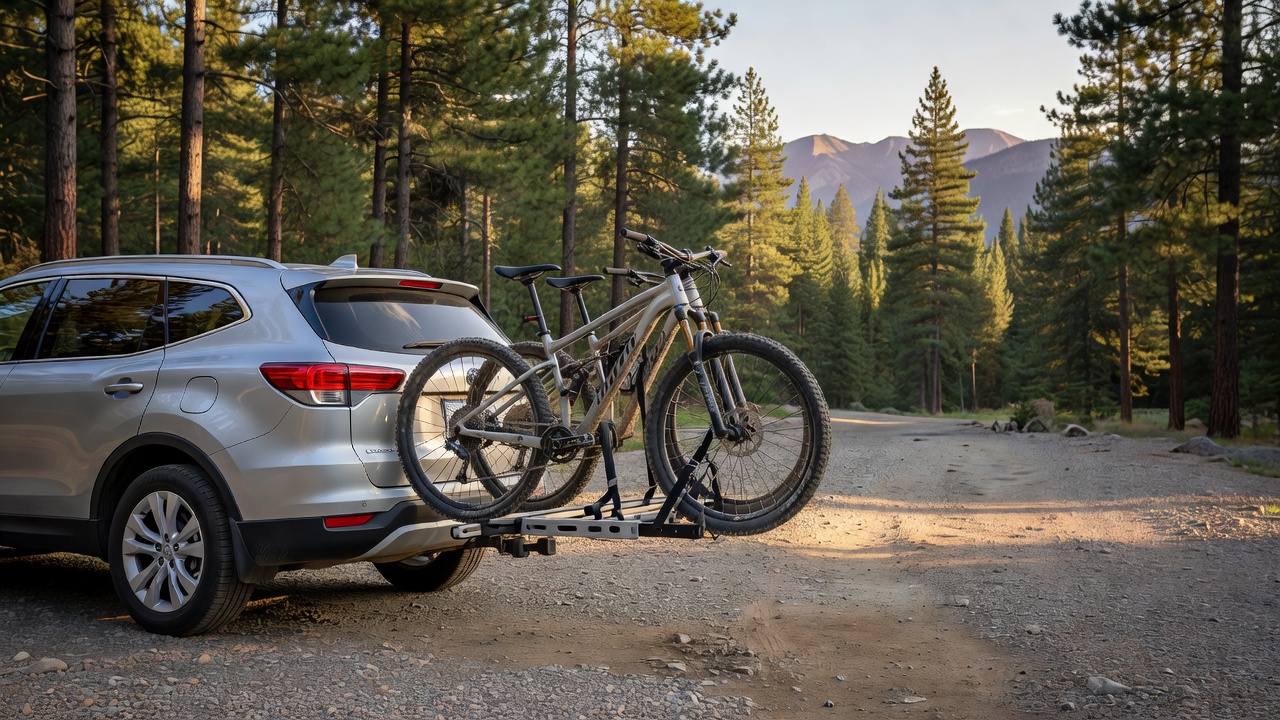
The installation itself is a fifteen-minute job on most vehicles, and the searches confirm it. How to install hitch bike rack on car and how to install hitch mount bike rack are the same five steps: insert the shank, pin it, tighten the anti-rattle bolt, check the tilt latch, and confirm nothing touches the bumper. How to install bike rack into hitch is the same procedure described differently. The one version with a real decision in it is how to install bike rack without hitch, which is not a rack installation at all — it means fitting a receiver to a vehicle that does not have one, and how much does it cost to install a hitch for bike rack is the question you should ask before you shop for the rack.
Loading is where the technique matters more than the hardware. How to load bikes on bike rack, how to put bikes on hitch rack, how to put bikes on bike rack, how to put bike on hitch bike rack, and how to put bicycle on bike rack are all the same skill: load the heaviest bike closest to the vehicle, thread the wheel straps before you tighten the arm, and check the crank arms cannot rotate into each other. One technique is worth calling out because it removes most of the lifting — bike rack remove front wheel turns a 30-pound bike into a manageable one, and it is also how you pack a car with the seats down.
Straps are the consumable part of every rack, so know the variants. Bike rack straps with hooks are the classic replacement strap, a bike rack strap replacement is a normal wear item rather than a defect, and a bike rack strap protector stops the strap from marking a frame or rim. Bike rack straps rubber versions grip better in cold weather, and a bike rack straps thule or any other brand-specific strap is worth buying in the same diameter as the original rather than as a universal part. A bike rack strap on car is the emergency solution when you are mid-trip and one strap has failed — buy two spares rather than one.
Finally, the two questions people only ask after the rack is already rattling. How to stop bike rack from wobbling is answered by a stabilizer clamp in most cases, not by a new rack. How to stop bike rack moving on tow ball is a hitching problem rather than a rack problem and belongs to a trailer conversation, not this one. And on the budget end, a cheap hitch mount bike rack, a best budget hitch mount bike rack, and a best hitch bike rack for mountain bike search can all be satisfied by the same two-bike hanging rack, as long as you accept frame contact and a lower rating. If you tow a trailer and want bikes along, a bike mount for travel trailer is an installation question with its own answer, covered in the trailer section above.
Rust, Storage, and the Long-Term Care Nobody Talks About
A hitch rack lives outside, and rust is the failure mode that ends its life early. Do bike racks rust is a fair question — steel shanks and hardware do, aluminum trays do not. A bike rack rust proof finish on the frame helps, but the parts that actually seize are the shank, the pin, and the tilt pivot. A bike rack rusted in hitch situation is why you grease the shank before it goes in, not after it will not come out.
Storage is the other half of longevity. A hitch bike rack storage solution is usually a wall bracket in the garage, and taking the rack off between trips is what keeps the pivot and the lock working. Two vehicle-law details are worth knowing before you mount anything: a bike rack covering license plate florida question is a real concern because the plate has to stay visible in most states, and a bike rack covers brake lights is the version of that problem which is both illegal and dangerous — a loaded rack with four bikes hides the tail lights unless you wire a light kit. A bike rack covers waterproof item is a simple cover for off-season storage if you keep the rack assembled, and it costs less than replacing a seized latch.
What a Good Hitch Rack Actually Costs
The price ladder in this category is unusually wide, and the honest summary is that everything under a certain floor is a hanging rack and everything above it is a platform rack. A best cheap hitch bike rack shortlist, a cheap hitch rack comparison, and a budget friendly hitch bike rack recommendation are all the same product class — two-arm hanging racks that carry two bikes on a 1 1/4-inch receiver. A best hitch bike rack under $200 is achievable and is a genuinely useful rack for kids' bikes and occasional trips.
Spend above that and you are buying three things: wheel support instead of frame contact, an integrated lock plus a stabilizing clamp, and a tilt or swing mechanism. If you ride more than once a month or your bikes are worth more than the rack, that is money well spent. If your bikes are department-store hybrids and the rack lives on the car for a season, the budget tier is not a compromise — it is the correct answer.
One more way to think about the ladder: price the rack against the cheapest bike on it. A best cheap hitch bike rack protects two $300 hybrids perfectly well, and a cheap hitch rack that costs a fifth of one of your bikes is a reasonable bet. The calculus flips the moment a bike costs more than a thousand dollars, because a single frame scratch or a dropped bike at highway speed costs more than the difference between the tiers. That is the whole decision rule, and it resolves most of the "is it worth it" arguments in a single line: the rack should cost a small fraction of what it is protecting, and never less than a tenth.
Racks for Campers, RVs, and Travel Trailers
This is the hardest installation in the category, and the searches show it: every RV and trailer configuration has its own answer, and the answer depends on where the frame is strong enough to take a load. A best hitch bike rack for rv is not simply the best hitch rack — RV receivers are often rated far lower than a vehicle receiver, and the leverage behind a travel trailer is much worse.
Start with the receiver if you have one. A bike rack for rv hitch and a bike rack for rv trailer hitch are the same setup: a 2-inch receiver on the trailer, usually with a much lower tongue rating than you would expect. A bike rack for rv rear bumper or a bike rack for rv trailer bumper installation is common on travel trailers but relies on the bumper's welds, which is why a bolt-on bumper hitch is often the safer path. A best bike rack for camper hitch recommendation is usually a lighter two-bike platform rack for exactly this reason.
Then there is the spare tire problem, which is the single most common RV bike question. A bike rack for rv with spare tire, a bike rack for rv bumper with spare tire, and a bike rack for travel trailer with spare tire are all describing a bumper that already carries something, and the fix is a swing-away or a spare-tire-mounted rack that moves the bikes clear. A bike rack for travel trailer rear bumper mounting is the usual location, though a bike rack for travel trailer bumper placement low on the rear can drag on driveways. If the bumper cannot take the load at all, a bike rack for travel trailer tongue installation moves the bikes forward over the A-frame, and a bike rack for camper tongue is the same solution on a smaller trailer.
Front and shell mounting solve the leverage problem entirely. A bike rack for rv front or a bike rack for camper front installation puts the weight over the tow vehicle's own front end, which is the answer for heavy e-bikes on a fifth wheel. A bike rack for camper shell mount uses the truck bed cap and keeps the bikes out of the trailer's slipstream entirely. An arvika bike rack for travel trailer is the specialized European-style version of the tongue-mount idea, and a bike rack for camper trailer, a bike rack for camper bumper, or a bike rack for rv tongue search is the generic form of the same question.
Two configurations deserve a warning. A bike rack for camper without hitch means you are looking at a bumper, ladder, or tongue mount, none of which have a published rating — check the trailer's manual before you drill. A bike rack for rv with tow vehicle describes the alternative strategy of putting the rack on whatever you are towing with and leaving the trailer alone, which is almost always the safer arrangement. If you tow a boat or a utility trailer behind the RV, a bike mount for travel trailer consideration is the same as above: the further back the load sits, the more carefully it has to be rated.
Do You Need a Hitch to Carry Bikes? The Question Nobody Answers Straight
Short answer: no, but every alternative has a ceiling, and that ceiling is usually what decides do i need a hitch for a bike rack and do you have to have a hitch for a bike rack long before your car does. Trunk racks and roof racks need no receiver at all. What they cannot do is carry a hitch-rated load: a trunk rack rests on paint and a strap, and a roof rack makes you lift a 50-pound e-bike over your head at the end of a long day. If the real question is do you need a tow hitch for a bike rack, the distinction that clears it up is that a tow hitch and a receiver hitch are the same part on the same bar — you are buying the square tube, not the towing hardware, and a Class III receiver on a car that will never pull a trailer is completely normal.
The wiring question is the most common wrong turn in this category. do i need wiring for a hitch for bike rack comes up because people assume a hitch install always includes a light harness. It does not. A bike rack carries no lights, no brakes and no electrical draw, so a harness is needed only if the loaded rack physically blocks your tail lights and you decide to add a light bar. Skip the 4-pin plug and put that money into an anti-rattle stabilizer instead — it fixes a complaint you will actually have.
If the question is really what kind of hitch do i need for a bike rack, work backwards from the load. Two standard bikes plus a 35-pound aluminum rack clears a 1.25-inch Class II receiver, while four bikes, any e-bike, or anything with a swing-away arm belongs on a 2-inch Class III. That is also the fastest way to read a bike rack for hitch listing without guessing — the receiver size and the per-bike rating are the first two lines of the spec sheet and everything after them is secondary.
Beyond the receiver, fit comes down to two numbers, which is why a generic bike rack fit finder or bike rack fit guide always frustrates people. Measure your receiver bore, then add your bikes' weights plus the rack's own weight and compare that against the per-bike and total ratings. Those two numbers decide whether a rack will bike rack fit my car at all; rack length and cradle spacing only start to matter once you clear them. Anyone who has watched the install video and still wants a checklist should treat bike rack fitting instructions as three steps — insert the shank, torque the anti-rattle bolt, thread the locking pin — with a fourth if the rack has a pivot that needs its own tension set.
For the no-receiver-yet case: can i put a bike rack on my car is yes, and can you put a bike rack on any car is yes with one caveat — the car needs a trunk lid, a roof, or a receiver, and every vehicle sold in the last thirty years has at least one of those. Where people actually stall is the order of operations, so here it is: what do i need to put a bike rack on my car is a receiver or a trunk/roof system, the rack itself, and two accessories — a locking hitch pin and a stabilizer. And how to put a bike rack on a car is genuinely a ten-minute job once those parts are in hand, which is why do you need a hitch for bike rack questions tend to evaporate the first time someone mounts one and drives forty miles with it.
Hitch Rack vs Roof Rack vs Trunk Rack: Which One Belongs on Your Car
bike rack vs roof rack is the comparison most people should make before they compare brands, because the answer is shaped by your body more than your car. A roof rack keeps the rear of the vehicle clear and never blocks a camera or a hatch, but every load goes up over your head, and that is the single complaint that sends riders back to a receiver rack. The same trade-off appears in hitch vs roof bike rack threads over and over: roof wins on access to the back of the car, hitch wins on everything involving your shoulders and your back.
The honest version of roof bike rack or hitch bike rack is a question about the bikes. Kids' bikes, cruiser bars and sub-25-pound frames are fine up top. Fat bikes, e-bikes and anything over 45 pounds are not, and that is where a hitch carrier vs roof rack decision stops being a preference and becomes a rating question. If you are comparing roof rack vs hitch rack bike systems on cost, remember the roof path usually needs crossbars, mounts and often a new set of bars — the receiver path needs one rack and one receiver, and a basic receiver install is a fraction of a complete roof system.
For campers and tow vehicles there is one more version of the same question. trailer hitch bike rack vs roof rack on a truck with a trailer in tow almost always ends at the hitch or the bed, because a roof rack over a cab with a fifth wheel behind it is a leverage problem you do not want. And bike rack size is the number that ties all three styles together: a two-bike rack is short enough to live on the car, a four-bike vertical rack is tall enough that it will not fit in a garage and can block a rear camera — measure your parking situation before you measure your bikes.
Which Hitch Rack Fits Your Vehicle: SUV, Truck, Sedan, Jeep, and RV
Vehicle fit is the part of this decision people search for last and get wrong first. Start with bike rack hitch for suv — the vast majority of SUVs and crossovers ship with a Class III 2-inch receiver or accept one, which puts them in the easiest category and makes a tray-style platform rack the default answer. bike rack hitch for truck is similar but adds one wrinkle: a pickup's receiver sits high and the tailgate needs clearance, so a rack that tilts away is worth more on a truck than on anything else.
bike rack hitch for car is where receiver size starts to bite. Many sedans and hatchbacks use a 1.25-inch Class II receiver, which is a real limit rather than a formality — two bikes, yes; four bikes or an e-bike, no. That constraint is exactly why a dual-fit rack matters: the Allen Sports Deluxe and the Yakima RidgeBack both accept either bore out of the box, and the Kuat Sherpa 2.0 fits a 1.25-inch receiver natively at 35 pounds. If your plan is a bike rack for sedan, buy the rack that fits the hitch you actually have instead of adapting upward, because an adapter sleeve quietly lowers the rating of everything bolted to it.
The two vehicles people ask about by name are the bike rack hitch for jeep wrangler case and the bike rack hitch for subaru crosstrek case, and they are opposite problems. A Wrangler's spare tire sits on the tailgate, so a rear rack needs a swing-away arm or a clearance-checked tilt to fold without contacting the tire. A Crosstrek's receiver is low and the hatch swings up, so a tilt-away rack solves the whole access problem with room to spare. The bike rack hitch for toyota corolla question has a different answer again: it is a small-bore receiver car, so stay in the two-bike class and check the tongue rating before you assume it will take a platform rack. bike rack for truck bed is the escape hatch for pickups — a bed-mounted or over-the-tailgate carrier sidesteps the receiver rating entirely if you do not mind losing bed space.
RVs get their own fit logic. bike rack hitch for rv and receiver hitch bike rack for rv describe a receiver on the trailer, and the tongue rating there is almost always far lower than it looks — a bumper, ladder or tongue mount usually has no published rating at all. A tow hitch bike rack for suv setup in front of the trailer is often the safer arrangement than anything mounted on the back of it, which is why so many RV owners end up carrying bikes on the tow vehicle and leaving the trailer alone.
Hitch Bike Rack FAQ
Do I need a 1.25-inch or a 2-inch hitch for a bike rack?
Check your vehicle's receiver before you shop — the two sizes are not interchangeable. Class I and Class II hitches are almost always 1.25 inch, while Class III and above use 2 inch. If you're not sure, a dual-fit rack (the Yakima RidgeBack and Thule Epos both handle either) removes the guesswork entirely. Buying the wrong size means a return, not a workaround.
Can a hitch rack carry electric bikes?
Some can, but weight is the deciding factor — e-bikes commonly weigh 50-70 pounds each, roughly double a standard bike. Look for a rack explicitly rated for e-bike loads rather than assuming a two-bike rack will cope. Platform (tray) racks handle heavy bikes far better than hanging racks, because each bike rests on its own wheel trays instead of hanging from the frame.
Is a platform rack or a hanging rack better?
Platform racks hold each bike by the wheels on individual trays, so nothing touches your frame — the right choice for carbon frames, e-bikes, and anyone who hates scratched paint. Hanging racks suspend bikes from arms by the frame, which is lighter, cheaper, and faster to load, but can scuff finishes and struggles with heavy or unusually shaped bikes.
What does "tilt-away" mean on a bike rack?
A tilt-away mechanism lets you fold the loaded rack down and away from the vehicle so you can open a rear hatch or tailgate without unloading the bikes. On a road trip where you're digging for a cooler or a duffel every few hours, it's the single feature that matters most day to day.
How do I stop my bike rack from wobbling?
Almost every receiver rack ships with an anti-wobble or anti-rattle bolt that cinches the rack's shank against the inside of the hitch. Tighten it firmly every time you install the rack — a loose rack rocks the bikes, fatigues the hitch, and in the worst case can work its way free at highway speed. Re-check it after the first 20 minutes of driving.
Do I need a locking hitch pin?
Yes, if you ever leave the rack on the car overnight or park at a trailhead. A locking hitch pin stops the whole rack from walking off, and locking arms or a cable add-on stop individual bikes from being lifted out. It's inexpensive insurance on a rack that costs hundreds.
What is the best hitch bike rack for 2 bikes in 2026?
For two bikes, the answer depends on your bikes rather than your budget. If you carry carbon frames, e-bikes, or anything you would hate to see clamped, the Thule Epos 2 is the most convenient premium choice and the Kuat Sherpa 2.0 is the lighter aluminum alternative. If you carry standard bikes and want the best value, the Yakima RidgeBack 2 gives you tilt-away access and dual hitch fit for under $300, and the Allen Sports Deluxe does the job for around $114. Compare per-bike weight ratings against your heaviest bike before you decide.
Are hitch bike racks safe at highway speed?
Yes, when they are installed and loaded correctly, and the details matter more than the brand. A snug anti-wobble bolt, a properly seated shank, wheels strapped in the trays, and a re-check after the first 20 minutes of driving eliminate nearly every failure mode. Re-tighten the bolt and check the straps at each fuel stop on a long haul, and do not exceed the rack's per-bike or total rating. A heavy load on a loose rack is the combination that ends badly.
How much does adding a hitch cost?
For a common SUV or crossover, budget roughly $200 to $450 installed at a shop for a bolt-on receiver hitch, with some vehicles costing more if they need trimming or a different mount. A DIY bolt-on hitch using factory holes is cheaper and genuinely doable with hand tools, but only if you are comfortable working under the vehicle. Treat it as a one-time cost that fixes bike hauling for the life of the car, and it is what lets you buy a stronger, easier-to-load rack.
Can a hitch bike rack carry two e-bikes?
Yes, if the rack's per-tray rating clears your heavier e-bike and your hitch's tongue rating clears the total. In practice that means a 2-inch receiver and a platform rack rated near 60 lbs per bike: two 55 lb e-bikes plus a 40 lb rack is roughly 150 lbs of load, which is comfortable on a Class III hitch and over the line on a Class I. Hanging racks are not a safe answer for two e-bikes.
What is the best hitch bike rack for 4 bikes?
A 2-inch Class III receiver and a rack built and rated for four bikes, because the limit is the total load against your hitch's tongue rating rather than the rack alone. If your receiver is 1.25-inch, the honest answer is a second trip or a second vehicle — four bikes on a Class I receiver is exactly the overload that fails at highway speed. Our Kuat vs Thule vs Yakima comparison covers which brand builds the strongest four-bike platforms.
Racks, helmets, and trail tools are collected in our Best Cycling Gear guide.
Can you put a bike rack on an RV bumper?
Usually not. Most travel trailer and fifth wheel bumpers are not structural and are not rated for a loaded rack, and Thule's hitch-rack instructions state that the carrier is not compatible with travel trailers, caravans, 5th wheels or any bumper-mounted hitch receiver. The approved version of that idea is a frame-mounted receiver or a rated tongue mount, with a rack whose own instructions allow RV use.
Do you need a hitch for a bike rack?
No, not for every setup. A trunk rack carries up to two bikes with no receiver at all, and a roof rack needs no hitch either. You do need a receiver for the platform and hanging racks in this guide, which is why a $200-$450 installed hitch is often the cheaper long-term answer.
What is the lightest platform hitch bike rack I can actually buy?
A lightest platform hitch bike rack is usually the two-bike aluminum version of a well-known model rather than a niche product — the weight you save comes from the frame material and from leaving off the ramp, the integrated lock, and the swing arm. Two-bike aluminum tray racks commonly land between 30 and 40 pounds unloaded, which matters because the rack's own weight counts against your receiver rating. If you want the lightest possible setup and you drive a car with a 1 1/4-inch receiver, a bike rack 1.25 inch receiver model in the lighter platform family will do more for you than any accessory. And if you are comparing a fixed-tray rack with a ramp, remember that a step up platform hitch bike rack design also adds weight; the lightest racks are the ones you lift the bike onto.
How do I stop a hitch rack from rattling at highway speed?
A how to stop bike rack from wobbling search is answered in one step: clamp the shank. An anti rattle hitch tightener or anti rattle hitch stabilizer pulls the rack's shank hard against the receiver wall, which removes the clunk. A threaded locking hitch pin for bike rack does double duty by clamping and locking at the same time, and a best locking hitch pin for bike rack comparison will generally favor the threaded kind over a plain pin with a clip. If the rack already uses a bracket, an anti rattle hitch clamp install is a ten-minute job with a socket set, and an anti rattle hitch shims or anti rattle hitch collar approach works where there is not enough room for a bolt. Never solve rattle by tightening the bike arms harder — that damages frames and does nothing about the receiver.
Is a locking hitch pin enough to protect my bikes?
No, and this is the most common misunderstanding in the category. A locking bike rack hitch pin stops someone from taking the rack; it does nothing to stop someone from taking the bikes, which are held by straps you can cut in seconds. A what is a locking hitch pin search should end with that distinction clear. Once the rack is secured, add a dedicated cable or chain lock through the frames and the rack structure — that is what a locking bike rack for car with integrated cable loops gives you out of the box. If you already own a plain pin, a locking bike rack pin replacement is cheap, and a locking hitch pin for kuat bike rack or yakima bike rack locking hitch pin version just needs the right diameter for your receiver. A hollywood bike rack locking hitch pin is the same part again; match the pin to the bore, not to the rack brand.
Are Thule, Kuat, and Yakima racks worth the money?
Yes, for one specific reason: the pivot, the straps, and the lock are the parts that fail on cheap racks, and those are exactly the parts the premium brands over-engineer. A thule epos bike rack and a kuat nv 2.0 bike rack are both engineered around a shank and pivot that stay tight for years, which is why a thule epos review and a kuat nv 2.0 review tend to focus on long-term movement rather than features. The shortcut to a decision is understanding the model families: a thule t2 pro bike rack is the mainstream tray, a thule t2 pro x bike rack adds easier loading, and a thule t2 pro xtr bike rack is the current top of that line. If you are cross-shopping inside a brand, a kuat nv 2.0 vs sherpa 2.0 or a thule t2 pro xt vs xtr comparison is the right one to make, because those pairs differ in the details you will actually notice rather than in capacity. The budget answer is equally valid: a best hitch bike rack under $200 hanging rack is a perfectly good rack for two kids' bikes, and no premium brand makes that purchase wrong.
Can you put a bike rack on a camper or travel trailer without a hitch?
Yes, but the mounting options all carry a warning. A bike rack for camper without hitch usually means a bumper, ladder, or tongue mount, and a bike rack for rv rear bumper or bike rack for rv trailer bumper installation depends entirely on the welds holding that bumper to the frame — a bolt-on receiver is the safer version of the same idea. Moving the load forward is often the better answer: a bike rack for travel trailer tongue or a bike rack for camper tongue mount sits over the A-frame where the structure is strong, and a bike rack for rv front installation puts the bikes over the tow vehicle instead. If there is a spare tire in the way, a bike rack for rv with spare tire, a bike rack for rv bumper with spare tire, or a bike rack for travel trailer with spare tire rack with a swing-away arm is the only design that clears it. And if you have never installed a receiver at all, a how to install bike rack without hitch guide and a how much does it cost to install a hitch for bike rack estimate should both come before you buy the rack.
Do I need an adapter to run a 2-inch rack on a 1 1/4-inch hitch?
You need the reverse adapter, and it costs you capacity. A bike rack 2 inch hitch adapter lets a 2-inch rack ride in a 2-inch receiver fed by a smaller hitch, but the rating that matters is the smallest link in the chain. A bike rack for 2 inch receiver hitch rack on an adapter is still limited by the 1 1/4-inch hitch it is bolted to, which is why a class 2 trailer hitch bike rack carries two bikes and not four, and why a class 2 hitch rack or class 2 bike rack rating should be treated as an absolute ceiling. Understanding class 2 vs class 3 hitch for bike rack limits is the whole decision: a class 3 trailer hitch bike rack on a real class 3 receiver is what you want for four bikes, e-bikes, or anything with a swing-away arm. If you are already shopping a bike rack for 1 1 4 inch receiver, stay in that rack family rather than adapting upward — the small-bore racks are lighter and better matched to the hitch you actually own.
What about roof racks, trunk racks, and vertical racks?
Three viable alternatives, and each has a clear place. A bike rack hitch vs trunk comparison usually ends with the hitch version, because a trunk rack sits on paint and cannot carry a hitch-rated load — but a trunk rack is the answer when there is no receiver and no budget for one. A roof rack keeps the rear of the car clear and works with a hatch, but lifting a bike onto a roof at the end of a long day is the complaint that sends most people back to a hitch rack, and a bike rack 1.25 inch receiver platform rack is cheaper than a complete roof system. A vertical hanging hitch bike rack is the third path and the best one for carrying four or five bikes in a short overall length, which is why it dominates van and adventure-camper builds. If your real question is capacity — a 2 bike hitch rack for car versus a four-bike setup — sort out the receiver rating and the rack's own weight first, then choose the style.
How much should I expect to spend, and where does the money go?
The floor is a best cheap hitch bike rack style two-arm hanging rack, and a cheap hitch rack or budget friendly hitch bike rack in that class costs less than a single premium tray rack. A best hitch bike rack under $200 is a realistic budget for a good hanging rack on a 1 1/4-inch receiver, and for kids' bikes on local trips it is the right purchase. Above that, the money goes into four specific features in this order: wheel support instead of frame contact, an integrated cable lock, a stabilizing clamp that kills rattle, and then a tilt or swing-away mechanism. A thule epos review or a kuat nv 2.0 review is really a review of those four features, and a thule epos 3-bike hitch rack or a thule epos with lights configuration is what you buy when you want them all at once. If you want the honest version: spend on the rack, and spend again on a stabilizer and a locking pin — those two accessories fix the two complaints that make people regret a cheap rack.
What size hitch do I need for a bike rack?
Match the rack to the receiver you already have. A what size hitch do i need for a bike rack answer starts with the bore: Class I and Class II receivers are 1.25 inch and Class III and above are 2 inch, and the two are not interchangeable without an adapter that lowers your rating. what size hitch do most bike racks use is 2 inch, because most racks are built for the larger class and then offered in a 1.25-inch version — so a 2-inch rack is the safer buy if you plan to change vehicles. If you are working out what size hitch receiver do i need for a bike rack from scratch, size it to the load: two bikes and a 35-pound rack is a 1.25-inch job, while four bikes, e-bikes or a swing-away arm need 2 inch. The what size trailer hitch do i need for a bike rack form of the question is the same question asked about a tow vehicle, and the answer is the same bar — the receiver rating is the ceiling whether or not you ever tow. For a specific product, what size trailer hitch do i need for a thule bike rack depends on the model, since Thule builds both a 1.25-inch and a 2-inch shank for most trays and the Epos ships with a dual-fit shank. One shortcut worth knowing: a tow hitch bike rack and a receiver rack are the same purchase, so do not pay twice for hardware you will never use.
How much weight can a bike rack carry?
Two ratings, and both matter. The hitch bike rack weight limit is always two numbers — a per-bike limit and a total limit that is lower than per-bike multiplied out. A how much weight can a bike rack carry answer that only quotes one number is incomplete, because a two-bike rack rated at 40 pounds per bike is usually rated around 60 to 70 pounds total. Electric bikes are where that gap becomes real, which is why a receiver hitch bike rack for ebike purchase should clear 60 pounds per bike, and why a trailer hitch bike rack for ebikes on a Class II receiver is almost always over the line. The bike rack hitch for ebikes version of the same question adds wheelbase and tire width to the check: a heavy e-bike needs trays long enough to hold the wheels without the frame sagging into the rack. Locks are the other half of a safe setup, and they are two separate purchases. A hitch bike rack lock should be a cable or chain that runs through the frames and the rack, not just a pin, and a receiver hitch bike rack lock is the separate part that stops someone taking the whole rack off your car. Buy both; a locking pin alone protects nothing but the rack.
Adding the finishing kit? Camping safety and tool gear ranks the multi-tools, tire kits and first-aid items worth carrying in the same trip box.
Bottom Line
The bike rack you buy should match the bikes you carry and how you use them. If you're investing thousands in two bikes, the Thule Epos 2 at $749.95 is insurance that also happens to be the most convenient rack you'll ever own — tool-free tilt, frame-free clamping, e-bike capacity. If you carry standard bikes and want the smart middle ground, the Yakima RidgeBack 2 delivers tilt-away and dual-hitch fit for under $300. And if you just need two bikes to get down the road without spending your bike budget, the Allen Sports Deluxe does the job for a fifth of the price of the premium rack.
Whatever you choose, measure your hitch, check your bike weights, and tighten that anti-wobble bolt. The bikes you carry are worth more than the rack — treat them like it.
Racks are the category where waiting costs you stock rather than money — our Black Friday and Cyber Monday camping gear guide covers the predictable discount windows for premium racks and which camping categories really do get cheaper in late November.
<!-- AFFILIATE_DISCLOSURE -->