Best Camping Coolers for Ice Retention in 2026
Best camping coolers for 2026: hard vs soft sided, real ice retention days and bear-resistant picks sized right for family camping and day trips.
In this article · 11 sections
- Quick Answer: Which Camping Cooler Holds Ice Longest
- The Quick Answer: Which Cooler for Which Trip?
- Hard-Shell vs Soft-Sided Coolers: The Real Difference
- Our Picks: Tested for Real Camping
- Ice Retention Comparison: Real Numbers, Not Marketing
- How to Size Your Cooler (So You Don't Overpay)
- Common Cooler Mistakes (Learn From Mine)
- Camping Cooler Accessories Worth Adding
- Best Cooler Setups by Trip Type
- Cooler FAQs: Ice, Food Safety, and Trip Length
- The Bottom Line
You load up the cooler Friday afternoon, proud of your perfectly stacked ice and cold drinks. By Saturday noon, you're wading through lukewarm water trying to salvage the cheese. Sound familiar? Most campers blame the cooler — but the real problem is almost always buying the wrong type, the wrong size, or using ice like a beginner.
This guide cuts through the marketing. We'll compare four coolers across real-world ice retention, break down the hard-shell vs soft-sided decision, and give you the sizing math so you never overpay for capacity you don't need. Whether you're car-camping with the family for five days or packing a day-hike lunch, there's a cooler here that fits.
Lakeside camping works differently in a state with four owners — the Oklahoma camping guide sorts out which Oklahoma shorelines take reservations and which still sell sites at the gate.
Quick Answer: Which Camping Cooler Holds Ice Longest
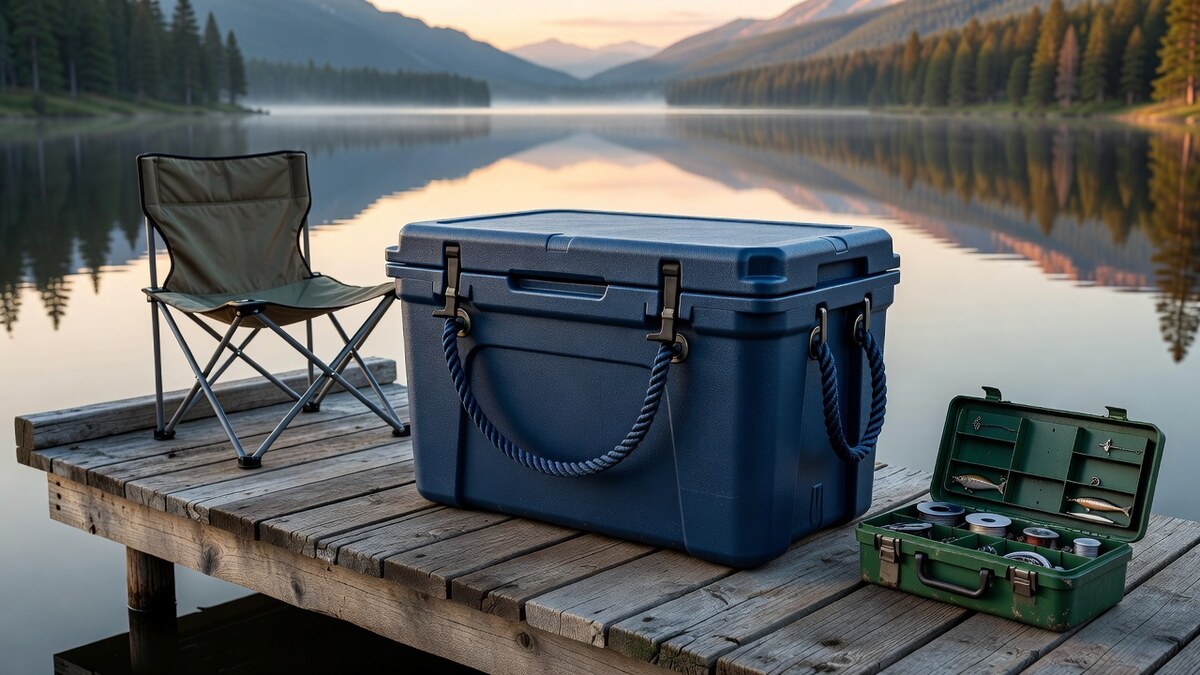
- Best ice retention: YETI Tundra 45 — $350.00. Rotomolded and near-legendary for multi-day ice, if you can stomach the price.
- Best if you park far from camp: YETI Tundra Haul — $450.00. The same retention with real wheels, for loading and unloading the truck.
- Best value hard cooler: RTIC 45 QT — $239.00. Most of the YETI performance at a much lower price.
- Best budget pick: Coleman 316 Series 62QT — $84.99. Holds ice through a weekend for well under $100.
- Best for day trips and picnics: Stanley All-Day Julienne — $100.00. A soft cooler that is actually comfortable to carry and does not need a second person.
Off-Season and Holiday Note (Late 2026 Update)
Ice retention is a summer scoreboard, but coolers do most of their family work in November and December — holiday hosting, tailgates, and road trips with food in the trunk.
- Cold air makes every cooler look good. In November a mid-tier cooler holds ice nearly as long as a rotomolded one does in July, so for cold-season use you can drop a tier and put the difference into size.
- For gifting, size beats spec. A 45 QT hard cooler fits most trunks; a 62 QT wheeled cooler is the pick for a family camping out of a car. Both show up in the Black Friday and Cyber Monday deals guide when they discount.
- One winter caveat: a cooler left outside in freezing weather can freeze its contents shut. Drain it and leave the latch open before you sleep.
The Quick Answer: Which Cooler for Which Trip?
- Weekend car camping / family of 4+ → Coleman 316 Series 62QT Wheeled Cooler ($84.99) — 5-day ice, 100+ cans, rolls to your site
- Premium compact / solo or couple → YETI Roadie 24 (~$250) — near-indestructible, holds ice 4+ days if packed right
- Best value hard cooler → RTIC 45 QT (~$239) — YETI performance at a lower price
- Day hikes / picnics / soft-sided → Stanley All Day Julienne Soft Cooler ($100) — 12-hour cold, stylish, lightweight
- Weekend family trip + bear country → YETI Tundra 45 ($350) — the premium 45-quart tier, and the only IGBC-certified bear-resistant pick here
- Family trip, no deadlifting a loaded cooler → YETI Tundra Haul ($450) — Tundra insulation on NeverFlat wheels, 82 cans
Now let's get into why these earned their spots.
Hard-Shell vs Soft-Sided Coolers: The Real Difference
This is the first decision, and most people get it backwards. Here's the honest breakdown:
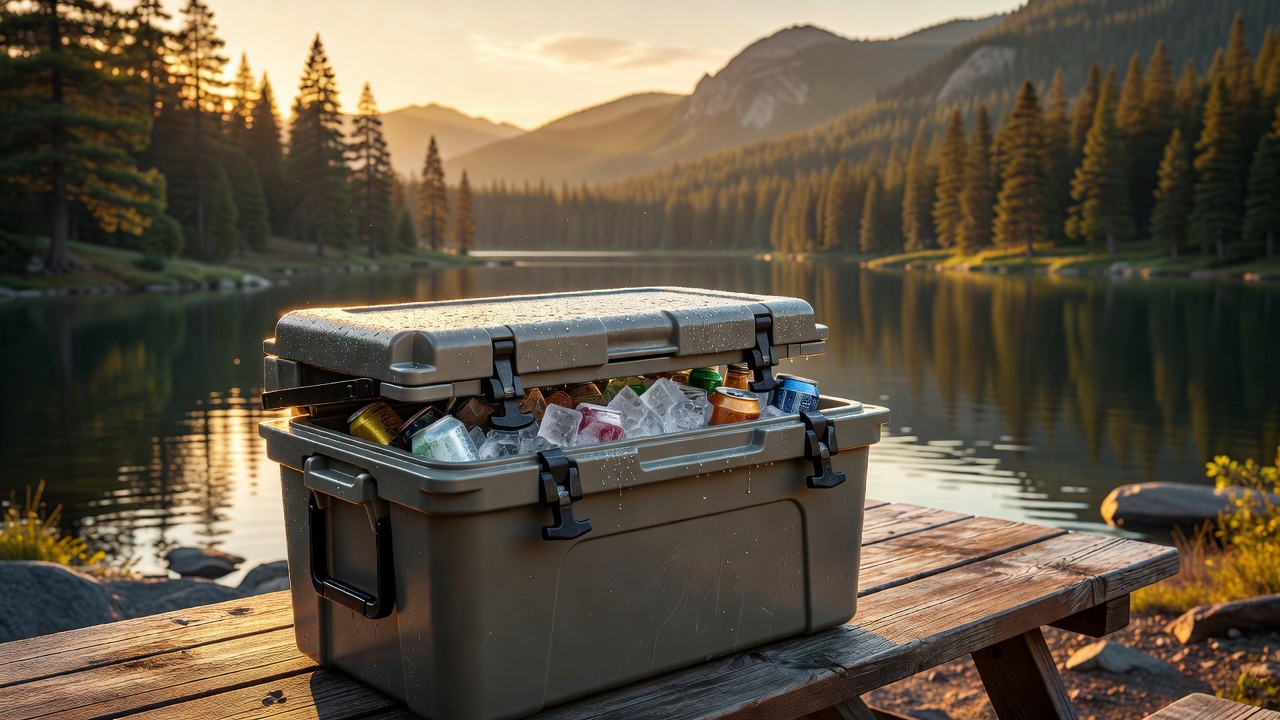
Hard-shell coolers (rotomolded or injection-molded) are the ice-retention champions. Thick walls packed with dense foam insulation mean ice can last 3–7 days in 90°F heat. They're also bear-resistant, double as a seat, and survive being thrown in a truck bed. The tradeoff: they're heavy (empty weight 8–20 lbs) and bulky. You don't carry a hard cooler down a trail — it lives in your car or at basecamp.
Soft-sided coolers trade ice life for portability. Expect 12–36 hours of real cold, not days. But they're light (1–4 lbs), pack down when empty, and you can sling one over your shoulder for a day hike or beach trip. The best soft coolers (like Stanley's) use leakproof zippers and closed-cell foam that genuinely outperform the cheap grocery-store soft packs.
When to choose each
- Hard-shell if: you're camping 2+ nights, hauling food for a group, fishing, or boating. Ice retention matters more than weight.
- Soft-sided if: it's a day trip, a picnic, a short hike, or you need something that fits in a backpack. Portability wins.
The mistake I see most often: buying a big hard cooler for day trips (overkill — it's heavy and you don't need 5-day ice) or a soft cooler for a week-long trip (you'll be buying ice every day). Match the type to the trip length first, then worry about brand.
Our Picks: Tested for Real Camping
1. Coleman 316 Series 62QT Wheeled Cooler — Best for Family Camping
Price: $84.99 | 4.5★ (2,300 reviews)
Coleman 316 Series Wheeled Cooler 62QT
If you're feeding a family for a long weekend, this is the sweet spot. Coleman's 316 Series uses their proven ice-retention formula — up to 5 days at 90°F — and pairs it with heavy-duty wheels and a telescoping handle. That matters more than you'd think: rolling a loaded 62-quart cooler across grass, gravel, or sand beats a two-person carry from the parking lot every time.
The 62-quart body holds 100+ cans with ice, which is enough for a family of four over a 3-day weekend without restocking. Cup holders molded into the lid double as dry storage for phones and keys — a small touch you'll appreciate when the table is full.
Ice retention: 5 days (claimed, realistic at 3–4 days in full sun) Best for: Family car camping, 3–5 day trips, group cookouts
Drawbacks: The wheels add about 6 lbs of empty weight, and the handle can wobble on very rough terrain. The drain plug sits slightly high, so you'll always have a little meltwater left. None of these are dealbreakers at this price — they're the reason it costs $85 instead of $250.
2. YETI Roadie 24 — Best Premium Compact Cooler
Price: ~$250 | YETI Roadie 24
The Roadie 24 is YETI's compact hard cooler — rotomolded, armored to the core, and virtually indestructible. It holds 18 cans with a 2:1 ice ratio and keeps ice frozen for 4+ days when packed correctly. The design is best-in-class: it fits behind a car seat, the handle is built for one-handed carrying, and it's certified bear-resistant (not that you'll need that at a family campground, but it tells you about the build).
Ice retention: 4–5 days (real-world, packed properly) Best for: Solo campers, couples, premium buyers who want a cooler that lasts 15+ years
Why it's worth the premium: YETI coolers are the benchmark everyone else measures against. The permafrost insulation and nuclear-grade latch system mean this cooler will outlive cheaper ones three times over. If you camp regularly, the cost-per-use actually beats buying a replacement every few years.
Drawbacks: At $200 for a compact size, it's expensive per quart. It's also heavy for its footprint — that thick insulation isn't light.
3. RTIC 45 QT — Best Value Hard Cooler (YETI Performance, Less Money)
Price: ~$239 | RTIC 45 QT
RTIC built its reputation on one promise: YETI-level performance at a lower price. The 45 QT Ultra-Tough Cooler delivers on that — thick rotomolded walls, 7–10 day ice retention in ideal conditions (3–5 days realistic in summer heat), and a build that handles boat decks and truck beds without flinching. The lid opens wider than most competitors, which sounds minor until you're digging for the mustard at the bottom.
Ice retention: Up to 10 days (claimed), 3–5 days realistic in 90°F Best for: Value-focused campers who want premium performance, multi-day trips, fishing
Drawbacks: Customer service isn't as polished as YETI's, and the finish isn't quite as refined. But functionally, independent tests consistently show RTIC matching or beating YETI on ice retention. If you care about cold beer, not brand prestige, this is the smarter buy.
4. Stanley All Day Julienne Soft Cooler — Best Soft-Sided / Day Trips
Price: $100 | 4.8★ (2,505 reviews)
Stanley All Day Julienne Soft Cooler Bag
Not every trip needs a 20-pound ice chest. Stanley's soft cooler brings their legendary durability to a lightweight bag made from recycled polyester. The leakproof zipper and closed-cell foam keep contents cold for up to 12 hours — genuinely, not aspirationally. It holds 10 cans or equivalent food for 2–3 people, which is perfect for a day hike, beach picnic, or tailgate. Planning a full parking-lot setup? Our tailgating gear checklist pairs the cooler with the right stove, chairs, and table.
Ice retention: 12 hours (realistic) Best for: Day hikes, picnics, beach trips, solo or couple outings
Why it stands out: At 4.8 stars with 2,500+ reviews, this is one of the highest-rated soft coolers on the market. The stylish patterns (and the iconic Stanley winged bear liner) make it a cooler you won't mind carrying into a restaurant or park. It doubles as a lunch box for daily use, which helps justify the $100 price.
Drawbacks: $100 is premium for a soft cooler — cheaper options exist if you just need something basic. And being soft-sided, it won't survive the abuse a hard cooler shrugs off. No shoulder strap on the standard model.
5. YETI Tundra 45 — Best Premium Hard Cooler for Weekend Trips (and Bear Country)
Price: $350 | 4.8★ (5,400 reviews)
The Roadie 24 above is the compact premium pick — 18 cans behind a car seat. The Tundra 45 is the size up, and it's the one I'd hand to a family that wants a single premium hard cooler for a weekend: 26 cans at the recommended 2:1 ice-to-contents ratio, rotomolded walls, and up to three inches of PermaFrost insulation with YETI's FatWall design.
Ice retention: Multiple days in summer heat — the thick insulation is the whole point of the price Best for: Multi-day car camping, tailgating, and fishing trips where ice has to survive 90°F afternoons
The reason to pick this one specifically: it's IGBC-certified bear-resistant, and that is not a marketing bullet — a growing list of national park campgrounds now require an approved bear-resistant food container at the permit desk. If you camp in bear country, this cooler does double duty: it keeps your food cold, and it keeps your food yours.
Drawbacks: Roughly 23 lbs empty before you add ice and food, and it's several hundred dollars more than a comparable-size basic cooler. YETI's own spec is blunt about the tradeoff — the capacity is small for the footprint compared with a cheap 45-quart box cooler. You are paying for insulation, certification, and a build that outlives three bargain coolers.
6. YETI Tundra Haul — Best Premium Wheeled Cooler for Family Trips
Price: $450 | 4.4★ (4,037 reviews)
YETI Tundra Haul Portable Wheeled Cooler
Here's the problem the Coleman 316 above solves cheaply and the Tundra Haul solves expensively: a loaded premium hard cooler weighs 70+ pounds, and hauling that from the trunk to the picnic table is the part everyone dreads. The Tundra Haul is the only YETI hard cooler you can roll fully loaded — rotomolded PermaFrost construction with pressure-injected insulation, on two solid single-piece NeverFlat wheels with a welded-aluminum StrongArm handle that tracks left or right so it doesn't bang your heels while towing.
Ice retention: Days, not hours — same Tundra insulation architecture as the Tundra 45 Best for: Car-camping families who want multiday ice retention but refuse to deadlift a loaded 64-quart cooler out of the trunk Capacity: 82 cans, or 64 lbs of ice — sized for a full family weekend rather than a day trip
Drawbacks — and these are real: $450 is a serious premium over the Coleman or RTIC that will handle a weekend just fine. At 37.5 lbs empty the wheels are mandatory, not a convenience. The 28.1 × 18.6 × 19.6 inch footprint eats a lot of trunk space in a small SUV, and the solid wheels sink in loose dry sand — this is a campground-and-tailgate cooler, not a beach cart. If you're walking across sand, take the Stanley soft cooler instead.
How to choose between the premium YETIs and the RTIC: if you want maximum cold per dollar, the RTIC 45 QT above is the honest answer and independent tests back it up. Pay the YETI premium when you want the IGBC bear certification (Tundra 45), a lifetime build with strong resale, or wheels on a cooler this heavy (Tundra Haul). That's the trade — not that one keeps ice and the other doesn't.
Ice Retention Comparison: Real Numbers, Not Marketing
Here's how the six coolers stack up on the metric that actually matters — days of ice in realistic summer camping conditions (not the lab-tested ideal numbers brands love to cite):
- Coleman 316 62QT: 3–4 days real / 5 days claimed — best value for family trips
- YETI Roadie 24: 4–5 days real — best compact premium
- RTIC 45 QT: 3–5 days real / up to 10 days claimed — best value premium
- YETI Tundra 45: 4–5 days real — best premium weekend hard cooler, IGBC bear-resistant
- YETI Tundra Haul: 4–5 days real — best premium wheeled, 82 cans
- Stanley Soft Cooler: 12 hours real — best for day use
Key takeaway: Claimed ice retention numbers assume the cooler is pre-chilled, packed with a 2:1 ice-to-contents ratio, kept in the shade, and opened rarely. In real camping — opening every hour for drinks, sitting in the sun, packed warm — expect 60–70% of the claimed number. Plan accordingly.
How to Size Your Cooler (So You Don't Overpay)
Bigger isn't better — a half-empty cooler melts ice faster because there's more air to cool. Here's the sizing rule of thumb:
- Day trip / solo: 12–24 quarts (soft cooler or compact hard)
- Weekend / couple: 25–45 quarts
- 3–5 day family trip: 45–65 quarts
- Extended / large group: 65+ quarts
The golden ratio: Pack coolers with a 2:1 ice-to-contents ratio by volume. A 45-quart cooler holds roughly 30 quarts of ice and 15 quarts of food/drink. Stuff it too full of food and you'll run out of ice fast.
Pro tip: Pre-chill your cooler the night before with a sacrificial bag of ice. A warm cooler burns through the first load of ice just cooling down the walls. Dump the melt, add fresh ice, and your real ice retention starts from hour one.
Common Cooler Mistakes (Learn From Mine)
Using cubed ice instead of blocks. Blocks melt slower because they have less surface area per volume. Save cubed ice for drinks; use block ice (or frozen water bottles) in the cooler to extend retention by a full day or more.
Draining the meltwater. That cold water is still doing work — it fills gaps and stays colder than air. Only drain it if you're adding fresh ice or packing dry goods. (Exception: if food is sitting in water and spoiling, drain it.)
Putting the cooler in the sun. Shade is worth 1–2 days of ice life. Even a reflective blanket over the cooler in direct sun makes a measurable difference.
Opening it constantly. Every opening lets cold air out and warm air in. Organize your cooler so frequently-used items are on top, and minimize how often you dig around.
Storing a wet cooler closed. After a trip, dry it fully and prop the lid open. A closed, damp cooler grows mold fast — and that smell never fully leaves.
Camping Cooler Accessories Worth Adding
A good cooler gets better with a few add-ons:
- A quality camping chair to sit on while you rummage — the Coleman Cooler Quad Chair ($39.99) even has a built-in 4-can cooler pocket so your drinks stay cold without opening the main cooler.
- Reusable ice packs — cleaner than real ice and they don't dilute meltwater into your food.
- A cooler basket or divider — keeps dry goods (bread, chips) above the ice line.
Once you've picked the cooler, packing it right is half the battle. The layering order, the drinks-vs-food split, and the pre-chill tricks that keep ice for a full 3-day weekend are all in our how to pack a cooler for a weekend camping trip guide.
For the full trip setup, pair your cooler with a solid camp kitchen plan — see our camp kitchen setup guide for how everything fits together. If your cooler also needs to hold dog food, meds, and backup water, our camping with dogs guide covers how to split cold storage between people and pets without crushing your own meal prep. And if you're shopping for a bigger shelter to match a bigger food haul, our best family camping tents guide breaks down which 4P and 6P tents actually leave room for a 62-quart cooler inside when weather turns ugly.
Best Cooler Setups by Trip Type
Family basecamp for 3–5 days: Start with the Coleman 316 62QT Wheeled Cooler as the main food-and-drinks chest, then give each person a separate bottle so they are not reopening the lid every 15 minutes. The Owala FreeSip Insulated Water Bottle works especially well here because kids and adults can sip one-handed around camp instead of fishing for cold cans all afternoon. If the rest of your setup still feels scattered, our family camping gear checklist and best family camping tents guide help you build the rest of the basecamp around the cooler, not as an afterthought.
Dog-friendly weekend camping: The cooler has to do double duty — human food on one side, dog food, meds, and extra water on the other. This is where organization matters more than absolute size. I like keeping the cooler closed for meals only, then filtering water on demand with the Sawyer Products SP129 Squeeze Water Filtration System so the dog's water bowl isn't stealing space from perishables. Our camping with dogs guide goes deeper on how to separate food, meds, towels, and muddy gear once a wet dog enters the equation.
Beach days and short trail outings: A giant hard cooler is a pain when you're walking across sand or carrying lunch to a picnic spot. The Stanley All Day Julienne Soft Cooler makes more sense here, especially when you pair it with one insulated bottle per person instead of packing every drink inside the bag. For trip-specific packing help, our beach camping gear checklist covers shade, sand, and rinse-off logistics, while the day hike essentials checklist covers the grab-and-go setup for shorter outdoor days.
Stuck between two coolers? We wrote the head-to-heads so you do not have to read three reviews to answer one question: YETI Tundra 45 vs RTIC 45 QT is the $111 bear-certification argument, YETI Roadie 24 vs YETI Tundra 45 is compact footprint versus family capacity, and Coleman 316 Wheeled 62QT vs Xtreme 70-Quart is wheels versus eight extra quarts.
Compact premium versus big and cheap: YETI Roadie 24 vs Coleman Xtreme 70-Quart is the sizing question most families actually face — 18 cans behind a car seat for $250, or 70 quarts of five-day ice for $79.99.
Cooler FAQs: Ice, Food Safety, and Trip Length
How long should ice last in a camping cooler?
For a pre-chilled hard cooler packed about two-thirds full of ice, plan on three to four days of usable ice for a summer family-camping trip—not the maximum number printed on the box. Direct sun, warm food added at departure, and frequent drink runs all shorten that window. Treat a five-day claim as a best-case result, then bring a small backup bag of ice if dinner on day four depends on it.
Is a hard cooler worth it for a two-night camping trip?
Usually, yes if you are feeding more than two people or bringing raw meat, dairy, and cold drinks. A wheeled hard cooler such as the Coleman 316 62QT Wheeled Cooler gives you the insulation and capacity to separate meal food from grab-and-go drinks. For a couple's one-day picnic or beach lunch, a soft cooler is easier to carry and does not waste trunk space.
What is the safest way to pack food in a cooler?
Freeze or thoroughly chill food before loading it, put raw meat in a sealed leakproof container at the bottom, and keep ready-to-eat food above it. Use block ice or frozen water bottles for longer-lasting cold, fill empty space with ice, and keep a separate drink cooler when possible. The less often the food cooler opens, the longer it stays cold—and the less likely dinner turns into an unpleasant science experiment.
Do you need a bear-resistant cooler for camping?
Only in bear country — but there it stops being optional. A growing number of national park and forest campgrounds require an approved bear-resistant food container, and coolers are the item rangers check most often because they hold everything a bear wants. Look for an IGBC-certified rating rather than a "bear-proof" sticker; the YETI Tundra 45 is the one in this guide that carries it. Outside bear country a standard hard cooler is fine, and for a family car-camping weekend the Coleman 316 62QT Wheeled Cooler covers you for a fraction of the price.
For a Gulf-coast or Keys trip, ambient temperature does most of the work against you. Our Camping in Florida guide covers the shade, tarp, and site setup that keeps ice and food usable.
The Bottom Line
You don't need the most expensive cooler — you need the right cooler for your trips. For most family campers, the Coleman 316 62QT Wheeled Cooler hits the sweet spot of price, capacity, and real-world ice life. If you want a cooler that lasts a lifetime and you camp often, the YETI Roadie 24 or RTIC 45 QT are worth the investment — and if your trips are in bear country or you're done carrying a loaded cooler, step up to the YETI Tundra 45 or the wheeled YETI Tundra Haul. And for day trips where you don't need multi-day ice, the Stanley Soft Cooler keeps things simple.
Match the type to your trip, pack with the 2:1 ratio, keep it in the shade, and your ice will outlast your patience for warm beer.
Ice retention is really a lunch question — a colder cooler is what makes camping lunch ideas work, with 25 no-cook and make-ahead midday meals and the shelf-stable fallbacks for the day the ice gives out.
<!-- AFFILIATE_DISCLOSURE -->