Day Hike Essentials: The Complete Gear Checklist for 2026
What to pack for a day hike — the 10 essentials, daypack sizes, trail food, what to wear, and day hiking with kids or dogs. Complete day hike checklist with product picks for every budget. Updated September 2026.
In this article · 13 sections
- Quick Answer: Your Day Hike Gear at a Glance
- The 10 Essentials (Modernized)
- The Gear That Actually Makes a Day Hike Better
- Day Hike Food: Snacks, Lunch Ideas, and How Much to Carry
- What to Wear on a Day Hike (The Three-Layer Rule)
- What NOT to Bring
- Winter Day Hikes: What Changes on the Packing List
- Day Hiking With Kids and Dogs
- The 2-Minute Pre-Hike Check (Do This Every Time)
- Quick Checklist by Hike Length
- Day Hike Packing List, Checklist, or Gear List? It's the Same List
- The Bottom Line
- Day Hike FAQ
Your first day hike is one of the best decisions you'll make all summer. It's the perfect entry point to the outdoors: no overnight commitment, no 40-pound pack, no bear-canister logistics. Just a trail, a few hours, and the right gear. But here's the catch — most beginners bring too much of the wrong stuff and skip the things that actually matter. If you're new to hiking entirely, start with our complete hiking for beginners guide — it covers trail selection, fitness prep, and the gear fundamentals.
This checklist covers exactly what experienced day hikers pack, from the classic "10 essentials" to the gear that makes a real difference on the trail. Every product linked below is something we've tested or would stake a trip on.
Quick Answer: Your Day Hike Gear at a Glance
- The 10 essentials: navigation (offline maps + paper backup), headlamp, sun protection, first aid, knife, fire, emergency shelter, extra food, water + filtration, and extra layers — the full breakdown with picks is right below
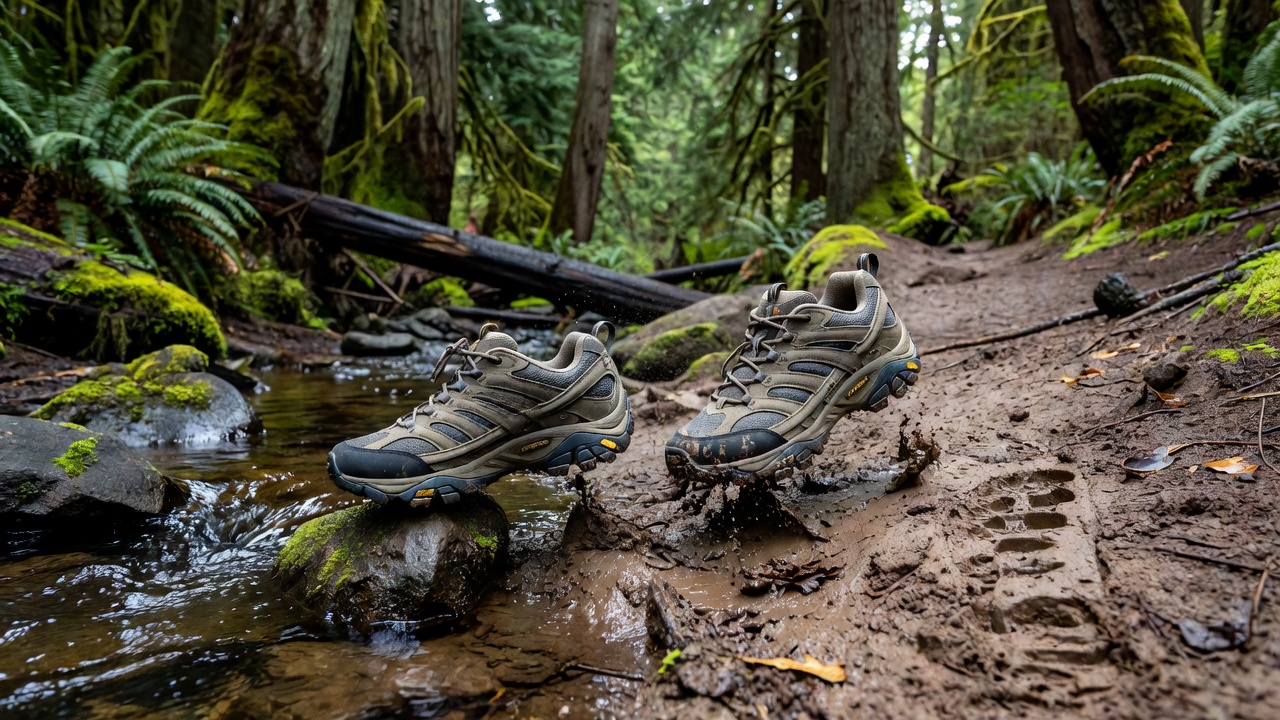
- Best hiking shoes: Merrell Moab 3 Waterproof — $129.95, the single most important item on the list; break them in before the trail
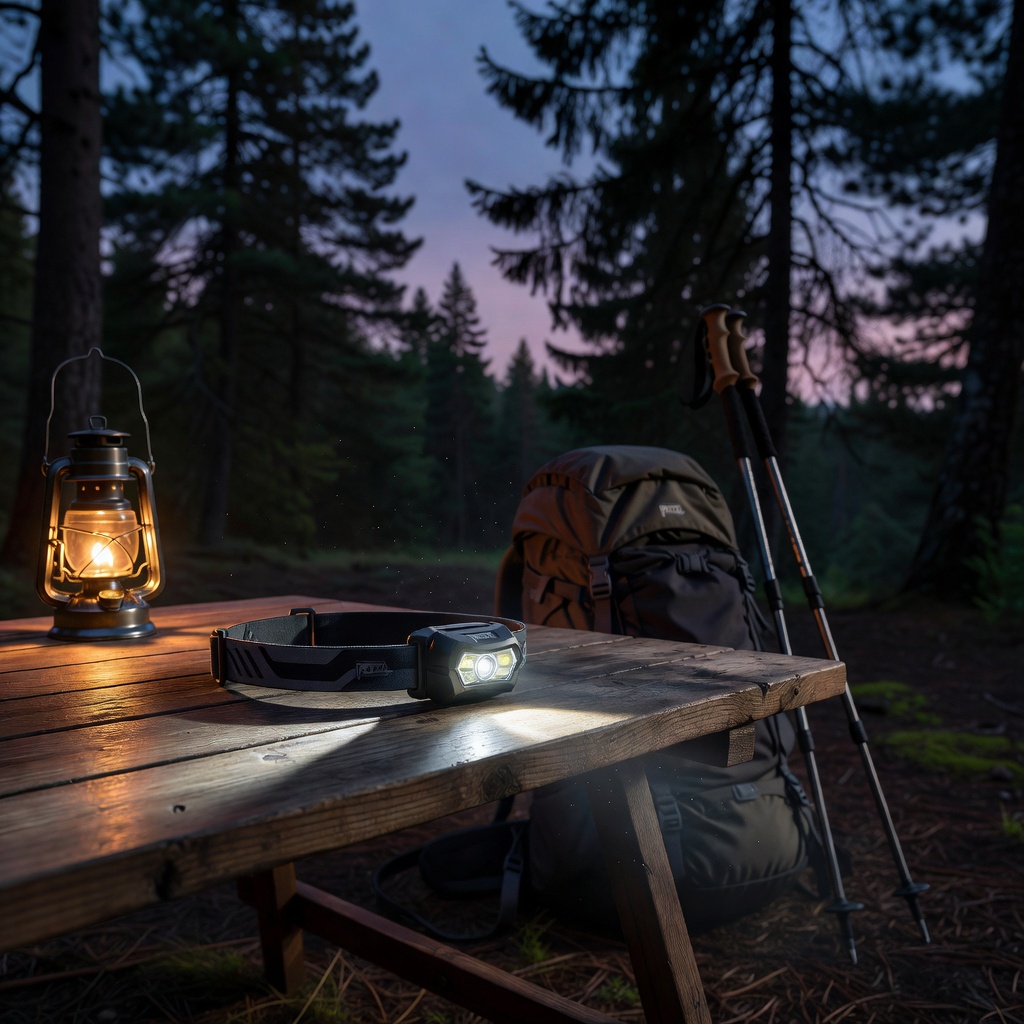
- Best headlamp: Petzl ACTIK CORE — $79.95, 625 lumens, USB rechargeable, red-light mode protects night vision
- Best socks: Darn Tough Hiker Micro Crew — $27.95, merino wool with a lifetime warranty, the cheapest blister insurance you'll buy
- Best hot lunch on the trail: MSR PocketRocket 2 — $49.95, 2.6 oz and boils a liter in about 3.5 minutes; pair it with Cascade Mountain Tech trekking poles — $49.95, for knee-friendly descents — and if you're still picking a pair, the trekking pole buying guide has the height-to-length chart and lock comparison. Don't guess your length — measure it.
The 10 Essentials (Modernized)
Mountaineers have been teaching the "10 essentials" since the 1930s, and the modern version from Mountaineering: The Freedom of the Hills is still the gold standard. Here they are — updated with the gear we actually carry:
1. Navigation
Phone GPS is great until your battery dies at mile 7 with no signal. Carry a backup:
- Phone with offline maps (Gaia GPS, AllTrails, or CalTopo — download the map before you leave cell service)
- Paper map + compass — weigh nothing, never run out of battery
- Know how to use them — a compass in your pack you can't read is dead weight
2. Headlamp / Light Source
The #1 reason search-and-rescue gets called for day hikers: they misjudged how long the trail would take and got caught in the dark. Carry a real headlamp, not your phone flashlight.
Our pick: Petzl ACTIK CORE Headlamp ($79.95) — 650 lumens, USB rechargeable, and the red-light mode preserves your night vision. It weighs 3 ounces and genuinely lights up a trail. For a full comparison of lantern and headlamp options across camping and hiking scenarios, see our camp lighting guide. If you’re building out a sleep system for shoulder-season trips too, our best camp pillows comparison guide breaks down inflatable, compressible, and memory-foam options that actually make rough nights more tolerable. If your local trail network cuts through black bear habitat or you’re planning shoulder-season hikes in the Rockies, add our bear safety while camping guide to your pre-trip reading too — getting home before dark matters, but knowing how to react if wildlife appears at dusk matters just as much.
3. Sun Protection
Sunscreen, sunglasses, and a hat with a brim. At altitude, UV exposure increases ~4% per 1,000 feet — at 10,000 feet you're getting nearly 40% more UV than at sea level. Apply BEFORE you start sweating.
4. First Aid Kit
Not the 2-bandage kit that came free with your backpack. A real kit with blister treatment (moleskin or Leukotape), antiseptic wipes, pain relievers, and an emergency blanket.
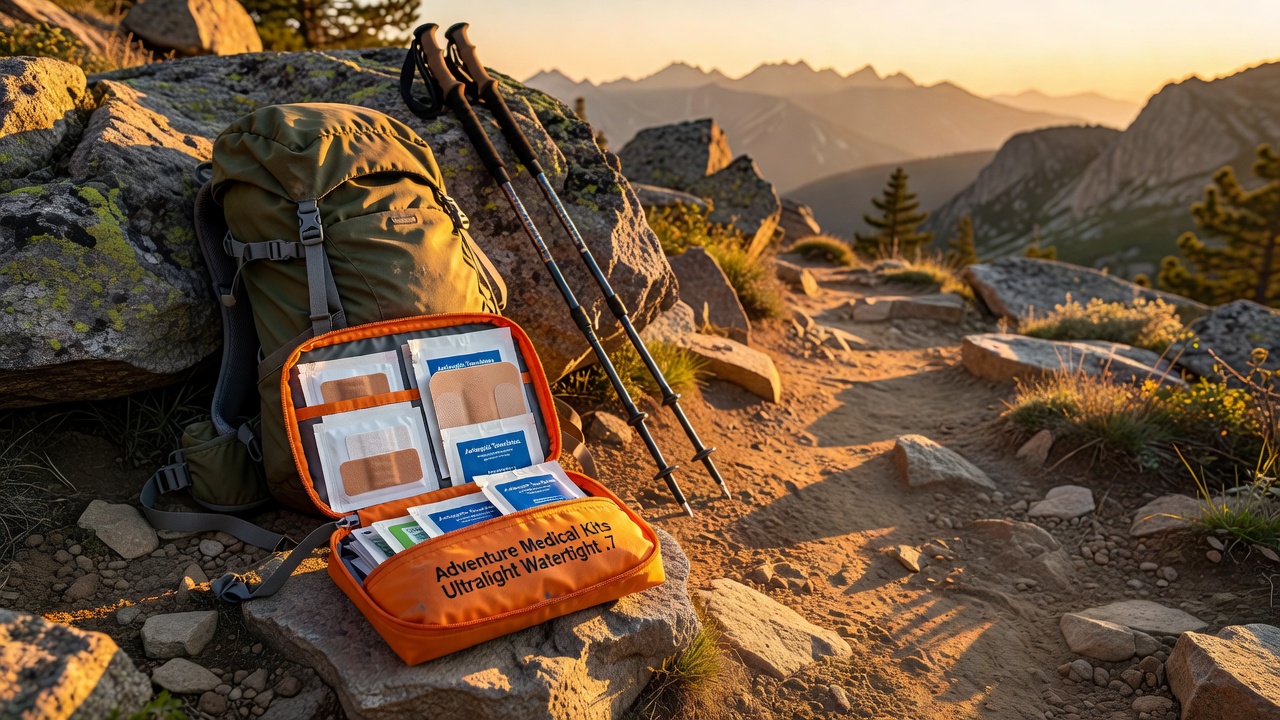
Our pick: Adventure Medical Kits Ultralight .7 ($44.95) — 4.8 ounces, waterproof, covers cuts, blisters, sprains, and includes a comprehensive wilderness first-aid guide. For the complete emergency preparedness scope — including what to do when a blister is the least of your problems — read our camping first aid & safety guide.
5. Knife / Multi-Tool
A simple folding knife covers 90% of trail needs: cutting moleskin, opening stubborn packaging, trimming loose threads on gear. You don't need a Rambo blade — a 2-3 ounce folder is perfect.
6. Fire
A lighter or waterproof matches. Even on a day hike, the ability to start a fire is a safety net if you get stuck after dark or need to signal for help. A simple Bic lighter in a ziplock bag weighs nothing.
7. Emergency Shelter
An emergency bivy or space blanket — fits in your palm, weighs 2-3 ounces, and could save your life if you get injured and can't make it back before nightfall.
The palm-sized option only works if it survives being opened: the Don't Die in The Woods emergency blanket 4-pack ($24.95 for four, about $6.24 each) is a 4 x 7 ft reusable mylar sheet — one lives in the pack, one in the car kit — and the Arcturus insulated tarp blanket ($24.99) is the heavier 60 x 82 in version that also pitches as a windbreak with cord through its grommets.
8. Extra Food
Pack at least 500 calories beyond what you plan to eat. Trail mix, energy bars, jerky — high-density calories that don't require cooking. The rule of thumb: if you think you'll be out 4 hours, pack food for 6.
9. Extra Water + Filtration
More hikers get in trouble from dehydration than from wildlife. Carry more water than you think you need, AND bring a way to make more. A lightweight filter turns any stream into a refill station.
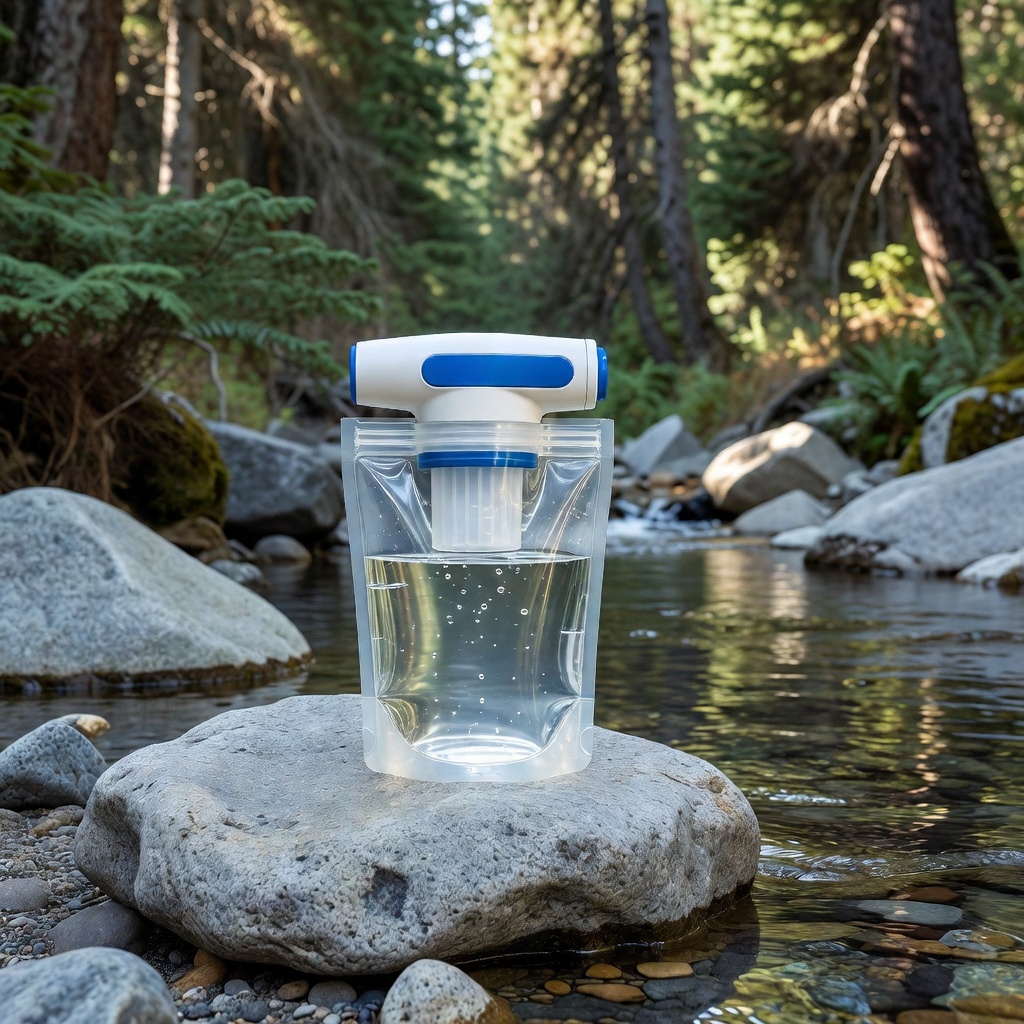
Our pick: Sawyer Squeeze Water Filtration System ($34.95) — filters 100,000 gallons to 0.1 microns, weighs 3 ounces, and screws onto standard water bottle threads. It's the single best weight-to-safety ratio item in any day pack. For backpack-style bladders and tube systems, our camping water filtration & hydration guide covers the full range of filter types and how much water to carry per person per hour.
10. Extra Clothes (Insulation + Rain)
Weather changes fast above treeline. Pack a lightweight insulating layer (fleece or puffy) and a rain shell — even if the forecast says 75 and sunny. Hypothermia happens most often between 30-50°F in wet conditions, not in a blizzard.
If your shell is the weak link — or you're outfitting a family — the family rain jacket guide compares men's, women's and kids' shells on the same waterproof standard, and explains why pit zips matter more on a day hike than on a commute.
The Gear That Actually Makes a Day Hike Better
Beyond the survival essentials, here's the gear that turns a slog into a genuinely enjoyable day:
A Daypack That Fits
You need 15-25 liters for a spring-through-fall day hike — enough for the 10 essentials, lunch, and an extra layer. Anything bigger and you'll fill it with stuff you don't need.
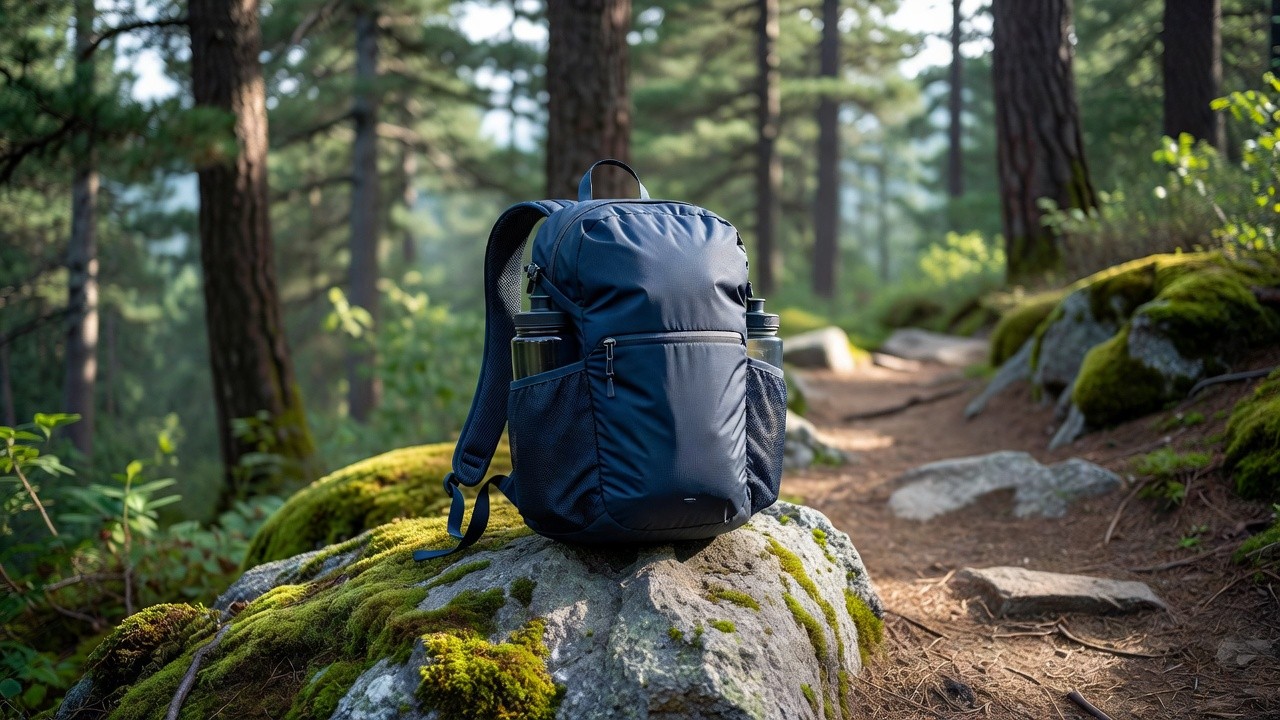
Budget Pick — BECOJADDE 15L: The BECOJADDE 15L Foldable Hiking Backpack ($25.99) packs into its own pocket down to the size of a softball. It's not built for heavy loads, but for a half-day hike with just the essentials, it's surprisingly capable and dramatically cheaper than most name-brand packs.
Want more structure? Look for a 20-liter daypack with a breathable back panel, a hydration sleeve, and easy-access pockets for layers and snacks. For more backpack guidance — how to size, what features matter, and when to spend more — check our how to choose a hiking backpack guide.
Daypack Size Decoded: 10L vs 15L vs 20L vs 30L
"Day hike backpack" returns everything from a 10-liter stuffable sack to a 40-liter overnight pack, so the only number worth shopping by is interior volume in liters. Day hike backpack size is the one spec that decides whether you carry the 10 essentials comfortably or leave something at home — and the most common answer is the 20L class, which is what most people mean when they search for a day hike backpack 20l. Volume should follow your hike length and how much of the 10 essentials you actually carry:
| Volume | What realistically fits | Best for |
|---|---|---|
| 10–15L | One bottle or a 1.5L bladder, snacks, a shell, phone, small first-aid kit | Half-day hikes under about 4 miles; kids' packs |
| 18–22L | The full 10 essentials, lunch, a fleece, and a 2L bladder | The sweet spot for 4–8 mile day hikes |
| 25–30L | Everything above plus a stove, a larger first-aid kit, camera or binoculars | 8+ mile days, shoulder-season trips, cold-weather layers |
| 35L+ | Overnight gear (sleeping bag, pad, food, shelter) | Not a day hike — see our first camping trip starter kit |
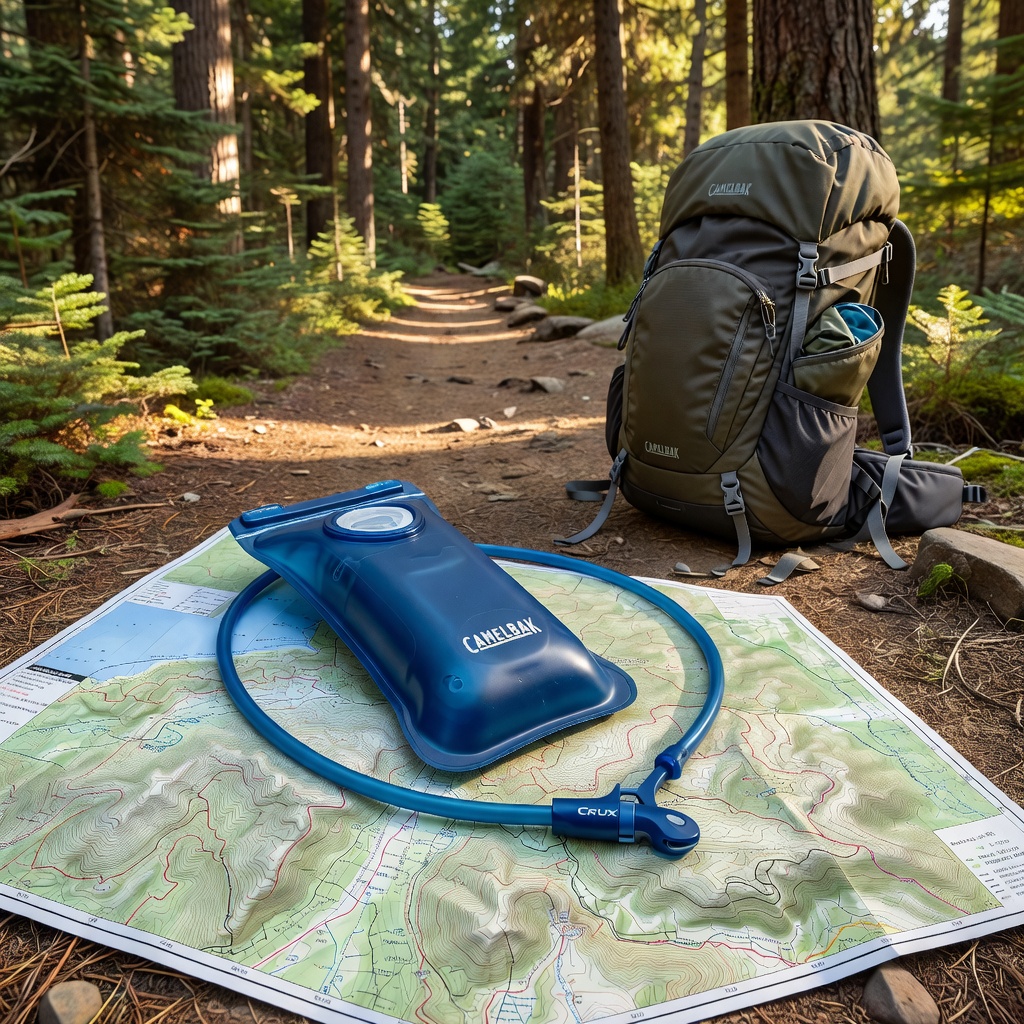
Bladder or bottles? If you searched for a day hike backpack with a water bladder, this is the feature you meant: the hydration sleeve is the padded pocket against your back, and the reservoir goes inside it with the hose routed over your shoulder. A hydration reservoir lets you drink while walking, which is the whole reason hydration packs exist. The CamelBak Crux 2L Reservoir ($39.95) and the larger CamelBak Crux 3L ($34.95) both use the same wide-mouth fill port and bite valve, and either slots into a hydration sleeve. Bottles are cheaper, easier to refill from a filter, and easier to clean — many hikers carry one of each: a bladder for sipping on the move, a bottle for the filter station.
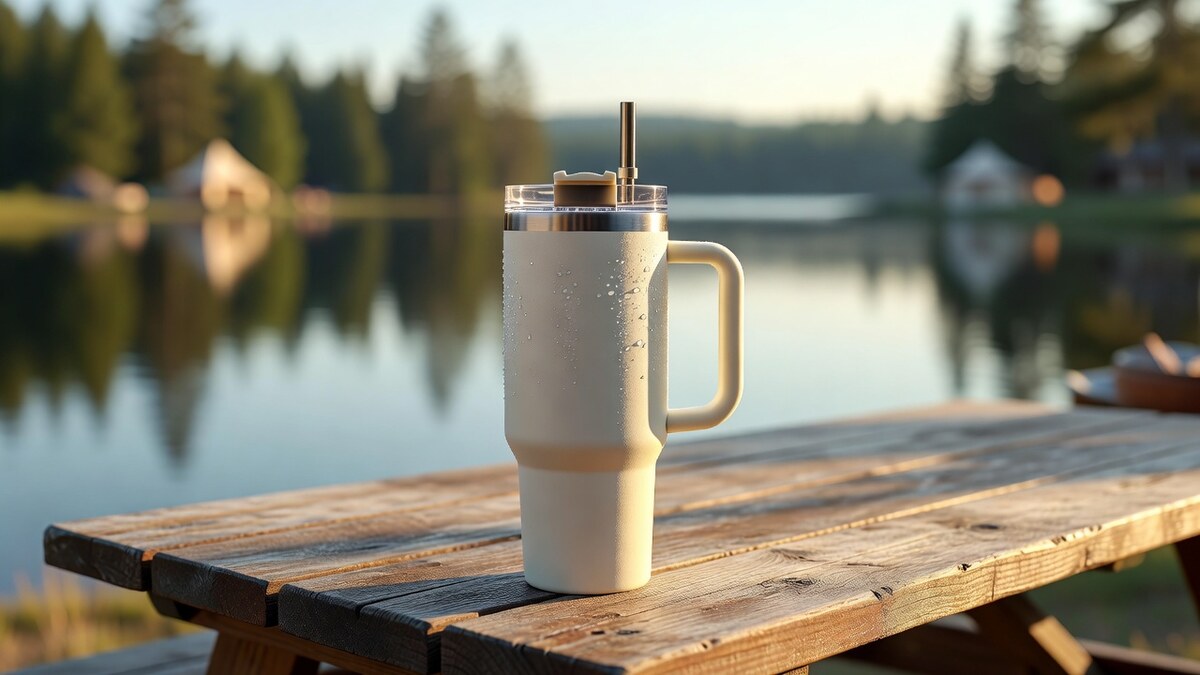
For the drive to the trailhead — and the coffee for the ride home — a sealed insulated tumbler earns its cupholder space. The STANLEY IceFlow 20 oz tumbler ($35.00) locks a flip-up straw under a twist-on lid, so it rides in a daypack side pocket through a hot afternoon without baptizing your spare socks, and still has ice hours later.
Hip belt or no hip belt? A day hike backpack with a hip belt is a genuinely different pack from a stripped-down daypack, so decide by weight rather than by preference. Under roughly 15 pounds, a padded hip belt is mostly comfort and stability rather than load transfer. If you regularly carry a full 25–30L with water, a stove, and camera gear, a real hip belt keeps the weight on your hips instead of your shoulders. For a 20L around town or a short trail, a simple webbing strap is enough.
Fit by torso length, not by gender. A day hike backpack for women and a day hike backpack for men are usually the same design in two fit ranges, so shop by measurements rather than by label. "Women's day hike backpack" and "men's day hike backpack" are useful filters because women's-specific packs generally have shorter torso ranges, narrower shoulder straps, and a differently curved hip belt — but the underlying rule is torso length, not gender. Measure from the bony bump at the base of your neck (C7) to the top of your hip bones; if you land outside a pack's stated range, size up or down regardless of which section of the site it's listed in.
Two packs that cover most day hikers. The Osprey Daylite Commuter Backpack ($65.00) is a 13-liter panel-loader that swallows the 10 essentials plus a layer and has an external hydration sleeve. If you want one pack that also handles a full-day hike and airport trips, the Osprey Daylite Plus ($75.00) adds volume and a laptop sleeve. For kids carrying their own water and snacks, the Osprey Jet 18L Kid's Hiking Backpack ($80.00) is sized to a child's torso.
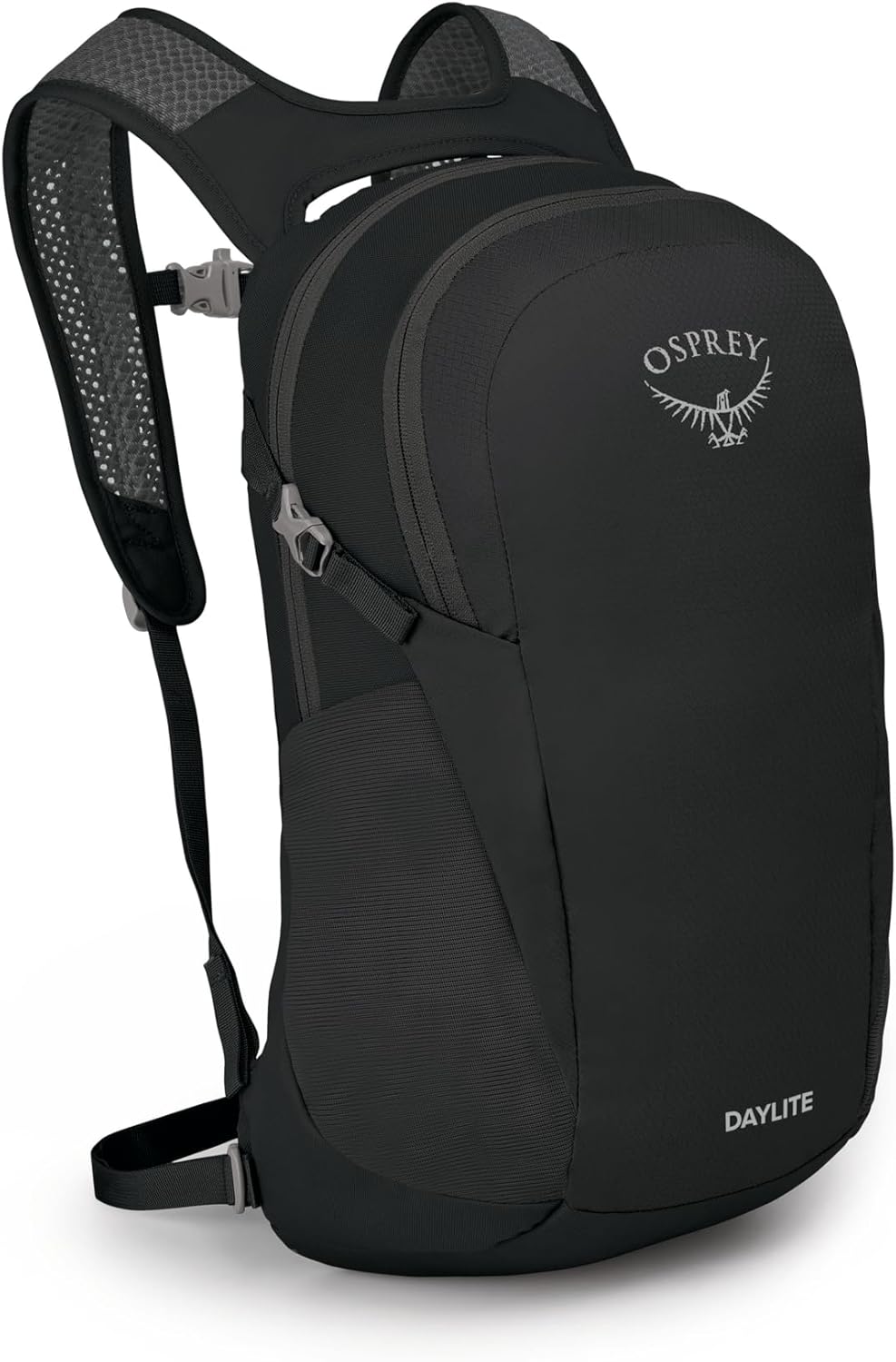
How heavy should it be? A commonly cited guideline is to keep a day pack at or under about 10% of your body weight. If your loaded pack is heavier than that for a single-day hike, you're carrying something from the "what NOT to bring" list below.
Hiking Shoes or Boots (The Single Most Important Item)
Your feet carry everything. Trail runners work for packed dirt; waterproof hiking shoes or boots are better when you'll cross creeks or hike in morning dew.
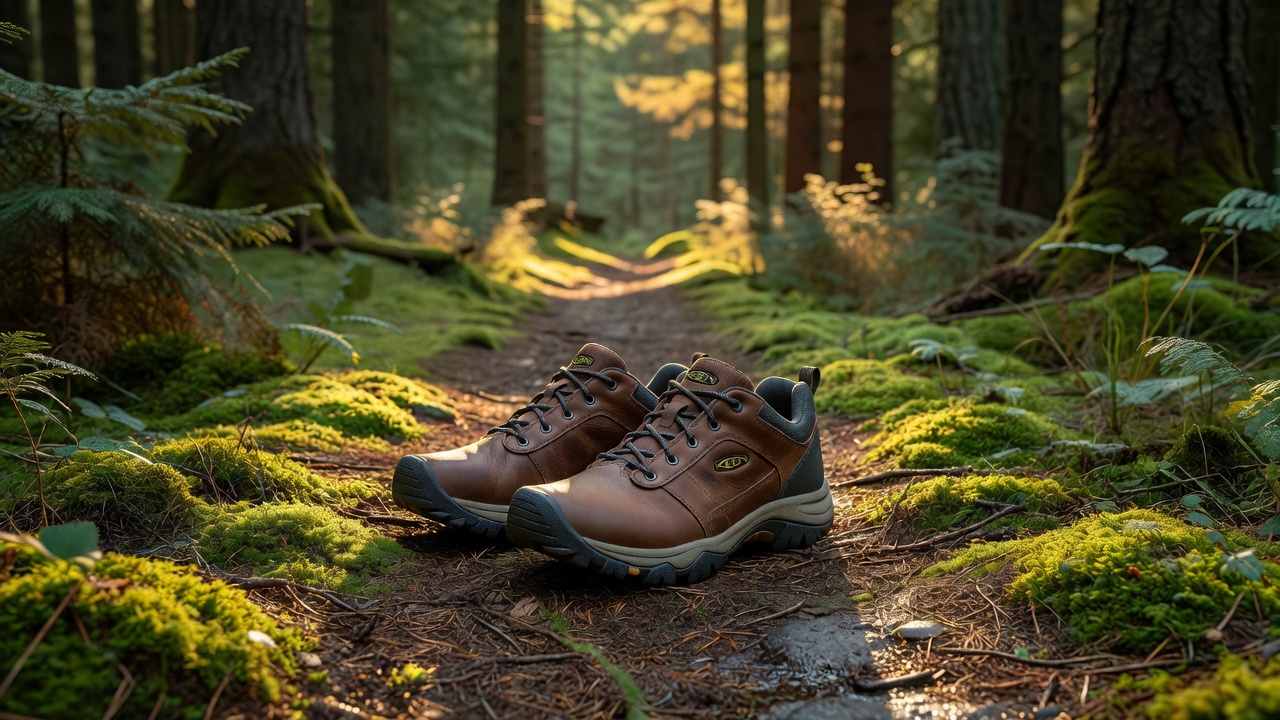
Merrell Moab 3: The Merrell Moab 3 Waterproof Hiking Shoes ($129.95) are the best-selling hikers in America for a reason. The Vibram TC5+ outsole grips wet rock and loose gravel, the waterproof membrane keeps morning dew and shallow creek crossings at bay, and the cushioned heel absorbs impact on descents. They're comfortable out of the box — no 50-mile break-in period.
KEEN Targhee 3: The KEEN Targhee 3 Low Waterproof Hiking Shoes ($139.95) have a wider toe box that's perfect if you have wider feet or prefer extra toe room. The KEEN.DRY waterproof membrane breathes better than most competitors, and the ESS shank provides torsional stability on uneven terrain. Choose these if comfort and foot-shape accommodation are your top priorities.
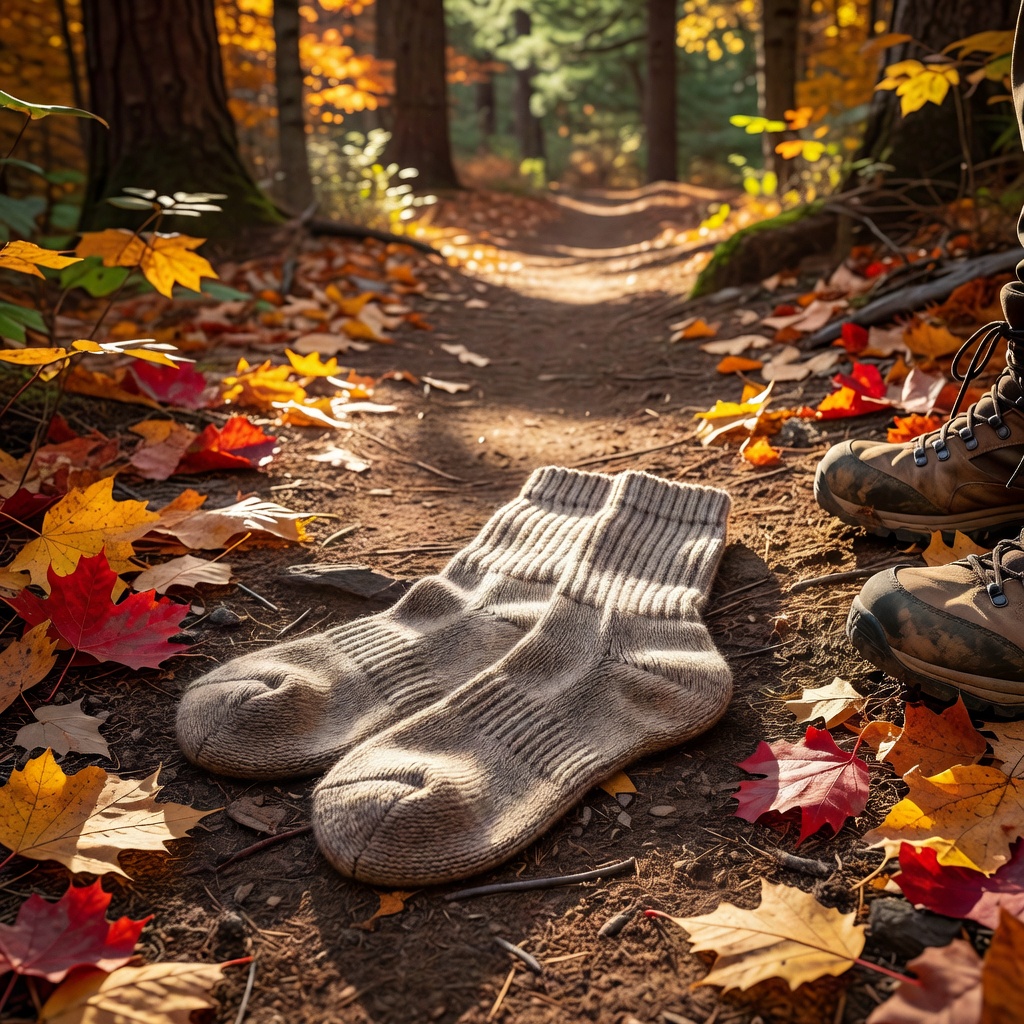
One more thing: The right socks matter as much as the right shoes. Darn Tough Hiker Micro Crew Socks ($27.95) are merino wool — naturally antimicrobial (no stink after 8 miles), moisture-wicking, and backed by a lifetime guarantee. Cotton socks + 10 miles = guaranteed blisters. Our hiking foot care guide covers blister prevention, sock science, and what to do when your feet rebel mid-trail. Still deciding between specific models? Our best hiking shoes of 2026 buying guide compares Merrell, KEEN, and Salomon side by side for fit, grip, and trail conditions. And if you're stuck on the bigger question — lightweight runners or full boots — our trail runners vs hiking boots comparison explains exactly when each one wins.
Water Bottle
A dedicated water bottle means you actually drink water — simple but true. The Owala FreeSip Insulated Water Bottle ($27.99) has a dual-function spout: sip upright through the straw or tilt back and chug from the wide opening. Triple-layer insulation keeps water cold for 24 hours, and the locking lid won't pop open in your pack. If you want to go even lighter, a basic Tritan bottle works too — the key is carrying something you'll actually use consistently.
Hot Lunch on the Trail
Cold sandwiches get old after hike number three. A tiny stove turns a trail-side break into one of the best parts of your day.
Premium: The MSR PocketRocket 2 ($49.95) weighs 2.6 ounces and has a wider burner head that distributes heat more evenly — fewer scorched spots in your pot. If your goal is coffee, ramen, or a quick dehydrated meal, this is the classic lightweight option that experienced hikers keep coming back to.
If you're just starting out, you do not need a stove for every day hike. But for shoulder-season outings, longer summit days, or anyone who loves a hot drink on a windy overlook, it can be a real morale boost. For a complete guide to stoves at every price and fuel type — including the bigger car-camping propane options — see our best camp stove for car camping guide.
Binoculars: The Cheapest Trip Upgrade You'll Actually Use
Almost nobody packs binoculars on a day hike, and almost everybody who does wishes they'd started sooner. A compact pair weighs less than a water bottle and turns a hawk riding a thermal, a marmot on a rock, or a herd on a far ridge into the thing your kids talk about on the drive home. Stay at 8x magnification — higher numbers shake in any wind — and keep it under a pound so it rides in a hip-belt pocket. Our best binoculars for family camping and hiking guide covers the models that survive a kid and a backpack.
Day Hike Food: Snacks, Lunch Ideas, and How Much to Carry
Ask "what food to bring on a day hike" and you get two kinds of answers: the boring one (extra calories) and the useful one (how much, what kind, and what survives a warm pack). "Extra food" is the vaguest item on the 10 essentials list, and the one beginners get wrong in both directions — either a single granola bar for a 10-mile day, or a full picnic that never gets eaten. Here's the practical version.
How Much Food Do You Actually Need on a Day Hike?
How much food for a day hike depends on hours and elevation, not on total miles — a flat four hours is a different burn than four hours of switchbacks. Most hikers burn on the order of 300–600 calories per hour on rolling terrain, and more on sustained climbs — but you don't have to replace every calorie on the trail. A widely used planning range is roughly 200–300 calories per hour of hiking, plus the 500-calorie buffer the 10 essentials call for. A six-mile hike that takes four hours lands around 1,000–1,500 calories total, including lunch.
Uneaten food is dead weight, so pick for calorie density. Anything above about 100 calories per ounce earns its place in the pack:
| Trail food | Rough calorie density | When it works |
|---|---|---|
| Nuts, nut butter, seed mixes | Highest (often 150–200 cal/oz) | Cold weather, big elevation, small pack |
| Trail mix with dried fruit and chocolate | High | The default; watch the chocolate in summer |
| Energy and granola bars | Moderate | Quick, portable, easy to split |
| Jerky, meat sticks, hard cheese | Moderate | Hot days, protein, doesn't melt or freeze |
| Dried fruit, fruit chews, gummies | Moderate | Fast sugar before a climb or at the top |
| Fresh fruit, sandwiches, wraps | Lowest | Best lunch; heaviest per calorie |
Check the labels on anything you buy — these are typical ranges, not guarantees.
Best Day Hike Snacks (No Cooking Required)
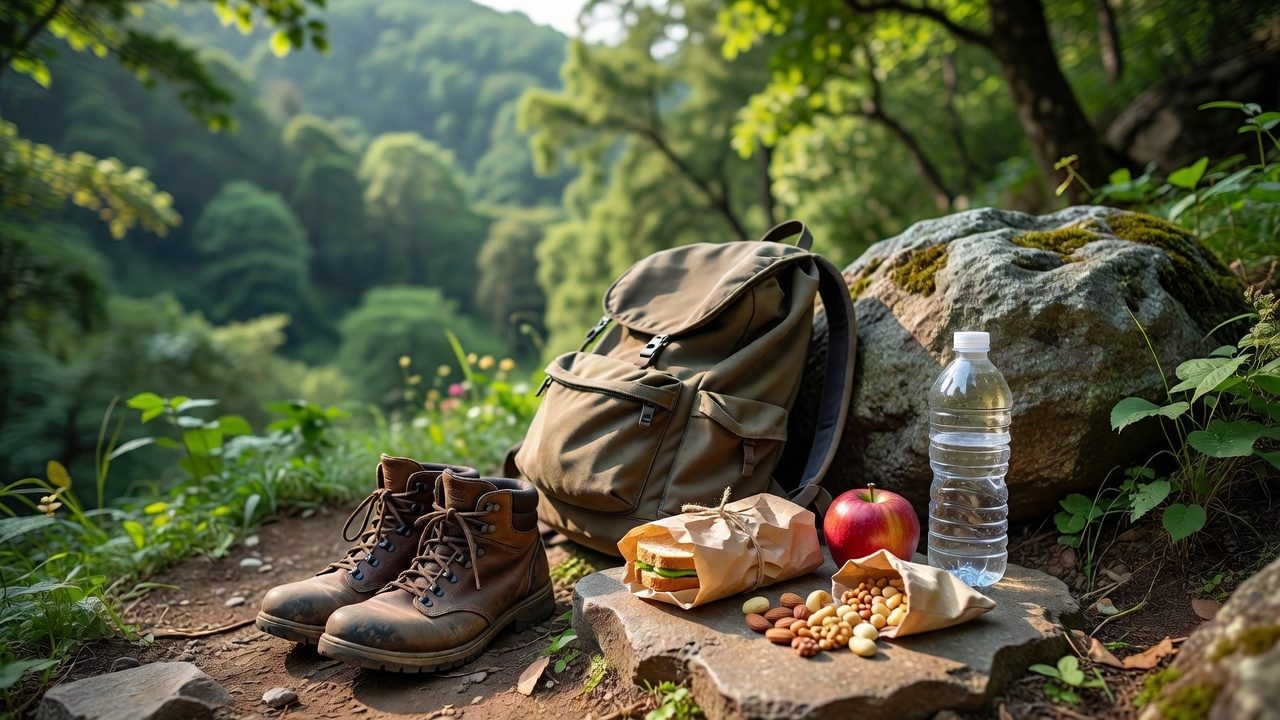
Four rules cover most of it: no cooking, nothing that melts, edible with one hand, and a mix of salty and sweet. Sweat costs you sodium, so a purely sweet snack day can leave you feeling flat by mile five. Treat the list below as a day hike food list to shop from rather than a menu — pick two or three categories, not all of them. If you want the short version of day hike snack ideas: a nut or seed mix, dried fruit, a bar or two, and something salty.
- Summer: jerky, meat sticks, dried fruit, nuts, pretzels, hard cheese. Leave chocolate and soft bars for cooler months — a melted bar is a mess in a hip-belt pocket.
- Cold weather and altitude: bars and nut butter freeze solid, so keep the day's snacks in an inside jacket pocket, not the pack lid.
- For kids: snacks they already like, in portions they can open themselves. A hangry eight-year-old is the single most common reason a family day hike turns around early.
- Wildlife: store food in a sealed bag, pack out every wrapper, and don't leave a snack buffet on a rock while you swim. In bear country, follow the local food-storage rules — our bear safety guide covers what changes when you're in bear habitat.
Day Hike Lunch Ideas
Cold lunch (no stove, no fuel, nothing to clean): a wrap or bagel sandwich travels better than sliced bread; a tortilla with cheese, hummus, and greens holds up in a warm pack; cold pasta salad, hard-boiled eggs, and a vacuum-sealed tuna pouch all work. Perishables should be eaten within about two hours of leaving a fridge on a warm day, so eat the protein first and save the bars for the afternoon.
Hot lunch without a stove: the THERMOS Stainless King Food Jar ($30.50) keeps soup, chili, or ramen genuinely hot for hours and needs no fuel, no flame, and no fire restrictions to worry about. It's the lowest-friction way to eat something warm at a windy overlook.
Hot lunch with a stove: the MSR PocketRocket 2 ($49.95) above plus a freeze-dried meal is the classic setup. The Mountain House Beef Stroganoff 4-pack ($69.00) is four trail meals that only need boiling water — and the Mountain House Expedition Assortment Bucket ($176.99) is a 30-serving bucket that makes sense if you're hiking or camping regularly enough to buy in bulk.
Coffee and tea on the trail: if the hot drink is the point, our camp coffee maker guide compares an AeroPress, a titanium French press, and a percolator for trail use — all three weigh less than a full water bottle.
What to Wear on a Day Hike (The Three-Layer Rule)
Most "what to wear on a day hike" advice boils down to three layers you can add or shed independently — which matters more than any single garment, because trailhead temperatures swing 20–30°F between the parking lot and a shaded ridge.
Layer 1 — base layer: synthetic or merino wool, never cotton. Cotton holds water against your skin and stops insulating the moment it's damp. A moisture-wicking synthetic tee like the G Gradual Performance Shirt ($16.99) does the job in summer, and merino works the same way in cooler weather with less odor.
Layer 2 — mid layer: fleece or light puffy. This is the layer you add at the summit and at rest stops. The Columbia Steens Mountain 2.0 Fleece ($34.99) is the value pick in a full zip, and the Columbia Benton Springs Fleece ($39.99) is the women's equivalent — both pack small enough to live in the bottom of a 20L.
Layer 3 — shell: a real rain jacket, not a poncho. A shell blocks wind and keeps the fleece dry, which is what actually keeps you warm. The Columbia Watertight II Rain Jacket ($60.00) is a widely owned, breathable entry point; if you're counting grams, the Outdoor Research Helium Rain Jacket ($159.00) packs smaller and lighter for about the same protection. Our rainy-day hiking guide covers what to change about your plan when the forecast turns.
Shoes and socks do more for comfort than any layer. Waterproof hiking shoes for morning dew and creek crossings (see the Merrell and KEEN picks above), plus merino socks — cotton socks plus ten miles equals blisters.
Then sun protection, because it's a layer you can't take off. A brimmed hat and sunscreen, plus sunglasses. The Connectyle UPF 50+ Sun Hat ($16.99) and the Sunday Afternoons Ultra Adventure Hat ($135.01) both shade the ears and neck, which is where day hikers actually burn. In hot weather, our hot-weather camping gear guide covers clothing and cooling in more depth, and in shoulder season the fall hiking gear checklist is the better starting point.
Season snapshot: summer is a synthetic tee, thin shorts or hiking pants, and the shell in your pack; fall adds the fleece as a worn layer and gloves in the lid; winter adds an insulating layer and the assumption that you'll wear everything you packed. The layer count doesn't change — the weight of each layer does.
What NOT to Bring
As important as what to pack. Leave these at home:
- Jeans — Cotton kills. Once wet, denim stays wet, chafes, and pulls heat from your body. Synthetic or merino wool only.
- A giant first aid kit — You don't need a trauma kit for a 6-mile day hike. The Adventure Medical Kits .7 covers everything you'll realistically use.
- Too much food — You're not climbing Everest. 500-1,000 calories is plenty for a day hike under 12 miles.
- Speaker playing music on the trail — This one's etiquette, not weight. Earbuds if you must; everyone else came for nature sounds.
- A brand new pair of boots — Never break in footwear on the trail. Wear them around the house and on short walks for at least a week first.
Winter Day Hikes: What Changes on the Packing List
In winter this list grows one section: insulated boots, merino socks and a traction device are the three additions, and the snow boots and winter traction guide covers how to pick all three for adults and for kids.
Day Hiking With Kids and Dogs
A day hike is the best first outdoor trip a family can take — no overnight commitment, and a turnaround point that's always within reach. It also fails differently than a solo hike, so plan the pacing rather than the mileage.
Day Hiking With Kids: Pace Over Distance
The most commonly cited guideline is a child's comfortable hiking distance in miles is roughly their age — about 3 miles for a 3-year-old, 6 for a 6-year-old — and that's on easy, interesting terrain with stops. Treat it as a ceiling, not a target. What actually keeps kids moving:
- Snacks and water on a schedule, not on request — every 30–45 minutes, plus a proper lunch break.
- A destination, not a distance: a waterfall, a viewpoint, a bridge, a rock to climb. "We're going to the lake" beats "we're going three miles."
- Their own pack and their own water. Kids drink more when the bottle is theirs. The Osprey Jet 18L Kid's Hiking Backpack ($80.00) is built for a child's torso, and the Black Diamond Wiz Kid Headlamp ($24.95) is a genuinely kid-safe light — useful on a late-afternoon hike, and a fun piece of gear to own.
- Real footwear, not sneakers. The KEEN Kids Hightrail Waterproof Hiking Shoes ($74.95) have the same closed-toe protection as adult hikers, which matters on rocky trails.
- Walkie talkies for older kids. The Retevis RT628 Walkie Talkies 4-Pack ($39.99) let a faster kid stay in sight of an adult without either of you shouting — and they keep kids interested in the hike itself.
Toddlers and babies are a different trip. A day hike with a toddler is usually less hiking than supervised wandering with a long stop in the middle, and day walks with kids under three cap out around a mile of actual walking. Day hikes with a baby mean a carrier or a stroller-friendly surface and a hard nap-time deadline. Under about three, most families use a carrier or a stroller-capable, flat, paved or packed-dirt trail; a wagon like the Radio Flyer 3-in-1 EZ Fold Wagon ($109.99) works on rail-trails and campground loops, not on root-covered singletrack. Plan on roughly half the mileage you'd do alone, with a nap window in the middle. For the gear and logistics side of camping with the youngest kids, our camping with a baby or toddler guide covers sleep, feeding, and what changes after dark, and the camping with teens guide is the better fit once they'd rather carry their own pack than hold your hand.
Day Hiking With Your Dog
Dogs are the easiest hiking partners to bring along and the easiest to over-hike. A few things that genuinely matter:
- Water for the dog, carried for the dog. A collapsible bowl takes no space: the Ruffwear Quencher ($19.95) or the Kurgo Zippy Bowl ($15.99). For a hike where you don't want to stop, the Cibaabo dog water bottle with a built-in food container ($14.98) is a bottle-and-bowl in one.
- A harness, not a collar, for anything steep. The Ruffwear Front Range Dog Harness ($44.95) lets you help a dog up a scramble without pulling on its throat, and gives you a handle for the awkward step down.
- Heat is the real risk, not distance. Hot rock and asphalt radiate heat straight into paws. Hike early, seek shade, and check the surface with the back of your hand — if it's too hot for your hand, it's too hot for paws. Musher's Secret Paw Wax ($24.99) adds a layer of protection on abrasive rock.
- Tick check at the car. The HomeSake Tick Remover ($14.39) lives on a keyring and removes an embedded tick cleanly. Our dog summer hiking and paw protection guide has the seasonal version of this advice, and the dog water safety guide covers lakes and streams — including why a tired dog and cold water is a bad combination.
- Follow the leash rules, everywhere. Leash laws exist for wildlife, livestock, and other hikers; a dog that recalls perfectly at home is a different animal at a switchback with a deer. The camping with dogs checklist covers trail and campsite etiquette together, and the dog camping hub collects everything else we've written for hiking and camping with a dog.
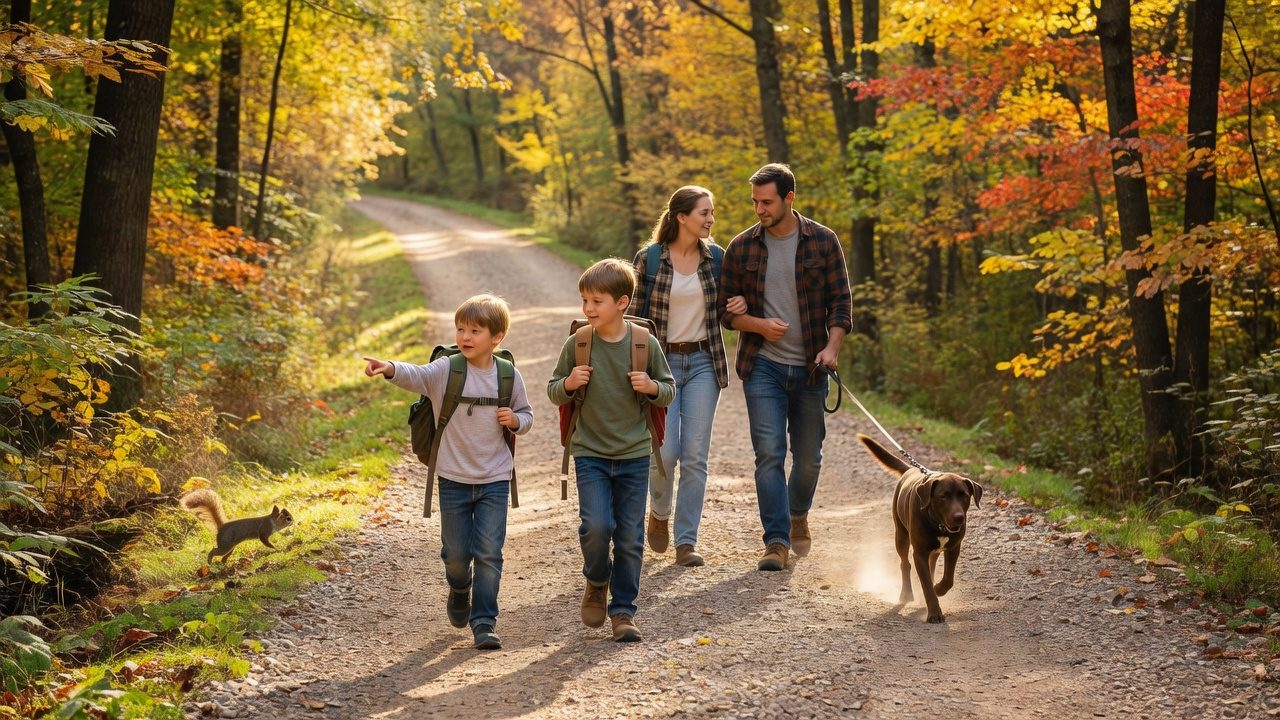
Day Hikes Near Me: How to Find One That Fits Your Crew
"Day hikes near me" is the search everyone starts with, and the results are only as good as your filters. Sort by these before you pick a trailhead:
- Round-trip distance and elevation gain. Distance is the number people look at; elevation gain is the number that decides how hard it feels. 1,000 feet of gain is a real climb, even over three miles.
- Loop or out-and-back. Loops are better with kids — no "we're going back the same way" negotiation — but out-and-backs let you turn around at any point, which is the safer choice with a toddler.
- Surface. Paved or packed gravel for strollers and wagons; roots and rock for everyone else.
- Shade and water access. A creek or lake within the first mile is the single best feature for a family hike with a dog in summer.
- Dog-friendly filters. "Dog friendly day hikes near me" is a filter, not a category — most trail apps let you sort by dogs allowed, and the park's own page will list leash rules and seasonal closures. Check that before you drive, not at the trailhead.
- Parking and fees. Popular trailheads fill by mid-morning on fall weekends. An early start is a free upgrade to almost any hike.
Good sources: your county or city park district site (usually the most accurate on trail conditions), state park and national forest pages, and apps like AllTrails or Gaia GPS that show elevation profiles and recent conditions. The "near me" part just means putting your own zip code, group size, and dog into the filter — the trail doesn't change, the shortlist does.
The 2-Minute Pre-Hike Check (Do This Every Time)
Before you drive to the trailhead, run through this:
- Check the weather — Not just "sunny." Check wind speed (30 mph gusts above treeline are dangerous), chance of thunderstorms (afternoon storms are common in mountains), and sunset time (plan to be off trail an hour before dark)
- Tell someone your plan — Trail name, expected return time, and "if you don't hear from me by X, call for help"
- Charge your phone and headlamp — Self-explanatory
- Pack the 10 essentials — If you skipped any, throw them in now
- Fill water + grab filter — The Sawyer Squeeze weighs 3 ounces and fits in a side pocket. There's no excuse to skip it
Quick Checklist by Hike Length
Copy this into your notes app before your next hike:
Short (2-4 miles, well-marked trail): ☐ Water bottle (1L minimum) ☐ Phone + offline map ☐ Sunscreen + hat ☐ Small first aid kit ☐ Snack ☐ Rain shell (just in case)
Medium (5-8 miles, moderate terrain): ☐ Water (2L) + filter ☐ All 10 essentials ☐ Trekking poles (optional, but your knees will thank you on descents — light, collapsible ones stash in your pack when you don't need them) ☐ Lunch + extra snacks (500+ bonus calories) ☐ Extra socks (changing into dry socks at the halfway point is a luxury that costs 2 ounces)
Long (9+ miles, significant elevation): ☐ Everything above ☐ Water filter (Sawyer Squeeze — you'll refill at least once) ☐ Headlamp with fresh batteries ☐ Emergency bivy ☐ Stove + hot meal (optional but morale-boosting) ☐ Extra insulating layer (fleece or puffy)
Day Hike Packing List, Checklist, or Gear List? It's the Same List
Different searchers use different words for one thing, so to save you another tab: a day hike packing list, a day hiking checklist, a day hike gear list, a day hike equipment list, and "what to bring on a day hike" all mean the list on this page. A few near-misses worth untangling:
- "Day hike pack," "day hike bag," and "daypack" are the pack itself — see the size table above.
- "What to carry on a day hike" vs "what to bring" is the same question; "carry" usually signals someone worried about weight, which the 10 essentials already answer (everything on it weighs a couple of pounds).
- "Day hike essentials for beginners" is this page. "For women" is this page plus the torso-fit note above — the list doesn't change with gender, but pack fit and hip-belt shape can.
- "What to bring on a short hike" or a "short day hike" is the short-hike column in the checklist-by-length section below: water, phone with an offline map, sun protection, a snack, a shell.
- "Day hike vs backpacking" is a different trip. A day hike carries everything you need for hours; backpacking carries shelter and a sleep system for a night out. When you're ready to cross that line, start with our first camping trip starter kit — and note that "day hiking vs backpacking boots" is a real distinction too, which our trail runners vs hiking boots comparison breaks down.
The feature searches, answered in one place. If you arrived via a longer query, here's where each one lands: a day hike backpack with hip belt is a load-carrying question, so decide by pack weight (see the daypack section above); a day hike backpack women or day hike backpack men is a fit question, decided by torso length rather than by label; a day hike backpack with a water bladder is a hydration-sleeve question, and either a 2L or 3L reservoir drops straight in. On the family side, a day hike with toddler and day hikes with baby are both half-mileage trips with a carrier or a stroller-friendly surface and a nap window in the middle — the section above covers the gear and pacing.
The Bottom Line
The difference between a miserable day hike and a great one usually comes down to five things: the right footwear, enough water, a headlamp you didn't need, a first aid kit you hope you won't need, and a rain shell that lives at the bottom of your pack.
Start with the 10 essentials, add comfortable shoes and a well-fitting pack, and you'll be the person on the trail who's actually enjoying themselves — not the one limping back to the parking lot in soggy cotton socks. If you're planning to step up to an overnight trip, our first camping trip starter kit covers the tent-to-sleeping-bag transition from day hiker to camper. For a curated reading list of every hiking and camping article we've published, bookmark our Camping Knowledge Library.
Now go hike something. Happy trails from the TrailMapz team.
TrailMapz is reader-supported. When you buy through links on our site, we may earn an affiliate commission at no additional cost to you. All prices and ratings are accurate as of September 2026.
Shopping for your first pair with wide feet? Our wide-foot hiking shoe guide walks through the at-home foot measurement and the models with the roomiest toe boxes, so you don't waste a trip on blisters.
Day Hike FAQ
What are the 10 essentials for a day hike?
Navigation (offline maps plus a paper backup), headlamp, sun protection, first aid, knife, fire, emergency shelter, extra food, water with filtration, and extra layers. The list hasn't changed since the 1930s because it isn't about gear trends — it covers the specific failure modes that turn a short hike into a search and rescue.
Do I really need a headlamp on a day hike?
Yes. A twisted ankle at 4 PM in October means walking out in the dark, and a phone flashlight dies in about an hour — assuming you have battery and signal at all. The Petzl ACTIK CORE ($79.95) is 625 lumens, USB rechargeable, and has a red-light mode that preserves your night vision.
What's the most important thing to spend money on for a day hike?
Footwear and socks. The Merrell Moab 3 Waterproof ($129.95) is the pick, and it needs breaking in before trail day. Blisters and rolled ankles end more hikes than weather does, and both come down to your shoes and what's in them — merino socks like the Darn Tough Hiker Micro Crew ($27.95) are the cheapest blister insurance you can buy.
What should I bring on a short hike?
For a short hike of a few miles on a marked trail: water (at least a liter), your phone with an offline map downloaded, sun protection, a small first-aid kit, a snack, and a rain shell. The 10 essentials still apply in spirit — the difference on a short hike is the size of each item, not whether you bring it. A headlamp and a lightweight layer are the two things people skip and then want.
What food should I bring on a day hike?
Plan on roughly 200–300 calories per hour of hiking plus a 500-calorie buffer, favoring foods above about 100 calories per ounce. In practice that's nuts or nut butter, dried fruit, a couple of bars, jerky or meat sticks, and a proper lunch — a wrap, a bagel sandwich, or a food-jar soup if you want something hot without a stove. Avoid chocolate and soft bars in summer heat, and keep bars in a jacket pocket rather than the pack lid when it's freezing.
What should I wear on a day hike?
Three layers you can add or shed: a synthetic or merino base layer (never cotton), a fleece or light puffy mid layer, and a rain shell. Add real hiking shoes and merino socks, plus a brimmed hat and sunscreen. Cotton is the one fabric to leave at home — it stays wet, chafes, and stops insulating.
Can I take my dog on a day hike?
Yes, on most trails that allow dogs — check the specific park's leash rules first, since many require a six-foot leash regardless of how well your dog recalls. Carry water for your dog, use a harness rather than a collar on steep terrain, hike early in hot weather because paws burn on hot rock and asphalt, and do a tick check at the car. Start with a shorter hike than you think your dog needs; dogs will keep going past the point where they should stop.
A retractable leash does not satisfy a six-foot rule even when it is locked, which is the reason the Kurgo Quantum 6-in-1 leash exists: a fixed 6-foot lead that also gives you a short traffic grip at a crowded trailhead and a waist mode when both hands are holding trekking poles or a kid's hand.
How much water should I carry on a day hike?
Plan on roughly half a liter per hour of hiking in moderate conditions, and more in heat or at altitude. Carry a filter as backup so you can refill from a stream instead of turning around early — the 10 essentials treat filtration as part of your water plan, not an optional extra.
If you are building that kit on a women's fit, the women's camping and hiking gear guide covers the footwear, layers, and sun protection that matter most on a family day hike.