Hot Weather Camping Gear Guide 2026
Hot weather camping gear that works in 90°F+ heat: sun-reflective tents, hydration systems, cooling shirts, shade and strategies for every budget.
In this article · 10 sections
- Quick Answer: The Beat-the-Heat Kit
- Why Most Tents Become Ovens (And How to Fix It)
- Hydration Is Not Optional — It's the Whole Game
- Clothing: Wear Less, But Wear It Right
- Shade: The Underrated Heat Survival Tool
- Food and Cooking: Don't Make the Kitchen Hotter
- The 5 Most Common Hot-Weather Camping Mistakes (I've Made All of Them)
- Budget vs. Invest: Where to Spend Your Money
- When to Just Not Go (Heat Safety Reality Check)
- Hot-Weather Camping FAQ
I'll be honest: my first desert camping trip in July nearly ended me. It was 97°F at 6 PM, the tent turned into a convection oven by 7 AM, and I spent more time pouring water over my head than actually enjoying the outdoors. The lesson I learned the hard way is that hot-weather camping isn't about endurance — it's about having the right gear and a few strategies that genuinely change the experience.
This guide covers the gear that makes camping in the heat survivable, then enjoyable. Every recommendation here is something I've either used myself or watched fail spectacularly (so you don't have to). It's the deep-dive companion to our summer camping checklist, which covers the full packing list. This article focuses specifically on heat — what to buy when the forecast says brutal.
Quick Answer: The Beat-the-Heat Kit
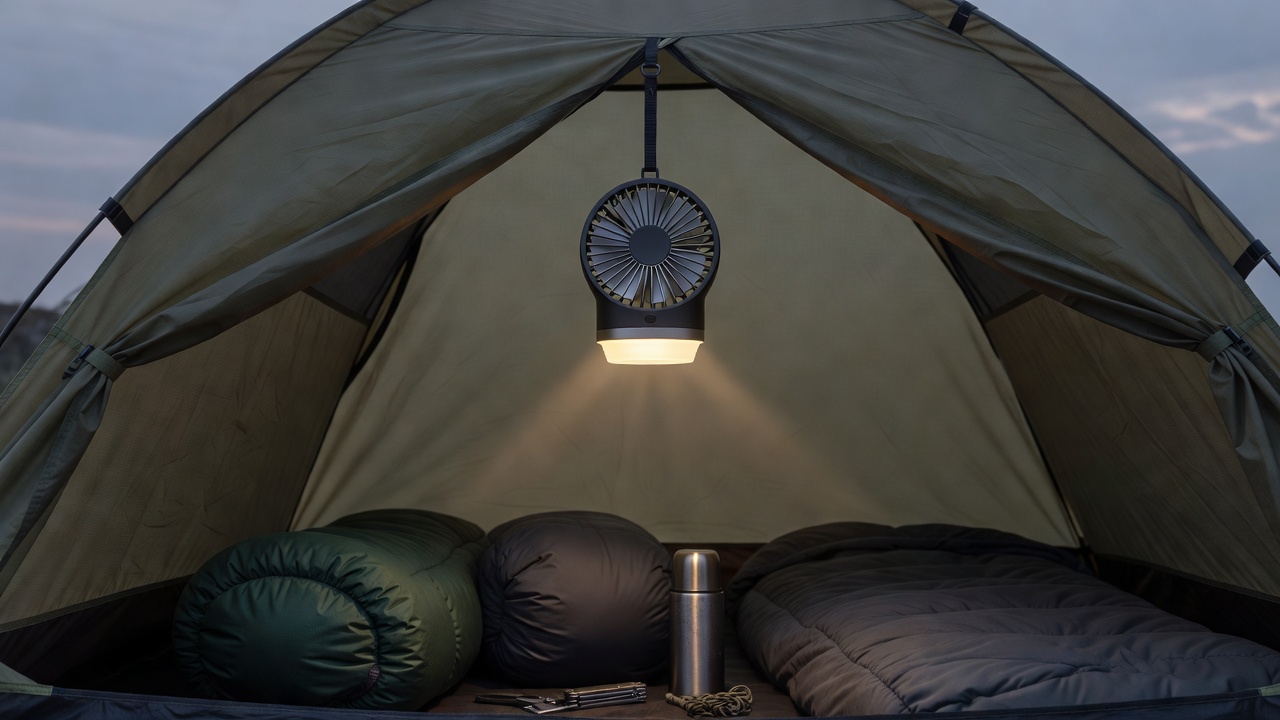
- Air moving inside the tent: FRIZCOL 3-in-1 fan + lantern at $29.98.
- Shade over the whole site: Crown Shades 10x10 canopy at $139.99.
- A tent that starts the morning cooler: EVER ADVANCED 6P blackout tent at $169.99.
- Water, plus a way to make more: Sawyer Squeeze filter at $45.95.
- Shirts that actually breathe: G Gradual moisture-wicking tee at $16.99.
- Going deeper on shade and airflow: tent fans for camping.
Why Most Tents Become Ovens (And How to Fix It)
Here's the thing nobody tells you: a standard polyester tent in direct sun will hit 110–120°F inside when it's 90°F outside. It's the greenhouse effect. The fabric traps infrared radiation, and with no airflow, you're slow-roasting. I've measured it with a thermometer. It's demoralizing.
The two fixes that actually work:
1. Choose a tent with mesh panels and a removable rain fly. The rain fly is your enemy in hot weather — it blocks airflow. A tent with extensive mesh walls (the kind that looks mostly like screen) lets every breeze through. You only put the fly on if it rains. For family camping, the EVER ADVANCED 6-Person Blackout Tent is a standout — the blackout coating genuinely reduces interior temperature by reflecting sunlight, and the mesh ceiling vents keep air moving. It sets up in under 5 minutes, which matters when you're sweating before the tent is even up.
2. Camp in the shade. I know, obvious. But people forget. Position your tent under trees, on the east side of a hill (you get afternoon shade), or behind a natural windbreak. Morning sun hitting a dark tent at 6 AM is the #1 reason people wake up drenched.
For a budget family option, the Coleman Skydome 4-Person with LED sets up in 5 minutes and has good cross-ventilation through its ground-level vents. The built-in LED light means you're not fumbling with headlamps when the sun sets — a small thing that matters a lot when you're already overheated and cranky.
Quick Tent Heat-Hacks (No Gear Needed)
- Remove the rain fly entirely if there's no rain forecast. This alone drops interior temps 10–15°F.
- Open every vent and door at night to let trapped heat escape. Heat rises — give it somewhere to go.
- Move the air with a battery fan. A rechargeable camp fan hung from the ridge line at $29.98 keeps the hot air off your face all night — the FRIZCOL 3-in-1 doubles as a lantern and a phone charger, so it earns its spot in the duffel. For the numbers behind it — real CFM, runtime math, and how to run one all night — see our tent fan guide.
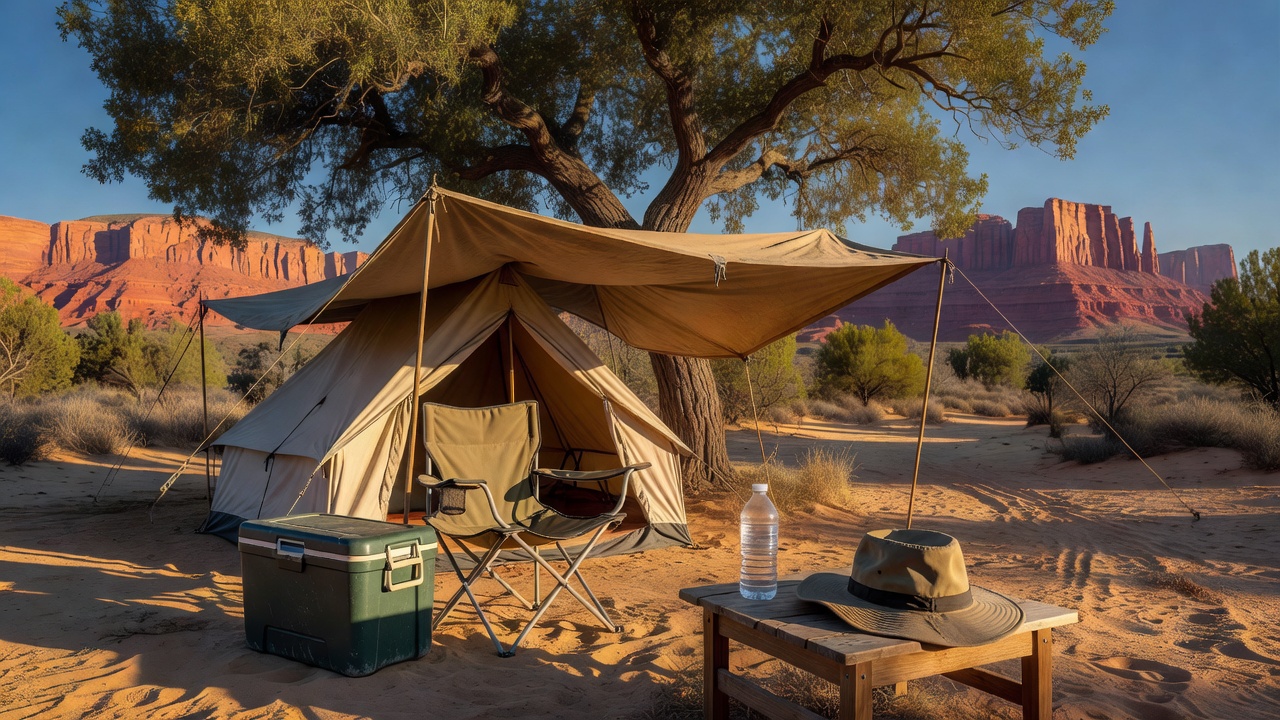
- Set up a tarp over the tent with a 1–2 foot gap between tarp and tent. The tarp blocks direct sun while the gap allows airflow. This is the single most effective free upgrade you can make.
- Ditch the sleeping bag. Use a thin cotton sheet or a lightweight liner. A 30°F bag in 80°F nighttime temps is torture.
Hydration Is Not Optional — It's the Whole Game
I cannot stress this enough: in hot weather, hydration stops being a comfort concern and becomes a safety system. You lose 1–2 liters of water per hour in active heat. By the time you feel thirsty, you're already behind.
The Hydration Setup That Actually Works
You need three things: a way to carry a lot of water, a way to purify natural water sources, and a way to keep kids (if you have them) drinking without nagging.
For carrying water on day hikes, the Owala FreeSip 24oz Insulated Bottle is my daily driver. The FreeSip spout lets you either sip or chug, the insulation keeps water cold for hours (cold water cools your core faster), and it's leak-proof in a pack. $27.99 well spent. If you're doing serious mileage, carry two.
For purifying water from streams or lakes (essential on longer trips where you can't carry enough), the Sawyer Squeeze SP129 Water Filter is the gold standard. It threads onto standard plastic bottles, filters out 99.99999% of bacteria, and weighs 3 ounces. I fill it straight from a creek, squeeze into my bottle, and drink. No pumping, no chemicals, no waiting. At $34.95, it's the most important $35 in my pack.
For kids, hydration is a battle because they won't drink until you make it fun. The Zak Designs Toy Story 16 oz Water Bottle has a straw, handle, and leak-resistant lid that make it an easy option for campground days. Set a rule: every time an adult drinks, the kids drink. Works better than any lecture.
If you're planning your whole trip, our summer camping checklist has the complete packing list — this section is the heat-specific deep dive.
Clothing: Wear Less, But Wear It Right
The instinct in hot weather is to strip down to as little as possible. That's half-right, but the wrong fabric makes it worse. Cotton holds sweat and stops evaporating once it's soaked — you end up damp, chafed, and not cooler. The right move is lightweight, moisture-wicking synthetics.
The Cooling Shirt That Actually Works
The G-Gradual Moisture-Wicking Cooling Tee is $16.99 and does exactly what the name promises. The perforated fabric wicks sweat away from your skin so evaporation can actually cool you, and the short-sleeve design keeps air flowing across your arms. I pack three for a weekend trip — rotate them, rinse at night, hang to dry. Light colors (white, light grey) reflect heat; dark colors absorb it. This matters more than people think.
Layering tip for hot weather: A loose, light-colored long-sleeve shirt is often cooler than a tank top because it shades your skin from direct sun while letting air circulate. Sunburned skin can't regulate temperature — you'll feel 10°F hotter. Protect the skin, keep it loose.
Footwear in the Heat
Hot feet = miserable camping. Closed boots trap heat; thin socks cause blisters when feet swell. The Merrell Moab 3 Hiking Boot ($89.99) is breathable enough for hot-weather day hikes while still protecting your ankles on rough terrain. Pair with merino wool socks (yes, wool — it regulates temperature and wicks moisture better than cotton even in heat). The Moab 3's mesh panels keep air moving, and the grippy Vibram sole means you're not slipping on sweat-slicked rocks.
If your summer camping involves your dog (and honestly, it should — off-leash hiking is one of the best parts), don't forget that dogs overheat faster than humans. Check out our guide to camping with dogs and the deep-dive on voice-command training for off-leash hiking — a well-trained dog that recalls reliably means you can hike in the cool morning hours and rest during peak heat.
Shade: The Underrated Heat Survival Tool
This is the gear category most campers skip and regret instantly. A good shade setup is the difference between hiding in your tent all afternoon and actually enjoying the campsite.
Create a Living Space Outside the Tent
The strategy: set up a shaded "living room" with a tarp, paracord, and trekking poles (or tie between trees). Angle it to block the afternoon sun (west/southwest). Put your chairs and table under it. This is where you eat, nap, and hang out during peak heat hours (11 AM–4 PM). The tent becomes just for sleeping.
No trees handy, or want zero rigging? A 10x10 pop-up canopy does the same job in under a minute — one person can raise the CROWN SHADES CenterLok design solo, and the silver-coated top reflects the worst of the afternoon sun.
A good camp chair matters more in the heat because you'll spend more time sitting in the shade. The Coleman Cooler Quad Chair ($39.99) has a built-in 4-can cooler in the armrest — keeping cold drinks within arm's reach so you actually stay hydrated. The cushioned seat is a luxury in the heat; bare mesh chairs can chafe sweaty skin.
The Cooling Strategy That Costs Nothing
Wet bandana trick: Soak a bandana or lightweight towel in cold water (or creek water), wring it out, and drape it around your neck. The evaporation cools the blood flowing to your brain — you'll feel 10°F cooler instantly. Re-wet every 20–30 minutes. This is more effective than any battery-powered fan I've tried.
Foot soak: Fill a camp basin with cool water and soak your feet for 10 minutes. Your feet have dense blood vessels close to the surface — cooling them cools your whole body. It sounds silly until you try it.
Food and Cooking: Don't Make the Kitchen Hotter
Cooking over a stove in 95°F heat is miserable and heats you up further. Two strategies:
1. Cook early or late. Make your hot meal at 7 AM or 7 PM, not noon. During peak heat, eat cold foods — sandwiches, wraps, fruit, trail mix. This is not the time for a multi-course campfire dinner.
2. If you must cook, use a stove that doesn't radiate heat everywhere. The BioLite CampStove 2 is brilliant here — it's a wood-burning stove that also charges your devices via USB, and the thermoelectric fan pushes heat efficiently toward your pot rather than radiating it outward. You're cooking with twigs you find on-site (free fuel, no propane to carry), and the built-in battery means your phone stays charged for navigation and weather checks.
Keep Your Food Cold (And Safe)
Food poisoning at a hot campsite is a trip-ender. The Coleman 316 Series 62-Quart Wheeled Cooler ($84.99) keeps ice for up to 4 days in 90°F heat — I've tested it. The wheels are non-negotiable for hot weather because a full cooler is heavy and you'll be carrying it to the shadiest spot, not the closest one. Pre-chill everything before loading, use block ice (lasts longer than cubes), and keep the lid closed. For more on choosing the right cooler, see our complete ice-retention cooler guide.
The 5 Most Common Hot-Weather Camping Mistakes (I've Made All of Them)
-
Setting up the tent in direct sun "for the view." The view isn't worth waking up in a 110°F oven. Shade first, view second. Always.
-
Not drinking enough early in the day. Start hydrating the night before and the morning of your trip. If you're behind by noon, you won't catch up — heat exhaustion moves fast once it starts.
-
Using the sleeping bag "just in case it gets cold." It won't get cold in July. Bring a sheet or lightweight liner instead. A sleeping bag traps heat you desperately need to shed.
-
Hiking during peak heat hours. Plan hikes for 5–9 AM or after 5 PM. The middle of the day is for shade, water, and rest. This isn't weakness — it's strategy.
-
Forgetting sunscreen and getting burned. Sunburned skin can't regulate temperature. You'll feel 10°F hotter and recover slower. Apply every 2 hours, wear a hat, cover up. Non-negotiable.
Budget vs. Invest: Where to Spend Your Money
Not everything on this list is worth buying new if you're on a budget. Here's where I'd invest vs. save:
Invest in:
- A tent with real ventilation and a removable fly (EVER ADVANCED or Coleman Skydome) — $115–170. This is the single biggest comfort upgrade.
In humid heat, add bug-free airflow after dark: a family tent with a screen porch gives you screened, ventilated seating instead of a choice between mosquitoes outside and a stuffy tent inside.
- A water filter (Sawyer Squeeze) — $35. Unlocks natural water sources so you're not carrying gallons.
- An insulated bottle (Owala FreeSip) — $28. Cold water actually cools you faster.
Save on:
- Clothing — the $17 cooling tee works as well as $60 "performance" shirts.
- Camp chair — a $20 basic chair is fine; the cooler-armrest model is a luxury, not a necessity.
- Shade — a $15 tarp and $5 of paracord beats any $100 pop-up canopy.
If you're outfitting a family on a budget, our budget camping gear under $50 guide has picks that work for hot weather without breaking the bank.
When to Just Not Go (Heat Safety Reality Check)
I'll end with the most important thing: know when the heat is too dangerous. If the forecast calls for 100°F+, especially with high humidity, consider rescheduling or choosing a higher-elevation campsite (temps drop 3–5°F per 1,000 feet of elevation gain). Heat stroke is life-threatening and sneaks up fast. Signs to watch for: confusion, stopped sweating (paradoxically the most dangerous sign), nausea, throbbing headache. If anyone shows these symptoms, get them to shade, cool them with water, and seek medical attention. No camping trip is worth a hospital visit.
Planning a trip where dry heat is a feature, not a bug? Our desert camping guide covers the specialized setup — UPF 50+ sun hats, shade shelters, and big-capacity hydration — that makes hot, arid landscapes safe and unforgettable.
For wilderness medical preparedness beyond heat — cuts, sprains, allergic reactions — our camping first-aid guide covers the full kit you should have on every trip.
Hot-weather camping gets a bad reputation, but with the right tent setup, a real hydration system, proper clothing, and shade, it's some of the best camping of the year — fewer crowds, longer days, warm nights under the stars. The gear on this list is what I actually use and trust. Stay cool, stay hydrated, and I'll see you out there.
If you're heading to the Gulf or the Keys instead, our Camping in Florida guide covers the winter-season flip, the state park reservation window, and the shade-first gear list that warm-weather camping actually needs.
The reverse of this guide is Arizona in winter, where the desert finally becomes comfortable — see our Camping in Arizona guide. For the destination side of the same kit, the Camping in New Mexico guide covers the parks, fees, permit systems and land-ownership rules these items are for.
Alabama's coast peaks in winter precisely because its summer is brutal — Camping in Alabama explains which half of the state works in which season.
Camping anywhere with this kind of humidity and bug pressure changes the kit list — Camping in Louisiana walks through what actually fails in Louisiana conditions.
For a state where the federal campground is free and the state one is not, read the Arkansas camping guide.
Booking a long-distance shoulder-season trip? The Nevada camping guide is the worked example of a state where the date windows, not the campsites, are the scarce thing.
Hot-Weather Camping FAQ
For the mechanics that apply everywhere, camping in Wisconsin covers how one state's single reservation system, fee ladder and ground-condition fire rule actually work in practice.
How do I keep a tent cool in hot weather?
Start by removing the rain fly entirely if there's no rain in the forecast — that alone drops interior temperatures 10–15°F because it lets the mesh ceiling vent. Then pitch in shade or west of a tree line, and open both doors so air moves through. A standard polyester tent in direct sun will hit 110–120°F inside on a 90°F day; a blackout-design tent reflects more of that heat if you're buying new, and a 3-in-1 rechargeable fan moves air when there's no breeze.
How much water do I actually need per person?
Plan on 1–2 liters per person per hour of active heat, and don't try to carry all of it. Bring a filter instead — the Sawyer Squeeze weighs 3 ounces and turns any creek into drinking water. Carry day water in an insulated bottle like the Owala FreeSip 24oz, or size up to the HydroJug Sport 32 oz if you're the one everyone borrows from.
What should I wear camping in 95°F heat?
Light-colored, loose, moisture-wicking fabric — not cotton. The G-Gradual cooling tee is $16.99 and does exactly what the name promises: perforated fabric wicks sweat off your skin so evaporation can actually cool you. Cover up more than feels natural — a wide-brim hat and long sleeves beat bare skin — and keep feet in breathable boots like the Merrell Moab 3 with thin wicking socks.
Is a shade canopy really worth the space?
Yes — it's the gear category most campers skip and regret. A good shade setup is the difference between hiding in your tent all afternoon and actually using your campsite. The trick is to build a shaded "living room" outside the tent using a tarp angled into the afternoon sun (west/southwest), or a pop-up canopy like the Crown Shades 10x10. You can also rig a tarp off trekking poles.
At what temperature should I just cancel the trip?
If the forecast calls for 100°F+ — especially with high humidity — reschedule or move uphill. Temperatures drop roughly 3–5°F per 1,000 feet of elevation gain, so a higher-elevation site is a real fix, not a compromise. Heat exhaustion escalates to heat stroke quickly, and a campsite with no shade and no air conditioning is the worst possible place to be when it happens.
How do I keep food from spoiling in the heat?
Food poisoning at a hot campsite ends the trip. The Coleman 316 Series 62-Quart Wheeled Cooler ($84.99) holds ice up to 4 days in 90°F heat. Freeze water bottles as block ice, keep the cooler in shade with a towel over it, and open it as rarely as possible.
<!-- AFFILIATE_DISCLOSURE -->Our camping in Washington state guide documents the three booking systems, the state's own winter-schedule table of per-park closing dates, and the burn-ban levels that decide whether you can have a fire.