10-Item Camping First Aid Checklist: What to Pack & When to Use It (2026)
A practical camping first aid checklist covering cuts, burns, sprains, allergic reactions, and wilderness emergencies. What to pack, what to skip, and the one item most campers forget.
I learned the difference between a "complete" first aid kit and a useful one at 10 PM on a Tuesday, 90 minutes from the nearest urgent care, staring at a second-degree burn on my palm from a pot handle I'd grabbed without a glove. My store-bought kit had 47 items. Forty-seven. And exactly zero of them — not one — were useful for a burn larger than a dime.
Here's the uncomfortable truth about camping injuries: they're predictable. Cuts from pocket knives and tent stakes. Burns from camp stoves and fire rings. Twisted ankles on uneven terrain. Allergic reactions to things you didn't know you were allergic to. A camping first aid kit isn't a miniature hospital — it's a targeted response to the five or six things that actually go wrong outdoors.
This checklist covers every category of backcountry injury you're likely to encounter, what to pack for each, and — just as important — what to leave at home.

If you are planning a family trip into a new state this fall, the Oklahoma camping guide is a useful template: it walks the discounts, the pet fees, the parking-pass trap and the cabin rules before you book anything.
Quick Answer: What Actually Belongs in the Kit
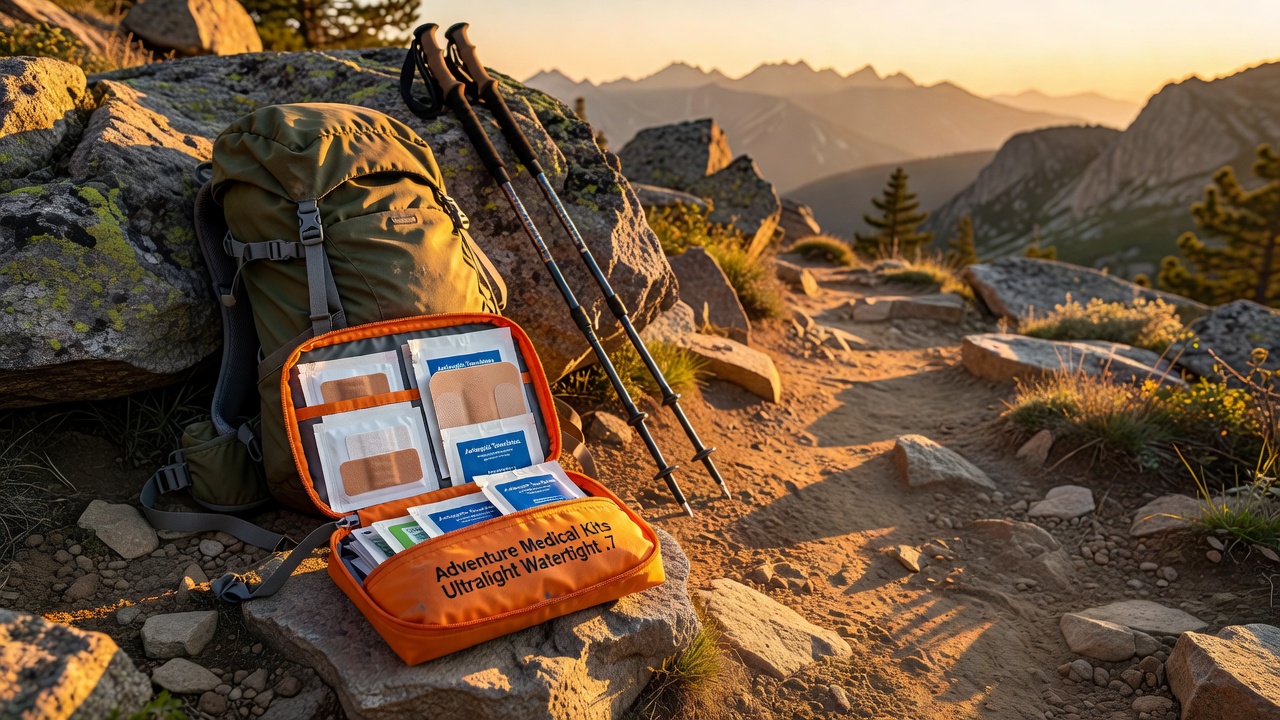
- Base kit: Adventure Medical Kits Ultralight/Watertight .7 — cuts, burns, sprains, allergic reactions, and stomach issues are about 95% of backcountry medical cases.
- Wound and gear repair: GEAR AID Tenacious Tape — patches a pad, a rainfly, or a jacket so a small tear does not end the trip.
- Tools: Leatherman Signal — a splinter, a bent zipper pull, or a stuck pot lid all need a tool, not a bandage.
- Light: Petzl ACTIK CORE — treating an injury after dark requires both hands free.
- Clean water: Sawyer Squeeze — most backcountry stomach trouble traces back to water, not food.
- Worst case: SABRE Frontiersman MAX Bear Spray — statistically unlikely, catastrophic if you are unprepared.
The 10 Categories Every Camping First Aid Kit Needs
Most pre-made kits pack for volume, not utility. You'll find 47 adhesive bandages and zero burn dressings, 15 alcohol wipes and nothing for a sprained ankle. Here's what actually matters, organized by the real injuries campers get:
1. Wound Care — Cuts, Scrapes & Blisters
This is what you'll use most. Pocket knives, tent stakes, sharp rocks, broken glass at established sites — cuts happen. Pack for cleaning, closing, and protecting:
- Sterile gauze pads (4×4) — at least 6. Bigger than you think you need.
- Medical tape (1" roll) — holds gauze in place, works as a makeshift bandage, can even close a small wound in a pinch.
- Antibiotic ointment packets — single-use, won't leak. 4-6 packets.
- Moleskin or blister pads — the #1 hiking injury isn't dramatic, it's a blister that ruins day two. Pack at least 6 pads.
- Butterfly closure strips — for cuts that are too deep for a bandage but don't need stitches yet. These buy you time to get to medical care.
Product pick: The Adventure Medical Kits Ultralight/Watertight .7 First Aid Kit ($44.95) covers wound care basics in a waterproof DryFlex bag that actually stays waterproof — unlike the "water-resistant" ziplocks most kits ship in. Weighs 5.9 ounces and packs 90 pieces. Good base to build on.
2. Burn Care — Stoves, Fire Rings & Hot Cookware
Second-degree burns are the most common serious camping injury. Camp stoves tip over. Pot handles stay hot longer than you expect. Embers pop out of fire rings. A burn in the backcountry is miserable without the right supplies:
- Hydrogel burn dressings (2-3) — these are the single most important item most kits skip. They cool the burn, provide a sterile barrier, and don't stick to the wound. Regular gauze on a burn is a nightmare to remove.
- Non-stick sterile pads — for smaller burns. 4-6.
- Rolled gauze — to wrap and secure a burn dressing without adhesive touching the wound.
What to skip: Burn creams in tubes. They expire, leak, and take up space. Hydrogel dressings do everything burn cream does in a sealed sterile package.
If you're cooking over an open fire — and half of camping burns happen around the fire ring, not the stove — our campfire cooking gear and recipes guide covers safe fire management and the cookware that keeps your hands away from the flames.
3. Sprains & Strains — The Twisted Ankle Problem
Uneven ground, loose rocks, tree roots hidden under leaves. Ankle injuries are the most common reason hikers need evacuation. You can't fix a sprain in the field, but you can stabilize it well enough to limp out:
- Elastic bandage (ACE wrap, 3-4") — for compression and support. Works on ankles, wrists, and knees.
- Athletic tape (1.5" roll) — more versatile than a dedicated ankle brace. Can wrap an ankle, splint a finger, or secure an ice pack.
- Instant cold pack (2) — the kind you squeeze to activate. No freezer needed. Reduces swelling in the critical first 30 minutes after a sprain.
4. Medications — Pain, Allergies & Stomach Issues
Don't bring the whole pharmacy. Bring what matches actual camping scenarios:
- Ibuprofen (200mg) — anti-inflammatory. For sprains, headaches, fever. 8-10 doses.
- Acetaminophen (500mg) — pain relief that doesn't thin blood (important if there's bleeding). 6-8 doses.
- Antihistamine (diphenhydramine/Benadryl) — for allergic reactions, insect stings, and unexpected plant contact. This is the one medication that can genuinely save a life if someone has a severe reaction. Pack at least 4 doses.
- Anti-diarrheal (loperamide/Imodium) — dehydration from stomach issues in the backcountry is dangerous. 4-6 doses.
- Antacid tablets — camp food is heavy. Heartburn at 2 AM in a tent is miserable. 6-8 tablets.
The one item most campers forget: Antihistamine. You may not have allergies at home, but you've never encountered the specific plant, insect, or pollen at your campsite before. A surprise allergic reaction two hours from help is not when you want to discover you need Benadryl.
5. Tools — What You Actually Need
Skip the suture kit. Skip the scalpel. If you need either of those, you need an emergency room, and no amount of Amazon-bought gear changes that. What you DO need:
- Tweezers with a fine point — splinters, ticks, cactus spines. The cheap ones in most kits can't grip anything smaller than a toothpick. Get proper slant-tip tweezers.
- Trauma shears (7.5") — cut through clothing, webbing, tape, and gauze without the sharp point of scissors. Safer to use one-handed.
- Nitrile gloves (4+ pairs) — protect yourself and the person you're helping. Bloodborne pathogens don't care that you're in the wilderness.
Product pick: The Leatherman Signal Multi-Tool ($129.95) includes pliers (tick removal, splinter extraction, gear repair), a knife, and a fire-starting ferro rod. It's not a first aid tool per se, but in a real emergency — cutting webbing, removing a fishhook, improvising a splint — it earns its weight.
6. Wound Closure & Repair
When gear fails, it can cause injuries. When injuries happen, gear can help:
- GEAR AID Tenacious Tape ($14.39) — fixes torn tents, sleeping pads, rain jackets, AND works as emergency wound closure in a worst-case scenario. Clear tape means you can see the wound underneath. This is the one item that serves dual duty as both gear repair and emergency medical supply.
- Safety pins (assorted, 6-8) — sling an arm, secure a bandage, pin a torn strap. Costs pennies, weighs nothing, saves the day.
7. Emergency Lighting
Every injury looks worse in the dark. Every treatment is harder when you can't see:
- Petzl ACTIK CORE Headlamp ($79.95) — 650 lumens with a red light mode that preserves night vision. The rechargeable battery means you're not burning through AAAs; the red mode means you can check a wound at 3 AM without blinding yourself or your tent mate. Hands-free is non-negotiable — you need both hands for first aid.
8. Hydration & Water Purification
Dehydration makes every injury worse. Diarrhea from contaminated water creates a new emergency on top of whatever injury you're already dealing with:
- Sawyer Squeeze Water Filter ($45.95) — 0.1 micron absolute filtration removes 99.99999% of bacteria. Weighs 3 ounces. If you're treating someone who's already sick or injured, the last thing you need is giardia from untreated stream water. For a deeper dive into filtration methods and backup purification options, see our complete camping water filtration guide.
9. Bear & Wildlife Safety
If you're camping in bear country — which is most of the Western US, Alaska, and large parts of Canada — this isn't optional:
- Sabre Frontiersman Bear Spray ($39.99) — 7.9 oz can with 40-foot range. Keep it accessible, not buried in your pack. Practice removing it from its holster once before you hit the trail — in an encounter, muscle memory matters more than the spray's specs.
10. Communication & Documentation
You can't treat what you can't describe. If you need to call for help:
- Know your exact location — download offline maps before you go. A ranger can't find "the campsite by the big pine tree."
- Write down allergies and medications for everyone in your group. Keep it in the first aid kit. If you're unconscious, the person treating you needs to know you're allergic to penicillin.
- Satellite communicator — the Garmin inReach Mini 2 ($349.99) or similar. When cell service doesn't exist and someone can't walk out, this is the difference between a story and a statistic. It's the most expensive item on this list and the one I would not leave behind on a remote trip.
Camping alone adds another layer to emergency preparedness — there's nobody to run for help. Our solo camping for beginners guide covers navigation, campsite selection, and the safety mindset that matters when you're your own backup.
For a broader dive into the gear side of camp safety — multi-tools, bear spray, emergency lighters, first aid kits, and gear repair tape — check out our new camping safety & survival gear guide. It covers five categories of gear that earn their place in every camp kit.
Common Camping First Aid Mistakes (Learn From Mine)
Mistake #1 — Buying the biggest kit. A 200-piece kit with 150 band-aids and zero burn dressings isn't "comprehensive," it's padding. Build around the injuries that actually happen: burns, cuts, sprains, allergic reactions.
Mistake #2 — Never checking expiration dates. Medications degrade. Adhesive stops sticking. Hydrogel dressings dry out. Check your kit at the start of every season. I write the expiration year on the outside of my kit with a Sharpie.
Mistake #3 — Burying the kit at the bottom of your pack. You need it accessible in under 10 seconds, one-handed, in the dark. Pack it in the top pocket or brain of your backpack. If you have to unpack your tent to reach your first aid kit, you've already failed.
Mistake #4 — Bringing things you don't know how to use. A tourniquet you've never practiced with is dangerous. A SAM splint you've never unfolded is dead weight. Take a Wilderness First Aid course (REI offers them, usually $200-300 for a 2-day class). It's the best gear investment you'll make.
Mistake #5 — No burn supplies. I've said it already, but it bears repeating: burns are the most common serious camping injury, and most off-the-shelf kits treat them as an afterthought. At minimum, pack 2-3 hydrogel burn dressings.
Quick Reference: Packing by Trip Type
Day hike (2-6 hours): Blister pads + elastic bandage + ibuprofen + antihistamine + tweezers + headlamp. 6-8 ounces total.
Weekend car camping: Full checklist above, plus extra gauze and more burn dressings. Car camping means weight doesn't matter — bring more of everything.
Multi-day backpacking: Cut weight aggressively: blister pads, a few gauze pads, butterfly strips, ibuprofen, antihistamine, 1 burn dressing, elastic bandage, headlamp, water filter. About 12 ounces total if you're smart about it.
Final Verdict
A camping first aid kit isn't about being ready for every possible emergency — it's about being ready for the emergencies that actually happen to campers. Cuts, burns, sprains, allergic reactions, and stomach issues cover 95% of backcountry medical situations. Everything else either can't be treated in the field (you need evacuation, not gear) or is so rare it's not worth carrying weight for.
Start with a quality base kit like the Adventure Medical Kits .7 ($44.95), add burn dressings, and supplement with the multi-tool, headlamp, and water filter you're probably already bringing. Check expiration dates every spring. Keep it accessible.
The best first aid kit is the one you actually have with you when something goes wrong — not the comprehensive monster collecting dust in your garage.
For the Pacific Northwest version of this packing list — rain management first, insulation second — see our Camping in Oregon guide.
For a cold-weather Midwest trip, the camping in Ohio guide covers the trail-hour rules and one-way reroutes that decide how you plan a hiking day with kids.
<!-- AFFILIATE_DISCLOSURE -->Florida adds a few risks worth planning for — lightning, fire ants, and alligator-adjacent fresh water. Our Camping in Florida guide covers the wildlife and weather rules specific to the state.
For the destination side of the same kit, the Camping in New Mexico guide covers the parks, fees, permit systems and land-ownership rules these items are for.
Alabama's specific first-aid pressure points are insects and ticks rather than altitude — Camping in Alabama covers what to add to the kit.
Camping anywhere with this kind of humidity and bug pressure changes the kit list — Camping in Louisiana walks through what actually fails in Louisiana conditions.
If the trip heads into canyon country instead, the Camping in Utah guide pairs the same gear decisions with 30°F desert nights and the campgrounds that stay open into November.
Camping First Aid Kit Contents: The Item List, Category by Category
Every version of the same question lands on the same kit. The table below maps the way people actually search for a camping first aid kit contents list to the answer that matters for that wording, so you can pack from the row that matches your trip instead of rebuilding the whole kit from scratch.
| Searched as | What goes in the kit |
|---|---|
| camping first aid kit contents | Ten categories cover roughly 95% of camp medical cases: wound care, burn care, sprain care, medications, tools, wound closure, lighting, water treatment, wildlife defence and communication. |
| camping first aid kit list | The 27-item list: six 4x4 gauze pads, a roll of 1-inch medical tape, six antibiotic packets, six moleskin pads, three butterfly strips, three hydrogel burn dressings, two non-stick pads, rolled gauze, a 3-4 inch ACE wrap, athletic tape, two instant cold packs, ibuprofen, acetaminophen, an antihistamine, an anti-diarrheal, antacid, slant tweezers, trauma shears, nitrile gloves, safety pins, a tick remover and a headlamp. |
| what should be in a first aid kit for camping | Wound care, burn care, sprain care, medications and tools - plus the item most kits omit and the one that saves lives: an antihistamine. |
| what should a camping first aid kit contain | Split the packing into must-haves (gauze, tape, a hydrogel burn dressing, moleskin, an ACE wrap, an antihistamine, tweezers, gloves) and trip-specific add-ons (a second cold pack for a family, extra wound care for a large group). |
| name something in a first aid kit for camping | Ten quick answers: gauze, medical tape, moleskin, a hydrogel burn dressing, an ACE wrap, an instant cold pack, ibuprofen, an antihistamine, slant tweezers and nitrile gloves. |
| first aid kit camping what is needed | The six-ounce minimum is blister pads, an elastic bandage, ibuprofen, an antihistamine, tweezers, a few gauze pads, butterfly strips and a headlamp. Everything past that is a comfort item. |
| outdoor first aid kit contents | Four things a home kit does not need and a camp kit does: a tick remover, snake-bite guidance, a headlamp for hands-free treatment, and water treatment because most backcountry stomach cases start with water. |
| first aid contents checklist | Audit the kit at the start of every season: medication expiry dates, adhesive that is still sticky, hydrogel dressings that have not dried out, gloves still sealed, shears still sharp. |
| name something in a first aid checklist | The audit answers: expiry dates, used-up consumables, a dried-out burn dressing, a missing tick remover, and the kit's location - it belongs in the top pocket, not the bottom of the pack. |
| what to put in first aid kit | Build in category order - wound, burn, sprain, medication, tools - then adjust quantity after the first trip instead of guessing before it. |
| things to put in first aid kit | The twelve items campers actually reach for: gauze, tape, moleskin, a burn dressing, a cold pack, ibuprofen, an antihistamine, an anti-diarrheal, tweezers, shears, gloves and a headlamp. |
| what to have in first aid kit | Separate durables from consumables. Shears, tweezers, a tick remover and a headlamp last years; gauze, tape, dressings and medications are what you restock every season. |
| things to have in first aid kit | The items you cannot improvise in the field: an antihistamine, a hydrogel burn dressing, nitrile gloves and an instant cold pack. Everything else has a rough substitute. |
| items for a first aid kit | Map items to injuries: cuts get gauze, tape and butterfly strips; burns get hydrogel, non-stick pads and rolled gauze; sprains get an ACE wrap, athletic tape and cold packs; allergic reactions get an antihistamine. |
| hiking first aid kit contents | On-trail additions to the base kit: more moleskin than you think, Leukotape for hot spots, a lighter elastic bandage, and a headlamp with a red mode for treating feet after dark. |
| items for first aid kit | Pack medications in single-use packets so one leak does not ruin the kit, and keep the whole thing in a waterproof bag - a wet kit is a broken kit. |
| recommended items for first aid kit | The five most-skipped items, in order: hydrogel burn dressings, moleskin, an antihistamine, a tick remover and a second instant cold pack. |
| what items in a first aid kit | Item to injury, short form: burns take hydrogel, blisters take moleskin, sprains take an ACE wrap, cuts take gauze and tape, allergic reactions take an antihistamine, splinters and ticks take slant tweezers. |
| items needed for a first aid kit | A solo kit runs about eight ounces. A family kit adds a second cold pack, a second ACE wrap and pediatric-dose medications. A group kit doubles the wound care. |
| hiking first aid kit list | Weight budget for a day hike: roughly 1.5 ounces of dressings, an ounce of tape, 0.8 ounces of medication, an ounce of tools and 0.7 ounces of gloves and pins - a little under six ounces all in. |
| name something in a first aid kit for hiking | Eight fast answers for a day pack: blister pads, Leukotape, an elastic bandage, ibuprofen, an antihistamine, tweezers, a couple of gauze pads and a headlamp. |
| what to put in hiking first aid kit | Day-hike kit: blister pads, athletic tape, one elastic bandage, ibuprofen, an antihistamine, tweezers and a headlamp. Leave the cold packs at home - you will not carry ice for six hours. |
| what should be in a hiking first aid kit | A solo hiker carries the full prevention layer and almost no repair layer. A group of four or more should add a second elastic bandage and a second cold pack, because one sprained ankle becomes three. |
| wilderness first aid kit list | Remote-trip additions: a SAM splint, a trauma dressing or tourniquet, two extra hydrogel burn dressings, an emergency blanket and a satellite messenger - the one item that changes the outcome. |
| wilderness first aid kit contents | Two hours from a road, the kit changes shape: you are stabilising and waiting, not treating and walking. Load it for bleeding control, hypothermia and communication. |
If a row reads like a smaller version of another row, that is the point: the kit does not change, the packing decision does. A day hiker is solving for ounces, a family is solving for pediatric doses, and a remote trip is solving for what happens when nobody is coming for two hours.
First Aid Kits by Trip Type and Traveler
The base kit is the same everywhere. What changes is a handful of items per trip type - and the trip type is usually what people put in the search bar rather than the word camping.
| Searched as | What changes for that trip |
|---|---|
| camping and hiking essential first aid kit | One kit can do both if you add a headlamp and a water filter - the two items a base-camp kit never needs and a trail kit always does. |
| camping essentials with kids first aid kit | Add pediatric-dose medications, a digital thermometer, sting relief, tweezers a child will tolerate, and the poison control number written on the lid. |
| first aid kit for rv | An RV kit can be bulky because the constraint is storage, not weight. Keep a second smaller kit in the tow vehicle, because the injury often happens away from the rig. |
| camping dog first aid kit | For dogs: styptic powder for torn nails and pads, vet wrap, a tick key, saline for eye and ear flushing, your vet's number, and the nearest 24-hour clinic for each stop. |
| adventure first aid kit | The generic version of the same spine - wound, burn, sprain, medication, tools - sized for the length of the trip rather than the type of it. |
| caravan first aid kit | Same contents as an RV kit, plus a storage note: hydrogel dressings degrade when frozen, so keep the kit in a cupboard rather than the fridge box. |
| hunting first aid kit | Hunting season raises the bleeding-control odds. Carry a trauma dressing, a tourniquet you have practised with and a satellite messenger - cell coverage fails exactly where the season is best. |
| mountain first aid kit | Add altitude and cold: ibuprofen for altitude headaches, an emergency blanket, and hand warmers so you can still work a buckle with numb fingers. |
| mountain rescue first aid kit | Rescue teams carry oxygen, splints and drugs - items you cannot self-administer. Your job is stabilisation and communication, so check what rescue actually covers before relying on it. |
| small first aid kit for hiking | Cut the packaging, not the categories. Repack gauze and dressings into a single zip bag and the same contents shrink by about a third. |
| first aid kit for backpacking | Multi-day kit: wound care for day one, blister care for day three, and enough antihistamine that a sting does not end the trip. Weigh it before you pack it. |
| trail first aid kit | If you lead a group, the trail kit is bigger than the personal kit - think splint, a second elastic bandage, a second cold pack, and a way to carry someone else's pack. |
| first aid kits for backpacking | Ounces decide it: a five-day trip justifies a SAM splint and a trauma dressing; a two-night trip does not. |
| backpacking first aid kit checklist | Three checks before the trailhead: expired medications out, blister supplies replaced, and the kit reachable without unpacking your shelter. |
| hiking first aid kit essentials | Essentials in the order most hikers need them: blister pads, tape, an elastic bandage, ibuprofen, an antihistamine, tweezers, gloves and a headlamp. |
| lightweight hiking first aid kit | Repackaging is the whole trick: a 90-piece kit becomes a six-ounce one once the plastic boxes, duplicate scissors and forty band-aids come out. |
| personal first aid kit for hiking | Solo means nobody is going for help, so carry the antihistamine, the headlamp and the satellite messenger even on a short trail you already know. |
| survival hiking first aid kit | The improvisation list: a sock as a compression wrap, a trekking pole as a splint, duct tape as wound closure. Improvisation is the backup, never the plan. |
| dog first aid kit hiking | The trail-dog kit: paw wrap for hot rock and ice, styptic for nails, a tick key, and a strap you can improvise into a muzzle if you have to examine a hurt paw. |
| day hike first-aid kit | A day-hike kit is under six ounces and contains no cold packs: blister care, one elastic bandage, pain relief, an antihistamine, tweezers and a light. |
| no first aid kit hiking mistake | The mistake is not the missing kit, it is the missing antihistamine. A first allergic reaction two hours from a road is the one case a bandage cannot fix. |
| first aid kit hiking need | Order of need for a hiking kit: blister care first, wound care second, sprain care third, medications fourth, tools last. |
| small hiking first aid kit | Four ounces buys the prevention layer - blister pads, tape, ibuprofen, an antihistamine, tweezers - which is the layer that actually gets used on a day hike. |
| first aid kit for hiking | The default: one small zip bag, checked each spring, kept in the top of the pack where one hand can reach it in the dark. |
Two rules survive every trip type on that list. Keep the kit where one hand can reach it in the dark, and check the expiry dates at the start of each season - the antihistamine that expires in March is the item you need in July.
Kentucky's cold-weather camping adds a firewood rule and a live fire-danger reading to the usual list — the Camping in Kentucky guide covers both alongside the Gorge's cliff-base and 300-foot setbacks.
If you want a worked example of a twelve-month booking window with a one-night cancellation deposit, see the Arkansas camping guide.
Camping First Aid FAQ
For the mechanics that apply everywhere, camping in Wisconsin covers how one state's single reservation system, fee ladder and ground-condition fire rule actually work in practice.
One system worth comparing against this one: our West Virginia camping guide, where the state park rules are identical at every park but the national park campgrounds are free and first-come.
What should actually be in a camping first aid kit?
Pack for the injuries campers really get, not the ones that fill a box. That means wound care (gauze, medical tape, antibiotic ointment, moleskin for blisters), burn care (hydrogel dressings), sprain care (an ACE wrap, athletic tape, instant cold packs), medications (ibuprofen, an antihistamine, an anti-diarrheal, antacid), and tools (tweezers, tick remover, gloves, scissors). A waterproof base kit like the Adventure Medical Kits Ultralight/Watertight .7 ($44.95) covers the wound-care basics in a DryFlex bag that stays genuinely dry, and you build out from there.
What do most camping first aid kits forget?
Hydrogel burn dressings, almost every time. Second-degree burns from tipped stoves and popping embers are the most common serious camping injury, and standard gauze sticks to a burn — removing it is worse than the burn. The other frequent gaps: moleskin for blisters (the single most common hiking injury), an antihistamine for allergic reactions, and a tick remover.
Do I need a full first aid kit for a one-night trip?
Yes, and the risk is front-loaded: most camping injuries happen in the first hour at camp, during setup, cooking, and fire-starting. A compact kit weighs under 6 ounces. Trim it by trip type — a solo backpacker can drop the bulky items, a family car-camping kit should add a second cold pack — but don't leave it home.
How do I treat a burn at camp?
Cool it with clean water, then cover it with a hydrogel burn dressing. Not butter, not ice, not a tube of burn cream — hydrogel cools the tissue, provides a sterile barrier, and doesn't adhere to the wound the way gauze does. Wrap with rolled gauze so no adhesive touches the burn. Anything larger than your palm, blistering across a joint, or on a child should be seen by a clinic, not managed at camp.
Our camping in Washington state guide documents the three booking systems, the state's own winter-schedule table of per-park closing dates, and the burn-ban levels that decide whether you can have a fire.