Solo Camping for Beginners: Your First Trip Alone (2026 Guide)
Solo camping for beginners: how to camp alone safely, what to pack, how to pick a campsite, camping alone as a woman and bear country basics.
The first time I went camping alone, I sat in my car for 20 minutes before getting out. The silence felt heavier than any noise. Every rustle in the bushes was definitely a bear. I almost drove home.
I did not drive home. And that night, sitting by a fire I built myself, eating food I cooked on a stove I set up, under stars I could actually see — it clicked. Solo camping is not about being brave. It is about discovering that you are more capable than you thought.
If you have been waiting for someone to go camping with, stop waiting. Here is how to do it safely, comfortably, and — surprisingly — enjoyably on your first solo trip.
Quick Answer: The Solo Camping Starter Kit
Heading out alone for the first time? This is the order I would buy in.
- Shelter: Coleman Skydome 4-Person — $122.99 for space and built-in lighting, or the Golabs 2-3 Person — $30.66 if you want light and cheap.
- Water: Sawyer Squeeze — $45.95 to refill from any stream, squeezed into a Nalgene 32 oz at $16.99.
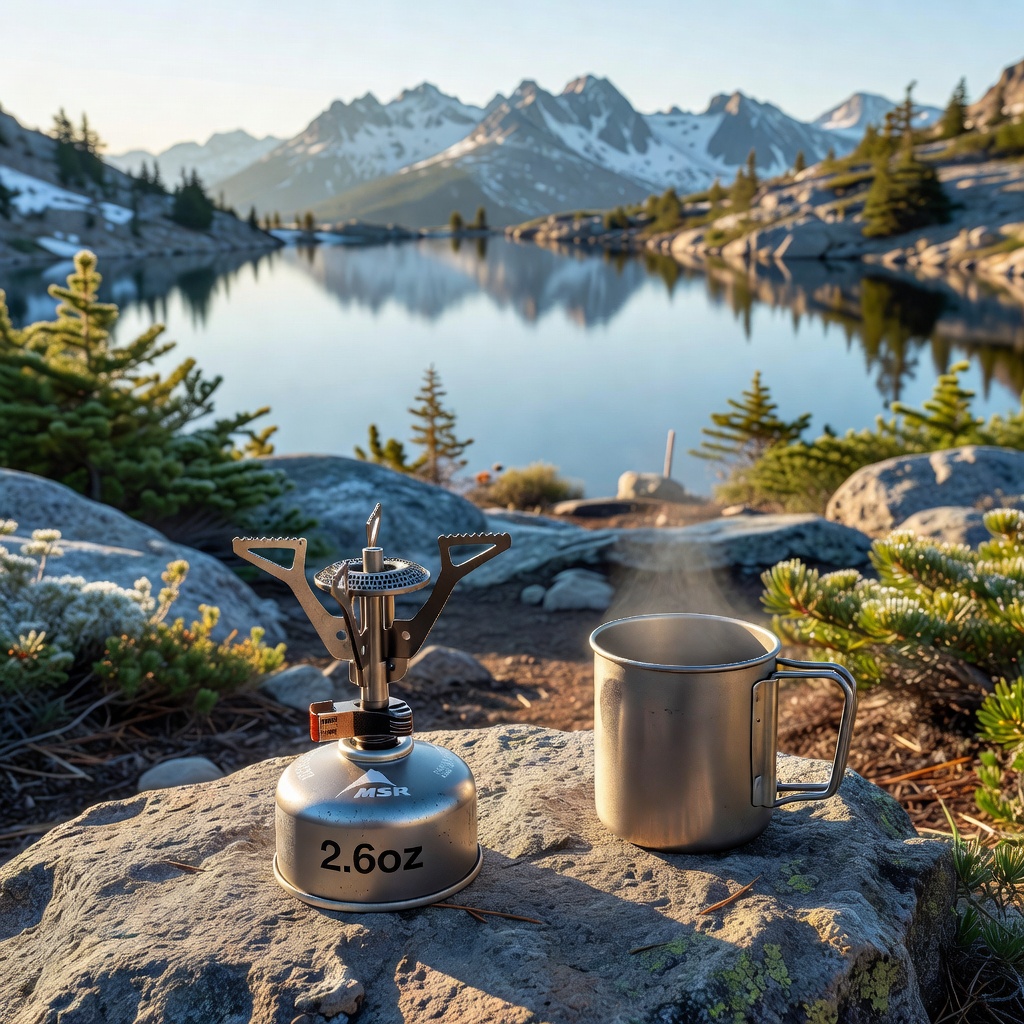
- Cooking: MSR PocketRocket 2 — $49.95. The lightest way to eat hot food on your own.
- Sleep comfort: TREKOLOGY ALUFT pillow — $16.99. Three ounces that decide whether you actually sleep.
- Day trips: BECOJADDE 15L Foldable Daypack — $25.19. Packs into its own pocket for summit side trips.
Solo Camping Search Guide: Find Your Exact Question
People rarely search "solo camping" and stop there. They search a precise wording, and the answer is usually one paragraph long. Here is the honest short answer for the phrasings people actually use, so you can jump straight to the part you need instead of reading a 4,000-word guide to find one sentence.
Getting Started, Gear And Logistics
| What you searched | The direct answer |
|---|---|
| how to camp alone, how to camp by yourself, how to go camping alone, how to start camping alone, how to start solo camping, how to start camping by yourself, going camping by yourself, tips for camping by yourself, camping alone tips | Six steps, in order: pick a developed campground within two hours of home, book a Tuesday-to-Thursday night, arrive before 3 PM, tell someone your site number and expected return time, pitch the shelter first, and cook before dark. Everything below is the expanded version of those steps. |
| solo camping for beginners, solo camping trip for beginners, solo camping tips for beginners, solo camping tips for women, solo camping guide | Start with campsite choice, not gear. Where you camp decides how safe and how quiet your first night feels; the gear list is the easy part and it can be assembled over a season. |
| camping alone for the first time, first time solo camping tips, first time camping alone | Your first night should be boring on purpose. Drive-up site, camp host nearby, cell signal, one night only. Boring is the goal because it makes the second trip feel easy. |
| solo camping essentials, solo camping gear, solo camping gear list, solo camping gear essentials, solo camping gear set, best solo camping gear, solo camping equipment, solo camping supplies, solo camping accessories, solo camping setup | Same kit, ten different names. The shortlist at the top of this page is the essentials set: shelter, water treatment, stove, sleep system, light, dry bag. Everything beyond that is comfort, and comfort is what you upgrade later. |
| solo camping tent | One person needs a 2-person tent at minimum if you are carrying it, and a 4-person tent is the comfort pick if you are driving in. A solo camper never splits the weight, so extra floor space is nearly free at a drive-up site. |
| solo camping stove | Three honest choices: a canister stove for weight, a one-piece personal system for speed and fuel economy, or a cheap single burner you will not mind losing. If you eat mostly boil-water meals, a personal system wins on fuel efficiency alone. |
| solo camping packing list, solo camping trip checklist, solo camping checklist, solo camping checklist female, first time solo camping checklist, solo backpacking checklist | The 22-item list is in the packing list section below, ordered by what you would regret forgetting rather than alphabetically. Print it, then cross out what you already own. |
| solo hiking gear, solo hiking gear list, solo hiking camping gear, solo backpacking gear, solo backpacking gear list | If you are walking in instead of driving in, the safety rules are identical but the weight math is not. This guide is for drive-up solo camping; on a walk-in trip every item has to earn its ounces, so treat the kit below as a wish list rather than a load-out. |
| solo backpacking tips, solo backpacking safety, solo backpacking safety tips, solo backpacking trips for beginners | The single biggest difference is consequence. Two miles from the trailhead with a twisted ankle and nobody to fetch help is the failure mode, so the check-in habit and a satellite messenger replace the campground safety net. |
| how to sleep while camping | Solo campers sleep colder because there is no tentmate adding body heat. Rate the bag 10-15°F below the forecast low and spend the money on the pad rather than the bag. |
| solo camping near me, solo safe camping sites near me, solo female camping near me | The near-me answer is a state park or national forest campground within a short drive, not a wilderness site. Booking sites two to three weeks ahead is enough at most public campgrounds outside holiday weekends. |
| solo camping arizona | Arizona is the winter-season answer for solo campers: mild nights, dark skies, and campgrounds that are nearly empty from November through February. Desert sites still need real water planning and sun protection. |
The Safety Questions
| What you searched | The direct answer |
|---|---|
| is camping by yourself safe, is camping by yourself dangerous, is camping by yourself scary, is camping by yourself weird, is camping by yourself fun, can you go camping by yourself, is it ok to camp alone, is it dangerous to camp alone, is it dangerous to solo camp, how dangerous is it to camp alone | Yes to safe and fun, no to dangerous in any ordinary sense, and less weird than you expect. The one risk that genuinely goes up alone is an injury with nobody to help, which is why a check-in text beats a bear bell. |
| is it safe to camp alone at a campsite | Developed campgrounds are the safest version of camping alone: neighbors in sight, a camp host, water, toilets, and usually signal. That is exactly why this guide tells beginners to start there. |
| is it safe to car camp alone | Car camping alone is the lowest-risk configuration available to a beginner. You have a lockable door, weather shelter, a phone charger, and an escape route if the forecast turns. |
| is it safe to wild camp alone | Wild camping, dispersed camping, and boondocking are a step up, not a step sideways. Legal rules vary by land manager, there is no host and no toilet, and you are responsible for your own navigation and water. Do it after a season of easy nights, in country you already know, arriving in daylight. |
| is it safe to camp alone in yellowstone | In a Yellowstone front-country campground, yes, and you will have neighbors. In the backcountry it is grizzly country: you need a permit, bear-resistant food storage, bear spray you know how to use, and the habit of making noise. The park is not more dangerous than the rest of the Rockies, it is just less forgiving of a sloppy food hang. |
| is it safe to camp alone as a woman, is it dangerous to camp alone as a woman, is camping alone as a woman safe, is it safe to go camping alone as a woman | The risk profile is the same as anyone else's, with an extra layer of attention management that is annoying but manageable. The women-specific section below covers site choice, check-in habits, and what to do when someone wanders over. |
| how to camp alone safely, how to stay safe camping alone, how to safely camp alone as a woman, how to camp alone as a woman | Pick a developed campground, arrive in daylight, tell two people your plan, keep your keys and phone in one known pocket, and give yourself permission to leave. Ninety percent of solo safety is preparation, and the other ten percent is trusting your gut early. |
| solo camping safety tips, solo camping safety essentials, solo camping safety gear amazon, solo camping security, solo female camping safety, solo female camping safety tips, solo car camping safety | Shelter you can pitch alone in the dark, water you can treat without pumping, two ignition sources, a headlamp with a red mode, first aid you know how to use, and a communication plan matched to your coverage. That is the whole security list. |
| how old to camp alone | Most public campgrounds want the person registering the site to be 18 or older, and many expect a responsible adult on the site. Practically: 18+ to book and camp alone at most state and national park campgrounds, younger than that usually means a parent or guardian books and stays. Rules vary by park, so check the specific campground. |
| camping alone in the woods, how to camp alone in the woods, camping alone in bear country | Woods camping alone is fine in black bear country with clean food storage and a tidy site; it becomes a different activity in grizzly country. The bear-country section below covers food storage, spray, and the mistakes that actually get people in trouble. |
| camping alone no talking, camping alone activities, solo camping activities, solo camping benefits, things to do camping by yourself, what to do camping by yourself, how to enjoy camping alone | The silence is the feature. Fire-watching, an actual paper book, one elaborate meal, stargazing, and a journal are the five things that fill an evening alone better than a phone does. |
Who You Are Camping As
| What you searched | The direct answer |
|---|---|
| solo camping female, solo female camping, solo female camping tips, solo camping female, solo women camping, solo women camping groups, single female camping, camping as a woman, camping alone as a woman, camping alone as a female, camping alone as a girl, camping by yourself female, going camping alone as a woman, tips for camping alone as a woman, solo camping as a woman what to know | Nothing about the gear changes. Site selection, check-in discipline, and a one-sentence script for unwanted attention are what people actually want here, and all three are below. Women-only camping groups and meetups exist in most metro areas and are a good way to do a first night with backup nearby. |
| camping alone with my dog, camping alone with a dog, camping solo with dog | A dog is real company and a real responsibility. Most public campgrounds require a short leash at all times and many restrict dogs on trails and at swim areas, so check the specific park's pet rules before you book. A harness, a collapsible bowl, and a place for the dog to sleep are the three things that make it work. |
| camping alone with kids | Camping alone with kids is a solo-parent trip, not a solitude trip. It is absolutely doable, but the pace, the packing, and the evening are all built around the kids, and the quiet part of solo camping does not show up until they are asleep. |
Why Go Solo Camping?
The obvious reason is practical: finding friends whose schedules, budgets, and camping styles align is harder than finding a flat tent spot at a crowded campground. But the better reasons run deeper.
You set the pace. Sleep until 10 AM or wake up at sunrise to hike. Cook an elaborate camp dinner or eat trail mix straight from the bag. Nobody complains, nobody negotiates. The trip is entirely yours.
You learn self-reliance fast. When you are the only person responsible for setting up the tent, starting the stove, filtering water, and navigating the trail, you figure things out. Skills that feel intimidating with a group watching become second nature when there is no audience.
You reset mentally. Solo time in nature is the closest thing to a factory reset for your brain. No notifications, no small talk, no decisions that require consensus. Just you and the rhythm of camp life: set up, cook, eat, watch the fire, sleep, repeat.
The research backs this up. A 2024 study in the Journal of Environmental Psychology found that solo wilderness experiences produced significantly larger reductions in cortisol (stress hormone) than group trips. Solitude in nature is medicine.
Choosing Your First Solo Campsite
Your first solo trip is not the time to bushwhack into backcountry wilderness. Start with a safety net.
Go to a developed campground first. Pick a state park or national forest campground with designated sites, potable water, and — ideally — a camp host within shouting distance. You want the solitude of sleeping alone with the reassurance that help is nearby if you need it. Most people never do need it, but the psychological safety net makes the first trip easier.
Pick a site within 2 hours of home. If something goes wrong (forgot the tent poles, weather turns dangerous, anxiety gets overwhelming), you can leave. Knowing you can leave makes it easier to stay. The goal is not to prove your toughness. The goal is to have a good experience that makes you want to come back.
Weeknights are better than weekends. Campgrounds are quieter, sites are easier to get, and you will not have a family of six blasting music from the site next door. Tuesday through Thursday is the sweet spot for solo camping.
Tell someone your plan. Text a friend your campground name, site number, and expected return time. Check in when you arrive and when you leave. This is not paranoia — it is basic outdoor safety that every experienced solo camper practices.
Essential Solo Camping Gear Checklist
When you are alone, every piece of gear pulls double duty. There is no one to borrow a lighter from or to help you tension the rainfly in the wind. Here is what you need, prioritized by what matters most when you are solo.
Shelter: Your Solo Basecamp
The tent is your home, your security blanket, and your only private space. For solo camping, you actually have an advantage: you can use a smaller tent and still have room to spread out.
The Coleman Skydome 4-Person Camping Tent ($122.99) sounds oversized for one person, and it is. That is the point. A 4-person tent for one person means you can stand up to change clothes, store your gear inside, and spread your sleeping pad diagonally. The Skydome sets up in under 5 minutes with pre-attached poles — no wrestling with pole sleeves alone in the dark. The built-in LED lighting is not a gimmick when you are the only one holding a flashlight.
For solo campers on a budget or those who prioritize speed, the Golabs Pop Up Camping Tent ($30.66) deploys in literally one minute. Pop it open, stake it down, done. It is not a four-season expedition tent, but for a solo weekend at a developed campground, it is all you need.
Sleep system: The Therm-a-Rest NeoAir XLite NXT ($209.95) is the gold standard for backpacking sleeping pads, and it is just as good for car camping solos. The latest NXT version keeps the weight low while improving warmth and noise compared with older XLite generations, so you get real three-season comfort without feeling like you are sleeping on a crinkly chip bag. Pair it with a TREKOLOGY ALUFT 2.0 Camping Pillow ($16.99) — inflatable, 4 inches thick, and the curved design cradles your head instead of sliding off like a rolled-up jacket.
A note on solo tent size. The honest answer for "what tent do I need camping alone" is that a 2-person tent is the minimum and a 4-person tent is the comfortable one. If you drive to the site, buy the 4-person — a solo camper never splits the weight with anyone, so floor space is nearly free. If you carry it any distance, a 2-person backpacking tent such as the Kelty Late Start 2P at $159.95 is the better trade: a real 2P floor, 4.6 pounds, and a simple two-pole pitch you can manage alone in wind. Our tent size guide has the pad arithmetic if you want to see why three 25-inch pads do not fit in a 2P.
A note on sleeping alone. How do you sleep well while camping by yourself? Two variables, in this order: what is under you and what is over you. Insulation from the ground matters more than the bag rating, which is why the pad is the item worth overspending on. The Therm-a-Rest NeoAir XLite NXT at $209.95 is an ultralight three-season pad, but a solo camper who drives in can spend a fraction of that on a bulkier pad and sleep warmer. If you are deciding between a pad, a cot, and an air mattress, our pad vs cot vs air mattress comparison breaks down which one actually suits one person, and sleeping bag temperature ratings explained covers the number you should look at instead of the marketing name.
Cooking: Feed Yourself Well
Solo cooking is simpler than group cooking. You are not coordinating courses or accommodating dietary restrictions. One stove, one pot, one meal at a time.
The MSR PocketRocket 2 Ultralight Backpacking Stove ($49.95) is the better solo stove when you care about saving pack weight without giving up real cooking control. At just 2.6 ounces, it folds down small enough to disappear inside a mug, yet still boils water fast enough for oatmeal, freeze-dried dinners, coffee, and quick ramen upgrades after a long trail day.
Hydration: Bring two water systems. The Nalgene 32oz Wide Mouth ($16.99) is the indestructible workhorse that has been the hiker standard for 40 years. For your second bottle, the Hydro Flask 32 oz Wide Mouth gives you insulated cold-water carry for hot trailheads, road trips, and long afternoons back at camp. If your campsite water source is a stream or lake, bring the Sawyer Squeeze Water Filtration System ($34.95). Filters up to 100,000 gallons, weighs just a few ounces, and gives you a real backup plan when the campground spigot is farther away than you expected. No pumping, no batteries.
Three ways to cook alone, and which one fits. Solo stove shopping comes down to three architectures, and none of them is wrong — they just solve different problems.
- Canister and micro-stoves (the MSR PocketRocket 2 above at $49.95, or the Coleman bottle-top propane stove at $21.99) are the lightest way to boil water. You supply the pot. Best if you already own cookware and care about pack weight.
- Integrated personal cooking systems are the best solo value most people overlook. The Jetboil Flash Personal Cooking System at $119.95 bundles the burner, the pot, the lid, and a stabilizer into one 1-liter unit, which means one thing to pack, one thing to clean, and less fuel per boil because wind and heat loss are designed out. For one person eating oatmeal, ramen, and freeze-dried dinners, that efficiency is the entire point.
- Single-burner butane and propane stoves are the car-camping answer. The Coleman Classic 1-Burner butane stove at $29.99 gives you a real pan-sized burner and a stable base for the price of a takeout dinner. It is also the one you can leave in the trunk all season without worrying about it.
If you cannot decide, buy the burner your meals actually need: boiling water only, get the integrated system; real pans and a skillet, get the single burner. Our camp stove fuel guide covers propane versus butane versus isobutane and what each fuel does at 30°F, and the budget car-camping stove comparison ranks the cheap end of the market honestly.
Mobility: Get There and Explore
Solo hiking near camp is one of the best parts of going alone. You can change plans mid-trail, stop to photograph every mushroom, or turn back early because you feel like it.
The BECOJADDE 15L Hiking Backpack ($25.99) is a smart lightweight day-hike bag for quick solo walks from camp. It is big enough for water, snacks, a rain shell, first aid, and a headlamp, but small enough that it never feels bulky when you are just wandering a nearby overlook or fishing access trail for an hour or two.
Lighting: The Petzl ACTIK CORE Headlamp ($79.95) puts out 650 lumens — enough to light up the entire campsite — with a rechargeable battery that charges via micro-USB. The red light mode preserves night vision for stargazing and midnight bathroom walks without blinding yourself. A headlamp matters more when you are solo because there is nobody else with a light.
Clothing: Dress for Success
Solo campers do not have a group to borrow layers from. You carry every layer you might need.
Footwear: The Merrell Moab 3 Waterproof Hiking Shoes ($129.95) are the comfort-first choice for day hikes and camp wear. Waterproof membrane, Vibram outsole, and enough cushioning for 10-mile days right out of the box. Break-in time is essentially zero.
Socks: Darn Tough Vermont Hiker Midweight Socks ($27.95) come with a lifetime warranty. Merino wool regulates temperature, wicks moisture, and resists odor — important when you are wearing the same pair for two days. Bring two pairs: one for hiking, one for camp.
Rain protection: The Outdoor Research Men's Helium Rain Jacket ($159.00) weighs 6.4 ounces and packs into its own chest pocket. For solo trips where every ounce in your daypack counts, a lightweight shell that actually keeps you dry is worth its weight.
Safety: The Non-Negotiables
Solo camping means being your own first responder. These items are not optional.
Emergency Mylar Blankets 4-Pack ($6.99): Reflects 90% of body heat. Weighs under 2 ounces. Throw one in your pack, one in your glovebox, one in your tent. At less than $2 each, there is no excuse.
First aid kit: Build your own or buy a pre-packed one. Minimum: bandages, gauze, medical tape, antiseptic wipes, tweezers, ibuprofen, antihistamine, and blister treatment. Know how to use everything in it.
Fire starter and backup: Waterproof matches AND a lighter. Starting a fire alone when your hands are cold and your single lighter is dead is a special kind of frustration. Two ignition sources, always.
Emergency communication, matched to your coverage. In cell range a charged phone and a power bank are enough. Out of range, they are not gear. The Garmin inReach Mini 2 ($349.99) is a 3.5-ounce satellite communicator that sends two-way texts, shares your live location with the people at home, and triggers an interactive SOS through Garmin's 24/7 response center — with no cell signal at all, and up to 14 days of battery in tracking mode. Be straight about the trade-offs: it needs a paid subscription on top of the hardware, and it is a lot of money for a first solo night. If you only camp at drive-up campgrounds with service, spend this money on a better sleeping pad instead and carry the mylar blankets.
Charging and power, sized honestly. Your phone is your map, your camera, and your emergency contact on a solo trip, so the power plan matters more than it does with a group. A 10,000 mAh power bank is enough for two nights of airplane-mode phone use and it is the cheapest insurance you can buy. Past that, the honest options split by how you camp:
- Driving in, one or two nights: power bank in the glovebox. Done.
- Off-grid for several nights: a folding solar panel such as the BigBlue 28W solar panel charger at $59.97 trickle-charges a phone or a small battery during the day. Be realistic: panels are slow, and they need direct sun, not shade.
- Car camping with real power needs: a small power station runs a lantern, a fan, a phone, and a heated blanket. The EF ECOFLOW RIVER 2 at $169.00 is a 256Wh unit, the Anker SOLIX C300 at $329.99 is the same capacity class with more output. Neither is a necessity for one night — our portable power station guide and the off-grid solar charging guide explain when each one actually earns its space.
Solo Camping Safety (Your Biggest Concern, Addressed)
Let us talk about the elephant. Or the bear. Is solo camping safe?
Yes — with preparation. The most dangerous part of any camping trip is the drive to the campground. After that, the risks are manageable.
Wildlife: In North America, your actual risk from bears, mountain lions, and snakes is vanishingly small. Store food properly (bear canister or car trunk, never in the tent). Make noise while hiking. Carry bear spray in grizzly country. In black bear territory — which is most US campgrounds — yelling and waving your arms sends them running.
Stranger danger is overblown. The kind of person who drives to a state park, pays for a campsite, and sets up a tent is not the kind of person looking for trouble. Campsite theft happens (leave valuables in your locked car), but personal safety incidents are extremely rare. Campsites have neighbors. Neighbors have eyes and ears.
The biggest solo risk is injury. A sprained ankle on a trail 3 miles from camp with nobody to help you back. This is why you tell someone your plan, carry a first aid kit, and stay on marked trails. If you twist an ankle, you can hobble back to camp. If nobody knows where you are, a minor injury becomes a serious problem.
Trust your gut. If something feels wrong — a trail, a person, a weather pattern — leave. Solo camping teaches you to listen to your instincts because there is nobody to override them. This is not weakness. This is self-preservation. The campsite will be there next time.
Is Solo Camping Safe? The Honest Risk Picture
Here is the least dramatic and most useful version of this answer: solo camping is not a dangerous activity, and it is a less forgiving one.
The hazards of camping do not change when you remove other people. What changes is the response time. With a group, a sprained ankle is an inconvenience — someone carries your pack, someone drives, someone knows where you are. Alone, that same ankle is a logistical problem you have to solve yourself, and it becomes a genuine emergency only if nobody knows where to look for you.
That is why the entire safety system for solo camping collapses into three habits:
- Tell two people, not one. The campground name, the site number, and when you expect to be home. Two people means one can be asleep or out of signal.
- Buy the communication tool your coverage actually needs. In range, a charged phone and a power bank are enough. Out of range they are not gear at all.
- Never move camp after dark. Almost every solo story that goes sideways starts with a decision made at night.
Everything else — bears, strangers, weather — is a smaller risk than the drive to the campground, and it is managed with ordinary habits that experienced campers follow without thinking about them. If you want the systematic version, our camping safety and survival gear guide lays out the full kit, and the camping first aid checklist covers what belongs in the bag you hopefully never open.
Solo Camping As A Woman
The honest answer is that solo camping as a woman is the same activity with an additional layer of attention management. That layer is real, it is irritating, and it is manageable.
What actually helps, in the order it matters:
- Choose a developed campground for your first nights. A camp host, visible neighbors, and a ranger patrol are the point. Solitude is a reward you earn later, not a requirement for a first trip.
- Share your live location, not just a text. Most phones can share location with a contact for a set number of hours. That is better than a message someone might not read.
- Pick a site deliberately. The one nearest the camp host or the bathroom is not a compromise — it is the one with the most foot traffic and the shortest path to help.
- Have a one-sentence script ready. "Hey, I'm just going to turn in — have a good night." Said clearly and then followed by actually going inside, it ends a conversation without a confrontation. You do not owe anyone a longer explanation.
- Trust the early warning. If a site, a person, or a gut feeling is off, leave. You lose a deposit. That is the entire cost.
- Use the group option if you want backup nearby. Women-only camping groups and meetups exist in most metro areas, and plenty of them organize beginner-friendly weekend trips where you still get your own tent and your own evening. Search for women's camping groups in your area, plus regional outdoor clubs and land-trust volunteer weekends — a first night within earshot of people you chose is a perfectly good first night.
None of this changes your gear list. A Petzl ACTIK CORE headlamp at $79.95 with a red mode matters more than usual when you are walking to the bathroom alone in the dark, and if you would rather spend half that, the Black Diamond Spot 400 at $39.95 does the same job for one person.
Solo Camping With A Dog Or With Kids
With a dog, you are no longer alone, and that changes the trip in ways that are mostly good. Two practical things decide whether it works: pet rules and a place for the dog to sleep.
Pet rules vary by park, and they are stricter than most people assume. Many public campgrounds require a leash of six feet or less at all times, restrict dogs on some trails and at swim areas, and expect you to pick up after your dog. Read the specific park's rules before you book rather than after you arrive. Our dog camping hub and the camping with dogs checklist cover the rest.
For gear, three items do the heavy lifting: a harness you can grab and lift with instead of a collar, a bowl you can clip to the pack, and a defined sleeping spot. The Ruffwear Front Range dog harness at $44.95 is the one most trail dog owners end up with, the Ruffwear Quencher collapsible bowl at $19.95 is the standard for a reason, and a pop-up mesh dog tent at $69.99 gives the dog its own space inside the tent without a wrestling match at bedtime. Camping near water? Our dog water safety guide covers swim limits, and a dog life jacket at $24.99 is cheap insurance on a lake shore.
With kids, camping alone means something different: you are a solo parent on a trip that is not about solitude at all. It works, but every part of the design changes — you arrive earlier, you pitch the tent while the kids are contained, you cook food they will actually eat, and the quiet hour you were looking for arrives after bedtime. Skip the quiet-site selection rules in this guide and use a family loop site instead, ideally near a bathroom and a playground. Our family camping gear checklist and the backyard camping with kids setup guide are the better starting points, and kid-sized gear makes the evening significantly shorter: a Coleman kids quad chair, a kids sleeping bag rated to 20°F, and a child-safe headlamp so nobody needs your light.
Camping Alone In Bear Country (And Yellowstone)
Bear country is where solo camping rewards good habits the most and punishes shortcuts the hardest, because there is no tentmate to double-check your food storage.
Four rules cover almost everything:
- Store food the way the land manager says, not the way you have always done it. Where bear-resistant containers are required, hang-hanging is not a substitute. In grizzly country, everything with a smell — food, toothpaste, wrappers, cooking clothes — goes in the container or the car, and never in the tent.
- Carry spray where it is legal and know how to deploy it. The SABRE Frontiersman MAX bear spray at $39.99 is a 7.9-ounce canister with a holster designed to be drawn under stress. Read the safety tab. You do not want to learn the mechanism in a hurry.
- A bear canister solves two problems at once. The BearVault BV450 Jaunt at $89.99 holds roughly three to four days of food for one person, which makes it a natural solo size — and it lets you camp where hanging a bag is not possible.
- Make noise, and be honest about your bear culture. In black bear country, yelling and waving arms sends them running. In grizzly country, you want to avoid the surprise in the first place, which means talking, singing, or clapping on blind corners. Our full bear safety camping guide covers the details, including what to do if one shows up at camp.
On Yellowstone specifically: the front-country campgrounds are busy, ranger-patrolled, and as safe as any popular park campground in the country. The picture changes the moment you leave the road — backcountry sites there require a permit, grizzly country protocol, and bear-resistant storage, which is why most solo campers do their first Yellowstone night at a drive-up campground and save the backcountry permit for a later season.
What to Do When You Are Alone at Camp
The most common fear about solo camping is boredom. "What do I do all evening by myself?" The answer, surprisingly, is: a lot. And time moves differently when nobody is filling it with conversation.
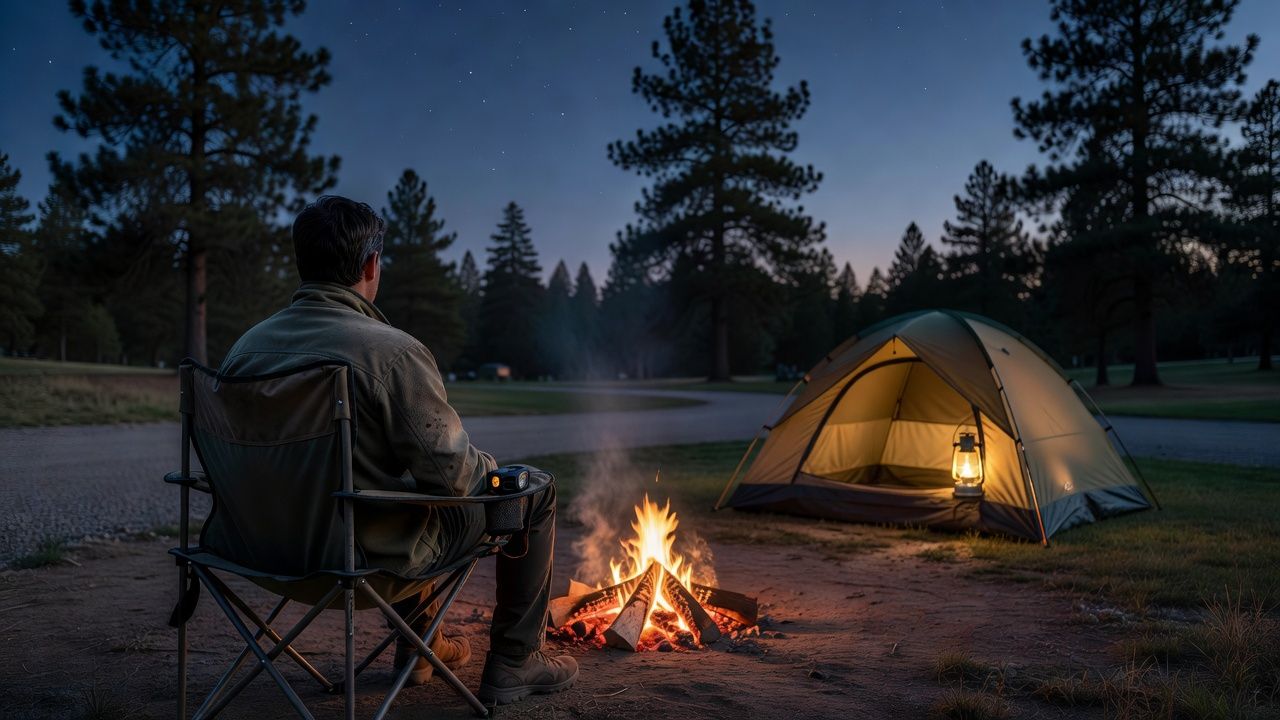
Watch the fire. Sitting by a campfire without a phone, without conversation, without agenda — it sounds boring. It is the opposite. Your mind wanders. You notice the way the flames shift colors with different wood. You hear owls and coyotes you would have talked over. This is the thing solo campers chase.
Read a book. Bring an actual book, not your phone. Phone batteries die, screens kill night vision, and the point is to disconnect. A paperback weighs nothing and rewards you with undivided attention.
Cook something elaborate. Group camping often means quick and easy meals — everyone is hungry at the same time. Solo, you can spend 45 minutes slow-cooking a backcountry risotto because nobody is waiting. Cooking becomes a meditative activity instead of a chore.
Stargaze. Download a stargazing app before you lose signal (SkyView or Star Walk). Lie on your sleeping pad, look up, and identify constellations. Even at developed campgrounds, the sky is darker than you are used to. The Milky Way is visible from most state parks away from cities.
Write or journal. You will have thoughts out there you do not have at home. Write them down. Future you will thank you.
Solo Camping Benefits: Why The Silence Is The Point
The benefits of camping alone are not the same benefits as camping with friends, and it is worth being specific about them because they are the reason people go back.
- The decision load drops to zero. No negotiation about when to eat, where to hike, or whether to build a fire. Every choice takes one second instead of five minutes, and the day feels twice as long as a result.
- You stop performing. Nobody is watching you fail at pitching a tent or burn the rice. Competence shows up faster when there is no audience.
- Attention comes back. Without conversation, you notice things a group walks past: the way a fire changes color, a heron on the far shore, the exact moment the temperature drops.
- The quiet is not empty. Most people expect boredom and get something closer to reset. That is the part that is hard to explain and easy to experience.
The honest caveat: solo camping is not automatically restorative. If you go out alone to avoid something rather than to do something, the first night can be uncomfortable. Go with a plan for the evening — a meal, a walk, a book — and the silence turns from awkward into welcome.
Best Seasons for Solo Camping
Late Spring (May-June): The sweet spot. Temperatures are mild (50-70°F at night in most regions), campgrounds are not yet crowded, and bugs have not peaked. Wildflowers are blooming and creeks are running high from snowmelt. This is the best season for your first solo trip — comfortable weather, low crowds, and the safety net of longer daylight hours.
Summer (July-August): Peak season means crowded campgrounds — which is actually reassuring for a first solo trip. More neighbors, more camp hosts, more ambient noise that makes the woods feel less empty. Downside: bugs, heat, and reserving sites weeks in advance. Bring bug spray and arrive early.
Early Fall (September-October): The sleeper pick for experienced solo campers. Crowds thin after Labor Day, temperatures drop to crisp-perfect, and fall foliage transforms the landscape. Nights get cold (30-40°F), so bring a warmer sleeping bag. The shorter daylight hours mean planning your setup before sunset.
Winter and Early Spring (November-April): Only for experienced campers with four-season gear. Sub-freezing temperatures, snow, and 14+ hours of darkness demand preparation and equipment most beginners do not own. Save winter solo camping for your second or third season.
Common Solo Camping Mistakes (Learn From Mine)
I have made every mistake on this list. You do not have to.
- Arriving after dark on your first night. Setting up a tent alone in the dark on unfamiliar ground is a terrible introduction to solo camping. Arrive by 3 PM at the latest. You want daylight for setup, firewood gathering, and campsite orientation.
- Overpacking food. You will eat less than you think. Solitude suppresses appetite for some people, and camp cooking takes effort. Bring one breakfast, one lunch, one dinner, and one snack per day. A single extra meal for emergencies.
- Underpacking warmth. Solo campers do not have body heat from tentmates. Bring a sleeping bag rated 10-15°F warmer than the forecast low. If the forecast says 45°F, bring a 30°F bag. Cold is the #1 reason first-time solo campers bail.
- Not checking in. You told someone your plan. Now actually check in when you arrive and when you leave. A two-second text prevents a search-and-rescue call because your friend panicked when you did not respond.
- Bringing a dead phone battery. Your phone is your map, your camera, your emergency contact, and your backup flashlight. Bring a portable battery pack (10,000+ mAh) and keep it charged. Turn your phone off or to airplane mode when not in use to preserve battery.
- Expecting misery. Some discomfort is normal — unfamiliar sounds, a lumpy spot under the tent, coffee that tastes like camp fire. But if you expect misery, you will find it. Go in expecting an adventure, and that is what you will get.
Solo Camping Packing List For Your First Trip
This is the 22-item version of the solo camping checklist, ordered by what you would regret forgetting rather than alphabetically. Print it, cross out what you own, and buy the rest over one season instead of one paycheck.
Shelter and sleep
- Tent you can pitch alone — even in wind, even in the dark
- Sleeping pad (the insulation layer, not a luxury)
- Sleeping bag rated 10-15°F below the forecast low
- Inflatable pillow, or a stuff sack full of a soft layer
- Groundsheet or footprint if the site is on gravel
Water and food 6. Water bottles you will actually carry — two of them 7. Water treatment or a filter, if the spigot is not steps away 8. Stove plus the fuel it burns, and a lighter as backup 9. One pot or the integrated cook system, plus a mug 10. Food for one breakfast, one lunch, one dinner, one snack per day 11. Trash bag and a way to store food the land manager's way
Light and power 12. Headlamp with a red mode, plus a spare battery or charge cable 13. Power bank, charged before you leave 14. A camp lantern for the table, so your headlamp can stay on your head
Safety 15. First aid kit you have actually opened once 16. Two ignition sources — waterproof matches and a lighter 17. Emergency blanket 18. Communication plan: charged phone in range, satellite messenger out of range 19. Bear spray or a bear canister if the land manager requires it
Camp comfort and repair 20. Camp chair — the one item solo campers consistently forget and consistently miss 21. Repair tape for a torn tent, pad, or rainfly 22. Layered clothing for 20°F colder than the daytime forecast
A Coleman folding camp chair at $39.99 covers item 20 and holds a drink while you watch the fire, and a camp lantern at $23.99 covers item 14 with four lights so one can live in the tent. Neither is essential, and both are the difference between a night you tolerate and a night you repeat.
Where To Camp Alone Near Me
"Solo camping near me" almost always resolves to the same answer: a state park or national forest campground inside a two-hour drive. That radius keeps the trip recoverable — if the forecast turns or you simply want to go home, you can, and knowing that is what makes the first night feel manageable.
Practical near-me tips for solo campers:
- Search your state's park reservation system rather than a maps app. State systems show availability, site numbers, and whether a site is walk-in or drive-up.
- Filter for sites with electric hookups only if you want them; a site near the bathroom is a better solo choice than a private corner far from everything.
- Book two to three weeks out for a weeknight. Holiday weekends need months, and they are the worst time to learn.
- Check pet and generator rules before booking, plus quiet hours and check-in deadlines. Arriving after the gate closes is its own adventure.
If you are planning around the seasons rather than the weekend, our state park camping guide covers how the different state systems work, and the destination guides go deeper by region:
- Solo camping in Arizona — the winter answer: mild nights, dark skies, empty campgrounds from November through February, plus real desert water planning. See camping in Arizona.
- Solo camping in Colorado — high-elevation nights get cold fast, and dispersed camping rules vary by forest. See camping in Colorado.
- Solo camping in Texas — big state, huge seasonal spread: Gulf coast in winter, hill country in spring. See camping in Texas.
- Solo camping in Florida — the winter-season pick east of the Mississippi, with real heat and storm caveats in summer. See camping in Florida.
- Solo camping in November — the shoulder month where half the country is still open and the crowds are gone. See camping in November.
Solo Camping FAQ
Is solo camping safe for beginners?
Yes — with planning. The hazards of camping don't change when you're alone; what changes is that nobody covers for you if something goes wrong. Start at established campgrounds instead of backcountry sites, tell someone your exact location and expected return time, carry a way to call for help, and check the forecast before you leave. Thousands of people spend their first solo night at a drive-up campground every single weekend.
What gear is truly essential for solo camping?
Three things are non-negotiable: shelter, water treatment, and a plan someone else knows about. From there, the highest-value additions are a headlamp with a red mode (the Petzl ACTIK CORE is $79.95), a squeeze filter like the Sawyer Squeeze, a small first-aid kit, and a navigation backup that doesn't depend on your phone battery. A 4-person tent such as the Coleman Skydome ($122.99) is a popular solo choice — you're not splitting the weight with anyone, so the extra space is nearly free.
How much does a solo camping setup cost?
The complete kit in this guide lands around $600 to $750, but you do not have to buy it all at once. Start with what you already own, borrow the bulky items, and add pieces over a season or two. Prioritize a shelter you trust, reliable water treatment, a light, and insulation from the ground — a decent sleeping pad matters far more to your comfort than an expensive sleeping bag.
Where should I camp alone for the first time?
A drive-up campground with a camp host, ideally midweek — quiet, but not empty. You get water, toilets, neighbors within sight, and usually cell signal, all of which lower the stakes while you learn your own rhythm. Move on to walk-in sites, then dispersed camping, only after you've had a few easy nights behind you.
What if I feel nervous alone at night?
Arrive well before dark and set up while there's still plenty of light, because most first-night nerves come from doing unfamiliar tasks in the dark. Then give yourself a short task list — cook dinner, clean up, plan tomorrow's hike — since a brain with a job stops scanning for threats. Keep the headlamp on red mode around camp to protect your night vision, leave your phone charged, and know that the jumpiness almost always fades by the second night.
What's the best season for a first solo trip?
Late spring and early fall are ideal: comfortable temperatures, fewer crowds, and no need to manage extreme heat or deep cold on top of everything else you're learning. A first solo trip in August heat or a January freeze stacks avoidable risk onto an already unfamiliar situation.
How old do you have to be to camp alone?
At most public campgrounds, the person who books and registers the site needs to be 18 or older, and some parks expect a responsible adult on the site for the whole stay. That makes 18 the practical floor for camping alone at state and national park campgrounds. Younger campers can generally still camp without an adult on private land or with a scouting group, but the booking rules are per park — check the specific campground before you plan.
Can you go camping by yourself with a dog?
Yes, and it is one of the best versions of solo camping. Two things decide how well it goes: the park's pet rules and the dog's sleeping arrangement. Most public campgrounds require a leash of six feet or less at all times, restrict dogs on some trails and at swim areas, and require you to clean up after your dog. Book a site with shade, bring water for the dog rather than sharing yours, and give the dog a defined place to sleep inside the tent so bedtime is not a negotiation.
What should be on a solo camping packing list?
Shelter, insulation from the ground, water treatment, a stove and its fuel, two ignition sources, a headlamp with a red mode, a first aid kit, a power bank, and one way to call for help that does not depend on a phone battery. The 22-item list above is the expanded version. The two items solo campers most consistently forget are a camp chair and a second light source, and both are the difference between an evening you tolerate and one you enjoy.
Is solo camping safe for a woman?
Yes — the same risk profile as anyone camping alone, plus the attention management that comes with being a woman in a public space. Choosing a developed campground, sharing a live location with someone at home, picking a site near the camp host, and leaving early if something feels wrong cover nearly all of it. Women-only camping groups and regional outdoor clubs run beginner-friendly trips where you still get your own tent and your own evening, which is a legitimate way to do a first solo night with backup nearby.
The Bottom Line
Solo camping is not for everyone, but it might be for you. The only way to find out is to try it. Start with one night at a developed campground within an hour of home. Bring gear you trust. Tell someone where you are going. Give yourself permission to leave if you need to.
Most people who try it once try it again. The solitude that felt intimidating on arrival becomes the thing you crave when you get home. You will find yourself planning your next solo trip before you have even unpacked from this one.
Where to Go After Your First Solo Night
Once the first trip feels normal, the biggest win is turning that confidence into a repeatable system instead of starting from scratch every weekend.
- Build your hiking base: our hiking for beginners guide helps new solo campers choose day hikes, layers, and safety habits that translate directly to camp.
- Use it as a packing checklist: our summer camping checklist catches the little items solo campers forget when nobody else is around to lend them.
- Keep the full map handy: the Camping Knowledge Library ties together tent sizing, water filtration, bugs, weather, and trip-planning articles in one hub.
Gear up, pick a Tuesday, and go. The woods are waiting.
Total estimated gear cost for the setup above: approximately $600-750 for a complete solo camping kit. Start with what you have, borrow what you can, and add pieces over time. The only non-negotiable items are shelter, water, and a way to tell someone your plan.
<!-- AFFILIATE_DISCLOSURE -->