Camp Kitchen Setup Guide: Essential Cooking Gear for First-Time Campers (2026)
Camp kitchen setup for first-time campers: the 10-item gear list, chuck box, table and sink choices, and kits that fit one bin in 2026.
You pull into the campsite, stomach growling after the drive. You unload a chaotic pile of pots, a cooler that's already leaking, and a stove you're not sure how to light. Forty minutes later, you're eating cold sandwiches by headlamp while the family glares at you.
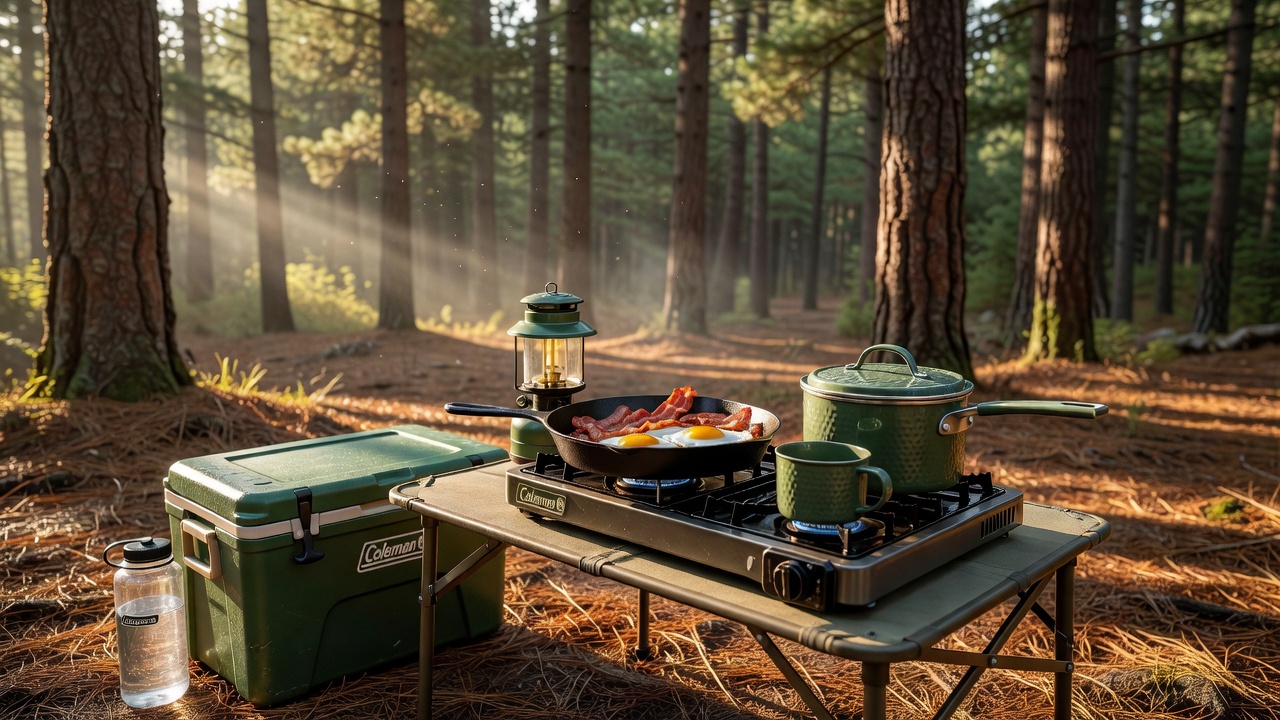
I've been that person. Every camper has. The camp kitchen is the most intimidating part of trip planning — it's also the most rewarding when you get it right. A good camp meal after a long hike tastes better than any restaurant dinner.
This guide covers exactly what you need for a functional camp kitchen, nothing more. No gimmicky gadgets, no $400 titanium cooksets. Just the gear that works.
The camping in Oklahoma guide is the clearest example of why the portal matters more than the park — four land systems, four sets of rules, and a reservation window that runs 11 months out.
Quick Answer: The Camp Kitchen, Built in Four Pieces
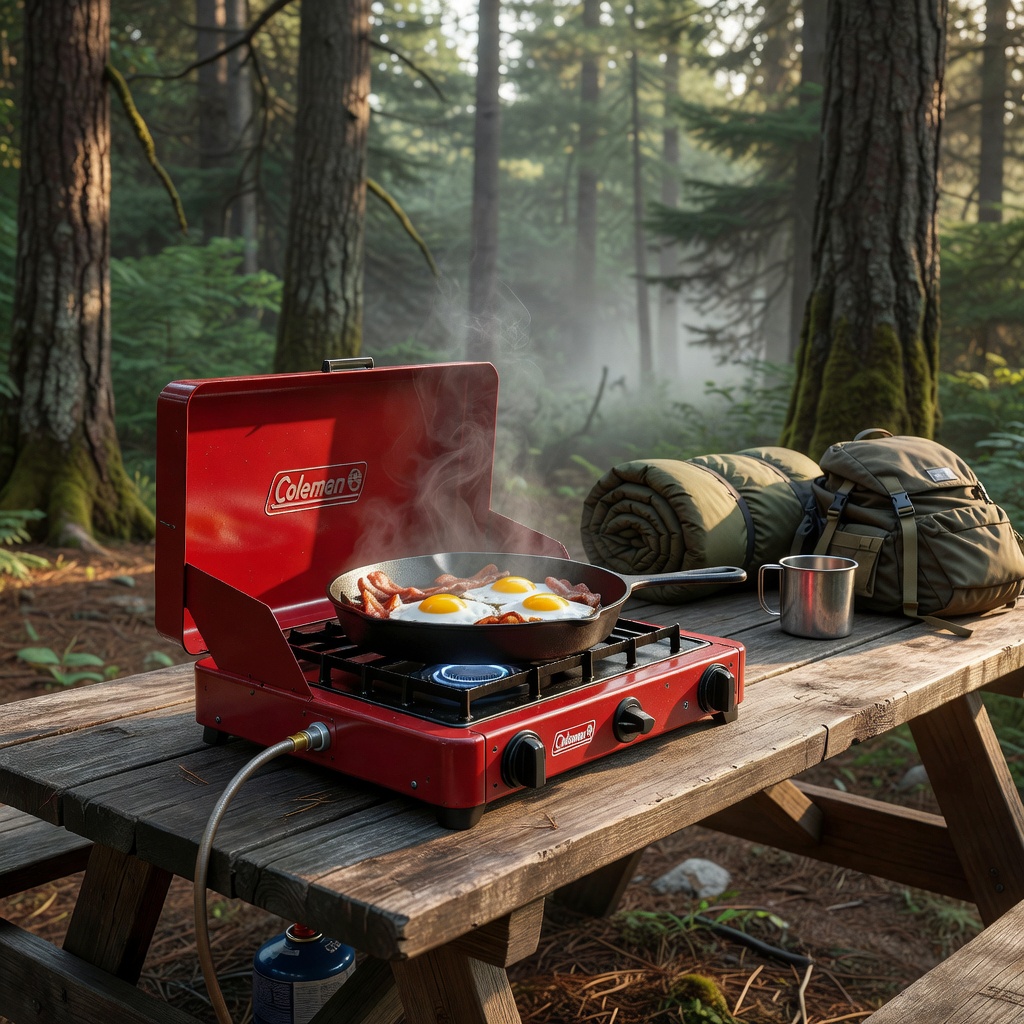
- Stove first, fuel second: the Coleman Bottle Top Propane Stove — $21.99 screws straight onto a 1 lb cylinder; want both fuels? The Gas One GS-3400P — $34.99 runs propane and butane.
- One pan, not a cabinet: the Lodge 10.5-Inch Cast-Iron Griddle — $24.90 for family breakfasts, or the Lodge 6.5-Inch Skillet — $9.38 for solo and couples.
- A cooler that holds ice 48 hours: the Coleman 316 Series Wheeled 62QT — $84.99; get this wrong and you are eating warm hot dogs by Saturday.
- Somewhere to put all of it: the Coleman Pack-Away 4-in-1 Table — $99.99, so the stove, cooler, and prep space live at working height.
- If you are carrying the kitchen instead: the MSR PocketRocket 2 — $49.95 weighs 2.6 oz and folds to marker-pen size.
The Camp Stove: Pick Your Fuel Type First
Your stove choice determines everything else — what pots you can use, how fast you cook, and whether you can make coffee in 30 seconds or 30 minutes.
Propane: The Car Camper's Best Friend
Propane stoves run on those green 1-pound cylinders you see at every Walmart and campground store. They're powerful (10,000 BTU is standard), dead simple to light, and the fuel is everywhere.
The Coleman Bottle Top Propane Camp Stove ($21.99) is the classic entry point. Twist it onto a propane cylinder, turn the knob, click the igniter — you're cooking. One burner, 10,000 BTU, fits in a daypack. Pair it with a 10-inch skillet and you can make pancakes, bacon, and eggs for two people with a little choreography.
Want a second fuel option? The Gas One GS-3400P Dual Fuel ($34.99) runs on both propane and butane. That flexibility is useful for road trips and car camping: propane is the more dependable choice in cold weather, while butane is easy to find at many grocery and camping stores. Having both options means you are less likely to be stuck with the wrong fuel at a remote campground.
Butane: Lightweight and Cheap
Butane stoves are the sleeper hit of camp cooking. The fuel canisters cost about $3, burn clean, and the stoves themselves weigh under 4 pounds.
The Coleman Classic 1-Burner Butane Camp Stove ($29.99) comes in its own carrying case and uses piezo ignition — no matches needed. It's what I recommend for first-timers who want zero drama. Load the canister, push the lever, press the button. Done.
If you want fuel flexibility rather than a second butane-only option, the Gas One GS-3400P Dual Fuel Stove ($34.99) accepts both propane and butane. That makes it a practical backup plan when a remote stop has one fuel type but not the other. For a side-by-side breakdown of where each stove wins, our Coleman Classic vs Gas One butane stove comparison matches the two to picnic, tailgate, and cool-morning scenarios. Planning a full parking-lot spread? Our tailgating gear checklist covers tables, chairs, grills, and the small extras that make a pre-game cookout work.
Backpacking: Ultralight and No-Frills
If you're carrying your kitchen on your back, every ounce matters. The MSR PocketRocket 2 ($49.95) weighs just 2.6 ounces, folds down to marker-pen size, and boils a liter of water in roughly 3.5 minutes. It is a dependable choice for freeze-dried meals, instant coffee, and oatmeal when a full camp-kitchen setup would be overkill.
First Stove Decision Card: Buy for Your Actual Trip
- One or two people, warm-weather campground or picnic: Choose the Coleman Classic 1-Burner Butane ($29.99). The case, simple cartridge loading, and push-button ignition make it the low-friction first purchase—provided your overnight low stays above about 45°F.
- Car camping with a variable forecast or uncertain fuel stops: Choose the Gas One GS-3400P Dual Fuel ($34.99). It is only five dollars more than the Coleman but can use butane for mild trips or propane when cool mornings and resupply uncertainty make a single-fuel stove a gamble.
- One- or two-night hike where every ounce counts: Choose the MSR PocketRocket 2 ($49.95) with a threaded isobutane canister. It is a hot-water tool, not a family-breakfast station: pack a small pot, keep the setup sheltered from wind, and skip the cast iron.
The simple rule: start with the Coleman if you only cook in warm weather, spend the extra $5 on Gas One if your car-camping plans include shoulder season, and buy the PocketRocket only when the kitchen has to fit in your pack. For a fuel-by-fuel explanation before checkout, use our propane vs butane vs isobutane camp stove fuel guide.
Budget Tip: A single-burner stove handles 90% of camp meals for groups of 1-3. You don't need a two-burner setup on your first trip. Master one burner first, add complexity later.
For camp stove comparisons across price points, check our best budget camp stoves guide.
Not sure which fuel type to pick? Our camp stove fuel guide breaks down propane vs butane vs isobutane — performance, cost per meal, and cold-weather behavior — so you never buy the wrong canister.
Cookware: One Set, Not a Cabinet
The biggest mistake new campers make is bringing their home kitchen to the woods. You need exactly one pot, one pan, one utensil set, and a way to clean them.
The All-in-One Solution
For a simple first setup, pair one pot with the Lodge 6.5-Inch Cast-Iron Skillet ($9.38). It is compact enough for solo campers or couples, comes pre-seasoned, and handles eggs, sautéed vegetables, and small desserts on a camp stove or grill. It is heavier than aluminum cookware, so save it for car camping rather than backpacking.
Quick camp-kitchen pick: If you are building a first car-camping bin and want one pan that will keep earning its space, start with the Lodge 6.5-Inch Cast-Iron Skillet. At $9.38, it is an easy add for eggs, grilled sandwiches, and one-pan breakfasts; just pack it in the car, not your hiking pack.
Add-it-to-your-bin CTA: Need one affordable pan before your next drive-in campsite? See the Lodge 6.5-Inch Skillet for the current price and details. It is the right size for a couple's breakfast, and its pre-seasoned surface means you can cook with it on day one—then dry and lightly oil it before packing up.
For family breakfasts and shared campsite meals, the Lodge 10.5-Inch Cast-Iron Griddle ($24.90) gives you a broad, even-heating surface for pancakes, eggs, quesadillas, and vegetables. It is a durable car-camping upgrade, but its weight means it belongs in the trunk, not a backpack.
What not to bring on trip one: a full-size cast-iron collection, Dutch oven, and every specialty gadget from your home kitchen. A small skillet like the Lodge is a sensible exception for car campers because it earns its space across breakfast, sandwiches, and sides. Build confidence with one versatile pan first; add a Dutch oven or campfire grill grate only after you know you will use it.
Coolers and Food Storage: Ice Management Is Everything
A cooler isn't just a box with ice — it's your refrigerator for 48 hours. Get this wrong and you're eating warm hot dogs by Saturday afternoon.
The Coleman 316 Series Wheeled Cooler ($84.99) holds 62 quarts (more than 100 cans), keeps ice for up to five days in hot weather, and has wheels — which you will thank yourself for when the campsite is 200 yards from the parking lot. The cup-holder lid also doubles as extra camp seating.
For day trips and lunches, the Stanley All Day Julienne Soft Cooler Bag ($100.00) keeps food cold for 12 hours without the bulk of a hard cooler. It looks like a lunch bag but performs like a mini fridge.
The ice trick that changes everything: Freeze water bottles solid and use them as ice packs. They keep the cooler cold AND become drinking water as they melt. No soggy food, no wasted cooler space. I've been doing this for years and it's the single best camp kitchen tip I know.
Water and Hydration: Don't Cook With Creek Water
Hydration is doubly important when you're cooking outdoors — you need water for drinking, coffee, cooking, and cleaning. Most campground water spigots are fine, but if you're dispersed camping or the water tastes metallic, bring your own.
For measuring and cooking water, a simple marked plastic bottle is still the most practical option. Bring two: one reserved for drinking and one for cooking water, then refill before leaving the campground.
For sipping while you cook, keep a dedicated water bottle or tumbler close to the prep area so you are not making repeated trips to the spigot. A handled, leak-resistant insulated tumbler is especially useful when you are standing over a hot stove in July and want cold water within reach.
Fire and Ignition: Light It the First Time
Camp stoves have built-in igniters, but igniters fail — especially when it's windy, raining, or below freezing. Always carry a backup.
The BIC Maxi Pocket Lighters 10-Pack is a low-tech backup that belongs in a dry cook-kit pouch. Split the pack between your stove bin, vehicle, and emergency tote so one wet or misplaced lighter does not end dinner prep. Use it for the stove; keep open-flame use away from tents and follow local fire restrictions.
Car Camping Kitchen Checklist: Set Up Once, Cook All Weekend
A reliable car camping cooking setup is less about buying every camp gadget and more about creating three zones before you light the stove: cook, cold food, and cleanup. Put the stove, fuel, lighter, and utensils together in one tote; keep perishable food in the cooler; and keep soap, sponge, trash bags, and a small basin in a separate cleanup pouch. At the campsite, choose a flat camp table or stable surface, set the stove out of the wind and away from the tent, then make a quick hand-washing and trash plan before the first meal. Not sure which table fits your site? Our best camping tables buying guide compares folding, roll-top, and adjustable-height picks for families, tailgaters, and RV trips.
Camp Kitchen Checklist: The 10-Minute Pre-Drive Check
Run this camp kitchen checklist while loading the car—not after you have reached a dark campsite with hungry people waiting. Start by matching the meal plan to your gear: a one-pan dinner and oatmeal breakfast need one burner, one pan, and one pot; a family pancake breakfast is when the larger griddle earns its trunk space. Confirm that your fuel matches the stove, your cooler already has frozen bottles or block ice, and your cleanup kit is separate from food.
- Heat zone: stove, correct fuel canister, backup lighter, and a stable wind-protected cooking surface. Never use a stove inside a tent, vehicle, or enclosed canopy.
- Cook zone: one pot, one skillet or griddle, spatula, tongs, knife, and cutting board. For couples, the Lodge 6.5-Inch Cast-Iron Skillet handles breakfast and sandwiches without filling the bin; families can step up to the Lodge 10.5-Inch Cast-Iron Griddle for pancakes and quesadillas.
- Cold-food zone: cooler, frozen water bottles or block ice, a thermometer if you are carrying meat, and a dry-food tote. Keep raw meat sealed and low in the cooler so it cannot drip onto ready-to-eat food.
- Water and cleanup zone: drinking water, a separate cooking-water bottle, biodegradable soap, sponge, basin, paper towels, trash bags, and a zip bag for greasy utensils until you can wash them.
- First-meal plan: pre-chop vegetables, label seasonings, and choose a meal that takes one pan. A simple scramble or quesadilla is a better first-night win than a recipe with six components.
This small system is what makes a car camping cooking setup feel calm: every item has a zone, nothing essential is buried under sleeping bags, and cleanup takes minutes instead of becoming tomorrow morning's problem.
For a two-person overnight, the essentials are simple:
- Heat: one stove, the right fuel, and a backup lighter. Pack enough fuel to boil water for coffee and cook dinner, plus a little margin for a windy morning.
- Cook: one pot and one skillet or griddle, a spatula, tongs, a knife, and one cutting surface. Skip the kitchen drawer full of duplicates.
- Keep food cold: a cooler with frozen water bottles or block ice, plus a small dry-food bin for breakfast and snacks.
- Clean up: biodegradable soap, a sponge, a basin, paper towels, and trash bags. Scrape leftovers into the trash before washing so you do not turn the campsite into a critter buffet.
- Plan the first meal: pre-chop vegetables and pre-mix seasonings at home. Your first dinner should be a one-pan meal, not a campsite cooking show.
For breakfast, the Lodge 6.5-Inch Cast-Iron Skillet is the smart small-kit upgrade. Its compact size is enough for eggs, hash browns, toasted sandwiches, or a two-person scramble, and the pre-seasoned surface works on a stove, grill, or managed campfire. Cast iron is not backpacking gear, but in a car camping kitchen it earns its weight because one durable pan replaces a pile of flimsy cookware. Dry it, add a thin film of oil, and pack it only after it is fully cool.
If you are feeding a family, add the Lodge 10.5-Inch Cast-Iron Griddle instead of bringing several small pans. It gives pancakes, quesadillas, and vegetables room to brown without turning breakfast into a queue. Start with the small skillet for couples; size up only when your meals consistently need the extra surface.
The One-Pot Breakfast That Never Fails
This recipe has saved more camping trips than I can count. It uses one pan, takes 15 minutes, and makes everyone happy.
For 15 more morning options — including the no-cook ones for fire-ban or rainy starts — see camping breakfast ideas.
For midday, camping lunch ideas covers the grab-and-go setups and the insulated lunch box gear that actually matters for a meal you eat away from camp.
Once the season turns, the gear list changes more than the recipes do. Fall camping food and meals covers the cold-morning breakfasts, one-pot dinners and hot-drink setup that carry a trip into October and November, when one burner and a covered pot do more work than a full cookset. Cooking for kids is its own puzzle, and kid-friendly camping meals sorts the food and the gear that keeps small eaters fed without building a second cook station.
Camp Scramble (serves 2-3)
Ingredients: 6 eggs, 1 bag frozen hash browns, pre-cooked sausage links, shredded cheese, salt, pepper, cooking oil.
- Heat your skillet over medium flame with a tablespoon of oil.
- Dump in the hash browns. Spread them flat and don't touch them for 4 minutes. You want a golden crust.
- Flip the hash browns (they'll break apart — that's fine). Push to one side of the pan.
- Crack eggs into the other side. Scramble with your spatula until just set.
- Toss in sliced sausage links and a handful of cheese. Stir everything together.
- Salt, pepper, serve directly from the pan. No plates needed if you're going full camp mode.
The whole thing costs about $8 and tastes like a diner breakfast. Add hot sauce and nobody will miss the kitchen.
Common Camp Kitchen Mistakes (Learn From Mine)
Bringing too many pots. You know how many pots I used on my first camping trip? One. The other three just got dirty and took up space. Start with one pot and add only when you have a specific meal that requires a second.
Forgetting a wash system. You need three things: biodegradable soap (Dr. Bronner's is the standard), a scrub sponge, and a collapsible basin or one of your pots filled with water. Wash immediately after eating — dried egg is a nightmare to scrub off at 7 AM.
Cooking at dusk without a headlamp. The best camp meals happen as the sun sets, which means you're plating in the dark. Bring a headlamp. The camp-lighting guide linked below covers this in detail.
Not prepping at home. Chop vegetables, pre-mix spice blends, and crack eggs into a sealed container before you leave. Campsite prep surfaces are usually a cooler lid or a flat rock — not where you want to be dicing onions in the wind.
Underestimating the wind. Even a 10 mph breeze knocks out stove flames and doubles cooking time. Position your stove behind your car, a large rock, or set up a folding windscreen. A stable picnic table or a camp table gives you a safer prep surface and a little shelter from gusts.
What About the Fancy Stuff?
You'll see camp chefs on YouTube with Dutch ovens, smoking guns, and portable pizza ovens. Those are fun. They're also heavy, expensive, and completely unnecessary for your first five trips.
Start with a stove, a cookset, a cooler, and a water bottle. Master those. Then if you're still excited about camp cooking, add one specialty item per season — a cast iron skillet for year two, a campfire grill grate for year three.
The BioLite CampStove 2+ ($199.95) is the enthusiast-grade upgrade — it burns twigs and pinecones instead of fuel canisters AND charges your phone via USB. It's brilliant, but it's a second-stove purchase, not a first one.
Packing Checklist: Grab and Go
Before each trip, run through this list in your head:
- Stove + fuel (propane cylinder or butane canister)
- Backup lighter (Flame Bird arc lighter or butane lighter)
- Cookset (Stanley 9-piece or GSI Pinnacle)
- Cooler with frozen water bottles as ice
- Biodegradable soap + scrub sponge
- Two marked water bottles (one for drinking + one for cooking)
- Spatula, tongs, can opener (if not in your cookset)
- Trash bags (pack it out — always)
- Paper towels + zip-lock bags for leftovers
- Headlamp for after-dark cooking
Ten items. If your camp kitchen bin has more than this, you're overpacking.
One more piece worth planning for: if you want flat-top cooking, our camp stove griddle guide explains which griddle plates actually sit flat on a camp stove grate.
Camp Kitchen Setup, Mapped to the Words People Actually Type
The same question arrives in about a hundred spellings, so this page answers it as an index. Every row below is a real search phrase, answered with the number or the decision that settles it — read your row, then go cook.
The Setup Itself: What Goes in a Camp Kitchen
| What you typed | The answer |
|---|---|
camp kitchen car camping | Car camping is the one mode where the full kitchen is rational: a two-burner stove, a proper cooler and a folding table at working height all fit in the trunk, and none of it has to be carried further than the site pad. |
best camp kitchen setup | The setup that wins for a family of four: one 10,000 BTU bottle-top stove, a 10.5-inch griddle for pancakes and quesadillas, a 62-quart wheeled cooler, an adjustable-height folding table, and one bin that holds the lot. It is deliberately boring equipment, and it survives a rainy Saturday. |
simple camp kitchen setup | Three pieces make a simple setup work: heat on a stable adjustable-height table, food in a cooler that holds ice past day two, and cleanup staged inside reach of the stove. Complexity comes after your first five trips, not before them. |
outdoor camp kitchen setup | Outdoors, wind is the variable that matters. Set the stove behind the car or a rock, keep the cooking surface off the ground, and keep the cooler in shade. A setup that ignores wind loses 20 minutes of cooking time and a lot of fuel to a flame that keeps blowing out. |
camp kitchen layout | Lay the kitchen out as an L: cooler on one leg, stove and prep table on the other, cleanup behind the stove. Everything you touch stays within two steps, and nobody crosses the flame path carrying a full pot. |
camp kitchen ideas | The ideas that actually change a trip: freeze water bottles instead of buying bagged ice, keep a zip bag for greasy utensils, use the cooler lid as prep space, and hang a trash bag at working height. Each one removes a moment of frustration rather than adding equipment. |
camp kitchen setup ideas | Three setups cover almost everyone. Truck-bed or tailgate: everything at hip height, nothing on the ground. Picnic-table site: the table becomes the counter and the bins slide underneath. Dispersed site with no furniture: one folding table and two bins do the work of a cabinet. |
camp kitchen set up | Set up in order — cooler into shade first, table second, stove last and clear of the tent. Building it in that sequence keeps the food out of the sun while you assemble, and it puts the flame where nothing flammable is standing. |
camping kitchen setup in car | Car-based setup keeps the kitchen in the trunk and pulls out one bin at a time: cold bin first, cook bin second, cleanup bin last. Nothing goes on the ground that you would not want rained on, and both side doors stay clear for sleeping bags. |
The Lists: Essentials, Equipment and Supplies
| What you typed | The answer |
|---|---|
camp kitchen essentials | Four zones, not four gadgets: heat, cook, cold, clean. Heat is the stove plus matching fuel and a backup lighter; cook is one pot and one pan; cold is the cooler plus frozen bottles standing in for loose ice; clean is soap, sponge, basin and trash bags. Roughly $160 buys the budget version of all of it. |
camp kitchen essentials list | The list that survives every trip: stove, fuel, lighter, one pot, one skillet, spatula, tongs, cooler, frozen water bottles, biodegradable soap, sponge, basin, two marked water bottles, trash bags. The pre-drive checklist section above walks it zone by zone. |
camp kitchen necessities | Necessities are the items whose absence cancels a meal — fuel that matches the stove, a lighter that works in wind, a pan with a lid, and ice that outlasts the weekend. Everything else on the camp-kitchen shelf is convenience. |
camp kitchen list | Ten items, one bin: stove, fuel, lighter, pot, pan, cooler, soap, sponge, two water bottles, trash bags. If the bin holds more than ten, you are carrying duplicates — a second skillet that never leaves the car is the usual culprit. |
camp kitchen supply list | Supplies split into consumable and durable. Consumable: fuel canisters, ice or frozen bottles, soap, paper towels, trash bags. Durable: stove, pot, pan, utensils, cooler, bins. Buy durables once, and restock the consumables at the last grocery stop rather than hauling them from home. |
camp kitchen gear list | Gear means the durable half — stove, cookware, utensils, cooler and the bins that carry them. A first setup runs about $160: $21.99 stove, $9.38 skillet, $84.99 wheeled cooler, with bins and utensils covering the rest. |
camp kitchen items list | Items people forget, in order of how much they ruin dinner: a spare lighter, a lid for the pot, a cutting surface, a way to wash hands, and a bag for greasy utensils. None of them are heavy and all of them are load-bearing. |
camp kitchen equipment | Equipment separates from supplies by whether fire touches it. That means the stove, the cookware, the griddle, the wind screen and the lighting you cook by — the pot you boil water in and the headlamp you plate by are the same purchase decision. |
camp kitchen accessories | The accessories that earn their space: a wind screen for the stove, a utensil roll, a collapsible basin, a trash bag hanger, and a headlamp that leaves both hands free. The ones that do not: a dedicated camp-kitchen cabinet, a third pan, and anything requiring its own power station. |
camp cooking equipment list | Cooking equipment for a two-person car-camping trip: one 10,000 BTU single-burner stove, one 6.5-inch skillet, one 1.5-quart pot with lid, a spatula, tongs, a knife and one cutting surface. A camp cookware kit covers most of the small pieces for $32.99. |
camp cooking essentials | Essentials are fewer than the gear pages suggest: heat, a pan, a pot, cold storage and clean water. Cooking for four at a campsite needs one burner and one griddle — a 10.5-inch cast-iron griddle at $24.90 gives you that surface. |
camp cooking checklist | Run the checklist while the car is still in the driveway: fuel matches the stove, lighter is dry, cooler already has ice in it, pan has a lid, and the first meal is pre-chopped. Every one of those five failures is something you discover at dusk with hungry people waiting. |
camp cooking gear list | Gear that survives three seasons of family camping: a single-burner propane stove, a nesting cookset, a 62-quart wheeled cooler, a folding prep table, and one cast-iron pan. That kit eats four people comfortably for a weekend and still fits in a single tote. |
camping cooking checklist | Overnight version: pack fuel for two hot meals plus coffee, pre-freeze the water bottles, put the cooler in the shade before you set up the tent, and stage the cleanup kit where you will actually use it. Cleanup staged badly is why camp mornings run late. |
camping cooking essentials list | Essentials, ranked by how often a family forgets them at home: the backup lighter, the pot lid, the scrubbing sponge, the trash bag, and a second water bottle that is not for drinking. Each one ends up as a store run that a campground does not have. |
camping kitchen essentials | The fifteen-minute camp kitchen: one stove, one cookset, one cooler, one table, one light. Everything else is an upgrade you buy after you know how you cook outside — not before. |
camping kitchen essentials checklist | Checklist items that people ask about by name: stove and fuel, cookware, cooler and ice, water, cleaning supplies, trash bags, lighting, and a weatherproof bin to hold it all. Match the fuel to the stove before you leave — a butane stove will not run on a 1 lb propane cylinder without an adapter. |
tent camping kitchen list | Tent camping means the kitchen lives outside the tent and packs down to what you can carry: a bottle-top stove, a nesting cookset, and a soft-sided cooler rather than a hard one. This is the list to trim hardest, because every item shares trunk space with the tent and the sleeping bags. |
kitchen list for camping | Build the list backwards from the menu. If breakfast is a one-pan scramble, you need a burner, a pan, a spatula and a cooler — not a cookset, a griddle and a coffee station. The meal plan decides the kitchen, and the kitchen decides the bin size. |
The Box: Chuck Box, Bin and Gear Box
| What you typed | The answer |
|---|---|
camp kitchen box | A camp kitchen box is a lidded tote that holds the whole cook kit and doubles as the counter. The working dimensions for a family setup are roughly 24 by 16 by 14 inches — big enough for a single-burner stove, a nesting cookset and utensils, small enough to lift when it is full. |
camp kitchen box ideas | Three layouts people actually build: the tote with a lid-mounted cutting board, the drawer-stack that lives in a truck bed, and the crate with a divider wall for fuel so the canisters cannot roll into the pan. The divider detail matters more than the woodwork. |
camp kitchen box with sink | Adding a sink means adding a basin, a drain path and weight. A 4-gallon collapsible basin set beside the box achieves the same wash-up and weighs nothing extra — the integrated-sink boxes are worth it only if you cook from the tailgate every weekend. |
camp kitchen box organization | Organize by zone, not by size: fuel and lighters together, cookware together, cleanup together. Fuel stored with food is the mistake that turns a smell complaint into a spoilage complaint, and it costs a ruined weekend to learn. |
camp kitchen chuck box | A chuck box is the camp kitchen box with a hinged lid that folds out as a shelf and a front panel that drops as a door — the layout came from cattle-camp kitchens and it still beats every modern tote for tailgate cooking. Used ones are common and cheap. |
camp kitchen chuck box diy | A first chuck box wants 1/2-inch plywood, piano hinge, one lid shelf and a single divider for fuel. Do not add drawers or a fold-out leg set on the first build: build the shell, use it twice, then add what you actually reached for. |
camping kitchen box | The plain tote version costs a fraction of a cabinetry build and weighs less: one clear 27-gallon tote for the cook kit, one smaller bin inside it for utensils, and the lid used as a prep surface. It survives being rained on while the plywood version is still drying in the garage. |
camping kitchen box list | The box list is the gear list plus the box: stove, fuel, lighter, pot, pan, spatula, tongs, knife, cutting board, soap, sponge, basin, and the lid. Everything should rattle less when the box is closed, which is the sign the dividers are doing their job. |
camp kitchen gear box | A gear box is where the durable half lives between trips — stove, cookware, utensils, wind screen, spare lighter — so packing becomes loading rather than assembling. Keep the consumables out of it, or you will carry three-year-old pancake mix to every campsite. |
camp kitchen storage box | Storage at home and storage at camp are different problems: at home you want a sealed box that keeps mice and damp out, at camp you want one that survives a trunk and opens flat. A latching weatherproof tote does both, which is why it is the default answer. |
camp kitchen storage bin | Bin size drives everything: a 27-gallon clear tote fits a stove, a nested cookset and a full utensil roll with room to spare, and two people can still lift it. Go one size up and it becomes a two-person job, which defeats the point. |
camp kitchen storage | Store the kitchen as one unit, not as scattered gear. One bin that holds the whole cook kit means a weekend trip takes ten minutes to pack and nothing gets left behind on the counter at home — the single biggest cause of an improvised dinner. |
camp kitchen storage ideas | Ideas that survive contact with real campsites: lidded bins instead of open crates so rain cannot get in, a utensil roll so the spatula does not become a projectile, and a dedicated fuel compartment that is never shared with food. |
camp kitchen storage bag | Soft bags win for backpacking and lose for car camping. A canvas bag packs the kit into nothing, but it has no counter, no rain resistance and no answer for a hot pan — carry the bag for the utensils and keep a rigid bin for the cookware. |
camp cookware storage | Store nested cookware with a cloth between the pans, and keep the nonstick pan out of the stack. Most scratched camp nonstick happens in the bin on the drive home, not over the flame, and a tea towel fixes it for free. |
coleman camp kitchen standard | Coleman does not sell a single numbered camp-kitchen box, but the pieces people assemble around are consistent: a Coleman bottle-top stove at $21.99, the Pack-Away 4-in-1 table at $99.99, and the 62-quart wheeled cooler. Those three are the shakedown of most Coleman-based camp kitchens. |
Organizers, Bags and Utensil Rolls
| What you typed | The answer |
|---|---|
camp kitchen organizer | The organizer question is really about the utensil drawer. A hanging organizer off the table edge or the car door puts spatula, tongs, knife and can opener where you use them, and it stops the search that happens with a smoking pan already on the flame. |
camp kitchen organizer bag | A dedicated organizer bag earns its place when it has separate slots for a knife, a lighter and a sponge. One pocket for everything is just a tote with a handle, and it reproduces the same hunt on every trip. |
camp kitchen organizer box | The box version works better than the bag for kitchen tools: a shallow lidded box with a divider for fuel, a slot for a knife, and a nesting spot for tongs and a spatula. Shallow is the whole point — you want to see every tool without unpacking. |
camp kitchen organizer hanging | Hanging storage moves the kitchen to vertical space that a campsite gives you for free: a looped organizer off a picnic-table end, a car door, or a line strung between two trees. Nothing else reclaims table space so cheaply. |
camp kitchen organization ideas | The ideas that hold up: one bin per zone, a utensil roll instead of a loose drawer, a trash bag hung above the cleanup basin, and a spot for the headlamp that cannot be buried. Everything else gets reorganized by the second trip anyway. |
camping kitchen organizer | For tent camping, the organizer is a roll and a small tote — the tools travel rolled, and the tote keeps the dry goods separate from the cookware. Neither item should be heavier than the stove it is organizing. |
camp kitchen gear bag | A gear bag is the light-travel answer: canvas, one wide mouth, a handle, and a flat bottom that stops it tipping on a picnic table. It is not a counter and not rainproof, so keep the cookware in a rigid bin underneath it. |
camp kitchen utensil kit | A utensil kit needs six things and no more: spatula, tongs, knife, can opener, bottle opener and a folding cutting board. Buy them as one set or build it from the kitchen drawer — either way, it lives in the camp bin permanently so it never needs packing twice. |
camp kitchen utensil organizer | The organizer version is a shallow box with slots. The practical test is whether you can pull out the tongs one-handed while the other hand holds a hot pan; a box that fails that test is decoration. |
camp kitchen utensil roll | A roll keeps metal quiet and the knife separate, and it unfolds flat on the table as a tool mat. Look for one with a hanging loop and at least eight slots, and dry the tools before rolling them or you will meet rust in a month. |
camp cooking utensils set | Set contents worth paying for: silicone-edged spatula, locking tongs, a paring knife with a sheath, a can opener and a folding cutting board. Skip the 20-piece sets — half of them are tools that only matter in an indoor kitchen. |
camp kitchen utensils | The utensils that actually get used camping: spatula, tongs, one good knife, can opener, bottle opener, and a spoon for the pot. Everything else is a duplicate of a home drawer you will not miss — a $17.85 mess kit with a spork and plate covers the eating side. |
camp kitchen utensils set | A set is worth it if the pieces nest and the handles are metal rather than hollow plastic — hollow handles collect water and then stew inside the bin. Nested sets cut storage volume by roughly half and stop the rattle on the drive out. |
camping kitchen utensils list | List check before every trip: spatula, tongs, knife, can opener, bottle opener, cutting board, one pot spoon, and a lighter that is not in the stove bin. That last item is the one people leave in a kitchen drawer. |
The Surface: Table, Stand and Sink
| What you typed | The answer |
|---|---|
camp kitchen table | The camp kitchen table is the single upgrade that changes how cooking outside feels: a stable surface at standing height puts prep, the stove and the cooler in one working triangle instead of leaving pans balanced on a cooler lid. |
camp kitchen tables | Two shapes cover almost every site. A 4-foot roll-top table seats the stove and a prep area for a family; a compact 20-inch table is the right size for two people and fits against a tailgate. Adjustable height matters more than surface area — a table that stands at counter height saves your back every meal. |
camp kitchen table with sink | The sink-table combination is worth it for weekend-long family camping and overkill for an overnight. For a two-night trip, a 4-gallon collapsible basin on any flat table gives you the same wash-up for a fraction of the weight and price. |
camp kitchen table with storage | Storage under the surface is the difference between a table and a camp kitchen: a shelf below holds the cookware bin and the cleanup bin, and the tabletop stays clear for the stove and the cutting board. |
camp kitchen table organizer | Organizing on the table means the sides and the underside. A roll that hangs off the table edge, a trash bag tied to a leg, and a spare bin slid beneath cover everything — and none of it takes tabletop space away from cooking. |
camp kitchen table folding | Folding is the default for a reason: a roll-up aluminum table for 4 to 6 people packs flat and takes the stove and prep for a family, while a compact 20-inch folding table at $45 is the two-person answer. Check the packed dimensions, not the assembled ones. |
camp kitchen stand | A stand raises the stove to standing height so you are not cooking bent over a cooler. Adjustable legs are the feature to pay for — campsite pads are rarely level, and a stove on a tilted surface is how pots slide. |
camp kitchen stands | Three stand types, three jobs: a bamboo or aluminum table for the whole kitchen, a low grill table for a two-burner stove, and a dedicated stove stand when the campsite has a picnic table but no flame-safe surface on it. |
camp cooking stand | A cooking stand is a stability purchase, not a space purchase. Look for locking legs, a steel or aluminum top that tolerates a hot pan, and a footprint wide enough that a full pot cannot tip it — roughly 15 pounds of gear should sit on it without flexing. |
camp kitchen sink | The camp sink is a basin with a drain path, and the cheap version works: a 4-gallon collapsible basin on the table, a biodegradable soap, and a screen to catch food before it hits the ground. Pump-and-tap sink units are for week-long stays. |
camp kitchen sinks | Drainage is the honest test of a camp sink. A basin you can carry to a sump or a grey-water spot beats a plumbed sink that leaves cold grease water hanging on the table — most public campgrounds ask you to dump wash water away from the site, not at the site. |
camp kitchen sink setup | Set the wash station up at the end of the L, away from the food, with three stages: scrape, wash, rinse. Pre-stage a trash bag for scraps so the basin does not become a soup, and it takes five minutes instead of twenty. |
camp kitchen sink ideas | Ideas that beat a bought sink: a collapsible basin, a spray bottle for rinse water, a mesh food strainer over the drain, and a hanging trash bag. The whole set costs less than one plumbed unit and packs into the cleanup bin. |
camp kitchen with sink | For a kitchen with a real sink, plan the water: how much you carry in, where the wash water goes, and what backstop stops food reaching the ground. A kitchen sink without a grey-water plan is just a heavier table. |
camping kitchen with sink | Families who cook three meals a day at the same site get real value from an integrated sink and a table that holds everything at working height. Everyone else should start with a basin and a solid table, then add the sink when the trip length justifies it. |
camping kitchen table | A camping kitchen table earns its space when it does three jobs: prep, stove platform and cleanup station. A 4-foot table with adjustable legs does all three for a family and folds into the trunk beside the cooler — a fixed-height table only does two. |
camping kitchen tables folding | Two folding picks with different jobs: a lightweight roll-top for a family that wants prep space, and a bamboo 4-fold table at adjustable height for the camper who wants the surface to feel like furniture. Both fold flat; only one is light enough to carry to a tent pad. |
camping kitchen stand with sink | A stand with a built-in sink solves wash-up in one unit and adds about 15 pounds. Compare that against a $15 basin and a $45 folding table: for a two-night trip the separate pieces win, and for a five-night hosted site the combined unit wins. |
outdoor cooking setup | Outdoor cooking comes down to three surfaces: a stable flame platform, a clean prep area, and a place to put a hot pan down. Get the third one wrong and every meal involves juggling — a cheap side table or an empty cooler lid fixes it. |
Kits, Sets and Cookware: What a Pre-Built Camp Kitchen Holds
| What you typed | The answer |
|---|---|
camp kitchen set | A camp kitchen set should cover cooking and eating without duplicating a home kitchen. The useful test is whether the whole set nests into one pot: a 9-piece stainless fry pan set at $80.49 and a 4-person nesting cookset at $159.95 both pass it. |
camp kitchen sets | Sets split by mouth count. Two people need a pot, a pan and two plates; four people need a 10.5-inch griddle instead of a second pan, because pancakes for four in a 6.5-inch skillet is a queue, not a meal. |
camping kitchen set | A camping set is the fastest way to a working first kitchen: one purchase covers pot, pan, plates and utensils, all nested. Buy the smallest set that matches your group, because upgrading a nested set later is cheaper than carrying capacity you never use. |
camp kitchen set gsi | GSI Outdoors is the reference point for nested cooksets — the Pinnacle Camper Cookset at $159.95 serves four with a 3-liter pot and a strainer lid in one bundle, and the nesting is what earns the price rather than the material. |
camp kitchen kit | A kit is a set plus the small tools, and the tools are where cheap kits fail: soft spatulas, hollow handles, a knife that will not hold an edge on a cutting board. Spend on the knife and the tongs, save on everything else. |
camp kitchen essentials kit | The essentials kit for two people: 1.1-liter kettle or pot, one skillet, two bowls, two sporks, and a mesh bag. A 17-piece backpacking mess kit at $32.99 covers exactly this list and nests into a single bundle. |
camp cookware set | Cookware that survives camp: stainless or hard-anodized aluminum with metal handles, a lid that doubles as a strainer, and no nonstick on the pan you will use over a fire. An 80-dollar 9-piece stainless set outlives three cheap nonstick kits. |
camp cookware kit | The kit decision is pot shape, not pot count. A straight-sided pot with a lid does boiling, pasta and one-pot dinners; a deep skillet with a lid does all three plus pancakes. Buy one of each, and a 6-quart Dutch oven only after your third trip. |
camp cookware set with travel bag | The travel bag matters more than the set for backpacking — a mesh or canvas bag lets wet cookware dry while it rides, and keeps soot off the rest of the pack. For car camping, a rigid bin beats the bag because it also works as a shelf. |
camp cookware bag | A cookware bag should be breathable, wide-mouthed and lightly padded. Mesh is the honest fabric for a camp bag: it dries, it drains, it weighs nothing, and it keeps the soot and the grease off your sleeping bag. |
camp cooking sets | Sets earn their space when they nest into one bundle: a pot, a lid, plates and utensils that all stack inside the largest pot. Anything beyond that is a second stove argument waiting to happen — the nested four-person cookset is the ceiling, not the floor. |
camping kitchen utensils kit | The kit that covers a four-person camp: spatula, tongs, knife with a sheath, can opener, bottle opener, folding cutting board and a serving spoon. All of it should fit in one slot-rolled utensil set pouch about the size of a rolled magazine. |
camping kitchen set stainless steel | Stainless is the right answer for camp cookware: it takes a fire, it does not flake, and it can be scoured with sand in a pinch. The tradeoff is weight and heat distribution — stainless heats slower than aluminum, so plan on a slightly longer preheat on a single-burner stove. |
camp kitchen utensil storage | Utensil storage inside a bin should be vertical, not flat: a shallow divider box lets you grab the tongs without unpacking, and it keeps the knife out of the general pile. Flat storage is how a camp knife ends up bent under a cast-iron pan. |
camping kitchen utensils storage | Store utensils dry and separated after every trip — the sponge goes in the cleanup bin, never in with the tools. A day-old damp sponge in a sealed camp box is the most common source of the smell people blame on the stove. |
Camp Kitchen FAQ
What's the best camp stove for a first-time camper?
Pick your fuel type before you pick a stove. Propane is the car camper's default — the 1-pound cylinders are sold at every campground store and it performs in cold weather. The Coleman Bottle Top Propane Stove ($21.99) is the classic entry point at 10,000 BTU. If you want zero drama on night one, the Coleman Classic 1-Burner Butane Stove ($29.99) uses piezo ignition, so there are no matches involved.
How many pots and pans do I need for camp cooking?
One set, not a cabinet. A nested cookset — the Stanley 9-piece or a GSI Pinnacle — packs a pot, pan, and plates into a single bundle that fits in one bin. Add a single skillet only if you're cooking for more than two people. Everything else is weight you'll carry and never use.
How do I keep food cold camping without electricity?
Use a cooler with frozen water bottles instead of loose ice. They last longer, they don't leave you with a cooler full of meltwater, and they become extra drinking water as they thaw. Keep the cooler closed and out of direct sun, and open it once per meal instead of grazing all afternoon.
Can I cook with creek water?
No. Filter or boil it first — every time, no exceptions. Keep drinking water and cooking water in two separate, clearly marked bottles so nobody grabs the wrong one, and use biodegradable soap for washing up. Giardia is not a camp souvenir worth bringing home.
For the complete ranked list, see our Best Camping Kitchen guide — stoves, cookware, coolers, and camp coffee in one place.
What Do I Need in My Camp Kitchen?
Four zones and ten items: heat (a stove whose fuel you can buy locally, plus a backup lighter), cook (one pot with a lid and one skillet), cold (a cooler with frozen water bottles standing in for loose ice), and clean (biodegradable soap, a sponge, a basin, trash bags). Two marked water bottles — one for drinking, one for cooking — finish it. The pre-drive checklist above is the same list arranged in packing order, and the whole thing costs about $160 with the budget version of each item.
How to Build a Camp Kitchen Box?
Build the shell first and the convenience second. A first box wants 1/2-inch plywood sized around 24 by 16 by 14 inches, a piano hinge on the lid so it folds out as a shelf, one internal divider that separates fuel from food, and a handle on each end. Do not add drawers, fold-out legs or an integrated sink on the first build — use the plain shell for two trips, and add only what you actually reached for. The plastic alternative is a latching 27-gallon tote with a smaller bin inside it for utensils; it costs a fraction of a plywood build, survives rain, and the lid becomes the prep surface.
How to Cook While Car Camping?
Cook one pan at a time and pre-chop at home. A car-camping kitchen has one active burner, so the meals that work are single-pan meals — a scramble, a quesadilla, a one-pot pasta — with the cooler lid or a folding table as your prep surface. Set the stove out of the wind, keep the cooler in shade before you set up the tent, and stage the cleanup kit inside reach of the flame. For mornings when you want no flame at all, the no-cook breakfast options solve the same meal with zero equipment.
More Camp Kitchen Resources
For the mechanics that apply everywhere, camping in Wisconsin covers how one state's single reservation system, fee ladder and ground-condition fire rule actually work in practice.
If you're diving deeper into outdoor cooking, these articles cover the next steps:
- Best Camp Coffee Makers for 2026 — AeroPress vs French press, percolator and cowboy coffee timing, and cold brew for fire-ban mornings
- Best Budget Camp Stoves for Car Camping — Side-by-side comparison of butane vs propane stoves under $40
- Best Camp Stove for Car Camping 2026 — Our top overall picks with detailed use-case breakdowns
- Camp Lighting Guide: Lanterns & Headlamps — Because cooking in the dark is miserable
- Winter Camping Beginners Guide — Cold-weather stove tips and fuel management
A camp kitchen that works doesn't need to be expensive or complicated. One stove, one cookset, one cooler, one water bottle, and a backup lighter — that's it. Master those five items and every camp meal becomes a highlight of the trip instead of a source of stress.
Start simple. Cook often. The gear follows the skills, not the other way around.
Happy cooking from the TrailMapz team.
Related: Camp Stove Simmer & Heat Control Guide — why cheap burners scorch, the 60-second simmer test to run before you buy, and the cast-iron fix for a stove with no low setting.
TrailMapz is reader-supported. When you buy through links on our site, we may earn an affiliate commission at no additional cost to you. All prices and ratings are accurate as of June 2026.
For the newest state in the family — the Ozarks, three trout parks and a twelve-month booking window — see our Missouri camping guide.