Winter Camping for Beginners: How to Stay Warm and Safe (2026 Complete Guide)
Winter camping for beginners: the complete cold-weather guide with layering, sleep system, tent setup, safety gear, and a printable packing checklist to stay warm and safe (2026).
I will never forget my first winter camping trip. I showed up with my summer sleeping bag, cotton socks, and the confidence of someone who had watched a few YouTube videos. By midnight I was shivering in a fetal position, questioning every life choice that led me to a 15-degree forest in February.
Here is what I know now that I did not know then: winter camping is the best camping. Empty trails, silent snowfalls, zero bugs, and stars so bright they hurt. You just have to get the gear and the system right. Not ready to jump straight into snow? Start with our fall camping guide and gear checklist — it's the perfect bridge season to dial in your cold-weather system before the real freeze hits.
Quick Answer: Winter Camping on a Starter Budget
- Layer 1, next to skin: Columbia Midweight Omni-Heat Base Layer — $49.99. Reflective dots bounce your own heat back.
- Layer 2, the warmth: Columbia Powder Lite II Insulated Jacket — $94.91. Synthetic fill keeps its loft even when it gets damp.
- Outer shell for wet snow: Rab Men's Downpour Jacket — $125.00. Waterproof and packable, so it lives in your daypack.
- Feet that stay dry: Merrell Moab 3 Waterproof — $129.95. The waterproof membrane is the difference between a good trip and a cold one.
- Ice underfoot: Yaktrax Pro Traction Cleats — $34.95. Stretch them over any boot the moment the trail turns slick.
- Sleep system is the floor, not an extra: TETON Sports Celsius 0°F Sleeping Bag — $59.99. A 0°F rating is the honest minimum for winter nights.
Why bother
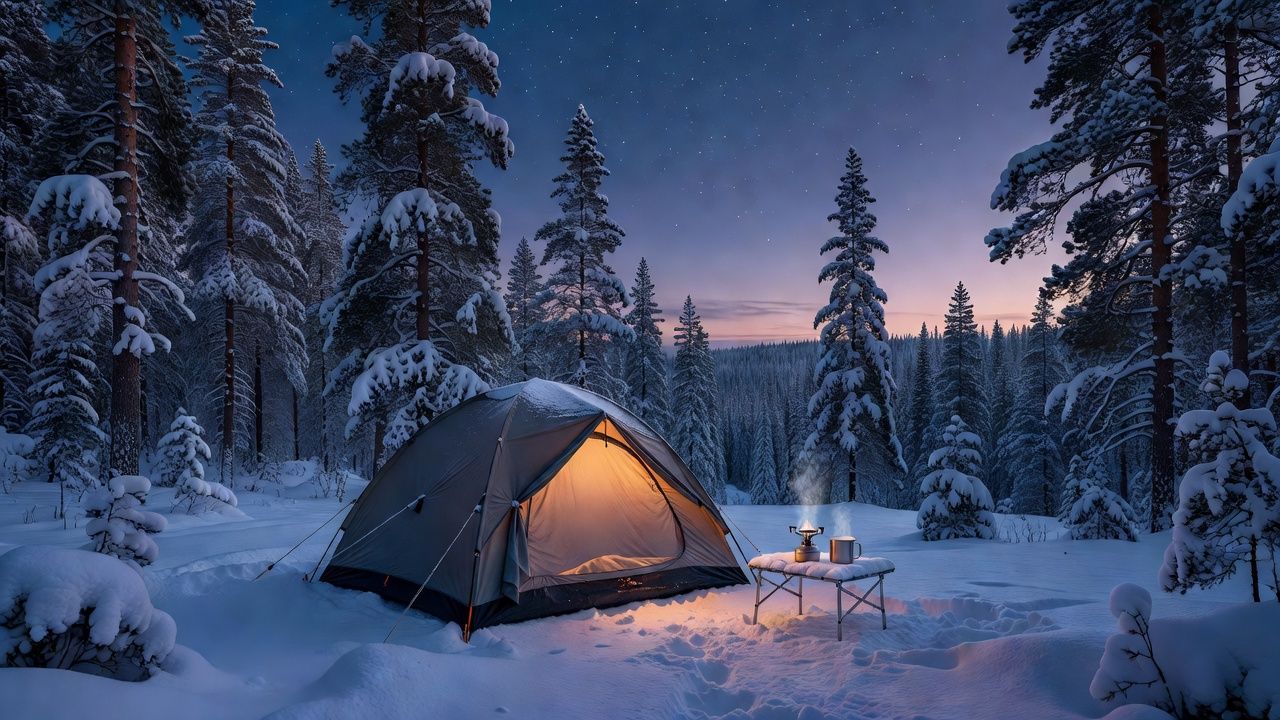
Winter camping gives you things summer camping never can. Solitude: popular trails and campgrounds are empty. You might be the only person for miles. No bugs: zero mosquitoes, zero ticks, zero buzzing near your ear at 2 AM. Cleaner air and brighter stars: cold air holds less moisture and dust. The night sky in winter is shockingly clear. And hot food hits differently: a bowl of chili cooked on a camp stove when it is 25 degrees out is the best meal of your life.
The tradeoff is real. You need more gear, more planning, and more respect for the cold. But get it right once and you will understand why winter campers go back every year.
How Cold Is Too Cold to Camp? The Honest Limits
If you have ever googled how cold is too cold for camping the night before a trip, this section is the one you actually came for. The short answer: there is no single number. There is the temperature where your gear stops matching the weather, and that line moves with what you last slept in. For a beginner in a three-season tent with a summer-weight bag, the line lands around 40°F. With a real winter kit — a 0°F bag, a pad with actual R-value, and a shell that blocks wind — most healthy adults sleep warmly down to about 0°F. Below 0°F the question stops being are you comfortable and becomes are you safe, and that is genuine four-season, experienced-camper territory.
The Temperature Bands: What Actually Works at Each Low
What temperature is too cold to camp is really a question about which column you are in:
| Nighttime low | Casual 3-season kit | Full winter kit |
|---|---|---|
| 50-40°F | Ideal. Summer bag plus a pad is plenty. | Overkill |
| 40-32°F | Fine with a 20°F-comfort bag, a hat, and one decent pad. Start here. | Easy night |
| 32-20°F | Doable, but frost forms inside the tent and a cheap pad lets ground cold straight through. Not a first trip. | Comfortable — this is what a winter kit is built for |
| 20-10°F | Past the limit of three-season gear. Canister stoves start failing, water bottles ice over overnight. | The sweet spot for a 0°F bag plus an R-5 pad |
| 10-0°F | Do not. Hypothermia risk is real for the unprepared, and the bail-out options are gone. | Fine with a -20°F bag and R-6 under you |
| Below 0°F | No. | Four-season tent, liquid-fuel stove, expedition bag — and experience |
If you remember one row, remember this one: 32°F to 20°F is where beginners get into trouble, because it feels survivable and every failure mode (wet bag, cold pad, dead stove) arrives at once.
How Cold Is Too Cold to Camp in a Tent?
A tent does not make heat. It blocks wind and traps a few degrees of radiant warmth — realistically 5-10°F above the outside air, and only if you seal it up. So how cold is too cold for tent camping has a simpler answer than most people expect: the tent is rarely what limits you. Two things do.
- Condensation and frost. Once lows drop below about 25°F, your breath freezes on the inner wall. A double-wall tent with both vents cracked handles it; a sealed single-wall does not.
- What is under you. An uninsulated air mattress is a radiator working in the wrong direction — you spend the night heating the air inside it. This is the most common reason people who "have a 0°F bag" still freeze. Our sleeping bag temperature ratings guide walks through the pad-plus-bag math, and the Gear Doctors Oxylus pad ($49.99, lab-tested 4.3 R-value) is the cheapest way we know to fix it.
So how cold is too cold to tent camp, practically? Winter tent camping below the treeline is fine in a solid three-season tent; the honest floor for that setup is about 20°F. Tent camping in winter above treeline, or into a forecast with real wind, is a different sport — check our best 4-season tents for winter camping breakdown before you trust a summer shelter with a snow load.
How Cold Is Too Cold to Camp With Kids?
Kids sleep colder than adults and lose heat faster, which puts the family limit well above the adult limit. A practical first-trip floor is 30°F: cold enough to feel like real winter camping, warm enough that a mistake costs you a bad night instead of an emergency.
Two habits matter more than gear. First, size their bag the way described above — pick a comfort rating 15-20°F below the forecast low, which is why the TETON Sports Celsius Jr ($49.99, 20°F rated) is the right first bag for most kids rather than a scaled-down adult bag. Second, believe the checklist instead of the kid: children will insist they are fine while their hands are cold, so check the back of the neck and make them change wet socks before bed.
How Cold Is Too Cold to Camp With a Baby or Toddler?
This is the one place to draw a hard line. Infants cannot regulate their own body temperature, and a cold tent gives them no way to tell you something is wrong except by crying. Treat 50°F as the practical floor for a baby sleeping in a tent, and skip infant winter camping entirely — the risk is not worth it when a heated cabin or an RV exists.
Toddlers are different. They can talk and they generate more heat, so a 40°F low is workable in a genuinely rated bag with a fleece layer underneath. The rule that saves the night is a bag, never a blanket: toddlers kick blankets off in their sleep and cannot pull them back on. And because a toddler is exactly the person who will not tell you they are cold, plan to wake once around 2 a.m. and check.
How Cold Is Too Cold to Camp With a Dog?
Most healthy, double-coated, medium-to-large dogs are comfortable into the low 20s°F. Below about 20°F it depends on the dog: short-haired, small, thin-coated, young, or senior dogs need a jacket at those temperatures, and none of them should be out below 0°F.
Two things matter more than the coat everyone buys. Insulation from below — a dog sleeping on cold ground loses heat fast, so a raised cot like the CANINE CANYON folding dog cot ($49.99) or a closed-cell foam pad does more good than a jacket. And paws: ice balls between the toes and road salt at the trailhead are the two most common winter problems, so bring a towel and check paw pads before your dog gets into the tent. The full cold-weather detail lives in our camping with dogs guide.
How Cold Is Too Cold to Car Camp?
Car camping is the easiest version of cold weather camping and the right place to start: the vehicle is your bail-out, you can carry unlimited gear, and a larger tent holds heat better than a tiny one. Plenty of car campers run trips at 20°F and below with a good bag, a real pad, and a heater to take the edge off bedtime. The Mr. Heater Buddy ($74.00) is the standard answer for a tent that size — and the rule from our camping heater guide still holds: vent cracked whenever it is on, and off before you sleep.
Cold Weather Camping Gear: The Five Things That Decide Your Night
Strip away the shopping lists and these are the cold weather camping tips that matter, in this order:
- The pad. R-value is warmth, and it beats the bag for dollars spent. Two pads (closed-cell foam under an inflatable) is the cheap upgrade.
- The bag. Comfort rating 15-20°F below the forecast low. The TETON Sports Celsius 0°F ($59.99) is the honest entry point.
- The shell. Wind is what turns 25°F into unbearable. Waterproof, windproof, plus a hat.
- Dry sleep clothes. Bone-dry base layers, worn only inside the tent. Damp equals cold.
- A stove that still works. See below.
When Is It Too Cold to Camp? Let Your Gear Tell You
You do not need a thermometer to find your own line. Three signals tell you that you have crossed it:
- Your stove quits. Plain butane stops vaporizing around 40°F and isobutane blends around 20-25°F, which is why a February breakfast can fail on perfectly good fuel. Propane keeps working to about -40°F. A dual-fuel stove that takes a 1-lb propane cylinder ($34.99) is the fix.
- Your water bottle is iced over by morning. Ice at the surface means the inside of your shelter was below freezing all night.
- You are sleeping in your puffy. If you need your insulated jacket on inside the bag, your bag-plus-pad system is 20°F short of the forecast, not 5.
So how cold can you camp? Comfortably, a prepared three-season camper runs to about 25°F and a prepared winter camper to about 0°F. Past that, the coldest temperature to camp is a deliberate choice rather than an accident: 0°F to -20°F, with a four-season shelter and expedition-rated gear.
The layer system
The single most important winter camping skill has nothing to do with your tent. It is dressing correctly. If your clothing system fails, nothing saves you.
Your base layer should be merino wool or synthetic. Never cotton. Cotton absorbs sweat, stays wet, and pulls heat from your body. For kids, ANTSANG Kids Merino Wool Hiking Socks at $19.99 for a six-pack keep little feet warm affordably. For adults, one good merino baselayer set is the most important clothing purchase you will make — and if you prefer synthetic over wool, the Columbia Men's Omni-Heat Base Layer Top at $49.99 lines its fabric with reflective silver dots that bounce your own body heat back at you.
Bring a dedicated set of sleep clothes. Bone-dry base layers you change into only inside the tent. The clothes you hiked in are damp with sweat. Damp equals cold the moment you stop moving.
Your mid layer is fleece or down. This is your warmth trap. Fleece breathes better when you are active. Down is lighter and warmer for camp. Bring both if the forecast drops below 20 degrees. If you want one layer that splits the difference, the Columbia Powder Lite II Insulated Jacket ($94.91) pairs synthetic insulation with Omni-Heat reflective lining — warmer than a fleece at the campfire, and unlike down it keeps insulating if it gets damp.
Your outer layer must be waterproof and windproof. Snow is wet. Wind steals heat faster than cold air alone. The Rab Men's Downpour Jacket at $125 uses Pertex Shield fabric that is waterproof, breathable, and packable. Pair with waterproof hiking boots like the Merrell Moab 3 at $129.95 for traction on snow and ice. On icy trailheads and hard-packed snow, add Yaktrax Pro Traction Cleats at $34.95 — 360° steel coils wrap the outsole and bite into ice that boot tread slides right over.
Winter sun reflecting off snow is surprisingly intense. A Columbia Bora Bora Booney UPF 50 Hat at $23.99 keeps sun off your face during the day. Bring a warm beanie for camp.
Shelter in winter
You do not need a 4-season tent for most winter camping. If you are staying below the treeline and not expecting blizzard-force winds, a solid 3-season tent with the right setup works well. When you do need real snow shelter — exposed ridges, above treeline, deep-snow camps — our best 4-season tents for winter camping guide breaks down which designs actually handle snow load and which are just marketing.
If you do go that route, the two lightest ways in our catalog are the MSR Access 2 ($727.95) — a true snow-load-rated 4-season tent at about 5 lb 6 oz, light enough to split between two packs — and the NEMO Kunai ($749.95), a 3-4 season hybrid for the camper who wants one tent for summer and a few winter weekends.
For solo or duo trips, the Kelty Late Start 2-Person Tent at $159.95 has color-coded pole clips that make setup fast even with cold-numbed fingers. A smaller interior means your body heat warms the space faster. The Night Cat 2-Person Backpacking Tent at $53.99 is a budget option for fair-weather winter trips — but for genuine cold-weather backpacking, invest in a 3+ season tent with full rainfly coverage.
For couples or small families, the Coleman Skydome 4-Person Tent at $122.99 sets up in under 5 minutes with pre-attached poles — a genuine advantage when pitching camp in the cold. The built-in LED lighting and near-vertical walls give you more usable interior space than a traditional dome. Stake it well. Winter winds find every loose corner.
For family car camping, the CORE 6-Person Instant Cabin Tent at $169.99 uses pre-attached telescoping poles for 60-second setup — a genuine advantage when pitching camp in the cold. Cabin-style near-vertical walls make all 99 sq ft of floor space usable. Our tent size comparison guide covers the tradeoffs between warmth, space, and weight.
Face the tent door away from the wind. Build a 12 to 18-inch snow wall upwind to deflect ground-level wind. Standard stakes pull out of frozen ground. Use snow stakes or bury stuff sacks filled with snow as deadman anchors. And crack a vent. It sounds wrong, but your breath produces moisture that condenses on the inner tent wall and freezes. A slight draft beats being slowly soaked.
The sleep system
Your sleeping bag and pad matter more than your tent. You can sleep in a mediocre tent if your sleep system is dialed. You cannot sleep in a mediocre bag.
Sleeping bag temperature ratings are survival ratings, not comfort ratings. A 20-degree bag keeps you alive at 20 degrees. You will not be comfortable. For actual comfort, add 15 to 20 degrees to the rating. Camping in 25 degrees? You want a zero-degree bag.
For car camping and base camps, the TETON Sports Celsius 0° Sleeping Bag ($59.99, 4.5★ from 18,000+ reviews) is the winter workhorse most beginners land on — a true 0° bag with enough room to layer up, at half the price of premium options. Sleep cold or tall? The TETON Celsius XXL 0° ($89.99) adds room without skimping on warmth. Planning a winter backpacking trip where packed size matters? The Kelty Cosmic Down 20° ($169.00) compresses far smaller than any synthetic 0° bag — just remember it's a 20° bag, so below 30°F it needs a solid layer system underneath.
For children, prioritize a sleeping bag whose comfort rating sits well below the forecast low, then add a foam pad underneath it. For adults, invest in a bag rated at least 10 degrees below your expected low.
A sleeping pad is not for comfort. It is for insulation from frozen ground. Without one, your body heat conducts straight into the earth even with the best sleeping bag. Use two pads in deep winter: closed-cell foam on the bottom and an inflatable on top. The combined R-value should be at least 5. That combo looks like this: a Therm-a-Rest Z Lite Sol ($54.95, 4.7★) foam pad on the ground with a Klymit Insulated Static V ($94.99, 4.5★) on top — together they clear the R-value threshold and give you a backup pad if one punctures. On a tight budget? The Klymit Static V ($64.95) still beats sleeping on bare ground, but it's uninsulated — in winter it goes on top of the foam pad, never alone. For a deep dive on pad types, R-value ratings, and our top picks for every season, see our best camping sleeping pads guide.
Now the Nalgene trick. Boil water, pour it into a Nalgene 32oz Wide Mouth Bottle at $15.99, screw the lid on tight, and throw it in the foot of your sleeping bag ten minutes before bed. You climb into a pre-warmed bag and have drinkable water in the morning. This single trick has saved more winter nights than any $400 piece of gear.
During the day, an insulated bottle such as a CamelBak Podium Chill helps slow freezing and makes it easier to keep sipping. Reaching for water and finding ice is genuinely demoralizing.
Cooking and hydration
Winter camping burns 30 to 50 percent more calories than summer camping. Your body is working harder just to stay warm. Food is not optional. It is fuel.
Canister stoves lose pressure below 20 degrees. For a compact winter-camp backup, the MSR PocketRocket 2 is a lightweight option with winter canister fuel. Bring extra canisters. You burn through fuel roughly twice as fast in the cold. For the full breakdown of which stove fuels actually work below freezing and at altitude — propane vs isobutane vs liquid fuel, with specific stove picks and field techniques for pre-warming canisters — our cold weather camp stove guide covers it in depth.
Keep [BIC Maxi Pocket Lighters] at $17.24 for a 15-pack in your inner jacket pocket. Cold lighters do not spark. Body-warmed lighters do.
Breakfast: instant oatmeal with nuts, dried fruit, and peanut butter. Lunch: eat on the move. Cheese, salami, trail mix, chocolate. Do not stop long enough to get cold. Dinner: one-pot meals that require boiling water and nothing else. Before bed: eat something fatty. Your body generates heat digesting it through the night.
Hydration is easy to neglect when you are not sweating visibly, but cold air is incredibly dry. Drink warm liquids constantly.
Safety gear
Winter removes the margin for error. A Gerber Bear Grylls Ultimate Knife at $43 includes a fire starter and emergency whistle. Know how to use it before you need it. Practice in your backyard, not at 15 degrees in the dark.
HotHands Hand Warmers 40-Pair Bulk Pack at $29.99: throw a pair in your gloves, a pair in your boots, and a pair in your sleeping bag, and you still have spares for the whole season. They activate on air contact and last 8 to 10 hours.
GEAR AID Tenacious Tape (about $14 for a 2-roll pack): a torn tent or sleeping bag in winter is an emergency, not an inconvenience. This tape sticks to nylon, mesh, and vinyl and works in the cold.
For car campers and hot-tenters, a dedicated propane heater changes the math on freezing nights. The Mr. Heater Buddy 9,000 BTU Propane Heater at $74.00 (4.7★, 25,000+ reviews) warms up to 225 square feet and runs on the same 1-lb propane cylinders as your camp stove — no electricity required. Its oxygen-depletion sensor shuts the unit off automatically if oxygen levels drop, and the tip-over switch covers the rest. Two non-negotiables: never run any propane heater while you're asleep, and keep a vent cracked for airflow whenever it's on. Use it to take the chill off before bed and during morning coffee, then leave it off when the tent zips shut for the night. If you're not sure which size your tent needs — or how much propane a night of heat actually costs — our camping heater guide walks through 9,000 vs 18,000 BTU, fuel math, and the CO rules.
Daylight is short in winter. You will be setting up and breaking down in the dark. Bring spare headlamp batteries. A $5 mylar emergency blanket weighs nothing and reflects 90 percent of body heat. In winter, a first-aid kit isn't optional — it's survival gear. Our camping first-aid checklist covers what to pack for cold-weather emergencies, from frostbite care to hypothermia recognition.
With kids and dogs
Winter camping with family requires more patience, more hot chocolate, and more backup plans.
For kids, bring double the socks and only merino wool — merino stays warm even when damp. The Darn Tough merino hiking socks at $27.95 a pair are the ones that hold up wash after wash, so pack one spare pair per person per day. Kids sleep colder than adults. Size their bag 10 degrees lower than you would choose for yourself: the TETON Sports Celsius Jr 20° ($49.99, 4.5★) is rated for exactly this scenario, and it pairs with a foam pad underneath for extra ground insulation. Bring games. Long dark evenings are long. Plan shorter hikes and take frequent snack breaks.
For dogs, short-haired breeds need a blanket or jacket. Booties protect paws from ice. Pack 1.5 times their normal food. Bring a towel to dry them before they enter the tent. A wet dog in an enclosed tent means frozen condensation by morning.
Mistakes I made
Do not wear cotton. Wool and synthetics only.
Do not breathe into your sleeping bag. Your breath contains moisture. Moisture in your bag's insulation reduces warmth night after night.
Eat 200 to 300 calories of fat and protein right before sleep. Your body is a furnace that needs fuel.
Find flat ground. A slight slope means you slide into the tent wall all night.
Store water bottles upside down. Ice forms at the surface first. Keep them inside your sleeping bag at night.
If you are warm while hiking, you are overdressed. Sweat-soaked clothes freeze when you stop. Start cold. You will warm up in ten minutes.
Quick checklist
Clothing: merino wool base layer plus dedicated sleep set, a fleece or a synthetic-insulated mid layer, waterproof shell jacket and boots, three-plus pairs of wool socks (a thermal set like the DANISH ENDURANCE merino hiking socks is the affordable way to pack a dry pair for every night), insulated gloves with waterproof shell mittens, warm beanie, and a merino wool neck gaiter or balaclava.
Shelter and sleep: tent with snow stakes, sleeping bag rated 15 to 20 degrees below expected low, two sleeping pads with combined R-value over 5, ground tarp, Nalgene bottle.
Kitchen: winter-capable stove, extra fuel canisters, lighters stored in inner pocket, insulated water bottle, high-calorie food and pre-bed snacks.
Safety: first aid kit, headlamp with spare batteries, knife with fire starter, hand warmers, repair tape, emergency blanket, map and compass, satellite communicator for true backcountry.
For the full itemized version — every category with real prices, budget picks, and the exact packing list — grab our winter camping gear checklist.
If you're weighing a desert winter, our Camping in New Mexico guide lays out which half of the state is actually in season from November through March, plus the park elevations and free BLM dispersed rules that decide it.
For a gentler introduction than a snow-camping trip, Alabama's coast runs a mild winter season — Camping in Alabama covers the gear split.
Planning the shoulder season? Camping in Louisiana explains why October through April is the only camping season that makes sense on the Gulf Coast, and what hurricane season does to the calendar.
Nights near or below freezing change what you need from a bag: the sleeping bag temperature ratings guide walks through each rating step and which bag-plus-pad pairing actually holds heat at 25F.
If your goal is warm-weather winter camping rather than snow camping, the Camping in January 2027 guide covers the southern states where January is the peak season instead of the off-season.
Cold-weather camping plans live or die on whether the gate is still open, so it is worth knowing the actual dates before you pick a destination. Our when do campgrounds close for the season roundup covers every published 2026 closing date and the year-round fallbacks.
The same season shifts a state further west too: Utah's desert parks peak in October while Bryce and the high country are already closing down, which the Camping in Utah guide maps month by month.
FAQ
If you are timing a trip rather than choosing a state, camping in Wisconsin runs through which loops close when and why the third week of October is the southern half's peak.
If your weekend planning runs into the same cold-night problem, our West Virginia camping guide works through the October fire rules and which campgrounds stay open past the holiday.
What temperature sleeping bag do I need for winter camping?
Sleeping bag ratings are survival ratings, not comfort ratings. A 20-degree bag keeps you alive at 20 degrees, but you will not sleep well. Add 15 to 20 degrees to the rating: camping in 25-degree weather means you want a zero-degree bag. For kids, choose a bag whose comfort rating sits well below the forecast low and add a foam pad underneath.
Can I use a 3-season tent for winter camping?
Yes, for most winter camping below the treeline. A solid 3-season tent with the right setup works as long as you are not expecting blizzard-force winds. Exposed ridges, above-treeline camps, and deep-snow sites call for a true 4-season tent. In any tent, face the door away from the wind, build a snow wall upwind, use snow stakes or deadman anchors, and crack a vent to control condensation.
How do I stay warm at night while winter camping?
Three things matter more than the tent: a warm sleeping bag rated 15-20 degrees below your expected low, two sleeping pads with a combined R-value of at least 5 (closed-cell foam on the bottom, inflatable on top), and dry sleep clothes you only wear inside the tent. The classic trick: boil water, pour it into a Nalgene bottle, seal it, and drop it in the foot of your bag ten minutes before bed.
What should I wear for winter camping?
The layer system: merino wool or synthetic base layer (never cotton), a fleece or down mid layer, and a waterproof, windproof outer shell. Bring a dedicated set of bone-dry sleep clothes. If you are warm while hiking, you are overdressed — sweat-soaked clothes freeze the moment you stop. Start cold and warm up in the first ten minutes.
Is winter camping safe for beginners?
Yes, if you stay within your limits. Start with a single night at a car-camping site where you can bail to a heated car if something goes wrong. Pack a first-aid kit with frostbite and hypothermia know-how, a headlamp with spare batteries, hand warmers, a fire starter, and a repair kit. Eat 200-300 calories of fat and protein right before bed — your body needs fuel to stay warm all night.
How much warmer does a 4-season tent keep you?
A 4-season tent is built for snow load and wind, not warmth by itself. Its real job is keeping the wind and snow off your sleep system — the warmth comes from your bag, pads, and layers. If you camp below the treeline in normal winter conditions, a well-set-up 3-season tent with a full rainfly is usually enough.
What temperature is too cold for camping?
Around 40°F is too cold for a beginner with summer-grade gear — that is where a warm night turns into a cold one. With a proper winter kit (0°F bag, R-5 pad, windproof shell) most healthy adults are comfortable to about 0°F. Below 0°F it becomes a safety question rather than a comfort one, and that is four-season territory.
When is it too cold to camp in a tent?
Below about 25°F the tent itself stops being the problem and your sleep system becomes the whole story: frost forms on the inner wall, a cheap air mattress stops insulating, and canister stoves begin to fail. For a normal 3-season setup, treat 20°F as the floor. Let your gear tell you — if your stove quits or your water bottle is iced over by morning, you have crossed your line.
How cold is too cold to sleep in a tent?
Sleeping is a lower bar than sitting around camp, because your bag and pad are doing the work. A 0°F comfort-rated bag over a pad with an R-value of 5 or more is genuinely warm down to about 0°F for most adults. Without that pad, the same bag will feel cold at 30°F — the ground pulls heat faster than the air does.
How cold is too cold to camp with a toddler?
A 40°F nighttime low is workable for a toddler in a properly rated bag with a fleece layer underneath, and it is where we would stop for a child that age. Use a bag rather than a blanket, because toddlers kick covers off and cannot pull them back on, and plan to check on them once during the night — a cold toddler often will not say so.
How cold is too cold for winter camping?
For a prepared winter camper with a four-season shelter, a -20°F bag, and an R-6 pad, roughly -0°F to -20°F is the realistic outer edge — and that assumes calm air and experience. For everyone else, 20°F to 0°F is the working range where a proper winter kit is comfortable and mistakes stay recoverable.
Winter camping is not about being tough. It is about being prepared. Get the layer system right, feed yourself aggressively, insulate your sleep system, and learn the hot water bottle trick. Everything else is practice.
Start with a single night at a car-camping site where you can bail to the heated car if things go wrong. No shame in a safety net. Every winter camper started with one. After one night where you wake up warm, unzip the tent to fresh snow, and light your stove for hot coffee in absolute silence, you will understand.
TrailMapz is reader-supported. When you buy through links on our site, we may earn an affiliate commission at no additional cost to you. All prices and ratings are accurate as of June 2026.
For the shoulder-season picture — who closes on Oct 31, who stays open all winter, and where the rates actually drop on Nov 1 — see the Washington state camping guide.