Camping in 30 Degree Weather: What Changes, What Fails
Camping in 30 degree weather is a different trip: butane quits, water freezes, and the 4 a.m. low decides everything. What to swap and pack.
Thirty degrees is the hinge of the whole camping year. Above it, a three-season bag and a decent pad get a family through the night. Below it, the rules change fast: fuel stops vaporizing, water bottles turn to ice by morning, phones die at 40 percent, and the inside of the tent is wet at dawn even though it never rained.
That is why camping in 30 degree weather is not just "fall camping with an extra layer." It is the first night of the year where your equipment, not your attitude, decides the outcome. The good news: 30°F is genuinely comfortable camping — even with kids — if you make five swaps before you leave the driveway. This guide is those swaps, in the order they matter.
Quick Answer: What Actually Changes at 30°F
- The 4 a.m. low, not the daytime high, is the real forecast. A 48°F afternoon with a 30°F overnight is a winter night with a pleasant walk attached. Pack for the low.
- Insulation under you matters more than the bag. At 30°F an uninsulated air mattress pulls heat out of your body all night. A pad with an R-value of 4 or higher fixes more cold nights than a heavier sleeping bag.
- Butane stops working. Canister stoves running straight butane get weak and then quit near freezing. Propane and isobutane blends keep going.
- Water freezes overnight. Bottles, jugs, dog bowls, and RV lines all need a plan — an insulated bottle in the sleeping bag is the cheap one.
- Condensation is the hidden problem. Warm, moist air from breathing hits a cold fly and turns to frost, then drips. Venting is not optional at this temperature.
- Kids and dogs need their own math. Children lose heat faster than adults and dogs lose it straight into the ground. Both need a rated bag or a raised bed, not a blanket.
What 30 Degrees Actually Feels Like
Thirty degrees in dry air with no wind is a pleasant night once you are zipped in properly. Thirty degrees with 10 mph of wind feels like the low 20s on exposed skin, and thirty degrees in humid air feels colder than the number suggests because damp gear stops insulating.
Three details decide how a 30°F night actually goes:
The dew point is close. When the air temperature and dew point meet, moisture condenses on the coldest surface available — usually the inside of your rainfly. Your breath adds roughly a cup of water to the tent air overnight. At 45°F that water runs down the walls as condensation. At 30°F it freezes on the fabric and then melts onto your bag when the sun hits the tent in the morning.
The ground is colder than the air. Soil holds the night's cold and radiates it upward for hours. This is why a 30°F forecast can feel like sleeping on a slab: the air around you might be 34°F while the surface under your pad is 28°F.
The 3 a.m. dip is deeper than the forecast low. Forecast lows are usually published for the coldest hour before dawn. If you go to bed at 9 p.m. in a 38°F evening, you will spend most of the night in a temperature that is trending down, and your body is at its lowest ebb around 3 to 4 a.m.
What Fails at 30 Degrees That Worked at 45
This is the part almost nobody packs for, and it is the difference between a cold night and a cancelled trip.
| What fails | Why it fails at 30°F | The fix |
|---|---|---|
| Butane canister stoves | Butane stops vaporizing around 31–32°F, so pressure collapses and the flame dies mid-boil | Use a propane stove, an isobutane blend, or keep the canister in a jacket pocket and swap it in warm |
| Water bottles and jugs | A full bottle left outside is ice by morning, and a half-full one freezes faster | Fill bottles with hot water at bedtime, sleep with one, insulate the rest in a cooler |
| Phone and battery packs | Lithium cells lose a large share of capacity at freezing temperatures and can shut down | Keep devices in an inside pocket or in the sleeping bag's footbox |
| Uninsulated air mattresses | Air moves freely inside the mattress and carries heat from your body to the ground | Add a closed-cell foam pad underneath, or use a pad with an R-value of 4+ |
| Tent condensation | Breath moisture condenses on a cold fly, freezes, then drips onto bags | Vent high and low, keep gear off the walls, and pitch with the fly guyed out |
| Dog water bowls | Ice forms within a couple of hours | Insulated bowl, or refresh water at each meal, or use a bottle-and-bowl setup |
| Zippers and buckles | Frost locks zipper sliders and makes brittle plastic snap | Warm the slider in your hand, keep the tent door partly open, avoid forcing a frozen zip |
| Boots left outside | Frozen boots in the morning are painful and slow to put on | Bag them and bring them inside the tent's vestibule or the car |
| Propane tank output | Cold tanks lose pressure, so a nearly empty 20 lb tank feels empty | Keep the tank out of the wind, or bring a spare, or warm it with a blanket — never a flame |
That table is the reason camping in 30 degree weather has its own gear list: it is not a slightly colder version of September, it is a set of small mechanical failures that all happen at once.
The 30-Degree Sleep System
Warmth at 30°F is a stack, not a product. Build it in this order and the same gear works from October into December.
Step 1: Fix the ground (R-value 4 or better)
Pad R-value is the single most under-bought number in cold camping. R-1 to R-2 is a summer pad. R-4 is the entry point for a 30°F night. R-5 and up is winter.
- Klymit Insulated Static V ($94.99, R-4.4) — the value pick for three-season camping that has to survive a 30°F night.
- Therm-a-Rest Z Lite Sol ($54.95) — closed-cell foam, indestructible, and the cheapest way to add a second layer under an existing pad.
- Exped MegaMat 10 ($239.95) — the car-camping answer when comfort and cold-weather insulation both matter.
Step 2: Pick a bag with margin, not a bag rated for the number
A bag rated to 30°F is usually rated to survive 30°F, not to be comfortable there. Look at the comfort rating, not the limit rating, and then buy one tier below your forecast low. If the overnight is 30°F, a 20°F bag is the honest choice.
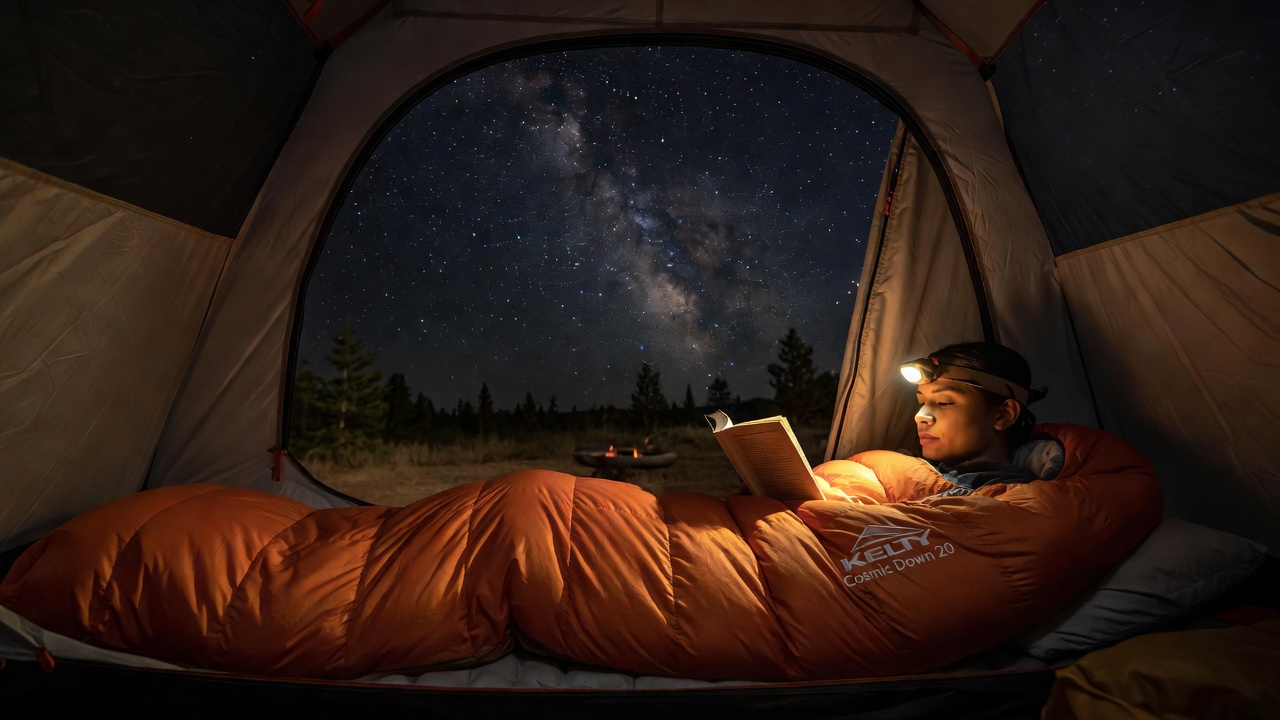
- Kelty Cosmic Down 20 ($169.00) — 550-fill down, a true 20°F bag, and the pick for shoulder-season campers who want one bag to cover October through March.
- TETON Sports Celsius Regular 0 Degree ($59.99) — heavy, cheap, and genuinely warm for a 30°F night with no margin for error.
- Coleman Palmetto 40 Degree ($44.99) — fine for a 40°F night, and exactly the bag people regret at 30°F. If this is what you own, add a liner.
Step 3: Add a liner before you add a bag
A fleece liner realistically adds 8–15°F of comfort for most sleepers — not the 27°F on the packaging. That is still the cheapest upgrade in cold camping, and it doubles as the summer bag for kids.
- Litume Fleece Sleeping Bag Liner ($57.98)
- REDCAMP Fleece Sleeping Bag Liner with Hood ($24.99) — the hood version keeps the heat loss at your head down.
Step 4: Sleep in dedicated dry layers
Never sleep in the clothes you wore around the fire, even if they feel dry. The layer you sweat in is the layer that freezes. Pack a separate base layer and a hat that only ever go in the sleeping bag.
Step 5: Heat the person, not the tent
A hot water bottle at your feet twenty minutes before bed does more than most tent heaters, and it costs nothing. Hand warmers are the backup for hands and for kids' pockets.
- HotHands Hand Warmers, 40 Pairs ($29.99)
- FORICOM 2-Pack 2L Hot Water Bottles ($16.18) — fill at dinner, sleep warm, no fuel required.
Camping in 30 Degree Weather by Setup
The temperature is the same; the failure mode is not. Which shelter you sleep in changes what you fix first.
Tent Camping in 30 Degree Weather
Tent camping in 30 degree weather is a moisture problem wearing a temperature costume. The shell does almost nothing for warmth — it is a windbreak — so the two jobs are insulation underneath and moving your breath out.
- Pitch in a sheltered spot and orient the low end into the wind.
- Vent high and low: a cracked ceiling vent and a partly open door beat a sealed tent every time.
- Use a footprint or a sheet of foam under the floor; cold ground pulls heat straight through a thin bathtub floor.
- Keep bags off the walls. Anything touching the fly gets wet, and wet down is dead weight.
- Expect frost inside the fly by morning and pack a small towel to wipe it before it drips on gear.
If the overnight is forecast much below 30°F and you camp in a tent regularly, a four-season or hot-tent setup starts to make sense — the 4-season tent guide covers the difference between "blocks wind" and "holds heat."
Car Camping in 30 Degree Weather
Car camping in 30 degree weather is the easiest version of this trip and the one most families should choose for a first cold night. You have a metal box that holds heat, a dry place for gear, and an escape hatch if a kid melts down at 2 a.m.
- Sleep on a platform or a thick pad — the vehicle floor is as cold as the ground.
- Crack two windows an inch for ventilation; a sealed car full of breathing people is a condensation chamber.
- Never run the engine or a propane heater in a closed vehicle while sleeping. Carbon monoxide kills quietly; if you use any fuel-burning heat, put a battery-powered CO detector ($23.97) in the cabin.
- Bring the 12-volt heated blanket ($31.99) for the passenger seat and a real sleeping bag for the actual sleeping.
- Keep tomorrow's clothes in the cab overnight so they are not frozen at 6 a.m.
RV Camping in 30 Degree Weather
RV camping in 30 degree weather is comfortable until the water system is involved. The furnace will usually keep the cabin in the 60s; the plumbing, the tanks, and the batteries are what need attention.
- Fill the fresh tank and disconnect or heat the supply hose — a standard hose freezes solid overnight. A heated drinking water hose ($134.53) is the fix for a full-hookup site.
- Keep cabinet doors under the sink open so cabin heat reaches the plumbing.
- Expect the furnace to burn far more propane than in summer; check the tank before dark, not at 3 a.m.
- Lithium batteries lose usable capacity in the cold — if you are boondocking, plan for it.
- If the furnace will not light at all, work through the RV furnace troubleshooting sequence before assuming a repair bill.
Hammock Camping in 30 Degree Weather
Hammock camping in 30 degree weather without an underquilt is the coldest way to spend a night outdoors. The air moving under a hammock strips heat from the entire back of the body, and a pad inside the hammock slides out from under you.
- An underquilt is mandatory at this temperature, not an upgrade.
- Add a top quilt or bag rated below the forecast, plus a hat.
- Pitch with the tarp low and the ends angled into the wind.
- OneTigris Hideout underquilt ($39.98) is the budget entry point; the hammock camping guide has the full setup order.
Camping in 30 Degree Weather With Kids
Camping in 30 degree weather with kids is entirely doable, and it is also where most cold-weather family trips go wrong — not because the kids are cold at midnight, but because a parent under-packs the children's sleep system and then spends the night zipped into a bag with a shivering four-year-old.
What actually works:
- Give each kid their own rated bag. A 40°F kids bag at 30°F is a bad night. Use a 20–30°F bag sized to the child, or a 40°F bag plus a fleece liner.
- TETON Sports Celsius Jr 20°F ($49.99) — the workhorse kids bag for a 30°F night.
- Kelty Woobie 30 Degree ($39.95) — a genuine 30°F kids bag that packs small.
- Morrison Outdoors Big Mo 40 ($79.95) — for ages 2–4; pair it with a liner or an extra blanket when the low drops below 35°F.
- No bulky jackets inside the bag. A puffy worn inside a sleeping bag compresses the bag's loft and makes a kid colder. Dress them in a thin wool or fleece base layer instead.
- Warm the bag before they get in. Hot water bottle, ten minutes, then bedtime.
- Plan the bathroom run. A 3 a.m. trip outside is the coldest part of a kid's night. A pee bottle or a short walk with a headlamp and boots by the door solves it.
- Feed them fat and protein at dinner. A kid who ate well at 6 p.m. sleeps warmer at 2 a.m.
- Sleep close. Shared body heat is real; two kids in one large bag with a parent is warmer than three separate bags.
The winter camping with kids guide goes deeper on bedtime routines and gear for children, and the kids sleeping bags buying guide covers temperature ratings honestly.
Camping With a Dog in 30 Degree Weather
Dogs handle cold better than most owners assume and worse than most owners hope. Searches for "camping with dog in 30 degree weather" almost always resolve to one question — can the dog sleep outside at this temperature — and the answer is yes, if the dog is off the ground and out of the wind. The ground is the problem: a dog lying on cold earth or a cold tent floor loses heat through its belly all night.
- Bring a raised bed or an insulated mat. A blanket on the ground compresses to nothing. The Canine Canyon raised dog cot ($49.99) gets the dog off the cold surface.
- Short-haired, thin-coated, very young, and senior dogs need a coat. The Ruffwear Stumptown insulated jacket ($55.99) is built for exactly this window.
- Water freezes. Refresh at meals, or use a bottle-and-bowl so you are not chipping ice at dawn.
- Do not leave a dog in a vehicle overnight, and do not assume a dog will self-regulate in a cold tent — check on them when you check on the kids.
- The cold-weather camping with dogs guide covers paw protection, sleeping arrangements, and the signs a dog is actually cold rather than merely reluctant.
Camping in 20 Degree Weather
Camping in 20 degree weather is the next band, and it is a real winter trip rather than a cold fall night. Everything from 30°F applies, plus three changes:
- Zero-degree bags replace 20-degree bags. Margin becomes non-negotiable.
- Two pads become the default. R-5 or better, often a foam pad under an insulated inflatable.
- Moisture control becomes the whole game. At 20°F, damp gear does not dry overnight, and a wet bag can lose most of its rating.
Tent camping in 20 degree weather needs a four-season or hot tent, vented but wind-tight, or a very well-sheltered three-season pitch on a foam base. Car camping in 20 degree weather is still the most forgiving option — but it is also the temperature where a dead battery becomes a real risk, so start the vehicle before you sleep, not after.
Camping in 40 Degree Weather
Camping in 40 degree weather is the easy side of this guide, and it is where most people over-pack. A 40°F night is a three-season bag on an R-3 pad, dry sleep layers, and a hat.
The classic 40°F mistake is trusting a plain air mattress. It is warm enough in the evening, and then the ground pulls the heat out of you at 3 a.m. The other mistake is a 40°F bag at a forecast low of 38°F — that leaves no margin at all.
Tent camping in 40 degree weather rarely needs a heater, and generally should not use one: ventilation and a proper pad solve the problem without adding carbon monoxide to a small space.
Camping in 30–40 degree weather is the best camping of the year in most of the country — cool enough to sleep well, warm enough that a mistake costs an uncomfortable night rather than a trip. The 30–40 degree window is also the one where fall clothing still works at dinner and a winter bag still works at 4 a.m., which is why it is the easiest band to plan for.
What to Wear Camping in 30 Degree Weather
What to wear camping in 30 degree weather is a layering problem, not a jacket problem.
- Base layer: wool or synthetic, never cotton. Cotton holds sweat against your skin and then chills you.
- Mid layer: fleece or a light puffy for the evening; shed it before you start sweating at the fire.
- Shell: a waterproof breathable jacket for wind and frost, not for warmth.
- Hands: insulated gloves. Thin liners plus warm mittens beat one thick glove. The Carhartt waterproof insulated knit-cuff glove ($32.99) is the practical pick.
- Feet: wool socks and boots that are not tight. Tight boots cut circulation and make cold feet worse. The Darn Tough light hiker ($24.95) is the sock most of our readers already own.
- Head: a hat you only sleep in, kept dry in the bag.
- Sleep set: a separate dry base layer and socks that never leave the dry bag.
Camping Gear for 30 Degree Weather: The Checklist
This is the list we actually pack for a 30°F overnight, in rough order of how much it matters.
- Insulated pad, R-4 or better — or closed-cell foam under whatever pad you own.
- Bag rated 20°F or lower — plus a liner if your bag is rated 30°F or above.
- Dry sleep layers and a sleep hat — kept sealed until bedtime.
- Hot water bottle — filled at dinner, in the bag twenty minutes before you.
- Propane or isobutane stove — not straight butane. The Coleman bottle-top propane stove ($21.99) is the cheap fix, and the MSR PocketRocket 2 ($49.95) is the backpacking option that still runs on a blend canister.
- Insulated bottles, filled with hot water — plus one bottle kept inside the bag.
- Headlamp with fresh batteries — cold drains them, so carry spares.
- CO detector, if any fuel-burning heat is coming along.
- A towel — for the frost inside the fly.
- Boots bagged and inside — never left outside overnight.
- Trash bag for wet layers — so damp gear does not soak the dry set.
- Extra fuel — cold stoves burn through canisters faster than you expect.
The winter camping gear checklist extends this into a full sub-freezing list, and the camp stove fuel guide explains exactly why butane quits near freezing and which blends keep working.
Common Mistakes at 30 Degrees
Packing for the daytime high. The 4 a.m. low is the trip. Read that number and build backwards from it.
Buying a bag instead of a pad. Most "my bag is useless" nights are a cold pad underneath it.
Using a butane stove for the morning coffee. It works at 45°F in the driveway and dies at 30°F at camp. Carry propane or a blend, or sleep with the canister.
Sealing the tent for warmth. A sealed tent is warmer for an hour and soaked by morning. Vent it.
Running a propane heater in a closed tent. Only indoor-rated heaters, only with ventilation, always with a CO detector — the tent heater safety guide covers the rules, and the Mr. Heater won't stay lit troubleshooting guide covers the common failure when one does quit.
Leaving water outside. Fill hot, insulate, and sleep with one bottle. Ice at dawn is a choice.
Skipping the layer change. Sleeping in the day's clothes is the fastest way to be cold in good gear.
FAQ
Is 30 degrees too cold to camp?
No. Thirty degrees is comfortable camping with the right sleep system and a propane or isobutane stove. It is too cold for summer gear: an uninsulated air mattress, a 40°F bag, and a butane canister will all fail. Treat 30°F as the first winter night of the year and it is a good trip.
Tips for camping in 30 degree weather?
Five that matter most: insulate under you before you upgrade the bag; pack for the 4 a.m. low rather than the afternoon high; switch off butane; keep water hot and inside the bag; and vent the tent so your breath leaves instead of freezing on the fly. Add a dry sleep layer that never gets worn around the fire.
What should I wear sleeping in 30 degree weather?
A thin wool or synthetic base layer, dry wool socks, and a hat — nothing bulky. A puffy jacket worn inside a sleeping bag compresses the loft and makes you colder. If you are cold in a base layer plus a hat, the problem is your pad or your bag rating, not your clothing.
Can you use a propane heater in a tent at 30 degrees?
Only an indoor-rated catalytic heater, only in a ventilated tent, and always with a battery-powered CO detector. Most tents are not designed for a heater, and a sealed tent with a burner inside is a carbon monoxide risk. Warm the person and the bag first; heat the tent last, if at all.
Does a 30 degree sleeping bag work at 30 degrees?
Usually not comfortably. A bag's "30 degree" rating is typically its limit rating — the temperature at which a fit adult survives, not the temperature at which they sleep well. Choose a bag rated about 10°F below your expected low, or add a fleece liner to a 30°F bag.
How do you keep water from freezing while camping at 30 degrees?
Fill bottles with hot water at dinner, insulate them in a cooler or a wool sock, and sleep with at least one bottle inside your bag. Keep the day's supply in the vehicle or a cooler, not on the picnic table. At 30°F a full bottle left out will usually be iced by morning.
What temperature is too cold for tent camping with kids?
It depends far more on the children's sleep systems than on the thermometer. With a properly rated kids bag, an insulated pad, dry layers, and a warm adult nearby, most families are fine into the mid-20s. Below that, the margin for error shrinks fast and a cabin, RV, or car-camping night is the better call.
Is car camping warmer than tent camping at 30 degrees?
Yes, noticeably. A vehicle holds heat, blocks wind, and keeps gear dry. It is also easier to bail out of at 2 a.m. If you are taking a first cold-weather trip with young kids, car camping in 30 degree weather is the lower-risk choice — just crack the windows and never idle the engine while you sleep.
<!-- AFFILIATE_DISCLOSURE -->