Camping With Dogs in Cold Weather: The Complete Cold-Weather Dog Camping Guide (2026)
Keep your dog warm and safe on cold-weather camping trips: how cold is too cold, ground insulation, paw care, sleep setup and a winter dog checklist.
Quick Answer: The Cold-Weather Dog Camping Setup
Dogs lose heat four ways — through the ground they lie on, through wet fur, through their paws, and through the air moving over them. Fix those four and a dog that is miserable at 35°F is comfortable at 25°F. These are the pieces that do the work, with the prices we see in the catalog:
- Ground insulation — Chuckit! Travel Pillow Dog Bed ($29.99, 4.6★) — a water-resistant pillow bed that keeps a dog off cold, damp ground. This is the single highest-impact purchase for cold-weather camping, more than any coat.
- A second ground layer for hard cold — CHEERHUNTING Waterproof Outdoor Dog Bed ($29.99, 4.2★) — a waterproof outdoor bed that survives a damp tent floor and doubles as a wind break when you stand it on edge.
- Topper insulation — Rumpl Original Puffy Blanket ($139.00, 4.7★) — drape it over the dog bed as a lofted, water-resistant top layer. It is the closest thing in the catalog to a dog sleeping bag.
- Paw protection — Musher's Secret Paw Wax ($24.99, 4.7★ / 13,500+ reviews) — sled-dog-grade wax that shields pads from snow, ice, salt and refrozen crust.
- Reusable heat — OCOOPA Hand Warmers 2-Pack ($39.99, 4.5★) — 16 hours of adjustable heat; wrap one in a sock and tuck it under the dog's bedding.
- Cheap disposable heat — HotHands Hand Warmers, 40 pairs ($29.99, 4.8★) — for a one-off cold snap, a 10-hour warmer per night under the bed is the simplest fix there is.
- Visibility for the 5 PM dark — SPOT THE DOG! Reflective Bandana ($24.99, 4.4★) and Reflective Collar ($18.99, 4.2★) — fall and winter camp evenings arrive early and often in blaze-orange hunting season.
- Car camping heat — Sealy 12-Volt Heated Car Blanket ($31.99, 4.2★) — plugs into the 12V socket and turns a parked car into a warm kennel for a wet, shivering dog.
- Fall ticks are still active — HomeSake Tick Remover ($14.39, 4.6★ / 5,900+ reviews) — three sizes, works on the ticks that October and November deer movement brings into camp.
If you buy one thing, buy the ground insulation. If you buy two, add the paw wax.
If you are planning winter camping with dog gear for the first time, three questions decide the trip — how cold is too cold, what goes under the dog, and what protects the paws — and this guide is built around those three answers.
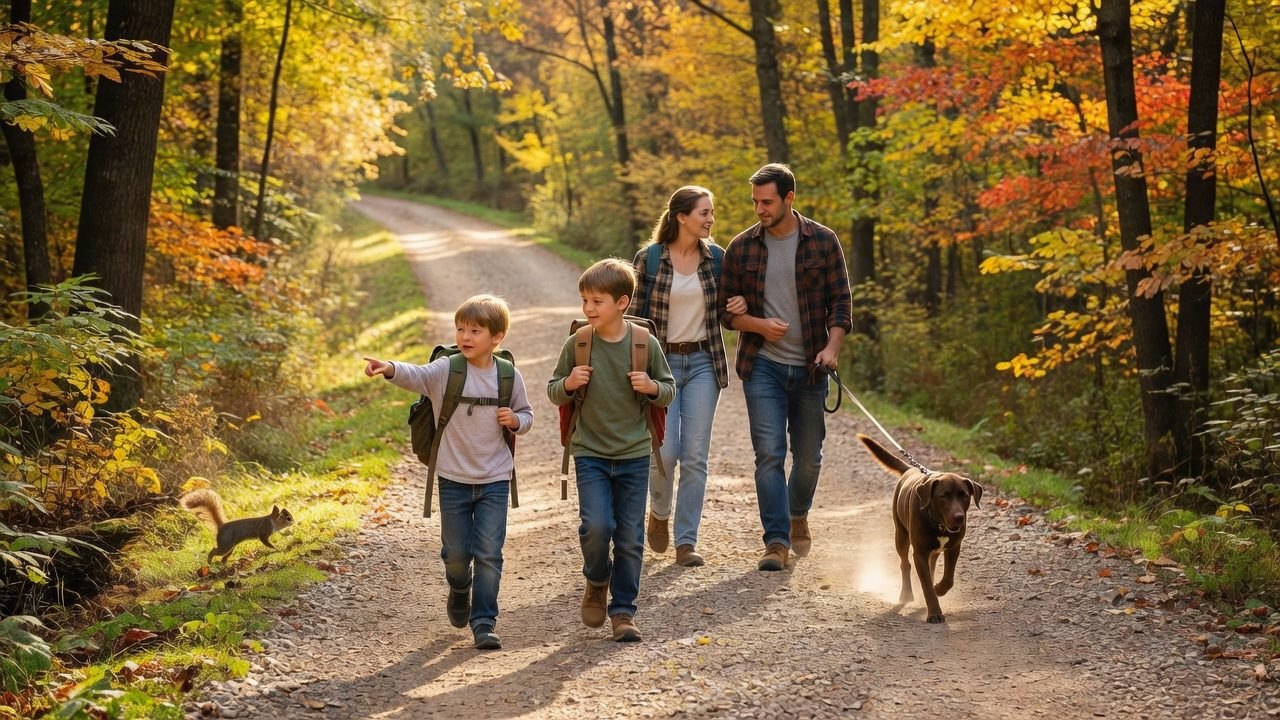
Can Dogs Get Cold Camping? Yes — Faster Than You Think
Can dogs get cold is the question every owner types after a shivering night in a tent, and the honest answer is yes — most dogs get cold well before their owners do. Dogs run warmer than humans internally (a normal canine body temperature sits around 101–102.5°F), but that internal heat is easy to lose when a dog is lying still on cold ground in damp fur.
Four things decide how fast your dog loses heat:
- Size. Small dogs have a much higher surface-area-to-volume ratio, so they lose heat faster than large dogs. A Chihuahua and a Labrador in the same tent at 38°F are in two completely different situations.
- Coat. Double-coated breeds (huskies, malamutes, Newfoundlands, most retrievers) have real insulation. Short, single coats (boxers, vizslas, greyhounds, most terriers, doodles with a thin coat) have almost none.
- Age and health. Puppies, seniors, and dogs with heart, kidney, or thyroid conditions regulate temperature poorly. A 12-year-old Lab with arthritis will stiffen up at temperatures a 3-year-old shakes off.
- Wet and wind. Wet fur conducts heat away roughly like being naked. Add a breeze and you have evaporative cooling on a living animal — which is exactly why a wet dog after a lake swim or a rainy hike is cold long before the thermometer says it should be.
Will my dog get cold camping if it is 45°F and dry? Probably not a hardy adult dog, no. At 45°F with rain and wind and a soaked coat? Almost certainly yes. Temperature alone is a poor proxy — conditions and the individual dog matter more.
What Weather Is Too Cold for Dogs at Camp?
There is no universal number, but these bands are the working rules most experienced campers use. Treat them as starting points and watch the dog, not the forecast:
- 50–60°F: Comfortable for almost every dog. Only seniors, puppies, and very small short-haired dogs may want a blanket.
- 40–50°F: Hardy dogs are fine. Thin-coated, small, old, or wet dogs start to need insulation and a dry layer.
- 32–40°F: Assume your dog needs ground insulation plus a dry, wind-blocking layer. This is the range where the ground stops being "cool" and starts being a heat sink.
- 20–32°F: Every dog needs insulated bedding, a dry coat, and a sheltered sleeping spot. Short-haired and small dogs need a coat or a wrapped layer plus a heat source.
- Below 20°F: Plan for serious cold. Dogs can camp in it — working sled dogs live there — but they do it with insulated bedding, calories, shelter, and supervision. This is not the weekend to improvise.
The body signals that outrank the thermometer
Watch for these, in order of severity:
- Curling into a ball, tucking the tail, lifting paws one at a time — early cold. Time to add insulation.
- Shivering that does not stop when you cover the dog — the dog is losing the battle. Get it into a warm, dry space.
- Whining, restlessness, or refusing to settle — often cold rather than anxiety.
- Cold ears, tail tip, and paws to the touch — the body is pulling blood to the core. Frostbite risk starts at the extremities.
- Lethargy, stumbling, slow or shallow breathing, pale gums — this is an emergency. Warm the dog gradually and get to a vet.
This is general camping guidance, not veterinary advice. If your dog has a health condition, is very young or very old, or the forecast is severe, talk to your vet before the trip.
The 6 Things That Actually Keep a Dog Warm at Camp
How to keep my dog warm at a campsite comes down to six mechanisms. Every product recommendation below serves one of them:
- Break contact with the cold ground. Conduction is the biggest heat thief at night. A dog on bare tent floor or a bare campsite pad is losing heat directly into the earth.
- Get the fur dry and keep it dry. A wet dog cannot insulate itself no matter what you put over it. Dry towels, a waterproof bed, and a shelter that actually blocks rain all beat a thicker coat.
- Block the wind at dog height. Wind at six inches off the ground is stronger than wind at six feet, and it is exactly where your dog lives. A bedding arrangement tucked into a corner, or a wind-blocking panel, changes everything.
- Add a reflective heat source, not just insulation. Insulation slows heat loss; a warmer adds heat. Hand warmers wrapped in fabric under bedding are the cheapest, safest version of this.
- Feed a little more and water normally. Digestion generates heat. Cold-weather dogs burn more calories, so a slightly larger evening meal helps — but never let water intake drop, because dehydration impairs temperature regulation too.
- Supervise the first cold night. Almost every cold-weather dog problem is fixable at 11 PM and expensive at 3 AM. Check the dog's ears, paws and bedding before you sleep.
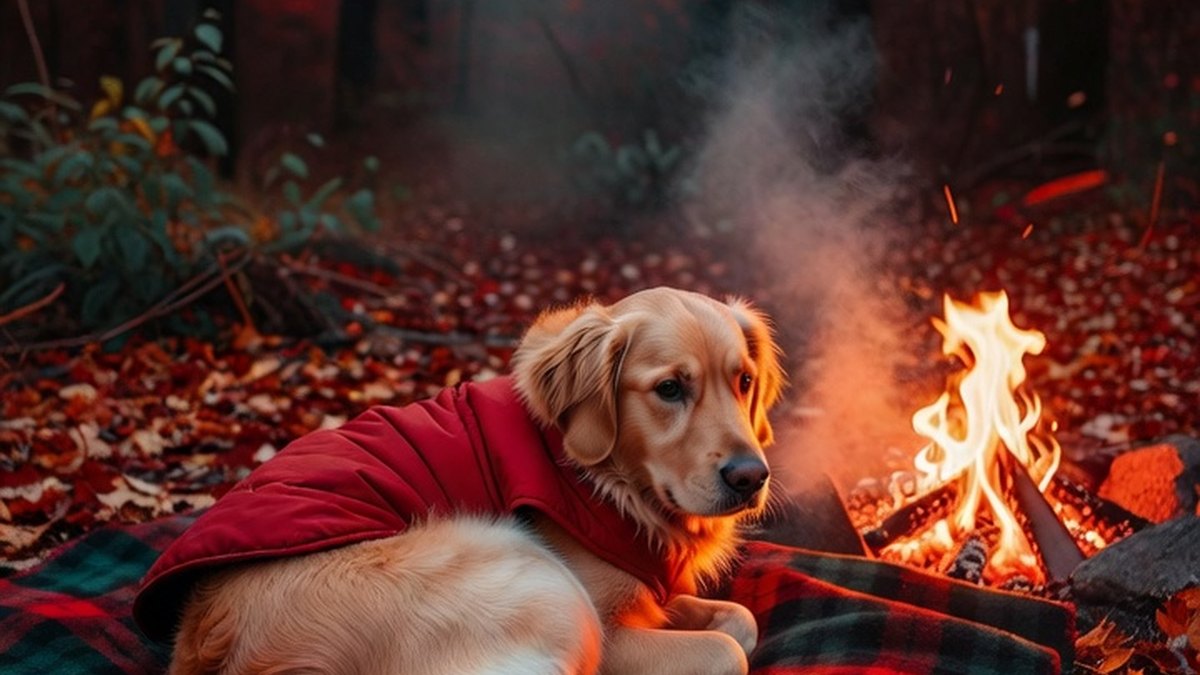
Ground Insulation First: The Bed Decision
If you only change one thing about cold-weather dog camping, change what your dog lies on. Here is the honest breakdown of the three shapes, including where each one fails.
Best all-round dog bed for cold-weather camping
Chuckit! Travel Pillow Dog Bed — $29.99, 4.6★, 2,791 reviews. A lofted, water-resistant pillow bed that puts a real layer of fill between your dog and the ground. It packs like a duffel, wipes clean, and it is the piece we reach for first on a cold night because it insulates by loft and it does not soak through in a damp tent. The honest limit: on wet ground the water-resistant shell is not a full waterproof barrier, so put it on top of a foam pad or a mat if the floor is genuinely soggy.
Best when the ground is wet or frozen hard
CHEERHUNTING Waterproof Outdoor Dog Bed — $29.99, 4.2★, 4,730 reviews. This is the rugged outdoor one: a waterproof base meant for patios, decks and campsites, so moisture wicking up out of a wet tent floor is not the failure mode. Rating is a little lower than the Chuckit because the fill is firmer and some owners find it less plush indoors — at camp, that firmness is a feature. Its second job is a wind break: stood on edge at the foot of a bedding pile, it blocks ground-level drafts.
The cot: excellent in shoulder season, a liability in deep cold
CANINE CANYON Folding Raised Dog Cot — $49.99, 4.6★, 550 reviews. A raised cot keeps a dog off the cold, damp ground entirely and it is the best answer for fall camping when nights are chilly but not freezing — no conduction into the earth at all. The catch that most reviews never mention for cold-weather use: air flows freely underneath a raised cot, so once temperatures drop toward freezing the airflow becomes a chill source rather than a benefit. The fix is simple and it works — put a closed-cell foam pad or a folded puffy blanket on top of the cot surface, and drape a blanket over the dog. Used that way it is a warm, dry, elevated bed; used bare below freezing it is colder than a cheap ground pad.
The topper that turns any bed into a cold-weather bed
Rumpl Original Puffy Blanket — $139.00, 4.7★, 4,000 reviews. A synthetic-insulated, water-resistant puffy blanket with ripstop. Draped over a dog bed it adds a lofted air-trapping layer plus a wind block, which is the closest the catalog comes to a dog sleeping bag. It is expensive, and it is not dog-specific — but it does double duty for the human on a cold night, which makes it easier to justify than a single-purpose dog bag.
Search dog sleeping bag camping and you will mostly find scaled-down human bags. At camp, the barrier pad plus a topper over the dog's own bed beats most dedicated dog sleeping bags for warmth per dollar, because it insulates the surface the dog is already sleeping on.
Add active heat
OCOOPA Hand Warmers 2-Pack — $39.99, 4.5★, 12,000 reviews. Rechargeable, 16 hours, four heat levels, magnetic so they snap together. Reusable night after night on a trip.
HotHands Hand Warmers, 40 pairs — $29.99, 4.8★, 10,200 reviews. Ten hours of heat each, no charging, nothing to remember. For a single cold snap this is the simplest solution on the list.
Safety rule that matters more than the product: never place an activated warmer directly against a dog's skin, and never let a dog chew one. Wrap it in a sock or a towel and put it under the bedding, not on the dog.
Want a comparison of every bed shape, pad and cot we carry? The dog sleeping pad and camp bed guide breaks down loft, fill and sizing side by side — that page is the product decision, and this page is the cold-weather decision.
How to Keep Dogs Warm While Camping: The Sleep Setup, Step by Step
How to keep dogs warm while camping is mostly logistics. Build the bed in this order:
- Start with a barrier. A closed-cell foam pad, a folded blanket, or a piece of Reflectix under everything. This costs almost nothing and does more than any coat.
- Add the bed. The pillow bed or waterproof outdoor bed goes on top of the barrier.
- Add the topper. The puffy blanket over the bed, or a towel-tucked hand warmer under it.
- Choose the corner. Bed the dog where two tent walls meet and away from the door. That is the warmest, least drafty spot in any tent, and it puts the dog out of the traffic lane.
- Dry the dog before bed. Towel the paws, belly and chest. A damp dog fights its own bedding all night.
- Check at 11 PM. Ears, tail tip, paws, bedding. If the dog is curled and shivering, add heat; if it is sprawled and panting, you overdid it.
Keeping dog warm in tent: three setups that work
- In the tent with you. The simplest and warmest option for most family campers, and most dogs sleep better close to their people. If your dog is muddy or soaked, a dedicated towel and a waterproof bed layer keep the tent floor from becoming a problem.
- A heated tent for the dog while you are awake. If the plan is a cold evening around the fire, a tent warmed by a Mr. Heater Buddy ($74.00) gives the dog a place to retreat to. This only works if you treat it as a combustion appliance: a CO detector ($23.97, 4.7★) belongs in any tent that runs a heater, and heaters stay out of the sleeping bag zone. Our hot tent guide covers the stove-jack setups properly if you want to go that direction.
- A pet tent or kennel as a wind break. A Plusvivo Pop Up Dog Tent ($69.99, 4.5★) is designed as a cool, ventilated shade shelter — so read this honestly: on its own it is not an insulated cold-weather shelter. Where it earns its place in cold weather is as a wind-blocking, dog-containing layer inside a larger tent or vestibule, with a bed and a blanket inside it. Buy it for containment and wind, not for warmth.
Choosing a tent that works with a dog is its own topic — the best tents for camping with dogs comparison covers floor materials and door layout, and our tent size guide has the floor-space math once you are adding a dog bed to the sleeping arrangement.
Paw Care: Musher's Secret, Boots and Ice
Paws are where cold-weather camping hurts first. Snow packs into the fur between the pads, refreezes into a ball, and every step becomes a bruise; road salt and ice-melt chemicals burn on contact; and crusted snow cuts.
The fix we use is paw wax. Musher's Secret Paw Wax — $24.99, 4.7★, 13,500+ reviews — is the sled-dog standard: a blend that forms a protective barrier over the pads and between the toes, blocks salt and chemical burn, and keeps snow from balling up in the fur. Apply a thin layer before you leave camp and reapply after water crossings or long snow sections. It is not a cure for genuine deep cold — no wax is — but it buys working time and prevents the most common injuries.
Boots are the other half of the answer. Ruffwear Grip Trex Dog Boots — $49.99 a pair, 4.1★, 2,400+ reviews — are the standard for dogs who hike in snow: a Vibram outsole that grips packed snow and ice instead of sliding on it, a breathable mesh upper that keeps grit out, and a two-strap cinch that holds through deep snow. They are sold two to a pack and sized by measured paw width, so a four-paw set means two orders — measure the paw first, because fit is what decides whether a boot stays on. If your dog will tolerate them, boots beat wax in deep snow and on ice. If it will not — and many dogs will not — stick with wax, keep the walks shorter, and check the paw pads for cuts when you get back.
Trimming the fur between the pads before a cold trip is free and it genuinely reduces snow balling. So does rinsing salt off the paws with a little warm water at the end of the day, which is a good use for a travel dog bowl.
Best Dog Jacket for Camping: What to Look For, and the One We'd Buy
Best dog jacket for camping is one of the most-searched cold-weather dog questions, and we are going to answer it honestly: a well-fitted coat is a real piece of cold-weather equipment for a thin-coated, small, or senior dog, and it is close to pointless for a husky. Insulation against air temperature matters far less than insulation against the ground and against wind, which is why we put bedding and wind blocking first in this guide.
What a coat must do if you get one:
- Cover the chest and the belly, not just the back. The belly is the contact surface with the ground and the first place a dog loses heat when lying down.
- Be genuinely water-resistant, not water-absorbent. A soaked fleece is worse than no coat.
- Fit snugly at the neck and chest without restricting the shoulders. If it slides sideways, the dog loses coverage every time it lies down.
- Have a harness slot or sit under the harness. Reflective trim is a bonus on dark evenings.
Our pick if you want one coat to buy once: Ruffwear Stumptown Insulated Dog Jacket — $55.99, 4.5★, 300+ reviews — is the coat that meets every rule above: quilted recycled insulation between a water-resistant shell and a soft lining, a cut that covers the chest and belly rather than just the back, side-release buckles that go on a wriggling dog in seconds, and a leash portal so it stays on over a harness. Size it by chest girth — a coat that slides sideways is worse than no coat — and treat it as a layer rather than a bed, because a coated dog still needs insulated bedding under it.
The workaround that costs less than a coat and does more at night is a wrapped layer over the bed plus active heat: the puffy blanket over the dog's bedding and a wrapped hand warmer underneath. For a camping dog on a U.S. weekend trip, that combination covers the cold that most coat purchases are actually trying to solve.
While you are kitting the dog out, the dog camping gear checklist covers the non-weather basics — bowls, tie-out, waste bags, food storage — and the summer hiking gear checklist is the warm-weather counterpart so you can see exactly what changes when the season turns.
Small Dog Cold Weather Gear vs Large Dog Cold Weather Gear
Small dog cold weather gear and large dog cold weather gear are different shopping lists, and treating them the same is how small dogs end up miserable on trips that big dogs love.
Small dogs (under ~25 lb), thin-coated dogs, seniors, puppies:
- A fitted, insulated coat is essential, not optional.
- Bedding should be deep and enclosed rather than flat — a nest shape holds heat far better than a pad.
- Ground insulation is non-negotiable even in the 40s.
- Carry the dog across ice, salt and refrozen crust rather than walking it through.
- Shorten outdoor time: multiple short stretches beat one long cold one.
Large dogs (over ~50 lb), double-coated breeds:
- Most need no coat; a wind-and-wet layer matters more than fill.
- The bed still matters — a big dog on a bare pad at 30°F loses as much heat as a small dog, just across more surface.
- Watch the feet and the tail tip, which are the frostbite-prone extremities on a big coated dog.
- A large elevated cot with a foam pad on top is the right shape and the right size for a big dog.
Large dog winter gear scales in cost, not in complexity: a bigger bed, a bigger blanket, a bigger barrier pad. A 4x6 foot piece of closed-cell foam cut to the tent floor is one of the best cold-weather dog purchases nobody blogs about.
Feeding, Water and Calories in the Cold
Cold weather raises a dog's calorie burn — the body spends energy maintaining core temperature — so the practical rule is a slightly larger evening meal and normal, plentiful water. Two things go wrong constantly:
- Water goes unwatched. Dogs drink less when it is cold, especially if the water is ice-cold. Dehydration makes temperature regulation worse, not better. Carry the usual amount, and check that your dog actually drank.
- The bowl freezes. A metal bowl on a cold night is a hockey puck by morning. Bring it inside the tent, or use a collapsible travel bowl you can tip out and refill.
Do not change your dog's diet for a weekend trip. Add a modest amount of food if the dog is working hard (long hike, cold nights) and keep treats in a pocket rather than a bag that freezes. If your dog is a picky eater at home, it will be a picky eater at camp — bring the food it already reliably eats.
Camping in Snow With Dog: Ice, Salt, Ticks and Campfire Hazards
Camping in snow with dog brings a set of hazards that do not exist in summer:
- Ice and refrozen slush. Cut paw pads and pulled muscles. Choose lower-angle routes, and consider wax or boots.
- Road salt and chemical ice melt. Burns on contact. This is the single most common cold-weather paw injury at trailheads; rinse paws with warm water at the end of the day.
- Ticks are still active. October and November are the adult deer-tick months in much of the U.S., and a tick check is a nightly habit, not a summer one. The HomeSake Tick Remover 3-pack ($14.39, 4.6★, 5,900+ reviews) covers dogs, cats and humans with three sizes and costs less than a bag of treats.
- Campfire behavior. Cold nights mean a real fire with the dog sitting close. Keep the dog back from the ring, and never let a dog near a fire pit that is still warm after the flames are out — a buried ember under ash is invisible and hot.
- Space heaters and CO. If you warm a tent or an RV, a portable CO detector ($23.97, 4.7★) is not optional equipment. Dogs are lower and smaller, so they are affected by carbon monoxide before their owners notice anything.
- A human first-aid kit that can also handle a dog. A real kit like the Adventure Medical Kits Ultralight/Watertight .7 ($44.95, 4.7★) covers cuts and burns for the people; add dog-specific items — gauze, self-adhesive wrap, a tick tool, and your vet's number saved offline.
The fall camping gear checklist covers the broader cold-weather camp; pair it with our winter camping guide for beginners if you are pushing further into the cold.
Walking Dogs in Cold Weather at Camp: Visibility and Night Walks
Walking dogs in cold weather at a campground has one variable most owners forget: it gets dark absurdly early. By late October, the last bathroom walk is happening in full darkness, often on an unlit loop road, sometimes in hunting season.
Three cheap fixes:
- Reflective gear that cannot fall off. A reversible reflective bandana ($24.99, 4.4★) or a reflective collar ($18.99, 4.2★) makes a dog visible to a driver at a distance. Blaze orange does double duty in the fall — which is why we wrote a separate guide on blaze orange for dogs during hunting season.
- A headlamp on your head, not your hand. Hands-free light on the leash hand is what you actually need. The Petzl ACTIK CORE ($79.95, 4.5★) has red mode, which preserves your night vision and does not flash a blinding beam at oncoming campers.
- Keep the walk short and the leash short. A tired dog on ice at 9 PM is an injury waiting to happen. Ten minutes of sniffing satisfies most dogs more than a long forced march.
And keep the Ruffwear Front Range harness ($44.95, 4.5★, 17,000 reviews) as the base layer for any cold-weather walk — a harness spreads load better than a collar if you have to lift or steady a dog on a slick surface. More on harness fit and trail handling in the full camping-with-dogs guide.
Car Camping With Dog in Winter
Car camping with dog in winter is the easiest version of cold-weather camping and the one most families should start with, because the car is a heated, sheltered fallback that a tent is not.
- Protect the seats. A waterproof dog car seat cover ($65.99, 4.6★, 46,000+ reviews) handles a wet, muddy dog without turning the back seat into a swamp — which matters far more in cold weather, because a damp dog in a cold car is a shivering dog.
- Warm the car properly for the dog. A 12V heated car blanket ($31.99, 4.2★) plugs into the socket and gives a wet dog a warm surface with two USB ports for your own devices.
- Never leave a dog in a cold car unattended for long. A parked car in October cools as fast as it heats. The car is a shelter for a supervised dog, not a kennel you leave while you hike.
- Ventilation matters if the engine and heater run. Never let a dog (or a person) sit in a running vehicle where exhaust can accumulate.
If the vehicle itself is the trip, our RV vs tent comparison covers which setup suits a dog household, and the RV camping for beginners guide covers the systems that matter once you are sleeping in the rig.
RV Camping With Dog in Winter
RV camping with dog in winter is warm and comfortable right up until it is not: the failure modes are frozen lines, propane consumption, and condensation. For dogs specifically:
- Keep the floor warm. Rig floors are cold, especially over an unheated bay. A bed with insulation under it, not just a blanket, is the difference between a dog that settles and one that paces.
- Watch the door. Every bathroom trip dumps heat out of the rig. Put a rug at the door and dry the dog's paws on it.
- Ventilation, then heat. Combustion heaters and RVs produce CO and moisture; a CO detector belongs in the rig, not in a drawer.
- Winterizing matters if the dog sleeps in a bay or a wet bath area — our RV winterization checklist walks through the systems, and the RV water system setup guide covers the plumbing side.
Tent Camping With a Puppy: What Changes
Tent camping with a puppy in cold weather needs one honest warning up front: a puppy regulates temperature poorly, has less body mass, and has not finished its vaccination series. In many regions a puppy under about 16 weeks should not be on public trails or at campgrounds where other dogs have been — ask your vet about your area and your puppy's schedule before you plan the trip.
If the puppy is cleared to go:
- Treat it as a small dog plus a baby. Enclosed, deep bedding; a heat source wrapped and under the bedding; a coat if it is thin-coated.
- Expect broken sleep. A cold puppy wakes up, and a waking puppy wants company. Plan the trip around shorter days and a warm, contained sleep setup.
- Bring the crate or a pet tent. Containment is not optional for a puppy — a pop-up pet tent inside the main tent gives the puppy its own wind-blocked corner and keeps it out of your sleeping bag.
- Do not skip the mid-trip check. Puppies go downhill faster than adult dogs and recover faster too — but only if you notice.
More on trail conditioning and age limits in the dog backpacking guide.
Cold-Weather Dog Camping Checklist
Print this and check it before you load the car.
Sleep and warmth
- Insulated dog bed (pillow bed or waterproof outdoor bed)
- Barrier layer for under the bed — closed-cell foam, folded blanket, or a cut piece of foam floor
- Puffy blanket or sleeping bag as a topper
- Hand warmers (reusable or disposable), wrapped before use
- Towels — at least two, plus one for the paws specifically
- Coat for small, thin-coated, senior, or puppy dogs
- Elevated cot with a pad on top if you camp in shoulder season
Paws and health 8. Paw wax 9. Boots if your dog tolerates them 10. Tick remover 11. Dog first-aid items: gauze, self-adhesive wrap, antiseptic, tweezers, your vet's offline number 12. Regular medications, in a dry bag 13. Poop bags (they do not biodegrade in snow — pack them out)
Water and food 14. Normal food plus a small extra portion 15. Collapsible travel bowl 16. Water for the dog, and a plan so the bowl does not freeze overnight 17. Treats in a pocket, not a frozen bag
Camp and safety 18. Reflective collar or bandana, plus a spare light 19. Headlamp with a red mode 20. Leash and a harness that fits over any coat 21. CO detector if you run any heater 22. Long line or tie-out that cannot tangle around a fire ring 23. A copy of campsite rules and the nearest emergency vet, saved offline
Common Cold-Weather Dog Camping Mistakes
1. Buying a coat before buying insulation. The coat fixes air temperature; the bed fixes ground temperature, and the ground is where the heat actually goes. In our experience the bed is the higher-impact purchase every time.
2. Letting the dog sleep on the tent floor. The tent floor is a few millimeters of nylon over cold ground. It is not insulation and never was.
3. Leaving a wet dog to air-dry. A wet dog at 40°F is losing heat to evaporation fast. Towel it, then bed it on something waterproof.
4. Using a raised cot bare in freezing weather. Great in July, a chill source in December. Pad it or switch beds when the temperature drops.
5. Forgetting water because it is cold. Dehydration and cold stress compound each other.
6. Assuming the dog will tell you. Dogs hide discomfort, and a dog that is quietly curled in a corner at midnight may already be past comfortable. Check the ears, paws and bedding before you sleep.
7. Heater without a CO detector. This is the one mistake on the list that can kill, and it kills dogs before it is obvious to people.
8. Free-feeding instead of a scheduled meal. A big meal right before hard cold-weather exercise can cause bloat. Feed after activity and let the dog rest.
9. Long trails on short daylight. Plan around the light, not around the mileage.
10. Not checking campsite rules. Many campgrounds restrict dogs to certain loops, require six-foot leashes, or close trails seasonally. Our camping with dogs checklist covers what to confirm before you book.
What People Search About Cold-Weather Dog Camping, Answered in Search Order
Cold-weather dog camping gets searched in a handful of shapes - temperature limits, keeping a dog warm, bed and coat shopping, and winter trip logistics. These are the exact phrasings, answered from the bands, mechanisms and gear notes already published on this page.
| What people search | The short answer |
|---|---|
| how cold is too cold for dogs with double coats | A double coat is genuine insulation, which is why a coat is close to pointless for those dogs. Insulation against the ground and wind is still the priority, and the extremities still need watching. |
| how to take your dog camping for the first time | For a first trip, pick the easiest version: car camping in shoulder season, a bed the dog already knows, short walks, and a cold-weather checklist you actually run. Puppies under about 16 weeks may not be cleared for public campgrounds - ask your vet. |
| how cold is too cold for dogs outside in winter | For an outdoor-at-camp dog the 20-32F band is the one that bites: every dog needs insulated bedding, a dry wind-blocking layer and a sheltered spot. Below 20F it becomes a supervised, equipped trip. |
| how cold is too cold for dogs outside at night | Nights are the test, because the dog is lying still on ground that has been cooling all day. Below about 32F the ground stops being cool and starts being a heat sink, so barrier insulation under the bed matters more than the air number. |
| how cold is too cold for dogs to sleep outside | Sleeping outside unattended in cold is different from sleeping in a tent with you. The rule for the 20-32F band is insulated bedding, a dry coat and a sheltered sleeping spot; below 20F the honest answer is supervision plus equipment. |
| how cold is too cold for dogs to go on a walk | Ten minutes of sniffing satisfies most dogs more than a long forced march in the cold. If the dog lifts paws one at a time, that is early cold - head back. |
| how cold is too cold for dogs feet in winter | Winter at camp means ice, salt and refrozen crust under the feet. Paw wax for prevention, a rinse at the end of the day, and boots if the dog tolerates them in deep snow. |
| how to keep dog warm when camping in winter | Winter adds the ground problem at scale: barrier insulation, a dry topper, and a heat source wrapped under the bedding rather than against skin. Never let a dog chew an activated warmer. |
| how cold is too cold for double coated dogs | Double-coated breeds carry real insulation, so the air number matters less - but a big coated dog on a bare pad still loses heat across more surface, and the feet and tail tip stay frostbite-prone. |
| how cold is too cold to keep dogs outside | Below 32F at camp is where an outdoor dog needs ground insulation and a dry wind-blocking layer; below 20F, equipment and supervision. The body signals in this guide outrank any number. |
| how cold is too cold for puppies at night | Puppies regulate temperature poorly and have less body mass, so treat a cold night as a small dog plus a baby: enclosed deep bedding, a heat source wrapped under the bedding, and a mid-trip check. |
| how cold can dogs sleep outside in winter | Working sled dogs live below 20F, but they do it with insulated bedding, more calories, shelter and supervision. Improvising that band at a family campsite is where the risk lives. |
| how cold is too cold for dogs on a walk | At camp the walk variable owners forget is darkness, not temperature - by late October the last bathroom walk is in full dark. Shorten the walk, keep the leash short, and light the dog and yourself. |
| how cold is too cold for your dogs paws | Paws are the first thing cold reaches at camp. The fix used here is paw wax before you leave and a rinse after water crossings or long snow sections, with boots beating wax in deep snow and on ice if the dog will wear them. |
| how cold is too cold for dogs overnight | Overnight is when the drop happens. Set the sleep system up before dark and run the 11 PM check: ears, tail tip, paws, bedding. Curled and shivering means add heat; sprawled and panting means you overdid it. |
| how cold is too cold for dogs in winter | At camp the useful break points are 32F (ground insulation becomes mandatory), 20F (every dog needs bedding, a dry coat and shelter) and below 20F (plan for serious cold rather than improvise). |
| how cold is too cold for dogs in a car | A parked car cools as fast as it heats, so treat the car as shelter for a supervised dog and not a kennel you leave while you hike. Warm it properly, never let exhaust accumulate, and do not leave a dog in it unattended for long. |
| how cold is too cold for dogs camping | Cold-weather camp has no single number. Use the bands in this guide's weather section and watch the dog, not the forecast. Below 32F the ground becomes a heat sink, and that is the line where bedding starts mattering more than air temperature. |
| how cold is too cold for my dogs paws | Treat the paws as the lead indicator. Metal bowls and pavement are hockey pucks by morning, and crusted snow cuts - wax plus a short leash before you reach for a thicker coat. |
| how cold is too cold for a dogs paws | At camp the paw question is about surfaces, not the thermometer: ice, refrozen slush and salt. Wax the pads, trim the fur between them, and check for cuts when you get back. |
| how to keep dog warm winter camping | Insulate under the dog before over it, add a reflective heat source, and feed a little more - digestion generates heat. Keep water intake normal, because dehydration impairs temperature regulation. |
| how to keep dog warm during camping | Wind at six inches off the ground is stronger than at six feet, which is exactly where a dog lives. A bedding arrangement tucked into a corner, or a wind-blocking panel, changes everything. |
| how cold is too cold for dogs walk | For a cold-weather walk: keep it short, keep it on lower-angle ground away from ice and refrozen slush, and check the pads afterwards. Wax first if there is snow or salt. |
| taking dog camping in cold weather | Take the checklist on this page and add one rule: the first cold night is supervised. Check the dog at 11 PM and you will almost never be dealing with it at 3 AM. |
| camping in cold weather with a dog | Plan for the ground and the dark: barrier insulation under the bed, a dry dog before sleep, and light for a last walk that happens in full darkness by late October. |
| how to keep dog warm while camping | Dry beats warm. A wet dog cannot insulate itself, so a towel, a waterproof bed layer and a shelter that actually blocks rain beat a thicker coat every time. |
| how cold is too cold for dogs paws | Ground and surfaces hit paws before the air does. Snow balling in the fur, refrozen crust and road salt are the injuries - paw wax or boots below freezing, and rinse salt off with warm water at the end of the day. |
| keeping dogs warm in cold weather | Four heat-loss paths decide it: the ground they lie on, wet fur, their paws, and air moving over them. Fix all four and a dog miserable at 35F is comfortable at 25F. |
| how to keep a dog warm in a tent | Bed the dog where two tent walls meet and away from the door - the warmest, least drafty spot - and dry paws, belly and chest before sleep. |
| camping with dog in cold weather | Cold-weather camping with a dog is mostly a bed problem, then a drying problem, then a wind problem. Get those three and the trip works at temperatures that surprise people. |
| how to keep a dog warm at night | At night, conduction is the biggest heat thief. A closed-cell foam pad or a folded blanket under the bed costs almost nothing and does more than any coat. |
| how to keep my dog warm camping | The sleep setup order in this guide is barrier, bed, topper, corner, dry dog, 11 PM check. Most cold-weather dog problems are cheap to fix at 11 PM and expensive at 3 AM. |
| small dog sleeping bag camping | Small dogs lose heat faster, so the bed should nest rather than lie flat - deep, enclosed bedding holds heat better than a pad - and ground insulation is non-negotiable even in the 40s. |
| keeping dog warm while camping | Wrap a hand warmer in a sock and put it under the bedding, not on the dog, and drape a puffy layer over the bed as a topper. That is the closest the catalog comes to a dog sleeping bag. |
| how to keep a dog warm camping | Start from the ground up - barrier pad, bed, topper, then a draft-free corner of the tent. Active heat wrapped in fabric under the bedding is the cheapest addition after insulation. |
| camping in the cold with a dog | Keep the dog dry and off the ground and most cold-weather trips are uneventful. Check ears, paws and bedding before you sleep rather than at 3 AM. |
| what cold is too cold for dogs | Temperature alone is a poor proxy. A hardy adult dog is fine at 45F dry, and cold at 45F soaked in rain and wind. Judge by size, coat, age, wet and wind rather than the number. |
| dog cold weather camping gear | Prioritise ground insulation over coats. The bed, the barrier layer and the wind block do the work; the coat is the last purchase, not the first. |
| best dog sleeping bag camping | The catalog has no dog-specific bag. What works is a lofted pillow bed over a barrier pad with a puffy blanket draped over the top, which insulates the surface the dog is already on. |
| cold weather camping dog bed | Loft is the point. A water-resistant pillow bed puts real fill between the dog and the ground; on genuinely wet ground add a waterproof base or a foam pad underneath. |
| how to keep dog warm camping | Six mechanisms do the work: break contact with the cold ground, keep the fur dry, block wind at dog height, add a reflective heat source under the bedding, feed a slightly larger evening meal with normal water, and supervise the first cold night. |
| winter car camping with dog | Winter car camping is the easiest version, because the car is a heated sheltered fallback - protect the seats with a waterproof cover, warm it for the dog, and never leave a dog in a cold car unattended for long. |
| dog coat for winter camping | A coat must cover the chest and belly, be genuinely water-resistant rather than water-absorbent, and fit snugly at the neck and chest. For a husky it is close to pointless; for a thin-coated senior it is real equipment. |
| winter camping with my dog | The single highest-impact change is what the dog lies on. A barrier pad plus a lofted bed beats a coat, a sweater and a blanket combined. |
| dog jacket for backpacking | The honest answer here is that insulation against the ground and the wind beats insulation against air temperature. A wrapped layer over the bed plus under-bedding heat covers what most coat purchases are trying to solve. |
| where can i camp with dogs | At camp the dog questions that matter are rules and terrain - reflective gear that keeps the dog visible, a tie-out or long line, and a bed that survives a damp tent floor. Pick sites with short, flat walks rather than long exposed loops. |
| camping with dogs in snow | Treat snow as a surfaces problem: cuts from crust, burns from chemical ice melt, and snow balling in the fur between the pads. Wax, trim the pad fur, and shorten the walks. |
| winter camping with a dog | Ground insulation, a dry layer, a wind block and active heat are the four levers. Everything else - coats, cots, gadgets - is a variation on them. |
| dog camping cold weather | Cold-weather dog camping is a bed problem before it is a coat problem: break contact with the ground, keep the fur dry, then block the wind at dog height. Those three carry a trip that a coat alone cannot. |
| winter camping with dogs | Set up the sleep system before dark, keep water from freezing, and run the 11 PM check. Most cold-weather dog problems are fixable early and expensive late. |
| keeping dog warm camping | Ground insulation first, dry fur second, wind block third, active heat fourth. Everything else is optional at a weekend campsite. |
| dog camping temperature | The camp bands run 50-60F comfortable, 40-50F fine for hardy dogs, 32-40F needing ground insulation and a dry wind-blocking layer, 20-32F needing insulated bedding and shelter, and below 20F serious cold that is supervised and equipped. |
| camping winter with dog | Winter camping with a dog adds frozen water bowls, ice and salt underfoot, and temperature regulation problems for small, old or young dogs. The checklist on this page covers them. |
| dog clothes for camping | Buy for function, not outfit: water resistance over absorbency, a harness slot or clearance, snug neck and chest fit, and reflective trim for dark evenings. |
| dog winter camping gear | Gear that earns its place: insulated bedding, a barrier pad, a topper, wrapped active heat, paw wax, reflective gear for the early dark, and a collapsible bowl so water does not freeze solid. |
| dog sweater for camping | A soaked fleece is worse than no layer at all, so shelter, bedding and drying come first - a sweater only earns its place on a thin-coated dog in dry cold. |
| winter camping dog bed | For a hard freeze, combine a closed-cell foam barrier with a waterproof outdoor bed and a draped topper. A raised cot works in shoulder season but needs a pad on top once it approaches freezing, because air flows freely underneath. |
| dog winter hiking gear | For cold-weather hiking with a dog: paw wax or boots, a harness that spreads load if you have to lift or steady the dog, reflective gear for the early dark, and a tick check - October and November are adult deer-tick months. |
| snow camping with dog | Snow adds ice, refrozen slush, road salt and still-active ticks. Choose lower-angle routes, wax or boot the paws, rinse salt off at the end of the day, and do a nightly tick check. |
| dog vest for camping | A vest that covers the chest and belly and sits under the harness is more useful at camp than a fashion layer, especially for small, thin-coated, senior or puppy dogs. |
| dog coat for camping | Chest and belly coverage is the point - the belly is the contact surface with the ground. If the coat slides sideways the dog loses coverage every time it lies down. |
| dog gear camping | The weekend kit is bowls, tie-out, waste bags, food storage, a bed with real fill, and paw protection. The non-weather basics live in the dog camping gear checklist linked from this page. |
Camping With Dogs in Cold Weather FAQ
Camping with dogs in cold weather — what is the single most important change?
Ground insulation. A dog on bare tent floor loses heat by conduction into the earth all night long, and no coat fixes that. Add a foam barrier pad plus a lofted bed before you spend money on anything else.
Camping with dogs in winter — do I need a heated tent?
No. Most dogs do fine in an unheated three-season tent with proper bedding, a dry layer, and a sheltered corner. A heated tent is a comfort upgrade for cold evenings and for very small or senior dogs. If you go that route, run a CO detector and keep the heater away from bedding.
Can dogs get cold from weather alone, or does the ground matter more?
Both matter, but the ground usually decides the night. A dry 30°F night with good insulation is easier on a dog than a 45°F night in the rain on a bare floor.
Will my dog get cold camping if it has a double coat?
Usually not from air temperature alone, but a wet double coat loses most of its insulating value. Double-coated dogs still need dry bedding, wind blocking, and paw protection.
How to keep my dog warm when it refuses to wear a coat?
Use a wrapped heat source under the bedding — a hand warmer inside a sock, tucked beneath the bed — plus a puffy blanket over the dog. Reflective and insulated bedding do the work a refused coat cannot.
How to protect dogs from cold weather at a campground without gear?
Keep the dog dry and out of the wind, shorten outdoor sessions, bring it inside the tent or car for the coldest hours, and check the paws after every walk. Improvised shelter plus dryness beats fancy gear you did not bring.
What weather is too cold for dogs to sleep outside in a tent?
Once temperatures approach 20°F, treat outdoor sleeping as a serious undertaking: insulated bedding, a heat source, shelter, and supervision. Below that, small dogs, seniors, and puppies should be inside a heated space.
Walking dogs in cold weather — how long is too long?
Watch the feet, not the clock. If your dog is lifting paws, stopping to chew at snow balls between its pads, or shivering, the walk is over. For a thin-coated small dog in the 20s, that can be ten minutes.
Car camping with dog in winter — is the car a safe warm space?
For a supervised dog with proper ventilation, yes, and it is a genuinely useful fallback. Never leave a dog unattended in a cooling car, and never let exhaust accumulate around a running vehicle.
Best dog jacket for camping — does price matter?
Fit and coverage matter more than price. A cheap coat that covers the chest and belly and stays in place beats an expensive one that slides sideways. For many dogs, bedding and a topper solve more of the problem than a coat does.
What changes for camping with a dog in a tent in freezing weather?
Three changes matter: insulate the ground under the dog, keep the fur dry, and bed the dog in the corner where two tent walls meet. Camping with a dog in a tent below freezing is a bedding problem — a barrier pad, a lofted bed, and a wrapped heat source — far more than it is an air-temperature problem.
Best dog sleeping bag camping: the honest catalog answer
There is no dog-specific bag here, and the page argues you do not need one. A barrier pad under a lofted bed, plus a puffy blanket draped over the top, insulates the surface the dog is already sleeping on - which beats most dedicated dog sleeping bags on warmth per dollar and doubles as gear the human can use.
How cold is too cold for dogs camping? Ground first, air second
The camp version of the number is decided by the ground. Below about 32F the earth under the bed becomes a heat sink, so a barrier layer plus a dry, wind-blocking top does more than a thicker coat. Below 20F it is an equipped and supervised trip rather than an improvised one.
How to keep dog warm winter camping: the same four levers
Winter raises the stakes but not the method: insulate under the dog before over it, keep the fur dry, block wind at dog height, and add wrapped heat under the bedding. Feed slightly more for the calories and keep water intake normal, because dehydration impairs temperature regulation too.
Where can I camp with dogs in cold weather: site choice helps
Pick short, flat walks over long exposed loops, keep the dog visible for the early dark, and bring a bed that survives a damp tent floor. The checklist above covers the rest of the overnight setup, and the cold-weather gear list covers what goes in the car.
Bottom Line
Cold-weather camping with a dog is not a gear problem, it is a ground-and-dryness problem. Insulate what the dog lies on, keep the fur dry, block the wind at dog height, protect the paws, watch the ears and feet once the light goes, and treat every heater as a combustion appliance with a CO detector attached. Do those five things and a 25°F night turns into a normal night.
Start with the dog sleeping pad and camp bed guide for the bedding decision, the camping with dogs gear checklist for the rest of the kit, and the dog camping hub whenever you want the whole library in one place. If you are still choosing the season, our where to camp in October guide and the camping in November guide both pair well with a dog-friendly itinerary.
Traveling with kids as well as the dog? The child-specific cold-weather system is here: winter camping with kids.
Maryland has one of the more interesting dog rules in the region: at Assateague State Park pets are confined to three camp loops during the season, and then allowed in every loop and on the beach once the campground closes on November 1. The Maryland camping guide spells out the whole policy.