Dog Backpacking Guide (2026)
Complete dog backpacking guide for 2026 — gear checklist, trail training, paw protection, and water safety for backpacking with your dog. Covers packs, boots, food, first aid.
In this article · 13 sections
- Quick Answer: The Trail-Pup Backpacking Kit
- Why Backpacking With Your Dog Is the Best Thing You'll Do This Year
- Is Your Dog Ready for Backpacking? The Honest Checklist
- The Dog Backpacking Gear Checklist
- Training Your Trail Dog: A 4-Week Progression
- Paw Care, Coat Care, and Trail Hygiene
- Dog Trail First Aid: What to Carry
- Trail Etiquette: Keeping Trails Open for Dogs
- Planning Your First Dog Backpacking Trip
- Common Dog Backpacking Mistakes (Learn From Mine)
- Gear Summary: What to Actually Buy
- Dog Backpacking FAQ
- The Bottom Line
Quick Answer: The Trail-Pup Backpacking Kit
- Water is the whole system: Sawyer Squeeze ($45.95) plus a collapsible bowl, because dogs drink far more on the trail than at home.
- Recall you can trust: oitickly Smart Dog Training Collar ($39.99) with a 4,500 ft range and voice command — off-leash is a safety decision, not a style choice.
- Camp cleanup, no water wasted: PackTowl Personal ($24.95) for muddy paws and a wet coat, plus Wahl Waterless No-Rinse Shampoo ($6.97) when there is nothing to rinse with.
- Let your dog carry their own gear: start under 10 percent of body weight and build it over the four-week progression below.
Why Backpacking With Your Dog Is the Best Thing You'll Do This Year
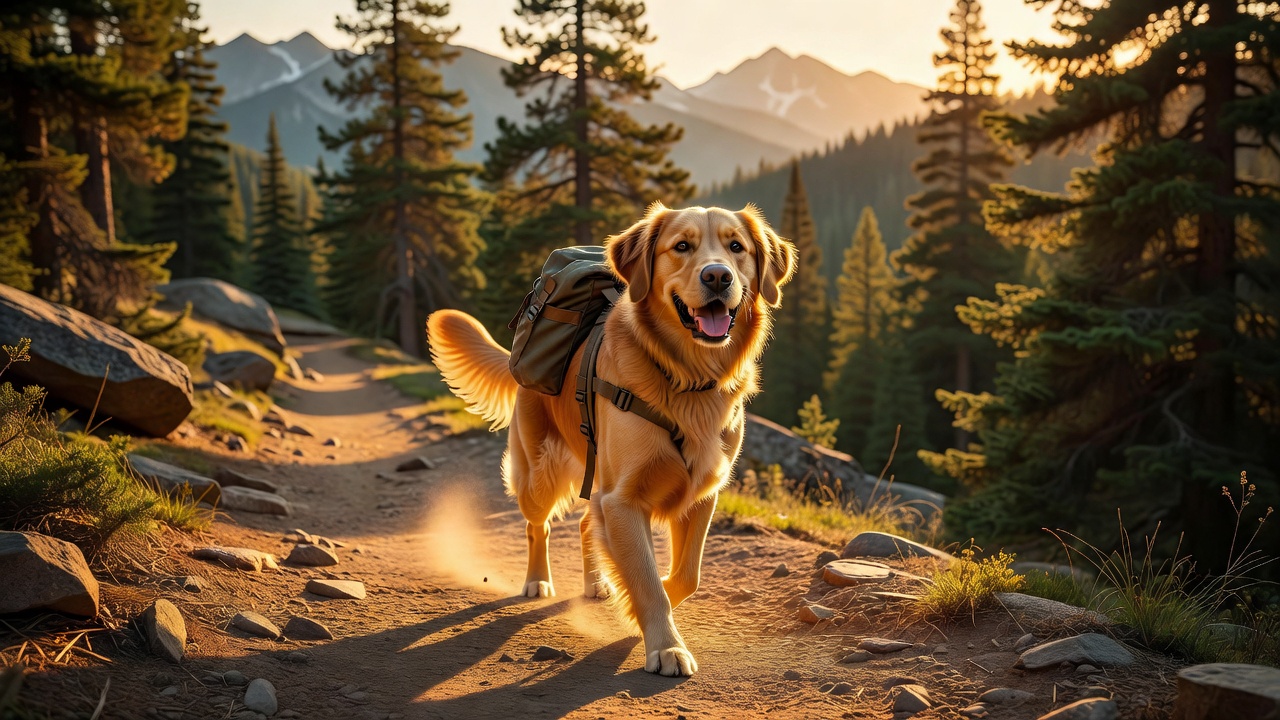
There's a moment every trail dog owner lives for. You're three miles deep into a backcountry trail, the morning fog is burning off the valley below, and your dog turns around to look at you — ears perked, tail wagging, eyes full of pure joy. They're not tolerating the hike. They're living for it.
Backpacking with your dog transforms a good trip into an unforgettable one. Your dog becomes a trail partner, not just a pet you dragged along. But it also requires real preparation — the wrong gear, skipped training, or a paw injury can turn a dream trip into a rescue mission.
This guide covers everything you need: the gear your dog actually needs, how to train them for the trail, how to protect their paws and keep them hydrated, and the etiquette that keeps trails open to dogs in the first place. If you're brand new to trail dog training, start with our voice-controlled off-leash hiking guide — reliable recall is the foundation of every safe backpacking trip.
Is Your Dog Ready for Backpacking? The Honest Checklist
Not every dog belongs on a backpacking trip, and that's okay. Before you plan your first overnight, run through this checklist honestly:
Physical fitness: Your dog should comfortably handle a 5-mile day hike before attempting a multi-day trip with a pack. Start with shorter loads and build up over weeks, not days.
Age and health: Puppies under 12 months (large breeds up to 18 months) shouldn't carry weight — their joints are still developing. Senior dogs with arthritis or mobility issues are better suited to day trips. Check with your vet if your dog has any chronic conditions.
Temperament: Trail dogs need solid recall, neutrality toward wildlife and other hikers, and the ability to settle quietly at camp. A dog that barks at every squirrel or charges other dogs will stress you, stress them, and stress everyone else on the trail.
Coat and breed considerations: Thick-coated breeds (huskies, malamutes, Bernese mountain dogs) overheat fast in summer — stick to shoulder-season trips or alpine routes. Short-coated breeds (pit bulls, pointers) may need a sleeping bag or insulated pad on cold nights.
If your dog isn't quite there yet, our complete hiking for beginners guide covers foundational trail skills that apply to both two-legged and four-legged hikers.
The Dog Backpacking Gear Checklist
This is where most first-timers overspend on the wrong things. Here's what your dog actually needs for a safe, comfortable backpacking trip — and what you can skip.
The Dog Pack
A fitted dog backpack is the centerpiece of trail dog gear. Look for:
- Saddlebag design with balanced weight distribution on both sides
- Padded chest and belly straps that won't chafe over miles of movement
- Drainage grommets in case your dog takes an unplanned swim
- Reflective trim for visibility at dusk and dawn
Weight rule: A healthy adult dog should carry no more than 10–15% of their body weight. A 60-pound lab carries 6–9 pounds max — split evenly between both sides. Start with 5% on training hikes and build up.
Paw Protection
Trail surfaces vary wildly — sharp granite, hot sand, frozen mud, abrasive scree. Dog hiking boots or paw wax are non-negotiable for multi-day trips:
- Booties for rocky terrain, snow, or hot ground (look for rugged soles with ankle straps)
- Paw wax (like Musher's Secret) for moderate trails — easier to apply, less fuss
- Always carry booty spares — one torn bootie mid-trip leaves a bare paw on rough ground
Check your dog's paws at every rest break. Small cuts and cracks compound fast when they're walking on them all day.
Food, Water, and Trail Nutrition
Your dog burns significantly more calories backpacking than at home. Plan for 50–100% more food than their normal daily intake, depending on mileage and terrain. Pack calorie-dense food to keep weight down.
Water is the bigger challenge. Dogs can't tell you when they're getting dehydrated, and they'll happily drink from a contaminated stream that gives them giardia. Carry enough clean water for both of you, or filter every source. Our camping water filtration and hydration guide covers the filtration systems that work for two-species trips — the Sawyer Products SP129 Squeeze Water Filtration System is a trail favorite because it's ultralight, filters bacteria and protozoa, and squeezes directly into any bottle or bowl.
For your own hydration, an insulated bottle like the Owala FreeSip Insulated Water Bottle keeps water cold for hours on exposed trails — the dual drinking design lets you sip through the straw or swig from the wide mouth while keeping one hand on your dog's leash.
Sleeping System
Most dogs will curl up against you in the tent and be fine in moderate temps. But for cold nights (below 40°F), your dog needs insulation from the ground:
- A closed-cell foam pad cut to your dog's size — cheap, light, indestructible
- An insulated dog jacket for thin-coated breeds
- A sleeping bag or quilt rated for the expected low if your dog runs cold
Picking between those three is the part most people get wrong, because the names all sound interchangeable and they aren't — a mat is not a pad, and a pillow bed is not insulation. Our dog sleeping pad and camp bed guide covers the weight-to-size table for large dogs, the cot-versus-pad insulation trade-off, and why a foam layer under an inflatable is the cheapest insurance against a claw puncture on a backpacking trip.
Your own sleeping bag matters too. On shared tent nights, your dog will steal your warmth if you're underprepared. Bring a legitimate three-season bag for shoulder-season trips and a roomier cold-weather bag when overnight lows drop near freezing — your sleep quality matters just as much as your dog's comfort.
Camp Setup and Shelter
For car camping base trips or if your dog prefers more space, a roomy shelter like the CORE 6 Person Instant Cabin Tent gives your dog room to stretch out without crowding the vestibule. For true backpacking, a lightweight 2-person tent with a vestibule for muddy paws is ideal — you'll want enough space to keep gear away from a wet, restless dog.
Your Own Footwear
Don't forget — you're the one carrying the heavier pack and navigating terrain your dog bounds over. Blisters end more backpacking trips than any dog issue. The Merrell Men's Moab 3 Hiking Boot is the classic do-everything trail boot, and pairing them with Darn Tough Vermont Hiker Micro Crew Socks means you can log 15-mile days without foot pain. Our hiking foot care and blister prevention guide goes deep on this — healthy feet keep you and your dog on the trail.
Training Your Trail Dog: A 4-Week Progression
You can't just put a pack on a dog and head into the backcountry. Here's a sane progression:
Week 1: Pack Introduction
Let your dog wear the empty pack around the house and on regular walks. Make it positive — treats, praise, normal routine. If they freeze or try to shake it off, shorten sessions and go slower. Goal: the pack means "fun adventure is coming."
Week 2: Light Loads on Familiar Trails
Add 1–2 pounds (evenly distributed) on trails your dog already knows. This teaches them to account for the extra width — dogs need to learn they're wider now, especially on narrow trails and through brush.
Week 3: Real Weight on Longer Hikes
Build to 50% of their target load on 3–5 mile hikes. Watch for lagging, excessive panting, or reluctance — these mean you're moving too fast. This is also when you test their recall with distractions.
Week 4: Full Load on a Day-Long Hike
Your dog carries their full pack on a long day hike that mimics your backpacking route's terrain and elevation. If they finish strong and recover well overnight, you're ready for the overnight.
Reliable recall is the single most important trail skill — a dog that bolts after a deer in the backcountry is a dog you might not get back. If your dog's recall needs work, the oitickly Smart Dog Training Collar with its 4500-foot range and voice command feature is a useful backup during training — it bridges the gap between "reliably comes when called at home" and "reliably comes when called on a trail full of distractions." If you're still deciding between voice, beep, vibration, and static modes, our best dog training collar 2026 buying guide breaks down which style fits different trail dogs and hiking situations. Want a trail-specific voice-command setup rather than a broad comparison? Use our voice collar guide for off-leash hiking for the conditioning sequence, safe cue choices, and the moments when a spoken recall cue is genuinely more useful than a beep.
Paw Care, Coat Care, and Trail Hygiene
Trails are hard on dogs. Here's how to minimize the damage:
Paw checks at every break: Look for cuts, cracks, debris between pads, and worn spots. Catch problems early — a small crack at mile 3 becomes a limp by mile 8.
Post-hike coat care: Trails mean burrs, sap, dust, ticks, and whatever your dog rolled in. A trail-end rinse prevents skin irritation and gets you both home cleaner. For routine cleanup after long dusty miles when a full bath isn't an option, Wahl Waterless No-Rinse Shampoo ($6.97, 4.6★) is the trail-friendly fix — oatmeal formula cleans and conditions without water, perfect for campsite quick clean-ups. If your dog comes back with a rash, parasites, or a stubborn skin flare-up, skip the gear fix and call your vet.
Tick checks every night: Run your hands over your dog's entire body — ears, armpits, between toes, under the collar. Ticks transmit diseases to dogs just like humans.
Dog Trail First Aid: What to Carry
A human first aid kit doesn't cover your dog. Add these to your pack:
- Tweezers for ticks, splinters, and debris
- Vet-wrap and non-stick gauze for paw cuts
- Antiseptic wipes for wounds
- Booties as backup paw protection
- Benadryl (vet-approved dose) for bee stings and allergic reactions
- Your vet's emergency number and the nearest emergency vet along your route
Our camping first aid checklist covers the shared gear you'll both need — build one kit that covers the whole team rather than carrying two separate ones.
Trail Etiquette: Keeping Trails Open for Dogs
Every badly-behaved off-leash dog is a vote against allowing dogs on that trail. Protect access for everyone:
- Yield to other hikers: Step aside, leash your dog, and let them pass. Not everyone is comfortable around dogs.
- Leash in wildlife areas: Off-leash dogs disturb nesting birds, chase wildlife, and damage fragile habitat. Follow posted leash rules.
- Pack out waste: Dog poop on a trail is just as bad as human poop. Bury it in a 6-8 inch cathole 200 feet from water and trails, or pack it out.
- Control barking at camp: Other campers came for quiet. A barking dog at 6 AM will not make friends.
Planning Your First Dog Backpacking Trip
Pick a route that's shorter and easier than what you'd do alone — your first trip together should build confidence, not test limits.
Distance: 3–5 miles per day max for your first overnight. Terrain: Well-marked trails with water sources. Season: Spring or fall — avoid summer heat and winter extremes until you both have experience.
Permits and rules: Many wilderness areas and national parks restrict or ban dogs entirely. Research before you go — driving to a trailhead only to find "no dogs allowed" is a frustrating start to a trip.
For broader trip planning — route selection, camp setup, and food planning — our first camping trip starter kit guide walks through the logistics that apply whether your trail partner has two legs or four.
Common Dog Backpacking Mistakes (Learn From Mine)
I've made every one of these so you don't have to:
Overloading the pack on day one: My dog lagged a mile in and I had to carry both packs. Start light, build slowly.
Skipping paw conditioning: A dog used to soft grass and carpet will shred their paws on rocky trails in a single day. Toughen their pads with shorter hikes before the big trip.
Not bringing enough water: I once assumed we'd filter from streams — then hit a dry stretch in late summer with a overheating dog and no source for three miles. Carry more than you think you need.
Feeding right before a hard climb: Dogs get stomach upset on the trail just like humans. Feed smaller meals at rest breaks, not before big uphill sections.
Forgetting the towel: A wet, muddy dog in a small tent is miserable. Always pack a quick-dry camp towel for paws and coats — microfiber dries overnight instead of stinking up your pack by morning.
Gear Summary: What to Actually Buy
If you're building a trail dog kit from scratch, here's the priority order:
- Fitted dog pack — the non-negotiable
- Paw boots or wax — prevents the most common trail injury
- Extra food — calorie density matters more than volume
- Collapsible bowl — lightweight, essential
- Sleeping pad — cut to size
- Dog first aid add-ons — tweezers, vet wrap, booties
Your own gear matters too — an Osprey Daylite Commuter Backpack is a great lightweight daypack for shorter trail-dog trips where you don't need a full frame pack, and a Petzl ACTIK CORE Headlamp with its 650-lumen rechargeable beam and red lighting mode keeps your hands free for leash management during early morning starts and evening camp setup.
For cooking — because you and your trail buddy both need hot meals — the MSR PocketRocket 2 Ultralight Backpacking Stove boils water in under 4 minutes and weighs less than 3 ounces. It's the standard for a reason.
Dog Backpacking FAQ
How much weight can my dog carry in a pack?
Start with almost nothing and build up over the four-week progression in this guide. The widely used ceiling is about a quarter of your dog's body weight for a fit, conditioned dog — but plenty of dogs do best at 10% or less, and a puppy, a senior or a flat-faced breed shouldn't be carrying a loaded pack at all.
How far can a dog backpack in a day?
Less than you'd like on the first trip. Build distance and pack weight at the same time and you'll find your dog's comfortable limit quickly. Watch for the stop signals — lagging behind, lying down at every break, and losing interest in the trail are your dog telling you the day is done, not being stubborn.
Does my dog need boots on the trail?
Not always, but they're worth carrying. Hot rock, sharp scree, salted winter trails and long days on abrasive surfaces are what wreck paws. Introduce boots weeks before the trip, and keep a paw wax or balm option too — some dogs handle smooth granite better with wax than with boots.
Can my dog drink from streams and lakes on the trail?
Carry your own water and offer it often. Standing water and slow streams carry risks dogs are more exposed to than we are — giardia, leptospirosis, and toxic blue-green algae in still water during warm months. If you do need to top up from a source, treat or filter it, exactly as you would your own.
What age can a dog start backpacking?
After growth plates close, and with a vet's clearance — later than most people expect, especially in large breeds. Build a base of day hikes first, then graduate to light loads and short overnights. A dog that's still growing shouldn't be carrying weight on the trail.
How much water should I carry for my dog?
More than you think, and more than the trip math suggests. Dogs drink on the trail and again at camp, and a hot day with a working dog can double the estimate. Offer water at every break instead of waiting for signs of thirst, and know where you can refill safely before you rely on it.
Planning a cold-weather trip with your dog? The cold-weather dog camping guide breaks down bedding, heat sources and the body signals that mean it is time to head inside.
Gearing up for the next one? Camping pet gear for dogs and hiking gear for campers rank everything we carry, by rating, with current prices.
The Bottom Line
Backpacking with your dog is one of the most rewarding things you can do together — but only if you prepare. The right gear, patient training, and honest assessment of your dog's readiness are what separate a great trip from a dangerous one.
Start small. Train consistently. Respect the trail and other users. And when you hit that overlook on day two and your dog turns to look at you with that trail-dog grin, you'll know every minute of preparation was worth it.
Want to go deeper on trail dog skills? Our Dog Camping Hub collects every trail-dog guide in one place — gear checklists, summer heat safety, off-leash training, and family tent sizing. Our complete camping with dogs guide covers camp behavior, tent training, and managing your dog around other campers — the perfect companion to this backpacking guide.
<!-- AFFILIATE_DISCLOSURE -->