Hiking Foot Care & Blister Prevention: The Complete Guide (2026)
Stop blisters from ruining your hikes. Complete foot care guide covering the best hiking socks (Darn Tough, $27.95), boots (Merrell Moab 3, $89.99), blister prevention techniques, and trail-tested first aid for 2026.
You know that moment. You're three miles into what was supposed to be a gorgeous ridge hike, the views are opening up, and then you feel it — that hot, tender spot on your heel that means one thing: a blister is forming. By mile five you're limping. By the trailhead, you've got a quarter-sized raw patch and a ruined weekend.
I've been there. Every serious hiker has. But here's the thing: blisters are almost entirely preventable. With the right socks, properly fitted boots, and a few field-tested techniques, you can hike 15-mile days without a single hotspot.
Fall hiking season is the busiest of the year — and the most blister-prone, since cooler days tempt you into longer miles. This guide covers everything I've learned about foot care after 500+ miles on trails from the White Mountains to the Sierras.
Quick Answer: The 4-Step Blister Prevention System
Blisters are almost entirely preventable. Here is the whole system in four moves:
- 1. Socks are the highest-return purchase: Darn Tough Hiker Micro Crew ($27.95) — merino wool wicks moisture and stays warm even when wet. Lighter option: Darn Tough Light Hiker ($24.95). Budget pick: Smartwool Hike Classic ($19.95).
- 2. Get the fit right: a Merrell Moab 3 Boot ($89.99), or the waterproof Merrell Moab 3 Waterproof ($129.95) for wet trails. Wide feet do better in the KEEN Targhee 3 Low WP ($187.00). Break boots in at home, never on the trail.
- 3. Tape known hotspots before you start — five minutes at the trailhead beats days of limping.
- 4. Drink more than you think you need: carry a Owala FreeSip 24 oz ($29.99). Dehydrated feet swell, and swollen feet rub.
The rule that matters most: at the first hotspot, stop and fix it. Five minutes now saves days later.
Start With the Friction-Control Trio
Before you buy tape or change your lacing, solve the three gear decisions that create most trail hotspots: a sock that manages moisture, footwear that matches your foot shape, and a backup plan when conditions change. For most hikers, the lowest-risk starting kit is the Darn Tough Hiker Midweight Micro Crew sock ($27.95) plus the Merrell Moab 3 hiking boot ($89.99). The sock controls moisture and bunching; the boot gives your heel a secure, familiar platform without a long break-in period.
- You have average-width feet and want a supportive boot: start with the Merrell Moab 3 hiking boot. Wear it on two short walks before committing to a long trail day.
- You prefer a lower, lighter waterproof shoe: choose the Merrell Moab 3 Waterproof hiking shoe, then bring dry socks for creek crossings or sweaty afternoons.
- Your toes feel squeezed in most hiking shoes: prioritize the KEEN Targhee 3 Low waterproof shoe. Its roomier toe area is the more sensible first try than sizing up into a loose heel.
Quick rule: if you feel rubbing during the first hour of a short walk, do not wait for a longer hike to "break it in." Change the fit, lacing, or sock system while the problem is still a hotspot—not a wound.
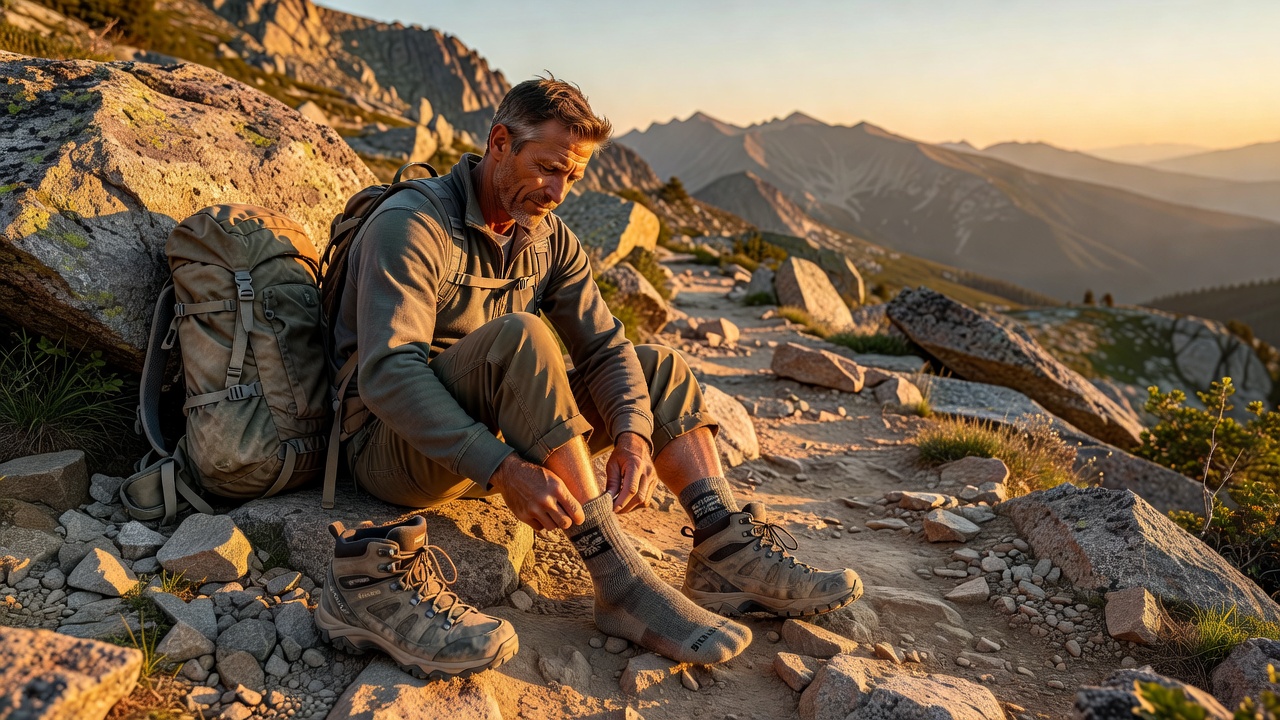
Why Blisters Happen (And Why "Tough Feet" Is a Myth)
Blisters form from friction + moisture + heat. Your sock rubs against your skin, the friction generates heat, sweat adds moisture, and the outer layer of skin separates from the inner layer. Fluid fills the gap. Congratulations — you've got a blister.
The "just tough it out and build calluses" advice you hear from old-timers? That works for some people on some terrain. For everyone else, it's a fast track to bloody socks. Prevention is about managing all three factors — friction, moisture, and heat — simultaneously.
Best Hiking Socks for Blister Prevention
Socks are your first line of defense. Cotton is the enemy — it holds moisture, loses shape when wet, and turns into sandpaper against your skin after two miles. You want merino wool or a merino-synthetic blend.
Darn Tough Vermont Men's Hiker Midweight Micro Crew Sock — $27.95
Darn Tough is the gold standard for a reason. These midweight merino wool socks wick moisture, regulate temperature in both heat and cold, and have a lifetime unconditional guarantee — they'll replace any pair that develops a hole, no questions asked. The micro crew height sits just above the boot collar, preventing debris from sneaking in.
Why they work for blister prevention: The dense cushion under the heel and forefoot absorbs the friction that would otherwise transfer to your skin. Merino wool naturally manages moisture better than any synthetic, and the tight knit doesn't bunch or slide inside your boot.
Price: $27.95 — expensive for a single pair of socks, but with the lifetime warranty, they're the last hiking socks you'll ever buy.
What About Sock Liners?
If you're blister-prone even in good wool socks, add a thin synthetic liner sock underneath. The liner sticks to your skin while the outer sock moves with the boot — friction happens between the two sock layers instead of against your skin. It's an old ultra-runner trick that costs about $8 and eliminates hotspots for most people.
Best Hiking Boots & Shoes for Happy Feet
Your boots are the other half of the equation. A boot that's too loose lets your foot slide on every step — friction city. One that's too tight creates pressure hotspots on your toes and heels. You want snug in the heel, roomy in the toe box, with enough structure to hold your foot stable on descents.
Merrell Men's Moab 3 Hiking Boot — $89.99
The Moab 3 is the best-selling hiking boot in America for a reason. It fits right out of the box with almost no break-in period — a huge deal for blister prevention, since stiff new boots that need 50 miles of breaking in are blister factories. The Vibram TC5+ outsole grips everything from wet rock to loose scree, and the air cushion in the heel absorbs impact on descents (when your toes are most likely to jam forward and create hotspots).
Price: $89.99 — in a world where hiking boots routinely hit $160+, this is exceptional value.
Merrell Men's Moab 3 Waterproof Hiking Shoes — $129.95
If you prefer the lighter, faster feel of a trail shoe over a full boot, the waterproof Moab 3 shoe gives you the same instant comfort in a low-cut package. The waterproof membrane keeps creek crossings and morning dew from soaking your socks (wet socks = blisters, remember), while the lower weight means less fatigue on long days.
Price: $129.95 — worth the premium over the non-waterproof version if you hike in the Northeast, Pacific Northwest, or anywhere with morning dew and stream crossings.
Waterproof shoes handle creek crossings and morning dew, but a full-on downpour needs more than sealed footwear. For the complete wet-weather kit — rain shell, pack cover, the sock-rotation strategy that stops a damp pair from ruining day two, and how to dry gear at camp without a dryer — our rainy day hiking and camping gear guide covers the whole routine.
KEEN Men's Targhee 3 Low Height Waterproof Hiking Shoes — $187.00
KEEN's claim to fame is the wide toe box — if you have wide feet, bunions, or just hate the squished-toe feeling of traditional hiking shoes, the Targhee 3 is your answer. The KEEN.DRY waterproof membrane performs comparably to Gore-Tex, and the ESS shank provides torsional stability without the weight of a full boot. Less toe squishing = fewer blisters on your pinky toes and between toes.
Price: $187.00 — competitive with other waterproof hiking shoes; the wide fit makes it the best option for wide-footed hikers.
Still weighing which model matches your foot shape? Our best hiking shoes of 2026 buying guide compares Merrell, KEEN, and Salomon side by side so you can choose the right shoe before you ever get a hotspot.
The Break-In Rule
Whatever boots you choose, wear them around the house and on short neighborhood walks for at least a week before your first real hike. If you feel ANY hotspot during break-in, stop and address it — a hotspot at mile 1 of a neighborhood walk will be a full blister at mile 5 of a real trail. Use moleskin or leukotape on the spot immediately, and adjust your lacing.
Blister Prevention Techniques That Actually Work
1. The Lace-Lock Heel Trick
Most heel blisters come from your heel lifting inside the boot on uphill steps. The fix: use the extra eyelet at the top of your boot to create a "lace lock." Cross the laces, thread each end through the opposite top eyelet to form a loop, then tie normally. This cinches the ankle collar tight without cutting off circulation to the top of your foot.
2. Pre-Tape Hotspots
Don't wait for the hotspot to become a blister. If you know a particular spot always blisters (the back of your heel, the side of your big toe), apply leukotape (not moleskin — leukotape is thinner, stickier, and stays on for days) BEFORE you start hiking. It's the single highest-ROI prevention technique I know.
3. Change Socks at Lunch
On hikes longer than 8 miles, stop at the halfway point and change into a dry pair of socks. Clip the wet pair to the outside of your pack to dry. Dry feet are happy feet — this one habit eliminated 90% of my blister problems on multi-day trips.
4. Foot Powder for Sweaty Feet
If your feet sweat heavily (you know who you are), a dusting of foot powder before putting on socks absorbs moisture before it becomes a problem. Look for an anti-friction formula — some powders add a silicone-based lubricant that further reduces friction.
5. Let Trekking Poles Take the Impact
Every downhill step slams your toes into the front of your boot — the #1 source of descent hotspots. Trekking poles transfer a chunk of that load to your arms and shoulders, and they're a game-changer for anyone with knee issues on long downhills. Our best trekking poles guide breaks down carbon vs aluminum, lock types, and sizing so you pick the right pair the first time.
Foot Care on Multi-Day Hikes
Multi-day trips amplify every foot care mistake. A small hotspot on day one becomes an open wound by day three. Here's the routine that got me through a 5-day Presidential Traverse without a single blister:
- Morning: Inspect feet in sunlight, apply leukotape to any red spots, fresh socks
- Midday: Stop at a stream crossing, soak feet for 5 minutes in cold water (reduces swelling), change socks
- Evening: Wash feet with biodegradable soap, air dry completely, apply foot balm to prevent cracking, sleep in loose camp shoes (never the same socks you hiked in)
Common Foot Care Mistakes (Learn From Mine)
"I'll break these boots in on the trail" — No. Just no. Every year I see someone at a trailhead in brand-new boots, and every year I pass them limping back down three hours later. Break-in happens at home, not at 4,000 feet.
"My feet don't blister, I don't need to bring tape" — Famous last words. Trail conditions change — a wet stream crossing at mile 2, an unexpected 3-mile road walk on hot asphalt, a boot that finally wears through its lining. Always carry 3 feet of leukotape. It weighs nothing.
"Blisters are just part of hiking" — They're really not. If you're getting blisters on every hike, something in your system is broken: wrong sock material, wrong boot size, wrong lacing technique, or all three. Fix it.
"Wool socks are too hot for summer" — Lightweight merino wool socks breathe better than cotton and manage moisture better than synthetics. I wear Darn Toughs in 90°F summer hikes. Your feet will be damp regardless — the question is whether that dampness turns into friction. If you run hot, drop the cushioning rather than the wool: a thin merino crew like the Smartwool Hike Classic Edition adds breathability without giving up odor control.
What to Pack in Your Foot Care Kit
Keep a small ziplock bag in your pack with:
- 3 feet of leukotape (wrapped around a cut-down plastic straw to save space)
- 2 moleskin squares (for already-formed blisters — leukotape on open blisters hurts to remove)
- 1 pair dry spare socks (in a sealed ziplock — wet spare socks are useless)
- 2 alcohol wipes (clean skin before applying tape — tape won't stick to sweaty, dirty skin)
- Small tube of anti-chafe balm (for between-toe hotspots and thigh chafing)
- Safety pin and lighter (sterilize the pin with the lighter, drain large blisters from the edge, leave the skin intact as a natural bandage)
When Things Get Bad: First Aid for Blisters
If prevention fails and you've got a full blister, here's the protocol:
- Small, intact blister: Cover with moleskin (cut a donut shape — the hole goes over the blister, the padding surrounds it). Do NOT pop it — the fluid is sterile and the skin roof is nature's bandage.
- Large, painful blister that will pop anyway: Sterilize a needle with a lighter, puncture at the edge, drain gently, leave the skin in place, apply antibiotic ointment, cover with moleskin + leukotape.
- Torn/popped blister: This is now an open wound. Clean with an alcohol wipe (this will hurt), apply antibiotic ointment, cover with a blister-specific bandage or moleskin donut, and wrap with leukotape. Check and change the dressing at every rest stop — infection on the trail is no joke.
For more comprehensive trail first aid — including sprains, cuts, burns, and when to call for help — see our Camping First Aid Checklist & Wilderness Emergency Guide.
Build Your Complete Hiking System
Foot care is part of a bigger picture. If you're new to hiking or looking to level up your gear, our Hiking for Beginners Complete Guide covers everything from navigation to layering to picking your first trail.
And remember: the best boots in the world won't save your feet if you're dehydrated. Pack the Owala FreeSip Insulated Water Bottle ($29.99) — the dual sip/straw lid makes it easy to drink without stopping, and staying hydrated keeps the tissue in your feet resilient.
Blister Prevention FAQ
Should I buy hiking boots bigger than my normal size?
Most hikers need roughly a half size more room than their everyday shoe, because feet swell during sustained activity and slide forward on descents. The test is fingertip room at the toe with your heel locked back — measured in the socks you'll actually hike in, ideally at the end of the day when feet are at their largest. Too-small boots cause more blisters than any other single factor.
Do I need to break in hiking boots before a trip?
Yes, unless they're a lightweight, mostly-mesh trail shoe. Leather and heavier synthetic boots need time to soften and mold to your foot, and the skin on your feet needs time to adapt to the pressure points. Wear them around the house and on a few short walks before committing to a long hike — taking brand-new boots straight onto a big trail is the classic first-timer mistake.
What is the fastest way to treat a blister on the trail?
Stop as soon as you feel a hot spot. If the skin is still intact, cover it with tape or a blister patch and leave it — a hot spot caught early usually never becomes a blister. If a blister has already formed, a donut-shaped pad that takes pressure off it, held in place with tape, gets most people back to the trailhead. Don't pop a blister unless it's genuinely unmanageable, and never leave a popped blister uncovered.
Are merino wool socks really better than cotton?
For hiking, yes — and the gap is large. Cotton absorbs sweat, holds it against your skin, and loses all insulation when wet, which softens skin and drives friction. Merino wool wicks moisture away, stays warm when damp, and resists odor across multiple days. Synthetics are a fine second choice; cotton socks are the one thing worth leaving at home.
Is duct tape or Leukotape better for blisters?
Leukotape sticks far more reliably, especially once you've started sweating, which is why it's the standard recommendation for covering known hot spots before a hike. Duct tape works in a pinch and most people already have it — but it peels at the edges and can take skin with it if you remove it fast. Whichever you use, apply it to clean, dry skin before the friction starts.
How do I keep my feet dry on a multi-day hike?
Bring spare socks — at least one fresh pair per day, plus an extra if you expect rain or river crossings. Change at lunch so your feet get a dry second half, and air your feet and boots out during breaks. If boots get soaked through, dry them away from direct heat so the leather and adhesives survive. Dry feet are blister-resistant feet.
Wide feet change everything about shoe shopping: if your forefoot bulges over the midsole or your little toe hangs over the edge of the insole, our best hiking shoes for wide feet guide shows the two-minute foot-trace test and which hiking lasts actually have a roomy toe box. Blister care and heel pain overlap more than people expect — changing your gait to protect a sore heel is a classic way to create fresh hot spots. The footwear half of that is in our plantar fasciitis hiking shoe guide.
The Bottom Line
Good foot care isn't complicated. Merino wool socks. Properly fitted boots, broken in at home. Leukotape on known hotspots before you start. Dry socks at lunch. That's 90% of blister prevention right there. The other 10% is paying attention — when you feel a hotspot, stop and fix it immediately. The five minutes you spend now saves you days of limping later.
Your feet carry you up every mountain. Treat them right.
<!-- AFFILIATE_DISCLOSURE -->