Best Camping Sleeping Bags 2026: Buying Guide
Best camping sleeping bags for 2026 by temperature rating, sleep position and budget: TETON, Kelty and kids bags with real prices.
In this article · 16 sections
- Quick Answer: The Best Camping Sleeping Bags of 2026
- How to Choose a Camping Sleeping Bag (The 3 Things That Actually Matter)
- Sleeping Bag Decision Shortcut: Temperature, Sleep Position, and Budget
- Best Budget Sleeping Bag: TETON Sports Celsius XXL 0°F
- Best Summer Sleeping Bag: Coleman Palmetto 40°F
- Best Down Sleeping Bag: Kelty Cosmic Down 20°
- Best Sleeping Bag for Big & Tall Campers: Coleman Oak Point Big & Tall 30°F
- Best Baby Sleeping Bag: Morrison Outdoors Little Mo 40°
- Best Toddler Sleeping Bag: Morrison Outdoors Big Mo 40°
- Complete Your Sleep System: Camp Pillows Worth Bringing
- Sleeping Pads: The Half of the Sleep System You Feel All Night
- Common Sleeping Bag Mistakes (I've Made All of Them)
- What People Search Before Buying a Sleeping Bag
- Cold Weather and Winter Sleeping Bags: The Questions That Decide the Purchase
- FAQ: Sleeping Bag Temperature, Side-Sleeping Comfort, and Value
- The Bottom Line
You can have the best tent, the flattest campsite, and a five-star camp kitchen — but if your sleeping bag leaves you shivering at 3 AM, none of it matters.
A good sleeping bag is the difference between waking up refreshed and ready for a sunrise hike, and spending the night counting down the hours until dawn. I've been on both sides of that equation, and I'll take the warm bag every time.
This guide covers the six camping sleeping bags I actually recommend in 2026 — one for every budget, season, and age group, from a $45 summer bag to a burly 0°F winter sleeper, plus dedicated kids' bags for the youngest campers.
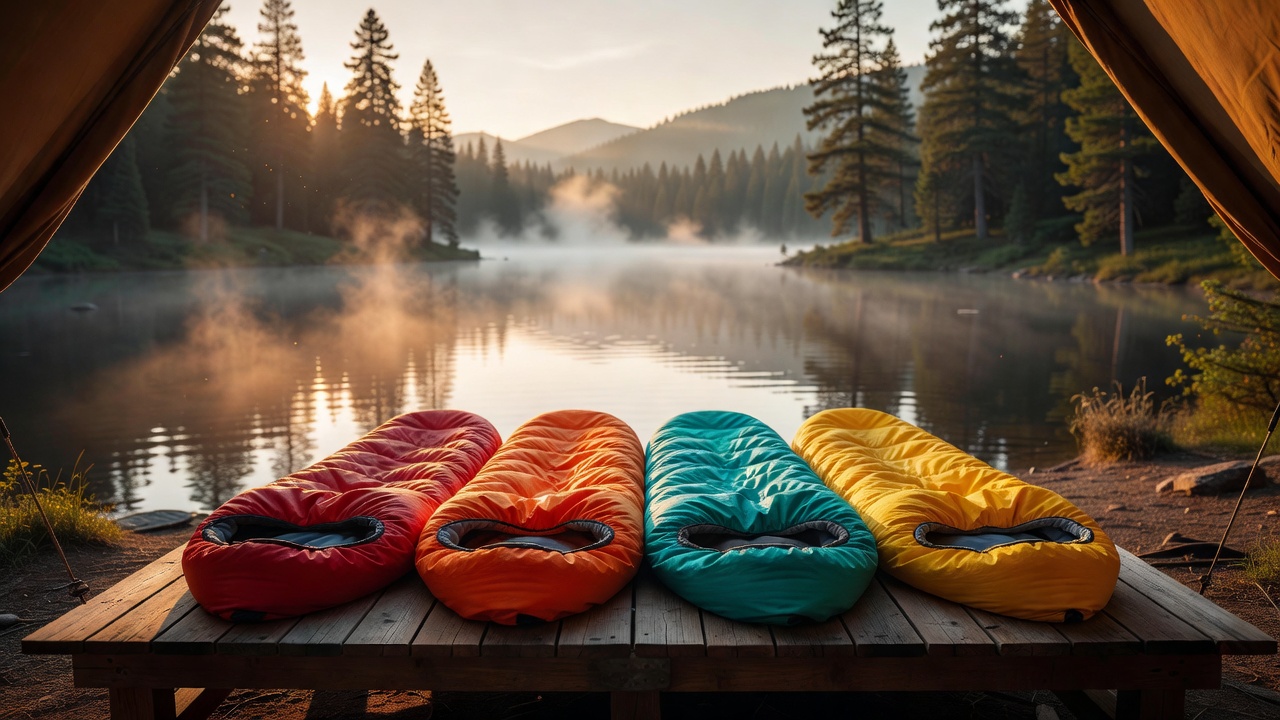
Quick Answer: The Best Camping Sleeping Bags of 2026
Short on time? Here is the one-line verdict for each type of camper, with the full spec comparison underneath.
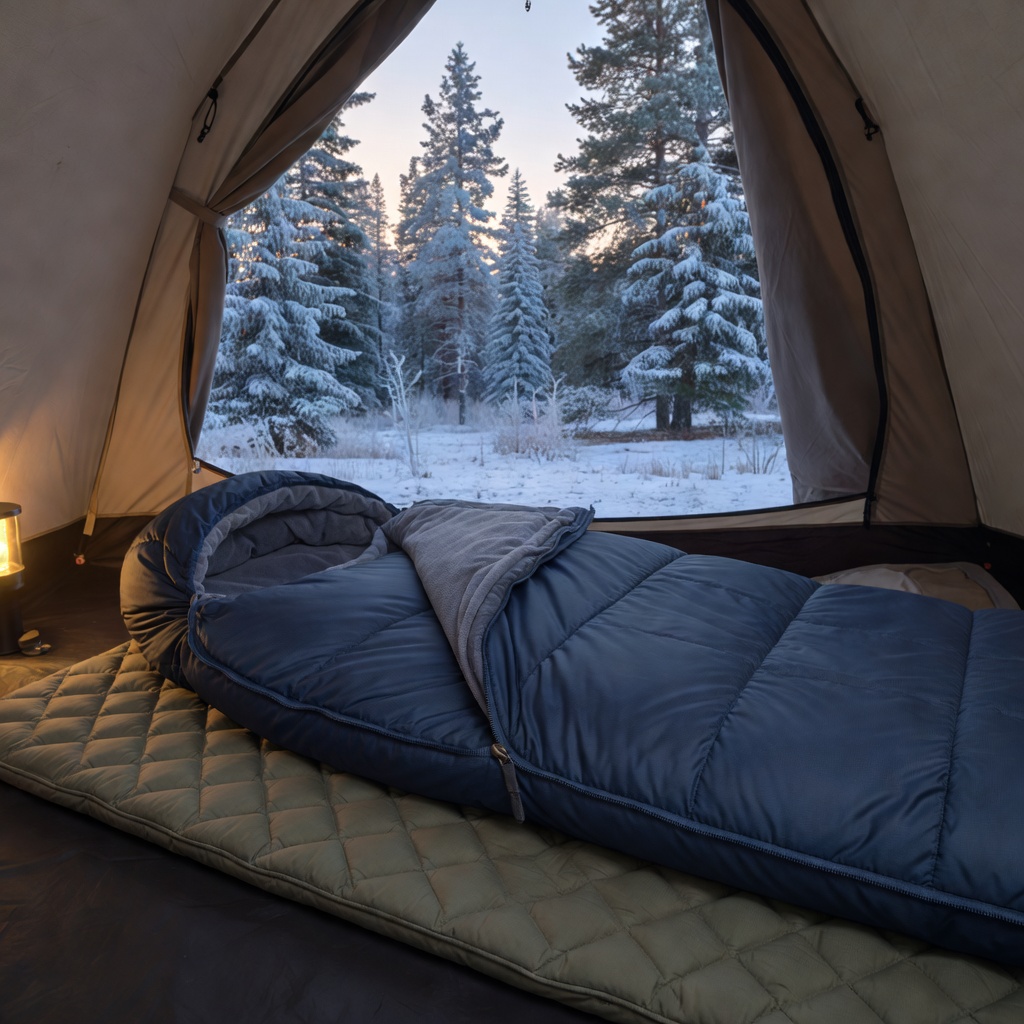
- Best overall for car camping: TETON Sports Celsius XXL 0°F — $89.99. A genuine 0°F rating, 90 × 39 inches, roomy enough for campers up to 6'6".
- Best budget 0°F bag: TETON Sports Celsius Regular 0°F — $59.99. The same proven warmth in a standard 80 × 33-inch cut, with 18,000+ Amazon reviews.
- Best for warm summer nights: Coleman Palmetto 40°F — $44.99. Light, roomy, machine-washable, and right for nights above 50°F.
- Best down bag for backpacking: Kelty Cosmic Down 20 — $169.00. 550-fill DriDown, just under 3 pounds, packs down to the size of a football.
- Best for babies (6–18 months): Morrison Outdoors Little Mo 40° — $69.95. A wearable-blanket bag with sleeves, so there is no loose fabric near the face.
- Best for toddlers (2–4 years): Morrison Outdoors Big Mo 40° — $79.95. The Little Mo scaled up, with a chunky zipper kids can work themselves.
Sleeping Bag Comparison Table (2026)
| Sleeping bag | Temp rating | Fill | Style | Packed weight | Price | Best for |
|---|---|---|---|---|---|---|
| TETON Sports Celsius XXL | 0°F | Synthetic (double-layer) | Semi-rectangular, 90 × 39 in | ≈8 lb | $89.99 | Car camping, cold nights, tall sleepers |
| TETON Sports Celsius Regular | 0°F | Synthetic (double-layer) | Semi-rectangular, 80 × 33 in | ≈5–6.5 lb | $59.99 | Budget 0°F warmth; two zip together |
| Coleman Palmetto | 40°F | Synthetic (tricot liner) | Rectangular | 4 lb | $44.99 | Summer car camping, guest bags |
| Kelty Cosmic Down 20 | 20°F | 550-fill DriDown | Mummy | ≈2.9 lb | $169.00 | Three-season backpacking |
| Morrison Outdoors Little Mo 40° | 40°F | Synthetic | Wearable blanket, 6–18 months | ≈1 lb | $69.95 | Babies and infants |
| Morrison Outdoors Big Mo 40° | 40°F | Synthetic | Wearable blanket, ages 2–4 | 1 lb 3 oz | $79.95 | Toddlers, ages 2–4 |
Packed weights are manufacturer figures for the standard size and vary slightly by size and version. Prices are current catalog prices — check the product page for today's price before you buy.
One note on the temperature column: those are limit ratings, not comfort ratings. A 0°F bag is comfortable for most adults somewhere around 10–25°F. If you sleep cold, or you are camping somewhere windy and damp, buy one step warmer than the table suggests.
How to Choose a Camping Sleeping Bag (The 3 Things That Actually Matter)
Before we get to the picks, let's cut through the marketing noise. Sleeping bag specs can look like alphabet soup — here's what you genuinely need to pay attention to.
Temperature Ratings: The "Comfort" vs "Limit" Trap
Most sleeping bags advertise a big bold number on the box — 20°F, 0°F, 40°F. That number is usually the lower limit rating (the temperature where an "average man" can sleep for 8 hours without waking up). The comfort rating — the temperature where an "average woman" sleeps comfortably — is typically 10-15°F warmer.
The rule I use: buy a bag rated 10-15°F colder than the coldest night you expect. If you're camping in 30°F weather, get a 15°F or 0°F bag. You can always unzip to vent, but you can't add insulation you don't have.
Down vs Synthetic Fill
| Feature | Down Fill | Synthetic Fill |
|---|---|---|
| Warmth-to-weight | Excellent | Good |
| Compressibility | Packs tiny | Bulkier |
| Wet performance | Useless when soaked | Retains some warmth |
| Price | $150-$400+ | $40-$150 |
| Durability | 10+ years with care | 5-8 years |
Pick down if: you're backpacking (weight matters), camp in dry conditions, and have the budget.
Pick synthetic if: you're car camping, camping in wet/humid conditions, or want to spend under $100.
Shape: Mummy vs Rectangular
- Mummy bags are warmer and lighter (less dead air to heat) but feel restrictive
- Rectangular bags have room to move but are heavier and colder
- Semi-rectangular splits the difference — our top pick uses this shape
For car camping families, rectangular or semi-rectangular is usually the right call. For backpacking, mummy wins on weight.
Sleeping Bag Decision Shortcut: Temperature, Sleep Position, and Budget
If you are choosing between otherwise-good sleeping bags, start with the overnight low on your forecast—not the daytime high. Then use your sleep position and trip style to break the tie.
- Warm sleeper, summer campground nights above 50°F: a 30–40°F bag is usually enough. Choose a rectangular or semi-rectangular cut if you toss and turn, and leave room in the budget for a sleeping pad.
- Average sleeper, spring through fall with lows of 30–50°F: a 15–20°F bag gives you a useful safety margin. The Kelty Cosmic-style mummy cut makes the most sense when packed size matters.
- Cold sleeper, shoulder season, or nights near freezing: buy a 0–15°F rating rather than trying to compensate with extra hoodies. The roomier TETON-style synthetic bag is a practical car-camping choice.
- Side sleeper: prioritize shoulder and hip room first, then temperature rating. A narrow mummy bag can be warm on paper but miserable at 2 AM; pair a roomier bag with the contoured Sea to Summit Aeros Premium pillow if neck support is what wakes you up.
- Budget under $100: put the money into the warmth rating and a pad before chasing ultralight materials. Synthetic insulation is bulkier, but it is more forgiving around condensation and family-camping spills.
A useful rule: choose the warmer rating when you are unsure, then control comfort with a full-length zipper, light base layer, and ventilation. Your sleeping bag keeps the warm air you make; your pad stops the cold ground from taking it away. For the trade-offs between pad types, read our sleeping pad comparison guide.
Best Budget Sleeping Bag: TETON Sports Celsius XXL 0°F
TETON Sports Celsius XXL 0°F Sleeping Bag — see current Amazon price
If you only buy one sleeping bag for car camping, this is the one. The Celsius XXL is a semi-rectangular bag rated to 0°F that actually delivers on its temperature promise — something rare at this price point.
What makes it work: TETON uses a double-layer construction with synthetic fiber fill that traps heat efficiently. The hood cinches tight around your face, and the draft tubes along the zipper prevent cold air from sneaking in overnight. At 90 inches long and 39 inches wide, it fits campers up to 6'6" without feeling like a straitjacket.
The trade-off is weight and bulk — this bag weighs around 7 pounds and stuffs into a sack the size of a large watermelon. That's fine for car camping but a non-starter for backpacking. For car campers who want a warm, roomy bag at a fair price, it's hard to beat.
Best for: Car camping families, cold-weather camping, budget-conscious campers who don't want to compromise on warmth.
If the XXL's 7-pound bulk or its 6'6"-oriented sizing doesn't fit your needs, the TETON Sports Celsius Regular 0°F ($59.99) is the same proven warmth in a standard 80 x 33-inch cut — and with 18,000+ Amazon reviews it's the most-reviewed sleeping bag in its category. It's sold in left- and right-zip versions so two bags zip together into a double.
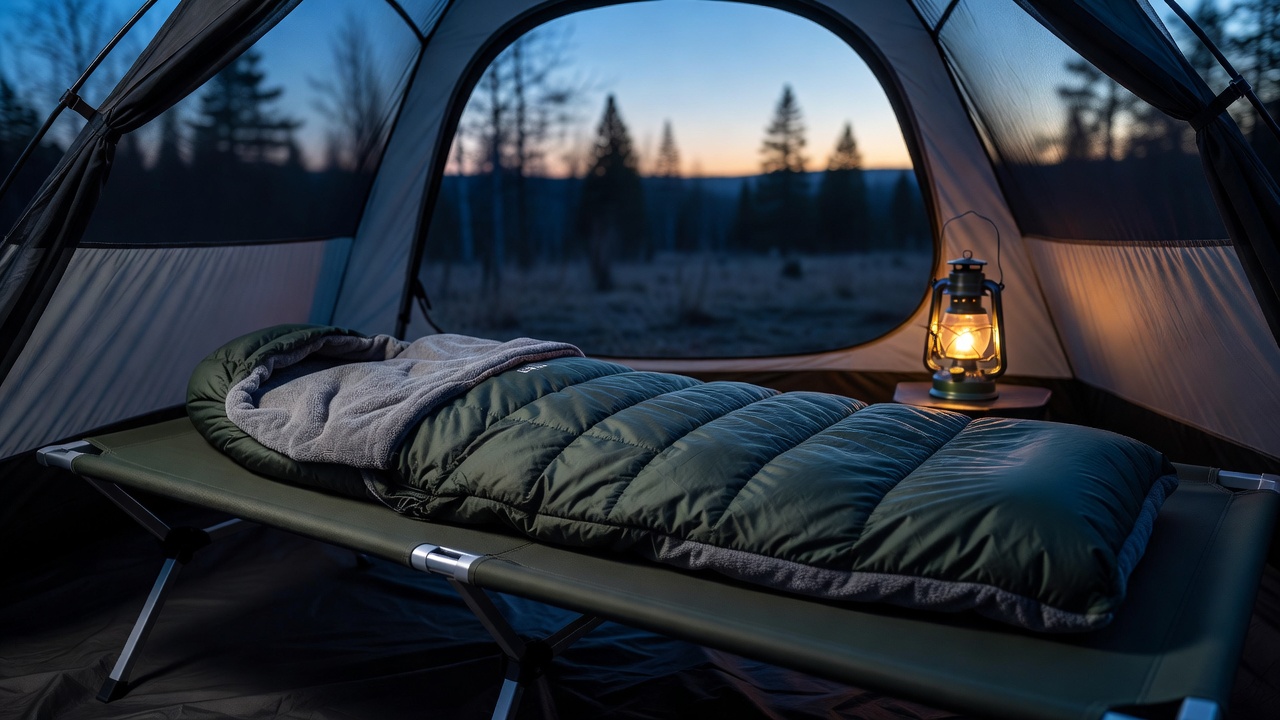
Best Summer Sleeping Bag: Coleman Palmetto 40°F
Coleman Palmetto 40°F Cool-Weather Sleeping Bag — see current Amazon price
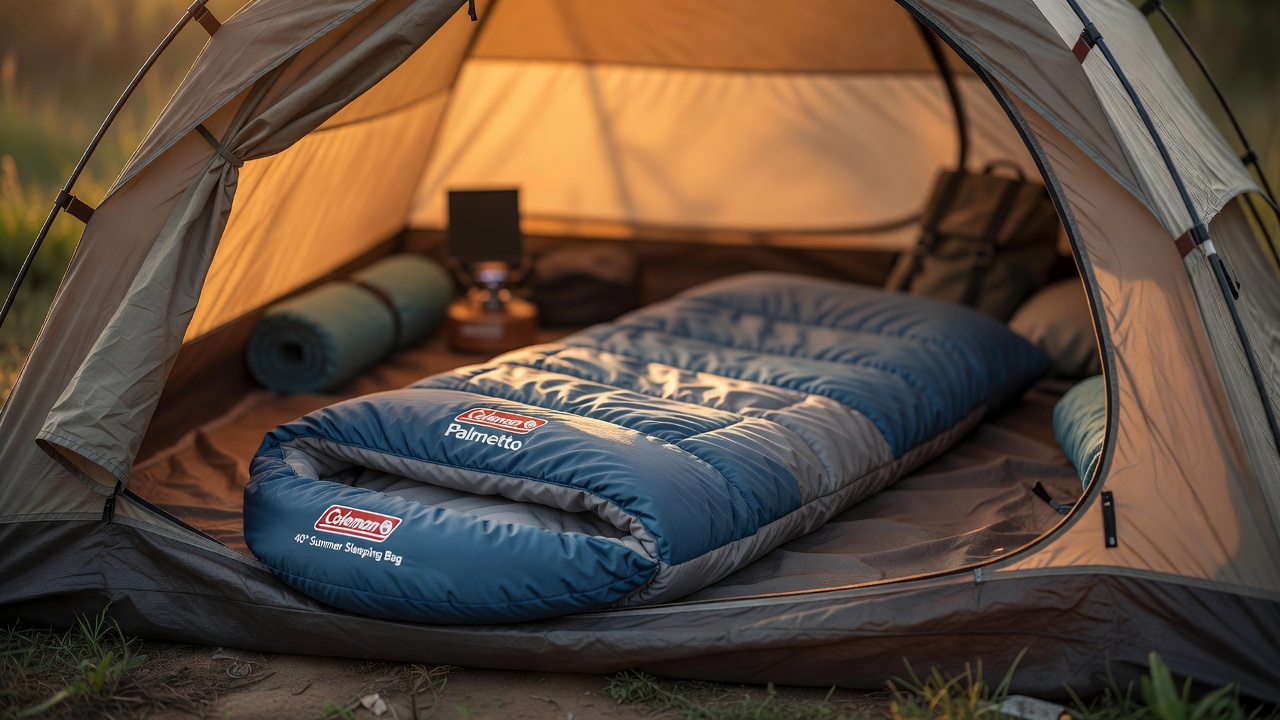
If you only camp in warm months — or your family tent doubles as a guest bedroom in July — a 0°F bag is overkill. The Coleman Palmetto is rated to 40°F, which is exactly right for summer campground nights above 50°F: warm enough to sleep comfortably, light enough that you're not drowning in insulation by midnight.
The Palmetto uses a roomy rectangular cut with a soft tricot liner that breathes, a brushed polyester shell that sheds damp mornings, and a full-length zipper you can open from the foot to vent when the tent heats up. It's machine-washable, packs into an easy-carry stuff sack, and costs about what a single night at a private campground runs — which is why it's the bag families buy in threes. When 50°F is the forecast low, that bag plus an insulated pad is the entire system — see our camping in 50 degree weather guide.
Best for: Warm-weather car campers, kids' sleepovers in the tent, spare/guest bags, and first-time campers who want a trusted name-brand bag without the price tag.
Best Down Sleeping Bag: Kelty Cosmic Down 20°
Kelty Cosmic Down 20 Degree Sleeping Bag — see current Amazon price
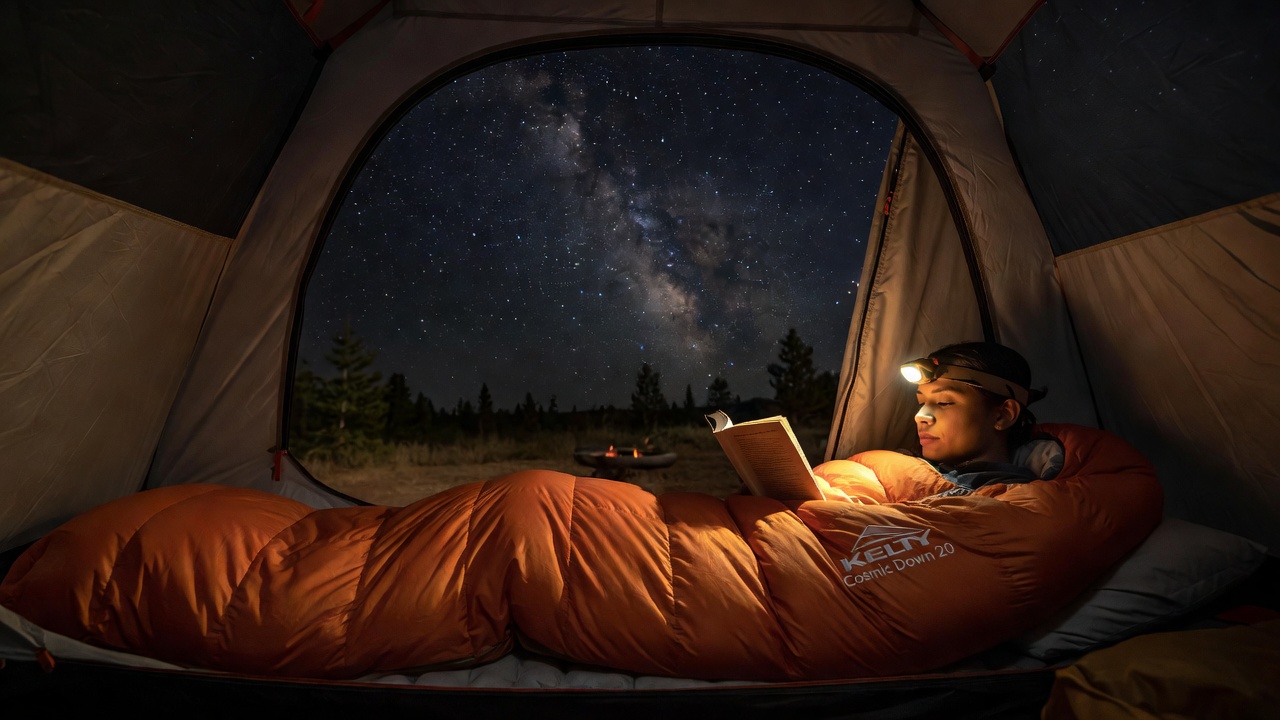
When you're ready to upgrade from a bulky synthetic to real down, the Kelty Cosmic Down 20 is the entry point that makes sense. It uses 550-fill DriDown — down treated with a water-repellent coating that resists moisture better than untreated down. In practical terms, it stays warm even when tent condensation drips on your bag overnight.
The 20°F rating makes it a true three-season bag for most of the US. It weighs just under 3 pounds and packs down to roughly the size of a football — less than half the packed volume of the TETON Celsius. That weight savings matters when you're hiking miles to your campsite.
The mummy cut is roomier than most — Kelty added extra width in the shoulders and a roomier footbox compared to previous generations. The two-way zipper lets you vent from the bottom on warmer nights, which extends the usable temperature range into the 40s.
At $169.00, it's not the cheapest down bag, but it's the cheapest down bag worth buying. Below this price, you're getting low-fill-power down that doesn't outperform synthetic.
Synthetic or down? Kelty Cosmic 20 vs TETON Sports Celsius 0 compares the $169 down mummy against the $59.99 synthetic 0°F bag on temperature rating, packed volume, weight, and how each one handles a damp tent.
Best for: Backpackers ready for their first down bag, car campers who want to save space, three-season campers in dry to moderately damp conditions.
Best Sleeping Bag for Big & Tall Campers: Coleman Oak Point Big & Tall 30°F
Coleman Oak Point Big & Tall 30°F Sleeping Bag — $74.99
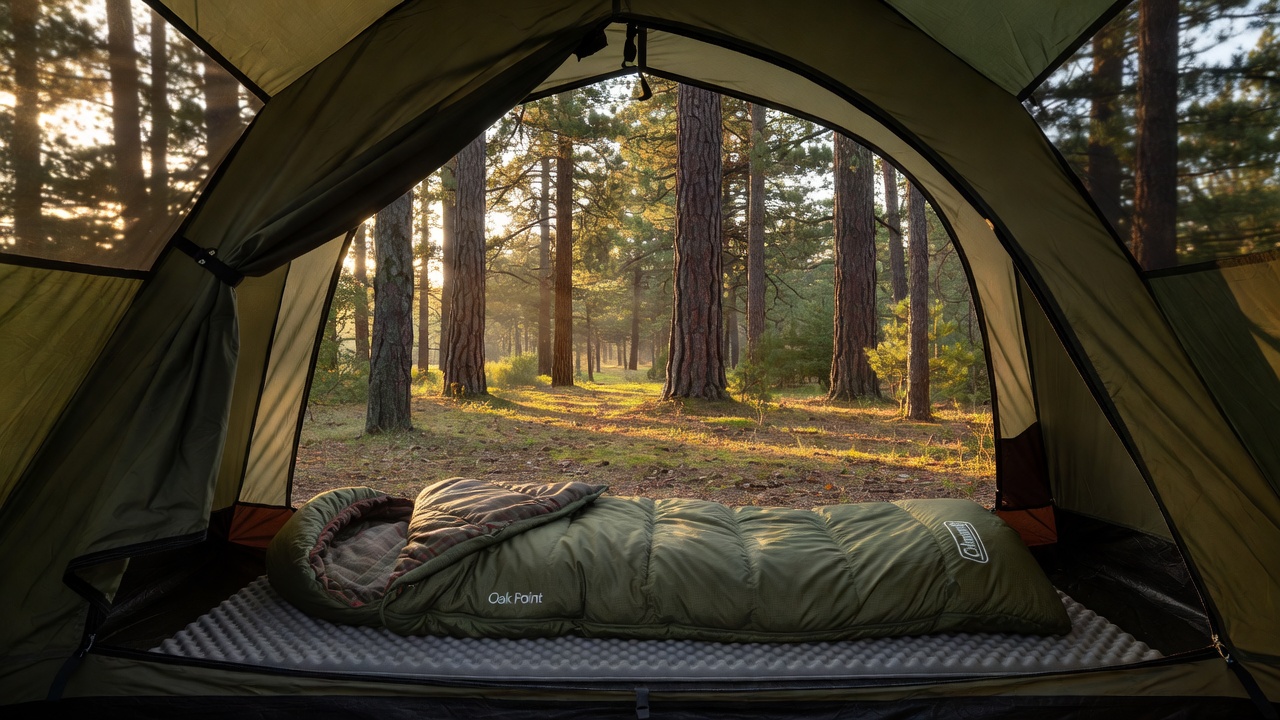
Almost every bag on this page is cut for an average-height sleeper, which is why campers over six feet end up with cold shoulders and a zipper that jams against their knees. The Oak Point Big & Tall is a rectangular 30°F bag sized for campers up to 6'4", with extra shoulder and foot room rather than just extra length.
Coletherm insulation with Coleman's Fiberlock construction keeps the fill from shifting into the corners after a few seasons of stuffing, and the no-snag zipper plows fabric clear of the track — the feature you notice most at 2 a.m. A 30°F rating covers three-season camping from spring through fall, and the rectangular cut unzips flat as a quilt in July.
The trade-off is the usual rectangular-synthetic one: heavy and bulky by backpacking standards, and 30°F is a comfort limit rather than a survival guarantee, so add a liner if you push into the 20s.
Best for: Taller and broader car campers, RV sleepers, and anyone who has given up on mummy bags.
Best Baby Sleeping Bag: Morrison Outdoors Little Mo 40°
Morrison Outdoors Little Mo 40° Baby Sleeping Bag — $69.95
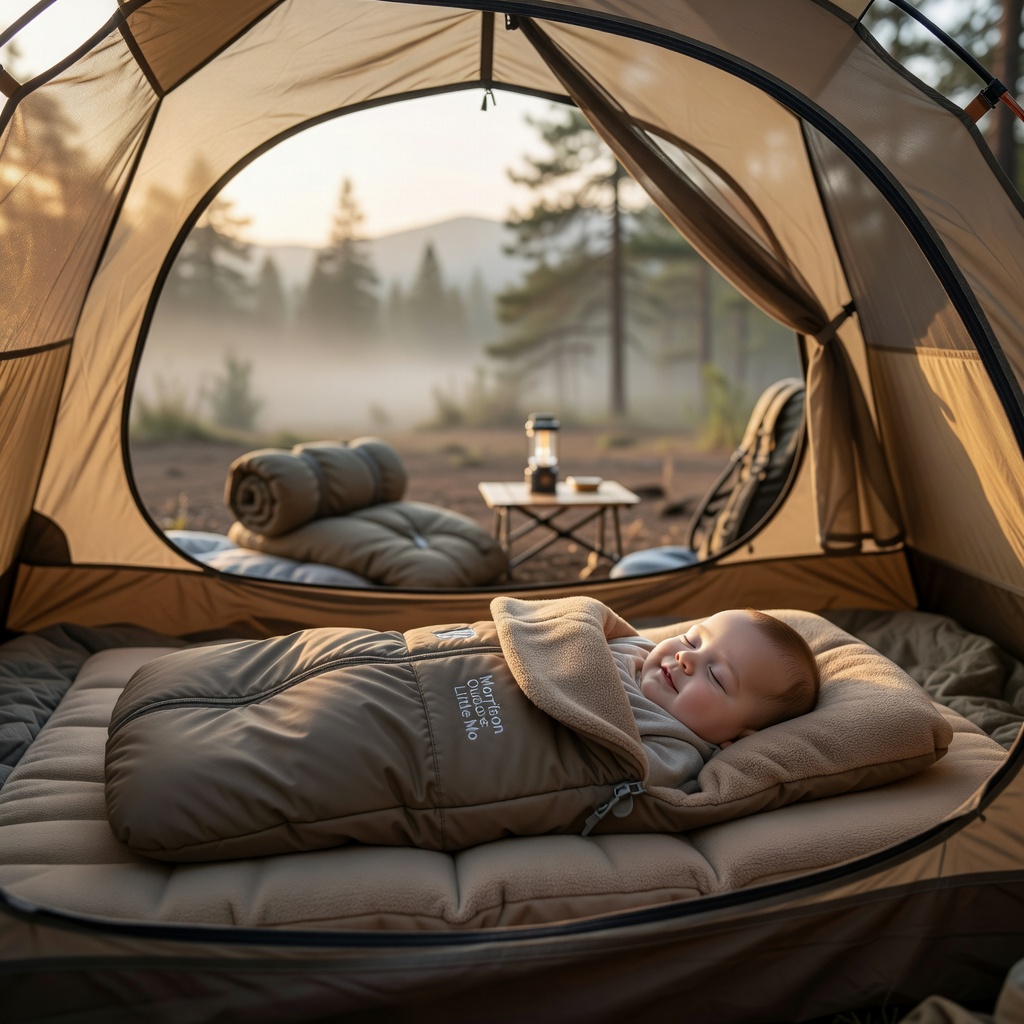
Babies can't sleep with loose blankets — it's a SIDS risk. But a regular sleeping bag swallows a 12-month-old, and the loose fabric around the face is dangerous. Morrison Outdoors solved this with a purpose-built infant sleeping bag that works exactly like a wearable blanket with sleeves.
The Little Mo is rated to 40°F and uses synthetic insulation that's safe against baby skin. The sleeves prevent the bag from riding up over the face, and the two-way zipper makes midnight diaper changes possible without fully extracting a sleeping baby (this alone is worth the price).
It fits babies from 6-18 months and packs into a stuff sack smaller than a shoe box. For parents who want to camp with an infant without stressing about warmth and safety all night, this bag removes the biggest anxiety.
Best for: Parents camping with infants 6-18 months, cool-weather camping (40°F+), gift for new camper parents.
Best Toddler Sleeping Bag: Morrison Outdoors Big Mo 40°
Morrison Outdoors Big Mo 40° Kids Sleeping Bag — $79.95
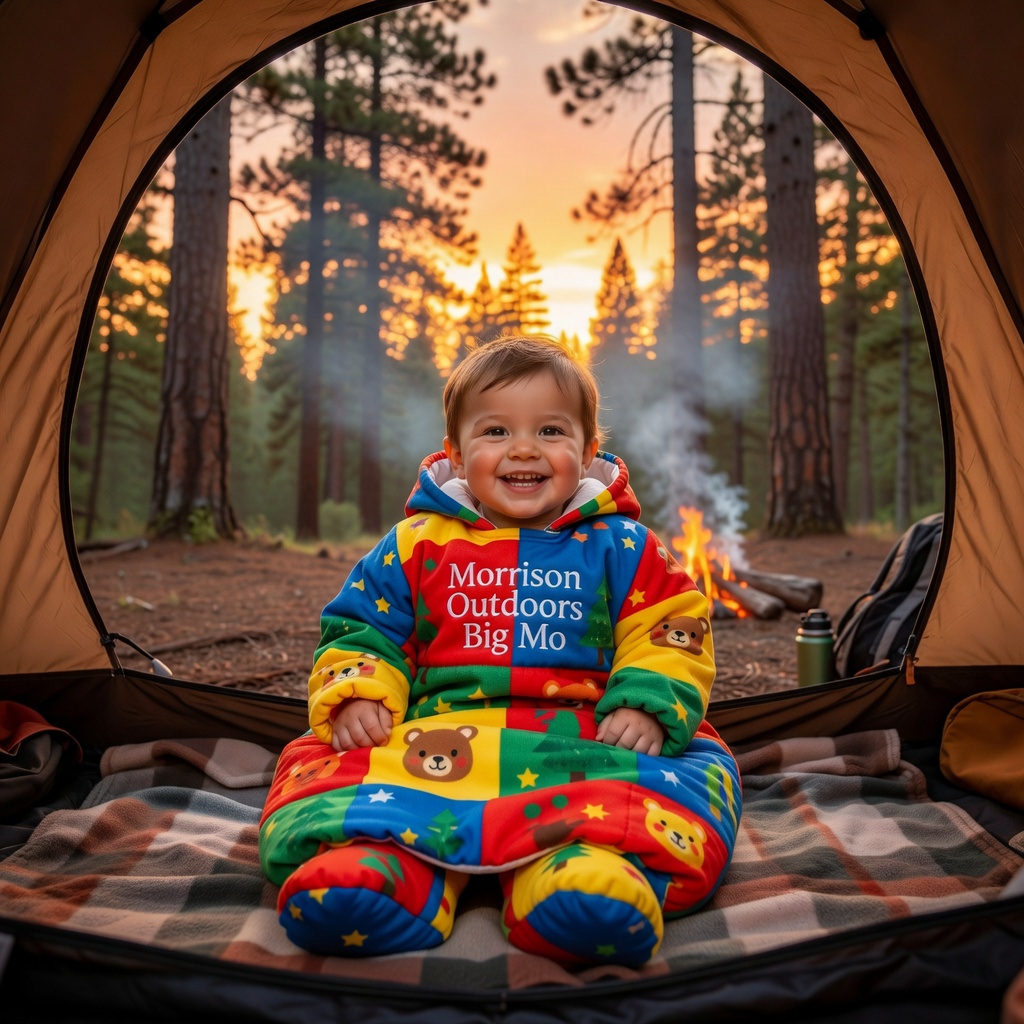
The Big Mo is essentially the Little Mo scaled up for ages 2-4. Same wearable-blanket design, same 40°F synthetic insulation, same face-safe fitted neck opening — just bigger.
What changes with the Big Mo is independence. A 3-year-old can climb into this bag by themselves and zip it up (the zipper is chunky and easy for small hands). That independence at bedtime — "I can do it myself!" — is the difference between a peaceful campfire evening and a tent full of toddler negotiations.
At $79.95, it costs about the same as two nights of nursery bedding from a big-box store, and it'll last through 2-3 years of camping trips. The synthetic fill handles the inevitable juice-box spills and damp tent mornings without turning into a cold wet rag.
Best for: Families camping with toddlers ages 2-4, transitioning from crib to campsite, spring-through-fall camping.
Kids older than 4? The Big Mo tops out around age 4-5, but school-age campers have different needs — bigger temperature ranges, growth-room sizing, and bags they can haul themselves. Our kids sleeping bag buying guide covers the best picks for ages 2-10 (Kelty Woobie, TETON Celsius Jr, and more) with an age-by-age fit chart so you don't overspend on a bag your child will outgrow in a season.
Two picks from that shortlist are worth naming directly, because both are in our catalog and they solve different problems. The Kelty Woobie 30°F ($39.95) is the mild-weather answer: two-layer offset quilt construction, double zippers so it opens flat as a blanket on a warm night, and an anti-snag zipper with a top draft tube. The TETON Sports Celsius Jr 20°F ($49.99) is the cold-weather answer, and at 66 x 26 inches it is about 10 inches longer than most junior bags, so it buys an extra season or two before your child's shoulders outgrow it — same taffeta shell and full-length draft tube as TETON's adult bags, in a size a 6-year-old can haul.
Feet belong in that sleep system too — two dry merino pairs beat a heavier bag every time, and the sock-and-boot-drying routine lives in our snow boots and winter traction guide.
Complete Your Sleep System: Camp Pillows Worth Bringing
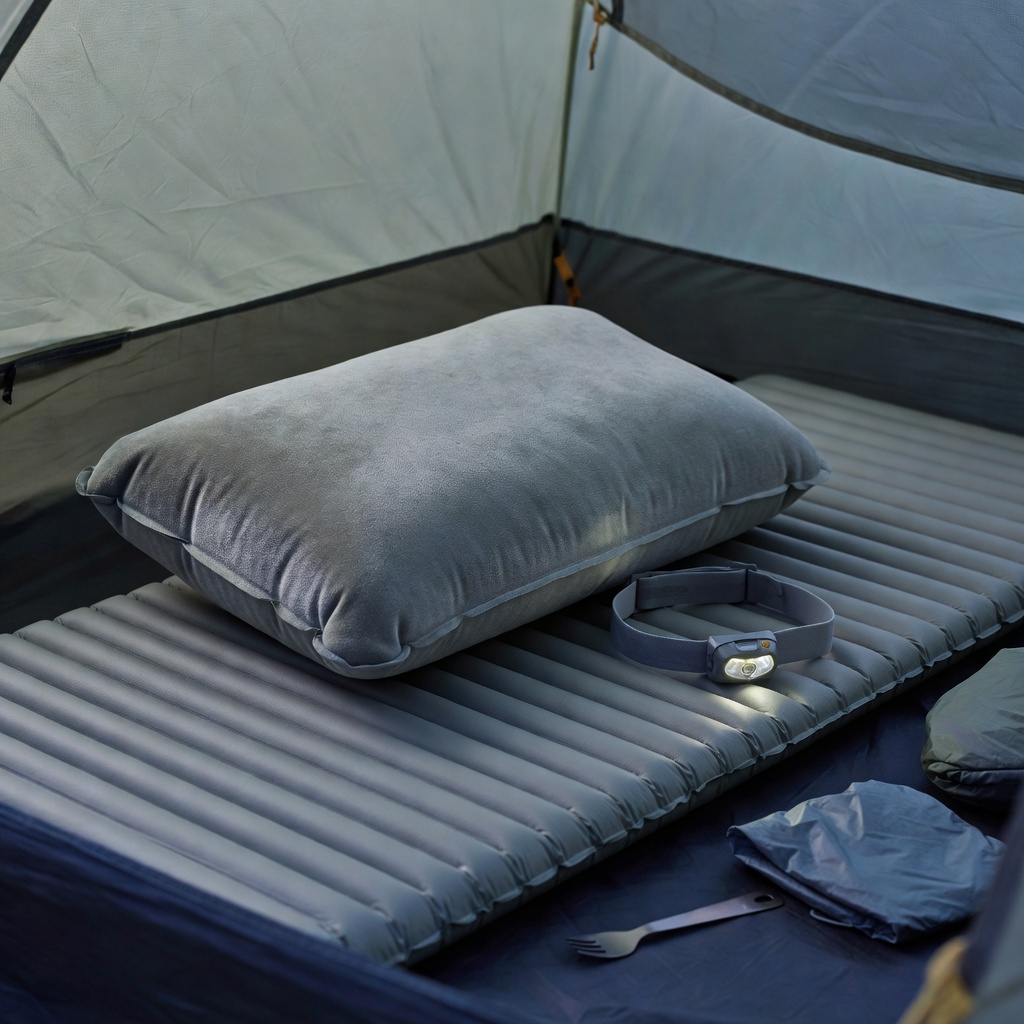
A good sleeping bag on a hard tent floor still isn't comfortable. These three camp pillows complete the setup:
-
TREKOLOGY ALUFT 2.0 ($16.99) — Ultralight inflatable, packs to the size of a soda can. Best for backpackers counting ounces.
-
Sea to Summit Aeros Premium ($49.95) — The premium pick. Soft brushed polyester face, curved shape that cradles your head, and a multi-chamber valve for micro-adjustments. Worth the splurge if you're a side sleeper.
-
KingCamp Inflatable Pillow ($24.99) — Memory foam top layer over an inflatable core. The hybrid design gives you foam comfort at half the packed size of a full foam pillow. Best all-rounder for car camping.
Pair any of these with a quality sleeping pad and you've got a sleep system that rivals your bed at home. For the full breakdown, see our sleeping pad comparison guide and pad vs air mattress guide.
One more layer most people forget: on shoulder-season nights a bag alone stops being the whole story. Our best camping blankets guide compares packable puffy blankets, waterproof family picnic blankets, and 12V heated options for RV trips — the cheapest way to add warmth without buying a second sleeping bag.
Sleeping Pads: The Half of the Sleep System You Feel All Night
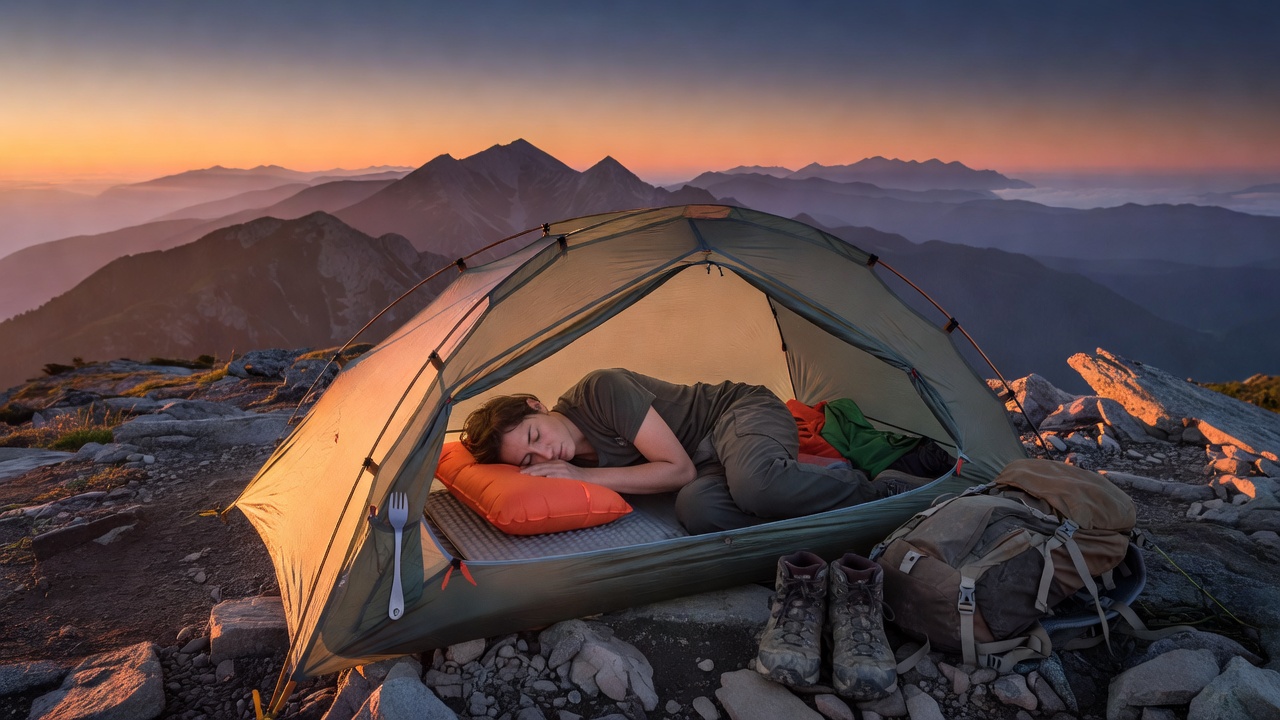
Every "why am I cold" story on this page ends the same way: the bag is fine and the pad is the problem. A sleeping bag's insulation compresses flat under your body weight, so the only thing between you and ground that is far colder than your body is whatever you put down first. Match the pad's R-value to the season — R 2-3 for summer, R 4-5 for three-season, R 5 and up for winter — then pick a type.
Closed-cell foam, nothing to fail: the Therm-a-Rest Z Lite Sol ($54.95) weighs 14 ounces, unfolds instantly, and can never puncture or leak. At R-2.0 it is warm-weather on its own, but it is also the standard winter layering pad — stack it under an inflatable and you pick up real degrees for about the price of a pizza. The trade-off is 0.75 inches of firm, not plush.
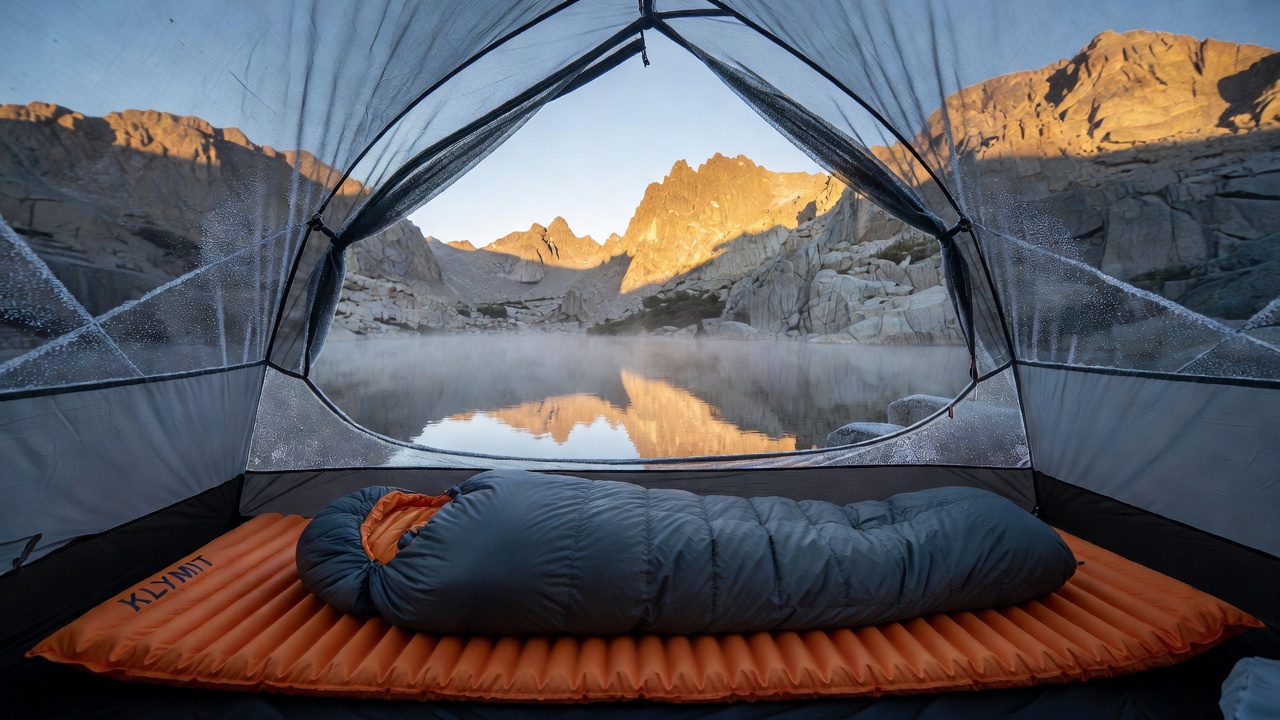
First real inflatable, warm-season: the Klymit Static V ($64.95) uses body-mapped V-chambers, gives you 2.5 inches of cushion, and inflates in 10-15 breaths. At R-1.3 it is strictly a summer pad, and it is the right first pad for warm-weather tent camping.
The three-season workhorse: the Klymit Insulated Static V ($94.99) is the same design with Klymalite insulation and reflective film, which takes it to an ASTM R-4.4 — enough for shoulder-season camping across most of the country. If you buy one pad for spring through fall, this is the one.
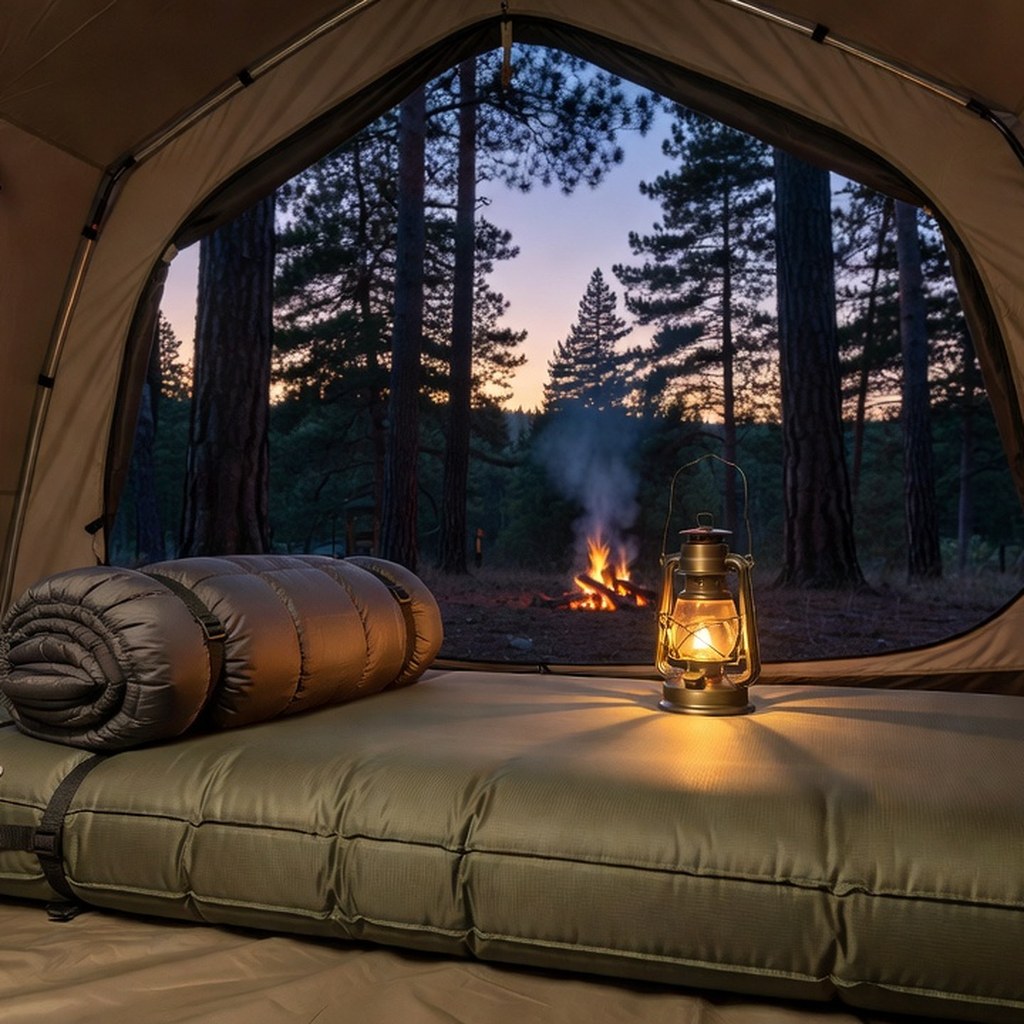
Cheapest way to stop sleeping cold in a car-camping tent: the Gear Doctors Oxylus ($49.99) is a self-inflating pad with an independent lab-tested R-4.3. No pump, no re-inflating at 2 a.m., and a foam core that supports hips and shoulders instead of letting them bottom out.
Car-camping comfort, no compromise: the Exped MegaMat 10 ($239.95) stands 4 inches off the ground — taller than some guest beds — with an R-8.1 that shrugs off frozen ground. It is strictly a drive-in pad (heavy, bulky, slow to self-inflate), and it is the one family campers argue is worth every dollar.
Backpacking, ounce-counters: the Therm-a-Rest NeoAir XLite NXT ($209.95) is 14 ounces with an R-4.5, the best warmth-to-weight number in our catalog. The NEMO Tensor All-Season ($199.95) pairs an R-4.8 with about a pound of weight, which is why it is the one pad that covers summer, shoulder season and early winter without a second purchase.
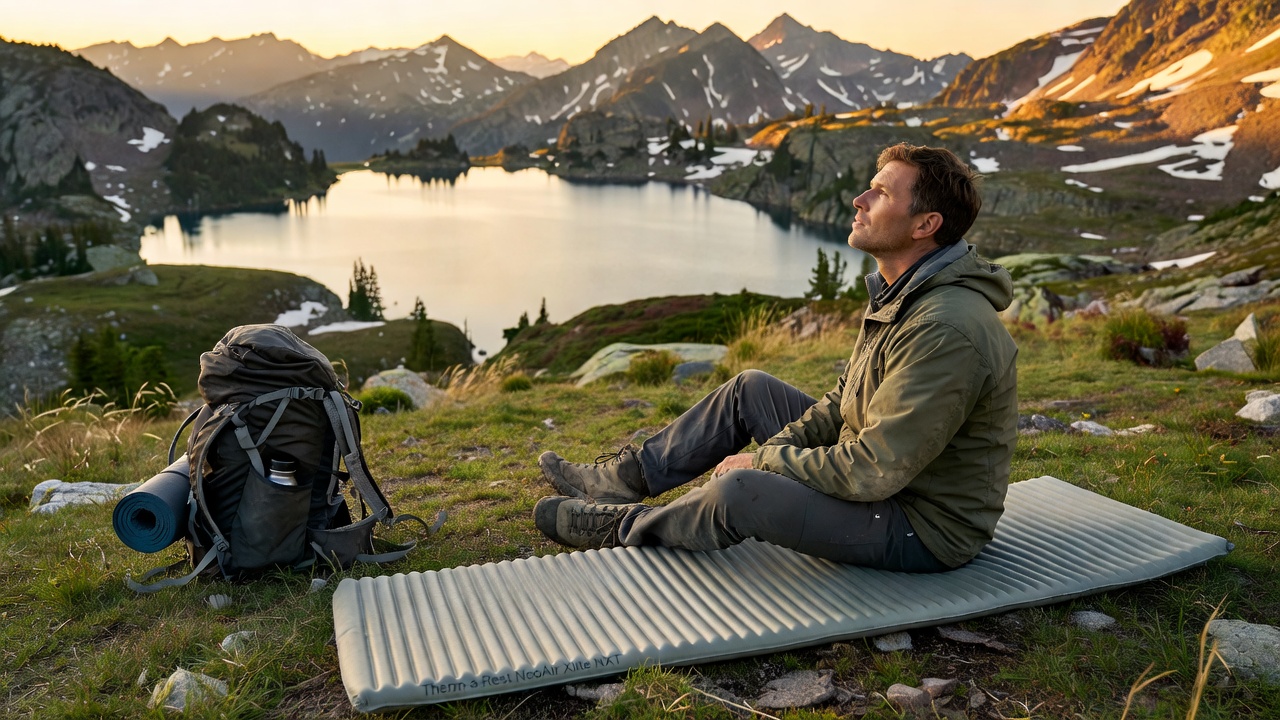
Side sleepers who bottom out: the Sea to Summit Ether Light XT ($219.95) is the tallest pad in the ultralight class at 4 inches, with Air Sprung Cells that conform like a memory-foam topper (R-4.1, under 1.5 pounds).
For the full comparison across every pad type — including air mattresses and cots — see our camping cot vs air mattress vs sleeping pad breakdown.
Common Sleeping Bag Mistakes (I've Made All of Them)
Buying a bag that's too warm for summer. A 0°F bag in July turns into a sweat lodge by midnight. Bring the right bag for the season — our Coleman Palmetto 40°F is built for warm nights — or get a 20°F bag with a full-length zipper you can vent.
Not using a sleeping pad. The ground pulls heat from your body 20× faster than air. A sleeping bag's insulation compresses under your body weight and does almost nothing against the cold ground. You need a pad with an R-value of 2+ for summer, 4+ for three-season, and 5+ for winter.
Storing the bag compressed. Leaving your sleeping bag crammed in its stuff sack for months crushes the insulation and permanently reduces its warmth. Store it loose in the large mesh sack that (hopefully) came with it, or hang it in a closet.
Wearing too many layers inside the bag. Counterintuitive but true: wearing thick clothes inside a sleeping bag creates dead air pockets between layers that actually make you colder. A single base layer (thermal top and bottom) is warmer than piling on three sweatshirts.
Not eating before bed. Your body generates heat by digesting food. A small high-fat snack 30 minutes before bed (cheese, nuts, chocolate) raises your core temperature and helps you stay warm through the coldest pre-dawn hours.
What People Search Before Buying a Sleeping Bag
These are the questions that actually come up in the ten minutes before someone buys a bag, grouped the way the searches run: rating first, then season, then shape, fill, weight and price. Every answer below is the short version, and the long version is elsewhere on this page.
Temperature Ratings and How Warm a Bag You Actually Need
| what people search | the short answer |
|---|---|
| temperature rating on sleeping bag | Two numbers on the tag: comfort (you sleep warm) and limit (you survive). Shop by comfort. |
| sleeping bag comfort rating meaning | Comfort is the temperature an average sleeper stays warm at; limit is the floor where you are just hanging on. |
| sleeping bag rating vs comfort | The rating people quote is usually the limit number, which is 10-15 degrees colder than comfort. |
| sleeping bag warmth ratings | Warmth is loft and fill, not thickness: a 550-fill down bag at 20 F beats a bulky synthetic at 40 F. |
| sleeping bag temp rating explained | Ratings are tested on a standard pad and base layer, so a bag rated 20 F is not warm for everyone at 20 F. |
| camping sleeping bag ratings | Sleep cold? Add 10-15 F of margin on top of the comfort rating and pack a liner. |
| camping sleeping bag 0 degree | 0 F is winter car-camping territory, and it is what the TETON Celsius bags on this page are built for. |
| lowest temperature sleeping bag | Hard winter needs 0 F or lower plus an insulated pad, because the bag cannot warm the ground under you. |
| 3 season sleeping bag rating | Three-season bags are normally rated 20-35 F, which covers spring through fall across most of the US. |
| what temperature rating sleeping bag do i need | Match the rating to your coldest expected night: 40 F summer, 20-30 F three-season, 0 F winter. |
| sleeping bag temp ranges | Loose bands that work: 40 F and up for summer, 20-30 F for three-season, 0 F and below for winter. |
| down sleeping bag temperature rating | Fill power changes weight and packed size, not the rating, so a 20 F down and a 20 F synthetic are equally warm on the tag. |
| cold weather sleeping bag ratings | Below 20 F the hood and draft collar do the real work, so check those before the fill spec. |
| best sleeping bag temperature rating | There is no single best number: buy the coldest rating you will actually camp in, not the coldest one sold. |
Three-Season, Winter, and Summer Bags
| what people search | the short answer |
|---|---|
| cold weather sleeping bags | Look for 0-20 F with a hood and draft collar, since the head opening is where most heat escapes. |
| camping sleeping bag winter | Winter means a 0 F bag plus a pad with real insulation; the bag alone will not carry a cold night. |
| camping sleeping bag summer | 40 F synthetic is plenty and cheap, and the Coleman Palmetto on this page is the summer answer. |
| backpacking sleeping bag summer | A 32-40 F bag or a quilt keeps summer pack weight down without sweating you out. |
| sleeping bag in cold weather | Layer a liner, wear a hat, and fix the pad first, because warmth lost downward is warmth you never get back. |
| sleeping bag temp for summer | 32-40 F is the summer band; anything warmer is pack space you paid for and did not need. |
| 3 season sleeping bag xl | XL three-season bags run about 6 ft 6 in to 6 ft 8 in long, with extra width at the shoulders. |
| 3 season sleeping bag down | Down is the three-season backpacking standard: same warmth, roughly half the packed weight. |
| 3 season sleeping bag wide | Wide cuts add 4-6 inches at the shoulders, which is what side sleepers and layer-wearers need. |
| 3 season sleeping bag long | Long bags add 6 or more inches of length, and they are the fix for anyone over 6 feet. |
| 3 season sleeping bag women | Women's bags are shorter, wider at the hips, and often filled warmer for the same printed rating. |
| 3 season sleeping bag mummy | The mummy cut saves weight and traps heat; rectangular is roomier and heavier for the same rating. |
| 3 season sleeping bag weight | Synthetic three-season bags run 4-8 lb while down runs 2-3 lb, and that split is the whole decision. |
Shape, Size, and Fit
| what people search | the short answer |
|---|---|
| mummy vs rectangular sleeping bag | Mummy is lighter, warmer and snug; rectangular has room to move and belongs in a car-camping tent. |
| mummy sleeping bag vs regular | Treat regular as the rectangular family: same trade of roominess against weight and warmth. |
| are mummy sleeping bags better | Better for weight and warmth, worse if you sprawl or sleep on your stomach through the night. |
| mummy or square sleeping bag | Square is the family-camping shape: it fits a cot, zips flat, and does not fight your knees. |
| camping sleeping bag double | Double bags sleep two in one shell and zip flat as a blanket, which suits couples in a big tent. |
| 2 person sleeping bag camping | Two-person bags are bulky and only work if both sleepers run at the same temperature. |
| double sleeping bag for camping | Insist on a full-length zip so one sleeper can vent without freezing the other one out. |
| double sleeping bag dimensions | Most doubles sit near 60 by 80 inches, wider than two 33-inch singles zipped together. |
| camping sleeping bag queen | Queen-size bags fit a queen airbed, so measure the bed before you buy the bag. |
| camping sleeping bag xl | XL usually means extra length, so check the length and the shoulder width as separate specs. |
| backpacking sleeping bag side sleeper | Side sleepers want a wide or semi-rectangular cut; a tight mummy will wake you up every time you roll. |
| backpacking sleeping bag zip together | Only same-brand bags with opposite-side zips join, so check left or right zipper before buying a pair. |
| can you put 2 sleeping bags together | Yes, if the zips are opposite sides and the gauges match; otherwise a double bag is the honest route. |
| backpacking sleeping bag plus size | Plus-size cuts add width rather than length, and the TETON XXL on this page is 39 inches wide. |
Down vs Synthetic Fill
| what people search | the short answer |
|---|---|
| down vs synthetic sleeping bag | Down is warm for the weight and packs small but fails wet; synthetic is heavier, cheaper and keeps some warmth damp. |
| down or synthetic sleeping bag | Pick down for backpacking and dry climates, synthetic for damp regions, budget trips and kids. |
| synthetic vs down sleeping bags | Synthetic dries faster and costs a third as much; down lasts 10 or more years against 5-8 for synthetic. |
| sleeping bag fill power meaning | Higher fill power means more loft per ounce, so a lighter bag reaches the same temperature. |
| sleeping bag fill weight | Fill weight is the ounces of down actually inside the bag, and it is closer to a real warmth spec than fill power. |
| cheap down sleeping bag | Real down starts near $150 to $170, and below that you are usually looking at 550 fill or a blend. |
| cheapest down sleeping bag | The entry point is a 550-fill DriDown bag around $169, like the Kelty Cosmic Down 20 on this page. |
| camping sleeping bag down | Down bags need a dry tent and loose storage, because a compressed or damp down bag loses the loft you paid for. |
| backpacking sleeping bag down | Down is how a 20 F backpacking bag lands near 2.9 lb without costing you warmth. |
| best budget sleeping bag down | A 550-fill 20 F bag is the value line; paying more buys fill power and weight, not a warmer night. |
| camping sleeping bag waterproof | Sleeping bags are not waterproof, only water-resistant at the shell, so use a dry bag or a bivy over it. |
| camping sleeping bag cotton | Cotton and flannel liners feel soft but hold sweat, which is fine in a car and wrong on a trail. |
| camping sleeping bag with hood | A hood is worth roughly 5-10 F and is the cheapest warmth upgrade you can buy on a bag. |
| sleeping bag 700 fill power | 700-800 fill is premium three-season territory, and it is where the weight savings actually show up. |
| high fill power sleeping bag | High fill power buys weight savings, not a lower temperature rating, so do not shop it as a warmth spec. |
Weight, Packed Size, and Backpacking
| what people search | the short answer |
|---|---|
| lightest backpacking sleeping bag | Ultralight down mummies and quilts land near 1.5-2.5 lb, and synthetic cannot match that at any price. |
| backpacking sleeping bag weight | Three-season down runs 2-3 lb; the same rating in synthetic runs 4-6 lb. |
| backpacking sleeping bag packable | Down compresses to about football size; the same rating in synthetic needs a stuff sack twice as big. |
| backpacking sleeping bag packed size | Packed size follows the fill, not the rating, so a 20 F down bag packs smaller than a 40 F synthetic one. |
| cheap ultralight sleeping bag | The cheap ultralight route is a 32-40 F down bag used three-season instead of a heavy 0 F synthetic. |
| budget sleeping bag ultralight | Spend on fill before features: a 550-fill bag at $169 beats an 8 lb synthetic at $90 on any trail. |
| best backpacking sleeping bags | For three-season backpacking a 20 F down mummy is still the sweet spot, and the Kelty Cosmic Down 20 fits it. |
| backpacking sleeping bag ultralight | Under 2 lb means down, a mummy cut, and usually a 20-30 F rating with a thin shell. |
| lightweight hiking sleeping bag | Two to three pounds is lightweight in practice, and below that you are shopping quilts. |
| backpacking sleeping bag volume | Volume, not weight, is what forces a bigger pack, so compressibility is the spec to compare. |
| camping sleeping bag compact | Synthetic bags never pack small, so a compact kit is the down argument in one sentence. |
| sleeping bag storage bag | Keep a loose cotton or mesh sack for storage and reserve the compression sack for travel. |
| large sleeping bag storage sack | Storage sacks are cut loose on purpose, because compressing down for months kills the loft. |
| sleeping bag storage sack mesh | A mesh sack lets the bag breathe while it hangs, which is what keeps down from going musty. |
Budget, Brands, and What You Get
| what people search | the short answer |
|---|---|
| best sleeping bag brands | Kelty, TETON, Coleman, Marmot, NEMO and Big Agnes cover the useful range, and fill plus rating matter more than the logo. |
| top 10 sleeping bag brands | The brands worth naming at each price: Coleman for summer, TETON for budget cold, Kelty for three-season down. |
| popular sleeping bag brands | Popular does not mean right: match the bag to your coldest night rather than to what sells most. |
| cheap sleeping bags | Sub-$50 synthetic rectangles are summer bags or guest-bed bags, and they are honest about it. |
| best cheap sleeping bag | Coleman Palmetto at $44.99 is the summer answer, and the TETON Celsius Regular is the budget 0 F one. |
| cheap warm sleeping bags | Cheap warmth means bulk rather than weight: expect 4-8 lb and a big stuff sack at this price. |
| cheap sleeping bag adult | An adult cheap bag is typically 4 lb, 40 F and rectangular, which is a summer and sleepover specification. |
| camping sleeping bag price | The real spread: $45 for summer synthetic, $60-90 for budget 0 F synthetic, $169 for three-season down. |
| camping sleeping bag coleman | Coleman builds the low-cost rectangular bags, which is exactly the summer car-camping job. |
| camping sleeping bag rei | REI house bags sit between Coleman and Kelty on price with better shells and ratings. |
| teton sleeping bag temperature rating | TETON Celsius bags are rated 0 F, with the XXL at 90 by 39 inches and the Regular at 80 by 33 inches. |
| kelty sleeping bag temperature rating | The Kelty Cosmic Down 20 is the 20 F three-season down bag on this page, at 2.9 lb packed. |
| best snow camping sleeping bag | Snow camping wants 0 F or below, a high-R pad, and a bag you can vent when you overheat. |
| best bike camping sleeping bag | Bike camping lives and dies on packed size, so down at 20-30 F and under 3 lb is the target. |
| best moto camping sleeping bag | Moto camping favors either a compact synthetic or a 20 F down bag that survives a damp saddlebag. |
Warmth Tricks, Liners, and Taking Care of It
| what people search | the short answer |
|---|---|
| camping sleeping bag warmer | A liner plus a hat adds real warmth for a fraction of the price of a colder bag. |
| camping sleeping bag thick | Thickness is not warmth, loft is, so a puffy 40 F bag can beat a dense one at the same rating. |
| camping sleeping bag cover | A cover or bivy keeps wind and splash off the shell, which matters most in winter. |
| camping sleeping bag sheet | A liner adds a few degrees, keeps the bag clean, and doubles as a summer bag on its own. |
| camping sleeping bag essentials | Bag, pad, pillow and a dry place to store it, which is the whole sleep system in four items. |
| extreme camping sleeping bag | Expedition bags are 0 F and below with heavy shells, and they are overkill for family weekend camping. |
| how to store sleeping bags | Store them loose and dry, ideally hanging, and never leave a bag compressed between trips. |
| proper sleeping bag storage | Loose, dry, off the floor and out of direct sun, with the compression sack used only for travel. |
| how to wash a sleeping bag | Front-load only, gentle cycle, mild detergent and no fabric softener, then dry low until completely dry. |
| sleeping bag washing instructions | Follow the tag: front-loader, mild soap, low tumble with dryer balls, and no heat that can cook the shell. |
| how often to wash sleeping bag | Once a season of real use, and sooner if a down bag got sweaty, because body oils flatten loft. |
| sleeping bag washing machine instructions | A top-loader agitator can tear baffles, so use a front-loader or a bathtub and press the water out. |
| what is the best way to store a sleeping bag | Loose and dry, hanging or in a cotton or mesh sack, never compressed and never sealed in a plastic bin. |
Packing the bag is the third half of the sleep system. A bulky synthetic bag that will not get smaller is what forces the bigger pack, and the sack a bag ships in usually does almost nothing to help. Two sacks that actually compress: the Frelaxy Compression Sack ($16.99, four straps, 11–52L, 4.5 stars across 6,400+ reviews) for a bulky family bag, and the Sea to Summit Lightweight Compression Sack ($39.95, 20L) when you want the sack to still be intact after three seasons of trunk duty. Keep the bag loose in a cotton or mesh sack between trips and reserve the compression sack for travel — compressing down for months is what kills the loft.
Cleaning is the other half of bag life, and it's where most bags get ruined before the fill wears out: our how to wash a sleeping bag guide covers front-loader versus bathtub, down wash versus regular detergent, how often a bag actually needs it, and how to dry down so it comes back lofty instead of clumped.
Sleeping Bag Liners: The Cheapest 10-27°F Upgrade
A liner is the highest-return purchase in this whole guide, because it stretches the bag you already own instead of replacing it:
- REDCAMP Fleece Liner with Hood ($24.99) — Under $25, with a full-length zipper so it opens flat as a blanket when the forecast changes and an attached hood that covers the one spot a standard liner leaves exposed. It is the realistic way to add a liner to every sleeper in a family tent. (87 inches long, so most adults fit inside a standard bag.)
- Litume Fleece Mummy Liner ($57.98) — Mummy-cut to match a real bag's taper, which means no cold folds of loose fabric creating dead air space, and rated to add up to 27°F — enough to carry a three-season bag into shoulder-season and early-winter nights.
- BROWINT Silk Liner ($70.99) — Real mulberry silk, so it adds warmth at almost no pack weight and breathes when fleece would turn your bag into a sauna. The extra-wide 87 x 43-inch cut is the one that fits plus-size and restless sleepers, and it keeps a down bag clean because you wash the liner instead.
One caution matters more than the brand: a liner only adds warmth if it stays dry. Sleep in a dry base layer, and air the liner out every morning before you pack it.
Cold Weather and Winter Sleeping Bags: The Questions That Decide the Purchase
Everything above answers "which bag," but most people arrive here in November with a colder question than they expected. The searches below are the cold-weather half of the category, and they are not the same question wearing different words: a winter rating is a system decision (bag plus pad plus what you wear), a car-camping choice is a bulk decision, and a kid's bag is a fit decision. This section takes them one at a time.
Best Sleeping Bag for Winter Camping: Do the Rating Math First
The honest starting point for the best sleeping bag for winter camping is that the number on the tag is not the number you sleep at. An ISO 23537 comfort rating is measured on a warm pad with a thermal base layer and a dry sleeper, and in real cold-weather use the printed rating runs roughly 10-15°F optimistic — which is the whole reason a "20°F bag" feels thin on a 28°F night. So pick the bag whose comfort rating sits a full step below the low you expect, not level with it: nights in the teens want a 0°F comfort bag, not a 20°F limit bag.
Two catalog bags cover most of that ground. The TETON Sports Celsius XXL 0°F ($89.99) is the family-tent winter answer — synthetic fill that keeps insulating when it picks up condensation, a hood and draft collar, and a cut wide enough that a big adult can roll over without compressing the loft against the walls. The trade-off is size and weight, which is why it lives in the car. For a trip where the bag has to be carried, the Kelty Cosmic Down 20°F ($169.00) plus one of the liners above is the packable early-winter setup: 550-fill down at about three and a half pounds, and a mummy cut that leaves less dead air for your body to heat.
Whichever you choose, the winter equation is bag plus pad. A 0°F bag on an R-1.3 summer pad sleeps like a 30°F bag, and no amount of fill fixes it.
If your search is phrased as the best winter sleeping bag for camping rather than as a rating question, the answer is the same one in a different order: a 0°F comfort bag, a pad at R-5 or better, and a base layer you did not sweat in. The rating is the entry ticket; the pad and the dry layer are what make the night work.
Best Sleeping Bag for Cold Weather Camping: Match the Bag to the Low, Not the Average
Reading a forecast for an average is the most common cold-weather mistake I see. The number that matters is the overnight low between 2 and 5 a.m., which runs 8-15°F below the daytime high the app puts on the first screen. Once you have that low, the table below is the whole decision:
| Overnight low | Bag comfort rating | Pad R-value | What it feels like |
|---|---|---|---|
| 50-60°F | 40°F (Coleman Palmetto) | R 2-3 | A normal summer night with a light layer |
| 35-50°F | 30-40°F | R 4 | Cool, comfortable, the classic shoulder season |
| 25-35°F | 20°F (Kelty Cosmic Down) | R 4-5 | Frost on the fly, warm inside if the pad is right |
| 15-25°F | 0°F (TETON Celsius) | R 5+ | Real winter camping, ice in the water bottle |
| Below 15°F | 0°F plus a liner, or two bags nested | R 5+ stacked with closed-cell foam | Expedition territory, and the margin is thin |
That is how you pick sleeping bags for camping in cold weather without guessing: the low selects the rating, and the pad R-value has to clear 5 before a 0°F bag does its job. In practice, the best camping sleeping bag for cold weather is almost never the most expensive one — it is the one whose comfort rating is a step below your forecast low and whose pad is not the weak link.
Best Cold Weather Sleeping Bag for Car Camping
Car camping changes the math in a way most guides skip: weight and packed size stop mattering, so the best cold weather sleeping bag for car camping is simply the warmest one you can stand to sleep in — and the failures are different. A drive-in tent gets condensation on the inside of the fly from exhaled moisture, so a synthetic bag that keeps some insulation value when damp is a real advantage over down. A raised air mattress is a giant uninsulated bag of cold air under you, so a 0°F bag on a plain air mattress still sleeps cold; put an insulated pad on top of it, or a closed-cell foam pad under it. And a cot without a pad is the coldest bed in the campground, because air circulates under it all night.
If you camp cold often, the two-bag system beats one expensive bag: a 0°F synthetic for the sleeper who feels the cold, and a 30-40°F bag opened flat as a blanket over the top for everyone else. A Coleman Oak Point Big & Tall 30°F ($74.99) is big enough to work as that second layer, and the rectangular shape means it actually covers two kids' legs instead of sliding off.
Which Sleeping Bag Is Best for Cold Weather? The 20-Second Version
If you want the answer without the table, here is the ladder. Sleeping in a car or a drive-in site below freezing: the TETON Celsius XXL 0°F, no contest, because bulk is free there. Carrying the bag any distance: the Kelty Cosmic Down 20°F with a fleece or silk liner, and accept that the liner is doing the last 10°F. A sleeping bag for very cold weather, meaning sustained nights under 15°F: a 0°F bag plus a liner plus a stacked pad, or two bags nested — and if you are buying for that, buy the pad first, because that is the part that fails. Camping with a toddler or a kid: skip the adult bag question entirely and use a bag cut for their size, since an adult mummy swallows a small sleeper and the empty space has to be heated all night.
How to Sleep in Cold Weather Camping: Eight Things That Actually Work
Knowing how to sleep in cold weather camping is mostly a list of small mechanical habits, not gear:
- Go to bed warm but not sweaty. Do the jumping jacks before you get in, not after. Sweat in your base layer is the fastest way to a cold three hours later.
- Change out of the day's clothes. A dry merino or synthetic base layer is worth more than an extra 10°F of bag rating.
- Wear a hat or use the hood. Your head is a large uncovered surface, and a beanie costs nothing.
- Double the pad before you upgrade the bag. Closed-cell foam under an inflatable picks up real degrees for about $55, and it cannot fail at 2 a.m.
- Eat something with fat before bed and drink water earlier in the evening. Digestion runs warm for a couple of hours; a full bladder at 3 a.m. does not.
- Vent when you overheat. A bag that is too warm overnight collects condensation, and a damp bag is cold by morning. Open the foot zip, then close it when you wake up chilled.
- Keep tomorrow's clothes in the bag. They come out warm instead of frozen, which is the difference between a good and a miserable morning.
- Air and dry the bag every morning. Ten minutes on a bush or over a chair pulls the night's moisture out before you stuff it.
Best Camping Sleeping Bag Brands, and What Each One Is Actually Good At
Searching for the best camping sleeping bag brands usually returns a list ordered by ad budget. Here is the more useful version, sorted by what a family actually buys:
- TETON Sports — budget synthetic, honest 0°F and 20°F ratings, and unusually generous sizing. The Celsius Regular 0°F ($59.99) is the cheapest real winter-rated bag in our catalog, and the Celsius Jr 20°F ($49.99) is the kids version of the same idea.
- Kelty — the down value play at 20°F, plus the Woobie 30°F kids bag ($39.95) that has been the default first bag for a decade.
- Coleman — cheap, wide, rectangular bags for car camping and kids, with the Palmetto 40°F ($44.99) as the summer standard and the Oak Point above as the big-and-tall option.
- Morrison Outdoors — the only brand here that builds a sleep system for babies and toddlers rather than shrinking an adult bag, which is why we keep two of them below.
- NEMO, Big Agnes, Marmot and Western Mountaineering — the bags serious backpackers argue about, and we do not stock them. Their 20°F down bags are lighter than anything in this guide, and you pay for it. If you backpack in winter, that is where your money goes; if you camp out of a car with kids, it is not.
Best Camping Sleeping Bag for Adults: Fit Beats Features
For the best camping sleeping bag for adults, fit decides more nights than fill power does. A six-foot sleeper in a 72-inch bag compresses the foot box all night and sleeps cold no matter what the rating says; a big-and-tall sleeper in a standard mummy has the same problem at the shoulders. The roomy options in our catalog are the TETON Celsius XXL and the Coleman Oak Point Big & Tall 30°F ($74.99), both built for larger frames. Side sleepers should look at rectangular bags or a mummy with a generous hood, since a tight mummy forces you onto your back. And if you consistently sleep colder than your partner, buy your own bag rather than sharing one — a shared bag has one temperature rating and two different sleepers, and the colder one always loses.
Best Camping Sleeping Bags for Kids: Toddler, 2 and 3 Year Old Sizes
The best camping sleeping bags for kids are not small adult bags, and this is the one category where a dedicated product is worth the money. A baby bag is a wearable sleep sack with arm holes and no hood, because a loose hood on an infant is a suffocation risk: the Morrison Outdoors Little Mo 40°F ($69.95) covers 6-18 months that way. For the next stage, the best camping sleeping bag for a 2 year old and the best camping sleeping bag for a 3 year old are the same bag in most families: the Morrison Outdoors Big Mo 40°F ($79.95) is sized for ages 2-4 with the hood and leg freedom a toddler needs. Past that, the TETON Celsius Jr 20°F ($49.99) and the Kelty Woobie 30°F ($39.95) are the two kid-sized bags that hold a real rating.
One note that matters in cold weather: almost every kids bag is rated 30-40°F, so a kid needs the same layering treatment as an adult — warm base layer, hat, insulated pad, and a bag rated a step below the forecast low. Our kids sleeping bag guide covers the sizing chart, and the winter camping with kids guide covers the rest of the cold-weather setup for small sleepers.
| what people search | the bag that answers it |
|---|---|
| best camping sleeping bag for toddler | Morrison Outdoors Big Mo 40°F, ages 2-4, hood plus open legs |
| best camping sleeping bag for 2 year old | The same Big Mo, unless the child is already tall enough for a 20°F kids bag |
| best camping sleeping bag for 3 year old | Big Mo up to age 4, then the TETON Celsius Jr 20°F for real cold |
FAQ: Sleeping Bag Temperature, Side-Sleeping Comfort, and Value
What temperature rating do I need?
For summer camping (nights above 50°F), a 30-40°F bag is fine. For three-season (nights 30-50°F), get a 15-20°F bag. For winter camping (below 30°F), go 0°F or colder. If you sleep cold or expect wind and damp weather, step down one rating instead of relying on extra clothing.
What sleeping bag is best for a side sleeper?
Start with a semi-rectangular or roomier mummy design so you can bend your knees and turn without compressing insulation at your hips. A supportive pillow and the right sleeping pad matter as much as the bag: compare inflatable, compressible, and foam-topped options in our complete camp pillow comparison.
Should I spend more on a sleeping bag or sleeping pad?
Buy enough bag for the overnight low first, then do not skimp on the pad. Bag insulation gets compressed underneath you, while a pad supplies the ground insulation that keeps cold from moving into your body. A moderately priced bag plus a correctly rated pad is usually more comfortable than an expensive bag on bare ground.
The practical split: buy a mid-price bag and put the savings into the pad. If you sleep cold at a drive-in site, the Exped MegaMat 10 ($239.95, R-8.1) is the answer; if you want the cheapest pad that genuinely fixes fall nights, the Gear Doctors Oxylus ($49.99, R-4.3) is it. Whichever you pick, the R-value has to match the season or no bag can carry the night on its own.
Can two sleeping bags zip together?
Some rectangular bags from the same brand/model can zip together to make a double bag. The TETON Celsius XXL has this feature if you buy two — check for "left zip" and "right zip" variants.
How long should a sleeping bag last?
A well-cared-for down bag can last 10-15 years. Synthetic bags typically last 5-8 years before the fill loses significant loft. Store loose, wash sparingly (once per season max), and never dry-clean.
Should I get a quilt instead?
Ultralight backpackers increasingly prefer camping quilts (no hood, no zipper, no back insulation) because they save 8-12 ounces. But quilts require a high-R-value sleeping pad and hood/beanie for your head.
One hammock-specific note: if you sleep in a hammock rather than a tent, the equivalent of a quilt is an underquilt, because cold air moves freely under a hammock with nothing between you and it. The OneTigris Hideout underquilt ($39.98) is a full-length 4-season option that hangs under any gathered-end hammock, and it costs less than most top quilts — but if you sleep on the ground, a traditional mummy bag is still simpler and warmer at the same price.
Worth reading before you buy: our sleeping bag temperature ratings explained covers what comfort, limit and extreme actually measure on an ISO 23537 tag, why the printed number runs 10-15F optimistic, and the pad R-value side of the equation.
Your bag only does half the work - the surface underneath it is the other half. Our cot vs air mattress vs sleeping pad breakdown covers how to pair a bag with the right bed and the R-value you need for the season.
How are sleeping bag temperature ratings determined
Bags are rated in a lab on a standard pad, with the tester in a base layer and a hood up, which is why the printed number is a comparison tool rather than a promise about your night. Two figures come out of that test: comfort, the temperature an average sleeper stays warm at, and limit, the colder number where sleep becomes a fight. Shop to comfort, treat limit as the floor, and add margin if you sleep cold.
What does sleeping bag comfort rating mean
Comfort is the temperature at which an average sleeper stays warm through the night, and limit is the colder number where you are merely surviving until morning. Most marketing quotes the limit figure because it looks better on a tag, which is exactly why a 20 F bag can feel cold at 35 F to a sleeper who runs chilly. On this page every rating is used the way the test defines it.
Can you use a 3 season sleeping bag in winter
Sometimes, and never alone. A 20-30 F three-season bag plus a liner, a warm base layer, a hat and a pad with real R-value will hold a mild winter night, but once the forecast drops toward 10 F you want a 0 F bag with a hood and draft collar. Winter camping is a sleep system problem, not a single-bag problem, and the pad is the part people under-buy.
Why am i cold in my sleeping bag
Usually because of what is under you, not around you. A bare tent floor or an uninsulated air mattress pulls heat straight out of the bag, so a 20 F bag on a cold pad sleeps colder than a 40 F bag on a proper one. After that it is fit and moisture: a bag so large your body has to heat the air inside, a damp bag that has lost loft, and going to bed in the clothes you sweated in all day.
If the pad is sorted and you are still cold, the next cheapest fix is a liner. A silk liner ($70.99) adds warmth at almost no packed weight if you carry your gear, and a fleece liner with a hood ($24.99) does the same job for a family tent at a fifth of the cost — the hood is the part most liners leave out, and the head opening is where the heat goes.
How much should a backpacking sleeping bag weigh
Two to three pounds is normal for a 20 F down bag, and the same rating in synthetic lands between 4 and 6 lb. Under 2 lb you are in quilt or ultralight-mummy territory and paying for fill power rather than features. If you are carrying it any distance, weight and packed size decide more trips than the temperature rating does.
How cold can a 20-degree sleeping bag actually go?
Lower than the tag suggests but not as low as the marketing implies. A 20°F comfort rating holds most sleepers to about 25-30°F on a real pad with a dry base layer, and it will keep you alive well below that without keeping you comfortable. Treat 20°F as a shoulder-season and mild-winter bag, add a liner for the low 20s, and move to a 0°F bag once the forecast low goes under about 20°F.
Is a 0-degree bag too warm for fall camping?
Usually, yes — a 0°F bag in 45°F weather turns into a condensation trap, and a damp bag is colder by morning than a lighter one would have been. The workaround is ventilation rather than a second bag: open the foot zip and the draft tube, sleep in a thin base layer, and re-close it when you wake up cold. If you camp across three seasons in one bag, a 20°F down bag with a liner covers far more of the year than a 0°F synthetic.
Should kids use adult sleeping bags in cold weather?
No. An adult bag swallows a small sleeper, and all that extra air has to be heated by a small body all night, which is why kids in adult bags are the ones who end up in their parents' bag at 2 a.m. Use a bag cut for the child's height, add a warm base layer and a hat, and put the money you save on a smaller bag into an insulated pad — that is the part that decides whether the night works.
The Bottom Line
| Camper Type | Best Pick | Price |
|---|---|---|
| Car camping, cold nights | TETON Sports Celsius XXL 0°F | $89.99 |
| Car camping, standard size | TETON Celsius Regular 0°F | $59.99 |
| Summer camping, warm nights | Coleman Palmetto 40°F | $44.99 |
| Backpacking, three-season | Kelty Cosmic Down 20 | $169.00 |
| Camping with babies (6-18m) | Morrison Little Mo 40° | $69.95 |
| Camping with toddlers (2-4y) | Morrison Big Mo 40° | $79.95 |
| Taller campers (to 6'4") | Coleman Oak Point Big & Tall 30°F | $74.99 |
| Cold sleeper, cheapest fix | REDCAMP Fleece Liner with Hood | $24.99 |
| Car camping, best ground comfort | Exped MegaMat 10 (R-8.1) | $239.95 |
| Backpacking, one pad for the year | NEMO Tensor All-Season (R-4.8) | $199.95 |
The TETON Celsius is the value king — $89.99 for the XXL or $59.99 for the standard-size Regular, both genuine 0°F bags, is hard to argue with. The Coleman Palmetto covers warm summer nights for under $50, and the Kelty Cosmic is the upgrade that makes sense when weight starts to matter. The two Morrison bags fill a gap most gear guides ignore entirely: keeping the youngest campers warm and safe through the night.
For more camping gear guides, check our tent size guide, winter camping guide for beginners, and complete camp pillow comparison.
Timing matters as much as temperature rating here — our 2026 camping gear deals guide covers when sleeping bags and pads actually get discounted, and why the pad underneath you is often the better upgrade.
<!-- AFFILIATE_DISCLOSURE -->One state over, the Massachusetts state park guide answers the question this page can't: which campgrounds are still taking reservations, what they cost in 2026, and where the fire rules invert.