Camping Bug Protection Guide 2026: Mosquitoes, Fall Ticks & Insect Prevention That Works
Fall ticks stay active into December. Bug protection for camping: picaridin vs DEET, permethrin-treated gear, tick removal tools, nets and state seasons.
The worst camping trip of my life wasn't the one where it rained for 36 straight hours. It was the one where I forgot bug spray and discovered, at 10 PM on a humid July night in northern Michigan, exactly how many mosquitoes can fit through a tent's mesh gaps when you're the only source of blood for half a mile.
I counted 47 bites on my arms alone the next morning. My girlfriend had 31. We broke camp in 12 minutes flat — a personal record — and drove two hours to the nearest motel, slapping our own necks the whole way.
That trip taught me something I have never forgotten: bug protection is not one product. It's a system. And the difference between a system that works and a bottle of citronella from a gas station is the difference between "let's stay one more night" and "I'm never camping again."
Here's the system, broken down into every layer that matters.
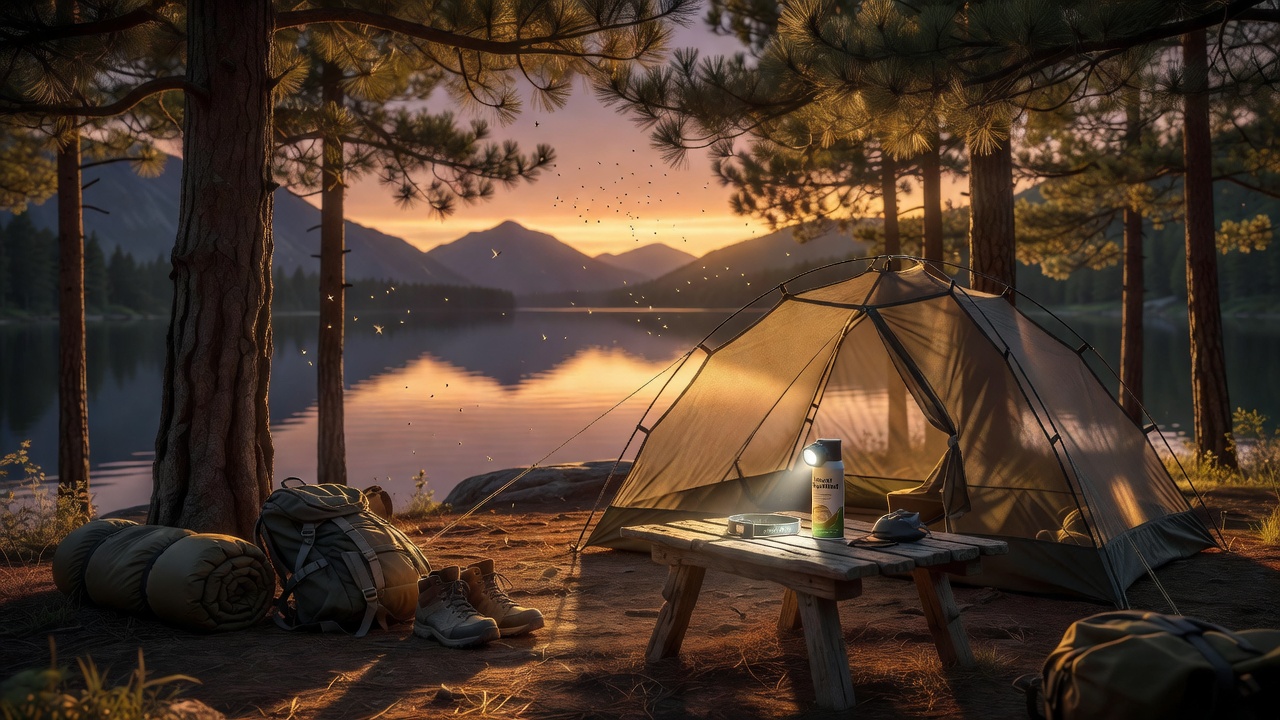
Quick Answer: The Bug Protection Numbers That Matter
Short on time? Here is the whole system compressed into the numbers that actually decide whether you get bitten. The detail behind each point is in the sections below.
- It takes four layers, and most people use the weakest one. Chemical repellent, physical barrier, campsite selection, and bug-defense gear. Stack all four and you are functionally invisible to insects.
- 20% picaridin beats DEET for camping. Equal protection against mosquitoes and ticks, does not melt synthetic fabrics or rainfly coatings, and feels like nothing on your skin. The OFF! Clean Feel 20% Picaridin aerosol ($11.99) gives 8–10 hours per application.
- DEET 30%+ still wins one narrow case: deep backcountry in peak tick season (northeast US), where it lasts 12+ hours. Keep it off tent fabric and sleeping bags.
- Only one plant-based repellent is actually registered to work: 30% oil of lemon eucalyptus. It is the only plant-derived active ingredient the EPA registers as a repellent — up to 6 hours against mosquitoes and 4 hours against ticks. Murphy's Naturals Mosquito & Tick Spray ($28.49 for two 6 fl oz bottles, 4.4★ / 17,300+ reviews) is also labeled for clothing and gear, not just skin. Every other "natural" spray is unregistered and fades in minutes.
- Children need a different delivery method, not a different chemistry. A 10-pack of Cliganic DEET-free repellent bracelets ($9.99, 4.2★ / 37,700+ reviews) protects a kid's wrists and ankles with zero spray-in-the-face fight — mild enough to be a supplement, so adults at a marsh-adjacent site still need picaridin.
- Permethrin goes on clothes, never skin. One treatment bonds to fabric for 6 washes or 6 weeks (whichever comes first) and kills ticks on contact. Toxic to cats until dry.
- Site selection is free and worth more than any spray. Mosquitoes are weak fliers — a 5 mph breeze grounds them. Pitch 200 feet from standing water (400 is luxurious), take the ridge over the valley bottom, and clear leaf litter 10 feet around the tent.
The other free-ish fix is architectural: putting your living space behind mesh. A family camping tent with a screen porch turns dinner into a bug-free room instead of a repellent reapplication contest.
- Bug hour is a 90-minute window around sunset. Be inside the tent or fully covered for it. That single habit is most of the difference between a comfortable trip and a miserable one.
- A deer tick needs 24–36 hours attached to transmit Lyme disease. A 60-second nightly check beats any repellent you can buy — and if one is attached, the HomeSake Tick Remover ($14.39) twists it out whole without squeezing infected fluids back into the bite. Never use tweezers or the burn-a-match trick.
- Hammock campers: a bug net is not optional. The ENO Guardian Bug Net ($39.95) and the cheaper Wise Owl Hammock Bug Net ($27.99) both seal to a bottom cinch and block no-see-ums, not just mosquitoes.
The one-line version: picaridin on skin, permethrin on clothes, camp on high ground away from water, sleep inside mesh, and check for ticks every night before bed.
The Four-Layer Bug Protection System
There are exactly four ways to stop bugs from ruining your trip. Most people use one of them — usually the weakest one — and then blame "the bugs" when it doesn't work. Stack all four and you become functionally invisible to insects.
Layer 1: Chemical Repellent (Your First Line)
This is the one everyone knows, but most people buy the wrong one. Let me make this simple.
Picaridin > DEET for camping. DEET works. It also melts synthetic fabrics, smells like a chemistry lab, and leaves a greasy film that makes you feel like you need a shower. Picaridin is equally effective against mosquitoes and ticks, doesn't damage gear, and feels like nothing on your skin.
The OFF! Clean Feel Insect Repellent with 20% Picaridin ($11.99) is my go-to. It's fragrance-free so it doesn't attract bears (real concern in the backcountry), the aerosol applies evenly without rubbing, and 20% concentration gives you 8-10 hours of protection — enough for a full day hike or an entire evening at camp.
When DEET makes sense: Deep backcountry in peak tick season (northeast US, May-July). DEET's 30%+ concentrations last 12+ hours and ticks hate it. Just keep it off your tent fabric and sleeping bag.
What doesn't work: Citronella candles and clip-on fan repellent devices. I have tested both at a lakeside campsite in Minnesota during peak mosquito hour. The mosquitoes treated the citronella candle like mood lighting. Save your money.
The plant-based option that is actually a repellent. Everything above is synthetic, and that is not an accident — the regulator's list barely has plant oils on it. There is exactly one exception. Oil of lemon eucalyptus (p-menthane-3,8-diol on the label) is the only plant-derived active ingredient the EPA registers as a repellent, and at 30% it behaves like one: up to 6 hours against mosquitoes and up to 4 hours against ticks, rather than the twenty minutes you get from the unregistered "essential oil" blends that give botanicals a bad name. Murphy's Naturals Mosquito & Tick Bug Repellent Spray ($28.49 for two 6 fl oz bottles, 4.4★ over 17,300 reviews) is the one I keep for the evenings when I want something I can also put on a pack, a pant cuff, or a tent door, because the label covers gear and not just skin. Two honest caveats: it is not recommended for children under 3, and after heavy sweating or a swim it needs a sooner reapplication than DEET does. For one spray that has to cover a family of mixed ages in high tick country, stay with picaridin or DEET.
The one plant-oil exception — wristbands for kids. I lumped these in with the gimmicks for years, and for adult use in peak season I still would. But a 10-pack of Cliganic Mosquito Repellent Bracelets ($9.99, 4.2★ over 37,700 reviews) solves a problem no spray solves: getting protection onto a preschooler without a wrestling match. Each band is individually wrapped and built on geraniol, lemongrass, and citronella, so nothing gets sprayed in a kid's face — and nine of the ten stay potent until you actually need them, which is why these have held a 4.2-star average across tens of thousands of buyers.
Treat the band as a supplement, not the system. Plant-oil wristbands are meaningfully milder than 20% picaridin, so at a marsh-adjacent site in July you still want the OFF! on the adults and a spray layer on the kids' exposed skin. For a kid's wrists and ankles at a September campsite, though, it's the difference between compliance and a meltdown — and a band that stays on is worth more than a spray that doesn't.
Layer 2: Physical Barrier (Clothing)
This is the most underrated layer and it costs nothing if you already own long sleeves.
Mosquitoes can bite through thin cotton and most synthetics. They cannot bite through: denim, canvas, tightly-woven ripstop nylon, or anything with a DWR coating. Ticks need exposed skin to latch — they can't bite through clothing at all.
My warm-weather bug uniform:
- Columbia Silver Ridge Convertible Pant ($69.99): Zip-off legs for the hike in, zip them back on at camp when the bugs come out. The Omni-Shade fabric is dense enough that mosquitoes can't bite through — I've tested this on a dock in the Boundary Waters at sunset. Zero bites through the pants.
- Long-sleeve hiking shirt or sun hoodie: Any tightly-woven synthetic works. Tuck it in — your waistband gap is a mosquito bullseye.
- Socks pulled over pant cuffs: This closes the ankle gap where ticks climb up and mosquitoes find skin. Looks dorky. Works.
- Hat with a neck drape: You can buy dedicated bug-net hats or just tuck a bandana under your cap so it drapes over your ears and neck. Those are the two spots mosquitoes target first.
Permethrin treatment: For serious tick country, treat your clothes (NOT your skin) with permethrin spray before the trip. It bonds to fabric and kills ticks on contact. One application lasts 6 washes or 6 weeks — whichever comes first. Don't apply it near cats (toxic to felines until dry).
Layer 3: Campsite Selection & Positioning
This is the layer nobody talks about and it's free.
Mosquitoes breed in standing water and rest in tall grass during the day. Ticks live in leaf litter and brush — they don't jump from trees (that's a myth). Position your campsite accordingly:
- Pitch 200+ feet from standing water. Every foot of distance from a pond, marsh, or slow creek reduces your mosquito density. Two hundred feet is the minimum. Four hundred feet is luxurious.
- Choose high ground with wind exposure. Mosquitoes are weak fliers. A 5-mph breeze knocks them down. Ridge campsites and open meadows are naturally bug-free. Valley bottoms next to streams are bug hell.
- Avoid dusk near water. Mosquito activity peaks in the 90 minutes around sunset. If you're camping lakeside, be inside your tent or fully covered during that window.
- Clear leaf litter around your tent. Ticks don't travel far — if you remove their habitat within a 10-foot radius of your tent, you eliminate most of the risk.
I once camped at an otherwise identical site 300 feet up a gentle rise instead of on the lakeshore. My group had six mosquito bites total over two nights. The group at the lake counted over 100. Same bug spray, same clothing, different site selection.
Layer 4: Gear That Works As Bug Defense
Some camping gear pulls double duty as bug protection. These are the items worth investing in:
Tent with fine mesh: The Coleman Skydome 4P has a near-full mesh ceiling — great for stargazing on clear nights but also excellent ventilation that keeps bugs out while letting heat escape. Tents without adequate mesh become bug saunas in July. Mesh hole size matters: look for "no-see-um mesh" if you're camping near black flies or sand fleas.
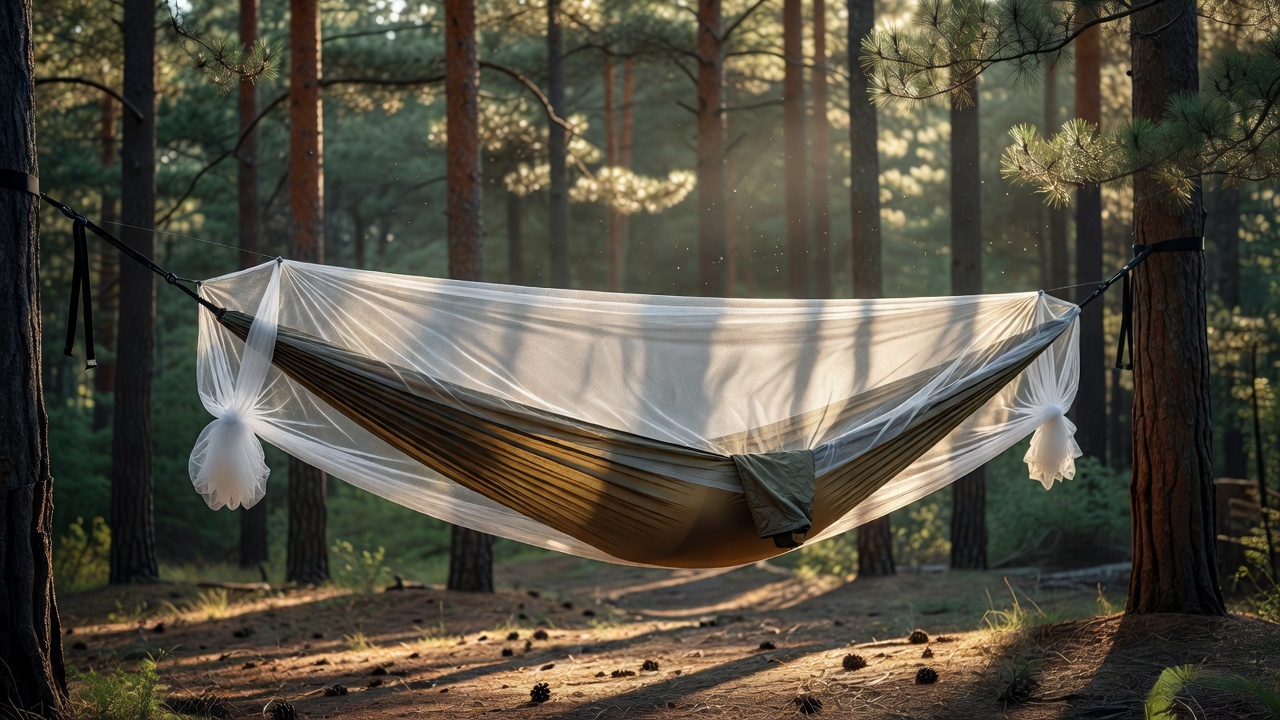
Hammock bug net if you sleep between trees: Hammocks are the most exposed sleep system there is — you're hanging in the buggiest layer of the forest with zero walls. The ENO Guardian Bug Net ($39.95, 4.5★ / 4,200+ reviews) wraps an ENO SingleNest or DoubleNest in a breathable SkyWeave mesh cocoon with a bottom cinch that seals completely, even with a pad or underquilt inside. It's the hammock-specific version of a tent's mesh inner. On a tighter budget, the Wise Owl Outfitters Hammock Bug Net ($27.99, 4.7★ / 3,700+ reviews) is universal-fit with a double-sided zipper, so it works with a gathered-end hammock from any brand — and its ripstop mesh blocks gnats and no-see-ums, not just mosquitoes. Neither includes a tarp, so pair one with overhead rain protection.
Headlamp for bug-hour navigation: The Petzl ACTIK CORE ($79.95) has a red light mode that doesn't attract bugs the way white light does. When you need to find something in your tent after dark, switching to red means you're not inviting every mosquito in a 50-foot radius to land on your face. The 650-lumen white beam also makes tick checks possible — you cannot spot a deer tick nymph (the size of a poppy seed) by lantern light.
Water filter that keeps you away from buggy water sources: The Sawyer Squeeze ($35.97) filters fast enough that you spend 60 seconds at the water's edge instead of 10 minutes pumping. Less time at the buggiest spot in camp = fewer bites. This is one of those second-order benefits nobody mentions in product descriptions.
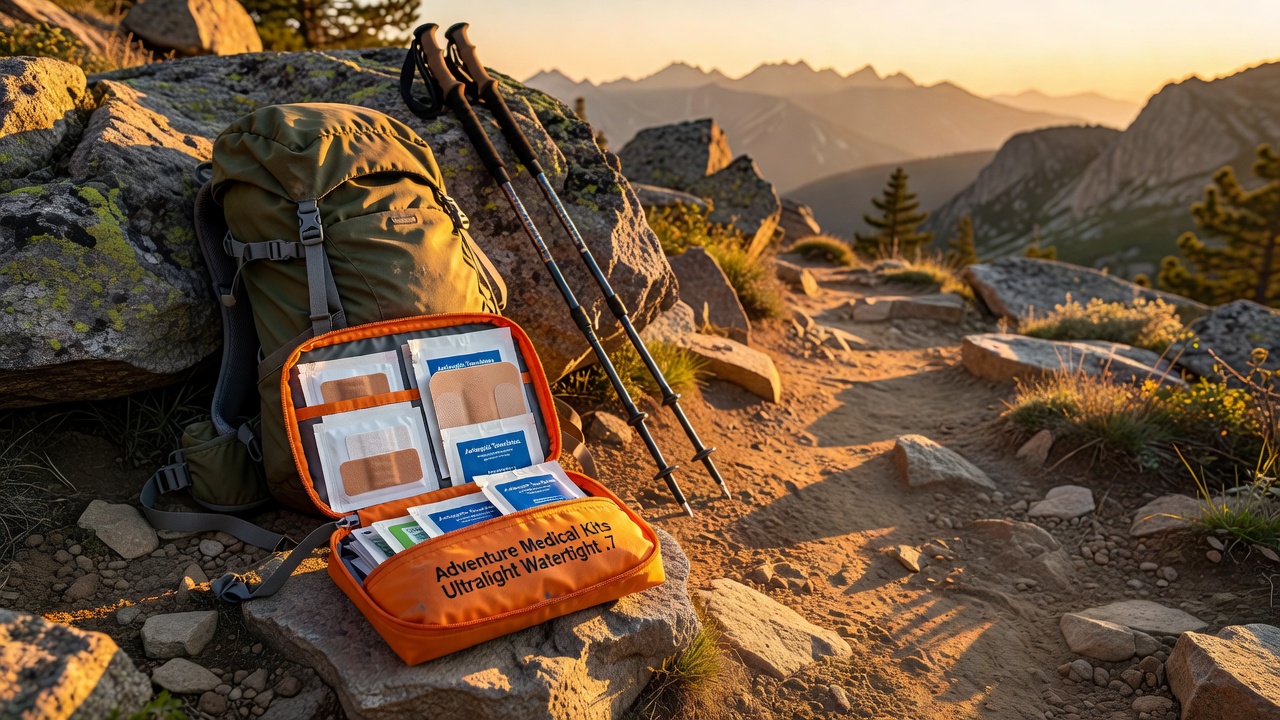
First aid kit with bite treatment: The Adventure Medical Kits Ultralight .7 ($44.95) includes antihistamine tablets and sting relief wipes — because even the best protection system isn't perfect, and one yellow-jacket sting at hour two of a three-day trip can ruin everything if you can't treat it.
Hiking boots that seal out ticks: Merrell Moab 3 Hiking Boots ($89.99) and KEEN Targhee 3 ($130.00) both have high ankle collars and dense uppers that ticks cannot penetrate. Trail runners are lighter and cooler, but they leave your ankles exposed. In tick country, boots win.
The 60-Second Tick Check Routine
Every night before you get in your sleeping bag, do this:
- Shoes and socks off. Check between toes, around ankles.
- Waistband and belt line. Ticks climb up and stop where clothing is tight.
- Armpits and behind knees. Warm, dark, moist — tick heaven.
- Hairline and behind ears. Use your headlamp. Have someone else check if possible.
- Gear shake-out. Shake your boots upside down. Check pack straps and hip belt.
A deer tick needs 24-36 hours attached to transmit Lyme disease. If you do this check every night, you catch them before they've had time.
If you do find one attached, remove it properly. Do not grab tweezers, do not apply petroleum jelly, and do not burn it — all three squeeze or irritate the tick into regurgitating infected fluids back into the bite, which is exactly the outcome you're trying to avoid. The HomeSake Tick Remover ($14.39, 4.6★ / 5,800+ reviews) is a slotted plastic tool that slides under the tick's body and lifts the whole thing out on a twist, without compressing the abdomen. The three-pack comes in two sizes, so one lives in the car, one in the pack, and one at home — and the small one works on a dog's shoulder as well as a human ankle. Keep it in the same pocket as your first aid kit, because the moment you need it is the moment you do not want to be searching.

Common Bug Protection Mistakes
- Spraying repellent on like perfume. You need to coat exposed skin evenly. A quick spritz on the front of your shirt does nothing for your neck and ears.
- Forgetting to reapply after swimming or sweating. Picaridin lasts 8 hours — on dry skin. If you jump in a lake, reapply.
- Wearing dark colors. Mosquitoes are visually attracted to dark clothing. Light tan, khaki, and light grey are better.
- Using scented deodorant or lotion before bed. You're basically seasoning yourself. Unscented everything at camp.
- Leaving tent doors open "just for a second." That second is all six mosquitoes need. Zip in, zip out, always.
Tents Worth Considering for Bug Season
The Coleman Skydome 4-Person Tent ($121.99) has nearly floor-to-ceiling mesh panels and a full rainfly that creates a vestibule — a bug-free gear storage zone outside your sleeping area. The mesh is fine enough to stop no-see-ums, which is the real test. At 16.5 lbs it's a car-camping tent, not a backpacking shelter, but for family trips where bug protection matters more than weight, it's the right tool.
For more tent options across sizes and budgets, our camping tent size guide covers everything from solo backpacking shelters to 8-person family domes — including which sizes have the best mesh-to-fabric ratios for ventilation and bug defense.
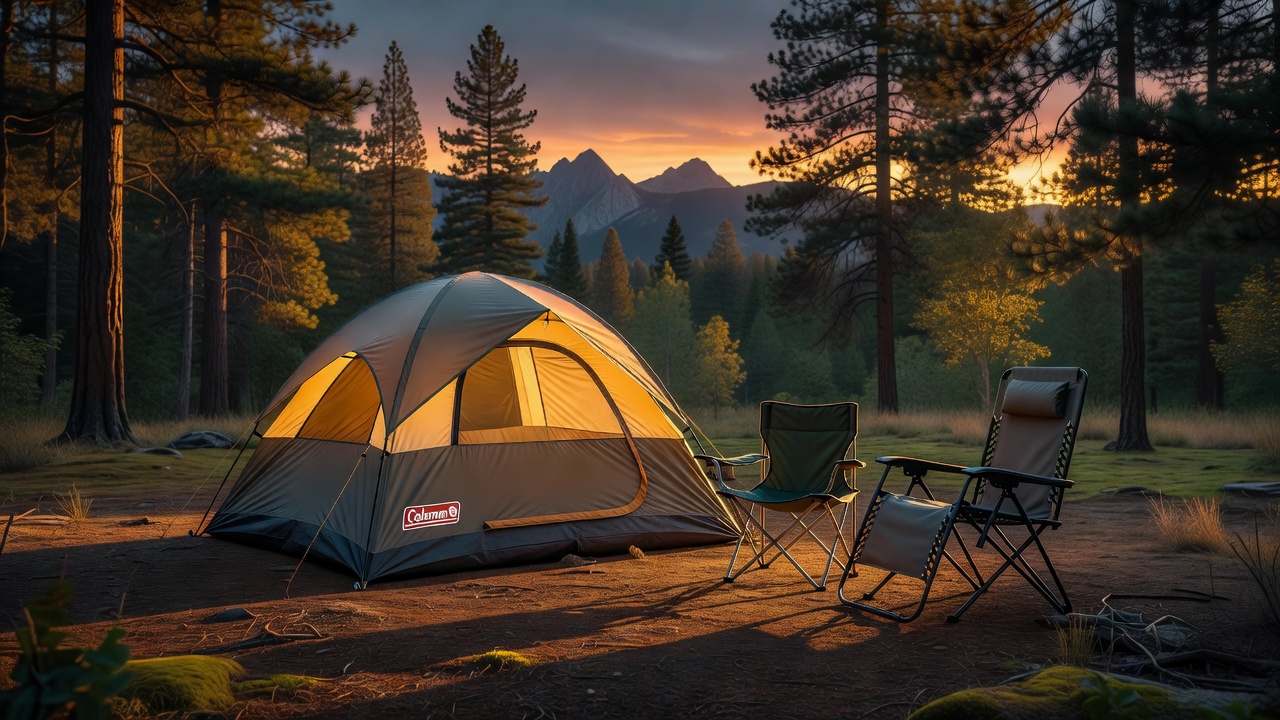
What This System Looks Like on a Real Trip
Here's how the four layers stack in practice on a summer weekend:
- Friday 4 PM: Arrive, pick the high-ground site 300 feet from the pond. Clear leaf litter around the tent pad. Change into long pants and long sleeves.
- 5 PM: Apply OFF! Picaridin to exposed skin — face, neck, hands, ankles. Pitch the Skydome, keep doors zipped.
- 7 PM (bug hour): Everyone inside the tent or fully covered. Red headlamp mode on the Petzl. Reapply repellent on hands and face after dinner.
- 10 PM: Tick check for everyone. Boots upside down outside the tent.
- Saturday morning: Reapply repellent before the day hike. Permethrin-treated socks and pants in tick country.
- Saturday evening: Same routine. Bug hour discipline is what separates the mosquito-bitten from the comfortable.
This isn't complicated. It's just consistent. And the payoff is waking up to coffee and a sunrise instead of scratching your ankles and wondering why you do this to yourself.
Now go camp somewhere the bugs can't find you.
No-see-ums are the real adversary on a Florida coastal campsite, and our Camping in Florida guide covers the repellent layering and screen-shelter setup that gets families through a Gulf evening.
Are Ticks Active in October? Fall Tick Season Explained
Fall is not the end of tick season — it is the second peak. Adult black-legged (deer) ticks emerge hungry in cool weather, and the cooler the air, the more time they spend questing on grass tips instead of hiding from heat. The most common search of the season lands on this page every year: are ticks active in october? Yes, and in most of the country October is a heavier month for adult ticks than July is.
Here is how the fall window actually behaves:
- Early October is the overlap month. Nymphs have mostly finished, adults have started, and daytime highs still pull people into shorts and trail shoes — which is exactly the exposure pattern that produces bites. If you are asking are ticks active in late october in the Northeast or Upper Midwest, the answer is yes and they are frequently host-seeking on warm afternoons after a cold night.
- Late October through November is the adult-tick push. Many campers assume the risk is gone, then find a tick after a leaf-crunching hike. Questions like are ticks bad in october and are ticks out in october get asked because people were surprised, not because people saw nothing.
- Leaf litter is the habitat. Adult ticks overwinter in the duff under hardwood canopies. That is why ticks in fall leaves is the single best natural clue: if you are kneeling to pack a tent or sitting on the forest floor collecting firewood, you are sitting inside their season.
- Cold does not kill them — snow insulates them. The ticks active in fall window continues right up to a hard freeze, and on snow-melt days in warmer states you can still find them crawling. Ticks in the fall season effectively runs until the ground is locked up, and in mild climates it never really stops.
- Adults are the ones you feel later. As for baby ticks in fall, the larval stage (seed ticks) peaks in late summer and has mostly dropped off by October, while the adults you meet in ticks in fall weather are large enough to see, which is good news. A visual check actually works in the fall the way it does not in June.
A blunt verdict on the season: treat every mild day from September through December as tick weather. The phrases ticks out in fall and ticks worse in fall both point at the same mechanic — adults ambushing mammal trails before winter — and ticks in the fall season is the phrase to search when you want the state-by-state version below.
The question most people type is what months are ticks active — and in the continental US, the reliable answer is March through November with activity in every month that the ground is not frozen, plus a January thaw bump. The peak shape differs by region: North and Upper Midwest peak in October–November, the Southeast peaks in spring and again in fall, and the Southwest peaks with its monsoon moisture. If you are specifically asking are deer ticks active in october, black-legged adults are the ones that matter most, because they are the Lyme vector and they are the ones still hunting in October.
Two location-specific versions of the question show up constantly:
- are ticks active in october in virginia — yes. Virginia's two-year black-legged life cycle plus mild autumns means adult activity through November, with the Blue Ridge and Shenandoah area the classic October exposure zone.
- are ticks active in maine in october — yes, and emphatically so. Maine's adult deer-tick season is often described as October into December, and the state's own public health messaging treats fall as the higher-risk adult season.
The camp-level fix: pick campsites away from the duff line, never sit directly on leaf litter, and run a head-to-ankle check before you get in the sleeping bag. Fall's saving grace is that the ticks you meet are big enough that a two-minute look works.
Tick Removal: Tools, Kits, and the Method That Works
You will not out-plan a tick on every trip, so the kit matters more than the knowledge. The single most-searched fall question in this section is tick removal tool, and the honest answer is that the cheapest tool in your pack beats the cleverest one you left at home.
The gear tier list:
- A dedicated tick removal tool is a pair of slotted plastic levers that seat under the tick's body and lift straight up. Small, sub-ounce, and the safest option for a hand that is trembling in a tent at night. A dedicated tick removal kit typically pairs that tool with a magnifier and an antiseptic wipe — genuinely worth keeping in the first-aid pouch. A 3-pack tick remover tool for dogs, cats and humans ($14.39) is the cheapest insurance you can carry.
- A tick removal device in the "twist" style (the O'Tom / spiral design) works, but it demands more coordination and correct rotation direction, which is why plain lift-scoop tools dominate.
- Tweezers: a plain pair of tick removal tweezers is the field default. Use fine-point tweezers only, grip as close to the skin as you can, pull up with steady even pressure, and never twist or squeeze the abdomen.
- It is also worth packing a tick removal tool for humans and a tick removal kit for humans separately from your dog kit — the instructions differ, the alcohol wipes get used twice as fast, and having a dedicated set avoids the "where did it go" moment.
- The tick removal dog routine needs the same tool but a different grip: dogs do not hold still, so a second person matters more than the implement. A tick removal tool for dogs with a wider slot handles an engorged tick far better than fingernails.
- The tick removal human follow-up is the other half: photograph the bite, note the date, clean with alcohol, and watch the site for 30 days.
The method, in five steps: (1) part the fur or hair and find the head, not the abdomen; (2) seat the tool between the tick's mouthparts and the skin; (3) lift straight up with slow, steady tension — no twisting, no crushing, no petroleum jelly; (4) clean the site and your hands; (5) save the tick in tape or a sealed bag if the tick was attached, so a doctor can identify species later.
What not to do: burning it, smothering it in oil, or painting it with nail polish all raise the odds that the tick regurgitates into the bite. The one reliable outcome of folk methods is a bigger immune reaction.
Tick Prevention While Hiking and Backpacking
The prevention question always arrives in the same shape: how to avoid ticks while hiking — usually typed while standing in a trailhead parking lot. The answer splits into clothing, chemistry, and habit, and the habit half is free.
Clothing does most of the work. Light-colored long pants and a tucked-in shirt are the highest-return change most people never make. For tick repellent hiking clothes, the premium version is permethrin built into the fabric, but the free version — long sleeves, socks over pants, a hat, hair tied back — covers most of the same ground. Choosing what to wear hiking to avoid ticks comes down to three rules: cover the ankles, cover the waistline, and give ticks nowhere dark and warm to hide.
- Choose tick repellent hiking pants in light colors (it makes the crawl visible), fitted at the ankle, and treated or at least tightly woven. Convertible zip-off hiking pants ($69.99) are popular in fall, but remember the exposed calf section is exactly where an adult tick grabs on.
- The case for tick repellent hiking socks is stronger than people expect. Ticks crawl up from the ground; a tall sock with your pant leg tucked in adds a second barrier. Merino wool hiking socks ($27.95) are the practical pick because they also manage cold-weather moisture on long days.
- Tick repellent hiking sprays for the trailhead are a backup, not a plan — apply to skin and around cuffs before you start walking, and reapply on multi-hour days.
- The tick prevention hiking habits that actually change outcomes are: staying to the center of the trail (grass on the trail edge is where ticks quest), avoiding sitting on logs and stone walls, and doing a full-body tick check at every stop longer than ten minutes.
Backpacking adds two more exposure hours. For tick prevention backpacking the risk peak is the two minutes when you kneel to cook and the ten minutes you sit on the ground filtering water. Add these three things:
- A sit pad or camp chair so you never sit directly on duff or grass.
- A night check with a headlamp — fall's big ticks are visible, and a bright light and a two-minute scan catch nearly everything. A 400-lumen waterproof headlamp with a red mode ($39.95) is the standard trail answer here.
- A morning gear shake-out. Ticks that hitch a ride onto a pack will climb onto your body later; shake the pack, the tent, and the quilt before you load up.
For dogs, the routine is nearly identical but more urgent. The answer to how to avoid ticks on dogs while hiking, and to how to avoid ticks hiking generally, is the same three-step drill: treat with a vet-recommended tick preventive, keep the dog out of tall grass and leaf litter, and check for tick prevention for dogs hiking problem zones after every outing — ears, armpits, groin, toes, and around the collar. A quick hand-run over the whole coat at the trailhead catches most of them before anybody goes in the car. The ritual for how to avoid ticks after hiking is identical for everyone: shoes off outside, hiking clothes straight into the wash, and a shower within two hours.
As for how to prevent ticks hiking without chemicals: long sleeves, tucking, light colors, and a shower within two hours of getting home. As for how to prevent ticks during hiking on wet days: assume everything is a tick trail, because questing activity rises with humidity. Search how to not get ticks while hiking and there is one honest answer — cover up and check — and how to stop ticks when hiking from crawling onto your neck is the same answer applied to your collar.
DEET vs Picaridin: Choosing a Repellent for Your Family
This is the single most-searched comparison in bug protection, and it has a genuinely short answer: for the trails most families walk, a 20% picaridin spray matches DEET on bites, smells better, and does not melt plastic. The full picture:
- deet vs picaridin — both are EPA-registered and both work. DEET has more decades of published field trials; picaridin is newer but has repeated head-to-head efficiency results at 20% concentration.
- deet vs picaridin bug spray — DEET is available from 5% to 100%; picaridin is typically 5%, 10% and 20%. Concentration buys duration, not strength.
- deet vs picaridin effectiveness — at equal practical application, 20% picaridin and roughly 20–30% DEET land in the same band against mosquitoes and ticks.
- The three practical questions people ask most — deet vs picaridin safety, deet vs picaridin health and deet vs picaridin toxicity — reduce to skin feel and gear damage: DEET is a solvent and will damage plastics, watch crystals, and coated fabrics, while picaridin is far gentler.
- deet vs picaridin for ticks — both work on ticks. Because ticks crawl for hours before biting, you do not need a long-duration formulation for a day hike, and because ticks often crawl onto clothing first, treat the fabric too.
- deet vs picaridin for mosquitoes — picaridin's edge is that it does not need to sit as heavily to work, which matters on a hot day in a family of four.
- deet vs picaridin for chiggers — DEET is still the more commonly recommended option, especially in the Southeast, where chiggers join the mosquito problem.
- For families, the child-specific comparisons — deet vs picaridin for kids, deet vs picaridin for babies and deet vs picaridin for toddlers — all land on the same rule: keep repellent off infant hands entirely, spray your palms and apply to the child's face and legs, and prefer an alcohol-free 20% picaridin spray for younger kids. Kids over two with a conventional child-safe concentration are the practical sweet spot.
- deet vs picaridin vs ir3535 — IR3535 is the third registered option, common in European formulations, with a shorter duration and a good safety record.
- deet vs picaridin vs lemon eucalyptus — Oil of Lemon Eucalyptus (OLE/PMD) is the strongest plant-derived option and genuinely works, but it is not recommended for children under three.
- deet vs picaridin vs permethrin — this is a false choice, and knowing why is what separates a good plan from an average one. DEET and picaridin go on skin; permethrin is used only on clothing, tents, and gear. You do not pick one, you use both layers.
Practical verdict: an Alcohol-Free 20% picaridin spray is the best starting point for a family, with a small DEET bottle for chigger-heavy regions and a permethrin treatment for the clothing you hike in every week. An insect repellent aerosol with 20% picaridin is a good place to start if you want a single bottle that covers skin and cuffs without the plastic-damage risk.
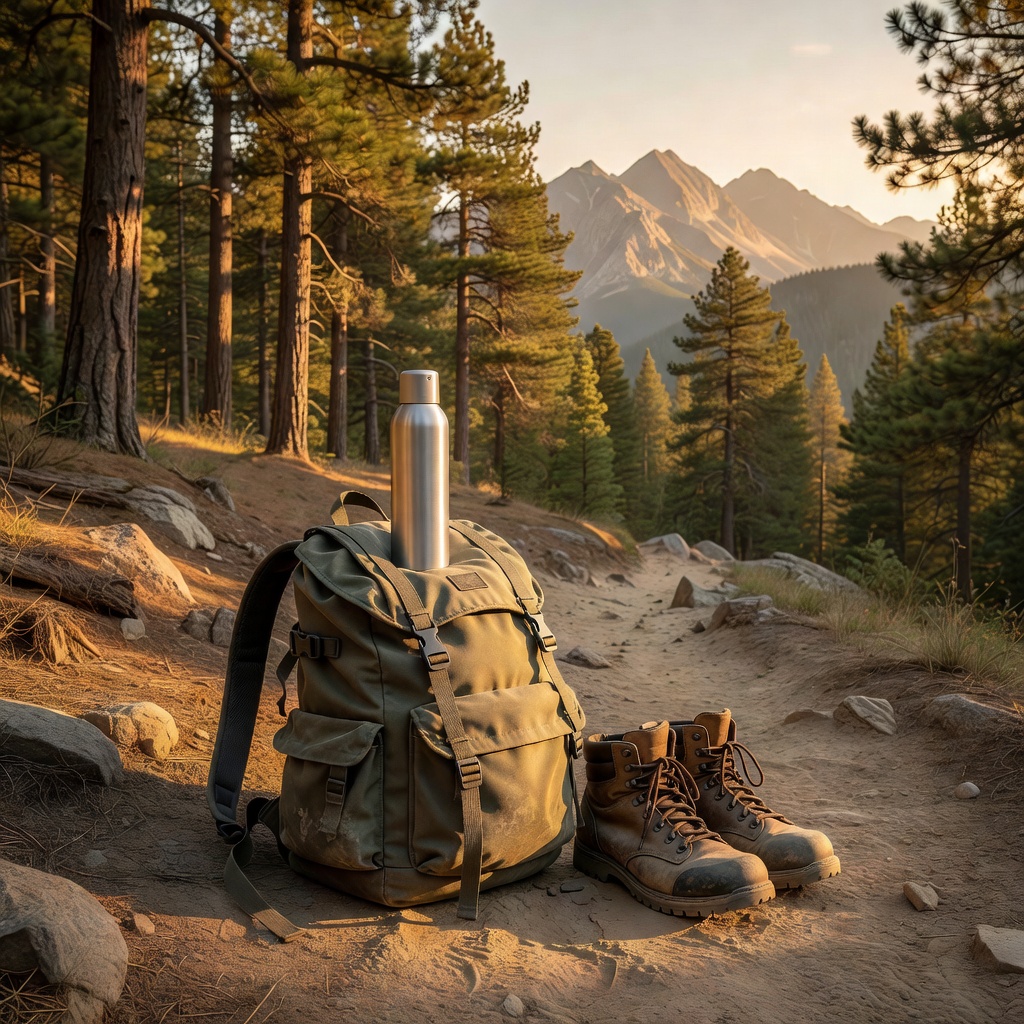
Is Permethrin Safe? Treating Clothing, Tents, and Gear
Permethrin is the piece most families skip, and it is also the one that does the most work on ticks. It is not a skin repellent — it is a contact insecticide applied to fabric, and once it is dry it stays put for weeks.
The safety questions, answered directly:
- is permethrin safe — yes, when used on fabric as directed. EPA re-evaluated it and continues to register consumer fabric treatments.
- is permethrin safe for humans — the risk case is the wet spray, not the dry fabric. Apply outdoors, let it dry fully, and wash your hands afterwards. The dried treatment on a shirt or pant leg is designed to be worn against skin.
- is permethrin safe around pets — here the answer needs a caveat: cats are far more sensitive to permethrin than dogs. Treat clothing and gear away from cats, keep treated items out of their reach while wet, and remember that dog tick preventives containing permethrin are dosed for dogs specifically.
- permethrin camping gear worth treating: hiking pants, socks, gaiters, the shirt you wear on brushy trails, and the outside of a hammock or the tent floor edge.
- permethrin camping spray comes as a concentrated soak or a ready-to-use aerosol. The aerosol version is the easiest starting point for one or two items; the soak version is what you want before a season.
- permethrin for camping gear also covers pack straps, the dog's harness or pack, and a camp chair — any surface that spends the day on the ground.
- permethrin spray for camping gear guidance: one treatment typically holds through several washes, and UV slowly degrades it, so re-treat at the start of a season and after heavy laundry cycles.
- can you spray permethrin on a tent? You can treat tent walls and floor edges, but do it in a well-ventilated space, keep it off the inside of the sleeping area you lie on, and let the tent dry completely before packing it. Many families simply treat the footprint and the groundsheet-adjacent zone instead.
The layered plan, in one sentence: picaridin or DEET on skin, permethrin on fabric, and a physical barrier between your ankles and the grass. Treated clothing is also why long pants do more for tick prevention than any single spray. If you want a treated-adjacent garment with zero chemistry, tightly woven light-colored convertible pants with the leg zipped down are the next best thing.
Best Bug Spray and Repellent Choices for Camping
Nobody searches for "the ideal repellent" — they search for the best one to put in a tote. So here is the shortlist, organized by decision rather than by brand.
- best bug spray camping — a 20% picaridin aerosol is the best all-rounder: it works on mosquitoes and ticks, does not melt gear, and is easy to share. An alcohol-free insect repellent aerosol with 20% picaridin ($11.99) is the specific version to look for if you want one bottle for the whole trip.
- best bug repellent camping — if you want the single most reliable product on the shelf, look for the 20% picaridin tier first and the 25–30% DEET tier second. Both are proven.
- good bug spray for camping means it survives a hot afternoon and a water bottle spill in the tote — that is a formulation question, not a brand question.
- the best bug repellent for camping for a family with young kids is usually the milder picaridin spray applied to your palms rather than to a squirming child. A naturally derived option like an oil-of-lemon-eucalyptus spray is the next tier up for kids over three.
- best mosquito repellent camping for a person who hates the smell of bug spray is the same 20% picaridin, applied sparely to ankles, wrists and neck.
- best bug spray for backcountry camping leans toward higher concentrations and longer duration, because you are applying once and walking for six hours.
- best bug spray for camping and hiking has to do double duty: durable enough for a sweaty hike, gentle enough that a toddler can sit next to you at dinner.
- best bug repellent for kids camping — spray your own hands and apply to their exposed skin, skip their hands entirely, and never apply under clothing.
- best bug repellent for camping outdoor and bug repellent for campsite both point to the same setup: one pump spray for skin, one larger aerosol for the tent surround and the picnic table zone.
- bug repellent for camp as a category includes bracelets, wipes, lotions and lantern bulbs — treat the non-DEET/non-picaridin formats as supplements, never as your primary layer.
- bug repellent while camping for a dog: dogs need their own product, and many families prefer a natural oil-of-lemon-eucalyptus skin spray formulated for pets rather than human DEET.
- best bug spray for kids camping and mosquito spray camping are the same purchase most of the time — a mild 10–20% picaridin, with the aerosol held a foot away from the child and applied to your hand first.
- camping bug repellent spray should also include a treated-fabric line in the plan: the spray protects skin, the treatment protects the clothes, and the two together are what make an evening at the picnic table pleasant.
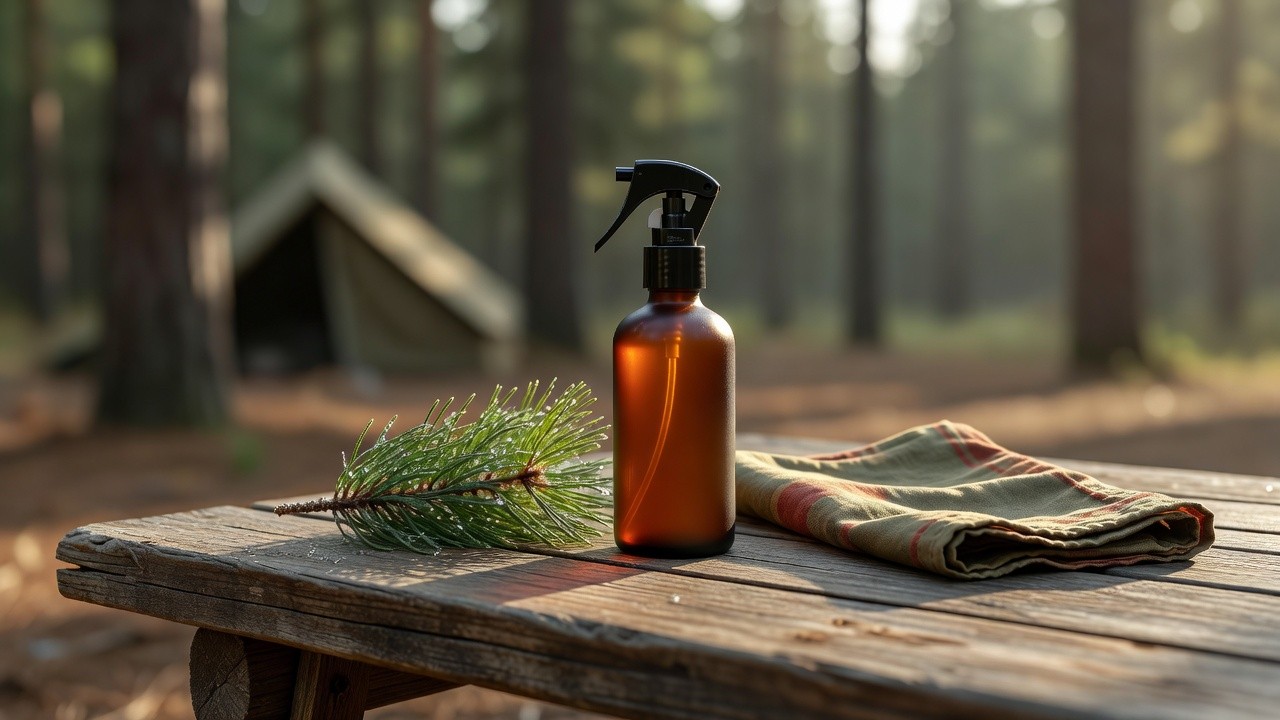
Natural and Homemade Mosquito Repellents for Camp
Natural options are not weaker by definition — the best-known plant-derived repellent, oil of lemon eucalyptus, has real field evidence behind it. The trick is knowing which natural claims survive contact with a humid evening.
- best natural mosquito repellent for camping — an oil-of-lemon-eucalyptus skin spray is the one to reach for. A natural mosquito and tick repellent spray in the OLE family ($28.49) is a good benchmark product; it smells like citrus, works on ticks as well as mosquitoes, and is a fair choice for adults and kids over three.
- natural mosquito repellent for campsite is a different job than skin repellent. Around the table and tent door, a citronella-and-lantern setup, a fan, and good screen discipline beat any topical product.
- natural bug repellent camping and natural bug repellent while camping — always reapply sooner than you would with a conventional spray, especially after swimming or a sweaty climb.
- natural mosquito repellent home remedies — many of the popular ones are pleasant, some are effective, a few attract bees, and a handful are genuinely bad ideas (anything you drink, and anything applied to an infant's skin).
- homemade mosquito repellent for camping — the only homemade blends with real support use a carrier oil plus a proven active, diluted to a documented ratio. That is also why homemade non toxic mosquito repellent and homemade bug repellent for camping are best measured against a store-bought OLE product rather than against folklore.
- natural mosquito repellent camping for a full evening around a fire: treat skin early, place a fan at the table, cover ankles with socks, and keep the tent door closed between entries.
- natural way to keep bugs away when camping is mostly environmental, and it is the cheapest win available: move off stagnant water, stay out of the wind-shadow behind the tent, and eat slightly upwind of the fire.
Truthful summary: the natural shelf wins on skin feel and lost-ground wins on nothing else. If you are in a tick zone in October, use a registered active — plant-derived OLE or picnic-grade picaridin — and reapply on time.
Mosquito Nets, Screens, and Bug Net Setups
A net is the one piece of gear that changes the character of a fall camping trip: dinner is bearable, and the tent door can stay open on a warm evening. The category is broader than people expect.
- mosquito net camping setups fall into three families: sleeping systems, sitting systems, and shelters.
- mosquito net camping canopy — a pop-up canopy with drop-down mesh turns a picnic table into a usable room. Best value for a family on a warm evening.
- mosquito net camping chair and mosquito net camping cot — small dedicated nets that drop over a chair or a cot, ideal for a nap or a book at dusk.
- mosquito net camping cot cover — the full-coverage version; useful in the Southeast where evening mosquitoes are relentless.
- mosquito net camping gazebo — the big version of the canopy concept; great for a group site, less fun to pack.
- mosquito net camping hammock — for solo and duo trips, a hammock with an integrated net is lighter and quicker than a tent, and the net makes it genuinely sleepable. Two catalog standouts here are the full-coverage hammock bug net ($39.95) and the lighter hammock mosquito net ($27.99) for shorter hangs.
- mosquito net camping tent and mosquito net for camping tent — a net hung over the sleeping bag inside a tent without mesh doors. This is the classic fall solution for that old canvas or screen-less family tent, and it is also the cheapest upgrade.
- mosquito mesh camping materials: look for a fine mesh (higher holes-per-inch) if no-see-ums or midges are local.
- mosquito screen camping for a screen-house feel — mesh panels, screen doors, and clip-on screens.
- insect net camping is often the same product listed under a different name; check the dimensions before buying, since net sizing is where most returns happen.
- bug net camping and bug net camping tent — the sleeping-bag-over-bag version is the most popular single purchase every fall.
- bug net camping chair — a net with a chair is the smallest possible bug-free zone, and it is the one most people end up actually using.
- pop up mosquito net tent for camping — the fastest to deploy; good for kids who want to read after dark.
- camping tent with mosquito net — dual-layer tents have this built in; if your tent has only one door and no mesh, add a net rather than replacing the tent.
- best hammock with mosquito net tent for camping for a light-travel setup: an integrated-net hammock plus a rain tarp covers sleep, shade, and rain in under four pounds.
The one rule that makes any net work: a net only seals when it is tucked or suspended away from your skin. Mesh that touches an arm is an open doorway. Also, inspect the net at camp — a hole the size of a pencil eraser is enough for a mosquito to find, and a strip of repair tape in the patch kit closes it in ten seconds.
Camping Bug Control Devices: Lanterns, Lights, and Traps
The device aisle is where hope beats evidence, so here is what each format is actually good for.
- bug repellent camping lantern and bug repellent camping light — most of these are ordinary lanterns that emit a warmer, less attractive light frequency. They reduce the number of insects that arrive; they do not clear a campsite.
- insect repellent camping light — same category, usually sold with a small clip. Useful around a picnic table, not useful as a body protector.
- mosquito repellent camping light, mosquito repellent camping lamp and mosquito repellent camping lantern — all three are variations on the lantern-plus-citronella idea. Light is genuinely one of the more useful camping bug control tools because it changes where insects aggregate. A warm, dimmable lantern — like this compact 200-lumen dimmable camping lantern ($24.95) — keeps the halo over the table instead of over your head, and a multicolor 4-pack of lanterns ($23.99) covers a whole group site for the price of one premium light.
- mosquito repellent camping thermacell and camping bug repellent thermacell — a butane-powered heated mat that creates a repellent zone. This is the format with the strongest field reputation for a small perimeter — under a picnic table or at the tent door — and it works best in still air.
- camping bug repellent candle — citronella candles smell pleasant and add ambience, but a breeze erases the benefit. Place several around the table perimeter, not one in the middle.
- camping bug repellent device — the widest category, from ultrasonic plug-ins (skip these — no meaningful evidence) to thermacell-style zoners (effective) to clip-on fans (effective by airflow).
- camping bug repellent light for a tent vestibule: a dim amber lantern, door zipped, net closed.
- mosquito killer camping lamp, mosquito killer camping light, and mosquito killer camping traps — zappers and UV traps kill insects indiscriminately, including moths and beneficial insects, and usually do not reduce biting mosquitoes in an open campsite. Treat them as a nice campsite light, not as protection.
- mosquito control camping that actually works is a stack: airflow (a small fan), a perimeter zone (thermacell-style mat or citronella ring), and personal repellent on ankles and wrists.
Where devices earn their place: airflow and perimeter control beat gadgets every time. A rechargeable 3-in-1 camping fan with LED lantern ($29.98) at the table moves enough air that mosquitoes struggle to land, and it doubles as the tent's condensation fighter on a cold night.
Keeping Bugs Out of the Campsite, Tent, and Car
This is the section that saves the trip, because the question almost everyone types at 9pm is how to keep mosquitoes away camping — after the bites, not before.
Around the campsite:
- how to keep bugs away camping and how to keep bugs away while camping — site selection first. Move away from standing water and marshy ground, prefer a breezy rise over a sheltered hollow, and stay away from the wind-shadow directly behind the tent.
- how to keep bugs away from campsite — clear clutter. Coolers with sticky handles, open food bags, and a damp dish bin are all insect magnets. Wipe the table after every meal.
- how to keep bugs away from camping tent — keep the door closed, never eat inside, and pitch on open ground rather than directly under a leafy canopy.
- how to keep mosquitoes away campsite — fan, perimeter zone, and personal spray. The first two shrink the population; the third protects the person.
- how to keep insects away while camping and how to keep insects away when camping — treat the tent screen, treat the groundsheet edge, and hang a net over the bed if the tent is old.
- how to get rid of bugs while camping without chemistry — air movement, light discipline (no bright white light at face height), and dry ground.
- how to avoid bugs when camping and how to avoid bug bites while camping — timing beats everything: mosquitoes peak in the hour around dusk, so plan dinner slightly early or eat under a screen.
- how to keep bugs off while camping in the hammock: integrated net, underquilt not touching the net, and a headlamp for the entry check.
- how to keep bugs off dogs while camping — a vet-recommended topical, a light-colored bandana, and a bed off the bare ground. Chiggers and ticks bother dogs at ground level more than the evening mosquitoes do.
- camping bug prevention, bug prevention camping, camping bug control, bug protection camping and camping bug protection all reduce to the same four layers this guide opened with — chemistry, barrier, site, gear. There is no fifth trick.
In the car:
- how to keep bugs out car camping — the car is where bugs win. Park away from the water's edge with the windows up, keep a mesh window sock on the cracked window you sleep beside, and shake out anything that lives in the trunk before you pack it into the tent.
- A bug net camping clipped over a cracked window, or a strip of magnetic mesh screen, is the cheapest fix for a hot night in a hatchback.
- Never leave a lit lantern inside a car with the doors open at dusk. You will spend the morning vacuuming.
The dinner-hour rule that beats every product: cook and eat upwind of your sleeping area, close the cooler, and move the plates before the second wave arrives. Then do the ankle check, zip the net, and let the lantern do the rest.
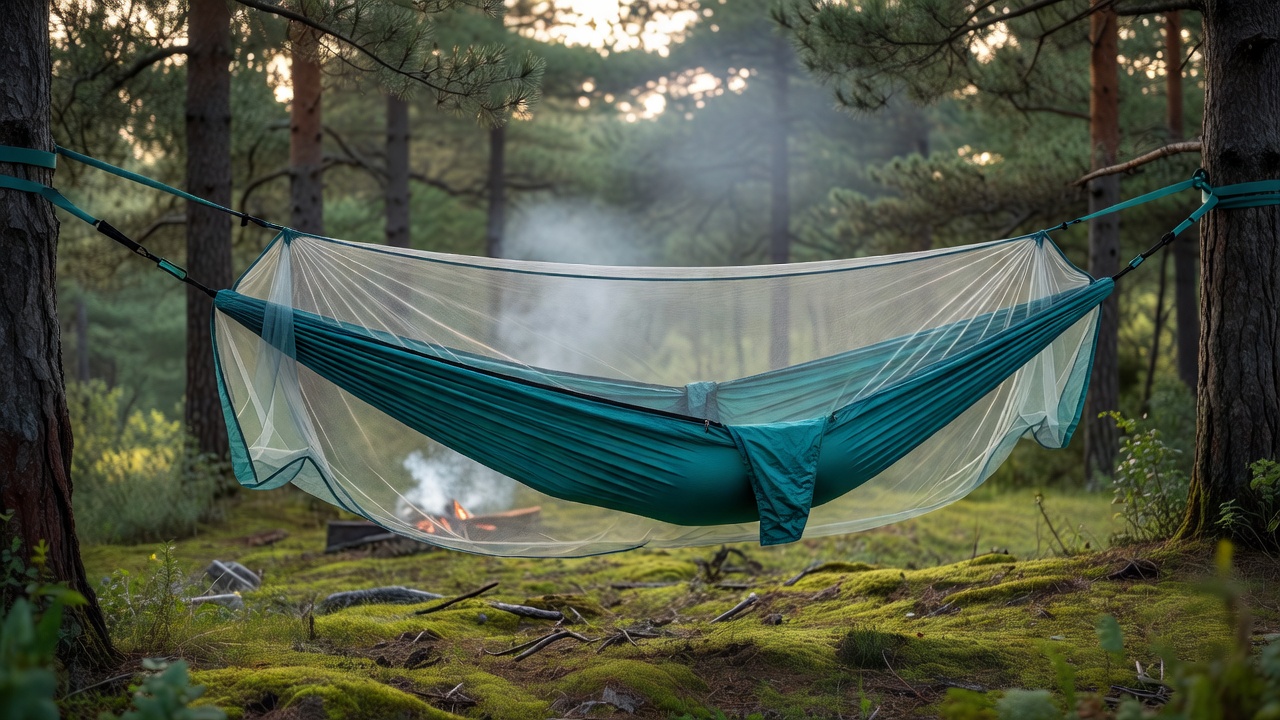
Mosquito Season and Tick Season by State
Season length is regional, and the difference between two states can be three months. The tables below are the shorthand version; the notes underneath are the parts that change how you pack.
Mosquito season, roughly:
- mosquito season in florida — year-round in the south, with a June–September peak and a notable second push after late-summer rain.
- mosquito season in texas — March through November, peaking May–September; the Gulf coast runs longer than the Hill Country.
- mosquito season in california — April through October in inland valleys; mosquito season san diego stretches further because of coastal humidity, and mosquito season in arizona and mosquito season phoenix follow the monsoon, which means a sharp July–September peak rather than a long slow season.
- mosquito season georgia, mosquito season north carolina and mosquito season in north carolina — late March through October, with a humid late-summer maximum.
- mosquito season michigan, mosquito season minnesota and mosquito season in alaska — short and ferocious: June through August, with Alaska's peak compressed into a few weeks of near-continuous daylight.
- mosquito season maine — late May through September; the north woods hold water longer than the coast.
- mosquito season nyc and mosquito season chicago — May through September, driven as much by the urban pond system as by temperature.
Tick season, roughly:
- tick season arizona — spring and a fall push; the Southwest pattern tracks moisture, not calendar.
- tick season california, tick season in california — year-round along the coast, with spring and late-fall peaks inland.
- tick season in colorado — April through July in the foothills, plus a fall adult window at lower elevations.
- tick season in kentucky, tick season missouri and tick season tennessee — long spring seasons with a genuine fall rebound; the Southeast's lone-star ticks are active well into November.
- tick season maine and tick season michigan — the most important entries on this page for fall camping. Adult black-legged ticks in both states are strongest in October and November, and Maine's coastal deer-tick pressure lasts into early winter.
- tick season in minnesota and tick season wisconsin — May through July for nymphs, then an adult wave from late September to first snow.
- tick season north carolina, tick season nc and tick season in virginia — spring and fall peaks, with the Blue Ridge fall window matching the leaf season almost exactly.
- tick season virginia in the mountains, in practice, means you should do a tick check when you do your foliage drive.
tick season 2026 note: the calendar shift of an early autumn decides which weekend is the peak. If September runs warm and dry, adult activity starts later and lands in November. If the first cold snap arrives in early October, expect one intense push right after it as ticks quest on the first mild days that follow.
How to use this without memorizing it: camp in the shoulder months, plan the check routine as a fixed habit, and treat any mild day in fall in the Northeast, Upper Midwest, or the Appalachian corridor as a tick day.
A Month-by-Month Bug Window Cheat Sheet
| Window | What is active | What to carry |
|---|---|---|
| March–April (South, Southwest) | Early mosquitoes, adult ticks | Skin repellent, long pants |
| May–June (most of the US) | Nymph ticks, first mosquito wave | Permethrin-treated clothing, net for the tent |
| July–August (everywhere) | Peak mosquito pressure, chiggers | 20% picaridin, fan, perimeter device |
| September–October (North, Upper Midwest, Appalachia) | Adult tick peak, mosquitoes fading | Repellent, light colors, nightly check |
| November–December (mild states) | Adult ticks on warm days) | Same routine, one more layer of clothing |
The takeaway line: mosquito season is the summer problem and tick season is the fall problem, and October camping sits on the seam between them. Pack for both and you will never be the person scrubbing bites at 2am.
Camping Bug Protection FAQ
What is the best mosquito repellent for camping?
For most campers, a 20% picaridin aerosol is the best all-around choice: it matches DEET against both mosquitoes and ticks, lasts 8–10 hours, and does not dissolve synthetic fabrics, rainfly coatings, or watch crystals the way DEET can. Choose DEET 30%+ only for deep backcountry travel in peak northeast tick season, where its 12+ hour persistence is worth the smell and the gear damage risk. Citronella candles and clip-on fan devices are not repellents — field testing at peak mosquito hour shows they do essentially nothing to landing rates.
Are mosquito repellent bracelets worth it for kids?
Yes, for one specific job — compliance. A DEET-free wristband on a preschooler gets protection onto a child who will not tolerate being sprayed in the face, and individually wrapped plant-oil bands stay potent for the nine you have not opened yet. Treat them as a mild supplement rather than a full system: plant-oil bands are weaker than picaridin, so for peak season or a marsh-adjacent campsite you should still have a spray layer for exposed skin. For a September trip or a backyard campout with kids, wristbands alone are often enough.
How do you remove a tick safely?
Use a slotted tick-removal tool, slide it under the tick's body so the head is captured in the slot, and twist while lifting gently — the tick releases whole without compressing its abdomen. Never use tweezers, petroleum jelly, alcohol, or a lit match: all of these irritate or squeeze the tick, which makes it regurgitate stomach contents into the bite and raises the odds of disease transmission. Clean the bite with antiseptic afterward and note the date, since a deer tick must stay attached 24–36 hours before Lyme disease transmission becomes likely.
How far from water should you camp to avoid mosquitoes?
At least 200 feet, and 400 feet is noticeably better. Mosquitoes breed in standing water and rest in shoreline vegetation, so every foot of buffer reduces local density — one field comparison between a lakeshore site and a site 300 feet up a rise produced over 100 bites versus six over the same two nights. Combine the buffer with high ground, since mosquitoes are weak fliers that a 5 mph breeze will ground, and avoid the 90-minute window around sunset near water.
What should I pack for bug protection on a fall camping trip?
Fall is peak adult tick season, so the tick layer matters more than the mosquito layer. Pack a slotted tick-removal tool, permethrin-treat your pants and socks (one application lasts 6 washes or 6 weeks), and keep doing the nightly 60-second check as long as the temperature is above freezing. Our fall camping gear checklist covers the rest of the seasonal kit, and the where to camp in October guide maps the sites where frost knocks mosquitoes down before the ticks do.
Did this guide help? Check out our complete summer camping checklist for everything else you need to pack, and our hiking for beginners guide for making your first trail day mosquito-free and fun.
Are ticks active in October in most of the US?
Yes. October is the adult tick peak across the Northeast, Upper Midwest and Appalachian corridor, and activity continues until the ground freezes. Black-legged (deer) ticks are the ones that matter most in fall because the adults are the Lyme vector, and they stay active on any mild day after a cold snap. Treat October exactly like June: long pants, a repellent, and a check before bed.
How do you remove a tick from a dog?
Use a dedicated tick removal tool with a wide slot, seat it between the tick's mouthparts and the skin, and pull straight up with slow steady pressure — never twist or crush. Check the ears, armpits, groin, toes and around the collar, since those are where ticks actually attach on dogs. Clean the site, log the date, and watch for swelling, lethargy or lameness over the following weeks.
Is DEET or picaridin better for ticks?
Both work. The practical difference is that picaridin at 20% is gentler on skin and will not damage plastics or coated fabrics, while DEET remains the more commonly recommended option in chigger-heavy regions. Because ticks crawl for hours before biting, the more valuable habit is treating your clothing with permethrin and doing a skin check, rather than chasing the strongest possible concentration.
Is permethrin safe to wear against skin?
Yes, once it is fully dry. Permethrin is a fabric treatment, not a skin repellent: the risk case is the wet aerosol, not the treated garment. Apply it outdoors and away from cats (they are far more sensitive than dogs), let the item dry completely, and wash your hands afterwards. Dry treated clothing and gear is designed to be worn and handled normally.
Do mosquito nets actually work for camping?
They do, with one condition: the net must not touch your skin. A tucked or suspended net is a sealed barrier; mesh resting on an arm is an open door. A hanging net over the sleeping bag is the cheapest fix for a tent without mesh doors, an integrated bug-net hammock covers solo trips in under four pounds, and a pop-up net over a picnic table makes a warm evening usable again.
What is the best natural mosquito repellent for camping?
Oil of lemon eucalyptus is the strongest plant-derived option with real field evidence, and it works on ticks as well as mosquitoes. It is not recommended for children under three, and it needs reapplying sooner than a conventional spray after swimming or heavy sweating. Treat every other "natural" format — bracelets, wipes, ultrasonic devices — as a supplement, never as your primary layer.
How do you keep bugs out of a tent at night?
Three habits, in order of return: never eat inside the tent, keep the door zipped between entries, and hang a net over the sleeping bags if your tent has no mesh doors. A small rechargeable fan both keeps mosquitoes from landing and fights morning condensation, and an amber lantern instead of a bright white light moves the insect halo off your face.
What do you wear hiking to avoid ticks?
Light-colored long pants with the ankles covered, socks tall enough to tuck the pant leg in, a tucked-in shirt, and hair tied back or a hat on. Light colors make a crawling tick visible before it finds skin, tucking removes the access points, and merino wool hiking socks handle both the barrier job and cold-weather moisture on a fall day. Add permethrin-treated fabric if you hike the same brushy trails every week.
When is mosquito season over?
Mosquito season ends with the first hard freeze — typically September in the far north, October in the Midwest and Northeast, and never in south Florida or the Gulf coast. The catch is the overlap: adult ticks take over in exactly the weeks mosquitoes fade, so the gear list shrinks but never empties. Late-October camping needs a repellent for daylight and a net at night, not a winter-sized kit.
Do bug repellent lanterns and lights actually work?
Partly. Lanterns and citronella candles shift where insects aggregate but do not clear an area, and UV "mosquito killer" zappers mostly kill moths. The two device formats with a real field reputation are airflow — a rechargeable fan breaks up landing patterns — and heated repellent mats, which build a small defensible zone under a table or at the tent door in still air.
<!-- AFFILIATE_DISCLOSURE -->If your fall or winter trip is heading for the Mid-Atlantic coast, the Maryland camping guide covers the cold-water wind, the off-season bathhouse situation, and the gear that actually gets used in a November cypress marsh.