4 Person vs 6 Person Tent for Families: Real Space, Rainy-Day Comfort & Smart Picks (2026)
4 person vs 6 person tent: compare real floor space and rainy-day livability, with 4P and 6P picks from Coleman, CORE, and EVER ADVANCED.
Searching 4 person vs 6 person tent for families usually means you're trying to avoid the classic family-camping mistake: buying the size printed on the box instead of the size that still feels livable after you add sleeping pads, duffels, shoes, a dog bed, and one rainy afternoon stuck inside. For most households, the real question isn't capacity on paper — it's whether your family can still move, change clothes, and stay sane when the weather turns.
I've made that mistake myself, and I've watched plenty of other campers make it too. This updated guide compares real 4P vs 6P floor space, rainy-day comfort, setup trade-offs, and the tent picks that actually make sense for couples, parents with kids, and car campers who want room to breathe in 2026. If you're also weighing specific models, start with our best family camping tents buying guide for the shortlist, then come back here for the size math. For a broader breakdown of layouts, sleeping-pad strategy, and who should size up, our complete tent size guide fills in the rest of the picture.
Quick Answer: 4-Person or 6-Person Tent?
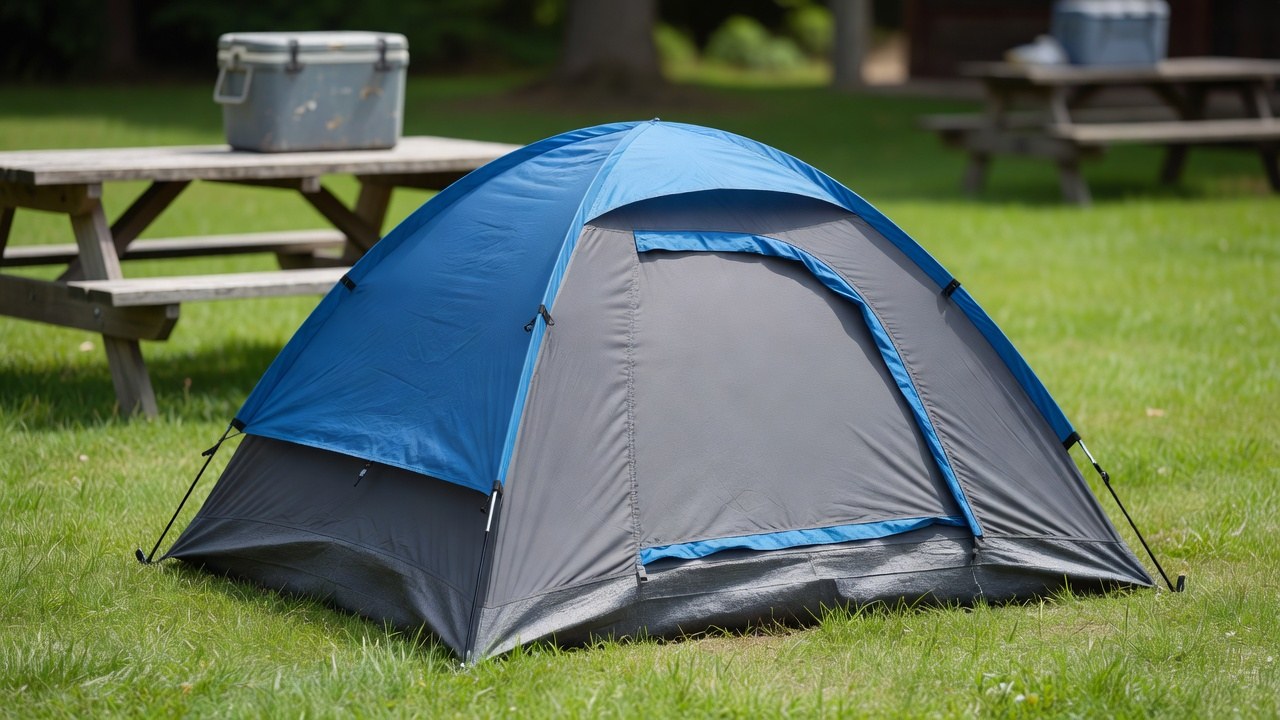
- Buy 6P if you are a family of four, car camping, or you want floor space left over after pads, duffels and a dog bed. The box number counts bodies on bare floor — the gear is extra.
- Buy 4P if it is two adults plus gear, you want a smaller footprint and a faster pitch, or you backpack.
- Cheapest workable 4P: the Amazon Basics 3-Season Dome 4-Person — $41.99.
- Best 4P for the money: the CAMEL CROWN 4-Person dome — $34.99.
- Best 6P for families: the CORE 6-Person Instant Cabin — $169.99 for 60-second setup, or the EVER ADVANCED 6-Person Blackout — $169.99 if darker mornings matter.
- One tent for six or more: the CAMPROS CP 8-Person with room divider — $159.98.
The rule that settles most arguments: on a car-camping trip, almost nobody regrets going one size up. The head-to-head math and the decision tree are below.
The Real Math: What "4-Person" and "6-Person" Actually Means
Tent manufacturers calculate capacity by sleeping pad width — and they use the narrowest pads possible. A standard 20-inch wide pad × 4 people = 80 inches. A typical 4-person tent floor is around 8 feet (96 inches) wide. That leaves 16 inches of "extra" space — roughly one backpack width for four people. Zero walking room. Zero gear storage.
A 6-person tent floor is typically 10 feet (120 inches) wide. Six 20-inch pads = 120 inches. Again, zero margin.
The rule of thumb: for comfort, divide the stated capacity by 2. A 4-person tent comfortably sleeps 2 adults with gear. A 6-person tent comfortably sleeps 3-4 adults, or a family of 4 with kids. For car camping where weight doesn't matter, always size up. If you would rather skip the arithmetic, our tent size calculator turns your group — kids, dog, air mattress and all — into the floor area you actually need.
Here's how real tents measure up:
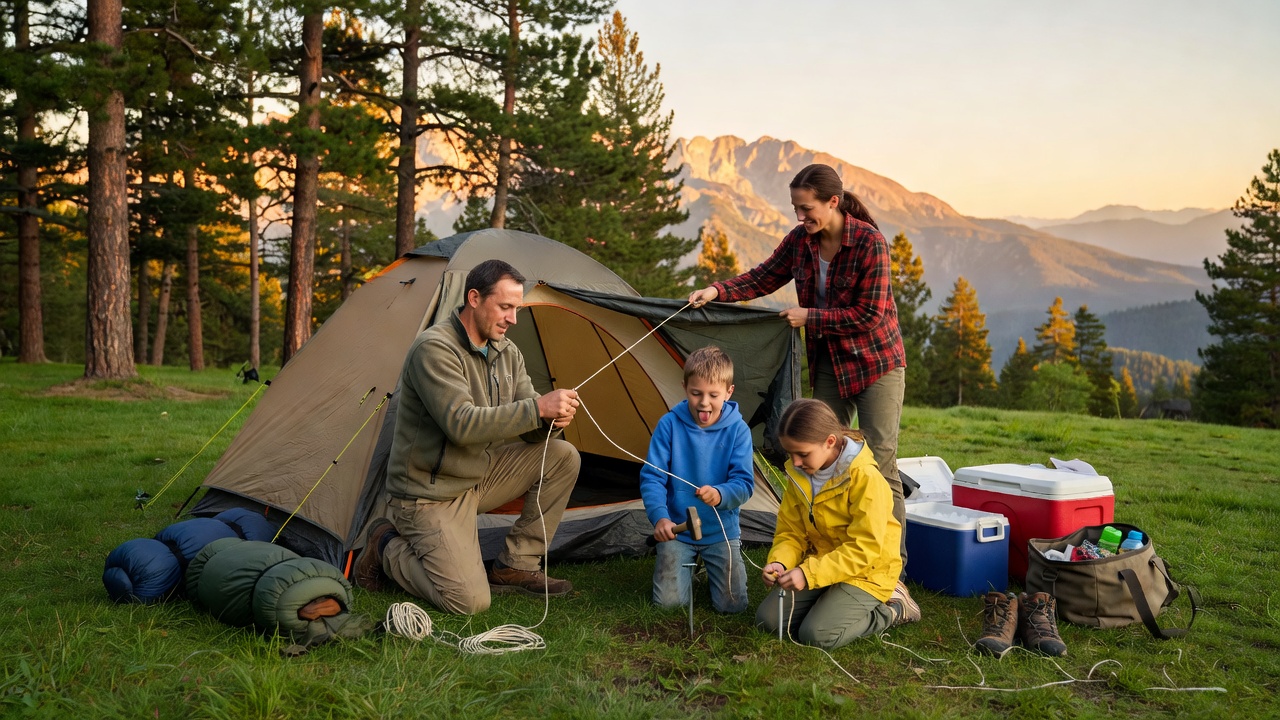
- Coleman Skydome 4-Person ($122.99): 96 × 84 inches (56 sq ft), 59-inch peak height. Fits two adults + one kid OR one queen airbed with generous gear space. The near-vertical walls make the floor feel larger than the numbers suggest.
- Amazon Basics 4-Person Dome ($41.99): 108 × 84 inches (63 sq ft), 54-inch peak. Surprisingly spacious for the price — fits two adults with gear and a small dog. The dome shape sacrifices some usable wall space compared to the Skydome's vertical design.
- CAMEL CROWN 2-5 Person Dome ($34.99): 94.5 × 82.7 inches (54 sq ft), 51-inch peak. The budget option that punches above its weight. Best as a roomy 2-person tent or a kids' tent for the backyard.
Tent Size Chart: 4-Person and 6-Person Dimensions in Feet and Meters
Dimensions are where the marketing stops and the decision starts. Every maker lists camping tent dimensions the same way — floor length × floor width, then peak height — and that is the only honest way to compare a 4-person tent with a 6-person tent. Bookmark this camping tent size chart before you shop: the gap between camping tent sizes and capacity labels is the single most expensive misunderstanding in tent shopping.
| Rated Size | Floor Length × Width | Floor Area | Peak Height | Metric |
|---|---|---|---|---|
| 1 person | 84 × 28–32 in | 20–25 sq ft | 36–42 in | 2.13 × 0.71–0.81 m |
| 2 person | 85 × 54 in (Kelty Late Start 2P) | 28–35 sq ft | 40–48 in | 2.16 × 1.37 m |
| 3 person | ~90 × 66 in | 40–50 sq ft | 44–52 in | 2.29 × 1.68 m |
| 4 person | 96 × 84 in (Coleman Skydome 4P) | 56–63 sq ft | 59 in | 2.44 × 2.13 m |
| 4 person, larger floor | 108 × 84 in (Amazon Basics 4P) | 63 sq ft | 54 in | 2.74 × 2.13 m |
| 6 person | 120 × 108 in (EVER ADVANCED 6P) | 90–99 sq ft | 72 in | 3.05 × 2.74 m |
| 8 person | ~120 × 108 in (CAMPROS CP 8P) | 120–150 sq ft | 78 in | 1.98 m peak |
| 9–10 person | 150+ sq ft (CORE 9P) | 150+ sq ft | 80–86 in | 2.03–2.18 m peak |
If you need camping tent size in meters, the conversion is the easy part: the 4 person tent dimensions above are about 2.44 × 2.13 m, and the larger-floor version is 2.74 × 2.13 m. A listing quoting 4 person tent size in cm (244 × 213 cm) is the same tent as the 96 × 84 inch Skydome. No standard 4 person tent size exists across brands — the average 4 person tent size in our own catalog runs 96 to 108 inches long by 84 inches wide, which is exactly why you should read numbers rather than labels.
Length and width are only half the story. Two tents with identical 4 person tent length and width can feel completely different: a dome loses most of its floor at the sloped edges, while an instant cabin with near-vertical walls keeps the full rectangle usable into the corners. Camping tent height is the other half — under 60 inches you cannot stand or change clothes, which is the whole reason a 6-person tent with a 72-inch center height feels like a different category of product. Camping tent length matters most for cot sleepers and tall campers; if anyone in your group is over 6 feet, start with the longest floor you can pitch on your site.
4 Person Tent Size in Feet: Why the Numbers Beat the Label
A 4-person tent is generally 8 feet by 7 feet (4 person tent size in feet of 96 × 84) while a 6-person tent is 10 feet by 9 feet — a jump from roughly 56 square feet to 90. That is not 50% more space; it is more than half again, and it is the difference between sleeping wall-to-wall on pads and having an aisle down the middle where you can actually stand up.
4-Person Tent: Who It's Really For
A 4P tent is ideal for:
Couples who want breathing room. Two adults, a double sleeping pad, two backpacks, and space to sit up and change clothes. This is the sweet spot for most car-camping couples.
Solo campers who like space. If you're camping alone but hate feeling cramped, a 4P tent gives you room for a cot, a small table, and all your gear inside.
One adult + two small kids. The kids sleep on foam pads next to you, gear goes in the vestibule. Works until the kids hit about age 10 or start wanting their own sleeping space.
Festival and weekend warriors. A 4P tent packs smaller, sets up faster, and fits on smaller tent pads at crowded campgrounds. If your trips are 1-2 nights in good weather, you don't need more.
When a 4P tent is NOT enough
- Three or more adults who aren't a couple
- Family of four with kids over 10
- Trips longer than 3 nights (gear accumulates)
- Camping with a dog over 40 pounds
- Any trip where you'll be stuck inside during rain
6-Person Tent: Worth the Extra Space
A 6P tent changes the camping experience. You're not just sleeping in it — you're living in it.
Families of 4. This is the configuration where 6P tents shine. Two adults on one side, two kids on the other, a center aisle for changing, and room for bags along the walls. Nobody climbs over anyone to use the bathroom at 3 AM.
Three to four adults. Four friends on a group trip each get their own sleeping space with room for a duffel bag at their feet. Not luxurious, but functional.
Base camp setups. If you're stationing the tent at one site for 3+ days, a 6P becomes your bedroom. You can stand up to change (most 6P tents have 6-foot peak heights), keep a small camp chair inside for rainy mornings, and store everyone's gear without tripping over it.
Two adults + two dogs. Large breeds need floor space. A 70-pound lab stretched out on a camp pad takes up as much room as a small adult.
6P tents not currently in our catalog that are worth considering:
- Coleman Instant Tent ($180 for the 6-person; the same design comes in 4/6/8/10-person sizes): Poles ship pre-attached to the fabric, so setup is unfold-extend-lock in about a minute instead of a dusk pole puzzle. WeatherTec tub floor, welded corners, and inverted seams keep ground water out, and mesh roof panels with a ground vent stop the interior turning into a sauna by sunrise. 23,000+ reviews make it the most battle-tested instant tent in this comparison. Bulk and weight are the trade-off — it is strictly a drive-in shelter.
- EVER ADVANCED 6-Person Blackout (~$170 on Amazon): 120 × 108 inches (90 sq ft) with a 72-inch peak — you can genuinely stand up and walk around. Blackout fabric, two doors, and a room divider. The weight (20+ pounds) limits it to car camping, but for family base camps it's outstanding.
How Many People Fit in a 6-Person Tent?
What size is a 6 person tent? Usually about 10 × 9 feet of floor — 90 to 99 square feet — with a 72-inch center height. That genuinely fits four adults on pads with a walkway, or four adults plus two kids sleeping head-to-toe in two rows. Four people, comfortably. Six people, only on paper.
That gap deserves restating, because a 6-person rating is a label, not a headcount. Six adults fit only if all six sleep on 20-inch pads with no duffels, no dog bed, and no margin at the walls — and nobody gets to move without waking the row. 6 person tents for camping are built for four people who want space, not six people who want to be crowded.
Is a 6 person tent too big for 2 people? Not for car camping — it is arguably the best two-person tent you can drive to a site. You get standing height, a queen airbed with room around it, a place for duffels and chairs, and somewhere to sit out a rainy afternoon. Is a 6 person tent too big for 1 person? As a bedroom, yes; as a base camp with a cot, small table, dog, and gear, it is genuinely comfortable — solo campers who hate being rained into a dome often end up here.
6 person tent waterproof claims need one caveat: the rating is about the rainfly fabric and taped seams (look for PU1500mm and above), not the size of the floor. Whatever capacity you choose, pitch with the fly fully staked out — an un-staked fly is the most common cause of a wet night in an otherwise perfectly dry tent.
4P vs 6P: Head-to-Head by Use Case
Weekend Couple's Trip → 4P
Two people, two nights, good weather. A 4P tent like the Coleman Skydome is perfect. You get room for a double sleeping setup plus gear, and the tent fits on any standard campsite pad. The Skydome's built-in LED lights are a genuinely useful feature — no more fumbling for a headlamp at 11 PM.
Family of Four, Week-Long Trip → 6P
Four people, seven days, unpredictable weather. You need a 6P. On day three when it rains from 2 PM to midnight, the extra floor space means the difference between "cozy family game time" and "everyone wants to go home." The EVER ADVANCED 6P with its two doors prevents midnight traffic jams when multiple people need bathroom trips.
Budget-Conscious Beginner → 4P
If this is your first tent and you're not sure camping will stick, start small. The CAMEL CROWN 2-5P at $34.99 is the lowest-risk entry point. If you upgrade later, it becomes the kids' tent or the loaner for friends. If you go 6P from the start, the Amazon Basics 4P at $41.99 gives you more headroom and floor space without breaking $100.
Real 6P Alternatives Already in the Catalog
If you know you want more room but you don't want to rely only on off-catalog Amazon links, there are already a few strong 6-person options on TrailMapz worth comparing side by side.
- CORE 6 Person Instant Cabin Tent ($169.99): 99 square feet, 72-inch center height, and a true 60-second instant-cabin setup. This is the easiest recommendation for families who camp more than once or twice a year and want upright comfort without a luxury-tent price tag.
- EVER ADVANCED 6 Person Blackout Tent ($169.99): one of the best picks for light-sensitive sleepers, parents with early-rising kids, and anyone who values darker mornings at camp. The blackout fabric and tall cabin profile make bad-weather hang time much more bearable.
- CAMPROS CP Dome: a value-first option to compare when you want family-sized space without jumping straight to premium features. The 8-person CP variant with room divider now has a live detail page; the CORE and EVER ADVANCED models above are the TrailMapz picks for most families.
My short version: if you camp several weekends a year, the CORE and EVER ADVANCED models are the real step-up buys. If you just need affordable sleeping capacity for occasional summer trips, CAMPROS makes more sense.
The Full Size Ladder: 2 vs 3 vs 4 vs 6 vs 8 Person Tents
Most people land on this page deciding between 4 and 6, but the capacities on either side of that decision matter too, because the same tent families are sold in every size — and one step in either direction often costs less than upgrading features inside the same capacity.
- 2 person vs 4 person tent — a 2P is a sleeping tent (85 × 54 inches in the Kelty Late Start 2P, 28–35 sq ft); a 4P is a living tent (56–63 sq ft). For two people who drive to the site, the 4P is usually the better buy. For two people who carry it uphill, the 2P wins on weight alone. Budget contrast: a Forceatt 2P runs about $57 while an ultralight NEMO Hornet OSMO 2P runs several times that for the same capacity.
- 3 person vs 4 person tent — a 3P (roughly 90 × 66 inches) fits two adults plus one kid, or two adults with real gear space. A 4P adds enough width that two adults plus a kid stop touching the walls. The 3P is the backpacking sweet spot; the 4P is the car-camping floor.
- 4 person or 6 person tent — this is the actual decision on this page. Choose the 4P when two adults (plus maybe a small dog) are the whole party, when you are pitching on a small tent pad, or when the tent also has to be carried occasionally. Choose the 6P when four people sleep inside, when someone needs to stand up to dress, or when the forecast has rain in it.
- 6 person vs 8 person tent — an 8P (120–150 sq ft, like the CAMPROS CP 8P) exists for two reasons: three-kid families who each want their own pad, and room dividers. If four people are "cozy" in your 6P, an 8P with a divider turns one crowded room into two usable ones. A 6P with a 72-inch peak is already stand-up height; the 8P buys floor, not height.
- 9–10 person tent — multi-family base camps and glamping setups, like the CORE 9 Person Instant Cabin. At this size the tent is furniture — you will not move it once pitched, and the setup usually needs two people.
Practical ladder rule: buy the size one step above the number of people who will sleep inside, then check the floor dimensions against your pads. A family of four on 25-inch-wide pads needs 100 inches of sleeping width — which is why the 6P class, not the 4P class, is the family default.
Beyond Capacity: What Else Matters
Peak Height
This is the spec that determines whether you crawl or walk. 4P tents typically peak at 48-60 inches. 6P tents hit 60-78 inches. The Coleman Skydome's near-vertical walls mean you get usable height across more of the floor — not just a point in the exact center. If anyone in your group is over 5'10", prioritize peak height above all other specs.
Number of Doors
One door in a 4P tent: annoying. One door in a 6P tent with four people: a logistics problem. Someone is getting climbed over at 3 AM. Always prefer two doors for any tent sleeping more than two people.
Vestibule Space
Tent specs list interior floor dimensions. Your shoes, muddy boots, camp chairs, and wet rain fly live in the vestibule. A tent without vestibules means all wet gear comes inside. Look for vestibules — they're the unpaid interns of the camping setup and you'll miss them when they're gone.
Setup Time
4P dome tents like the Amazon Basics go up in 5-8 minutes solo. 6P tents with multiple pole sets can take 12-20 minutes. Instant-setup designs (Coleman Skydome, Coleman Montana) use pre-attached poles and deploy in about 60 seconds. If you arrive at camp after dark, instant-setup is worth every extra dollar.
Weight
None of these are backpacking tents — you're not carrying them 10 miles. But a 6P tent at 20+ pounds is meaningfully heavier to haul from car to campsite than a 4P at 10-12 pounds. If your site is a walk-in (no car access), 4P is the practical limit.
What Size Tent for a Family of 3, 4, or 5 (Plus a Dog)?
The "right" size changes with the people count plus the gear count, not just the headcount. Here is how the ladder lands for real family shapes — and this is the question behind most family of 4 tent searches.
- Family of 3 — a 4P works if the adults share one queen pad and the kid takes the other half; a 6P is the relaxed version, with room for duffels and shoes that stay out of the sleeping zone.
- Family of 4 — a 6P is the honest answer. Four people on four pads need about 100 inches of width, and only the 6P class (120 inches) leaves room for anything else. If a family tent 4 person is all that fits your site or budget, expect it to sleep two adults plus two small kids and leave the gear in the vestibule.
- Family of 5 — a 6P in a pinch, an 8P for comfort. Three kids sharing one half of an 8P while the adults take the other, with the divider up, is a genuinely workable arrangement.
- Family of 4 with a dog — 6P minimum, 8P if the dog is over 50 pounds. A 4P stops being a family tent the moment a 60-pound dog walks in with wet fur. Our what size tent for 2 adults, 2 kids and a dog walkthrough does the dog-space math in detail, and the best tents for camping with dogs roundup covers dog-specific setups.
- Family of 4 pop-up tent — if instant setup is the priority, a pop-up 4P like the Londtren 4 Person Easy Pop Up at about $84.99 pitches in seconds and still sleeps two adults plus two kids. Pop-ups trade peak height for setup speed, so check the center height before buying.
- Family of 4 backpacking tent — here the honest answer is that a 4P backpacking tent is rare and heavy by definition. Families who actually carry their shelter split into two 2P tents (each kid carrying pads and clothes), or use the lightest 2/4-person four-season shell available, like the Naturehike Massif hot tent when cold-weather camping is the point.
Best size tent for family of 4, short version: 6P if you car camp anywhere with rain in the forecast, 4P only if two of the four are small and your gear lives outside. If you are still weighing the two, our best family tents under $200 roundup keeps every pick inside that budget.
The Phrasings People Actually Search (And the Size Each One Needs)
The same decision gets typed a dozen ways, and the answer changes with the wording. If one of these is your search, here is the size that solves it:
| If this is how you searched | What it really means | Size to buy |
|---|---|---|
| tent size for family of 4 / family of 4 tent size | four people sleeping inside, gear included | 6P |
| best family of 4 tent / family of 4 camping tent | same party, but shopping for the pick itself | 6P cabin (stand-up height), 4P only if two are small kids |
| family of 4 pop up tent | instant setup matters more than peak height | 4P pop-up, or a 6P instant cabin |
| best tent for family of 4 with dog / tent for family of 4 and dog | four people plus a dog over 50 pounds | 8P |
| what size tent for family of 3 | three people, one tent | 4P |
| what size tent for family of 5 | five people, awkward for every capacity | 8P with a room divider |
| 4 person tent size in meters / camping tent dimensions guide | you are converting units or measuring a pad | the size chart above — 2.44 × 2.13 m for a standard 4P |
| 2 person tent camping price / 2 room camping tent price | budget bands, not features | see the price bands above ($35–$155 for 4P, $40–$170 for 6P) |
| family tent 4 season | camping past October | four-season or dark-room construction, not a three-season dome |
None of these searches is a different tent. They are the same 4P-or-6P decision approached from a different angle, and the tiebreaker is always the same number: how wide is your group's sleeping pad row.
Common Tent Sizing Mistakes (I've Made Them All)
"The kids can share a sleeping bag." Kids who share a sleeping bag at home will not share one in a tent. They'll fight over the zipper, kick each other, and you'll be awake at 2 AM negotiating territorial disputes. Each person gets their own sleeping surface. Period.
"We'll store gear in the car." On night one, this works. By night three, the car is a disaster zone and everything has migrated into the tent. Account for gear creep when sizing — especially on trips longer than a weekend.
"The tent says 4-person, so it fits 4." See the math section above. If you're buying a 4P tent for four adults, I hope you all really like each other. Up-size by one tier for comfort.
"Weight doesn't matter for car camping." It does when the tent pad is 200 yards from the parking lot and you're carrying the tent, two sleeping bags, a cooler, and a toddler. Keep your setup manageable.
"I'll check the weather before buying the size." Weather forecasts change. A 4P tent that's perfect in sunshine becomes a prison cell in a 6-hour rainstorm. If your area gets unpredictable weather, size up.
"We don't need to test-setup at home." Nothing humbles you faster than trying to figure out pole configuration in the dark while your family watches. Do a backyard dry run. It takes 20 minutes and saves hours of marital strain.
How to Choose: The Decision Tree
Get a 4P tent if:
- You're 1-2 adults
- Trips are 1-3 nights
- Your campgrounds have standard-size tent pads
- You prioritize easy setup and smaller packed size
- Your budget is under $150
Get a 6P tent if:
- You're 3+ people
- Trips exceed 3 nights
- Kids are over 8 years old (they take up adult-sized floor space)
- You camp with a large dog
- You want to stand up to change clothes
- Weather in your region is unpredictable
Still not sure? Read our complete tent size guide for detailed capacity charts and more brand comparisons. If you're shopping on a budget, our best family tents under $200 roundup covers picks across both size categories. And if you already know you want family-first recommendations instead of raw size math, head to our best family camping tents buying guide for the broader shortlist.
Once you've narrowed it to two specific models, you can put them next to each other in our side-by-side compare tool — floor dimensions, price, star rating and the pros and cons of each in one table, instead of flipping between two reviews.
Pairing Your Tent with the Right Gear
A tent is just your shelter. The rest of your sleep system matters just as much.
A good sleeping pad transforms tent comfort. Our comparison of sleeping pads vs air mattresses breaks down which is right for your setup. For specific recommendations, see our best camping sleeping pads guide.
If you're camping with kids, our family camping with kids guide covers tent selection plus everything else — meal planning, activities, and the sanity-saving gear that makes family trips actually enjoyable.
For the full tent catalog including detailed specs, visit our Shelter collection.
The difference between a 4P and 6P tent is about $30-80 upfront — roughly the cost of one bad restaurant meal. But the difference in camping experience is enormous. If you're on the fence, size up. You'll never regret having extra space. You will regret every rainy afternoon stuck in a tent that's two feet too small.
<!-- AFFILIATE_DISCLOSURE -->Two-Room, Screen Room, and Vestibule Versions of a 4P or 6P Tent
Capacity is one axis; configuration is the other. The same 6-person floor is sold as a single-room dome, a two-room cabin, a screen-room hybrid, and a hot tent — and the configuration decides how the space actually gets used.
- 2 room tent camping — a room divider splits the interior into two sleeping zones, which is what keeps a big tent from turning into a gear pile. The CAMPROS CP 8P is the catalog's clearest example: divider up, kids on one side, adults on the other. The EVER ADVANCED 6P does the same trick a size down. A 2 bedroom tent camping setup is the same idea; manufacturers use "room" and "bedroom" interchangeably.
- 2 room camping tent waterproof — treat "two-room" and "waterproof" as separate checks. A divider does not help if the fly leaks: look for a PU1500mm or better coating, taped seams, and a fly that stakes out beyond the walls. Our family tent with a screen porch guide covers how the hybrid versions handle rain.
- 6 person tent with screen room — a screen room is a bug-free porch attached to the tent: table space you can eat in without sleeping next to the crumbs. It adds length (and pitch time) but removes the "outdoor gear in the sleeping area" problem entirely.
- 6 person tent with vestibule — the cheaper version of the same benefit. Two doors plus two vestibules means boots, coolers, and wet jackets stay outside the sleeping zone. For a family of four, vestibules matter more than extra floor.
- 2 room camping tent inflatable — air-beam family tents exist, but their practical benefit is speed, and instant-cabin designs deliver that with fewer failure points. A 60-second cabin like the CORE 6P is what most inflatable shoppers actually want. Interior height is where cabins beat air beams: 72 inches means you can stand.
- 4 season family tents — if you camp past October, look at four-season or dark-room designs instead of a three-season dome: the UNP 6 Person 4 Season at about $39.99 is the budget way in, the Coleman 6P Dark Room trades cold-weather structure for hot-summer heat control, and the Naturehike Massif hot tent is for real winter camping with a stove jack.
What a 4 or 6 Person Tent Actually Costs
Budget is usually the tiebreaker, so here are real catalog price bands instead of marketing ranges:
- 4 person tents: roughly $35–$155. A CAMEL CROWN 2-5P dome at about $34.99 to the Coleman Skydome 4P at $122.99 and the roomier UNP 4-Person Cabin above that.
- 6 person tents: roughly $40–$170. The UNP 6 Person 4 Season at about $39.99 is the cheapest genuinely weather-capable 6P, and the instant-cabin picks (CORE 6P, EVER ADVANCED 6P) top out near $170.
- 8 person tents: about $160 and up — an 8P at 6P money is the best value jump on this page.
- 9–10 person tents: $300 and up; buy this class only when you are hosting two families.
On "how much does a 4 person tent cost" and "cheapest family tent" searches: the price floor is genuinely low — $35–$45 gets you a waterproof 4P dome — but the money you save buys thinner fabric, fewer doors, and no vestibule. For a family that camps more than twice a year, the $115–$170 band is where the tent stops being disposable. 6 person tent sale pricing follows the season: family tents clear out as retailers move to winter stock, so late September and October are when last season's 6P cabins drop.
6 person tent costco and 6 person tent walmart listings are often the same tents we compare here under a store-specific model name — Coleman, CORE, and Ozark Trail cabin designs are near-identical across retailers. If a 6 person tent near me search is about seeing it pitched, note that floor dimensions tell you more than the showroom floor: 120 × 108 inches is a 10 × 9 foot tent in anyone's store.
"4 Person Tent" vs "6 Person Tent": Same Tent, Different Words
If you typed 4 person tent vs 6 person tent, you are already on the right page — the box just spells the label differently depending on who is selling it. "4 person," "4-person," "4 man," and "4P" all mean the same rated capacity, and so do "6 person," "6 man," and "6P." This page's title uses the shorthand 4P vs 6P; the longhand 4 person vs 6 person tent phrasing describes exactly the same comparison, and so does 4 vs 6 person tent.
| What you searched | What the listing says | What the floor actually is |
|---|---|---|
| 4 person tent, 4 man tent | "4-person," "4P," "sleeps 4" | ~50–70 sq ft, 48–72 in peak |
| 6 person tent, 6 man tent | "6-person," "6P," "family size" | ~90–120 sq ft, 72–84 in peak |
| 2 person tent, 3 person tent | "2P," "3P" | 28–50 sq ft — a couple, or a couple plus one small kid |
| 8 person tent, "large" or "big" tent | "8P," "sleeps 8" | 120–150 sq ft — two families or a big crew |
| 9–10 person tent | "9P," "10P" | 150+ sq ft — multi-family basecamp |
4 person tent vs 2 person tent is a different question from 4P vs 6P, and the answer is not "size up" — it is a category change. A 2P is a sleeping pod for two adults with almost no gear margin; a 4P is the smallest tent that behaves like a room. 4 person vs 2 person tent is really car camping versus backpacking, and 2 person tent vs 3 person tent is the same split one step down: the 3P buys you gear space, not another bed.
Coleman 4 person vs 6 person tent happens to be the cleanest version of this comparison, because Coleman builds the same silhouette in both sizes:
- 4 person tent coleman — the Coleman Skydome 4-Person at $122.99 uses near-vertical walls and a pre-attached pole set, which is why a 56-square-foot floor still feels usable. Its peak is 59 inches: you can sit up comfortably, not stand.
- 6 person tent coleman — the Coleman 6-Person Dark Room Dome at $149.99 is the same family of design one capacity up, with a dark-room fabric that blocks light and heat so kids sleep past sunrise. The peak crosses into standing height.
For 4 person tent coleman searches specifically: the Skydome is the 4P to beat in this catalog, and the only reason to move to the 6P Coleman is the +1 rule in the next sections. 4 person tents for camping at the budget end are a genuinely different tier — the Camel Crown 2–5 Person Dome starts around $34.99 — and an Ozark Trail 4 person tent is the same class of dome sold under a house brand, so compare floor dimensions rather than the badge. The phrasing runs both ways, too — a 4 person tent Ozark Trail search and an Ozark Trail 4 person tent search reach the same product, and the same holds for every brand on this page.
How Big Is a 6 Person Tent? Plain Numbers, Not the Label
How big is a 6 person tent — about 120 × 108 inches, or 90–120 square feet of floor, with a center height of 72–84 inches. How large is a 6 person tent in human terms: wide enough for two queen airbeds laid side by side with a walkway between them. And how big is a 6 man tent is the same question with the same answer, because "man" and "person" are interchangeable in tent ratings.
| Rated capacity | Typical floor area | Typical peak | 6 person tent size comparison |
|---|---|---|---|
| 1P | ~20–25 sq ft | 36–42 in | — |
| 2P | 28–35 sq ft | 40–48 in | A 6P is roughly three 2P floors |
| 3P | 40–50 sq ft | 44–52 in | — |
| 4P | 50–70 sq ft | 48–72 in | A 6P adds ~20 in of width and ~24 in of length |
| 6P | 90–120 sq ft | 72–84 in | Two queen beds plus an aisle |
| 8P | 120–150 sq ft | 78–86 in | The next step when five people sleep on pads |
| 9–10P | 150+ sq ft | 80–86 in | Two families, or one family that wants a table inside |
6 person tent size in feet: 10 × 9. That is the number to hold onto, because it is the one every listing, pad, and campsite description is secretly measured against. For the whole ladder in one place — 2P through 10P, with the same floor-area and peak-height numbers — our camping tent size guide is the companion read to this page.
Is there a standard camping tent size? No — there is a standard range, and it is the table above. Searches for standard camping tent size usually want the middle of the market: 4P at 50–70 sq ft is where most first family tents land, and 6P at 90–120 sq ft is where most families of four end up. Camping tent family size means the 4P–6P band; camping tent small size is 1P–2P; camping tent large size and camping tent big size are the 8P–10P shelf. At the far end, event-scale products — a hypothetical 100-person tent, or whatever you would rent for 40 guests — are party tents, a different category with no bearing on a weekend family setup.
A camping tent size calculator you can run in your head: (people × pad width) + aisle allowance. Standard camping pads are 20–25 inches wide. Four people on 25-inch pads need 100 inches of width, and a 6P floor is about 120 inches, so you get roughly 20 inches of aisle. Five people on the same pads need 125 inches — which is the arithmetic behind the whole family-of-five answer below. That formula is the calculator; nothing more precise is needed, because tent floors are rectangular.
Campsite tent size and campsite tent size restrictions: pads are usually sized for one family tent rather than two, and some public campgrounds limit either the pad dimensions or how many people and tents a single site may hold. A 6P footprint at 10 × 9 feet fits comfortably on the typical tent pad; a 9–10P at 150+ square feet can exceed a small one. The practical move is to compare your tent's footprint against the pad dimension printed on the reservation page before you book, rather than after you arrive.
Which Size Tent for a Family of 4 or 5? The +1 Rule, Applied
Every "best tent for family of N" search resolves to the same rule: buy one capacity above your headcount. The sections below apply it honestly, including where the rule says "actually, not this size."
Best tent for a family of 4
- Best tent for family of 4 camping — a 6P. Four people on 25-inch pads need 100 inches of width, and a 4P floor is only about 96 inches wide before anyone's gear is in the tent. A good tent for family of 4 is therefore a 6P, not the 4P the label suggests.
- Best budget tent for family of 4 — a 4P dome genuinely works while two of the four are small kids who share a pad. The Amazon Basics 4-Person Dome at $41.99 gives about 63 square feet; the UNP 4-Person Cabin at $115.99 trades a little floor for near-vertical walls.
- Best tent for family of 4 waterproof — treat "waterproof" as three separate checks: a PU1500mm-or-better coating, taped seams, and a fly that covers the body rather than just the roof. See the listing-words decoder below.
- Best tent for family of 4 and dog — the dog takes the gear zone, so this is a 6P question. If the dog is small and sleeps on its own pad, a 4P still works; past roughly 40 pounds, size up. A pop-up dog tent at $69.99 is the other option: the dog gets its own ventilated shelter and the family tent stays a family tent.
- 6 person tent for family of 4 and 6 or 8 person tent for family of 4 — 6P is right for most; go 8P only if two of the four are teens or adults who each want a full-width pad.
- 6 person tent family camping / best 6 person tent for family / best 6 person tent for family camping — the three catalog answers at this capacity are the CORE 6-Person Instant Cabin at $169.99, the EVER ADVANCED 6P blackout at $169.99, and the budget-weather-capable UNP 6 Person 4 Season at about $39.99.
Best tent for a family of 5
- Best size tent for family of 5 — an 8P. Five people on 25-inch pads need 125 inches of width, and a 6P floor is about 120 inches, so the 6P is already overrun before gear. This is the single clearest place where the +1 rule produces a non-obvious answer.
- Good tent for family of 5 / best tent for family of 5 camping / best budget tent for family of 5 — the CAMPROS CP 8-Person at $159.98 is the value pick, and its room divider is the feature that keeps five people's gear from becoming one pile. The CORE 9-Person Instant Cabin at $299.99 is the step up if two families are sharing.
- Best large tent for family of 5 — the same 8P–9P class; "large" and "8P" are the same shelf in this market.
- Best tent for family of 5 and dog — 8P or 9P. Adding a dog to five people is the one case where the budget 8P stops feeling like overkill.
- The exception: if two of the five are small children who share a pad, a 6P with a divider works, and the $39.99 UNP 6 Person 4 Season is the cheap way into that configuration. It is a real configuration, not a marketing one — but it is the tight version, and it stops working the year the kids stop sharing.
Listing Words Decoded: "Waterproof," "Pop Up," "Vestibule," "Porch," "Tall"
Most of the frustration in tent shopping comes from listing words that sound like features but are really just labels. Here is what each one changes about the 4P-versus-6P decision.
- 4 person tent waterproof / 6 person tent waterproof / best tent for family of 4 waterproof — virtually every tent in this catalog carries the word "waterproof," so the word alone does not filter anything. What matters: the PU coating rating (PU1500mm or better is the working threshold), whether the seams are taped, and whether the fly covers the walls or only the roof. A 6 person tent with full rainfly is the phrase to look for — full coverage means the side walls are protected, which is where wind-driven rain actually enters. When a fly starts wetting out after a few seasons, re-proofing it is a $19.95 job with Nikwax Tent & Gear SolarProof rather than a new tent.
- 4 person tent easy setup / 6 person tent easy setup / 4 person tent pop up — "pop up" means a pre-attached frame that springs into shape, and it is the fastest category there is. The Londtren 4-Person Pop Up at $84.99 and the Golabs 2–3 Person at $30.66 are the pop-up examples here; instant cabins like the CORE 6P and the Coleman Instant line hit the same "under two minutes" bar with conventional poles.
- 4 person tent with vestibule / 4 person tent with porch / 6 person tent with porch — a vestibule is a covered, floorless zone at the door; a porch is a full extension, usually with its own floor and often screened. Both solve the same problem — boots, coolers, and wet jackets outside the sleeping area — but a porch costs more length on the footprint and more time to pitch.
- 4 person tent with screen room — screened rooms are almost always a 6P-and-up feature, because the screens add a room's worth of material. If a screened 4P is what you want, the practical route is a 6P hybrid; our family tent with a screen porch guide covers how those handle rain.
- 4 person tent tall — "tall" is a peak-height claim, not a floor-space claim, and it is the number that decides whether you can stand. 4P peaks run 48–72 inches; 6P peaks run 72–84 inches. The 72-inch line is the one that matters, because that is where an average adult stops crouching.
Other Tent Types People Ask About for a Family of 4 or 5
These searches all contain "family of 4 or 5," but they are not all the same product. Here is which ones this comparison actually applies to.
- Best air tent for family of 4 / best air tent for family of 5 / best inflatable tent for family of 5 — air-beam family tents are real, and their selling point is speed. But if speed is the actual reason you searched, an instant cabin delivers the same benefit with fewer failure modes: a punctured beam deflates the whole structure, while a bent pole does not. That is why the CORE 6P Instant Cabin is the recommendation we would give to most inflatable shoppers.
- Best backpacking tent for family of 4 / best backpacking tent for family of 5 — this tent is close to nonexistent, and the honest answer is that it should be. Backpacking tents are sized to be carried, so the practical ceiling is a 3P; families backpack with two 2P tents, or a 2P plus a kid-sized shelter. If you want a packable family setup, the Kelty Late Start 2P at $159.95 is the value end and the Big Agnes Copper Spur HV UL2 at $549.95 is the ultralight end — and you buy two, not one bigger one.
- Best beach tent for family of 5 — that is a sun shelter, not a sleeping tent, and the two should not be compared on capacity. The Gorich Beach Tent at $49.99 is rated 3–10 person with UPF 50 protection; it is for shade at the shore, and it does not replace a 6P for overnight trips.
- Best large tent for family of 5 — the 8P–9P class: the CAMPROS CP 8P at $159.98 or the CORE 9P at $299.99.
- Best rooftop tent for family of 4 — a rooftop tent is a different purchase with different constraints: it is limited by your vehicle's roof load rating and its own footprint rather than by a "sleeps N" label, and four people usually means a large three-to-four-person model plus annex. We do not stock one here, so treat any rooftop recommendation carefully and check your roof rating first.
- Best tent trailer for family of 5 — that is a pop-up camper, not a tent, and it moves the decision into towing capacity, brake requirements, and RV-sized campsites. Different purchase entirely.
- What size bell tent for family of 4 — bell tents are sold by diameter, not by person rating, and the person ratings are generous because the walls slope inward: the usable floor at bed height is a fraction of the diameter. A 13-foot (4-meter) diameter is the size most families of four start with, and the practical check is the same as everywhere else — measure the rectangle your beds actually need and compare it against the floor at pad height, not the footprint at ground level.
Planning to heat a tent with wood instead of a radiant heater? Start with the hot tent camping guide before you buy a stove.
4-Person vs 6-Person Tent FAQ
The sizing questions that decide this purchase, answered from the numbers above.
Is a 4-person tent big enough for a family of four?
No — and this is the mistake the capacity math is designed to hide. Manufacturers calculate capacity using 20-inch sleeping pads at zero margin: a 4-person tent floor is about 96 inches wide, four 20-inch pads cover 80 inches, and you are left with roughly 16 inches for four people's gear. That is one backpack's width. The practical rule is to divide the stated capacity by two: a 4-person tent comfortably sleeps two adults with gear. A family of four needs a 6-person tent.
How much floor space do I actually get?
Real numbers make it concrete. The Amazon Basics 4-Person Dome measures 108 × 84 inches — about 63 square feet with a 54-inch peak. The Coleman Skydome 4-Person is 96 × 84 (56 sq ft) with a 59-inch peak, and its near-vertical walls make it feel larger than the square footage suggests. A 6-person tent floor typically runs about 10 feet wide, which is why the extra capacity converts into an actual center aisle rather than just more sleeping width.
Is a 6-person tent overkill for two people?
Not if you want to live in it rather than just sleep in it. The case for sizing up is a trip where you are stuck inside during rain, want standing room to change clothes, or are bringing duffels and a dog. The tradeoff is real but small for car camping: a 6P tent is heavier and slower to pitch, and weight only matters if you are carrying it. If you are driving to the site, the extra interior volume almost always wins.
How long does setup take for a 4P versus a 6P?
A 4-person dome like the Amazon Basics 4-Person Dome goes up in about 5-8 minutes solo. A 6-person tent with multiple pole sets typically takes 12-20 minutes. The exception is instant-cabin designs: the CORE 6-Person Instant Cabin Tent is built around a 60-second setup, and the Coleman Instant Tent line (sold in 4, 6, 8, and 10-person sizes) uses a pre-attached pole frame that pitches almost as fast as you can unfold it. If you arrive at camp after dark, that difference is the whole trip.
What is the best budget 4-person tent?
The Amazon Basics 4-Person Dome is the value pick — 63 square feet and a 54-inch peak for around $41.99, which is genuinely spacious for the price and fits two adults plus gear and a small dog. The CAMEL CROWN 2-5 Person Dome at about $34.99 is the cheapest option that still works, best treated as a roomy two-person tent or a kids' backyard tent. If you want near-vertical walls that make a 4P feel bigger, the Coleman Skydome 4-Person at $122.99 is the upgrade.
How many doors and vestibules do I need?
For a family, insist on two doors. A single-door tent means everyone climbs over everyone else for the 3 AM bathroom trip, and the door-side sleeper is the one who gets woken up. Vestibule space matters for the same reason: boots, wet rain jackets, and a cooler all want to live outside the sleeping area but under cover.
Is a 4-person tent enough for a couple plus a dog?
Yes, if the dog is under roughly 40 pounds and sleeps on its own pad. Past that, the dog takes up the gear space and you are back to the family-of-four problem. Larger dogs plus two adults is a 6-person configuration.
What are the real 6-person options on this site?
Beyond the CORE 6-Person Instant Cabin Tent and the EVER ADVANCED 6-person blackout tent, the CAMPROS CP 8-person dome is the next step up for families who want a room divider — it splits the interior into two sleeping zones, which is the feature that makes a big tent feel organized instead of like a garage.
What size is a 6 person tent in feet?
About 10 × 9 feet — 90 to 99 square feet of floor — with a 72-inch center height. That is roughly 120 × 108 inches, which is the number to compare against a 4-person tent's 96 × 84 inches. The extra 20 inches of width and 24 inches of length are what turn a sleeping floor into a space with an aisle.
Is a 6 person tent too big for two people?
No, and for car camping it is often the best choice for two: standing height, a queen airbed with circulation space on both sides, and room for duffels and a dog. The genuine downsides are weight (20+ pounds) and pitch time, both of which only matter if someone has to carry it. Two backpackers should be in a 2P; two drivers should not be cramped into a 4P.
What size tent do I need for a family of 5?
Plan on an 8-person tent, or a 6P if two of the five are small children who share a pad. Five people on standard 25-inch pads need 125 inches of width, which already exceeds the typical 6P floor. A room divider makes the 8P work like two rooms — three kids on one side, two adults on the other — and the same divider is the feature that keeps the space organized instead of turning into storage.
How much is a 6 person tent?
Real catalog bands, not marketing ranges: $39.99 to $169.99. The UNP 6 Person 4 Season at about $39.99 is the cheapest genuinely weather-capable 6P here, the Coleman 6-Person Dark Room sits at $149.99, and the instant cabins (CORE 6P, EVER ADVANCED 6P) top out at $169.99. The useful comparison is to the 4P band, which runs $34.99–$122.99: a 6P costs roughly $30–$50 more than the equivalent 4P, and that delta is the best value-per-square-foot jump in the whole size ladder. An 8P starts around $159.98 and a 9P runs about $299.99.
What is a good 6 person tent?
Strip the brand out and "good" means four checkable things: 90–120 square feet of floor, two doors, a full-coverage rainfly, and a 72-inch-plus peak. Two doors matter more than the extra floor for a family, and the full fly matters more than either on a wet weekend. In this catalog, the CORE 6-Person Instant Cabin is the speed pick, the EVER ADVANCED 6P is the pick when kids need to sleep past sunrise, and the Coleman 6-Person Dark Room splits the difference. If the budget is the binding constraint, the UNP 6 Person 4 Season at $39.99 is the honest answer rather than a compromise.
Do campgrounds limit how big a tent can be?
Sometimes, and usually indirectly. Public campgrounds more often publish a tent pad dimension than a maximum tent size, and some cap the number of people or tents per site rather than the tent's footprint. A 6P at roughly 10 × 9 feet fits the typical pad with room to spare; a 9–10P at 150+ square feet is the class that can exceed a small pad or a site's intended occupancy. Check the pad dimension on the reservation page before booking — and if you are between two sites, the one with the larger pad is worth more than the one with the better view.