Best Camping Sleeping Pads for Side Sleepers: Comfort That Actually Works
Side sleeper waking up with a dead hip? We tested NEMO Tensor, Therm-a-Rest NeoAir, Exped MegaMat and Sea to Summit sleeping pads for comfort.
You know the feeling. You roll onto your side at 1 AM, your hip presses through the pad, and a cold patch of ground finds your hip bone like it's been waiting for you. Now you're awake, uncomfortable, and counting the hours until sunrise.
I've been that person too many times. Side sleepers get screwed by camping gear. Most pads are designed for back sleepers — the default assumption being that everyone sleeps like a mummy in a bag on their back. But about 60% of people sleep on their side at least part of the night, and we need something different.
The good news: sleeping pad technology has come a long way since the blue foam mat you used at scout camp. Modern inflatable pads are thick, insulated, and some are wide enough that your elbows don't fall off the edges when you shift positions. The bad news: there's a lot of marketing fluff to sort through.
Here's what actually matters for side sleepers and which pads deliver.
Quick Answer: Which Sleeping Pad for Which Sleeper
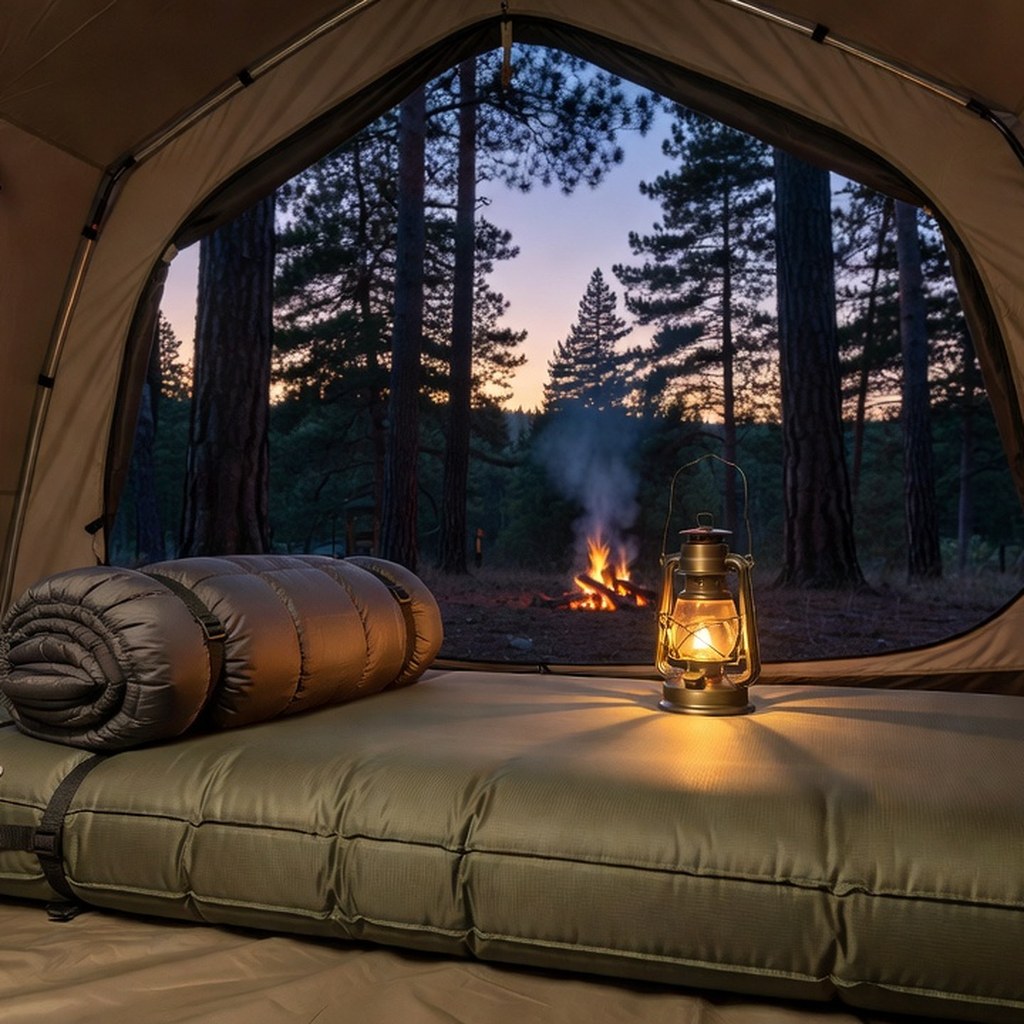
- Car camping and you want a real bed: Exped MegaMat 10 — $239.95. Four inches of foam-fill, the closest thing to a mattress.
- Cold weather, side sleeper: NEMO Tensor All-Season — $199.95. Thick enough to keep a hip off the ground and rated for four seasons.
- Backpacking where weight matters most: Therm-a-Rest NeoAir XLite NXT — $209.95. The lightest pad here that still insulates.
- Best value for most people: Klymit Insulated Static V — $94.99. Half the price of the premium pads with real insulation.
- Side sleepers who roll all night: Sea to Summit Ether Light XT — $219.95. Air-sprung cells that do not bottom out on a hip.
- Cheap fix for a bad night: KingCamp Memory Foam Pillow — $23.99. Half the tossing and turning is just neck position.
What Side Sleepers Actually Need in a Sleeping Pad
Three specs matter more than anything else. Ignore the marketing and check these numbers first.
Thickness: 3 Inches Minimum
Your hip and shoulder create pressure points when you're on your side. A 2-inch pad compresses under those points and you bottom out against the ground. A 3-inch pad gives enough loft that your hip stays suspended even after the foam or air compresses.
The difference between 2.5 and 3 inches sounds trivial on paper. In a tent at 2 AM, it's the difference between sleeping through the night and shifting positions every 45 minutes.
For car camping where weight doesn't matter, look for 3.5 to 4 inches. For backpacking where every ounce counts, 3 inches is the sweet spot — anything less and side sleepers will feel it.
Width: Standard Pads Are Too Narrow
Most sleeping pads taper to 20 inches at the shoulders. That's fine if you sleep on your back with your arms at your sides. On your side, your knees stick out, your elbow needs somewhere to go, and 20 inches feels like balancing on a balance beam.
Look for pads labeled "wide" or "rectangular" — 25 inches minimum. Some brands offer a "long wide" size that's 25 to 30 inches wide and 76 to 78 inches long. Worth the weight penalty for side sleepers.
R-Value: Don't Underestimate Ground Cold
Sleeping bag temperature ratings assume you're using an insulated pad. Without one, you're losing heat to the ground through conduction — the same physics that makes a tile floor feel colder than carpet. Your compressed sleeping bag insulation does almost nothing underneath you.
For three-season camping with side sleeping, aim for R-value 3.0 or higher. Your hip presses the pad thin, reducing its effective insulation where you need it most. An R-3.0 pad might behave like R-2.0 under a side sleeper's concentrated weight.
Summer-only campers can get away with R-2.0. Shoulder season and anyone who sleeps cold should target R-4.0+.
Best Camping Sleeping Pads for Side Sleepers: Our Top Picks
Every pad here is at least 3 inches thick and available in a wide version. These are the ones I'd recommend to a friend who just wants to sleep through the night.
Best Overall for Side Sleepers: NEMO Tensor Insulated
If I could only recommend one pad for side sleepers, it's the NEMO Tensor. Three and a half inches of loft, a quiet fabric that doesn't sound like a potato chip bag when you move, and the internal baffle design creates a flat, stable surface — not the rounded "pool float" shape that some inflatable pads have.
The wide version is 25 inches across and rectangular, so your elbows and knees stay on the pad all night. R-value 4.8 means it's warm enough for shoulder season and early winter. At 22 ounces in the regular wide size, it's light enough for backpacking.
Specs: 3.5" thick, R-value 4.8, 25" wide (wide version), 22 oz, $199.95
The only real downside is price. Two hundred bucks for a sleeping pad stings. But if you've ever woken up on a flat pad at 11,000 feet with six more nights of your trip ahead of you, that price makes more sense.
Best Ultralight: Therm-a-Rest NeoAir XLite NXT
The Therm-a-Rest NeoAir XLite NXT ($209.95) is the backpacking standard for a reason. At 13 ounces it's lighter than most 1-liter water bottles, yet it delivers 3 inches of loft and a 4.5 R-value. The updated NXT version is quieter than the original — no more waking up your tentmate every time you roll over.
The catch for side sleepers: the tapered shape is 20 inches at the shoulders. That's snug. The wide version (25 inches) exists but adds weight. If you're an ounce-counter who can tolerate the narrower cut, this is the best warmth-to-weight ratio in the game. If you need width, look at the NEMO Tensor instead.
Specs: 3" thick, R-value 4.5, 20" wide (tapered), 13 oz, $209.95
The WingLock valve inflates the pad in about 15 breaths and deflates instantly — no rolling and re-rolling to squeeze air out. Packs smaller than a Nalgene bottle. Thru-hikers on the PCT and AT have trusted the NeoAir for over a decade for a reason.
Budget Alternative: The Klymit Insulated Static V ($94.99) offers 2.5 inches of loft and 4.4 R-value at 25 ounces. Not as thick or light as the NeoAir, but half the price and wide enough for side sleeping.
Best for Car Camping: Exped MegaMat 10
If you're driving to your campsite and weight doesn't matter, skip the backpacking pads entirely. The Exped MegaMat 10 ($239.95) is 4 inches thick with an R-value of 8.1 — warm enough for winter camping on frozen ground. It's basically a mattress that fits in a tent.
The self-inflating foam core gives it structure that air pads can't match. You don't wobble or bounce when you shift positions. The flat, rectangular surface feels like a real bed. The mini pump built into the stuff sack tops it off in about 30 seconds.
Specs: 4" thick, R-value 8.1, 30" wide (LXW version), 5.7 lbs, $239.95
At nearly 6 pounds and packing to the size of a small sleeping bag, this is car camping only. But for base camp luxury, family camping where sleep quality determines whether your partner comes back next trip, or winter camping where ground insulation is non-negotiable, nothing beats it.
Best Value for Side Sleepers: Sea to Summit Ether Light XT Insulated
Sea to Summit figured out that side sleepers need loft and built the Ether Light XT with 4 inches of thickness — the tallest in the ultralight category. The individual air cells (they call them Air Sprung Cells) conform to your body instead of creating a uniform flat surface.
Specs: 4" thick, R-value 4.1, 25" wide (wide version), 25 oz, $199.00
The R-value of 4.1 is lower than the NEMO Tensor or NeoAir, so this is more of a three-season pad — bring a closed-cell layer underneath if winter camping gets serious. But if you prioritize thickness over insulation and camp primarily in warmer conditions, those 4 inches of loft are unmatched at this weight.
One thing to know: the individual cell design means you need to get the inflation right. Too firm and you float on top of the cells. Too soft and you bottom out. Spend a couple of nights dialing it in and you'll find the sweet spot where your hip sinks in just enough without touching ground.
Camp Pillows: The Pad's Forgotten Partner
A great sleeping pad with a bad pillow is still a bad night's sleep. Your head needs support at the right angle, especially on your side where the gap between your shoulder and head is wider.
The KingCamp Inflatable Pillow ($24.99) has a memory-foam top over an inflatable core, so it feels far closer to a bed pillow than a bare air bladder. The washable cover and ergonomic contour make it a practical car-camping choice without the football-sized bulk of a foam pillow.
For backpacking, the TREKOLOGY ALUFT 2.0 ($16.99) weighs 3.5 ounces and packs to mandarin-orange size. The ergonomic curve cradles your head and the TPU bladder is quiet — no crinkling when you move. For the weight and price, there's no excuse for sleeping on a wadded-up rain jacket.
The Sea to Summit Aeros Premium Pillow ($49.95) is the luxury backpacking option. A layer of synthetic fill over the air bladder gives it a soft top surface that doesn't feel like rubber against your face. The curved shape and scalloped bottom edge keep it in place on your pad.
If you want memory foam feel without car-camping bulk, the KingCamp Inflatable Pillow ($24.99) has a memory foam top layer over an inflatable base. The washable cover and ergonomic contour make it feel more like a bed pillow than a camping accessory.
How to Choose: The Decision Tree
Start with one question: are you carrying this on your back or in your car?
If you're backpacking:
- Priority: warmth-to-weight ratio
- Minimum 3 inches thick, R-value 3.0+
- Budget pick: Klymit Insulated Static V ($94.99, 25 oz)
- Best overall: NEMO Tensor Insulated ($199.95, 22 oz)
- Ultralight champion: Therm-a-Rest NeoAir XLite NXT ($209.95, 13 oz)
If you're car camping:
- Priority: comfort, period
- 4 inches thick minimum
- Best overall: Exped MegaMat 10 ($239.95, R-8.1)
- Budget alternative: Any self-inflating foam pad from REI or Cabela's in the 3-4 inch range
If you sleep cold:
- R-value 4.0+ is non-negotiable
- NeoAir XLite (R-4.5) or NEMO Tensor (R-4.8)
- For winter: Exped MegaMat (R-8.1) or layer a closed-cell foam pad under your inflatable
If you're over 6 feet tall:
- Look for "long" sizing — 76 to 78 inches
- The NeoAir XLite comes in a large size (77 × 25 inches)
- The NEMO Tensor long wide is 76 × 25 inches
Common Sleeping Pad Mistakes (Learn From Mine)
Over-inflating the pad. A rock-hard pad supports you for 10 minutes, then creates pressure points on your hips and shoulders. Inflate until firm, then let out enough air that you sink in a bit. Your body should be cradled, not balanced on a drum head. Side sleepers need this adjustment more than anyone.
Blowing moisture into the pad. Your breath carries water vapor that condenses inside over time, reducing insulation and encouraging mold. Use an inflation sack or pump bag. The Therm-a-Rest NeoAir comes with one — use it.
Skipping the site check. Even a 4-inch pad won't save you from a rock under your tent. Spend 30 seconds clearing your tent site. Run your palm across the ground where your hips and shoulders will be. Those 30 seconds prevent the 3 AM scramble.
Buying a narrow pad because it's lighter. Saving 3 ounces on pad width costs you 3 hours of sleep. Side sleepers need width. If you're cutting weight, do it somewhere else — your shelter, your cook kit, your packed clothing. The pad is not the place to shave ounces.
Not testing the pad before the trip. Inflate your pad at home the night before you leave. A slow leak that takes 4 hours to go flat is invisible in a 30-second garage test but ruins your second night. Pinholes are easy to patch — if you find them before you're lying on the ground.
Using an uninsulated pad in shoulder season. That summer pad with R-1.5 felt fine in August at 55°F. On an October night at 35°F, you'll feel like you're sleeping on a refrigerator shelf. Ground cold pulls heat from your body through conduction. An R-3.0 pad is the minimum for three-season use with side sleeping.
The Sleep System: Your Pad Doesn't Work Alone
Your sleeping pad is one part of a system. Get the rest right and a decent pad performs like a great one. Get it wrong and even a $250 pad feels inadequate.
Pad + sleeping bag: Your bag's temperature rating assumes adequate pad insulation. A 20°F bag on an uninsulated pad is effectively a 40°F bag because you're losing heat to the ground faster than the bag can retain it.
Pad + ground cloth: A footprint under your tent adds a micro-layer of insulation by breaking the direct conduction path to the ground. It also protects your pad from sharp objects. Worth the weight.
Pad + liner: A fleece or silk sleeping bag liner adds 5 to 15°F to your system for minimal weight. It also creates a second air gap that reduces the convection problem inside air pads. Our value pick is the REDCAMP zippered fleece liner at $24.99.
Pad + pillow: Covered above, but worth repeating: the stuff-sack-full-of-clothes solution works for one night, then becomes a shifting, lumpy disaster. Buy a real camp pillow.
FAQ: Sleeping Pad Thickness, R-Value, and Side-Sleeper Comfort
How thick should a camping sleeping pad be for a side sleeper?
At least 3 inches. Your hip and shoulder create pressure points when you sleep on your side, and a 2-inch pad compresses under them so you bottom out against the ground. For car camping where weight doesn't matter, look for 3.5 to 4 inches. For backpacking, 3 inches is the sweet spot — anything less and side sleepers will feel it by 2 AM.
What R-value do I need for side sleeping?
Aim for R-value 3.0 or higher for three-season camping. Your hip presses the pad thin, reducing its effective insulation where you need it most — an R-3.0 pad can behave closer to R-2.0 under a side sleeper's concentrated weight. Summer-only campers can get away with R-2.0. Shoulder-season campers and anyone who sleeps cold should target R-4.0+.
How wide should a sleeping pad be for a side sleeper?
Look for pads labeled "wide" or "rectangular" — 25 inches minimum. Most standard pads taper to 20 inches at the shoulders, which is fine for back sleepers but leaves a side sleeper's knees and elbows hanging off the edge. Some brands offer "long wide" sizes that run 25 to 30 inches wide and 76 to 78 inches long.
What is the best sleeping pad for side sleepers overall?
The NEMO Tensor Insulated. It delivers 3.5 inches of loft, an R-value of 4.8, and the wide version measures 25 inches across with a rectangular cut, so your elbows and knees stay on the pad all night. At 22 ounces it's light enough for backpacking. The main downside is the $199.95 price.
What is the best ultralight sleeping pad for side sleepers?
The Therm-a-Rest NeoAir XLite NXT: 13 ounces, 3 inches of loft, and an R-value of 4.5 at $209.95 — the best warmth-to-weight ratio in the game. The catch is the tapered 20-inch shoulder width, so side sleepers should consider the wider version and accept the weight penalty. The Klymit Insulated Static V ($94.99) is the budget alternative with 2.5 inches of loft and a 4.4 R-value.
Is a 4-inch pad worth it for car camping?
Yes — if you're driving to camp, comfort should win over weight. The Exped MegaMat 10 is 4 inches thick with an R-value of 8.1, warm enough for winter camping on frozen ground. Its self-inflating foam core feels like a real mattress, and the LXW version is 30 inches wide. At 5.7 pounds it's car-camping only, but for base camp sleep quality nothing else on this list comes close.
Worth reading before you buy: our sleeping bag temperature ratings explained covers what comfort, limit and extreme actually measure on an ISO 23537 tag, why the printed number runs 10-15F optimistic, and the pad R-value side of the equation.
If you are still deciding between a pad, a cot, and an air mattress, our camp bed comparison walks through the height, warmth, and pack-size trade-offs - including the R-value table that tells you which pad matches your forecast.
Further Reading
For the full breakdown of sleeping pads versus air mattresses and when each makes sense, see our Sleeping Pad vs Air Mattress guide. If you're pairing your pad with a sleeping bag, start with our Best Camping Sleeping Bags 2026 guide for practical temperature-rating, sleep-position, and budget choices. Winter camping adds another layer of complexity — our winter camping beginner's guide covers the full cold-weather sleep system.
For budget-conscious campers, check out our best camping gear under $50 roundup — several pads and pillows on this list qualify. Still deciding between backpacking and car camping? That choice determines which pad category you should be shopping in.
<!-- AFFILIATE_DISCLOSURE -->