What Temperature Sleeping Bag for Summer Camping? Ratings Explained (2026)
Sleeping bag temperature ratings decoded: what 20°F, 30°F, and 40°F actually mean, why comfort ratings differ from limit ratings, and which summer sleeping bag is right for your camping style.
What Temperature Sleeping Bag for Summer Camping? Ratings Explained (2026)
Here's a story that plays out at campgrounds every summer weekend: someone shows up with a "20-degree" sleeping bag they bought on sale, crawls in on a 48-degree night, and spends six hours shivering. They wake up cold, confused, and convinced their gear is defective.
It's not. They just don't know how temperature ratings actually work.
The number printed on your sleeping bag doesn't mean "you'll be comfortable at this temperature." It might not even mean "you'll survive at this temperature" — because there are three different rating standards, and bag manufacturers aren't always clear about which one they're using. Let's fix that.
The Three Numbers Nobody Explains
Every sleeping bag tested under the EN (European Norm) or ISO (International Organization for Standardization) rating system receives three numbers. Most brands only print one on the tag. Here's what they all mean:
Comfort Rating
This is the temperature at which a "standard woman" can sleep comfortably in a relaxed position for eight hours. In practice, this is the rating that matters for 90% of campers. If you want to sleep through the night without waking up cold, shop by the comfort rating — not whatever number is printed on the front.
Limit Rating
The temperature at which a "standard man" can sleep for eight hours without waking. This is the number most bags market themselves with, because it sounds more impressive. A 20°F limit rating means a 32-35°F comfort rating. That's a 12-15 degree gap — the difference between "this is fine" and "why did I do this to myself."
Extreme Rating
The temperature at which you won't die of hypothermia (but you will be miserable). Never buy based on this number. It exists for liability reasons, not shopping decisions.
The rule of thumb: Add 10-15°F to the advertised rating to get the actual comfort temperature. A "20°F bag" is really a 32-35°F bag. A "30°F bag" is really a 40-45°F bag.
What Rating Do You Actually Need for Summer?
Summer camping covers a huge range depending on where you go. Here's a practical breakdown:
Low-elevation summer (lakes, state parks, sea level): 35-50°F nights
A 30°F or 40°F bag is perfect. You won't come close to the limit rating, which means you'll sleep comfortably — possibly too warm on the mildest nights. Unzip the side and use it as a quilt if you run hot.
Best pick: The TETON Sports Celsius XXL is rated for 0°F — overkill for summer, but at $80, it's the best-value car camping bag on the market. Just unzip and vent. The oversized cut means you can sprawl out instead of feeling like a burrito.
Mountain summer (Rockies, Sierra Nevada, 6,000+ ft): 30-45°F nights
Nights get colder at elevation fast. A 20°F or 30°F bag is the right call. You want a comfort rating that lands in the 30-40°F range.
Best pick: The Marmot Women's Teton 15° ($249) uses 650-fill down for genuine warmth without bulk. The women's-specific cut is narrower at the shoulders and wider at the hips — also great for smaller-framed men who find unisex bags drafty. Comfort rated around 25°F, it handles mountain shoulder season without weighing you down.
Couples camping: shared warmth changes the math
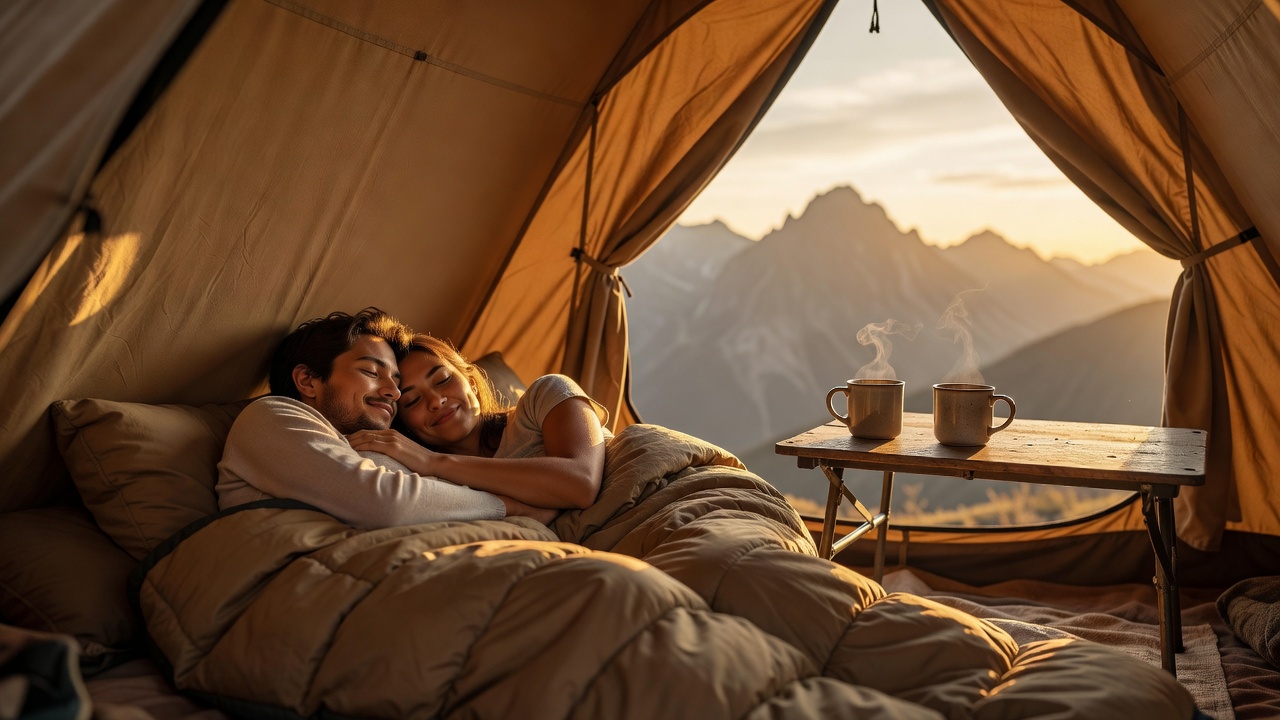
Two bodies in one bag produce significantly more heat. If you're sharing, you can go 10-15°F lighter on the rating because the combined body heat offsets the bag's lower insulation.
Best pick: The Kelty Tru.Comfort Doublewide 20° ($120) is a two-person synthetic bag with a built-in blanket layer. At 20°F rated, the comfort rating lands around 32°F — perfect for summer camping with your partner. The double-wide design eliminates the "two bags zipped together" draft problem.
The Role of Sleeping Pads — Your Bag Is Only Half the Equation
Here's a fact that surprises new campers: your sleeping pad matters as much as your bag for warmth. When you lie in a sleeping bag, your body weight compresses the insulation underneath you to almost nothing. Without a pad, you're losing heat directly to the ground through conduction — and the ground is always colder than the air.
Sleeping pads are rated by R-value:
- R 1-2: Summer only, warm nights above 50°F
- R 2-4: Three-season, works down to freezing
- R 4+: Winter and cold sleepers
For summer camping, an R-value of 2-3 is the sweet spot — but if you're still figuring out the rest of your camping setup, start with our camping for beginners starter guide before diving into gear specs. The Therm-a-Rest Z Lite Sol ($45) has an R-value of 2.0 — adequate for summer, indestructible, and weighs just 14 ounces. For car camping where weight doesn't matter, pair it with almost any sleeping bag and you're set.
Pro tip: If you sleep cold, stack a closed-cell foam pad (like the Z Lite) under an inflatable pad. The combined R-values add up, and the foam pad protects your inflatable from punctures.
Down vs Synthetic: The Summer Decision
For summer camping specifically, synthetic insulation has real advantages that flip the usual down-vs-synthetic debate:
Synthetic wins in summer when:
- Humidity is high: Synthetic insulation retains warmth when damp. Down collapses and loses loft. If you're camping in wet conditions, also read our guide to camping in the rain — your bag choice is only half the battle
- You sweat at night: Summer nights are warmer, you're more likely to perspire, and synthetic handles moisture better
- Budget matters: Synthetic bags cost 30-50% less than equivalent down bags
- You car camp: The weight penalty of synthetic doesn't matter when you're not carrying it
Down wins when:
- Weight and pack size matter: Down compresses smaller and weighs less for equivalent warmth
- You're backpacking: Every ounce counts, and down's compressibility saves pack space
- You camp in dry climates: Down's moisture weakness is irrelevant in the desert or high alpine
Both the TETON Celsius XXL (synthetic) and Marmot Teton 15° (down) are excellent bags — the choice comes down to your priorities: price and moisture resistance vs weight and packability.
Common Sleeping Bag Mistakes (and How to Fix Them)
Mistake 1: Buying too warm a bag for summer
A 0°F bag on an 85°F July night turns into a sweat lodge. You'll end up sleeping on top of it, which defeats the purpose. Fix: Own two bags — a 30-40°F bag for summer and a 0-15°F bag for shoulder season. Or buy a versatile 20°F bag and vent aggressively in summer.
Mistake 2: Not using a sleeping bag liner
A $30 fleece liner adds 5-10°F of warmth and keeps your bag clean. More importantly, it lets you push a summer bag into shoulder season without buying a second bag. Worth every penny.
Mistake 3: Sleeping directly on the tent floor without a pad
We covered this, but it bears repeating: no sleeping pad = cold night, guaranteed. The ground is a heat sink. Even a $20 foam pad transforms your sleep quality.
Mistake 4: Wearing too many clothes
Counterintuitive, but true: wearing heavy layers inside your sleeping bag restricts circulation and actually makes you colder. A single base layer (merino wool or synthetic) is warmer than sweatpants and a hoodie, because it traps heat against your skin without restricting blood flow.
The Best Summer Tent for Your Sleeping Setup
Your sleeping bag and pad are only as good as the shelter they're in. For summer camping, ventilation matters more than insulation — especially if you're beach camping where salt air and sea breezes change the tent equation entirely. The Coleman Sundome 4-Person Tent ($80) has large mesh windows and a ground vent that pulls cool air through the tent — critical for summer nights when you want airflow without bugs. Paired with a 30-40°F sleeping bag and an R-2 pad, you've got a three-season summer setup for under $200 total.
The Quick Reference Chart
| Where You Camp | Typical Night Low | Bag Rating to Buy | Comfort Rating You'll Get | Pad R-Value |
|---|---|---|---|---|
| Low-elevation summer | 45-55°F | 30°F or 40°F | 40-50°F | R 1.5-2.5 |
| Mountain summer | 30-45°F | 15°F or 20°F | 25-35°F | R 2.5-3.5 |
| Desert (high diurnal swing) | 40-65°F | 30°F | 40°F | R 2-3 |
| Couples camping | Any | 10°F lighter than solo | - | R 2-3 |
| Tropical/humid | 60-70°F | 50°F or liner only | - | R 1-2 |
Bottom Line
For most summer campers in 2026, a 30°F synthetic bag is the sweet spot. It's comfortable down to about 40°F, handles humidity without losing loft, costs between $60-$120, and vents easily on warmer nights. Add a foam sleeping pad with R-value 2-3, and you'll sleep well from Memorial Day through Labor Day.
The TETON Sports Celsius XXL at $80 is our top pick for car camping — it's warmer than strictly necessary for summer, but the oversized cut and venting options make it the most comfortable bag under $100. For backpackers counting ounces, the Marmot Teton 15° at $249 delivers genuine 650-fill down warmth at a reasonable weight.
One more thing: the temperature rating on your bag assumes you're using a sleeping pad with adequate insulation. Skip the pad, and all bets are off — you'll be cold at any temperature.
Building out your summer kit? Read our Camping Tent Size Guide and Summer Hiking Hydration Guide. Just getting started? Our camping for beginners starter guide covers everything from picking a site to essential camping skills you'll actually use. And once camp is set up, here's what to cook over the campfire.
<!-- AFFILIATE_DISCLOSURE -->TrailMapz is reader-supported. When you buy through links on our site, we may earn an affiliate commission at no extra cost to you. As an Amazon Associate we earn from qualifying purchases.