How to Stay Cool and Hydrated on Summer Hikes: Essential Gear Guide
Beat the heat on the trail with our expert guide to hiking hydration. Best water bottles, filters, and summer hiking gear to keep you cool and safe in 2026.
How to Stay Cool and Hydrated on Summer Hikes: Essential Gear Guide
I've watched a hiking partner turn gray on a 95-degree Arizona trail — 45 minutes after we ran out of water. Skin cold and clammy, pulse hammering, two miles from the trailhead. We made it out fine, but that day permanently changed how I think about how to stay hydrated while hiking in summer. Not as a comfort issue — as a safety issue. Dehydration impairs judgment, slows reaction time, and can cascade into heat stroke faster than most hikers realize.
Over five years and 500 trail miles across the Southwest, Sierra Nevada, and Appalachians, I've refined my hydration system through trial, error, and a few close calls. Here's the gear that works, how much water you really need, and the strategies that keep you cool when temperatures climb past 90.
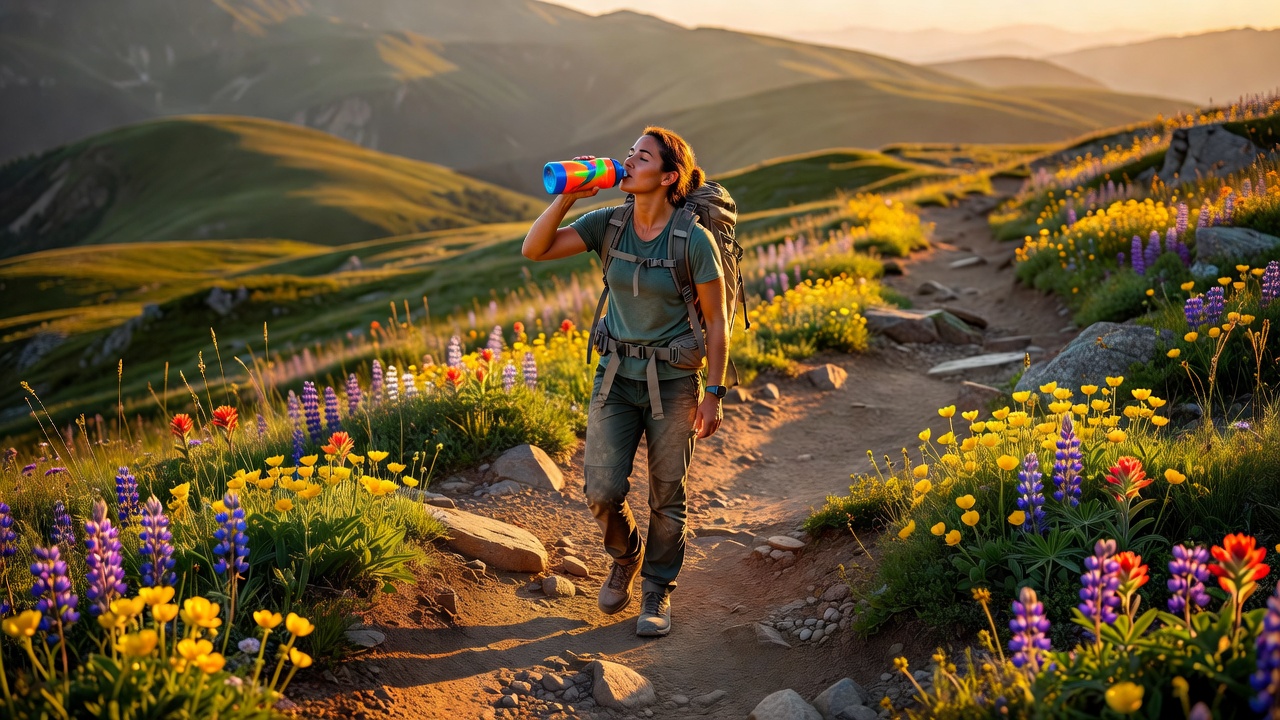
How Much Water Do You Actually Need on a Summer Hike?
The old "eight glasses a day" rule is useless on the trail — it doesn't account for exertion, elevation, or temperature. Your body can lose 1 to 2 liters per hour through sweat on a hot hiking day.
The Baseline Formula
- Under 75°F, moderate terrain: 0.5 liters per hour
- 75-85°F, moderate terrain: 0.75 to 1 liter per hour
- 85-95°F, strenuous terrain: 1 to 1.5 liters per hour
- Above 95°F, any terrain: 1.5+ liters per hour (and seriously consider whether this hike is a good idea)
For a four-hour summer hike at 85 degrees, that means carrying at least 3 to 4 liters of water.
Factors Most Hikers Overlook
Humidity is the silent multiplier. In arid climates, sweat evaporates so fast you don't feel it — but you're losing just as much fluid. In humid conditions, your body keeps producing sweat that won't evaporate. Both accelerate dehydration.
Elevation amplifies everything. Above 8,000 feet, lower air pressure increases your respiration rate and dry mountain air pulls moisture from your lungs. Fluid needs can jump 25-40%.
Your body size matters. A 200-pound hiker with a 30-pound pack sweats significantly more than a 140-pound hiker on the same trail.
The field check: your urine should be light yellow. Dark yellow means you're behind. If you haven't peed in four hours on a hot hike, you're dehydrated — slow down and drink.
Best Hiking Water Bottles for Summer 2026
Your bottle is the single most important piece of gear you carry. After testing dozens across hundreds of trail miles, two stand out.
Nalgene Wide Mouth 32oz: The Indestructible Classic
The Nalgene Wide Mouth 32oz Water Bottle ($15.99) is the Toyota Hilux of water bottles — not flashy, but unkillable. I've dropped mine off a 40-foot cliff. It bounced twice, scratched up, and didn't leak a drop.
- Holds a full liter — drink two and you've hit minimum hydration for a moderate hike
- Wide mouth fills easily from shallow streams and fits most filter threads
- BPA-free Tritan plastic that won't retain tastes
- Fits in virtually every hiking daypack's side pocket
The downside: it's not insulated. On a 95-degree day, water warms within an hour or two.
Owala FreeSip: Insulated and Actually Pleasant
The Owala FreeSip Insulated Stainless Steel Water Bottle ($23.99) solves the warm-water problem with vacuum insulation that keeps drinks cold for up to 24 hours. Ice water at hour four on a scorching trail feels borderline life-changing.
The dual-function lid is what makes it special: sip through the built-in straw (no tilting required) or tip it back from the wide spout for higher flow. On mile eight, when even tilting a bottle feels like effort, the straw is a real upgrade.
- Vacuum-insulated stainless steel keeps water cold all day in direct sun
- Dual sip/spout lid — fast access without unscrewing
- BPA-free, leak-proof, fits standard cup holders and pack pockets
The tradeoff: 14 ounces empty vs. the Nalgene's 6.3 ounces. For day hikes under 10 miles, the insulation is worth the weight. For long-distance backpacking, I reach for the Nalgene.
Water Filters for Natural Sources: Drink from Any Stream
Once you start filtering on the trail, you're no longer limited by what you can carry — only by your distance to the next water source.
Katadyn BeFree 1.0L Water Filter
The Katadyn BeFree 1.0L Water Filter ($44.95) weighs 2.3 ounces and filters up to 1,000 liters before needing a replacement cartridge. It's a hollow-fiber membrane filter built into a soft flask.
- Speed: Filters up to 2 liters per minute — faster than pump or squeeze systems
- Simplicity: Fill the flask, screw on the filter cap, drink directly or squeeze into your bottle
- Packability: Collapses to fist-size when empty
- Filtration: 0.1-micron pores remove 99.9999% of bacteria and 99.9% of protozoa
Store the filter damp between trips — if the membrane dries out, flow rate drops. In freezing temps, keep it in an inside pocket so water in the membrane doesn't freeze and crack.
For deeper comparisons, see our complete guide to the best hydration systems of 2025.
Hydration Bladders vs. Bottles: Which Is Right for You?
This is one of hiking's most debated topics. I use both, but for different trips.
The Case for Bladders
A hydration bladder lets you drink without stopping — sip while walking, stay more consistently hydrated. For fast-moving hikers and trail runners, this is a game changer.
CamelBak Crux Reservoir: The CamelBak Crux Reservoir ($42.00) delivers 20% more water per sip than previous designs. The baffle keeps the reservoir flat against your back, and the wide-mouth opening makes filling and cleaning easy. Key features: 3-liter capacity, leak-proof locking bite valve, quick-disconnect tube, and polyurethane construction that resists plastic taste.
INOXTO Hydration Vest: The INOXTO Running Hydration Vest ($23.99) includes a 1.5-liter insulated bladder and vest-style pack with pocket storage. At under $24, it's one of the best-value hydration vests available. Ideal for day hikes under 10 miles where you don't need a full backpack.
When Bottles Win
Bladders have real downsides: harder to clean (mold risk if left wet), harder to track intake, and a leak soaks everything in your pack. I use bottles for multi-day trips, hikes with frequent filter stops, winter hiking (bladder tubes freeze), and any hike where I want electrolytes separate from plain water.
My system: summer day hikes under 8 miles — one Owala FreeSip with ice water plus a Nalgene as backup. Longer hikes with water sources — Nalgene, Katadyn BeFree, and a second empty bottle. Bladders are for trail running and fast solo hikes.
For broader gear selection, see our guide to the best hiking gear of 2025.
Summer Hiking Clothing: UPF Protection and Moisture Management
Staying hydrated means managing how fast your body loses water. The right clothing reduces sweat rate and helps your body cool itself.
Columbia PFG Tamiami II Long Sleeve Shirt
The Columbia PFG Tamiami II Long Sleeve Shirt ($44.99) is my most-worn summer hiking shirt — I own three. UPF 40 rated, it blocks 97.5% of UV radiation without needing reapplication like sunscreen.
Columbia's Omni-Wick fabric pulls moisture off your skin and spreads it across the shirt surface for evaporation. The vented back cape lets air flow across your shoulder blades — a small detail that makes a real difference under a pack.
Why long sleeves in summer? A breathable long-sleeve shirt often keeps you cooler than a tank top. Direct sun heats your skin and accelerates sweat loss. UPF-rated fabric provides shade and reduces thermal load — plus you skip the sticky sunscreen arms.
How to Stay Hydrated While Hiking in Summer: Pro Tips
Gear matters, but strategy matters more. These techniques make the difference between finishing strong and dragging yourself back to the car.
Pre-Hydrate
Most hikers start already dehydrated — especially morning hikers who've been asleep for eight hours. Drink 16-20 ounces of water in the hour before hitting the trail.
Electrolytes Are Not Optional
Sweating loses sodium, potassium, and magnesium — not just water. Drinking plain water without electrolytes can cause hyponatremia, where blood sodium becomes dangerously diluted. I carry electrolyte tablets (Nuun, GU, or SaltStick). On hikes over two hours above 85°F, add electrolytes to every other bottle — one dose per 1.5-2 liters of plain water.
Time Your Hike Around the Heat
The single most effective strategy: avoid peak heat. I'm on the trail by 6:00 AM and done by noon. The hours between noon and 4:00 PM are the danger zone. If you must hike during peak heat, plan routes with water crossings and shade — check satellite view beforehand.
Know the Early Warning Signs
Dehydration creeps. Learn the subtle cues:
- Mouth feels tacky, not just dry
- Pace feels harder than it should
- Unexplained irritability
- Slightly swollen fingers (sodium imbalance)
- You stop sweating despite feeling hot (this is an emergency — shade and water immediately)
Sip, Don't Chug
Your body absorbs about 6-8 ounces per 15-20 minutes during exercise. Chugging a liter sends water to your bladder, not your bloodstream, and causes stomach sloshing on climbs. Small, frequent sips keep absorption efficient.
Quick-Start Hydration Kit Recommendations
Short day hikes (under 6 miles, moderate temps):
- Nalgene Wide Mouth 32oz ($15.99) — simple and reliable
Hot day hikes (6-12 miles, 85°F+):
- Owala FreeSip ($23.99) — insulated, keeps water cold
- Nalgene Wide Mouth 32oz ($15.99) — backup capacity
- Electrolyte tablets (~$7 for a tube of 10)
Long summer hikes with water sources (10+ miles):
- Katadyn BeFree Filter ($44.95) — refill from streams and lakes
- Nalgene Wide Mouth 32oz ($15.99) — pair with the BeFree
Trail runners and fast-moving hikers:
- INOXTO Hydration Vest ($23.99) — hands-free drinking
- Columbia PFG Tamiami II Shirt ($44.99) — UPF protection and cooling
All-day backcountry days:
- CamelBak Crux Reservoir ($42.00) — 3L capacity
- Katadyn BeFree ($44.95) — refill capability
More Resources
New to hiking? Start with our complete beginner's guide. For bottle-specific comparisons, see our best hiking water bottles guide. Hitting the trail with a dog? Check our best dog backpacks for hiking.
<!-- AFFILIATE_DISCLOSURE -->Stay Hydrated, Stay Safe, and Enjoy the Trail
Summer hiking offers the best days of the year — long daylight, alpine meadows in bloom, mountain lakes after a hot climb. But it only works if you respect the heat.
The gear above isn't theoretical. I've carried it across the Grand Canyon in July, through the Superstition Mountains at 105 degrees, and up San Juan slopes in August humidity. It works. The Nalgene won't break. The Owala keeps water cold when everything else melts. The BeFree lets you drink from a stream without regrets. The Columbia shirt might save you from a sunburn that ruins your trip.
Start with the basics — a reliable bottle and electrolytes — and add pieces as your hikes get longer and hotter. Listen to your body. When in doubt, turn around early. The trail will still be there tomorrow.
Drink up, stay cool, and see you out there. 🥾💧