Family Camping With Kids: Packing List, Gear, Games, and Keeping Everyone Happy
Family camping with kids: a complete family-of-5 packing list, gear that works, games that buy you 30 minutes of peace, and meals kids actually eat (2026).
The first time we took our kids camping, I spent the entire drive mentally cataloging every possible disaster. Would the toddler sleep? Would anyone eat dinner? Would a skunk join us at the fire?
None of those things happened. What did happen: the kids found a caterpillar and named it. They roasted marshmallows until their faces were sticky. They woke up to the smell of pine needles and campfire smoke and declared it the best morning ever. That trip launched years of family camping. This guide shares what worked and what did not.
Why camping is amazing for kids
Camping gives kids something rare: a world where curiosity is the default setting. At home, a stick is clutter. At a campsite, it is a wizard's staff, a fishing pole, or kindling for the fire. The child gets to decide.
Beyond the magic, there is real developmental value. Kids who spend time outdoors show reduced stress, better focus, and greater resilience. Setting up a tent teaches teamwork. Waiting for the camp stove teaches patience. Getting rained on and surviving it teaches that discomfort is temporary. These small victories accumulate into something bigger: a child who knows they can handle the unexpected.
For parents, camping forces a slowdown. No Wi-Fi, no calendar alerts. The day moves at the speed of the fire and the sun, and you get to be present with your kids in a way Tuesday afternoon at home rarely allows.
Choosing a kid-friendly campsite
Your site can make or break the trip. Stay within an hour of home for your first outing. If a forgotten lovey or unexpected storm sends you packing, a short drive home beats a miserable three-hour retreat.
Look for proximity to bathrooms. Close enough for a 2 AM walk with a newly trained kid, but not so close you hear doors slamming all night. Flat, open ground matters. Sloped sites mean everyone slides to one corner of the tent. Clear ground gives kids room to play within eyesight. A shallow creek is kid paradise, but avoid sites with steep drop-offs or fast current if you have toddlers. Tree cover keeps tents cool and gives kids a sun break. A one-mile nature loop with interpretive signs is perfect for little legs.
Call the campground and ask which sites are best for families. Rangers know which ones flood, which are too close to the road, and which have the best crawdad-catching rocks.
Essential family camping gear
You do not need to buy out REI. But a few well-chosen pieces make a dramatic difference.
For the tent, size up. A family of four belongs in a 6-person tent. You need room for sleeping pads, the duffel bag of extra blankets, and the toddler who rotates 180 degrees in their sleep. The CORE 6-Person Instant Cabin Tent delivers that space with near-vertical walls and a room divider to separate adults from kids at bedtime. Our tent size guide covers how to pick the right capacity, our 4-person vs 6-person tent comparison shows what those square-foot differences actually feel like at bedtime, and our best family camping tents guide compares the budget, blackout, and premium shelter options once you know your size.
Easy setup matters. You will be pitching this tent while supervising children who just spent hours in a car. The Coleman Skydome 4-Person Tent sets up in about 5 minutes with pre-attached poles — no threading, no cursing. Built-in LED lights give kids a nightlight they love, and the dark room technology blocks 90% of sunlight so everyone sleeps past sunrise.
A bathtub floor keeps groundwater out and contains spills. Mesh storage pockets give the pacifier, headlamp, and bedtime book a designated spot.
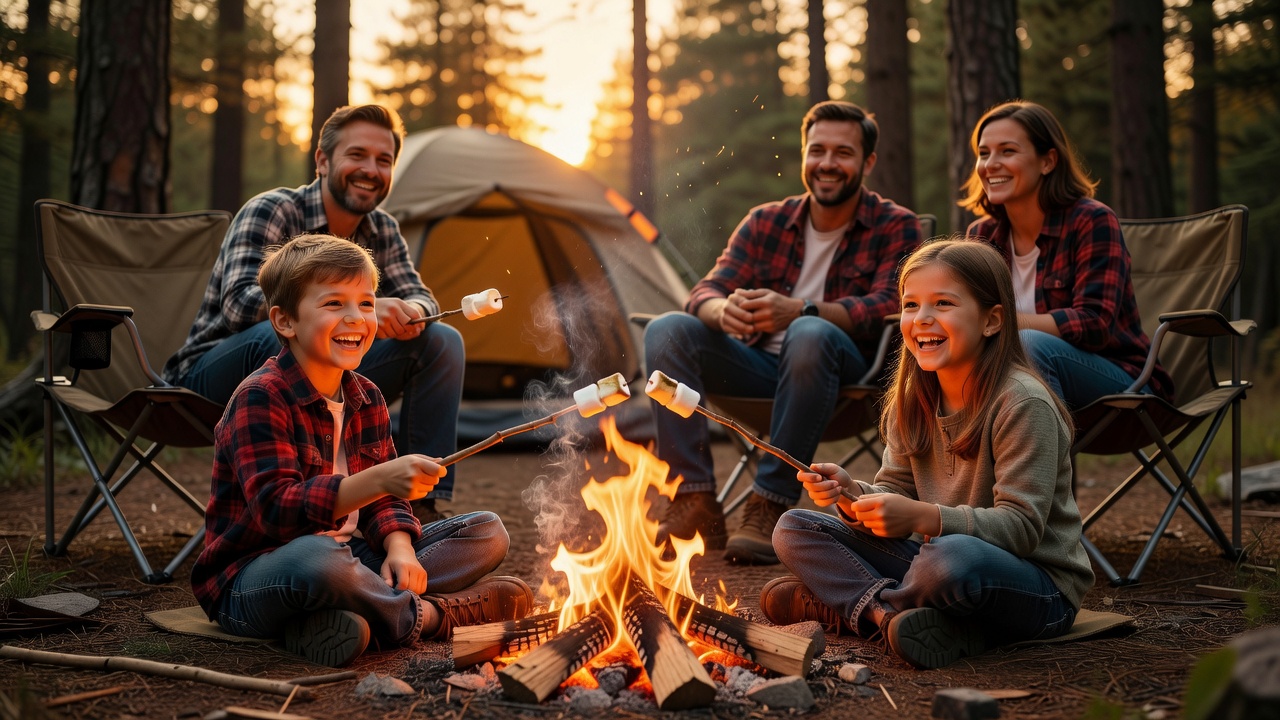
Sleep is the wildcard. Get it right and the trip works. Get it wrong and you are packing up at sunrise. Sleeping bags should be warm and rectangular. Mummy bags feel confining to young children. For toddlers, a fleece bunting or wearable sleep sack keeps them warm even when they kick off covers. Sleeping pads are non-negotiable. Cold ground leeches heat fast. Closed-cell foam pads are cheap, warm, and indestructible.
If you're camping with a baby or toddler who still needs a crib-age sleep setup, our camping with a baby or toddler guide covers age-by-age sleep gear — including proper baby sleeping bags rated for 6-18 months, which adult bags can't safely substitute for — plus the full first-trip plan.
Bring comfort items from home. The favorite blanket, the stuffed animal, the sound machine. A portable white noise unit or phone app with a small speaker masks unfamiliar campground noises. The bedtime book stack. Familiarity is the antidote to first-night jitters.
Do a backyard test run. Pitch the tent at home and sleep outside one night. You will discover what you forgot and your kids will have already conquered the nerves before you are an hour from home. Our backyard camping setup guide walks through the whole practice night — tent, sleeping bags by age, lighting, and s'mores — so the first real trip is boring in the best way.
For safety, a small kit and clear rules keep everyone safe. Your family first aid kit should include bandages, antiseptic wipes, tweezers, gauze, children's pain reliever, antihistamine for bee stings, hydrocortisone cream, and any regular medications. Write dosages on an index card. At 3 AM in a dark tent, you do not want to squint at a medicine bottle.
SPF 50 mineral sunscreen, wide-brimmed hats, and picaridin-based repellent. Treat clothes with permethrin before the trip if you are in tick country. Do a tick check during pajama time. Make it a silly game, not a scary one.
If your trip includes a short trail day, leave the flip-flops at camp. Kids' feet need grippy outsoles and toe protection on loose, rocky ground — our best hiking shoes for kids guide covers how to size fast-growing feet and which outsoles actually hold on trails.
Set boundaries on day one. Walk the campsite perimeter and physically show kids: here is where you play, here is the road you do not cross, here is the fire circle you do not touch without a grown-up. Give each child a whistle. Teach them: if you cannot see Mom or Dad, sit down and blow it. A whistle carries farther than a small child's voice. Fire rules: no running near the fire, only adults tend it, marshmallow roasting requires an adult holding the stick with you, and shoes stay on near the fire.
Campfire games and activities
The outdoors is the entertainment. But a few activities in your back pocket turn "I'm bored" into fun in 30 seconds flat.
A nature scavenger hunt with a printed checklist of pictures: a pinecone, a smooth rock, a Y-shaped stick, a feather, something that smells good. Hand it to your kids with a paper bag and let them loose within eyesight. Campfire storytelling: start a story and pass it around the circle, each person adds two sentences. The brave squirrel will end up piloting a spaceship made of acorns. Rock painting with smooth rocks and washable paint. Kids decorate them as campsite guardians. Glow stick tag at dusk: crack a dozen glow sticks, make everyone necklaces and bracelets, and let kids run in an open area. Extra glow sticks double as tent nightlights.
A quiet time kit: a deck of cards, a sketchbook and colored pencils, a magnifying glass, and a field guide to local birds or bugs. The magnifying glass alone has bought us more peaceful afternoons than any toy we have ever brought.
Easy meals kids actually eat
The campsite is not the place to experiment with new recipes. Stick to foods you know they will eat.
Breakfast: just-add-water pancake mix in a squeeze bottle. Kids pour, mess stays minimal. Or a build-your-own oatmeal bar with brown sugar, raisins, and banana slices. Yogurt tubes and pre-portioned granola for the zero-cook morning.
Lunch: walking tacos with crushed tortilla chips in a bag with pre-cooked seasoned beef, cheese, and salsa. Eat straight from the bag. Pita pocket sandwiches hold together better than bread. Cheese, crackers, and apple slices for the no-cook fallback.
Dinner: foil packet dinners where each kid builds their own with sliced potatoes, carrots, pre-cooked sausage, butter, salt, and pepper. Seal and cook on coals for 20 minutes. Hot dogs roasted on a stick. One-pot pasta: boil noodles, drain most of the water, stir in marinara and shredded mozzarella.
Pack more snacks than you think you need. Trail mix, fruit leather, goldfish crackers, granola bars, applesauce pouches. Outdoor kids are hungry kids. Do not forget the s'mores.
Want the full menu? Our kid-friendly camping meals and food ideas guide rounds up 30+ breakfast, lunch, dinner, and snack ideas kids actually finish — plus the kid-gear that makes campsite mealtime easier instead of a daily negotiation.
Common challenges
Pack rain gear for everyone. Rain jacket, rain pants, and waterproof boots turn puddle-stomping from misery into a highlight. String a tarp over the picnic table as soon as you arrive regardless of the forecast. It is shade if sunny, a dry living room if it rains. Pack one dry outfit per kid in a sealed zip-top bag. Opening guaranteed-dry clothes is a morale reset.
Treat clothes with permethrin before the trip. Use picaridin repellent on skin. Keep the tent zipped every single time. Bring after-bite cream.
Dark, smelly pit toilets scare small kids. Bring headlamps for every bathroom trip. For toddlers, a travel potty seat on a 5-gallon bucket behind the tent is a game-changer. Attach hand sanitizer to the tent zipper pull.
Meltdowns will happen. A tired, hungry, overstimulated kid will cry. Feed them first. Low blood sugar is the silent accelerant, and a granola bar often fixes what looked like an existential crisis. Create a calm-down corner in the tent with a blanket, stuffed animal, and book. Validate the feeling: "I know it is different out here. The noises are weird and you miss your bed." Then pivot: "Want to hear your favorite bedtime story?"
Packing checklist
Print this reference table, tape it to the cooler, and check items off as they hit the car. Quantities assume two adults and three kids — adjust up for bigger crews and double the snacks no matter what.
| Category | What to pack | For a family of 5 |
|---|---|---|
| Shelter & sleep | Tent with rainfly, poles, stakes, footprint. Sleeping bags for everyone plus one extra blanket. Sleeping pads plus one backup foam pad. Pillows or stuff sacks filled with clothes. White noise machine or app. Comfort items: lovey, blanket, bedtime books. | 1 tent (6P recommended so bags and kids don't compete for floor space), 5 sleeping bags + 1 spare, 5 pads + 1 backup |
| Clothing (per person) | Quick-dry shirts and pants — no cotton. Fleece jacket or hoodie. Rain jacket and rain pants. At least two extra pairs of socks per kid. Closed-toe shoes and water shoes. Warm hat, swimsuit, towel. Fleece or wool pajamas. One dry outfit per kid in a sealed zip-top bag. | 5 full sets, 10+ pairs of kid socks, 5 dry outfits |
| Kitchen | Camp stove and fuel. Lighter, waterproof matches, fire starter. One pot, one pan, kettle. Unbreakable plates, bowls, cups, utensils. Cooler with ice packs. Biodegradable soap, sponge, dish towel. Trash bags and zipper bags. | 1 stove + 1 spare fuel canister, 5 plates/bowls/cups, 1 cooler |
| Safety | First aid kit with kid-specific medications and dosages written down. SPF 50 mineral sunscreen. Picaridin repellent and after-bite cream. Whistles for kids. Headlamps with extra batteries. | 1 first aid kit, 1 whistle per kid, 3+ headlamps |
| Fun | Camp chairs, one per person. Tarp and rope for rain and sun shelter. Nature scavenger hunt printouts. Glow sticks. Deck of cards, sketchbook, colored pencils, magnifying glass. S'mores supplies. | 5 chairs, 1 tarp, 1 scavenger hunt sheet per kid |
Kid gear that earns its space in the pack
Some kids' gear quietly does more work than everything else in the car. These are the pieces we reach for trip after trip:
- TETON Sports Celsius Jr Kids Sleeping Bag — $49.99. Rated to 20°F with a rectangular cut that doesn't feel like a burrito to a wiggly kid. The go-to for kids moving out of toddler bags.
- Kelty Woobie 30 Degree Kids Sleeping Bag — $39.95. Lighter and more packable for warm nights; a good second bag when temperatures bounce.
- CamelBak Eddy Kids Water Bottle — $19.99. 12 oz, insulated, with a straw valve so kids can drink without taking their eyes off the trail. One per kid ends the "that's MY bottle" negotiations.
- Black Diamond Wiz Kid Headlamp — $24.95. 40 lumens, child-safe design, rechargeable. Kids wear these for every 2 AM bathroom trip and every glow-stick game.
- OAKI Kids Rain and Trail Suit — $32.99. One-piece waterproof suit that turns puddle-stomping from a disaster into a highlight. Pulls on over pajamas for the midnight bathroom run.
- Sunday Afternoons Kids' Ultra Adventure Hat — $34.00. UPF 50+ with a wide brim that actually stays on. Sunburned scalps ruin day two.
- KEEN Kids Hightrail Waterproof Hiking Shoes — $74.95. Grippy, waterproof, and toe-protected — the difference between "I can't walk" at mile one and kids who hike their own miles.
- KEEN Newport H2 Water Sandals — $55.00. Closed-toe protection for creek crossings and beach days; dry fast overnight.
- Retevis RT628 Walkie Talkies for Kids — $39.99. A 4-pack means each kid gets one. Ours have turned every "where did the kids go" moment into a two-second check-in.
- Radio Flyer 3-in-1 EZ Fold Wagon — $109.99. With a UV canopy for little kids; hauls kids, gear, and tired legs back from the beach or the trailhead.
Want the full list in printable, item-by-item form? Our family camping gear checklist breaks every category above — shelter, clothing, kitchen, safety, and fun — into a single packing list you can check off before you leave the driveway.
If you're still trying to decide whether you need a bigger tent or just a smarter sleep setup, start with our best family camping tents 2026 guide for side-by-side picks across budget, blackout, and instant-cabin styles. If your target is a darker, quieter 6-person setup for early-bedtime kids, our best 6 person family tents with blackout fabric guide goes deeper on cabin layouts and dark-room tradeoffs. And if you mostly need better sleep without upgrading the whole shelter, our best camp pillows comparison guide explains which pillow styles actually help adults and kids wake up less cranky after night one.
Camping with kids is messy and unpredictable and sometimes exhausting. It is also the stuff childhood memories are built from. The first s'more, the first owl call, the first morning waking up in a tent. Start small, stay flexible, and bring more snacks than you think you need. When something goes wrong, because something always goes a little wrong, remember that the best family stories start with "remember the time when..."
<!-- AFFILIATE_DISCLOSURE -->This article contains affiliate links. As an Amazon Associate, TrailMapz earns from qualifying purchases at no extra cost to you.