Best Family Camping Tents 2026: 4- vs 6-Person Picks
Best family camping tents 2026: how 4-person, 6-person and 8-person layouts really fit kids, dogs and gear, plus waterproofing and setup times.
In this article · 14 sections
- Quick Answer: Best Family Camping Tents at a Glance
- Best Budget Family Tent: 4-Person Easy Pop Up
- Best Mid-Range Pick: Coleman Skydome 4P ($122.99)
- Best Value 6-Person Blackout Pick: EVER ADVANCED 6P ($169.99)
- Best Instant-Setup Pick: CORE 6 Person Instant Cabin ($169.99)
- How to Choose the Right Family Tent
- What to Pack With Your Family Tent
- Family Tent Sizes: What Fits a Family of 3, 4, 5, 6, 8 and 10
- Large, Multi-Room and Big Family Tents
- Waterproof, Canvas and Air-Tent Family Tents
- Instant, Cabin, Dome and Pop-Up: Family Tent Setup Styles Compared
- Family Camping Tents: FAQ
- Planning a Fall Family Camping Weekend?
- The Bottom Line: Which Tent Should You Buy?
You know that moment when you unzip the tent bag at the campsite, pull out the poles, and realize the tent you bought is way too small for your family of four? I've been there. The box said "4-person tent." What it meant was "4 people lying shoulder-to-shoulder like sardines, with zero room for backpacks, a dog, or the cooler you definitely need inside when it rains."
Family tent sizing is the #1 mistake first-time campers make. A "4-person" tent fits 2-3 adults comfortably. A "6-person" tent fits 4 with gear. And if you have kids, dogs, or a partner who needs elbow room, you want at least 2 extra "persons" beyond your actual headcount.
If your crew is exactly two adults, two kids, and a dog, use our tent-size breakdown for a family of four plus a dog to work through floor space, vestibule room, and when it is worth stepping up from a 6P to an 8P.
This guide breaks down four family tents I've researched across three price tiers, with real specs and honest trade-offs. No marketing fluff — just dimensions, setup realities, and who each tent is actually best for. Planning a Labor Day weekend trip? Check the setup-time notes under each pick below — on a three-day weekend, every minute saved pitching is a minute spent enjoying the trip.
Before you default to a 6-person tent, spend five minutes with our 4 person vs 6 person tent comparison. It shows why a 4P tent can still work for short fair-weather weekends, and where the extra floor space in a 6P tent starts paying you back in comfort, storage, and rainy-day sanity.
If you are planning a family trip into a new state this fall, the Oklahoma camping guide is a useful template: it walks the discounts, the pet fees, the parking-pass trap and the cabin rules before you book anything.
Quick Answer: Best Family Camping Tents at a Glance
- Best budget (first trips): Londtren 4-Person Pop Up Tent — about $85, sets up in under 60 seconds, fine for 2 adults + 2 small kids on fair-weather weekends
- Best mid-range all-around: Coleman Skydome 4P — $122.99, near-vertical walls, built-in LED lights, 5-minute solo setup
- Best value 6-person blackout: EVER ADVANCED 6P — $169.99, instant cabin with pre-attached poles, blocks 90% of morning light
- Best instant-setup durability: CORE 6-Person Instant Cabin — $169.99, built to last 5+ seasons of regular family use
Start Here: Two Fast Family-Tent Decisions
Need a real 6-person tent for two adults, kids, and gear? Skip the marketing headcount and compare blackout fabric, instant setup, floor space, and rainy-day comfort in our best 6-person family tents guide. It is the faster path if your main question is whether a 6P cabin tent will actually feel roomy enough.
Trying to stay below $200? Our best family tents under $200 guide separates the worthwhile value picks from cheap tents that only look good in a product photo. Read it before choosing the lowest price—especially if you expect wind, rain, a dog, or more than one weekend outside.
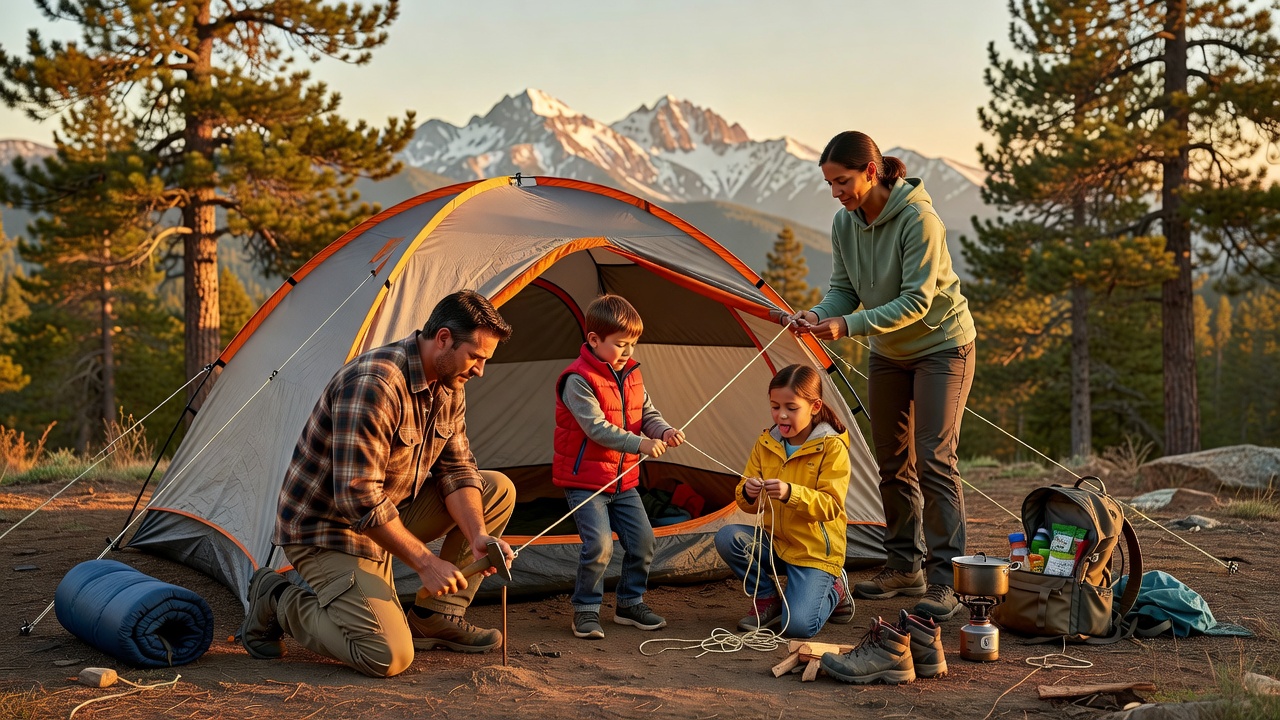
Best Budget Family Tent: 4-Person Easy Pop Up
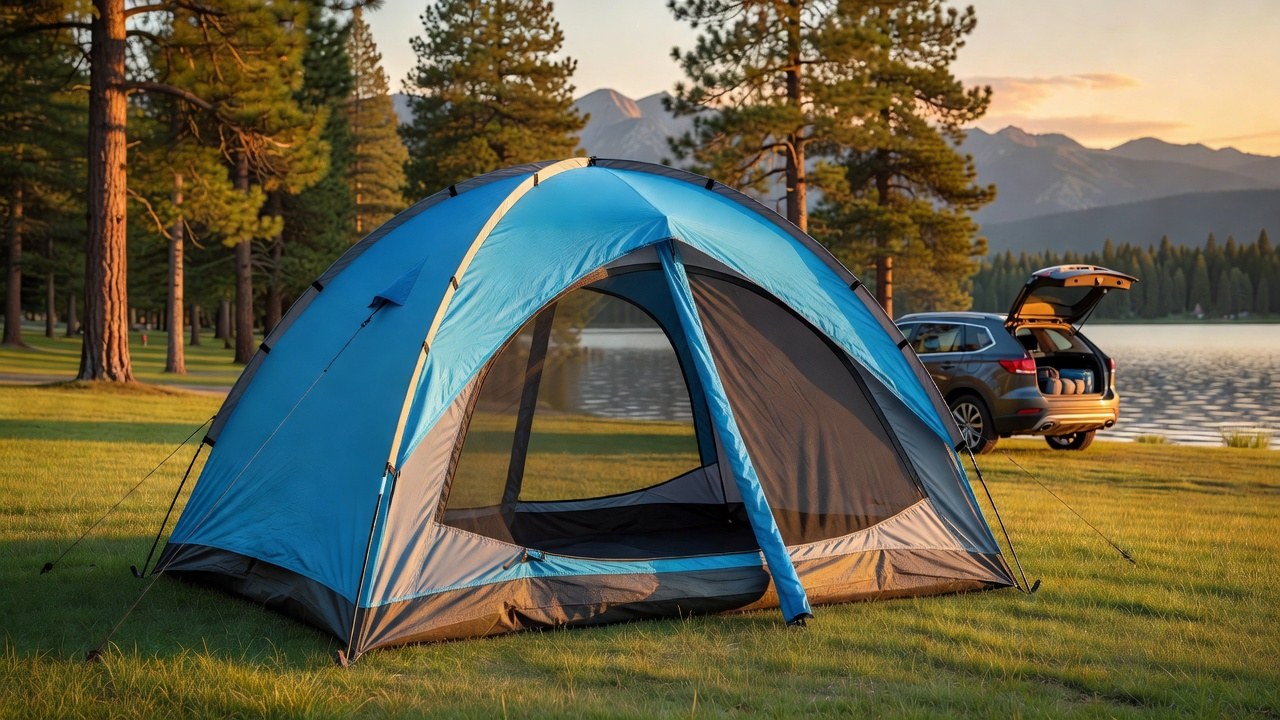
For families who want to try camping without dropping $200+ on a tent, the Londtren 4-Person Pop Up Tent is the entry point that actually works. It's not going to compete with a $500 REI Kingdom — but for weekend car camping with kids, it does the job.
The headline feature is the automatic setup: the poles are pre-connected to the tent body, so you literally unfold it and it pops into shape. No threading poles through sleeves while your kids run off toward the nearest creek. Setup takes under 60 seconds once you've done it once, which means one adult can handle it solo while the other wrangles kids.
What you get at this tier: Waterproof fly with taped seams, two doors (so both adults can get out without climbing over each other), and a mid-size vestibule for muddy shoes. The 4-person rating means it's tight for four adults but fine for two adults + two small kids. Weight is around 8 lbs — car camping only, not backpacking.
The trade-off: You're buying price, not longevity. The fiberglass poles won't survive a serious windstorm, the floor material is thinner than premium tents, and the zippers will snag if you're rough with them. Treat it gently and it'll last 2-3 seasons of weekend use. Mistreat it and you'll be shopping again next summer.
Verdict: Best for families who camp 2-3 times per summer at established campgrounds with good weather. Not for wilderness backpacking or storm-prone locations. If an established campground in a national park is on your family’s wish list, read our National Parks camping guide before booking — it walks through reservation timing, park-specific rules, and a no-surprises packing plan. Holding out for late September? National Public Lands Day weekend (Sept 26) is one of the year’s best-value windows to camp on federal land — our Public Lands Day 2026 guide breaks down what’s actually free this year and how to turn it into a full family weekend.
Best Mid-Range Pick: Coleman Skydome 4P ($122.99)
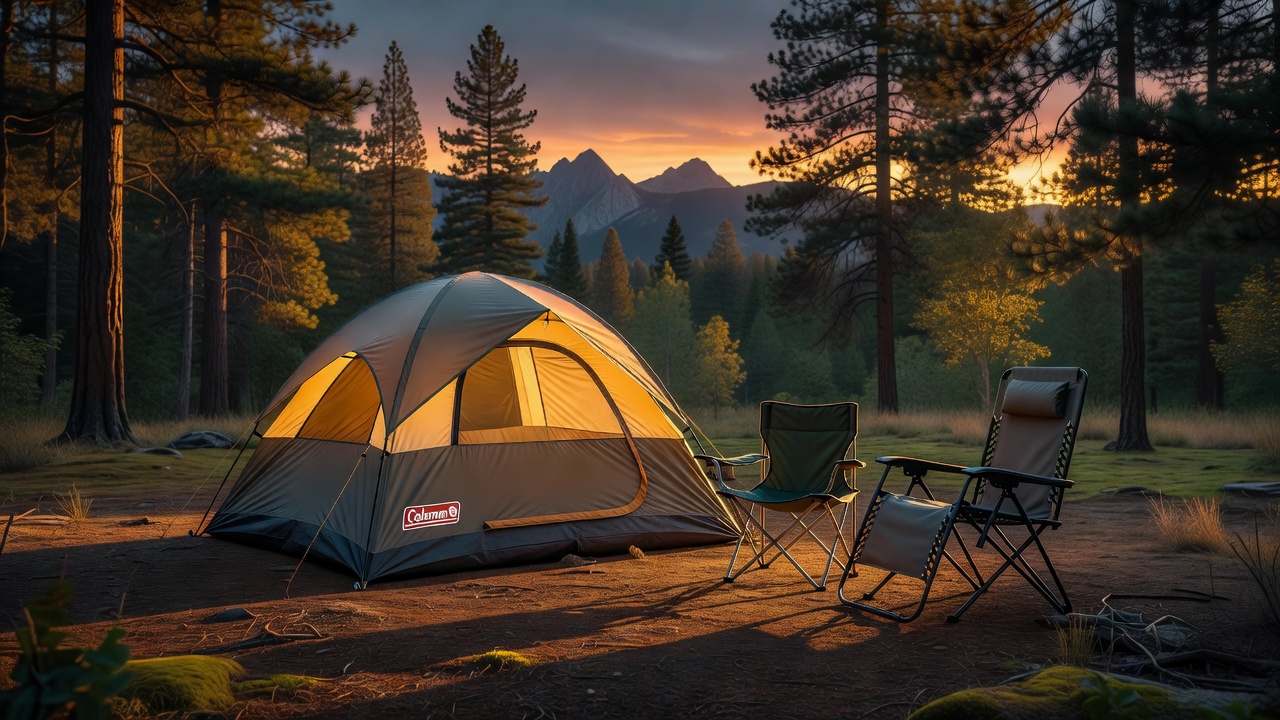
The Coleman Skydome 4-Person Camping Tent with LED Lights is the sweet spot for most families. Colemans are the Honda Civics of tents — not flashy, but they work, and every campground has three of them.
At $122.99, the Skydome's killer feature is the near-vertical walls. Unlike dome tents that slope inward and steal headroom, the Skydome uses pre-angled poles to keep walls upright. A 6-foot adult can stand near the edges without ducking. That matters when you're changing clothes, playing cards on a rainy afternoon, or just not hitting your head every time you stand up.
The built-in LED lighting system runs off 3 AAA batteries and gives you two brightness levels. No more fumbling for a headlamp at 2 AM when a kid needs the bathroom — and once they're old enough to make that trip solo, hand them their own Black Diamond Wiz Kid headlamp, a kid-safe 40-lumen USB-C light that's bright enough for the walk without blinding the whole tent. The setup uses pre-attached poles that click into hub connectors — similar to instant-cabin designs but with Coleman's decades of refinement. One person sets it up in about 5 minutes.
Weather resistance: The WeatherTec system (Coleman's branded tub floor + inverted seams) genuinely works for moderate rain. This isn't a 4-season tent — don't take it snow camping — but for summer thunderstorms and overnight drizzle, the Skydome keeps you dry. If your family camps in winter or at altitude, our best 4-season tents for winter camping covers the shelters built to handle snow loads and sub-zero nights. Mesh ceiling panels provide solid ventilation on hot nights. If your campsite is exposed to steady gusts, pair any family tent with the practical camp stove windscreen and wind-protection guide — the same wind that makes cooking frustrating can turn a rushed tent setup into a bad night.
The trade-off: At ~12 lbs, it's car-camping only. The 4-person rating means 2 adults + 2 small kids max — if you have three kids, size up to a 6-person — the Coleman 6-Person Dark Room Dome ($149.99) is the one we carry, and Coleman's 6P Skydome is sold separately. And the LED system requires remembering to pack spare AAA batteries.
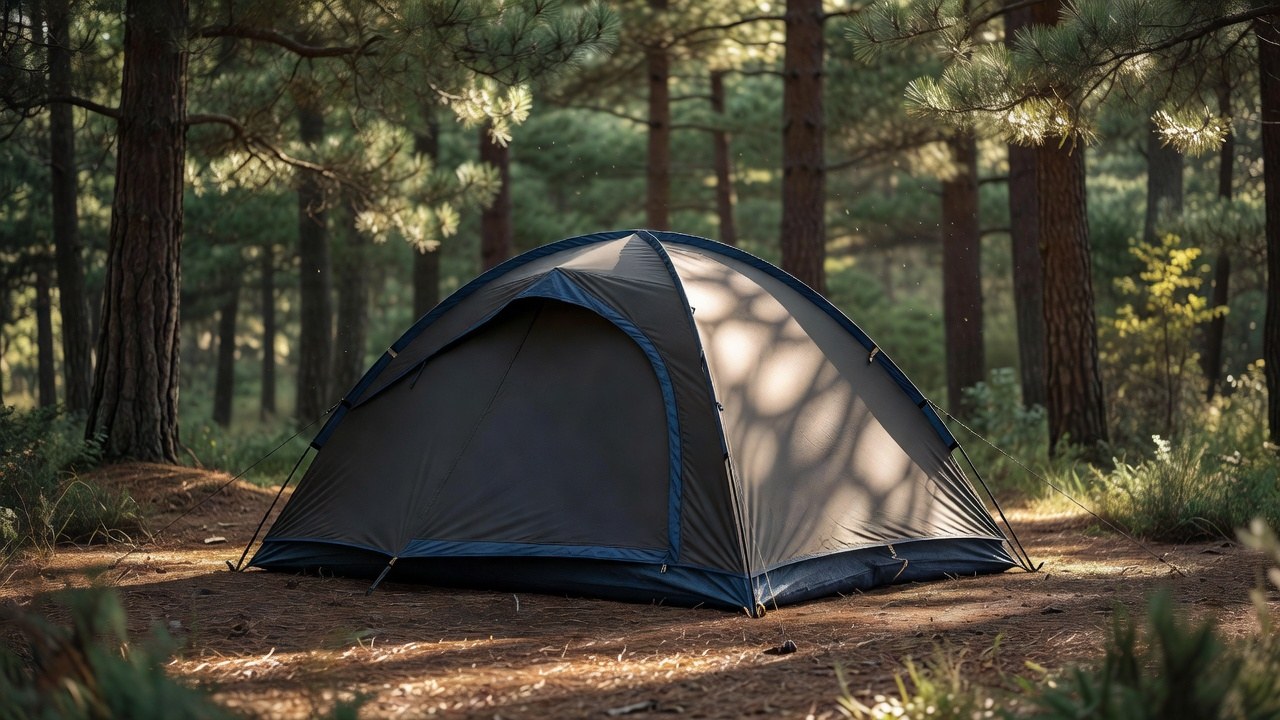
Verdict: The best all-around family tent under $150. Buy this if you want a tent that just works without overthinking it.
Best Value 6-Person Blackout Pick: EVER ADVANCED 6P ($169.99)
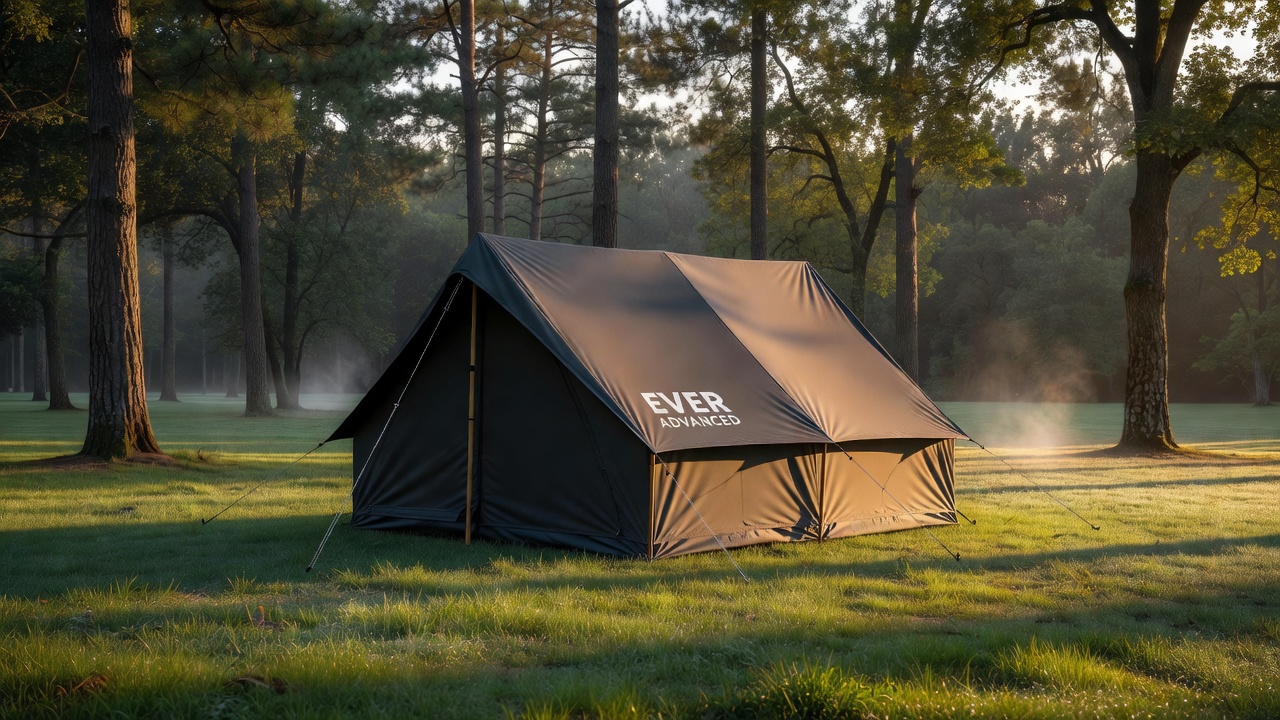
If you need actual room for a family of 4-5, the EVER ADVANCED 6 Person Camping Tent is the value pick I would choose before most flashy Amazon newcomers. At $169.99, you get a real instant-cabin design with pre-attached poles, a 120 x 108 inch floor, and blackout fabric that blocks 90% of early-morning light.
The 6-person layout realistically fits two queen air mattresses with room left for duffels, shoes, and the inevitable pile of kid gear by the door. That's the difference between a tent that only works on the brochure and one that still feels livable at 6 AM when someone is hunting for a sweatshirt. The 72-inch peak height means most adults can stand upright, and the near-vertical walls keep that headroom usable across more of the floor.
What makes this different from the CORE: EVER ADVANCED leans harder into comfort. The blackout fabric is the headline feature — kids sleep later, afternoon naps are possible, and the tent never turns into a bright greenhouse at sunrise. Setup is still about 60 seconds, the full rainfly is included, and the vent + mesh-ceiling combo does a solid job managing condensation for a tent in this price band.
The trade-off: At 22 pounds, it's firmly a car-camping tent. The single-door layout is less convenient than premium family tents with dual entries, and rainfly zippers can snag if you rush them. But those are trade-offs I'd take for blackout comfort at this price.
Verdict: Best value for families of 4+ who want fast setup, real standing room, and better sleep after sunrise. If your kids wake with the sun, this is the sneaky-smart upgrade.
If the blackout feature is the reason you're shopping in the first place, jump to our dedicated best 6 person family tents with blackout fabric guide for a side-by-side breakdown of dark-room and instant-cabin options.
Best Instant-Setup Pick: CORE 6 Person Instant Cabin ($169.99)
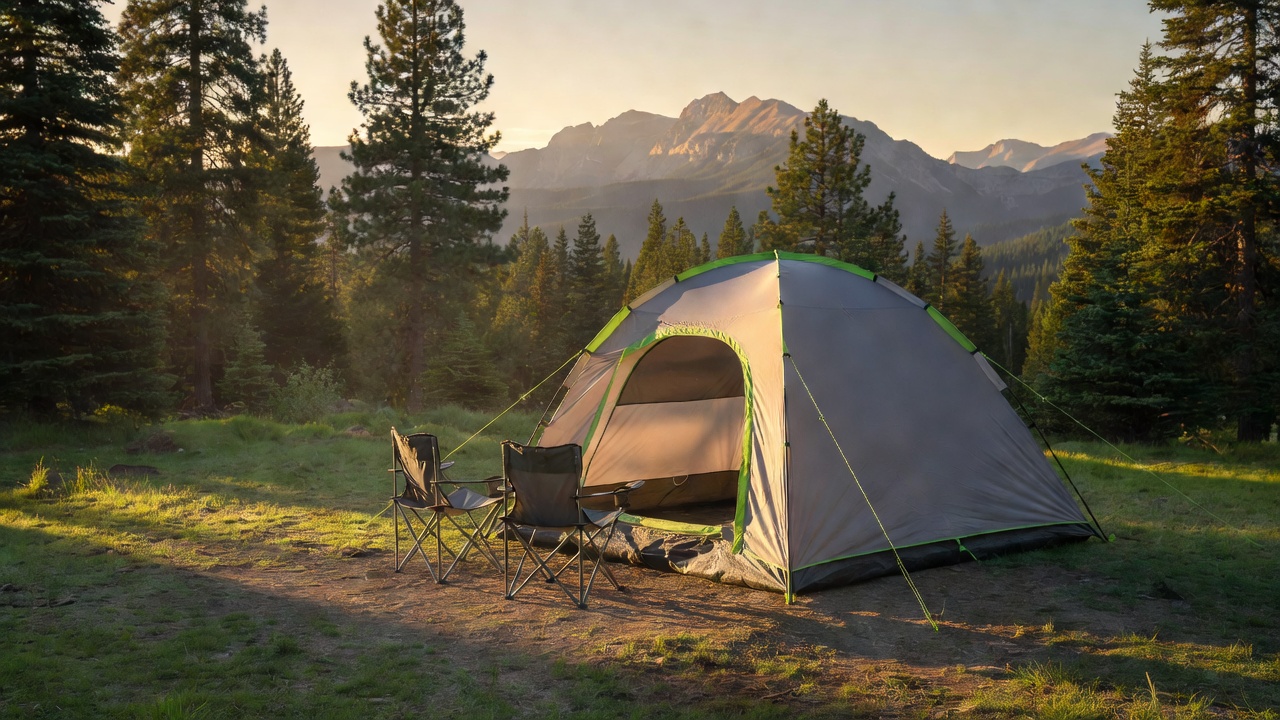
The CORE 6 Person Instant Cabin Tent is what you buy when you're done with "good enough" and want a tent that makes camping feel less like roughing it. At $169.99, it's the top of our in-catalog picks — and for good reason.
CORE's instant-cabin design uses telescoping steel poles with a push-button lock system. No fiberglass, no bending, no cursing. Set up the tent body in 60 seconds, throw the fly over, stake it down. The 6-person configuration creates 99 square feet of floor space — that's roughly a 9'x11' room. Two queen air mattresses fit with a 2-foot walkway between them.
Where CORE beats the competition:
- H20 Block Technology: This is CORE's branded waterproofing — heat-sealed seams on the rainfly AND floor, plus a factory water-repellent treatment that actually works. It's IPX4-equivalent for tents, meaning sustained moderate rain won't leak through.
- Adjustable ventilation: The lower air intake vents and mesh ceiling create a real airflow path. On a 75°F night, the temperature inside stays within 3-5°F of outside — no waking up in a sweat box.
- Storage organization: Gear loft included (small mesh attic for headlamps/phones), plus a built-in wall organizer with pockets sized for water bottles, phones, and glasses. CORE thought about where your stuff actually goes.
The trade-off: Weight. At 20+ lbs packed, this is car camping only. The steel poles are durable but heavy. Also, the "instant" setup only refers to the tent body — the rainfly, guylines, and stakes add another 10 minutes. Call it 15 minutes total solo, 10 with a partner.
Verdict: Buy this if your family camps 5+ times per year and you want a tent that lasts 5+ seasons. The extra $170 amortizes to about $6 per trip.
How to Choose the Right Family Tent
After looking at four tents across three price tiers, here's the decision framework I use:
Step 1: Count your actual bodies — then add 2
A "6-person tent" fits 4 people with gear. That's not marketing exaggeration, it's math — sleeping pads take up floor space, and backpacks/clothes/coolers need to come inside if it rains. If you're a family of 4, buy a 6-person tent minimum. Family of 5? 8-person. If you're stuck between the two most common family sizes, our 4 person vs 6 person tent comparison shows what those extra square feet actually buy you once you add duffels, a dog bed, and one wet-weather afternoon inside. And if grandparents are coming along — three generations sharing one campsite — budget even more room for comfort, cots, and earlier bedtimes; our 3-generation family camping guide walks through the tent math, sleeping layouts, and setup choices that keep a multi-age trip from turning into a chore for anyone.
When a 4-Person Tent Still Makes Sense — and When It Doesn't
This is where most family tent advice gets fuzzy. A 4-person tent is not automatically a bad buy — it is just a bad buy for the wrong kind of trip.
A 4-person tent usually works best when you're camping with two adults, one small child, or one parent who wants a roomy solo setup. It also makes sense for short overnight trips where most of your time happens outside the tent and the weather forecast looks dry. In that situation, a smaller tent costs less, packs smaller, and takes up less room at campsites with tight pads.
A 6-person tent becomes the better choice the moment comfort matters more than minimum packed size. If you're a family of four, bringing a dog, expecting one rainy afternoon, or planning to keep the tent for the next 3-5 years as your kids grow, the jump to 6P pays off quickly. You get more usable floor space, easier morning routines, and enough room to move around without everyone stepping on sleeping pads.
If you want the full side-by-side on real floor dimensions, sleeping layouts, and how much space gear actually steals, our 4 person vs 6 person tent comparison walks through the decision in detail. Before you settle on capacity, use the family camping tent size guide to map sleepers, pads, and rainy-day gear, or let the tent size calculator do the arithmetic for your exact group; if your budget is the deciding factor, our best family tents under $200 narrows the value options without pretending a smaller tent fits more people than it does.
Quick 4-Person vs 6-Person Tent Guide for Families
If you want the fast answer before you keep scrolling: most families of four are happier in a 6-person tent. A 4P tent is usually the right call for two adults who want extra room, one parent with one or two younger kids, or families doing short fair-weather weekends where everyone mostly sleeps in the tent and lives outside. A 6P tent starts making sense the moment you expect rainy afternoons, older kids, bulkier sleeping pads, a large dog, or enough gear that you do not want wet duffels left outside overnight.
Use this shortcut:
- Choose 4P if you're a couple, a solo camper who wants comfort, or a parent with very young kids and you care more about smaller packed size and lower cost.
- Choose 6P if you're a family of four, camping more than two nights, bringing a dog, or want standing room and a center aisle instead of everyone crawling over each other.
- Choose 6P immediately if this is your main family tent for the next 3-5 years. Kids grow faster than tents do.
If you want the full side-by-side on real floor dimensions, sleeping layouts, rainy-day comfort, and how much space gear actually steals, our 4 person vs 6 person tent comparison walks through the decision in detail.
Rainy-Day Comfort: Where 6P Tents Pull Ahead
A lot of families do not regret buying too much tent after the first wet weekend — they regret buying exactly enough sleeping capacity and forgetting that bad weather turns the tent into your living room. The biggest difference between a 4P and 6P tent is not just whether everyone fits at bedtime. It is whether anyone can still move at 4 PM when shoes are wet, jackets are hanging, and somebody needs to play cards on a sleeping pad without sitting on the dog.
A 4-person tent still works when the trip is short, the weather forecast is friendly, and your family treats the tent like a place to sleep. A 6-person tent starts paying for itself when you need a center aisle, standing room for changing, dry storage for duffels, or enough elbow room that a rainy afternoon does not feel like punishment.
If that comfort trade-off matters more than shaving a few pounds or a few dollars, read our full 4 person vs 6 person tent comparison before you commit to the smaller size.
Step 2: Car camping or backpacking?
All four tents in this guide are car-camping-only — they weigh 8-20 lbs. If you need to carry your tent more than 100 yards from the car, you need an ultralight backpacking tent (2-4 lbs), which costs $250-500 and sacrifices standing room for weight savings. None of these tents fit in a backpack. For that completely different use case, our best backpacking tents under 3 pounds guide compares freestanding and trekking-pole shelters for one or two hikers; it is the better starting point when packed weight matters more than standing room for kids and gear.
Step 3: Setup time matters more than you think
You're going to set up this tent at 6 PM on a Friday after driving 3 hours with tired, hungry kids. The last thing you want is a 20-minute pole-threading puzzle. All four tents here use instant-cabin or pop-up designs — you unfold, extend, click. The CORE and EVER ADVANCED are the fastest (about 60-second cabin-style setup). The Coleman Skydome takes ~5 minutes. The budget 4P pop-up is fast but relies on fiberglass flex — it works, but feels a little flimsier. For the full pole-threading, staking, and guy-line walkthrough (and the five mistakes that wreck first pitches), see our how to pitch a tent setup tutorial.
Step 4: Weather resistance is your insurance policy
A tent that leaks on night two of a three-night trip ruins the whole weekend. Pay attention to the waterproof rating:
- Coleman Skydome: WeatherTec system, proven over decades, handles moderate rain reliably
- CORE 6P: H20 Block, heat-sealed seams, the most comprehensively waterproof of the four
- EVER ADVANCED 6P: blackout cabin design with solid rain protection, adequate for weekend storms but not as proven as Coleman/CORE over years of use
- Budget 4P: Basic taped seams, fine for drizzle but don't trust it in a downpour
If you camp in the Pacific Northwest or anywhere with unpredictable rain, spend the extra $40 for the CORE or Coleman. If you camp in Southern California where "rain" means 20 minutes of sprinkles, the budget tent is fine.
Common Family Tent Mistakes (Learn From Mine)
Buying for your ideal future self instead of your actual family. I once bought a 4-person backpacking tent because I imagined epic solo trips. My family of four used it exactly once — we could barely fit two sleeping pads and spent the whole night kneeing each other. Buy for the trip you'll actually take, not the one you might take someday.
Ignoring the packed size. Some of these tents come in duffel-sized bags that won't fit in a sedan trunk already loaded with camping gear. Measure your trunk before buying. The CORE 6P packed bag is roughly 48"x10" — it goes on the roof rack, not in the trunk.
Not setting it up at home first. The first time you pitch a new tent should NOT be at a dark campground. Spend 20 minutes in your backyard or living room. You'll learn the quirks, confirm nothing is missing, and avoid the "where does this pole go" panic at 8 PM. Even better: turn that test run into a full practice night — our backyard camping with kids guide covers the complete at-home setup, sleeping bags by age, and the safety checklist so the first real trip feels like the second time.
Skipping the footprint. A $15-30 ground cloth (or a cheap tarp cut to size) doubles your tent floor's lifespan by protecting against rocks, roots, and moisture wicking. Every tent in this guide benefits from a footprint — none come with one.
Forgetting that kids grow. The 4-person tent that fits your family perfectly today (toddlers in sleeping bags) will be comically small in three years when your kids are pre-teens wanting their own space. If your kids are under 10, size up one tier — you'll grow into it. And if you're camping with a baby or toddler, the tent is only half the puzzle — feeding, naps, and safe sleep each add their own gear and routines. Our camping with a baby and toddler guide walks through the full setup from the first trip onward. Past age 12 the math inverts: teens want their own space, and a hammock often delivers it for less than another tent — our camping with teens guide pairs a family tent with per-teen hammocks and the activities that keep them off their phones.
What to Pack With Your Family Tent
A tent is the shelter, not the whole campsite. Add these four pieces deliberately and the trip runs much more smoothly:
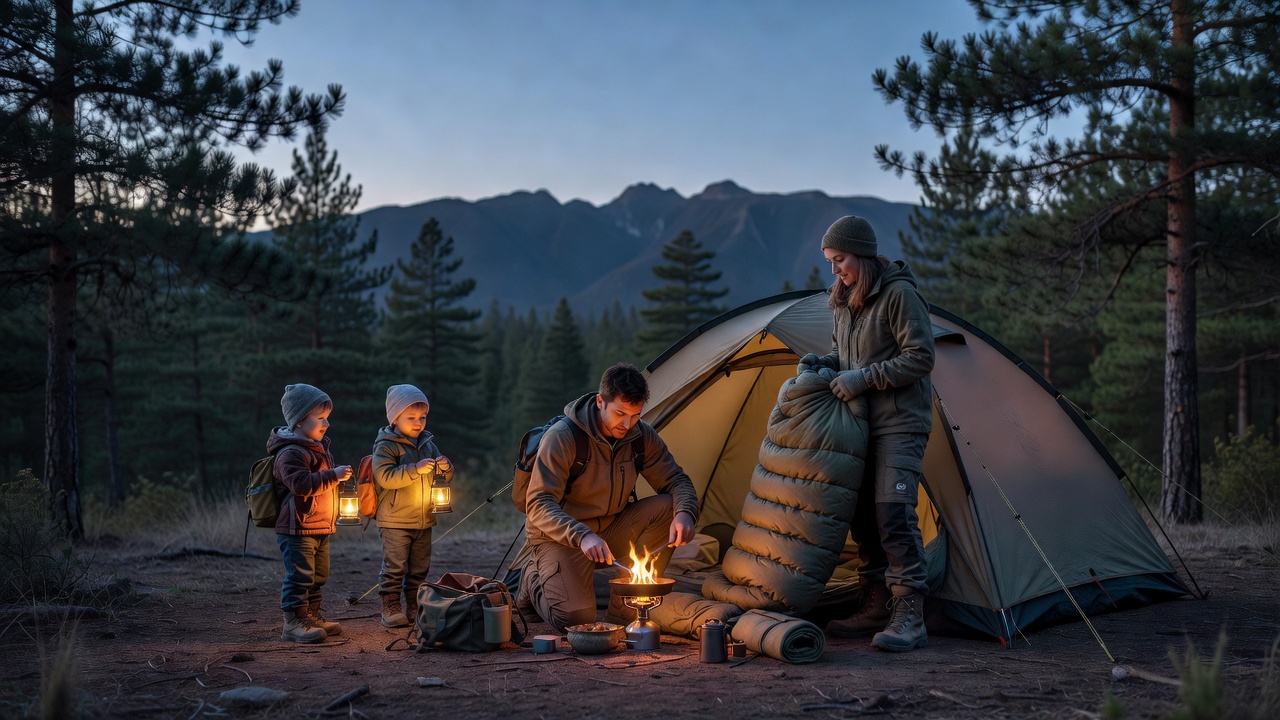
A family tent earns its keep after the first night, when everyone is tired and the small routines matter more than the sales-page floor plan. Keep sleeping gear and a kid's comfort item inside; put cooking, fuel, and food prep outside on a stable surface. That one boundary preserves a clear exit, reduces trips over duffels, and makes the tent feel like a place to sleep rather than a storage bin.
Keep food cold without turning the walk from the car into a two-person lift
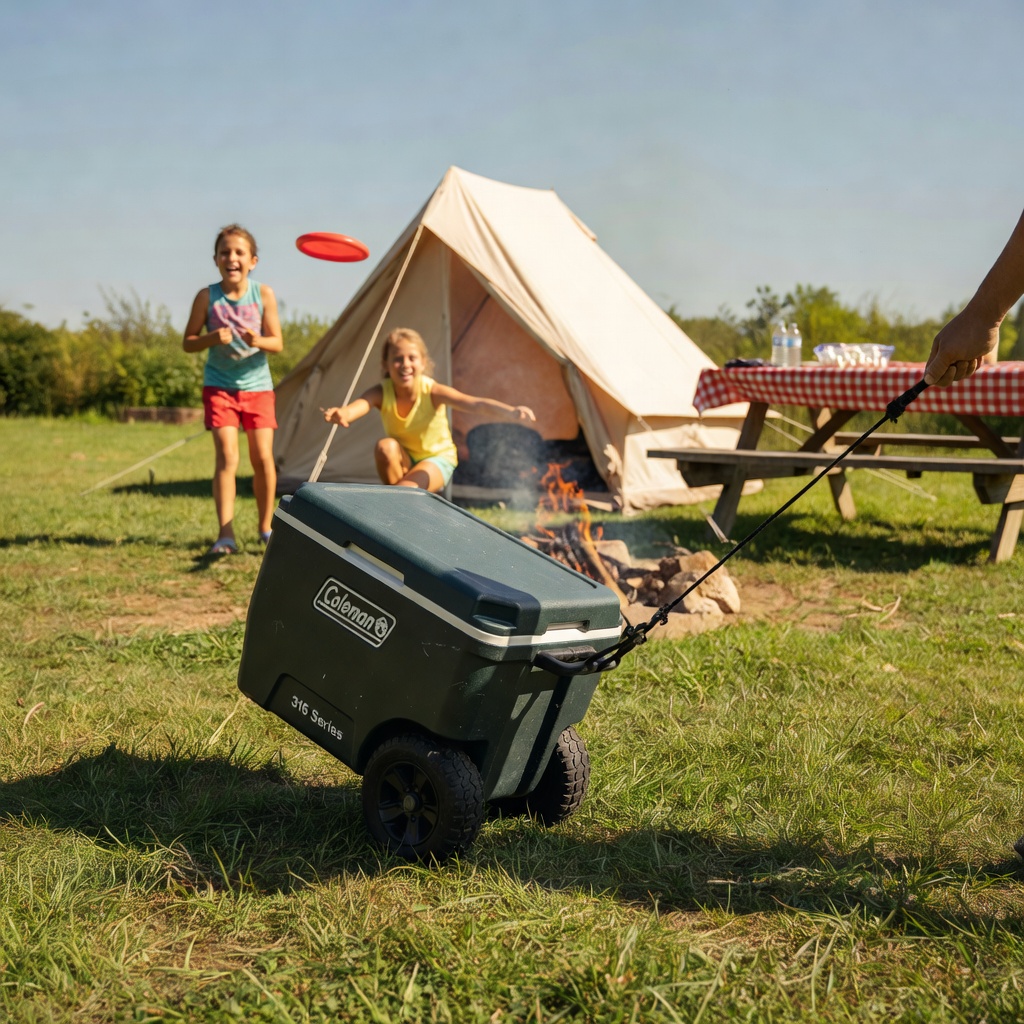
The Coleman 316 Series Wheeled Cooler 62QT ($84.99) makes sense for a family basecamp because it holds several days of food and drinks, then rolls on 6-inch wheels instead of demanding a loaded carry across gravel. Pack meat and dairy low against the ice, keep quick-grab snacks in a small top bin, and drain meltwater before the last morning so the trip home is less messy. For the full layer-by-layer method — what belongs on the bottom, what should never touch the ice, and how much ice a 62QT really needs for three days — our cooler packing guide for weekend camping trips breaks it down step by step.
Give every sleeper a warm, roomy sleep system
For cold shoulder-season nights, the TETON Sports Celsius XXL 0 Degree Sleeping Bag ($89.99) is a car-camping-friendly choice for adults who hate restrictive mummy bags. Its roomy rectangular cut and hood are useful when temperatures dip, but pair any cold-rated bag with an insulated pad—ground chill can undo the benefit of a warm bag surprisingly fast.
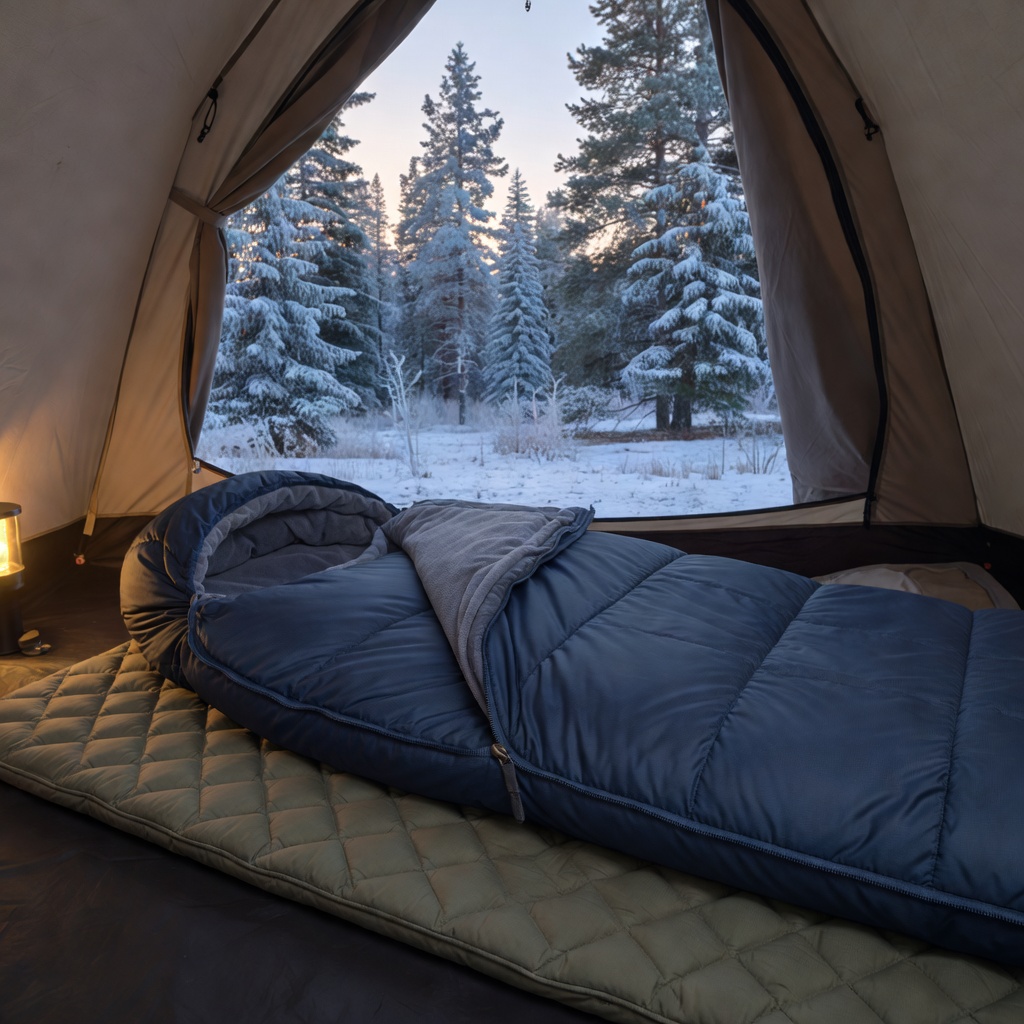
Cold-rated bags only sleep as warm as what is under them, and a plain air mattress is the usual reason a 20°F bag still feels cold. For most families the value pick is the Gear Doctors Oxylus self-inflating pad ($49.99) — a lab-tested 4.3 R-value, self-inflating so nobody is pumping one up at bedtime, and thick enough that side sleepers stop bottoming out. If you are car camping and want the tent to sleep like a guest bed, the Exped MegaMat 10 ($239.95) is four inches of self-inflating foam with an 8.1 R-value that shrugs off frozen ground.
Make the after-dark routine hands-free
A rechargeable Petzl ACTIK CORE headlamp ($79.95) is the kind of upgrade families notice on the first bathroom walk: hands stay free for a child, tent zipper, or gear bag. Use the red mode at camp so you can find jackets and water bottles without blasting everyone awake, and reserve the high setting for route-finding rather than leaving it on all evening.
-
Keep everything charged from one quiet box. Headlamps, phones, a camp lantern, a small fan, maybe a milk pump — a family basecamp generates more rechargeable gear than you think, and dead batteries by day two is the unforced error nobody warns you about. A portable power station lets you run lights and charge devices all weekend without a rattling gas generator, and our guide walks through how many watt-hours a family actually needs before you overpay for capacity you'll never touch.
-
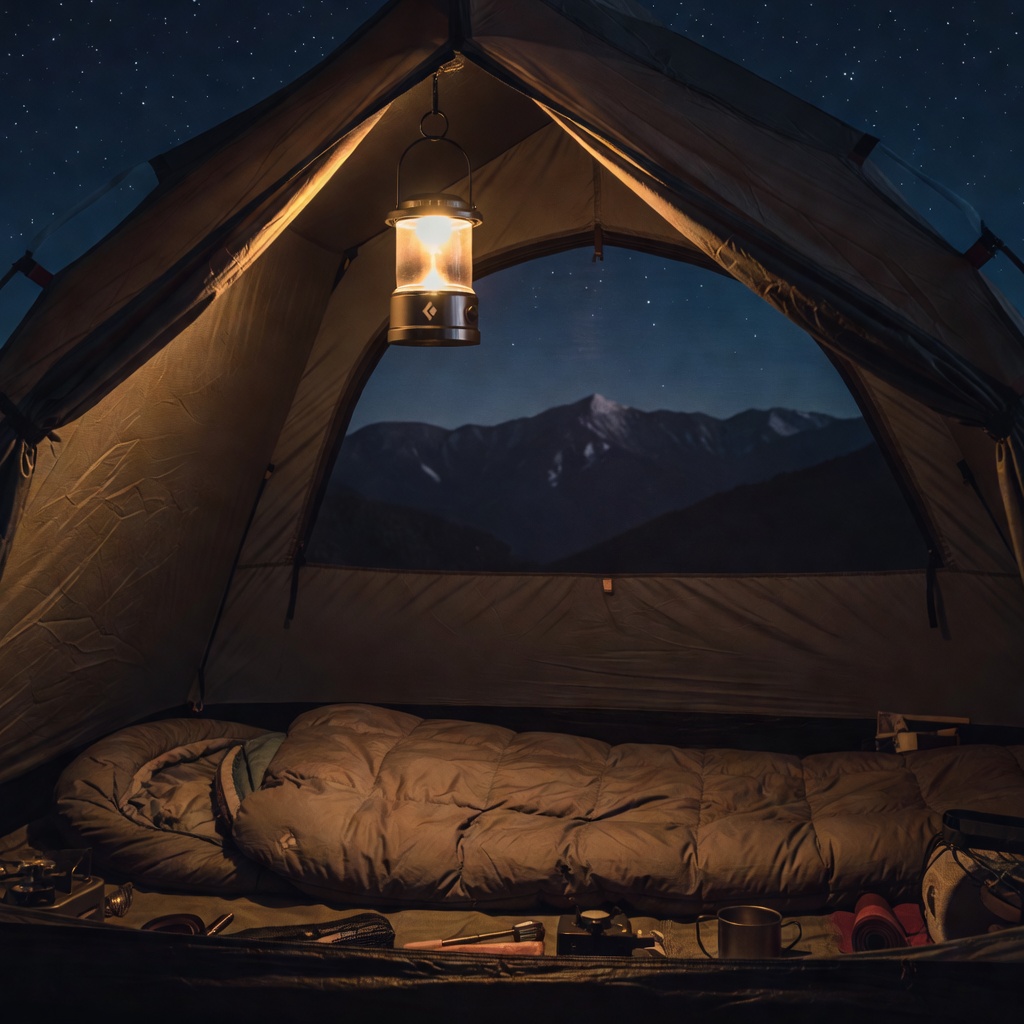
One dimmable lantern covers a whole family tent. A Black Diamond Moji lantern ($24.95) throws an even 200-lumen pool of light for bedtime stories, card games, and repacking a bag at 6 AM, and its single-button dimming lets you turn it down instead of flooding the tent. It runs on the included AAAs, or you can add Black Diamond's own rechargeable cell and skip the disposables.
Put first aid where you can reach it—not in the bottom of a tote
Keep the Adventure Medical Kits Ultralight/Watertight .7 First Aid Kit in the tent door pocket or daypack. This compact kit is designed for 1–2 people on short trips and covers common cuts, blisters, and minor trail problems; add your own prescriptions, allergy medication, and a kid-specific note before each trip.
- A real camp pillow matters more than people expect. Tent floors are only half the sleep problem — neck support is the other half. A lumpy sweatshirt works for one night if you are 22. For families, side sleepers, or anyone trying to wake up without a cranky neck, our best camp pillows comparison guide explains which styles actually stay comfortable through a full weekend.
- Camp lighting changes the whole mood of a site. A tent with good space still feels stressful if everyone is relying on one phone flashlight after dark. Our camp lighting guide breaks down how to combine lanterns, headlamps, and kid-friendly backup light so dinner, bathroom walks, and bedtime all feel easier.
- A folding table solves the little annoyances that pile up fast. Once a family campsite gets crowded with snacks, sunscreen, a stove, and damp towels, extra surface area matters. If you are building a full basecamp instead of just a sleep setup, our camp kitchen setup guide covers the table + stove + cooler workflow that keeps the site from turning chaotic.
- Everyone needs a real seat once the tent is up. Kid-size sleeping pads do not double as camp chairs, and sitting on a cooler lid gets old by the second meal. The right family camp chair is what turns a pitched tent into an actual basecamp — a place to eat, read, and watch the fire without a sore back. Our camping chairs comparison guide compares rocker, lounger, lightweight, and kids' options by packed size and weight capacity so you can match chairs to everyone in the family.
- Taking the comfort level up a notch? Once the tent, chairs, and lights are sorted, our glamping gear guide walks through the hammock, mood lighting, real-plate dining, and power station picks that turn a family basecamp into a weekend retreat — including a complete luxury setup that stays under $200.
- If the kids are bringing bikes, plan the transport before the trunk fills up. A big family tent and a pile of sleeping bags already eat most of the cargo space, and tossing bikes in loose scratches everything around them. A hitch-mounted rack keeps the bikes outside the vehicle and frees the trunk for coolers and gear. Our hitch bike rack buying guide compares 2-bike platforms from Thule, Kuat, Yakima, and Allen with hitch-size advice for family vehicles.
Cook Breakfast Outside the Tent, Not Around It
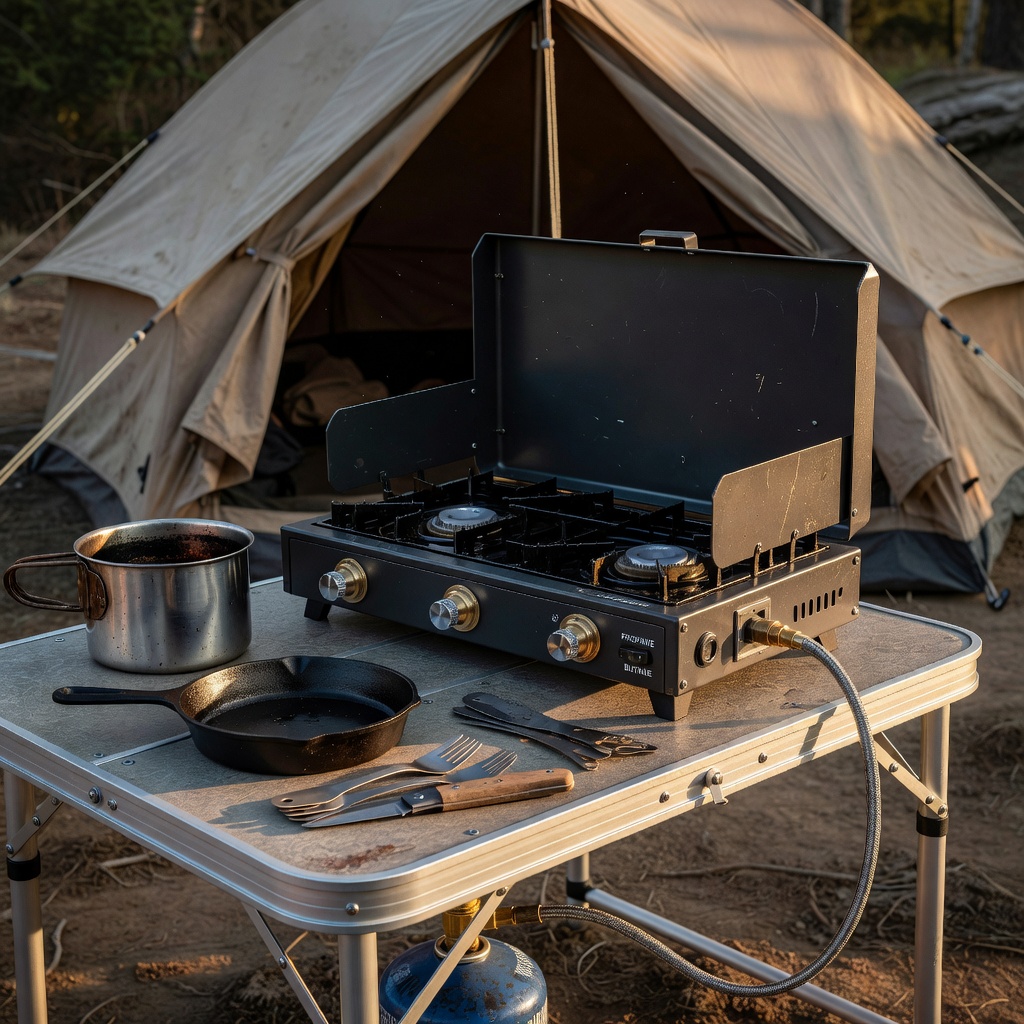
A roomy tent makes a family campsite more comfortable, but it does not turn the vestibule or doorway into a kitchen. Set the stove on a level table outside the tent, keep fuel cylinders upright and away from the rainfly, and leave a clear path for kids moving between breakfast and the car. For most drive-in weekends, the Gas One GS-3400P Dual Fuel Camp Stove ($34.99) is a practical match: it runs on propane for chilly mornings but can also use butane for warm-weather trips. Before packing fuel, use our propane vs butane vs isobutane guide to avoid bringing a cartridge that will struggle at your campsite's overnight temperature, and our Coleman Classic vs Gas One butane stove comparison if you are weighing a simple butane-only stove against the dual-fuel approach for warm-weather picnics and beach days.
Once the cooking is done, the next question is where everyone actually eats. If mosquitoes end your family's evenings about twenty minutes after dinner comes off the stove, the fix is a screened living space rather than a bigger sleeping tent — our guide to family camping tents with a screen porch covers three ways to get a bug-free dinner table at camp, from mesh-walled cabin tents to a canopy screen room that costs far less than an integrated porch.
If you're still building the rest of your setup, use our family camping gear checklist for the full shelter + kitchen + clothing + safety packing list, and our first camping trip starter kit if you still need to buy the basics from scratch.
Family Tent Sizes: What Fits a Family of 3, 4, 5, 6, 8 and 10
Headcount is the worst way to pick a family tent, but it is the way everyone searches. The rule this guide runs on is the one that has never failed us: a tent rated for 6 sleeps 4 people with gear, so add two to your real family size and you land on the right floor. Here is that math written out family by family, with the tent we would actually put in the cart.
| What people search | What actually fits your family |
|---|---|
| camping tent for family of 3 | A 4-person layout does it: two adults plus one child, with packs in the vestibule. If you want a walkway instead of a crawl-over, the 6-person cabin is the upgrade — see the picks above. |
| camping tent for a family of 3 | Same answer as a family of 3: UNP 4-Person Cabin Tent with Top Rainfly ($115.99) or the Coleman Skydome 4P, and size up only if a dog or a second child is coming. |
| best camping tent for family of 3 | Either of the two 4-person picks above. A 6P at this size is luxury, not waste — it buys standing room and a center aisle. |
| camping tent for family of 4 | The 6-person tier, every time. A 4-person tent gives two adults and two small kids with zero gear inside; a 6P gives two queen air mattresses plus a walkway. |
| camping tent for a family of 4 | The 6P tier: CORE 9 Person Instant Cabin is overkill unless you want 9-person space, so the CORE 6P Instant Cabin or EVER ADVANCED 6P is the pick. |
| best camping tent for family of 4 | The CORE 6P Instant Cabin ($169.99) for durability, the EVER ADVANCED 6P ($169.99) if blackout mornings matter more than a second door. |
| best camping tent for a family of 4 | Same two picks, and the tiebreaker is setup: both are instant-cabin designs, both add about 10 minutes of rainfly and staking on top of the 60-second body. |
| best camping tent for family of four | CORE 6P or EVER ADVANCED 6P. If the budget is strict, the 4P pop-up covers one season of fair-weather weekends, not five. |
| best 4 person family camping tent | The Coleman Sundome with Rainfly or the Londtren 4P pop-up ($84.99). The Skydome 4P is the one we still recommend most, because the near-vertical walls are what make a 4P livable. |
| 4 person best tent for family camping | The Coleman Skydome 4P ($122.99) at this size — 5-minute solo setup, LED lighting, and WeatherTec seams that survive a real thunderstorm. |
| camping tent for family of 5 | A 6P if the kids are small and you pack light; an 8P the moment they bring a friend, a dog, or their own gear bins. Most families of five regret the 6P within two seasons. |
| camping tent for a family of 5 | The CAMPROS CP 8 Person Camping Tent with Room Divider ($159.98) with its room divider is the roomier answer, and it is cheaper than either 6P instant cabin. |
| best camping tent for family of 5 | The CAMPROS 8P: you get the divider, so sleeping and gear live in different halves of the same tent. |
| camping tents family of 5 | 8-person capacity, honestly. Three kids plus two adults in a 6P means someone is sleeping against a wall with a duffel. |
| camping tent for family of 6 | An 8P with a divider, or a 9P instant cabin if you want to stand up and keep the divider open all weekend. |
| best camping tent for family of 6 | The CORE 9 Person Instant Cabin ($299.99) if you camp five or more times a year, the CAMPROS 8P if the budget tops out around $160. |
| camping tent for a family of 6 | 8P minimum. Two parents and four kids in a 6P is four people plus gear in a tent rated for six sleepers with none. |
| tents for family of 6 | The 8P CAMPROS or the 9P CORE cabin. Anything smaller turns morning routines into a queue. |
| camping tent for family of 8 | A 9 or 10-person layout. This is where instant-cabin construction stops being a convenience and becomes the reason you can pitch the tent at all. |
| best camping tent for family of 8 | The Coleman 4/6/8/10 Person Instant Tent ($180) covers the 8-person configuration in the same frame as the 4, 6 and 10 sizes, with Coleman rating the setup at about a minute. |
| best family camping tents 8 person | The CAMPROS CP 8P for the divider at $159.98, or the CORE 9P if standing height for six people matters more than price. |
| 8 person best tent for family camping | CAMPROS 8P with the divider, or the Coleman 4/6/8/10 instant frame if you want the same tent to scale up later. |
| camping tent for family of 10 | The 10-person configuration of the Coleman 4/6/8/10 Person Instant Tent is the honest answer: at this size you are not choosing a tent, you are choosing an instant frame that pitches in about a minute. |
| family camping tent 4 person | The Skydome 4P or the UNP 4-Person Cabin, both around $115-125, both fine for two adults and a small child on fair-weather weekends. |
| family camping tent 6 person | CORE 6P Instant Cabin, EVER ADVANCED 6P, or the Coleman 6P Dark Room if you want blackout at a lower price ($149.99). |
| core tent for family camping 4 person | CORE does not make a 4-person instant cabin in our catalog — the CORE 9 Person Instant Cabin and the CORE 6P Instant Cabin are the two we carry, and both are cabin-style with steel poles. |
Large, Multi-Room and Big Family Tents
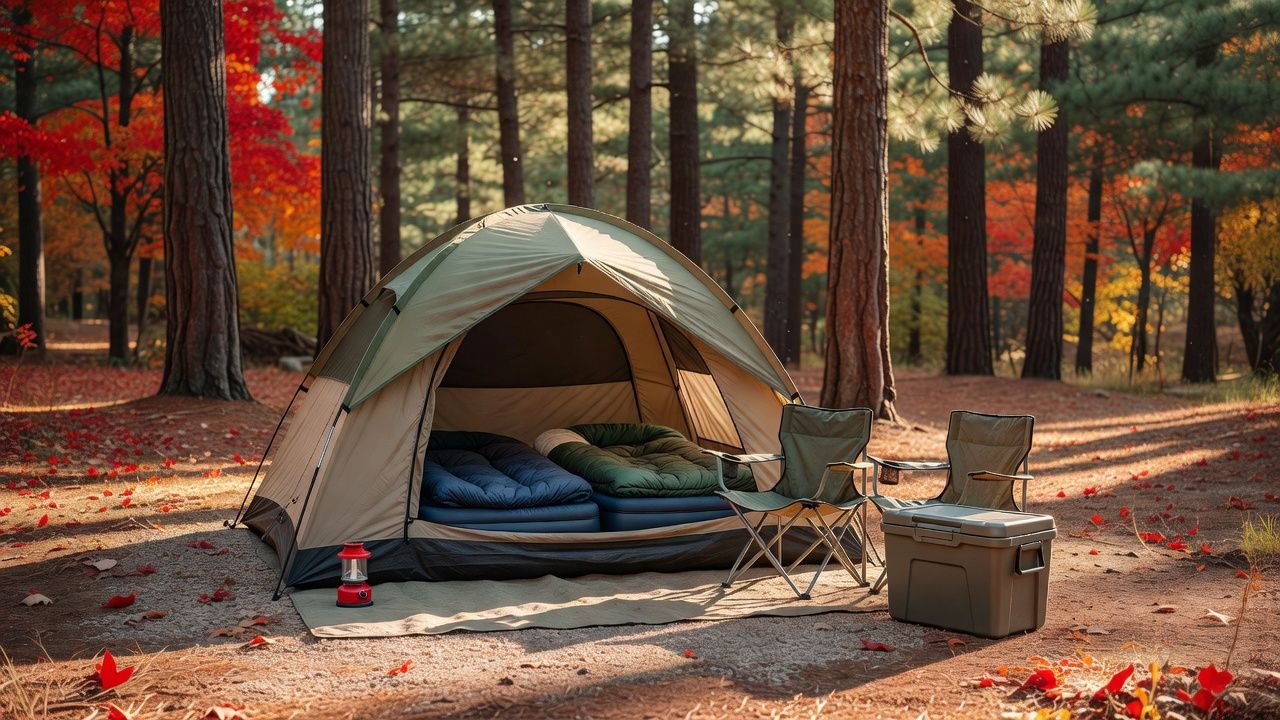
Two things decide whether a "large" family tent is worth it: whether the floor fits your tent pad and whether the extra fabric costs you setup time and wind performance. Big buys real comfort in the rain and at 6 AM, and it costs weight, packed size and money. Here is what each of these searches is really asking.
| What people search | What actually fits your family |
|---|---|
| largest family camping tent | The largest family tents we stock are 9 to 10-person instant cabins, and at that size the honest question is whether your site pad and your trunk can take it. The CAMPROS CP 8 Person Camping Tent with Room Divider is the value entry at $159.98. |
| large family camping tents | The 8P CAMPROS for the divider, the 9P CORE Instant Cabin for durability. Both are car-camping-only, both are 20 lbs or more. |
| extra large family camping tent | 10-person territory. The Coleman 4/6/8/10 Person Instant Tent pitches in about a minute, which is the only reason a tent this size is practical for a weekend. |
| extra large family camping tents | 10P instant cabins and 9P CORE cabins. Check your pad length first — the traditional 14x14 cabin shape overhangs many state park tent pads. |
| family camping tent large | Large means floor area and peak height, not headcount. A 6P cabin with near-vertical walls feels bigger than an 8P dome because you can use the edges. |
| xl family camping tent | The XL label is marketing, not a size standard. Compare actual floor dimensions: the EVER ADVANCED 6P is 120 x 108 inches, which is where its two-air-mattress claim comes from. |
| big family camping tent | A 6P cabin is "big" for a family of four; a family of six needs the 8P in the row above. Buy for the family that shows up on the trip, not the one on the box. |
| big family camping tents | The CAMPROS CP 8P with the room divider, or the CORE 9P. Both give a family of five or six enough floor that nobody sleeps against the door. |
| best large family camping tent | The CAMPROS CP 8P ($159.98) if you want a divider, the CORE 9 Person Instant Cabin ($299.99) if you want it to last a decade of weekends. |
| best big family camping tent | Same two picks. At this size, durability and pole hardware matter more than either brand name. |
| best camping tent for large family | 8P with a divider, or 9-10P if you are camping with six or more people regularly. The divider is the feature that actually changes how the weekend feels. |
| best tent for big family camping | CAMPROS 8P, or step up to the CORE 9P when the camping happens more than five times a year. |
| best large camping tent for family | CAMPROS 8P at the value end, CORE 9P at the long-life end, Coleman 10P instant when the group is genuinely ten people. |
| best rated large family camping tents | All three of ours sit at 4.2 stars or better, which for tents this size means the frame survives wind and the seams hold in sustained rain. |
| large tents for family camping | Anything 8P and up. Remember the packed bag length — these are roof-rack or trunk-and-a-half tents, not something you strap to a daypack. |
| biggest family camping tent | The biggest configuration we carry is the 10-person version of the Coleman 4/6/8/10 Person Instant Tent, and Coleman rates that frame at about a minute of setup — the only way a tent that large is practical for a two-night trip. |
| camping family tent with rooms | The divider is the feature to shop for. The CAMPROS 8P ships with one, which splits sleeping space from gear space without adding a second tent. |
| best large family car camping tent | The CORE 9P Instant Cabin if you want it to last, the CAMPROS 8P with the divider if the budget is around $160. Both are strictly car camping. |
| large family tent camping | The trade-off to accept: 20-35 lbs and a 15-minute total pitch. What you get back is a living room that stays dry when it rains at 4 PM. |
| large family tent for camping | The CAMPROS CP 8P is the one we point budget shoppers at, because it stays under $160 with the divider included. |
| large family camping tent with rooms | Rooms come from a divider, not extra square footage. The CAMPROS 8P ships with one; two-room layouts are how you get a "bedroom" and a "mudroom" in a single tent. |
| family camping tents with rooms | The divider splits the floor in two — great for a baby nap during the day, less useful as a sound barrier. Fabric dividers block light and sight, not noise. |
| family camping tent with rooms | The CAMPROS 8P is the only in-catalog tent with a room divider, which makes it the direct answer for this search. |
| large family tent with rooms | 8P plus a divider. If you want three distinct zones, you are usually better off with one big tent plus a screen room than with a 3-room cabin. |
| family tents for camping with rooms | The CAMPROS 8P. If you are shopping two-bedroom layouts specifically, the second "room" is usually a divider panel rather than a second tent body. |
| family camping tent with two bedrooms | Two bedrooms in a family tent means one divider panel, and the honest verdict is that kids under six will still end up in your half. It is still worth having for naps and gear. |
| multi room family camping tents | Multi-room cabins get heavy fast. A 14x14 two-room cabin is a two-person setup job and needs a large pad or a double site. |
| multi room family camping tent | The 8P CAMPROS with its divider is the practical version for a family of five; anything larger is usually a seasonal site tent rather than a weekend tent. |
| large family outdoor camping tent 2 room | The CAMPROS 8P, and pitch it so the divider sits between sleepers and gear rather than splitting the sleeping area itself. |
| 3 room family camping tent | True three-room family tents exist but they are enormous, wind-exposed and slow to pitch. For a family weekend, a two-zone tent plus a separate screen room is the better layout. |
| tall family camping tent | Peak height is the spec to check: 72 inches is the threshold where most adults can stand upright, and near-vertical walls are what make that height usable across the floor. |
| large family cabin tent | Cabin construction (vertical walls, near-square corners) is what makes a large tent feel large. The 6P instant cabins we carry are 72-inch peak; the 9P CORE is taller still. |
| large family camping cabin tents | The CORE instant cabins and the CAMPROS 8P. Cabin designs take more wind load than domes, so guy out every loop on an exposed site. |
| camping tent big family | The 8P CAMPROS is the smallest tent we would call right for a family of six; below that you are choosing a backpacking problem for a car-camping trip. |
| camping tent large family | 9P or 10P. At that size, instant-cabin steel frames are non-negotiable — nobody is threading 30 feet of pole in the dark. |
| tent camping with large family | Two tents sometimes beats one: a 6P for the kids and a 4P for the adults is lighter, cheaper and faster to pitch than a single 10P cabin. |
| family camping tent with vestibule | A vestibule is the covered entry area where wet shoes and duffels live. Most family tents include one; the bigger you go, the more a real vestibule matters in rain. |
| family tent vestibule | The vestibule is why we tell families to size up: a dry zone for muddy boots and a cooler is what keeps the sleeping floor usable on night two. |
Waterproof, Canvas and Air-Tent Family Tents
Every family tent sold today claims to be waterproof. What separates them is how the seams are finished, how deep the tub floor is, and whether the rainfly covers the whole tent or just the roof. Here is how to read those claims, plus the canvas and air-tent questions families ask us most.
| What people search | What actually fits your family |
|---|---|
| family camping tent waterproof | Look for three things: taped or heat-sealed seams, a bathtub-style floor, and a full-coverage rainfly. The CORE 6P H20 Block build has all three; the budget 4P pop-up has only the first. |
| best family camping tent waterproof | The CORE 6P Instant Cabin, because heat-sealed seams on both the fly and the floor are the spec that survives a sustained storm rather than a passing shower. |
| best family tent for camping waterproof | CORE 6P for the most comprehensively sealed option, Coleman Skydome if WeatherTec plus a decades-long track record matters more to you. |
| best tent for family camping waterproof | The CORE 6P or the Coleman Skydome 4P. Both handle moderate rain; neither is a four-season shelter, so do not read "waterproof" as "snow-proof". |
| waterproof family tents for camping | Coated polyester with taped seams covers almost every family tent under $300. If you camp in the Pacific Northwest, budget the extra $40 for the CORE over a budget tent. |
| camping tent family waterproof | Check the floor first — that is where water actually gets in. A tub floor that turns up several inches at the edges beats a higher hydrostatic-head number on the fly. |
| best camping tent for family of 4 waterproof | The Coleman Skydome 4P: WeatherTec tub floor, inverted seams, and a fly that covers the roof and upper walls. Pair it with a footprint to protect the floor from the ground up. |
| best family camping tent for rain | The CORE 6P, and add the rule that catches most wet nights: never let gear touch the tent walls, because contact wicks water through any fabric. |
| large family tent waterproof | The CAMPROS 8P includes a rainfly at $159.98. On a tent this big, seam-seal the fly yourself once a season if you camp in real rain. |
| family camping tent canvas | Canvas breathes and manages condensation better than coated polyester, but it is two to three times heavier, must be bone dry before storage, and costs more. For weekend car camping, synthetic wins. |
| best canvas tent for family camping | We do not carry canvas family tents in the catalog — for this use case, a coated-polyester cabin with a full fly handles rain better for a third of the weight and price. |
| family camping tent inflatable | Air tents replace poles with inflatable beams: no poles to lose, one valve to pump, and a footprint that stays rigid in wind. The catch is packed size and puncture repair. |
| inflatable family tent for camping | Air-beam tents are a genuinely good fit for car camping families because they pitch fast, but they take up more trunk space than a pole tent of the same capacity. |
| best inflatable tent for family camping | If you go this route, carry the repair kit and a pump that works off the car — an air tent that deflates at 9 PM has no field fix short of a patch. |
| best air tent for family camping | Air tents earn their keep on multi-night trips where you pitch once and stay put. For a one-night stop, an instant cabin is faster and cheaper. |
| family camping air tent | The honest summary: air beams are great for setup and wind rigidity, weaker on repairability and packed volume. Our in-catalog family picks are pole and instant-cabin designs for that reason. |
Instant, Cabin, Dome and Pop-Up: Family Tent Setup Styles Compared
Set-up style changes a family trip more than any other spec, because it decides whether the first 20 minutes at camp are calm or awful. There are four shapes worth knowing, and one number worth re-reading: the "60-second setup" claim never includes the rainfly, the guylines or the stakes.
| What people search | What actually fits your family |
|---|---|
| family camping tent instant | Instant means pre-attached or telescoping poles that click into hubs. The tent body goes up in about 60 seconds; the fly, guylines and stakes add another 10 minutes. |
| best instant tent for family camping | The CORE 6P Instant Cabin for steel telescoping poles and standing height, the EVER ADVANCED 6P if you also want blackout fabric. |
| best pop up tent for family camping | The Londtren 4P pop-up ($84.99) at the budget end. Pop-ups use spring-steel frames that fold into a disc — fast, but the first fold-down takes practice. |
| family camping tent pop up | Pop-up tents are the fastest to pitch and the least stable in wind. Fine for fair-weather weekenders; not what you want on an exposed ridge. |
| family camping tent easy setup | Anything with pre-attached poles. For a family, the split that matters is whether one adult can pitch the body alone while the other handles kids — instant cabins win that test. |
| best family camping tents easy to set up | The two instant cabins and the 4P pop-up. The Coleman Skydome 4P is the fastest non-instant design we carry, at about 5 minutes solo. |
| family camping tent setup | Budget 15 minutes total, not 60 seconds: body first, then fly, then stakes at the corners, then guylines on the windward side. |
| family tent camping setup | Pitch the door away from the prevailing wind, stake the windward corners first, and put the kids inside with a job (pumping the air mattress works well) while it goes up. |
| family tent camping set up | The order that saves the most time: lay the footprint, unfold the body, extend the poles outward from the hub, then fly, then guylines. Never stake before the frame is set. |
| family camping tent set up | One person can pitch a 6P instant cabin alone. An 8P or larger usually wants two people, mostly for the fly. |
| best family tent camping set up | The instant cabins again — and the reason is the fly, which on a cabin tent is a quick throw-over rather than a second pole structure. |
| family tent camping easy set up | Easy means fewer parts. Pre-attached poles, a fly with clips instead of sleeves, and colour-coded poles are the three features that cut setup time most. |
| easy set up family camping tents | The Londtren 4P pop-up if 60 seconds matters more than wind performance, the CORE or EVER ADVANCED 6P if you want fast and durable. |
| family cabin tents | The CORE 6P, EVER ADVANCED 6P and the 9P CORE are all cabin designs. The CAMPROS 8P is cabin-adjacent with a divider and a lower price. |
| family cabin tents for camping | All the instant cabins we carry. Cabin geometry is why a 6P cabin feels bigger than a 6P dome: the walls are usable space, not slope. |
| family cabin camping tent | Pick a cabin if you will be inside during rain or want to stand while changing. Pick a dome if wind protection and packed size come first. |
| family camping cabin tent | The EVER ADVANCED 6P is the one to consider if you want a cabin with blackout fabric — the combination is unusual at this price. |
| family cabin style tent | "Cabin style" usually means straight walls plus a near-square floor. Ask for the floor dimensions, because cabin labels are applied loosely. |
| cabin family tent camping | Cabin tents dominate family camping for one reason: standing height. The trade is a heavier bag and more windage, so guy out every loop. |
| family cabin dome tent | A hybrid marketing name, not a category. What it usually describes is a dome with steep walls — read the peak height and floor plan instead of the label. |
Family Camping Tents: FAQ
Quick answers to the questions families actually search for before buying a tent. Full detail is in the sections above.
What size tent do I need for a family of 4?
Buy a 6-person tent for a family of 4. Tent manufacturers rate capacity as sleeping bags side-by-side on the floor with zero gear — so a "4-person" tent fits 2-3 adults comfortably, and a 6-person fits 4 people plus backpacks, a dog, or the cooler you want inside during rain. Two adults + two kids + gear in a 6P layout like the EVER ADVANCED 6P or CORE 6P Instant Cabin leaves room for two queen air mattresses with a walkway between them. For the full floor-space math, see our camping tent size guide.
Is a 6-person tent big enough for a family of 4?
Yes — it's the sweet spot. A 6-person tent gives two adults and two kids real breathing room: two queen air mattresses plus a strip for duffels and shoes, with 6-foot peak height so adults can stand upright. It's also the threshold where blackout fabric and instant-cabin setup become affordable (both picks above run about $170). Go up to an 8-person tent only if you camp with three-plus kids, bring two large dogs, or plan long rainy-weekend trips where everyone stays inside for hours.
How many people actually fit in a 4-person tent?
Two adults and two small kids, max — with no gear inside. A 4-person tent floor is roughly 7x7 feet, which fits one queen air mattress or two narrow sleeping pads. The Coleman Skydome 4P works well at this size because its near-vertical walls add usable headroom, but plan to store backpacks in the vestibule. If you want to keep a 4P tent for short fair-weather weekends, our 4-person vs 6-person comparison shows exactly where the smaller size starts feeling cramped.
Are instant pop-up tents good for families?
Yes, for car camping — setup drops to about 60 seconds for the tent body. Pre-attached poles and hub connectors (like the CORE Instant Cabin's telescoping steel poles or the EVER ADVANCED cabin design) mean one adult can pitch the shelter solo while the other wrangles kids. The trade-offs: instant tents weigh 20+ lbs and are strictly car-camping gear, and the rainfly, guylines, and stakes still add another 10 minutes on top of the 60-second body. A traditional pole tent saves weight but costs 15-20 minutes of setup at the end of a long drive.
Do blackout tents help kids sleep longer?
Usually yes — 90% light blockage makes a real difference at sunrise. The EVER ADVANCED 6P blocks about 90% of early-morning light, which delays the "it's morning, I'm awake" moment for kids and makes afternoon naps possible. If your family already wakes with the sun, blackout fabric is the single most effective tent upgrade you can make — compare the dark-room options in our best 6-person blackout tents guide.
What is the best family tent for rain?
A tent with a full-coverage rainfly and sealed seams — like the CORE 6P Instant Cabin's H20 Block Technology. Heat-sealed seams on the rainfly and floor plus a factory water-repellent treatment keep sustained moderate rain out, and the adjustable lower air vents + mesh ceiling manage the condensation that otherwise drips back down on cold, wet nights. The Coleman Skydome's WeatherTec tub floor and inverted seams are a solid budget equivalent. No family tent under $200 is a true 4-season shelter — for snow or alpine weather, see our 4-season tent guide.
How do I keep a family tent cool on hot summer nights?
Open the vents, use the mesh ceiling, and set up in the shade. A tent with adjustable lower air intakes and a mesh ceiling (the CORE 6P's design keeps interior temperature within 3-5°F of outside) pulls cool air in at ground level and lets hot air escape through the roof. Pitch with the doors facing prevailing breeze, skip the full rainfly on clear nights, and add a portable fan for still nights. The same wind management that cools a tent also protects your cooking setup — our camp stove windscreen guide covers it.
Is a 6 person tent too big
Not for a family of four — that is exactly who the 6P size is built for. It is too big for one person, and slightly small for a family of five with gear. A "6-person" rating counts sleepers side by side with nothing else in the tent, so two adults and two kids plus duffels is the realistic load.
Is a 6 person tent too big for one person
For one person, yes: you would be heating and carrying a 20-lb cabin. Solo campers are better served by a 2P tent, and one of these lightweight backpacking tents is a far better match than a family cabin.
Is a 4 person tent big enough
Big enough for two adults and one or two small kids with gear kept in the vestibule. It is not big enough for two adults, two kids and bags — that is the jump to a 6P, and it is the single most common upgrade families make after one season.
Is a 10 person tent too big
Too big for most family campsites and most tent pads, but exactly right for a group of eight to ten. Past about 8P you also need two people to pitch it and a site with a large pad or a double site.
What size tent for family of four
A 6-person tent. That gives two adults, two children and room for the cooler and duffels when it rains. A 4P is a fair-weather short-trip tent for that size family, not the default.
How to start camping as a family
Start with a one-night trip within an hour of home, at a campground with bathrooms, in dry weather, using borrowed or budget gear. Pitch the tent in the backyard first, keep the first menu simple, and treat the second trip as the real one.
Are camping tents insulated
No — a standard camping tent is a shell, not an insulated structure. Warmth comes from what you sleep on and in: an insulated pad breaks the ground chill and a correctly rated bag traps your heat. That is why we treat the 4P vs 6P comparison as secondary to the pad and bag choices.
Planning a Fall Family Camping Weekend?
Fall is the best family camping window of the year — cooler nights, fewer crowds, no bug pressure. It's also when the seasonal stuff peaks, and each of these pairs naturally with a family tent base camp:
- Halloween camping with kids — spooky weekend ideas, cold-night gear picks, campfire treats, and a safety checklist that keeps it stress-free.
- Pumpkin patch camping weekends — pair a farm visit with a campsite so you're not driving home in the dark.
- Columbus Day weekend camping — the holiday-specific packing list for the last long weekend of the season.
A fly that wets out instead of beading is the first sign a tent needs re-proofing; the tent waterproofing and repair guide shows the four-step fix.
Taking the dog along in cold weather? The cold-weather dog camping guide is the seasonal companion to this page.
The Bottom Line: Which Tent Should You Buy?
| If you... | Buy... |
|---|---|
| Camp 1-2x/year on a tight budget | 4P Easy Pop Up (budget tier) |
| Want reliable, no-fuss quality under $150 | Coleman Skydome 4P ($122.99) |
| Need room for 4-5 people at the best value | EVER ADVANCED 6P ($169.99) |
| Camp 5x+/year and want a tent that lasts | CORE 6P Instant Cabin ($169.99) |
For families camping 2-4 times per summer, the Coleman Skydome 4P usually hits the sweet spot — but it is only part of a livable campsite. Camping this fall? September and October are prime family tent season: cooler nights, zero bugs, and campsites that were booked solid all summer suddenly open up. Our fall family camping guide covers the seasonal extras that matter once the tent is up — keeping the interior warm and dry through 40°F nights, quick-dry layers for the whole crew, and the activities that make a crisp-weekend trip stick with kids. If neck pain and lousy sleep are the real reason everyone wakes up grumpy, our best camp pillows comparison guide helps you fix the comfort side without buying a bigger tent than you need. And if you're shopping for a camping family rather than for yourself — birthdays, holidays, or a new-camper housewarming gift — our best camping gifts guide rounds up 20+ vetted picks from $9 to $190, organized by who you're buying for (camp chefs, hikers, kids, and dogs). Building one yourself? The DIY camping gift basket guide has five basket builds from $50 to $150, including a family-and-kids version. If you want a calmer campsite after sunset, our camp lighting guide shows how to combine lanterns, headlamps, and kid-friendly backup light so everyone can move around safely. And if your shelter choice is really part of a larger basecamp upgrade, our best camp stove for car camping guide walks through the cooking setups that make dinner faster, simpler, and less chaotic once the tent is up.
If your biggest question is still size rather than brand, jump to our 4 person vs 6 person tent comparison for the faster apples-to-apples walkthrough on real sleeping layouts, family comfort, and rainy-day livability.
Still deciding between sizes? Our 4P vs 6P tent comparison guide breaks down real-world capacity with photos and dimension charts.
For budget shoppers, we also have a dedicated best family tents under $200 guide with more options in the value tier. If $100 is your hard ceiling, our best camping tents under $100 rounds up the Coleman Sundome, Night Cat, UNP, and Forceatt — budget tents that actually survive rain and wind, with honest specs on which one fits which trip.
Choosing a fall tent for a Midwest trip? The camping in Ohio guide covers the site classes and hookup types you'll actually be pitching on.
<!-- AFFILIATE_DISCLOSURE -->For a worked example of how state and federal campground systems differ on the very same piece of land, see the Maryland camping guide — two parks, one barrier island, two booking portals, two season-end dates.