What Size Tent for 2 Adults, 2 Kids and a Dog?
Trying to fit 2 adults, 2 kids and a dog into one tent? When a 6 person tent works, when you need 8 person space, and how to avoid a cramped setup.
In this article · 15 sections
- Quick Answer: Six Person Minimum, Eight If the Dog Sleeps Inside
- Short answer: what tent size actually works?
- Why the box number lies
- When a 6-person tent is enough
- When you should jump to an 8-person tent
- What size tent for a family of 4, 5, or 6?
- Match the tent to your family's real trip
- Floor plan matters as much as tent size
- Cots and queen mattresses change the answer more than headcount does
- The dog changes more than people think
- If your group is smaller than the family-of-four setup
- Best sleeping setups for this group
- My practical recommendation
- Final answer
- FAQ: what size tent for 2 adults, 2 kids, and a dog
If you're trying to fit 2 adults, 2 kids, and a dog into one tent, skip the fantasy math on the box. A "6-person" tent can work for that group, but only if the kids are small, the dog is not huge, and you are fine with a pretty tight setup. If you want room for duffels, wet shoes, rainy-day hangout time, or a dog that sprawls sideways across the floor, you usually want more space.
That is the mistake a lot of first family trips start with. People buy the tent that sounds just big enough, then spend two nights stepping on sleeping pads, pushing gear into corners, and arguing about where the dog is supposed to sleep. If you already read our tent size guide, this is the more specific version for the exact family setup people keep searching for. If a dog is part of the plan, pair this with our dog camping checklist so the floor plan and sleep setup make sense together.
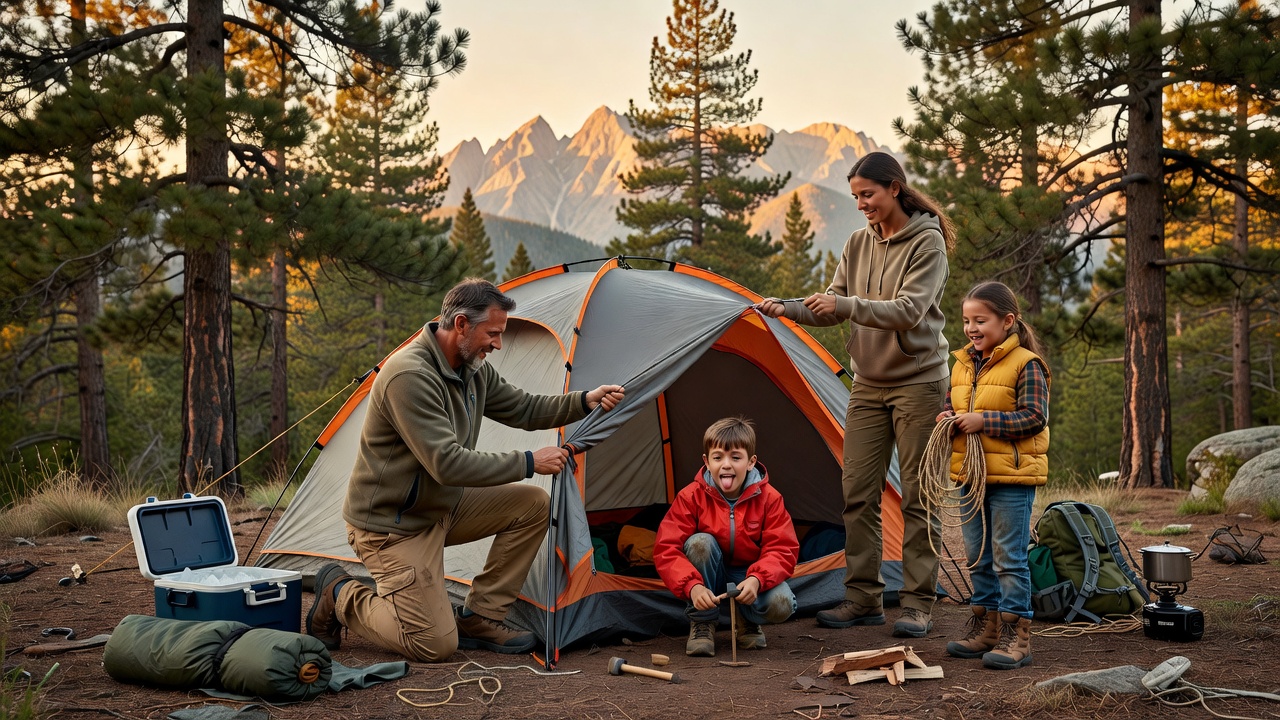
Quick Answer: Six Person Minimum, Eight If the Dog Sleeps Inside
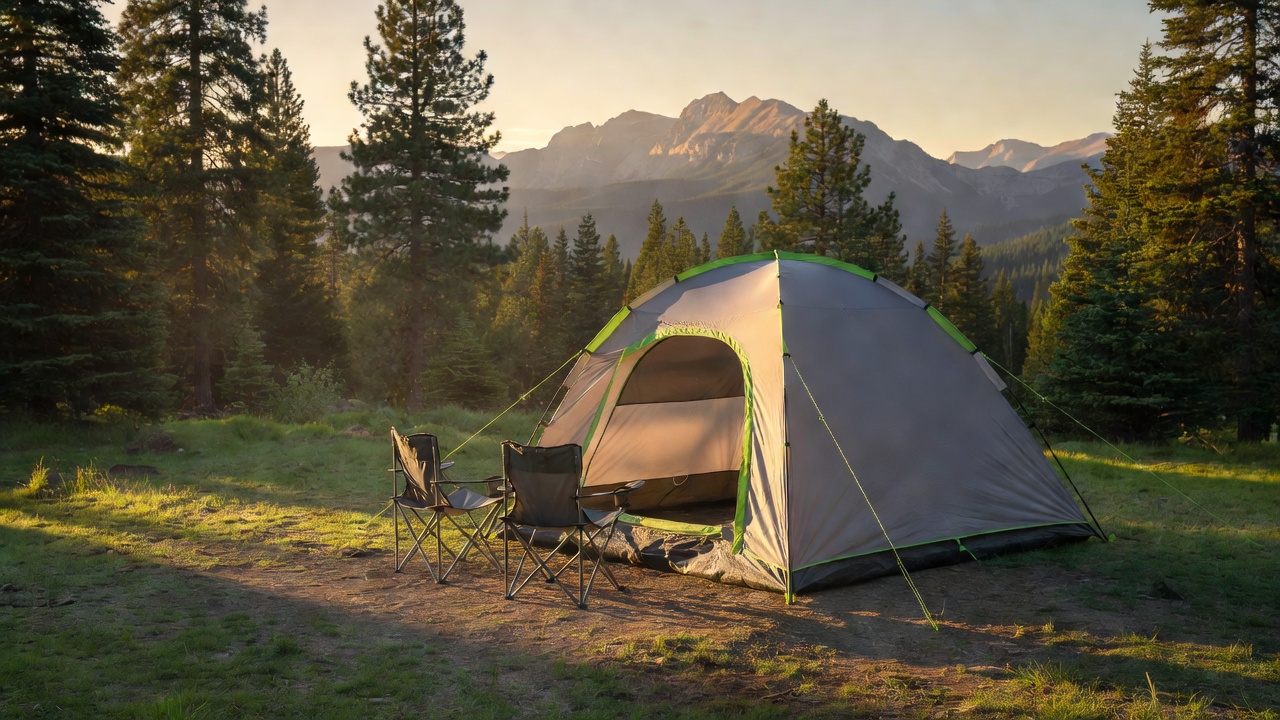
- The honest minimum: CORE 6-Person Instant Cabin — $169.99. Six-person works for two adults, two small kids, and gear. It stops working the moment the dog joins.
- Best for the dog and gear: CAMPROS CP 8-Person — $159.98. The room divider is what makes eight-person livable: kids on one side, adults and dog on the other.
- If the kids are still small: Coleman Skydome 4-Person — $122.99. A four-person tent only works for two adults and two toddlers, and never with a dog inside.
Short answer: what tent size actually works?
For 2 adults + 2 kids + 1 dog, the practical answer looks like this:
- 6-person tent: works for fair-weather weekends if your kids are young and the dog sleeps quietly in one spot
- 8-person tent: better if you want comfort, gear room, or any rainy-day margin
- 4-person tent: too small for almost every real-world version of this group
If the dog is over about 50 pounds, treat it like another half-person on the floor. A Lab, Golden, or shepherd mix eats more usable space than people expect, especially once the leash, water bowl, towel, and muddy paws enter the picture.
Same question, different words: a phrasing decoder
Families type this decision in a dozen different word orders, and the honest answer shifts slightly with each one. Here is the mapping, so you can stop re-googling variations of the same sentence:
- "what size tent for 2 adults and 2 kids" — that is four sleepers, so a 6P is the workable minimum and an 8P is what makes the same group comfortable.
- "what size tent for 2 adults and 3 kids" — five sleepers pushes you past 6P: start at 8P, and look at 9-10P once bags, shoes, and a dog come inside.
- "what size tent for two adults and a dog" (and the flipped "tent size for two adults and a dog") — a 4P is the smallest sane answer for two adults and one medium dog, and a 6P is the one you keep if the dog is large or you want a gear corner instead of a nightly puzzle.
- "two adults two kids and a dog tent" — this whole page: 6P minimum, 8P comfortable.
- "what size tent for 4 adults" — four grown sleepers need a 6P at minimum and an 8P if anyone is tall, because adult shoulders and 72-inch frames use floor width that a 4P simply does not have.
- "standard camping tent size" and "tent dimensions guide" — there is no single standard. The numbers that decide your purchase are floor length × width and peak height, and our tent size guide lists both for every capacity class from 1P to 10P.
The pattern behind all of them: you are never shopping for a headcount, you are shopping for floor width you can walk through and a peak height you can stand under.
Why the box number lies
Tent capacity is based on sleeping pads laid edge to edge. That rating does not include:
- duffel bags
- boots
- jackets
- a dog bed or blanket
- the cooler you drag inside during a storm
- the fact that kids roll sideways in their sleep
That is why a 6P tent can sound generous and still feel annoying by bedtime. If you want to see that gap in square feet for your own group, run it through the tent size calculator — it adds a real allowance for kids, dogs, and a queen air mattress instead of counting bodies only.
A family of four without a dog usually wants a true 6P tent. Add a dog and you are pushing that same space harder. Add wet weather or a queen air mattress and the squeeze gets worse fast. Our 4 person vs 6 person tent guide breaks down some of that tradeoff, but families with dogs are often deciding between roomy 6P and comfortable 8P, not 4P and 6P.
When a 6-person tent is enough
A 6-person tent usually works if your trip looks like this:
- two adults
- two younger kids
- one medium-size dog
- one or two nights
- fair weather
- sleeping pads instead of bulky air mattresses
- most gear stored in the vestibule or car
That setup is realistic for families who mostly need a place to sleep and change clothes. It is not luxurious, but it works.
The CORE 6 Person Instant Cabin Tent is a good example of the kind of 6P layout that makes this possible. Cabin walls help because they give you more usable floor edge than a sloped dome. If your kids are still small enough to stay on their pads and your dog curls up at your feet, this size can get you through weekend one without overspending.
A 6P tent feels tight when:
- one adult is tall or broad-shouldered
- the dog moves around at night
- one child still needs extra sleep gear or a stuffed-animal pile
- the weather turns wet and everyone hangs out inside
- you use a queen mattress plus extra pads
That is when people start wishing they had sized up once more.
When you should jump to an 8-person tent
An 8-person tent makes more sense if any of these are true:
- your dog is large
- one or both kids are school-age and taking up real floor space
- you bring a lot of gear into the tent at night
- you camp in buggy, rainy, or hot conditions where indoor hangout room matters
- you want the trip to feel easy instead of barely manageable
Families often think an 8P tent sounds excessive. In real life, it is often the size that finally gives you room for:
- one adult to move around without stepping on someone
- a clean corner for duffels and shoes
- a dog sleep spot that is not blocking the door
- an early bedtime routine for kids that does not shut down the whole tent
If your camping style includes kids' snacks, backup layers, damp towels, paw wipes, and random gear piles, extra square footage buys peace much faster than most accessories do.
A good mid-price example of that extra room is the CAMPROS CP 8-Person Cabin Tent with room divider ($159.98). The divider lets the kids claim one side of the tent while you and the dog hold the other, and the straight cabin walls keep the full floor usable — the same budget neighborhood as a good 6P instant cabin, but with the space this group actually needs.
What size tent for a family of 4, 5, or 6?
Family size is the way most people actually search this, and the answer moves up one capacity class for each extra sleeper — then one more if a dog is inside.
| Your group | Smallest that works | Comfortable answer | Why |
|---|---|---|---|
| Family of 4 (2 adults + 2 kids) | 6P | 6P cabin | 90-120 sq ft and a 72-84 in peak leaves standing room and a gear corner. |
| Family of 5 (2 adults + 3 kids) | 8P | 8P with a divider | Five 25-inch pads need 125 in of floor width; a 6P tops out around 120 in. |
| Family of 6 (2 adults + 4 kids) | 8P | 9-10P | Six sleepers fit the floor, but not six sleepers plus duffels, shoes, and a cooler. |
| Family of 4 plus a dog | 8P | 8P with a divider | A dog over ~50 lb takes a real sleep spot, so pack it as a fifth sleeper. |
Why the family-of-five jump is so abrupt: the rated capacity of a tent is a sleeping-pad count. A 6P floor is typically 120 in wide, and five 25-inch-wide pads — the width most adult pads actually are, not the 20 in the rating assumes — come to 125 in. You are already over the floor before anyone brings a bag inside.
Same answer, other word orders: what size tent for family of 5, tent size for family of 4, and how many people fit in a 6 person tent all resolve to the table above. Group size sets the capacity class first; bedding and a dog decide whether you buy at the floor or move up one class. (Shopping a rooftop tent for family of 4 instead? That is a different category with a different floor plan — the sizing rules here are for ground tents you pitch at a campsite pad.)
Is a 4 person tent big enough for a family of 4?
No — not for a comfortable camping trip. The "4-person" rating counts four 20 × 72 in pads laid edge to edge with zero gear and no walking space, and real families bring duffels, shoes, bedding, and kids who roll. A 4P works for two adults and two toddlers on pads in fair weather; the moment the kids grow, or a dog joins, or anyone wants to stand up, that tent is the wrong one. Families of four who want the answer only once buy 6P.
How many people can sleep in a 4 person tent?
Two adults comfortably, with your gear. Four only if every sleeper is small and every sleeper is on a bare pad with nothing else on the floor. Add a queen air mattress (60 × 80 in, 33 sq ft) and a 4P floor is effectively full with two people on it.
How many people per tent, in practice?
Count the sleepers, add one for gear, and add one more if a dog sleeps inside. That rule-of-thumb is why a "6-person" tent is a four-person tent for a family that packs like a family — capacity math has never included the cooler you drag in during a storm.
Match the tent to your family's real trip
The capacity number is only the first filter. For this exact group, think about how the tent will be used at 8 p.m., not only how many bodies fit at midnight.
-
Best compact choice for two adults and younger kids: The Coleman Skydome 4-Person Tent with LED lighting ($122.99) can work for a short, fair-weather campground trip only when the dog sleeps in a covered vestibule or vehicle and everyone packs very light. It is not the comfortable one-tent answer for two adults, two growing kids, and a dog; the four sleeping pads alone consume nearly all usable floor space.
-
Best true 6P family layout: CORE 6 Person Instant Cabin Tent ($169.99) is the better call when you want all five sleepers under one roof without paying for an oversized shelter. The cabin shape, fast pitch, wall pockets, and gear loft matter because they keep the floor clearer for pads, a dog bed, and the inevitable pile of jackets.
-
Best for a straightforward first family setup: The same CORE 6 Person Instant Cabin Tent ($169.99) makes sense when a fast pitch, airflow, and gear organization are more valuable than chasing the smallest packed size. It is still a 6P tent, so keep bags in the car or vestibule; that floor-management discipline is what keeps a dog, two kids, and two adults comfortable overnight.
The short version: choose the Skydome only when this is a deliberately compact trip; choose either 6P cabin tent when the dog sleeps inside. If rainy-day hangout space, a large dog, or a queen mattress is non-negotiable, use these as your floor for comparison and shop up to an 8P cabin rather than forcing everyone into the number printed on the bag.
Floor plan matters as much as tent size
Not all 6P or 8P tents feel the same. The useful questions are:
- Are the walls steep enough to use the full floor? Cabin tents usually win here.
- Can adults stand up? This matters when changing kids into pajamas.
- How many doors are there? One door gets old fast with a dog and bathroom trips.
- Is there a vestibule? That is often where wet shoes and dog gear should live.
For families, I would take a well-shaped instant cabin tent over a sloped dome with the same capacity number almost every time. The best family camping tents guide and best 6 person blackout family tents guide are both worth reading if sleep quality and morning light are part of the equation.
Cots and queen mattresses change the answer more than headcount does
Two bedding choices quietly re-size the tent you need: cots and air mattresses. Both are wider than the pads the capacity rating is based on, and neither one compresses.
What size tent for a queen air mattress?
A queen air mattress is 60 × 80 in — 33 sq ft of floor, going in whole. That means:
- 4P tent: the mattress is the tent. Two adults sleep on it and nothing else fits; bags go in the vestibule or the car.
- 6P tent: the practical answer for two adults on a queen. You get 90-120 sq ft, so there is floor left for a gear corner and room to walk around the mattress instead of climbing over it.
- 8P tent: what you want if kids or a dog are also sleeping inside, or if you use the mattress plus separate kid pads.
The mattress price does not change the footprint: the SoundAsleep Dream Series queen ($149.95, 4.4★ / 66,000+ reviews) and the budget Intex Comfort Plush queen ($49.99, 4.4★ / 6,000+ reviews) both inflate to the same 60 × 80 in, so the tent math is identical. Only thickness and pump convenience differ.
So if the words you typed were what size tent for queen air mattress, the answer is the list above: 6P for two adults, 8P once kids or a dog sleep inside, and a 4P only if the mattress is the entire load.
Queen air mattress in a 4 person tent: what actually happens
It fits, and then nothing else does. A 4P floor runs 50-70 sq ft; a queen takes 33 sq ft of that plus a walk-around gap you do not have. Anyone who has done it describes the same two problems: no floor for bags, and no way to cross the tent without stepping on the mattress. That is the real reason "queen air mattress in a 4 person tent" ends with people shopping for a 6P.
What size tent for 4 cots?
Bigger than the capacity math suggests. Most camping cots run roughly 25-30 in wide and 74-80 in long, so four of them need about 100-120 in of clear floor width laid out in a row — and they cannot overlap the way pads can. In practice that is a 6P with straight cabin walls at the absolute minimum, and an 8P if you want a walking aisle between the cots.
Height matters too: cots lift you 15-18 in off the ground, so pair them with a 72 in peak or taller. Two cots side by side in a low dome feels like sleeping in a bunk bed with a ceiling.
Cots that show up in family setups include the Coleman Trailhead II ($54.99, 4.4★ / 24,000+ reviews) as the classic cheap option, the lighter MARCHWAY ultralight cot ($66.99, 4.5★ / 3,100+ reviews) if you also want it for backpacking-adjacent trips, and the Coleman ComfortSmart Big & Tall cot ($99.96, 4.2★ / 8,700+ reviews) when the padding in the name is the point. And if you are replacing pads entirely, our cot vs air mattress vs sleeping pad comparison weighs floor space, pack size, and cost for each option first.
The dog changes more than people think
The dog is not just one more body on the floor. The dog brings a full little campsite ecosystem with it:
- leash
- towel
- bowl
- food
- water
- muddy paws
- a sleep spot
- occasional midnight movement
That is why tent size decisions for dog families go wrong. People count heads and forget the dog logistics.
Where does the dog sleep in a family tent?
With a dog sleeping in the tent with the family, you have three workable arrangements, and each one changes the size math:
- At the foot of the adult side. The default for a dog that settles quickly. Costs you roughly the floor a fifth sleeper would take, which is exactly why four-person-plus-dog groups end up in an 8P.
- On its own side of a divider. The most peaceful version: an 8P with a room divider gives the dog (or the kids) a defined area so nobody gets stepped over at 2 a.m.
- Outside the tent, in its own shelter. Good for muddy, wet, or restless dogs. A Plusvivo pop-up dog tent ($69.99) gives a dog its own covered space next to the door, and a raised dog cot ($49.99) keeps a wet dog off the ground without giving up family-tent floor.
Whichever you choose, count the dog as a sleeper rather than as gear. That single decision is the difference between a 6P that works and a 6P that ruins the weekend.
That is also the arrangement people mean when they search dog sleeping in tent with family — the dog is inside, sharing the same floor, and its sleep spot has to be planned exactly like a fifth sleeper's, not squeezed into whatever space is left after the bags.
If your dog is older, anxious, or used to a crate-like sleeping setup, you may need a corner that stays quiet and predictable. If your dog runs hot, you may want more airflow and more room near the door. If your dog is still learning campsite manners, the extra floor area helps a lot. Our dog backpacking guide and dog summer hiking safety guide cover some of the comfort and heat issues that follow the dog into camp. And when you're ready to buy, our best tents for camping with dogs roundup compares six shelters specifically picked for muddy paws, fur, and restless nights.
If your group is smaller than the family-of-four setup
Half the searches behind this page come from couples and pairs who arrived at the same sizing question from the other direction. Short answers:
- "What size tent for 2 people" / "tent size for 2 person" — a 2P is literally two pads and the floor between them. Perfect for backpacking, tight for car camping, because there is nowhere to put a bag that is not your sleeping space.
- "What size tent for two adults" camping out of a car — a 4P is the comfortable answer: two pads (or a queen) plus a gear corner, and enough center height to stand up in a cabin model. Keep the 2P for trips you carry on your back.
- "What size tent for 2 adults and a dog" — 4P if the dog is medium and the weather is fair; 6P the moment the dog is large, the forecast is wet, or you want a corner for the dog bed.
- "Most compact 2 person tent" — compact means packed size and weight, not floor area, so shop backpacking shapes rather than cabin shapes. The Kelty Late Start 2P ($159.95, 4.7★) is our benchmark at an 85 × 54 in floor, a 43 in peak, and roughly 4 lb 11 oz packed; the Naturehike Cloud-Up 2P ($143.10) and the budget Night Cat 2P ($53.99) and Forceatt 2P ($57.18) cover the same job at different budgets.
The rule stays the same for pairs as it does for families: size up one class from the number you think you need if the tent is going in a car rather than on your back. Floor you do not use weighs nothing when a vehicle carries it.
Best sleeping setups for this group
The tent-size answer changes a lot depending on what goes on the floor.
Setup 1: best use of a 6P tent
- adults on two sleeping pads or a compact double pad
- kids on two kid-size pads or slim pads
- dog on a blanket or compact dog bed near the foot area
- bags in vestibule or car
This gives you the best chance of making a 6P tent work.
Setup 2: what makes a 6P tent feel crowded
- queen air mattress for adults
- two separate kid pads
- dog bed
- duffels inside
That setup usually pushes you toward an 8P tent if you want comfort.
Setup 3: easiest family weekend setup
- roomy 8P cabin tent
- adults on a queen mattress or double pad
- kids on their own side
- dog near the door or at the foot of the adults
- gear stacked in one clean corner
That is the version most families picture when they imagine a fun trip instead of a cramped one.
If you are still sorting out sleep systems, our sleeping pad vs air mattress guide and best camping sleeping bags guide will save you from building the tent plan around the wrong bedding.
My practical recommendation
If you want the simplest answer:
- Buy a solid 6-person tent if your kids are small, your dog is medium or smaller, and you camp light
- Buy an 8-person tent if you want comfort, flexibility, or you already know your family spreads out
For most first-time family campers with a dog, I would rather see you slightly oversized on shelter than slightly undersized. The wrong cooler is annoying. The wrong stove is inconvenient. The wrong tent makes the whole trip feel like work.
If budget is the reason you are leaning small, read our best family tents under $200 guide before you decide. Sometimes the cheapest way to improve a family trip is not another gadget. It is choosing a tent with enough livable space the first time.
Final answer
So, what size tent for 2 adults, 2 kids, and a dog?
A 6-person tent is the minimum practical answer. An 8-person tent is the comfortable answer.
If you camp in fair weather, travel light, and your dog is not huge, a good 6P cabin tent can work. If you want rainy-day room, bigger bedding, or less family friction, go 8P and do not look back.
Once the tent is sorted, the rest of the trip planning matters just as much — gear checklists, summer heat safety, off-leash training, and trail first aid are all covered in our complete dog camping hub, the full library of everything we've written about camping and hiking with dogs.
FAQ: what size tent for 2 adults, 2 kids, and a dog
What size tent do 2 adults, 2 kids, and a dog really need?
A 6-person tent is the minimum practical answer and an 8-person tent is the comfortable one. Choose a 6P for young kids, a medium-size dog, fair weather, and light gear. Choose an 8P when you want rainy-day room, larger bedding, a queen mattress, or less family friction at bedtime.
Is an 8-person tent too big for two adults, two kids, and a dog?
No — for most dog families it is the size that finally feels easy. The extra floor gives you a clean corner for duffels and shoes, a dog sleep spot that is not blocking the door, and room for an early kids' bedtime routine without shutting down the whole tent. Just check the campsite pad dimensions before you book, since an 8P cabin footprint is noticeably longer than a 6P dome.
Does the dog count toward tent capacity?
Treat a dog over about 50 pounds like another half-person on the floor. Tent capacity numbers are based on sleeping pads laid edge to edge, so they ignore gear, duffels, wet boots, and the dog's own bed. A Lab, Golden, or shepherd mix eats more usable floor space than most people expect.
Can two adults, two kids, and a dog get away with a 4-person tent?
Almost never as the one-tent answer. Four sleeping pads alone consume nearly all the usable floor of a 4P tent. A compact 4P dome only works for a short, fair-weather trip where the dog sleeps in a covered vestibule or vehicle and everyone packs very light.
Does the tent size depend on how old the kids are?
Yes. Younger kids stay on their pads and sleep in a smaller footprint, which is when a 6-person tent can genuinely work. Once kids are school-age they sprawl, drag sleep gear with them, and take real floor space — that is when most families should plan on an 8-person cabin tent instead of forcing the 6P number.
What size tent for 2 adults and 2 kids?
A 6-person tent is the workable minimum for two adults and two small kids sleeping on pads, and an 8-person tent is what makes the same group comfortable. Size up to 8P if you use a queen mattress, camp in wet weather where everyone hangs out inside, or want the kids on their own side of a room divider.
What size tent for family of 4, and does it change for a family of 5 or 6?
For a family of 4, buy a 6P: roughly 90-120 sq ft with standing room and a gear corner. For a family of 5, jump to an 8P — five adult-width pads need about 125 in of floor and a 6P is only around 120 in wide. A tent for family of 6 is the same 8P at minimum, moving to a 9-10P tent once duffels and a cooler come inside with them.
Does a queen air mattress fit in a 6 person tent?
Yes, comfortably — a queen is 60 × 80 in (33 sq ft) and a 6P floor is 90-120 sq ft, so you keep floor around the mattress for a gear corner and can walk past it instead of climbing over it. In a 4P tent the same mattress fills the floor and leaves nowhere for bags, which is the usual reason people upgrade.