Dog Summer Hiking Safety (2026)
Keep your trail dog safe in summer heat. Real paw-burn test, hydration rules, tick prevention, and the gear that actually prevents vet trips on the trail.
In this article · 10 sections
- Quick Answer: The 4 Summer Risks, Solved
- The 7-Second Paw Test (Do This Every Time)
- Heatstroke: Know The Warning Signs
- Hydration On The Trail: Gear That Works
- Ticks: Check Early, Check Often
- The Trail Dog Summer Gear Checklist
- Bonus: Trail Communication & Recall
- Trail Etiquette On Busy Summer Trails
- The Bottom Line
- Dog Summer Hiking Safety FAQ
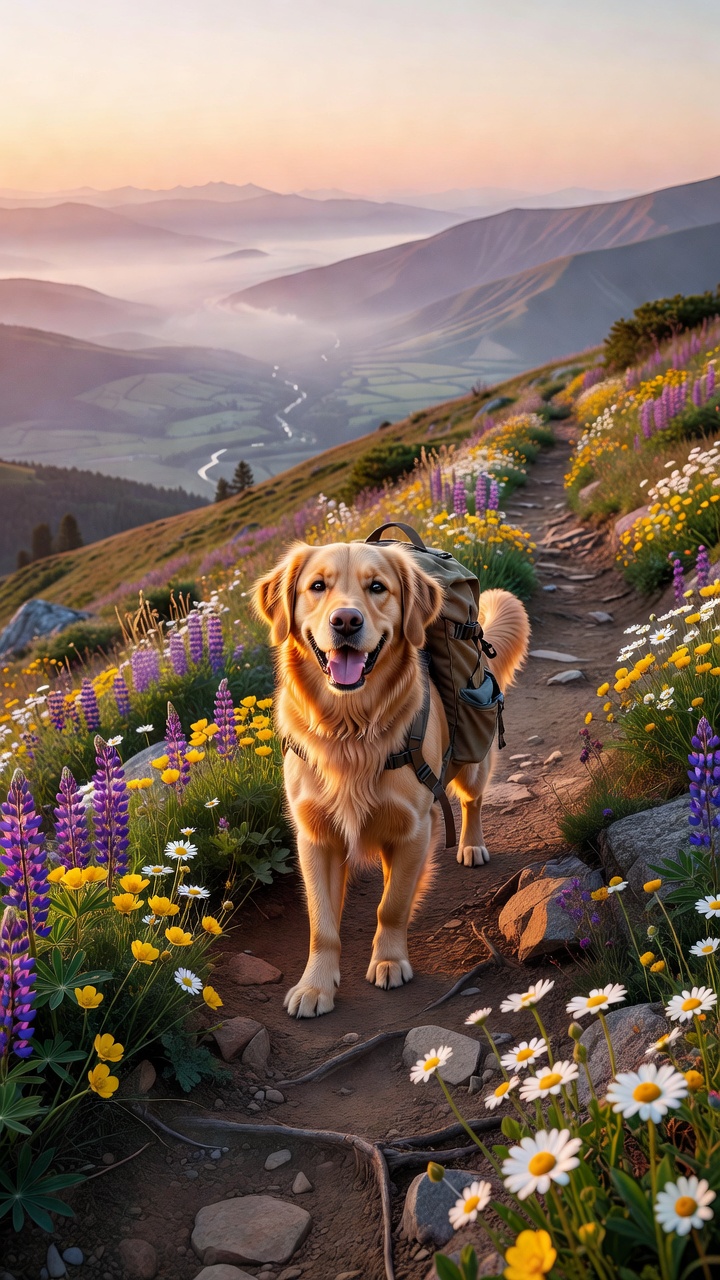
Taking your dog on a summer hike is one of the best things about owning a trail pup — until the trail turns into a frying pan. Hot ground burns paws. Dehydration sneaks up fast. Ticks latch on the second you brush through tall grass. The difference between a great day and a $600 emergency vet bill usually comes down to a handful of habits and the right few pieces of gear.
This guide covers the four biggest summer risks on the trail — paw burns, heatstroke, dehydration, and ticks — with field-tested prevention for each. If you are new to hiking with your dog, start with our broader guide to camping with dogs and the trail pup backpacking guide for gear loads and conditioning before you tackle summer heat specifically.
Quick Answer: The 4 Summer Risks, Solved
Four things hurt dogs on summer trails — paw burns, heatstroke, dehydration, and ticks. The short fix for each:
- Paw burns and heatstroke: do the 7-second paw test on hot ground (if it's too hot for your hand, it's too hot for your dog) and take shade breaks every 20 minutes. A CHEERHUNTING Outdoor Dog Bed ($29.99) gives them a cool, off-the-ground rest at camp.
- Dehydration: carry water for both of you. A Kurgo Zippy Bowl ($15.99) packs flat, and an Owala FreeSip 24 oz ($29.99) keeps yours cold.
- Ticks: check before your dog gets in the car. A HomeSake Tick Remover ($14.39) removes them cleanly with no squeezing.
- If something goes wrong anyway: the Adventure Medical Kit .7 ($44.95) carries vet wrap and antiseptic for pads and cuts.
- Water days: a Ruffwear Float Coat ($99.99) if your trail ends at a lake.
Get these four habits right and you've covered the vast majority of summer trail risk.
The 7-Second Paw Test (Do This Every Time)
Paw burns are the most common — and most preventable — summer trail injury. The rule is brutally simple: press the back of your hand against the ground and hold it there for seven seconds. If you cannot hold it comfortably, it is too hot for your dog's paws.
Why seven seconds? Your hand is tougher than you think. If it hurts you at seven seconds, the surface is above 125°F — hot enough to blister a dog's paw pads in under sixty seconds of continuous walking. Asphalt, sand, dark rock, and sun-baked dirt trails all hit that range on a 90°F afternoon.
Where this catches people off guard:
- The trailhead parking lot is almost always hotter than the trail. Dogs burn paws on the asphalt while you are lacing up your boots.
- River crossings look refreshing, but the rocks on either side are often scorching.
- High-elevation trails feel cool to you, but the sun-baked granite slabs still burn.
Prevention:
- Hike early or late. Hit the trail before 9 AM or after 5 PM. Midday heat is for swimming, not walking.
- Booties for tough terrain. Dog hiking boots feel silly until your dog is limping two miles from the car. Carry a set if you know the route has long rocky or sandy stretches. Break them in at home first — most dogs need a few short sessions to stop the high-stepping robot walk.
- Stick to shaded trails. Forested paths stay 15–20 degrees cooler at ground level than exposed ridgelines. Check trail descriptions for tree cover before you commit.
If your dog does start limping or holding a paw up, stop immediately. Check the pads for redness, peeling, or blisters. Cool the paw with water (not ice), bandage loosely, and carry your dog out if you have to. A dog that keeps walking on a burned pad makes it worse with every step.
Heatstroke: Know The Warning Signs
Dogs do not sweat the way humans do. They cool themselves mostly by panting, which is far less efficient — especially for short-nosed breeds like pugs, bulldogs, and boxers. A dog can hit dangerous body temperature while you still feel fine.
Early warning signs:
- Heavy, rapid panting that does not slow down in shade
- Bright red or dark red gums and tongue
- Thick, ropey drool
- Wobbliness or stumbling
- Lying down and refusing to get up
This is an emergency. Move your dog to shade immediately. Wet them down with cool (not cold) water — focus on the belly, chest, and paw pads where blood vessels are close to the surface. Offer small amounts of water. Do not force them to drink. Get to a vet.
Prevention beats treatment:
- Carry more water than you think you need. A good rule is one ounce per pound of body weight per hour of hiking in summer heat.
- Take shade breaks every 20–30 minutes on exposed trails.
- Know your dog's limits. An out-of-shape dog, a senior dog, or a flat-faced breed simply cannot handle the same trail as a fit working dog. Build up gradually.
- Never leave your dog in a parked car, even with windows cracked. A car hits 110°F in ten minutes on an 80°F day.
Hydration On The Trail: Gear That Works
Dehydration turns a fun hike into a miserable, dangerous one fast. The problem on the trail is logistics — you need enough water for both of you, and a way for your dog to drink without wasting half of it on the ground.
What to carry:
- A collapsible dog bowl. This is the single highest-value piece of summer dog gear. A large collapsible dog bowl clips to your pack with a carabiner, weighs almost nothing, and lets your dog drink normally instead of from cupped hands. The 48oz size is enough for a real drink, not just a sip.
- An insulated bottle for shared water. An Owala FreeSip insulated bottle keeps water cold for hours in the sun. The FreeSip lid means you drink one-handed while walking — useful when you are holding a leash and scanning for shade with the other hand.
- Know your water sources. Plan your route around creeks and lakes where you can refill. Carry a water filter if your route is longer than what you can pack. Never let your dog drink from stagnant green water — blue-green algae is deadly. Our camping water filtration and hydration guide covers filter options for trail use.
Hydration mistake to avoid: Do not let your dog gulp a huge amount of water all at once after heavy exertion. Offer small amounts every few minutes instead. Gulping can cause vomiting, which makes dehydration worse.
Ticks: Check Early, Check Often
Summer is peak tick season, and ticks carry Lyme, anaplasmosis, and ehrlichiosis — diseases that affect dogs just like humans. Tall grass, brushy edges, and game trails are the danger zones. Your dog runs through it all, low to the ground, and picks up ticks that then crawl onto you at camp.
Prevention on the trail:
- Keep your dog on the trail. Bushwhacking through tall grass is how dogs pick up dozens of ticks in minutes. Leash your dog on overgrown sections.
- Use a vet-approved tick preventive — oral or topical — before tick season starts. Talk to your vet about what works in your area.
- Carry a tick remover. The Homesake tick remover tool costs under seven dollars, goes on your keychain, and removes the whole tick — head included — without squeezing disease into the bite. Trying to pull a tick out with your fingers or a hot match is how you leave the head embedded and cause infection.
The post-hike tick check (non-negotiable):
Before your dog gets in the car, run your hands over their whole body. Ticks gravitate to warm, hidden spots: inside the ears, between toes, in the armpits and groin, under the collar. Do it again that evening. Then check yourself.
If you find an embedded tick, remove it immediately with the tick tool, clean the area, and save the tick in a baggie if you want it identified. Watch the bite site for a bullseye rash over the next few weeks.
The Trail Dog Summer Gear Checklist
Here is the practical list of what to bring on any summer hike with your dog:
- Collapsible bowl for food and water — carabiner-clip it to your pack
- Enough water for both of you, plus a buffer — one ounce per pound per hour as a floor
- Tick remover on your keychain or in your first aid kit
- Dog booties if the route has long stretches of hot rock, sand, or asphalt
- A leash and harness — even off-leash dogs should be leashed near roads, at trailheads, and around wildlife
- A compact first aid kit like the Adventure Medical Kits Ultralight/Watertight .7 kit ($44.95, 4.7★, up to 3 people for 3 days) — add vet wrap and tweezers for dog-specific needs
If you camp overnight, add a waterproof outdoor dog bed so your dog has a clean, insulated spot off the cold or hot ground. Dirt and foxtails in sleeping pads are a misery you can skip.
Bonus: Trail Communication & Recall
Summer trails are busier — more dogs, more wildlife, more distractions. Reliable recall is what keeps your dog from chasing a deer into a thicket or bolting toward a cliff edge when they are overheated and not thinking clearly.
A remote training collar with voice command gives you a backup communication channel off-leash. The 4500-foot range and waterproof build matter on summer trails — you will be near creeks, lakes, and mud. Use the voice feature for recall and the gentle tone or vibration setting as a cue, not a punishment. For the full training progression, our off-leash hiking collar guide walks through conditioning steps that work, and our best dog training collar 2026 comparison breaks down when voice, beep, vibration, or static makes the most sense for different trail dogs. If hot-weather trail days are your main use case, reading both gives you the full system: the safety rules first, then the training setup that keeps your dog check-in ready when summer distractions get loud.
The point is not control — it is safety. A dog with solid recall stays out of porcupines, rattlesnakes, and that patch of poison ivy you did not see.
Trail Etiquette On Busy Summer Trails
A few habits keep summer trails safe and open for everyone:
- Leash at trailheads and parking areas. Even well-trained dogs get excited around other dogs and people in tight spaces.
- Yield to uphill hikers. Step aside and keep your dog close.
- Pack out waste. Dog poop on a trail is not fertilizer — it contaminates water sources and spreads disease. Carry bags and use the trash at the trailhead.
- Do not let your dog approach other dogs without asking. You do not know if the other dog is reactive, in training, or a service animal. A quick "is your dog friendly?" prevents a lot of bad situations.
The Bottom Line
Summer hiking with your dog is worth the preparation. The dogs that get hurt on the trail are almost always the ones whose owners skipped the basics — no water, no shade breaks, no tick check, hot ground at noon. Get the habits right and the gear sorted, and you and your trail pup get a whole season of great days instead of one bad one.
Remember: the 7-second paw test, shade breaks every 20 minutes, water for both of you, and a tick check before you get in the car. Do those four things and you have covered the vast majority of summer trail risks.
For everything else trail-dog — gear checklists, off-leash training, backpacking setups, and family tent sizing — our Dog Camping Hub collects the full library in one page. And when you're loading the car for any season, keep the printable camping with dogs checklist in the glovebox — it covers documents, meds, food, sleep, and recall gear so nothing gets left on the kitchen counter.
Dog Summer Hiking Safety FAQ
How hot is too hot to hike with a dog?
Above roughly 85°F, plan around water and shade rather than mileage, and above 90°F leave the dog home. The hard rule is asphalt and dark rock: if you can't hold your palm on the ground for five seconds, it's too hot for paws. Trail early or late — the surface temperature is what hurts, not the air temperature.
How do I protect my dog's paws on hot or rocky trails?
Build tolerance slowly, and don't assume calluses make a dog heat-proof. Boots help on scree and hot granite but most dogs need a break-in period. The bigger wins for a summer trail dog are a collapsible travel bowl so water is always available, and a waterproof outdoor dog bed for shade-resting — a dog that can lie down comfortably in the shade recovers far faster than one standing in the sun.
What do I do if my dog overheats on a hike?
Stop, shade, water on the belly and paws — never ice-cold water on the whole body, and never force drinking. Cool the paw pads and groin first, then get to a vet if the dog doesn't recover within ten minutes or starts vomiting. Heatstroke in dogs escalates faster than most owners expect, which is why a trail medical kit plus a stopwatch mentality matters more in July than in October.
How do I check for ticks after a summer hike?
Hands-on, head to toe, every single time — ticks target warm creases: ears, armpits, groin, between toes. Carry a dedicated tick remover tool rather than tweezers, since twisting to remove is how mouthparts stay behind. Peak nymph season is late spring through midsummer, when they're poppy-seed small and easy to miss.
How much water does my dog need on a summer hike?
Roughly one ounce per pound of body weight per hour of moderate work, and more in heat — a 60 lb dog can go through a liter in an hour or two on a hot climb. Carry it for them: a 24 oz insulated bottle keeps your own water cold and the bowl gets shared. If you're hiking somewhere with surface water, never assume it's safe without filtering.
Should my dog be off-leash on a hot trail?
Only where it's legal and where you have rock-solid recall, because a dog that bolts after a scent on a 95°F afternoon is a dog that overheats. Building reliable recall before the trip is the actual safety gear here — see our off-leash training collar guide for how to get there, and pair it with a float coat if the hike ends at a lake.
<!-- AFFILIATE_DISCLOSURE -->Maryland has one of the more interesting dog rules in the region: at Assateague State Park pets are confined to three camp loops during the season, and then allowed in every loop and on the beach once the campground closes on November 1. The Maryland camping guide spells out the whole policy.