Camping With Dogs (2026): Gear & Trail Safety
Camping with dogs in 2026: a practical dog camping gear checklist, campground etiquette, trail safety, heat protection and first-aid tips.
In this article · 14 sections
- Quick Answer: Camping With Dogs in 2026
- Is Your Dog Ready for Camping?
- Essential Gear for Camping with Dogs
- Summer-Specific Dog Camping Gear You’ll Actually Use
- Choosing the Right Tent When You Have a Dog
- Trail Safety and Etiquette with Dogs
- Dog First Aid and Health on the Trail
- Best Seasons for Camping With Dogs
- Dog Camping Checklist Before You Leave Home
- Dog Camping Gear, Noun by Noun
- Camping With Dogs Near Me: Which System Owns the Land
- If You Searched For This, Jump Here
- Camping With Dogs FAQ
- Final Tips for a Successful Dog Camping Trip
There's nothing quite like watching your dog curl up next to a campfire after a long day on the trail, ears twitching at every cricket chirp and distant owl call. Camping with dogs transforms a weekend trip into something richer. You see more wildlife, cover more ground, and sleep better knowing your four-legged alarm system is on duty. But bringing a dog into the backcountry isn't as simple as tossing a leash in the trunk. I've learned this over a decade of trips with my two Labs, and this guide covers what I wish someone had told me before my first dog-camping disaster.
Taking the dog? The Oklahoma camping guide maps the state's per-pet nightly fees, cabin charges and rabies-documentation rules, plus where the federal refuges close the gate entirely.
Quick Answer: Camping With Dogs in 2026
Short on time? Here is the whole guide compressed into the things that actually decide whether your dog has a great trip or a miserable one. The detail behind each point is in the sections below.
- Match the trip to the dog, not the dog to the trip. Puppies under 12 months are still growing — growth plates haven't closed, so rough terrain risks lasting joint damage. Brachycephalic breeds (Bulldogs, Pugs, Boxers) overheat dangerously fast. Senior dogs do fine on short, gentle routes with extra bedding for cold mornings.
- Vet check and preventatives before you go. Vaccinations current, plus a conversation about leptospirosis (backcountry water sources) and Lyme (tick-heavy areas). It is the cheapest insurance on the whole trip.
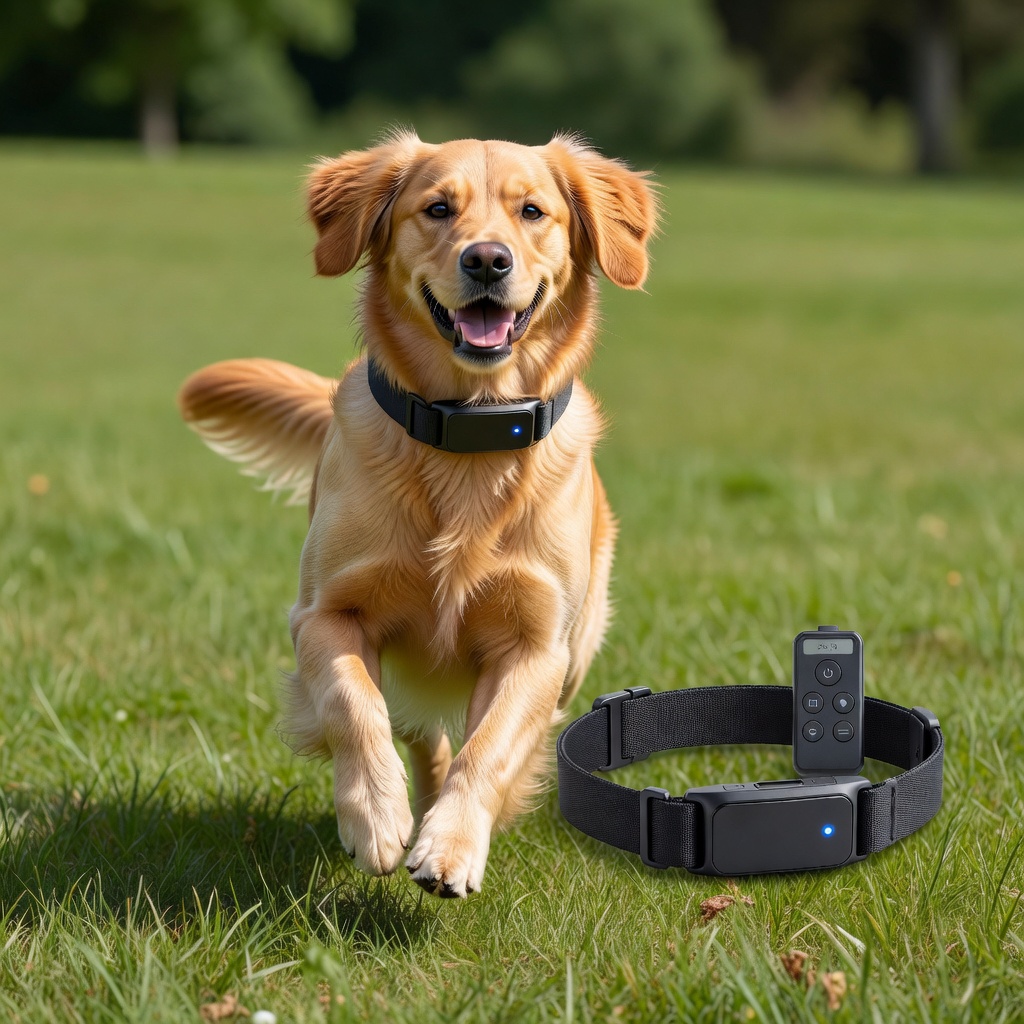
- Recall is the gate, not a nice-to-have. If your dog will not come back from a deer bolting 30 yards ahead, they stay on a 15–30 foot long line for the entire trip. The oitickly voice-command training collar ($39.99, 4,500 ft range) buys you distance while you proof recall at home, in the park, and on a quiet trail before you trust a busy campground.
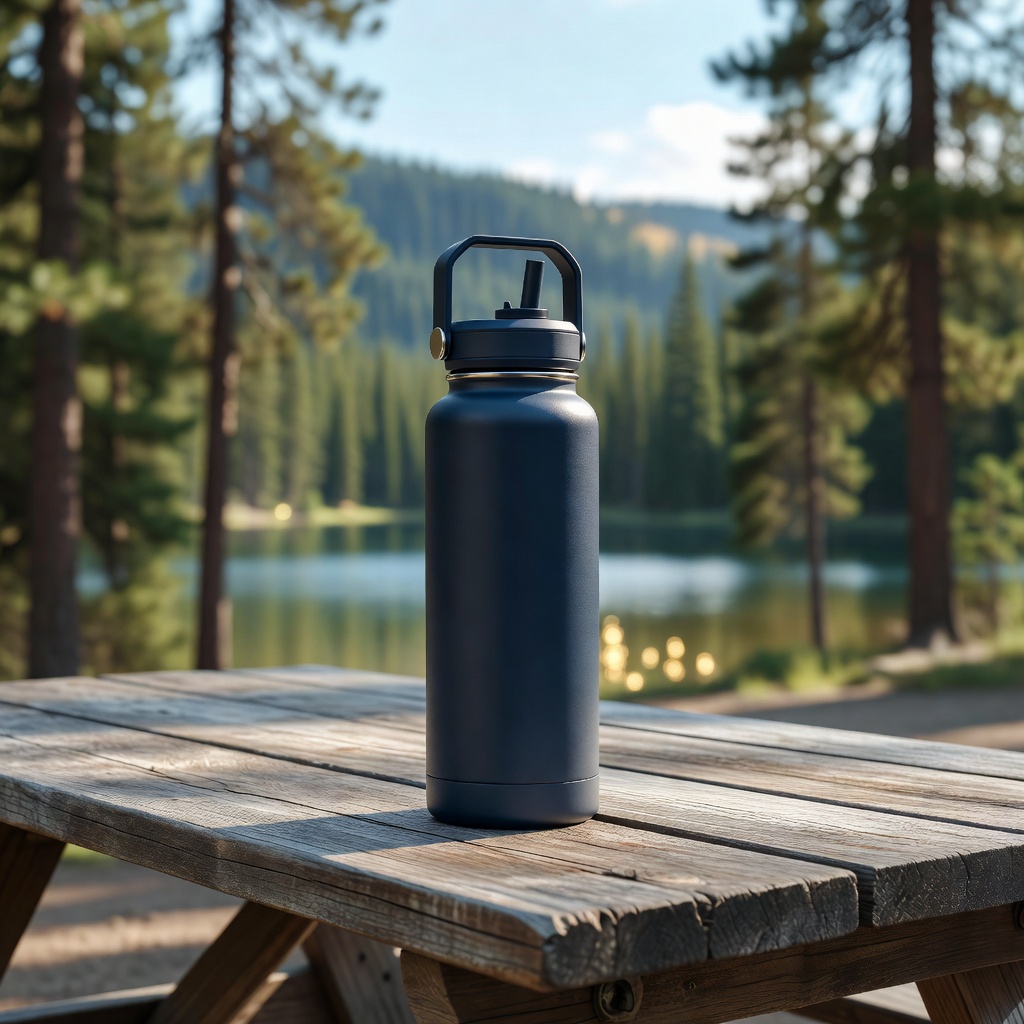
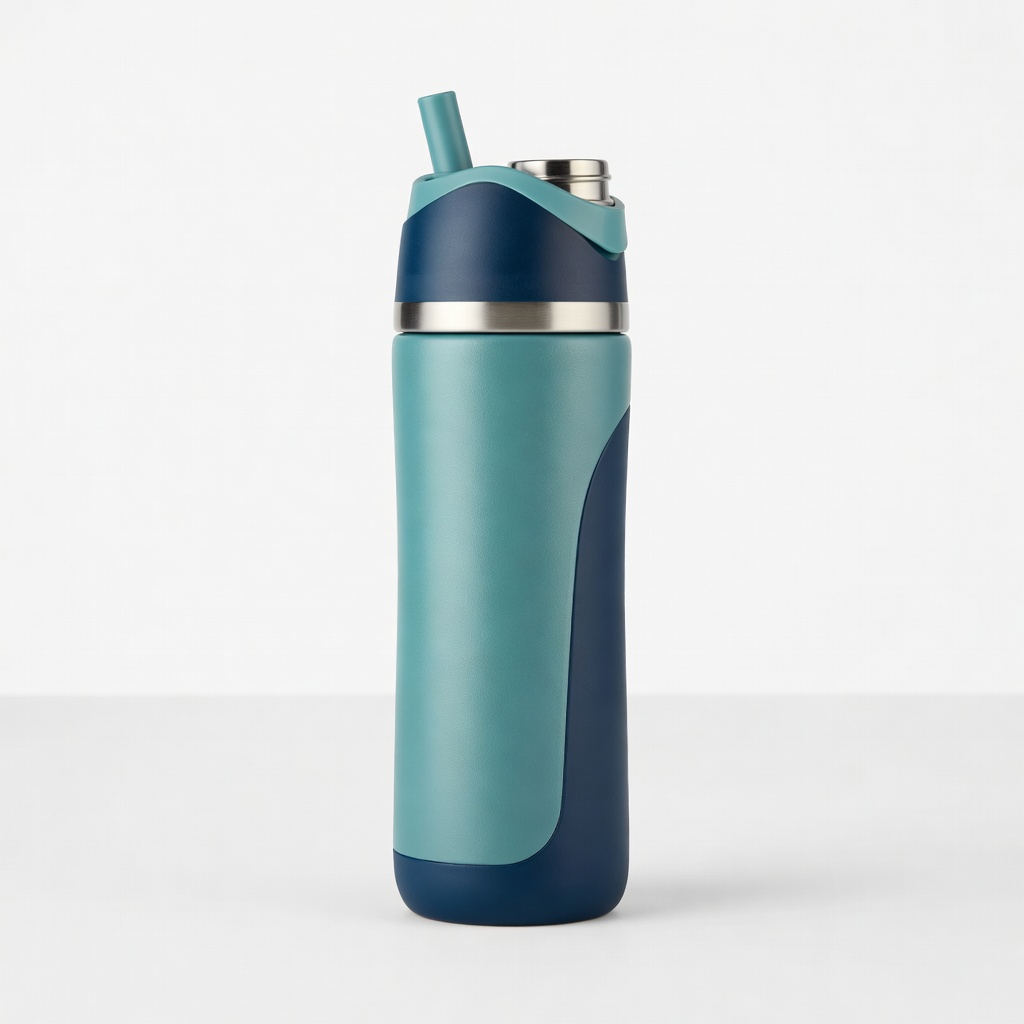
- Water math: dogs drink roughly 1 oz of water per pound of body weight per day, and more when they are moving or it is hot. A RAYMYLO 64 oz insulated bottle ($19.19, holds cold for 48 hours) plus a Ruffwear collapsible bowl ($19.95, 4.6★ / 12,000+ reviews) covers a medium dog for a full day.
- Paws fail before legs do. Hot asphalt, granite scree, and long days shred pads. Musher's Secret Paw Wax ($24.99, 200 g, 4.7★ / 13,000+ reviews) goes on before the trail, not after the limping starts.
- Campground etiquette is not optional. Six-foot leash in developed campgrounds, never leave a dog unattended at the site, and pack out every bag — most parks fine owners for left-behind waste.
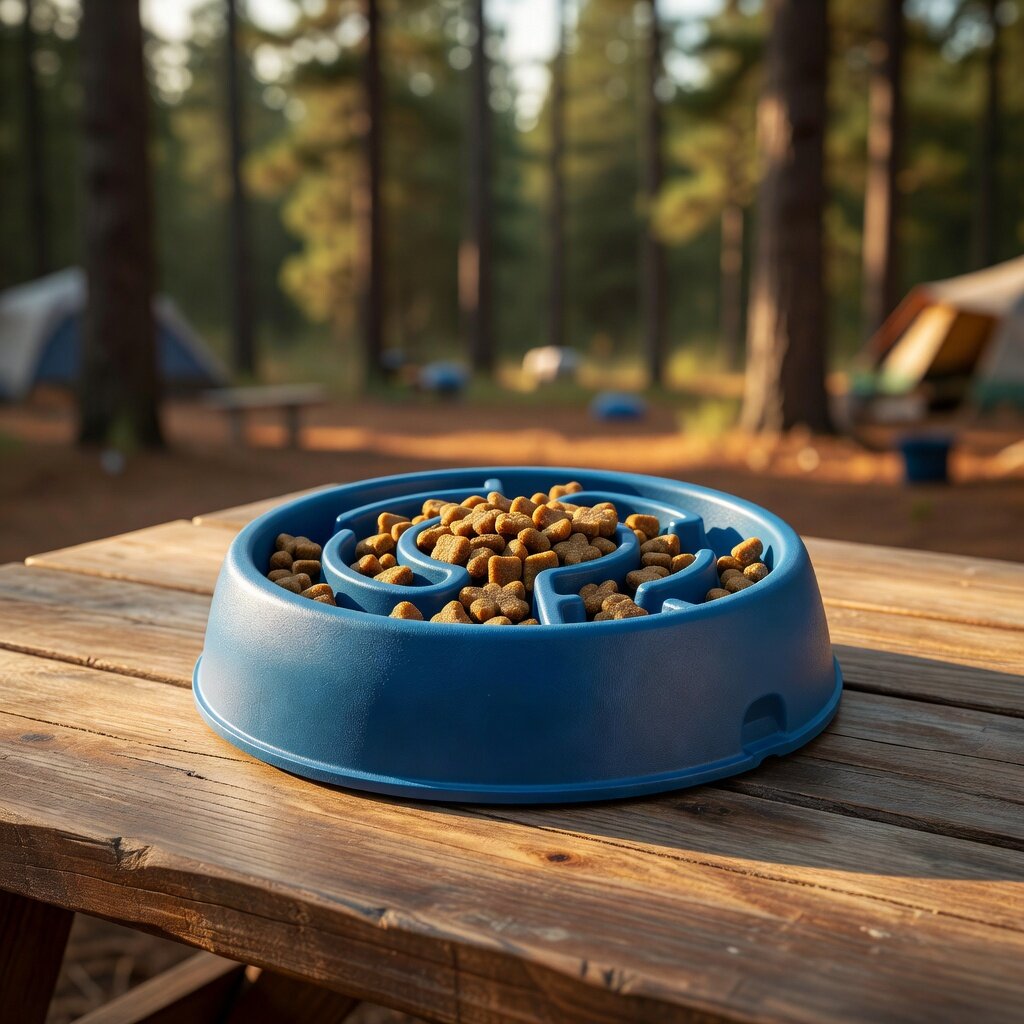
- Three things that live in the pack: a 3-person ultralight first-aid kit ($44.95), a slow-feed bowl for gulpers ($16.99, worth it when a dog inhales dinner and then wants to run), and no-rinse shampoo ($6.97) for the pond-and-skunk smell on the drive home.
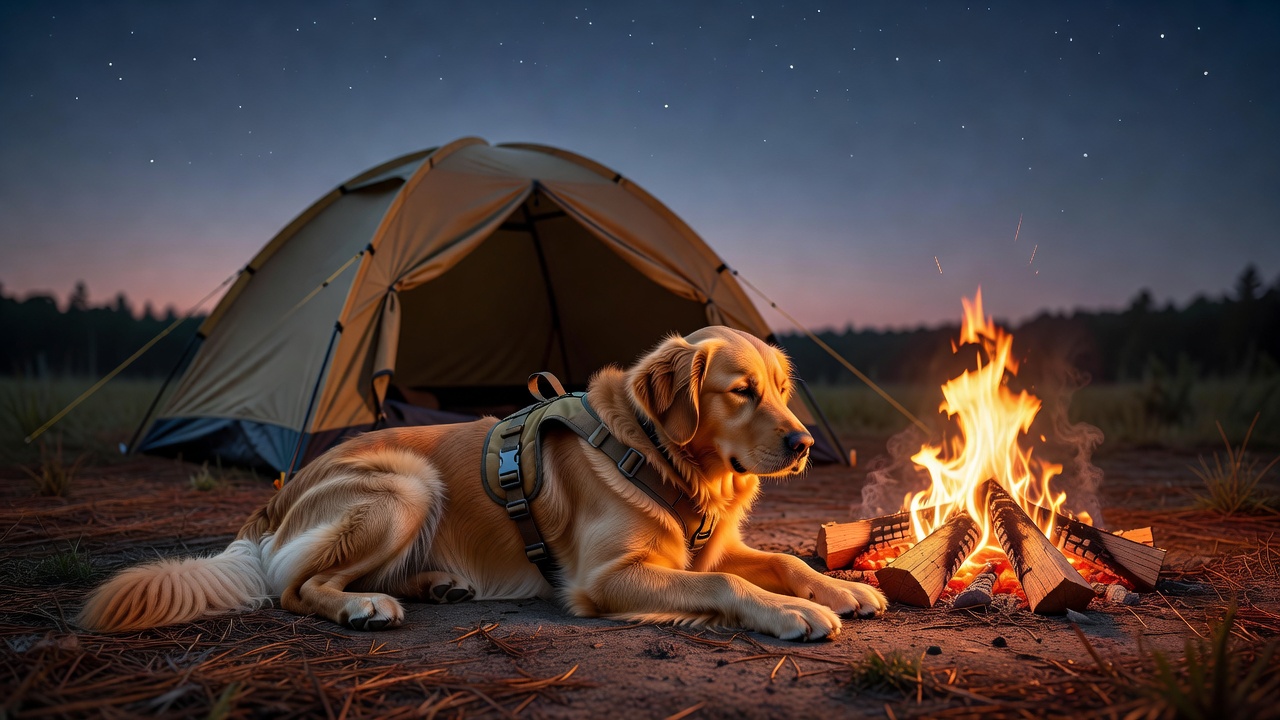
The one-line version: pick a trip your dog is physically ready for, prove recall before you trust it, carry more water than you think you need, and treat paw protection and first aid as core gear rather than afterthoughts.
Is Your Dog Ready for Camping?
Not every dog is built for a night in the woods. Before you pack the tent, run through this checklist honestly. Your dog's comfort and safety depend on it.
Fitness and Age Considerations
A weekend car-camping trip at a developed campground is a different animal from a five-mile hike into a backcountry site. Match the trip to what your dog can handle. If you are eyeing a national-park campground, start with our National Parks camping guide: pet rules vary sharply by park, so checking trail access and campground policies before reserving saves a disappointing arrival.
- Puppies under 12 months should stick to short, low-intensity outings. Their growth plates haven't closed, and overexertion on rough terrain can cause lasting joint damage.
- Senior dogs often love camping, but keep distances short and terrain gentle. Arthritis flares up faster on cold mornings, so bring extra bedding.
- Brachycephalic breeds (Bulldogs, Pugs, Boxers) overheat dangerously fast. If you wouldn't hike with them in midday heat, don't camp with them in summer without shade and constant water access.
A vet check is non-negotiable. Make sure vaccinations are current. Leptospirosis and Lyme are real risks in backcountry water sources and tick-heavy areas. Tell your vet where you're going; they may recommend additional preventatives.
Temperament Checklist
Some behavioral issues are manageable at home but become genuine problems in the backcountry. Ask yourself:
- Does your dog have reliable recall? If a deer bolts across the trail 30 yards ahead, will your dog come back or disappear for 20 minutes?
- How does your dog react to strangers approaching your site? A protective bark is fine. Lunging at the family in the next site over is not.
- Is your dog noise-reactive? Thunder, falling branches, and unfamiliar animal sounds at 2 a.m. test even calm dogs.
- Has your dog ever slept outside overnight? Try a backyard test run before committing to a multi-night trip.
If recall is shaky, keep your dog on a long line at all times. No exceptions. The woods are not a fenced dog park, and "he's friendly" doesn't matter when he's chasing a porcupine. A voice training collar ($39.99) can bridge the gap while you work on recall. The voice command cuts through wind and distance, and the vibration mode works as a gentle reminder without shock. For a complete off-leash training plan, see our voice training collar guide, and if you want to compare voice command, beep, vibration, and static side by side across price tiers, our best dog training collar 2026 comparison breaks down real range, battery, and waterproof specs.
Before You Trust Recall at Camp
A campground is a terrible place to discover that your dog only listens in the backyard. Start recall work at home, then add distractions in layers: the local park, a quiet trail, a picnic area, and only then a busy campground or wildlife-heavy hike. I like to think in three stages:
- Stage 1: Long-line proofing. Practice
come,leave it, andplacewith a 15- to 30-foot line before you ever consider off-leash freedom. - Stage 2: Distance communication. Add a collar cue, whistle, or consistent verbal marker so your dog hears the same command even when wind, water, or other campers make your normal voice disappear.
- Stage 3: Real-world decision making. Train around food smells, bikes, kids, squirrels, and the exact distractions your dog will meet around camp.
If your dog blows you off once on a trail, that's feedback — not a sign to unclip them again and hope for the best. Go back a step, shorten distance, and rebuild. For owners specifically shopping collar types before they start that progression, our best dog training collar 2026 comparison is the gear-first version of the same problem: matching voice, beep, vibration, or static modes to your dog's temperament and your hiking style. And if you already know you want the voice-command route, our voice training collar guide shows exactly how to condition the collar over four weeks so it becomes a calm recall tool instead of a confusing gadget.
Essential Gear for Camping with Dogs
You can get by with basic human gear. Your dog can't. Here's the core kit that separates a smooth trip from a stressful one.
The Non-Negotiables
- Sturdy collar with ID tags. Even if your dog is microchipped, a visible tag with your cell number gets them back faster. Add a temporary tag with the campground name and site number.
- A reliable harness. Collars slip, especially when a dog is wet or spooked. A padded, well-fitted harness with front and back leash attachment points gives you more control when your dog pulls toward wildlife or gets excited around camp. The chest clip helps with leash manners, and foam padding stays comfortable over long trail days. For off-leash control when a harness isn't enough, a voice training collar ($39.99) gives you recall at 4,500 feet. The dog can't miss it even in wind.
- Two leashes. Bring a standard 6-foot leash for hiking and a longer tie-out (15 to 30 feet) for camp. Bring a spare; they disappear or snap at the worst moments.
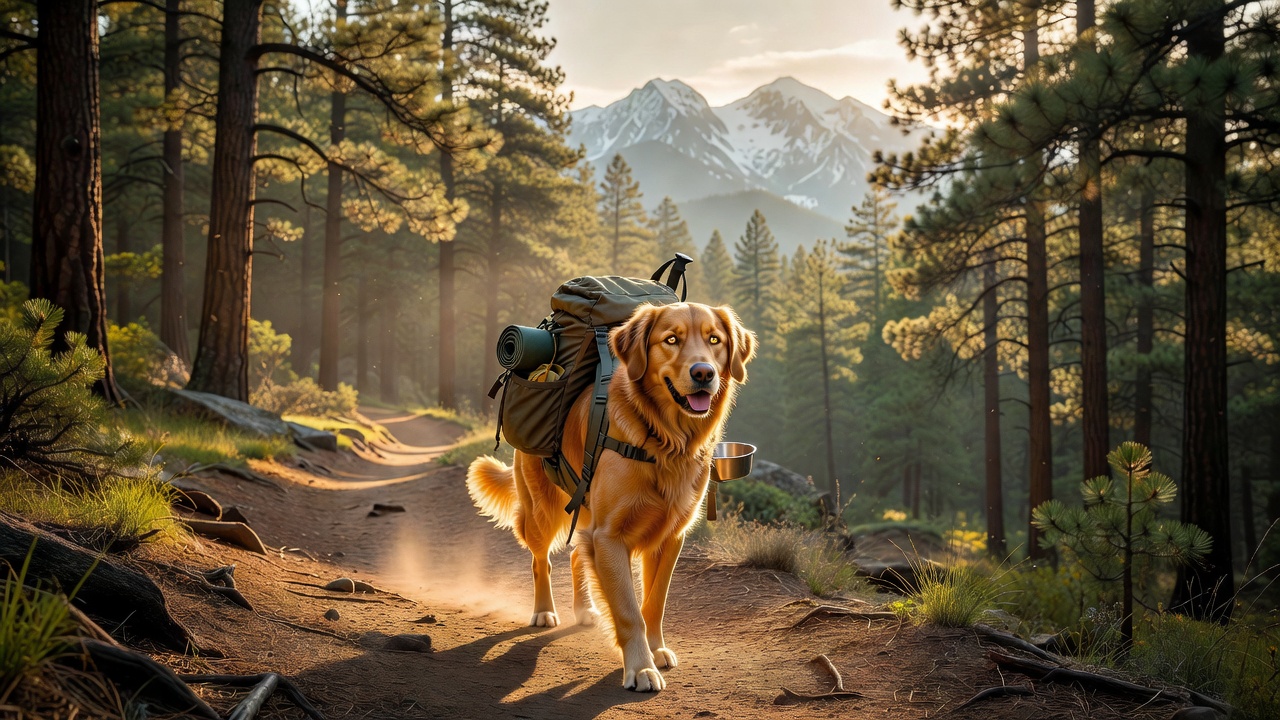
- A dog backpack. If your dog is healthy and medium-sized or larger, let them carry their own gear. Start with empty saddlebags on a few walks, then gradually add weight. Never exceed 10 to 12% of your dog's body weight, and balance both sides evenly. If you're moving beyond campground weekends and starting to plan lighter overnight trail miles, our dog backpacking guide breaks down when dogs should carry weight, how much is too much, and how to train for longer days without overdoing it.
- Food and water system. Bring 50% more food than you think you need. If your dog inhales dinner at the campsite, the Outward Hound Fun Feeder slows gulpers down and cuts the bloat risk before they charge off to explore. Dogs burn extra calories regulating body temperature and navigating uneven terrain. Large collapsible dog bowls like the Ruffwear Quencher clip to the outside of a pack, fold flat when they're empty, and give medium-to-large dogs enough room to drink without sloshing water everywhere. For your basecamp reservoir, the RAYMYLO Insulated Water Bottle 64 oz holds enough water to top up a dog bowl between refills and uses triple-wall insulation to keep water cold for long summer days. For water, plan on 1 ounce per pound of body weight per day as a baseline, and double that in hot weather. If you're building a family basecamp with kibble, human food, and cold drinks all in one system, our best camping coolers guide helps you size a cooler that still has room for dog food and meds.
- Dog first aid kit. We'll cover specifics later, but at minimum pack styptic powder, vet wrap, tweezers, antiseptic wipes, and any regular medications.
Gear That Makes the Difference
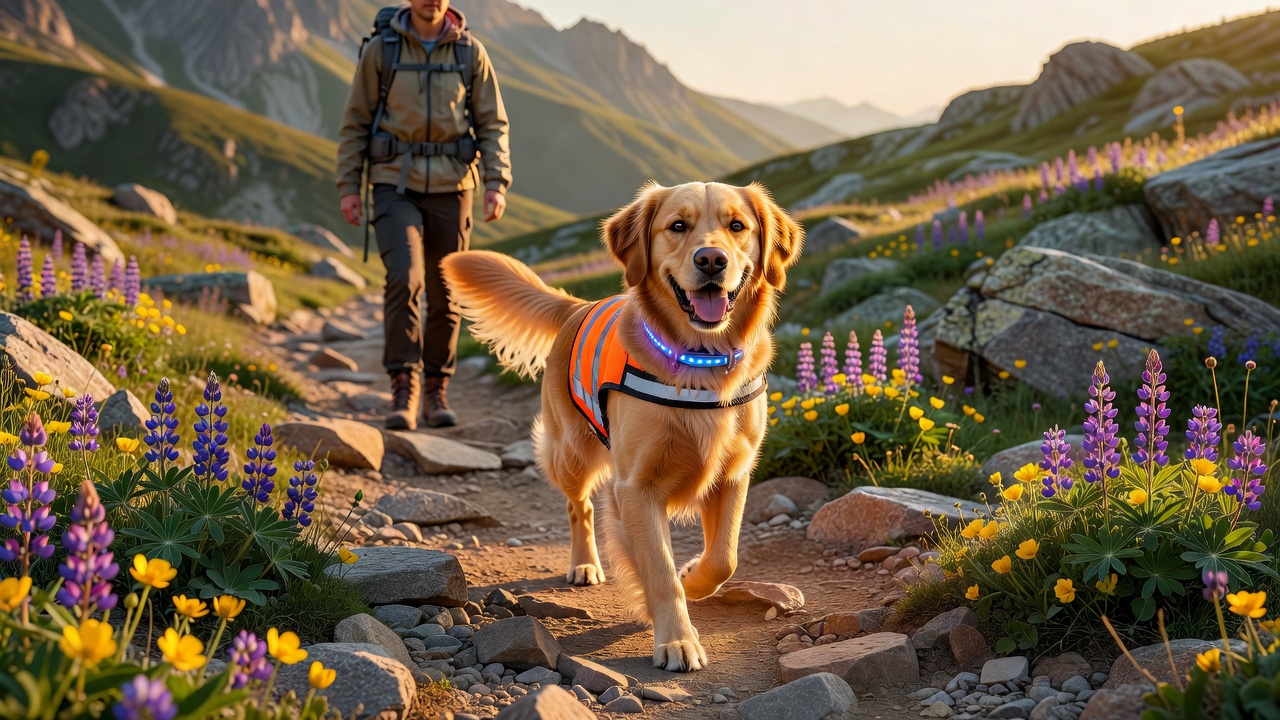
- LED collar or clip-on light. At night, your dark-coated dog becomes invisible. A blinking light tells you exactly where they are and warns other campers.
- Packable dog bed or closed-cell foam pad. Tent floors leach body heat. A waterproof outdoor dog bed gives medium and large dogs a sleeping surface that wipes clean after muddy trail days and keeps claws off your tent floor.
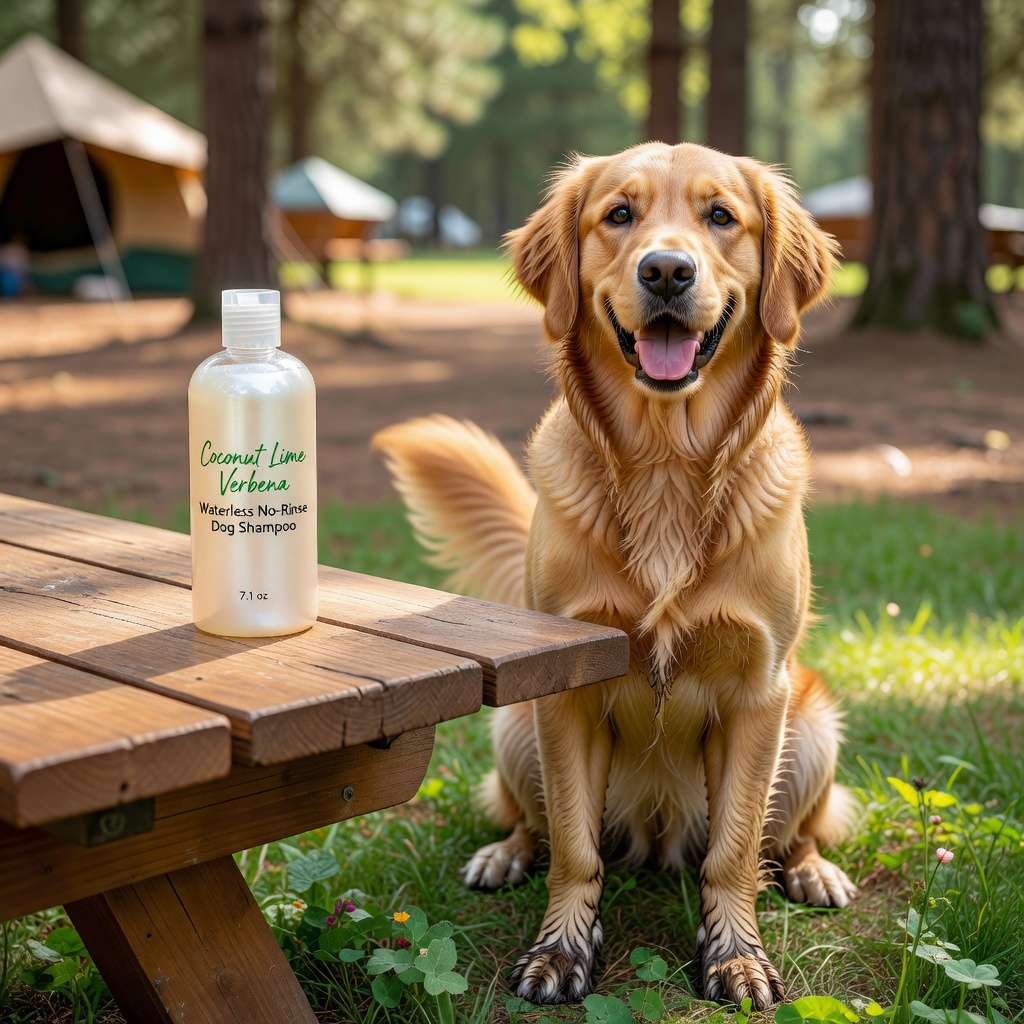
- Microfiber towel plus a real paw-cleanup step. One towel dedicated to the dog is non-negotiable, but towels alone just smear grit around. A no-rinse paw-cleaning foam or paw washer makes it much easier to foam, brush, and wipe muddy paws before your dog jumps into the tent or truck. For dusty coats and light mud when a full bath is impossible, Wahl Waterless No-Rinse Shampoo is a compact, pH-balanced foam you work through with a towel—no campground faucet required. The practical part is being able to clean paws and coat fast at the trailhead instead of trying to rinse everything with your drinking water.
- Paw protection wax. Musher's Secret Dog Paw Wax or a similar balm creates a barrier against hot rocks, ice, and abrasive granite. Apply before you hit the trail and reapply after water crossings.
For a deeper dive into trail-ready gear for the whole pack, check out our day hike essentials gear checklist — it covers what to carry on the trail, including hydration, first aid, and the small items that keep a long hike from going sideways. And when you're ready to pack for the full weekend, our printable camping with dogs checklist rolls documents, meds, food, sleep, recall gear, and first aid into one tick-off list you can keep in the glovebox.
Summer-Specific Dog Camping Gear You’ll Actually Use
Hot-weather dog trips go sideways for predictable reasons: not enough shade, no cooling layer, nowhere to rinse mud and sand before the tent, and no system for keeping your dog hydrated between rest stops. If your calendar keeps filling with July and August campground weekends, build a more specific warm-weather kit instead of assuming your spring setup will scale.
Here’s the short list I’d prioritize:
- Cooling layer for exposed trails and hot campgrounds. A lightweight evaporative cooling vest helps on bright, exposed walks because you soak it, wring it out, and let evaporation take some edge off while your dog moves. It is not magic, but it can buy useful comfort time on hot mornings and around treeless campsites. For the human side of the same problem — UPF clothing, sun hats, and shade tactics on exposed trails — our sun protection camping and hiking guide covers what to wear when there is no tree cover for either of you.
- Extra water capacity beyond your normal dog bowl routine. If you are still working out filtration, refill timing, or how much water both of you really burn through, our camping water filtration and hydration guide is the best companion read before a hot-weather trip.
- A true pack-from-this checklist. Our dog camping gear checklist for summer hikes pulls cooling gear, spare water, trail communication, cleanup supplies, and heat-management basics into one faster-reference article when you do not want to rebuild your whole packing system from scratch.
- A trail-turnaround rule before you leave camp. The fastest way to avoid paw burns and overheating is still good judgment. Our dog summer hiking safety guide covers the 7-second paw test, shade-break timing, and the warning signs that mean the hike should end early.
- A water-day plan before you reach the shore. Lake and beach trips have dangers beyond drowning — rip currents, blue-green algae, cold-water shock, and sudden drop-offs. Our dog water safety guide for lakes and beaches covers when a life jacket actually matters, the five real water dangers, and the 5-minute rinse routine that keeps lake water from becoming a vet visit. Paddling in instead of driving? Our kayak camping gear checklist covers dry bags, float plans, and how to keep a paddle-in campsite dry and dog-friendly.
I also like pairing this hot-weather setup with one comfort upgrade for the humans. If your dog is waking up at every noise and forcing midnight tent exits, the camp lighting guide helps you build a calmer after-dark routine, and the best camp pillows comparison guide is the small luxury that makes a sweaty, restless night more survivable. And once the sun drops and your dog finally settles into a shady spot, you want your own place to land too — our camping chairs comparison guide compares rocker, lounger, and lightweight options so you can actually relax at the campsite while your dog naps beside you instead of perching on a cooler lid.
Camping With a Dog in Hot Weather vs Cold Weather
The two extremes are not symmetric, and the kits are not interchangeable. Camping with a dog in hot weather is a hydration and surface-temperature problem that shows up within an hour. Camping with a dog in cold weather is a bedding problem that shows up at 3 a.m. Plan for whichever one your trip actually is, because the fixes pull in opposite directions.
Hot weather, above 80F. Camping with a dog in summer is mostly a water-and-timing problem, and camping with a dog in the heat is that same problem compressed into the middle of the day. Do the back-of-hand test on pavement, sand, or granite before your dog walks on it, if you cannot hold your hand there for five seconds, paws will burn. Hike before 10 a.m. or after 6 p.m., carry the dog's water separately from your own, and take shade breaks before your dog asks for them. Flat-faced breeds should be wet down at every water source, and a cooling mat or vest does more good than a bowl of water that has been sitting in the sun. The real hazard is the car: a 75F day reaches 100F inside a parked vehicle in about ten minutes, so dogs camping in hot weather either come along on every supply run or stay at camp on a shaded tie-out.
Cold weather, below 40F. Ground contact is what chills a dog fastest, and a human sleeping bag does not insulate a dog because a dog's body never fills it. Bring an insulated pad or a raised cot, add a fleece or jacket for short-coated, senior, and small breeds, and block wind at their sleeping corner rather than in the middle of the tent floor. Our winter camping guide covers the temperature math, and how to stay warm camping covers the sleeping system that keeps the whole tent warmer.
The heat rule that overrides everything. A dog that is panting hard, drooling thick saliva, or wobbling is already in trouble. Stop, get shade, offer water, and wet the belly and paws rather than the back, and do not wait to see whether it improves on its own. The full warning-sign list is in our dog summer hiking and paw protection guide.
Choosing the Right Tent When You Have a Dog
Your tent is your shared sanctuary, and dogs are hard on tents. Nails snag mesh, wet fur soaks sleeping bags, and a misplaced paw can snap a pole. Here's how to pick a tent that survives.
What to Look For
- Size up. A two-person tent fits two people. Add a dog, and you need a three-person minimum. Factor in wet dog sprawl. My 65-pound Lab somehow occupies the footprint of a grown adult when she's drying off.
- Bathtub floor. Look for a tent floor that curves up at least a few inches at the seams. This keeps groundwater out and contains the mud your dog tracks in. Flat-seamed floors leak at the corners under dog weight.
- Durable floor material. 150D polyester or heavier stands up to claws better than ultralight 20D silnylon. If your tent floor is thin, bring a closed-cell foam pad or a piece of Tyvek to layer underneath your dog's sleeping area.
- Easy entry and exit. Dogs don't do delicate zipper work. A tent with a large D-shaped door makes it easier to get a muddy, impatient dog inside without a wrestling match.
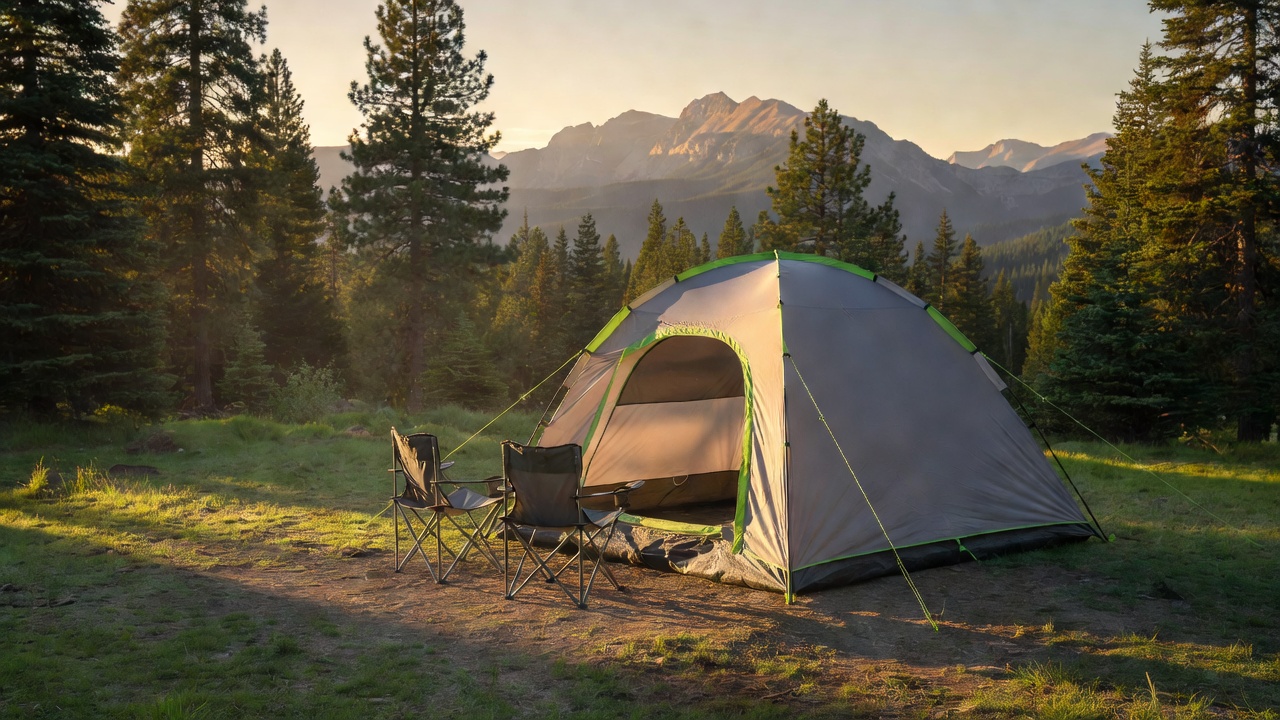
The CORE 6-Person Instant Cabin Tent ($169.99) is a more reliable current pick for dog camping. Its pre-attached poles make setup fast when a wet dog and incoming weather are competing for your attention, while the cabin layout gives a family room to separate pads, duffels, and a dog bed. Treat “six person” as a family-with-gear rating rather than six adults with luggage. If you are planning for two adults, two kids, and a dog rather than a couple plus one pup, use our family-of-four-and-a-dog tent size guide to decide when a 6P layout is workable and when an 8P tent prevents a miserable rainy-day pileup. If you're stuck between a cozy 4P setup and the breathing room of a 6P once you add a dog bed, wet gear, and one big shedding body, our 4P vs 6P tent comparison guide shows exactly how fast floor space disappears. For more tent options, our best family camping tents guide compares four proven setups across budget, blackout, and premium instant-cabin tiers, and our best family tents under $200 guide adds more value-focused picks that still hold up to claws and muddy paws. If you'd rather start from a shortlist already scoped to dogs — claw-resistant floors, wide D-doors, and enough floor left over for a wet dog to dry off — our best tents for camping with dogs guide compares six dog-tested setups side by side.
Dog-Proofing Your Tent Setup
Once you've chosen your tent, a few simple habits prevent expensive damage:
- Trim your dog's nails the day before the trip. Dull nails still puncture mesh, but sharp ones shred it.
- Lay a groundsheet inside the tent under your dog's sleeping area. A cheap moving blanket or dedicated tent footprint absorbs dirt and provides an extra puncture barrier.
- Create a "paw wipe station" outside the tent entrance with your microfiber towel. Train your dog to pause on the towel before entering. It takes practice, but even a half-hearted paw wipe removes most of the grit.
- Keep the tent zipped at all times. Dogs learn fast that nosing a partially-open door gets them freedom. A zipped tent also prevents midnight skunk encounters.
- Consider a separate screen shelter for bug-heavy trips. The SANSBUG Screen Tent pops open instantly with no-see-um mesh that blocks even the tiniest biting insects. While it's sized for one person, it works brilliantly as a dog refuge during peak mosquito hours. Your dog can lie protected without getting stuck in the main tent.
For more tent options and camping gear recommendations, see our best camping and outdoor guide for 2025.
Trail Safety and Etiquette with Dogs
The reputation of every dog owner on the trail rides on how you handle your dog. I've seen campsites clear out because one unleashed dog wouldn't stop barking, and I've seen rangers issue citations for dogs off-leash in protected areas. Don't be that person.
Leash Laws and Why They Exist
Leash laws aren't arbitrary. They protect wildlife, other hikers, and your dog. Even in areas where off-leash is technically permitted, keep your dog leashed unless:
- Your recall is 100% reliable around wildlife, other dogs, and food
- The trail isn't crowded
- You're certain there are no trapping areas nearby (check with the ranger station)
A long biothane line (20 to 30 feet) gives your dog freedom to explore while keeping you in control. Biothane doesn't absorb water, doesn't stink after stream crossings, and wipes clean easily.
A long line is only useful if there is something to attach it to. At a dispersed campsite the Ruffwear Knot-a-Hitch campsite tie-out turns two trees or a single post into an anchor — 28.5 feet of rope with a swiveling carabiner, so the line does not wind up when the dog circles — and it is the difference between cooking with both hands and cooking with one. Read the next paragraph before you buy one, though: the same rope that is fine on national forest land is a citation inside a national park. For the legal end of the spectrum, the Kurgo Quantum 6-in-1 leash is a 6-foot lead that converts to a short traffic grip at a crowded trailhead and to a waist belt when your hands are full of gear.
Where even the long line is illegal: in a national park the leash cap is 6 feet at all times, which rules out both retractable leashes and long lines — and most parks ban dogs from unpaved trails entirely. The dog-friendly national parks guide lists the parks where dogs can actually hike, the ones where camping is the only dog-friendly part of the trip, and how to plan around a park that says no.
Wildlife Encounters
Different regions mean different risks. Know what's active in your area. A cheap pair of binoculars is the easiest way to identify what's out there before your dog does — our best binoculars for family camping and hiking guide covers kid-friendly picks, eye-relief tips, and how to spot wildlife at distance without leaving the trail:
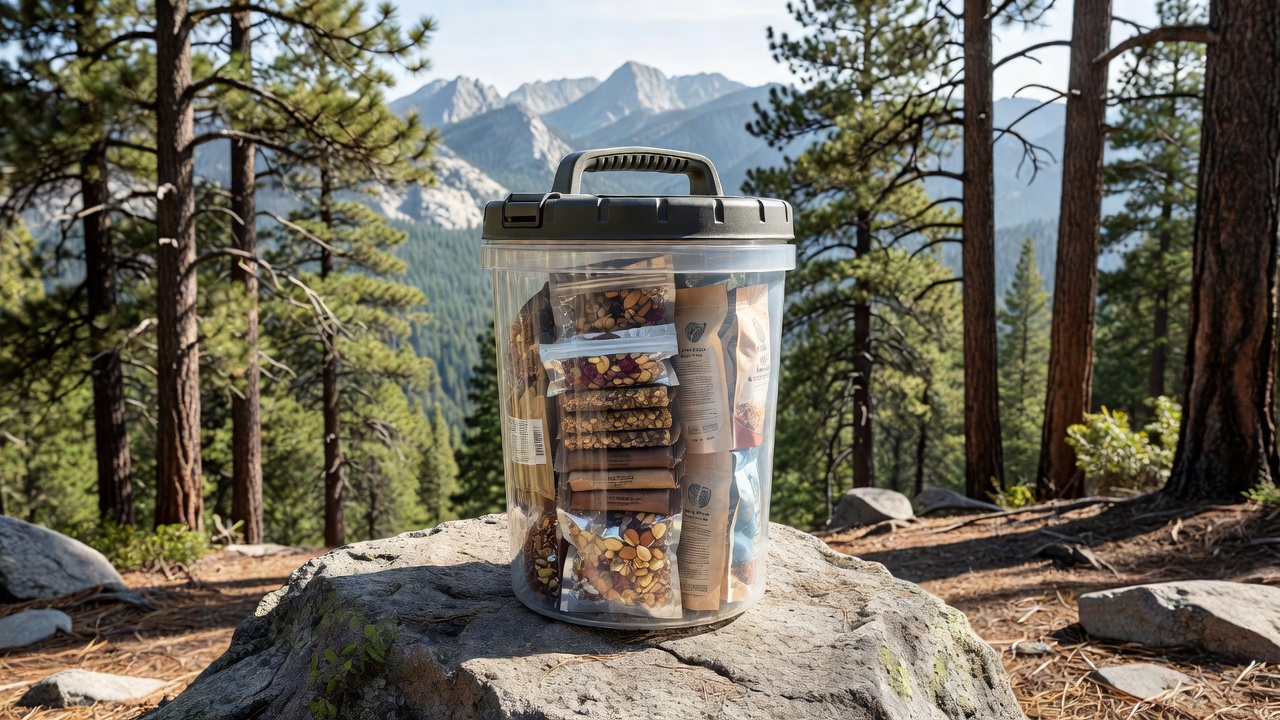
- Bear country: Keep your dog close. A dog that chases a bear will bring it back to you. Store dog food the same way you store your own, in a bear canister or hung properly. For the full breakdown of bear-safe food storage, canister vs hang methods, and what to do in a close encounter, see our bear safety camping guide — it covers bear spray deployment, attractant management, and campsite placement in active bear territory.
- Snake territory: Learn local venomous species. Keep your dog on trail where visibility is good. Consider snake avoidance training for rattlesnake country.
- Moose and elk: These are far more dangerous than bears in many areas, especially during calving season. A moose will charge a dog without hesitation, and your dog's instinct is to bark and circle. Keep your distance and leash up immediately if you spot one.
If you're in bear country with a dog, the food rule covers both of you: keep your dog's kibble in the same container as your own food and never leave a bowl out overnight. A BearVault BV450 Jaunt canister ($89.99, IGBC-certified) holds 3-4 days of food for one person or a weekend for two, and it is the storage most national-park backcountry zones ask to see at the permit desk.
Campground Etiquette
- Pick up after your dog, even in dispersed camping areas. Bury waste 6 to 8 inches deep and at least 200 feet from water sources, or pack it out.
- Control barking. A few alert barks are fine. Sustained barking at 11 p.m. is how you make enemies of every camper within earshot. Bring a chew or puzzle toy to occupy your dog during quiet hours.
- Respect other campers' space. Not everyone loves dogs. Keep your dog from wandering into neighboring sites, and don't assume other people's dogs are friendly. Ask before any nose-to-nose greeting.
- Plan beach rules before you arrive. Coastal campgrounds can be surprisingly dog-specific: some allow dogs on the sand only at dawn and dusk, others ban them from swimming beaches but allow them around the campsite loop. If a shoreline trip is on your shortlist, our beach camping gear checklist covers the extra shade, rinse-off, and paw-protection prep that keeps salt, sand, and hot boardwalks from turning a fun weekend into a miserable one.
Choosing the Right Sleep Setup for Your Dog
A lot of first-time dog campers obsess over food and leash rules, then completely underestimate sleep comfort. That mistake shows up at 2 a.m. when your dog keeps shifting on the tent floor, steps on your sleeping pad, or tries to climb onto your quilt because the ground is colder than expected. If you want to build a calmer overnight setup, start with your own base system: our sleeping pad vs air mattress camping guide explains how insulation, floor space, and midnight bathroom logistics affect everybody in the tent, dog included. Your dog also needs its own insulated surface rather than the bare tent floor — our dog sleeping pad and camp bed guide covers the pad-versus-elevated-cot question, why a cold floor wrecks a dog's sleep, and how much bed actually fits beside yours. Once the floor is sorted, the smaller comfort pieces matter more than people expect. A crushed pillow, bundled hoodie, or rolled-up towel technically works, but if you care about actually sleeping through the night, our best camp pillows comparison breaks down which pillow styles stay comfortable after a long trail day and which ones feel like regret by midnight. If you're also still choosing shelter size, our 4P vs 6P tent comparison guide is the quickest way to see how one dog bed, a couple of duffels, and wet gear can turn a "big enough" family tent into a cramped mess fast.
If that overnight comfort problem extends past bedding and into how you move around camp after sunset, our camp lighting guide covers the lantern-plus-headlamp setup that keeps midnight bathroom runs, paw checks, and tent entry far less chaotic when your dog is circling underfoot. And if your dog sleeps better when the whole basecamp routine feels calmer and more predictable, our best camp stove for car camping guide helps you build a quieter dinner setup with simpler meal planning, fewer late-night cleanup surprises, and less frantic rummaging once your dog is finally ready to settle.
Dog First Aid and Health on the Trail
Problems that are minor at home become serious when you're miles from a car. Knowing how to handle common issues keeps small problems from turning into emergency evacuations.
Why Lighting Matters More With Dogs Than Most Campers Realize
When you camp without a dog, bad lighting is annoying. When you camp with a dog, bad lighting creates preventable problems: missed paw splinters, tangled tie-outs, stepped-on water bowls, and midnight tent exits where nobody can see who's wrapping around whose legs. That's why I now treat lighting as part of dog safety, not campground decoration.
A layered setup works best:
- One headlamp for hands-free tasks. You need both hands for paw checks, clipping leashes, or dealing with a dog who heard something outside the tent.
- One lantern for the shared camp zone. Soft area light keeps your dog calmer than a harsh flashlight beam bouncing around the site.
- One small locator light on the dog or near the tether. This is the difference between a calm bathroom break and ten minutes of muttered swearing while you search for a black dog on dark ground.
If your evenings tend to unravel after sunset, our camp lighting guide breaks down the exact lantern-plus-headlamp setup that works for cooking, gear organization, and safe late-night dog handling without turning your campsite into a stadium.
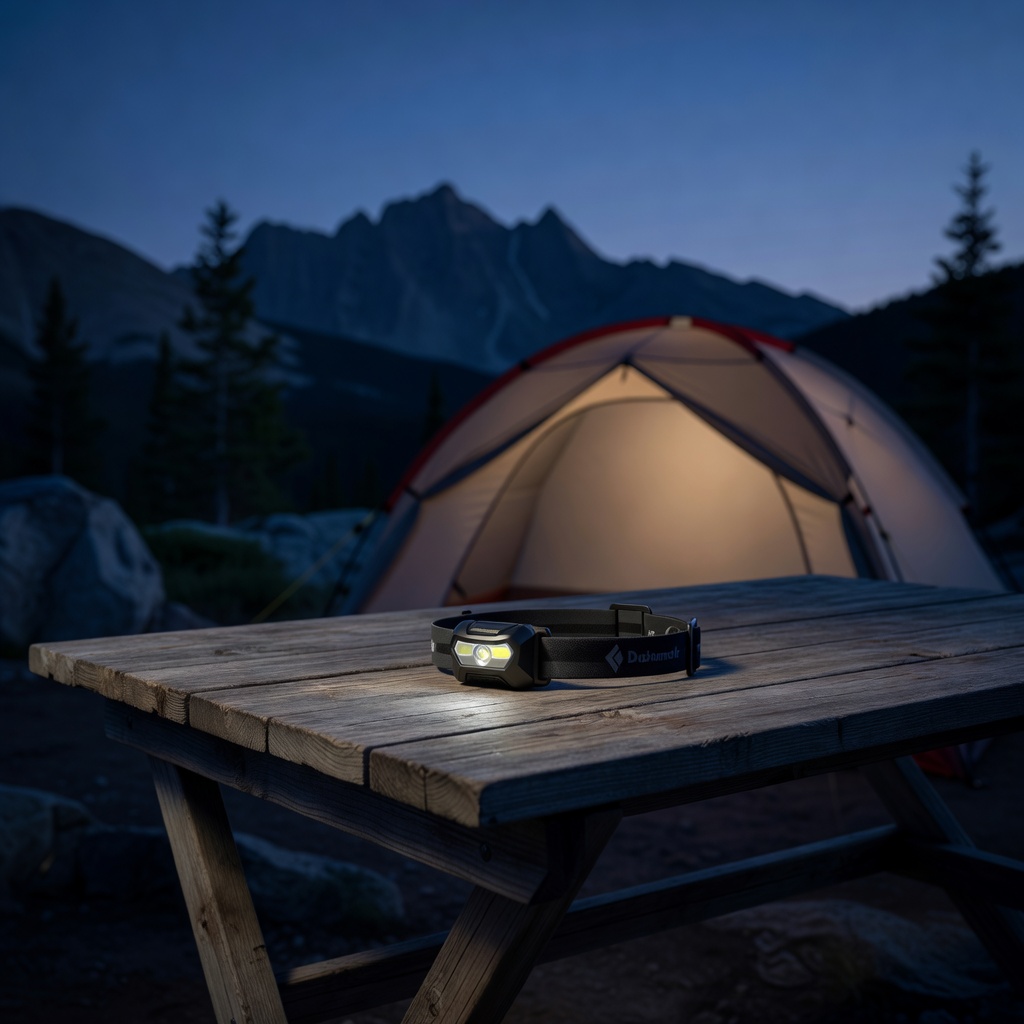
Our picks for that layered setup. For the hands-free layer, the Black Diamond Spot 400 ($39.95, 4.5★) is the dependable default — 400 dimmable lumens, waterproof, and a red-light mode that will not blind a dog or a sleeping partner during a 2 a.m. paw check. If you would rather never buy batteries again, the Petzl ACTIK CORE ($79.95, 4.5★) is the rechargeable step up at 625 lumens in an 88 g body, with the same red mode for low-light work around the tent. For the shared camp zone, the Black Diamond Moji Lantern ($24.95, 4.4★) is a palm-size 200-lumen area light with real dimming and fold-up hang loops, so it can sit on the table or hang from the tent loop without washing out the whole site. Camping with kids as well as a dog? The MalloMe Camping Lantern 4-Pack ($23.99, 4.7★, 8,100+ reviews) puts one collapsible lantern in every hand for less than the cost of the Moji alone — an honest trade of dimming control for headcount.
- Charge everything from one box, not your phone's last 8%. A GPS collar, two headlamps, a lantern, and your phone will all need power by day two of a car-camping trip — and draining your phone to keep a collar alive is a miserable way to spend the second night. A portable power station is the quiet, gas-free answer to keeping dog gear and human gear running off-grid, and our guide breaks down the watt-hour math so you don't overspend on capacity you'll never use.
Paw Care
Dog paws are tough, but they're not indestructible. The most common injury I see on the trail is torn pads from sharp rocks or hot surfaces.
- Check paws at every rest stop. Spread the toes, look between pads for debris, and feel for hot spots.
- Learn the pavement test: Place the back of your hand on the trail surface for 5 seconds. If it's too hot for you, it's too hot for your dog's pads.
- Booties aren't only for winter. On granite-heavy trails or scree fields, durable dog boots prevent lacerations. Practice at home first. Most dogs walk like they've forgotten how their legs work the first time.
- Minor pad cuts: Flush with clean water, apply antiseptic, and wrap with vet wrap. If the cut is deep or won't stop bleeding, it's time to turn around.
Hydration and Overheating
Dogs don't sweat the way we do. They cool through panting and their paw pads. This makes them vulnerable to heat stress even on mild-feeling days. For a full gear breakdown of cooling mats, reflective tarps, and electrolyte strategies for the trail, our hot weather camping gear guide covers what actually keeps a dog's core temperature down when the mercury climbs past 90°F. If you want a faster pack-from-this list before a weekend trip, our dog camping gear checklist for summer hikes pulls the shade, hydration, paw-cleanup, and communication gear into one practical setup.
- Offer water every 20 to 30 minutes on the trail. Don't wait for your dog to act thirsty.
- Know the signs of heat exhaustion: excessive panting that doesn't slow with rest, bright red gums, thick drool, disorientation, or collapse. If you see these, get your dog into shade, wet their belly and paw pads with cool (not ice-cold) water, and offer small amounts to drink. Heat stroke requires immediate evacuation.
- Avoid alpine lakes and stagnant ponds for drinking. Giardia and leptospirosis are widespread. Filter your dog's water too, or bring enough clean water for both of you. A squeeze-style backcountry filter gives you a lightweight way to top off both your own bottle and your dog's bowl at every creek crossing without gambling on untreated water.
- Keep your own water easy to reach. If you hike with a leash in one hand, a bottle you can use one-handed matters more than you'd think. The Owala FreeSip Insulated Water Bottle keeps water cold for hours and lets you sip upright or chug from the wide-mouth opening without fumbling with a screw cap.
- Watch the ground, not just the forecast. Sun-baked rock, boardwalks, and dark trailhead pavement can cook paw pads long before the air temperature feels scary. Our dog summer hiking safety guide breaks down paw-burn tests, cooling strategies, and how to decide when a hot-weather hike should become an early-morning campground walk instead.
What Goes in a Dog First Aid Kit
- Styptic powder. Stops bleeding from torn nails instantly.
- Self-adhering vet wrap. Sticks to itself, not fur.
- Tweezers or tick key. Check your dog thoroughly at the end of each day.
- A dedicated paw cleaner for muddy exits. A fast foam-and-brush cleanup before your dog tracks wet grit into the tent, truck, or sleeping bag is much easier than trying to scrub paws with baby wipes in the dark.
- Antiseptic wipes: chlorhexidine or iodine-based.
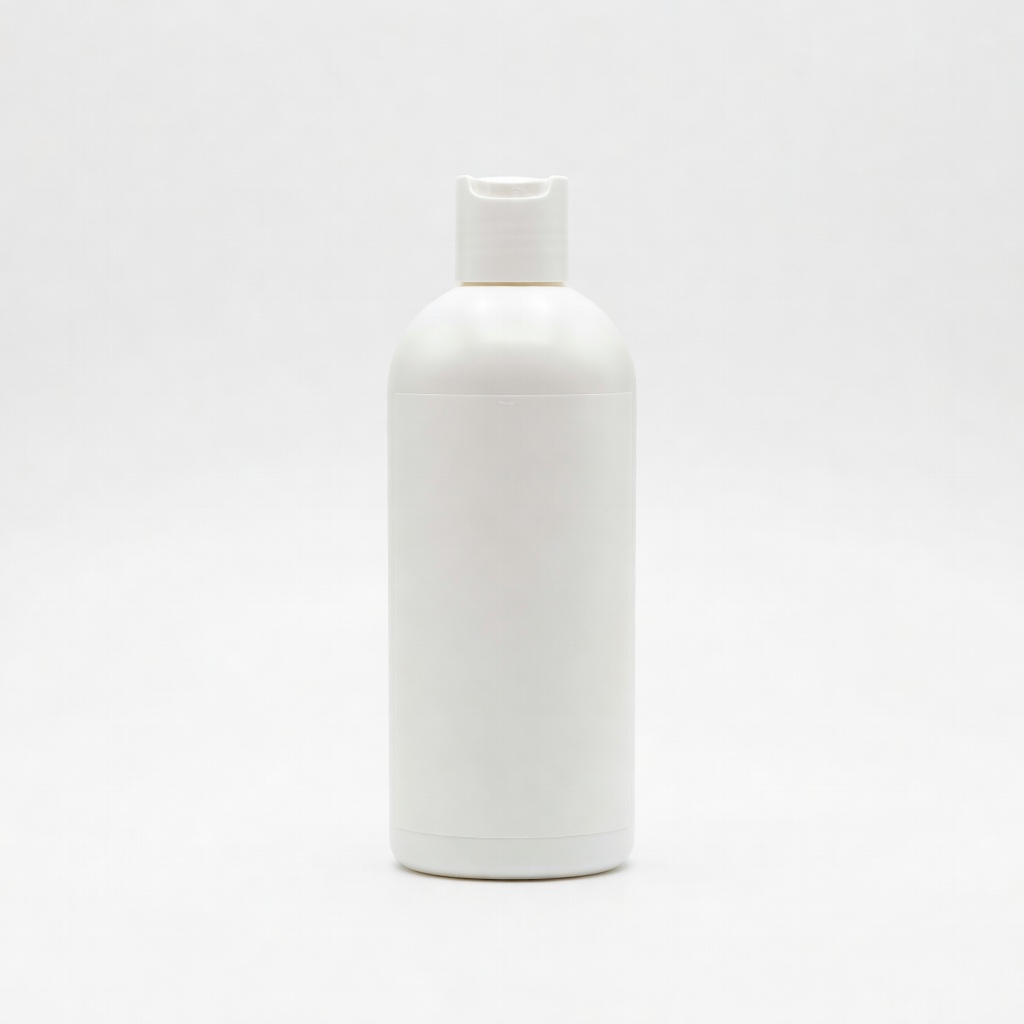
- A post-trip coat reset. If your dog comes home from muddy trails with burrs, dust, and trail funk worked deep into the coat, a proper dog shampoo helps keep that grime out of your car and couch. Wahl Waterless No-Rinse Shampoo for Animals is a convenient clean-condition-deodorize option when a full bath is impractical; check for ticks and remove debris first, then follow the label instead of treating it as flea control.
- A medicated wash for the itch that shows up a few days later. No-rinse foam handles trail grime; it will not touch hot spots, flaking, or the yeasty smell a dog gets after swimming and staying damp. Two cheap bottles cover most of that. The Veterinary Formula Clinical Care Antiparasitic & Antiseborrheic Shampoo ($8.78, 4.5★ from 64,000+ buyers) leans on coal tar, salicylic acid, and micronized sulfur for dry, flaky, itch-driven skin, and it lathers and rinses clean even in a camp shower or lakeside wash. The Nizoral Ketoconazole Pet Shampoo ($22.99, 4.7★) adds the other half — 1% ketoconazole for the fungal and yeast side plus 2% chlorhexidine for the bacterial side, which is the combination vets reach for on ringworm, yeast dermatitis, and hot spots. Be accurate about what these are: both are treatment washes, not flea-and-tick preventatives. Nizoral needs 5–10 minutes of contact time before rinsing, neither belongs in a routine bath rotation, and you should check with your vet before using either on a dog that is already on medication.
- Benadryl (diphenhydramine). For allergic reactions and insect stings. Get the correct dosage from your vet beforehand and write it on the bottle.
- Hydrogen peroxide (3%). For inducing vomiting, but only under veterinary guidance. Never use without calling a vet first.
- Muzzle. Even the gentlest dog may snap when injured.
- A compact medical kit that stays dry. The Adventure Medical Kits Ultralight/Watertight .7 First Aid Kit ($34.99) keeps bandages, blister care, and your vet-contact card organized in a water-resistant pouch instead of becoming a loose collection of supplies in the bottom of your trunk. It is a smart base kit for a solo camper, a couple, or a small family; add your dog's prescriptions, any vet-recommended medication, and a few extra vet-wrap rolls before leaving town.
- Your vet's emergency number and the number of the nearest emergency clinic to your campsite. Save both in your phone before you lose signal.
Best Seasons for Camping With Dogs
Spring (March-May) is ideal for most first dog-camping trips. Trails are cooler, campgrounds are less crowded, and your dog can spend more time moving without flirting with heat stress. The tradeoff is mud, which makes a paw-cleanup system much more important than people expect. A no-rinse paw-cleaning routine earns its place here, and our beach camping gear checklist is worth reading even for non-beach trips because the rinse-off, towel, and sand-control routines translate perfectly to sloppy spring campgrounds.
Summer (June-August) gives you the longest evenings and easiest family scheduling, but it is also the season when dogs overheat, burn their paws, and drink far more than owners planned for. If you still want to camp through hot weather, build around early starts, shady sites, and active cooling. A soak-and-wring evaporative vest can make exposed walks more manageable, while our hot weather camping gear guide plus dog summer hiking safety guide cover the exact trail timing, cooling, and hydration habits that keep a fun weekend from turning into an evacuation.
Fall (September-November) is the easiest season for most dogs and my default recommendation. Cooler daytime temperatures mean longer hikes, fewer bugs, and less panting around camp. It is also the season when a slightly larger shelter starts paying off because wet jackets, dog towels, and bulkier sleep layers pile up fast. For the full autumn setup — ground insulation, dry sleep layers, and keeping meals and camp comfort dialed in for cool nights — our fall camping guide walks through the complete gear checklist. And if you are still deciding how much tent room a dog actually steals from the floor plan, our best family camping tents guide and 4P vs 6P tent comparison guide make the space tradeoffs obvious. One fall-specific safety note: September through November is also hunting season on many public lands, and a brown, black, or white dog can be mistaken for game at a distance — our blaze orange dog hiking guide covers visibility gear, state-by-state honesty about rules, and what to do when you meet hunters on the trail.
Winter (December-February) can be great for experienced dogs, but it is the wrong place to learn basic camp routines. Cold ground, wet fur, and short daylight mean your margin for error is tiny. This is when a warm sleep system, real lighting, and fast shelter setup matter most. Read our camp lighting guide for after-dark campsite movement and our winter camping beginners guide before you commit to freezing nights with a short-coated dog.
Best overall season: fall wins for most dog owners because the trails are kinder, the campsites are quieter, and your dog can actually enjoy longer active days without heat becoming the main story.
Dog Camping Checklist Before You Leave Home
If you only have ten minutes before loading the car, this is the section to skim. A simple pre-trip checklist catches the mistakes that usually ruin a first dog-friendly camping weekend.
📄 Want it on paper instead? Download the one-page printable dog camping packing list (PDF) — the same categories condensed onto a single sheet you can tick with a pen and keep in the glovebox. The web version lives at our printable dog camping packing list. This section explains the reasoning behind each item.
1. Confirm campsite rules and trail policy
Dog-friendly doesn't mean off-leash-friendly. Check whether your campground allows dogs on beaches, in bathhouses, on shuttle buses, or on nearby trails. National parks often allow dogs in campgrounds but restrict them on actual hiking routes. If the rules are tighter than expected, pivot to a dog-friendly state park instead of forcing the wrong trip. If you're still deciding where to book, how far in advance to reserve, or whether a first dog trip should be a developed campground or a simpler weekend basecamp, our camping trip planning guide walks through site selection, booking windows, and the budget mistakes that trip up first-timers.
2. Pack one full day of extra dog food and water
Dogs burn more calories outdoors, especially when the weather swings between hot afternoons and cool nights. Bring one extra day's worth of kibble, plus a backup gallon of clean water just for the dog if you're unsure about filtration or creek access. If your setup revolves around keeping food, meds, and cold drinks organized in one place, our best camping coolers guide helps you choose a cooler size that still leaves room for dog supplies.
3. Do a paw-and-coat check the night before
Trim nails, brush out burr-prone fur, and inspect for cuts, hot spots, or ticks before you ever leave the driveway. It is much easier to notice a cracked paw pad under kitchen lights than in a dark tent with a headlamp on low battery. That quick inspection also tells you whether to pack boots, wax, or an extra towel.
4. Build a dog-specific sleep setup
Most dogs do not sleep well directly on a cold tent floor, even in mild weather. Pack a pad, blanket, or bed that keeps them warm and gives them a defined place to settle. If your own sleep system still needs work, our sleeping pad vs air mattress camping guide explains how to build a warmer tent floor for everyone, not just the dog.
5. Test recall and leash manners before the trip
The campsite is not the place to discover your dog ignores you when birds, bikes, or bacon are involved. Spend a few evenings practicing recall, down-stays, and settling on a mat at home. If communication is the weak point, the voice training collar gives you a clearer signal outdoors, and our best dog training collar 2026 comparison helps you decide whether voice command, vibration, or a multi-dog setup fits your trail style.
6. Set up a muddy-dog plan before weather turns
Assume your dog will get wet, muddy, or both. Bring one towel for paws, one for the body, and a small trash bag for saturated gear on the drive home. If rain is in the forecast, a well-fitted harness is easier to grab and guide in slick conditions than a collar alone, especially around parking lots and crowded campground loops. And if you already know your dog turns every puddle stop into a full-body event, pack a no-rinse paw-cleaning kit so the cleanup happens before mud reaches the tent floor. The other half of that plan is the drive home, because a wet, sandy dog will soak a back seat faster than anything else on the trip. The Ruffwear Dirtbag Dog Car Seat Cover ($119.99, 4.3 stars) anchors over the bench and converts to a hammock setup, so a muddy dog rides behind a washable, waterproof 300D recycled polyester barrier instead of on your upholstery. The no-slip backing keeps it planted through corners, a mesh window keeps air moving to the back seat, and it folds down to almost nothing when you need the seats for people. Two honest caveats: it is a premium price for a seat cover, and it has fewer Amazon reviews than the generic alternatives. If your drive to the trailhead is ten minutes, a cheap cover plus a towel does the job; if you are doing three-hour hauls with a swamp-monster, this is the one that saves the interior.
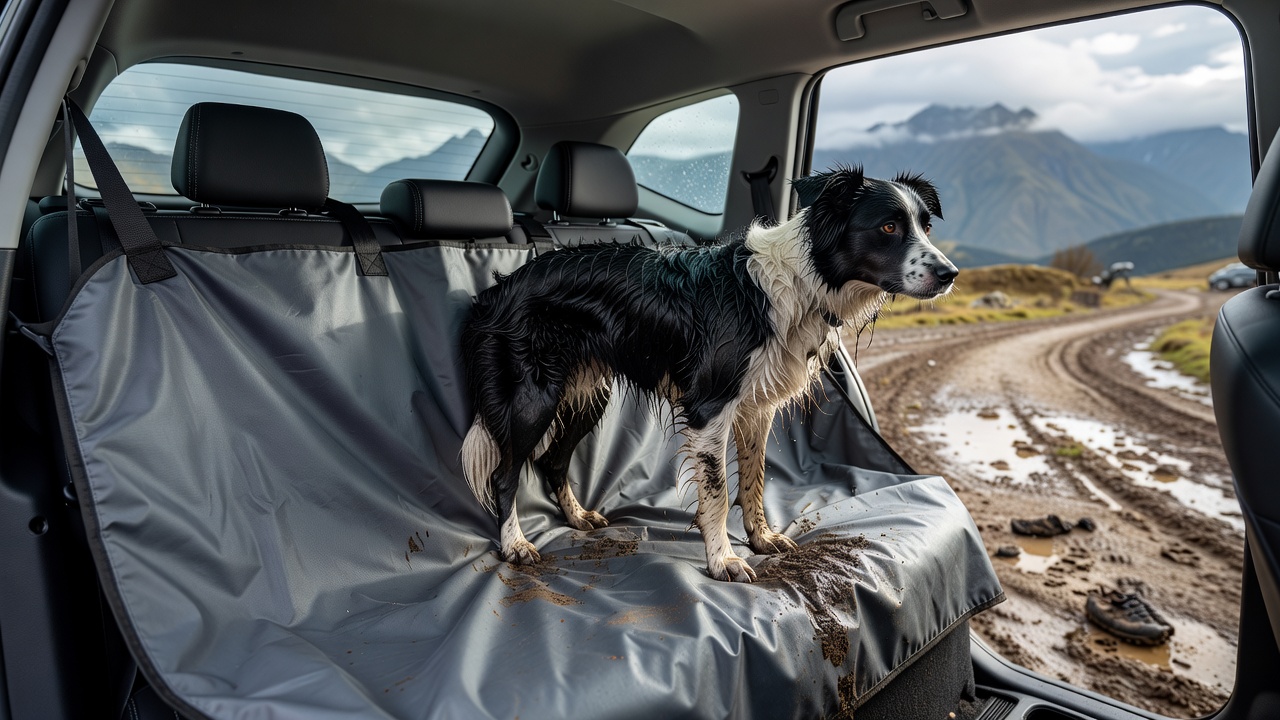
Budget alternative: the Meadowlark Dog Car Seat Cover ($65.99, 4.6 stars from 46,000+ buyers) does the same hammock-style job — the same 600D quilted shell, side flaps, and non-slip backing — for roughly half the price. It gives up the Ruffwear's mesh vent and recycled fabric, and it is bulkier once folded. One honest caveat: the hammock setup can block the middle seatbelt, so check the fit before you load passengers.
7. Save the emergency numbers before you lose service
Look up the nearest emergency vet, ranger station, and campground office before you leave town. Screenshot the map. Save the numbers in your phone. A first-aid kit matters, but the real time-saver in a dog emergency is knowing exactly where to drive when the nearest signal bar finally appears.
Hot-Weather Dog Camping Bundle
If your trip calendar keeps falling on hot weekends, treat these three newer guides as the fast follow-up to this overview. Start with the dog camping gear checklist for summer hikes when you want a pack-from-this list covering cooling gear, spare water, shade, cleanup, and communication basics in one place. Then pair it with the dog summer hiking safety guide for the paw-burn test, turnaround rules, and the warning signs that mean your dog needs shade now rather than one more mile.
If you're still deciding whether a remote collar belongs in that setup, the best dog training collar 2026 comparison breaks down when voice command, vibration, or a multi-dog setup actually makes sense on busy summer trails. For dog owners who also camp in shoulder season, the camp lighting guide helps you sort out hands-free light, red-light mode, and battery strategy before late returns and dark bathroom walks become part of the routine.
And for the one hot-weather upgrade worth testing on exposed ridgelines and dusty campground loops, use a properly fitted soak-and-wring cooling vest rather than bulky ice packs, and stop early if panting does not settle in shade. Once temperatures drop, your own sleep quality matters more too, and our best camp pillows comparison guide is a practical next read if you want to stop waking up sore after every dog-induced midnight shuffle.
For dog owners who want the gear list plus the training workflow in one step, the voice training collar guide shows how to condition a voice-command collar over four weeks so it becomes a calm recall tool instead of an emergency-only gadget, while our camping trip planning guide helps you decide whether a hot-weather dog trip should be a quick overnight shakeout or a more ambitious family weekend.
Dog Camping Gear, Noun by Noun
Most dog camping gear questions are actually the same question asked with a different noun. Below is the straight answer for each piece, what it does, when it earns its space in the car, and which catalog item we point people at. If you want the short version, our printable dog camping checklist has the whole list in packing order.
One warning before the table: the same object is sold under half a dozen names. A dog camping bed, a camping dog bed, a dogs camping bed, a dog camping cot and an elevated dog bed are usually the same purchase, a dogs camping chair is almost always a rebranded cot, and a dogs camping tent is typically a pop-up shade shelter rather than a real tent. The enclosure family is the worst offender, dog camping fence, camping dog fence ideas, camping dog pen, camping dog run and a dogs camping fence all describe the same freestanding panel setup. Match the function, not the listing title. The dog outdoor gear brands worth knowing here, Ruffwear, Kurgo, Chuckit, Musher's Secret and Outward Hound, all appear in the table below, and our dog camping list is deliberately short, because a second full set of gear for one hobby is a waste of money. If you are assembling the human half of the car at the same time, our family camping gear checklist is the what to take camping checklist for everything that is not the dog.
| What you searched for | What it actually does | Our pick |
|---|---|---|
| dog camping bed / camping dog bed / outdoor dog bed | Keeps the dog off cold or damp ground; the single biggest comfort upgrade | Cheerhunting waterproof outdoor dog bed ($29.99) |
| dog camping cot / camping dog cot / elevated dog bed | Same idea with airflow underneath, the warm-weather choice | Canine Canyon folding raised dog cot ($49.99) |
| dog camping mat / dog camping pad / dog camping blanket | Travel-weight insulation for inside the tent, packs to nothing | Chuckit travel pillow dog bed ($29.99) |
| dog camping crate / camping dog crate / camping dog kennel | Only worth hauling if the dog already sleeps in one at home | A soft-sided crate, folded flat |
| dog camping fence / camping dog fence ideas / dog camping pen / dog camping run | Freestanding enclosure for a dog that cannot be trusted on a long line | Only at a drive-in site with room |
| dog camping tie out / camping dog tie out | Cable or stake system that gives range without a fence | Single stake plus a 15 to 30 foot line |
| dog camping leash / camping dog leash / dog camping leash system | Six feet or shorter in developed campgrounds; long line everywhere else | Your everyday leash plus a long line |
| dog camping bowl / camping dog bowls / collapsible dog bowl | Food and water that folds flat and does not tip | Ruffwear Quencher bowl ($19.95) or Kurgo Zippy Bowl ($15.99) |
| dog camping chair / camping dog chair | Rarely a real product, most dogs do better on an elevated cot than a chair | See the cot row above |
| dog camping tent / camping dog tent | A separate shelter is for a cat, a small dog, or a screened nap spot, not a substitute for the family tent | Plusvivo pop-up dog tent ($69.99) |
| dog hiking gear / dog hiking gear list / dog outdoor gear | Harness, booties where the ground is hot or rocky, paw wax, life jacket near water | Ruffwear Front Range harness ($44.95) and Musher's Secret paw wax ($24.99) |
| dog life jacket / dog life vest for camping / dog pfd | Flotation for lake, river, and beach days — a dog that swims on every trip needs its own jacket, not a spot on your lap | Outward Hound Granby Splash dog life jacket ($24.99, 4.5★ from 14,000+ buyers) for calm lakes, or the Ruffwear Float Coat ($99.99, 4.6★) for open water and boat days |
| dog camping gear list / dog camping supplies / dog camping accessories / what to bring camping for dogs | The complete packing list, in order, with the human gear alongside it | Dog camping checklist |
Two buying notes that save money. First, the dog does not need a second set of gear for camping, they need their existing bed and bowl in a travel-friendly form, which is why a folding cot or a stuffable bed beats a full kit. Second, buy paw protection and a long line before anything else, since those two items prevent the two most common first-trip failures, a limping dog on day two and a dog that cannot be recalled on a campground loop.
Camping With Dogs Near Me: Which System Owns the Land
Searching for camping with dogs near me returns a map, but the answer depends on who manages the land, not on how close it is. Three systems, three sets of rules, and the dog policy is set by the land manager rather than by how nice the campground looks online.
- State park campgrounds. Almost always yes for leashed dogs in the developed loops, which is what makes most state parks camping dog friendly for a first trip. Trail access is the variable, some systems allow dogs on every trail, others restrict them to a handful.
- National parks. The strict end. Pets are generally limited to paved roads, campground loops, and developed areas, so the scenic trail you came for is usually off-limits. Yosemite is the classic example: leashed dogs on fully paved paths, nothing else. Our national parks camping guide explains how each park system treats pets.
- National forest and BLM land. The permissive middle. Dispersed camping with dogs is usually fine, off-leash is allowed on much forest land but almost never inside a crowded campground, and this is where a dog that ranges ahead actually has room. Most of the national forest around Lake Tahoe and the Big Sur backcountry sits here, while the state park pockets inside them do not.
State by state, the guides that include dog rules:
Camping in Colorado and Camping in Arizona cover the mountain and desert cases, where heat and altitude matter more than leash law. Camping in Florida covers the six-foot leash rule, the cabin restrictions, and beach access that varies park to park. Camping in Texas lays the state park, Big Bend, and Guadalupe Mountains policies side by side. Camping in Virginia, Camping in Tennessee, and Camping in New York cover the crowded eastern systems where booking windows decide more than rules do. Camping in Maine and Camping in New Hampshire cover Acadia carriage roads and the White Mountains, where the dog rules differ sharply between adjacent land. Camping in Michigan, Camping in Vermont, Camping in Louisiana, Camping in Alabama, and Camping in New Mexico round out the rest.
Two practical notes. Pet-friendly cabins are the exception rather than the rule, and where they exist they are booked first, so filter for them before you filter for dates. And near a lake or a river, dog friendly camping near water usually means a swim, which changes the gear list, see our dog water safety guide.
A lakeside site also changes the gear itself, and not only the dog's side of it: you are packing for wind off the water, a wet dog at the tent door, and a night that runs colder than the forecast. Our lakeside camping checklist is that setup, item by item.
If your trip is by trailer rather than tent, the routines change more than you would expect. Our RV camping setup guide covers the parking, hookup, and pet-area side of it for tips for RV camping with dogs. And if there are bears in the area at all, read our bear safety guide before you plan the dog's sleep spot, because camping with dogs in bear country is the one case where the dog's food and the dog both need to be treated as attractants.
Region by region, the decision always comes down to two questions: is there a leash rule, and are dogs allowed on trails. Camping with dogs in California, in Colorado, in Florida, in Maine, in Michigan, in Vermont, in Wisconsin, or in Washington state differ on the second and almost never on the first, which is why the state guides above spend most of their pet sections on trail access rather than on leash length. Where the system is permissive in the campground loops, dog friendly camping in California, dog friendly camping Colorado, dog friendly camping in Florida, dog friendly camping Michigan, dog friendly camping Vermont and dog friendly camping Wisconsin all mean the same thing in practice. Camping with dogs in Yosemite is the tightest case, paved areas only. Northern California is the split case: camping with dogs northern California, dog friendly camping northern California, dog friendly camping Lake Tahoe and dog friendly camping Big Sur all turn on who manages the parcel, the national forest is the permissive half and the state park pockets inside it are not. Camping with dogs Massachusetts and camping with dogs Washington state repeat that pattern east and north, and camping with dogs in Maine turns on whether you are on an Acadia carriage road or a summit trail.
Two smaller variants of the same question, because they get searched differently. Dog friendly camping near me, dog friendly camping sites near me and dog friendly camping cabins near me are all rules questions, answered by the state lists above. Dog camping gear near me, dog camping gear nearby and dog hiking gear near me are only store questions, and every item in the table on this page ships in a couple of days, so there is no reason to drive across town for a cot or a long line.
If You Searched For This, Jump Here
A quick map from what people actually type into the section that answers it, so you do not have to scroll an 8,000-word guide to find one paragraph.
| You searched for | Go to |
|---|---|
| camping with dogs checklist / camping with a dog checklist / dog camping checklist | The full printable checklist |
| camping with a dog must haves / camping with a dog essentials / camping with dogs essentials / dog camping essentials | Dog camping gear, noun by noun |
| dog camping gear list / dog camping supplies / dogs camping gear / camping with dogs list | Dog camping gear, noun by noun |
| best tips for camping with dogs / camping with a dog tips / camping with dogs tips / camping with dogs tips and tricks / camping with dogs hacks | Final tips for a successful trip |
| camping with a dog for the first time / taking dogs camping for the first time / dogs camping adventure | The checklist then start small |
| how to keep your dog safe while camping | Trail safety and etiquette |
| what to do with dogs while camping | Campground etiquette |
| camping with a dog in a tent / camping with dogs in tent / tent camping with dogs tips / camping with dogs tent | Choosing the right tent |
| camping with a dog in hot weather / camping with a dog in heat / camping with dogs in the heat / tips for camping with dogs in hot weather | Hot weather vs cold weather |
| camping with a dog in cold weather | Hot weather vs cold weather |
| camping with dogs allowed / can you bring a dog camping | Can you bring a dog to a campground? |
| car camping with a dog | Essential gear |
| dog hiking gear / dog backpacking | Our dog backpacking guide |
| camping dog friendly near me / camping with dogs near me / camping with a dog near me / dog friendly camping sites | Which system owns the land |
| dog friendly camping cabins | Which system owns the land |
| camping with dogs california / northern california / colorado / florida / maine / massachusetts / washington state / yosemite | Which system owns the land |
| how to go camping for the first time | First camping trip starter kit |
For a state-by-state rule check, our North Carolina camping guide spells out the leash rules, the cabin exclusions and the one coastal campground where dogs cannot even reach the sites.
Camping With Dogs FAQ
Quick answers to the questions dog owners ask most before their first trip — the full detail for each is in the sections above.
Can you bring a dog to a campground?
At most developed campgrounds, yes — but the rules change fast once you cross into protected land. State parks, national forests, and private campgrounds usually allow leashed dogs in campsites, on roads, and on many trails. National parks are the strict exception: pets are typically confined to developed areas, paved roads, and campground loops, which means no dog on the backcountry trail no matter how well behaved they are. Check the specific park's pet page before you book, not after you arrive.
Do dogs have to stay on a leash while camping?
In nearly every developed campground, yes — and the standard is usually a leash no longer than 6 feet. Retractable leashes are frequently banned outright because they let a dog range 20 feet or more, which is exactly the situation the rule exists to prevent. Even where off-leash running is technically allowed on national forest land, a campsite full of strangers, kids, and other dogs is not the place to test your recall for the first time.
Can my dog sleep in the tent with me?
Most dogs can, and most prefer it — your dog is denning up with its people. Two practical cautions. First, floor protection: a muddy or wet dog puts nails, grit, and moisture straight into your tent floor, so bring a dedicated towel plus a small mat or closed-cell pad for your dog's corner. Second, fabric durability: 150D polyester or heavier resists claws far better than ultralight 20D silnylon. In serious cold, an insulated pad and a dog jacket matter more than shared body heat — a shivering dog at 3 a.m. ends up on your sleeping bag anyway.
How do I keep my dog safe from wildlife at camp?
Treat your dog like the food attractant it is. Store dog food in a sealed container or a vehicle, never loose in the tent overnight, and never leave a bowl out after mealtime. Keep your dog leashed or on a long line so it cannot chase, corner, or get cornered by wildlife — a dog that chases a raccoon or a deer is starting a fight it will not finish. Carry bear spray where bears are present, know how to use it, and remember that sustained barking can pull an animal toward camp rather than push it away.
How cold is too cold to camp with a dog?
There is no single number, because coat, body fat, and age vary enormously. The practical line for most short-coated, senior, or small breeds is around 40°F for a comfortable night without extra insulation. Below that, add an insulated pad, a fleece or jacket, and a spot sheltered from wind. Double-coated northern breeds handle far colder conditions, but they still need dry bedding that keeps them off the ground. Watch the signals: shivering, curling tightly, lifting paws, or refusing to settle all mean "I'm cold" — not stubbornness.
Is camping with a dog safe in the heat?
Heat is the bigger and faster danger, especially for flat-faced breeds like Bulldogs, Pugs, and Boxers, which cannot cool themselves efficiently. Do the back-of-hand test on pavement or sand before your dog walks on it; if it is too hot for your hand, it is too hot for paws. Hike early, carry water for the dog as well as yourself, take shade breaks before your dog needs them, and know the warning signs — heavy uncontrolled panting, thick drooling, brick-red gums, or wobbling — that mean cool down immediately.
Florida has its own version of every dog rule — a six-foot leash requirement, no pets in cabins or cabin areas, and beach rules that vary park to park. Our Camping in Florida guide covers what to check before you book.
Dog rules differ by system, and Texas is a good example — the Texas camping guide lays out the state park, Big Bend, and Guadalupe Mountains policies side by side.
If the trip is heading southwest, the Camping in New Mexico guide covers the dog and kid rules at Carlsbad Caverns and Chaco specifically.
Alabama is a genuinely dog-friendly camping state, with leashed dogs allowed on most state park trails — Camping in Alabama covers the rules by system.
If the dog is coming along, Camping in Louisiana includes the Louisiana leash rules, the pet-friendly cabin filter and the bug protection that matters down there.
What should I bring when camping with a dog?
Six things decide the trip: a bed or cot that keeps the dog off the ground, their own water supply and a collapsible bowl, a six-foot leash plus a long line, food with one extra day in reserve, paw protection, and a first-aid kit that includes a tick tool. Everything else is comfort. Our dog camping gear list puts it in packing order alongside the human gear so nothing gets duplicated.
How do I keep my dog safe while camping?
Treat the dog as both a hazard and a target. Keep it leashed or on a long line so it cannot start a wildlife encounter, store dog food sealed and out of the tent overnight, never leave it unattended at the site even for a shower, and know where the nearest emergency vet is before you lose signal. Heat and pavement cause more injuries than wildlife does.
What do you do with your dog while camping?
Same things you do without one, with a leash attached. Hike the trails that allow dogs, swim where the water is legal, and let the dog work on a chew or a frozen treat through the dinner hour while you cook. What you cannot do is leave the dog at the site while you drive to town, which is why car camping with a dog is easier than a basecamp that requires shuttling.
Is camping with a dog for the first time different?
Yes, and the difference is mostly duration. A first trip should be one night at a familiar campground within an hour of home, on a site you have already scouted online for dog rules. Bring the dog's own bed, keep the routine close to home routine, and expect the first two hours to be noisy. Taking dogs camping for the first time works best when the trip is deliberately boring.
Can my dog sleep in the car instead of the tent?
Only in mild weather and never with the engine off on a warm night, since a closed car becomes an oven and an idling car is a carbon-monoxide risk. In cool weather a secured crate in the vehicle is a legitimate option for a dog that will not settle in a tent, and it keeps wet fur out of your sleeping bag.
If the trip involves the dog, confirm your campground is still open before you load the car — several loops shut off water and close gates weeks before the park itself does. The 2026 dates are all in when do campgrounds close for the season.
Planning the same crew on a red rock trip? Our Camping in Utah guide covers which Utah campgrounds work with kids and dogs, the leashing limits inside the national parks, and the BLM land where dogs are welcome.
Pennsylvania adds one dog-specific fall complication most guides skip: hunting seasons overlap the foliage window. camping in Pennsylvania covers the blaze-orange rule and the state forest camping model.
For the wood-stove version of winter camping — tents that ship with a stove jack, how to size the stove, and what to burn — see the hot tent camping guide.
Renting a cabin instead of pitching a tent? Pet rules are park-specific — Virginia charges $20 per pet per night, and some Texas cabins ban pets entirely. Our cabin camping with kids guide has the details.
Cold nights change the whole setup — the cold-weather dog camping guide covers temperature limits, ground insulation and paw care for fall and winter trips.
Shopping for the dog side of the trip? Every pet item we carry is ranked on the camping pet gear for dogs page, and the packs, poles and racks that make the miles easier sit on the camping mobility gear page.
If the dog is coming and the route runs south, the Camping in Kentucky guide has the Red River Gorge walking notes plus the state's late tick season.
Where the state park system charges per dog, our Arkansas camping guide explains the fee and the leash rules.
Desert trips add their own dog problems — cactus spines, hot ground and shoreline bans. The Nevada camping guide covers the leash rules at Valley of Fire, Lake Mead and Great Basin side by side.
New Jersey is worth a look for dog campers specifically, because it permits leashed dogs on the large majority of state park trails — a much more permissive policy than New York or Pennsylvania. Pet-designated campsites are available at Wharton's Atsion, Godfrey Bridge, Goshen Pond, Buttonwood Hill, Lower Forge, and Batona Camp, at an added $5 per night with rabies paperwork. Our New Jersey camping guide covers the sites, the docs, and the fall tick risk for dogs.
Holiday trips are their own dog problem — cold ground, an unstaffed camp store and a campsite full of unfamiliar food. Our Christmas and New Year's camping guide covers the holiday version, including camping with dogs on Christmas and New Year's Eve.
Camping with a dog in the South? The Mississippi camping guide covers campground pet rules, the lodging ban, and late-season tick protection.
Final Tips for a Successful Dog Camping Trip
If the dog is coming, camping in Wisconsin covers the campground-yes, beach-no rule and what that means for an October trip.
For a fall trip with the dog, our West Virginia camping guide lists which campgrounds keep four pets per site and where the tick season actually ends.
One Southeast state with a comparatively friendly dog policy is Georgia: camping in Georgia covers the six-foot-leash campground rule, the dog-friendly-cottage rule, and the three places a dog genuinely cannot go.
After years of trial and error, including a memorable morning involving a skunk, a tent zipper failure, and a 4 a.m. river bath, here are the takeaways that matter most. Before any trip, run through our family camping gear checklist. It covers the small things even experienced campers forget, dog-specific items included.
- Start small and build up. Your first dog camping trip should be a single night at a familiar campground within an hour of home. Figure out what works before committing to a backcountry trip.
- Pack extra food, extra water, and extra patience. Things go sideways. Your dog might roll in something dead, refuse to settle in the tent, or drink from a puddle you told them to avoid. Roll with it. The point is the shared experience, not a perfect trip.
- Keep your dog warm at night. A dog that's shivering in the tent is a dog that's going to crawl onto your sleeping bag at 3 a.m. Bring an insulated pad and, for short-coated breeds or cold-weather camping, a dog-specific jacket or fleece.
- Leave no trace. That includes dog waste. Pack out what you can, bury what you must (properly), and don't leave filled poop bags on the side of the trail "to pick up later." You won't, and everyone behind you hates it.
Want to go deeper? For the full picture in one place, browse our Dog Camping Hub — it collects every dog-trail and camp guide we've written into a single library, from summer paw protection to off-leash training collars. A great dog trip also rests on solid camp fundamentals. Read our sleeping pad vs air mattress guide to keep your dog (and you) off the cold ground, browse the best camp pillows comparison for real sleep comfort, and check the camp lighting guide for early-morning and after-dark visibility around camp. Heading out in colder months? The winter camping beginners guide covers the layering and shelter upgrades that keep short-coated breeds warm, and our guide to staying warm camping has the night-by-night playbook for pads, liners, ventilation and safe tent heat.
Camping with your dog is one of the most rewarding ways to experience the outdoors. The preparation takes effort, but the payoff is worth every ounce of extra weight in your pack. Watching your dog navigate a stream crossing with total focus. Seeing them sprawled contentedly by the fire. Waking up to a wet nose and a wagging tail in the morning light.
Michigan is a strong dog-camping state — dogs are welcome in state park and state forest campgrounds on a six-foot leash, though beach rules vary park by park, and fall hunting season on public land in the northern Lower Peninsula and the Upper Peninsula makes blaze orange a real consideration. Our Michigan camping guide covers the dog rules alongside the campground systems.
Pets are allowed on every campsite at Ohio's flagship Hocking Hills campground, though not in its cabins. The camping in Ohio guide covers which sites allow dogs and the November visibility rules for a hike.
On the coast, camping in South Carolina covers the six-foot leash rule, the seven parks with pet-friendly cabins, and the North Beach closure at Hunting Island.
For the newest state in the family — the Ozarks, three trout parks and a twelve-month booking window — see our Missouri camping guide.
<!-- AFFILIATE_DISCLOSURE -->TrailMapz participates in the Amazon Services LLC Associates Program. As an Amazon Associate, we earn from qualifying purchases. This means we may receive a small commission, at no extra cost to you, when you buy through links on our site. We only recommend gear we've researched thoroughly and would use ourselves on the trail.
One calendar note worth acting on: National Public Lands Day (September 26) has passed, and it was never a systemwide National Park Service fee-free day in 2026. The next free-entrance dates are Tuesday, October 27 (Theodore Roosevelt's birthday) and Wednesday, November 11 (Veterans Day) — the last one of the year. Our 2026 fee-free calendar and family camping guide has both dates plus a plan for turning a midweek free gate into a long weekend.
For park-by-park dog rules — including the five Olympic National Park trails where leashed dogs are allowed — see the Washington state camping guide.
Maryland has one of the more interesting dog rules in the region: at Assateague State Park pets are confined to three camp loops during the season, and then allowed in every loop and on the beach once the campground closes on November 1. The Maryland camping guide spells out the whole policy.