Bear Safety While Camping 2026
Camp safely in bear country: 2026 bear spray picks, bear-proof food storage, campsite selection, and encounter protocol — with expert gear recommendations.
In this article · 11 sections
- Quick Answer: The Bear Country Kit
- Why Bear Safety Matters More in 2026
- Pillar 1: Bear Spray — Your Non-Negotiable Last Line of Defense
- Pillar 2: Food Storage — Don't Invite Bears to Dinner
- Pillar 3: Campsite Selection — Set Up Smart
- Pillar 4: Encounter Protocol — What to Do If You See a Bear
- Essential Bear-Country Gear Checklist
- Bear Safety by Camping Style
- Common Bear Safety Mistakes (Learn From Mine)
- Bear Safety FAQ: Quick Answers Before You Go
- Final Thoughts
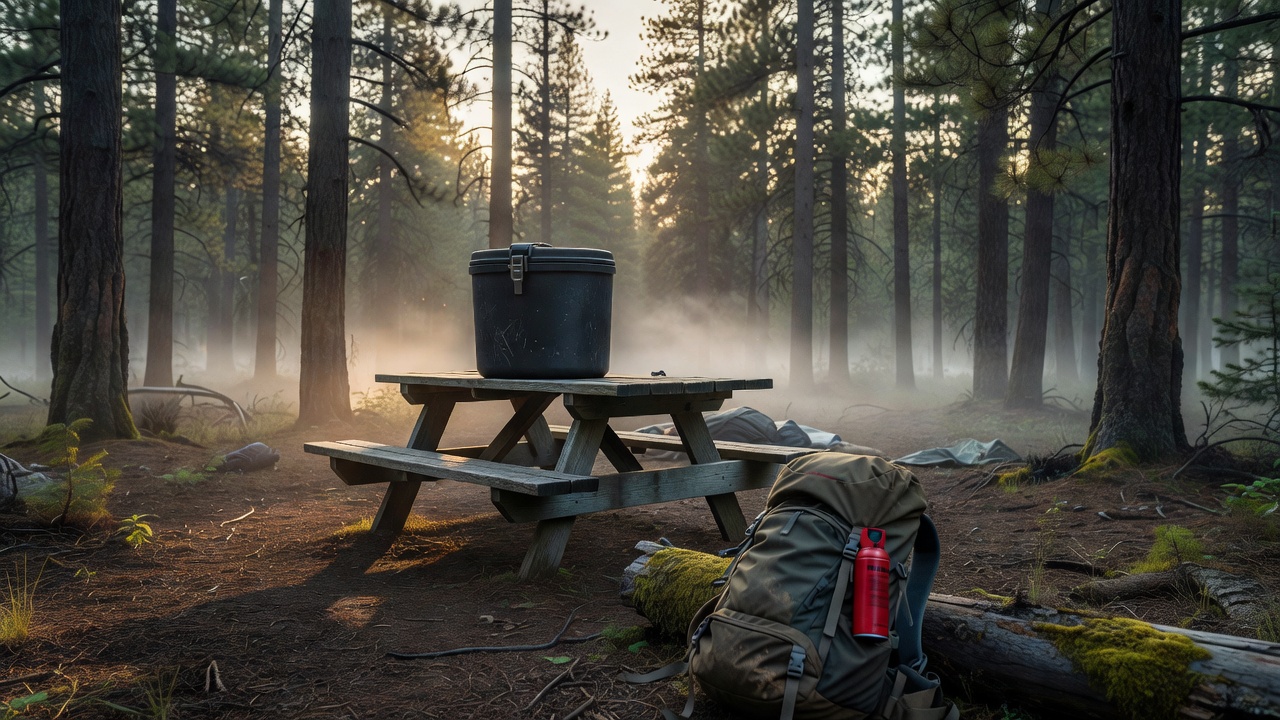
There's a particular kind of quiet that settles over a campsite in bear country. It's not silence — the forest is full of sound. It's an awareness. Every snapped twig, every rustle in the brush, every shadow that moves wrong at dusk carries a different weight when you know you're sharing the woods with a 400-pound animal that can outrun you, outclimb you, and smell a granola bar through three layers of sealed plastic.
I've camped in grizzly territory in Wyoming, black bear country across Appalachia, and the dense forests of the Pacific Northwest where you don't always see them but you know they're there. Bear safety isn't about fear. It's about respect and preparation — and honestly, once you internalize a handful of habits, it becomes second nature. The goal of this guide is to get you there before your next trip.
Whether you're car camping in Yellowstone, backpacking in Glacier, or setting up a family tent at a state park where black bears are active, this guide covers the four pillars of bear safety: bear spray, food storage, campsite selection, and encounter protocol.
The camping in Oklahoma guide is the clearest example of why the portal matters more than the park — four land systems, four sets of rules, and a reservation window that runs 11 months out.
Quick Answer: The Bear Country Kit
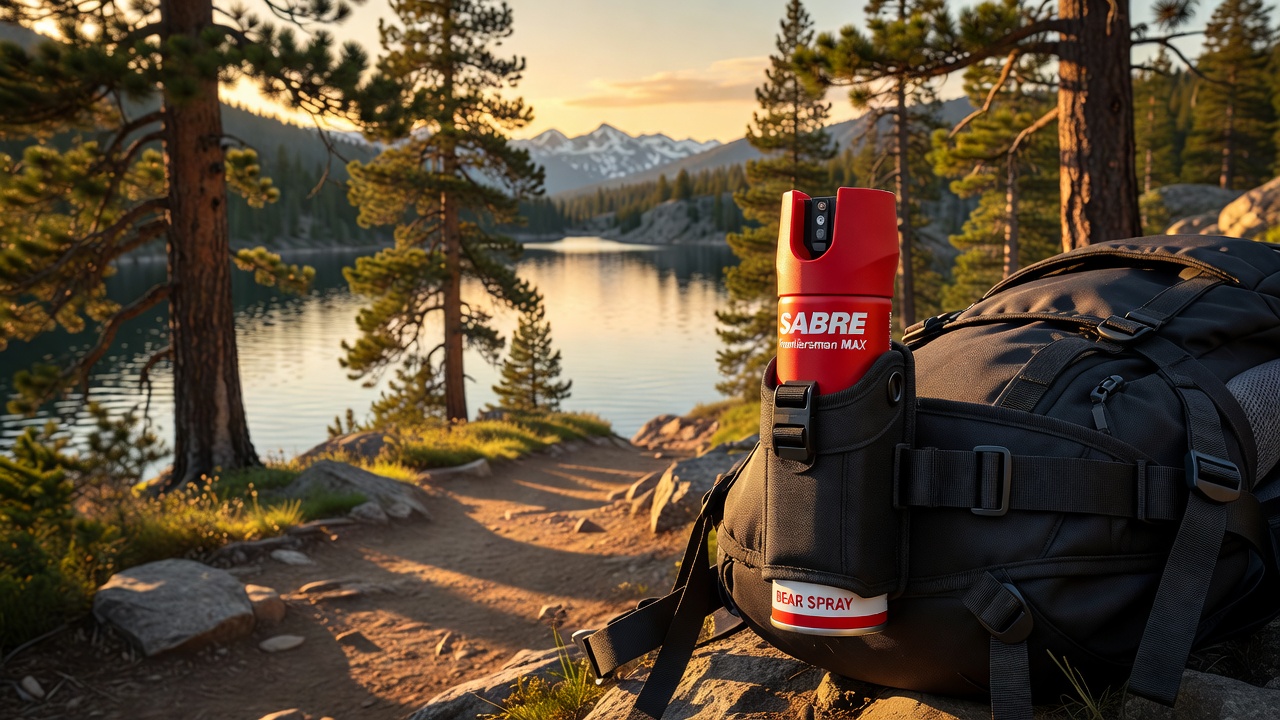
- Carry this, on your hip and never in the pack: SABRE Frontiersman MAX Bear Spray — $39.99. 2.0% major capsaicinoids, 40-foot fog, 8 seconds of spray; the full-size canister rangers carry.
- Store every scrap of food in this: BearVault BV450 Jaunt — $89.99. Fits a weekend of food for one and opens without a tool.
- Where you sleep: Coleman Skydome 4-Person — $122.99. Keeps food smells out of your sleeping space and sets up in about five minutes.
- If someone does get hurt: Adventure Medical Kits Ultralight/Watertight .7 — $44.95. The kit I keep in the pack on bear-country trips.
- Light so you are not caught out at dusk: Petzl ACTIK CORE — $79.95. 625 lumens, rechargeable, with a red mode that does not wreck your night vision.
Why Bear Safety Matters More in 2026
Bear populations in the Lower 48 have been steadily recovering for decades, and human-bear encounters are climbing. Yellowstone and Grand Teton saw record visitation in recent summers, Glacier's backcountry permits disappear in minutes, and expanded trail networks in the Appalachians mean more people sharing space with black bears than ever before.
Most bear encounters end without incident. The National Park Service reports that the vast majority of bear-human interactions are uneventful when people follow proper food storage and carry deterrents. The incidents that do happen almost always trace back to the same root causes: unsecured food, surprise encounters at close range, and campers who left their bear spray in the car (or didn't carry one at all).
The good news? Every one of those causes is preventable with the right gear and knowledge.
And right now, the calendar makes this guide more relevant than ever: from late August through October, bears enter hyperphagia — a feeding frenzy where they pack in up to 20,000 calories a day to fatten up before hibernation. That means they're more active, more food-driven, and covering more ground than at any other time of year, especially around dawn and dusk. Fall camping trips (Labor Day weekends especially) overlap peak encounter season — the habits below matter most exactly when the aspen leaves turn.
Pillar 1: Bear Spray — Your Non-Negotiable Last Line of Defense
Let's get this out of the way first because it's the most important: bear spray works. Multiple studies, including research published by the U.S. Fish and Wildlife Service and Brigham Young University, have found bear spray to be over 90% effective at deterring charging bears and preventing injury. It outperforms firearms in real-world encounters because it doesn't require precise aim under panic, creates a wide deterrent cloud, and is non-lethal to the bear.
What to Look For in Bear Spray
Not all "pepper sprays" are bear spray. Real bear spray is regulated by the EPA and must meet specific criteria. Here's what matters:
- Active ingredient concentration: Look for 1.0–2.0% major capsaicinoids. This is the actual heat that stops a bear.
- Spray range: Minimum 25 feet. Premium options reach 30–40 feet. More range means you can deploy earlier, giving the cloud time to build.
- Spray duration: 6–8 seconds of continuous spray. You want a sustained cloud, not a quick burst that a charging bear blows through.
- Spray pattern: A fog/cone pattern, not a stream. Fog creates a wider barrier wall.
- Canister size: 7.9 oz (225g) or larger. Smaller "personal" canisters are for trail running, not camping. The full-size is what you need.
- Expiration date: Bear spray loses potency over time. Check the date and replace every 3–4 years.
Our Recommended Bear Spray
SABRE Frontiersman MAX Bear Spray ($39.99) is the one I carry and recommend. It hits every spec above: 2.0% major capsaicinoids (the maximum allowed by the EPA), a 40-foot range, and up to 8 seconds of continuous spray in a fog pattern. The 7.9 oz canister is the full-size standard that rangers carry. It's also tested and proven in real backcountry conditions.
Price: around $40. This is not a place to cut costs. One canister protects an entire trip and lasts years if unused.
How to Carry and Use Bear Spray
Owning bear spray isn't enough — it has to be accessible. The single most common mistake is keeping it in a backpack. A charging bear covers 50 feet in about 2 seconds. You will not have time to unzip your pack.
- Carry it on your chest or hip, in a dedicated holster, not in a pocket you have to dig into.
- Practice drawing it. Most manufacturers sell inert practice canisters. Spend $15 on one and rehearse the draw-aim-spray motion until it's muscle memory.
- Aim slightly downward at the bear's face and in a sweeping motion to build a cloud barrier. The bear runs into the spray.
- Deploy at 30–40 feet (with a long-range spray) or when the bear is within 25 feet (shorter range). Don't wait until it's on top of you — you need a few seconds for the cloud to form.
- Spray in 2-second bursts if the bear is approaching but hasn't committed, or a sustained 6–8 second cloud if it's charging.
Bear spray expires and loses pressure over time. Before every season, check the date and weigh the canister — if it feels light or is past expiration, replace it. Don't test-fire a live canister; a partial discharge leaves you with less spray for a real encounter.
Pillar 2: Food Storage — Don't Invite Bears to Dinner
If bear spray is your last line of defense, food storage is your first. Bears have a sense of smell roughly seven times stronger than a bloodhound's. They can detect food from miles away, and once a bear associates humans with food, it becomes a "problem bear" — which almost always ends with the bear being euthanized. The saying in bear country is true: a fed bear is a dead bear. Your food storage choices protect both you and the bears.
The Rules of Food Storage
- Never store food in your tent. Ever. Not snacks, not gum, not a water bottle that held Gatorade. The tent is where you sleep; food smells attract bears to exactly where you're most vulnerable.
- Cook at least 100 yards (the length of a football field) downwind from your tent. This separates your cooking smells from your sleeping area.
- Store all food, trash, and scented items (toothpaste, deodorant, sunscreen, lip balm, even empty food wrappers) in approved containers overnight and whenever you're away from camp.
- Pack out ALL trash. Food-soaked foil, greasy wrappers, and empty cans are bear magnets. Don't burn trash in the fire — it doesn't fully destroy food odors.
Approved Food Storage Methods
Depending on where you camp, you'll use one of these:
- Bear canisters (IGBC-approved): Hard-sided containers that bears cannot open. Required in many national park backcountry areas (Yellowstone, Glacier, Yosemite, Rocky Mountain). Heavy but foolproof. The BearVault BV450 Jaunt ($89.99) is the classic mid-size pick — 2.1 lbs, holds 3-4 days of food for a weekend trip for two, and its transparent body makes finding food easy.
- Bear-proof coolers: IGBC-certified hard coolers like the Coleman 316 Series Wheeled Cooler 62QT keep food cold AND are certified resistant to bears. For car campers, this is the ideal dual-purpose solution — you don't need a separate canister for your cooler contents.
- Bear hangs (PCT method): Suspend food bags at least 12 feet off the ground and 6 feet from any tree trunk or branch, using a counterbalance rig between two trees. This is the traditional backpacker method but is being phased out in many areas because bears in popular zones have learned to defeat hangs.
- Provided bear boxes: Many established campgrounds in bear country install metal bear-proof storage lockers at each site. Use them — they're the easiest and most reliable option when available.
Always check the specific regulations for your destination. Yellowstone, Glacier, Denali, Yosemite, and Rocky Mountain National Park all have different requirements. "I didn't know" doesn't work with a ranger writing a citation, and more importantly, it doesn't protect the bears.
For a full deep-dive on keeping your food cold and organized in the backcountry, see our complete water filtration and hydration guide — hydration and food storage go hand in hand.
Pillar 3: Campsite Selection — Set Up Smart
Where you pitch your tent matters as much as how you store your food. Bears follow corridors — game trails, streams, berry patches, and natural travel routes through the forest. Setting up camp on a bear highway dramatically increases your odds of an encounter.
How to Choose a Bear-Smart Campsite
- Avoid natural food sources. Don't camp in the middle of a berry patch, next to a carcass (bears scavenge), or under a tree heavy with nuts or fruit in late summer and fall.
- Stay off game trails. Those narrow worn paths through the grass? Animals, including bears, use them every night.
- Avoid stream banks and lakeshores at night. These are prime wildlife corridors, especially at dusk and dawn when bears come to drink.
- Camp in the open when possible. A meadow or clearing gives you visibility to spot approaching wildlife and gives bears space to see and avoid you.
- Respect the "bear triangle." Pitch your tent, cooking area, and food storage at least 100 yards apart, forming a triangle. This keeps food smells and cooking activity away from where you sleep.
If you're car camping, you have more control. Choose an established campground with bear boxes, and don't leave coolers or food in your car overnight in areas where bears have learned to break into vehicles (a common problem in Yosemite and the Sierra Nevada).
Tent Considerations
A sturdy, well-sealed tent helps keep food odors contained (when used in the cooking triangle, not for storing food) and keeps you safer from curious wildlife. Our family camping tent size guide walks through choosing a tent that balances space and security — a tent with a full-coverage rainfly and sealed seams also helps contain cooking-area odors in the vestibule rather than letting them waft into the forest.
For family trips specifically, a quick-setup instant cabin tent like the Coleman Skydome 4-Person or the larger CORE 6-Person Instant Cabin Tent lets you establish the bear triangle quickly and get food secured before dusk — when bears become most active.
Pillar 4: Encounter Protocol — What to Do If You See a Bear
Despite your best preparations, you may still see a bear. Most encounters are brief and peaceful. How you react determines whether it stays that way.
If You Spot a Bear at a Distance (100+ yards)
- Stop. Don't approach for a photo. Every year, tourists get injured doing this.
- Back away slowly the way you came, keeping the bear in view without making direct eye contact.
- Speak calmly and firmly so the bear identifies you as human. "Hey bear, whoa bear, it's okay" in a normal talking voice.
- Give it space. If the bear hasn't noticed you, quietly retreat without alerting it. If it has, make your presence known gently and back away.
If the Bear Hasn't Seen You
Back away quietly the way you came and detour around, giving the bear a wide berth. Do not run. Running triggers a predator's chase instinct.
If the Bear Sees You and Approaches
- Stand your ground. Do not run.
- Get your bear spray ready — unclip it, remove the safety, and hold it in both hands.
- Make yourself look big. Raise your arms, stand on a rock or log, move to higher ground. If you're with others, stand together.
- Talk to the bear in a calm, low voice. You want it to know you're human, not prey.
- Back away slowly once the bear stops approaching, keeping your eyes on it without staring aggressively.
If a Bear Charges
This is when bear spray is deployed. Most charges are bluff charges — the bear stops or veers off at the last second. But you should treat every charge as real:
- Stand your ground. Do NOT run.
- Deploy bear spray when the bear is within range (25–40 feet depending on your spray). Aim low, in a sweeping motion, creating a cloud between you and the bear.
- If the bear makes contact (extremely rare with proper spray use):
- Grizzly/brown bear: Play dead. Lie face down, hands clasped behind your neck, legs spread for stability. Stay down until the bear leaves. A backpack provides protection.
- Black bear: Do NOT play dead. Fight back aggressively — aim for the face, eyes, and snout. Use rocks, sticks, bear spray, fists, anything.
The play-dead-vs-fight-back distinction is critical and depends on the species. Grizzlies are typically defensive (protecting cubs or a food source) and will leave once they perceive no threat. Black bear attacks are rarer but more often predatory, which is why fighting back is the recommended response.
How to Tell Grizzly from Black Bear
- Grizzly (brown bear): Prominent shoulder hump, dished/ concave face profile, long claws. Found in Yellowstone, Glacier, Grand Teton, and parts of the northern Rockies.
- Black bear: No shoulder hump, straight or slightly convex face profile, shorter claws, often (but not always) black — can also be brown, cinnamon, or blonde. Found across most forested regions of the U.S.
When in doubt, treat it as a grizzly in grizzly territory and a black bear everywhere else — but learn to identify the species for the area you're visiting.
Essential Bear-Country Gear Checklist
Beyond bear spray, a few pieces of gear round out your bear-safety kit:
- Bear spray (full-size, EPA-approved, within expiration) — carried on your body, always.
- IGBC-approved food storage — bear canister, certified cooler, or site bear box.
- Headlamp with red light mode — for moving around camp at dusk and dawn without spooking wildlife or destroying your night vision. The Petzl ACTIK CORE Headlamp (650 lumens, rechargeable, red lighting mode) or the Black Diamond Spot 400 (400 lumens, waterproof) are both excellent.
- First aid kit — for treating minor injuries far from help. The Adventure Medical Kits Ultralight/Watertight .7 First Aid Kit is compact and waterproof.
- Multi-tool — for repairs, food prep, and emergencies. The Leatherman Signal 19-in-1 Multi-Tool even includes a fire starter and emergency whistle.
- Gear repair tape — ripped food bags and torn tent screens let odors escape. Gear Aid Tenacious Tape patches fast and holds through weather.
- Insect repellent — not bear-specific, but in bear country you're also in tick and mosquito country. A DEET-free OFF! Clean Feel repellent with 20% picaridin keeps bugs off without strong chemical odors that might attract curious wildlife.
For a broader safety kit, pair this list with our complete camping safety and survival gear guide and the day hike essentials checklist — bear safety is one layer of a well-prepared outdoor kit.
Bear Safety by Camping Style
Car Camping in Bear Country
This is the lowest-risk scenario if done right. Use provided bear boxes or an IGBC-certified cooler. Keep bear spray on the picnic table (not locked in the car) during the day and near your sleeping area at night. Cook at the provided fire ring or stove stand, away from the tent. Dispose of trash in bear-proof dumpsters immediately. For a full trip-planning framework covering reservations, campgrounds, and gear for developed sites, see our National Parks Camping Guide.
Backpacking in Bear Country
Higher stakes. Carry a bear canister (often required by permit) or know how to do a proper PCT bear hang. Bear spray goes on your chest holster from the moment you leave the trailhead. Cook 100+ yards from your sleeping spot. Be extra vigilant at dawn and dusk on the trail — this is when bears are most active and encounters happen.
Family Camping with Kids
Kids add a variable: they're short, noisy, and may not understand bear protocol. Keep kids close, especially at dusk. Teach them to stay calm and stay with adults if they see a bear (running to "get help" is dangerous). Store ALL kid snacks, including fruit snacks and granola bars, in bear storage — kids are notorious for smuggling food into tents.
If you're planning a family trip, our family camping checklist and first aid checklist cover the broader safety picture alongside bear precautions.
Common Bear Safety Mistakes (Learn From Mine)
- "It's just a black bear, they're harmless." Black bears injure people every year. Treat all bears with respect regardless of species.
- Cooking next to the tent "just this once." That one time is when the bear shows up. Maintain the 100-yard cooking triangle every single meal.
- Leaving bear spray in the pack "because the trail is easy." The easy trail is where you're least expectant and most likely to surprise a bear.
- Keeping lip balm or toothpaste in the tent. These smell like food to a bear. All scented items go in storage.
- Burning food trash instead of packing it out. Partially burned foil and wrappers still smell like food and still attract bears.
- Approaching a bear for a photo. This is how most "attacks" on tourists actually start. Use a zoom lens.
- Running when you see a bear. This is the single most dangerous response. Bears can sprint 35 mph. You cannot.
Bear Safety FAQ: Quick Answers Before You Go
Does bear spray expire?
Yes — most canisters are stamped with a 3-4 year expiration date. An expired canister may still spray, but at reduced range and pressure — exactly when you can't afford that. Check the date before every trip and replace past-due canisters. Many outdoor retailers and parks offer disposal programs for old ones.
Is bear spray legal in national parks?
Yes. Bear spray is legal in all U.S. national parks, including Yellowstone, Glacier, and Great Smoky Mountains. Just remember it's regulated as a hazardous material for air travel — pack it in checked luggage, never carry-on. Some developed campgrounds also ask you to keep it stowed rather than on the picnic table.
What strength bear spray do I need?
Look for an EPA-approved canister with 1.8-2.0% capsaicinoids (the active ingredient) and at least 7.9-9.2 ounces of spray. It should fire a cone-shaped fog roughly 25-30 feet for about 6-7 seconds. That combination is what peer-reviewed studies found effective at stopping charging bears.
Can I use regular pepper spray on bears?
No. Self-defense pepper spray fires a narrow stream with a much shorter range — it's designed for human attackers. Bear spray is formulated with a wider fog pattern, longer range, and a larger payload, and it's the only deterrent EPA-approved for bears. Don't trust the keychain stuff in grizzly country.
How do I store food in bear country?
Three approved methods: an IGBC-certified bear canister, a proper bear hang (at least 10 feet off the ground, 4 feet out from the trunk, and 1 foot below the branch), or a park-provided bear box. Store everything scented — food, toothpaste, lip balm, sunscreen, trash — at least 100 yards from your tent and 50 yards from where you cook. "Just for one night" in the tent is how bears learn to associate tents with food.
What should I do if a bear enters my campsite?
Stay calm, stand your ground, and speak in a firm, low voice so the bear knows you're human. Make yourself look bigger — raise your arms or hold a jacket open. Do not run; it triggers a chase response. If the bear is after your food, let it take the food and move out of its path — a fed bear is a problem for park rangers, not a reason to risk your safety. Most campsite bears leave once they realize there's no easy meal.
Should I carry bear spray in black bear country?
Yes. Black bear attacks are much rarer than grizzly attacks, but they do happen — particularly in the Southeast and anywhere bears have become habituated to human food. The canister weighs about 9 ounces and costs the same whether you're in grizzly or black bear territory, so there's no reason to skip it.
Is a bear bell enough instead of bear spray?
No. Bear bells give a false sense of security — they're not loud enough to alert a bear at distance, and bears habituate to them quickly. Calling out "hey bear!" on blind corners and in thick brush is far more effective. Carry bear spray as your actual deterrent, not a bell.
New Jersey's black bear range runs across exactly the parks people camp in — Sussex, Warren, and Passaic counties, including Stokes, High Point, Wawayanda, and Jenny Jump. That means a hard-sided food container rather than a bag in a tree, and a clean cooking area well away from the tent. Our New Jersey camping guide covers which parks are in bear country and what to bring.
Final Thoughts
Bear safety comes down to three habits: carry bear spray and keep it accessible, store your food properly every single time, and know how to behave in an encounter. None of this is complicated, but it requires consistency. The campers who have problems are almost always the ones who cut a corner — left the spray in the car, stored food in the tent "just for the night," or approached a bear for a photo.
The reward for getting it right is immense. Camping in bear country — watching a misty meadow wake up at dawn, hearing elk bugle in the distance, knowing you're in truly wild habitat — is some of the most rewarding outdoor experience available. The bears were there first. With the right preparation, you can share their woods safely and respectfully, trip after trip.
Pack your spray. Secure your food. Pick a smart site. And go enjoy the wild.
<!-- AFFILIATE_DISCLOSURE -->Our camping in Washington state guide documents the three booking systems, the state's own winter-schedule table of per-park closing dates, and the burn-ban levels that decide whether you can have a fire.