Camping Safety Gear Guide (2026)
Build a practical camping safety kit for 2026: bear-country planning, wilderness first aid, repair tools and emergency essentials for families.
In this article · 18 sections
- Quick Answer: The Five Items That Cover Most Emergencies
- The Multi-Tool: One Tool, 19 Solutions
- Bear Spray: Hope You Never Use It, Regret It If You Don't Have It
- Fire: The Difference Between a Bad Night and a Dangerous One
- Repair Tape: Fix It or Live With It
- First Aid: Real Kit vs. Band-Aid Box
- Building Your Safety Kit: What to Carry and When
- Common Camping Safety Mistakes (Learn From Mine)
- More Camping Safety Resources
- The Bottom Line
- Cold-Weather Camping Safety: Staying Warm When the Temperature Drops
- Bear Safety While Camping: Food, Distance, and Spray
- Campfire Safety at the Campsite
- Camping First Aid Kit: What Actually Goes In It
- Emergency Kit, Survival Kit, and Trip Planning
- Thunderstorm and Lightning Safety
- Keeping Kids Safe at the Campsite
- Camping Safety Gear FAQ
You're 3 miles from the trailhead when your tent pole snaps. The storm that wasn't supposed to arrive until tomorrow is already darkening the sky. Your phone has one bar, and it's flickering.
This is the moment you either reach into your pack for the right gear — or you don't.
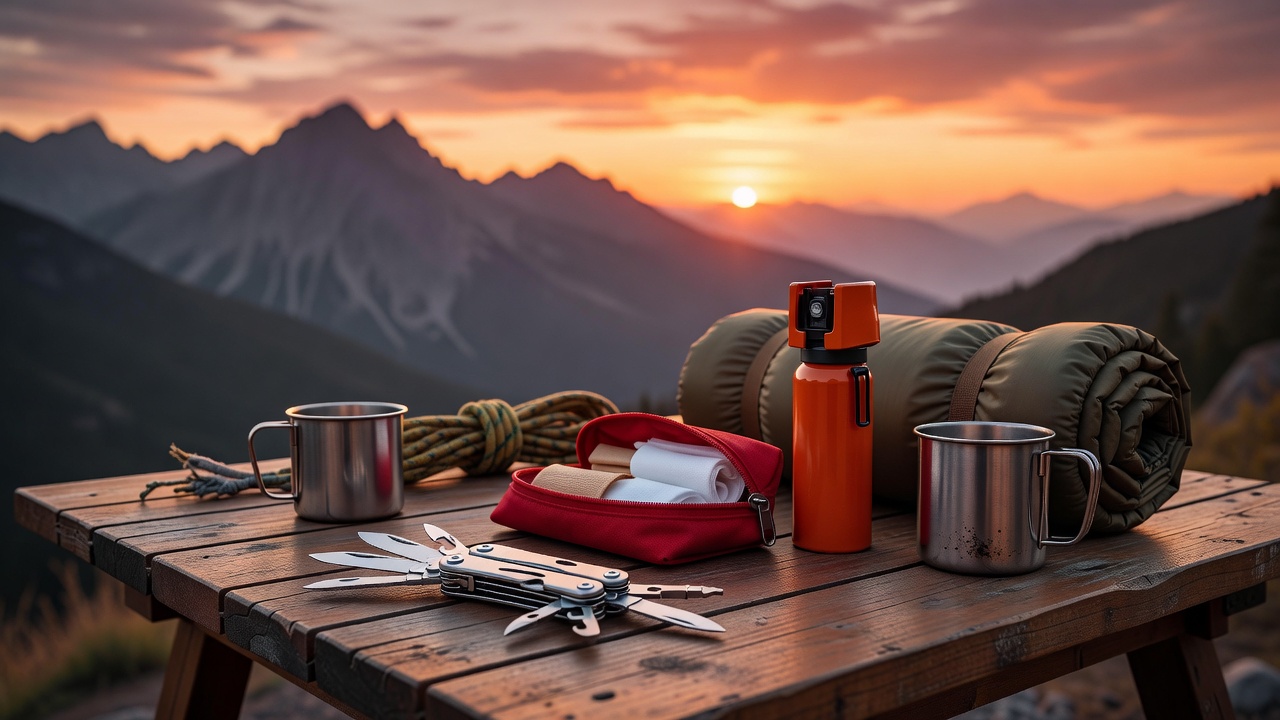
Camping safety isn't about paranoia. It's about carrying a small handful of tools that turn a potential disaster into a minor inconvenience. After 15 years of backcountry trips (and every mistake you can make), here are the 5 categories of safety gear I won't leave home without — and the specific products I trust.
Quick Answer: The Five Items That Cover Most Emergencies
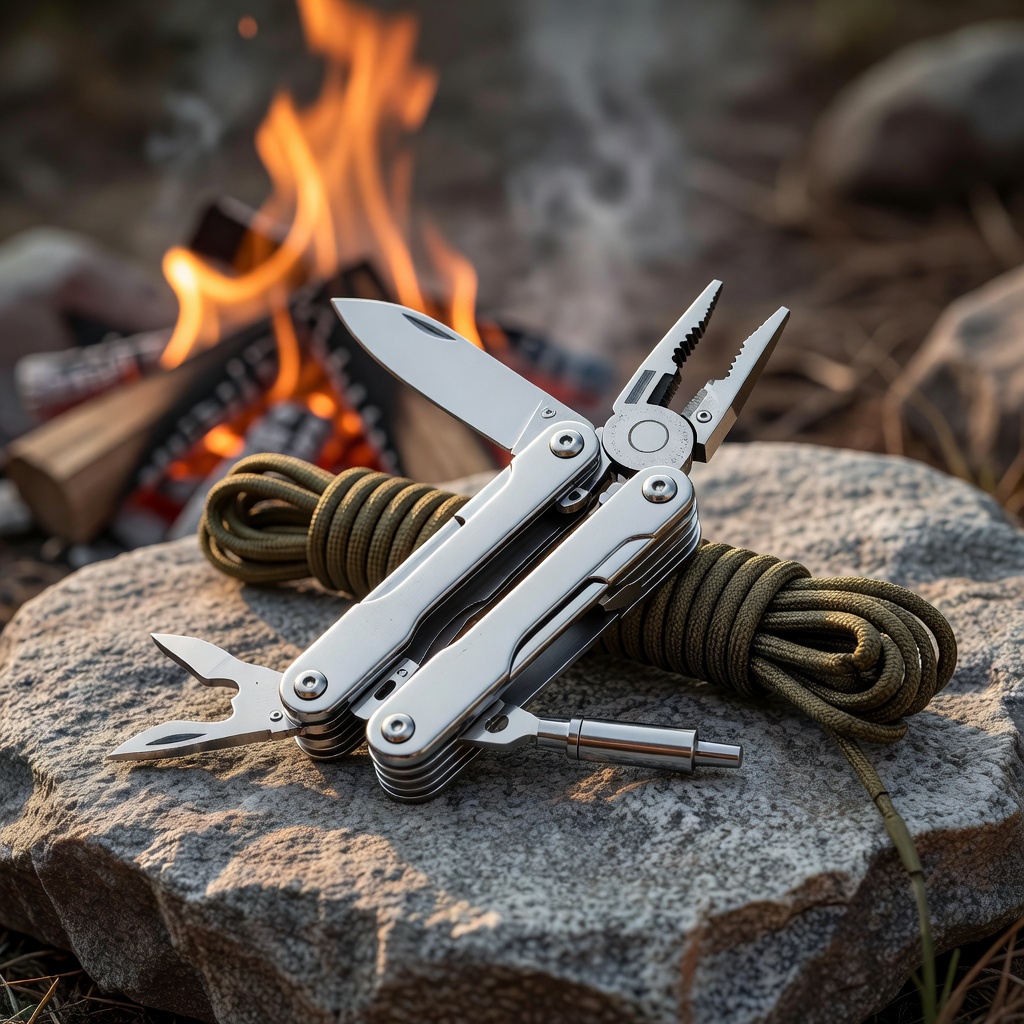
- Multi-tool: Leatherman Signal (19 tools, built-in fire starter) or the Leatherman Rev if you want the basics for less — a tool solves problems a bandage cannot.
- Bear spray: SABRE Frontiersman MAX 7.9 oz — the one item you hope stays in the holster forever.
- Fire starter: UCO Stormproof Match Kit — 25 matches that light again after being dunked.
- Repair tape: GEAR AID Tenacious Tape — turns a snapped pole or a torn rainfly into a fixed problem instead of a ruined trip.
- First aid: Adventure Medical Kits .7 — cuts, burns, and sprains are roughly 95% of real backcountry medical situations.
The Multi-Tool: One Tool, 19 Solutions
A good multi-tool replaces a toolbox. Pliers for pulling tent stakes frozen into hard ground. A knife for cutting paracord or opening food packaging. A saw for trimming branches at a dispersed campsite. A can opener when you realize the campsite grill is broken and dinner is in a can.
The Leatherman Signal 19-in-1 Multi-Tool ($129.95) is built specifically for the outdoors — it adds a fire-starting ferrocerium rod, an emergency whistle, and a diamond-coated sharpener to Leatherman's standard pliers/knife/saw/driver setup. At 7.5 ounces, it's lighter than carrying a separate knife, fire starter, and whistle.
What separates a Leatherman from the gas station knockoffs: the locking mechanism on every tool means it won't snap shut on your fingers when you're applying force. After a near-miss with a folding knife in the rain, I won't use anything without a lock.
Budget alternative: The Leatherman Rev Multi-Tool ($39.95, 4.6 stars, 6,400+ reviews) keeps the same Leatherman lock and 25-year warranty in a 4.25-inch body that clips to a belt: spring-action pliers, a 420HC combo blade, a package opener, and Phillips and flat drivers. You give up the Signal's ferro rod, whistle, and saw, and there is no bit driver or scissors, so heavier repairs want the Wave or Surge instead. For standard campsite chores it covers most of the gap at a third of the price. And if you would rather carry one good blade than a tool bundle, the CIVIVI Praxis Folding Pocket Knife ($46.75, 4.5 stars, 2,100+ reviews) pairs a 3.75-inch stonewashed blade with a liner lock and cuibourtia wood handles that stay grippy when your hands are wet. It is an everyday-carry knife first and a camp tool second, with no pliers at all. Whichever way you go, add a separate lighter: a knife and a flame cover most of what the Signal does.
Bear Spray: Hope You Never Use It, Regret It If You Don't Have It
I've encountered exactly three bears in the backcountry. Two ambled away. One didn't.
The Sabre Frontiersman MAX Bear Spray ($39.99) deploys a 40-foot fog that's effective against both bears and mountain lions. It's EPA-registered (meaning it actually works, unlike some "bear deterrents") and includes a hip holster so you're not fumbling with a zipper when seconds matter.
A few things most people don't know about bear spray:
- It expires. Most cans are effective for 3-4 years. Check the date before every season.
- Wind direction matters. Spraying into a headwind covers you, not the bear. Practice your draw and aim before you need it.
- Don't spray your tent. Bear spray on nylon fabric creates a residue that actually attracts bears (they're curious about new smells). Hang it on a tree 50 yards from camp instead.
If you camp anywhere west of the Mississippi — Rockies, Sierras, Cascades, Yellowstone — bear spray is non-negotiable. East Coast campers in black bear territory can usually manage with proper food storage, but at $40 it's cheap insurance. Before choosing a destination, read our bear safety camping guide for food-storage habits, campsite behavior, and the difference between black-bear and grizzly country.
Fire: The Difference Between a Bad Night and a Dangerous One
Cold, wet, and dark is uncomfortable. Cold, wet, dark, and unable to start a fire is the beginning of hypothermia.
The a Flame Bird Electric Arc Lighter ($6.29 for a 2-pack) solves the most common fire-starting failure mode: wind. Traditional lighters and matches blow out. An electric arc doesn't care about wind, doesn't need fuel, and recharges via USB. The flexible neck reaches into stove burners and deep fire pits without burning your hand.
I carry one of these AND a backup Bic lighter. Redundancy isn't paranoia when the alternative is a cold dinner and a colder night. The Flame Bird is my primary — the Bic is there if the battery dies. In three years of camping, the battery has never died on a trip because it lasts weeks on a single charge.
Pro tip: The arc lighter ignites tinder (dryer lint, cotton balls with Vaseline, commercial fire starters) instantly, but don't try to light a log directly. Always build from small to large — tinder → kindling → fuel wood.
Commercial fire starters that work in the rain. For the tinder step in bad weather, UCO Sweetfire tinder tabs ($12.99 for 24 sugarcane-and-wax tabs, about six minutes of burn each) lights off one match even after a soaked night, and Lightning Nuggets ($44.07 for 200, about fifteen minutes each) is the bulk box for families who fire up a campfire or a charcoal chimney all season. And when it gets cold enough that every butane lighter turns sluggish, the Light My Fire Swedish FireSteel 2.0 Army ($14.95, 4.7★) is the backup that cannot run out — roughly 12,000 strikes, a 2,980°C spark that still works wet and at altitude, and an emergency whistle in the striker handle.
Cutting that fuel wood in the first place: ignition is only half a fire. Every lighter and match kit in this section starts a flame, and none of them turns a whole round into kindling. Feeding a fire with unsplit logs is why so many campfires smoke instead of burn. The Fiskars X7 Hatchet with Sheath ($29.99, 4.8 stars, 10,200+ reviews) is 14 inches and 1.5 pounds, with a forged steel head insert-molded onto the FiberComp handle so the head physically cannot loosen or fly off the way a traditionally hung axe can. The low-friction blade coating stops green or damp wood from sticking, and it ships with a fitted sheath so it can ride loose in the trunk. Be honest about the limits: 14 inches is kindling and small firewood only, it will not fell trees or split big rounds, and the handle is not field-replaceable the way a wooden haft is.
When the rain won't stop: the UCO Stormproof Match Kit ($12.99) is the layer that covers the worst case — 25 matches that light in driving rain, burn 15 seconds each, and relight even after being dunked in a puddle, all stored in a floating waterproof case. My rule: electric arc as primary, Bic as backup, stormproof matches as the "everything is soaked" failsafe. At under $13 it's the cheapest insurance in the whole kit.
Repair Tape: Fix It or Live With It
Everything breaks in the woods. Tent poles, sleeping pad valves, rain jacket seams, backpack straps, water bladder hoses. Most of these failures are repairable in 30 seconds if you have the right tape.
GEAR AID Tenacious Tape ($14.39) is not duct tape. It's a clear, UV-resistant, permanent adhesive patch designed specifically for outdoor fabrics. It bonds to nylon, polyester, vinyl, GORE-TEX, and neoprene — essentially every material your gear is made from. Duct tape peels off in heat and leaves residue in cold; Tenacious Tape stays bonded from -20°F to 140°F.
I keep a 3" × 20" roll in my repair kit. It's fixed:
- A 4-inch tear in a tent rainfly (held for the entire trip, still holding a year later)
- A leaking sleeping pad valve (cut a small circle, applied over the valve, reinflated in 2 minutes)
- A ripped mesh pocket on a backpack hip belt
- Countless pinholes in dry bags and stuff sacks
Cut the corners round before applying — square corners peel up first. And always clean the surface with an alcohol wipe before applying. Dirt is the #1 reason repair tape fails.
First Aid: Real Kit vs. Band-Aid Box
Most "first aid kits" sold at big-box stores are a box of Band-Aids with a tiny pair of scissors and an alcohol wipe that evaporated in 2019. They're fine for paper cuts at a picnic. They're useless for the injuries that actually happen while camping: burns, deep cuts, sprains, blisters, and splinters.
The Adventure Medical Kits Ultralight/Watertight .7 ($44.95) is designed by wilderness medicine professionals. Inside the waterproof DryFlex bag: wound irrigation syringe, trauma pad, elastic bandage, moleskin for blisters, butterfly bandages for deep cuts, and a comprehensive first aid manual organized by injury type. At 8 ounces, it's light enough that "I didn't want to carry it" stops being an excuse.
What I've actually used from this kit:
- Butterfly bandages (knife slip while carving a marshmallow stick — don't ask)
- Moleskin (blister at mile 6 of a 12-mile day hike)
- Irrigation syringe (cleaning gravel out of a scraped knee on a kid)
- Trauma pad + elastic bandage (sprained ankle on a river crossing)
Add to the kit: Benadryl (allergic reactions to bee stings or unknown plants), Imodium (because GI issues 10 miles from a bathroom are a special kind of emergency), and your personal medications. The kit covers trauma — you need to cover medical. For a packing-level walkthrough of wound care, medication, and when to get help, use our camping first aid checklist before leaving home.
Building Your Safety Kit: What to Carry and When
Not every trip needs all five items. Here's how I scale:
| Trip Type | Multi-Tool | Bear Spray | Fire Starter | Repair Tape | First Aid |
|---|---|---|---|---|---|
| Car camping (frontcountry) | ✓ | If in bear country | ✓ | ✓ | ✓ |
| Day hike (<5 miles) | ✓ | If in bear country | ✓ | Small strip | Mini kit |
| Backpacking overnight | ✓ | ✓ (Western US) | ✓ + backup | ✓ | ✓ |
| Winter camping | ✓ | — | ✓ + backup + backup | ✓ | ✓ (add hand warmers) |
The total weight for all five items: ~1.8 pounds. The total cost: ~$210. The peace of mind: priceless.
Common Camping Safety Mistakes (Learn From Mine)
Leaving safety gear in the car. "I'll just be gone a few hours." The spinal fracture patient I helped evacuate from a day hike in Colorado thought the same thing. Your gear does nothing from the parking lot.
Trusting phone GPS as your only navigation. Batteries die. Screens crack. Signal disappears. Carry a paper map and know how to read it. The Leatherman Signal won't help you navigate, but at least you'll have fire and tools while you wait for SAR.
Not telling anyone your itinerary. "Leave a trip plan with someone who will notice if you're late." It's the one piece of safety advice that costs zero dollars and zero ounces, and it's the one most people skip.
Buying the cheapest version of safety gear. The $8 bear spray knockoff on Amazon has a 35% failure rate in independent tests. The $3 multi-tool strips its screws on the first use. Buy once, trust forever.
Not practicing with your gear before you need it. Deploy your bear spray (outdoors, downwind, NOT at a person or animal). Start a fire with your arc lighter in the rain. Apply moleskin before you have a blister — know where it is in your kit without looking.
A fall-specific mistake we see every year: camping on public land in September through December with nothing blaze orange in the group. Firearm seasons open on most wildlife management areas in that window, and a shape moving through cover at dawn gets identified after the fact. Our hunting season safety guide covers the timing rules, how much orange each state requires, and what changes when a dog comes along.
More Camping Safety Resources
Setting up your camp kitchen? Don't miss our Camp Kitchen Setup Guide — fire safety starts with proper stove placement and fuel storage.
Worried about the little things that bite? Our Bug Protection & Tick Prevention Guide covers permethrin treatment, DEET vs picaridin, and tick checks that actually work.
Carrying all this gear means having a good pack. See our guide on How to Choose a Hiking Backpack for load distribution and accessibility tips.
And if something does break despite your repair tape, our Camping Gear Maintenance & Care Guide covers long-term repair and storage for every category of outdoor equipment.
The Bottom Line
Camping safety gear isn't about preparing for the apocalypse. It's about turning "this trip is ruined" into "remember that time the tent pole snapped and we taped it back together in the rain?"
Carry the five items above, tell someone where you're going, and pay attention to the weather. You'll handle the rest when it comes.
Total pack weight added: 1.8 lbs. Total cost: ~$210. Safety net when things go sideways: the whole trip.
First-aid kits, lighters, and emergency tools are collected in our Best Safety & Tools guide.
Cold-Weather Camping Safety: Staying Warm When the Temperature Drops
Fall and early-winter nights are where camping discomfort turns into real risk. The principle never changes: stop the wind, get off the ground, keep your insulation dry, and eat a real meal before bed so your body has fuel to burn overnight. Our how to stay warm camping guide covers sleep systems in depth, and the winter camping gear checklist lists everything a cold-weather trip actually needs. Here are the temperature questions campers ask most.
| What people search | The short answer |
|---|---|
| how to stay warm camping in october | Treat October as a three-season month, not a summer one. Nights commonly fall into the 30s in mountain and northern states, so bring a 20°F-rated bag rather than your summer bag, and pack a beanie and a dry base layer to sleep in. |
| how to stay warm camping in fall | Fall swings 30-40°F between afternoon and 4 a.m. Layer the sleep system instead of buying one heavy bag: a 30°F bag plus a fleece liner covers most fall weekends. |
| how to stay warm camping in the fall | Same strategy, one extra rule — assume the forecast is two degrees colder than the app says, and assume the second night is the cold one. |
| how to stay warm camping in 30 degree weather | At 30°F the ground steals more heat than the air does. A closed-cell foam pad under your inflatable pad does more for you than any sleeping bag upgrade. |
| how to stay warm camping in 40 degree weather | 40°F is the sweet spot where a 20-30°F bag, thermal base layer, and hat are genuinely comfortable. The mistake is the bare head — you lose a lot of heat through it. |
| how to stay warm camping in 50 degree weather | At 50°F most people only need a 30-40°F bag plus a light layer. Vent the tent a little so condensation does not soak your bag by morning. |
| how to stay warm camping below freezing | Below 32°F you need four things working together: a pad with a real R-value, a bag rated below the forecast, dry clothes with nothing cotton, and a full stomach at bedtime. |
| how to stay warm camping in freezing weather | Boil water and fill a leak-proof bottle as a bed warmer, sleep with your water filter and phone in the bag, and never breathe into the sleeping bag — that moisture is what makes the next night cold. |
| how to stay warm at night tent camping | Change out of the clothes you wore all day before you get in the bag. Damp layers from hiking or cooking defeat a good bag faster than the temperature does. |
| how to stay warm at night winter camping | Add an insulated sit pad under your hips, wear a hat, and keep a snack within reach. Waking up cold at 3 a.m. is usually a fuel problem, not a gear problem. |
| how to stay warm camping overnight | Set up the sleep system before dark, put your next day's clothes in the bag with you, and make one last bathroom trip before you settle in. |
| how to stay warm camping in a tent | A slightly vented tent is warmer than a sealed one, because trapped breath condenses on the walls and then drips onto your insulation. |
| how to stay warm and dry camping | Dry beats warm as a priority. A wet bag loses most of its insulating value, so a rain fly pitched properly and a dry bag for your sleep system matter more than a thicker bag. |
| how to stay warm camping in rain | Rain is a moisture problem, not a temperature one. Ground sheet under the tent floor, rain fly guyed out away from the walls, and wet gear left in a separate vestibule. |
| how to stay warm camping in the rain | Assume everything that touches the ground gets wet. Pack your sleep system in a dry bag inside your pack so a leaky tent does not end the trip at 2 a.m. |
| how to stay warm camping sleeping | Sleep in a hat and fresh socks even when it does not feel necessary at bedtime — body temperature drops the most in the last hours before dawn. |
| how to camp in the winter | Winter camping is a planning discipline: shorter days, more fuel, more insulation under you than over you, and a hard turnaround time so you are never setting up in the dark. |
| frostbite camping | Frostbite starts as numb, waxy, pale skin and it happens fastest on cheeks, nose, fingers, and toes. Cover up before you feel it, and never rub or use direct heat on frozen tissue. |
| can you sleep with hypothermia | No — hypothermia is a medical emergency, not something to sleep off. A cold person who stops shivering and becomes drowsy, clumsy, and confused needs to be warmed immediately and evacuated. |
| does a tent protect you from rain | A tent with a full-coverage rain fly keeps rain out; a tent with a partial fly and exposed mesh will let blown rain in from the sides. Check fly coverage before you buy. |
The cheapest warmth in the list: the winter row above says "add hand warmers," and it is the single line item most people never actually buy. The HotHands 40-pair bulk pack ($29.99, 4.6 stars from 32,500+ reviews) is air-activated and gives roughly 10 hours per pair, which covers a cold night and the drive home — they slot into gloves, jacket pockets, and the footbox of a sleeping bag with nothing to charge and nothing to remember. If you camp often enough that disposables feel wasteful, the OCOOPA rechargeable 2-pack ($39.99, 4.5 stars from 12,000+ reviews) runs 16 hours across four heat levels per charge, splits into two pocket-sized units that snap together magnetically, and refills over USB overnight. Either way, treat warm hands as a dexterity problem before a comfort one: you cannot clear a clogged stove jet or retie a frozen boot lace with numb fingers.
The other half of the sleep system: every cold-weather row above assumes insulation you can actually point at, and the three pieces people most often under-buy are the bag, the pad under it, and the layer they sleep in. The TETON Sports Celsius 0°F bag ($59.99, 4.5 stars from 18,000+ reviews) is the "rated colder than the forecast" answer for less than the price of one hotel night, and it is the bag I hand people who are still sleeping in a summer bag in October. Under it, the closed-cell Therm-a-Rest Z Lite Sol ($54.95, 4.7 stars from 11,500+ reviews) is the "foam pad under your inflatable" fix the 30°F row calls for — it cannot puncture, it doubles as a sit pad, and it is the cheapest R-value you can add to any sleep system. If a 30°F bag is what you already own, the REDCAMP fleece liner ($24.99, 4.6 stars) is the layer that turns it into a fall bag instead of a shoulder-season one, and the Columbia Omni-Heat base layer ($49.99, 4.6 stars from 9,800+ reviews) is what "a dry base layer to sleep in" means in practice — never the clothes you hiked in.
Bear Safety While Camping: Food, Distance, and Spray
Bear country rules are about denying a bear any reason to come close, and fall is when bears are eating the most calories of the year. Our bear safety camping guide covers the full protocol; the answers below are the ones campers search for most.
| What people search | The short answer |
|---|---|
| bear spray camping | Carry bear spray where you can reach it in one second — on your belt or chest strap, never inside your pack. It is a deterrent, and it only works if it is instantly available. |
| bear spray for camping | One canister per person, not one per group, and check the expiration date each spring. The Sabre Frontiersman Max is the size and format most campers carry. |
| best bear spray for camping | Look for an EPA-registered formula, at least 7-9 seconds of spray time, and a holster or belt clip so it is not buried in a pocket. |
| bear repellent for camping | Bear spray and bear repellent are the same product under different labels — a pressurized capsaicin formula meant to be sprayed at an approaching bear's face from 25-30 feet. |
| bear mace for camping | "Bear mace" is the colloquial name for bear spray. Do not confuse it with personal-defense pepper spray, which has a shorter range and a weaker delivery. |
| camping bear safety tips | Cook and store food well away from your sleeping area, never bring scented items into the tent, and make noise on blind corners of the trail so you never surprise a bear. |
| camping bear country safety tips | Use the food storage the area requires — a bear box, a hang, or an approved canister. "We will just put it in the car" is how bears learn that cars are food. |
| camping in bear country tips | Know what lives where you are going: black bears are widespread and climb, so hanging food is not enough on its own in black bear country. |
| camping in black bear country | Black bear country covers most of the lower 48. A canister is the simplest safe option, and a bear that gets one food reward becomes a problem bear. |
| camping in brown bear country | Brown and grizzly country has different rules and higher stakes. Practice deploying the spray once on a calm day so the first time you use it is not under pressure. |
| camp cooking in bear country | Cook 100 yards downwind of your tent, keep the cooking area clean, and change out of the clothes you cooked in before you sleep. |
| car camping in bear country food | A hard-sided vehicle with the windows up and the doors locked is a valid food store in most parks — but never leave a cooler visible on the seat. |
| car camping with food in bear country | Put everything scented — toothpaste, sunscreen, snacks, trash — in the vehicle or the bear box, not in the tent's vestibule. |
| best food for camping in bear country | Odor is the problem, not the food type. Sealed freeze-dried meals and cans smell like almost nothing from a distance; fresh bacon does not. |
| can you carry bear spray in national parks | Yes — most national parks allow bear spray, but not in federal buildings, and never on a commercial flight, even in checked baggage. |
| camping with a dog in bear country | A dog can provoke a bear instead of warning you about it. Keep it leashed, keep its food in the same storage as yours, and do not count on it as bear protection. |
| camping in bear country with dogs | Keep the dog leashed at the campsite, never leave dog food out overnight, and store it with the human food rather than in the tent. |
| dispersed camping in bear country | Dispersed sites have no bear boxes, so you are responsible for the whole system: a canister or a proper hang, kept away from where you sleep. |
| camping bear safe | The whole method fits in one sentence — keep food away from people, keep people away from food, and never let a bear associate your camp with an easy meal. |
| camping animal safety | The bear gets the attention, but food-storage discipline also protects you from raccoons, skunks, mice, and jays, all of which will find what you leave out. |
The storage half of the bear problem: every answer above assumes the food ends up somewhere a bear physically cannot reach, and in most of the lower 48 that somewhere is an approved canister rather than a rope in a tree. The BearVault BV450 Jaunt ($89.99, 4.7 stars from 8,500+ reviews) is the mid-size option most people can actually carry: an IGBC-certified hard shell with a translucent blue lid, so you can see what is inside without dumping the whole load on the ground. It is sized for a solo multi-day food load or a short two-person trip, and it is the piece that makes the hang unnecessary above treeline, at a dispersed site with no bear box, and in black bear country where a climbing bear can simply pull your rope down. Load it with the scented things too — toothpaste, sunscreen, snacks, trash — and leave it 100 yards downwind of where you sleep.
Campfire Safety at the Campsite
Fire is the part of camping that hurts people most often, and the failures are predictable: too much clearance, too little water, and kids circling a fire ring at dusk.
| What people search | The short answer |
|---|---|
| campfire safety | Clear a 10-foot radius down to bare mineral soil, keep the fuel pile 25 feet back, never leave it unattended, and drown it dead-out before you sleep or leave. |
| campfire safety for kids | Give children a hard boundary line rather than a warning, and make the rule "walk behind the chairs, never between the chairs and the fire." |
| campfire safety rules | Check the fire restriction level before you leave home — burn bans change weekly in dry fall conditions, and no campfire skill matters if fires are prohibited. |
| campfire safety tips | Keep water in a bucket and a shovel within arm's reach before you light anything, and never add gasoline or lighter fluid to a fire you are trying to revive. |
| camping fire safety | Wind is the real variable. A fire that is fine on a still evening throws sparks 20 feet in a gust, so check the forecast and the surrounding fuel. |
| camping fire safety tips | Only build in a designated ring if the site has one, and never bring firewood from home — moving firewood moves invasive pests. |
| camping fire safety kit | You need water, a shovel, and a bucket before you need a lighter. Our UCO Stormproof Match Kit lives in the kit precisely because ordinary matches fail in wind, not because it is easier. |
| campfire safe zone | The safe zone is the cleared circle itself — nothing burnable inside 10 feet, no tent, tarp, or overhanging branch, and no rubbish used as kindling. |
Camping First Aid Kit: What Actually Goes In It
A kit you cannot find anything in at 2 a.m. is not a kit. Build or refill with the layers below, and keep it in one bag that never leaves your pack. The camping first aid checklist breaks down treatment procedures in more detail.
| What people search | The short answer |
|---|---|
| camping first aid kit checklist | Wound care (gauze, tape, antiseptic wipes), blister care (moleskin or gel), trauma basics (elastic wrap, gloves), medications (pain relief, antihistamine, any prescription), and tweezers plus a tick key. |
| camping first aid kit must haves | Gloves, gauze pads, medical tape, an elastic wrap, blister dressing, antiseptic, tweezers, and a sheet with your emergency contacts and any allergies written on it. |
| camping first aid kit items | The items that get used most on real trips are blister dressing, medical tape, gauze, and pain relief — in that order. Everything else is contingency. |
| camping first aid kit supplies | Refill consumables — tape, gauze, gel pads — every season. The bag survives; the contents are what expire. |
| camping first aid list | Write the list down once, keep it in the bag, and check consumed items off after every trip rather than trying to remember what you used. |
| first aid kit contents for camping | Organise by function, not by size. Wound care in one pouch, blister care in another, meds in a third — so you can find what you need by touch and flashlight beam. |
| what to put in a first aid kit for camping | Start from a real kit rather than a band-aid box. The Adventure Medical Kits Ultralight .7 is watertight and compartmentalised for 1-3 people, which is exactly what a family day out needs. |
| diy first aid kit for camping | A watertight stuff sack, a written contents list, and a set of small pouches beats a big box — you are building for a dark tent, not a bathroom shelf. |
| camping first aid essentials | Bandages and antiseptic handle the small stuff. The essentials are the things that stop a trip becoming an evacuation: an elastic wrap, a splint option, and the ability to keep someone warm. |
| camping first aid must haves | Nitrile gloves and a CPR face shield cost almost nothing and are the two items people most often forget. |
| camping first aid bag | Choose a bag you can open with one hand and see inside — a wide-mouth, watertight bag with a light-coloured interior works far better than a black box. |
| camping first aid box | Hard boxes seal well but crack and take up pack space. If you keep a box, keep it in the car kit and carry a soft pouch in the pack. |
| camping first aid pouch | A pouch rides in a side pocket where you can reach it without unloading everything else. That is the entire point of carrying one. |
| camping first aid survival kit | Do not merge them. First aid treats injuries; survival gear handles exposure. Keep them as two bags so neither becomes a search expedition. |
| emergency first aid kit for camping | Add a trauma layer — a pressure bandage and a tourniquet option — if you are camping where help is more than an hour away. |
Emergency Kit, Survival Kit, and Trip Planning
The real difference between a campsite inconvenience and a serious incident is usually planning, not gear. Tell someone your route and return time, carry a way to signal, and pack for the failure you would most likely face.
| What people search | The short answer |
|---|---|
| camping emergency kit | Light, warmth, water, signalling, and first aid. A headlamp with spare batteries, a fire starter, a water treatment option, a whistle, and a small first aid kit cover the realistic emergencies. |
| camping emergency kit list | Headlamp and spare batteries, stormproof matches or a fire starter, water treatment, a whistle, a space blanket, a multi-tool, and a written contact and medication card. |
| best camping emergency kit | The best kit is the one that is already in your pack every single trip. Build it once around the five categories and restock after each use. |
| camping emergency survival kit | Keep it small enough that you actually carry it. A pared-down kit in the pack beats a perfect kit in the car every time. |
| camping survival kit | For a family car-camping trip this is a weather-and-darkness kit, not a bushcraft kit: light, warmth, water, and a way to call for help. |
| basic camping survival kit | Headlamp, fire starter, space blanket, water treatment, whistle, multi-tool, first aid kit. That is the whole list for most trips. |
| best survival kit for camping | Look for one organised by function with a written inventory, so you can check it is complete without unpacking it. |
| camping and hiking survival kit | A day-hike kit and a camp kit overlap but are not identical — the hike version needs water treatment and a map, the camp version needs fire and repair. |
| camping emergency plan | Write down where you are going, leave it with someone at home, agree a check-in time, and know the nearest ranger station, hospital, and cell coverage gap before you leave. |
| camping safety tips | The highest-value safety habits are boring: tell someone your plan, carry a headlamp, check the weather twice, and never leave the fire or the stove unattended. |
| camping safety checklist | Weather, water, light, warmth, first aid, fire safety, wildlife storage, and a communicated plan. Print it and reuse it — the list is the safety system. |
| camping alone safety | Solo camping means no one to notice a problem. File a plan, carry a satellite messenger or PLB if you are out of coverage, and camp where someone would notice you are gone. |
| backcountry camping safety tips | Assume no signal, assume help is hours away, and pack the margin that assumption requires — that is the whole discipline. |
| camping gas canister safety | Check seals and hoses before every trip, test for leaks with soapy water, never run a stove inside a tent, and store canisters out of direct sun. |
| safety tips when camping | Match the gear to the forecast rather than the season on the calendar, and re-check the forecast the morning you leave. |
The two rows people leave blank: light and signalling are the easiest items on that list to own, and they are also the two most often skipped. The Black Diamond Spot 400 ($39.95, 4.5 stars from 1,500+ reviews) is a 400-lumen waterproof headlamp that runs on three AAA batteries or the brand's rechargeable core, which is why it is the one I hand people: keep the AAAs in the pack as your "spare batteries" line item and the light itself stops competing with your other gear for charging. If you would rather never think about batteries again, the Petzl ACTIK CORE ($79.95, 4.5 stars) steps up to 625 lumens rechargeable with a red mode that will not wreck your night vision around camp.
Then there is the row most readers skim past — "carry a satellite messenger or PLB if you are out of coverage." The Garmin inReach Mini 2 ($349.99, 4.7 stars from 8,000+ reviews) is what that sentence means in practice: two-way satellite messaging, an SOS button that reaches a staffed 24/7 response coordination centre, and location sharing so the person holding your trip plan can watch you arrive at camp. It weighs under four ounces, rides on a shoulder strap or a pack loop, and unlike a phone it needs no bars of anything — which is exactly the point for the national forest and dispersed sites where most camping actually happens.
The third item on every list, and the first one people skip: water treatment. It shows up in three of the rows above and it is the line item that decides whether a trip continues or gets cut short — a Sawyer Squeeze filter ($45.95, 4.7 stars from 10,400+ reviews) weighs three ounces, threads onto a standard bottle mouth, and makes stream, lake, or suspect tap water drinkable with no pump and no tablets to run out of. Pair it with a wide-mouth Nalgene 32 oz bottle ($16.99, 4.8 stars from 65,000+ reviews) and you also own the leak-proof hot-water bottle the freezing-weather row above tells you to fill as a bed warmer — the cheapest heater you will ever carry, and the same bottle you drink from all day.
Thunderstorm and Lightning Safety
| What people search | The short answer |
|---|---|
| camping lightning safety | If you can hear thunder, you are within striking distance. Move to a hard-sided vehicle or a substantial building, and stay off ridges and away from isolated tall trees. |
| camping thunderstorm safety | A tent offers no lightning protection. During a storm, crouch low on an insulating pad with your feet together if no shelter exists — never lie flat. |
| camping safety in a thunderstorm | Prioritise shelter over gear. Getting soaked is uncomfortable; being the tallest object on a ridge in a storm is dangerous. |
| tent safe during thunderstorm | A tent keeps rain and wind off you and does nothing about lightning. Choose a site away from the tallest trees and out of a drainage rather than trusting the tent itself. |
| tent safe lightning | No tent is lightning-safe. The safety comes from where you pitch it and from getting out to hard shelter when a storm arrives. |
| lightning tent safety | Check the forecast before you set up, note the nearest hard shelter on the way in, and treat a 30-minute flash-to-bang delay as your all-clear rule. |
Light for the hours after the storm: a thunderstorm rarely ends at bedtime. It usually parks everyone in the tent or the vehicle at 6 p.m. with the cards, the snacks, and nothing to see by. A Black Diamond Moji lantern ($24.95, 4.4 stars) is 200 lumens of dimmable, warm, non-blinding light that hangs from a tent loop or a branch, which beats holding a headlamp in your teeth while you re-tie a guyline. If you want the light to do double duty in an outage, the LuminAID PackLite Max ($49.99, 4.5 stars) is solar-rechargeable, inflates into a soft diffused lantern, and charges a phone from its battery — the same unit works as a campsite light and as the power layer in a home outage kit.
Keeping Kids Safe at the Campsite
Kids are safest at camp when the rules are physical and consistent rather than repeated warnings. Boundary lines, assigned jobs, and a visible adult beat every lecture.
| What people search | The short answer |
|---|---|
| camping safety for kids | Do a walk-around when you arrive and name the boundaries out loud: the fire ring, the water, the road, and the edge of the site. Then walk them again at dusk. |
| camping safety tips for kids | Give each child a job and a whistle, dress them in bright colours, and write your site number and phone on a card in a pocket in case you get separated. |
| camping safety rules for kids | Three rules cover most incidents: never go near the fire without an adult, never go past the boundary without telling someone, and never eat anything picked in the woods. |
| camping safety for toddlers | Keep a toddler within arm's reach near water and fire, use a travel cot or familiar sleeping arrangement, and expect the tent zipper to be the main escape risk. |
| camping survival kit for kids | A small pack with a whistle, a headlamp, a water bottle, and a bright layer teaches the habit early and is genuinely useful if they wander a few sites away. |
| is camping with kids safe | Yes, with the same discipline any outdoor activity needs: boundaries, layers, water, and adult attention concentrated near fire and water. |
| safe camping with kids | Pitch where you can see the play area from the cooking area, keep the fire ring clear of chairs, and put the youngest child's sleeping spot in the middle of the tent. |
| camping safety with kids | The single biggest upgrade is line of sight. Choose a site where the tent, the table, and the fire ring are all in one view. |
Give each kid their own light: the kids-kit row above lists a headlamp, and it is worth buying one per child rather than handing yours over at dusk. The Black Diamond Wiz Kid ($24.95, 4.6 stars from 650+ reviews) is a 40-lumen rechargeable headlamp built specifically for children: a sealed body with no loose batteries to lose, capped at 40 lumens so it lights a path without dazzling anyone standing next to it, and a single button a five-year-old can work in the dark. A child carrying their own light is easier to keep track of after dark, less likely to wander toward the fire ring to see, and the habit sticks for every trip afterwards.
Nevada is the extreme version of that same problem: camping in Nevada walks through five land systems that share no booking portal, and it is the cleanest illustration of why the agency, not the state, sets the rule.
Camping Safety Gear FAQ
What are the must-carry safety items for any camping trip?
Five: a multi-tool, bear spray, a fire starter, repair tape, and a real first aid kit. Not every trip needs all five at full size — a frontcountry car-camping weekend takes everything, a short day hike can drop to a mini kit and a small strip of tape — but the list is the baseline, not the deluxe version.
Do I really need bear spray?
If you're camping or hiking in bear country, yes. The failure mode is asymmetric: you will almost certainly never need it, and if you do need it and don't have it, there is no substitute. Carry it on your belt or chest strap where you can actually reach it, not buried in the pack.
What's the best multi-tool for camping?
The one that's on your belt. A good multi-tool replaces a toolbox — pliers for pulling tent stakes frozen into hard ground, a blade for rope and kindling, a screwdriver for a stove that won't light. The Leatherman Rev is the value pick for camp duty; if you want a dedicated blade instead, the CIVIVI Praxis is the folding knife I'd take, and the Fiskars X7 hatchet covers splitting and kindling properly.
How do I start a fire when everything is wet?
Cold, wet, and dark is uncomfortable; cold, wet, dark, and unable to start a fire is the beginning of hypothermia. Ordinary matches and a lighter are what fail first in wind and rain, which is why the UCO Stormproof Match Kit lives in my kit — 25 windproof matches in a waterproof floating case with strikers. Combine it with dry tinder carried from home, not scavenged at the site.
Is one roll of repair tape really worth carrying?
Yes — everything breaks in the woods. Tent poles, sleeping pad valves, rain jacket seams, backpack straps, water bladder hoses. A few feet of tape is the difference between a snapped pole ending a trip and a trip you tell stories about. Wrap it around a Nalgene or a trekking pole grip so it takes up zero pack space.
What makes a first aid kit actually useful?
Most kits sold at big-box stores are a box of band-aids with a tiny pair of scissors and an alcohol wipe that evaporated years ago — fine for paper cuts at a picnic, useless on a trail. A real kit is organized so you can find what you need in the dark: the Adventure Medical Kits Ultralight .7 is watertight and compartmentalized for 1–3 people.
Do I need safety gear on a short day hike?
Yes. The most common way people get caught without gear is the sentence "I'll just be gone a few hours" — and the gear in your car does nothing from the parking lot. Carry the basics in your pack, tell someone your route and return time, and pay attention to the weather.
How do I stay warm camping when the temperature drops below freezing?
Layer the sleep system instead of buying one heavy bag: a closed-cell pad under an inflatable, a bag rated below the forecast, dry clothes with nothing cotton, a hat, and a real meal before bed. Boil water and use a leak-proof bottle as a bed warmer, and keep your filter and phone in the bag so neither freezes. If you want the full system, our how to stay warm camping guide walks through it.
Can you carry bear spray in a national park?
In most national parks, yes — bear spray is allowed on trails and in campgrounds. It is typically prohibited inside federal buildings, and it can never travel on a commercial flight, even in checked luggage. Check the specific park's rules before you go, and carry it somewhere you can reach in one second.
What should actually go in a camping first aid kit?
Gloves, gauze and medical tape, an elastic wrap, blister dressing, antiseptic, tweezers, a tick key, pain relief, an antihistamine, and a written card with allergies and emergency contacts. Blister care and tape are what get used on real trips — restock those every season. Our camping first aid checklist covers the procedures.
Is a tent safe during a thunderstorm?
A tent sheds rain and blocks wind, but it provides no lightning protection at all. Safety comes from site selection and from moving to a hard-sided vehicle or building when a storm arrives — stay off ridges, away from isolated tall trees, and out of drainages.
How do I keep kids safe around a campfire?
Give them a physical boundary rather than a repeated warning, and make the walking rule explicit: behind the chairs, never between the chairs and the fire. Keep a bucket of water and a shovel within reach before you light anything, and never leave a fire unattended.
One safety habit that belongs in every camp kit: a soapy-water leak test on your stove before each trip — the procedure is in our camp stove propane leak guide.
What should go in a camping emergency kit?
Light, warmth, water, signalling, and first aid — the five categories in the section above, assembled once and kept in a bag that actually rides in your pack rather than in the car. In practice that is a headlamp with spare batteries, a fire starter, a water treatment option, a whistle, a space blanket, a multi-tool, and a written card with your emergency contacts, allergies, and medications. Restock the kit after every trip instead of the night before one, and check the batteries while you are at it.
The blanket is the item people replace most often, because the dollar-store foil ones tear the first time they come out of the wrapper. If you want one that is still usable next season, the Don't Die in The Woods 4-pack is $24.95 for four reusable 4 x 7 ft sheets — one for the pack, one for the car, one for the go bag, one spare — and the Arcturus insulated tarp blanket ($24.99) is the grommeted version that doubles as a windbreak or ground sheet.
Do I need a satellite communicator for camping?
Only if you camp beyond reliable cell coverage and want a way to call for help that does not depend on a signal — which describes most national forest, BLM, and dispersed sites. A satellite messenger sends two-way text messages and a GPS SOS to a staffed 24/7 response centre; a personal locator beacon covers the SOS half without the messaging. For frontcountry campgrounds where your phone works, a charged battery plus a trip plan left with someone at home is genuinely enough. Among messengers, the Garmin inReach Mini 2 is the one most campers land on at under four ounces.
<!-- AFFILIATE_DISCLOSURE -->