How to Choose the Right Hiking Backpack (2026)
2026 hiking backpack buying guide: how to size a daypack, what features matter, and the best trail-ready packs plus the day-hike gear to pack.
In this article · 13 sections
- Quick Answer: Which Pack for Which Trip
- Why Pack Choice Matters
- Daypack vs. Multi-Day Pack: Know Your Trip Length
- How to Size a Hiking Backpack
- Essential Features to Look For
- The Best Hiking Backpacks for Every Type of Hiker
- How to Fit Your Pack Properly
- Pack Weight Guidelines
- Packing Your Backpack: The Right Way
- Day Hike Essentials Checklist
- When to Replace Your Backpack
- Hiking Backpack FAQ
- Final Thoughts
Choosing a hiking backpack can make or break your day on the trail. A pack that fits poorly hurts. Your shoulders chafe, your balance goes, and every switchback feels personal.
You might be out for a few hours on a Saturday or three weeks on the PCT. Either way, here's what to look for in sizing, fit, features, and which packs are worth your money.
Quick Answer: Which Pack for Which Trip
Backpack choice is mostly trip length, then fit. The short version by use case:
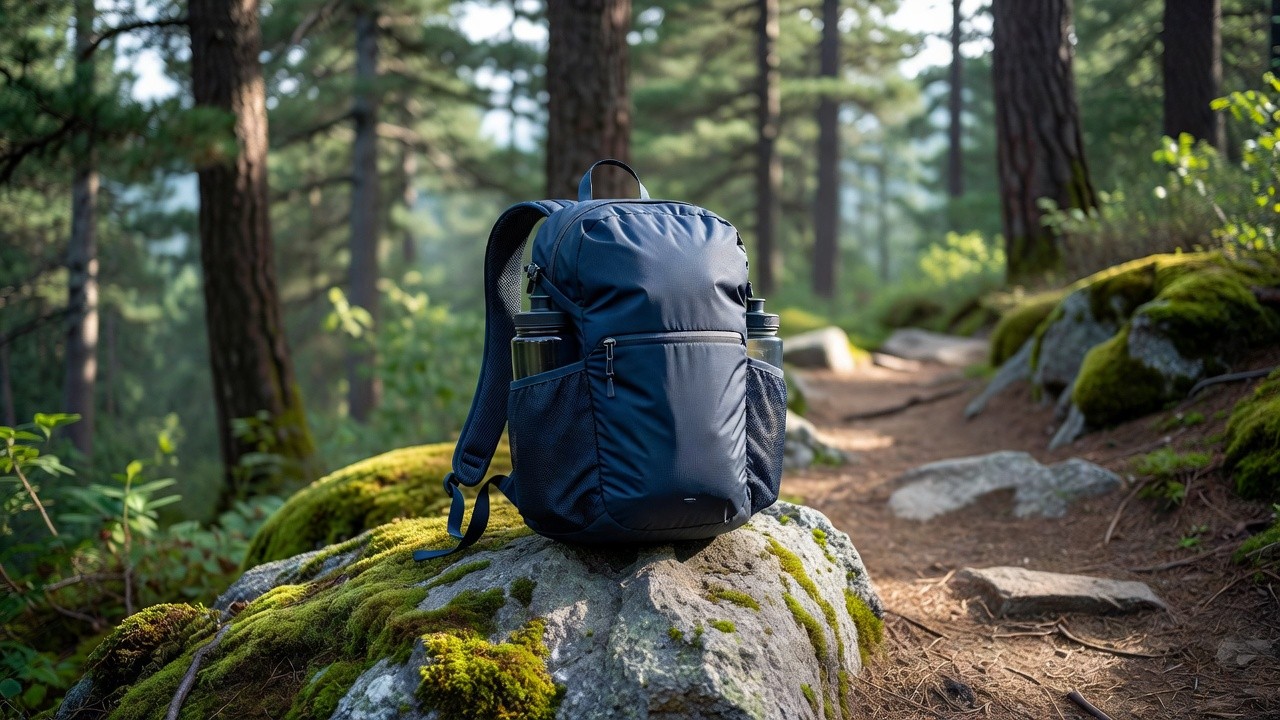
- Day hikes (13-20 liters), best value: the BECOJADDE 15L Daypack ($25.19) is light, cheap, and covers the basics. Step up to the Osprey Daylite ($65.00) for a real suspension and an Osprey warranty.
- Best all-round daypack: the Osprey Talon 22 ($139.95) — ventilation, a proper hip belt, and enough room for a shell and a lunch.
- Most packable (travel and backup): the WATERFLY 20L Packable ($25.98) folds into its own pocket.
- For kids: the Osprey Jet 18L (kids) ($80.00) is sized for a child's torso, which matters more than capacity.
- Fit beats features: measure your torso before you buy, load the pack at the store, and make sure the hip belt carries the weight — not your shoulders.
Most day hikers never need more than a 20-liter pack. Buy for the trips you actually take.
Why Pack Choice Matters
After your boots, your backpack is the gear that matters most. It's how you haul water, food, layers, and safety gear. A good pack puts the weight on your hips where it belongs, not on your shoulders. It keeps the load close to your spine where your body handles it best.
A bad pack? You feel every pound in your shoulders. Your lower back aches. You fight the load instead of walking.
Daypack vs. Multi-Day Pack: Know Your Trip Length
Start with one question: how long are you hiking?
| Trip Type | Recommended Volume | What It Carries |
|---|---|---|
| Day hike (few hours) | 10-20L | Water, snack, light layer, phone, keys |
| Full-day hike | 15-30L | All of the above + lunch, extra layers, first aid, rain shell, filter |
| Overnight (1-2 nights) | 30-50L | Day stuff + sleep system, stove, extra food, shelter |
| Multi-day (3+ nights) | 50-70L | Everything above + bear canister, fuel, more food, camp shoes |
Most hikers land in the 15 to 30 liter range. Big enough for the Ten Essentials. Small enough you won't overpack.
If you are still figuring out what actually belongs in that smaller day-hike loadout, our day hike essentials gear checklist is the practical follow-up. It helps you translate pack volume into a real packing list instead of just buying a bag and hoping the rest sorts itself out.
How to Size a Hiking Backpack
Backpack sizing isn't about your height. It's about your torso length. Here's how to measure it:
- Find your C7 vertebra. Tilt your head forward and feel the bony bump at the base of your neck.
- Find your iliac crest. Put your hands on your hips, thumbs pointing back. That bony ridge is your iliac crest. The midpoint between the crest and your spine is where the hip belt should sit.
- Measure the distance. Have a friend measure from your C7 vertebra to the midpoint of your iliac crest. This is your torso length.
Torso length guidelines:
- Small: 15-17 inches
- Medium: 17-19 inches
- Large: 19-21 inches
Most quality packs (including the ones we recommend below) come in multiple sizes or have adjustable torso systems. Don't skip this. A pack that's too long sits wrong on your hips. One that's too short dumps all the weight on your shoulders.
Essential Features to Look For
Suspension and Frame
- Internal frame (most common): lightweight, hugs your back, transfers weight to hips
- External frame: old-school, carries heavy loads, but snags on branches
- Frameless: ultralight, best for loads under 15 lbs
Hip Belt
The hip belt does most of the work. It should wrap around your hip bones and carry about 80% of the weight. Look for padded, contoured belts that curve around your hips. Men's and women's packs often have differently shaped belts.
Ventilation
A mesh back panel or channeled foam creates airflow between your back and the pack. On hot summer days this matters. Nobody wants a soaked back five miles in.
Hydration Sleeve
Most modern daypacks include a sleeve for a hydration reservoir (2 to 3 liters) with a port for the drinking tube. You want this on day hikes.
Organizational Pockets
- Top lid / brain: quick-access for keys, sunscreen, phone
- Front shove-it pocket: stash a rain jacket or fleece you need to reach fast
- Side mesh pockets: water bottles, trekking poles, snacks
- Hip belt pockets: granola bars, lip balm, GPS. Things you want without stopping
Rain Cover
Many packs include a rain cover. If yours doesn't, pack everything in dry bags inside. Electronics and spare clothes especially.
The Best Hiking Backpacks for Every Type of Hiker
We've tested these packs on everything from afternoon walks to multi-day alpine trips. Here are the ones we keep coming back to.
Best Lightweight Daypack: BECOJADDE 15L Small Hiking Backpack
BECOJADDE 15L Small Hiking Backpack · $25.99 · 4.4/5
If you mostly hike with water, snacks, a shell, and the Ten Essentials, a small daypack is usually the sweet spot. The BECOJADDE 15L is light, trail-friendly, and simple enough that you won't overpack it on short outings.
What makes it worth the money:
- Lightweight, foldable design is easy to stash in the car or a travel bag
- Shoulder-strap phone pocket keeps navigation or photos within easy reach
- Adjustable chest strap includes a built-in survival whistle
- Rear anti-theft pocket gives you one secure spot for wallet and keys
Best for: Casual day hikers, travel hikers, and anyone who wants a compact pack that still feels trail-ready.
Best Commuter-Hybrid: Osprey Daylite Commuter
Osprey Daylite Commuter Backpack · $65.00 · 4.7/5 — trail-to-town favorite
If you hike and commute with the same bag, the Daylite Commuter is still the kind of crossover pack that makes sense. It gives you the cleaner organization and laptop-friendly layout that pure trail packs skip, while keeping the easy-carry Daylite shape people already like.
What makes it worth the money:
- Laptop-friendly layout works for weekday commuting and weekend trail use
- Front organization helps separate chargers, snacks, and small essentials
- Osprey's Daylite platform has a strong reputation for comfort and everyday durability
- Streamlined shape works well as a personal item for flights or road trips
Best for: Hikers who want one bag that can handle commuting, travel days, and light trail mileage.
Best Premium / Technical Daypack: Osprey Talon 22
The Osprey Talon 22 Men's Lightweight Hiking Backpack at $139.95 (4.7 stars, 3,100+ reviews) is the daypack that made 22 liters the default size for a full day on the trail, and it is the pick here if you are buying once and want it to survive a decade of real mileage. The AirScape backpanel holds the pack off your spine so sweat has somewhere to go, the BioStretch harness and hipbelt wrap instead of dig, and the Stow-on-the-Go loop lets you stow trekking poles without unshouldering. It weighs about 1.9 pounds.
What makes it worth the money:
- AirScape suspension — the difference between a sweaty back and a dry one on a summer climb
- A real hipbelt with twin zip pockets — snacks and phone ride at your waist instead of in a shoulder pocket
- Stow-on-the-Go trekking pole carry — switching between poles and scrambling costs you nothing
- Lid, shove-it, and side pockets fit a full day of layers plus a 3-liter hydration reservoir
The trade-off: It costs roughly twice what a comparable-capacity pack does, it is sized by torso length so a wrong size fits noticeably worse than a cheap pack would, and it stops being comfortable above roughly 20 pounds — this is a daypack, not an overnight pack. If the price is the dealbreaker, the Osprey Daylite Commuter above covers trail-to-town for $65 and the packable option below is the budget route.
Best for: Hikers who want one premium daypack that handles summit pushes, technical trails, and travel days without a second bag.
Best Ultralight / Packable: WATERFLY Packable Backpack
WATERFLY Packable Backpack · Packable budget pick
Sometimes you need a pack that vanishes when you're done. The WATERFLY is the kind of backup bag that lives in a suitcase, glove box, or larger camping tote until you need extra carrying space for a quick walk, summit push, or grocery run near camp.
What makes it worth the money:
- Foldable design takes up far less space than a structured daypack
- 20L capacity is enough for layers, snacks, and trail basics
- Lightweight build makes it easy to carry as a backup instead of your main pack
- Good fit for travel, casual hikes, and minimalist packing lists
Best for: Travelers, minimalists, and anyone who wants a lightweight backup instead of a full technical pack.
Best Small / Personal Item: Tuwubi Crossbody Bag
Tuwubi Crossbody Bag · $9.59 · 4.5/5
Not every outing needs a full backpack. For quick walks and light carries, the Tuwubi crossbody is hard to beat at the price. Under $10.
What makes it worth the money:
- Lightweight, stays out of your way
- Multiple zip compartments for organization
- Adjustable shoulder strap
- Cheap
If you want the same barely-there feel with more capacity, the WATERFLY Packable Sling Backpack ($25.49, 4.4 stars, 4,000+ reviews) carries across the chest so your back stays cool, in water-resistant polyester with SBS zippers. It is bigger than a fanny pack but far lighter than a daypack, and you can reach your phone, wallet, and snacks without taking it off. Two honest limitations: the capacity is for essentials only, so it does not replace a daypack, and there is no hydration sleeve, so it is not a standalone option for a long hike.
Best for: Short walks and anyone who hates carrying a full pack for a quick outing.
Best Kids' Hiking Pack: Osprey Jet 18L
The Osprey Jet 18L Kid's Hiking Backpack at $80.00 is a real hiking pack scaled for small adventurers (ages 4-10) — not a cartoon print on a stuff sack. It borrows Osprey's adult-pack engineering: an AirScape backpanel, an adjustable torso harness, and load-lifter straps, so the pack actually fits a child's frame instead of sliding around on every step.
What makes it worth the money:
- Adjustable torso fit grows with your kid — it won't be outgrown in one season
- Safety whistle built into the sternum strap
- 18L capacity with a soft-lined top pocket for sunglasses or a phone
- Real load-lifter straps keep weight high and stable on small backs
Best for: Parents day-hiking with kids ages 4-10 who want their child carrying their own snacks, water, and jacket — properly fitted, not strapped into an adult pack. If your kid isn't hiking yet but the whole family camps, pair it with our best kids' camp chair pick for a shaded seat at the site.
How to Fit Your Pack Properly
Even the best pack won't perform if you don't fit it right. Follow these steps every time:
- Loosen everything. Hip belt, shoulder straps, load lifters. All the way.
- Put the pack on. Center it. Don't hunch.
- Tighten the hip belt. The padded part sits on top of your hip bones, not above, not below. Make it snug. You want to feel the pack sitting on your hips.
- Tighten the shoulder straps until the pads just touch your shoulders. You should be able to slip a flat hand under each strap.
- Adjust the load lifters, those little straps near your collarbone. Aim for a 45-degree angle from pack to shoulder. This pulls the pack against your body.
- Fasten the sternum strap. Slide it to just below your collarbone. Keeps the shoulder straps from slipping off.
- Load it up and walk around. If something digs in or the pack shifts, adjust. Or try a different size.
Pack Weight Guidelines
A loaded pack should weigh no more than 20% of your body weight. For day hikes, aim for 10-15%.
- 150 lb hiker: 15-30 lb max pack weight
- 180 lb hiker: 18-36 lb max pack weight
- 200 lb hiker: 20-40 lb max pack weight
If your pack keeps coming in over these numbers, you're carrying too much. Lay everything out and ask: do I really need this?
Packing Your Backpack: The Right Way
How you pack matters as much as what you pack:
- Bottom: Sleeping bag, puffy jacket, camp clothes. Lightweight, bulky items you won't need until camp
- Middle: Heavy items (cook system, food bag, water filter). Centered and close to your spine
- Top (near shoulders): Rain jacket, fleece, first aid, headlamp. Items you need quick access to
- Pockets: Snacks, map, compass, phone, sunscreen, lip balm. Things you grab without stopping
Two sacks cover that job for a family kit: the Frelaxy Compression Sack ($16.99) with four straps and 11–52L of range for a bulky synthetic bag or a week of clothes, and the Sea to Summit Ultra-SIL Compression Sack ($34.95) when a down quilt has to fit a 45–60L pack without adding weight. Put your sleeping bag and extra clothes in a dry compression sack. Saves space and keeps everything dry.
Pair a Small Daypack With the Right Trail Essentials
A small hiking backpack only works if the rest of your kit stays compact and dependable. If you are packing for a hot-weather day hike, the weight you save on the bag disappears fast if you bring a cheap water bottle that leaks, a bulky pillow you never use, or a weak headlamp that is useless once the sun drops behind the ridge.
For hydration, a hard-sided bottle like a classic Nalgene-style trail bottle is still one of the simplest choices because it is easy to drink from while moving and tough enough to survive years of pack abuse. If your route includes creek crossings or long dry stretches between trailheads, carrying a compact filter like the Sawyer Squeeze gives you a realistic bailout option instead of forcing you to carry every liter from the car.
Sleep gear matters too if your "day hike" regularly turns into overnights or festival weekends. Ultralight comfort pieces like the TREKOLOGY ALUFT 2.0 Camping Pillow and a premium inflatable sleeping pad make much more sense when the backpack itself is light enough that you still have room in the weight budget for better sleep. And if you ever end a hike later than planned, a reliable light like the Petzl ACTIK CORE Headlamp is the kind of upgrade that feels expensive right up until the first time you actually need it.
The point is not to overbuy accessories. It is to make sure the backpack you choose works as part of a complete trail system, not as a standalone purchase. A good small pack plus dependable water, light, and sleep gear is what turns a "hopefully this is enough" setup into one you can trust.
Day Hike Essentials Checklist
Before you load up any pack, it also helps to read our hiking for beginners complete guide, especially if you are still learning pacing, layering, and how much water or emergency gear a normal trail day really requires. For a more item-by-item packing list built around short trails and first-time hikers, our day hike essentials gear checklist is the practical companion piece to this backpack guide. The other half of the equation is your footwear — our best hiking shoes buying guide compares the Merrell Moab 3, KEEN Targhee 3, and Salomon X Ultra 4 so your feet and your pack work as one system.
Regardless of pack size, carry these Ten Essentials on every hike:
- Navigation (map + compass or GPS)
- Headlamp + extra batteries
- Sun protection (hat, sunscreen, sunglasses)
- First aid kit
- Knife or multi-tool
- Fire starter (lighter + waterproof matches)
- Emergency shelter (emergency bivvy or space blanket)
- Extra food (beyond what you plan to eat)
- Extra water + purification method
- Extra layers (rain shell + insulating layer)
When to Replace Your Backpack
A quality hiking pack should last 5 to 10 years with reasonable care. Replace yours when:
- Zippers start separating. This won't fix itself and will fail at the worst moment.
- Foam padding is degraded or crumbling. That foam is your suspension system.
- Hip belt is cracked or delaminating. A broken hip belt means all weight dumps onto your shoulders.
- Seams are pulling apart. Not worth repairing on a heavily used pack.
- The frame is bent or broken. Internal frames aren't easy to replace.
Hiking Backpack FAQ
What size backpack do I need for a day hike?
For a few hours, 10-20 liters. A full day of hiking wants 15-30L so you can carry lunch, extra layers, first aid, a rain shell, and a water filter. Overnight trips need 30-50L and multi-day trips 50-70L. Most hikers land in the 15-30L range — big enough for the Ten Essentials, small enough that you won't overpack.
How do I know if a hiking backpack fits me?
Sizing is about torso length, not height. Measure from your C7 vertebra (the bony bump at the base of your neck when you tilt your head forward) to the midpoint between your iliac crest and your spine — that point is where the hip belt should sit. Roughly, 15-17 inches is a small, 17-19 medium, and 19-21 large.
How much weight should a hiking backpack carry?
A loaded pack should stay at or under 20% of your body weight, and day hikes should aim for 10-15%. That's 15-30 lb for a 150 lb hiker and 20-40 lb at 200 lb. If your pack keeps coming in heavier, you're carrying too much — lay everything out and ask what you actually use.
Does a hip belt really matter?
It does most of the work. A properly fitted hip belt wraps around your hip bones and carries roughly 80% of the load, which is why a good pack puts weight on your hips instead of your shoulders. Look for a padded, contoured belt — men's and women's packs often use differently shaped belts, so try both.
Do I need a rain cover for my daypack?
Many packs include one. If yours doesn't, pack everything inside dry bags instead, electronics and spare clothes first. Dry bags keep working when rain comes sideways or you're wading, which a cover alone won't handle.
When should I replace my backpack?
A quality pack lasts 5-10 years with reasonable care. Replace it when zippers start separating, foam padding degrades or crumbles, the hip belt cracks or delaminates, seams pull apart, or the internal frame bends. A broken hip belt dumps all the weight onto your shoulders, which defeats the pack's entire purpose.
Packs, poles, and the rest of your carry system are collected in our Best Mobility guide.
Final Thoughts
The right pack matches your trip length, your torso, and the features you use. For most day hikers, a 13 to 20 liter pack with a padded hip belt, hydration sleeve, and decent ventilation will last years.
Most people should start with the BECOJADDE 15L Small Hiking Backpack if they want a lightweight, low-cost daypack that still covers the basics well. If you need something even more packable for travel, the WATERFLY Packable Backpack is an easy backup choice.
The best pack is the one that fits, carries your stuff, and gets you outside. See you on the trail.
TrailMapz is a participant in the Amazon Services LLC Associates Program. As an Amazon Associate we earn from qualifying purchases.