Blaze Orange for Dogs (2026)
Hunting season overlaps prime fall hiking. Dress your dog in blaze orange, learn which states require it, and hike smart from September through December.
In this article · 18 sections
- Quick Answer: What Keeps a Dog Visible Once Rifles Are Out
- When Hunting Season Cuts Into Hiking Season
- Why a Brown Dog Disappears in November Woods
- What the Law Says About Dogs (and What It Doesn't)
- Blaze Orange Requirements by State: How Much Orange, and Where
- The Blaze Orange Gear That Actually Works
- Blaze Orange Dog Vests, Coats, and Harnesses: What Actually Fits
- Blaze Orange Dog Vests, Coats, and Harnesses: What Actually Fits
- 7 Rules I Hike By From September to December
- Can You Hike During Hunting Season? What Changes for Hikers
- If You Hear Shots or Meet Hunters
- After the Hike: Burrs, Mud, and a Tired Dog
- What Counts as Blaze Orange: Shades, Names, and What Actually Stands Out
- Blaze Orange Rules: Hunters, Private Land, and What Hikers Should Carry
- Blaze Orange Dog Gear, Item by Item
- When Hunting Seasons Open, and What That Means for Hikers
- Blaze Orange Dog FAQ
- More Fall Hiking and Dog Safety Reading
The trailhead was empty on a late September morning, the kind of morning that makes you think you have the whole ridge to yourself. I let my dog range ahead while I fumbled with a jacket zipper. Half a mile in, a rifle shot cracked across the valley. Then another. My dog, a brown blur against the brown leaves, kept quartering through the brush exactly like a deer does.
That was the day I checked the hunting calendar. Archery season had opened four days earlier. I had been hiking into public land during a legal, active hunt with a dog that looked, from 200 yards away, like a young doe.
This guide is the system I use now, from opening day through the end of the year: why blaze orange matters for dogs, which gear fits and which falls off, what the law actually says, and the trail rules that keep everyone calm on both sides of the orange.
Taking the dog? The Oklahoma camping guide maps the state's per-pet nightly fees, cabin charges and rabies-documentation rules, plus where the federal refuges close the gate entirely.
Quick Answer: What Keeps a Dog Visible Once Rifles Are Out
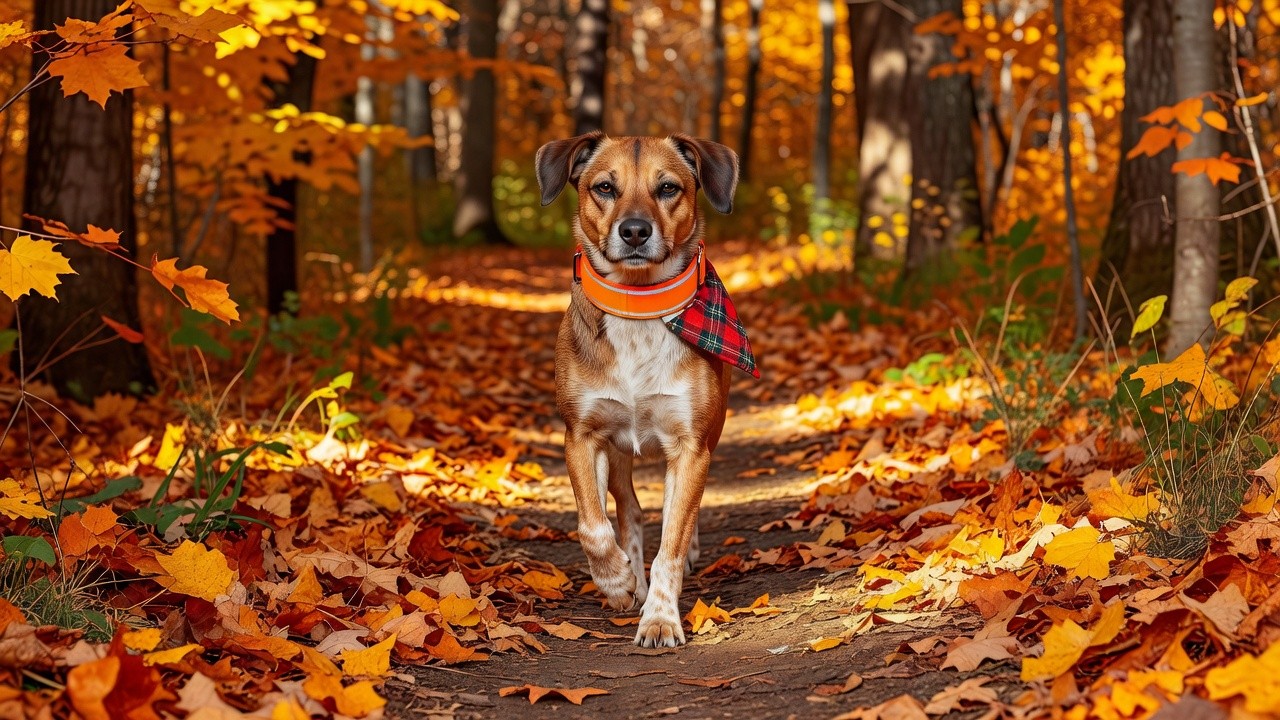
- Assume you are the only non-hunter on the ridge. Hunting season runs from late September into November in most states, and a brown dog in brown leaves reads as a deer from 100 yards.
- Collar as the backup layer: SPOT THE DOG! reflective collar — $18.99. Reversible and reflective, so it works at dusk too.
- Bandana as the third layer: SPOT THE DOG! reflective bandana — $24.99. Cheap insurance on the back of the neck.
- Check the dates. Blaze-orange requirements are seasonal and vary by state, so confirm the season is actually open before you plan the trail.
- Where to hike instead: the camping with dogs guide covers lower-risk trails, and the dog camping hub routes you to the rest.
When Hunting Season Cuts Into Hiking Season
Hunting seasons are not a single weekend. They stretch across the entire fall and into winter, and they vary wildly by state:
- Archery deer: opens late September or early October in most states, runs into January in the South.
- Muzzleloader and rifle deer: October through December, with peak pressure on opening weekends.
- Small game and upland birds: September through February, often overlapping every weekend.
- Turkey: a spring season plus a fall season in many states.
The practical takeaway: from early September through late December, any public land near you can hold hunters on any given day. The heaviest pressure lands on Saturdays, opening days, and the first hour after sunrise.
Your state's fish and wildlife agency publishes a season calendar every year. Bookmark the PDF, because dates shift annually and some WMAs close to hunting entirely while others open special youth or disabled-hunter days. If you want guaranteed quiet, those no-hunt areas are the places to take an off-leash dog.
Why a Brown Dog Disappears in November Woods
Here is the uncomfortable truth about how hunters see: they scan for the shape of a deer, which means a tan or brown body moving at the right height through brush. A dog quartering ahead of you is roughly deer-sized, deer-colored, and deer-paced. Every hunter I have talked to says the same thing: you register the shape first and the details second.
Blaze orange breaks that shape. It is the one color big-game hunters are trained to identify and hold fire on, because in most states a hunter wearing less than the legal minimum orange is the hunter who gets fined. Deer do not register the color as a warning the way we do; hunters absolutely do.
Two layers of visibility matter:
- Fluorescent color: the bright orange that stands out against brown, green, and gray cover.
- Movement: orange helps, but a still dog behind brush is still hard to spot. A dog that moves with orange on its back reads as dog, not deer, much faster.
The gear list below works on both layers.
What the Law Says About Dogs (and What It Doesn't)
State rules on hunter orange for humans are strict and widely enforced. Rules for dogs are inconsistent. Some states require dogs to wear blaze orange during certain seasons or restrict dogs to specific times of day on public land. Many states stay silent on dogs entirely and let the general leash and pursuit laws do the talking.
So read the fine print in your state's regs before you assume. The rules change yearly, vary by county and WMA, and no summary I can write here stays true for all 50 states through the season.
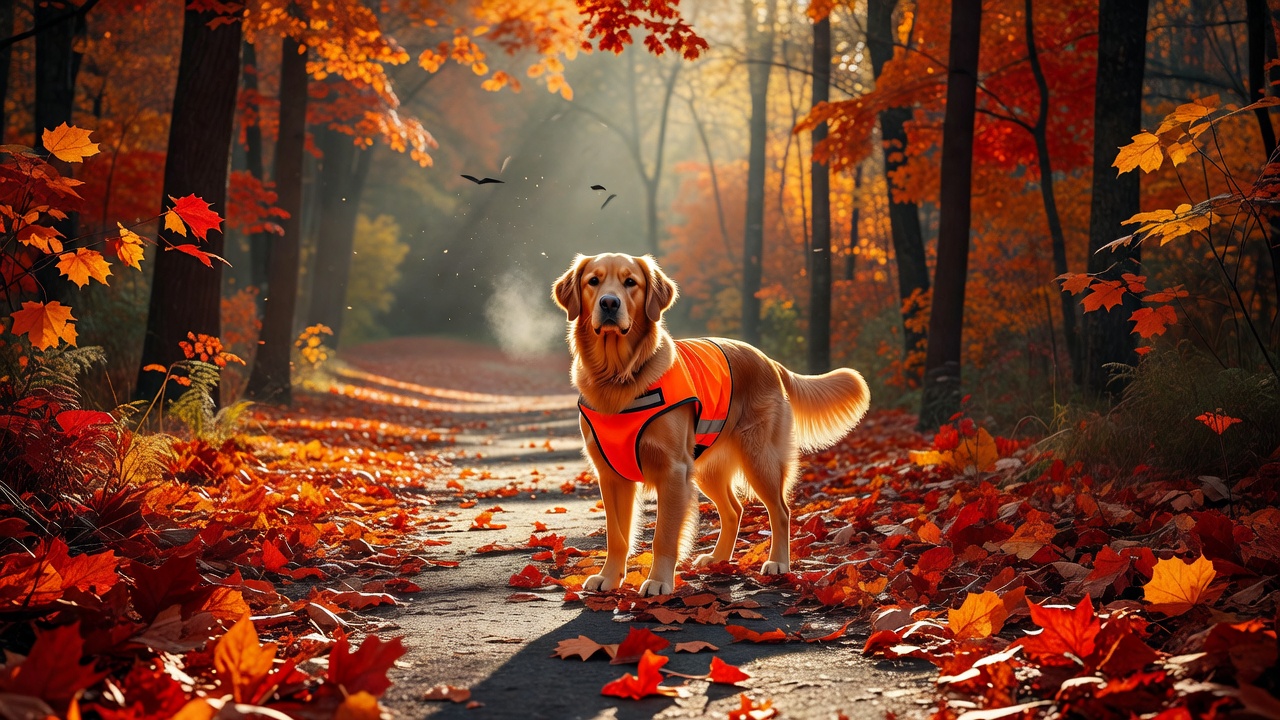
My standard: my dog wears orange on every hike from September through December, required or not. A $15 vest is cheap insurance against a mistake I cannot undo, and it doubles as the answer to "is that a dog or a deer?" for every other user of the woods.
Blaze Orange Requirements by State: How Much Orange, and Where
Every state writes the same idea a different way, which is why a question like "how much blaze orange is required" gets a different answer depending on where you live. Four states account for most of the phrasings people search, and their rules use four different measuring sticks.
| What you typed | The rule those states actually use |
|---|---|
| how much blaze orange is required in Wisconsin | 50% of your outer clothing above the waist must be blaze orange or fluorescent pink, and a hat, if you wear one, must be at least 50% too. |
| how much blaze orange in Colorado | 500 square inches above the waist, solid daylight fluorescent orange or pink, plus a hat of the same color visible from 360 degrees. It attaches to firearm big-game licenses - including muzzleloaders, and archers hunting inside an open rifle season. |
| how much blaze orange in Pennsylvania | 250 square inches visible from 360 degrees across head, chest and back combined; a hat and a vest together satisfy it. In nearly every season where orange is required, the number is identical. |
| how much blaze orange in Minnesota | The visible portion of your cap and outer clothing above the waist (sleeves and gloves excluded) during firearms and muzzleloader deer seasons. For small game, at least one visible article above the waist will do, and blaze camouflage patterns count. |
| how much blaze orange in Michigan | A hunter orange cap, hat, vest, jacket or raincoat worn as the outermost layer and visible from all directions - and in Michigan the rule runs from August 15 through April 30, not only during deer season. |
| how much blaze orange in New York | 250 square inches of solid or patterned fluorescent orange or pink above the waist, visible from all directions - or, instead, a hat that is at least 50% orange or pink. It applies to deer and bear firearm hunters and to the person accompanying them. |
Every other state's rule is one of those four shapes: a percentage of your body, a square-inch count, a named garment ("one visible article above the waist"), or a hat-plus-vest requirement. Three details decide whether any of it applies to you on a given Saturday.
- Which season it is. Most orange rules attach to firearm big-game seasons only. Archery-only, spring turkey and waterfowl seasons frequently require nothing at all - which is the trap, because those are exactly the weekends a dog is running loose in the same timber.
- What color counts. Fluorescent pink is now a legal substitute in a growing number of states (Wisconsin, Colorado and Minnesota all name it). Blaze-orange camouflage counts in some states and not in others.
- Whether dogs are mentioned at all. Most regulations never use the word "dog." That silence is not permission - it means the leash and pursuit rules do the talking instead, and your own judgment is the only remaining control.
A note on how these searches arrive. Most of them come in as abbreviations - blaze orange requirements mn, pa, ny, nc, va - which are Minnesota, Pennsylvania, New York, North Carolina and Virginia. Three of those states are in the table above, and the others publish the same four shapes of rule on their own agency site, which is exactly what the check below finds.
How to Check Your State's Rule in Two Minutes
- Search for
[your state] hunting regulationsPDF and open the current year, not last year's. - Jump to the section titled "hunter orange", "blaze orange" or "highly visible clothing" - the name changes from state to state, the content does not.
- Read whether the requirement attaches to a license type or to a season window. That is the difference between "I need orange in November" and "I need orange on opening weekend only."
- Check the specific wildlife management area or state forest you actually hike. Land-level rules - closed areas, permit-only days, no-hunt zones - override the statewide summary, and they usually live on the same agency website.
The hunting season safety tips that matter more than any of the paperwork: go mid-day, go mid-week, wear orange even where it is not required, and keep the dog where you can see it.
The Blaze Orange Gear That Actually Works
The vest is the primary layer
A vest covers the most surface area, which means it breaks the deer silhouette from every angle. Two designs dominate:
The lightweight everyday vest. Mesh sides keep a hard-charging dog from overheating, reflective trim helps in fog and dusk, and the straps adjust at chest and belly. This reflective blaze orange dog hunting vest runs true to size from small to extra large and survives brush better than the flimsy $8 versions. It is what I reach for on standard fall hikes.
The budget vest. If you need a second one for the car or a backup for the dog that rolls in every mud hole, the Mayerzon blaze orange reflective vest costs $14.99 and covers the same job. Velcro closures are easier on, buckles are more secure. For a calm trail dog either works.
Sizing rule that saves returns: measure chest girth behind the front legs with a cloth tape, not the neck. Most vests fit by girth. A too-big vest rides up over the shoulders and rubs; a too-small one presses on the chest. When in doubt between two sizes, go up and tighten the belly strap. If your dog already wears the SPOT THE DOG! collar, there is a fuller-coverage version of it. The SPOT THE DOG! reflective dog vest ($34.99, 4.4★) is the same brand's panel-style vest: a full blaze orange back instead of a strip around the neck, hook-and-loop fastening that goes on a wiggling dog in one motion, and reflective trim for the walk back in the dark. In a November clearing the difference between a collar and a vest is exactly the difference between seeing orange and seeing a shape.
Collar and bandana as the backup layer
Some dogs hate vests. Some vests come off in thick brush no matter how you tighten them. Keep a backup color layer on the dog at all times:
- The SPOT THE DOG! reversible blaze orange collar flips to a red plaid side for everyday wear, which means the orange stays on the dog even on a casual neighborhood walk. Vermont brand, and they donate part of every sale to a rescue.
- For the vest-refuser, a blaze orange reflective bandana covers less surface than a vest but keeps the fluorescent signal on the dog's neckline where hunters look first.
Layer the vest over a real harness
Cheap vests have a flimsy belly strap and no real attachment point. If your dog wears a vest all day, put a proper harness underneath. The Ruffwear Front Range harness ($44.95, 17,000+ reviews) has a front clip that discourages pulling and a padded chest that will not rub under a vest for six hours. A vest over a harness beats a vest attached to a collar every time.
Off-leash control is the real safety tool
Orange makes a dog visible. It does not make a dog obedient. If your dog ranges ahead on public land during hunting season, recall is the skill that keeps it out of a hunter's sightline. We use the oitickly remote training collar ($39.99) with a voice command layer, and we drilled a whistle recall all summer so the dog stops mid-range on a single blast. A dog that checks in every 30 seconds is a dog that never becomes a shape in the brush.
Blaze Orange Dog Vests, Coats, and Harnesses: What Actually Fits
The Human Half: What the Adults Wear
Everything above is about the dog, and that is how most of us get this wrong on the first hunting-season hike — the dog ends up better marked than the person holding the leash. A brown dog disappears against leaf litter, and so does a human in an olive jacket, which is why the state guidance is written for the hunter's eye and not for yours. Orange on the person costs almost nothing and removes the one variable you cannot control: what someone else sees through a scope.
Three vest tiers cover it. The Browning Safety Vest ($23.98, 4.7★) is a full front-and-back panel with outdoor-brand sizing that layers over a fleece or shell without pulling, and it is the one I would hand an adult who will wear it on every fall hike. The Orange Aglow mesh vest ($23.99, 4.4★) is the ultralight mesh version for warm days — it breathes, folds to about the size of a fist, and lives in the bottom of the pack all season instead of being remembered the morning of a trip. And the Allen Company adult vest (about $10) is the one that makes a family-sized purchase sane: hook-and-loop closure, nothing to break, no reason not to own four.
Kids need their own sizing rather than an adult vest over the shoulders. The Browning Safety Junior Vest ($24.04, 4.7★) is the kid-cut version of the adult vest and matches it, and the Salzmann children's hi-vis vest ($11.90, 4.8★) is sold from toddler through teen, so two siblings of different ages can both be visible for the price of one hunting vest. Either way, measure rather than guess.
Blaze Orange Dog Vests, Coats, and Harnesses: What Actually Fits
Half of the confusion here is naming. Blaze orange, hunter orange, fluorescent orange and "bright orange" are the same color - states, brands and hunters each settled on a different word for it, and fluorescent pink is the newer legal twin. So a hunt for a blaze orange dog vest can run through hunter orange dog vest, bright orange dog vest or high-visibility dog vest and land on exactly the same shelf.
The other half is the garment itself. Four shapes do four different jobs.
- A vest is the visibility layer. It puts the most orange on the largest surface, which is why a blaze orange dog safety vest is the piece that actually breaks the deer silhouette from behind as well as in front. Mesh sides breathe on a moving dog, reflective trim helps in fog and at dusk, and you want an adjustable chest and belly strap - a vest that only tightens at the neck rides up over the shoulders on the first climb.
- A coat is a warmth layer that happens to be orange. A hunter orange dog coat or a blaze orange dog jacket earns its place on a thin-coated dog in December and is overkill on a 60-degree October hike. It is also heavier when soaked, which matters most in exactly the weather you bought it for.
- A harness is a structure layer, not a visibility layer. A blaze orange harness for dogs sounds like the perfect two-in-one, but most harness straps are narrow - count how much orange actually shows across the dog's sides and back before you trust one as your only signal. The Ruffwear Front Range harness is the piece to wear under a vest: padded chest, front clip, no rub after six hours.
- A collar or bandana is the backup layer. A bright orange collar for dogs, or a blaze orange bandana for dogs, keeps color on the dog when the vest is off in the car or stripped at the trailhead. But a neckline is a small signal compared to a back - treat it as the layer that survives a vest coming off in thick brush, not as the plan.
Neoprene is a different product. A blaze orange neoprene dog vest is built for waterfowl retrievers: buoyant, warm, and heavy once it is wet. If your dog is hiking rather than sitting in a duck blind, a mesh vest does the visibility job without the weight.
Fit beats features. Measure chest girth directly behind the front legs with a cloth tape. That number - not weight, not breed - decides the size on nearly every chart, because a 50-pound lab and a 50-pound vizsla carry their chests differently. Between two sizes, go up and tighten the belly strap: too small presses on the chest, too large slides and rubs at the shoulders.
Small dogs have a specific failure mode: a small blaze orange dog vest with thin straps spins sideways on a deep-chested little dog. A bright orange vest for dogs under 20 pounds still needs two adjustment points, or you will spend the hike straightening it. And for the dog that refuses a vest entirely, the SPOT THE DOG! reversible high-visibility collar holds the fluorescent signal at the neckline all season and flips to plaid for town.
The two vests in our truck are the reflective blaze orange dog hunting vest for normal fall hikes and the budget Mayerzon vest as the backup that lives in the car. Best blaze orange dog vest, if you want the one-line answer: mesh sides, reflective trim, two adjustment points, and a fit you measured instead of guessed.
The same garment, five different listings. Retail naming splits one object across a handful of phrases, so it helps to know you are looking at the same product: a blaze orange vest for dogs, a hunter orange vest for dogs, a blaze orange hunting vest for dogs and a dog hunting vest are all the same piece of mesh and strapping. The same is true of hunter orange for dogs versus blaze orange for dogs, of a blaze orange dog coat versus a bright orange dog coat, and of a bright orange harness for dogs. The color word and the garment word both move around; what does not move is the checklist - two adjustment points, mesh sides, and a chest girth number you measured yourself.
7 Rules I Hike By From September to December
-
Orange on every dog, every trip. The day you skip it is the day you round a corner into a deer drive. It takes ten seconds to clip a vest on.
-
Proven recall or a leash. Public land rules vary, but your dog's life should not depend on the local leash law being lenient. If the dog will not stop on command at 100 yards, it hikes on a line during gun seasons.
-
No dawn or dusk hikes on public land. Deer move at first and last light, and so do hunters. Hiking between 9 a.m. and 3 p.m. drops your odds of an encounter to near zero on most WMAs.
-
Hunt the map, not the trailhead. State DNR sites list wildlife management areas and mark which ones are closed to hunting. Those closed areas are your off-leash playground from October to December.
-
Make human noise. Talk, whistle, sing badly. Hunters want to know you are there before they see a shape. A dog bell helps too, and the jingle reads as domestic, not deer.
-
Keep your own orange visible. Your dog's vest does not cover you. A blaze orange hat or vest for the human is the difference between a hunter seeing a person and seeing an unidentified shape at the edge of a field.
-
Recheck the regs the night before. Opening dates change every year. The Saturday you planned as a quiet walk might be the youth hunt or the firearm opener.
Can You Hike During Hunting Season? What Changes for Hikers
Yes - and the honest version is that the question is not whether but when, where, and in what color. Hunting season safety for hikers comes down to four things: timing, color, location, and how your dog behaves.
- Timing. Firearm hunters concentrate at first and last light and on opening weekends. Hiking between roughly 9 a.m. and 3 p.m. on a mid-week day is the single biggest risk reduction available, and the closest thing to safe hiking during hunting season that you can control. Backpacking during hunting season is the same rule stretched across a night: pitch away from trailheads, food plots and field edges, and expect company in the first hour of daylight.
- Color. Non-hunters are usually not legally required to wear orange, but "usually" is doing a lot of work - some wildlife management areas do require orange for anyone on the property during a firearm season, and the only place that gets published is the sign at the gate. The practical standard is 400+ square inches above the waist for the human, plus a hat. Your dog's vest does not cover you.
- Location. Check whether the state forest, national forest unit or WMA you planned to hike has a no-hunt zone, a permit-only season or a temporary closure. Most states have all three, and almost nobody uses them.
- Deer season specifically. Hiking during deer season is fine on most public land, but it is the busiest two to three weeks of the year. Expect orange on every ridge, keep the dog leashed even if it has a flawless recall, and stay out of thick cover where you cannot see 40 yards.
- State notes. Hiking in Pennsylvania during hunting season means the 250-square-inch standard is the local norm in the seasons where orange is required, and the firearms deer opener is the week to avoid. Hiking during hunting season in Colorado means 500 square inches on the hunters around you, an enormous amount of public land, and heavy opening-weekend pressure close to the Front Range - check Colorado Parks and Wildlife closures before any weekend trip.
What to wear hiking during hunting season: a bright orange top, an orange hat, and nothing brown, tan or white-and-furry - the same principle you already applied to the dog. A light orange vest over your daypack costs almost nothing and makes you identifiable from the ridge above you.
Two things actually go wrong on these hikes, and neither is the shot itself: a dog that ranged out of sight, and a hiker who moved at first light. Fix the first with the recall work you did in July. Fix the second by starting at nine.
The same question, asked four ways. Hiking during hunting season safety in one sentence: go late in the day, wear orange above the waist, and keep the dog close. Is it dangerous to hike during hunting season? Only if you ignore timing - the risk is concentrated in the first and last hour of daylight during an open firearm season, not spread evenly across the season. Is it safe to go hiking during hunting season? Yes, on public land, mid-day, in orange, with a leashed dog and a plan for where you turn around. How to hike during hunting season: start mid-morning, stay on established trails instead of bushwhacking, and pick a no-hunt zone on the days you want the question to stop mattering at all.
If You Hear Shots or Meet Hunters
Keep it simple: call the dog in, leash it, and give the hunter's position a wide berth. Do not yell into the woods to announce yourself; a normal voice carries fine. If you meet a hunter on the trail, step to the side, say hello, and keep your dog at heel until you are past. Almost every bad story starts with a dog that ranged ahead of its owner and a hunter who saw movement he could not identify.
After the Hike: Burrs, Mud, and a Tired Dog
Fall woods punish dogs after the hike ends. Foxtails and burrs collect between toes, mud cakes the coat, and the car ride home turns into a dirt festival. Our post-hike routine: a paw cleaner with brush ($17.99) knocks out burrs and mud before they migrate to the couch, and the Meadowlark car seat cover ($65.99) catches the rest. The dog rides home on a Chuckit! travel pillow bed ($29.99) and drinks from a Ruffwear collapsible bowl ($19.95) so the water does not slosh across the back seat.
One more stop before the car: a tick check. Fall is the second peak of adult tick activity across most of the country, and a hunting-season walk through leaf litter and tall grass is exactly where they wait. The HomeSake tick remover tool ($14.39 for a three-pack) lives in the glovebox — slide the notch under the tick, twist, and it comes out intact instead of leaving mouthparts behind. Photograph the bite site, and call your vet if it looks angry a few days later.
If your trail crosses open water, the Outward Hound Granby life jacket ($24.99) earns its keep on cold fall crossings. A wet dog in November air cools down fast, and the handle on top makes retrieval simple if the current wins. Carry water too, because fall creeks run lower than they look. The Cibaabo portable bottle ($14.98) keeps a clean supply on your belt so the dog never drinks from a stagnant pool on a hunting-access road.
What Counts as Blaze Orange: Shades, Names, and What Actually Stands Out
Orange is not one color, and the wording on a product page rarely matches the wording in a state rulebook. Here is how the terms map onto each other, and what each one actually does for you and your dog in October woods.
- what is blaze orange — a highly saturated orange-red that sits far outside the browns, greens and tans a deer or elk can pull apart from a natural background. It is a human-visibility color, not a camouflage color: the point is not to hide from game, it is to stop another person's scope from ever settling on you.
- blaze orange color — the shade you want reads almost fluorescent in flat overcast light and goes nearly red in low sun. If a garment looks dull brick or rust in the shade, it is not the safety shade no matter what the tag says.
- blaze orange vs orange — plain orange is a family of shades (pumpkin, tangerine, rust). Blaze orange is one narrow band of that family chosen for maximum contrast against fall foliage, which is why a fashion-orange puffer jacket can be visible to you and almost useless at 150 yards.
- blaze orange vs regular orange — the practical test is to walk 40 yards away from your hunting partner and look again. Regular orange blends into dead leaves at that distance; blaze orange still reads as a solid block.
- blaze orange vs burnt orange — burnt orange is a muted, darker, lower-saturation shade that photographs beautifully and disappears in brush. It is a fall-fashion color, not a safety color.
- blaze orange vs safety orange — in practice these are the same idea under two names: the ANSI-style high-visibility orange used on vests and traffic cones. In this guide, hunter orange, safety orange and blaze orange all mean the same thing — the brightest legal shade of orange.
- blaze orange vs yellow — both are high-visibility, but yellow-green hi-vis is tuned for road crews against dark asphalt, while orange is tuned against autumn foliage. For woods use in fall, orange wins; yellow is a reasonable second layer on a dark leafy trail.
- blaze orange vs camo — a camo print that includes orange is not automatically compliant, because many state rules call for a minimum area of solid, unbroken orange. Camo orange breaks the color into small patches, which is exactly what the rule is trying to prevent.
- blaze orange vs red — bright red ranks second to orange for human visibility, and it is the color deer see worst, which is why some hunters wear red flannel. Blaze orange still beats it for notifying other people.
- blaze orange or pink — some states expressly allow fluorescent pink as an alternative to orange. It is legal in a handful of states and invisible in others, so the safe move for hikers is orange, which is accepted everywhere.
- when to wear blaze orange — rule of thumb: any time a firearm or bow season is open where you are walking. Archery-only seasons are the grey zone. Many hunters wear orange anyway, and for a hiker with a dog the cost of wearing it is zero.
- blaze orange season — for a hiker, it runs roughly from the first September archery opener through the last January extension: four months where a trail that was quiet in August has people in it who are concentrating on something other than you.
- safety hunter orange — the phrase most state agencies still use in their handbooks. If you are searching for the legal standard rather than a product, that is the term to type into your state wildlife agency's site.
The short version for your dog: a solid, unbroken panel of the brightest orange you can buy, worn high on the body, is worth more than a full set of orange accessories in the wrong shade.
Blaze Orange Rules: Hunters, Private Land, and What Hikers Should Carry
The requirement language in most state rulebooks is written for hunters, which leaves hikers to work out what applies to them. The pattern below is the one you will see again and again.
- is blaze orange required for hunters — in most states with a firearms deer season, yes, and usually a minimum visible area measured in square inches, worn on the head, chest and back. The number changes by state; the principle does not.
- blaze orange hunting requirements — the three moving parts are how much orange, where on the body, and whether it has to be outerwear. A vest over a jacket usually satisfies all three; a hat alone often does not.
- blaze orange hunting rules — exceptions are usually carved out for archery-only seasons, for hunters in an enclosed blind, and for landowners on their own property. Every one of those exceptions is about the hunter, not about you.
- blaze orange laws — hunting regulations live in the state's wildlife code, not its vehicle or criminal code, and they are re-published every year. A rule you read in a 2023 forum post is not a source.
- is hunter orange required on private property — often waived for the landowner and immediate family, and often still required for guests. If you are hiking with permission on private land during a firearms season, assume you need it and text the landowner.
- hunter orange requirements by state — the two-minute version: find your state wildlife agency's site, search "hunter orange", and read the firearms-season page rather than the archery page. Requirements are almost always stated in one sentence there.
- blaze orange for backpack — the highest-value place to add orange after your dog's vest. A pack sits above your hips at eye level for someone looking down a draw, and it is the part of you most visible from behind on a switchback.
- blaze orange backpack cover — a rain cover in safety orange does double duty: it keeps your load dry and turns your pack into a 30-liter visibility panel for the two hours of drizzle that define most October hikes.
- blaze orange backpack panel — a flat square of orange fabric clipped to the back of the pack. Cheapest upgrade in this whole guide, and it fixes the one blind spot every hiker has: their own back.
- blaze orange panel for backpack — look for a panel with a loop or buckle rather than adhesive; you want to be able to move it to a daypack, a dog harness, or a tree stand when the season changes.
- blaze orange hunting backpack — purpose-built hunting packs are already orange and usually quieter and better organized than a hiking pack, which makes them a legitimate crossover buy if you hike during the season.
- blaze orange deer hunting backpack — the deer-hunting variant adds a folding seat and a rifle or bow carrier you do not need. Buy it for the visibility panel and the quiet fabric, not the accessories.
- safety orange hunting gear — the essentials list is short: a vest for you, a vest or panel for the dog, an orange pack cover, and an orange hat. Everything beyond that is preference.
- safety orange hunting vest — mesh or solid, it goes over everything else you are wearing, including a rain shell. That last point matters, because an orange vest under a jacket is a rulebook violation in several states.
- safety orange hunting hat — the single most-specified item in state rules, because a hat is at eye level for other hunters. A knit beanie or a ball cap both work; the color is what counts.
- safety orange for hunting — if you only buy one thing this fall, buy the item that covers the largest area of your torso. Visibility scales with area, not with price.
None of this is exotic equipment. A hiker who adds a vest and an orange pack panel is, functionally, dressed like every other person legally in those woods that morning — which is the entire goal.
Blaze Orange Dog Gear, Item by Item
Most orange dog gear is sold as hunting equipment for gun dogs, so the catalog is organized by field-trial function rather than by what a weekend hiker actually needs. Here is the same list sorted by where it sits on the dog and how much visibility it buys.
- blaze orange dog vest — the primary layer, and the only piece that covers a meaningful area of the dog's body. Look for a panel that wraps both sides of the ribcage rather than a strap-on saddle.
- blaze orange vest dog — sizing is by chest girth, not by weight class. Measure the widest point behind the front legs, then size up if your dog is between sizes: an orange vest that gapes at the neck spins sideways on the first brush pile.
- blaze orange dog vest hunting — the field-dog version usually adds neoprene and a chest protector. Great for cattails and thorns, warmer than you want on a 60-degree October hike.
- blaze orange hunting dog vest — if your dog does both, buy the padded hunting vest and accept that you will only use it below about 55 degrees, then keep a light bandana set for warm days.
- blaze orange small dog vest — small dogs are the hardest to fit and the most important to mark: at 15 pounds, your dog is closer to the ground, more likely to disappear in grass, and harder for a hunter to identify at distance.
- blaze orange carhartt dog vest — the heavy canvas workwear version. It is durable and it looks right, but it is a cold-weather piece; check the sizing chart carefully because workwear dog gear runs large.
- blaze orange dog vest carhartt — same garment, and the reason it keeps coming up in searches is that it is one of the few genuinely orange dog vests sold in a real size range rather than three sizes.
- blaze orange dog bandana — the lightest option and the minimum for a warm-weather hike. A triangle bandana tied around the neck is far better than nothing, but it is roughly a tenth of the visible area of a vest.
- blaze orange dog harness — the right layer if your dog pulls. A harness sits under the vest, so the vest has to sit over the harness without pinching the shoulders — check that the front clip is still reachable.
- blaze orange tactical dog harness — heavy webbing, metal hardware and MOLLE loops. Overkill for a day hike, useful if you also run the dog in the field, and worth it purely because the orange panels are large and sewn on.
- blaze orange tactical dog collar — a wide collar with a sewn-on orange panel. The best of the collar-class options, because the panel is flat and catches light instead of sitting in the fur.
- blaze orange reflective dog collar — reflective trim plus orange fabric. The reflective part is for roads and headlamps after dark, the orange is for the person 200 yards away in daylight. You want both.
- blaze orange camo dog collar — camo orange breaks the color into patches, so treat it as a backup layer rather than a compliance piece, and pair it with a solid vest.
- blaze orange hunting dog collar — usually a wide, heavy-duty model with a metal D-ring built for a check cord. Fine on the trail, just be aware of the weight on a small dog's neck.
- hunter orange dog collar — the same product under the older name. If you are searching by the legal term, "hunter orange" is the string that matches agency handbooks.
- blaze orange dog collar with nameplate — a brass or stainless plate with your phone number riveted on. For a dog that may be mistaken for game, ID is a safety device in its own right, not an accessory.
- hunter orange personalized dog collar — same idea with stitched or embroidered text, which is lighter and less likely to catch on brush than a hanging tag.
- blaze orange dog leash — the last place people think to add orange, and one of the most visible: a leash held in your hand is at knee to chest height and in constant motion.
- hunter orange dog leash — a 6-foot flat leash in hunter orange pairs with the collar and gives you a visible line from your hand to the dog when you are both moving through cover.
- hunter orange dog harness — choose one with a solid orange chest plate for the same reason as the vest: area beats trim.
- blaze orange dog hat — a genuine option for short-haired or dark-coated dogs on cold mornings; a fleece cap covers the ears and the top of the head, which is what a hunter sees first.
- blaze orange dog hunting hat — the field version adds a strap or ear holes. Worth it if your dog runs cold; pointless if your dog already wears a vest plus a collar panel.
- blaze orange dog boots — boots solve ice, salt and hot rock, and in orange they double as paw-level visibility on a dog that is mostly hidden in tall grass.
- blaze orange dog fleece — a mid-layer for cold-weather hikes. Orange fleece under an orange vest is not redundant: it fills the gaps at the shoulders and neck where a vest rubs.
- blaze orange dog accessories — the catch-all bucket contains bandanas, leashes, pack panels and boot sets. Buy one primary layer first; the accessories are how you extend coverage to a second dog.
A practical two-dog setup, if you run two: a vest on the dog that ranges furthest and a vest plus collar panel on the one that stays close. Both dogs get a panel somewhere; neither gets a full matching wardrobe.
What Goes Under the Orange: Cold-Weather Layers for Late Season
Blaze orange solves visibility. It does not solve December. Once the season runs past the first hard frost, the dogs that keep hiking are the ones wearing something under the vest — a mesh panel with nothing beneath it is a wind tunnel on a thin-coated dog.
- The warmth layer. A quilted insulated dog jacket is what makes an orange vest wearable in freezing weather. We run the Ruffwear Stumptown insulated dog jacket ($55.99) under the vest once mornings drop below about 35°F. The vest stays the visibility layer, the jacket stays the warmth layer, and neither has to pretend to be the other — which is also why we do not ask one orange coat to do both jobs.
- Paw protection for frozen mud. Late-season trails are either frozen ruts or thawed slop, and both grind at a dog's pads. The Ruffwear Grip Trex dog boots ($49.99) use a Vibram sole that bites into ice and crusted snow, which matters more than color once the ground stops being soft.
- The cold-weather gap. Orange fleece or a mesh vest alone leaves the shoulders, chest and underside exposed, which is where a wet dog loses heat fastest after a creek crossing or a roll in wet leaves.
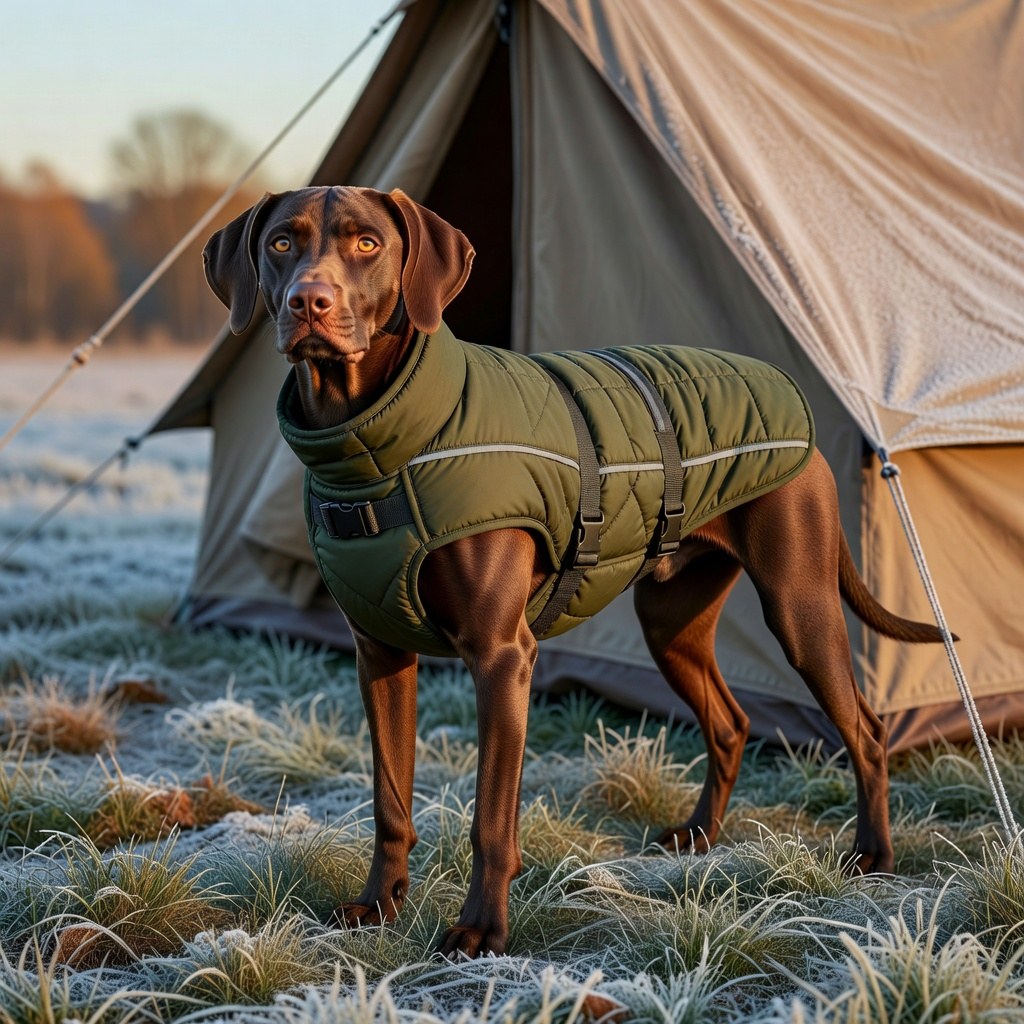
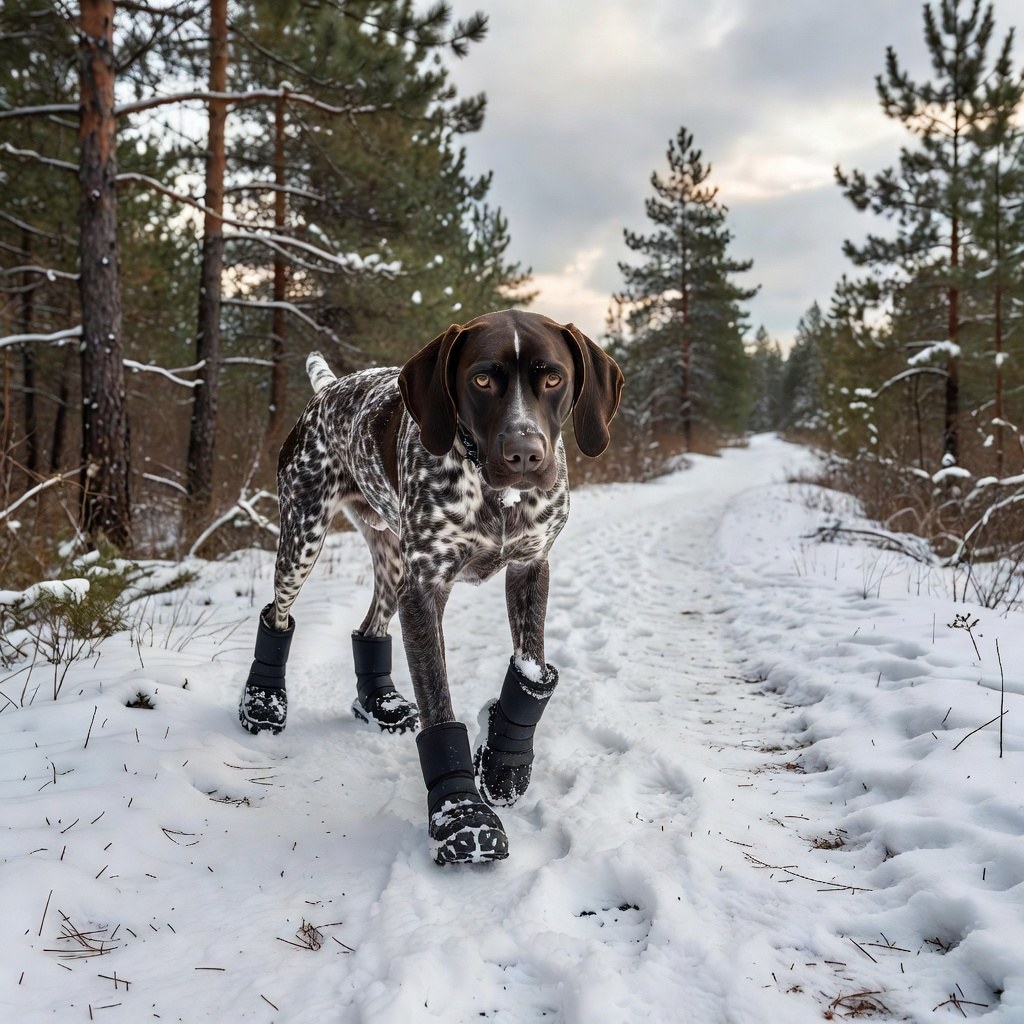
A December hike with a dog is not a different sport. It is the same hike with two more layers, a wider safety margin, and a ten-minute tick check at the truck.
When Hunting Seasons Open, and What That Means for Hikers
You do not need to memorize any state's season structure. You need to know the shape of the year, because the shape is remarkably consistent and it tells you which weeks a quiet trail stops being quiet.
- what month does hunting season start — archery seasons open first, and in most states that means September. Firearms seasons follow in October and November. Some states have late seasons into January.
- what month is hunting season — if you want a single answer for planning a fall hiking calendar: September through December, with the peak concentration of hunters in the first two weeks of the firearms season.
- hunting season start dates — state wildlife agencies publish a table every year with one row per species and one column per season type. The date you care about is the earliest firearms opener in the region where you walk.
- hunting season opening dates — openers are usually Saturdays, which is why the first weekend of the firearms season is both the busiest day in the woods and the one most worth avoiding.
- hunting season and dates — the two are published together, which is useful: a season that closes early in your area may still be open an hour's drive away, so check the units you actually hike.
- hunting season dates this year — dates shift slightly year to year because seasons are usually tied to the calendar rather than a fixed date, so last year's opener is not this year's.
- hunting season dates for 2026 — for 2026 the general pattern holds: archery openers in September, firearms seasons across October and November, and late antlerless or extended seasons into early January in many states.
- hunting season dates by state — every state publishes its own table, and some split by zone, county or wildlife management unit. Use the agency site, not a third-party summary, if you are checking a specific weekend.
- hunting season dates deer — deer drive the whole calendar in most of the country, because deer firearms season is the season with the most participants and the longest overlap with hiking weather.
- what do open hunting season dates tell you — they tell you when to add orange, when to keep your dog on a lead, and when to pick a trailhead that is not behind a locked gate on private land.
- hunting season has started — the tell is not a calendar but the parking lot: trucks, trailers, and a lot more people at the trailhead than the forecast would suggest. That is your cue to put the vest on.
- deer season start date — in most states deer archery opens in September or early October, and deer firearms opens in the first half of November.
- deer season start 2026 — plan the two weekends on either side of the firearms opener as the ones where a busy trail should be swapped for a state park trail that prohibits hunting.
- deer season opening day 2026 — opening day is the single busiest morning of the year in most public hunting areas. It is also the morning a hiker is most likely to be sharing a ridge with strangers.
- deer season opening weekend 2026 — extend the caution to the whole weekend, plus the following Saturday, which is traditionally the second-heaviest day.
- deer season gun dates — "gun season" and "rifle season" mean the same thing in most rulebooks. This is the window where orange stops being optional for a hiker with a dog.
- deer season dates 2026 — the honest summary for a hiker: expect roughly six to nine weeks of overlapping firearms activity spread across October, November and December.
- deer season dates by state — states with the earliest openers are generally in the Southeast and the Midwest; the Northeast tends to run later, into the second half of November.
- deer season by zone — several states split the map into zones with different windows, so two trailheads an hour apart can have firearms openers three weeks apart. Zone letters or numbers matter more than the state line.
- deer season dates this year — the reason to re-check annually: agencies adjust zone boundaries and season lengths for herd management, so a zone that opened in October two years ago may open in November now.
- deer season january 2026 — late and antlerless seasons commonly extend into January in many states. Do not assume the woods are yours again on January 1.
- deer season for 2026 — nothing about 2026 is unusual: the structure is the same calendar the site has been writing about for the whole fall window.
- deer season 2026 — treat this as the planning year, and re-check your state's table the week before you go, because late-season extensions are often announced mid-year.
- deer season by state — the practical difference between states is not the dates so much as the terrain: a state with a short season over steep public land exposes you to fewer hunters than a long season over flat farmland.
- deer season schedule — most agencies publish a one-page schedule PDF with archery, muzzleloader, youth and firearms rows. That single page answers every timing question in this section.
- deer hunting season dates 2026 — if you only check one thing, check whether your hike falls inside a firearms season as opposed to a muzzleloader or archery season.
- deer season when — when is it? It is the part of the year when you should be wearing orange. In practice, mid-October through mid-December is the conservative assumption in most of the country.
- deer season time — seasons are defined by dates, not hours, but hunting is concentrated at first and last light, so a mid-morning hike overlaps less with active hunting than a dawn start.
- deer season usa — the structure above is national in shape and state-specific in detail; the shape is enough to plan a hike, the detail is what you check before you drive.
- deer season this year — the reason to check rather than assume: season lengths get adjusted for herd management, and a state can add or trim a weekend.
- deer season rules — for hunters the rules are about limits, tags and legal equipment; for hikers the only two that matter are orange requirements and whether the trail is inside an area open to hunting.
- deer season private land — private land is the one variable that can make a trail quieter or far busier than the public average. Ask the landowner which season they allow guests to hunt.
- deer season prep — hunters prep stands and cameras in the weeks before the opener, which means the same woods are busy with scouting traffic before the season even starts.
- deer season changes — agencies announce adjustments in the spring and summer, so a rule you relied on two seasons ago is worth re-reading once a year.
- deer season hunting — for context, deer hunting is the largest single participation category in US hunting, which is a large part of why the fall hiking overlap is so consistent.
- youth hunting season dates — most states hold a youth-only weekend, often the weekend before or after the general firearms opener. Those dates matter to hikers because youth seasons put young hunters and adult mentors in the woods on days you might otherwise think are quiet.
- deer season youth day 2026 — check your state's youth dates separately. They frequently fall on a weekend you would not predict from the general season table.
- duck hunting season dates — waterfowl seasons start later and run longer, often into January and February, and they concentrate hunters around lakes and rivers rather than ridges.
- goose hunting season dates — the same late-running pattern as ducks, with most pressure along flyways and agricultural fields.
- elk hunting season dates — archery elk opens in September in the Rockies and overlaps the best fall hiking month of the year in those states, which makes orange a September item there, not a November one.
- bear hunting season dates — bear seasons run in the fall in many states with a spring season in others, and they are usually well publicized by the agency because of the identification issue.
- rabbit hunting season dates — small-game seasons often open in the fall and run deep into winter, keeping low-elevation field edges active after deer season closes.
- can you go hiking during hunting season — yes, millions of people do it every fall, and public land is public land. The adjustment is visibility, timing and keeping your dog close — not staying home.
- hiking in hunting season — the practical stack is orange on both of you, a mid-morning start rather than dawn, an on-leash dog, and a trail choice that avoids the heaviest-use hunting units.
- is it safe to hike during hunting season — statistically, the risk to hikers comes far more from falls, cold and driving to the trailhead than from hunters. The correct response is visibility and etiquette, not avoidance.
- is it safe to walk in the woods during hunting season — walking a trail someone else is hunting from is safest on wide, well-marked paths with some open ground, and least safe when you are bushwhacking off-trail through heavy cover.
The pattern to internalize: the woods do not change in October, your visibility requirements do. Mark both yourself and the dog, start after first light, keep the dog on a lead, and pick the trail by who else is likely to be on it that weekend.
Blaze Orange Dog FAQ
Do deer see blaze orange?
No. Deer see orange as a muddy gray-brown, which is exactly why it works as a safety color. The signal is for hunters, not for the animals.
What size blaze orange vest does my dog need?
Measure chest girth behind the front legs. Match that number to the manufacturer's size chart, not to your dog's weight or breed label. A 50-pound labrador and a 50-pound vizsla can need different sizes because chest depth differs.
Is a blaze orange vest safe in warm weather?
The mesh-sided vests are designed for a moving dog and breathe far better than a jacket would. On a 70-degree October day, a dog that is used to wearing a harness will not overheat in one.
Do I need orange on my dog if the area is not posted as a hunting area?
Check the land status first. National forest and WMA land is open to hunting by default unless posted otherwise. "Not posted" does not mean "not hunted."
Which states require dogs to wear blaze orange?
A handful do, and the list changes as regs update. Your state fish and wildlife agency publishes the current requirement in the hunting regs PDF. Read the dog section before opening day, because fines aside, the rule exists because someone's dog got shot.
Blaze orange vs hunter orange: is there a difference?
No. Blaze orange, hunter orange, fluorescent orange and daylight fluorescent orange are four names for the same color, and "bright orange" is how most listings describe it on the shelf. States write the law with one phrase and brands sell the gear with another, which is why a search for hunter orange dog gear and a search for blaze orange dog gear return the same products. Fluorescent pink is the one real alternative - legal in a growing number of states as a substitute, never as an add-on.
Do hiking dogs need a vest, a bandana, or both?
Both, if the dog will wear them. A vest covers the body surface a hunter actually sees; a collar or bandana keeps color on the dog when the vest is off in the car or stripped at the trailhead. If you have to pick one, pick the vest. If your dog genuinely refuses one, a high-visibility bandana plus a bright collar beats nothing - just hike later in the day, closer to home, and on a leash.
Is it safe to hike during deer season?
Yes, with three adjustments: hike mid-day instead of at dawn or dusk, wear orange yourself rather than relying on the dog's vest, and leash the dog wherever a firearm season is open. The riskiest combination on any public land in the country is a dog off-leash at first light in thick cover during the firearms opener - that is not a hike to take, that week or that hour.
The state where this matters most in October may be Pennsylvania — it opens its 2.2-million-acre state forest system to campers right as the seasons start. camping in Pennsylvania covers both.
What is blaze orange, and why can deer not see it so well?
Blaze orange is a saturated orange-red that sits at the edge of the spectrum deer and elk perceive. They have far fewer color receptors tuned to long wavelengths, so a solid panel of it reads to them much like a grey-green to us. That is the whole trick: maximum contrast for the human eye, minimum contrast for the animal. When you are asking what is blaze orange in practical terms, it is the brightest legal shade used on vests, hats and pack panels.
What month does hunting season start where I hike?
There is no single national answer, but the shape is predictable. Archery openers land in September in most states, firearms seasons run through October and November, and late or antlerless seasons push into January. What matters is the earliest firearms opener in the units you actually walk, which is a lookup on your state wildlife agency's season table, not a guess. Season dates for 2026 follow the same structure as every recent year.
Is it safe to walk in the woods during hunting season?
Yes, with adjustments. Hikers are far more likely to be hurt by a fall, hypothermia or the drive to the trailhead than by a hunter. The realistic risk is visibility: if someone mistakes you or your dog for game, that mistake has consequences. Orange on both of you, a mid-morning start instead of a pre-dawn one, and a marked trail rather than off-trail bushwhacking reduce that risk to something close to background noise.
Can you go hiking during hunting season with a dog off-leash?
Legally it depends on the land and the season, but the safety answer is simpler: keep the dog on a lead during firearms seasons. An off-leash dog quartering through brush looks and moves more like game than anything else on the trail, and voice control is not a substitute when your dog is 80 yards away in cover. If your dog needs real off-leash time, do it in a state park or on a trail where hunting is prohibited while the season is open.
Do I need blaze orange on private land?
Rules vary, and the common pattern is that a landowner and immediate family are exempt while guests are not. If you are hiking private land with permission during a firearms season, wear orange anyway and confirm with the landowner which seasons they allow. The cost of being visible on someone else's property is zero, and it removes the one scenario where nobody in the woods expects you to be there.
If your trip runs into late fall, the cold-weather dog camping guide covers exactly what to change for your dog.
More Fall Hiking and Dog Safety Reading
- Dog Summer Hiking Safety and Paw Protection covers the warm-weather side of the same problem, including hot-trail burns and pad care.
- The Complete Guide to Camping With Dogs has the full gear system for a dog that travels with the family all season.
- Dog Camping Hub collects every dog article on the site in one place.
- Off-Leash Hiking With a Training Collar walks through the recall training that keeps a ranging dog safe.
- Fall Hiking Gear Checklist covers what changes for the human when the leaves turn.
- New to all of this? Hiking for Beginners starts with the basics, including how to share trails with other users.
Hunting season does not have to end your fall hikes. It just means you dress your dog like you would dress yourself: bright, visible, and impossible to mistake. A vest, a collar, a little planning, and the woods stay yours to share, all the way through December.
<!-- AFFILIATE_DISCLOSURE -->For park-by-park dog rules — including the five Olympic National Park trails where leashed dogs are allowed — see the Washington state camping guide.
If your fall or winter trip is heading for the Mid-Atlantic coast, the Maryland camping guide covers the cold-water wind, the off-season bathhouse situation, and the gear that actually gets used in a November cypress marsh. Illinois closes entire parks during its November firearm deer seasons, which makes it the sharpest example of why this matters — camping in Illinois in November lists the dates.