The Best Time of Year to Go Camping: A Month-by-Month Guide (2026)
The best time of year to camp in the US, month by month: what is open, how crowded it is, and which month actually fits your family trip.
Ask ten campers for the best time of year to go camping and you will get ten answers, all of them true for that person's region, rig, and job schedule. Ask what actually decides it and the answer narrows fast: not temperature, but what is still open, how far ahead you can book, and how many other people had the same idea.
For most families in most of the United States, that lands on late September through mid-October, with May as the runner-up. July is the month people actually go, which is why it is the month they complain about afterwards.
This guide is the national version of that answer, month by month, with the regional exceptions that break it. If you already know your month, the destination half lives in the November guide, the October guide, the December guide and the January guide — and the closing-date mechanics are in when campgrounds close.
Quick Answer: The Best Time of Year to Go Camping
- Best overall window for a family car-camping trip: late September to mid-October. Warm days, cool sleeping nights, no bugs to speak of, and campgrounds that are still open after Labor Day but no longer full.
- Best runner-up: May, especially the two weeks after Mother's Day. Same shoulder-season math, opposite direction, with one catch — more rain, and some mountain loops still snowed in.
- Best month if you want guaranteed warmth without summer crowds: September in the Midwest and Northeast, October and November in the Southeast and Gulf Coast, November through March in the desert Southwest.
- Worst month for a first family trip: July. It is peak heat, peak price, peak reservation pressure, and the month when every popular loop is booked solid.
- The desert Southwest is inverted. Its camping season runs November to March. If you have ever wondered why Arizona and New Mexico campgrounds look empty in your summer photos, that is why.
- The highest-value rule: book the shoulder, not the holiday. A weekend after Labor Day or before Memorial Day usually beats the holiday weekend itself on weather, price and crowds together.
- Cold is a solvable problem; closures and crowd pressure are not. A better sleeping bag fixes a 25°F night. Nothing fixes a locked gate.
What Actually Decides Your Window (Three Things, Not the Weather)
Most "best time to camp" advice ranks weather first. Weather is third. The three variables that actually decide whether a trip works are these, in order:
1. What is open. Public campground seasons are built around a summer that ends on Labor Day. Plenty of parks run Memorial Day to Labor Day only, and the ones that stay open afterwards do it on a reduced pattern — water shut off, comfort stations closed, gates locked at night. This is the single most common reason a well-planned October trip falls apart: the campsite existed, the gate did not. The state-by-state picture is in our guide to when campgrounds close, and the system-level rules are in the state park camping guide.
2. How far ahead you can book. Booking windows are not standardized, and this is what decides whether a shoulder-season weekend is even available. The two numbers you will meet most often: Recreation.gov opens most federal campground reservations six months in advance, and a handful of state systems open earlier than that — Florida is the famous one at eleven months. Four months (Massachusetts), six months (Michigan), and everything in between exists. A month that is "less crowded" is not the same as a month you can still get a site in.
3. Crowd pressure, heat and bugs — in that order. Crowds follow school calendars. Heat follows latitude. Bugs follow moisture. Only one of the three can be fixed with gear, which is the argument for shifting your trip rather than buying more equipment.
Camping by the Month: The National Table
This is the whole answer in one grid. Read it as the national pattern, then check your region against the next section — the Southwest, the Rockies and Florida all break it on purpose.
| Month | National weather reality | Crowds | What is typically open | Verdict for a family trip |
|---|---|---|---|---|
| January | Cold almost everywhere; hard freezes north and inland | Almost none | Year-round parks, RV parks, the desert Southwest, Florida | Great only if you go south, or you own winter gear |
| February | Same as January, with longer days | Almost none | Desert Southwest at peak, Gulf Coast, Florida | The quietest good-weather month in the South |
| March | Wildly variable; warm in the desert, mud season north | Low | Desert and coastal parks open back up; mountain loops still closed | Best month for the Southwest and the Southeast |
| April | Warm days, cold nights; rain in the middle of the country | Building | Most public campgrounds open; some alpine loops still snowed in | Excellent if you pack for 30°F nights |
| May | The best-kept month: green, mild, long days | Medium — holiday weekends sell out | Nearly everything open | Runner-up for best month of the year |
| June | Warm to hot; mosquitoes at full strength | High | Everything | Fine with a plan; bugs are the tax |
| July | Hottest, stormiest; 100°F+ in the Southwest | Peak | Everything, and everything full | The month to avoid unless you are at elevation or on water |
| August | Same heat, worse air and water in some regions | Peak | Everything | Good at high elevation and on the coast; brutal inland |
| September | Summer holds in the South, cools fast up north; bugs taper | Drops sharply after Labor Day | Nearly everything, often still on full services | The best month for most of the country |
| October | Crisp days, cold nights; foliage peaks region by region | Medium on foliage weekends | Seasonal parks start closing; water off at many loops | Best window of the year — if the gate is open |
| November | Cold in the north, ideal in the South and Southwest | Low | Year-round parks, Southern and desert systems, RV parks | Underrated for Florida, Texas, Arizona, the Gulf |
| December | Winter everywhere except the far South and the desert | Low, then holiday spikes | The same year-round set as November, with holiday demand | Good for a warm-weather trip; check holiday hours |
How the Answer Changes by Region
The table above is a national average. Four regions break it in ways big enough to plan around.
The desert Southwest is fully inverted. Southern Arizona, New Mexico, southern Utah, and the Mojave and Sonoran deserts have a camping season from November through March and a genuinely unpleasant summer. If your mental model of "best camping month" is July, you have been reading about the wrong half of the map.
The Rockies and the high Sierra are calendar-shifted forward. High-country loops open later than the low country (sometimes not until July), peak in July and August, and are the one place where a summer trip is the right call. The corollary matters for fall planning: high passes start closing in October. Colorado and Utah both carry that pattern in detail.
Florida, the Gulf Coast and the deep South run opposite to the rest of the country. Their good camping season is October through April, their summer is the off-season, and their reservation windows are the longest in the country. Florida and Texas are the two to read first.
The Pacific Northwest and the northern Appalachians have a narrow dry window. For the Northwest it is roughly July through September; the rest of the year is the rain the region is famous for. Washington, Oregon and North Carolina each spell out their own version.
If you would rather have the answer for one state than the whole country, the state guides answer exactly this question — California, Arizona, New Mexico, Maine, Vermont, Michigan and Pennsylvania all include a "when is the best time to camp here" section, and each links to its neighbors so you can move along the map instead of starting over.
Why Spring and Fall Beat Summer — And What You Give Up
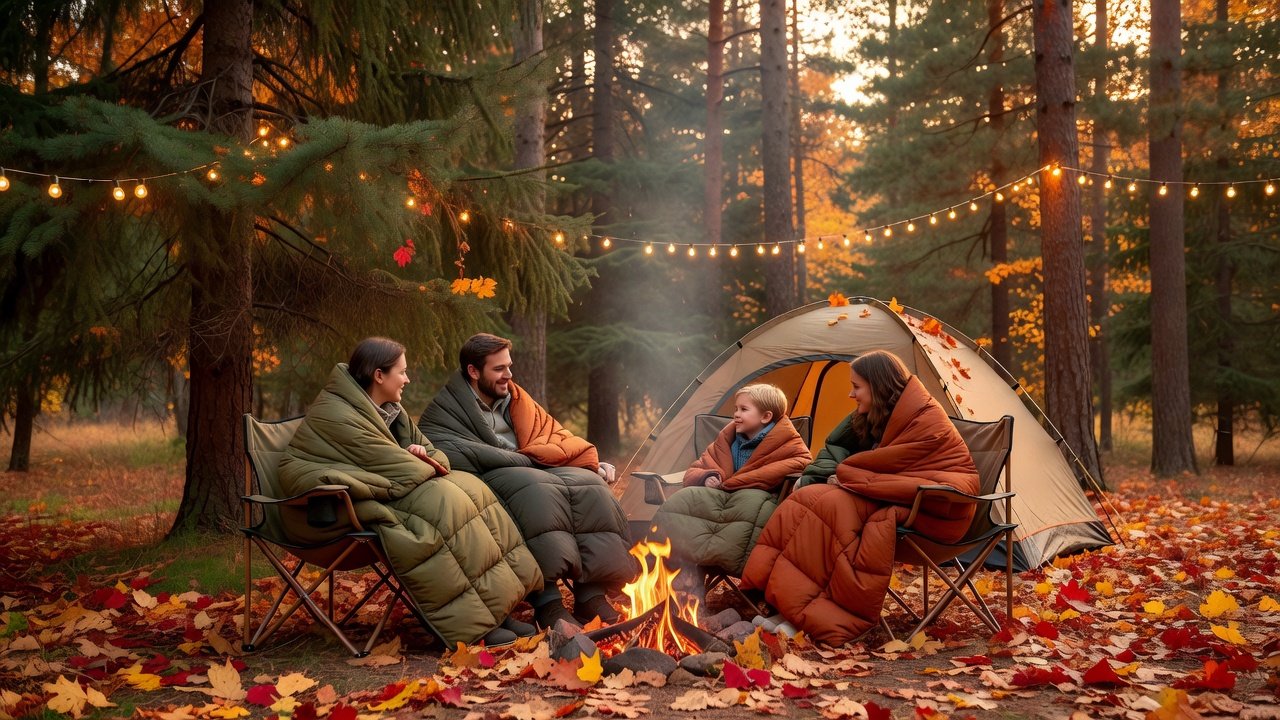
Temperature is the least interesting reason. Here is what shoulder-season camping actually changes:
- Availability. The single biggest difference. A September weekend after Labor Day regularly has sites open on two weeks' notice; the equivalent July weekend is booked by March.
- Price. Peak-season rates and holiday minimums vanish. Off-season is often 20-40% cheaper on the same site, and some systems drop weekday rates further.
- Crowds and noise. Quieter loops, rangers with time to talk, and — the underrated one — actual availability at the trailhead, the boat launch and the showers.
- Bugs. Mosquito pressure peaks in early summer. A September trip is often the first one of the year where nobody is reaching for repellent at dusk.
- Choosing your own site. When a loop is full, you take what is left. When it is half empty, you take the one on the creek.
The tradeoffs are real and worth naming, because they are the reason July campsites are full and October ones are not:
- Water gets shut off. Many parks turn off water and close comfort stations when the season ends, which changes what you pack (and sometimes means no showers).
- Shorter days and colder nights. You will use your lantern two hours earlier and your sleeping bag harder. A 0°F bag in October is not overkill in the mountains.
- Some loops are already closed. Read the closing dates before you book, not after.
- Foliage weekends are their own crowd surge. Early-to-mid October weekends in the Northeast and Blue Ridge behave like a mini holiday — book those like you would book July.
Gear That Changes With the Month
The gear list is not the point of this article, but a month-by-month temperament means a stack of gear is doing the work — and only a few pieces actually change with the season.
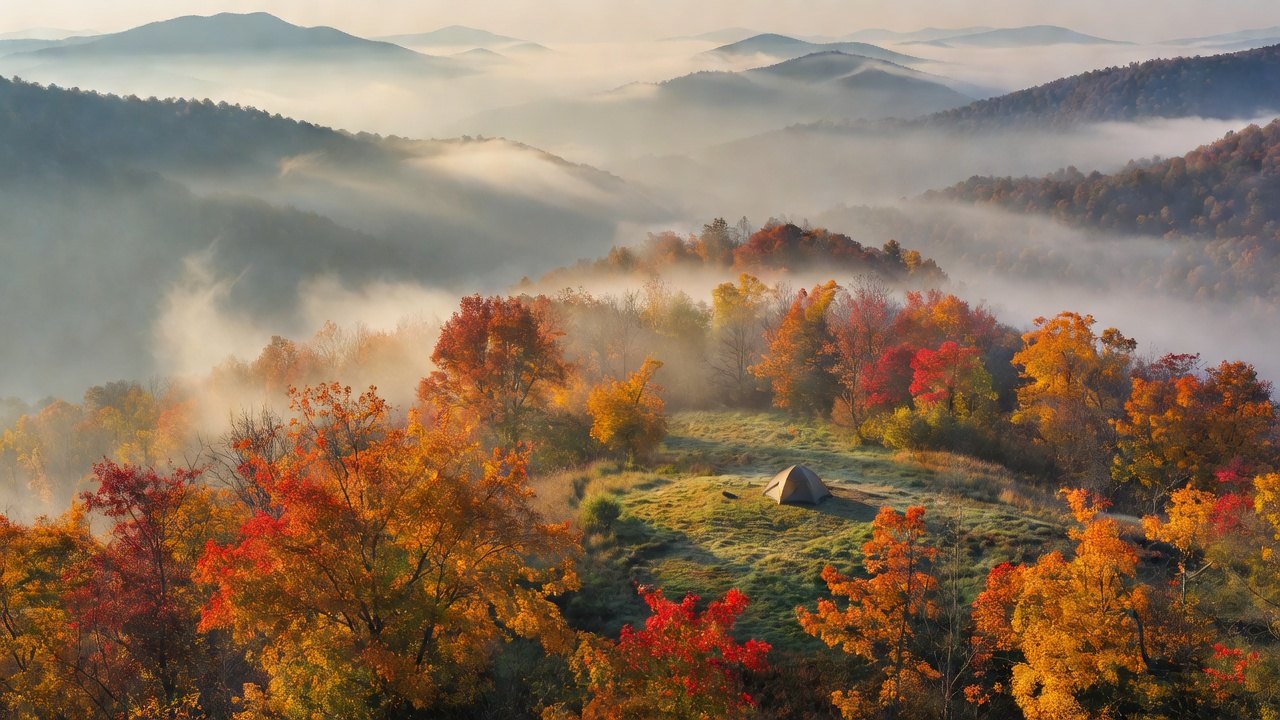
Sleep system: the one place to spend money. Night temperatures fall faster than day temperatures in the shoulder months, and the difference between a great October trip and a cold one is almost entirely your pad and bag. The TETON Sports Celsius 0° bag ($59.99, 4.5★ from 18,000+ ratings) is the budget workhorse for exactly this window, and the Klymit Insulated Static V pad ($94.99, 4.5★) is the insulated-pad version of the same idea — an uninsulated pad is how people end up cold in a bag that was rated for the temperatures they slept in.
A heat source for the cold half of the year. The Mr. Heater MH9BX Buddy ($74.00, 4.7★ from 25,000+ ratings) is the tent-adjacent standard: it carries an indoor-use rating with a low-oxygen shutoff, which no cooking stove does. Run it with a 10-foot Buddy hose ($17.99) to keep the cylinder outside, and put a Kidde carbon monoxide detector ($23.97, 4.7★) in the tent regardless of the season — the heater safety guide walks through the venting rules.
Light for the longer nights. Shoulder-season trips mean two hours of lantern time you did not have in June. The MalloMe 4-pack ($23.99, 4.7★) covers a whole family's worth of personal lights, and the Black Diamond Moji ($24.95) is the one you hang in the tent.
Cooking and cooling shift too. A Coleman Classic 1-burner butane stove ($29.99, 4.5★) is a fair-weather stove — below about 40°F butane stops vaporizing — so a shoulder-season trip is the moment to run propane or a dual-fuel stove to stay flexible, and our camp stove fuel guide covers that decision in full. Coolers stop being a liability in September and can be a liability again in May: the Coleman 70-quart Xtreme 5-day ($79.99, 4.6★) handles a hot-weather trip, and a smaller box does the job in October.
The seasons' gear lists themselves are longer: fall camping gear, winter camping for beginners and summer camping.
What People Search About Camping Season, Answered in One Place
The same question arrives in a lot of shapes. These are the phrasings that land on this topic, with the short answer for each.
| What people type | The short answer |
|---|---|
| best month to go camping · best time for camping · what month is the best for camping | For most of the US: late September to mid-October, then May. In the desert Southwest, November to March. |
| best time of year to go camping · best months to go camping · best time to go camping | Same answer, and it is a question about openings and booking windows as much as weather. |
| camping weather by month · campsites by the month | Daytime comfort runs May to October nearly everywhere; the regional split is real in July and August, when the desert bakes and the mountains shine. |
| when is camping season · when is camping season in the US · peak camping season | Memorial Day to Labor Day is peak. The best season is the two shoulder months on either side of it. |
| seasonal camping near me · peak season near me for camping | "Seasonal" usually means a park with a defined open/close date. Check that date before you check the weather. |
| which season is the best for camping · what season do people go camping | Fall by weather and crowds, summer by daylight and school calendars. Spring if you can dodge the rain. |
| why fall is the best season for camping | Bugs gone, crowds gone, prices down, colors up — and nights cold enough that a good sleeping bag earns its price. |
| best time to go camping in [your state] | Each state guide answers it directly; the ones linked above all carry a "when is the best time to camp here" section. |
Common Mistakes When Picking a Week
- Booking the holiday instead of the weekend after it. The weekend after Labor Day or Memorial Day often has better weather and always has more availability.
- Checking the weather before checking the season dates. Most October trip failures are closed gates, not cold nights.
- Assuming a long reservation window is a good thing. It means someone else can book your date six to eleven months out. Short windows are often easier to use last-minute.
- Packing for the day temperature. Shoulder-season nights run 20-30°F below the afternoon high.
- Forgetting that "water off" also means "bathrooms closed." That changes your packing list and your family's tolerance for the trip.
- Treating elevation like a footnote. A 6,000-foot campground is roughly a month behind a valley floor in spring and a month ahead in fall.
Best Time to Go Camping FAQ
What is the best month to go camping in the US?
For the largest share of the country, late September through mid-October, with May as the close runner-up. Both sit in the shoulder seasons, when the campgrounds that are still open are no longer full. The main exception is the desert Southwest, where the best months run November through March.
When is camping season in the United States?
Peak season is the stretch between Memorial Day and Labor Day, when nearly every public campground is open and fully staffed. Camping itself is year-round — the year-round set is made up of parks with extended seasons, RV parks, and federal land with no season at all. When campgrounds close tracks that boundary state by state.
Is fall or spring better for camping?
Fall edges out spring for most families. Fall nights are colder but the air is drier, the bugs are gone, and the crowds drop immediately after Labor Day. Spring's advantage is longer days and greener country; its disadvantage is rain and the fact that a cold spring storm feels much colder than the same temperatures in October.
What is the least crowded time to camp?
The two weekends after Labor Day and the two weekends before Memorial Day, plus any weekday in between. Foliage weekends in early-to-mid October are the exception that proves the rule — they behave like holiday weekends, and they need to be booked like them.
Can you camp in the winter?
Yes, and it is a genuinely good trip if you go to the right half of the map. From November through March the desert Southwest, the Gulf Coast and Florida are in their best season, while the northern tier becomes a specialist activity that needs a cold-rated sleep system and a real heat plan. Start with the winter camping guide and the sleeping-bag size and rating guide if you are outfitting from scratch.
Should I camp on a holiday weekend?
Only with a plan and a reservation. Holiday weekends combine peak demand with peak staffing cuts at the parks that are winding down, which is why the weekend after the holiday is the better trade for most families.
<!-- AFFILIATE_DISCLOSURE -->