Portable Fire Pit for Camping 2026: Propane vs Wood Picks
Portable fire pit for camping compared: propane vs wood, what to do when burn bans hit, and the full fire-pit kit for fall and winter trips.
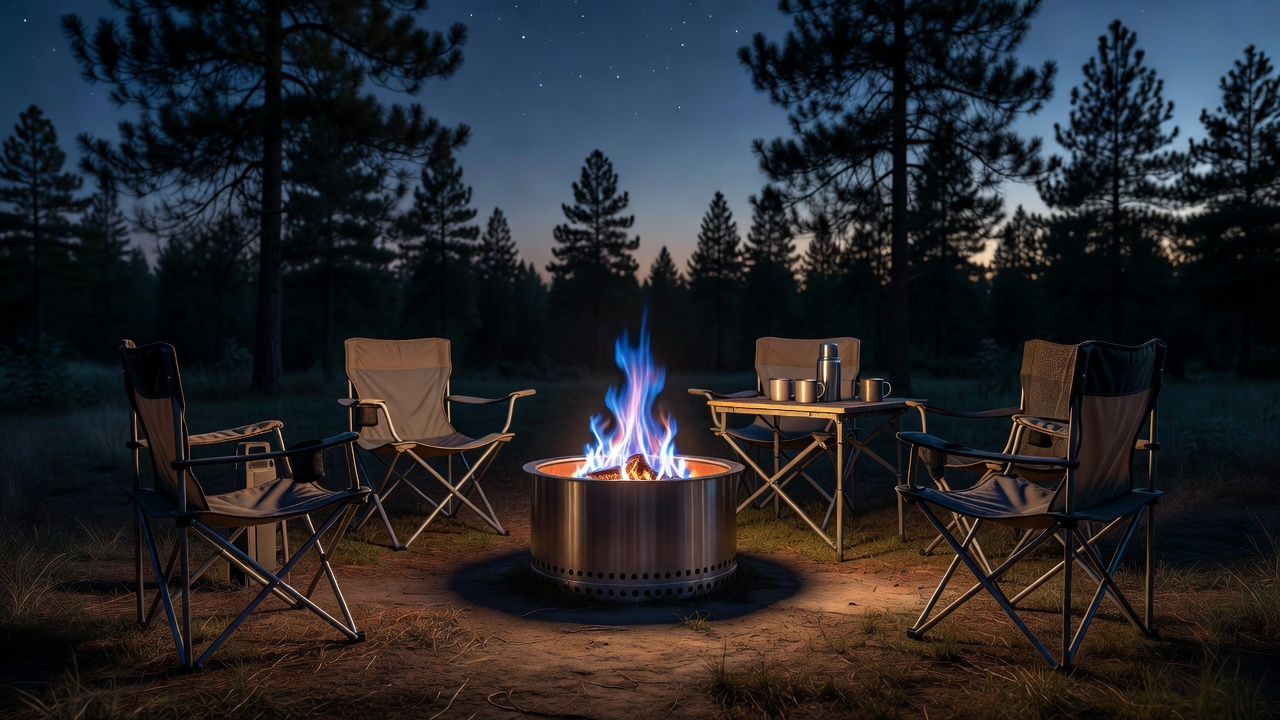 Outland Living Portable Propane Fire Pit, 19-inch, 58,000 BTU$142.64
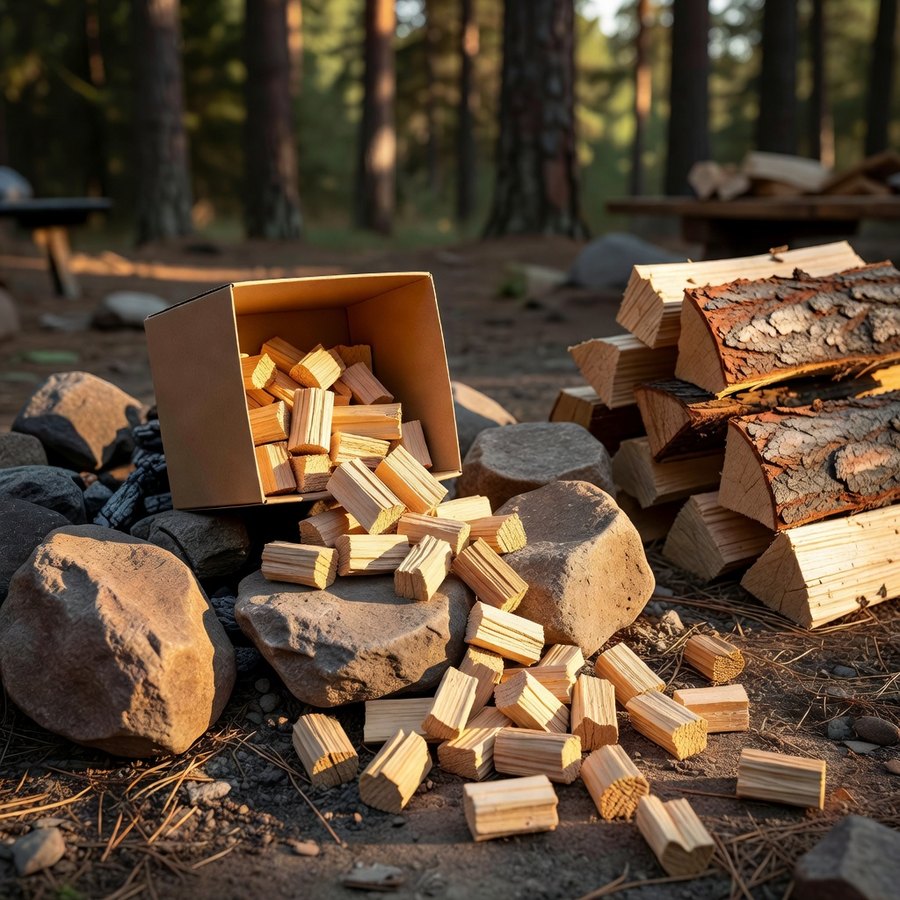 Lightning Nuggets AN100-2 Fire Starters — 200 Pine and Wax Nuggets, 15-Minute Burn Each$44.07
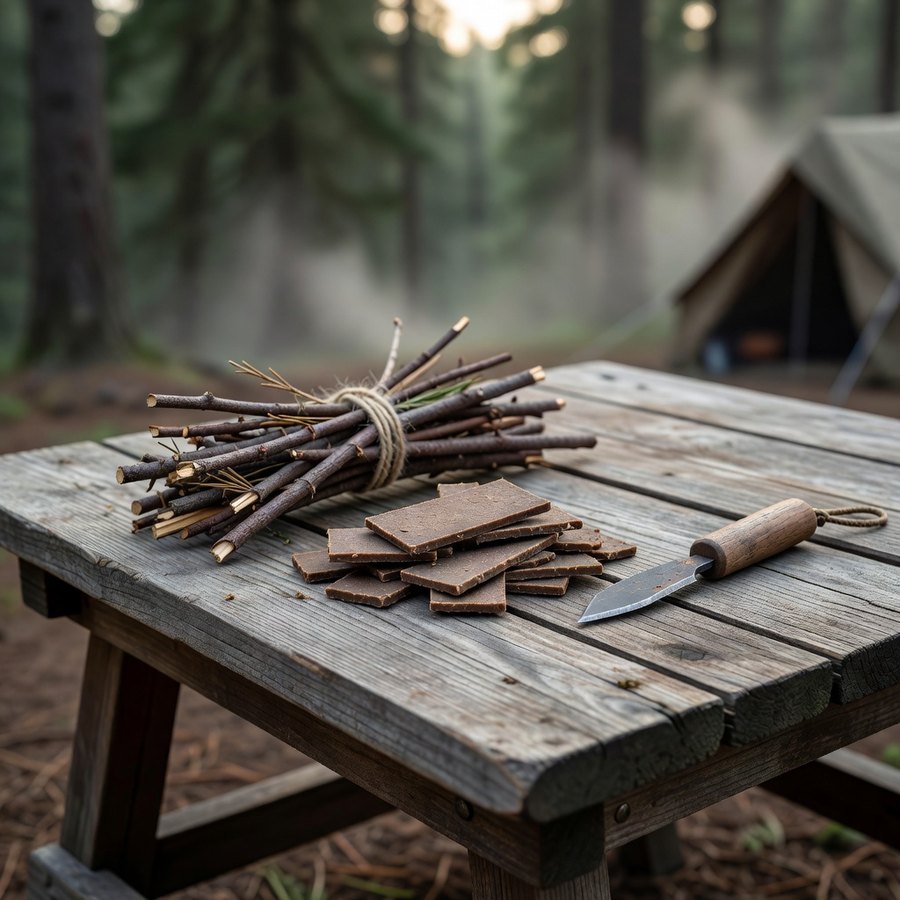 UCO Sweetfire Biofuel Fire Starters — 24 Tinder Tabs That Light From a Match, Lighter or Firesteel$12.99
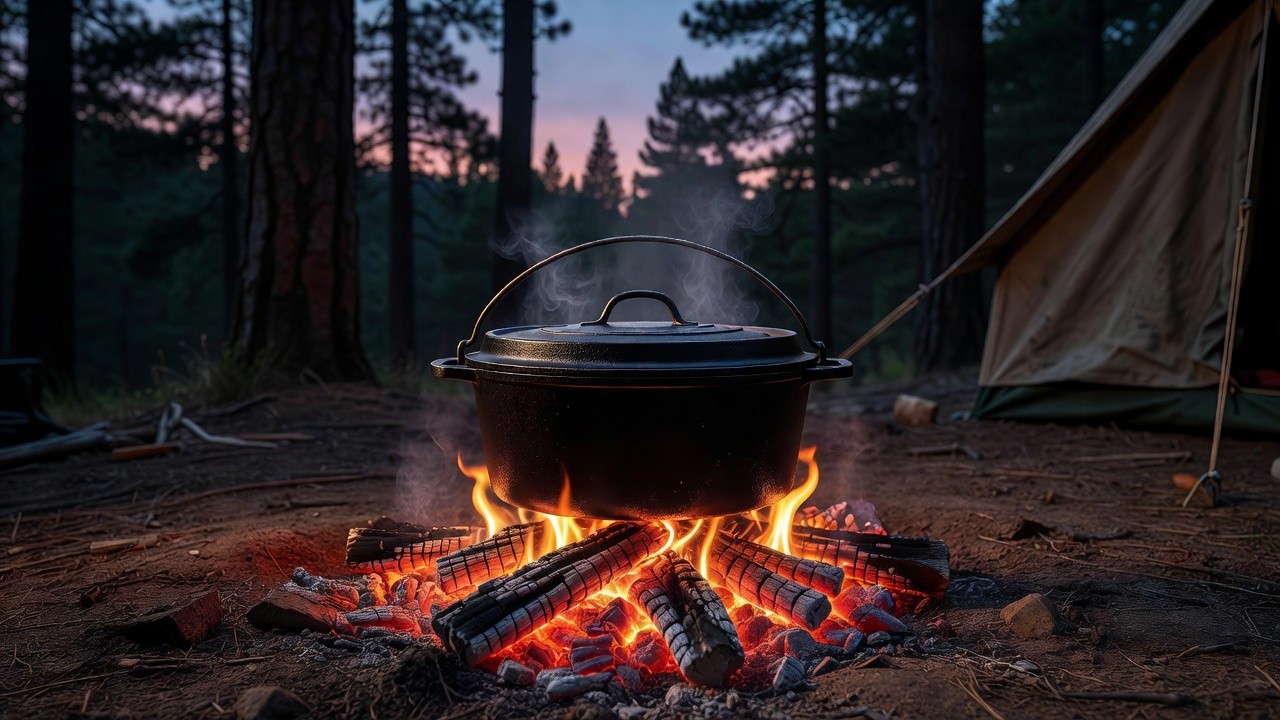 Lodge Pre-Seasoned Cast Iron Deep Camp Dutch Oven with Lid, 6 Quart$59.95
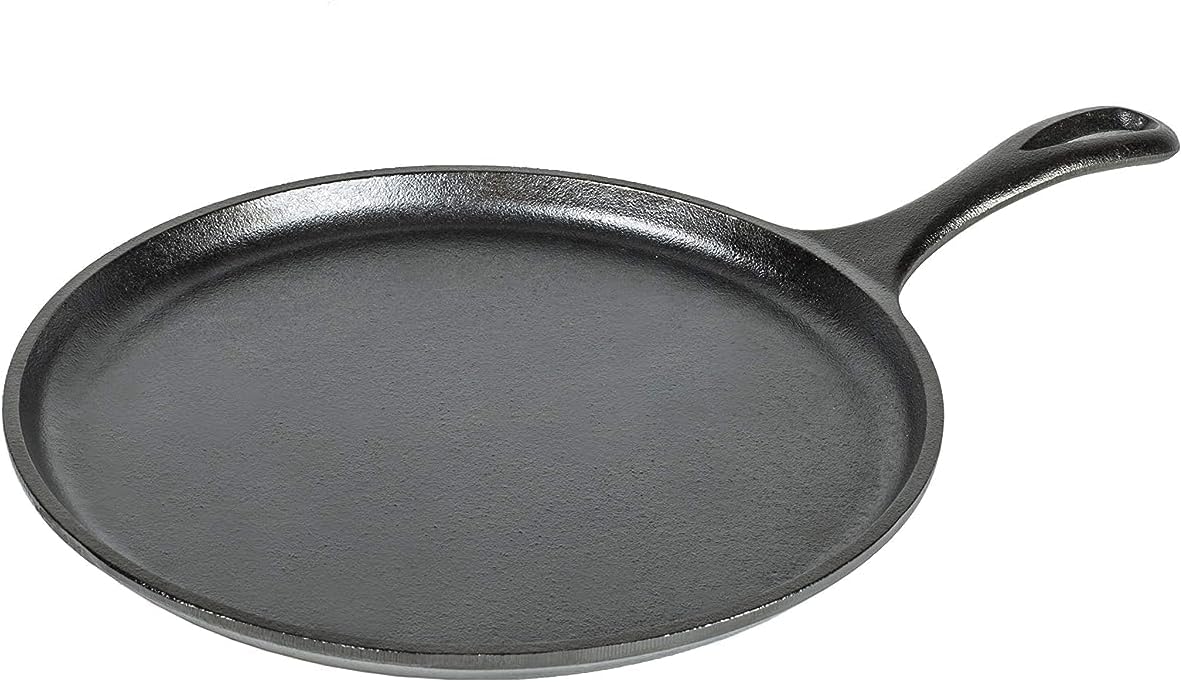 Lodge Round Seasoned Cast Iron Griddle 10.5 Inches - Round-Shaped, Pre-Seasoned Iron Griddle Pan - Non-Toxic, PFAS-Free Cookware - Compatible with Sto$24.90
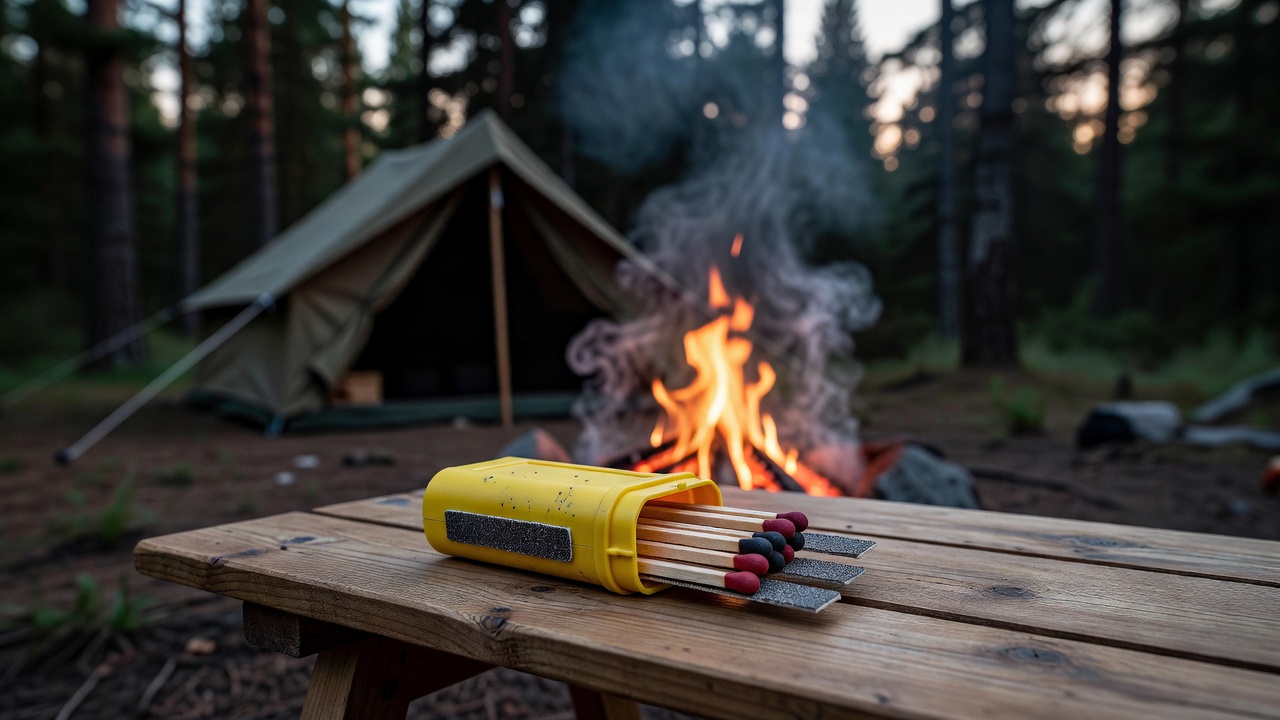 UCO Stormproof Match Kit with Waterproof Floating Case — 25 Windproof Matches + 3 Strikers$12.99
In this article · 12 sections
- Quick Answer: Which Portable Fire Pit to Buy
- What "Portable Fire Pit for Camping" Actually Means
- Propane vs Wood: The Decision Table
- Why Fall Campers End Up With Propane
- Fire Pit Burn Bans, Permits, and Rules: The Short Version
- The Fire-Pit Kit: What to Buy With the Pit
- Cooking Over a Fire Pit (Without Ruining Dinner)
- Fire-Pit Safety With Kids and Dogs
- Portable Fire Pit Alternatives (and When You Do Not Need a Pit at All)
- Choosing a Portable Fire Pit: The Buying Shortlist
- Common Fire-Pit Mistakes (Learn From Mine)
- Portable Fire Pit FAQ
Two Octobers ago I drove three hours to a state park campground with a bundle of firewood in the trunk, and the camp host met me at the entrance with a laminated sheet: no open wood fires, propane only. There were families around me roasting marshmallows on gas pits all weekend while my firewood sat in the car. That trip is the reason this page exists.
A portable fire pit is the one camping purchase that changes how a fall or winter trip feels. It is also the category where people waste the most money, because there are four genuinely different products sharing one name — and the one that gets banned in October, or rusts out by the second season, is usually the one that looked nicest in the store.
Quick Answer: Which Portable Fire Pit to Buy
If you only read one section, read this one.
- Best overall for family camping: a propane/gas fire pit with a regulator and an on/off valve — the Outland Living 19-inch portable propane fire pit has been the benchmark for years. Instant start, no smoke in everyone's eyes, and it is the type most often permitted when open fires are restricted.
- Best for a fire you actually want to cook and poke at: a steel wood-burning pit with a swing-away grill grate. Cheaper, real flame, real wood smell — and the one you cannot use during a burn ban.
- Skip: the thin stamped-steel "bonfire in a box" kits under about $60, and anything sold as a fire table for a patio. Fire tables are heavy, tippy, and they are not built to be loaded into a car.
- Whatever you pick, buy the kit with it: a grate, a way to light it in wind, a hatchet or splitter for kindling, and a CO detector if you are heating a space with propane.
"A way to light it in wind" is the line item people under-buy, because a fire starter that ignores the breeze beats any lighter: Lightning Nuggets ($44.07 for 200 nuggets, about fifteen minutes of burn each, one nugget per fire) is the family fire-pit answer, and UCO Sweetfire tinder tabs ($12.99 for 24 tabs) is the one to keep in the carry bag when the pit only comes out a few times a season.
The rest of this page is the reasoning, because the reasoning is what lets you judge a pit we have not written about yet.
What "Portable Fire Pit for Camping" Actually Means
The search term is one phrase and four products:
- Propane (gas) fire pit — a burner in a metal or stone-look housing, fed by a 1-lb cylinder or a 20-lb tank through a regulator. Instant, smoke-free, dial-down-able, and usually the only legal option during fire restrictions. Heavier than a camp chair, lighter than a fire table.
- Wood-burning steel pit — a folded or sectional steel pan, often with a swing grate. This is the campfire your kids actually remember. It burns real wood, needs ash handling, and it is the first casualty of a ban.
- Smokeless wood pit — a double-wall design that re-burns its own smoke. Genuinely less smoke on a still evening, but it only works with dry, properly sized wood, and it is still a wood fire as far as a restriction order is concerned.
- Fire table / low patio pit — built for a deck, not a campsite. If you already own one, leave it home.
If you want the wood-fighting part done properly — dry wood, split sizes, kindling, where the draft comes from — our firewood and fire-building guide covers that ground. This page stays on the hardware.
Propane vs Wood: The Decision Table
| Question | Propane / gas pit | Wood-burning pit |
|---|---|---|
| Usable during a fire restriction | Usually yes, with an on/off valve | No — it is an open fire |
| Start time | Push a button or click a striker | 10–20 minutes with dry wood |
| Smoke | None | Depends entirely on your wood and the wind |
| Cooking | Needs a grate or a griddle on top | Grate over coals, or a dutch oven buried in them |
| Weight to carry | 20–30 lb for a 19-inch pit | 10–25 lb, usually folded |
| Running cost | One 1-lb cylinder is roughly an evening | One bundle of wood is roughly an evening |
| Kids and dogs | Cooler outer ring, no sparks | Sparks, ash, and a hot pan for hours |
The fire pit propane vs wood question is really a question about where and when you camp. The wood side wins on ceremony and on cost per evening; the gas side wins on legality during restrictions, on how fast it starts, and on not putting smoke in everyone's sleeping bag.
The honest summary: buy propane for the reliability, buy wood for the ritual, and if you camp in the West in fall, propane is the one that keeps working.
Why Fall Campers End Up With Propane
This is the part that decides the purchase for most families, and almost no buying guide explains it.
Seasonal fire restrictions on public land are a normal October-to-November event across much of the West and Southwest — the grass cures, the humidity drops, and agencies start issuing orders that limit or prohibit open burning on the land they manage. Those orders are temporary, they vary by agency and by year, and they are the reason a propane fire pit sells out in autumn.
Two rules of thumb worth remembering, and then verify them with the specific agency before your trip:
- A wood, charcoal, or pellet fire is an open fire. If there is a restriction, assume yours is out.
- A propane appliance with a valve you can shut off immediately is frequently listed as an exception in the same order — but "frequently" is not "always", and it is a per-agency decision. Park websites, the ranger station phone line, and the campground's own page are where the current order lives.
State-specific ground truth, from our own destination guides: Utah, Arizona, California, and Oregon all cover what late-season camping looks like in a dry year, and the national picture — including cold-weather fire handling — is in our fall camping checklist and where-to-camp-in-October guide.
If your fall trips run into November, our November camping guide and Thanksgiving camping guide walk through campsites that stay open, and the Christmas and New Year's guide covers the colder end of the same season.
Fire Pit Burn Bans, Permits, and Rules: The Short Version
This is the section that decides whether your trip works, and it is the part most buying guides skip.
A fire pit burn ban is about the fuel, not the container. A restriction order limits open burning, which means wood, charcoal, and pellets. Moving wood into a steel pan does not exempt it — that is the misunderstanding that sends families home from the gate. If you want to know whether you can use a fire pit during burn ban season in your area, read the order itself and look for two phrases: "open flame" and "propane appliance". Our camping during a fire ban guide walks through the three questions that settle it — who manages the land, what stage is in force, and what the exemption clause says about your device.
Do burn bans include fire pits? In nearly every order I have read, yes — the wood-burning kind. The same clause typically permits a gas appliance with an on/off valve and a fuel supply that shuts down instantly. That asymmetry is why burn ban fire pit rules look unfair to wood campers: the rule is written around how fast you can stop the fire, not how contained it looks.
A fire pit during burn ban weeks is a documentation question, not a hardware question. Screenshot the current order, note the order number, and keep it on your phone. If a host or a ranger asks, showing the order you are complying with ends the conversation in ten seconds.
A fire pit burn permit is usually a city or county matter, not a campground matter. Do you need a fire pit permit? On private land inside a city limit or a fire district, often yes — and a fire pit permit is frequently free and handled online in a few minutes. On public campground land you do not need one; you need to comply with the land agency's order plus the campground's own fire pit rules and regulations, which are posted at the entrance and enforced by someone who has already heard every argument.
The near-universal fire pit rules: never during a red-flag warning, never unattended, water or sand within arm's reach, and nothing that produces ash or sparks left warm in the morning. Those four cover most of what gets written on the laminated sheet.
Fire pit safety guidelines I actually follow. Set it on a fire pit safety base — a metal pan or a fire pit safety mat — rather than straight onto grass, roots, a wooden deck, or a picnic table. A base does two things: it keeps the surface under the pit from scorching, and it catches the ember that escapes when someone bumps the pit with a chair leg. Ten dollars of base is the cheapest part of the kit and the one that saves a deposit.
The Fire-Pit Kit: What to Buy With the Pit
A fire pit on its own is a disappointment. These are the parts that turn it into the reason everyone stays outside after dinner.
A grate, or a griddle that fits. The single biggest upgrade to a wood pit is a swing-away grate so you can cook over coals without holding a skewer for an hour. For a propane pit, a round cast-iron griddle drops straight over the burner for pancakes, quesadillas, and smash burgers — that is how a fire pit becomes a second cooking surface instead of competing with your stove.
A reliable way to light it in wind. Paper and a disposable lighter fail the moment it is breezy, which is most evenings in the fall. A windproof match kit lives in the fire bin for years and burns in weather that kills a Bic, and a rechargeable arc lighter is flameless and windproof for the propane side.
Kindling tools for a wood pit. You cannot start a fire from full-size splits, and hatchet work with a folding camp knife is how people get hurt. A 14-inch hatchet with a sheath splits store-bought bundles down to usable sizes in a couple of minutes.
Fuel, and a way to read it. A propane pit lives or dies on its bottle. The standard 1-lb cylinder is what the burner is built for, and a 12-pack of 1-lb propane cylinders is the difference between a two-night trip and a one-night trip. Light it every evening and the cheaper path is a refill adapter that moves propane from a 20-lb tank into your 1-lb bottles, paired with a tank gauge so you stop guessing mid-evening. Add a combustible gas leak detector to the fire bin and every connection you make in the dark gets a five-second check instead of a hope.
A fire pit for camping propane setup is really three parts: the pit, the bottle, and the adapter that connects them. Skip the third and you are buying bottles all season. The camping fire pit gas version is also the one to buy if anyone in your group has asthma or hates smelling like smoke in the morning — there is no smell to carry home. And if your trunk is small, the camping fire pit portable end of the market — a folding pan or a 19-inch gas pit — is what makes the whole thing a car-camping item instead of a trailer item. Any fire pit for camping portable enough to fold into a gear bin wins on a two-car family trip, and a fire pit for camping smokeless enough to sit downwind of is worth paying for if your campsite is a small one.
A few search-shaped questions, answered plainly, because they come up constantly alongside the kit: the firewood and fire-building guide covers which wood actually burns clean, and our camp lighting guide covers the light that goes with the fire rather than competing with it.
Seating that survives the evening. Campfires are a two-hour-plus activity, and the chairs people already own are the ones that leave them with a sore back. A folding camp chair with a cooler in the armrest is the cheap-and-honest family answer — see our camp chair comparison if you are replacing several at once.
Warmth for the shoulders, not the legs. There is a real science to this: a fire warms your front, the cold air behind you takes it back. A packable puffy camping blanket is the difference between moving inside at 9 pm and staying out until the embers die, and a 12-volt heated blanket is the car-camping version for genuinely cold nights. More options in our camping blanket roundup.
Light that is not a phone flashlight. A dimmable lantern on the table means everyone stops squinting and the fire stays the brightest thing at the site, which is how you actually want an evening to look.
A flat surface for the whole ritual. Fire, drinks, marshmallow bag, and a lantern all want a table that is not the picnic table your food is on. A compact folding camp table folds into a bag and sets up in seconds — the KingCamp roll-up table is the family-of-five version.
Cooking Over a Fire Pit (Without Ruining Dinner)
Fire-pit cooking is mostly about heat control, and the two tools that fix it are cast iron and patience.
-
Cast iron over coals, never in flame. A 10.25-inch skillet and a 6-quart camp dutch oven cover almost everything: stews, cobblers, biscuits, and a roast that would never fit on a two-burner stove.
-
Load the dutch oven with charcoal, not firewood, for even heat on the top and bottom. That is the whole trick.
-
Use a grate for fish, vegetables, and anything that drips. Direct coals turn vegetables into ash.
-
A fire pit cooking grate is the single most useful cooking accessory. Look for a fire pit cooking grate with legs so it stands over coals instead of being balanced, or a fire pit cooking grill with a hinged half you can lift without moving the whole frame.
-
A fire pit cooking tripod or a fire pit cooking stand is for hanging, not grilling. Both let you raise and lower a pot by chain, which is how you simmer without a burner. A simple fire pit cooking rack does the same job for a dutch oven lid.
-
A fire pit for camp oven cooking is just coals in the right proportions. Fire pit for camp oven: roughly two-thirds of the heat from the lid, one-third from below, which is why a lid rim and a small shovel matter more than a fancy stand.
-
Fire pit cooking ideas that survive contact with reality: fire pit hot dogs on a long fork (the only meal every kid eats), foil packets of peppers and sausage, a cast-iron skillet of cornbread, and one dessert. That is a full evening.
-
Collect the parts you will actually use. Real fire pit cooking accessories are short: a grate, one long fork, a lid lifter, gloves, and tongs. Buying fire pit cooking equipment by the boxed set is how you end up with four tools you never touch.
-
Where a grate is not enough, a campfire grill or a campfire cooking grate over the coals gives you a wider landing zone for fish and vegetables that fall apart on bars.
-
Plan one foil-packet meal and one dessert per trip. They are the two things that make the fire feel like the point of the trip — our campfire dessert recipes and campfire cooking gear guide cover both directions.
-
If the fire is for cooking and not for sitting, a gas grill is faster. That trade is laid out in our propane grill for camping and camp griddle guide.
Fire-Pit Safety With Kids and Dogs
The unglamorous section that decides whether the purchase was a good idea.
-
Give the pit a radius, not a rule. A rule ("don't get too close") means nothing to a six-year-old. A visual boundary of chairs, coolers, or a rope means the same thing every night.
-
Propane pits stay outdoors, full stop. They burn propane and they make carbon monoxide. Never inside a tent, a camper, a garage, or a screen house, no matter how tempting the evening is. If you are burning propane anywhere near where people sleep, a battery-powered CO detector is the cheapest insurance in this article, and our tent heater safety guide covers the same principle for heaters.
-
Dogs and fire pits are a supervision problem, not a training problem. A wagging tail at grate height and a curious nose both end at the vet. Keep the dog on the far side of someone who is paying attention.
-
Water or a bucket of sand within reach, always. Embers that look dead at 10 pm are not dead at midnight, and wind at 2 am is how a fire pit becomes a wildfire story. The wider discipline is in our camping safety and survival gear guide.
-
Ash goes in the fire ring or a metal container — never the woods. Cold ash still carries heat, and dumping it in the trees is how the next family's trip gets shut down.
-
A fire pit for kids needs a physical boundary, not a lecture. If you are choosing, the best fire pit for kids is the one with the coolest outer ring and the lowest flame height — which is almost always a gas pit. A fire pit safe for kids is a design question first and a discipline question second.
-
Buy or build a separation layer. A fire pit guard for kids, a fire pit fence for kids, or a fire pit safety fence all do the same job: they make the safe zone visible from across the site. A fire pit safety guard also stops the chair-leg bump that sends an ember into a sleeping bag.
-
Is a fire pit dog safe? Only while someone is watching it. Fire pit dog safe means the dog is on the far side of a person who is paying attention — a tail at grate height is a tail at grate height. A fire pit dog friendly layout puts the dog bed behind the seating arc, and fire pit dogs learn the boundary fast when it is a rope instead of a scolding.
-
The best fire pit for dogs is a low one with a solid outer wall. Tall legs and open grates are where noses go. If your dog is a leaner, pick a pit with a cool ring and set a bed behind the chairs.
-
Rehearse the rule indoors with a fake fire pit for kids. A felt or LED toy pit is how a four-year-old practices "stop at the bricks" before the real one is lit. Our family camping with kids guide and toddler camping guide cover the rest of that routine.
-
Campfire safety for kids is one sentence: stop, look at the grown-up, wait. Campfire safety rules for kids that run longer than a sentence do not get remembered. Fire pit activities for kids — a boundary game, a marshmallow turn-taking rule — work better than warnings, and campfire safety tips about gloves and long sticks are worth repeating once a season.
Portable Fire Pit Alternatives (and When You Do Not Need a Pit at All)
Not every trip justifies buying one, and not every campsite allows it.
Fire pit alternatives that are genuinely good. A campground's own steel ring is the free one, and it is fine until restrictions hit. A cast-iron griddle over a two-burner stove is the indoor-safe version of the same evening. The cheap fire pit alternatives — a disposable foil pan, a bucket of sand, a folding grill over a fire ring — all work and all rust. The one substitution I would not make is a fire pit ring alternative sold as a "bonfire in a box": thin steel, no base, one season.
Do you need a fire pit ring? If you already have a wood pit, a ring insert gives you a taller wall and less ash on the ground. Do you need a fire pit ring insert for a gas pit? No — that is a wood-only accessory. And do you need a fire pit insert for a fire table you already own? The insert is the burner and the media tray; if the table was gas from the factory, it is already there.
A breeo fire pit alternative does not have to be another smokeless pit. A breeo fire pit worth it question usually comes down to one thing: are you paying for less smoke on a still evening, or for the look. If it is the look, a covered propane fire pit gives you the same evening without the ash. If it is genuinely the smoke, a double-wall smokeless fire pit still needs dry, correctly sized wood — a fire pit for camping smokeless only stays smokeless when you feed it properly, which is covered in our firewood guide.
If the choice is between burning wood in a smokeless pit and burning twigs in a stove that also charges a phone, our BioLite CampStove 2+ vs Solo Stove Bonfire comparison lays out what each one is actually for — and why neither is legal when a fire order is in effect.
Fire pit coal or wood? Coal burns hotter and longer and is banned more often. Fire pit pellets vs wood is the same trade from another angle: pellets are clean, consistent, and expensive, and wood is free if you are already buying bundles for the campsite. For a family weekend, wood is the answer — with the caveat that both count as an open fire when an order is in effect.
Choosing a Portable Fire Pit: The Buying Shortlist
If you want the short version of the whole page, this is the ladder.
-
The best portable fire pit for most families is a 19-inch propane model with a regulator, an on/off valve, and a lid — the Outland Living pit is the one everything else gets compared to. It is the best portable fire pit for camping because it is the one that still works when the wood half of the category is banned.
-
The three picks, if you want names rather than a ladder. The Flame King 24-inch propane firebowl ($196.48, 4.6★, 1,200+ reviews) is the self-igniting gas option — 58,000 BTU over a 24-inch bowl, and legal in most burn-ban counties because there is no open wood fire. The Solo Stove Bonfire ($299.95, 4.8★, 2,000+ reviews) is the answer when the problem is smoke rather than restrictions: a double-wall stainless pit that re-burns its own smoke, on an included stand. And the Fireside collapsible pop-up pit ($99.95, 4.7★, 1,400+ reviews) is the seven-pound pan that folds flat for a trunk that is already full.
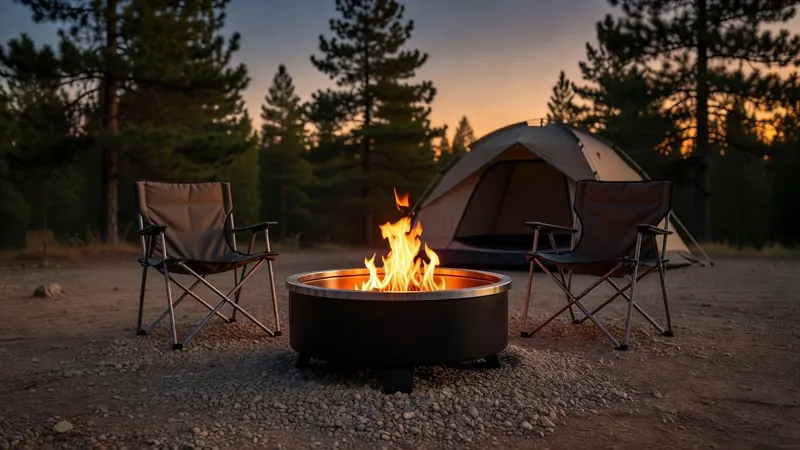
- The best portable fire pit propane pick for a small site is the same class with a lower flame ring, so you can sit close without roasting your shins.
- The best portable fire pit for cooking is whichever one takes a flat top cleanly. If cooking is the priority over sitting, our camp griddle guide and propane grill comparison are the faster route.
- The best portable fire pit for beach trips is a gas model with a solid base plate — sand plus legs is how pits tip, and many beaches require a raised container anyway.
- Cheap wood pits and a bonfire pit for camping under about $60 are where money goes to die. Budget for a swing grate instead and use the campground ring.
- Collect camping fire pit accessories once, not every year: base, grate, long fork, lid lifter, gloves, and a windproof way to light it. That list, plus the pit, is the whole kit — and it is where camping fire pit ideas actually come from, because the ideas are mostly about what you can put on top of it.
- Read the whole ladder against the window you camp in. A pit bought in July, used twice in August, and abandoned in October was never the right pit — the reason to buy now is that the season is opening rather than closing.
Common Fire-Pit Mistakes (Learn From Mine)
- Buying the cheapest wood pit and expecting it to last. The stamped-steel kits under about $60 rust through at the seams after a season of wet wood and rain. If you want wood, buy something with a real gauge and a lid.
- Forgetting the regulator and hose for the 20-lb tank. A propane fire pit arrives set up for a 1-lb bottle. Running it off the big tank you already own takes an adapter, and buying it at the campground store costs double.
- Believing "smokeless" means "no maintenance". Smokeless pits work by burning their own smoke, which means they clog with ash fast. Clean the air passages or the magic stops.
- Setting up under the rain fly or the awning. Every year someone melts a costly piece of camping fabric that was 20 inches too close to the flame.
- Lighting a fire in the morning and leaving the campsite. An unattended pit is the single most common way a good camping weekend turns into a bad story.
Three more, answered in one line each. Camping fire pit propane is what most families end up buying for autumn, because it is the version that survives a restriction order. If you want a wider landing zone over a wood fire, a camping fire pit grate or a camping fire pit grill is the upgrade that turns sitting-around-a-fire into actually-cooking-on-one. And the blunt version of the question everyone types — can you use a fire pit during burn ban conditions — has a conditional answer: usually yes for a gas pit with a valve, usually no for wood.
Portable Fire Pit FAQ
Is a portable fire pit allowed during a fire ban?
Sometimes, and it depends entirely on the order. Many seasonal restrictions prohibit open wood, charcoal, and pellet fires while explicitly permitting propane appliances that have an on/off valve. Others prohibit everything. Always confirm with the specific agency that manages the land, and with the campground itself, before you load the car.
Is a propane fire pit worth it for camping?
Yes if you camp in autumn, in the West, or with people who dislike smoke. You get an instant fire, no smell in everyone's clothes, and a legal path through most fire restrictions. You give up the wood smell and the ritual of feeding a fire, and you have to carry fuel. For most family weekend trips, that trade is worth it.
How long does a portable propane fire pit run on a 1-lb cylinder?
Roughly an hour and a half to two hours on a low-to-medium setting for a 1-lb canister, less on full blast. That is one good evening. If you light one every night, plan on refilling your own 1-lb bottles or running the pit off a 20-lb tank with an adapter — our 1-lb propane refill guide covers the safe version of both.
Can you cook on a portable fire pit?
Yes, with the right top surface. A wood pit needs a swing grate so you can cook over coals rather than flames, and a propane pit takes a cast-iron griddle or skillet set directly over the burner. A round cast-iron griddle is the single most useful accessory we have added to ours.
Do you need a fire pit for a camping trip where there is already a fire ring?
Not necessarily, but a fire ring has two limits: it is a wood-only situation, so it disappears the moment restrictions are issued, and you have to fight for it if the campground is busy. A portable pit travels with you, works in the rain under an awning edge, and gives you somewhere to sit when the ring is taken.
What about a fire pit as a gift?
It is one of the better family camping gifts precisely because it is used at the campsite, not stored in a garage — a fire pit plus a blanket plus a match kit is a complete evening. Our camping gift guide covers how that bundles out at a few different price points.
Do burn bans include fire pits?
Usually the wood-burning kind, and usually not the propane kind. Most restriction orders limit open burning — wood, charcoal, pellets — while permitting a gas appliance with a valve. Treat any wood pit as banned the moment an order is issued, and carry the order on your phone so the question at the gate takes ten seconds instead of ten minutes.
Do you need a permit for a fire pit?
On public campground land, no — you need to follow the agency order and the campground's own rules. On private land inside a city limit or a fire district, often yes, and the permit is frequently free and online. When in doubt, call the non-emergency line for the fire district that covers the address.
What are the fire pit rules and regulations at most campgrounds?
Four of them cover most of the laminated sheet: never during a red-flag warning, never unattended, water or sand within reach, and no warm ash left behind in the morning. Everything else is detail about where the pit can sit and how tall the flame can be.
Is a fire pit safe for kids?
With a physical boundary, yes — and a gas pit with a cool outer ring is safer around small children than a wood fire, because there are no sparks and no pan of coals at ankle height. Set the boundary with chairs or a rope before the first match, keep the pit on a base, and never let the boundary move mid-evening.
What is the best fire pit for dogs?
A low one with a solid outer wall and a cool ring, with the dog bed placed behind the seating arc rather than beside the pit. Dogs learn the boundary quickly when it is a rope they can see; they do not learn a rule they cannot see, and a tail at grate height is a vet visit.
Is a smokeless fire pit worth it for camping?
Only if you feed it correctly. A smokeless design re-burns its own smoke, which demands dry wood cut to the right size and clean air passages — wet wood and a clogged double wall both bring the smoke back. If your reason for buying is a fire without smoke, propane is the more reliable answer.
Are cheaper fire pit alternatives worth it?
For one trip, yes. For a season, no. A campground ring, a cast-iron griddle over a stove, or a folding grill all work fine and cost nothing to try first — but the thin stamped-steel "bonfire in a box" kits rust through at the seams within a season, and the money is better spent on a grate or a base for the ring you already have.
<!-- AFFILIATE_DISCLOSURE -->TrailMapz earns a commission on purchases made through product links on this page, at no extra cost to you. Prices and availability are set by the retailer and change — check the product page for current pricing before you buy.
For the state-by-state version of this trip, the Massachusetts camping guide covers DCR's 25 campgrounds, the yurt and cabin parks, and why Cape Cod National Seashore has no campground at all.