Camping With a Baby or Toddler: Complete Gear Guide & First-Trip Plan (2026)
Camping with a baby or toddler is doable with the right plan: age-by-age advice, sleeping bags for 6-18 months, wagons and sun gear for 2026.
The first time we took our daughter camping, she was ten months old. She could sit up, crawl at alarming speed, and had opinions about everything — including the temperature of her bedtime bottle. I packed like we were relocating to another country: three outfits per day, a changing pad the size of a yoga mat, and a bag of "emergency" toys that weighed more than she did.
And you know what? It worked. Not because I over-packed, but because the trip was short, the site was close to home, and the few pieces of gear I'd bought specifically for the trip did exactly what they were supposed to. She slept better than she did at home some nights. She ate campfire pancakes with both hands. The only real crisis was a runaway diaper situation that a changing pad and a sense of humor solved.
This guide is the plan I wish I'd had that first time. If you're wondering whether a baby or toddler can handle camping — they can, if you handle the logistics. Here's exactly how.
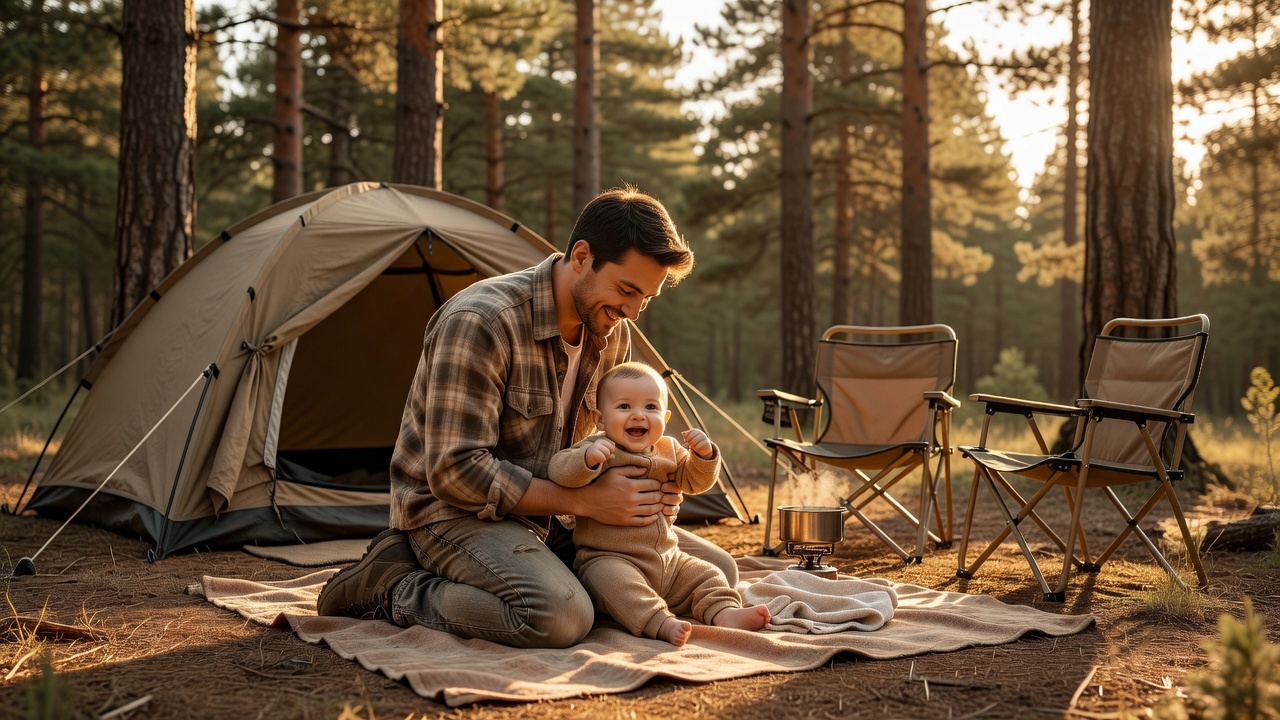
Quick Answer: The Baby & Toddler Camping Setup That Actually Works
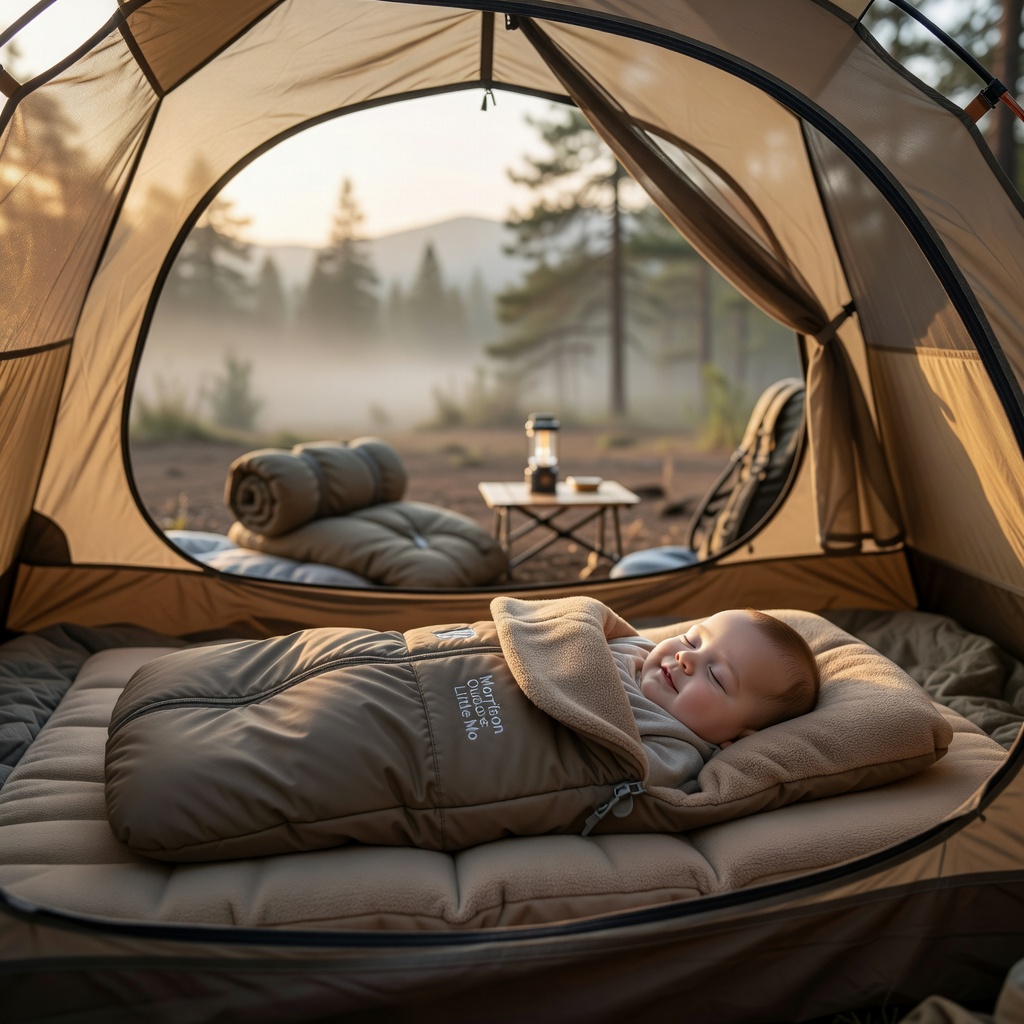
- Sleep is the whole trip: Morrison Outdoors Little Mo 40 ($69.95) for 6–18 months, or the larger Big Mo 40 ($79.95) for ages 2–4 — a real sleeping bag beats a nest of blankets every time.
- Getting around camp: Radio Flyer 3-in-1 EZ Fold Wagon ($109.99) hauls the kid, the diaper bag, and the firewood in one trip instead of four.
- Feet that stay dry: KEEN Kids Hightrail ($74.95) — the one piece of toddler gear that stops the “carry me” spiral on a wet trail.
- Keep trip one deliberately short: 30 minutes from home, one night, and a real plan — our first camping trip starter kit covers the rest.
Why Camping With a Baby Is Different (and Worth It)
Camping with a baby is not harder than camping with a preschooler. It's just different. Babies have simpler needs: a safe place to sleep, predictable food, and a parent who isn't panicking. Toddlers add mobility and opinions. Both are manageable once you accept the three rules that make every family trip work:
- Keep the first trip short — one night, within an hour of home. The escape hatch matters more than the itinerary.
- Anchor everything to their schedule — plan setup, meals, and hikes around nap time and bedtime, not the other way around.
- Buy gear that does the baby-specific job — a regular adult sleeping bag won't keep a 10-month-old warm safely. The right baby gear isn't a luxury; it's the difference between a trip and a disaster.
If you're brand new to family camping generally, start with our family camping with kids guide for the big picture, and our first camping trip starter kit for the packing basics. This article goes deeper on the baby-and-toddler specifics.
Is Your Baby Ready? Age-by-Age Reality Check
6-12 months (pre-walkers)
The easiest window for a first trip, honestly. They don't run off, they nap twice a day (which buys you quiet time), and they're still small enough to carry everywhere. The jobs: keep them warm at night, keep them fed, and give them safe ground to practice crawling. A large picnic blanket plus a playpen-style setup under the tent awning works beautifully.
12-24 months (new walkers)
The hardest window. They walk, they grab, they put everything in their mouths — including pine cones, campfire rocks, and the occasional bug. This is the age where a wagon with a canopy becomes your best friend: it contains them for transport, gives them shade, and doubles as a napping spot on a long day. You'll also want their own chair and shoes that stay on.
2-3 years (toddlers with opinions)
They're genuinely participatory now — they can carry their own tiny backpack, eat what you eat (mostly), and "help" with camp chores for about 90 seconds. The challenge shifts from logistics to management: set expectations, lean into the fun, and pick sites with room to run. This is the age where camping becomes fun for them, and the kid's hiking backpack turns "carry me" into "I'll carry my own snacks."
Which Age Are You Actually Asking About? A Decoder for Parents
Forum threads and guides talk in age ranges; parents search in single ages. The answer is genuinely different at each one, so here is the translation table:
| What you type into Google | What that actually means | The honest answer |
|---|---|---|
camping with a newborn / how to camp with a newborn / how to go camping with a newborn | Under 4 months, not yet able to regulate body temperature | Wait for the overnight, or take a day trip instead. Newborns can't safely wear a sleeping bag and can't tell you they're cold. The real answer to "how do you camp with a newborn" is: you go for the day, set up a shade station, and you're home for the evening feed. A camping with a newborn checklist is a day-trip list. |
camping with a 6 month old / can you go camping with a 6 month old / how to go camping with a 6 month old | 6-12 months: pre-walker, two naps, stays where you put them | Yes — and this is the easiest first window. Keep it to one mild-weather night within an hour of home, and expect to spend more time managing temperature than managing the child. Try tent camping with a 6 month old in mild weather before you attempt anything more ambitious. |
camping with a 1 year old / camping with a 1 year old tips / car camping with a 1 year old / tent camping with a 1 year old | 12-24 months: new walker, mouths everything, fights the sleep sack | Can you go camping with a 1 year old? Yes — and it's the hardest window. Whether it's car camping with a 1 year old or tent camping with a 1 year old, the fix is the same: containment (wagon, closed tent), shoes that stay on, and a short trip. |
can you camp with a 2 year old / how to go camping with a 2 year old | 2-3 years: participatory, opinionated, actually fun | Yes, and this is when camping gets fun. They can carry a small pack, help with chores for about 90 seconds, and sleep in a kid-sized bag. Pick a site with room to run. |
best age for camping with kids | You want permission to start | Six months for an overnight, any age for a day trip. The best age is really the age where you can handle a 6 AM wake-up and a 40-minute pack-out. |
camping with a toddler and baby | Two kids under three, one tent | The constraint is adult attention, not gear. One adult per child at bedtime, and work from the camping with toddler and baby checklist in the packing list below. |
camping with a toddler | Toddler camping, generally | Everything here applies. The toddler-specific additions are their own chair, their own bag, and shoes that stay on. |
The pattern behind the table: the question is almost never the age — it's whether the trip fits the child's schedule. A 10-month-old who naps well at home naps well at camp with shade and routine. A 2-year-old mid-regression will struggle in a $400 tent. Read your own kid, then pick the window.
The Sleep Setup: Naps and Bedtime at Camp
Sleep is the make-or-break of baby camping. A baby who sleeps keeps the whole trip calm; a baby who doesn't makes everyone miserable by noon. The good news: the right sleep gear solves 80% of it.
The golden rule: never share your sleeping bag with a baby. Adult bags are too big, and loose fabric around a sleeping infant is a suffocation risk. Babies need their own warm sleep space.
For babies 6-18 months, the Morrison Outdoors Little Mo 40° Baby Sleeping Bag ($69.95) is exactly what it sounds like — a properly sized, rated sleeping bag for a baby. It has a full-length zipper (so you can open it like a blanket for warmer nights), a soft fleece lining, and it's machine washable, which you will appreciate after night one. At 40°F rating, it's right for summer and shoulder-season nights.
When your little one graduates out of it, the Morrison Outdoors Big Mo 40° Kids Sleeping Bag ($79.95) takes over for ages 2-4 — same design philosophy, more room to wiggle.
Two solid budget alternatives worth knowing: the TETON Sports Celsius Jr Kids Sleeping Bag ($49.99) if your nights run cold (20°F rating), and the Kelty Woobie 30 Degree Kids Sleeping Bag ($39.95) if you want a lighter, quilt-style bag for warmer trips. Layering a Woobie-style bag over the Little Mo is a great trick for unexpectedly cold nights — the two-bag system lets you adjust without waking anyone.
Non-gear sleep tricks that work:
- Test the sleep setup at home first. One night on the living room floor with the new bag, pad, and pajamas. Find out it's too hot/cold before you're three hours from home.
- Bring the bedtime routine with you. Same jammies, same book, same white noise. Familiarity is the strongest sleep aid at camp.
- Keep the tent dark-ish at nap time. A packable blackout panel or even a dark t-shirt over the tent window makes a 2 PM nap actually happen.
- Two adults, one shift system. One parent does bedtime, the other sits at the fire. Trade off each night. This sounds obvious and is the most-forgotten rule of family camping.
Need help picking the tent that makes bedtime easy? Our tent size guide covers capacity math (a family of 3-4 should size up to a 6-person tent), and our best family camping tents guide compares the setups you can stand up in.
Where Does a Baby Sleep When Camping?
In their own bag, on their own pad, on the tent floor — never in an adult sleeping bag, and never on an inflatable mattress shared with an adult. If you're coming from a home bassinet this sounds alarming; it isn't, as long as you rebuild the same three things you have at home: a firm flat surface, a bag that can't ride up over the face, and the same bedtime routine.
The honest answer to camping bed for 6 month old searches is that you have two workable options:
- A real baby sleeping bag on a pad — the Morrison Outdoors Little Mo 40 ($69.95) from 6-18 months, then the Big Mo 40 ($79.95) from age 2. This is what we use, and it packs the smallest.
- A packable travel crib or bassinet from home — heavier in the car, but it is the exact sleep surface they already know. Worth it for a first trip with a fussy sleeper.
What not to do: put a baby in a mummy bag (they can't use a hood safely), put them straight on the tent floor (ground cold moves through anything), or cosleep on an inflatable mattress (roll-off and entrapment risk).
How to Sleep in a Tent With a Baby (and Get the Baby Camping Sleep Setup Right)
Ask how to camp with a baby and you'll get a hundred answers. The workable one is this: camping with a baby in a tent works when you treat the tent as their bedroom instead of an adventure. Four things made the difference for us:
- Pitch the tent before they're tired. A tent that appears at 7:30 PM is a novelty. A tent they've crawled around in since 10 AM is just the room where they sleep.
- Build the sleep space first, not last. Bag laid out, pad inflated, pajamas inside the tent before dinner, not after.
- Keep the last 30 minutes identical to home. Same book, same song, same order. The tent is new; the routine isn't.
- Block light for naps. Most
camping with a baby sleepingproblems are light problems. A dark t-shirt over the tent window buys you a 2 PM nap that otherwise doesn't happen.
For toddlers the same rules apply with one addition: make it obvious the tent stays zipped once they're in. A 20-month-old who can work the zipper treats midnight as a social hour.
Best Sleeping Bag for Baby Camping — and What to Buy at Each Age
Best sleeping bag for baby camping is the most-searched gear question on this page, and the honest answer is that there's no universal winner: there's a size ladder.
- 0-6 months: no bag. A warm sleeper on a firm pad, plus whatever swaddle-safe layer you use at home.
- 6-18 months: the Morrison Outdoors Little Mo 40 ($69.95) — sized for a pre-walker, rated to 40°F, machine washable, which you will appreciate on night one.
- 18 months-2 years: the same bag, with the Kelty Woobie 30 ($39.95) layered over it on cold nights. Two thinner bags beat one thick bag because you can adjust at 2 AM without waking anybody.
- 2-4 years: the Big Mo 40 ($79.95), or the TETON Sports Celsius Jr ($49.99) if your nights run close to freezing.
- 4+ years: the Kelty Woobie 30 ($39.95) works standalone.
If a sleeping bag for 1 year old camping search has pointed you at a 20°F adult bag, don't buy it. An adult bag leaves so much dead air around a small body that the rating stops meaning anything — which is why camping with 1 year old sleeping and camping with a toddler sleeping complaints are almost always fit problems, not rating problems. There is no standardised rating for children's bags at all; our sleeping bag temperature ratings guide explains why fit beats the number.
Getting Around Camp: Wagon + Carrier
You will carry your child approximately 400% more than you expect. Crawlers are slow but determined; toddlers want to walk exactly everywhere except where you're going. The solution is a two-layer transport system.
Layer 1 — the wagon. The Radio Flyer 3-in-1 EZ Fold Wagon with Canopy ($109.99) is the workhorse of baby camping. It hauls the baby, the diaper bag, the cooler, and the firewood in one trip — which means fewer trips and less begging. The canopy provides real UV shade (critical between 10 AM and 4 PM), it folds flat for the car, and kids 1.5+ ride in it comfortably. On the beach or on grass, it rolls better than a stroller ever will.
Layer 2 — the carrier backpack. For trails and uneven ground where the wagon can't go, the Osprey Jet 18L Kid's Hiking Backpack ($80.00) is a kid-sized daypack that fits kids roughly 3-8 — they carry their own water bottle, snacks, and a stuffie, which makes them feel like a real hiker. For actually carrying the baby on a hike, the piece that changes the trip is a structured carrier. The Osprey Poco child carrier ($340) is the one most hiking families end up on: an adjustable torso length so the same pack can be shared by a small and a tall parent, a Double Halo harness with front-facing arm loops so you can load and buckle a wriggling toddler without a third hand, and a fully framed cockpit that stands on its own kickstand legs the moment you set it down. Osprey builds it as a real hiking pack rather than a stroller accessory — which is exactly why it costs several times a soft front carrier. (If an integrated sunshade is a must-have for you, Osprey's lighter Poco LT is the model that adds one; the base Poco spends the money on the frame, the child cockpit and the ventilated backpanel.)
Do you need it? This is one of the few places where our advice is don't upgrade. If your "hike" is a flat 20-minute loop or a stroll to the beach, a soft carrier you already own is genuinely fine, and a structured pack is overkill. Buy one when the trail has real elevation, when the walk runs past an hour, or when you want your hands and a hip belt back on a longer day.
The toddler seat. At camp, the Kelsyus Youth Outdoor Canopy Chair with Adjustable Shade ($37.99) gives a toddler their own spot at the fire ring — a place to sit for snack time that isn't "the ground," with a pull-over canopy for sun. It's low to the ground, which means less tip risk, and the cup holder keeps the sippy cup from becoming a projectile.
Feeding: Bottles, Solids, and Snacks
Feeding a baby at camp is 90% logistics. The three things that make it work:
- A way to warm bottles. If your baby takes warm milk, cold camp mornings are brutal without a kettle. The MalloMe Camping Cookware 17-Piece Mess Kit ($32.99) includes a 1.1L kettle plus pots, cups, and utensils — heat water on the camp stove, drop the bottle in for two minutes, done. It also covers your adult cookware needs, so it's not a one-trick purchase. (Warm the water before the baby wakes up; a hungry baby will not wait for the stove to heat.)
- Easy-to-eat food. Pouch purees, crackers, cut fruit, and anything that doesn't need refrigeration for the first 24 hours. Toddlers eat what you eat — bring a bit more of whatever you're cooking anyway.
- A spill-proof water bottle that's actually theirs. The CamelBak Eddy Kids Vacuum Insulated Stainless Steel Water Bottle ($19.99) is a 12oz kids bottle with a straw that doesn't leak, keeps water cold, and is small enough for small hands. Put it in their wagon seat pocket, and you'll avoid 60% of toddler meltdowns.
For meal planning beyond the baby angle, our camp cooking for beginners guide has the full system.
Sun, Bugs, and Feet
Babies' skin is thinner than adults', and they can't tell you they're overheating. Sun and bug protection are non-negotiable.
Sun. The Coolibar Kids' Long Sleeve Sun Shirt - UPF 50+ ($32.00) is the single best sun purchase for a baby — UPF 50+ rated fabric covers their arms and torso without sunscreen reapplications on a squirmy kid. Pair it with the Sunday Afternoons Kids' Ultra Adventure Hat - UPF 50+ ($34.00), which has a wide brim and a chin strap (critical for the 12-month-old who rips hats off). Babies under 6 months should avoid direct sun entirely and stay in shade — the wagon canopy and tent awning are your friends.
Feet. Before they walk, socks and soft shoes are enough. Once they walk, closed-toe shoes are the rule — campsites are littered with pine cones, fire ring edges, and rocks. The KEEN Unisex-Child Newport H2 Closed-Toe Water Sandals ($55.00) are the toddler classic: closed toes for protection, open design for water crossings and hot days, and they stay on (KEEN's toe bumper + strap system is toddler-proof). For hiking trails, the KEEN Kids Hightrail Waterproof Hiking Shoes ($74.95) give real grip on uneven terrain and shrug off creek splashes.
Bugs. A baby-safe repellent (DEET-free, designed for infants — check the label; most are fine from 2-6 months depending on brand) plus long sleeves at dusk handles the worst of it. Our camping bug protection guide has the full rundown.
Baby and Toddler Camping Packing List (Gear Checklist by Age)
Search for a baby camping gear list and you'll get 60-item lists built for a week-long expedition. This is the honest version for a realistic first night, grouped by what actually gets used.
Sleep (the non-negotiable layer) — a baby sleeping bag or kid bag sized to age; a real pad (closed-cell or self-inflating); the same pajamas and sleep sack from home; a small white-noise source; one extra layer for 2-4 AM.
Camp bed and containment — either the pad-plus-bag setup above, or a packable travel bassinet brought from home. For infant camping gear specifically, a firm flat surface is the entire requirement; everything else is convenience.
Transport — the Radio Flyer 3-in-1 EZ Fold Wagon ($109.99) if you're hauling a child plus gear, or the Mac Sports Heavy Duty Folding Utility Wagon ($100.56) if the wagon is mainly for gear, firewood, and coolers. Plus a structured child carrier for trails where wheels don't go.
Feeding — bottles and a way to warm them (a 1 L kettle does it in about two minutes), a sippy cup, snack containers, more food than you think you need, and a towel you don't care about.
Baby hiking gear and outdoor gear — closed-toe shoes once they walk, a UPF 50+ sun shirt, a wide-brim hat with a chin strap, a ground blanket, and a kid-sized daypack once they're three or older. If a hike is on the plan, our kids hiking shoes guide covers what stays on a small foot.
Sun, bugs, and safety — sun shirt and hat, baby-safe repellent or DEET-free bands, a basic family first-aid kit, and a thermometer.
Kid gear that earns its space — a Black Diamond Wiz Kid headlamp ($24.95) for the after-dark walk to the bathroom, and Occer 12x25 binoculars ($35.99) that turn the picnic table into an observation post.
A note on the phrasing you may have searched: camping with a baby checklist, camping with a baby packing list, camping with a baby essentials, camping with a baby list, and plain camping with baby list all mean this section. The toddler versions — camping with a toddler checklist, camping with a toddler packing list, camping with a toddler essentials, camping with a toddler must haves — mean the same list plus a nap pod and shoes that stay on. And camping with a 1 year old essentials is all of it minus the bottles. If you searched what to take camping with a 6 month old, the answer is the Sleep and Feeding groups above plus a shade solution — that really is the whole list.
If you typed the plural form — camping with toddlers checklist, camping with toddlers packing list, camping with toddlers must haves, or camping with toddlers essentials — this list is the answer, minus nothing. The camping with toddlers sleeping question is covered in the Sleep Setup section above, and the camping with toddlers hacks people keep searching for are the tips further down this page.
The one-line version: sleeping bag, pad, wagon, kettle, cup, shoes, sun shirt, hat, first aid. Everything else is negotiable — and our family-of-five packing list covers the adults' half of the same loadout.
The First-Trip Plan: A Realistic 24-Hour Schedule
Here's what a successful first trip actually looks like — plan around the baby, not the campfire:
- Arrive mid-morning (9-10 AM), after the first nap. Set up the tent before lunch while the baby is fresh — an instant cabin or pop-up tent makes this a 15-minute job instead of a 45-minute ordeal.
- Lunch at the picnic table, then nap #2 in the tent while one adult preps dinner.
- Late afternoon: wagon walk around the campground loop, creek splashing in the Newport sandals, snack time in the Kelsyus chair.
- Dinner early (5:30-6 PM), before the light goes. Warm the bottle with the kettle before it's needed.
- Bedtime at their normal time — routine, sleep sack or Little Mo bag, white noise, one parent on shift.
- Sunrise is going to happen. The baby will be up at 6 AM, and so will you. That's fine — coffee, campfire breakfast, and you're packed and home by lunchtime.
The escape hatch rule: if night one is a disaster and everyone's miserable, you leave in the morning. No guilt. One rough night is a story; three rough nights is why people never camp again. Keep the first trip to one night so "we made it" is always within reach.
What to Do With a Toddler at Camp (Activities That Fill a Day)
The reason camping with toddler activities and camping with kids activities get searched so heavily is that the answer isn't a toy list — it's a rhythm. Here's the day that works for us, and it needs almost nothing bought:
- The slow walk. One wagon loop around the campground after breakfast. Twenty minutes, and the toddler has "done" something.
- Nature bingo without the bingo card. Pine cone, acorn, feather, bug, two colors of leaf. Collecting on a paper plate beats any structured game, and it doubles as
camping with toddler ideaswhen you're out of them. - Binoculars and bugs. Occer 12x25 binoculars ($35.99) are kid-friendly enough to hand over and make a picnic table into an observation post.
- Creek time. Closed-toe water sandals, a bucket, thirty minutes. Highest-yield activity at any campsite, every time. For a baby,
camping infant activitiesis simply tummy time on a blanket in the shade with something new to look at. - Campfire-free "cooking." Let them stir the pancake mix and set the table. Participation is the activity.
- Walkie-talkies at dusk. A four-pack like the Retevis RT628 ($39.99) turns the loop around the site into a game for older toddlers and big siblings.
- Bedtime story by lantern. The Black Diamond Wiz Kid ($24.95) is child-safe enough to be the lantern.
If you're choosing where to go, search camping sites with kids activities near me or camping with kids activities near me literally — a state park with a swimming area, a nature center, or a playground shortens the "what do we do now" problem dramatically. Ask at the gate about a junior-ranger program; those are usually free and built for exactly this age.
Winter trips are their own gear problem for tiny feet: the snow boots and winter traction guide covers toddler and little-kid snow boots by age, how much room to leave at the toe, and how to dry a boot overnight without wrecking it.
RV Camping, Rooftop Tents, and Winter Trips With a Baby
Three trip types parents ask about, with three genuinely different answers.
RV camping with a 1 year old is the easiest version of this whole guide. Climate control, a flat mattress surface, running water for bottle washing, and a door that closes. The new risks are cabinets and stairs — pack a couple of child-safety latches and treat the first 20 minutes as a baby-proofing pass. As for rv camping with kids activities, the campground itself does the work: a pool or a playground matters more than the rig.
camping with baby in a rooftop tent — we'd say no for under-2s. Not because of the tent, but because of the ladder. Carrying a sleeping infant down an aluminum ladder for a 3 AM wake-up is a fall risk with no good answer. A ground tent is safer for this age, full stop.
camping with baby winter tent trips are doable with a layering system and one hard rule about carbon monoxide. A propane heater inside a sealed tent is the most dangerous shortcut in family camping — if you use one, use an indoor-rated unit like the Mr. Heater Little Buddy ($69.99) with ventilation, and always run a battery-powered carbon monoxide detector ($23.97) inside the sleeping space. For the baby outdoor gear winter additions: a 20°F-rated bag, a real pad (ground cold, not air temperature, is what wakes kids), a hat for sleeping, and one more layer than you'd wear. Our winter camping gear checklist walks the full system.
Common Mistakes (Learn From Mine)
- Overpacking "just in case." I brought a full second wardrobe and used none of it. The gear that mattered was the sleeping bag, the wagon, and the kettle. Pack for the schedule, not the anxiety.
- Skipping the home test run. The first time our daughter used her Little Mo bag was at a campsite 40 minutes from home — we got lucky. Test the sleep setup on the living room floor first.
- Letting the schedule drift. "Just 20 more minutes at the fire" becomes an overtired baby at 9 PM and a rough night. Babies don't do campfire time; protect bedtime like it's the whole point of the trip. (It kind of is.)
- Cold-weather optimism. Even summer nights dip below what you expect. Bring the warmer-rated bag or a layering blanket — you can always unzip, but you can't conjure warmth at 2 AM.
- No first-aid plan. Babies get scrapes, and they get them fast. Our camping first-aid checklist covers what a family kit needs, including a kids' antihistamine and a thermometer.
Baby and Toddler Camping Tips That Actually Changed Our Trip
Most camping with a baby tips and camping with a toddler tips lists say "be flexible." These are the specific ones that fixed real problems for us:
- Freeze the water bottles and use them as ice. They chill the cooler on the way out and become a cold drink later — two
camping with a baby hacksin one item. - Pre-mix and pre-portion everything at home. Bottles filled to the right line, snacks already counted. Camp logistics should be opening, not measuring.
- Dress them for sleep one layer warmer than you'd guess. Toddlers sleep colder than adults in the same conditions. Assuming they're colder prevents the 3 AM bag swap.
- Park the wagon in the shade and let it be the nap pod. Canopy closed, blanket in, thirty minutes of quiet. This is the single
camping with a toddler hackstrick we use most, and it's why the wagon is the one purchase we'd repeat. - Bring two of the one thing you can't replace. For a 6-month-old that's the pacifier; for a toddler it's the water bottle. A lost item at 8 PM ends the evening.
- Treat the 6-month-old trip and the 1-year-old trip as different trips.
Tips for camping with a 6 month oldcome down to short and mild — minimal driving, mild weather, one night. The same guidance atcamping with a 1 year old tipsgains containment: the wagon, the closed tent, the shoes that stay on. - Do a backyard dry run first. One night in the yard turns the real first night from an experiment into a routine, and it's the tip in this whole guide that most reliably saves a trip.
Ages stack, and the gear changes with every step. Once your toddler has grown into the 9-to-12 window — the years when camping stops being your trip and starts being theirs — our guide to camping with tweens and teens covers the handover: their own sleep setup and chair, a walkie talkie with an agreed check-in time, and the camp jobs that turn a passenger into a participant.
Final Thoughts
Camping with a baby or toddler is not the vacation you had before kids. It's a different thing entirely — slower, earlier, and punctuated by snack demands. But it's also the trip where you watch your kid discover pine needles, campfire light, and the entire concept of outside at night for the first time. That's worth one rough hour of setup and a 6 AM wake-up.
Start small: one night, close to home, with the five pieces of gear that matter — a real baby sleeping bag, a wagon, a kettle, sun protection, and shoes that stay on. Everything else is negotiable.
If your little one is already past the baby stage, our family camping with kids guide covers games, meals, and meltdown prevention for older kids. And when you're ready to bring the whole crew — dog included — our camping with dogs guide makes sure nobody gets left behind.
Shade and insects decide whether a warm-weather trip works with a toddler. Our Camping in Florida guide covers the canopy, fan, and screen-shelter setup for a Florida state park site.
One thing every parent should know before buying a kids' bag: there is no standardised rating for children's bags at all. The temperature ratings guide explains why, and why fit matters more than the number.
For a first outing with a toddler, the Piedmont lakes in North Carolina are close to ideal, and our North Carolina camping guide covers the campgrounds with showers, swim beaches and year-round dates.
Before the next wet weekend, it is worth ten minutes with our tent leaking and waterproofing guide — it walks through sealing seams and re-proofing a fly that has stopped beading.
If the grandparents are joining that first trip, that's a different set of logistics again — the 3-generation camping weekend guide covers what changes when the youngest and the oldest are on the same campsite: pacing, shade, the bathroom walk, and one activity per day.
A wood stove changes what a cold night feels like, and it is a real responsibility — the hot tent camping guide explains the stove jack, the pipe and the safety habits.
Camping With a Baby FAQ
Travelling with younger kids? camping in Wisconsin is the family-weekend version of this same destination.
Is it safe to take a baby camping?
Most families wait until around 6 months, when a baby can regulate their own temperature and sleep stretches become more predictable. Then start small: one night, close to home, in mild weather with no big temperature swings. The age-by-age section above walks through what changes at 6-12 months, 12-24 months, and 2-3 years.
What does a baby sleep in when camping?
A dedicated baby sleeping bag that can't ride up over the face. The Morrison Outdoors Little Mo is sized for 6-18 months, and the Big Mo takes over from age 2. Layer a warm sleeper underneath, keep the baby on a pad rather than directly on the tent floor, and dress them in roughly one layer more than you'd wear yourself.
What should a toddler sleep in at camp?
A kid-sized bag on a real pad. The Kelty Woobie 30 and the TETON Sports Celsius Jr are both cut for small bodies, and that matters more than the temperature rating: an adult bag leaves so much dead air space around a toddler that they wake up cold no matter how warm the rating says it is. Set the bag up for a nap at home first so it isn't strange on the first night out.
How do you handle naps and bedtime at camp?
Keep the same routine you use at home — same sleep sack, same book, same order — and lean on shade and white noise instead of trying to black out a tent. A canopy wagon like the Radio Flyer 3-in-1 EZ Fold doubles as a portable nap spot and a gear hauler, which makes it the single most useful piece of toddler camp gear we own.
What do you feed a baby or toddler at camp?
Mostly what they already eat at home, plus one thing they'll actually be excited about. A nested cookware set keeps pots, bowls, and utensils in one place, and our camp cooking meal planning guide has tested menus that survive a toddler's opinion. Bring more snacks than you think you need.
Can you go camping with a 1 year old?
Yes — with containment. A 1-year-old is the least predictable camping companion you will ever take: they walk, they put everything in their mouth, and they will absolutely test the edge of the fire ring. What makes the trip work is physical limits rather than rules: a wagon to ride in, a tent that stays zipped, closed-toe shoes, and a campsite with a flat, open area you can watch from the picnic table. Keep the first trip to one night, within an hour of home.
What should you take camping with a 6 month old?
Less than you are probably planning. The working list is short: a properly sized sleeping bag on a firm pad, the same pajamas and sleep sack you use at home, bottles plus a kettle to warm them, a sun shirt and a wide-brim hat, a blanket for tummy time on the ground, and a basic first-aid kit with a thermometer. Skip the toys, skip the second outfit, and skip anything that only works in a tent you can stand up in.
Is it safe to sleep in a tent with a baby?
Yes, if you treat it exactly like any other safe-sleep surface. Baby in their own bag on a firm flat pad, no loose blankets or pillows around them, never a shared adult sleeping bag, and no cosleeping on an inflatable mattress. Put the warm layer on as sleepwear rather than a loose blanket, keep the tent ventilated, and run a battery-powered carbon monoxide detector if there is any heater involved.
Camping with a dog on the Oregon coast comes with its own leash and trail rules — the Camping in Oregon guide covers state parks, state forests and Crater Lake separately.
Ohio's three cabins inside the Hocking Hills campground are a low-effort first trip with a toddler, and so are the group sites now open to any tent camper. The camping in Ohio guide covers both.
<!-- AFFILIATE_DISCLOSURE -->For the cold-weather version of this trip — wearable sleep sacks, toddler bag shapes, and how cold is genuinely too cold — see winter camping with kids.