Snow Boots & Winter Traction Guide 2026: Kids' Snow Boots, Winter Hiking Boots, and Warm Feet at Camp
How to choose kids snow boots and winter hiking boots for family camping: insulation ratings, waterproofing, fit, socks, and snow traction that works.
Last updated: September 29, 2026
Winter footwear is the gear category where families waste the most money, because there are really two different purchases hiding behind one word. Kids snow boots are built to stand still in the cold — deep tread, rubber shell, thick insulation, easy on and off. Winter hiking boots are built to walk in the cold under a load — a stiffer sole, a waterproof membrane, and a chassis that accepts traction. Buying one for the other job is why a kid's feet get cold at camp in boots that were fantastic in the driveway, and why a parent's feet get soaked on a snowshoe trail in boots that were cozy walking the dog.
This guide is the honest version: what insulation ratings actually mean, how waterproofing really works, how to size boots for a growing kid without wrecking their stride, why snow traction matters more than the boot on ice and packed trail, and the sock-and-drying system that decides whether feet are warm on night two of a cold camp. Every product recommendation below is a piece of gear we actually link, price and all, and we have flagged the places where the honest answer is "no product fixes this."
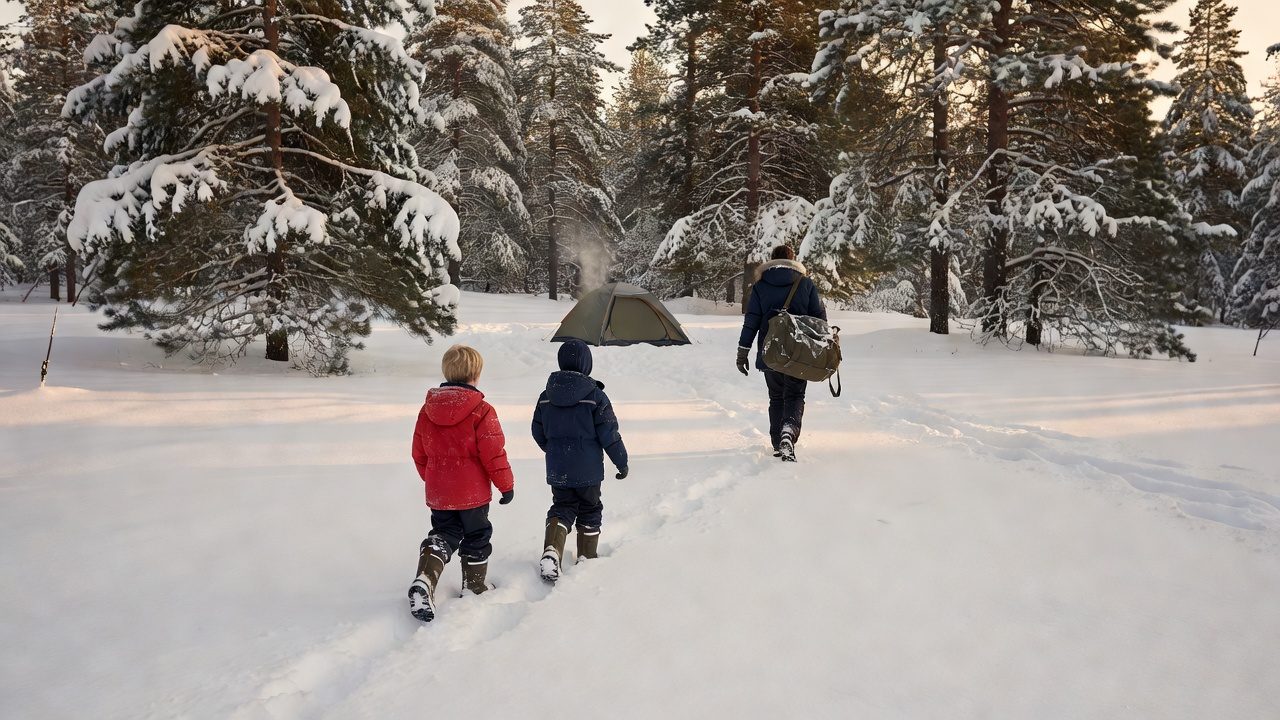
Quick Answer: Winter Footwear in One Screen
- For kids standing around camp: Columbia Youth Bugaboot Celsius Insulated Snow Boots ($64.99). Insulated, waterproof, and easy enough for a 6-year-old to put on alone — this is the kids snow boots answer for most families.
- For kids hiking or sledding all day: KEEN Kids Hightrail Waterproof Hiking Shoes ($74.95) or KEEN Unisex-Child Targhee Mid Height Waterproof Hiking Boot ($74.95) — a real hiking chassis instead of a rubber shell.
- For adults on packed snow and ice: Salomon Men's X Ultra 4 Mid GTX Hiking Boots ($231.81) is the strongest all-round winter hiking boots pick; Merrell Men's Moab 3 Hiking Boot ($89.99) is the value one.
- For adults who want one pair of shoes to do everything: Merrell Women's Moab 3 Waterproof Hiking Shoe ($144.95) and the men's Moab 3 Waterproof Hiking Shoe ($129.95).
- Grip on ice — buy this before boots: Yaktrax Pro Traction Cleats ($34.95). Coil cleats for packed snow and slick trailhead parking lots; studded microspikes when the trail is genuinely icy.
- Warm feet at camp: Darn Tough Vermont Men's Hiker Midweight Micro Crew Sock ($27.95) plus a dry second pair is worth more than an extra 200 grams of boot insulation.
The Three Jobs Winter Footwear Has To Do At Once
Every winter boot is a compromise between insulation, waterproofing and grip, and the compromise that suits standing at a campsite is not the compromise that suits hiking five miles with a pack. Sort your decision into these three questions and the shopping list gets short.
Job 1 — Insulation: what a "-20°F rating" actually means
A temperature rating on a snow boot is not a promise that your feet will be comfortable at that number. It describes the insulation package — grams of synthetic fill, a felt or wool liner, sometimes a reflective layer — under a test condition that assumes you are moving and wearing a proper wool sock. The honest translation:
- Little to no fill (200 g and under): a winter shoe. Fine for a 35°F rainy trailhead, not for standing still at 15°F.
- 400 g fill: a genuine kids snow boots and general family winter boot. Good to roughly 0°F while active, comfortable at 20°F standing around.
- 600–800 g fill: the deep-winter camp boot. Right for a kid who plays in snow for three hours and then sits by a fire, and for an adult who mostly stands at camp.
- 1,000 g+: deliberately immobile — ice fishing, hunting blinds, standing on a sled hill. Too much fill for walking any distance.
The trap for children is over-insulation in a boot they are expected to hike in. A 7-year-old in 800 g pac boots will be sweating in twenty minutes, wet from the inside by minute forty, and cold ten minutes after that. That is why the picks for kids split into a camp boot and a hiking boot.
Job 2 — Waterproofing: membrane, coated leather, or rubber shell
Three constructions, three very different failure modes:
- Rubber shell / TPR shell with a liner — the classic kids snow boot. Completely impervious, no break-in, and no breathability. Right answer for wet snow and standing around; wrong answer for a two-mile hike.
- Waterproof membrane (Gore-Tex, KEEN.DRY, Merrell M Select DRY) — the hiking-boot answer. Waterproof as long as the membrane is intact and the boot is high enough to keep snow out over the collar. It needs care: mud and salt dry out the leather, and the membrane cannot compensate for a soaked lining.
- Coated leather / nubuck with a DWR finish — waterproofing that degrades. It is genuinely waterproof walking across a snowy parking lot and genuinely not waterproof after two hours in slush, unless you re-treat it.
The test that matters is not "waterproof" on the box. It is what happens after a boot sits full of snow at the door for an hour. A rubber shell shrugs it off; a membrane boot needs drying, and a coated leather boot needs re-proofing.
Job 3 — Grip: the boot matters less than what goes under it
This is the single most useful thing in this article. Insulated boots are not ice boots. Vibram, rubber lugs and aggressive tread depth are designed to clear mud and grip rock; none of them grip ice, and hard-packed snow polishes into something closer to ice than snow. On a trail that has been walked fifty times, or a shaded portage, or a campground road at 25°F, tread alone will put you on your back.
So winter grip is a two-part purchase: a boot with enough lug depth to hold loose snow, plus a traction device you carry in the pack and put on when the surface changes. That device is $30, and it outperforms a $250 boot upgrade on ice every single time.
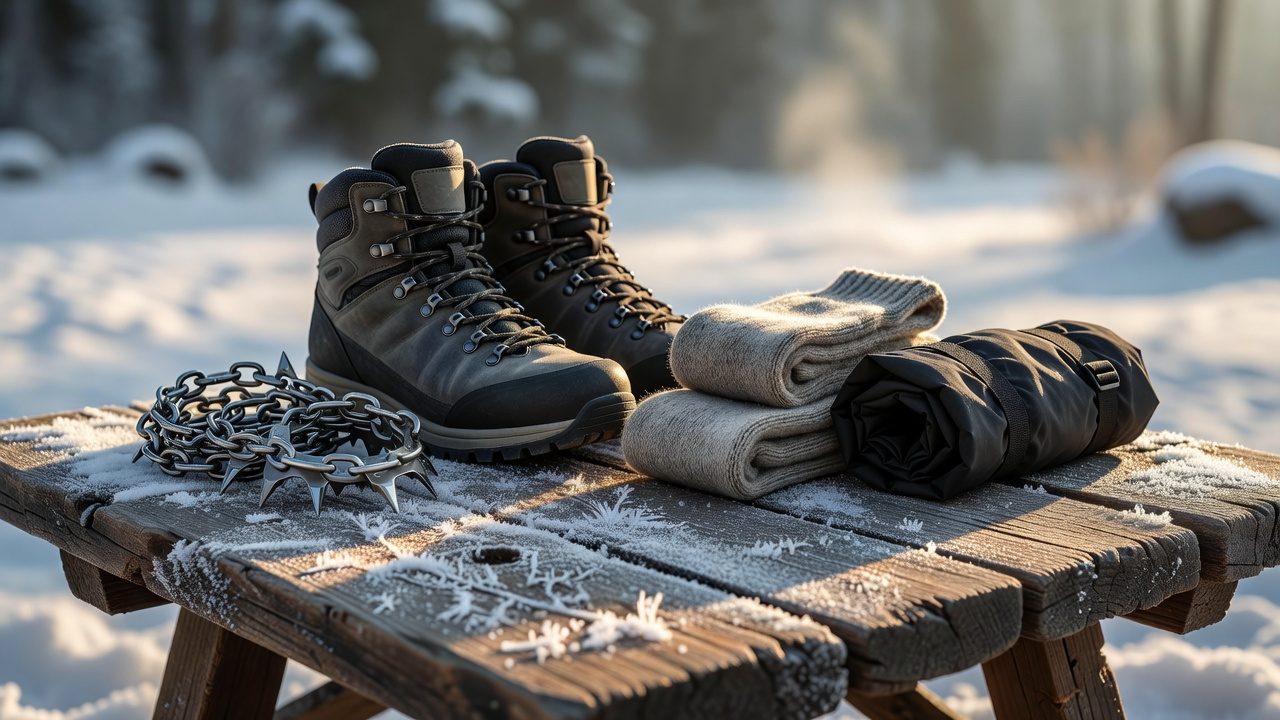
Kids Snow Boots: What Toddlers and Big Kids Actually Need
Kids snow boots should be bought for the job the child does most, not for the trip you are planning. If the answer is "plays in the yard and stands at the campsite", buy the rubber-shell camp boot. If it is "walks a trail with us", buy the waterproof hiking boot and add socks.
Kids snow boots by age and job
- Toddler (18 months – 3 years): pull-on or single-strap, wide opening, no laces, high shaft. Priority is getting it on a foot in under thirty seconds and keeping snow out of the ankle. A rubber shell with a removable liner is ideal because the liner can be dried overnight without the whole boot sitting by the fire.
- Little kid (4 – 7 years): the camp boot with a real sole. This is the age where a kid walks through wet snow for an hour and then stands still — both jobs, so pick the boot with a rubber shell and a lugged outsole. The Columbia Youth Bugaboot Celsius Insulated Snow Boots ($64.99) is the pick we keep coming back to: insulated, waterproof, and genuinely kid-operable.
- Big kid (8 – 13 years): by now a child can work a lace or a Boa-style closure, and this is where a waterproof hiking boot pays off. The KEEN Kids Hightrail Waterproof Hiking Shoes ($74.95) is the walking answer, and the higher-cut KEEN Unisex-Child Targhee Mid Height Waterproof Hiking Boot ($74.95) is the answer if you are dealing with ankle-deep powdery snow rather than a packed trail.
- Teens: they can wear adult sizing, which means they graduate to the women's and men's winter hiking boots below — and typically to the smallest men's or women's size rather than a kids' style.
How much room should kids snow boots have?
One thumb-width of space at the toe, measured with the thickest sock the child will actually wear, and no more. The common instruction to "size up so they last two seasons" is the most expensive mistake in this category: a boot that is a size too long changes a child's gait, blisters the heel on any real walk, and is colder, not warmer, because the foot cannot stay in contact with the insulation. Test in the afternoon, when feet are slightly larger, and test both feet — most kids' feet differ by half a size.
Send the boot back if the heel lifts when the child walks. A heel that lifts pumps air in and out of the boot, which is exactly how wet snow ends up inside a waterproof boot.
Kids snow boots for wide feet
Wide feet are the second-most-common reason a kid's snow boots get abandoned. Two practical fixes that beat hunting for a "wide" snow boot that may not exist in your child's size:
- Choose a hiking-boot shape with a roomy toe box. KEEN is the brand we end up recommending most for this, because the wide forefoot is the design, not an accident. The KEEN Kids Hightrail Waterproof Hiking Shoes ($74.95) is the direct example.
- Choose a rubber shell with a removable liner, and swap in a thinner merino sock. Liner-style kids boots have more internal volume than a padded insulated boot, so a wide foot fits without sizing up into a boot that is too long. For the adult version of this trade-off, see our wide feet hiking shoes guide.
Waterproof snow boots for kids: the wet-snow test
Wet snow at 33°F is the hardest condition for a kids snow boot, harder than 0°F dry cold, because water is the failure mode and not temperature. Run this check before you commit a whole winter to a pair:
- Stand the child in a shallow puddle for two minutes. Dry sock after two minutes means the shell is sound. Damp at the seam means you found the seam.
- Look for a waterproof band or a one-piece shell rather than a stitched decorative overlay. Decorative stitching through the shell is where the water comes in.
- Pull the liner and squeeze it. If a removable liner stays wet after an hour inside, it is not the boot you want for a two-night camp.
If a child is going to be out in wet snow for hours, the boot is only half the system. Insulated waterproof gaiters over the boot collar keep snow from packing in at the ankle — the adult version of that trick is covered in the gaiters section below.
Winter Hiking Boots for Adults
For an adult, the question is not "how insulated" but "how waterproof, how stiff, and can I put traction on it". A winter hiking boot needs to keep slush out over the collar, hold a load on a stiff-ish sole, and have enough of an edge to accept a traction device without cutting into the upper.
Winter hiking boots for women and men
Two profiles cover most family use:
- Mid-height GTX hiking boots — the do-everything choice. Full-height ankle support, a waterproof membrane, and enough sole stiffness to walk three miles in snow without your arch collapsing. The Salomon Men's X Ultra 4 Mid GTX Hiking Boots ($231.81) is the strongest all-round pick on our shelf, and the women's equivalent in the Merrell line handles the same job.
- Waterproof low hiking shoes — the lighter, cheaper answer for a trailhead walk, a sled hill, or a campground road. Merrell Women's Moab 3 Waterproof Hiking Shoe ($144.95) and Merrell Men's Moab 3 Waterproof Hiking Shoe ($129.95) are the two we link most, because they are waterproof, comfortable from the first mile, and easy to size.
- Budget and dry-cold workhorse: Merrell Men's Moab 3 Hiking Boot ($89.99) — the boot to choose when the forecast is 20°F and dry rather than 33°F and wet, or when you want one pair that also does three-season hiking.
- Roomy toe box and lower volume: KEEN Men's Targhee 3 Low Height Waterproof Hiking Shoes ($187.00) suits wide feet and anyone who has given up on narrow boots.
If you are choosing between a boot and a shoe and the answer is not obvious, our side-by-side on trail runners vs hiking boots covers the chassis difference in detail — and the fit mechanics are the same in winter, which is why the hiking boot fit and break-in guide is worth ten minutes before you order.
Winter hiking boots that are crampon compatible
A boot is crampon compatible when its sole has a stiff shank or a heel and toe welt that a crampon bail or strap can bite into without crushing the upper. The practical hierarchy for families:
- Coil cleats and studded microspikes fit essentially any hiking boot and shoe and are what 95% of winter family hiking actually needs.
- Strap-on crampons need a boot with a genuinely stiff sole. A flexible lightweight hiker will fold under a crampon, which is both useless and a sprained ankle.
- Step-in crampons with automatic bails need a rigid mountaineering boot with front and rear welts. That is a different category of boot, and a different trip.
The honest answer for a family: buy the boot that is warm and waterproof for the walk you are doing, then solve ice with the traction device. If you do find yourself needing crampons regularly, that is a mountaineering decision rather than a camping one.
Winter hiking boots for wide feet and high-volume feet
Wide feet in winter are harder than wide feet in summer, because an insulated boot has more lining inside the same shell. Three things help:
- A brand with a deliberate wide forefoot — KEEN first, some Merrell lasts second.
- A half size up but not more, then lace the midfoot tightly so the foot cannot slide forward. A sliding foot in a cold boot blisters, and a blistered foot is a cold foot.
- A thinner sock than you think. A thick sock in an already-insulated boot compresses, loses its loft, and cuts off circulation at the ankle. Two thin merino layers beat one thick one; more on that in the socks section.
Waterproof vs water-resistant: which do you need?
Waterproof matters when you will be in snow or slush for more than an hour, or when a boot has to dry overnight and be worn again the next morning. Water-resistant is acceptable for a dry-cold walk, a parking-lot-to-campground stroll, or a boot that will never see a puddle. For a family trip in snow, buy waterproof — the whole point of a membrane is that a wet boot on day one does not end the trip on day two. Also check the boot's collar height against the snow depth you expect: no membrane in the world keeps out snow that comes in over the top of the boot.
Snow Traction: Microspikes, Coil Cleats, and Crampons Explained
This is the part of winter gear that families under-buy. Traction devices live in three families, and choosing wrong is the difference between a confident walk and a fall that ends the trip.
The three families of snow traction
- Coil cleats — a spring-steel coil wound around a rubber harness. Grips packed snow, hardpack and slick pavement, and stays reasonably comfortable on bare patches. This is the right first purchase for a family: it is cheap, it fits kids' boots and adults' boots, and it does not require a stiff sole. The Yaktrax Pro Traction Cleats ($34.95) is the one on our shelf, with a 360° coil wrap and a strap that keeps the cleat on in deep snow.
- Studded microspikes — a plate or chain with carbide or steel spikes under the forefoot and heel. This is the step up for genuinely icy trail: a shaded hillside, a portage, a paved path with an inch of frozen slush. Spikes bite where a coil slips, at the cost of being unpleasant on rock and bare pavement, so they get put on and taken off during a walk.
- Crampons — long points, a rigid frame, and a requirement for a stiff-soled boot. Mountaineering and steep-ice gear; not a family camping purchase, and genuinely dangerous on a flexible boot.
Snow traction for boots vs snow traction for shoes
The device does not care whether it is strapped to a boot or a trail shoe; the harness cares about the size and shape of what it wraps. Two things to check before ordering:
- Sole length and width against the harness size range. A size that fits a men's 12 winter boot may be loose on a kids' size 4 boot, and a loose harness rolls off the heel at exactly the wrong moment.
- Sole height and the heel ledge. Very thick rubber shell boots with a deep heel counter sometimes do not seat a coil cleat cleanly. Test by walking fifty steps on hardpack; if the heel lifts, size down or choose a different harness style.
For mixed-age families, this is a reason to buy one pair per person rather than passing a pair down: a cleat that fits one person's boots well is often the wrong size for another's, and a cleat that comes off is worse than no cleat at all.
Microspikes for hiking: when they beat coil cleats
Choose microspikes over a coil cleat when the surface is ice rather than snow, when the trail is sloped, or when the ice is polished and old. The signs that tell you it is an ice day rather than a snow day:
- The trail has been walked enough that the surface is grey and translucent rather than white.
- Water is running under the snow, or the snow is saturated and refrozen.
- The trail crosses a shaded side of a ridge, or a bridge deck, or a portage.
- The temperature went above freezing and then dropped again overnight. Refrozen slush is the slickest surface in the woods.
Microspikes are heavier and more expensive and less comfortable on rock. If your winter walking is mostly snowshoeing and sledding, coil cleats are the better single purchase; if you hike shaded trail, carry both and switch.
Yaktrax and the coil-cleat family: which version, and why
The coil-cleat family has versions that map onto activities rather than quality tiers:
- Walk / everyday: the low-profile coil for pavement, driveways, and errands. Lightest, easiest on, least aggressive.
- Pro: the version with a strap over the top of the foot and a sturdier coil — the one worth owning for trailhead and campground use, and the pair we link above.
- Run: a lighter harness tuned for running gait. Only worth it if you genuinely run in winter.
- Diamond / studded versions: spikes rather than coils under a similar harness, for the icy-trail case above.
Snow chains for boots and "snow grip for boots": what actually exists
There is no boot chain. The phrase goes back to vehicle chains, and the products sold under it are always one of the three families above — usually a studded harness with larger spikes. What genuinely exists, and what you should be looking at:
- A studded traction harness with bigger, longer spikes for wet ice and frozen mud.
- A removable stud kit for boots you already own, which is a legitimate option for a dedicated winter trail boot.
- Screw studs — a DIY approach that works surprisingly well on a retired pair of trail shoes: short sheet-metal screws driven up through the sole, tips exposed. It is cheap, it wrecks the sole for anything else, and it is the option to consider for a boot that will only ever see ice.
What does not work: expecting lug depth alone to handle ice, or wearing a loose harness over a thick-shelled pac boot.
Packable Winter Boots and the Travel Question
Packable winter boots are the honest compromise of the category. Removing the insulation that makes a boot warm is precisely what makes it packable, so a "foldable" winter boot is closer to an insulating overshoe than a boot — good for a cabin trip, a train journey, or a suitcase where a boot would eat a quarter of the bag, and not good for a snowshoe trail.
What we do instead on family trips, in order of how much it helps:
- Pack the sock system, not the boot. Two pairs of warm socks plus a boot that fits them costs a fraction of a second boot and covers far more conditions.
- Take a waterproof gaiter instead of a taller boot. A gaiter over a mid-height boot handles calf-deep snow at a fraction of the weight and volume.
- Dry the one pair of boots properly every night. A dry boot is warmer than a heavier boot, which is the point made in the socks and drying section below.
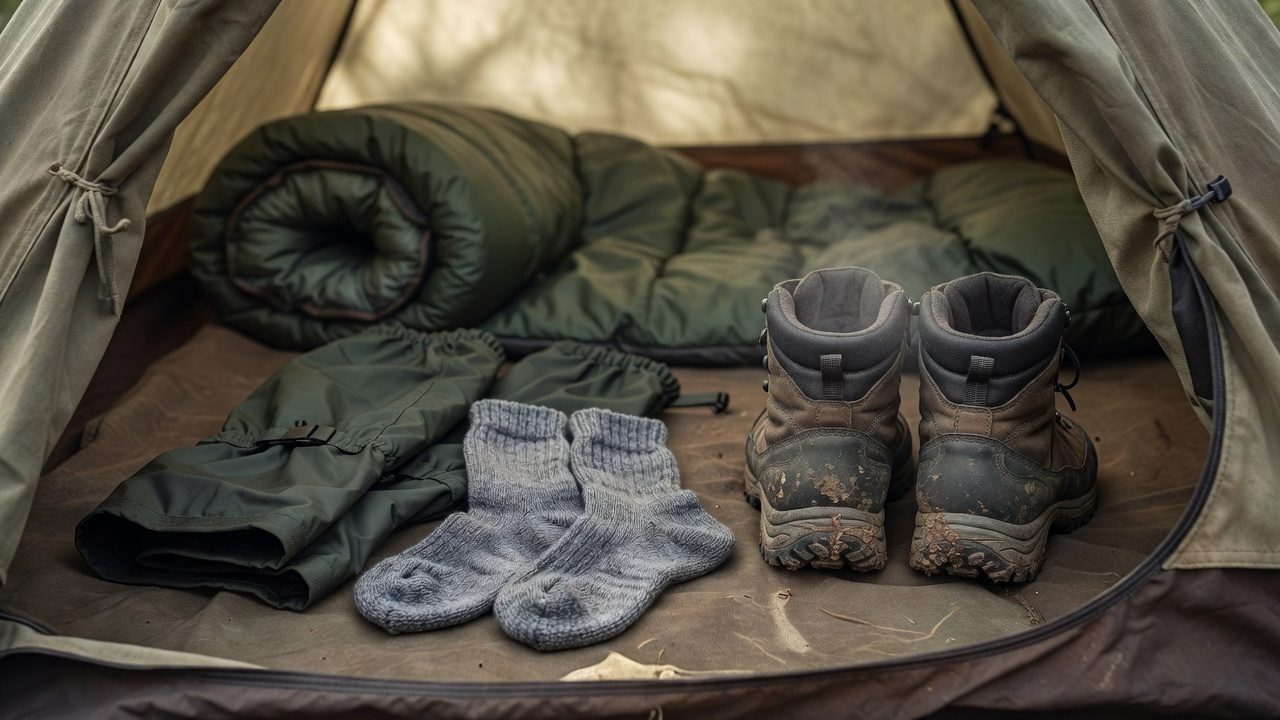
Keeping Feet Warm at Camp: The Sock and Drying System
The single most common family winter-camping complaint is cold feet at camp, and the single most common cause is not an under-insulated boot. It is a wet sock inside a boot that never dried. Fix the system and feet warm up without buying anything new.
Winter hiking socks: merino vs synthetic
Merino is the default for winter for three reasons: it insulates when damp, it resists odor, and it has a wider comfort range than synthetics, which matters in a boot that is too warm at 3pm and too cold at 8pm. Synthetics dry faster and are more durable under heavy abrasion. The blend that works best in practice is a merino-heavy sock with a synthetic core, worn thin-to-medium under a boot that already has insulation.
Weight, not brand, is the first decision: a light cushion sock for an active winter hike, a midweight sock for standing around camp, and a heavyweight sock reserved for sleeping or for a boot that has lost its insulation.
Winter wool socks for men and women
- Darn Tough Vermont Men's Hiker Midweight Micro Crew Sock ($27.95) — the midweight workhorse, and the sock we would take on a cold camp first.
- Darn Tough Vermont Hiking Socks for Women — Merino Wool ($25.95) — the same construction in a women's fit, which matters because a men's sock bunches under a women's boot.
- Smartwool Men's Hike Classic Edition Light Cushion Crew Socks ($19.95) — the light cushion sock for active winter hiking and snowshoeing.
- DANISH ENDURANCE Merino Wool Hiking Socks, Thermal ($39.95) — a warmer thermal option for standing-still camp duty.
- Darn Tough Vermont Men's Light Hiker Micro Crew Lightweight Hiking Socks ($24.95) — the liner-and-active pair, and the one to buy in multiples.
How to keep your feet warm camping: the five-part system
- Never wear the boots you walked in all day inside the sleeping bag. Boots hold moisture from sweat; a bag cannot dry them, and the moisture migrates into the bag's insulation. Boots stay in the tent entry, liner pulled if it is removable.
- Change socks on arrival at camp, not at bedtime. The sock you hiked in is damp. Wet merino insulates better than wet cotton, but dry merino beats both. This single habit is worth more than any boot upgrade.
- Sleep in a dedicated dry pair. Keep one pair of socks that never touches a boot — that is what they are for. If feet are still cold, that pair plus a loose dry boot is better than a tight one.
- Loosen, do not tighten. A boot or sock that compresses the ankle reduces circulation, which is how feet get cold in expensive boots. If feet are cold while you are sitting, take the boot off and put a camp bootie or a second sock on.
- Insulate from the ground, not just from the air. Cold feet in a sleeping bag are usually a cold ground problem. Our guide to sleeping bag temperature ratings explains the pad-versus-bag split, and the camping cot vs air mattress vs sleeping pad comparison covers the R-value side of it.
How to dry winter boots overnight at camp without ruining them
Wet boots are a night-two problem, and the fix is mechanical rather than thermal:
- Pull the liners and the insoles out on any removable-liner boot. Two thin layers dry far faster than one thick one.
- Turn boots upside down on a stick or a tent pole, never directly beside a fire or on a stove. Direct heat shrinks rubber shells, melts glue and cracks membranes — this is how a good boot is destroyed in one night.
- Never dry boots inside a sleeping bag. The moisture you pull out of the boot goes straight into the bag's insulation.
- Stuff with dry cloth or newspaper and change it once before you sleep for a rubber-shell boot.
- A chemical hand warmer inside the boot for twenty minutes before bed, with the boot outside the bag, takes the edge off without cooking the boot.
The rest of a cold camp is a separate system — our winter camping gear checklist covers the sleep and shelter side, and how to stay warm camping covers the layer-and-fire side.
Gaiters, Gloves, and the Rest of the Cold-Weather Hand and Ankle Kit
Winter boots handle about half the cold-foot problem; the sealing around the ankle and the blood supply to the fingers handle the rest.
Gaiters: the cheapest way to make a shorter boot work
A waterproof gaiter over a mid-height boot is functionally a taller boot for a fraction of the price, and it keeps snow from packing in at the ankle — the failure mode that ends an otherwise fine walk. Outdoor Research Men's Crocodile Gaiters ($59.00) is the durable choice for real snow. For cold wind rather than deep snow, a merino neck gaiter is worth more than it sounds: Smartwool Thermal Merino Reversible Neck Gaiter ($32.00) doubles as a hat and a face cover, and Merino.tech 100% Merino Wool Neck Gaiter ($19.99) is the budget version.
Gloves that survive wet snow
Wet snow destroys knit gloves, and kids lose gloves. Two picks that hold up: Carhartt Men's Waterproof Insulated Knit Cuff Glove ($32.99) for adults doing real work in the cold, and TRENDOUX Winter Gloves with 3M Thinsulate ($19.99) as the touchscreen-friendly pair worth buying in multiples for the family. The rule that matters: two cheap dry pairs beat one expensive wet pair, so pack a spare for every child.
The boot-and-body connection
Cold feet are often a body problem rather than a foot problem. If the core is cold, the body stops sending blood to the extremities, and no boot insulates enough to compensate. That means the layering article is not optional reading — see fall hiking clothes: what to wear for the layer system that keeps the hands and feet warm as a side effect, and day hike essentials for the winter version of a pack list.
Where Winter Footwear Fits Into a Family Winter Trip
Boots are one line item in a winter kit, and buying them in isolation is how families end up with great boots and a cold night. The order we would spend money:
- Sleep system first — a pad with a real R-value and a bag rated below your expected low. See the winter camping gear checklist and the 4-season tent guide.
- Heat safety — the camping heater guide covers what can and cannot go inside a tent, and the hot tent and stove jack guide covers wood heat.
- Feet and hands — this page, plus socks in multiples.
- Warmth at the top — how to stay warm camping and the winter camping beginners guide.
- A destination with snow — where to camp in December and the January camping guide cover the winter-open window, and camping in Colorado is the snow-and-sunrise version.
For families whose children are new to cold weather, the pacing matters as much as the gear: the camping with a baby or toddler guide and the backyard camping with kids setup both cover the short-exposure approach that keeps a first winter trip fun. And if you are buying winter footwear as a gift, the camping gift guide and our Black Friday and Cyber Monday camping deals page are where the timing question lives — boots are one of the few categories with a genuine seasonal discount window.
Snow Boots and Winter Hiking Boots: Every Version of the Question
The same purchase gets searched a dozen different ways, and the honest answer changes with the wording. These tables map the phrase to the boot that actually answers it, so you can stop translating in your head.
Kids' snow boots, by the way people search
| What you searched | What actually answers it | Pick |
|---|---|---|
| kids snow boots | rubber-shell camp boot, removable liner, pull-on or single strap | Columbia Youth Bugaboot Celsius ($64.99) |
| snow boots for kids / winter boots for kids | same category; buy for the job, not the temperature extreme | Columbia Bugaboot Celsius |
| best snow boots for kids | the pair that survives wet snow and a child putting them on alone | Columbia Bugaboot Celsius |
| best snow boots for toddlers | pull-on, wide opening, no laces, high shaft | Columbia Bugaboot in the smallest youth size |
| kids snow boots for girls | sizing and colorway question, not a construction difference | Columbia Bugaboot Celsius |
| winter boots for kids waterproof | one-piece shell or a waterproof band; check the seam, not the label | Columbia Bugaboot Celsius |
| waterproof snow boots for kids | the same as above, tested in a two-minute puddle | Columbia Bugaboot Celsius |
| kids snow boots for wide feet | a roomy toe box with a removable liner, not a size up | KEEN Kids Hightrail ($74.95) |
| kids snow boots for hiking | a waterproof hiking-boot chassis instead of a rubber shell | KEEN Child Targhee Mid ($74.95) |
| best winter boots for kids, best winter boots for toddlers | the same camp boot, phrased for winter rather than snow | Columbia Bugaboot Celsius |
| snow boots for kids boys, snow boots for kids girls | sizing and colourway, not construction | Columbia Bugaboot Celsius |
Adult snow boots and cold-weather boots
| What you searched | What actually answers it | Pick |
|---|---|---|
| best snow boots for men | 400-600 g insulated waterproof boot with a lugged sole | Merrell Moab 3 Hiking Boot ($89.99) |
| best snow boots for women | the women's-lasted version; never a men's size down | Merrell Women's Moab 3 Waterproof ($144.95) |
| waterproof snow boots men | membrane boot for wet snow, not dry-cold pac boots | Merrell Men's Moab 3 Waterproof ($129.95) |
| waterproof snow boots women | same construction, women's fit and volume | Merrell Women's Moab 3 Waterproof |
| best winter boots for camping | you stand still a lot; insulation and easy on-off beat stiffness | Salomon X Ultra 4 Mid GTX ($231.81) |
| insulated boots for cold weather | check the fill (400 g is the family sweet spot) before the brand | any of the four above |
| insulated boots for men, insulated boots for women | fill and fit, same answer as above | Merrell Moab 3 line |
| insulated boots for men waterproof | a membrane plus insulation; the wet-snow combination | Merrell Men's Moab 3 Waterproof |
| insulated boots for kids | the same fill logic, scaled to a growing foot | KEEN Child Targhee Mid |
| insulated boots for hiking | a walking boot, not 1,000 g standing-around fill | Salomon X Ultra 4 Mid GTX |
| boots for extreme cold weather | 600-800 g fill or a liner boot with a felt or wool pack | see the extreme-cold answer in the FAQ |
| best snow boots for extreme cold / best winter boots for extreme cold | warmth you cannot walk in; treat it as standing-still gear | see the extreme-cold answer in the FAQ |
| best winter boots for men, best winter boots for women, best winter boots for walking | winter phrasing of the same two rows above; walking versions are the midweight boot | Merrell Moab 3 line |
Winter hiking boots, by the phrasing people use
| What you searched | What actually answers it | Pick |
|---|---|---|
| winter hiking boots | mid-height, waterproof membrane, stiff enough to hold a load | Salomon X Ultra 4 Mid GTX ($231.81) |
| hiking boots for winter | the same boot; look for a real outsole and a collar above the snow | Salomon X Ultra 4 Mid GTX |
| boots for winter hiking / boots for snow hiking | waterproofing first, insulation second, traction underneath | Salomon X Ultra 4 Mid GTX |
| best boots for snow hiking / good boots for snow hiking | membrane boot plus a cleat you carry, not a heavier boot | Salomon X Ultra 4 Mid GTX + Yaktrax Pro ($34.95) |
| snow boots for hiking | people mean a waterproof hiking boot here, not a pac boot | Merrell Men's Moab 3 Hiking Boot ($89.99) |
| shoes for snow hiking / footwear for snow hiking | low waterproof hikers for a trailhead walk or a campground road | Merrell Women's Moab 3 Waterproof ($144.95) |
| winter hiking boots for men | men's last, mid height, membrane | Salomon X Ultra 4 Mid GTX |
| winter hiking boots for women | women's last; volume matters more in an insulated boot | Merrell Women's Moab 3 Waterproof |
| winter hiking boots waterproof | a membrane that still works after a night of drying | Salomon X Ultra 4 Mid GTX |
| winter hiking boots for wide feet | a deliberate wide forefoot, half size up at most | KEEN Men's Targhee 3 Low ($187.00) |
Snow traction, by device name
| What you searched | What actually is | When to use it |
|---|---|---|
| snow traction for boots / snow traction for shoes | coil cleats or studded harnesses; the boot is not the grippy part | packed snow, hardpack, slick pavement |
| winter traction for boots | same category, colder phrasing | shaded trail and refrozen slush |
| snow chains for boots | no such product; you mean a studded harness | wet ice, frozen mud |
| snow chains for hiking boots | a studded harness sized to the boot | steep or polished ice |
| snow grip for boots | coil cleats for most families | the first device to buy |
| microspikes for hiking | studded plate under forefoot and heel | genuine ice, sloped trail |
| microspikes for hiking boots | same device; check the harness does not roll off the heel | ice days |
| microspikes for hiking shoes | fit is the limiting factor, not the shoe | low hikers on icy trail |
| yaktrax walk | the everyday coil cleat | driveways, errands, pavement |
| yaktrax run | the lighter harness tuned for running gait | winter running |
| yaktrax pro | coil cleat with a strap over the foot; sturdy coil | trailhead and campground use |
| yaktrax spikes / yaktrax diamond grip | studded versions under a similar harness | icy trail rather than snow |
| yaktrax snow trax | the heavier or hybrid versions sold under that name | wet ice and frozen mud |
| snow chains for walking boots, snow shoes for hiking | a studded harness; here "snow shoes" means traction, not snowshoes | a studded harness sized to the boot |
Warm feet: the sock side of the question
| What you searched | What actually answers it | Pick |
|---|---|---|
| keep feet warm camping | dry socks, dry boots, insulation from the ground | see the five-part system above |
| how to keep your feet warm camping | change socks on arrival, sleep in a dedicated dry pair | see the five-part system above |
| best way to keep feet warm camping | loosen the boot, never tighten a cold foot | see the five-part system above |
| keep feet warm winter camping | pad R-value first, then socks, then boots | see the five-part system above |
| winter hiking socks | merino or a merino-heavy blend, light to midweight | Darn Tough Light Hiker ($24.95) |
| winter hiking socks for men | men's fit in a light-to-midweight merino crew | Darn Tough Men's Hiker Midweight ($27.95) |
| winter hiking socks women | women's fit; a men's sock bunches under a women's boot | Darn Tough Hiking Socks for Women ($25.95) |
| winter wool socks | wool for warmth when damp, synthetic core for durability | Smartwool Hike Classic Crew ($19.95) |
| winter wool socks for men / winter wool socks women | weight, not brand: light for hiking, midweight for camp | Darn Tough line |
| winter walking socks | the midweight pair you keep for standing around camp | DANISH ENDURANCE Merino Thermal ($39.95) |
| snow boots camping, walking boots for winter | the midweight pair, plus a boot that dries overnight | DANISH ENDURANCE Merino Thermal |
Packable and travel
| What you searched | What actually answers it | Pick |
|---|---|---|
| packable winter boots | a compromise, not a boot; packable means less insulation | pack socks and a gaiter instead |
| packable snow boots | same trade-off; overshoes are the honest version | OR Crocodile Gaiters ($59.00) over a mid boot |
| foldable winter boots | volume saved comes out of warmth | see the travel section above |
| best packable winter boots | a boot that packs still has to dry overnight | see the travel section above |
| packable snow boots women, packable winter boots women | same trade-off in a women's fit and volume | see the travel section above |
Snow Boots FAQ
Are winter hiking boots the same as snow boots?
No, and the difference is the sole and the chassis. A snow boot prioritizes insulation and a waterproof rubber shell for standing in the cold — a pac boot or a kids' snow boot. A winter hiking boot prioritizes a stable, stiff-ish sole, a lacing system that holds the foot on descents, and a waterproof membrane so you can walk a trail under a load. Some boots sit in the middle, but if you only buy one pair, buy for the activity you do most rather than the coldest temperature you might see.
What temperature rated snow boots do my kids need?
Match the fill to the activity, not the forecast extreme. About 400 g of insulation is the right band for most kids' snow boots used for playing in snow and standing at camp, comfortable to roughly 0°F while active. If your child is walking a trail, a waterproof insulated hiking boot with two thin merino socks is warmer in practice than a heavier pac boot, because it stays dry inside. Snow boots rated below -20°F are for standing still on a sled hill, not for walking.
Can you wear microspikes on regular hiking boots?
Yes. Studded microspikes and coil cleats both fit regular hiking boots and hiking shoes, which is what makes them the right first winter traction purchase. The limits are stiffness and fit: strap-on crampons (as opposed to microspikes) need a genuinely stiff sole, and any traction device needs a harness sized to the boot it wraps. Check that the harness does not roll off the heel by walking fifty steps on hardpack before you commit to a full hike.
Do I need waterproof snow boots, or is insulation enough?
Insulation does not keep water out, and a wet insulated boot is colder than a dry uninsulated one. If you will be in snow or slush for more than an hour, or if the boot has to be dried overnight and worn again the next morning, buy waterproof. The exception is dry-cold conditions — 15°F with powder snow — where a water-resistant boot with a thick sock is a reasonable and cheaper choice.
How much room should kids snow boots have?
One thumb-width at the toe with the thickest sock the child will wear, no more. A boot that is too long makes a child's foot slide and the heel lift, which blisters the heel and pumps cold air in and out of the boot. Size up at most half a size, test in the afternoon when feet are largest, and measure both feet — most children's feet differ slightly. Send back any pair where the heel lifts when the child walks.
What socks do you wear with snow boots?
Merino or a merino-heavy blend, in a weight matched to the activity: light cushion for active winter hiking, midweight for standing around camp, heavyweight only for sleeping or for a boot that has lost its loft. Thin-to-medium beats thick, because a compressed sock loses its insulating air and can reduce circulation at the ankle. Never cotton, and always a dry spare pair for camp.
How do you keep boots from freezing overnight at camp?
Pull the liners and insoles if they are removable, invert the boots on a stick or pole rather than putting them near a fire, and never dry them inside a sleeping bag. Stuff rubber-shell boots with dry cloth and change it once before bed, and finish with a chemical hand warmer inside each boot for twenty minutes while the boots stay outside the bag. Direct heat from a fire or stove is what destroys boots — it shrinks rubber, melts adhesives and cracks membranes.
Are insulated boots warm enough for winter camping?
Usually yes for the standing-at-camp part, and usually not by themselves for a night in a tent, where the ground is the real cold source. Cold feet in a sleeping bag are almost always a pad problem rather than a boot problem: an insulated pad with a real R-value changes the picture more than any boot. For walking in snow to get to camp, a waterproof insulated boot with a merino sock is the right combination; keep a dry dedicated pair of socks for sleeping and never wear the day's boots into the bag.
What are the best snow boots for extreme cold?
There is no single answer, because "extreme cold" splits into two different products. For standing still — a sled hill, an ice-fishing chair, a campsite at 0°F — you want 600 to 800 g of fill, or a liner boot with a felt or wool pack, and you accept that walking any distance in them is unpleasant. For walking in extreme cold, an insulated waterproof hiking boot with two thin merino layers is warmer in practice than a heavier pac boot, because it stays dry inside. Also look at the numbers people search under boots for extreme cold weather and insulated boots for cold weather — the specification they are reaching for is fill weight and a removable liner, and the boot that fails is usually one with a thick fixed liner that cannot be dried.
Are packable winter boots or foldable snow boots worth packing?
Only for the specific job they do: a cabin trip, a train journey, or a suitcase where a real boot would eat a quarter of the bag. Packable winter boots and foldable winter boots get their packability by giving up insulation, so they behave closer to an insulating overshoe than a boot and should not be the only footwear on a snow hike. The version that actually works is to pack the sock system instead, add a waterproof gaiter over a mid-height boot, and dry that one pair properly every night.
Which winter hiking boots work for snowshoeing, ice, and crampons?
For winter hiking boots for snowshoeing, the requirement is a boot with a defined heel edge that a snowshoe strap or binding can grip, plus enough sole stiffness that the boot does not fold under the binding — a mid-height waterproof hiking boot such as the Salomon X Ultra 4 Mid GTX fits that description. For winter hiking boots for ice, no boot solves ice on its own; you add studded microspikes to any waterproof hiking boot, and the check is that the harness does not roll off the heel. For winter hiking boots crampon compatible, a boot needs a genuinely stiff shank or a heel and toe welt, and strap-on crampons on a flexible lightweight hiker are both useless and a sprained ankle. That is a mountaineering decision, not a family camping one.
<!-- AFFILIATE_DISCLOSURE -->TrailMapz is a family weekend outdoor gear guide. We link gear we would take on our own trips — boots for snow hikes, socks for cold camps, and the traction devices that keep a walk upright. As an Amazon Associate, we earn from qualifying purchases, and prices shown are the ones we recorded at the time of writing.