Trail Runners vs Hiking Boots: Which Should You Actually Wear? (2026)
Trail runners vs hiking boots — ankle support, weight, waterproofing and grip compared, plus what our picks cost for day hikes and backpacking.
Every hiker hits this fork in the trail eventually: trail runners vs hiking boots. You've read the hype from both camps — ultralight folks swear their runners float over rocks, while traditionalists insist a boot's ankle support saves ankles on descents. Both are right, and both are wrong. The honest answer is that the best choice depends on your trail, your pack, and your feet.
I've hiked the same loop in heavy leather boots and in trail runners, and the difference is dramatic. This guide breaks down exactly when each makes sense, with specific 2026 picks so you don't have to guess. For the full rundown of the best hiking shoes across every category, check our complete hiking shoe buying guide — this article is the deep-dive on the runner-vs-boot decision itself.
Quick Answer: Which Should You Buy?
Before the details, here's the 30-second version:
- Choose trail runners if: you hike mostly day trips with a light pack (under ~15 lb), you're on dry or well-drained trails, you prioritize comfort and speed over ankle coverage, or you do long-distance miles where every ounce counts.
- Choose hiking boots if: you carry a heavy pack, hike rocky or off-trail terrain, need extra ankle support (weak ankles, prior sprains), hike in wet or cold conditions, or you want a shoe that protects against brush, mud, and debris.
- Choose a low-cut waterproof shoe if: you want the middle path — light like a runner, but dry like a boot. This is honestly the sweet spot for most weekend family hikers.
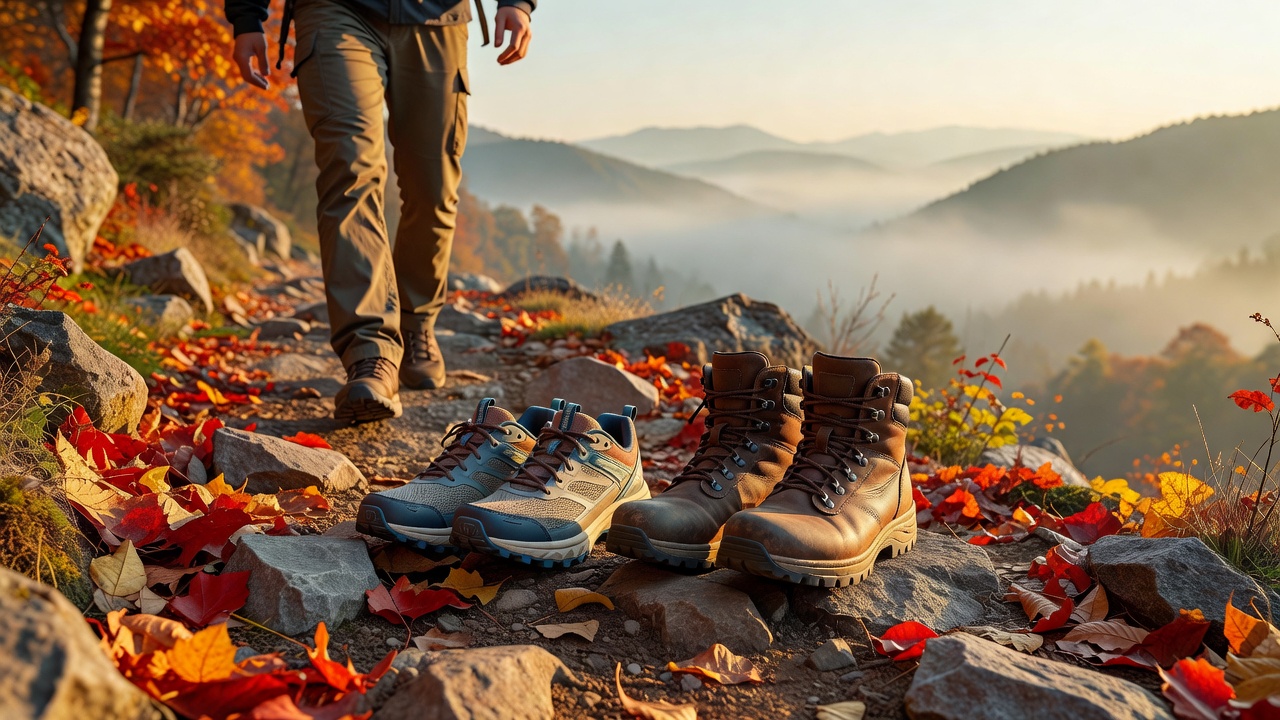
Decode the Way You Searched: Every Version of This Question
People describe this decision a dozen different ways, and the verdict is the same each time. Find your own wording below, then read the short answer.
| If you searched for… | You're really asking | Short answer |
|---|---|---|
| trail running vs hiking boots | Is a running-style shoe enough? | Yes for day hikes — no for heavy packs. |
| trail running shoes vs hiking boots | Same question, full product name | Identical answer: pack weight decides it. |
| trail runners vs walking boots | "Walking boots" means traditional leather boots | Walking boots are the heavy end, runners the light end. |
| walking boots vs trail runners | Same pair, reversed | Same answer — there's no separate category. |
| trail runners vs hiking shoes | Aren't these the same thing? | Almost. "Hiking shoes" is the low-cut category; trail runners are its lightest end. |
| trail running vs hiking shoes | Same question, other wording | Both are low-cut; hiking shoes are usually stiffer and more protective. |
| trail runners or hiking shoes | Which low-cut one? | Hiking shoes for rocky trails, trail runners for fast and dry. |
| trail shoe vs hiking boot | Shortened version | Low-cut vs high-cut. The cut is the whole difference. |
| hiking boots vs trail running | Reversed, casual | Same verdict: match the cut to your pack and terrain. |
| hiking boots vs trail shoes | Boot vs low-cut | Boot for load and debris, trail shoe for speed. |
| walking boots vs trail shoes | Same comparison, EU phrasing | Identical decision. |
| hiking boots or trail runners | The classic either/or | Depends on pack weight, not on trend. |
| are hiking boots or trail runners better | Ranking one over the other | Neither wins overall — they win on different trails. |
| hiking shoes vs boots vs trail runners | All three at once | Light → protective → supportive. Use the three-tier picker below. |
| trail runners vs boots for hiking | Generic "boot" | Boots help most with heavy packs and rough ground. |
| trail runners vs boots backpacking | Overnight-specific | Boots win above ~20% of body weight — see the backpacking section. |
| trail runners vs boots thru hike | Long-distance-specific | Thru-hikers overwhelmingly choose runners: light loads, millions of steps. |
| best trail running for hiking | Shopping phrasing | See our 2026 trail-runner-style picks below. |
If your wording isn't in the table, the rule underneath is always the same: cut follows load, and tread follows terrain.
The Same Question, Asked Every Other Way
These wordings all resolve to the same handful of answers, so here they are together. If you searched one of these, the short version below is your answer — the detail is in the sections that follow.
"Should I wear them at all?" wording
| Wording | Short answer |
|---|---|
| can you walk in trail shoes | Yes, comfortably, on any natural surface. |
| can you walk in trail running shoes | Yes — same shoe category, same answer. |
| can you hike in runners | Yes. "Runners" just means running shoes; on a trail, a trail-specific pair grips better. |
| are trail shoes good for hiking | Yes — they're built for the surface you hike on. |
| are trail runners ok for hiking | Yes, and they're what most long-distance hikers end up using. |
| are trail running shoes good for hiking | Yes, with the caveat that they wear out faster than boots. |
| are trail running shoes ok for hiking | Same answer — okay on dry ground, choose waterproof for cold and wet. |
| are trail runners good for walking | On dirt and gravel, yes. On pavement, the lugs grind down and the ride feels vague. |
Ankle support wording
| Wording | Short answer |
|---|---|
| hiking boots ankle support or not | The collar helps modestly; the midsole shank does most of the work. |
| hiking boots ankle support myth | The myth is that a padded collar prevents sprains. It doesn't — it keeps debris out and adds a little leverage. |
| hiking boots ankle support women | Fit matters more than the spec: a loose boot slides, and sliding causes the roll. |
| hiking boots ankle support men | Same rule. Buy the mid-cut if you want coverage, but get the width right first. |
| hiking boots ankle support waterproof | If you want both, a waterproof mid-cut boot is the combination that makes sense. |
| walking boots ankle support | "Walking boots" are the traditional heavy end — they have the most collar, and the most weight. |
| best hiking boots ankle support | Judge by shank stiffness and heel counter, not collar height. |
| hiking boots good ankle support | Look for a firm heel counter, a stiff shank, and a mid-height collar. |
| best hiking boots ankle support women | A women's-specific last plus a mid-cut collar; don't size up into a men's model. |
| lightweight hiking boots ankle support | Not a contradiction — a light boot with a real shank is the best weekend compromise. |
| merrell hiking boots ankle support | The Moab platform's support comes from the shank and insole rather than a tall collar. |
| trail running shoes ankle support | Low-cut means no collar, by definition. |
| best trail running ankle support | There's no collar to buy — look for a wider platform and a firmer heel counter. |
| trail runners with ankle support women | Highest-grip answer is a women's mid-cut boot plus poles, not a "stability" shoe. |
| trail shoes with ankle support women | Same: the collar is the feature you're asking for, and low-cut shoes don't have one. |
| trail runners with best ankle support | A wider outsole, lower stack, and snug midfoot. |
| trail runners for hiking wide toe box | Toe box width is a fit feature, not a support feature — but it prevents the stubbed-toe pain people blame on support. |
Buying and brand wording
| Wording | Short answer |
|---|---|
| trail runners for hiking women | Buy the women's last of a proven model rather than sizing down. |
| trail runners for hiking men | The men's version of the same platform. |
| best trail runners for hiking women | See the women's pick in the 2026 picks section below. |
| best trail runners for hiking men | The men's low-cut shoe tier below. |
| best trail shoes for hiking women | Same shortlist, women's lasts. |
| best trail shoes for hiking men | Same shortlist, men's lasts. |
| best trail runners for hiking and running | A true hybrid is rare — most "trail runners" favor one. For both, pick a protective low-cut shoe. |
| best trail runners for hiking wide feet | A foot-shaped runner or a wide-last hiking shoe. |
| good trail runners for hiking | Grip, drainage, a rock plate, and a fit that leaves toe room on descents. |
| trail runners for hiking hoka | Hoka leans to maximum cushioning — good on long, softer trails, less precise on rock. |
| trail runners for hiking altra | Altra is known for a wide, foot-shaped toe box — the pick if width is your problem. |
| trail runners for hiking merrell | Merrell sits in the middle: moderate cushioning, wide availability, strong value. |
| trail runners for hiking nike | Nike's trail line is race-oriented — light, fast, and less durable than the hiking-first brands. |
Backpacking, break-in, and width wording
| Wording | Short answer |
|---|---|
| hiking boots vs trail runners for backpacking | Pack weight decides. Under ~25 lb, runners. Over that, boots or a stiff low-cut shoe. |
| trail runners for backpacking women | Gender-lasted fit first, and don't size down a men's model. |
| best trail runners for backpacking women | See the backpacking section for the four features that actually matter. |
| best trail runners for backpacking men | Same four features — rock plate, stack height, heel counter, drainage. |
| best trail runners for backpacking 2026 | The category hasn't changed: cushioning, protection, and drainage over collar height. |
| good trail runners for backpacking | Light trips only. Above ~25 lb you want structure, not lightness. |
| do i need hiking boots or shoes | Boots for heavy packs, mud, and off-trail. Shoes for everything else, which is most trips. |
| hiking boots break in period | 10-20 easy miles for leather; almost none for synthetic. |
| hiking boots break in time | A few short walks is usually enough to feel the difference. |
| hiking boots broken in | Once broken in, leather boots conform to your foot — that's the payoff for the walking. |
| do hiking boots break in | Leather ones do, noticeably. Synthetic ones only slightly. |
| hiking boots no break in | Mesh and synthetic boots, plus all trail runners, are comfortable almost immediately. |
| best hiking boots no break in | Pick a suede-and-mesh upper rather than full leather. |
| merrell hiking boots break in | The Moab platform is known for needing very little — one short walk is normally enough. |
| hiking boots for wide feet women | Buy a wide last or a roomy brand; don't rely on sizing up. |
| hiking boots for wide feet men | Same rule — width is a last, not a size. |
| hiking shoes for wide feet women | Women's wide lasts exist but are rarer; a foot-shaped design covers the gap. |
| hiking shoes for wide feet men | Readily available in wide and extra-wide, which is why men often have an easier time here. |
Trail Runners vs Hiking Boots: The Real Differences
Weight and Fatigue
This is the biggest difference, and it compounds over miles. A typical pair of trail runners weighs 20-24 oz per pair; a mid hiking boot runs 36-46 oz per pair. That extra ~1.5 lb of boot lifts with every single step. Over a 6-mile hike with 5,000 steps, that's thousands of extra pounds of cumulative lift. It's the reason ultralight hikers are so evangelical about runners — on mile 8, your legs feel it.
The tradeoff: boots put that weight into structure that supports you. A boot's shank (the stiff plate in the midsole) spreads load across your foot, which genuinely helps when you're carrying 30 lb of camping gear. If you're carrying the family tent, cook kit, and the dog's food, the extra support earns its weight.
Ankle Support: Fact vs Myth
Here's the uncomfortable truth: a boot's ankle collar provides less protection than most people believe. It's not a cast — it's padded fabric. On a hard ankle roll, a low-cut shoe allows your ankle to roll, but the ground contact pattern of a wide outsole and your body's natural proprioception do most of the "protection" work. Studies on ankle sprains in hikers haven't shown boots dramatically reduce injury rates on maintained trails.
What boots DO help with: debris and brush. A high collar keeps scree, mud, and snow out of your shoe, and shields the ankle from rock scrapes on talus fields. If you hike on loose, unstable ground or off-trail, that's real value.
Traction and Stability
Both shoes and boots can have excellent outsoles — grip comes from the rubber compound and lug pattern, not the height. A quality trail runner with a grippy outsole (think Vibram Megagrip) will outperform a cheap boot on wet rock. The stability difference comes from the sole platform: a boot's wider, stiffer platform gives a more planted feel on uneven ground, while a runner's flexible sole lets your foot adapt to the trail.
Waterproofing: A Double-Edged Sword
Waterproof boots keep streams and rain out — that's the pitch. But here's what nobody tells you: waterproof membranes also trap sweat in. On a warm day, your feet can end up wetter inside a waterproof boot than a breathable runner would leave them. Waterproofing is a clear win in cold, wet conditions (spring mud, creek crossings in 40°F weather). In warm weather, breathable shoes + quick-dry wool socks manage moisture better.
When You Need Boots: The Heavy-Pack Rule
The general consensus among hikers and foot experts: once your pack exceeds roughly 15-20% of your body weight, a stiffer, more supportive shoe helps. For a 160 lb hiker, that's a 24-32 lb pack — that's real backpacking territory, not a day hike. Carrying that load in floppy runners causes foot fatigue, arch strain, and heel slippage on climbs. Day hikers with light packs rarely hit that threshold, which is why runners work so well for them.
Our 2026 Picks for Each Camp
Best Trail-Runner-Style Option: Merrell Moab 3 Waterproof ($129.95)
The Merrell Men's Moab 3 Waterproof Hiking Shoe is the low-cut pick that splits the difference better than almost anything in its price range. It's a trail shoe, not a true racing-style runner — you get a cushioned midsole, a supportive insole, and a waterproof membrane, all in a low-cut package that weighs a fraction of a boot. With 8,400+ reviews at 4.6 stars, it's the most proven value pick in this category.
What you get: waterproof construction that handles wet grass, mud, and shallow puddles; grippy outsole for common dirt and rock trails; and enough cushion for long day hikes. It's the "one shoe for 90% of hiking" answer for weekend family hikers.
Best True Boot for Support: Merrell Moab 3 Hiking Boot ($89.99)
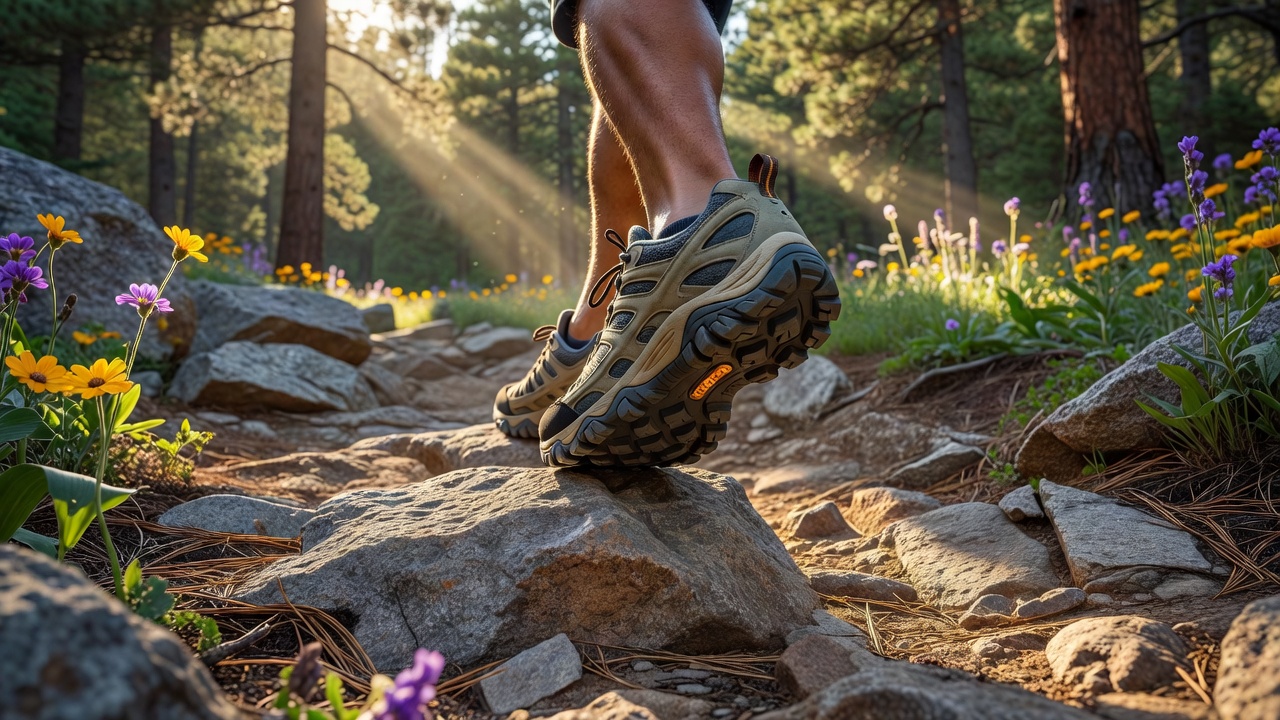
The Merrell Moab 3 Hiking Boot is the boot version of the same beloved platform — and at $89.99 it's an outright bargain. A suede-and-mesh upper balances structure with ventilation, the Vibram TC5+ outsole grips mixed dirt, rock, and gravel, and the Air Cushion heel softens repeated impacts. 5,200+ reviews at 4.5 stars.
This is the pick for: rocky trails, heavier day packs, ankle-support preference, and hikers who want a boot that'll shrug off brush and debris for years. The $40 savings vs the waterproof shoe (oddly) makes it the value play if you don't strictly need waterproofing — or the logical upgrade if you do a lot of talus and off-trail walking.
Best Waterproof Low-Cut for Rugged Trails: KEEN Targhee 3 ($187.00)
The KEEN Men's Targhee 3 Low Height Waterproof Hiking Shoes is the premium middle path: a low-cut shoe with real boot DNA. The KEEN.DRY membrane keeps feet dry through rain, mud, and shallow creek crossings, and the wider toe box is a genuine comfort win for wide-footed hikers or anyone who gets toe squeeze on descents. A rubber toe cap protects against rocks. 8,600+ reviews at 4.4 stars.
It costs more than the Merrells, and you're paying for the roomier fit and the bombproof leather-and-rubber construction. If you've ever come home from a hike with bruised toes, this is the shoe that fixes that.
Ankle Support: Trail Runners, Boots, and What Actually Helps
This is where most buyers get sold the wrong shoe, because "ankle support" gets used as one word for three different things: height, stiffness, and torsional rigidity.
Do hiking boots give you good ankle support, or is it a myth? The honest middle position: a boot's collar does help, but far less than the marketing implies. It is padded fabric around your ankle, not a brace. What it genuinely does is keep your ankle warm, keep debris out, and add a small amount of leverage against rolling — real value on talus and off-trail ground, modest value on a maintained trail.
Hiking boots with ankle support, ranked by how they deliver it: most of the support comes from the shank (the stiff plate in the midsole), not the collar. A boot with a stiff shank and a low collar supports a heavy load better than a floppy tall boot. That's why lightweight hiking boots with ankle support is not a contradiction — a light boot with a real shank and a mid-height collar is usually the best compromise for weekend hikers.
Hiking boots with ankle support for women: fit drives this more than the spec sheet. A boot that's too wide lets your foot slide, which causes the exact roll you were trying to prevent. The Merrell Women's Moab 3 Waterproof Hiking Shoe is the women's-lasted version of the platform recommended above, and the women's-specific last is the point.
Hiking boots with ankle support for men, plus waterproof versions: if ankle coverage and wet-weather protection are both the goal, the Merrell Men's Moab 3 Hiking Boot is the value answer and the Salomon Men's X Ultra 4 Mid GTX Hiking Boots are the lighter, more technical option. Both add the collar without adding much weight.
Trail runners with good ankle support — do they exist? Not in the sense you're hoping. There is no low-cut shoe with a collar, and best trail shoes ankle support really describes a shoe with a wider platform, a lower stack height, and a firmer heel counter — all of which reduce rolling. Look for a wider outsole and a snug midfoot rather than a taller shoe. If you've had a serious sprain, the honest answer is a mid-cut boot plus trekking poles, not a shoe with "stability" in the name. There is no trail running ankle support shoe that substitutes for either.
And the thing that beats both: poles. On descents — where most ankle rolls actually happen — the load you take off your ankle with a pair of poles is bigger than the difference between a runner and a boot. Budget picks that work fine: the TrailBuddy 7075 Aluminum Trekking Poles at the entry end and the Cascade Mountain Tech Carbon Fiber Trekking Poles if you want lighter swing weight.
Can You Hike in Trail Running Shoes?
Short answer: yes, and most weekend hikers should. Trail runners are built for exactly the surface you hike on — rock, root, gravel, dirt. What makes them questionable on a hike isn't the shoe, it's the load you put on top of it.
Can you hike in trail shoes, or walk in trail shoes? Yes to both. They have the same aggressive lugged outsole and rock plate as hiking shoes, just in a softer, lighter build, and they're comfortable on any natural surface.
Can you go hiking in trail running shoes on a real trail? Yes, with two honest caveats. They wear out faster than boots — figure 400-700 miles rather than a decade — and the soft midsole flexes more under a heavy load, so your feet do work the shoe would otherwise do.
Are trail runners good for hiking, or just for running? Arguably better suited to hiking than to racing. Hiking is slower and lower-impact on the same surfaces the shoe was designed for. That's why so many long-distance hikers switch to them permanently.
Are trail running shoes okay for hiking in the wet? This is the one place the answer changes. Most trail runners are deliberately breathable and non-waterproof so they drain fast — great in summer, miserable in 38°F rain. If you hike wet and cold, choose a waterproof low-cut shoe or a boot instead.
Are trail shoes good for walking on pavement? They work, but the lugs grind down fast on asphalt and the ride feels vague. For a greenway or neighborhood walk, a regular walking or running shoe is the better tool. Trail shoes are for dirt — and yes, are trail shoes good for walking is a different question from hiking, with the same answer.
What about kids? Same rule, smaller scale — light loads mean light shoes. The KEEN Kids Hightrail Waterproof Hiking Shoes are the kid-sized version of this philosophy: low-cut, waterproof, and light enough that a seven-year-old doesn't complain on mile two. For more ankle coverage on younger kids, there's the KEEN Unisex-Child Targhee Mid Waterproof Hiking Boot.
The Gear That Makes Either Choice Work
Whichever camp you land in, these five pieces turn good footwear into a great day:
- Darn Tough Hiker Micro Crew Socks ($27.95): The Darn Tough Vermont Men's Hiker Midweight Micro Crew Sock is the single best blister-prevention upgrade you can buy. Merino wool manages moisture (the #1 blister cause), midweight cushion sits underfoot without bulk, and there's targeted ankle and Achilles protection where shoes rub. 4.7 stars, 1,000+ reviews, and Darn Tough's lifetime guarantee means you buy once.
- Black Diamond Trail Cork Trekking Poles ($109.88): Black Diamond Trail Cork Trekking Poles take load off your knees and ankles on descents — which matters more than shoe height for most hikers. FlickLock adjustment holds tight, cork grips mold to your hands, and carbide tips bite on loose terrain. 4.5 stars, 4,100+ reviews.
- Osprey Daylite Commuter Backpack ($65.00): Keep your day pack light and this is the Osprey Daylite Commuter Backpack — 20L of organized carry for water, layers, and snacks. A light pack is what makes trail runners a viable choice; don't sabotage yourself with a heavy pack.
- CIVAGO 32 oz Water Bottle ($19.99): Hydration is the other half of the comfort equation. The CIVAGO 32 oz Insulated Stainless Steel Water Bottle keeps water cold all day and fits side pockets on most packs — insulated, leak-proof, and cheap enough to not stress about dings.
- INOXTO Running Hydration Vest ($23.99): If you picked the trail-runner side of this debate, a bottle in a side pocket is the wrong answer — it swings, and you have to stop to drink. The INOXTO Running Hydration Vest holds a 1.5L bladder plus your phone and a snack tight against your torso with no bounce on descents, and the insulated sleeve keeps the water from turning warm in the sun. 4.4 stars across 2,393 reviews. Chest sizing runs small, so check the chart.
For more on keeping feet happy on the trail — sock layering, taping, and what to do when a blister forms anyway — read our hiking foot care and blister prevention guide.
Do You Need Hiking Boots? A Park-by-Park Answer
Do you need hiking boots or shoes for your trip? It depends less on the park than on what you're doing inside it. Paved overlooks and boardwalks don't care what you wear; a rim-to-rim descent does.
- Do I need hiking boots for Yellowstone? No for the boardwalks and geyser basins — those are paved and flat, and low-cut shoes are ideal. Yes if you're doing backcountry miles in the Gallatin range or carrying a pack.
- Do I need hiking boots for Yosemite? For the Valley floor loops and the paved trails to the falls, no. For the Mist Trail's granite steps or a Half Dome permit day, a grippier, more protective low-cut shoe is worth it — wet granite is slick.
- Do I need hiking boots for Zion National Park? Usually not — Zion's signature hikes are sandstone and often wet. Shoes that drain beat boots that hold water.
- What shoes to wear hiking The Narrows? Drainable trail runners or water shoes you don't mind soaking, plus neoprene socks in cold water. Boots are the wrong answer for a hike that is literally in a river — they get heavy and stay wet.
- Do I need hiking boots for Acadia? For the carriage roads and Ocean Path, no. For the granite slabs on the Precipice or Cadillac's steeper sections, grip matters more than height.
- Do I need hiking boots for Olympic National Park? Yes if you're on the Hoh or Queets river trails or any muddy, rooty rainforest section — this is exactly the terrain boots and gaiters were built for.
The pattern across all of them: national parks are mostly well-maintained trails, which is precisely the terrain low-cut shoes were made for. Reserve boots for mountain-load trips, mud, and off-trail sections.
If you're planning around a specific park, our national parks camping guide covers permits, timing, and what each park actually demands of your gear.
Trail Runners for Backpacking: The Honest Answer
Are trail runners good for backpacking? For ultralight trips, yes — and they're what most long-distance backpackers actually wear. For a family load with a tent, cook kit, and a week of food, no. Here's where the line falls.
Trail runners vs hiking boots for backpacking comes down to one number: total pack weight. Below roughly 25 lb, a trail runner's cushioning and drainage advantages beat a boot's extra structure. Above that, a flexible sole lets your arch collapse under load, and you feel it by mile four.
What to look for in trail runners for backpacking (2026):
- A rock plate — thin, but it's what stops a sharp stone from bruising your midfoot under load.
- Stack height around 25-33 mm — enough cushioning for repeated loaded steps.
- A firm heel counter and wide forefoot — the stability that replaces a boot's shank.
- Drainage over waterproofing — a wet shoe that drains beats a wet shoe that stays wet.
Best trail runners for backpacking for women and for men: the fit differences are real — women's lasts are narrower in the heel and wider at the forefoot on average. Buy the gender-lasted version of whatever model you pick rather than sizing down a men's model.
Using trail runners for backpacking for the first time: keep your first loaded trip short, and skip the ankle-support fantasy. Add the two things that actually help — poles and merino socks. The Darn Tough Vermont Men's Hiker Midweight Micro Crew Sock and the Darn Tough Hiking Socks for Women are the same construction in gender-specific sizing, and the DANISH ENDURANCE Merino Wool Hiking Socks are the budget pair that works for either.
Trail shoes for backpacking in the wet: if your trip is shoulder-season or has real creek crossings, this is the one case where we'd point you to a waterproof mid-cut boot instead — or to Outdoor Research Crocodile Gaiters, which keep debris and cold water out of a low-cut shoe surprisingly well.
Common Mistakes (I've Made All of These)
Buying Boots "For the Support" on Easy Trails
If you hike groomed, well-drained trails with a light pack, a boot's weight is pure tax. I carried heavy boots for years on flat fire roads and my feet ached by the end of every hike. Switching to low-cut shoes fixed it overnight. Buy support for the terrain you actually hike, not the one you imagine.
Going Full Ultralight With a Heavy Pack
The flip side: I've also watched a buddy hike with a 35 lb overnight pack in featherweight runners. His arches were screaming by mile 4. If you carry real weight, you need a stiffer platform — that's not marketing, that's biomechanics.
Buying Waterproof for Summer
Waterproof shoes are great in spring mud and fall rain — but on a 75°F summer day they cook your feet. Sweat-soaked feet blister just as fast as rain-soaked ones. If you hike mostly in warm weather, buy breathable and accept that your feet will dry out quickly anyway.
Ignoring the Break-In
Trail runners basically need zero break-in — another advantage. Boots, especially leather models, need a few hikes to mold to your foot. Whatever you buy, take it on short walks first. Our day hike essentials checklist covers how to ease into a new footwear setup without wrecking your first trip — and our hiking boot fit & sizing guide has the full break-in timeline plus the thumb-width fit test.
Sizing Like Street Shoes
Hiking footwear should fit differently than dress shoes: toes shouldn't touch the front on descents, and you need room for slightly thicker socks. Buy half a size up from your street size, try them on with the socks you'll hike in, and test on a slope if the store has one.
Boot Break-In and Wide Feet: The Two Fitting Questions
Do hiking boots need to be broken in?
Hiking boots with a break-in period: leather and heavy suede boots still do need it. Roughly 10-20 miles of easy walking for a leather boot, spread over a few outings — most people find the upper softens noticeably within the first two or three walks.
Hiking boots with no break-in needed: synthetic and mesh boots, and all trail runners, need essentially none. If you want a boot that's comfortable out of the box, choose a synthetic upper over a full-leather one — that's the real variable, not the brand.
Do synthetic hiking boots break in? Slightly. They conform at the collar and insole rather than molding the way leather does, so the difference between mile one and mile twenty is small. That's an advantage if you buy shortly before a trip you can't train for.
Easiest hiking boots to break in: anything with a mesh or suede upper and a padded collar. The Merrell Moab 3 Hiking Boot is a common recommendation here precisely because its suede-and-mesh upper needs very little work — and Merrell boot break-in questions are usually answered by one short walk rather than a week of walking. Our hiking boot fit and sizing guide has the full timeline plus the thumb-width test.
Wide feet: the real fix
Hiking boots for wide feet, and hiking shoes for wide feet, in men's and women's versions — this is the most common reason a shoe gets returned, and it's a fit problem, not a shoe-quality problem. Two things solve it:
- Buy a wide last in the first place, or a brand known for a roomy fit. The KEEN toe box and the Altra foot shape both exist for exactly this reason.
- Size for the descent, not the flat. Toes that touch the front on a downhill are what cause black toenails — and that's the pain people usually misattribute to stiffness.
Trail runners for hiking wide feet, or with a wide toe box: a foot-shaped trail runner is a genuine option and often cheaper than a wide-last boot. The trade-off is the same as everywhere else in this guide — less protection, less durability. If you want the middle path with real toe room, our best hiking shoes for wide feet guide walks through the at-home measurement and the models with the roomiest forefoot.
Best Trail Runners for Hiking (2026): What to Actually Buy
Best trail shoes for hiking is a category question, not a single answer — so here's a three-tier picker built from shoes with real support behind them.
The low-cut shoe tier (the sweet spot for weekend hikers)
The Merrell Men's Moab 3 Waterproof Hiking Shoe at $129.95 is the pick we keep coming back to. It is not a racing trail runner — it's a low-cut hiking shoe with a cushioned midsole, a supportive insole, and a waterproof membrane, which makes it the better choice for almost every family day hike. 8,400+ reviews at 4.6 stars.
Best trail shoes for hiking for women: the same shoe in a women's last, the Merrell Women's Moab 3 Waterproof Hiking Shoe. Best trail shoes for hiking for men — the men's version above. Neither is a compromise; both are the same platform sized properly.
The premium roomy-fit tier
The KEEN Men's Targhee 3 Low Waterproof Hiking Shoes at $187.00 is what you buy if you've ever finished a hike with bruised toes. The wider toe box is the whole feature, the KEEN.DRY membrane handles rain and shallow crossings, and a rubber toe cap survives rock. 8,600+ reviews at 4.4 stars.
If you actually want a running shoe on your feet
Trail runners for hiking waterproof is a real search with a real caveat: waterproof trail runners exist, but they compromise drainage, which is the main reason people choose runners in the first place. If you hike in sustained rain, prefer a waterproof hiking shoe in the low-cut tier above. If you hike wet-and-warm, go breathable and let them drain.
Trail runners for hiking near me — the honest answer is that this category is sold through outdoor retailers rather than one single store. Start with the low-cut tier above, confirm the sizing rule in our hiking boot fit and sizing guide, and check whether a wider last fits before chasing a brand.
A note on brand searches
Trail runners for hiking Salomon, Hoka, Altra, Merrell, and Nike all return results because those brands build good shoes — but the brand name isn't the decision variable. Salomon tends toward a narrower, more technical fit; Altra is known for a wide, foot-shaped toe box; Hoka leans to maximum cushioning. If your search is really "what fits my forefoot," go straight to the wide-fit section below rather than to a brand page.
Trail runners for hiking with ankle support — see the ankle support section above. There is no collar in a low-cut shoe; what you can choose is a wider platform and a firmer heel counter.
If you wear gaiters, the Outdoor Research Men's Crocodile Gaiters close the gap at the cuff where debris gets into a low-cut shoe.
The Fall Factor: Why This Decision Matters Now
Fall is prime hiking season — cooler temps, dry trails, and the most comfortable conditions for both trail runners and boots. If you're building your fall hiking kit, the footwear decision comes first because everything else (socks, gaiters, pack) follows from it. Our fall hiking gear checklist walks through the full seasonal kit if you're starting from scratch.
Final Verdict
Here's the honest bottom line:
- Day hikes, light pack, dry or mixed trails → trail runners or low-cut shoes. The Merrell Moab 3 Waterproof is the value sweet spot; KEEN Targhee 3 if you want a roomier premium fit.
- Rocky terrain, off-trail, heavy pack, or weak ankles → hiking boots. The Merrell Moab 3 Boot gives you support at a price that's hard to beat.
- Wet or cold conditions → waterproof matters more than height. Either the waterproof Moab 3 shoe or the Targhee 3.
Whichever you choose, pair it with Darn Tough merino socks, keep your day pack light, and you'll have a comfortable season of miles. The perfect footwear is the pair you forget you're wearing — that's the goal, whether it laces low or high.
Shopping for your first pair with wide feet? Our wide-foot hiking shoe guide walks through the at-home foot measurement and the models with the roomiest toe boxes, so you don't waste a trip on blisters. Worth adding to the comparison: if you're hiking around persistent heel pain, the answer may be neither category. Hiking shoes for plantar fasciitis explains why a supportive shank beats a lightweight racer in that situation.
Socks, Fit, and Break-In: What Actually Decides Comfort
The fastest fix for a footwear problem is often neither the boot nor the runner. Sock choice decides fit, blister rate, and how warm a low-cut shoe feels on a 40°F morning — and the break-in question people obsess over usually stops mattering the moment the sock and the size are right. Here is the practical version of both.
- Summer: best socks for hiking boots in summer are thin merino blends, not thick cushioned wool. Cushion that traps heat is the main reason boots feel unbearable in July, and it is the reason so many people blame the boot.
- Trail runners: best hiking socks for trail runners are the same micro-crew merino designs hikers already trust. Low cushion keeps a shoe's internal volume predictable over ten-plus miles, which is what prevents the toe slide on descents.
- Women's fit: the best socks for hiking boots women buy are cut narrower through the heel and instep. Heel lift is where blisters start, so a sock that locks the heel matters more than the label on it.
- The shortlist answer: what are the best socks for hiking boots is really three answers — merino micro-crew for three-season hiking, a light-cushion crew for summer heat, and a thermal midweight for winter boots.
- For runners: what socks to wear for trail running is settled — merino or a merino-synthetic blend, never cotton. Cotton holds grit and water against the skin, and that combination is what actually abrades a heel.
- Summer wool: are wool hiking socks good for summer — yes, if they are thin. Merino regulates temperature and dries faster than cotton; it is the thickness, not the fiber, that makes feet hot.
| What people type | Short answer |
|---|---|
| what wool socks for hiking | Merino in the 17–28 micron range: soft enough for a full day, still odor-resistant after three of them. |
| good socks for hiking boots | A crew height that clears the boot collar, light-to-medium cushion, and a snug heel cup. |
| do you need wool socks for hiking | No — synthetic blends work — but wool dries faster, resists odor, and stays warm when damp. |
| hiking socks for trail running | Micro-crew, light cushion, seamless toe. The women's merino pair and the men's light hiker are the two we link most. |
| how to wear hiking socks | One pair, no liners under a merino crew; pull the heel cup into place before lacing, and never let a fold sit under the arch. |
| best socks for mountaineering boots | Midweight to heavyweight merino with a full-cushion sole, sized to the boot rather than to your street shoe. |
Two sizing rules survive every gear trend. Buy footwear about a half size up so your toes never contact the front on a descent, and try it on with the socks you will actually hike in. If you only fix one thing this season, fix that — see our hiking shoe buying guide for the full fit routine.
Ankle Support: High Top vs Low, Mid vs Low
This is the question that hides inside almost every trail runners vs hiking boots search, and the honest answer is that height buys you protection, not stability. A padded collar keeps scree, mud, and snow out and shields the ankle from rock scrape. It is not a brace, and studies on maintained trails have never shown high-cut boots preventing sprains at a meaningful rate.
- The core question: do trail runners have ankle support — no, and they are not meant to. What they have is a lower stack height and a wider base, which is why many hikers feel more stable in them on smooth trail.
- The honest framing: trail runners ankle support is about proprioception, not padding. Free ankles read the ground and correct earlier; a stiff collar delays that signal.
- The cut you buy: high top vs low hiking shoes changes weight, drainage, and warmth far more than it changes injury risk. On wet, muddy ground a low shoe drains and dries; a high top keeps the mud out but holds the water in.
- In the middle: mid vs low hiking boots is a real decision, not a marketing one — a mid adds roughly 3–5 oz per pair and about 2 inches of coverage, which is the sweet spot for rocky day hikes and light overnight packs.
- Coverage trade-off: do trail running shoes have ankle support follows the same logic as above; if your ankle rolls on loose scree, the fix is a stiffer midsole and a footbed, not a taller collar.
- Another phrasing: high top vs low top hiking shoes comes down to where you hike most. Boardwalks and packed trail: low. Talus fields and off-trail bushwhacking: high.
| What people type | Short answer |
|---|---|
| are high tops better for hiking | Only for rock scrape, cold, and mud. They are heavier and drain slower, so they are not automatically "better." |
| do running shoes have ankle support | No. Running shoes are built for the opposite job: cushioning and a smooth roll-through. |
| mid vs low hiking shoes | Mid for rocky, uneven, or heavy-pack days; low for groomed trail and fast miles. |
| should i get low or mid hiking boots | Match the pack, not the person. Under about 20 lb of load, low is fine for most hikers. |
| are mid or low hiking shoes better | Neither — the terrain decides. Buy the mid if your local trail is roots and talus. |
| are hiking boots with ankle support better | Better at keeping debris out and ankles covered. Not better at preventing sprains on their own. |
If you already have weak ankles or a history of rolls, the highest-value purchase is a supportive insole plus a stiffer-soled shoe. Our wide-foot hiking shoe guide covers the fits where that stability comes free.
Trail Runners for Backpacking: Load, Distance, and How Long They Last
Can you backpack in trail runners? For a lot of trips, yes — and the ceiling is set by weight, not by mileage. Above roughly 25 lb of total pack weight a flexible sole lets the arch collapse under load, which shows up as arch strain and heel slippage by mile four. Below that, a cushioned trail runner is the more efficient choice.
- The long answer: can you hike in trail runners is yes for day hikes and light overnights on dry, well-drained trail. The stiffer the shoe, the more load it tolerates.
- Load limit: can you backpack in trail runners as long as you stay under about 20–25% of your body weight. For a 160 lb hiker that is a 24–32 lb pack — real overnight territory, not a weekend hauler.
- The best of the class: best trail runners for thru hiking women and men lean on the same traits — a rock plate, 8–10 mm drop, and a wide forefoot. Our women's pick in this catalog is the closest thing to that formula we stock.
- The adjacent phrasing: are runners good for hiking depends entirely on the runner. A road shoe with a 12 mm drop and no plate punishes you on rock; a trail shoe does not.
- Distance: best trail runners for long distance hiking means a shoe you can replace mid-trip — figure on the pair losing its cushioning well before the upper fails.
- Cut and fit: what trail runners for hiking actually need is a half size up, a locked heel, and a lacing pattern that opens over the instep when your feet swell in the afternoon.
| What people type | Short answer |
|---|---|
| can you trail run with a backpack | Yes — a running vest up to about 10 lb. Beyond that, a load-bearing hip belt beats any shoe change. |
| can you use trail runners for backpacking | Yes to roughly 25 lb total, on trail, in three-season weather. |
| can you backpack in running shoes | No, not road running shoes. No rock plate, no bite, and the cushioning packs out fast under load. |
| best trail runners for long hikes | The pair that fits your heel first and your toe box second — the Moab 3 in wide is the local answer for roomy fits. |
| do trail runners dry fast | Yes — mesh uppers drain and dry in 20–40 minutes of walking, which is why they beat waterproof boots on wet-trail weekends. |
| how long do trail runners last | 400–600 miles of hiking for most models. Cushioning goes before the tread does, and that is the replacement signal. |
For a packing list that assumes the lighter end of this spectrum, see our fall hiking gear checklist.
Waterproofing: GORE-TEX, Breathability, and When It Backfires
Waterproofing is the most oversold feature in hiking footwear, and the mechanism is simple: a membrane blocks water in both directions. On a cold, wet day that is exactly what you want. On a warm day it turns your shoe into a steam room, and a soaked sock inside a waterproof shoe is worse than a wet sock inside a drainable one.
- The straight answer: do trail running shoes need to be waterproof — no, and many experienced hikers deliberately buy the non-waterproof version because it drains and dries faster.
- The binary choice: waterproof hiking boots or trail shoes is the right question for shoulder seasons, creek crossings, and snow. In July the same membrane works against you.
- Comfort plus membrane: what are the most comfortable waterproof hiking shoes is a short list — a roomy toe box, a cushioned midsole, and a membrane that does not crease. The KEEN Targhee 3 Low fits that brief with one of the widest lasts in the class.
- Membrane names: gore tex trail runners women's are usually cut on the same last as the men's model with a narrower heel. Sizing up a half step is standard for a GORE-TEX liner.
- Buying decision: should i get waterproof trail running shoes — yes if your hiking season includes wet fall weekends, morning dew on grass, or stream crossings in cold weather. No if you hike mostly warm and dry.
- The cost of it: pros and cons of waterproof hiking shoes in one line — pro: dry feet in cold rain; con: slower drying, more weight, and a price premium of $20–40.
| What people type | Short answer |
|---|---|
| who makes the best waterproof hiking boots | Merrell, KEEN, and Salomon all hold up. In this catalog the Salomon X Ultra 4 Mid GTX is the boot-class pick. |
| do i need waterproof trail running shoes | Only if you hike in cold, wet conditions. Dry heat makes the membrane a liability. |
| men's gore tex trail runners | Look for a sewn-in liner and a gusseted tongue — a membrane with an open tongue lets water straight in. |
| gore tex trail runners nike | Nike's trail GORE-TEX models exist, but fit matters more than the membrane badge; try the widest last first. |
| are trail running shoes waterproof | Mostly no. Most trail runners are mesh-and-drain by design; only specific GTX versions are sealed. |
| do you need to break in trail runners | No, and waterproofing does not change that — synthetic uppers and sealed liners need no break-in period. |
Cold-weather trips are where this feature earns its keep, so pair a sealed shoe with the layering advice in our November camping guide.
Weight: What Hiking Boots Really Weigh, Brand by Brand
Weight is the most quantified difference between the two categories, and the numbers are less dramatic than the marketing implies. A typical trail runner lands at 20–24 oz per pair; a mid hiking boot at 36–46 oz; a full leather mountaineering boot well past 60 oz. Over a 10-mile day, that difference is roughly a ton of extra lift per pound removed.
- Category floor: what are light hiking boots sits around 30 oz per pair for a synthetic mid with a mesh upper — that is the lightest a real boot gets.
- Shoe class: what are lightweight hiking shoes is the 18–24 oz band, where most of the site's footwear sits, and the Merrell Moab 3 Waterproof shoe at $129.95 is the benchmark.
- The rule of thumb: how much should hiking boots weigh — under 2 lb per pair for three-season day hiking, 2–2.5 lb for backpacking, above that only for winter and mountaineering.
- The ceiling: how much do mountaineering boots weigh — often 4–5 lb per pair, because a crampon-compatible shank and a full leather upper are structural, not decorative.
- A common typo: how much do hiking boots weight and how much do hiking boots weigh are the same query. The answer does not change with the spelling.
- Brand comparisons: how much do merrell hiking boots weigh lands near 2 lb for a men's Moab 3 boot, and how much do columbia hiking boots weigh runs roughly the same for a comparable mid.
| What people type | Short answer |
|---|---|
| how much do hoka hiking boots weigh | HOKA runs heavier in appearance than on the scale — its trail shoes cluster near 21–25 oz per pair. |
| how much do lightweight hiking boots weigh | A synthetic mid around 30 oz per pair; the low-cut version of the same shoe drops 4–6 oz. |
| how much do salomon hiking boots weigh | The X Ultra 4 Mid GTX carries a little more weight for a stiffer, more protective chassis. |
| how much do keen hiking boots weigh | KEEN mids sit in the middle of the boot band, with the Targhee line favoring durability over grams. |
| hiking boot weight comparison | Compare per pair, not per shoe — half the tables online quote a single shoe and double the confusion. |
| what are light hiking boots | Synthetic uppers, a mesh collar, and a molded EVA midsole. Leather is the weight you pay for protection. |
If weight is your deciding axis, the honest move is to drop pack weight first. An ultralight shelter saves more than any footwear swap.
Terrain: Rocky, Steep, Muddy, and Pavement
Terrain is the variable that makes "which is better" answerable for a specific trip. A trail runner wins on packed dirt, buff singletrack, and long descents. A boot wins on scree, off-trail talus, slick root fields, and anything that requires edging on rock.
- Steep ground: best hiking boots for steep terrain means a stiffer shank and a lugged heel you can trust on descent. Edge hold matters more than cushioning there.
- Rock: best trail runners for rocky terrain need a rock plate underfoot. Without one you feel every embedded stone, and that fatigue is what ends a long day early.
- Pavement: can you wear hiking shoes on pavement — yes, but the lugs wear fast. Keep a separate pair for road walking if you hike in-and-out on asphalt.
- The candid answer: do you need special shoes for hiking — no for graded trail and boardwalks, yes once the grade, the rocks, or the load goes up.
- Category check: are boots good for hiking — yes on the terrain where structure helps, which is exactly where a runner starts to feel vague and thin.
- A brand phrasing: are on shoes good for hiking is yes for the light-trail end of the range; the same flexible, low-profile design that makes them comfortable on gravel makes them vague on scree.
| What people type | Short answer |
|---|---|
| best trail shoes for muddy trails | Deep, widely spaced lugs that shed mud instead of packing it — and no waterproof membrane. |
| best hiking shoes for scrambling | A sticky rubber compound and a slightly narrower heel for edging; boots help on long approaches. |
| what boots are best for hiking | Whatever fits your foot, in a mid cut, with a rock plate and a 4–6 mm lug. |
| what makes a good hiking boot | Fit, then a shank, then the outsole. Weight and color matter least. |
| are hiking boots good for scrambling | Better than nothing, worse than a sticky approach shoe on friction moves. |
| what is considered a steep hike | Anything sustained past roughly 20% grade — the point where traction and edging beat cushioning. |
Wet fall trails are the terrain that flips this decision most often, which is why our fall hiking clothing guide pairs the footwear call with layering.
Feet: Wide, Flat, High-Arched, Bunions, Plantar Fasciitis
Feet override everything above. A boot that fits badly is worse than a runner that fits well, no matter the terrain — and the search data shows how many people are shopping the problem from the other direction: by foot condition first.
- A very common search: plantar fasciitis hiking shoes for men and plantar fasciitis hiking shoes women both point at the same answer — a supportive shank, a removable insole you can swap for an orthotic, and a heel that does not compress flat.
- Wide feet: best trail runners for wide feet men and best trail runners for wide feet women are separate shopping paths for a reason. Buy the wide last, not a half size up, and check the toe box depth too.
- Flat feet: best hiking boots for flat feet and overpronation rewards a firmer midsole and a more stable platform, which is a boot trait more often than a runner one.
- Arch support: which running shoes are best for high arches is usually answered by cushioning, but on trail the equivalent is a cushioned mid plus a contoured insole.
- The direct question: what is the best hiking shoe for plantar fasciitis is the one with the stiffest midfoot, not the softest cushioning. Soft shoes feel good in the store and fail by mile two.
- Honest limits: are hiking boots good for plantar fasciitis — they can be, if they are stiff enough; the condition is about load and arch collapse, not shoe height.
| What people type | Short answer |
|---|---|
| which trail running shoes for wide feet | Look for a wide or extra-wide last and a foot-shaped toe box; the Moab 3 in wide is the local baseline. |
| best hiking boots for flat feet men | A firm midsole, a deep heel cup, and a boot you can add an orthotic into without cramping your toes. |
| is hiking good for plantar fasciitis | Generally yes if you manage load and support it — graded trail, supportive shoes, shorter first outings. |
| best bunion hiking shoes | A wide toe box with a soft, seamless upper over the joint; a roomier low-cut shoe beats a narrow boot every time. |
| most comfortable hiking shoes for plantar fasciitis | Stiff shank, cushioned heel, removable insole. Our plantar fasciitis guide covers the shortlist. |
| most comfortable hiking shoes for flat feet | A stable platform over a soft ride — the heel must not collapse inward under load. |
Fit beats brand for every condition on this list. Measure at the end of the day, when feet are largest, and re-check the toe box on a downhill slope before you buy.
Matching the Insole to the Foot You Actually Have
Everything above points at the same upgrade, and it is the one most people skip: on trail, arch support is a footbed decision before it is a shoe decision. The stock insole in nearly every shoe and boot on this list is a flat piece of foam — pull it out and look at it. Which replacement to buy depends on the foot, not the shoe:
- Superfeet All-Purpose High Arch Support Insoles (Green) — $59.95, 4.4 stars from 30,900+ ratings. The medium-to-high-arch pick, and the deep heel cup is what stops heel slip on descents where a flat stock footbed lets the heel slide. This is the practical answer to which running shoes are best for high arches once you are on dirt instead of pavement.
- PowerStep Pinnacle Low Arch Support Insoles — $54.95, 4.4 stars, 2,500+ ratings. The flat-feet and overpronation pick: a low-arch shell that supports without the painful bump of a high-arch insole, plus a deep heel cradle for motion control under load. Sized to your shoe size, no trimming.
- Superfeet Hike Support Insoles — $59.95, 4.4 stars, 2,400+ ratings. The trail-specific one, with a carbon-fiber-reinforced shell that stiffens the midfoot under a loaded pack and cushions rocky ground without stealing toe box volume from the shoe you already broke in.
One fit check before you buy: the insole has to come out of the shoe you already own. If yours is glued in, that shoe was not built for an orthotic and no insole will change it — which is exactly why a removable insole keeps showing up as the buying criterion above.
Kids: Do They Need Boots, and What Sizes?
Children need less shoe than adults do. Lower body weight, lower pack weight, and shorter distances mean the ankle-support argument mostly disappears — what matters is grip, a roomy toe box for growing feet, and something waterproof enough for wet grass and puddles.
- What to buy: best kids hiking shoes waterproof beats a boot for almost every family hike, and the KEEN Kids Hightrail at $74.95 is the pick we recommend most.
- Wide little feet: best kids hiking shoes for wide feet means a wide last and a soft upper. KEEN's roomy forefoot is why it dominates this category.
- Age question: do toddlers need hiking shoes depending on the walk, not the age — a real trail with rocks, yes; a stroller loop, no.
- The honest answer: do kids need hiking boots — rarely. Save the boot structure for cold-weather trips, which is what the KEEN Targhee Mid is for.
- Kids' sizing: hiking shoes for kids size 3 and hiking shoes for kids size 2 are the two most-searched kids' sizes, and both should be bought with about a thumb's width of toe room.
- Brand question: what brand is best for hiking boots is a fit question for adults and a durability question for kids — for kids, buy the brand whose last fits your child's foot.
| What people type | Short answer |
|---|---|
| what are good hiking shoes for kids | Waterproof, grippy, wide toe box, and no break-in period. |
| are merrell kids hiking shoes waterproof | Merrell's kids' waterproof models are seam-sealed; check the model name for "waterproof" before buying. |
| best kids hiking boots waterproof | For cold or wet trips, a mid-cut waterproof boot; the Targhee Mid is the local answer. |
| best trail shoes for kids | A lightweight trail shoe for summer day hikes — lighter is better than taller for kids. |
| best trail runners for beginners | Any cushioned trail shoe with a grippy outsole; beginners do not need a rock plate yet. |
| best hiking shoes for seniors | Cushioning, a secure heel, and a rocker sole that reduces load on the toes and forefoot. |
Sandals still win for creek days and camp evenings — the Newport H2 is the closed-toe option that survives a family weekend.
Winter: Trail Runners in Snow and What Changes
Cold weather changes the decision, but not in the direction most people assume. You do not need a taller boot in December so much as you need a warmer, drier foot — and that usually means a waterproof shoe with a midweight sock, or an insulated boot when the ground is frozen.
- The headline question: trail runners in winter work to roughly 25°F with a merino midweight sock, as long as the shoe is sealed or you accept wet feet from snowmelt.
- Snowshoeing: trail runners for snowshoeing are a functional combo for packed, low-angle trails — the shoe needs to be stiff enough to stay stable under a binding plate.
- Snow: are trail runners good for snow — they are fine on packed snow, poor in deep powder, where a higher cut keeps the snow out.
- Boot class: what are winter hiking boots are insulated, waterproof mids with a stiffer sole that resists cold-soaking. That is the category to buy when the ground stays below freezing.
- Seasonal answer: are hiking shoes good for winter — with the right sock and a sealed upper, yes for shoulder season; deep winter favors insulation.
- Rating reality: best trail runners for snow is really about a fully sealed upper and a lug with bite — the Moab 3 Waterproof is the sealed-shoe baseline we stock.
| What people type | Short answer |
|---|---|
| best hiking cold weather boots | Insulated, waterproof, and a half size up for thicker socks and a warmer insole. |
| hiking cold weather shoes | A sealed low-cut shoe with a midweight sock covers most three-season-to-freezing hiking. |
| can trail shoes be used for snow | Yes on packed trail, marginal in fresh snow deeper than a few inches. |
| is trail shoes good for snow | Same answer — packed snow fine; powder and slush need a higher, sealed boot. |
| how should winter hiking boots fit | Roomy enough for a midweight sock with toes clear on descents; not so loose that the heel lifts. |
| best winter walking footwear | Treated leather or an insulated synthetic upper with a deep lug and a removable insole. |
For kids in real winter, the insulated Columbia Bugaboot Celsius at $64.99 covers snow play without an adult-level price tag. Pair any of this with the layering plan in our November camping guide.
Winter is where this decision genuinely changes character — waterproofing, insulation and traction all shift the answer, which is why we keep the cold-weather half in a separate snow boots and winter traction guide.
Use Cases: Day Hikes, Long Hikes, Travel, and Everyday Wear
The same shoe earns very different verdicts depending on the trip length. Day hikes reward lightness, long hikes reward fit, travel rewards a shoe that looks like a shoe, and everyday wear punishes anything with an aggressive lug or a rigid shank.
- Day hikes: best trail runners for day hikes is a light, cushioned, grippy shoe — the category's whole reason for existing.
- Travel: are trail runners good for travel — yes, and this is one of the strongest cases for them: light, packable, and fine on city pavement.
- Lifespan framing: how long are hiking boots good for overlaps with the durability question below — the upper usually outlives the cushioning and the sole.
- Distance: best hiking boots for long distance hikes means a stiffer platform that still fits, because foot fatigue under load is the failure mode, not a lack of cushioning.
- Everyday: can you wear trail running shoes everyday — yes, but the lugs wear quickly on pavement, so treat a daily-wear pair as a wear item.
- Long days out: are trail runners good for long hikes with a light pack, absolutely; with a heavy pack, no — the load limit from earlier applies.
| What people type | Short answer |
|---|---|
| best hiking boots for long hikes women | A women's-specific last with a firm midfoot and a wider forefoot; the Merrell women's Moab 3 is the fit benchmark. |
| best hiking boots for long distances | Stiffer shank, deeper cushioning, and room for an insole. |
| are ankle boots better for hiking | Ankle-height coverage helps with rock, mud, and brush; it does not fix instability. |
| what to take for a long hike | Water, calories, a shell, a headlamp, and footwear you have already walked 20 miles in. |
| are trail runners good for long hikes | Yes with a light pack on trail; the ceiling is about 20–25 lb of total load. |
| best trail shoes for beginners | A cushioned trail shoe with a 6–8 mm drop — forgiving on tired calves while you build miles. |
Whichever pair you pick, the first long day should not be the first day. Break the shoe in on a short trail and confirm the sock and fit before you trust it with a summit.
Comfort and Break-In Timelines
Comfort is measurable over time, not in the store. Leather and heavy suede boots mold to your foot over 10–20 easy miles. Synthetic boots and every trail runner on the market need essentially none — the upper material, not the brand, decides how long the process takes.
- Most comfortable overall: what are most comfortable hiking shoes is the one shaped like your foot. Cushioning and a roomy toe box beat every other spec in this ranking.
- Boot timelines: how long does it take to break in new hiking boots — budget 10–20 miles for leather, 3–5 for synthetic, and confirm it with short walks rather than a first-day summit.
- Runner timelines: how long do trail runners take to break in — none at all. A runner that blisters on day one is the wrong size or the wrong sock, not an unbroken shoe.
- Comfort plus waterproofing: most comfortable hiking shoes waterproof is a short list of sealed shoes with a soft collar — membranes crease where they rub, so collar design matters.
- Boots again: do hiking boots take time to break in — leather and heavy suede do; modern synthetic mids often do not.
- Blister prevention: best trail running shoes for blisters are the ones with a locked heel and a seamless toe box, worn with a thin merino sock instead of a thick padded one.
| What people type | Short answer |
|---|---|
| which are the most comfortable hiking shoes | Fit first, cushioning second, weight third. Any of those three wrong makes the others irrelevant. |
| most comfortable hiking shoes for women over 50 | A cushioned rocker sole, a wide toe box, and a firm heel counter. |
| best most comfortable hiking shoes for men | The Moab 3 Waterproof shoe and the KEEN Targhee 3 are the two we see the fewest fit complaints about. |
| trail running shoe break in | None required. Wear them on a short walk before a long one out of caution, not necessity. |
| most comfortable hiking shoes for plantar fasciitis | Stiff midfoot, cushioned heel, removable insole. |
Cold-weather break-in is slower for every material, so use the shoulder season to season a pair rather than buying in January.
Durability: How Long They Last and Whether You Can Resole Them
Footwear is a wear item, and knowing the replacement interval is more useful than any durability claim. Expect 400–600 trail miles from a lightweight trail runner before the cushioning packs out, and 700–1,000 from a stiffer boot before the midsole gives. Tread usually is not the limiter — the midsole is.
- Runner lifespan: how long do trail shoes last and how long does trail shoes last are the same query, and both land at roughly one to two hiking seasons for a regular weekend hiker.
- Brand-specific: how long do hoka trail runners last runs slightly longer on cushioning and slightly shorter on lug wear, thanks to the softer compounds.
- Road wear: do trail runners wear out quicker on road — yes, and can you wear trail runners on the road is a related answer: the lugs round off in a few hundred paved miles.
- Resoling: where to resole hiking boots is a cobbler question, not a retail one. A stitched boot can be resoled; a cemented, molded-sole shoe usually cannot.
- Boot lifespan: how long do mountaineering boots last — five to ten years for a full-leather, resoled boot, but only if the midsole foam has not crumbled.
- Resole decisions: can you resole hiking boots, how to resole hiking boots, and when to resole hiking boots all come down to two checks: is the upper stitched to the sole, and does the midsole still have bounce?
| What people type | Short answer |
|---|---|
| trail running mileage | Replace around 400–600 miles, or when the midsole stops feeling springy under the heel. |
| how long does hike footwear last | Two seasons for a light shoe in regular weekend use; four to six seasons for a resoled boot. |
| do trail runners wear out quicker on road | Yes. Pavement is the fastest way to round off a lug pattern. |
| how to resole hiking boots | Take them to a cobbler who advertises stitched construction; expect a resole to cost a third of new. |
| when to resole hiking boots | When the tread is smooth but the upper and midsole are still intact. |
| can you wear trail runners on the road | Yes, they will just need replacing sooner. |
Clean and dry your footwear after every wet trip and the uppers will outlast two sets of soles — our camping gear maintenance guide has the routine.
Brands: Which Trail Runners Double as Hiking Shoes
The brand question is really a fit question, and a few trail-running lineages have become hiking-shoe answers because of how roomy their lasts are. If you know which brand fits you, you can skip half of this article.
- Foot-shaped lasts: altra trail runners hiking and altra trail shoes hiking are the reference for a wide, tapered toe box that lets toes splay naturally on descents, and best altra trail runners for hiking is the search that lands on exactly that trait.
- The classic crossover: merrell moab vs trail runner is a comparison between two different jobs — the Moab is a hiking shoe with a hiking last, while Merrell's trail runners are faster and thinner.
- Grip and support: salomon trail runners hiking and best salomon trail runners for hiking point at the same trait — a precise heel and a sticky outsole.
- The crossover test: are merrell trail running shoes good — yes for light trail, and the brand's hiking-shoe lineage means the lasts are forgiving.
- Hiking-specific check: are salomon trail runners good for hiking — yes, particularly on mixed rock and hardpack where edge hold matters.
- Waterproofing across brands: are salomon trail running shoes waterproof depends on the model suffix; GTX indicates a sealed liner.
| What people type | Short answer |
|---|---|
| is hoka speedgoat for hiking | Yes, for cushioned long days on smooth trail; the stack height feels vague on talus. |
| are hoka speedgoat good for hiking | Max cushioning suits long, less technical days; not the pick for scramble terrain. |
| best brooks cascadia for hiking | The Cascadia line is a durable, grippy option if you want a firmer ride than a max-cushion shoe. |
| are brooks cascadia good for hiking | Yes — a well-rounded trail shoe with a protective plate and predictable grip. |
| are salomon trail runners good for hiking | Yes. Firm heel hold and a sticky compound make them a strong rocky-trail choice. |
| are salomon trail running shoes waterproof | Only the GTX versions; the standard models are mesh and drain fast. |
Only one footwear brand in this catalog carries the mid-cut boot that most crossover shoppers end up wanting: the Salomon X Ultra 4 Mid GTX at $231.81. Otherwise, start from fit — our full hiking shoe guide ranks the models we stock by foot shape.
The Direct Comparison, Query by Query
Here is the whole decision, condensed into the phrasings people actually type. Everything above explains why each answer is what it is — this section is the lookup table.
- The base query: boots or trail runners for hiking comes down to load and terrain: light pack and maintained trail point one way, heavy pack and loose rock the other.
- Permission framing: can you use a trail running shoe for hiking — yes, and for a large share of weekend hikers it is the better choice, not a compromise.
- Timing: when to wear hiking boots vs trail runners is decided by three things: pack weight above about 20 lb, ankle-deep mud, or sustained rock and scree.
- Effect size: do trail running shoes make a difference — yes, mostly in weight and fatigue, and the difference grows with distance rather than with grade.
- Naming variants: hiking shoes v trail runners and trail running shoes vs walking boots are the same question in different regional dialects; the answer does not change.
- The why: why hiking boots vs trail shoes is worth asking at all is ankle coverage and stiffness — those are the only two things a boot structurally adds.
| What people type | Short answer |
|---|---|
| hiking boots vs trail runners backpacking | Boots or a stiff low-cut shoe above roughly 25 lb of pack; runners below it. |
| difference between trail runners and road runners | Lug depth, rock protection, and a firmer platform — road shoes are built for pavement. |
| difference between trail running and hiking shoes | Hiking shoes trade cushioning for support and a more protective upper. |
| best hiking boots trail runners | The Moab 3 boot at $89.99 is the value boot; the Moab 3 Waterproof shoe is the value runner-style pick. |
| best trail runners or hiking shoes | Start with the wide-foot shortlist and pick the cut from your pack weight. |
| best hiking boots for beginners | A mid-cut, waterproof, cushioned boot with a rock plate — forgiving without being heavy. |
Match the footwear to the trip, then match the trip to the season: our fall hiking clothing guide covers the layer choices that go with either category.
FAQ
Are trail runners or hiking boots better for day hikes?
For day hikes with a light pack (under ~15 lb) on dry or well-drained trails, trail runners are the better choice. A typical pair weighs 20-24 oz versus 36-46 oz for a mid hiking boot — roughly 1.5 lb less that you lift with every step. Choose boots when you carry a heavy pack, hike rocky or off-trail terrain, need ankle coverage, or hike in wet or cold conditions.
Do hiking boots actually protect your ankles?
Less than most people believe. A boot's ankle collar is padded fabric, not a cast — and studies on hikers haven't shown boots dramatically reduce ankle sprains on maintained trails. Wide outsoles and your body's natural proprioception do most of the work. What a high collar genuinely does is keep scree, mud, and snow out and shield your ankles from rock scrapes on loose, unstable ground.
How heavy does my pack need to be before I need boots?
The common rule of thumb: once your pack exceeds roughly 15-20% of your body weight, a stiffer, more supportive shoe helps. For a 160 lb hiker, that's a 24-32 lb pack — real backpacking territory, not a day hike. Carrying that load in flexible runners causes foot fatigue, arch strain, and heel slippage on climbs. Day hikers with light packs rarely hit that threshold, which is why trail runners work so well for them.
Are waterproof hiking shoes worth it?
Yes, in cold or wet conditions — spring mud, fall rain, creek crossings in 40°F weather — where a waterproof membrane keeps your feet dry. The catch: waterproof membranes also trap sweat, so on warm days your feet can end up wetter inside a waterproof boot than a breathable runner would leave them. If you hike mostly in warm weather, buy breathable shoes and pair them with quick-dry merino wool socks.
What's the difference between the Merrell Moab 3 Waterproof shoe and the Moab 3 boot?
Same trusted platform, different cut. The Moab 3 Waterproof shoe ($129.95, 4.6 stars, 8,400+ reviews) is the low-cut option — the "one shoe for 90% of hiking" answer for weekend family hikers. The Moab 3 boot ($89.99, 4.5 stars, 5,200+ reviews) adds a supportive collar, suede-and-mesh upper, and Vibram TC5+ outsole for rocky trails, heavier packs, and ankle-support preference. Oddly, the boot is $40 cheaper — making it the value play if you don't strictly need waterproofing.
How should hiking shoes fit compared to street shoes?
Hiking footwear should fit differently from dress shoes: buy about half a size up, make sure your toes don't touch the front on descents, and leave room for slightly thicker socks. Try them on with the socks you'll actually hike in, and test them on a slope if the store has one.
Do you need hiking boots for national parks?
Mostly no. National park trails are usually well maintained, and the paved overlooks, boardwalks, and valley loops where families spend most of their time don't need boot structure at all. Reserve boots for backcountry miles, heavy packs, muddy river trails, and steep granite or scree descents.
Are trail runners good for backpacking with a heavy pack?
No. Above roughly 25 lb of total pack weight, a flexible sole lets your arch collapse under load, which shows up as arch strain and heel slippage by mile four. Use trail runners for fast and light trips; move to a stiffer low-cut shoe or a boot as the load grows.
Do hiking boots need a break-in period?
Leather and heavy suede boots do — budget 10-20 miles of easy walking. Synthetic and mesh boots, and all trail runners, need essentially none. The upper material matters far more than the brand.
Which is better for wide feet, trail runners or boots?
Whichever you can buy in a proper wide last or a foot-shaped design. A roomy trail runner beats a narrow boot every time. The real rule is to size for the descent so your toes never touch the front, and to treat wide-fit models as a separate shortlist rather than a sizing adjustment.
Do trail runners have enough ankle support for rocky hikes?
Enough for most hikers on maintained trails, and more than a boot on smooth singletrack. A padded collar does not stabilize an ankle — it keeps scree and snow out. If you genuinely roll ankles on talus, the fix is a stiffer midsole, a supportive insole, and trekking poles.
How many miles do trail runners last before they are done?
Plan on 400–600 trail miles. Watch the midsole rather than the tread: when the heel stops feeling springy under a loaded step, the shoe is done no matter how much rubber is left.
Can you wear trail runners in winter?
Down to roughly 25°F with a midweight merino sock, on packed snow or dry cold ground. Deep snow and slush favor a sealed, higher-cut boot, because keeping snow out matters more than cushioning.
Are waterproof trail runners worth the extra money?
In cold, wet conditions yes — a GORE-TEX liner keeps feet dry through wet grass, mud, and creek crossings. In warm weather the same membrane traps sweat, so buy the breathable version if your season is mostly dry.
Which is better for a heavy pack, boots or trail runners?
Boots, or a stiff low-cut shoe. Above roughly 25 lb of total pack weight a flexible sole lets the arch collapse under load, which shows up as arch strain and heel slippage within a few miles.
Do kids need hiking boots?
Rarely. Kids carry little load and walk shorter distances, so a waterproof low-cut hiking shoe with a grippy outsole and a roomy toe box covers almost every family hike — save the boot structure for cold-weather trips.
What socks should I wear with trail runners?
A light-to-medium cushion merino micro-crew. Wool regulates temperature, dries faster than cotton, and stays warm when damp, which matters more in a low-cut shoe where water enters easily.
Do you need to size up in hiking shoes?
Usually yes — roughly a half size up from your street shoes, so your toes stay clear of the front on descents and there is room for slightly thicker hiking socks. Buy them fitted with the socks you will actually hike in, and test the fit on a slope if the store has one: a downhill test is what exposes a shoe that is a half size too small.
Still Comparing Two Specific Pairs?
That is the point where spec sheets stop helping. Our side-by-side compare tool drops any two product pages into one table — price, weight, rating, and the pros and cons of each — so a low-cut shoe and a boot can be argued out in one screen. If you would rather see the whole field ranked first, the best hiking footwear guide sorts the catalog's trail runners, hiking shoes, and boots by terrain, weather, and budget.
<!-- AFFILIATE_DISCLOSURE -->