How Should Hiking Boots Fit? Sizing Guide + Break-In (2026)
Bad-fitting hiking boots cause blisters and black toenails. Learn the thumb-width rule, heel lock test, when to size up and how to break in new boots.
The first hiking boot I ever bought fit perfectly in the store. Standing on that carpeted platform, wiggling my toes, I felt like a pro. Three weeks later, on a 9-mile ridge hike, I pulled off my boot at the summit to find my big toe nail already turning purple and a raw spot on my heel the size of a thumbprint. I'd sized down to feel "snug" — the classic beginner mistake.
Fit is the single most important thing about a hiking boot. Not the brand, not the waterproof membrane, not the Vibram outsole. A $240 boot that fits wrong will blister you faster than a $70 boot that fits right. This guide covers exactly how boots should fit — zone by zone, toe to heel — plus the sizing rules, the break-in process, and specific picks for wide, narrow, and kid feet. If you're still deciding which shoe to buy at all, start with our complete hiking shoe buying guide — then come back here to nail the fit.
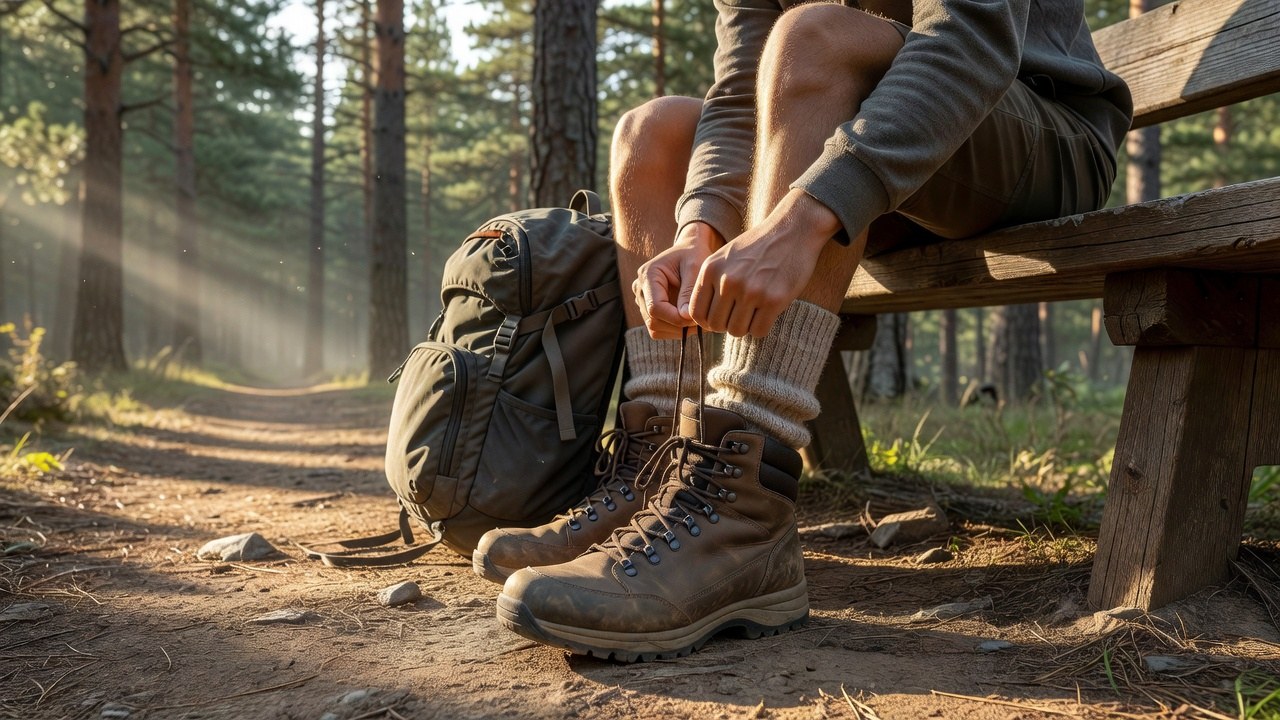
Quick Answer: How Hiking Boots Should Fit
- A thumb's width at the toe: your longest toe should not touch the front even with your heel pushed back. Size up a half from your street shoes — boots are not supposed to feel snug out of the box.
- Heel locked, midfoot snug, toes free: that is the entire test. Run it standing, late in the day, when your feet are at their largest.
- Bring the socks you will actually hike in: Darn Tough Hiker Micro Crew ($27.95) is the thickness to be fitted in, not the thin dress socks in the store.
- Wide or high-volume feet: try KEEN Targhee 3 ($187.00) — the roomier forefoot is exactly why it wins with wide feet.
- Break in with miles, not heat: three or four short walks, and never a hair dryer or radiator — heat delaminates soles and kills waterproof membranes.
The Three Fit Zones: Heel, Midfoot, Toe
Think of a correctly fitted boot as three separate zones that each need to do a different job. When all three are right, the boot disappears under your feet. When one is wrong, you'll know by mile two.
Heel — the lock. Your heel should sit snugly in the heel cup with almost no vertical movement. Lace the boot firmly and try to lift your heel: you should feel it locked, not sliding. A loose heel is the #1 cause of blisters — every step your foot rises and rubs against the back of the boot. A little heel lift (up to about a quarter of an inch) is normal on a brand-new boot before the sole flexes, but it should vanish as the boot breaks in. If it doesn't, the boot is too big or the wrong last shape for your foot.
Midfoot — the cradle. The middle of the boot should wrap your arch and instep firmly but never pinch. This zone is where laces do the real work: you can tighten the midfoot more than the toe area to control volume. If you feel a pressure point across the top of your foot, try lacing techniques (skip a set of eyelets over the instep) before giving up on the size. If your foot slides forward when you walk downhill, the midfoot isn't holding you — that's a sizing or lacing problem, not something to "fix" with tighter laces at the ankle.
Toe — the wiggle room. Here's the rule that saves more toenails than anything else in this guide: with the boot laced and your heel pressed firmly back, you should have about a thumb's width — roughly 0.4 to 0.5 inches — between your longest toe and the front of the boot. Your toes should be able to spread and wiggle slightly. They should never, ever touch the front of the boot, even when you jam your foot forward to simulate a downhill step. Downhill is exactly when black toenails happen: your foot slides forward, your toe slams the front of the boot, and the nail bruises. Thumb-width clearance is your insurance.
Hiking Boot Size Chart (When to Size Up)
| Your street shoe size | Start with this boot size | Size up if... |
|---|---|---|
| US Men's 8 | 8 or 8.5 | You'll wear thick hiking socks, hike in hot weather, or carry a heavy pack |
| US Men's 9 | 9 or 9.5 | Same as above — most men size up a half size for hiking |
| US Men's 10 | 10 or 10.5 | High-volume foot or wide width (see width section below) |
| US Women's 7 | 7.5 or 8 | You hike in the afternoon, have wide feet, or wear merino midweight socks |
| US Women's 8.5 | 9 or 9.5 | Same — women's-specific lasts run true-to-size, so the half-size up covers socks + swelling |
| Kids (growing) | Current size or one up | You want the boot to last the season; kids size up roughly every 6-12 months |
The general rule: most people size up a half size from their street shoe for hiking boots. Some brands run long (Salomon tends to fit true-to-size with a narrower profile), some run short. Never trust your street size — always try the boot on with the exact socks you'll hike in.
When to Size Up: Swelling Is Real
Your feet are not the same size at 8 AM on your living room floor as they are at 3 PM on a 12-mile trail. Three things change your foot size on a hike:
- Heat. Warm feet swell. On a summer day hike, your feet can gain a full half size by mid-afternoon.
- Gravity + blood flow. Standing, walking, and carrying a pack push fluid into your feet. Load up a 25-pound pack and your feet spread and lengthen measurably.
- Socks. A midweight merino sock adds noticeable volume compared to the thin dress socks you wear to the shoe store.
That's why the golden rules are: shop in the afternoon or evening (your feet are already a little swollen), wear your hiking socks to the fitting, and try boots on with the pack weight you'll actually carry if the store has a weighted bag. If you're between sizes, always take the larger one — you can add an insole or thicker sock to take up space, but you cannot stretch a boot that's too short in the toe.
Wide, Narrow, and High-Volume Feet
Boots aren't one shape, and brands genuinely differ. If you've always struggled with footwear, this is often why:
- KEEN runs wide with a famously roomy toe box. The KEEN Targhee 3 ($187.00) is the pick for wide feet and anyone whose toes feel cramped in most shoes — the anatomical toe box lets toes spread naturally, which is also a stability win on uneven trail.
- Salomon runs narrower and more precise. The Salomon X Ultra 4 Mid GTX ($231.81) suits average-to-narrow feet that like a locked-in, athletic feel. If you have wide feet, Salomon's regular width will likely feel tight.
- Merrell sits in the middle. The Merrell Moab 3 Waterproof ($129.95) and the non-waterproof Merrell Moab 3 ($89.99) fit most medium-width feet comfortably right out of the box — part of why the Moab line has been a best-seller for a decade.
If you're between widths, buy the wide version if it's offered. A boot that's snug across the midfoot compresses nerves and kills circulation on long days — you'll feel it as numbness or hot spots long before the blisters start.
The Break-In: How Long, and What's Normal
New boots are not supposed to feel like slippers on day one — but they also shouldn't hurt. Here's the realistic timeline:
- Synthetic and knit boots (most trail shoes, lightweight hikers): 1-3 short hikes, minimal break-in needed. If they hurt on the first walk, they're probably the wrong fit — don't wait for them to "break in" to a bigger size.
- Leather and leather-composite boots (like the Salomon X Ultra 4's suede upper): 10-20 miles or 3-5 short hikes. The leather slowly molds to your foot's shape.
- Heavy expedition leather boots: 30+ miles. These are the old-school "wear them around the house for a month" boots.
Break them in properly: start with a 1-2 mile flat walk, then a short trail with some elevation, then a half-day hike. Stop at the very first sign of a hotspot — that's your foot telling you where the boot needs to stretch or where your sock is bunching. Most retailers give you 30 days to test boots on trail and return them. If a boot is causing real pain (not just new-boot stiffness) after a week of walks, take them back — a hiking boot that hurts on day five will hurt on day 500.
One more thing: never "break in" new boots on a big trip. If you're heading out for a multi-day hike, put 10+ miles on the boots first. Our day hike essentials checklist is exactly the kind of low-stakes outing to use for break-in miles.
Socks Change the Fit More Than You Think
Here's the mistake I see constantly: people buy boots in their barefoot size, then hike in thick merino socks, and wonder why their toes jam going downhill. Sock thickness is part of the fit equation. The Darn Tough Hiker Midweight Crew Sock ($27.95) is the industry standard for a reason — merino wool regulates temperature, wicks moisture, and the midweight cushion takes up exactly the volume you sized for. Try boots on with the sock you'll actually hike in, and buy a couple of pairs of quality socks before you buy new boots if you've been hiking in cotton athletic socks (cotton blisters — it holds moisture and collapses when wet).
Kids' Boots: Size Up, Check Monthly
Kids' feet grow fast — up to a full size every 6-12 months under age 10 — and a too-small boot is misery on a family hike. The rules are the same (thumb-width toe room, heel lock) but you'll re-check every month or two. The KEEN Kids Hightrail Waterproof ($74.95) is my favorite kids' hiker: waterproof, grippy outsole, and it comes in half sizes so you can buy the current fit plus a thumb of room. When the trail gets rocky or wet, step up to the KEEN Kids Targhee Mid Waterproof Boot ($74.95) — the mid-height collar adds real ankle support and the KEEN.Dry membrane shrugs off creek crossings, so the whining stays home. For summer and water crossings, the KEEN Newport H2 sandals ($55.00) protect toes without cooking little feet. More on whole-family setups in our kids' hiking shoes guide and hiking for beginners.
Winter raises the stakes on every fit rule here: an insulated boot that is too long blisters a child's heel and pumps cold air in and out with every step. The cold-weather, age-by-age version is in our snow boots and winter traction guide.
Best Boots by Foot Type (2026 Picks)
- Wide feet / roomy toe box: KEEN Targhee 3 — $187.00. The anatomical toe box is the whole point.
- Best all-round value (men): Merrell Moab 3 Waterproof — $129.95. Proven fit, Vibram outsole, comfortable out of the box.
- Best all-round value (women): Merrell Women's Moab 3 Waterproof — $144.95. Women's-specific last, not a scaled-down men's shoe.
- Budget pick: Merrell Moab 3 (non-waterproof) — $89.99. Same comfort, less money, more breathable.
- Narrow / precision fit: Salomon X Ultra 4 Mid GTX — $231.81. Locked-in athletic feel, premium grip.
- Kids: KEEN Kids Hightrail Waterproof — $74.95.
- Socks that make any boot fit better: Darn Tough Hiker Midweight — $27.95.
- Steadier descents on tired legs: Black Diamond Trail Cork Trekking Poles — $109.88. Poles take load off your toes — the same toes you just saved with the thumb-width rule. Choosing your first pair? Our best trekking poles buying guide covers grip types, length sizing, and budget picks so you don't overpay.
Still torn between boots and trail runners? The trail runners vs hiking boots comparison breaks down ankle support, weight, and waterproofing tradeoffs.
Common Fit Mistakes (Learn From Mine)
- Buying the size you wear in dress shoes. Street shoes are sized for standing, not for miles of downhill. Size up a half size.
- "Snug" = too small. Snug in the toe box is pain waiting to happen. Firm is fine; cramped is not.
- Shopping in the morning. Try boots on in the afternoon when your feet have swelled.
- Testing boots with bare feet or thin socks. Wear the socks you'll hike in.
- Skipping the break-in. New boots on a 15-mile day is how I got that purple toenail.
- Ignoring a loose heel. It won't "settle" — it will blister you every single hike.
Fit FAQ
Should I buy hiking boots a half size bigger?
Usually yes — a half size up from your street shoe covers thicker socks and foot swelling. Always verify with the thumb-width rule rather than trusting a number.
How much toe room should hiking boots have?
About a thumb's width (0.4-0.5 inches) between your longest toe and the front of the boot, with your heel pressed back. Your toes should never touch the front, even on descents.
How long does it take to break in hiking boots?
Synthetic boots: 1-3 short hikes. Leather boots: 10-20 miles or 3-5 hikes. Stop at the first hotspot and give the boot time to mold.
Do hiking boots stretch?
Leather boots stretch somewhat across the width and in the heel over the first 20 miles — that's the break-in. Length does not stretch. If the toe is too short on day one, it will never get longer.
Can I use a boot dryer or heat to speed up break-in?
No. Heat can delaminate the sole and ruin waterproof membranes. Break boots in with miles, not heat.
Wide feet change everything about shoe shopping: if your forefoot bulges over the midsole or your little toe hangs over the edge of the insole, our best hiking shoes for wide feet guide shows the two-minute foot-trace test and which hiking lasts actually have a roomy toe box. One fit detail worth extra attention: heel slip. It's a comfort issue for most hikers, but with an inflamed fascia it's one of the fastest ways to stay sore — see hiking shoes for plantar fasciitis.
The 60-Second Fit Check
Before you buy — or before you keep the boots you just bought — run this: lace firmly, press your heel back, and (1) wiggle your toes — they should spread freely; (2) check a thumb's width at the longest toe; (3) try to lift your heel — it should stay locked; (4) walk downhill on a slight angle — your foot should not slide forward. Pass all four and you've found your boots. Now go earn the miles.
<!-- AFFILIATE_DISCLOSURE -->