Best Hiking Shoes for Plantar Fasciitis (2026): Picks That Actually Support Your Arch
That first-step stab in your heel is not something to hike through. Here's what plantar fasciitis actually needs from a hiking shoe — arch support, torsional stiffness, heel cushioning, fit — plus the 2026 picks that deliver it, the ones to avoid, and the free fixes that buy you relief before you spend a dime.
The pain doesn't happen on the trail. It happens in the first ten steps out of bed.
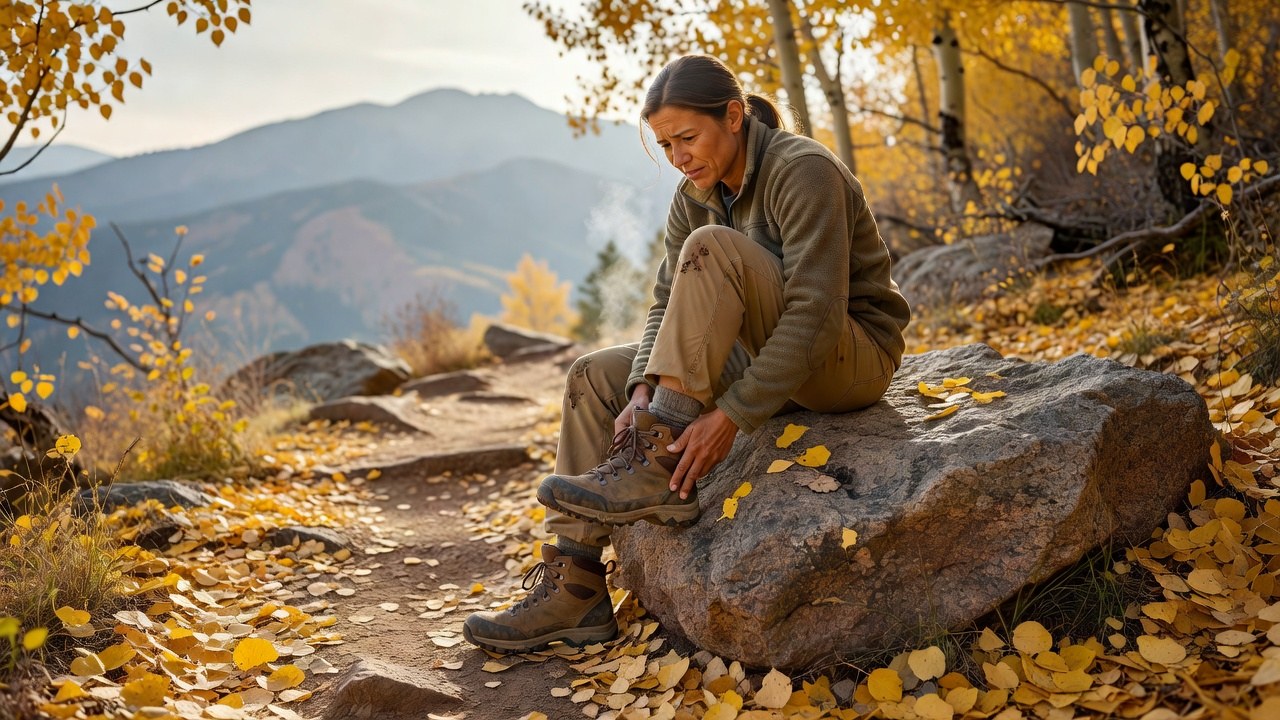
That's how I knew it wasn't a bruise. A bruise hurts where you hit it. This was a hot, tight, stabbing ache right at the front of my heel — worst before my foot had woken up, then easing off as I shuffled around the kitchen. By the time I got to work it was a dull presence. By mile two of a Saturday hike it was mostly gone. So I ignored it for four months, which is exactly what most hikers do, right up until the day a three-mile walk on flat gravel leaves you limping back to the car.
Hiking with plantar fasciitis is not a shoe-purchase problem you can solve by buying the softest, most cushioned thing on the shelf. I tried that. A marshmallow-soft shoe with no structure made it worse, because the real issue was that my foot was collapsing and stretching in exactly the direction the inflamed tissue couldn't tolerate. What finally worked was a boring combination: a shoe with genuine arch support and a stiff shank, a manageable daily load, and ten minutes of stretching I'd been skipping for years.
This guide is about the shoe half of that. We'll cover what plantar fasciitis actually is, which four specs matter more than cushioning, a two-minute test you can do at home, the free fixes that can buy you real relief before you spend anything — and the 2026 hiking shoes and boots that deliver the support, plus the popular ones you should genuinely think twice about.
One thing up front: I'm a gear writer, not a doctor. Plantar fasciitis is a real, diagnosable condition, and heel pain has several other causes that need different treatment. If your pain is severe, one-sided, tingling, or more than a few weeks old, see a podiatrist or physical therapist. Everything below is the footwear half of the conversation, not medical advice.
Quick Answer: The Best Hiking Shoes for Plantar Fasciitis in 2026
- Best overall: Merrell Men's Moab 3 Waterproof ($129.95, 4.6★, 8,400+ reviews) — cushioned heel, supportive insole, and the neutral-but-not-noodly platform that suits most heel-pain hikers day one
- Best value (and best under a pack): Merrell Men's Moab 3 Hiking Boot ($89.99, 4.5★, 5,200+ reviews) — the same proven platform with a suede upper and Air Cushion heel, at the lowest price here
- Best for women: Merrell Women's Moab 3 Waterproof ($144.95, 4.4★) — built on a women's-specific last, with a FLOAT midsole and a genuinely supportive removable insole
- Best for wide feet + high arches: KEEN Men's Targhee 3 Low Height Waterproof ($187.00, 4.4★, 8,600+ reviews) — the pick with an explicit ESS shank for torsional stability, plus the roomiest toe box in mainstream hiking
- Best for kids: KEEN Kids Hightrail Waterproof ($74.95) for sneaker-light days, KEEN Child Targhee Mid ($74.95, 4.5★) for ankle support
- Read the warning first: Salomon Men's X Ultra 4 Mid GTX ($231.81, 4.4★) is an outstanding technical boot that runs narrow and firm — two things heel-pain feet tend to hate. Details below.
- The overlooked cheap fix: KEEN Unisex-Child Newport H2 ($55.00, 4.7★, 19,800+ reviews) — not for hiking, but a closed-toe camp shoe you can swap into at the trailhead so your feet stop living in one pair all weekend
Not sure you need a "hiking shoe" at all versus a trail runner or a full boot? Start with our complete hiking shoe buying guide, or if width is also an issue, go straight to hiking shoes for wide feet.
What Plantar Fasciitis Actually Is (and Why Shoes Matter)
Your plantar fascia is a thick band of tissue that runs along the sole of your foot, anchoring at the heel bone and fanning out toward the toes. It's not a muscle. It's more like a tough, slightly elastic cable that helps hold up your arch and returns energy when you walk.
When that band is repeatedly overloaded — a sudden jump in mileage, a loaded pack, months of standing on hard floors, tight calves pulling on the heel, or simply a lot of walking in shoes that let your arch collapse — it gets irritated at the heel attachment point. That's plantar fasciitis. The classic signature is pain that's worst with your first steps in the morning or after sitting for a while, because the tissue has been in a shortened, relaxed position and the first stretch hurts.
Here's the part that matters for gear: the fascia is loaded differently depending on how your foot moves inside your shoe. Two failure modes show up constantly.
Too flexible, no support. A shoe that bends easily in the middle and has a squishy, structureless midsole lets the arch collapse toward the ground with every step. The fascia takes the tension. On a flat, hard surface that's mildly bad. On uneven trail, step after step, it's a lot of repeated strain on a tissue that's already angry.
Too rigid in the wrong way, or too narrow. A very stiff, narrow, race-oriented shoe can force your foot into a position it doesn't want, concentrating pressure right under the heel and along the arch. Firm isn't automatically good — it has to be firm in the right plane with room for your foot's actual shape.
So the goal isn't "maximum cushion." It's support the arch, limit how much the foot twists, and cushion the heel — in a shoe that fits your foot's real width and volume. Cushion alone is the least important of those four.
The Four Specs That Matter More Than Cushioning
When you're comparing hiking shoes with heel pain in mind, ignore the marketing and check these in order.
1. Arch support and a shank. The best single indicator is whether the shoe has a shank or midfoot plate — a semi-rigid layer between the outsole and the midsole. Merrell uses a molded nylon arch shank in the Moab line; KEEN uses an ESS shank in the Targhee 3. Both exist to stop the shoe from folding in half under your arch. A shoe with a real shank spreads load across the whole foot instead of letting the fascia do the work. This is the spec most worth paying for.
2. Torsional stiffness. Grab the shoe at the heel and the toe and try to twist it like a towel. Some twist is fine. If it twists freely and easily, it will let your foot roll in directions your fascia doesn't appreciate on off-camber trail. A shoe that resists twisting but still flexes where your toes bend is the sweet spot.
3. Heel cushioning, specifically at the heel. Stack height gets all the attention, but where the cushioning sits matters more. Look for a defined heel crash pad or air unit — Merrell's Air Cushion in the Moab 3 boot, the cushioned heel of the Moab 3 shoe — rather than a uniformly squishy midsole. You want the impact of heel strike absorbed there, not transferred up the arch.
4. Heel-to-toe drop and heel lockdown. A very low-drop, flat shoe loads the calf and Achilles more, and tight calves are one of the most common contributing factors to plantar fascia pain — so a low-drop minimalist shoe is usually the wrong direction when you're symptomatic. A moderate drop, plus a heel counter that actually locks your heel down so it doesn't slide, is the safer starting point. If your heel moves inside the shoe, you're getting friction and instability in the exact spot that already hurts.
How the shoe bends is the tell. Hold the shoe and push the toe up. It should bend where your toes bend, across the ball of the foot. If it folds in the middle of the arch, put it back.
The Two-Minute Morning Test (and the Frozen Bottle Trick)
Before you spend anything, figure out what you're actually dealing with.
The morning test. Keep a note on your phone for three mornings. Rate the pain on your very first steps out of bed, then again after ten minutes of walking around. If the first-steps pain is the worst of your day and it consistently eases as you move, that pattern points squarely at the plantar fascia. If the pain is worse after activity, or it's a deep ache mid-arch, or you get numbness or tingling into your toes, that's a different picture — get it looked at.
The calf test. Stand facing a wall, hands on it, and step one foot back with the heel down and the knee straight. If you feel a strong pull in the back of that calf well before your front knee gets near the wall, your calves are tight. Tight calves are one of the most fixable contributors to heel pain, and they're not a shoe problem at all.
The frozen bottle. Fill a plastic water bottle, freeze it, and roll your arch over it for five to ten minutes in the evening. It's free, it's the single most-repeated home remedy for a reason, and it addresses the morning pain indirectly: less baseline irritation means the first-steps stab is milder.
The towel stretch before your feet hit the floor. Sit on the edge of the bed, loop a towel or a belt around the ball of your foot, keep your knee straight, and pull the toes toward you for 30 seconds. Three times, before you stand up. Doing this before the first steps is the whole point — you're stretching the tissue gently while it's warm from bed, instead of shocking it with a full body weight load.
Do those two things consistently for two weeks while you read the rest of this, and a lot of people find the morning pain starts dialing back. Shoes are the other half.
The Fixes, In Priority Order
When people ask what to do about plantar fasciitis and hiking, the honest answer is a sequence, not a shopping list.
- Cut the load, temporarily. The fastest way to calm an irritated fascia is to stop adding to it. Trade one long hike for two short ones. Keep the pack light. Take the flatter trail. Nobody wants to hear this and it's still the highest-leverage move.
- Fix your everyday shoes first, not your hiking shoes. You wear your daily shoes far more hours than your hiking shoes. If you're standing on hard floors all day in flat, dead sneakers or barefoot at home, you're re-irritating the fascia all week and then wondering why Saturday's hike hurts. Supportive everyday shoes plus a pair of house slippers with an actual arch do more than a new pair of boots.
- Then fix the hiking shoe. Arch support, torsional stiffness, heel cushioning, and a locked-down heel — the four specs above.
- Add socks and volume control. A thin, bunching sock creates a hot spot under the arch that feels exactly like the fascia flaring up. Merino hiking socks that hold their shape are not a luxury here; they're part of the fit system.
- Stretch and load-manage for months, not weeks. This is the step everyone quits. The tissue doesn't heal on a hiking schedule.
If you're also fighting blisters — and heel-pain hikers usually are, because they change their gait to protect the sore spot — our hiking foot care and blister prevention guide covers the parallel problem.
The Best Hiking Shoes for Plantar Fasciitis (2026)
These are the picks from our catalog that do the four things above. Prices and ratings are what we currently list; check the product page for the latest.
Merrell Men's Moab 3 Waterproof — the best overall starting point
Merrell Men's Moab 3 Waterproof — $129.95, 4.6★, 8,400+ reviews
The Moab 3 is the default recommendation for a reason: it's built on a platform that's supportive without being harsh, with a molded nylon arch shank, a cushioned midsole, and a supportive removable insole. The pigskin-and-mesh upper needs essentially no break-in, which matters more than usual when your heel is sore — you don't want to be breaking in boots while your fascia is flaring.
In practice, what I like here is the middle path. It's not a marshmallow and it's not a plank. The shank gives you the arch support, the heel cushioning softens the strike, and the Vibram TC5+ outsole holds on wet gravel, which means fewer slip-and-catch moments where you brace hard and yank the fascia.
Watch out for: the waterproof membrane runs warmer than a ventilated mesh shoe, and the low-cut collar gives no ankle coverage. If you've been told you need stiffer support, look at the Targhee 3 below instead. Also check our wide feet guide if your forefoot is broad — the Moab is available in wide widths, which is the single biggest fit lever you have.
Merrell Men's Moab 3 Hiking Boot — best value, best under a pack
Merrell Men's Moab 3 Hiking Boot — $89.99, 4.5★, 5,200+ reviews
Same platform philosophy, mid-cut, suede-and-mesh upper, and the Merrell Air Cushion in the heel — which is precisely the feature you want if heel strike is the moment that hurts. At $89.99 it's the least expensive pick on this list, and for heavier packs or genuinely uneven terrain the ankle coverage steadies loaded descents in a way a low-cut shoe can't.
The trade-offs are honest ones: it's heavier and less nimble than a trail runner, some feet want a short break-in, and it's not a winter boot. If you're carrying a kid's pack plus your own on family trips, this is the sensible buy.
Our hiking boot fit and break-in guide walks through getting the volume right before you commit — worth ten minutes when a boot is involved.
Merrell Women's Moab 3 Waterproof — built on a woman's last
Merrell Women's Moab 3 Waterproof — $144.95, 4.4★
A meaningful number of women hiking in heel pain are doing it in a men's shoe sized down — which puts the heel pocket in the wrong place and lets the heel slide, right where the fascia is anchored. The women's Moab 3 is built on a women's-specific last with a women's heel volume, a FLOAT foam midsole, a supportive removable insole, and a Vibram outsole with 5mm lugs.
Watch out for: the waterproof version is warmer, and at $144.95 you're paying a premium over budget hiking shoes. It's the right pick if the fit is the problem; it's not the right pick if you just want something cheap to test the concept with.
KEEN Men's Targhee 3 Low Height Waterproof — the one with the shank, and the roomiest toe box
KEEN Men's Targhee 3 Low Height Waterproof — $187.00, 4.4★, 8,600+ reviews
If you want the most structurally supportive shoe in this lineup, start here. The Targhee 3 Low has an ESS shank for torsional stability — that's a real midfoot plate doing exactly the job we described above — plus a waterproof leather upper, a rubber toe cap and rand, and 4mm multi-directional lugs. The wider-than-average toe box lets your toes spread on descents, which cuts the toe-squeeze that makes people alter their gait and load the heel differently.
It's the heaviest shoe here at 15.87 oz per shoe, and you feel that on long flat miles. The other genuine downside: if water comes over the collar, the membrane holds it in like a bathtub. But for arch support and stability on genuinely uneven ground, it's the strongest pick on this page.
Salomon Men's X Ultra 4 Mid GTX — an excellent boot, and a bad idea for this problem
Salomon Men's X Ultra 4 Mid GTX — $231.81, 4.4★, 1,000+ reviews
I'm listing this one specifically so you don't buy it for the wrong reason. The X Ultra 4 Mid is a genuinely great boot: Gore-Tex, Contagrip MA outsole, an Advanced Chassis that steadies long rocky descents, and a Sensifit upper that wraps the midfoot like a trail runner.
And that last part is the problem. It runs narrow and precise, and it's built for responsive speed rather than forgiving support. For a lot of heel-pain feet — especially anyone with a wider forefoot, a high arch seeking volume, or a need for cushion over precision — this is the wrong tool. It's also priced high right now at around $231 while the line transitions.
Buy it if you have a narrow foot, want technical performance, and your heel pain is fully resolved. Skip it if you're buying for the heel pain.
For kids: KEEN Hightrail and Child Targhee Mid
KEEN Kids Hightrail Waterproof ($74.95) is the sneaker-light option — a KEEN.DRY membrane, an all-terrain outsole, easy-cinch elastic laces, and a roomy toe box. If your kid is at the age where tying laces is still a negotiation, this is the one.
KEEN Unisex-Child Targhee Mid ($74.95, 4.5★, 1,500+ reviews) adds a mid-height collar and real ankle support, and it's built tough enough that many families get two kids through one pair. It runs slightly large, so size down half if your kid is between sizes.
Kids' heel pain is worth taking seriously — growth spurts, sudden soccer season, and outgrown shoes are a classic combination. Full rundown in our best hiking shoes for kids piece.
The overlooked one: a camp shoe to swap into
KEEN Unisex-Child Newport H2 — $55.00, 4.7★, 19,800+ reviews
Here's a fix nobody mentions: stop wearing the same pair of shoes for sixteen hours a day on a camping weekend. Closed-toe water sandals are the standard kids' camp shoe, and the logic works for sore feet too — swap out of your hiking shoes at the trailhead, let your feet spread out, and let a wet pair dry instead of stewing in them. Quick-dry webbing, a grippy outsole, and a rubber toe bumper. It won't help your arch, but it stops you from spending the whole evening in the shoes that hurt.
Plantar Fasciitis Shoe Specs at a Glance
| Shoe | Price | Support feature | Best for | Main trade-off |
|---|---|---|---|---|
| Merrell Moab 3 Waterproof (men's) | $129.95 | Molded nylon arch shank, cushioned midsole | Best overall day-hike shoe | Warm in summer, no ankle coverage |
| Merrell Moab 3 Boot | $89.99 | Air Cushion heel, suede support upper | Best value, best under a pack | Heavier, short break-in |
| Merrell Women's Moab 3 Waterproof | $144.95 | Women's last, FLOAT midsole, removable insole | Best women's fit | Premium price, runs warm |
| KEEN Targhee 3 Low WP | $187.00 | ESS shank (torsional stability), roomy toe box | Best arch support, wide feet | Heaviest pick; holds water in over the collar |
| Salomon X Ultra 4 Mid GTX | $231.81 | Advanced Chassis, Gore-Tex | Technical hikers, narrow feet | Narrow and firm — wrong for heel pain |
Why Socks Matter More Than You Think
A sock that bunches under your arch creates pressure in exactly the spot that's already inflamed. It also changes the volume of the shoe, which changes how your heel sits in the heel pocket. For heel-pain hikers, socks are fit components, not an afterthought.
Socks are the cheap half of this whole problem — you can rebuild the sock layer for under $30, and it's often the difference between "the shoe works" and "the shoe hurts."
The all-rounder: Darn Tough Men's Light Hiker Micro Crew ($24.95, 4.8★, 3,800+ reviews). Merino, thin knit, cooler than a cushioned sock, and covered by an unconditional lifetime guarantee — Darn Tough replaces worn-out pairs free, no receipt.
The women's fit: Darn Tough Hiking Socks for Women ($25.95, 4.8★, 4,700+ reviews). It's built on a woman-specific last so the heel pocket and arch stay locked in place instead of sliding down into your boot at mile three — which is precisely the friction you don't want on a sore heel. The seamless toe construction targets the toe-seam hot spot separately.
The cold-weather pair: Darn Tough Men's Hiker Midweight Micro Crew ($27.95, 4.7★). Midweight cushion underfoot with targeted ankle and Achilles protection. The extra padding around the Achilles is a small, genuinely useful detail when the whole back of your leg is tight.
The budget entry: Smartwool Hike Classic Edition Light Cushion Crew ($19.95, 4.6★). The cheapest way to get a real merino crew sock for every member of the family. Light cushioning is the mid-point a lot of hikers actually want — more protection than a liner, far cooler than a winter sock.
Five Mistakes Hikers With Plantar Fasciitis Keep Making
Buying the softest shoe you can find. Cushion feels great in the store and doesn't address the mechanics. Structure beats softness — support the arch and limit torsion first, then add cushion on top of that.
Hiking through it because "it loosens up." The fact that it eases after ten minutes of walking doesn't mean it's healing; it means you've warmed the tissue. Then you load it for six miles, and the morning after is worse.
Treating hiking shoes as the whole problem while living in dead everyday shoes. If you spend nine hours a day in unsupportive shoes, that's most of your weekly strain, and the right hiking shoe is fighting uphill against it.
Low-drop or minimalist shoes because they're "better for your feet." That advice has a real basis for healthy feet building strength over months. It's mostly the wrong move while a fascia is acutely irritated. Save the transition for after you're pain-free.
Stretching for a week and quitting. The fascia responds on a timeline of weeks to months. Consistency beats intensity — the towel stretch every single morning does more than an ambitious hour-long stretch session once a week.
Plantar Fasciitis Hiking Shoes: Boots, Sandals, and the Wide-Foot Overlap
A search for plantar fasciitis hiking shoes usually returns two things: a list of soft shoes and a stretching routine. Both help, and neither finishes the job. The shoes that calm an irritated arch have a stiff midsole, limited torsion, and a heel that stays where you put it, and that set overlaps very little with the softest models on the shelf.
Hiking Boots for Plantar Fasciitis: Men's, Women's, and When to Add Ankle Coverage
Hiking boots for plantar fasciitis make a stronger case than most people expect. Load is what irritates the fascia, and a boot that locks the heel down lets you carry more without your foot sliding forward on every descent. The Merrell Men's Moab 3 boot ($89.99) is the same platform as the shoe for less money, with a mid-cut collar that improves heel retention. For hiking boots for plantar fasciitis men, that is the pair to start with, and women get the same shape on a different last in the Merrell Women's Moab 3 Waterproof ($144.95). If your pain shows up as morning stiffness and your hikes are short, best hiking boots for plantar fasciitis is the wrong question to lead with. Buy the shoe with a real shank first, then add ankle coverage once you start carrying weight.
Plantar Fasciitis Hiking Shoes for Flat Feet and Wide Feet
Flat feet and wide feet are different problems that often arrive together, and plantar fasciitis hiking shoes have to serve both. A flat arch wants a firmer shell to stop the foot rolling inward. A wide forefoot wants a last that does not pinch across the ball. The KEEN Men's Targhee 3 ($187.00) does both better than anything else in our catalog, which is why it tops two different guides here. If width is your louder complaint, the best hiking shoes for wide feet guide walks through the two-minute measuring test and the models that run roomy. Hiking shoes for plantar fasciitis and hiking shoes for wide feet are the two halves of this one purchase, so read whichever matches the thing that hurts.
Hiking Sandals for Plantar Fasciitis and the Camp Shoe Swap
Hiking sandals for plantar fasciitis get a bad reputation they partly deserve. A flat, unsupportive sandal is close to the worst thing you can stand in with heel pain. A closed-toe sandal with a molded footbed is a different story, and it solves something a boot cannot: what you wear after you stop hiking. Standing around camp in stiff boots keeps the fascia loaded, which is why hikers who bring a supportive camp sandal tend to report easier mornings. We stock the closed-toe KEEN Newport H2 in kids' sizes, and the logic carries to adult closed-toe sandals with a real footbed. One note for readers arriving from UK searches: if you are looking for walking boots for plantar fasciitis rather than hiking boots, the spec list is identical, and the brand names differ far less than the terminology does.
Support Gear Worth Owning
Beyond the shoe itself, the things that genuinely earn their place in a heel-pain kit: the frozen water bottle (free), a lacrosse ball or rolling tool for the arch, a night splint if your clinician recommends one (these hold the foot in a stretched position overnight and are one of the more evidence-supported home interventions), and a thin merino sock rotation so you're never hiking in a damp pair.
If you're hiking through the changing season, our fall hiking gear checklist covers the cold-morning layers that pair with all of this, and if you're brand new to the trail altogether, start with hiking for beginners — shorter, flatter routes are exactly what a healing fascia wants.
Plantar Fasciitis Hiking Shoe FAQ
Should I wear hiking shoes or boots with plantar fasciitis?
Neither is automatically better — the shoe's structure matters more than its height. A low-cut shoe with a real shank and good arch support beats a tall boot with a soft, flexible midsole every time. Boots do have one advantage worth weighing: a higher collar plus lacing lets you lock the heel down more effectively, which reduces the sliding that irritates the fascia. If you carry heavier loads, the mid-cut Merrell Moab 3 boot at $89.99 is a reasonable first pair.
Do I need women's hiking boots for plantar fasciitis, or can I wear the men's?
Wear the last that matches your foot. A women's model is narrower at the heel with a higher arch, which matters when the goal is stopping the foot from sliding on descents. The Merrell Women's Moab 3 is the women's version of the pick above, and most of what ranks for hiking boots for plantar fasciitis woman comes from UK retailers listing the same three specs: midsole stiffness, heel drop, and lateral support. Judge those numbers, not the shop.
Are hiking sandals for plantar fasciitis a real option, or a mistake?
For hiking, a mistake in most cases. A sandal with a flat footbed gives your arch nothing to sit on for miles. For camp, a good option, because a lot of heel pain is generated in the hours after you take your boots off and keep standing on hard ground. A structured closed-toe sandal belongs in the bag. A flat flip-flop does not.
Are arch supports or insoles better than buying new shoes?
They're complementary, and insoles are often the cheaper first experiment. If your current hiking shoes are structurally sound — shank, limited torsion, decent heel — a supportive insole can add the arch contact you're missing for a fraction of a new pair. If the shoe folds in the middle under the arch or lets your heel slide, an insole is a patch on a structure problem. Several of the picks above ship with a genuinely supportive removable insole, which is one reason they're on this list.
Is waterproof footwear bad for plantar fasciitis?
Not directly — the fascia doesn't care about water. But waterproof membranes are warmer and less breathable, feet sweat more, and a damp foot slides inside the shoe, which increases friction at the heel. On cool, wet fall hikes, waterproof is the right call. On hot summer days, a ventilated mesh shoe with the same structural support will usually be more comfortable. If you're regularly going somewhere wet, see our trail runners vs hiking boots comparison for how the categories differ on drainage and weight.
How much of this is stretching versus shoe choice?
Honestly? Probably more stretching and load management than shoe choice — but they compound. Shoes can't fix a tight calf or a sudden mileage jump, and stretching can't fix a shoe that lets your arch collapse. The hikers who get better fastest tend to do the unglamorous things: cut the load, stretch daily for months, and wear structurally supportive shoes for most of their waking hours.
Can I still do long hikes while I'm dealing with this?
Sometimes, with rules. Keep the pack light, keep the terrain predictable, prefer softer surfaces over pavement and hardpack, take real breaks, and treat any hike that leaves you worse the next morning as evidence you went too far. A two-day camping trip with short walks beats a single ambitious day hike you spend a week paying for.
Do I need to see a professional, or can I just buy shoes?
If your pain has lasted more than a few weeks, is severe, wakes you at night, involves numbness or tingling, or affects both feet differently, see a podiatrist or physical therapist. Heel pain has several causes — including ones that footwear won't touch — and a proper diagnosis changes the treatment. Shoes are one input, not a diagnosis.
Does shoe price correlate with how well it works for heel pain?
No. The $89.99 Moab 3 boot has the same air-cushioned heel and proven platform as its more expensive siblings, and the $231.81 Salomon above is the one I'd steer most heel-pain hikers away from. What correlates with success is whether the shoe has a shank or midfoot support, resists torsion, cushions the heel, and fits your actual foot width.
The Bottom Line
If you take one thing from this: hiking with plantar fasciitis is a support problem before it's a cushioning problem. Look for a shank or midfoot plate, test how the shoe twists, make sure the heel cushions and locks down, and fit it to your real width — then treat the load and the stretching as the other half of the job.
The safest starting point for most people is the Merrell Moab 3 Waterproof at $129.95 if you want a low-cut shoe, the Moab 3 boot at $89.99 if you carry a pack, and the KEEN Targhee 3 Low at $187 if you want the most structural support and the roomiest fit. Whatever you buy, start with short, flat, easy miles — and give the tissue the months it actually needs.
<!-- AFFILIATE_DISCLOSURE -->