Best Hiking Shoes 2026: Merrell, KEEN, Salomon Tested
Merrell Moab 3 vs KEEN Targhee 3 vs Salomon X Ultra 4 — which hiking shoe fits your feet, your trails, and your budget, plus waterproof vs breathable.
In this article · 31 sections
- Quick Answer: Which Hiking Shoe Is Right for You?
- Hiking Shoe vs Hiking Boot vs Trail Runner: What Do You Actually Need?
- The 3 Best Hiking Shoes of 2026 Compared
- Hiking Shoes Comparison: Specs at a Glance
- Hiking Shoes for Women, Men, and Kids: Same Trail, Different Last
- Do You Need Waterproof Hiking Shoes?
- Best Hiking Shoes for Fall: Fall Hiking Boots and Cold-Weather Picks
- How to Fit Hiking Shoes (So You Don't Get Blisters)
- Breaking In Hiking Shoes: What Actually Works
- Best Hiking Shoes for Beginners, Rocky Terrain, and the Brands That Matter
- Hiking Shoe Accessories That Make Every Mile Better
- Hiking Shoe Insoles and Arch Support: Flat Feet, High Arches, and Plantar Fasciitis
- Common Hiking Shoe Mistakes (I've Made All of These)
- Budget Breakdown: What Should You Spend?
- The Verdict: Which Hiking Shoe Should You Buy?
- Lightweight Waterproof Shoes and Wide Toe Boxes: The Two Specs People Search For
- Waterproof or Breathable? The Question Every Hiker Asks First
- How Hiking Shoes Should Actually Fit (Not How Sneakers Fit)
- Wide Feet, Narrow Feet, Bunions: Matching the Last to Your Foot
- Arches, Flat Feet, and Overpronation
- Insoles, Plantar Fasciitis, and Foot Pain
- Ankle Support and Cut Height: What Actually Helps
- Blisters, Sweat, and Hot Feet
- Boots vs Shoes vs Trail Runners: Settling It by Load and Terrain
- Brand by Brand: What Each Name Actually Means
- Terrain and Destination: What to Bring Where
- Seasons, Travel, and Getting Started
- Care, Cleaning, Odor, and How Long They Actually Last
- What Hiking Shoes Cost, and What's Worth Paying For
- Every Way People Ask This: Brand Waterproofing, Wide Feet, Stretch, Snow, and Cost
- FAQ: Hiking Shoe Fit, Sizing, and Waterproofing
Your hiking shoes are the single most important piece of gear you own. Not your tent. Not your backpack. Not your fancy GPS watch. If your feet hurt, the best trail in the world becomes a death march back to the trailhead.
I learned this the hard way on a 14-mile day hike in loose-fitting running shoes. By mile 8 my heels were raw, my toes were bruised, and I'd developed a hotspot the size of a quarter on my arch. I limped the last six miles questioning every life choice that led me to that trailhead in sneakers.
The right hiking shoes prevent that story from becoming yours. This guide breaks down the three best hiking shoes of 2026 — Merrell Moab 3, KEEN Targhee 3, and Salomon X Ultra 4 — with real fit notes, grip comparisons, and honest tradeoffs. Whether you're day-hiking local trails or loading up a pack for a multi-day trek, there's a shoe here that fits your foot and your budget. Once you've picked a pair, our hiking boot fit & sizing guide makes sure they actually fit — the thumb-width toe rule alone saves more trips than any brand choice.
Quick Answer: Which Hiking Shoe Is Right for You?
- Best overall value: Merrell Moab 3 Waterproof — proven comfort, grippy Vibram outsole, under $130
- Best for wide feet & durability: KEEN Targhee 3 — roomy toe box, tough leather upper
- Best for technical terrain & speed: Salomon X Ultra 4 Mid GTX — nimble, aggressive traction, fast on feet
- Best ankle support for heavy loads: Merrell Moab 3 Hiking Boot (mid-height version)
Not sure whether you even need a "hiking shoe" versus a trail runner or a full boot? Start with our complete hiking for beginners guide first, then come back here.
Hiking Shoe vs Hiking Boot vs Trail Runner: What Do You Actually Need?
This is the first decision, and most people get it wrong. Let me clear it up:
Hiking shoes (low-cut, like the Moab 3 and Targhee 3) are the sweet spot for 80% of hikers. They offer more traction, support, and protection than trail runners, without the weight and clunkiness of a full boot. If you're day hiking, car camping, or doing moderate backpacking trips with a light-to-medium pack, a hiking shoe is your answer.
Trail runners (like the HOKA Speedgoat 5) are lighter and more cushioned, preferred by ultralight backpackers and fast-packers. The tradeoff is durability and protection — they wear out faster and offer less underfoot defense on rocky terrain. If you move fast and light, consider them. If you want one shoe that lasts seasons, stick with a hiking shoe.
Hiking boots (mid or high-cut) add ankle support and are the right call when you're carrying a heavy pack (40+ liters loaded for multi-day trips) on uneven, off-trail, or scree terrain. The Merrell Moab 3 in mid-boot form gives you the same proven Moab platform with more ankle coverage. For a deeper dive on sizing and capacity planning, see our day hike essentials checklist.
"Hiking Shoes vs ___": Quick Answers to the Comparison You Googled
Most people land on this page mid-comparison rather than mid-decision, so here's the short verdict for each version of the question:
| If you're comparing… | The honest verdict |
|---|---|
| Hiking shoes vs hiking boots (also searched as hiking shoes vs boots, or hiking boots vs shoes — same question) | Shoes win for day hikes and light packs. The hiking boots vs shoes decision only changes once you're carrying 40+ lb over uneven ground. |
| Hiking shoes vs trail runners | Trail runners are lighter and more cushioned; hiking shoes outlast them and protect better underfoot. Moving fast and light → runners. One pair for several seasons → hiking shoes. |
| Hiking shoes vs running shoes / hiking shoes vs trail running shoes | Running shoes have no meaningful lug depth and no rock plate. On wet roots, loose scree, or a long descent, they're a blister-and-ankle-roll machine. |
| Hiking shoes vs sneakers and hiking shoes vs tennis shoes | Same problem as running shoes, plus a flatter, less supportive midsole. Tennis shoes are built for a flat court, not a rock garden. |
| Hiking shoes vs walking shoes | Walking shoes are stiffer, road-oriented, and have shallow tread. Fine on a paved greenway, wrong anywhere with roots or mud. |
| Hiking shoes vs regular shoes | The things you're paying for are lug depth, a toe cap, a rock plate, and a midsole that survives uneven ground. |
| Hiking shoes vs approach shoes and hiking shoes vs trail shoes | Approach shoes use sticky climbing rubber and a flatter profile for scrambling. Hiking shoes favor cushioning and trail durability. Choose approach shoes only if your route includes actual low-grade climbing. |
The longer version of the shoe-vs-boot question, with specific picks for each camp, is in our trail runners vs hiking boots comparison.
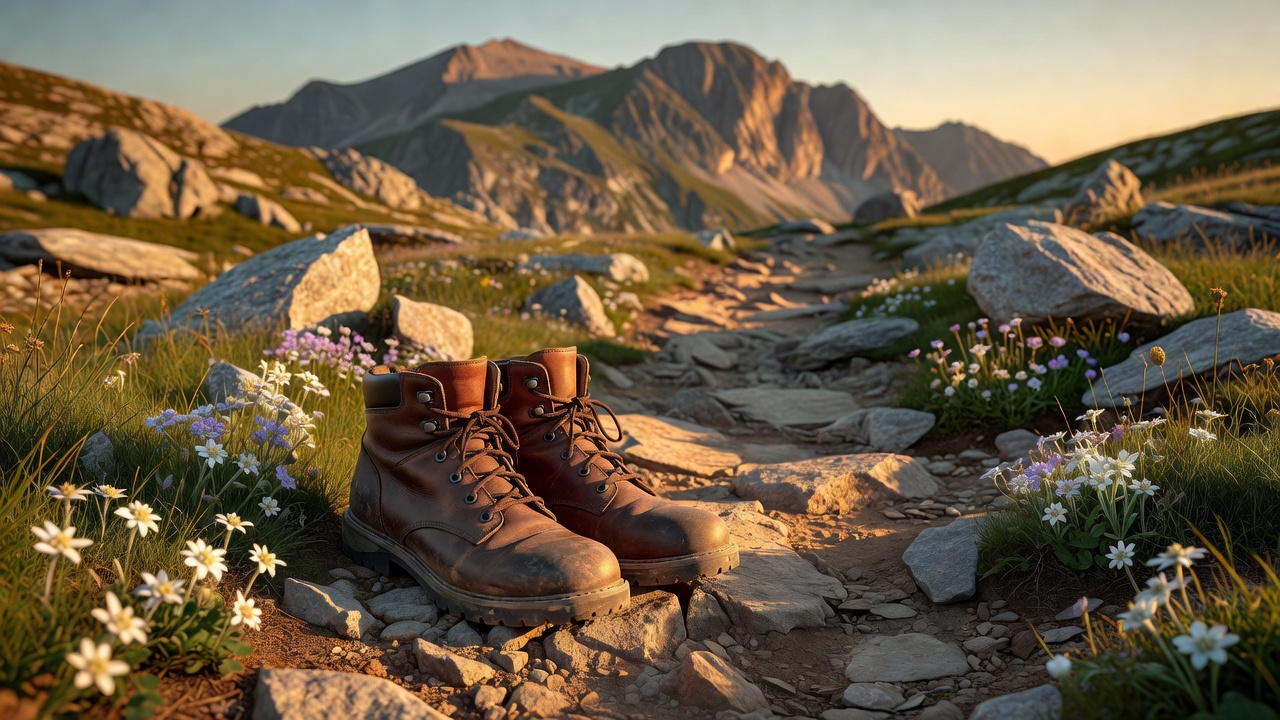
My honest take: If this is your first hiking shoe purchase, go with a low-cut hiking shoe. You can always add a boot later. Most people never need one. Deciding between the two? Our full trail runners vs hiking boots comparison breaks down weight, ankle support, and waterproofing tradeoffs with specific picks for each camp.
The 3 Best Hiking Shoes of 2026 Compared
1. Merrell Moab 3 Waterproof — Best Overall Value ($129.95)
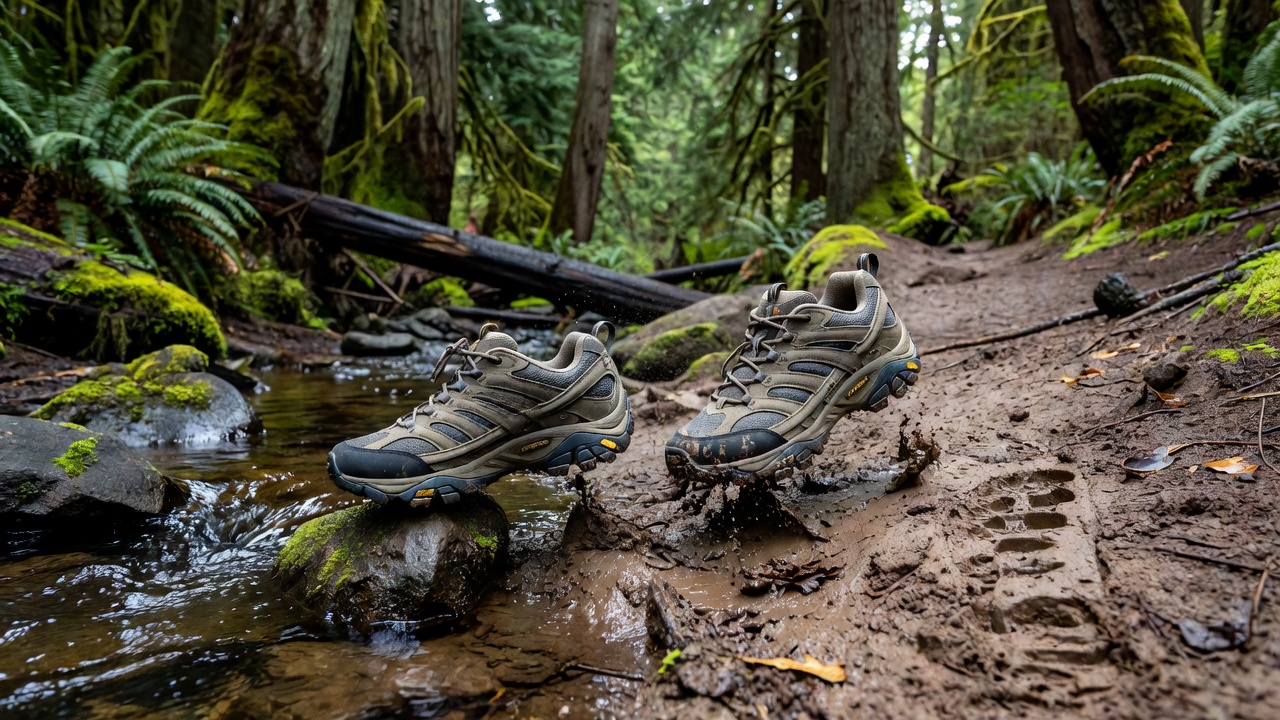
The Merrell Moab 3 Waterproof is the shoe I recommend to friends more than any other, and there's a reason it's been one of the best-selling hiking shoes on the planet for over a decade. "Moab" stands for Mother of All Boots, and the third generation refines the formula without breaking what works.
What makes it great:
The fit is genuinely comfortable right out of the box. Merrell uses a combination pigskin leather and mesh upper that breathes well but holds up to abuse. The real star is the Vibram TC5+ outsole — it grips wet rock, dry slab, loose dirt, and packed trail with equal confidence. The 4.6-star rating across 8,400+ reviews isn't an accident.
Underfoot, there's a molded nylon arch shank for support and a bellows tongue that keeps trail debris out. The waterproof membrane (Merrell's own M Select DRY, not Gore-Tex) handles stream crossings and rain without the premium price tag.
Who should buy it: First-time hiking shoe buyers, weekend warriors, day hikers, and moderate backpackers. If you want one shoe that does everything reasonably well without costing a fortune, this is it.
Tradeoffs: It's not the lightest shoe (around 1 lb 14 oz per shoe in men's), and the waterproof version runs warmer than non-waterproof options in hot weather. For summer desert hiking, see our hot weather camping gear guide. Planning autumn trips instead? The fall hiking gear checklist pairs waterproof shoes with merino socks, a rain shell, and a headlamp for the short days — the full kit for crisp-trail season.
Women's version: The Moab 3 also comes on a women's-specific last — not just a scaled-down men's shoe — and the Merrell Women's Moab 3 Waterproof ($144.95) keeps the same Vibram TC5+ outsole, waterproof membrane, and cushioned midsole in a fit shaped for women's feet. If the family's trail shoes are due for an upgrade, this is the same proven platform in the right fit — and it pairs naturally with the KEEN kids' Hightrail for whole-family trail days.
2. KEEN Targhee 3 — Best for Wide Feet & Rugged Durability ($187.00)
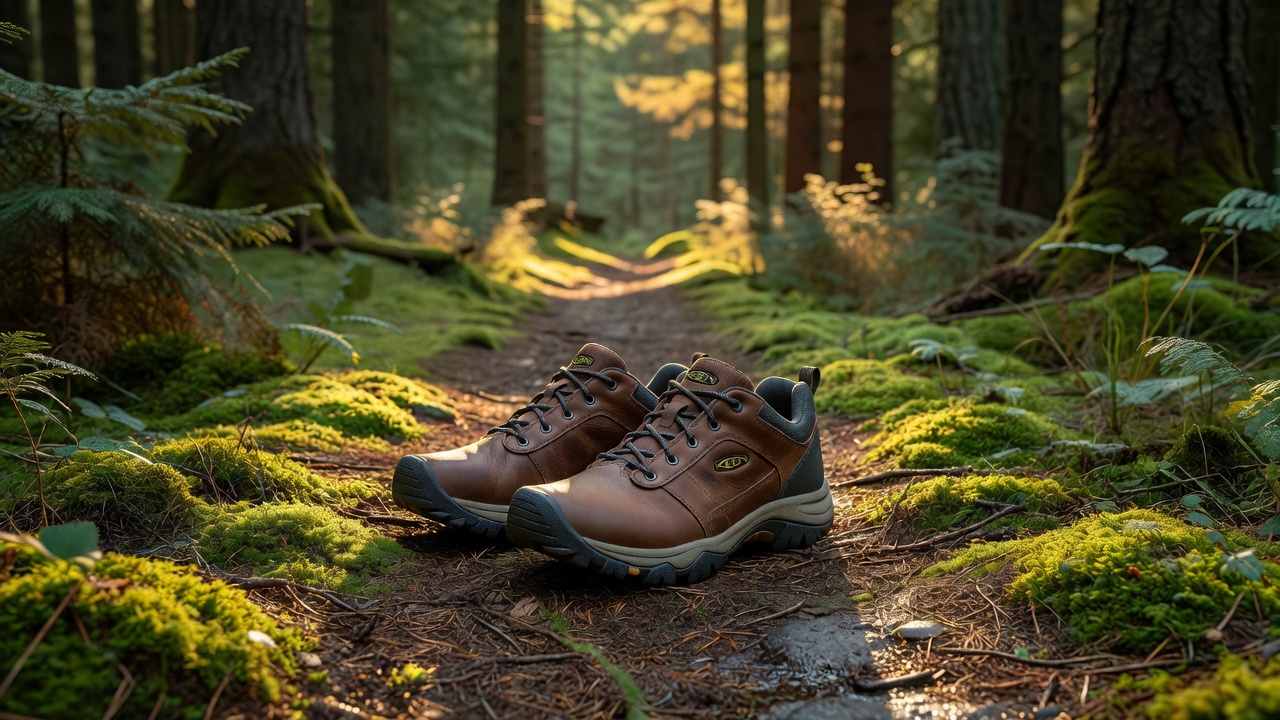
The KEEN Targhee 3 solves a problem the Merrell can't: it actually fits wide feet and high-volume insteps. If you've ever felt pinched across the ball of your foot or had your pinky toe go numb in a "standard width" hiking shoe, the Targhee is your answer.
What makes it great:
KEEN's signature roomy toe box lets your toes splay naturally — critical on long descents where your foot slides forward. The Targhee 3 uses a durable leather and textile upper with a KEEN.DRY waterproof membrane, and the proprietary KEEN.ALL-TERRAIN rubber outsole has 4mm multi-directional lugs that bite into loose surfaces.
The third generation improved the heel counter and reduced the break-in period compared to the Targhee 2. At 4.4 stars, it's a proven performer for people who need that extra width.
Who should buy it: Hikers with wide feet, high arches, or high-volume feet. Also a great choice if you want a shoe that leans more toward durability and protection — the rubber toe cap is generous and the leather holds up to scree and brush.
Tradeoffs: Slightly heavier than the Moab 3 and the wider platform can feel clunky on narrow, technical trails. Not the fastest shoe on feet.
Hiking with kids? KEEN builds the same roomy toe box and KEEN.DRY waterproof membrane into a kids' version — the KEEN Kids Hightrail Waterproof Hiking Shoes ($74.95, 4.6 stars) — which is a godsend for family trail days. Kids' feet grow fast, but blisters slow them down even faster; the Hightrail gives little hikers the same traction and toe protection the Targhee 3 gives adults, at a price that doesn't hurt when they outgrow them in a season. For sizing advice and the full rundown of kids' options (including the Newport H2 water sandals for summer), see our best hiking shoes for kids guide.
3. Salomon X Ultra 4 (Mid GTX) — Best for Technical Terrain & Speed (~$232)
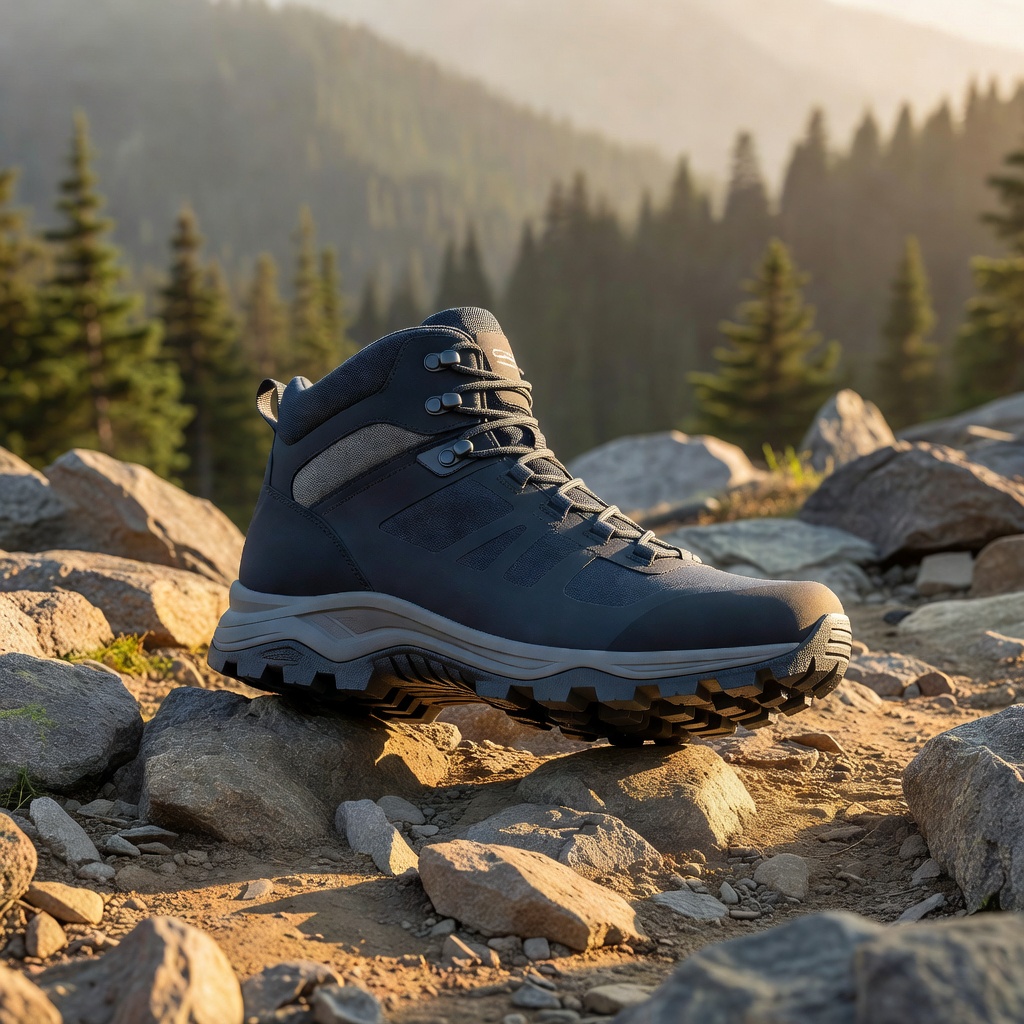
The Salomon X Ultra 4 is the shoe GearLab and Switchback Travel repeatedly crown for technical off-trail hiking. It's the most "sporty" of the three — closer to a trail runner in feel, with the stability and grip of a hiking shoe. The low-cut version is being phased out for the X Ultra 5, so we recommend the Mid GTX — same chassis, same Contagrip grip, more ankle coverage, and over 1,000 verified Amazon reviews.
What makes it great:
The X Ultra 4 borrows descent control technology from Salomon's trail running line. The Sensifit cradles your foot, the Advanced Chassis guides your stride and reduces fatigue on long descents, and the Contagrip MA outsole grips on everything from wet rock to dry packed dirt. The Gore-Tex membrane is the real deal — fully waterproof and breathable.
The quicklace system (one pull and you're done) is polarizing: some love the convenience, others miss traditional laces. But for moving fast over mixed terrain with a light pack, nothing here beats it.
Who should buy it: Experienced hikers who move fast, tackle technical or off-trail terrain, or want a shoe that performs like a trail runner with more protection. Also great if you have a narrower foot — the X Ultra 4 runs narrow compared to the Moab 3 and Targhee 3.
Tradeoffs: The narrow fit excludes wide-footed hikers. And at ~$232, it's the priciest of the three — Amazon pricing has climbed as the X Ultra 4 line phases out (the X Ultra 5 is the current model if you'd rather buy the newest generation). Check current pricing and availability: Salomon X Ultra 4 Mid GTX.
The link above is the Mid GTX version — the low-cut X Ultra 4 is phasing out, so the mid-height sibling (same chassis, more ankle coverage) is the one still widely available.
Hiking Shoes Comparison: Specs at a Glance
Here's how the top picks stack up head-to-head:
| Model | Price | Rating | Width & Fit | Weight | Best For |
|---|---|---|---|---|---|
| Merrell Moab 3 Waterproof | $129.95 | 4.6★ (8,400+) | Medium | ~1 lb 14 oz | All-around value, first-time buyers |
| KEEN Targhee 3 | $187.00 | 4.4★ (8,600+) | Wide toe box | ~2 lb | Wide feet & durability |
| Salomon X Ultra 4 Mid GTX | $231.81 | 4.4★ (1,000+) | Narrow | ~15 oz | Technical terrain & speed |
| Merrell Moab 3 Boot (mid) | $89.99 | 4.5★ (5,200+) | Medium | Mid-cut | Heavy packs & rough trails |
Key takeaway: Fit and terrain matter more than brand. A narrow-footed hiker in KEEN Targhees will be miserable. A wide-footed hiker in Salomons will be in agony. Buy the shoe that matches your foot shape first, your terrain second.
If you're building out the rest of your trail kit after choosing shoes, our hiking for beginners guide covers layers, daypack sizing, navigation basics, and the 10 essentials that matter on your first real trail.
Hiking Shoes for Women, Men, and Kids: Same Trail, Different Last
Hiking shoes are not unisex, and this is the single biggest source of "I ordered my size and they don't fit" returns. Here's how to sort it out before you buy.
Hiking shoes for women. Women's hiking shoes are built on a narrower heel, a shorter arch length, and a shorter heel-to-ball measurement than the men's version of the same model. That's why the Merrell Women's Moab 3 Waterproof ($144.95, 4.4★) exists as its own build rather than a scaled-down men's shoe: same Vibram TC5+ outsole and waterproof membrane, women's-specific last. If you've been sizing down a men's shoe to get heel lock, that's the compromise you can stop making. Pair it with merino hiking socks cut for women's feet — a sock that bunches at the heel undoes a good fit faster than a bad shoe.
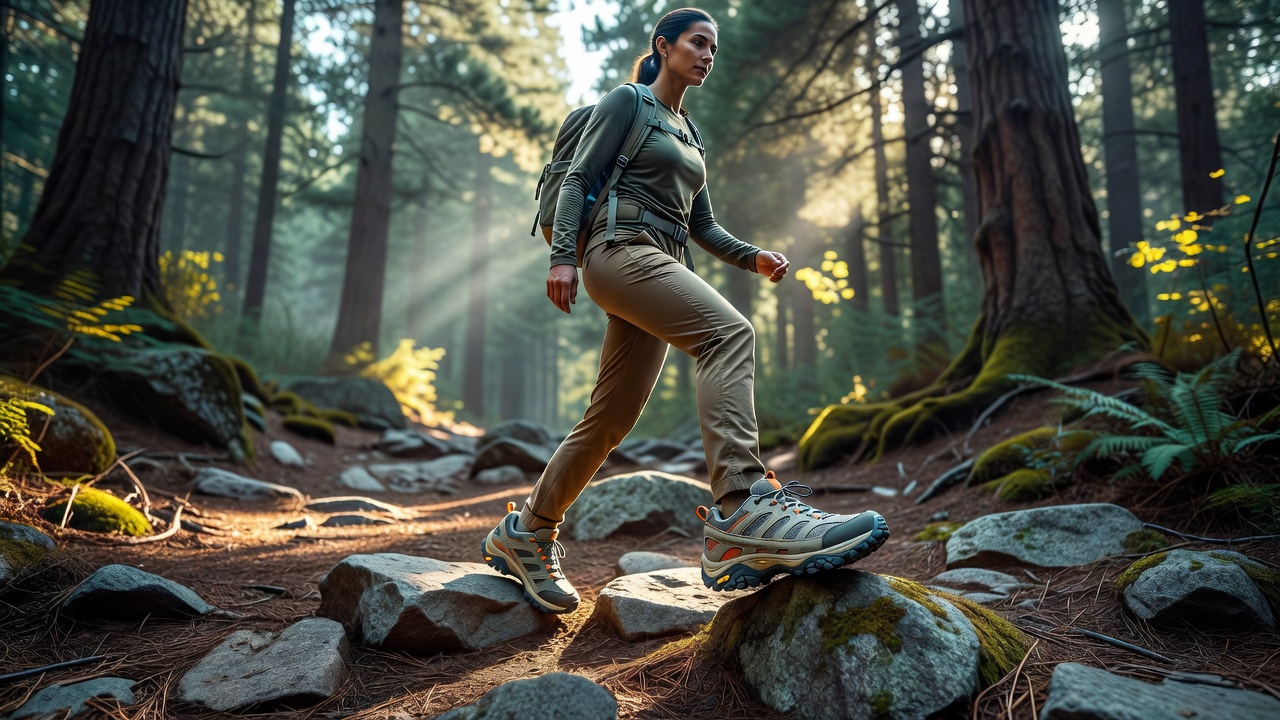
Hiking shoes for men. Any of the three picks above works, and the deciding variable is width rather than gender: the Merrell Moab 3 for an average medium-volume foot, the KEEN Targhee 3 if you need a roomy toe box, and the Salomon X Ultra 4 Mid GTX for a narrow foot that wants ankle coverage. Our best hiking shoes for wide feet guide covers the mens wide hiking shoes and extra wide hiking shoes options, including the two-minute foot-trace test that tells you whether your feet are genuinely wide or you've just been buying the wrong length.
Wide feet and roomy toe boxes. If your forefoot spills over the midsole or your little toe hangs past the insole edge, standard width is the wrong purchase no matter how good the shoe is. KEEN's foot-shaped last is why the Targhee 3 keeps appearing on shortlists for wide toe hiking shoes and wide hiking shoes for men, and the same design carries into the KEEN Kids Hightrail. For women shopping with a wide forefoot — the combination brands most often ignore — search hiking shoes for women wide toe box rather than just "wide," because plenty of women's models simply don't offer a wide width, and a roomy toe box is the available substitute. More on the two-minute test in our women's and men's wide feet hiking shoe guide.
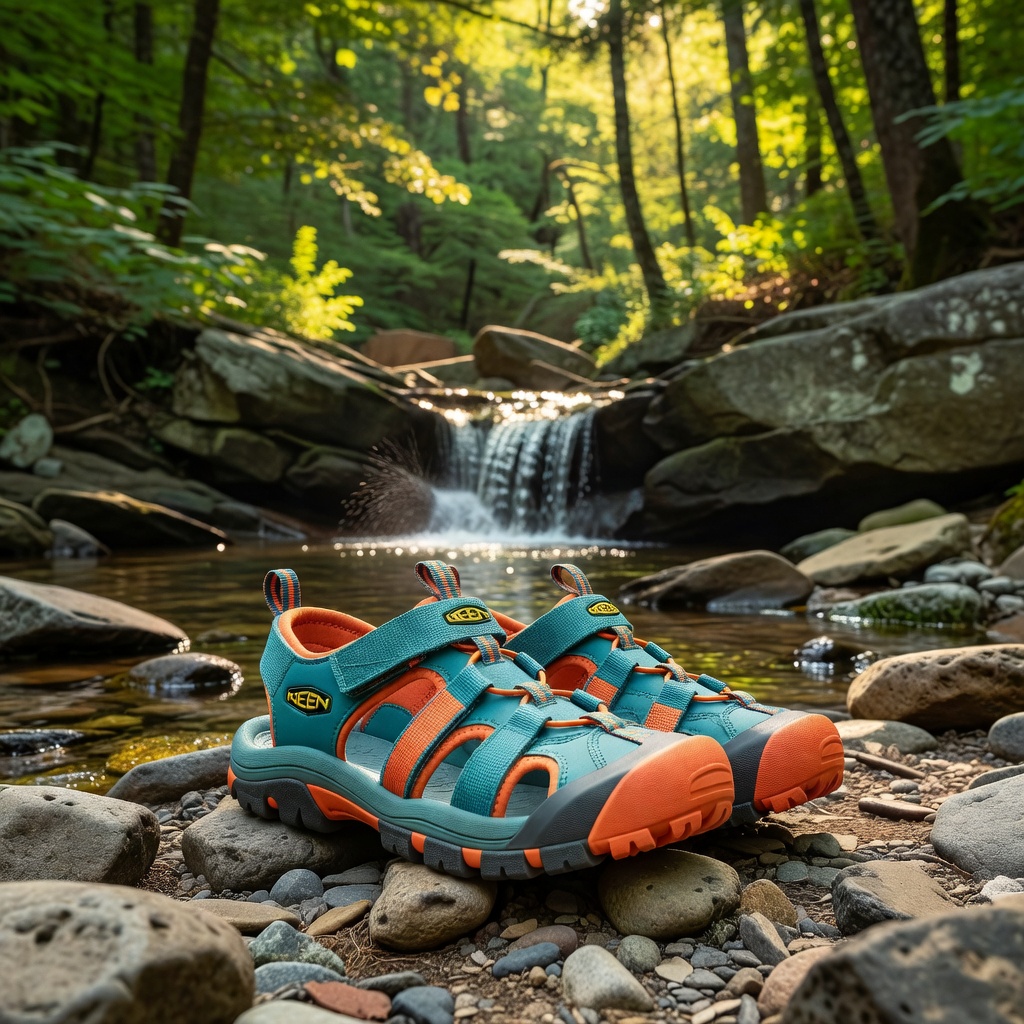
Hiking boots and hiking shoes for kids. Kids don't need technical footwear. They need waterproof, grippy, and inexpensive enough to replace when feet grow two sizes in a year. The KEEN Kids Hightrail Waterproof Hiking Shoes ($74.95, 4.6★) comes in Little Kid and Big Kid sizing with the same roomy toe-box philosophy as the adult Targhee. For the youngest walkers on short, mostly-carried outings, the KEEN Newport H2 closed-toe water sandals ($55.00, 4.7★) are the more forgiving pick — the closed toe protects against rocks and roots while the sandal profile drains and dries. For a mid-height waterproof kids' option on colder trips, the KEEN Targhee Mid kid's boots add ankle coverage over the same platform. Family sizing help is in our best hiking shoes for kids guide.
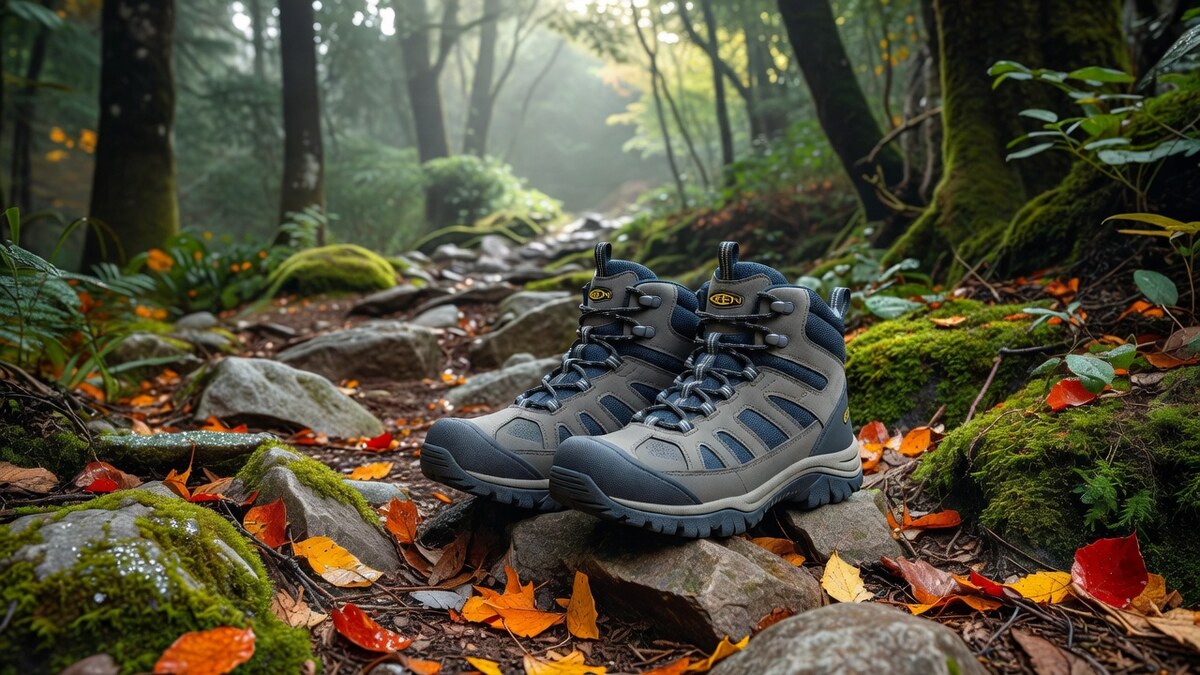
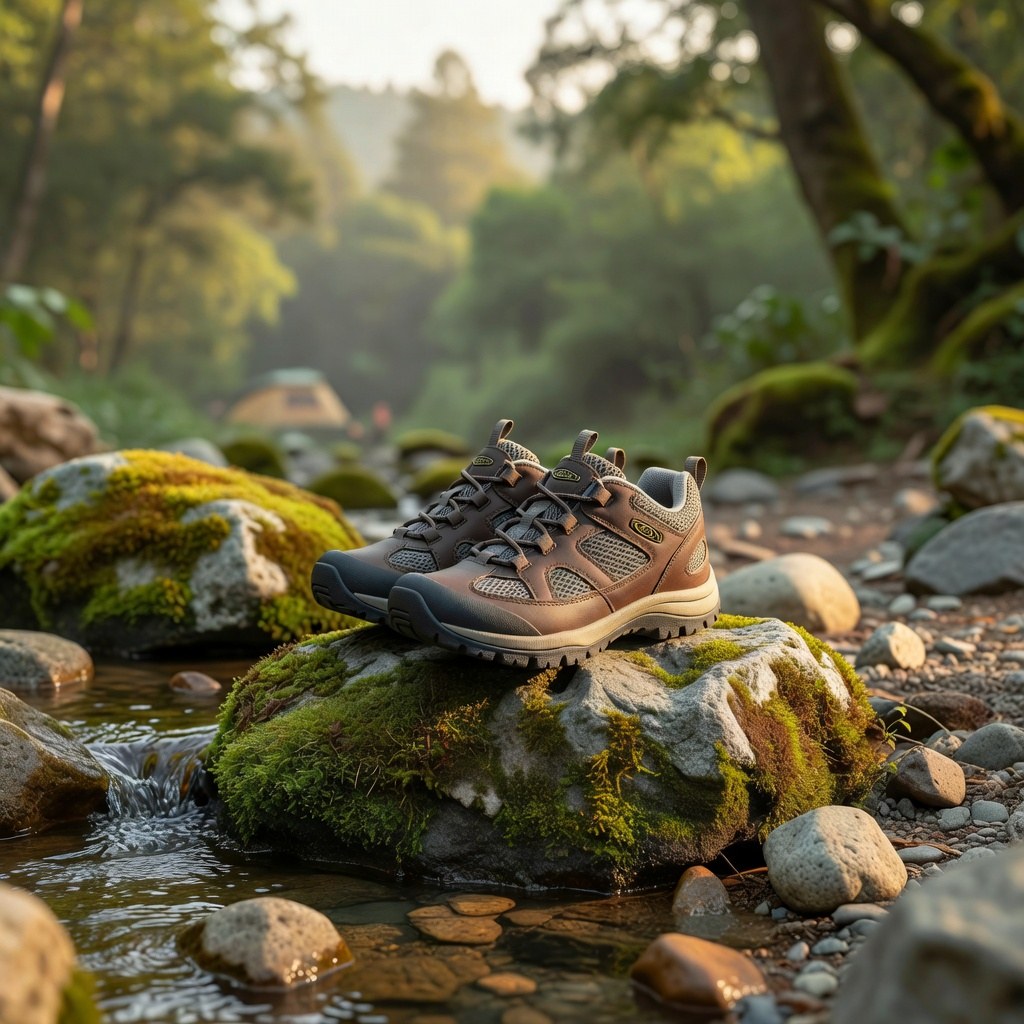
Ankle support and high-top models. If you're searching for hiking shoes for women with ankle support, the honest answer is that support comes from height, not from marketing. A high-top or mid-cut model like the Moab 3 boot or the X Ultra 4 Mid GTX wraps the ankle; a low-cut hiking shoe does not, and no insole or lacing pattern changes that. Buy height if you want ankle coverage and a low-cut shoe if you don't — most hikers don't.
Quick pick by the search you typed:
| If you searched… | The pick |
|---|---|
| best hiking shoes for women | Merrell Women's Moab 3 Waterproof |
| best hiking shoes for men | Merrell Moab 3 Waterproof, or the Targhee 3 for wide feet |
| hiking shoes for women wide feet / hiking shoes for men wide feet / best hiking shoes for women with wide feet | KEEN Targhee 3 — the roomy toe box is the substitute when a women's wide width doesn't exist |
| hiking shoes for women waterproof / hiking shoes for men waterproof | Either pick above, in its waterproof build — the membrane doesn't change by gender |
| hiking shoes for women ankle support / hiking shoes high top | Moab 3 boot or X Ultra 4 Mid GTX |
| hiking boots for men / hiking boots for women | The same two mid-height models — height is the whole difference |
| hiking boots for kids / hiking shoes for kids / hiking shoes for toddlers | KEEN Kids Hightrail for walkers, Newport H2 sandals for the youngest |
| best hiking shoes for flat feet / best hiking shoes for flat feet men | KEEN Targhee 3 plus the PowerStep Pinnacle Low insole — see the insoles section below |
| good hiking shoes for plantar fasciitis / hiking boots for plantar fasciitis / best hiking shoes for plantar fasciitis women / hiking shoes for plantar fasciitis men | Our plantar fasciitis hiking shoe guide covers the specs that matter |
Do You Need Waterproof Hiking Shoes?
This is the most debated question in hiking footwear, and the answer is genuinely "it depends."
Waterproof shoes (Gore-Tex or brand membranes like M Select DRY / KEEN.DRY) are the right call when:
- You hike in wet climates — Pacific Northwest, Appalachia, UK, anywhere with frequent rain
- You cross streams and wet grass regularly
- You hike in shoulder seasons (spring/fall) or winter
- You do morning hikes with dew-soaked trails
Non-waterproof mesh shoes are better when:
- You hike in hot weather (summer desert, Southwest US, southern trails) — waterproof membranes trap heat
- You want lighter, more breathable shoes for casual day hiking
- Your feet sweat heavily (the membrane makes this worse, not better)
The catch with waterproof shoes: once water gets in over the top (a deep stream crossing), it stays in. A non-waterproof mesh shoe drains and dries faster. For deep-water crossings, neither is perfect — consider hiking sandals or quick-dry trail runners for those specific trips.
Water Crossings: What to Wear When the Trail Is a Creek
If your search was hiking shoes waterproof, hiking boots waterproof, or best hiking shoes waterproof, the short answer is that all three picks above come in a waterproof build — and that waterproofness has a hard limit worth understanding before you count on it.
- Waterproof hiking boots and waterproof hiking shoes keep splashes, dew, and shallow puddles out — which is most of what most hikers actually meet. The Merrell Moab 3, KEEN Targhee 3, and Salomon X Ultra 4 are all in this camp.
- For real creek crossings, plan to get wet and dry fast. Searching for the best hiking shoes for water crossings is a bit of a trap, because no hiking shoe keeps water out once the water is above the collar. A non-waterproof mesh shoe drains in minutes; a waterproof shoe that fills up holds the water and takes hours. If your route has multiple fords, mesh plus a spare pair of socks beats a membrane that becomes a bucket.
- Gaiters keep the small stuff out. The Outdoor Research Crocodile Gaiters ($59.00) seal over your laces, which is what actually stops gravel, mud, and snow migrating into the shoe on mixed wet-dry trails — and they keep your socks cleaner on the days you do splash through.
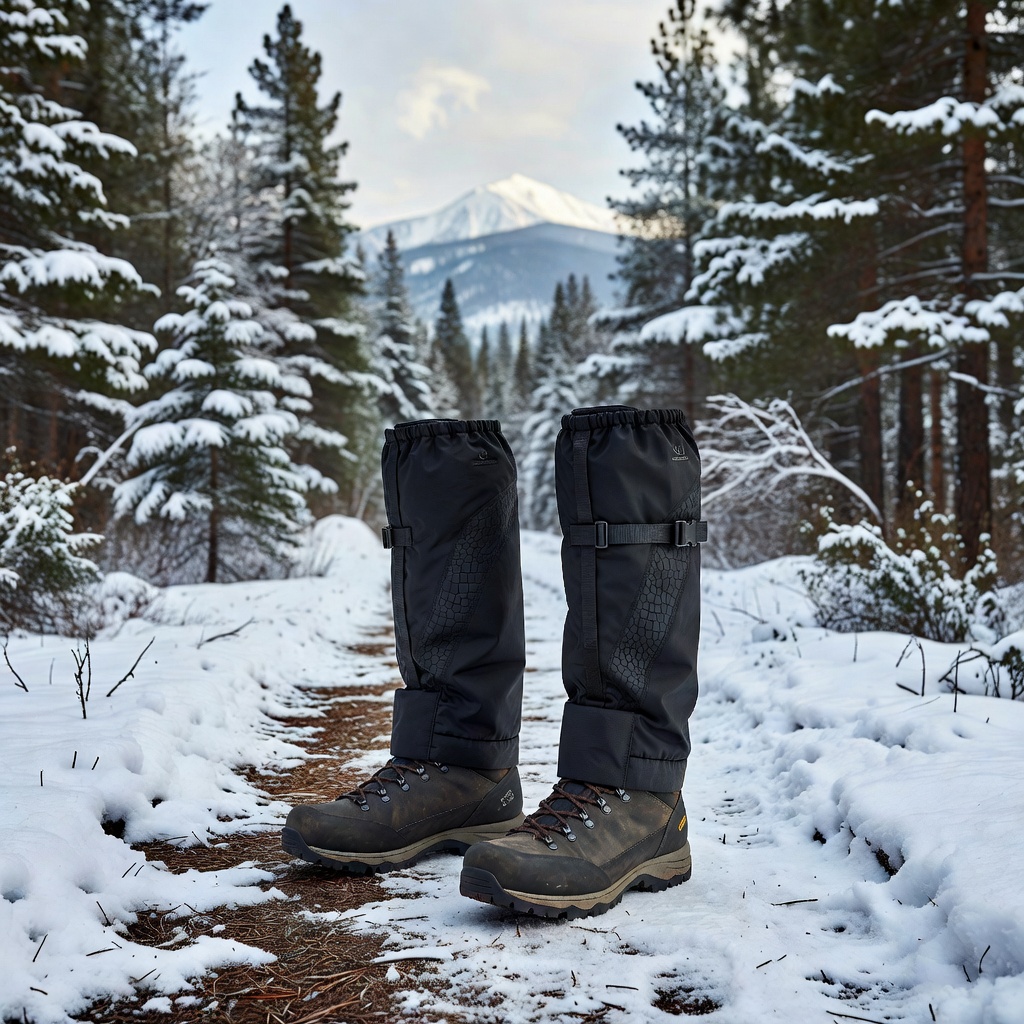
- Waterproof by gender and width. Waterproof hiking shoes for women and waterproof hiking shoes for men are the same two models built on different lasts, so the only real question is fit: the Women's Moab 3 or the men's Moab 3 and Targhee 3. If you need waterproof hiking shoes with a wide toe box, the Targhee 3 is the only one of the three that gives you both. For wide fit hiking shoes for men, that's the same answer; wide hiking shoes for women usually means a roomy toe box rather than a dedicated wide width, and wide hiking shoes for kids — or waterproof hiking shoes for kids — means the same toe-box philosophy in the KEEN Kids Hightrail. For waterproof hiking shoes for plantar fasciitis, the membrane matters less than arch support — see our plantar fasciitis hiking shoe guide.
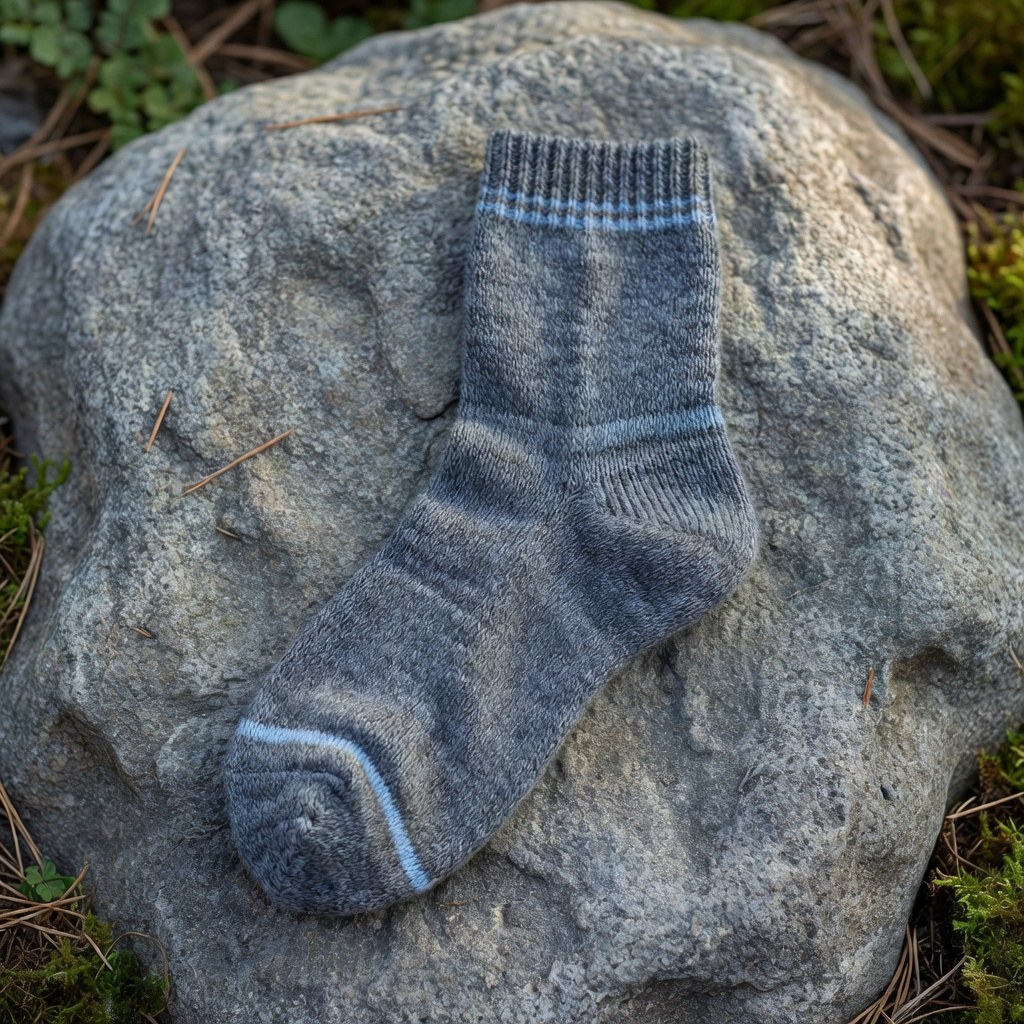
- Socks decide the rest of the day. Merino keeps a thermal margin while wet and dries far faster than cotton, which is the single reason a wet-foot day ends comfortably instead of cold.
My recommendation for most people: Get the waterproof version. You'll encounter wet grass, dew, shallow puddles, and the occasional rainstorm far more often than you'll be fording waist-deep rivers. The warmth tradeoff is manageable unless you're hiking in sustained 90°F+ heat. If you are, read our dog summer hiking safety guide — you and your trail pup both need heat-specific gear, and our sun protection camping and hiking guide covers UPF clothing, sun hats, and shade tactics for exposed summer trails. On the flip side, if you hike somewhere that rains more often than not, our rainy day hiking and camping gear guide pairs waterproof footwear with pack covers, rain shells, and shelter setup so you stay dry from trailhead to tent.
Best Hiking Shoes for Fall: Fall Hiking Boots and Cold-Weather Picks
Fall is the best hiking season and the one that punishes the wrong footwear hardest. The trails soften, the crowds thin, and the foliage window is short — but you are now walking on wet leaves over hardpack, through morning dew that soaks mesh in the first quarter mile, and into trailheads that can be 25°F colder than they were in August. And nothing in your sock drawer needs to have changed: the only thing that needs to have changed in your shoe is the membrane, the outsole under you, and how much ankle you cover.
| Fall condition | What actually changes | The pick |
|---|---|---|
| Wet leaves over hardpack | Grip compound and tread depth beat cushioning — smooth heels slip on leaf litter | Merrell Moab 3 Waterproof ($129.95) |
| Dew-soaked grass at 7 a.m. | A membrane, or your feet are wet for the first two miles | KEEN Targhee 3 ($187.00) |
| Frost, slush, snow above treeline | Ankle coverage and a stiffer platform, not insulation | Salomon X Ultra 4 Mid GTX ($231.81) |
| Mud and leaf litter | Debris inside the shoe, which is a blister machine | Outdoor Research Crocodile Gaiters ($59.00) |
| Cold mornings, warm afternoons | One dry foot plus merino, not a heavier shoe | Darn Tough Hiker Micro Crew ($27.95) |
Fall hiking boots or a low-cut shoe? Search "best hiking shoes for fall" and you will mostly be shown boots, because boot content ranks. If your search was best hiking boots for fall rather than best hiking shoes for fall, the honest answer is the same three models in their taller versions — the Moab 3 boot or the X Ultra 4 Mid GTX — and nothing else about the pick changes. For most fall day hikes a low-cut waterproof shoe is still the better buy: it weighs less, drains less, and a leaves-and-hardpack surface underneath does not need ankle support.
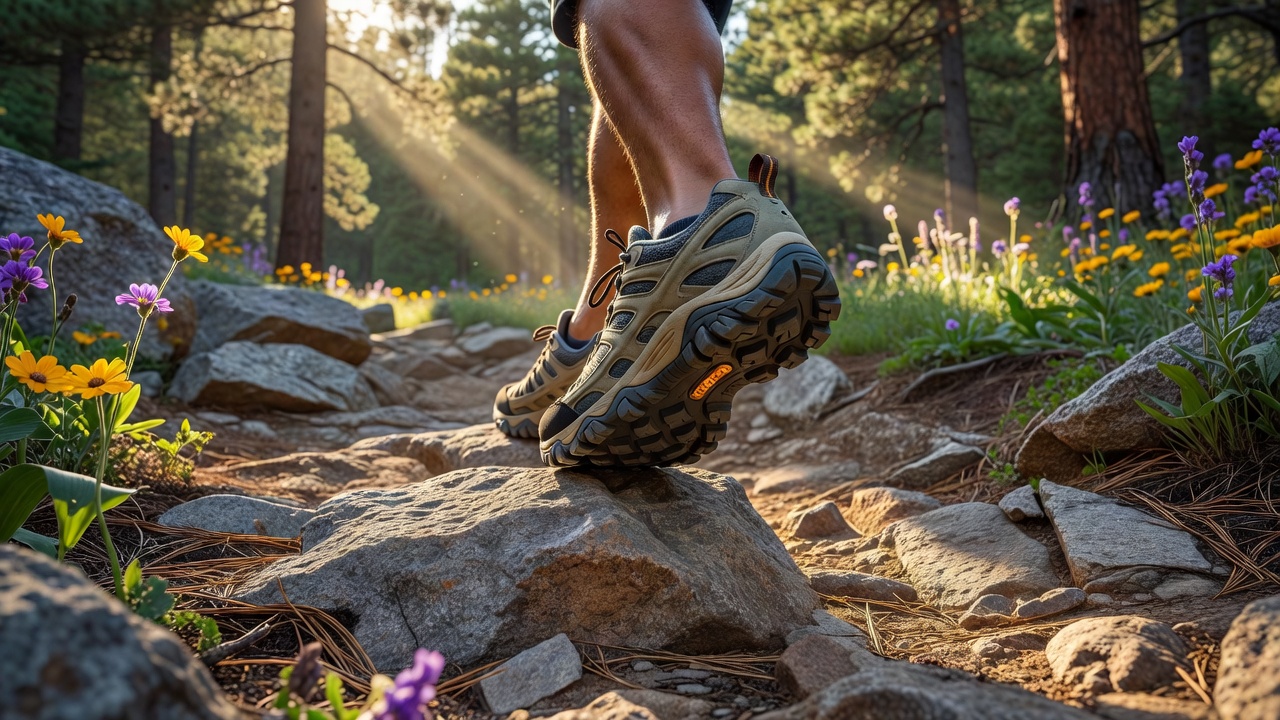
Fall hiking boots women and fall hiking boots men are the same three models on different lasts. If you searched fall hiking boots women, the answer is the Women's Moab 3 Waterproof ($144.95, 4.4★) — a women's-specific last rather than a scaled-down men's shoe. If you searched fall hiking boots men, fall hiking shoes men, or typed men's fall hiking shoes, the Moab 3 is the default and the Targhee 3 is the roomy-toe-box answer. If you are shopping fall hiking shoes women in a wide forefoot, read the toe-box paragraph below before you order, because a women's wide width often does not exist in the colourway you want.
Where the warmth actually comes from. Insulated fall hiking boots are overkill for three-season hiking, and most people regret them by the second mile. What keeps feet warm is a dry foot and a sock that holds a thermal margin while damp — merino does that, cotton does the opposite. Size for the thicker sock, not the colder forecast: half a size up is the same advice as summer, it just matters more now.
The Cold-Morning Foot System: Rotate Your Socks, Carry a Spare
Merino is only half of the answer; rotation is the other half. A trailhead at 28°F and a descent at 60°F are two different sock days, and the same midweight crew that felt perfect before sunrise feels like a sauna by lunch. Carry two weights and one dry spare, and the "dry foot" rule above holds no matter what the thermometer does after noon.
- A light crew for the warm half of the day. The lightweight member of the same merino family runs noticeably cooler than the midweight that earns a place in the fall table above — the Darn Tough Light Hiker Micro Crew ($24.95, 4.8★) on a men's last, or the Darn Tough women's hiking sock ($25.95, 4.8★), which is built on a woman-specific last so the heel pocket stays locked in place instead of sliding down into your boot at mile three.
- One dry spare that stays in the pack until something goes wrong. A wet sock undoes a good membrane and a good fit in about ten minutes, which is why the spare is the cheapest insurance you can carry. The DANISH ENDURANCE merino hiking socks ($39.95) are the most-reviewed merino pair on this site at 41,700+ ratings — merino warmth and moisture management at a price per pair that makes a second pair an easy call.
- If you are crossing water, pack the dry pair before you step in. The water-crossing rule earlier on this page — mesh drains, a membrane becomes a bucket — only works if the spare socks are in the pack rather than in the car, because a forded creek at 9 a.m. otherwise means wet feet for the rest of the day.
When the trail turns to packed snow and ice, the footwear decision shifts to insulation, sock volume and traction — our winter hiking guide covers boots vs shoes vs trail shoes for cold-weather days.
How to Fit Hiking Shoes (So You Don't Get Blisters)
Blisters ruin hikes. The good news: almost all hiking-shoe blisters come from poor fit, not poor shoes. Here's how to get it right.
Size up half a size. Your feet swell on the trail — especially on descents. A shoe that feels snug in the store will feel tight at mile 8. Buy a half size larger than your street shoe. This is non-negotiable.
Measure at the end of the day. Your feet are largest in the evening after a full day of standing and walking. Buy shoes then, or at least try them on in the evening.
Check the toe box. With the shoe laced and your foot pushed all the way forward (stand on a downhill slope if possible), you should be able to wiggle all your toes freely. If your toes touch the front, go bigger. On long descents, your foot slides forward — if your toes are already touching, you'll lose toenails.
Wear your hiking socks when trying on shoes. Don't try shoes in thin dress socks and then hike in thick wool. A good hiking sock like the Darn Tough Hiker Micro Crew (merino wool, 4.7★, $27.95) adds volume and changes the fit meaningfully. Buy the sock you'll hike in, then size the shoe to it. Darn Tough's lifetime guarantee and seamless construction make them the gold standard for blister prevention.
Test for heel lock. Lace the shoe and walk. Your heel should stay planted. If it lifts with every step, you'll get heel blisters — try a different lacing pattern or a different shoe.
For the complete blister prevention playbook (taping, hotspots, anti-chafe), our hiking foot care guide covers it in depth.
Hiking Shoe Size Chart: US, EU, and UK (Plus the "Near Me" Question)
Sizing is the second-most-common reason a correct shoe feels wrong — usually because you're converting from a running shoe size, a UK size, or a brand that runs a half size off.
| US (men's) | US (women's) | EU | UK |
|---|---|---|---|
| 7 | 8.5 | 40 | 6 |
| 8 | 9.5 | 41 | 7 |
| 9 | 10.5 | 42.5 | 8 |
| 10 | 11.5 | 44 | 9 |
| 11 | 12.5 | 45 | 10 |
| 12 | 13.5 | 46 | 11 |
Four things the chart can't tell you, which is why it's a starting point rather than an answer: US women's sizing isn't a uniform 1.5-size offset from men's in every brand, EU sizes aren't consistent between manufacturers, trail-shoe lasts differ from running-shoe lasts even inside the same brand, and you should add half a size for thick merino socks. Use the chart, then use the fit test above.
If you're searching for hiking boots near me or hiking shoes near me, here's the honest version: the one thing worth doing locally is trying on three widths of the same model, because width is the variable you cannot assess from a product listing. Get your foot measured on a Brannock device at an outfitter, write down the width, then buy online where the price and size range are better. If there's no outfitter nearby, order two sizes (or two widths) from a retailer with free returns, walk around indoors for 20 minutes, and send back what doesn't fit. That return shipping costs nothing; hiking 10 miles in a shoe that's a half size small costs you a toenail.
Breaking In Hiking Shoes: What Actually Works
"Break them in" is advice, not a plan. Here's the actual plan:
- Wear them around the house for 2-3 days. One hour at a time. If they hurt in a specific spot (not just general stiffness), that's a fit problem, not a break-in problem — return them.
- Short neighborhood walks (1-2 miles). A few of these over a week. Pay attention to hotspots.
- An easy local trail (3-5 miles) on flat terrain. No heavy pack yet.
- A moderate hike (5-8 miles) with your daypack. Now you're ready.
Total time: about two weeks for most shoes. The Merrell Moab 3 and KEEN Targhee 3 break in faster than most — the Moab is famous for being comfortable out of the box. Fully leather boots take longer; expect 20-30 miles before they feel right.
Never take brand-new shoes on a long or remote hike. That's how people end up limping out. Always have broken-in shoes before a backpacking trip — your feet will thank you.
Fall is the easiest season to break shoes in: cool temps, dry trails, and low-mileage days that don't punish a stiff sole. Two low-risk first outings are an easy leaf peeping walk timed to whatever elevation is at peak color, and an apple picking + camping weekend where the "hike" is really orchard rows and a flat walk back to the tent.
How Long to Break In New Hiking Shoes (and How to Do It Faster)
"How long to break in hiking shoes" gets a different honest answer per shoe type, because the material decides it far more than the brand does:
- Synthetic hiking shoes (Moab 3, Targhee 3, X Ultra 4): 10-20 trail miles, and often closer to zero. If you've been wondering how to break in Merrell hiking shoes, the answer for the Moab platform is short local walks and you're essentially done — synthetic uppers and molded EVA midsoles don't need to be worked in the way leather does.
- Full-grain leather boots: how to break in hiking boots with a full-grain leather upper takes 20-30 miles, sometimes more, and rushing it is how you earn blisters. Leather stretches and molds to your foot slowly.
Do I need to break in new hiking shoes at all — or, for that matter, do I need to break in hiking shoes? Yes. And what's the best way to break in hiking shoes? Mileage, in short increments. But the reason is subtler than most advice admits than most advice admits. It isn't that the shoe changes much — it's that you change. Your feet swell over hours and your hotspots only announce themselves on a long day. The two-week plan above exists to surface fit problems on a neighborhood walk instead of at mile nine of a wilderness trail.
How to break in hiking shoes fast without damaging them: wear them for two hours at home with the socks you'll actually hike in, so the midsole compresses and any heel slip shows up immediately. That's also the honest answer to how to break in new hiking shoes quickly, and to how to break in hiking boots fast: there's no shortcut that beats mileage. Then stack one 2-3 mile walk, one 4-5 mile flat trail day, then your first real hike. Skipping straight to a long day is how people earn heel blisters that take a week to heal.
How to break in hiking shoes without wearing them is the one version of this question with no good answer. You cannot break in a shoe by leaving it in a closet. What you can legitimately do without a trail is wear them indoors, loosen the lacing over the instep to relieve pressure, and use a shoe tree or stretcher on one genuinely tight spot. Heat-based tricks, wet-sock methods, and baking leather are the classic ways to void a warranty and shorten an outsole's life — skip all of them. And remember the rule that overrides this entire section: if a shoe hurts in a specific spot rather than feeling generally stiff, that's a fit problem, and the fix is a return, not a break-in.
Best Hiking Shoes for Beginners, Rocky Terrain, and the Brands That Matter
Most people looking for best hiking shoes for beginners are not really shopping a beginner category — there is no such category — they are shopping for forgiveness: a shoe that fits an average foot, costs enough to last and not so much that a wrong guess hurts, and does not require knowing your arch type before you order. That narrows to three honest starting points, and all three appear above for the same reason.
Best Hiking Shoes for Beginners: Three Honest Starting Points
- If you want one pair and no more research: the Merrell Moab 3 Waterproof ($129.95, 4.6★). Average volume, average width, forgiving break-in, 500+ miles. It is the shoe we recommend to the largest number of people because it asks the least of you.
- If your feet are wide or your toes feel cramped in everything: the KEEN Targhee 3 ($187.00, 4.4★). Anatomical last, roomy toe box, heavier and warmer than the Moab.
- If you carry a pack and your ankles complain on descents: the Moab 3 boot ($89.99, 4.5★) — same platform, mid-cut height.
What a first pair should not include: ultralight racing platforms, unbroken-in leather, or a brand-new model with no review base. A beginner's real risk is a blister at mile three, and blisters come from fit, not from the spec sheet — see the complete beginner's hiking guide for the rest of a first kit.
Best Hiking Shoes for Rocky Terrain
Rocky terrain is a different question from mud or leaf litter, and it exposes the one thing cushioning cannot fix: torsional stiffness and outsole compound. On broken rock your foot is constantly rolling over edges, so you want a platform that resists twisting and a rubber that grips wet granite instead of smearing off it. The Salomon X Ultra 4 Mid GTX is the most capable of the picks here for exactly this, with an aggressive Contagrip outsole and a precise, narrow fit — the wrong shoe if your forefoot is wide, the right shoe if the descent is technical. The Moab 3 handles mixed rock, scree, and rooty trail well, and the Moab 3 boot adds the ankle coverage that rough ground rewards when you are carrying weight.
Best Hiking Shoe Brands, Decoded: Merrell vs KEEN vs Salomon
People search for the best hiking shoes brands expecting a ranking. What they actually need is a fit decoder, because the three brands on this page differ far more in last shape than in quality:
- Merrell — average volume, medium width, the widest availability of wide widths. If you have no strong opinion about your feet, start here.
- KEEN — roomy, foot-shaped toe box with a wider forefoot and a slightly firmer midsole. The brand to start with if toes feel pinched in everything else, including the kids' line.
- Salomon — narrower, precise, technical. Excellent grip and lockdown; the brand to avoid if you need volume, and the one to prioritise if you want edge precision on rock.
Those last shapes are exactly what the head-to-head pages settle: KEEN Targhee 3 vs Salomon X Ultra 4 for the wide-versus-narrow decision, Merrell Moab 3 vs KEEN Targhee 3 for the value-versus-room decision, and Merrell Moab 3 vs Salomon X Ultra 4 for the all-rounder-versus-speed decision.
Two other names are genuinely worth knowing when you branch out: La Sportiva for technical and alpine terrain, and Hoka for maximum cushioning on long, soft-surface days. Neither has a pick in this guide, and neither is a better brand than the three above — they are differently shaped answers to different feet.
Hiking Shoe Accessories That Make Every Mile Better
The shoes are the foundation. These additions round out your foot system:
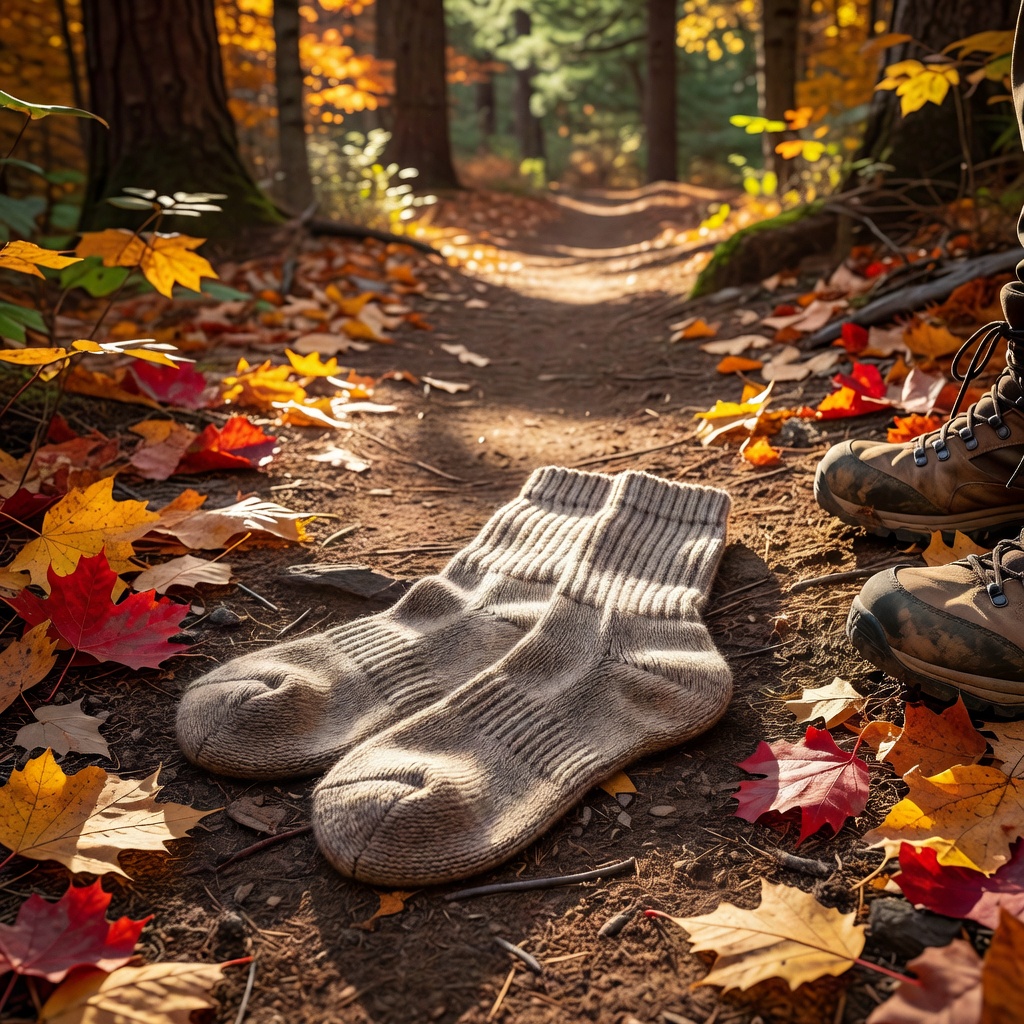
- Merino wool hiking socks: The Darn Tough Hiker Micro Crew ($27.95, 4.7★) is the benchmark. Merino regulates temperature, resists odor, and the seamless toe prevents blisters. Never hike in cotton socks — they hold moisture and cause blisters guaranteed.
-
Moisture-wicking base layer: A merino wool or synthetic base layer bottom keeps your whole lower body temperature-regulated on cold morning starts — the Smartwool Women's Intraknit Thermal Max merino base layer bottom ($139.00, 4.6★) on the women's side, and the Columbia Men's Midweight Omni-Heat base layer top ($49.99, 4.6★) with reflective Omni-Heat dots that bounce your own body heat back if you run cold on the approach.
-
Rain shell for sudden weather: The Outdoor Research Helium Rain Jacket ($159, 4.6★) packs to nothing and keeps you dry when the weather turns — wet feet plus a soaked body is a hypothermia risk even in summer.
-
Breathable hiking shirt: A moisture-wicking performance polo or athletic tee keeps your core cool on the approach hike. Overheating starts at the core, not the feet.
-
Gaiters for loose-trail season: The Outdoor Research Crocodile Gaiters ($59.00) zip over your laces and stop pebbles, mud, and snow from working their way into your shoes — the difference between a long, comfortable day and stopping every 200 yards to empty your footwear. On dusty or scree-heavy trails they pair perfectly with the Merrell Moab's bellows tongue to keep debris out entirely.
-
Insoles matched to your arch: The cheapest change that actually alters how a shoe fits. Flat feet want the PowerStep Pinnacle Low; medium-to-high arches want the Superfeet All-Purpose High Arch; rocky descents want the cushioned Superfeet Hike Support. Pull the stock footbed out first — stacking defeats the point.
-
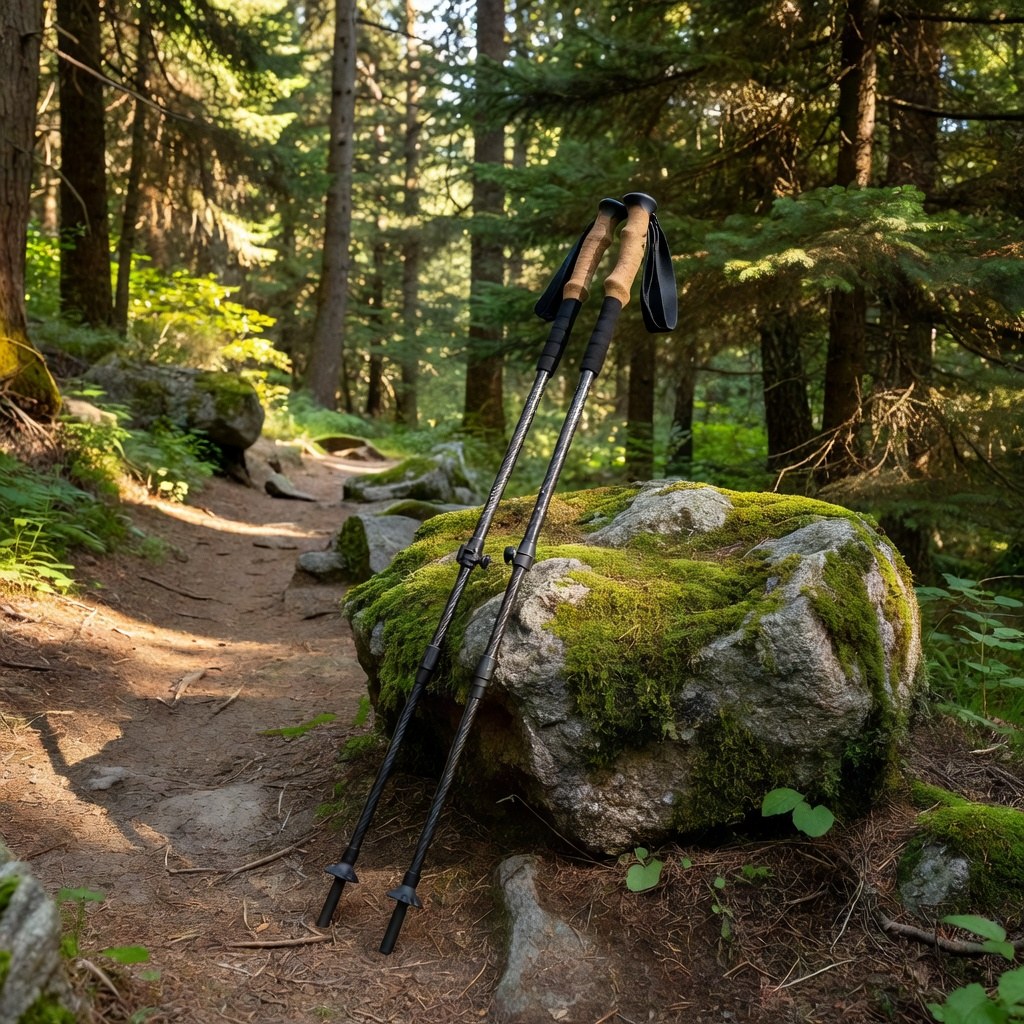
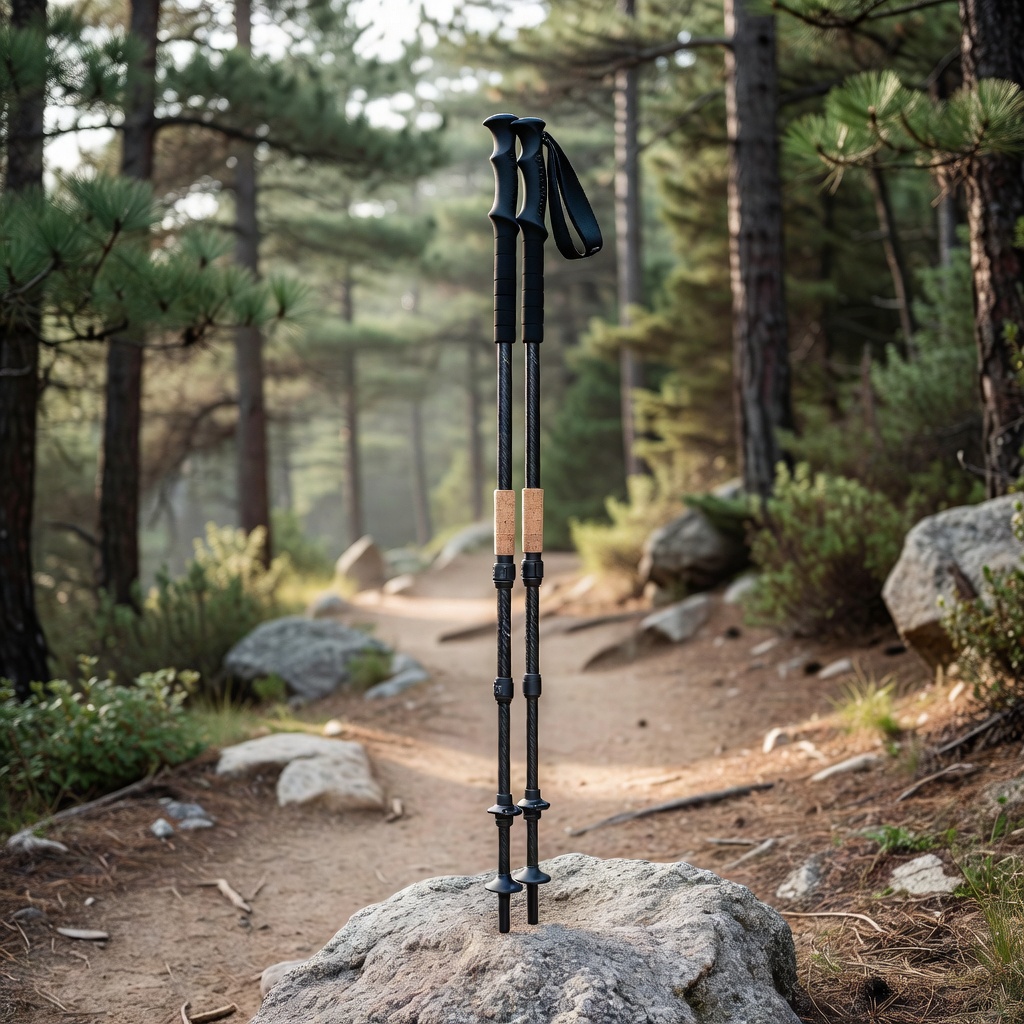
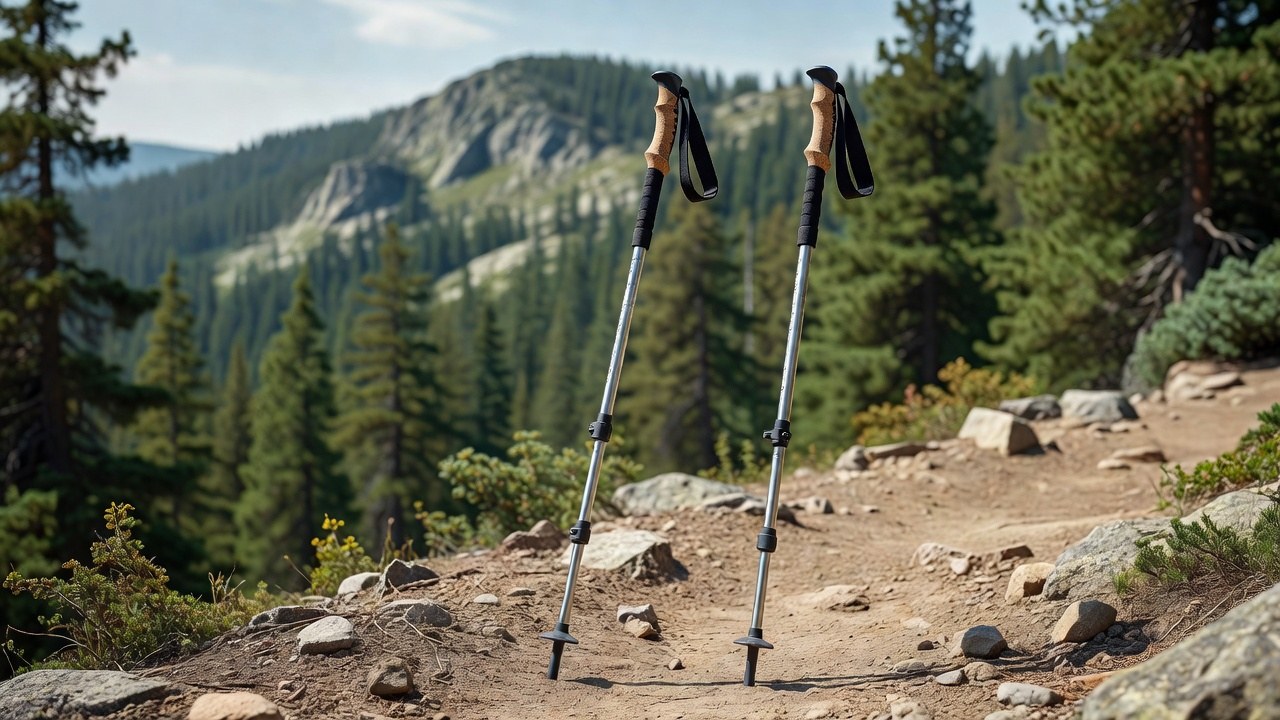
Trekking poles, for the descents your shoes cannot fix: poles move a large share of downhill impact from your knees and feet to your arms, which matters most on wet-leaf hardpack and any long descent. For a light day hiker the TrailBuddy 7075 Aluminum Poles ($44.91, 4.7★) are the value pick; the Cascade Mountain Tech Carbon Fiber Poles ($49.95, 4.6★) are the lighter carbon option; the Black Diamond Trail Cork ($109.88, 4.5★) is the cork-grip step up; and the LEKI Makalu FX Carbon ($256.46, 4.7★) is the premium pick for loaded days. If you are choosing between them, our best trekking poles guide breaks down grip types and locking systems.
-
A blister kit for the day prevention loses: heat, sweat, and one bad root can still decide your day. The Adventure Medical Kits Ultralight/Watertight .7 ($44.95, 4.7★, 762 ratings) is 90 pieces in 5.9 ounces — die-cut moleskins, blister treatment, antiseptic wipes, and a tick-remover forceps inside a waterproof DryFlex inner bag, which matters because the days that blister your feet are the same days your pack gets soaked.
Hiking Shoe Insoles and Arch Support: Flat Feet, High Arches, and Plantar Fasciitis
Almost every hiking shoe ships with a thin stock insole that exists to cover the midsole, not to support your foot. Whether you call them hiking shoe inserts, hiking boot inserts, hiking shoe insoles, inserts for hiking boots, or simply the best hiking shoe inserts, they're the same $30-$60 category — and the best shoe inserts for hiking boots are the ones matched to your arch type, not the most expensive pair on the shelf. That's why hiking shoe insoles are the cheapest meaningful upgrade in this entire guide — a $30-$60 insert changes the fit more than switching brands does.
When shoe inserts for hiking boots are worth it:
- Flat feet / low arches: you want firmer arch support than any stock insole provides. Look for a semi-rigid or rigid arch shell. A soft gel insole just squashes and gives you nothing.
- High arches: you want cushioning under the metatarsals and a deeper heel cup, because a high arch collapses under load and takes the midfoot with it.
- Plantar fasciitis: the priority is arch support plus a cushioned heel, not maximum squish. Our best hiking shoes for plantar fasciitis guide covers the torsional stiffness and heel-to-toe drop specs that matter more than cushioning claims.
- Heel slip you can't lace away: a thin insert that adds volume can rescue a shoe that's a half size too deep, which is often a better fix than buying another pair.
Our insole picks, matched to the three problems above — all three assume your boot has a removable factory footbed (take the stock one out rather than stacking on top of it):
- Flat feet or fallen arches: PowerStep Pinnacle Low ($54.95, 4.4★, 2,570 ratings) — a deliberately low-arch shell with a deep heel cradle for motion control, sized rather than trimmed, rated for 250+ lbs. The point is motion control, not arch height; a high-arch insole on a flat foot feels like standing on a marble.
- Medium-to-high arches: Superfeet All-Purpose High Arch (Green) ($59.95, 4.4★) — the firm benchmark: deep heel cup plus a high-arch shape that stops the arch collapsing under a loaded pack, trim-to-fit, good for about 12 months or 500 miles.
- Rocky ground and long descents: Superfeet Hike Support ($59.95, 4.4★, 2,413 ratings) — a carbon-fiber-reinforced hiking orthotic with medium-thickness dual-layer cushioning, built to stabilize the foot on uneven trail without stealing toe box volume.
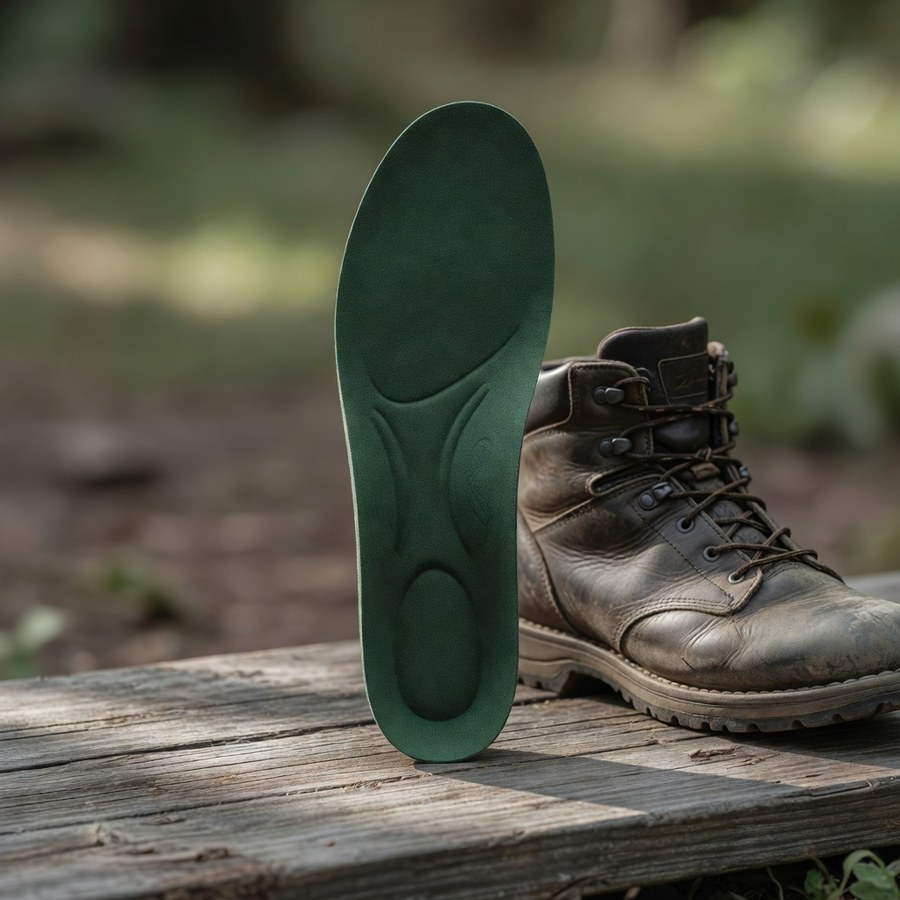
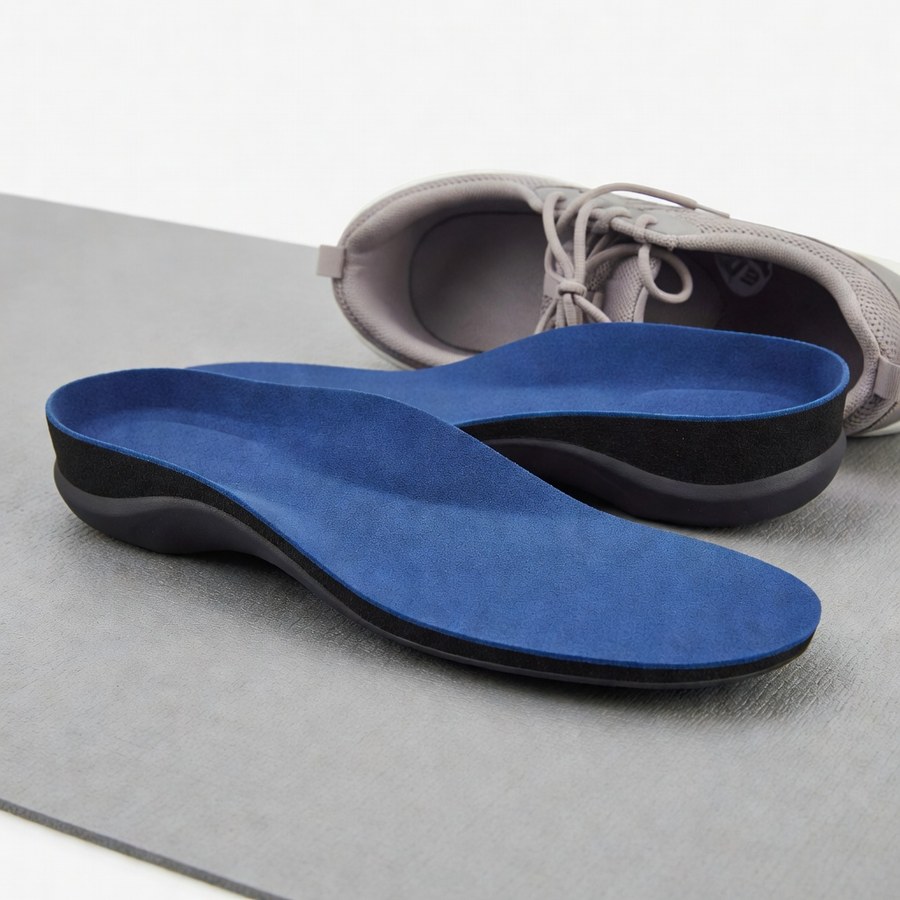
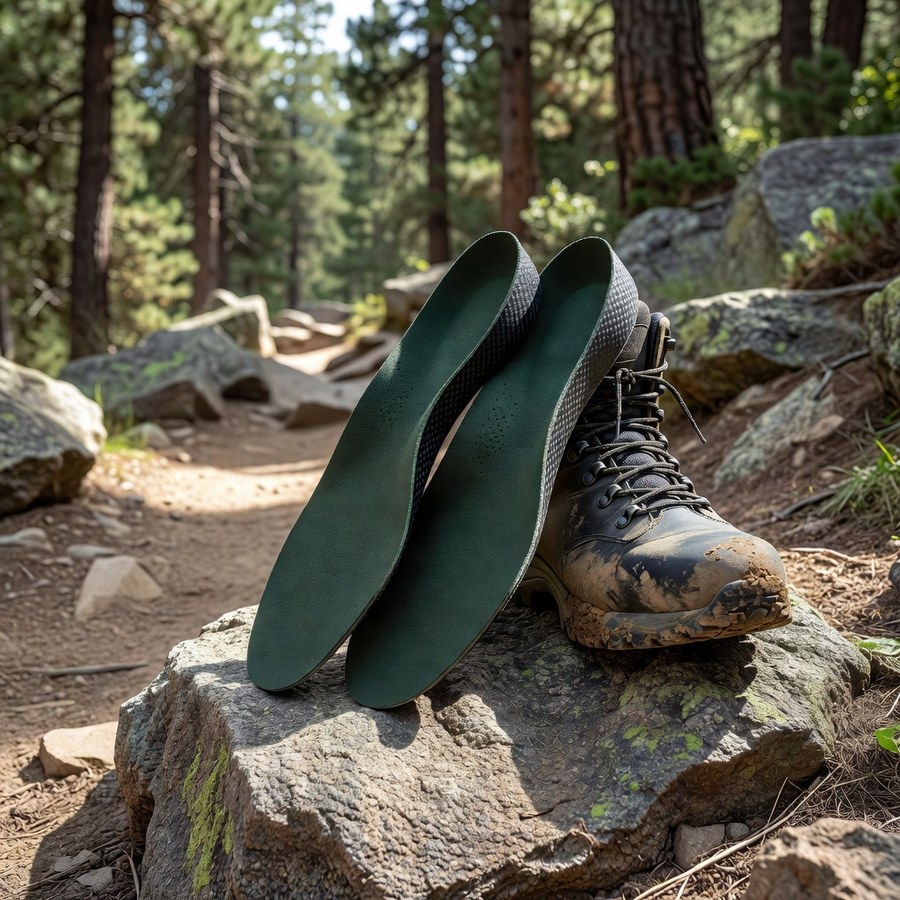
Which shoe carries an insert best? For flat feet and plantar fasciitis, a firm, torsionally stiff midsole on a level platform does more than any drop-in insert — but the shoe also has to have room for the insert without crowding your toes. That's the same reason the KEEN Targhee 3 is the pick above for anyone planning to add support, and why women shopping the same need should look at the Merrell Women's Moab 3 rather than sizing down a men's model.
The volume trap — this is the part people get wrong. The biggest mistake with hiking shoe inserts is adding thickness without removing depth. Most stock insoles are removable: take the stock footbed out, drop the aftermarket insole into its place, and measure how your toes feel. Stacking a thick insole on top of the stock one steals toe box volume, and a shoe that suddenly touches your toes on descents will cost you toenails. If you need both support and room, that's your signal to size up rather than force it. For custom orthotics, bring them to the fitting instead of guessing. And if you're shopping trail shoe inserts or backpacking shoe inserts specifically, look for the same traits: a firm arch shell, a heel cup that actually holds, and enough thinness that you keep your toe box volume. Backpacking shoe inserts follow the same rule with a heavier load, where added pressure makes weak support hurt sooner.
Shopping note: the three picks above are the ones we stock and fit — a low-arch shell for flat feet, a firm high-arch for medium-to-high arches, and a medium-thickness hiking orthotic for rockier ground. Whatever you buy, test it on a short walk first — an insole that rubs the arch edge raw is worse than no insole at all.
Common Hiking Shoe Mistakes (I've Made All of These)
Buying Your Exact Street Shoe Size
Your feet swell. Your toes slide forward on descents. Half a size up. Always. I lost two toenails learning this on a Grand Canyon rim-to-rim hike.
Going Waterproof in the Desert
I took Gore-Tex shoes to Utah in July. My feet were soaked — in their own sweat. If you hike in sustained heat, non-waterproof mesh breathes infinitely better. Match the membrane to your climate.
Ignoring the Heel Slip
"That'll pack out" is a lie people tell themselves about heel slip. It won't pack out enough. Heel slip equals heel blisters. If you can't get a heel lock with relacing, the shoe doesn't fit your heel — move on.
Only Owning One Pair
Rotating between two pairs of hiking shoes extends the life of both (the foam and midsole need time to decompress) and gives you a dry pair when one gets soaked. Two budget pairs beat one premium pair for total hiking miles.
If you're replacing boots this season, timing matters more than the brand: Black Friday and Cyber Monday are the two dates when hiking footwear actually drops, while the rest of the year the sticker barely moves.
Wearing Cotton Socks
Cotton + hiking = blisters. This is the single easiest upgrade you can make. Switch to merino wool and your blister problems will mostly disappear. The Darn Tough Hiker pays for itself in prevented suffering.
Budget Breakdown: What Should You Spend?
- $50-80: Budget territory — you'll find entry-level shoes that work for casual day hiking but won't last heavy use. Acceptable for occasional hikers.
- $90-140: The sweet spot. The Merrell Moab 3 Boot ($89.99) and full shoes ($129.95) live here. This is where quality, durability, and technology converge. Most hikers should spend here.
- $150-180: Premium performance. La Sportiva and premium Gore-Tex options from other brands. Worth it if you hike frequently or tackle technical terrain.
- $180+: Specialized territory — mountaineering boots, approach shoes, and the Salomon X Ultra 4 Mid GTX at current phase-out pricing. Only if you have a specific need.
My advice: Spend $120-140 on your first real pair. That gets you a Moab 3 or Targhee 3 — shoes that will last 500+ miles and handle 95% of trails. Don't overspend until you know what you actually need.
Shopping for someone else? Hiking shoes are a brutal gift because fit decides everything. If you're putting together a fall or holiday gift for a camper, our best camping gift guide skips the fit-dependent items and rounds up gear that lands every time — across every budget tier.
The Verdict: Which Hiking Shoe Should You Buy?
Buy the Merrell Moab 3 Waterproof if: You want one reliable shoe that does everything well, fits most feet, and won't break the bank. This is the right answer for 80% of hikers.
Buy the KEEN Targhee 3 if: You have wide feet, want maximum toe room, or prioritize durability over speed.
Buy the Salomon X Ultra 4 Mid GTX if: You hike technical terrain, move fast, have narrow feet, or want the most capable all-conditions performer.
Buy the Merrell Moab 3 Boot if: You're carrying a heavy pack on rough trails and want ankle support from a proven platform.
The best hiking shoe is the one that fits your foot and matches your trails. Don't overthink the brand — get the fit right, size up half a size, wear merino wool socks, and break them in properly. Do those four things and your feet will carry you to places worth reaching.
For the full picture on what else to carry on the trail, pair this with our day hike essentials checklist and the complete beginner's hiking guide. And once your feet are sorted, the next big decision is what carries everything else — our how to choose a hiking backpack guide walks through sizing, suspension, and daypack vs multi-day packs. Happy trails.
Boots, socks, and rain shells are all ranked in our Best Apparel & Footwear guide.
Wide feet change everything about shoe shopping: if your forefoot bulges over the midsole or your little toe hangs over the edge of the insole, our best hiking shoes for wide feet guide shows the two-minute foot-trace test and which hiking lasts actually have a roomy toe box. Choosing your first pair with a sore heel? The shortlist changes: our guide to the best hiking shoes for plantar fasciitis covers the arch-support and torsional-stiffness specs that matter more than cushioning.
Lightweight Waterproof Shoes and Wide Toe Boxes: The Two Specs People Search For
Waterproofing and low weight pull against each other, and most shopping advice pretends they do not. A membrane adds weight, reduces breathability, and traps water once it comes in over the collar. So the honest version of "waterproof hiking shoes lightweight" is not a lighter membrane — it is choosing which of the two you actually need, then buying the model that does that one thing well:
- Light and non-waterproof is a valid choice for dry-climate day hikes and summer desert trails. Mesh drains and dries in minutes, which is why a soaked mesh shoe is often drier at mile ten than a soaked membrane shoe.
- Waterproof without the weight penalty means a low-cut shoe rather than a boot. The Moab 3 Waterproof and Targhee 3 are both low-cut membranes; add height and you add weight and warmth you may not want.
- Waterproof hiking shoes merrell is a specific, safe search — Merrell's waterproof line (M Select DRY) is the most widely stocked waterproof option with a wide-width offering, which makes it the reliable answer for hikers who need a membrane and a wide fit.
On the second spec: search "waterproof hiking shoes with wide toe box" and the honest shortlist is short, because a wide toe box and a membrane rarely ship together. The KEEN Targhee 3 is the one model on this page that gives you both — its foot-shaped last is the wide toe box, and its waterproof build is standard rather than an upsell. For women specifically, a roomy toe box usually substitutes for a wide width that does not exist, which is why the wide feet guide leads with KEEN rather than listing every brand's wide offering.
Waterproof or Breathable? The Question Every Hiker Asks First
If you only take one thing from this page, take this: the membrane question is a climate question, not a quality question. People type are hiking shoes waterproof into a search box every day, and the honest answer is "the good ones come both ways — and the wrong choice for your climate is worse than no membrane at all."
So let's settle it properly.
Are Hiking Shoes Waterproof Out of the Box?
Not by default. A shoe is only waterproof if it is built with a membrane (Gore-Tex being the best-known, though several brands use their own equivalents) plus a treated upper and a gusseted tongue. Plenty of hiking shoes are deliberately vented mesh instead, and they are the right answer in hot, dry country where your own sweat is the bigger problem.
That is why the question are hiking boots waterproof has a different answer from shoe to shoe within the same model line. Manufacturers typically sell a vented build and a waterproof build of the same shoe — the Merrell Moab 3 and the KEEN Targhee 3 are both examples already in this guide — and the waterproof version carries the membrane name in the spec sheet. Never assume from the product photo: a waterproof shoe and a vented shoe can look identical.
And no, are all hiking boots waterproof is not true either. Leather boots resist water longer than mesh because the material itself sheds rain, but "resists water" and "waterproof" are different claims. A full-grain leather boot with a waterproof membrane is the most weatherproof thing you can put on your feet; a leather boot without one will eventually soak through at the seams.
Should Your Hiking Boots Be Waterproof?
Here is the tradeoff nobody puts on the box: a waterproof membrane costs more, and it holds water in as effectively as it keeps it out. Once water gets over the collar — a creek crossing, a long walk through wet grass — that shoe takes far longer to dry than a vented one, because the membrane slows evaporation from the inside too.
So when someone asks should hiking boots be waterproof, the useful answer is: waterproof if you hike in rain, snow, mud, or through dew-soaked early-morning grass; breathable if you hike in desert heat, on dry summer trails, or if your feet run hot. As a middle ground, breathable and waterproof hiking shoes do exist — a membrane plus vented panels — but understand what you are buying: water resistance with a modest breathability penalty, not both at full strength.
The single best buying test for waterproof vs breathable hiking boots is to imagine the worst hour of your last hike. Was it cold and wet? Waterproof. Was it hot and dusty? Mesh. The whole hiking shoes breathable argument is a climate argument, which is why there is no single best answer. If you search hiking shoes breathable men or the women's equivalent, the models you get back are vented builds: uppers that move air and drain fast, with no membrane to hold water in. That is the right answer in desert heat and the wrong answer in a Pacific Northwest November, and both are correct for someone.
Sitting between waterproof or breathable hiking shoes, most US weekend hikers in the Northeast, Pacific Northwest, and Midwest should take the membrane; most desert and Southwest hikers should not.
Waterproof Hiking Shoes: What to Look For in the Spec Sheet
If you have decided you want this feature, here is how to shop it without paying for a label:
- Look for the membrane name in the spec list, not a vague "water resistant" claim. A real membrane is a named technology; "water resistant" usually means a coating that wears off.
- A gusseted tongue is the detail that matters most in shallow water. Without it, a puddle at the tongue edge goes straight to your sock.
- Sealed seams and a synthetic toe cap decide whether the wet comes through the stitched area, which is exactly where water finds a way in first.
- Waterproof hiking shoes for women and best waterproof hiking shoes for men are usually the same technology on different lasts. Fit first, membrane second.
When you compare concrete options, the honest framing is this: best womens hiking shoes waterproof and best waterproof hiking shoes for women searches return the same models, and the Merrell Women's Moab 3 Waterproof and Merrell Men's Moab 3 Waterproof are the same build on different lasts — pick your last, not your label. For a wide forefoot with a membrane, the KEEN Men's Targhee 3 Low Waterproof has been the default recommendation for years.
If budget is the constraint, best budget hiking shoes waterproof mostly means buying last season's colorway of a mainstream model rather than a no-name membrane shoe. A cheap membrane that delaminates in one season is not a budget win. Equally, a search for best salomon hiking shoes waterproof leads to Salomon's own Gore-Tex builds (the X Ultra line's GTX suffix is the tell), which are excellent on technical terrain but famously narrow — read the fit section below before you commit.
Brand-specific waterproofing check: gore tex hiking shoes women and gore tex hiking shoes men searches both land on the same handful of brands, because Gore licenses its membrane rather than making shoes. The practical lesson from that: check the model, not the brand. columbia hiking shoes waterproof men and columbia hiking shoes waterproof women refer to Columbia's own Omni-Tech membrane, which is a house equivalent rather than Gore-Tex — it works, and it usually costs less. Read a columbia hiking shoes waterproof review that covers a full wet season before deciding, because house membranes vary more between models than licensed ones do.
Two Destination-Specific Waterproof Questions
do you need waterproof hiking shoes for iceland? Yes, and this is one of the clearest cases in this guide. Iceland's weather changes hourly, its trails mix loose volcanic grit with stream crossings, and there is rarely a dry, warm afternoon to dry anything out. Take the membrane version plus a spare pair of socks. If you are weighing hiking boots vs trail runners iceland style, understand that the island's terrain — wet, rocky, uneven, sometimes snow-streaked — is the argument for the boot end of the spectrum.
On the rainy-weather question, when you search hiking shoes for rainy weather or the best shoes for hiking in rain, the answer is the same: no shoe stays dry in sustained rain. What a membrane buys you is dry feet in wet grass, wet mud, and brief showers — which is most of what "rainy" actually means on a day hike. Add gaiters and wool socks, both in this guide's accessories section, and you have a system rather than a hope.
Wet Trails, Mud, and the Traction Question
Mud is a different problem from water, and it is worth separating the two. hiking shoes for wet trails is really a grip question: wet rock and wet roots are where bad outsoles get exposed, and no membrane helps you there. Whether hiking shoes grippy enough to hold wet rock is a rubber-compound and lug-geometry question, not a brand-name one. best hiking shoes for wet trails are the ones with sticky rubber and enough lug depth to clear mud rather than fill with it.
hiking shoes for mud and water is the hardest combination, because mud demands deep, widely spaced lugs that shed muck on every step, while water demands a membrane. If your trail is genuinely a bog — think spring thaw, lowlands, river bottoms — accept that your feet will get wet and prioritize drainage and dry time over a membrane. hiking boots for mud in the same conditions will keep more of your ankle dry, but they hold more water once they flood.
On sloppy ground specifically: hiking shoes for muddy trails and hiking shoes for muddy terrain both point to the same answer — aggressive, open lugs and a shoe you can hose off. hiking boots for muddy trails add ankle protection against the mud itself, which is more valuable than it sounds when you are post-holing through six inches of it.
Cleaning After the Wet: Protecting the Membrane You Paid For
Two maintenance habits keep a membrane working for years instead of one season:
- how to clean waterproof hiking shoes: cold water, a soft brush, no detergent, no machine, and air dry away from direct heat. Detergent residue and hot air are what shorten a membrane's life.
- hiking boot waterproofing spray — reapply it once or twice a season. This restores the durable water repellent finish on the upper (the part that makes water bead up and roll off). It does not repair a torn membrane, but it does stop the upper from wetting out — which is what makes a working membrane feel like a failed one. If you are unsure whether your shoe needs it, look at the upper after a light rain: if the fabric darkens and soaks instead of beading, it is time to spray.
One caution on how to waterproof hiking boots with waxes and conditioners: those products belong to full-grain leather boots, not to synthetic mesh shoes with membranes. On a synthetic upper, wax can clog the breathable layer and leave you with a sealed, sweaty boot.
How Hiking Shoes Should Actually Fit (Not How Sneakers Fit)
Most bad hiking footwear decisions are fit decisions, not brand decisions. A cheap shoe that fits beats a premium shoe that does not, every single time on a long descent.
The Three-Point Fit Test
Before you buy anything, check these three things in the store or on the porch:
- Toe room. With your heel locked to the back, you should have a thumb's width — roughly a half-inch — between your longest toe and the front of the shoe. Your feet slide forward on descents, and the elevation you lose walking downhill is paid for by your toenails if this is tight.
- Heel lock. Lace up and walk on an incline. If your heel lifts, you will get blisters on the uphill and lose control on the downhill. Heel slip is a lacing problem more often than a size problem — see below.
- Midfoot volume. Your foot should feel held, not squeezed. If the sides of your foot feel pinched while the length is right, you need a wider last, not a longer shoe.
If you are learning how to fit hiking boots for the first time, do this test in the afternoon, with the socks you actually hike in. Feet swell on long days; a shoe that fits at 8 a.m. on a cold foot can be too small by mile eight.
How to Choose Hiking Shoe Size Without Guessing
The question how to choose hiking shoes size comes up because hiking sizing is genuinely different from street sizing: a trail shoe needs room for downhill slide and for a thicker sock, but not so much that your foot slides laterally on rock.
The practical method:
- Measure your foot and use the brand's own size chart rather than a remembered street size. This hiking shoe size chart is a good starting point.
- A hiking shoes sizing guide rule of thumb: half a size up from street shoes for most people, a full size up if you wear thick wool socks or hike long descents regularly.
- If the shoe is available in wide, try wide at your normal length before going up in length. Lengthening a narrow shoe does not create forefoot room; it just puts the flex point in the wrong place.
There is no separate hiking shoe size scale — a hiking shoes sizing guide is really a sock-and-swell guide. Buy for your foot on a long day, not your foot at the counter.
Too Small, Too Big, and What Stretch Actually Does
- hiking boots too small: the symptoms are black toenails, tingling toes on descents, and a bruised feeling under the big toe. This cannot be fixed with lacing; it is a size problem. Return them.
- hiking shoes too narrow: your foot is pinched across the ball while the length feels right, which is a width problem rather than a length problem. Try the wide build before you size up.
- hiking boots too big: your heel lifts, the flex point of the shoe lands behind the ball of your foot, and you may roll an ankle on uneven ground. Fix it with a thicker sock and a heel-lock lacing pattern first; if it persists, size down.
- do hiking shoes stretch over time: the upper does soften and mould slightly, and do hiking boots stretch over time much the same way — leather stretches a little more than synthetic mesh. But a shoe that is genuinely too tight across the forefoot will not "break in" to comfort; it will just break in your feet. Never buy hope-sizing.
do hiking shoes need breaking in? Modern synthetic hiking shoes need very little — often as close to nothing as footwear gets. Full-grain leather needs real miles. Either way, do the first ones close to home, as covered in the break-in section above.
Toe Box: The One Measurement That Decides Comfort
The toe box is the volume in front of the ball of your foot, and it is where most hiking shoes fail. A cramped hiking shoes toe box means your toes cannot splay when you weight them, and that is the mechanical origin of blisters, black toenails, and that "my feet hate me at mile six" feeling.
- hiking boot toe box vs shoe: identical anatomy — the cut height above the ankle changes nothing about forefoot room.
- womens hiking shoes wide toe box: the women's last already narrows the heel, so a wide toe box on a women's model is the combination most likely to feel right for a medium-to-wide female forefoot.
- women s hiking shoes wide width (the same search as "women's wide hiking shoes") is the second lever: width grading rather than toe box shape.
- salomon hiking shoes wide toe box: Salomon's standard fit is narrow and precise. If you want Salomon's traction with forefoot room, look for their wide build rather than sizing up, because sizing up adds length without adding width. That is the short answer to a salomon hiking shoes wide fit search as well.
For a genuinely anatomical forefoot, the KEEN Targhee 3 remains the reference shoe in this guide, and KEEN's kid Hightrail uses the same foot-shaped philosophy for smaller feet.
Lacing: The Free Fix for 80% of Fit Problems
Before you return a shoe, change how you lace it. Three patterns solve most complaints:
- Heel-lock lacing — for how to tie hiking shoes to prevent heel slippage: run the laces through the top eyelets twice and cinch, or use the extra top eyelet pair as a "lace lock" so the ankle is held independently of the forefoot.
- Window lacing — the fix for how to lace hiking shoes for wide feet: skip a set of eyelets across the middle of the instep, which opens volume exactly where a high-volume foot needs it without loosening the heel.
- Descender's lacing — for how to tie hiking shoes for downhill: keep the lower laces snug and the upper laces looser, so the shoe holds your midfoot while your toes stay clear of the front.
- how to tie hiking shoes laces generally: the knot should sit flat, not on top of your instep bone, and the lace ends should not dangle long enough to catch a branch.
- how to tie hiking shoes with hooks (boots with speed hooks): wrap the lace around the hook rather than through it, which is what the hook shape is designed for, and it holds better than a straight pass-through.
Two more lacing jobs worth knowing: how to lace hiking shoes for downhill is the same as descender's lacing above, and how to choose hiking shoes for women comes down to picking the women's last first — then lacing solves the rest.
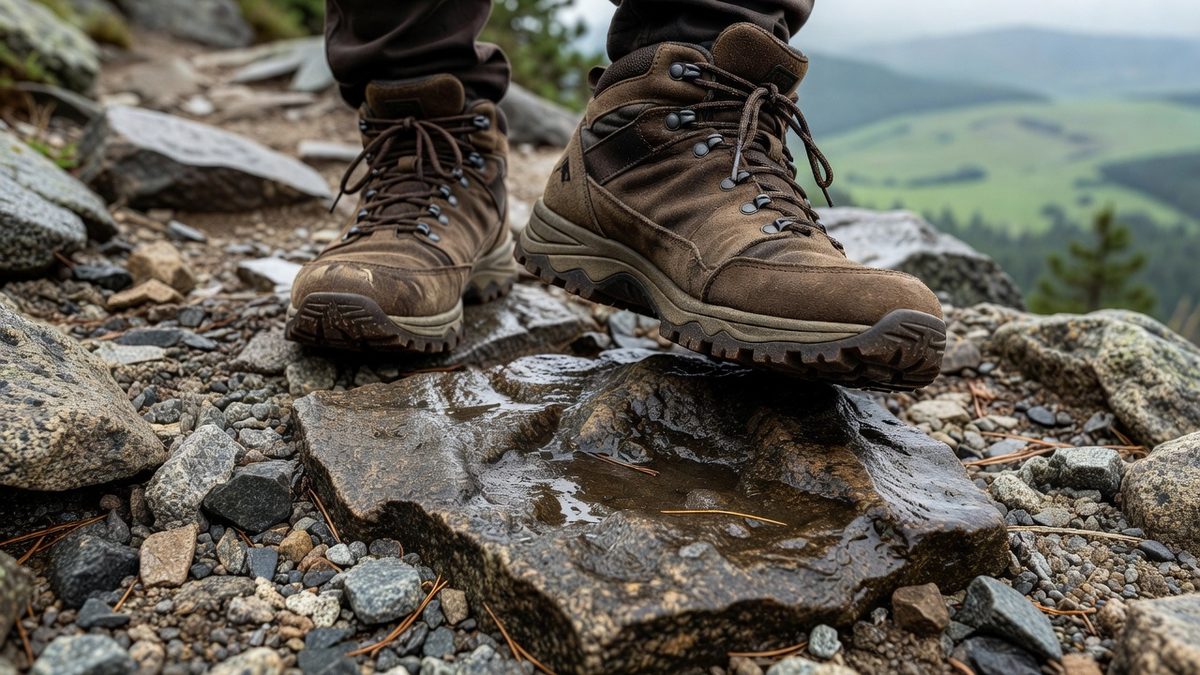
Wide Feet, Narrow Feet, Bunions: Matching the Last to Your Foot
Wide Feet and High-Volume Feet
Some feet are simply not built for the standard last, and the search for the right shoe is a search for the right volume.
- best hiking shoes for wide feet women and best hiking shoes for wide feet men usually resolve to the same shortlist: KEEN's anatomical lasts, Merrell's wide (W) builds, and a handful of brands with genuinely graded widths.
- best womens hiking shoes for wide feet and best mens hiking shoes for wide feet are the same question with the gender grading applied. Buy the gender last AND the width grading — one alone leaves one dimension wrong.
- best hiking shoes for men with wide feet: if you have been sizing up to get width, stop. Extra length puts your flex point behind the ball of your foot and rolls your arch inward.
- best hiking shoes for kids waterproof: for wet-weather kid hiking this is more than a preference, since small feet run cold and take longer to warm back up, and waterproof is often the version the brand actually stocks (KEEN Kids Hightrail Waterproof).
- best hiking shoes for kids with wide feet: children's feet are often high-volume and still growing. Buy for toe room and width, and accept a slightly shorter service life; the KEEN Kids Hightrail Waterproof is the natural starting point.
Narrow Feet
Narrow feet have the mirror problem: a shoe that is wide enough in length but loose across the midfoot lets your foot slide, and sliding feet blister.
- best hiking shoes for narrow feet women and best hiking shoes for narrow feet men favor precision-fit brands. The Salomon X Ultra 4 Mid GTX is the reference narrow-ish fit in this guide.
- hiking shoes for narrow feet women and hiking shoes for narrow feet men — note the difference from the "best" versions of those searches: the same models come up, so if you have a genuinely narrow foot, prioritize fit precision over feature lists.
Bunions and Forefoot Shape
A bunion is a foot-shape change, and it needs a shoe built for it rather than a shoe that will accommodate it after break-in.
- best hiking shoes for bunions women and best hiking shoes for bunions men should mean: flexible or soft uppers over the bunion joint, no hard stitching across it, and a toe box that does not press from the side.
- hiking shoes for bunions women and hiking shoes for bunions men often return the same wide-last models as above — that is not a coincidence. Width grading is the bunion accommodation.
- best hiking shoes for bunions and plantar fasciitis needs both properties at once: a roomy forefoot plus an insole you can swap. Buy the roomy shoe and add the insole, rather than hunting a unicorn model.
An extra 2-3 mm of forefoot width is the difference between a happy 10-mile day and a painful 3-mile one, which is why the Targhee 3 keeps winning this category.
Arches, Flat Feet, and Overpronation
Flat Feet
Flat feet are not automatically a problem — plenty of hikers with flat feet hike long distances pain-free. The variable is whether your arch collapses under load (pronation) and whether that collapse pulls your knees and hips out of line.
- are hiking boots good for flat feet: yes, with caveats. A boot's extra stiffness can support a collapsing arch, but a poorly fitting stiff boot is worse than a flexible shoe that lets your foot work. Support comes from the shoe's arch and your insole together.
- Are Merrell hiking shoes good for flat feet specifically? The Moab 3 has a neutral-ish, moderately supportive platform rather than aggressive stability posting, so it suits flat feet that do not need control — and for flat feet that do need control, its removable stock insole means you can drop in your own orthotic. That is why the Moab 3 keeps showing up for flat-footed hikers.
- best hiking shoes for flat feet women and hiking shoes for flat feet women both point to a neutral shoe plus your own insole, or a shoe with a decent built-in arch. Avoid shoes with an aggressive arch bump if your foot is genuinely flat; it will feel like standing on a marble.
- best hiking shoes for flat feet and overpronation: here you do want a stiffer, more supportive platform and possibly a stability insole. This is the one case where a mid-cut boot is often the better tool.
Overpronation
- hiking shoes for overpronation women, hiking shoes for overpronation men, and hiking shoes for overpronation feet are the same mechanical question: does your arch roll inward through your step? If yes, prioritize a stable platform, a supportive footbed, and a shoe that does not flex excessively at the midfoot.
High Arches and High Instep
High arches are the opposite problem: the arch is rigid, the foot does not shock-absorb well, and the top of the foot often sits high.
- hiking boots for high arches: look for cushioning, since a rigid high arch transmits impact directly to the heel and knees. A rock plate plus a cushioned midsole is the combination to want.
- best hiking shoes for high arches women and best hiking shoes for high arches men should prioritize underfoot cushioning over stability posting.
- best hiking shoes for high arches and plantar fasciitis combines the two needs — cushioning under a tight, painful arch — and is the clearest case for a quality aftermarket insole in a neutral shoe.
- hiking boots for high instep: you need volume over the top of the foot, which is a lacing problem as much as a shoe problem. Use window lacing (skip an eyelet pair) or look for a shoe with a taller, softer tongue.
Insoles, Plantar Fasciitis, and Foot Pain
The single highest-value upgrade to almost any hiking shoe is not a more expensive shoe — it is a better insole. If you go looking for best hiking shoes for arch support women or the men's equivalent, the results are neutral shoes with removable footbeds, which is exactly what you want: a platform that does not fight the insole you add. Nearly every stock footbed in a mainstream hiking shoe is a thin foam layer that covers the midsole; it is not there to support your arch.
- hiking boots insoles: replace or supplement. Take the stock insole out rather than stacking an aftermarket one on top of it, or you lose toe box volume and your toes will hit the front on descents.
- hiking shoe insoles review reading tip: ignore "cushioning" marketing and look for arch support height, heel cup depth, and whether the insole is trim-to-fit. Those three properties decide whether it works for you.
- hiking shoe insole replacement should happen when the stock insole has compressed flat (usually a few hundred miles) or immediately if you have a diagnosed foot condition. Insoles are cheaper than shoes and usually the difference-maker.
- hiking boots orthotic friendly and orthotic friendly hiking shoes mean the same thing in practice: the stock insole is removable, the shoe has enough depth to accept your orthotic, and the shoe's own arch does not fight your device. The Merrell Moab 3 and the KEEN Targhee 3 both accept aftermarket footbeds without feeling crowded.
Plantar Fasciitis
Plantar fasciitis is a load and support problem: a tight, inflamed band under the arch that hurts worst in the first steps of the morning. Footwear helps by supporting the arch and controlling how much it stretches under load.
- best hiking shoes for women with plantar fasciitis and best hiking shoes for men with plantar fasciitis should mean: a neutral, moderately cushioned platform plus a supportive insole, with enough heel volume to add one. Stability posting is usually less important than arch support.
- best hiking shoes for plantar fasciitis men and best hiking shoes for women with plantar fasciitis return the same shortlist because the mechanism is identical — pick your last, then fit the insole.
- best keen hiking shoes for plantar fasciitis: KEEN's anatomical last gives you forefoot room and a relatively flat, supportive platform, which is a good base for an aftermarket arch support.
- best lightweight hiking shoes for plantar fasciitis is a compromise worth understanding: lighter shoes mean less cushioning under a painful arch, so if you go light, budget for a better insole to compensate.
Heel pain is often nothing more than a worn midsole. Before you spend on treatment, check whether your shoes are past their useful life — midsole foam dies long before the tread looks worn, and a flat, dead shoe is what people usually describe when they say hiking shoes for foot pain.
Knee Pain and Hiking Footwear
-
hiking boots for knee pain: the useful contributions are stability (so your knee is not chasing a rolling ankle), cushioning (less impact transmitted up the leg), and enough heel — literally a slightly raised heel — to reduce the stretch on the calf and Achilles. Add trekking poles and you offload a large share of downhill impact from your knees to your arms, which is why poles are the more powerful intervention than a shoe swap for downhill knee pain.
-
the poles question, priced: poles offload downhill impact from your knees to your arms, so for downhill knee pain they change the day more than any shoe swap — the TrailBuddy 7075 Aluminum Poles ($44.91) if you want the cheapest pair that still locks hard, or the LEKI Makalu FX Carbon ($256.46) if you are carrying a loaded pack. Grip, lock, and weight trade-offs are side by side in our best trekking poles guide.
Ankle Support and Cut Height: What Actually Helps
Let's separate two things people blur together: the shoe's cut height, and how much lateral support it provides when you load it.
- are hiking boots good for ankle support: yes, a mid or high cut restricts some inversion and eversion, and it protects the ankle from rock and root strikes. That is a real benefit, and it is why boots remain the default for heavy loads on rough ground.
- hiking boots vs shoes ankle support is a fair comparison, but not a one-sided one. A low-cut shoe with a precise, locked-in fit resists rolling better than a loose boot that lets your foot slide inside it. The Merrell Moab 3 mid boot makes the comparison easy because it is the same platform as the low shoe with more ankle coverage — same underfoot feel, more cut.
- how important is ankle support in hiking boots depends entirely on load and terrain, not on your shoe budget. With a 40+ liter pack on uneven ground, support matters a lot. On smooth trail with a daypack, it barely matters.
- hiking shoes ankle support or not is the honest framing of the question. A low shoe plus solid lacing plus poles covers most day hikers; a boot pays off when the pack gets heavy.
- hiking shoes with ankle support or not and hiking boots with ankle support or not are two more phrasings of that same trade: support versus weight and flexibility. Neither answer is universally right.
- hiking shoes ankle support women, hiking shoes with ankle support women s, hiking shoes with ankle support for men, and hiking shoes ankle support men all reduce to the same buying advice: pick your gender last, choose mid-cut if you want ankle coverage, and size it so your heel does not lift.
- best hiking shoes for women with ankle support — ankle coverage comes from choosing a mid-cut build of a mainstream model, not from a different shoe category; the Merrell Women's Moab 3 is the women's-last reference point in this guide. If you are going mid-cut, do it for the right reason (load and terrain), not because it sounds safer.
- hiking shoes with ankle support vs without is the comparison worth running in your head: with a light pack the difference is small, and with a heavy pack on loose rock it is the difference between tired legs and a rolled ankle.
- best lightweight hiking shoes with ankle support and best lightweight hiking shoes for women with ankle support are the harder combination, because ankle coverage adds weight. Accept a modest weight penalty if you want both, and do not expect a mid-cut to feel like a trail runner.
- hiking shoes ankle support waterproof is a legitimate combined spec: a mid-cut boot with a membrane is the most weatherproof and most supportive common configuration. That is exactly the shape of the Merrell Moab 3 Hiking Boot.
Blisters, Sweat, and Hot Feet
Blisters are friction plus moisture plus heat, and footwear can address all three.
When Prevention Still Loses
Sometimes the trail wins: a long descent in wet heat, a sock that slid down, a boot that fit perfectly at mile one. The protocol is the same whether it is your blister or your kid's, and it starts earlier than most people think. Stop at the first hot spot, not the first blister — a hot spot is skin that has not separated yet, and a moleskin donut over it usually saves the rest of the day. If a blister has already formed, clean it and leave the roof intact: intact skin is the best dressing there is. Cover it with a non-stick dressing and put the moleskin around the blister rather than on it, and do not pop it in the field — that is how a small annoyance becomes an infected foot two days from a trailhead.
Carry the supplies for that in one place rather than scattering band-aids through three pockets. The Adventure Medical Kits Ultralight/Watertight .7 ($44.95, 4.7★, 762 ratings) is 90 pieces in 5.9 ounces and includes die-cut moleskins, blister treatment, antiseptic wipes, and a tick-remover forceps, all inside a waterproof DryFlex inner bag. That last part is not a detail on this page: the days that blister your feet are the days your pack gets rained on, and a soaked kit of loose supplies is the same as no kit.
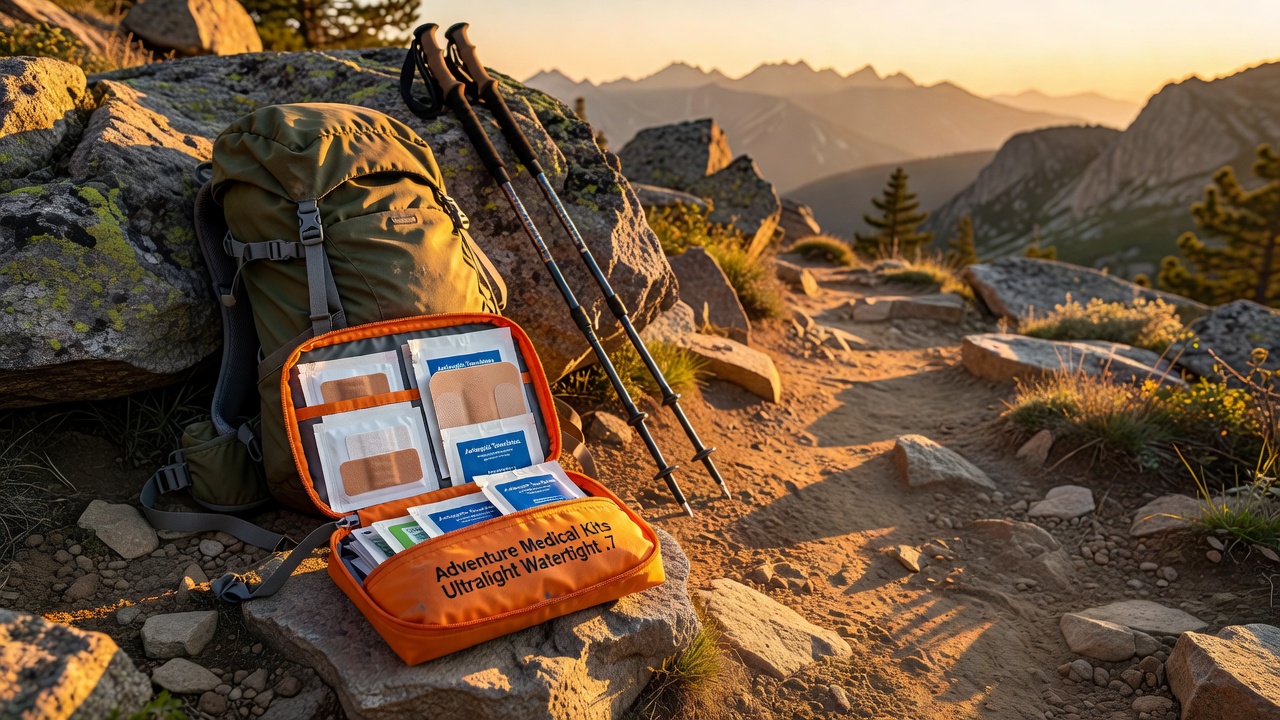
- hiking shoes blisters and hiking boot blisters have the same root causes: heel slip (fix with lacing), a cramped toe box (fix with size and width), and damp socks (fix with merino wool). If you blister in the same spot every hike, it is a fit problem, not bad luck.
- hiking toe blisters and hiking feet blisters usually trace back to downhill sliding. Snug the lower laces, keep the upper laces slightly looser on descents, and make sure your toes never touch the front of the shoe while standing.
- Sock choice is not a detail. Wool moves moisture away from skin and stays warm when damp, which is why the Darn Tough Hiker Midweight Micro Crew or the lighter merino light hiker solves problems that no shoe change will fix.
Sweaty and Hot Feet
If your feet overheat, the fix is breathability and moisture management, not more padding.
- best hiking shoes for hot feet, best hiking shoes for sweaty feet, and best hiking boots for hot weather all point to vented mesh uppers, a moisture-wicking sock, and — counterintuitively — avoiding a waterproof membrane unless you actually need one.
- best hiking boots for sweaty feet and hiking boots for sweaty feet are the harder case, because a leather upper simply breathes less than mesh. If sweat is your main complaint and your climate allows it, a leather boot is the wrong tool; choose a mesh shoe with a synthetic upper, or a leather boot only for cold, wet seasons.
- hiking boots for hot feet (same problem, phrased as temperature rather than sweat): light-colored uppers and unlined leathers help, but the biggest lever is switching to a vented shoe for the hot months and keeping the waterproof pair for shoulder season.
Two cheap habits matter as much as the shoes: change your socks at lunch on long hot days, and dry your shoes between hikes rather than leaving them in a hot car, where they will both stink and slowly cook the midsole.
Boots vs Shoes vs Trail Runners: Settling It by Load and Terrain
This is the comparison that decides everything else, so here it is as a decision rather than a preference.
- what are the best shoes to wear for hiking? For most day hikers in most conditions: a low-cut hiking shoe. It carries traction, a rock plate, and a protected toe cap without the weight of a boot.
- what type of shoe is best for hiking — the same answer, with one qualifier: terrain and pack weight can overrule it. Load above roughly 40 lb on uneven ground is boot territory.
- hiking boots vs sneakers, are hiking boots better than sneakers, and why are hiking boots better than sneakers all have the same underlying answer: sneakers have shallow tread and no rock plate, so on wet roots, loose scree, or long descents they either slip or bruise your feet. Sneakers are fine on a groomed, dry, flat trail — which is not most hiking.
- are hiking boots better than tennis shoes: same reason, more so. Tennis shoes are built for a flat court: shallow, hard tread and a flat midsole, which is close to the worst possible combination for a rock garden.
- hiking shoes vs hiking boots for women is the same decision on a women's last: shoes for day hikes, boots for heavy packs.
- are hiking shoes better than hiking boots and are hiking shoes or boots better and are hiking shoes or hiking boots better (three phrasings, one question): shoes win on weight, breathability, and cost; boots win on ankle coverage, debris protection, and wet-weather coverage above the ankle. Day hikes and light packs → shoes. Multi-day loads and rough ground → boots.
- are boots better for hiking — for heavy loads and off-trail travel on scree, yes. For an afternoon on a state park loop, no.
- what's better: hiking boots or shoes is genuinely a question about your pack, and the Moab 3 shoe versus Moab 3 boot pairing is the cleanest way to test that on your own feet.
Trail Runners vs Hiking Shoes
- trail running shoes or hiking shoes and hiking shoes or trail runners are the same fork in the road: runners are lighter and more cushioned, hiking shoes are more durable and better protected underfoot. Fast and light → runners. One pair for several seasons → hiking shoes.
- are trail running shoes better than hiking boots and are trail shoes better than hiking boots: for moving fast on smooth-to-moderately-rough trail with a light pack, yes. For heavy loads and rough ground, no — you give up protection and support exactly when you need both.
- can you wear trail shoes for hiking? Yes, and many people do, with the caveat that you are trading durability for weight. do trail running shoes work for hiking — same answer, and the limitation shows up first in the outsole and upper, not the cushioning.
- can you trail run in hiking shoes? Technically yes, enjoyably rarely. Hiking shoes are heavier and have a stiffer forefoot than a running shoe, so you can run downhill in them, but it will not feel like running.
- trail running shoes vs trekking shoes and trekking shoes vs hiking boots are both label-comparisons: "trekking shoes" usually means a low-cut hiking shoe with a stiffer sole, so the comparison lands in the same place as shoes-versus-boots above.
Low, Mid, or High Cut
- low or mid hiking shoes, low vs mid hiking boots, low vs mid cut hiking shoes, and low vs mid top hiking shoes — four ways of asking the same question. Low is lighter and cooler; mid adds ankle coverage and keeps grit out; high is for heavy loads and mountaineering-ish terrain. If you are unsure, choose low for day trips and mid if you regularly carry a loaded pack.
Brand by Brand: What Each Name Actually Means
Brand reputations are real, but they are about fit philosophy and materials, not about a magic ingredient. Here is how the names in this guide — and the ones you will cross-shop — actually differ.
Merrell
- best merrell hiking shoes for women and best merrell hiking shoes for men both point at the Moab line, and for good reason: a forgiving, true-to-size fit with a removable stock insole. The Merrell Women's Moab 3 Waterproof and the Men's Moab 3 Waterproof are the same build on gender-specific lasts. Merrell also grades widths, so both wide and narrow feet have options.
KEEN
- best keen hiking shoes for women and best keen hiking shoes for men are usually the Targhee family, whose defining feature is an anatomical, foot-shaped toe box. It is the default recommendation for wide or bunion-prone forefeet: KEEN Targhee 3 Low. KEEN also builds the widest range of kid-specific hiking footwear in this guide.
Salomon
- best salomon hiking shoes for women and best salomon hiking shoes for men mean the X Ultra family: precise, technical, narrow-ish, with a quick-lace system and aggressive outsole. Great on technical terrain; check the fit before you commit.
The Trail-Runner Names
Trail-running brands are the most common cross-shop confusion on this page.
- hoka hiking shoes reviews and hoka speedgoat hiking shoes — the Speedgoat is a trail runner, designed for max cushioning and race-day speed, not for the abrasion and rock protection a hiking shoe is built around. If you want it as a hiker, choose it for light day hikes on soft trail and accept a shorter life. hoka speedgoat hiking boots is a category mismatch: the line has no boot build.
- altra hiking boots review and la sportiva hiking boots review — both brands make genuinely serious footwear; Altra's differentiator is a foot-shaped (zero or low-drop) last, La Sportiva's is technical mountain capability. Check whether the model you want is a runner or a mountain shoe before comparing it to a hiking shoe.
- oboz hiking shoes reviews women s, danner hiking shoes review, and vasque hiking shoes review — all three are known for support-oriented builds and often show up on shortlists for hikers who want a more substantial shoe. Read reviews for a full season of wear, not for the first week.
Materials, Weight, and Origin
- hiking boots material: leather resists abrasion and water longer; synthetic mesh is lighter and much more breathable. Synthetics have largely taken over the mainstream because they need almost no break-in.
- hiking boots weight: a heavier shoe costs energy on every step. For day hiking, weight matters more than almost any other spec; for heavy loads, the support is worth the penalty.
- hiking boots vegan and hiking boots made in usa are real, searchable segments. Both narrow the field significantly, so measure your priorities first: if a membrane or a specific last matters more to your feet, prioritize fit and accept the material you can get.
Terrain and Destination: What to Bring Where
Rocky and Rough Ground
- hiking boots for rocky terrain, best hiking boots for rocky terrain, best men s hiking boots for rocky terrain, and best hiking shoes for rough terrain all converge on the same three specs: torsional stiffness (so the shoe does not fold on a rock edge), a rock plate or a firm midsole, and a sticky, aggressive outsole. The Salomon X Ultra 4 Mid GTX is the sharpest tool for this in the guide; the Moab 3 is the better all-rounder if your rocky miles are mixed with normal trail.
- best hiking shoes for rocky terrain women follows identically — the women's build of the same models, or a mid-cut if the rock is loose and steep.
Trip Length
- best hiking shoes for long hikes, hiking shoes for long hikes, and best hiking boots for day hikes / hiking boots for day hikes — trip length changes the priority order. Long days and multi-day trips put fit and cushioning first, because that is what fails at mile twelve. Short hikes and day trips can prioritize traction and weight.
- best hiking shoes for short hikes — a lighter, more flexible shoe you can wear all day is usually the better pick than an overbuilt one you do not need.
Parks and Destinations
- best hiking boots for national parks, best hiking shoes for utah national parks, and best hiking boots for utah national parks share one answer: slickrock and sandstone need grip and a protective sole, and southern Utah's trails have long stretches of bare rock where sticky rubber matters more than lugs. A mid-cut boot gives you protection on the rocky sections.
- best hiking shoes for zion national park — Zion's signature hikes mix dry slickrock, sand, and the Narrows, where you are wading in water. For wading sections, soles that grip on wet rock matter more than a membrane, and closed-toe water sandals like the KEEN Newport H2 are what many people actually wear for the water part.
- best hiking shoes for glacier national park and best hiking shoes for rocky mountain national park — both parks mean elevation gain, loose rock, and rapidly changing mountain weather. Pack the membrane version. For RMNP specifically, afternoon storms are the norm, so a waterproof pair plus a rain layer beats a lighter pair you have to ration.
- do you need hiking shoes for yosemite: no park requires them, and the Valley floor trails are fine in a good trail runner. For the granite staircases and long descents on routes like the Mist Trail or Half Dome, you want tread depth and heel lock — whatever shoe gives you that.
- best shoes for hiking in rainforest and hiking shoes for rainforest — think Olympic National Park and the Pacific Northwest: constant moisture, roots, and mud. Waterproof is close to mandatory, but so is accepting that water gets in over the collar. Dry fast, change socks, and prioritize wet-rock grip.
Seasons, Travel, and Getting Started
Summer
- best hiking shoes for summer women and hiking shoes for summer women s — summer prioritizes breathability, drainage, and light weight. Mesh uppers, no membrane unless you need it, and a sock that wicks. If your feet run hot, see the sweat section above.
- best hiking shoes for summer men and hiking shoes for summer men — the same priorities: vented uppers and a shoe that dries overnight. A waterproof shoe in August heat is the classic beginner mistake.
Winter and Cold-Season Hiking
- hiking shoes for winter women and hiking shoes for winter men — cold-weather hiking is about warmth and water resistance more than cushioning. A membrane shoe plus a heavyweight merino sock plus gaiters covers most winter day hiking on packed trail.
- best hiking shoes for winter men — insulation is not built into hiking shoes. Warmth comes from your socks and from keeping water out, so buy for the membrane and the sock system rather than searching for a "winter hiking shoe."
- best hiking shoes for winter and summer is the one-pair compromise: a waterproof shoe with a removable insole that you pair with thick socks in winter and thin ones in summer. It works, with the caveat that one pair used year-round wears out in half the calendar time of two pairs used in season.
Travel
- best hiking shoes for travel women and best hiking shoes for travel men — travel is the opposite of technical terrain. Prioritize a light, low-profile shoe that looks acceptable in a town, packs flat, and still has real tread. One shoe for a trip beats two you resent carrying.
Lightweight Shoes
- best lightweight hiking shoes for women and best lightweight hiking shoes for men — a lighter shoe saves energy on every step, which is the single biggest performance gain available to a weekend hiker. Accept the trade: less cushioning, faster outsole wear, and less protection on rough ground.
Is 2026 a Good Year to Buy?
- best hiking shoes for men 2026, best hiking shoes 2026 men, best mens hiking shoes 2026 — the mainstream picks in this guide (Moab 3, Targhee 3, X Ultra 4) are stable, long-running models with deep review bases, which is exactly what you want when buying online. The relevant 2026 buying note is the X Ultra 4 being phased out for the newer X Ultra lines, which means clearance pricing on a still-excellent shoe while stock lasts.
- best hiking shoes 2026 women and best womens hiking shoes 2026 — the women's Moab 3 and the women's Targhee are the same story: mature models, gender-specific lasts, honest pricing. Buying a proven generation is rarely the wrong move in footwear.
Beginners
- best hiking shoes for beginners women and best hiking shoes for beginners men — beginners should buy for fit and forgiveness, not features. A mainstream mid-priced shoe with a generous toe box and a returnable return policy is the right first purchase. The Moab 3 is the default for an average foot; the Targhee 3 for a wide one.
Care, Cleaning, Odor, and How Long They Actually Last
How to Clean Hiking Shoes
The short version: cold water, soft brush, mild soap if needed, air dry, never heat.
- how to clean hiking shoes properly means cleaning the whole shoe, not just the upper: rinse the outsole lugs (packed mud is what makes a grippy shoe slippery), brush the upper, then pull the insoles out and dry everything separately.
- how to clean hiking shoes at home, how to clean hiking shoes from mud, and how to clean hiking shoes merrell-style brand-specific searches all resolve to the same method. Mud dries brittle, so let it dry and brush it off rather than scrubbing wet.
- how to clean hiking shoes salomon — no special chemistry required. Any brand's mesh or leather upper is safe with water and a brush; avoid solvents and detergents, which strip the water-repellent finish.
- how to clean hiking shoes in washing machine and how to wash hiking shoes in washing machine: don't. Heat and agitation degrade adhesives, and the drum crushes the midsole foam that gives you cushioning. Hand wash.
- can you machine wash hiking boots? No, and the case against it is stronger for boots: leather uppers dry stiff and crack, and membranes are glued, not sewn. Can you machine wash merrell hiking shoes? and can you machine wash salomon hiking shoes in the washing machine? — same answer for both brands, and the same goes for a can you machine wash columbia hiking shoes search: cold hand wash, air dry, no drum.
Odor
- hiking shoes smell bad, hiking boots smell, and hiking boots smell like mildew are three descriptions of one problem: bacteria and fungal growth in a shoe that stayed damp. The fix is drying, not deodorizing. Dry shoes after every hike, remove the insoles, and loosen the laces so air moves through the shoe.
- hiking boots smell like cat pee is a specific and surprisingly common report — that sharp ammonia smell comes from bacterial breakdown in a damp shoe, not from an animal. If it recurs, your shoes are not fully drying between hikes; alternate two pairs rather than wearing the same damp pair on consecutive days. Vinegar-and-water wiped inside, then a full air dry, resets a persistently musty pair.
Lifespan: Miles, Years, and When to Replace
- how long do hiking shoes last and how long should hiking shoes last are usually asked in miles, but the honest answer is that the midsole dies before the tread. Plan on replacing a mainstream hiking shoe after a few hundred to around 500 miles of real trail use, and sooner if you hike rock, scree, and long descents on a heavier frame.
- how many years do hiking shoes last depends on use, not on age. A shoe worn five times a year can look new at five years old and still be unsafe if the midsole foam has hardened or gone flat. Judge by feel: if your feet and knees ache after normal hikes, the cushioning is gone even if the tread looks fine.
- How long do hiking boots last, how long should hiking boots last, how long do hiking boots last years, how many years do hiking boots last, and how many miles do hiking boots last — boots generally outlast shoes because the uppers are thicker and more abrasion-resistant, but they share the same midsole limitation. Leather can be conditioned and kept alive for years; the foam under it cannot.
- Brand-specific lifespan questions come up because people use them to time a replacement: how many miles do merrell hiking boots last, how long do merrell hiking boots last, how long do merrell hiking shoes last, how long do salomon hiking boots last, and how many miles do keen hiking boots last — all of these are the same answer with a brand attached. Expect the outsole to outlast the midsole on every mainstream brand, and judge replacement by midsole feel, not by the tread pattern.
- how long do trail running shoes last and how long should trail running shoes last — shorter than hiking shoes. The lighter foams and thinner uppers that make runners pleasant are the same properties that make them wear out faster, which is the cost of the weight you saved.
What Hiking Shoes Cost, and What's Worth Paying For
Price Tiers
- best hiking shoes under 100 and best hiking boots under 100 — this is achievable, but usually by buying last season's colorway of a mainstream model, or a newer brand's flagship rather than a premium brand's entry shoe. What you give up at this price is mostly membrane quality and outsole durability.
- best hiking boots under 150 and good hiking shoes under 150 — this is the sweet spot for most people: a current-generation mainstream shoe with a real membrane, a name-brand outsole, and a removable insole. The Merrell Moab 3 sits here.
- best hiking shoes for men under 100, best men s hiking shoes under 100, and good hiking shoes under 100 — same advice as above, with one addition: a cheap shoe that fits beats a premium shoe that doesn't. Fit is free and it is the difference.
- good cheap hiking shoes, best budget hiking shoes, best affordable hiking shoes, and best cheap hiking shoes for men — the budget move is to buy a proven model on clearance rather than a new model at full price. Mainstream hiking shoes are incredibly capable at the mid tier; the premium tier buys durability and refinement, not fundamentally better traction.
Is It Worth It?
- are hiking boots worth it — worth it if you carry a heavy pack on rough ground, hike in wet or cold conditions where ankle coverage matters, or want debris protection in scree. Not worth it for flat state-park loops.
- are salomon hiking shoes worth it — the X Ultra line is genuinely excellent on technical terrain, with premium traction and a precise fit. It is worth it if your trails are technical and your foot suits a narrower last; if your hikes are rolling gravel paths, you are paying for capability you will not use.
Every Way People Ask This: Brand Waterproofing, Wide Feet, Stretch, Snow, and Cost
The exact wordings that bring people to this page, grouped by the decision they are actually trying to make. Each row is the short version — the reasoning behind it is in the sections above.
"Are Merrell, KEEN, or Salomon Hiking Shoes Waterproof?" — Brand by Brand
The brand name never answers this question; the model name does. All three brands sell a membrane build and a vented build of the same shoe.
| What people search | The short answer |
|---|---|
| are merrell hiking shoes waterproof | Only the models built with a membrane. The Moab 3 Waterproof is the membrane build (Merrell's M Select DRY line); the plain Moab 3 is vented mesh. |
| are merrell hiking shoes water resistant | Water resistance is a coating that wears off; waterproof is a named membrane plus a gusseted tongue. Merrell's weatherproof models carry the membrane — check the model page for the word waterproof, not resistant. |
| are my merrell hiking shoes waterproof | Read the model name on the box: if it says Waterproof, it has the membrane; if it says Moab 3 alone, it does not. A waterproof shoe and a vented shoe of the same model look nearly identical in photos. |
| are merrell moab hiking shoes waterproof | Only the Waterproof and GTX versions of the Moab line. The Moab 3 Waterproof is the shoe this guide recommends to most people; the vented Moab 3 is the dry-climate pick. |
| are all merrell hiking shoes waterproof | No. Like every mainstream brand, Merrell sells membrane and mesh versions of the same shoe — which is the same reason "are all hiking boots waterproof" is false. |
| are merrell vibram hiking shoes waterproof | Vibram is the outsole, not the upper. Vibram rubber says nothing at all about waterproofing; the membrane in the upper is the part that decides it. |
| women's are merrell hiking shoes waterproof | The Merrell Women's Moab 3 Waterproof is the women's-last version of the same membrane build — a separate last, not a scaled-down men's shoe. |
| are keen hiking shoes waterproof | Only the models built with a membrane. The KEEN Targhee 3 Low Waterproof has its waterproof build as standard rather than as an upsell. |
| are all keen hiking shoes waterproof | No. KEEN ships vented builds on the same lasts, and the sandal side of the line is deliberately open. Judge the model, not the brand. |
| are keen jasper hiking shoes waterproof | The Jasper is a casual, sneaker-leaning KEEN on the same foot-shaped last. Look for an explicit waterproof label on the specific model you are buying, because the family name alone does not promise a membrane. |
| keen hiking shoes waterproof women | The same membranes on a women's last. Width and volume change between the men's and women's builds; the waterproofing does not. |
| are salomon hiking shoes waterproof | Not by default — but Salomon is the easiest of the three brands to read, because the GTX suffix in the model name means Gore-Tex. |
| are salomon trail shoes waterproof | The trail and X Ultra lines are sold in both GTX and non-GTX builds. The suffix is the whole answer. |
| are all salomon hiking shoes waterproof | No, and the naming saves you the guesswork: no GTX in the name means no Gore-Tex membrane. |
| are salomon x ultra hiking shoes waterproof | The Salomon X Ultra 4 Mid GTX is the Gore-Tex build of a shoe that is also sold without a membrane. On that line, GTX is the tell. |
Wide Feet Wordings: Women, Kids, and "Good for Wide Feet"
A wide forefoot is usually solved by the last, not by a half size — and a roomy toe box is what a wide width is trying to buy in the first place.
| What people search | The short answer |
|---|---|
| best hiking shoes for women wide feet | Start with the KEEN Targhee 3 — its foot-shaped last is the wide toe box. Where a colorway has no wide option, size up half instead of going longer. |
| good hiking shoes for women wide feet | Same answer: the roomy KEEN last first, then the Merrell Women's Moab 3 for average volume in a women's fit. |
| best hiking shoes for women wide feet with arch support | Wide forefoot plus arch support is a two-part purchase — the KEEN last for volume, then a $30-$60 insole matched to your arch type instead of the stock foam footbed. |
| best hiking shoes for women with wide feet and high arches | High arches want cushioning under the metatarsals and a deeper heel cup. Combine the roomy last with a firm high-arch insole such as Superfeet Green rather than sizing up. |
| what hiking shoes are good for wide feet | Anything built on a wide or foot-shaped last. In this guide that is the KEEN Targhee 3 first, then the wide-width offering in the Merrell Moab family. |
| hiking shoes for kids wide | KEEN's anatomical last is why the KEEN Kids Hightrail is the kids pick — the same toe-box logic at a child's scale. |
| hiking shoes toddler wide | Same reasoning at the smallest sizes: the kids' KEEN line runs little-kid through big-kid on that foot-shaped last, and it is waterproof as standard. |
| wide toe hiking shoes for kids | Look at the last shape rather than the size number — a foot-shaped toe box is what keeps a kid from growing out of a shoe in one season of hiking. |
Stretch, Lace, and Heel Slip: The Fit Fixes People Search For
| What people search | The short answer |
|---|---|
| do hiking shoes stretch out | A synthetic upper barely gives. If a shoe is tight across the ball of your foot, fix the width rather than waiting for it to loosen up — the tightness will show up on the descent, not in the store. |
| how to stretch hiking shoes | Stretching is not the reliable fix it is made out to be on synthetics. The volume problem is usually solved the other way: a thin insert that adds a little volume can rescue a shoe that is slightly too deep, and a wider last fixes one that is too narrow. |
| hiking shoes heel slip | Heel slip is a lacing problem more often than a size problem — use a heel-lock pattern before you size down. If the heel still lifts, the shoe is too deep for your foot, not too long. |
| best way to lace hiking shoes | Keep the lower laces firm and the top slightly looser, so your toes stay off the front of the shoe on descents while your heel stays locked to the back. |
| how to tie hiking shoes properly | The same rule as lacing: snug through the midfoot, roomy in front of the toes, and a heel-lock pattern at the top eyelets rather than brute-force tightening everywhere. |
| how should merrell hiking shoes fit | True to size with a forgiving toe box — most hikers take their normal street size. Size up half if you will wear thick merino wool socks or hike all day, because feet swell on long descents. |
Size Charts and Break-In, by Brand
| What people search | The short answer |
|---|---|
| hiking shoe size guide | The US, EU, and UK chart above is a starting point, not an answer: add half a size for thick merino socks, and treat width as the variable the chart cannot tell you. |
| merrell hiking shoe size chart | The Moab family runs true to size and is also sold in wide widths. If the shoe is snug across the ball of your foot, try the wide version before going longer. |
| salomon hiking shoe size chart | Salomon's standard fit runs narrow — the one brand here where you should consider sizing up half or finding a Wide version rather than trusting length alone. |
| how long to break in merrell hiking shoes | 10-20 trail miles, and often almost none — the Moab has a decades-long reputation for being comfortable out of the box. Start on short local walks so any fit problem surfaces near home. |
| how long to break in salomon hiking shoes | The same 10-20 trail miles for modern synthetic builds. Leather takes longer: budget 20-30 miles for a full-grain boot. |
| do merrell hiking shoes need to be broken in | Practically no. Synthetic hiking shoes of this generation need almost nothing, which is why the first hike should be the short one rather than the big one. |
Snow, Wet Trails, and the Gore-Tex Decision
| What people search | The short answer |
|---|---|
| best hiking shoes for snow | None of the three picks here is an insulated snow boot, so the honest setup is a waterproof build plus traction devices. Our snow boots and winter traction guide covers the point where a three-season shoe stops being enough. |
| best hiking shoes for snow and ice | Add microspikes. Grip on ice is a traction-device question, not a lug-depth question, and no hiking shoe compound holds ice on its own. The Kahtoola MICROspikes are the studded harness for genuinely icy trail, and the ICETRAX V3 at $23.74 is the value version. |
| best hiking shoes for snow women | The Merrell Women's Moab 3 Waterproof is the equivalent build on a women's last, paired with the same traction devices and a spare pair of wool socks. |
| best hiking shoes for snowshoeing | A snowshoe straps onto most footwear, but a mid-cut waterproof platform carries the load better than a low-cut shoe — which is the Moab 3 boot argument. |
| best waterproof hiking shoes for plantar fasciitis men's | Take the membrane build and add real arch support: flat or fallen arches want a deliberately low-arch motion-control insole such as PowerStep Pinnacle Low, not maximum squish. |
| waterproof or not hiking shoes | It is a climate decision, not a quality decision: waterproof for rain, mud, snow and dew-soaked mornings; vented mesh for desert heat and dry summer trails. |
Cost, All-Day Wear, and Budget Wordings
| What people search | The short answer |
|---|---|
| how much should hiking shoes cost | Roughly $90-$180 for a mainstream current-generation shoe and $150-$250 for a premium technical or leather model. The Moab 3 at $129.95 sits in the band where most people should shop. |
| best hiking shoes for walking all day | A trail shoe works, with one caveat: stiff, deeply lugged outsoles wear fast on pavement and the flex point feels unnatural over many miles. On pavement, favour a lighter, more flexible shoe with a less aggressive lug pattern. |
| hiking shoes for everyday use | Same tradeoff. On cobbles the grip and protection are an advantage; on flat asphalt the lugs are simply wearing down. Buy for the surface you actually walk on. |
| budget hiking shoes women | Buy a proven model on clearance rather than a new model at full price — a cheap membrane that delaminates in a season is not a budget win. The women's Moab 3 is the value reference here. |
| budget hiking shoes for men | Same move: last season's colorway of a mainstream model. The premium tier buys durability and refinement, not fundamentally better traction. |
| cheap hiking shoes for kids | The KEEN Kids Hightrail is the pick — children outgrow shoes long before they wear a good one out, so buy the fit and the toe box rather than the cheapest pair on the shelf. |
The Last Wordings: Plantar Fasciitis, Comfort, Seniors, and the Waterproof Question
| What people search | The short answer |
|---|---|
| what is the best hiking shoe for plantar fasciitis | A firm, torsionally stiff platform plus real arch support — the KEEN Targhee 3 or the Merrell Women's Moab 3 with a cushioned-heel insole. The plantar fasciitis guide covers the specs that matter. |
| what are the best hiking shoes for wide feet | The KEEN Targhee 3 first for its foot-shaped last, then the wide-width offering in the Merrell Moab family. The wide feet guide works through the options. |
| are trail shoes good for hiking | Yes for light, fast days on smooth-to-moderate trail — that is exactly what they are built for. What they give up is a rock plate, underfoot protection, and outsole life on broken rock, which is where a hiking shoe earns its extra weight. |
| are gore tex hiking shoes worth it | Worth it if your trails are wet, muddy, snowy, or dew-soaked in the morning; wasted money if your hiking is dry summer desert and your own sweat is the real problem. |
| are waterproof hiking shoes worth it | The same climate decision seen from the other side. A membrane keeps wet grass and brief showers out and holds water in once it comes over the collar, so it is a yes for the Northeast, Pacific Northwest, and Midwest and a no for hot, dry country. |
| what are the most comfortable waterproof hiking shoes | Comfort starts with fit, and the most forgiving waterproof build here is the Merrell Moab 3 Waterproof — true to size, a generous toe box, and almost no break-in. If your forefoot is wide, the KEEN Targhee 3 is the comfortable answer instead. |
| best hiking shoes for men waterproof | The Moab 3 Waterproof for average volume, the Targhee 3 for a wide forefoot, and the Salomon X Ultra 4 Mid GTX for technical ground on a narrower foot. |
| do i need waterproof hiking shoes | Only if the worst hour of your last hike was cold and wet. Rain, mud, snow, or wet morning grass means yes; hot and dusty means no, because a membrane traps sweat as effectively as it blocks rain. |
| do i need waterproof hiking shoes for iceland | Yes — this is one of the clearest cases in the guide. Iceland's weather changes hourly, the trails mix loose volcanic grit with stream crossings, and there is rarely a dry afternoon to dry anything out. Take the membrane plus a spare pair of socks. |
| best hiking shoes for seniors | Prioritise cushioning, a locked-in heel, and easy lacing rather than stiffness — a shoe that is "held, not squeezed" through the midfoot with room in front of the toes. The Moab 3 is the forgiving mainstream pick, and the women's last version is the Women's Moab 3. |
"Do I Need Hiking Shoes For ___?" — Park by Park
These are the questions people type while they are planning a specific trip, which is exactly when a footwear decision gets made. The honest answer is almost never "you need hiking shoes" — it is "here is the surface you will actually be standing on."
| What people search | The short answer |
|---|---|
| do i need hiking shoes | Not for flat, dry, smooth ground — a paved greenway or a graded gravel path is fine in a sturdy walking shoe or trail runner. You need a hiking shoe once the ground gets rocky, rooted, wet, or loose, because that is when tread, a rock plate, and toe protection start doing work a sneaker cannot do. |
| do i need hiking shoes or boots | Shoes for day hikes and light-to-medium packs on maintained trail; boots for heavy loads, off-trail scree, and anything where a rolled ankle would end the trip. Most family and weekend hikers land on a low-cut shoe and never regret it — see the load-and-terrain breakdown above. |
| do i need hiking shoes for yosemite | No, and the Valley floor is the easiest place in the guide to get away with a trail runner. The exception is the granite staircases — the Mist Trail steps and the Half Dome cables approach — where tread depth and a locked heel matter more than the shoe's category. If your Yosemite plan is Valley loops and viewpoints, do not buy gear for it. |
| do i need hiking shoes for yellowstone | Mostly no. Yellowstone's signature ground is boardwalk and flat geyser basin path, and a comfortable walking shoe handles it. You need real footwear for the backcountry trails and the Absaroka day hikes, not for Old Faithful. Pack for the walk you booked, not for the park's reputation. |
| do i need hiking shoes for zion | Yes for the good stuff. Zion mixes dry slickrock, deep sand on the Sand Bench and Watchman approach, and the Narrows, where you are wading in moving water. Sticky rubber matters more than a membrane, and for the water sections many people wear closed-toe water sandals like the KEEN Newport H2 rather than a soaking-wet hiking shoe. |
| do i need hiking shoes for acadia national park | Helpful, not mandatory. Acadia is granite slabs, granite staircases, and miles of smooth carriage road — the carriage roads are fine in almost anything, but wet granite is the slippiest surface in this whole article. A shoe with a sticky, high-surface-area outsole earns its price on the Precipice and Beehive sections. |
| do i need hiking shoes for olympic national park | Yes, and prioritize waterproofing over everything else. The Hoh and Queets rainforest trails are mud, roots, and standing water for long stretches, so a membrane plus wool socks is the difference between a good day and a cold one. Accept that water comes over the collar anyway and plan to dry overnight. |
| do i need hiking shoes for sedona | Yes, for grip rather than protection. Sedona is red-rock slickrock and dust: breathable, non-waterproof, sticky rubber. A membrane here just traps heat, and the sandstone does not need ankle support. This is the clearest "buy the vented version" destination in the guide. |
| do i need hiking shoes for banff | Yes, and go a step more protective than you would at home. Banff and the surrounding Alberta parks mean alpine elevation, loose scree, and snow that can sit on a high pass in July. A mid-cut with a membrane is the safer default; a low-cut shoe is fine if you are staying in the valley on maintained trail. |
| do i need hiking shoes for alaska cruise | No. A cruise itinerary is port towns, excursion boardwalks, and short guided walks, and a waterproof walking shoe covers nearly all of it. The one upgrade worth packing is grip for rainforest and dock surfaces — wet wood and wet metal are where ordinary sneakers fail, not on mileage. |
"Are Hiking Shoes Good For ___?" — Running, Work, and Everyday Wear
| What people search | The short answer |
|---|---|
| are hiking shoes good for running | Not really. A hiking shoe is built stiff with a protective midsole and aggressive lugs, which is the opposite of what road running wants and still heavier than a real trail runner on dirt. Short easy trail jogs are fine; if running is the plan, buy a trail runner and keep the hiking shoe for hiking. |
| are hiking shoes good for work | Only if your work is outdoors on dirt, gravel, or wet ground. On concrete or warehouse floors the deep lugs wear flat fast and the stiff flex point tires your feet over an eight-hour shift. The protection is real, the durability under pavement is not — see the all-day walking answer in the cost table above. |
| are hiking shoes non slip for work | They are grippier than most casual shoes on dirt, rock, and wet grass, and still not a slip-resistant work shoe. No lug pattern holds on wet tile, polished concrete, or grease, and a workplace that specifies certified slip resistance wants a rated shoe, not an outdoor shoe. |
| are hiking shoes slip resistant | Slip resistance is a claim with a test behind it, and hiking shoes rarely carry one — their outsole is tuned for soil and rock, not for the flat hard surfaces where slips actually get reported. Treat "sticky on trail" and "slip resistant at work" as two different specifications. |
| are hiking shoes supposed to be tight | No. Snug through the midfoot, room in front of the toes — "held, not squeezed" is the whole rule. A shoe that is tight across the ball or lets your toes touch the front is a half-size or a width problem, and tightening the laces to compensate is how blisters start. |
| are hiking shoes good for plantar fasciitis | They can be, and the reason is the platform rather than the padding: a firm, torsionally stiff shoe with real arch support beats a soft shoe that lets the arch collapse. Add a low-arch motion-control insole such as the PowerStep Pinnacle Low, and read the plantar fasciitis guide before choosing a model. |
"What Are Hiking Shoes?" and "Can I Wear Them Every Day?" — the Typed Wordings
The head question and the everyday-use questions arrive in a different shape from the buying questions above: first people ask what the category even is, then whether the pair they already own can do the job. Each answer below is the one-line version, taken from the sections above.
| What people search | The short answer |
|---|---|
| what are hiking shoes | A low-cut trail shoe: a stiffer midsole than a sneaker, a lugged rubber outsole for dirt and wet rock, a protected toe box, and usually a membrane option. It is the middle rung between a trail runner and a hiking boot. |
| what are hiking shoes good for | Day hikes, travel, light backpacking, and mixed trail-and-town trips. Not for heavy loads or off-trail scree — that is boot territory. |
| what are hiking shoes called | Hiking shoes, low-cut hikers, trail shoes, and approach shoes are related but not identical; a trail runner is the lighter, softer cousin. |
| what are good hiking shoes for women | The same models on a women's last rather than a shrunk men's last: the Merrell Women's Moab 3 Waterproof for average volume, the KEEN Targhee 3 for a wide forefoot. |
| what are hiking shoe brands | Merrell, KEEN, Salomon, Oboz, Hoka, and La Sportiva cover most of what is actually sold; the brand matters less than the last shape and the outsole compound. |
| do hiking shoes run big | Most mainstream pairs run true to length and slightly narrow in volume — the Moab 3 is true to size. If you are between sizes, fix width before you add length. |
| do hiking shoes make a difference | On dry pavement, barely. On wet rock, roots, and loose gravel, decisively: tread compound and a rock plate are the difference between a slip and a save. |
| do hiking shoes need to be broken in | Modern synthetic uppers need a 3-5 mile shakedown, not a month of walking around the house; leather boots still need real break-in. |
| do hiking shoes need to be a size bigger | No. Buy your true size and size up only for thick socks or long descents. A half size up is a substitute for width, and a poor one. |
| do hiking shoes have arch support | Some, but it is generic foam. If you need real arch support, budget $30-$60 for an insole matched to your arch — it changes the ride more than the shoe does. |
| do hiking shoes have ankle support | No — low-cut by definition. If you want ankle support you want a mid or a boot. |
| do hiking shoes need ankle support | Only if you carry a load or hike off-trail. On day hikes a locked heel prevents more rolls than a taller collar. |
| do hiking shoes have steel toe | Almost never. Toe protection comes from a rubber rand and a stiff toe box, not steel. |
| do hiking shoes need to be waterproof | Not always. A membrane costs breathability; in hot, dry climates a vented shoe dries faster and is the better buy. |
| can i wear hiking shoes everyday | Yes, if the outsole is not overly aggressive — deep lugs wear fast on pavement. A low-profile lug pattern is the everyday compromise. |
| can i wear hiking shoes for walking | Yes on trails; on pavement look for a lighter, more flexible model, or a true walking shoe. |
| can i wear hiking shoes in snow | For a dusting and cold ground, yes with wool socks. For sustained snow you need insulation and waterproofing a three-season shoe does not have. |
| can i wear hiking shoes casually | Yes — many models are cut to look like sneakers. Just accept faster lug wear on hard surfaces. |
| can i wear hiking shoes for running | You can, but a trail runner is the right tool: lighter, softer, and shaped for a running gait. |
| can i wear hiking shoes to work | If your workplace allows sneakers, yes. Standing all day on concrete is where the stiff outsole starts to work against you. |
| can i wear hiking shoes for winter | With wool socks and a membrane, into the 30s. Below freezing, insulation and a warmer boot matter more than tread. |
| hiking shoes waterproof or not | Decide by climate and season, not by marketing: wet, cold, muddy trips want a membrane; hot, dry, fast trips want vented. |
| hiking shoes waterproof lightweight | The two goals fight each other — a membrane adds weight and traps heat. A lightweight vented shoe plus wool socks often beats a heavy waterproof one on warm trips. |
| hiking shoes waterproof ankle support | A membrane plus a mid-cut collar is the only combination that delivers both; a low waterproof shoe gives you one of the two. |
| hiking shoes waterproof columbia | Columbia sells both, and the model name is the tell — look for Omni-Tech in the name instead of assuming the brand means waterproof. |
| trail running shoes vs hiking shoes | Trail runners are lighter, softer, faster, and less protective; hiking shoes are stiffer, more durable underfoot, and better with a pack. Pick by load and mileage, not by fashion. |
| should i wear hiking shoes or boots | Shoes for day hikes and light packs, boots for heavy loads, off-trail ground, or cold and wet conditions. If you are unsure, shoes plus a locked heel cover most three-season trips. |
| hiking boots vs trail running | Boots win under weight and on broken ground; trail runners win on mileage and speed. Backpacking above roughly 40 lb tips it to boots. |
| walking boots vs trail runners | Walking boots are stiffer and taller; trail runners are lighter with a softer, faster flex. For paved paths and easy trails either works — pick by comfort, not category. |
| what are hikers shoes | The same thing as hiking shoes: a low-cut trail shoe with a lugged outsole and a stiffer midsole than a sneaker. The wording varies; the shoe does not. |
| hiking shoes waterproof salomon | Only the GTX models. Salomon puts the membrane in the name, so a Salomon without GTX in the model name is a vented build. |
FAQ: Hiking Shoe Fit, Sizing, and Waterproofing
Should hiking shoes be tight or loose?
Snug through the midfoot, roomy in front of the toes — that is the whole rule. If you are asking should hiking shoes be tight or loose because your heel keeps moving, the problem is lacing, not size: use a heel-lock pattern before you size down. If you are asking should hiking shoes be looser or tighter on descents, keep the lower laces firm and the top slightly looser so your toes stay off the front of the shoe. So: should hiking shoes be tighter or looser is a false choice — a hiking shoe needs a locked-in heel and free toes. And should hiking boots be loose follows the same logic: a loose boot lets your foot slide inside it, which is how rolled ankles happen on uneven ground. Aim for "held, not squeezed."
Do hiking boots run small or big?
Most mainstream hiking brands run true to size, but the answer to do hiking boots run small or do hiking boots run small or big depends on the last and on your socks. As a rule, do hiking shoes run small or big in a way that matters most in width: the length is honest, the volume is not. That is why, rather than assuming should hiking boots be a size bigger, treat sizing up as a fix for socks and downhill slide and treat width grading as the fix for a tight forefoot. The same applies if you are deciding should trail running shoes be a size bigger — runners are usually true to length and slightly more forgiving in volume. If you want to know how should trail running shoes fit for hiking, use the same test as a hiking shoe: thumb's width at the toe, heel locked, tested in the afternoon. And hiking shoes sizing up is the right move for long descents and thick winter socks, not a substitute for the correct width.
How do you dry hiking shoes fast without wrecking them?
Pull the insoles out, loosen the laces wide, stuff the shoes with dry newspaper or a towel, and set them in moving air away from heat. That is how to dry hiking shoes fast without the two things that destroy them: direct heat (which delaminates adhesives and hardens the midsole) and a tumble dryer (which crushes foam). For how to dry hiking shoes overnight, change the stuffing once before bed — paper that is already soaked stops absorbing, and fresh paper is what turns an overnight dry from "damp" into "dry." Even how to dry hiking shoes in 1 hour is possible in hot, dry, breezy conditions if you use the same method with several changes of paper and a fan; a hair dryer on cool is acceptable, on hot is not. The best way to dry hiking shoes in a real rain-soaked situation is honestly two pairs on rotation, which is why long-distance hikers carry a second pair of shoes rather than a second pair of wet socks.
Can hiking boots be resoled or repaired?
Sometimes, and it depends on how the shoe is built. So if you ask can hiking boots be resoled at all, the answer is yes — but only for boots with a sewn or a stitched-and-glued construction, which is most traditional leather boots and almost no mainstream synthetic hiking shoe. If you are asking can hiking shoes be repaired in the meantime, the answer is more encouraging: laces, insoles, eyelets, and small upper tears are all fixable, and a good cobbler can re-glue a sole that has begun to separate. If your question is can oboz hiking shoes be resoled or any other specific brand, contact the brand's own repair program first — several outdoor brands run repair or resole services, and a warranty claim beats a repair bill when the failure is a manufacturing defect. For most synthetic hiking shoes, though, the midsole foam dies before the outsole wears out, and no cobbler can replace the foam.
How much do hiking shoes cost?
Expect roughly $90-$180 for a mainstream current-generation hiking shoe, and $150-$250 for a premium technical or leather model. At the low end, how much do hiking shoes cost is a $60-$100 question, but check what you are giving up: membrane quality and outsole rubber are the first things cheapened. And how much do good hiking shoes cost at the tier where most people should shop is $90-$180 — that is the band where the Moab 3 sits. On the boot side the tier question is similar: how much do hiking boots cost versus shoes comes down to material and labor, typically $120-$260. In the mainstream tier, how much do good hiking boots cost usually lands around $150-$220. Meanwhile how much should hiking boots cost is not a question with a universal answer: a boot you wear 30 days a year should cost less than one you wear 100. For a brand-specific data point, how much do merrell hiking shoes cost is roughly $100-$160 in the Moab family, with waterproof versions at the top of that band — which is one reason the Moab 3 is the value reference in this guide.
Are hiking shoes necessary, or can you hike in any shoe?
You do not need a specialty shoe for every trail, but the answer to are hiking shoes necessary is yes for anything beyond flat, dry, smooth ground. So do you need hiking shoes to hike a paved greenway? No. Take the honest version of the next question: can you hike in tennis shoes on a rocky trail with roots and wet rock? Physically yes, and the failure modes are predictable: no tread on wet rock, no rock plate underfoot, and no toe protection on a stumble. The other factor people miss is moisture: tennis shoes do not drain, so once they are wet they stay wet and heavy, which is how a three-mile day turns into a blister. If you hike a handful of times a year on easy terrain, a good trail runner or even a sturdy walking shoe will do. If you hike regularly, buy for fit and tread and stop thinking about it.
Are hiking shoes good for walking all day on hard surfaces?
They can be, with one adjustment. The trail version of the question, are hiking shoes good for walking all day on a trail, gets a clean yes — that is what they are built for. On pavement it gets more interesting, so are hiking shoes good for walking on concrete and asphalt? Hiking shoes have stiff, deeply lugged outsoles designed for grip on dirt and rock, and on flat hard surfaces those lugs wear quickly and the stiff flex point can feel unnatural over many miles. For travel, are hiking shoes good for walking on cobblestone streets — the common European touring question? Their grip and protection are actually an advantage on uneven cobbles, but the stiffness is tiring over a full touring day. The practical compromise is a lighter, more flexible hiking shoe with a less aggressive lug pattern, or a true walking shoe if pavement is your only surface.
Hiking boots vs trail runners for backpacking: which one?
For most backpackers, the honest answer to hiking boots vs trail runners for hiking sits in the middle: trail runners for light and fast trips, boots for heavy loads on rough ground. The specific question of trail running shoes vs hiking boots for backpacking turns on two numbers — total pack weight and total daily mileage. Above roughly 40 lb, or on off-trail and scree terrain, are hiking boots or trail runners better for backpacking resolves in favor of boots: stiffer platforms track better under a heavy load and protect your ankles when you cannot see what is underfoot. If you are deciding hiking shoes or trail runners for backpacking, remember that "hiking shoes" is the middle option and often the best one: more protection than a runner, less weight than a boot. Whichever you pick, carry the weight in your pack down, not on your feet: no shoe prevents a rolled ankle on an unbalanced load.
What are the best hiking shoes for beginners?
The Merrell Moab 3 Waterproof for an average-width foot, the KEEN Targhee 3 for a wide or cramp-prone forefoot, and the Moab 3 boot if you carry a pack. There is no beginner-specific category of hiking shoe — the beginner question is really about fit and forgiveness, which is why all three are mainstream models with deep review bases rather than entry-level specials.
What are the best hiking shoes for rocky terrain?
Look at torsional stiffness and outsole compound before cushioning. Of the picks in this guide, the Salomon X Ultra 4 Mid GTX is the most capable on broken rock because of its aggressive Contagrip outsole and precise lockdown, at the cost of a narrow fit. The Moab 3 is the better all-rounder if your rocky miles are mixed with normal trail.
Are Merrell Moab 3 shoes true to size?
The Moab 3 runs true to size with a forgiving toe box — most hikers take their normal street size. Size up half a size if you plan to wear thick merino wool socks or hike all day, because feet swell up to half a size on long descents. Merrell also makes the Moab 3 in wide widths: if the shoe feels snug across the ball of your foot, try the wide version before going longer in length.
One more fit variable people forget: sock thickness. A cushioned hiker like the Darn Tough Hiker Midweight Micro Crew fills noticeably more volume inside a shoe than a lightweight merino sock, which can be the difference between "perfect" and "half a size too small." Try shoes on with the socks you actually hike in — and if you're between sizes, buy the shoe that fits with the thicker pair.
Do KEEN Targhee 3 shoes fit wide feet?
Yes — KEEN is known for its anatomical, foot-shaped toe box. The Targhee 3 gives your toes room to splay naturally, which makes it the best of these three for wide feet, bunions, or anyone who hates cramped toe boxes. Length runs true to size. If you're between sizes or wear orthotics, size up half for the extra volume instead of reaching for a wide model that may not exist in every colorway.
How many miles do hiking shoes like the Moab 3 or Targhee 3 last?
Expect 500+ miles from a Moab 3 or Targhee 3 before the midsole breaks down — the Vibram outsoles typically outlast the cushioning. Two warning signs it's time to replace: the tread is smooth at the heel and forefoot (you lose grip on wet rock), or the shoe feels flat and your feet and knees ache after normal hikes. Foam dies before it looks dead, so go by feel, not looks.
Should I buy waterproof or non-waterproof hiking shoes?
Match the membrane to your climate. Choose waterproof (Gore-Tex or similar) if you hike in rain, mud, snow, or hike early mornings when the trail is soaked with dew — the Pacific Northwest and Northeast fall squarely in this camp. Choose non-waterproof mesh for hot, dry climates: in the desert, waterproof shoes soak through with your own sweat and take days to dry. The Merrell Moab 3 and KEEN Targhee 3 both come in waterproof and non-waterproof versions — pick the one that matches your trails, not the marketing.
What's the difference between the Merrell Moab 3 shoe and the Moab 3 boot?
Same proven platform — same midsole, same Vibram outsole, same underfoot comfort — the difference is ankle coverage. The low-cut Moab 3 shoe is lighter and cooler for day hikes and light packs. The mid-height Moab 3 boot adds ankle support and keeps out pebbles and debris, which matters when you're carrying a heavy pack (40+ liters) over uneven or off-trail ground. Many hikers own the shoe for summer day hikes and the boot for shoulder seasons — that's not overbuying, that's coverage.
Is the Salomon X Ultra 4 worth buying now that it's being phased out?
The X Ultra 4 is being replaced by the newer X Ultra 5 and X Ultra 360 lines, which is why you'll find the X Ultra 4 Mid GTX at discounted clearance pricing (around $232 or less). At that price it's an excellent technical-terrain shoe: the Quicklace system, aggressive Contagrip outsole, and nimble feel are still class-leading. Two caveats: Salomon's standard fit runs narrow, so wide-forefoot hikers should look for a Wide version or size up half, and once current stock sells through, sizes will be gone — if you've confirmed the fit, don't wait for a deeper discount.
How long do I need to break in new hiking shoes?
Modern synthetic hiking shoes like the Merrell Moab 3 and KEEN Targhee 3 need 10-20 trail miles, and often almost none — which is why the Moab has a decades-long reputation for being comfortable straight out of the box. Full-grain leather boots take 20-30 miles. Either way, spend the first miles on short, local, low-risk walks so any fit problem surfaces close to home instead of on a long hike.
Do I need insoles in my hiking shoes?
The stock insole in nearly every hiking shoe is a thin foam layer covering the midsole rather than supporting your arch. So if you have flat feet, high arches, or plantar fasciitis, an aftermarket insert is the highest-value $30-$60 you'll spend on footwear. Take the stock footbed out instead of stacking on top of it, or you'll lose toe box volume and your toes will hit the front on descents. If the shoe still feels crowded with the insert in, size up.
What's the difference between men's and women's hiking shoes?
They're built on different lasts, not just offered in different colorways. Women's hiking shoes use a narrower heel, a shorter arch length, and a narrower heel-to-ball measurement than the men's version of the same model — which is why the Merrell Women's Moab 3 Waterproof is a genuinely separate build. If you've been buying a men's model a size down to get heel lock, you're trading heel security against toe room. The women's last gives you both.
Shopping for a women's-specific fit rather than a scaled-down men's shoe? The camping and hiking gear for women guide explains what actually changes on a women's last and which pieces are worth paying for.
Cold-weather hiking is a separate footwear decision. Our winter hiking guide covers the layer system, what a winter day hike requires, and where men's and women's versions differ, while the snow boots and winter traction guide covers the point at which a three-season shoe is no longer enough and you need microspikes, an insulated boot, or both.
Are hiking shoes water resistant or fully waterproof?
They are different claims, and the label tells you which one you are buying. "Water resistant" is a durable water repellent coating on the upper — it makes light rain bead up and it wears off with use, which is why re-treating the upper once or twice a season is part of owning a membrane shoe. Waterproof means a membrane (Gore-Tex or a house equivalent) plus a treated upper and a gusseted tongue, and it keeps water out in wet grass, mud, and brief showers rather than in sustained rain. If a spec sheet only says water resistant, assume you are buying rain-repellency, not a barrier.
Are Gore-Tex hiking shoes worth the extra money?
They are worth it where you actually meet water, and wasted money where you do not. A membrane costs more, adds a little weight, and holds water in as effectively as it keeps it out — once water comes over the collar on a stream crossing, a waterproof shoe takes far longer to dry than a vented one. So the honest split is: worth it in the Northeast, Pacific Northwest, and Midwest fall and winter, in snow and mud, and early mornings when the trail is soaked with dew. Not worth it for desert and dry-summer trails, where your own sweat is the bigger problem and mesh drains in minutes. The Merrell Moab 3 and the KEEN Targhee 3 are both sold in membrane and vented versions, so the decision is yours to make on the same shoe.
What are the best hiking shoes for ankle support?
Ankle support is mostly a coverage question, so start by deciding whether you actually need height. For best hiking shoes for ankle support in a low-cut shoe, the answer is a torsionally stiff platform with a locked heel: the Salomon X Ultra 4 Mid GTX is the most capable of the picks here on technical ground, and the Merrell Moab 3 is the all-rounder when your rougher miles are mixed with ordinary trail. For best hiking shoes for ankle support women, the same builds exist on a women's last — the Merrell Women's Moab 3 Waterproof — and for best hiking shoes for ankle support men the Moab 3 and Targhee 3 cover average and wide forefeet. But if you carry a load over rough or off-trail ground, good hiking shoes for ankle support stop being the right question: the mid-cut Moab 3 boot adds the ankle coverage that weight rewards. No low-cut shoe prevents a rolled ankle on an unbalanced load.
Best hiking shoes for flat feet and plantar fasciitis — or both together?
Both problems are answered by the same two purchases, in this order. First the shoe: a firm, torsionally stiff midsole on a level platform does more than any insert, which is why the KEEN Targhee 3 leads here for anyone planning to add support, with the Merrell Women's Moab 3 as the women's-fit alternative. Then the insole: stock footbeds are thin foam that covers the midsole rather than supporting the arch, so flat feet or fallen arches want a deliberately low-arch, motion-control shell such as PowerStep Pinnacle Low, while plantar fasciitis wants arch support plus a cushioned heel rather than maximum squish. That is also the answer when the two overlap — best hiking shoes for flat feet and plantar fasciitis, or best hiking shoes for plantar fasciitis and wide feet, is the same rigid-platform-plus-support combination with a roomier last. Take the stock footbed out rather than stacking on top of it, or your toes will hit the front on descents. The plantar fasciitis guide goes deeper on torsional stiffness and heel-to-toe drop.
<!-- AFFILIATE_DISCLOSURE -->