Apple Picking + Camping Weekend 2026
Plan a 2026 apple picking and camping weekend: when orchards peak, the best apples for baking vs eating, how to store your pick, and a family itinerary.
In this article · 16 sections
- Quick Answer: Apple Picking + Camping Weekend at a Glance
- When Apple Picking Peaks: The September-October Window
- When Apples Ripen: The Timing Layer by State and Variety (2026)
- The Orchard Morning: What to Pack
- Orchard Day Logistics: What to Wear, What to Bring, What It Costs
- Best Apples for Eating, Baking, and Applesauce
- Bushel, Peck, and Cup Math: How Much Fruit You Actually Need
- The Campsite Afternoon: Cider, Snacks, and Cooler Math
- Storing the Haul: Which Apples Keep and How Long You Have
- The Night: Sleeping Bags for 40°F September Nights
- How to Store Fresh-Picked Apples So They Last
- The Weekend Itinerary That Works
- Apple Picking + Camping Mistakes We've Made (Learn From Us)
- Apple Varieties by Job: Pie, Sauce, Cider, and Eating
- Apple Picking + Camping FAQ
- The Bottom Line
Every September, the same thing happens in family group chats across the country: "Orchard this weekend?" Apple picking is the most reliable fall tradition there is — but here's the upgrade nobody warns you about: the best orchards are almost always surrounded by campgrounds, which means you can turn a 3-hour U-pick run into a full weekend without adding a single mile of driving.
We've done this exact trip for the last three Septembers — orchard morning, campsite afternoon, campfire apple crisp at night — and it's become our family's official kickoff to fall. The apples you haul home taste better when you picked them yourself, and the kids sleep better than any other camping trip of the year because the cool air hits differently in September. This guide covers when to go, what to pack for 45°F orchard mornings and 40°F campsite nights, and the exact weekend rhythm that keeps everyone happy.
If you're still deciding when to take your fall trip, our leaf peeping guide covers foliage timing across the Northeast and Rockies — apple season overlaps perfectly, so you can often get both in one weekend. And once the apples are in the bag, our pumpkin patch camping weekend guide is the natural follow-up trip for later in the season — same harvest-festival magic, different gourd. If you want to push fall camping to its spooky peak, our Halloween camping with kids guide covers costume-friendly campground weekends, lantern-lit site setups, and keeping little ones warm — and mostly unscared — on late-October nights.
🍂 Fall Camping Weekend Planner (2026) — pick your weekend and jump straight to the guide:
- September family camping → Camping in September Guide
- Fall foliage timing & best color spots → Fall Foliage & Leaf Peeping Guide
- Where to camp in October (closures, 30°F nights) → Where to Camp in October
- Columbus Day long weekend → Columbus Day Camping Checklist
- Pumpkin patch weekend → Pumpkin Patch Camping Weekend
- Apple picking weekend → Apple Picking + Camping Weekend
- Halloween at the campsite → Halloween Camping With Kids
- Camping in November (what's still open, how cold it gets) → Camping in November Guide
- Thanksgiving campout → Thanksgiving Camping Guide
- December camping: what closes, what stays bookable → Where to Camp in December
- Christmas and New Year's at the campsite → Christmas & New Year's Camping Guide
- Cool-weather camp setup, meals & layers → Fall Family Camping Guide
- Warm fall camp meals & recipes → Fall Camping Food Guide
- Autumn trail days → Fall Hiking Gear Checklist
New to cold-weather camping? Start with the complete fall camping gear checklist.
If the fall trip is drifting south, the Oklahoma camping guide tracks the same open-and-closed November picture for a state that runs four separate camping systems.
Quick Answer: Apple Picking + Camping Weekend at a Glance
Best weekend to go: apple varieties ripen in waves from early September through late October. Late September is peak (Honeycrisp, Fuji, Jonagold are heavy on the trees); early September is the least crowded window; October adds late varieties plus pumpkin patches and corn mazes. The South and West shift later — October into early November.
How far the orchard should be from camp: 30-45 minutes, maximum. The entire appeal of this trip is that the orchard and the campground share one drive. A 90-minute round trip each way turns a weekend into a commute.
What the weather actually does: 50-55°F with dew at 9 AM, up to 70°F by noon, then 40-50°F once the sun drops. Dress in layers that come off — a full-zip fleece you can tie around your waist beats a heavy jacket.
The only gear you must not forget: a collapsible wagon (apple bushels plus a tired kid), full-zip fleeces, a waterproof picnic blanket, a 62-quart cooler, a one-burner stove, and 40°F sleeping bags — summer bags will not hold up at 43°F.
The weekend rhythm that works: Friday arrive and set up in daylight → Saturday orchard by 9 AM, pick for two hours, picnic lunch, back at camp by 2 PM → Saturday night campfire apple crisp → Sunday pancakes and pack up by 11 AM.
When Apple Picking Peaks: The September-October Window
Apple varieties ripen in waves, which is great news for families: there's a picking window almost every weekend from early September through late October in most of the country.
- Early September (Labor Day weekend): Early varieties like Gala, Honeycrisp (in many regions), and McIntosh start coming in. This is the least crowded picking window of the season.
- Late September: Peak season. Honeycrisp, Fuji, and Jonagold are heavy on the trees. Expect busy orchards on weekends — arrive by 9 AM or go on a Friday.
- October: Late varieties (Granny Smith, Pink Lady in warmer zones, Stayman) plus pumpkin patches and corn mazes open. Best combined with fall family camping and foliage trips.
- The South and West: Warmer regions (Georgia, Texas, California) shift later — October to early November. Northern orchards (New England, Midwest, PNW) peak in September.
The weekend math: Call the orchard the week before and ask which varieties are ripe that weekend — orchards update their picking reports every Friday. A "U-pick open" sign doesn't tell you what's actually on the trees.
Where you go matters as much as when, because the apple and foliage calendars in New England overlap almost exactly. Maine is the state that pairs them with campgrounds still open into mid-October, and our Camping in Maine guide covers the orchard-weekend bases, the coastal and lake options, and the cabins if you would rather not pitch a tent in the cold.
When Apples Ripen: The Timing Layer by State and Variety (2026)
There is no single national apple date, and that is the single most useful thing to know before you book a campsite. when to pick apples is a latitude-and-elevation question first and a calendar question second: northern orchards and high-elevation orchards run early, southern and coastal orchards run late, and a mountain orchard two hours from a valley orchard can be three weeks apart on the same weekend. when are apples ripe is answered by the fruit, not the sign: a ripe apple releases with a quarter turn and its seeds have gone dark brown, while an unripe one hangs on hard and tastes starchy.
The variety clock is separate from the map. when to pick honeycrisp apples is a narrower window than any state table suggests — roughly mid-September into early October in most of the country, and often just ten days at a given orchard — while when to pick crab apples sits at the opposite end, late August into mid-September, when the wild trees along the orchard fence line are already ready. If your plan is cider rather than dessert, when to pick apples for cider pushes you later than the eating window: cider makers want a blend of sweet and sharp fruit at full sugar, which means October in most regions rather than September.
Two timing questions come up more than any other in the car on the way out. when are apples ripe to pick — the practical test is the twist-and-lift: cup the apple, roll it a quarter turn, and if the stem lets go cleanly it is yours, and if you have to pull, it is not. when are apples ripe on the tree is the same test with one addition: check three apples, not one, because the first fruit to colour on a tree is often the outlier rather than the average. The same rule covers when to pick apples from tree and when to pick apples off tree, which are the same question asked two ways — the fruit does not care whether you call it picking from or off.
For a weekend trip, the booking decision is narrower than the season. when to go apple picking for a family is usually the second or third weekend of the picking window, not the first and never the holiday Saturday: the first weekend is thin on ripe fruit, and Columbus Day weekend is the busiest orchard weekend of the year. If you want the skill rather than the schedule, how to pick the best apples is a two-line answer — take from the outside of the tree where the sun hits, and leave the fruit you have to pull — and how to go apple picking is a one-line answer: call the orchard the Friday before, ask which varieties are ripe that weekend, and arrive by 9 AM.
The words themselves cause some of the confusion. apple picking season and apple harvest weekend get used interchangeably by visitors, but the harvest at a commercial orchard runs weeks past the U-pick window — growers pick for storage long after they close the rows to the public — so the end of your picking season is not the end of the apple season.
| Your search | When that window actually opens |
|---|---|
| apple picking season massachusetts | Early September through Columbus Day; the hill towns north and west of Boston run a few days behind the Berkshires' higher ground. |
| apple picking season ny | September through late October; the Hudson Valley opens first and the Finger Lakes and Champlain Valley follow into mid-October. |
| apple picking season nj | Early September through late October; the northwest counties hold the longest window because they run cooler than the shore. |
| apple picking season ct | September through mid-October; the northwest hills run about a week behind the coast. |
| apple picking season nc | Late August through October in the mountain counties, later than the Piedmont by a month. |
| apple picking season virginia | Late September through late October along the Blue Ridge and Shenandoah Valley. |
| apple picking season california | August through November depending on elevation — the mountain orchards run months ahead of the coastal valleys. |
| when to pick apples in michigan | Late August for early varieties, with the Honeycrisp and Gala peak in the second half of September; the heaviest crowds land on the last Saturday of that month. |
| when to pick apples in minnesota | Early September through mid-October; the first two weeks of September are the safest bet for Honeycrisp. |
| when to pick apples in wisconsin | Mid-September through mid-October, with the Door County and Driftless-area orchards on slightly different clocks. |
| when to pick apples in pennsylvania | Mid-September through late October; Adams County around Gettysburg peaks in the first days of October. |
| when to pick apples in tennessee | September through late October, with the higher Smoky Mountain orchards one to two weeks behind the valley. |
| when to pick apples in georgia | Late August through October in the Ellijay and Blue Ridge mountains, which run much later than the Piedmont would suggest. |
| when to pick apples in ohio | Mid-September through late October, with the northern counties first. |
| when to pick apples in illinois | Mid-September through late October; apple country here sits mostly in the state's south and west. |
| when to pick apples in washington state | Late August through October in the Yakima and Wenatchee valleys — the one US region where picking can genuinely start before Labor Day. |
| when are apples ripe in oregon | September through October in the Hood River valley, later at the coast. |
| when are apples ripe in virginia | Late September through late October, elevation deciding the specific week. |
| when are apples ripe in missouri | September through October; a warm late summer can push the start into the middle of September. |
| when are apples ripe in indiana | Mid-September through late October. |
| when are apples ripe in iowa | Mid-September through October, with the northeast corner first. |
| when are apples ripe in ohio | Mid to late September for Honeycrisp and Gala, rolling into late October for Granny Smith and Pink Lady. |
| when are apples ripe in wisconsin | Mid-September for the early varieties and late October for the storage apples. |
| when are apples ripe in minnesota | The first half of September at most orchards, which makes this one of the earliest windows in the Midwest. |
| when are apples ripe in michigan | Late August through late October, which is why the state's pick-your-own calendar is the longest in the region. |
| when are apples ripe in washington state | August through October, with the earliest varieties ready a month before the Northeast's. |
The Orchard Morning: What to Pack
Orchard mornings are deceptive. At 9 AM in September it's often 50-55°F with dew on the grass — then by noon it's 70°F and you're carrying three fleeces and a basket of apples you now have to haul a quarter-mile back to the car. Here's the kit that solves both problems.
The Apple Hauler: A Wagon Changes Everything
The single best orchard investment we've made is a collapsible wagon. You load the kids in on the way out and the apple bushels on the way back. The Radio Flyer 3-in-1 EZ Fold Wagon with Canopy ($109.99) is the one we use — the canopy blocks that late-morning sun, it folds flat in the trunk, and it holds a bushel of apples plus a tired 4-year-old without complaint. If you're hauling heavier loads (multiple bushels for canning or cider), the Mac Sports Heavy Duty Steel Frame Collapsible Wagon ($100.56) is a sturdier, no-frills workhorse rated to 150 pounds.
The Layer System for 50°F-to-70°F Mornings
Orchard dressing rule: wear the fleece in the morning, tie it around your waist by noon. A full-zip fleece is non-negotiable because it comes off without pulling a sweater over a sticky apple-cider-covered kid. The Columbia Men's Steens Mountain 2.0 Full Zip Fleece ($34.99) is our go-to — it's cheap enough to get orchard-filthy, warm at 50°F, and packs small when the sun comes out. For a warmer, softer option for moms and older girls, the Columbia Women's Benton Springs Full Zip Fleece ($39.99) is the same formula with a roomier cut.
One more layer that earns its spot: a lightweight sun hoodie. September sun at noon is still real sun, and orchard rows have zero shade. The Baleaf Men's UPF 50 Sun Hoodie ($26.99) gives you neck and face coverage without slathering sunscreen on a squirmy 6-year-old — and it doubles as a light evening layer.
If the orchard morning starts closer to 45°F than 55°F, the same three-layer logic scales down fine. Our fall hiking clothes guide has the layer-by-layer chart for the 30s through the 60s — including what to wear hiking in 50 degree weather and the base layer that keeps a cold-morning start comfortable while you're still standing in the grass waiting to be weighed.
The Orchard Picnic
Every good orchard has a picnic area, and packing a picnic is what turns a picking stop into a lazy afternoon. The Scuddles Extra Large Waterproof Picnic Blanket 60"x80" ($24.99) is the right size for a family of four plus a basket of apples, and the waterproof backing means damp orchard grass doesn't seep through. Pair it with the orchard's fresh cider donuts (this is non-negotiable, you don't pack those — you buy them).
Orchard Day Logistics: What to Wear, What to Bring, What It Costs
Orchard mornings are a packing problem, not a picking problem. The first thing to solve is what to wear apple picking, and the answer is a layer you can remove with one hand: a full-zip fleece over a tee, long pants, and closed-toe shoes with real tread. what to wear to go apple picking on a 50°F morning and what to wear apple picking in fall in late October are the same answer with one more layer added, and both are the wrong answer once the sun is up — you will be carrying the extra layer within an hour.
There is a version of this question for every member of the family, and the differences are small but real. what to wear apple picking men usually means jeans and a flannel over a tee; what to wear apple picking female usually means leggings or jeans with a cardigan that comes off, plus a crossbody bag instead of a tote because your hands are full. And then there is the unseasonable version that catches everyone out: what to wear apple picking on a hot day — in that case skip the fleece entirely and wear the lightest long sleeves you own, because the rows have no shade, and what to wear apple picking when it's hot is really a sunscreen-and-water question dressed up as a clothing question. The same layer logic covers what to wear fruit picking for berries, peaches, or pumpkins.
What you carry matters more than what you wear. what to bring apple picking is a short list: a wagon, a sun hoodie or hat, water for everyone, wipes, and one bag per variety if you are picking to a plan rather than filling a single sack. On cost, how much is apple picking is priced by weight at most U-pick orchards rather than per apple, with some operations charging an entry fee that includes a bag; both are common, and the number to ask for on the phone is the per-pound price rather than the admission. apple picking cost scales with how much you carry out, not with how long you stay, which is why a smaller bag and a second visit usually beats one enormous haul.
A few forms of the question are about the container rather than the fruit. A apple picking bag and an apple picking bucket do different jobs: the bag protects fruit on the walk back, the bucket is what the orchard hands you at the gate, and dropping apples into a bucket from any height is how bruises happen. An apple picking basket is the third option and the worst one for the walk back to the car — fine for a photograph, hard on the fruit. The best purchase of the whole trip is the apple picking wagon, which is the same object as an orchard wagon and the reason parents still have functioning backs at the end of the day.
Two etiquette answers are worth knowing before you go, because both are enforced by the orchard staff rather than by signs. apple picking tips that actually matter: pick only from the rows you are directed to, never from a tree with a ribbon on it, and do not eat fruit in the rows — most orchards sell a bag for that. On apple picking etiquette, the unwritten rule is that dropped fruit is left on the ground rather than returned to the bucket, because one bruised apple starts a rot that spreads through everything it touches.
| Your search | The short answer |
|---|---|
| u pick apples | U-pick means you harvest and pay by weight on the way out; call first, because a farm can be open for sales and closed for picking on the same day. |
| u pick apple orchard | Any orchard advertising u-pick runs its own calendar, so the only reliable check is the orchard's picking report from the Friday before your trip. |
| u pick apple farm | A u-pick farm usually charges by the pound rather than by the person, which is what makes a small bag and a second visit cheaper than one huge haul. |
| you pick apple orchard | The same operation as u-pick, spelled out — the practical difference is none, only the farm's marketing. |
| u pick apple | Short form of the same query, and the answer is the same: the fruit is yours once it is weighed, so pick for a purpose. |
| you pick apple | You-pick windows are usually shorter than the farm's retail season, since the rows close when the blocks are picked out. |
| pick your own apples | Pick-your-own operations almost always set a minimum purchase, so ask before you drive out with three kids and no intention of buying 20 pounds. |
| fruit picking seasons | Late summer through October nationally: blueberries and peaches first, apples through the middle, then pumpkins — which is how one family can do all three in a single fall. |
| apple picking with kids | Two hours is the realistic ceiling, which is exactly why pairing the orchard with a campsite beats pairing it with a long drive home. |
| apple picking with toddler | Pick a wagon over a stroller, a short row over a long walk, and go early — a toddler's orchard window is roughly 9 AM to 11 AM. |
| apple picking dog allowed | Some orchards welcome leashed dogs and some do not, and the dropped fruit on the ground is the real hazard — call before you load the car. |
| can you pick apples in the rain | Yes, and most orchards stay open through light rain: a wet orchard day is muddy rather than washed out, so bring boots you do not mind ruining. |
Best Apples for Eating, Baking, and Applesauce
Not every apple on the tree is good for the same job, and the orchard rows are labeled for a reason. Pick with a plan: one bag for fresh eating, one for pie and crisp, and one for sauce, and the trip is worth twice as much.
| Variety | Best for | Flavor | Stores well? |
|---|---|---|---|
| Honeycrisp | Fresh eating, salads | Sweet and juicy | 2-3 months |
| Granny Smith | Pie, crisp, caramel apples | Very tart | 3-4 months |
| Fuji | Snacking, juicing | Very sweet | 3-4 months |
| Golden Delicious | Applesauce, baking | Mildly sweet | 3-5 months |
| Braeburn | Pie, baking | Sweet-tart | 4-5 months |
| Jonagold | Baking, fresh eating | Sweet-tart | 2-3 months |
| Winesap | Cider, sauce, storage | Spicy-sweet | 5-6 months |
| Gala | Kids' snacking, sauce | Sweet and mild | 1-2 months |
| Pink Lady | Fresh eating, pies | Tart-sweet | 3-4 months |
| McIntosh | Applesauce, cider | Tart and soft | 1-2 months |
If you only remember two rules, make it these. Firm and tart goes in the oven — Granny Smith, Braeburn, Pink Lady, and Winesap hold their shape in a Lodge 10.25-Inch Cast Iron Skillet ($19.99) instead of collapsing into mush, which is exactly what makes a good pie, crisp, or caramel apple. Sweet and crisp goes in the lunchbox — Honeycrisp, Fuji, and Gala are the ones that disappear before you get home.
For sauce and apple butter, soft, mild varieties like McIntosh and Golden Delicious break down on their own. A Lodge 6-Quart Cast Iron Dutch Oven ($59.95) set over coals turns a dozen apples into a batch of sauce with almost no effort — no peeling perfection required.
The kid move worth stealing: give each kid a variety to be "in charge of" for the weekend. They eat far more fruit they picked and named themselves, and you get a free taste test across four or five varieties before committing a whole bag to sauce.
Bushel, Peck, and Cup Math: How Much Fruit You Actually Need
This is the math that decides whether you drive home with a sensible amount of fruit or a bushel you cannot store. The unit that trips everyone up is bushel of apples weight — figure on about 42 pounds of apples in a full bushel, which is heavier than most people expect when they say yes at the gate. That single number answers bushel of apples how many at roughly 120 medium apples, and it is also why bushel of apples cost is not the bargain it looks like: a bushel is a canning quantity, not a family-of-four quantity.
The smaller unit is more useful. A peck of apples is a quarter of a bushel — call it ten to twelve pounds — which makes peck of apples weight and peck of apples pounds the same number, and peck of apples how many about 30 to 32 medium apples. peck of apples size is the detail worth remembering at the gate: a peck is about the volume of a two-gallon bucket, so if the bucket in the photo looks like a beach pail, that is a half-peck and not a peck.
| Your search | The number to use |
|---|---|
| how many apples in a bushel | About 120 medium apples, or roughly 42 pounds. |
| how many apples in a peck | About 30 to 32 medium apples, or ten to twelve pounds. |
| how many apples in a half bushel | About 60 apples — the practical ceiling for a two-day camping trip with cooking. |
| how many apples in a half peck | About 15 apples, which is the right size for one family's worth of crisp and snacking. |
| how many apples in a pound | About three medium apples per pound. |
| how many apples in a lb | The same figure: roughly three medium apples, or four small ones. |
| how many apples is about a pound | Three medium apples, which is why a recipe calling for a pound of apples is a three-apple recipe. |
| how many apples in a 3 pound bag | About eight to nine medium apples. |
| how many apples in a 3 lb bag | Eight to nine medium apples — the standard orchard bag, and about one batch of sauce. |
| how many apples in a cup | One medium apple yields about one cup of sliced fruit. |
| how many apples in an apple pie | Six to eight medium apples for a standard nine-inch pie. |
| how many apples in apple pie | Same answer as above: six to eight apples, or about two and a half pounds. |
| how many apples for a pie | Six to eight medium apples, sliced to about six cups. |
| how many apples for 6 cups | Six medium apples, and five for 5 cups, four for 4 cups, and about ten for 10 cups. |
| how many apples for applesauce | About three medium apples per cup of finished sauce — so a bushel makes roughly 20 quarts. |
| how many apples in applesauce | Each cup of unsweetened applesauce represents about three medium apples. |
| bushel of apples to applesauce | One bushel turns into roughly 20 quarts of sauce, which is the honest reason canning families buy by the bushel. |
| what to do with a bushel of apples | Sauce, butter, and freezing in that order: cook what you will eat fresh, sauce the rest, and freeze sliced apples for January. |
| what to make with apples from apple picking | Campfire apple crisp first, because it uses the fruit the same weekend and needs no processing equipment. |
| what to do with apples from apple picking | Sort the haul on the picnic table when you get home: keepers into the cool box, eaters into a bowl, and the bruised ones into sauce that night. |
The Campsite Afternoon: Cider, Snacks, and Cooler Math
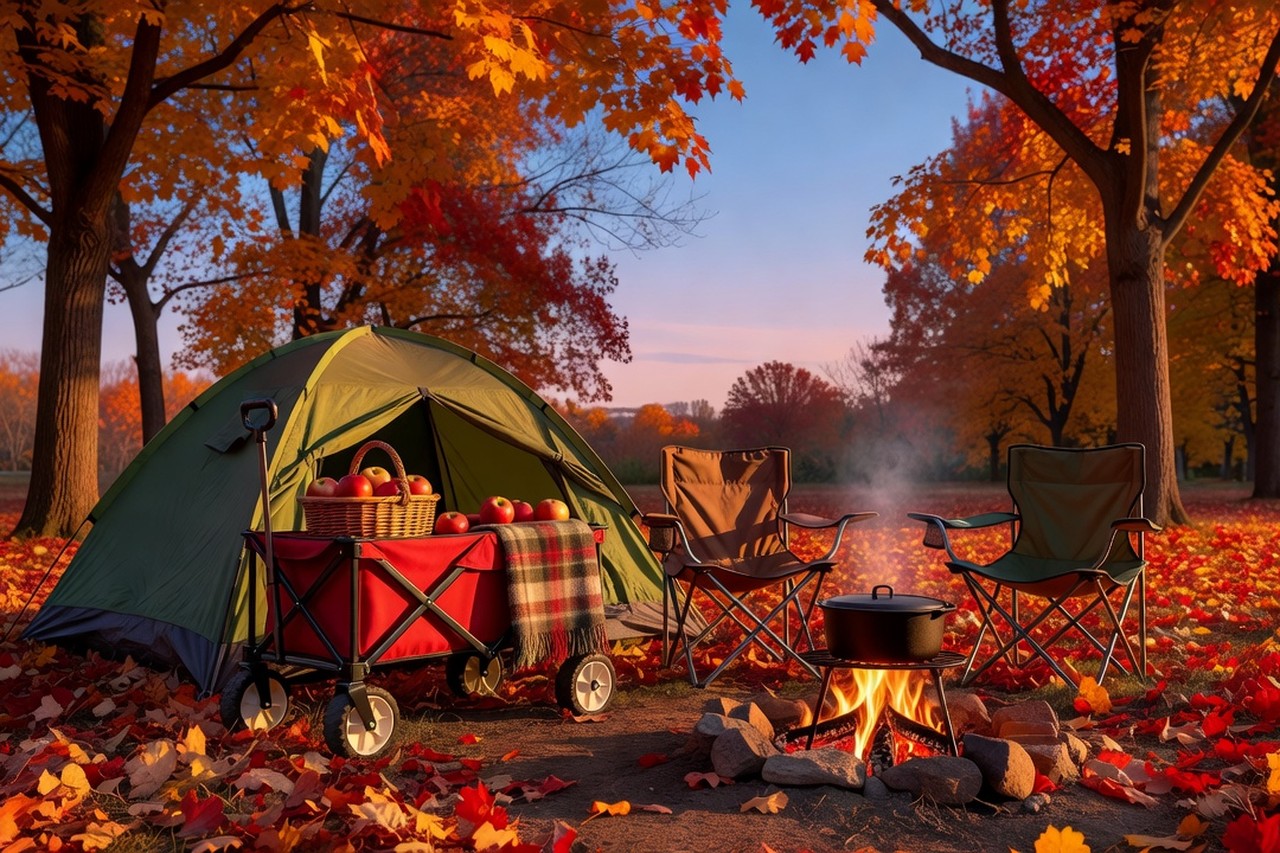
After the orchard, you roll into the campground by mid-afternoon. This is where the trip becomes more than a day trip. Two things matter: keeping drinks cold and having a hot-cooking plan that uses some of those apples.
Cooler Strategy for a September Weekend
September evenings are cool but days can still hit 75°F, so a decent cooler matters. For a weekend with four people, we run a 62-quart wheeled cooler as the main — the Coleman 316 Series Wheeled Cooler 62qt ($84.99) holds two days of food plus drinks, and the wheels save you on the walk from the car. If you're packing light (two people, one night), the YETI Roadie 24 ($250.00) is the premium option that holds ice for the whole weekend — worth it if you camp monthly. The apples themselves don't need cold for two days, but sliced apples for snacking absolutely do.
The Campfire Apple Crisp Setup
Here's the part the kids talk about for weeks: campfire apple crisp. You picked the apples, so you might as well cook with them. The setup is simple:
- Peel and slice 4-5 apples at the picnic table (let the kids do this with a butter knife — it's their apples).
- Toss with cinnamon, brown sugar, and a tablespoon of flour.
- Layer in a foil pack or a small cast-iron pot with a crumble of oats, butter, and brown sugar on top.
- Set it near the coals (not the flames) for 20-25 minutes, rotating once.
For the boiling-water and coffee side of the camp kitchen, the Coleman Classic 1-Burner Butane Camp Stove ($29.99) is the cheap workhorse, and it runs on the GasOne Butane Fuel Canister 4-Pack ($12.03). For a slightly bigger cooking surface that handles a skillet of breakfast apples AND a pot of coffee, the Gas One GS-3400P Dual Fuel Propane & Butane Stove ($34.99) is the step-up pick. And if you want the full cooking kit in one bundle — pot, pan, kettle, utensils — the Mallome Camping Cookware 17-Piece Mess Kit ($32.99) nests everything into one compact package.
Chairs and Blankets for the Long Evening
September evenings get chilly fast once the sun drops. The Coleman Portable Camping Chair with 4-Can Cooler ($39.99) keeps a drink cold within arm's reach and is the right size for most adults. If you're a bigger person or just want more width, the KingCamp Oversized Quad Arm Chair with Cooler Bag ($115.39) is the roomier pick.
For the blanket layer, the Rumpl Original Puffy Blanket ($139.00) is the one that survives kids, dogs, and campfire sparks — it's water-resistant, packs into a stuff sack, and at 40°F evenings it's the difference between "let's go inside the tent" and "one more story by the fire."
Storing the Haul: Which Apples Keep and How Long You Have
The two-week problem after every U-pick trip is storage, and the good news is that how to store apples needs no equipment at all. The rules are cool, dark, humid, and separated: a garage corner, a basement shelf, or a spare fridge all work, and the apples need to be away from bananas, potatoes, and avocados because the ethylene they give off ripens everything around them.
In a kitchen, how to store apples in the fridge and how to store apples in fridge are the same answer as the garage version, just scaled down: the crisper drawer, in a single layer, in a breathable bag rather than a sealed one. how to store apples at home for a week or two needs nothing more than a cool counter out of direct sun, and how to store apples to last longer is mostly about handling — every bruise is where rot starts. For how to store apples long term, the target is 30-40°F with some humidity, and how to store apples for months only works with the storage varieties: Winesap, Granny Smith, Braeburn, and Fuji hold for months, while McIntosh, Gala, and Honeycrisp should be eaten, cooked, or frozen within a few weeks.
Winter storage is its own question because the failure mode is different. how to store apples for the winter and how to store apples for winter both mean keeping the fruit above freezing and out of a warm room — a closed unheated porch beats a heated basement shelf. how to store apples over winter for a modern home usually means a spare refrigerator with the fruit in paper bags, and how to store apples without refrigeration has a real but short answer: two to three weeks in the coolest, darkest spot you have, after which the texture goes mealy even when the fruit still looks fine.
| Your search | The rule that works |
|---|---|
| how to store apples after picking | Don't wash them: the natural bloom is a protective coating, so wipe with a dry cloth and leave the stems on. |
| how to store apples after cutting | Only after cutting does refrigeration become mandatory — sliced apples need a sealed container, a little lemon juice, and the fridge. |
| how to store apples from tree | Leave the stem attached and handle each apple like an egg; the stem is what keeps the fruit from losing moisture. |
| how to store apples picked from tree | Single layer, no hard edges, newspaper between rows — every apple resting on another is a bruise waiting to happen. |
| how to store apples in ziploc bags | Yes, but poke a few holes or leave the bag open: sealed plastic traps moisture and that is what grows mould. |
| apple storage | Cool, dark, humid, separated — 30-40°F for long-term keeping, a garage corner for a fortnight. |
| how to store apple | The short version: dry, single layer, cold, away from other produce. |
| how to preserve applesauce | Water-bath can it in jars for shelf storage, or freeze it in flat bags if you have freezer space and no canner. |
| how to store applesauce | An opened jar keeps about a week in the fridge; homemade sauce freezes for months. |
| how to store applesauce long term | Water-bath canning in jars is the shelf-stable route, and freezing is the easy one. |
| how to store applesauce in jars | Leave half an inch of headspace, process per a tested water-bath time, and check the seal before you shelve it. |
| how to store applesauce in freezer | Freeze flat in bags or in containers with headspace — sauce expands, and a full jar will crack. |
| how to store applesauce cake | Wrap it tightly and keep it at room temperature for two days, or refrigerate for a week; sauce keeps the crumb moist. |
| how to store applesauce muffins | Airtight at room temperature overnight, then the fridge — the same sauce that makes them moist makes them perish faster. |
The Night: Sleeping Bags for 40°F September Nights
September nights in most of the country drop to 40-50°F — too cold for summer bags, overkill for winter gear. This is the "cool-weather bag" sweet spot.
For adults, the Coleman Palmetto 40° Cool-Weather Sleeping Bag ($44.99) is the budget pick that matches September temps exactly. For kids, this is where parents usually make the mistake: handing them an adult 40° bag that's too big. Kids lose heat faster, and a bag that's 18 inches too long lets all the warmth escape. The Morrison Outdoors Big Mo 40° Kids Sleeping Bag ($79.95) fits ages 2-4 snugly; the TETON Sports Celsius Jr Kids Sleeping Bag 20°F ($49.99) handles older kids (ages 5-10) and gives extra warmth for cold-sleeping kids. The Kelty Woobie 30° Kids Sleeping Bag ($39.95) is the versatile middle pick — roomy enough for a growing kid, warm enough for most September nights.
The two-bag trick for cold nights: If the forecast says below 40°F, put the kids in their bag inside an unzipped adult bag laid flat as an extra layer. Doubles their warmth with zero extra gear.
How to Store Fresh-Picked Apples So They Last
Half the value of a U-pick trip is in the two weeks after it — if the apples are still good. Apples give off ethylene gas, which ripens everything stored near them, and they bruise easily in bulk. A little handling discipline takes the haul from "great for a week" to "great for two months."
The right way to store them:
- Don't wash them yet. The natural bloom on the skin is a protective coating, and water invites mold. Wipe with a dry cloth, leave the stems on, and wash only what you're about to eat.
- Single layer, no hard edges. A shallow box or basket lined with newspaper beats a deep bucket. Every apple resting on another apple is a bruise waiting to happen, and one rotting apple can spoil the batch.
- Cool, dark, slightly humid. A garage corner, a basement shelf, or the crisper drawer all work. Aim for 30-40°F with some humidity — freezing ruins the texture, and a warm kitchen counter cuts shelf life to about a week.
- Keep them away from other produce. Apples rush bananas, potatoes, and avocados to ripeness. Give them their own drawer or box instead of sharing with the produce you don't want to hurry.
Camping without a fridge: for a two-day trip you don't need cold at all — whole apples keep fine in the shade of the tent vestibule or in the car under a blanket. What does need cold is anything sliced. If you're hauling a big pick home and want the keepers crisp through October, a Coleman 70-Quart Xtreme 5-Day Cooler ($79.99) with a bag of ice in the bottom and a towel over the fruit holds 60-plus pounds at temperature for the drive back and the week after — a cheap version of a root cellar.
Which varieties actually last: Winesap, Granny Smith, Braeburn, and Fuji are the storage champions and hold 3-5 months in a cool garage. McIntosh, Gala, and Honeycrisp are eat-them-fresh apples — cook or freeze those within a few weeks. To freeze: peel, slice, toss with a little lemon juice so they don't brown, and freeze flat in bags. They're perfect for the crisp recipe above in January.
The Weekend Itinerary That Works
Here's the rhythm we've settled on after three years of this trip:
Friday evening: Arrive at the campground, set up in daylight, keep dinner simple (grilled food or leftovers). Kids burn off car energy running around the site.
Saturday morning: Early breakfast at camp (coffee + scrambled eggs on the Gas One dual fuel stove), then drive to the orchard by 9 AM. Pick for 2 hours, picnic lunch at the orchard, buy cider donuts, back to camp by 2 PM.
Saturday afternoon: Free play at the campsite, nap for the little ones, apple slicing for tonight's crisp. Cooler drinks on the Coleman chair.
Saturday night: Campfire apple crisp + foil-packet dinners, s'mores, one story, bed by 9:30. The crisp recipe above takes 25 minutes and everyone helps.
Sunday morning: Slow morning, pancakes if you're ambitious, pack up by 11 AM. Split the apples: cooking apples in one bag, eating apples accessible in the car for the drive home.
Apple Picking + Camping Mistakes We've Made (Learn From Us)
Mistake 1: Picking a "scenic" orchard far from the campground. The best-laid weekend plans die in a 90-minute round trip. Pick an orchard within 30-45 minutes of camp — the weekend is the point, not the drive.
Mistake 2: No wagon. Our first year, we carried a half-bushel plus a toddler back across a dusty orchard. We bought the Radio Flyer at a farm stand on the way home. Don't be us.
Mistake 3: Summer sleeping bags. The first September trip we used 50°F summer bags and froze at 43°F. The Coleman Palmetto ($44.99) fixed it for under fifty bucks.
Mistake 4: Overloading the cooler with whole apples. Apples are heavy and don't need cold. Keep eating apples in a bag, slice only what you'll eat that day, and save cooler space for drinks and the crisp ingredients.
Mistake 5: No cider donut budget. This is the one "mistake" that's actually a life lesson: you will buy twice as many as you planned. Just embrace it.
Apple Varieties by Job: Pie, Sauce, Cider, and Eating
Picking with a plan beats filling one bag with whatever is heaviest. best apples for pie is the oldest question in the orchard and has a stable answer: firm and tart, so the slices hold their shape in the oven instead of collapsing into purée. Granny Smith leads, with Braeburn, Pink Lady, and Winesap right behind, and mixing two varieties gives more flavour than any single one.
The variations are mostly about texture. best apples for pie filling wants a fruit that will not weep — cook the filling down slightly before it goes in the crust if you are using a juicy apple. best apples for pies and crisps is the same list used two ways, and best apples for pies and cobblers adds a little sugar tolerance because a cobbler topping is sweeter than a crust. best apples for pie baking and best apples for baking pies both mean the firm-tart group, which is why the answer never changes year to year.
Other jobs have their own lists. best apples for pies and applesauce is the mirror image of the pie list: soft and mild varieties break down on their own, so McIntosh and Golden Delicious need far less cooking and no mashing. Cider is a blend rather than a single variety — sharp, sweet, and aromatic in roughly equal parts — which is why cider makers buy across several trees instead of one, and it is also why the apple cider donuts at the stand taste a little different every weekend of the season. best apples for baking and eating narrows to the versatility sweet spot: Honeycrisp, Fuji, and Jonagold are good in hand and good in a pan.
| Your search | Pick this |
|---|---|
| best apples for baking whole | Firm and medium-sized: a whole baked apple needs a variety that stays intact, so Granny Smith or Braeburn. |
| best apples for baking a pie | Granny Smith, Braeburn, Pink Lady — or a two-variety mix for better flavour. |
| best apples for baking a crisp | Any firm-tart apple works, and a mix gives the crisp more texture than a single variety. |
| best apples for baking a tart | Firm and tart again, sliced thin; a soft apple turns a tart into applesauce on a crust. |
| best apples for baking muffins | Golden Delicious or Gala, diced small so the crumb stays light. |
| best apples for baking bread | Golden Delicious and Granny Smith, grated rather than diced so the loaf stays moist. |
| best apples for baking desserts | Firm-tart for anything with a crust or a crisp; sweet and soft for cakes and sauces. |
| apple varieties | A few dozen matter commercially and about ten matter in a U-pick row: Honeycrisp, Gala, Fuji, Granny Smith, Golden Delicious, Braeburn, Jonagold, McIntosh, Pink Lady, and Winesap. |
| how many apples varieties are there | Thousands worldwide and a few dozen in commercial production, though most orchards grow six to twelve. |
| honeycrisp apples | The apple that made U-pick popular again — sweet, explosively crisp, and priced accordingly; mid-September to early October in most regions. |
| gala apples | Small, sweet, and mild, which makes them the kids' apple and a decent sauce apple; early September. |
| fuji apples | Very sweet and an excellent keeper, holding three to four months in a cool garage; October. |
| granny smith apples | The pie apple, tart enough to balance a sweet filling; late September into October. |
If the orchard weekend crosses into Indiana, the Indiana November camping guide has the state park dates and the two deer-hunt closure windows.
Apple Picking + Camping FAQ
When is the best time to go apple picking?
Late September is peak season for most U-pick orchards — Honeycrisp, Fuji, and Jonagold are heaviest on the trees then. Early September (Labor Day weekend) is the least crowded window of the season, and October brings late varieties like Granny Smith and Pink Lady in warmer zones. Orchards in the South and West shift later, running October into early November. Call the orchard the week before you go and ask which varieties are ripe that weekend — a "U-pick open" sign doesn't tell you what's actually on the trees.
How far should the orchard be from the campground?
Keep it within 30-45 minutes of your campsite. The entire point of pairing these two activities is that they share one drive — a 90-minute round trip each way burns the weekend and wears the kids out before the campfire even starts. Pick the campground first, then find the best orchard inside that radius rather than chasing a remote orchard that reviews called scenic.
What time should you arrive at the orchard?
By 9 AM, or go on a Friday. Late September weekends get busy by mid-morning and the prime trees at the front of the rows get picked over fast. Arriving early also puts you back at camp by early afternoon with daylight left for free play, a nap for the little ones, and slicing apples for tonight's crisp.
What should you pack for an apple picking and camping weekend?
The kit is short: a collapsible wagon for apple bushels and tired kids, a full-zip fleece per person for 50°F orchard mornings, a lightweight sun hoodie for the exposed rows, a waterproof picnic blanket for the orchard lunch, a 62-quart cooler for the campsite, a one-burner stove, and cool-weather sleeping bags. Most families already own most of it — the wagon is the one item people buy after their first trip, usually at a farm stand on the way home.
Do kids need their own sleeping bag for this trip?
Yes, and it needs to fit them. An adult 40°F bag on a small child loses heat out of the extra foot and a half of empty space, which is exactly why kids wake up cold at 2 a.m. Use a kids-specific bag: a snug 40°F bag for ages 2-4, a 20°F-rated bag for older kids (5-10) and cold sleepers, or a 30°F bag as the versatile middle pick for a growing kid. If the forecast drops below 40°F, put the kids' bag inside an unzipped adult bag laid flat as an extra layer — it doubles their warmth with zero extra gear.
What do you do with all the apples you pick?
Make campfire apple crisp — it's the reason this trip became an annual tradition. Peel and slice 4-5 apples at the picnic table, toss with cinnamon, brown sugar, and a tablespoon of flour, layer into a foil pack or a small cast-iron pot with an oat-and-butter crumble on top, then set it near the coals (not the flames) for 20-25 minutes, rotating once. Keep the rest as eating apples in a bag rather than the cooler.
What is the biggest mistake on an apple picking camping weekend?
Two of them, and we've made both. First, picking a "scenic" orchard far from the campground — the best-laid weekend plans die in a 90-minute round trip. Second, overloading the cooler with whole apples. Apples are heavy and don't need refrigeration: keep eating apples in a bag, slice only what you'll eat that day, and spend the cooler space on drinks and the crisp ingredients.
How do you store fresh-picked apples so they last?
Don't wash them until you're ready to eat them, keep them in a single layer with newspaper or a cloth between rows, and store them cool (30-40°F), dark, and away from other produce — apples release ethylene gas that ripens everything nearby. Whole apples need no refrigeration at all for a two-day camping trip; keep them in the shade and only chill what you've sliced. Winesap, Granny Smith, Braeburn, and Fuji hold 3-5 months in a cool garage, while McIntosh, Gala, and Honeycrisp are best eaten, cooked, or frozen within a few weeks.
What are the best apples for baking and apple pie?
Firm, tart varieties hold their shape and their flavor when cooked. Granny Smith is the classic pie apple, with Braeburn, Pink Lady, and Winesap right behind it. For applesauce and apple butter you want soft, mild apples that break down on their own — McIntosh and Golden Delicious. For fresh eating and lunchboxes, pick sweet and crisp: Honeycrisp, Fuji, and Gala. If you're making caramel apples, go tart and firm (Granny Smith) so the caramel's sweetness balances the fruit.
The Bottom Line
Apple picking plus camping is the perfect September weekend because it's two classic fall activities that share a single drive. The orchard gives the day structure and the kids a mission; the campsite gives you the long evening that a day trip never has — the fire, the crisp, the cool air. The gear list is short and mostly seasonal: a wagon, fleeces, a picnic blanket, a cooler, a stove, and 40° sleeping bags. Most families own most of it already.
If you're planning the full fall season, our fall camping gear checklist covers the complete cool-weather setup, and the fall hiking gear checklist handles trail days. Pick a weekend, call the orchard, and go get some apples. 🍎
<!-- AFFILIATE_DISCLOSURE -->